Home Blog Page 6940

Durant-less Nets

The first in a stretch of 11 road games interrupted by three homestands over the next three and a half weeks didn’t quite go as planned for the Nets. Despite having part-time All-Star Kyrie Irving on board, they fell to the upstart Cavaliers in a match they actually led a third into the final quarter. That they faltered down the stretch speaks volumes about their relative lack of cohesiveness, although admittedly not unexpected given the susceptibility of the Big Three to injury and, yes, the vagaries of the National Basketball Association’s health protocols.

Speaking of injury, the medial collateral ligament sprain that acknowledged top dog Kevin Durant suffered in the Nets’ previous outing figures to sideline him for four to six weeks. It’s the latest in a series of setbacks that has prevented him from sharing the court with James Harden and Irving for more than 10% of possible matches since the former Most Valuable Player awardee parted ways with the Rockets last year.

The good news is that the Nets will have Irving present for the 11 matches away from Barclays Center. He’ll be aiming to get his sea legs with Harden by his side, and Durant’s absence may yet prove to be a boon. Not that the wins will come easier as a result; as he himself noted, “You can’t replace Kev. It’s impossible.” That said, the development enables them to rely on their leader less; not for nothing is the latter on pace to norm the highest number of minutes on the court in eight years.

Bottom line, however, the Nets need Durant, Harden, and Irving to be at their level best, together, in order to contend for the championship. Else, they may well find themselves lost in the shuffle given the continued competitiveness of the usual suspects and the accompanying rise of upstarts also casting moist eyes on the hardware. In a wide-open race where any advantage is welcome, three is most definitely not a crowd.


Anthony L. Cuaycong has been writing Courtside since BusinessWorld introduced a Sports section in 1994. He is a consultant on strategic planning, operations and Human Resources management, corporate communications, and business development.

Peso sinks on higher oil prices, US yields

BW FILE PHOTO

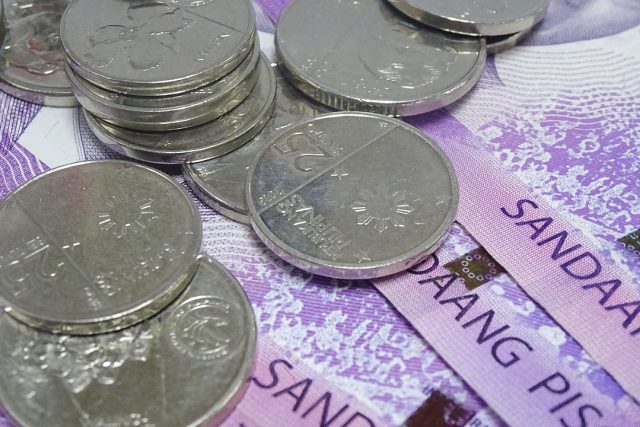
THE PESO retreated versus the greenback on Tuesday on cautious sentiment due to higher US yields and oil prices.

The local unit ended trading at P51.488 per dollar on Tuesday, weakening by 23.3 centavos from its P51.255 close on Monday, based on data from the Bankers Association of the Philippines.

The peso opened Tuesday’s session stronger at P51.20 per dollar, which was also its intraday best. Its weakest showing was its close of P51.488 against the greenback.

Dollars exchanged went up to $841.60 million on Tuesday from $820.90 million on Monday.

The peso was down on cautious sentiment amid higher US Treasury yields, Rizal Commercial Banking Corp. Chief Economist Michael L. Ricafort said in a Viber message.

Reuters reported that US two-year yields, which track short-term rate expectations, crossed 1% for the first time since February 2020.

Meanwhile, a trader attributed the peso’s weakness to “lingering inflationary concerns amid the continued increase in international crude oil prices.”

Oil prices increased by more than $1 to more than seven-year high on Tuesday amid concerns about probably supply disruptions after an attack by Yemen’s Houthi group to the United Arab Emirates.

Brent crude futures inched up by $1.37 or 1.6% to $87.85 a barrel by 0738 GMT, while US West Texas Intermediate crude futures climbed by $1.71 or 2% from Friday’s settlement to $85.53 a barrel. 

Both benchmarks surged to their highest since October 2014.

For Wednesday, Mr. Ricafort gave a forecast range of P51.30 to P51.50 per dollar, while the trader expects the local unit to move within P51.35 to P51.60. — L.W.T. Noble with Reuters

PSE index rebounds as investors pick up bargains

BW FILE PHOTO

PHILIPPINE SHARES rebounded on Tuesday after two days of decline as investors went bargain hunting following a slight improvement in the coronavirus disease 2019 (COVID-19) situation in Metro Manila.

The bellwether Philippine Stock Exchange index (PSEi) climbed 120.13 points or 1.66% to end at 7,343.96 on Tuesday, while the broader all shares index gained 37.16 points or 0.96% to close at 3,882.40.

“Market went on bargain hunting today after down for two days with the transmission rate on negative trend indicative of the slowing transmission rate after the uptrend prior to this week entry though infection rates remain at record levels,” Diversified Securities, Inc. Equity Trader Aniceto K. Pangan said in a text message on Tuesday.

Philstocks Financial, Inc. Senior Research Analyst Japhet Louis O. Tantiangco said sentiment turned positive amid signs of improvement in the National Capital Region’s (NCR) COVID-19 situation.

Independent research firm OCTA Research Group on Tuesday said the virus’ spread in the NCR region, suspected to be caused by the Omicron variant, is slowing down.

OCTA Research fellow and University of the Philippines professor Fredegusto Guido P. David also said during the government’s Laging Handa press briefing that based on the trend in South Africa, where the new variant was first detected, the cases declined after two weeks since its surge.

Mr. Tantiangco noted that market activity has weakened, with value turnover at just P4.95 billion with 850.25 million issues traded on Tuesday versus the P5.78 billion with 1.13 million shares logged on Monday.

“The lethargic trading shows that many investors are still staying out of the market while waiting for the COVID-19 uncertainties to clear,” he said.

First Metro Investment Corp. Head of Research Cristina S. Ulang said investors also priced in the peaking of the inoculation rate in the country and how infections seem close to a plateau.

The government last week said it has reached its initial target of fully vaccinating 54 million individuals. Vaccine czar Carlito G. Galvez, Jr. said during a taped Cabinet meeting on Monday night that the task force wants to inoculate 90 million people by June.

All sectoral indices ended in the green except for mining and oil, which lost 68.89 points or 0.66% to 10,249.94.

On the other hand, holding firms gained 130.97 points or 1.86% to 7,172.01; services climbed 36.25 points or 1.82% to 2,018.76; financials advanced 23.12 points or 1.40% to 1,672.27; property increased 42.52 points or 1.33% to 3,235.67; and industrials improved 70.39 points or 0.68% to 10,394.51.

Advancers outnumbered decliners, 100 against 85, while 56 names closed unchanged.

Net foreign selling went down to P172.38 million from the P232.39 million recorded the previous trading day. — M.C. Lucenio

PHL Twitter users can now report misleading tweets

Twitter users in the Philippines can now report a tweet containing misleading information by clicking on the three dots found at the upper right-hand corner, and then choosing “Report Tweet” and “It’s misleading” in the options.

The feature rolled out in the Philippines, Brazil, and Spain on Jan. 17. The countries were selected because of geographical diversity, and also because the upcoming elections in the Philippines and Brazil could further test the usefulness of the feature during civic events.

The reporting feature was first made available in the US, South Korea, and Australia in Aug. 2021 to examine if the tool was effective for the Twitter community to report misinformation in real time.

“The learnings garnered through the test was used to inform our efforts to potentially roll out a misinformation reporting feature more broadly. They also helped us better understand and identify misinformation trends and emerging narratives on Twitter,” according to a Twitter spokesperson in an e-mail.

The company added that it has a specially trained team that reviews each report — including those in Filipino — against the Twitter Rules and Terms of Service.

POTENTIAL VIOLATIONS
Over half of the violative content in the platform (such as COVID-19 misinformation, civic integrity, and synthetic and manipulated media) are surfaced by its automated systems. The rest are surfaced through its internal teams, and through work with trusted partners.

Since the 2021 launch of the reporting feature, Twitter has received 3.73 million reports of 1.95 million distinct tweets authored by 64 thousand distinct accounts.

A lot of the 3.73 million reports were “off-topic,” Twitter found, resulting in a low-violation rate of less than 10%. It also found that the reporting feature gave a sense of empowerment to users — most of whom would rather report a potentially misleading tweet than quote or reply to it.

The findings have revealed the company’s need to continue optimizing how it filters and prioritizes reports before it rolls out the option to everyone. It also revealed the value of the reports as a source of intelligence on emerging trends and narratives.

According to Twitter, it hopes the learnings gathered from the test of its reporting feature will help it “ultimately advance our ability to mitigate misleading content, as well as help protect civic integrity during the upcoming elections this year in the Philippines.” — Patricia B. Mirasol

U.S. Senate panel to debate app store reform bill

TRUSTPAIR.COM

WASHINGTON – A U.S. Senate panel is set on Thursday to debate a bill that aims to rein in app stores of companies that some lawmakers say exert too much market control, including Apple Inc and Alphabet Inc’s Google .

U.S. Senators Richard Blumenthal and Marsha Blackburn said on Monday the Senate Judiciary Committee would consider the Open App Markets Act is backed by a bipartisan group of lawmakers.

Blumenthal, a Democrat, said in a statement the bill aims to “stop Apple and Google from crushing competitors and undercutting consumers. Breaking the ironclad grip of these two behemoths on the multi-billion dollar app market is long overdue.”

Blackburn, a Republican, said the hearing “bring us one step closer to holding big tech companies like Apple and Google accountable.”

“Tech giants are forcing their own app stores on users at the expense of innovative start-ups,” she said.

Google and Apple did not immediately comment Monday.

Apple said earlier its app store was “an unprecedented engine of economic growth and innovation, one that now supports more than 2.1 million jobs across all 50 states.”

Google said previously that Android devices often come preloaded with two or more app stores and that app sellers can allow downloads without using Google’s Play Store.

The lawmakers have said the bill would bar big app stores from requiring app providers to use their payment system and prohibit them from punishing apps that offer different prices or conditions through another app store or payment system. – Reuters

China Merchants Bank-backed SPAC files first application under new Hong Kong rules

HONG KONG – A SPAC backed by China Merchants Bank applied to list in Hong Kong late on Monday, the first company to do so since new rules allowing such listings took effect at the start of this year.

Interest in SPACs – special purpose acquisition companies that raise cash to buy private firms and take them public without a traditional initial public offering (IPO) – is starting to shift to Asia, with two SPACs set to list in Singapore later this month.

Monday’s filing was by Aquila Acquisition Corporation, whose ultimate parent is China Merchants Bank.

The filing said Aquila is target acquiring “a technology-enabled company in ‘new economy’ sectors (such as green energy, life sciences and advanced technology and manufacturing) in Asia, with a focus on China.”

Hong Kong changed its rules to allow SPACs late last year, and the rules took effect on Jan 1. – Reuters

N.Korea tested tactical guided missiles in fresh sign of evolving arsenal

SEOUL – North Korea fired tactical guided missiles on Monday, state media KCNA said on Tuesday, the latest in a series of recent tests that highlighted its evolving missile programmes amid stalled denuclearisation talks.

The missile test was the North’s fourth in 2022, with two previous launches involving “hypersonic missiles capable of high speed and manoeuvring after lift-off, and another test on Friday using a pair of SRBMs fired from train cars. South Korea’s military said on Monday that North Korea launched two short-range ballistic missiles (SRBMs) from an airport in its capital, Pyongyang, which flew about 380 km (236 miles) to a maximum altitude of 42 km (26 miles).

The Academy of Defence Science conducted a test of tactical guided missiles from the country’s west, and they “precisely hit an island target” off the east coast, the official KCNA news agency said on Tuesday, without elaborating.

“The test-fire was aimed to selectively evaluate tactical guided missiles being produced and deployed and to verify the accuracy of the weapon system,” KCNA said.

It “confirmed the accuracy, security and efficiency of the operation of the weapon system under production.”

The unusually rapid sequence of launches has drawn U.S. condemnation and a push for new U.N. sanctions while Pyongyang warns of stronger actions, raising the spectre of a return to the period of “fire and fury” threats in 2017.

U.S. Special Representative for North Korea Sung Kim urged Pyongyang to “cease its unlawful and destabilising activities” and reopen dialogue, saying he was open to meeting “without preconditions,” the State Department said after a call with his South Korean and Japanese counterparts.

South Korea’s defence ministry said on Tuesday that it takes all North Korean missile launches as a “direct and serious threat,” but its military is capable of detecting and intercepting them.

U.N. spokesman Stephane Dujarric also called the North’s tests “increasingly concerning” during a briefing, calling for all parties to return to talks to defuse tension and promote a “very verifiable denuclearisation of the Korean Peninsula.”


‘SHOW OF FORCE’

North Korea used the Sunan airport to test-fire the Hwasong-12 intermediate-range ballistic missile (IRBM) in 2017, with leader Kim Jong Un in attendance.

North Korea has not tested its longest-range intercontinental ballistic missiles (ICBMs) or nuclear weapons since 2017, as a flurry of diplomacy with Washington unfolded from 2018. But it began testing a range of new SRBM designs after denuclearisation talks stalled and slipped back into a standoff following a failed summit in 2019.

Kim did not attend the latest test.

A photo released by KCNA showed a missile rising into the sky above a cloud of dust, belching flame.

Kim Dong-yup, a former South Korea Navy officer who teaches at Seoul’s Kyungnam University, said North Korea appears to have fired KN-24 SRBMs, which were last tested in March 2020 and flew 410 km (255 miles) to a maximum altitude of 50 km (31 miles).

The KN-24 resembles the U.S. MGM-140 Army Tactical Missile System (ATACMS) and is designed to evade missile defences and carry out precision strikes, he said.

“The North seems to have already deployed and begun mass production of the KN-24,” Kim said, referring to the KCNA report.

“But essentially, the test could be another show of force to underline their recent warning of action.” – Reuters

Australia suffers deadliest day of pandemic as Omicron drives up hospital cases

COMPUTER-GENERATED representation of COVID-19 virions via Felipe Esquivel Reed / CC BY-SA

SYDNEY – Australia on Tuesday suffered its deadliest day of the pandemic as a fast-moving Omicron outbreak continued to push up hospitalisation rates to record levels, even as daily infections eased slightly.

Australia is dealing with its worst COVID-19 outbreak, fuelled by the Omicron variant of the coronavirus that has put more people in hospitals and intensive care than at any time during the pandemic.

A total of 74 deaths were registered by late morning between New South Wales, Victoria and Queensland, Australia‘s three most populous states, exceeding the previous national high of 57 last Thursday, official data showed.

“Today, is a very difficult day for our state,” New South Wales Premier Dominic Perrottet said during a media briefing as the state reported 36 deaths, a new pandemic high.

Perrottet, who has consistently ruled out any tough curbs due to high vaccination levels, said hospitals can still cope with the rising number of admissions. “Despite the challenges, they are not unique to the rest of the world,” he said.

Amid rising hospitalisations, Victoria on Tuesday declared a “code brown” in hospitals, typically reserved for shorter-term emergencies, that would give hospitals the power to cancel non-urgent health services and cancel staff leave.

Authorities have said unvaccinated younger people form a “significant number” of the country’s hospital admissions.

Even as states look to avoid lockdowns and keep businesses open, Australian consumer confidence took a battering last week, an ANZ survey out on Tuesday showed, as the Omicron surge triggered self-imposed lockdowns and stifled spending.

Omicron has also dented Prime Minister Scott Morrison’s approval ratings, according to a widely watched poll on Tuesday, putting opposition Labor into a leading position months out from a federal election.

Just over 67,000 new infections were reported in New South Wales, Victoria, Queensland and Tasmania, down from a national high of 150,000 last Thursday. Other states are due to report later.

Australia has reported about 1.6 million infections since the pandemic began, of which around 1.3 million were in the last two weeks. Total deaths stood at 2,757. – Reuters

Major U.S. airlines warn 5G could ground some planes, wreak havoc

WASHINGTON – The chief executives of major U.S. passenger and cargo carriers on Monday warned of an impending “catastrophic” aviation crisis in less than 36 hours, when AT&T and Verizon are set to deploy new 5G service.

The airlines warned the new C-Band 5G service set to begin on Wednesday could render a significant number of widebody aircraft unusable, “could potentially strand tens of thousands of Americans overseas” and cause “chaos” for U.S. flights.

“Unless our major hubs are cleared to fly, the vast majority of the traveling and shipping public will essentially be grounded,” wrote the chief executives of American Airlines , Delta Air Lines, United Airlines, Southwest Airlines and others in a letter first reported by Reuters.

The Federal Aviation Administration (FAA) has warned that potential interference could affect sensitive airplane instruments such as altimeters and significantly hamper low-visibility operations.

“This means that on a day like yesterday, more than 1,100 flights and 100,000 passengers would be subjected to cancellations, diversions or delays,” the letter cautioned.

Airlines late on Monday were considering whether to begin canceling some international flights that are scheduled to arrive in the United States on Wednesday.

“With the proposed restrictions at selected airports, the transportation industry is preparing for some service disruption. We are optimistic that we can work across industries and with government to finalize solutions that safely mitigate as many schedule impacts as possible,” plane maker Boeing said on Monday.

Action is urgent, the airlines added in the letter also signed by UPS Airlines, Alaska Air, Atlas Air , JetBlue Airways and FedEx Express. “To be blunt, the nation’s commerce will grind to a halt.”

The letter went to White House National Economic Council director Brian Deese, Transportation Secretary Pete Buttigieg, FAA Administrator Steve Dickson and Federal Communications Commission (FCC) Chairwoman Jessica Rosenworcel.

Airlines for America, the group that organized the letter, declined to comment. The FAA said it “will continue to ensure that the traveling public is safe as wireless companies deploy 5G. The FAA continues to work with the aviation industry and wireless companies to try to limit 5G-related flight delays and cancellations.”

The other government agencies did not comment.


‘INTERVENTION IS NEEDED’

AT&T and Verizon, which won nearly all of the C-Band spectrum in an $80 billion auction last year, on Jan. 3 agreed to buffer zones around 50 airports to reduce interference risks and take other steps to cut potential interference for six months. They also agreed to delay deployment for two weeks until Wednesday, temporarily averting an aviation safety standoff, after previously delaying service by 30 days.

Verizon and AT&T declined comment on Monday. They argue C-Band 5G has been successfully deployed in about 40 other countries without aviation interference issues.

The CEOs of major airlines and Boeing Chief Executive Dave Calhoun held a lengthy call with Buttigieg and Dickson on Sunday to warn of the looming crisis, officials told Reuters.

United Airlines late Monday separately warned the issue could affect more than 15,000 of its flights, 1.25 million passengers and snarl tons of cargo annually.

United said it faces “significant restrictions on 787s, 777s, 737s and regional aircraft in major cities like Houston, Newark, Los Angeles, San Francisco and Chicago.”

The airlines ask “that 5G be implemented everywhere in the country except within the approximate 2 miles (3.2 km) of airport runways” at some key airports.

“Immediate intervention is needed to avoid significant operational disruption to air passengers, shippers, supply chain and delivery of needed medical supplies,” they said.

The airlines added that flight restrictions will not be limited to poor weather operations.

“Multiple modern safety systems on aircraft will be deemed unusable causing a much larger problem than what we knew… Airplane manufacturers have informed us that there are huge swaths of the operating fleet that may need to be indefinitely grounded.”

One area of concern is whether some or all Boeing 777s will be unable to land at some key U.S. airports after 5G service starts, as well as some Boeing cargo planes, airline officials told Reuters. The airlines urged action to ensure “5G is deployed except when towers are too close to airport runways until the FAA can determine how that can be safely accomplished without catastrophic disruption.”

The FAA said on Sunday it had cleared an estimated 45% of the U.S. commercial airplane fleet to perform low-visibility landings at many airports where 5G C-band will be deployed and they expect to issue more approvals before Wednesday. The airlines noted on Monday that the list did not include many large airports. – Reuters


Philippines must flatten COVID-19 curve or risk ‘superspreader’ election – expert

PHILIPPINE STAR/ MICHAEL VARCAS

MANILA – The Philippines must bring down COVID-19 cases, hovering at record highs, by April to ensure this year’s presidential election will not become a “superspreader” event, a top government adviser said on Monday.The country of 110 million people, which is battling one of Asia’s worst coronavirus outbreaks, is holding an election in May for thousands of positions, from president down to hundreds of lawmakers, mayors and governors.Roughly 67.5 million Filipinos, including 1.7 million overseas, are registered to vote in the elections, which historically have a high turnout.“We need to push the virus cases down in April so when we have elections in May, people will be safe,” Dr. Teodoro Herbosa, medical adviser to the COVID-19 task force, told Reuters.“(It is) very important that we are able to tame this virus before May 9.”Herbosa recommends the election commission expand the use of absentee balloting to include the elderly and people with health conditions.Plans to extend the voting period to two days were shelved due to budget constraints.The 2016 election saw a record voter turnout with 82%, with about 44.5 million people casting ballots, government data showed.Daily coronavirus infections have hit records several times this month, driven by the highly contagious Omicron variant, prompting a tightening of mobility curbs. On Monday, the Philippines started a ban on unvaccinated people from public transport.The country has recorded more than 3.24 million cases and nearly 53,000 deaths overall.It has so far fully inoculated about half of its population, but many areas outside the capital region are lagging behind. — Reuters

FDIs may pick up after May elections

REUTERS
A picture illustration of US dollar, Swiss Franc, British pound and Euro bank notes taken in Warsaw, Jan. 26, 2011. — REUTERS/KACPER PEMPEL/FILE PHOTO

By Luz Wendy T. Noble, Reporter

FOREIGN DIRECT investments (FDI) to the Philippines could get a boost after national and local elections in May, as the policy directions of the new administration become clearer, analysts said.

“Maybe FDI begins to pick up after the election… It’s been fairly subdued in terms of interest from foreigners, the way that I see it through the data,” Paul Mackel, Global Head for Foreign Exchange Research at the Hongkong and Shanghai Banking Corp. (HSBC) Global Banking and Markets, said at a virtual briefing on Monday.

Latest data from the Bangko Sentral ng Pilipinas (BSP) showed FDI inflows surged by 98.9% year on year to $855 million in October as the lockdown restrictions eased in the Philippine capital.

This brought the year-to-date total to $8.1 billion, up by 48.1% from the $5.5 billion in the same period of 2020. It already surpassed the $7.647 billion in net inflows seen in 2019, prior to the pandemic, as well as the central bank’s $8-billion full-year projection.

Investors usually adopt a wait-and-see approach from investors prior to the polls was a usual case in previous national elections in the Philippines.

Former BSP Deputy Governor Diwa C. Guinigundo said FDI will definitely be sensitive to the possible results of the upcoming elections, noting “it has been that way ever since.”

“Investors would like to get familiar with the candidates for the presidency and their respective platforms of government. They would also like to check the people around them because that would be material to the kind of leadership they could expect in the next six years,” Mr. Guinigundo said in a Viber message.

He noted foreign investors expect “market-friendly” policies from presidential candidates.

“These are business policies that enable FDIs to invest in more and more sectors of the economy with appropriate incentives in terms of good infrastructure, consistent public policies, and an efficient bureaucracy,” Mr. Guinigundo said.

“It’s a big turnoff for FDIs to deal with corruption and bad governance. Respect for property rights is fundamental.”

Asian Institute of Management economist John Paolo R. Rivera said investors will be waiting to see if the new administration can create a conducive environment for doing business.

“Not until they [candidates] discuss the specifics and operational aspects of their conceptual platforms, it would be too early to judge. But what is sure is the results of the upcoming elections will play a role in driving investor confidence,” Mr. Rivera said in a Viber message.

Foreign investors will also be keeping an eye on economic indicators like inflation trends, economic output, fiscal deficit, debt level, and dollar buffers, as well as election survey results, Mr. Guinigundo said.

Meanwhile, Andre de Silva, Head of Global Emerging Markets Rates Research at HSBC, said investment flows may also improve if the Philippines becomes part of key emerging market indices.

“There has been some discussion that there might be a prospect of index inclusion in some emerging market key indices for Serbia and others like the Philippines. If we had that, then that could add something, we are waiting if that would materialize, but nothing anytime soon,” Mr. De Silva said.

For this year, the BSP expects FDI inflows to reach $8.5 billion.

Regulators support bill to boost financial consumer protection

PIXABAY

REGULATORS are backing a measure that seeks to enhance financial consumer protection amid a rise in cybercrime incidents as more Filipinos used digital financial services during the pandemic.

This as the Bangko Sentral ng Pilipinas (BSP) reported the declared amount in consumer complaints reached P2 billion from 2019 to 2021.

The proposed Financial Consumer Protection Act (FCPA) will provide government agencies and financial regulators with the legal authority to enforce prudent, responsible, and customer-centric standards of business conduct, said BSP Governor Benjamin E. Diokno during a Senate Committee on Banks, Financial Institutions and Currencies hearing on Monday.

The measure will provide consumers with more efficient avenues for redress by granting regulators, including the BSP and the Securities and Exchange Commission (SEC), with adjudicatory authority to conduct hearings on consumer complaints.

“Consumer complaints can be escalated and resolved at the level of the financial regulators, ensuring quick resolutions, hence de-clogging court dockets,” Mr. Diokno said.

Mr. Diokno said 42,456 complaints were elevated to the BSP Consumer Assistance Mechanism in 2020 and 2021. “A majority of these cases have been deemed closed, but the process was long and arduous and for many complaints, the resolutions were unfavorable to the consumer,” he said.

SEC Commissioner Ephyro Luis B. Amatong said the regulator issued 241 advisories, 20 cease-and-desist orders, and 14 orders of revocation of certificates or registration against firms during the pandemic.

“Among the serious challenges encountered in the prosecution of criminal cases against these scammers is the lack or absence of complainants who are willing to stand as witnesses in these cases,” he said during the same hearing.

“Unlike in the US (United States) where the SEC which has the express authority to compel the return of funds obtained by violators of securities laws as part of their enforcement action, our Securities Regulation Code does not provide for a similar authority for our commission.”

Mr. Amatong said this means that victims of investment scams have to file estafa cases on their own to recover their money.

Under the proposed FCPA, the SEC can file cases to recover the funds for and on behalf of the victims of investment scams, and issue an order directing scammers to return the investments of their victims.

The measure also proposes to give the SEC the authority to supervise and regulate investment advisers.

Mr. Amatong called this an “additional layer of investor protection” as it ensures only qualified and licensed persons may provide investment advisory services for a fee or for compensation thus “eliminating the observed modus of scammers posing as so-called investment gurus.”

“Without doubt, if properly and swiftly implemented, this act will reinforce the trust and confidence of the public in the financial system, and in the government’s ability to uphold consumer welfare,” said Mr. Diokno.

Senator Mary Grace Natividad S. Poe-Llamanzares, chairman of the Committee on Banks, Financial Institutions and Currencies, is seeking to sponsor the proposed measure at the plenary next week.

Ms. Poe-Llamanzares authored Senate Bill 1739 or the proposed FCPA, which will cover all financial products or services developed or marketed by financial service providers, such as savings, credit, insurance, and remittances. — Alyssa Nicole O. Tan

ADVERTISEMENT
ADVERTISEMENT