Home Blog Page 6914

The relevance of Priscila (Cil) Manalang

Dear readers, I invite you to read this piece about my late mom-in-law, Priscila Santos Manalang, or Cil. While being sentimental is partly the reason why I’m writing this — the family recently commemorated her 103rd birth anniversary (birthdate: Jan. 20, 1919) — I write about her because of her continuing relevance to our times.

Mama, fondly called Cil by her friends and colleagues, was not just my mom-in-law. She was likewise a friend and more. My late wife Mae would sometimes tease me that her mom was my other girlfriend. For example, the three of us would occasionally watch concerts, dine out, or go out of town.

As a friend, and not as mom-in-law, Cil would even take the initiative of editing my notes or papers. Mae was my constant editor, but undoubtedly, she inherited her skill in writing and editing from her mom.

In truth, it was Cil who facilitated my first date with Mae. She instructed Mae to contact me and ask for a copy of the speech on foreign debt that then-Senator Alberto Romulo delivered at the founding Congress of the Freedom from Debt Coalition (FDC). I then served as FDC’s secretary-general. Mae was a volunteer and helped organize the FDC Congress. And so, Mae gave me a call, and we met so I could give her Romulo’s speech for her mom. That lunch meet lasted for several hours, which made it a date.

Cil likewise considered me a peer, a colleague, a comrade. One reason we became very close was because of our shared activism. She was proud of being an activist, and she described herself as a “democratic socialist.” She always valued equality and solidarity, the hallmark of being a socialist. And she showed her socialism not only in grand ways but also in “little acts of kindness” to the downtrodden.

Cil’s being a socialist was compatible with her being a progressive liberal. She defended the rights of the minority, she respected non-conformity, and she upheld pluralism.

It goes without saying that Cil was a champion of academic freedom, which the Marcos dictatorship trampled on. She was at the forefront of the protests against the Marcos Education Act, which threatened UP’s academic freedom. The UP community was able to thwart this, even if the protest meant that Cil and her academic colleagues clashed with their friend O.D. Corpuz, then Marcos’s Education Secretary.

Moreover, Cil fought against the Marcos dictatorship; she fought for democracy and civil liberties. And she found an organization that truly suited her: the University of the Philippines (UP) chapter of Kaakbay.

Ka Pepe Diokno — statesman, senator, nationalist, and civil libertarian — was the founder and intellectual fountainhead of Kaakbay. But UP Kaakbay was somehow distinct even as it subscribed to Ka Pepe’s values and platform. It was more radical, though not of the extremist variety, than Ka Pepe’s original Kaakbay. UP Kaakbay was mainly composed of socialists led by Dodong Nemenzo, Randy David, and the late Karina David.

Cil’s closeness to Ka Pepe Diokno was evident in her being the editor of Ka Pepe’s book titled A Nation for Our Children (1987). This is a volume that contains articles and speeches by Ka Pepe on human rights, nationalism, and sovereignty.

It is a book dedicated to the future generations of Filipinos. Ka Pepe (and for that matter Cil) envisioned “one dream that all Filipinos share: that our children may have a better life than we have had.” That dream is to have a noble, proud and free nation for our children. Sadly, until now, we are far from realizing this dream. Worse, we are again going through a nightmare reminiscent of what happened during the dark days of the Marcos regime.

Incidentally, the nation will commemorate Ka Pepe’s 100th birth anniversary on Feb. 26. This is an auspicious moment for us to rekindle Ka Pepe’s (and Cil’s) dream.

Cil’s advocacy for children had other manifestations. For example, she was a trustee of the Children’s Rehabilitation Center (CRC). As told to me by CRC’s founder Beth de Castro, without Cil’s complete support, it would have been “impossible to implement our project to provide psychological support for children victims of political violence.”

Although Cil was radical and secular in her politics, she was deeply spiritual. She attended morning Mass every day. And she was active in a weekly Bible discussion group, which she would occasionally host at her home on UP campus. But this Bible group was likewise progressive, for liberation theology served as the framework for discussion. The discussion applied Bible teachings to social, political, and economic life. Ex-priest Ed Gerlock and Maryknoll sister Helen Graham facilitated it. The members included Nena Diokno (Ka Pepe’s wife), Nini Quezon Avanceña, Maridol Mabanta, Isabel Ongpin, and Menchu Sarmiento. The saling-pusa (tag-alongs) included Mae and Tita Nini’s son, Ricky.

Sharing my mom-in-law’s story must include her role in shaping Philippine education. She was esteemed as Professor of Education at UP. She had numerous significant contributions in the field of education, but I highlight her seminal work that gains new meaning amid our crisis.

It is said that we face an education crisis, all the more made pronounced by the pandemic. But the truth is, education has been in crisis for a long time.

Cil’s Ph.D. dissertation at the University of Pittsburgh, published in book form in 1977, continues to provide insights into our education crisis. Titled A Philippine Rural School: Its Cultural Dimension, the book is a sociological and anthropological case study involving a barrio school and how the issues and problems at the locality mirror the national situation. Here is an example of a study that makes a social investigation employing multi-disciplinary methods towards developing recommendations to overcome bureaucratic and systemic constraints.

Then and now, basic education is affected by “problems that affect the larger society: hunger, illness, poverty, and unemployment…. If schooling is to become more meaningful to the young, teachers and administrators must see clearly the relationship between education and society.”

In several ways then, Cil contributed in a grand manner to change Philippine society. The great tasks remain unfinished.

That said, the family and I would always remember Cil as someone who did “little nameless acts of kindness and love.”


Filomeno S. Sta. Ana III coordinates the Action for Economic Reforms.

www.aer.ph

Income inequality, a social timebomb

PCH.VECTOR-FREEPIK

The next administration will inherit a social time bomb — this social timebomb is income inequality, or the gaps in the distribution of wealth among members of a population.

Economists gauge income inequality through a mathematical expression called the GINI Coefficient. The GINI Coefficient is a number between zero and one (or 100%), zero being a population where wealth is perfectly distributed (everyone makes the same income) and one where inequality is most acute (were one person has all the money and the rest have none). The higher the number, the higher the inequality.

As usual, the Philippines has the highest GINI coefficient among ASEAN’s six largest economies at 41.58%. Malaysia follows at 39.37%, Indonesia is at 38.33%, Vietnam is at 35.58%, Singapore is at 35.58%, and Thailand’s is 34.55%. For context, Slovenia, the Czech Republic, and Iceland are the world leaders in as far as income equality is concerned, with GINI coefficients between 24% and 26%. South Africa is the most inequitable with a GINI coefficient of 63% due to the after-effects of apartheid.

The Philippine Institute for Development Studies (PIDS) published a report to determine the distribution of wealth in the Philippines. With the poverty line being a household income of P10,481 per month for a family of five, PIDS reported that 22% of Filipino households are presently living below the poverty line. Households earning between P10,481 to P20,962 are considered the low-income class and they constitute 35% of the population. Together, these two classes constitute 57% of the population.

The lower and upper middle class earns between P20,962 to P125,772 per month and they make up 40% of the population. Households that earn between P125,772 and P209,620 are considered upper class and they comprise 2% of the population. Less than 1%, or some 143,000 families, are considered rich with a monthly income of P209,620 or more.

Why is income inequality a social timebomb?

It is a social timebomb for multiple reasons, the most significant of which is social tension. In a society like ours where the poor constitute 57% of the population, government channels the lion’s share of its support towards this sector, be it through financial amelioration, free education, healthcare and housing. The middle class is crowded-out and deprived of such social safety nets. The middle class is where discontent is greatest and tension is highest. History shows that in most societies with acute income inequality, the call for social change through revolutions are instigated by the middle class.

Other consequences of acute income inequality include low average education levels, low technology adoption, poor public health, high crime rates, and high dependence on state subsidies. All these translate to lower labor productivity, lower long term GDP growth rates, and a heavy public welfare burden.

How do we diffuse the tension? There is no other way but to make the distribution of wealth more equitable. The good news is that it can be done with relative ease with the implementation of the right policies.

Before we dive into the policies, however, let us first look at the three sectors of the economy — agriculture, services, and industry. The agricultural sector employs 22.86% of the workforce but the average income of its workers is only P9,930 per month. It is below the poverty line. This indicates that the greater majority of our agricultural workers are engaged in subsistence farming. The service sector is where 58.03% of our workforce derive their livelihood. Each worker has an average income of P16,754 a month, or slightly above minimum wage. The industrial sector is where the least number of the workforce are employed at 19.12%. However, it is also the sector where average income is highest at P26,019 per month.

To improve income inequality, we must migrate as many subsistence farmers and minimum wage earners to the industrial sector as possible. To do this, we must shift policies from Dutertenomics (the propagation of a consumer-lead economy, pump-primed with massive government spending, financed by debt) and embrace rapid industrialization.

Only with the development of industry can we push wages higher with more of the workforce employed in factories. As we have illustrated, the industrial sector offers higher wages, along with security of tenure and health/housing benefits.

To avoid any misunderstanding, this is not to say that we should abandon the agricultural and service sectors. Both should be developed but made to climb the value chain. Agriculture, especially, must be mechanically and technologically enabled for wages to rise in tandem with industry.

I recommend a five-point plan to facilitate the migration of subsistence farmers and low-income service providers to higher paying jobs in the industrial sector.

First, relaunch the Manufacturing Resurgence Program (MRP). This would mean reviving, updating, and pursuing the 60+ industry roadmaps made by the Department of Trade and Industry (DTI) in 2013 to realize the full potentials of existing industries. For waning industries like leather goods and garments, it would mean resolving the impediments that have stunted their growth. For thriving industries like electronics and IT-KPO, it would mean climbing the value chain of technology and securing a larger share of the global market.

Second, diversify the economy from one that is a competent producer of only 500 products today to 2,000 products (the Asian average). This recommendation deserves a separate piece on its own due its complexity – suffice it to say that we must first establish base industries (e.g., metal, petrochemicals, textiles, petroleum, precision machines, glass and lenses, rubber, etc.) as these are fundamental for a strong manufacturing sector.

Third, we must fast track the development of new industries for which the Philippines has a competitive advantage. These include maritime-related industries, IT-KPO, electronics, electric vehicles and parts, mining, mechanized agro-processing, aeronautics and aerospace, construction, creative industries, E-commerce and data hubs.

Fourth, there is no way out of it, we must secure our fair share of foreign direct investment (FDI). Between 2015 and 2021, the Philippine’s share of FDI was only 5.89% of all FDIs that poured into the ASEAN. We can do better. We must open up the economy more, especially the 60-40 equity restrictions; improve ease in doing business; fix the inconsistent and unpredictable treatment of investors by the tax authorities, especially in VAT refunds; accelerate infrastructure development, especially those that affect manufacturing logistics chains; improve workforce training and capacitation; outlaw discretionary aspects of administrative rules, especially in granting government licenses, permits and franchises; and strengthen the justice system.

Fifth, still on FDI, we must intensify our outbound investment missions with a deliberate intention to fill our supply chain gaps. To accomplish this, I recommend the establishment of the Office of Strategic Investments Promotions and Economic Coordination (OSIPEC), which is patterned after InvestVietnam. Not to be confused with the Board of Investments, the OSIPEC is proposed to be under the office of the president. Its core function will be to undertake non-stop outbound investment missions, provide investor concierge services for ease in entry, and liaise between government agencies and foreign investors. The OSIPEC will cooperate with the DTI in industrial planning and aggressively court strategic investors to fill supply chain gaps.

The faster we undertake the five-point plan, the faster we industrialize. The faster we industrialize, the faster we distribute wealth and achieve greater income inequality.


Andrew J. Masigan is an economist

andrew_rs6@yahoo.com

Facebook@AndrewJ. Masigan

Twitter @aj_masigan

Culture change in business

PCH.VECTOR-FREEPIK

I wonder if things will ever go back to the old times when business executives closed deals over cocktails at a five-star hotel lobby bar, or at a half-day golf game in a prestigious golf course in the outskirts of Manila. Or maybe it was just entertaining foreign buyers or visiting VIPs, and the dark night beckoned with bars and hot entertainment. Business and pleasure were alliances with dalliances.

Will the office lights in the tall buildings crowding the Makati skyline still burn late into the night as office workers do their daily overtime? Two years ago, before the COVID-19 pandemic was declared by the World Health Organization, the EDSA highway saw heavy traffic on weekdays until midnight — because many office workers only drove home after 9 p.m., thinking that if they started for home later, they would not sit in two hours of slow-moving traffic. What to do about traffic? The malls were open until midnight then. So were the bars, karaoke places, and little cafes!

Really, why should one rush out of the office to go home at 5-6 p.m. — the height of rush hour traffic — just to sit in bumper-to-bumper traffic inching (or at a standstill!) from Quezon City to Parañaque? There is always easy justification for overtime work. Daytime hours are busy with customers and clients and regular operations. Overtime work by the rank and file is paid at least 1.5 times the per hour rate, and it can happily happen that total overtime pay might exceed one’s regular monthly take-home pay. For supervisory and management levels, that they have no overtime pay is more than compensated by the extra output of the team, which would translate to a good evaluation and productivity bonuses or promotions in rank and pay. Everybody happy, including the often-neglected families waiting at home.

The spirit of competition within and outside the organization moves the culture of businesses. After all, natural selection and market share are a crowding-out game of winners and losers in business, paralleled in all aspects of living. In a business, there are two basic “publics” — external, like buyers, suppliers, regulators, creditors, etc., and internal, which are the employees, owners, and working associates.

Harvard Business School defines “culture” as “the tacit social order of an organization: It shapes attitudes and behaviors in wide-ranging and durable ways. Cultural norms define what is encouraged, discouraged, accepted, or rejected within a group. When properly aligned with personal values, drives, and needs, culture can unleash tremendous amounts of energy toward a shared purpose and foster an organization’s capacity to thrive” (Harvard Business Review, January–February 2018 https://hbr.org/2018/01).

Whatever the organization type, size, industry, or geography, interaction between people is the key driver of the company’s achievement of its goals. Highly interdependent organizations emphasize integration, managing relationships, and coordinating group effort. “People in such cultures tend to collaborate and to see success through the lens of the group,” the HBR says (Ibid.).

And the success of a business culture would be sustainable only if it has the flexibility to adapt to change. Innovation within the organization would be good as evaluated and implemented. External change would be less controllable, as its ramifications and effects particular to a company and its situation would be difficult to assess and accept.

The world has had to accept and adapt to technology since the earliest inventions of man to make things easier for work and life. More than for the goal of a better quality of life, technology has insinuated itself inextricably into the mercenary activities of business, for the sacrosanct net profit and whatever else is net-net beneficial. Little labor-saving devices evolved into computer-driven logical systems that did the thinking, evaluating, and measuring, forecasting and planning, implementing and actual performance and production for management and the workforce. And then it became clear that group effort in a physical workspace seemed optional, to the point of being expensive, as outsourcing and work-from-home (WFH) were deemed more efficient and effective.

And then the COVID-19 pandemic brutally lashed at and trashed the whole world with none knowing what it was so rabidly angry about. COVID has changed the world. Some say the pandemic was a levelling of the playing field for people, much like wars level the playing field for nations and the world. Back at ground zero, strategies and the enabling cultures must emerge from the purging and cleansing of the COVID pandemic.

In the Philippines, most people have gotten used to working from home, a business executive notes (https://businessmirror.com.ph, Nov. 8, 2021). Staff meetings have been conducted virtually. Most clients are likewise working from home and meetings with them are held online, scheduled whenever convenient for all. Office hours have effectively been stretched as needed for the conduct of business. Technology has certainly dictated the changes and adaptations to doing business, where virtual discussions and online presentations and reporting claim the attention and concentration of internal and external publics of the business. Certainly, there has been a radical change in business cultures, from the necessary change in business strategies, in the dictatorial socio-politics of the COVID pandemic.

The Department of Health (DoH) this month encouraged employers to opt for work-from-home setups or other alternative tasking arrangements that would reduce the opportunities for the spread of the coronavirus (Philippine Daily Inquirer, Jan. 7). Such a work setup will eliminate close contact between employees and other people interacting with an establishment. This is going to be “critical especially during this period of exponential increase” in COVID-19 cases, according to the DoH. Various market studies suggest that even when the virus variants abate, businesses will be encouraged to at least adopt a hybrid work setup, meaning part work-from-home and staggered or selective reporting at the office for the workforce.

In a series of surveys conducted among professionals from 15 industries across the globe, Euromonitor found that employers were forced to “rethink their attitudes to flexible working” as remote work has become the norm rather than a temporary fix.

The number of professionals permanently shifting to some form of a work-from-home setup rose by 20% from 2020 to 2021. A country survey in October 2021 by Robert Walters Philippines found that 52% of employees qualified for middle- to senior-level management positions were likely to turn down a job offer that required them to report full time at the office (Ibid.).

Among government workers, alternative work arrangements “had positive effects on [their] perceived performance and productivity,” according to an online survey and a focus group discussion conducted among 2,756 civil servants by the Development Academy of the Philippines (DAP) (Ibid.).

So, there has evidently been a change in business culture. In the isolation and restrictions of COVID, and the individualism brought about by technology, the greatest loss might be what the HBR considers the ground-cover — healthy human relationships — to nurture the healthy tree (the organization) of communities.

Something lost, something gained. No more late nights at the office. More time with family and loved ones.


Amelia H. C. Ylagan is a doctor of Business Administration from the University of the Philippines.

ahcylagan@yahoo.com

Britain says Russia planning to replace Ukraine government

A RUSSIAN FLAG flies with the Spasskaya Tower of the Kremlin in the background in Moscow, Russia, Feb. 27, 2019. — REUTERS

LONDON — Britain on Saturday accused the Kremlin of seeking to install a pro-Russian leader in Ukraine, and said Russian intelligence officers had been in contact with a number of former Ukrainian politicians as part of plans for an invasion.

The British foreign ministry declined to provide evidence to back its accusations, which came at a time of high tensions between Russia and the West over Russia’s massing of troops near its border with Ukraine. Moscow has insisted it has no plans to invade.

The British ministry said it had information the Russian government was considering former Ukrainian lawmaker Yevhen Murayev as a potential candidate to head a pro-Russian leadership.

“We will not tolerate Kremlin plot to install pro-Russian leadership in Ukraine,” British Foreign Secretary Liz Truss said on Twitter. “The Kremlin knows a military incursion would be a massive strategic mistake & the UK and our partners would impose a severe cost on Russia.”

The British statement was released in the early hours of Sunday, Moscow and Kyiv time, and there was no immediate statement from the Kremlin, or from Mr. Murayev.

A foreign ministry source said it was not usual practice to share intelligence matters, and the details had only been declassified after careful consideration to deter Russian aggression.

The Russian Foreign Ministry dismissed the comments as “disinformation”, accusing Britain and NATO of “escalating tensions” over Ukraine.

“We urge the Foreign Office to cease these provocative activities, stop spreading nonsense and finally concentrate its efforts on studying the history of the Mongol-Tatar yoke,” the ministry said on its verified Facebook account.

DEMANDS
The British claims come a day after the top US and Russian diplomats failed to make a major breakthrough in talks to resolve the crisis over Ukraine, although they agreed to keep talking. Russia has made security demands on the United States including a halt to NATO’s eastward expansion and a pledge that Ukraine will never be allowed to join the Western military alliance.

US National Security Council spokesperson Emily Horne said in a statement: “This kind of plotting is deeply concerning. The Ukrainian people have the sovereign right to determine their own future, and we stand with our democratically-elected partners in Ukraine.”

Mr. Murayev, 45, is a pro-Russian politician who opposes Ukraine’s integration with the West. According to a poll by the Razumkov’s Centre think tank conducted in Dec. 2021, he was ranked seventh among candidates for the 2024 presidential election with 6.3% support.

“You’ve made my evening. The British Foreign Office seems confused,” Mr. Murayev told Britain’s Observer newspaper. “It isn’t very logical. I’m banned from Russia. Not only that but money from my father’s firm there has been confiscated.”

Britain, which this week supplied 2,000 missiles and a team of military trainers to Ukraine, also said it had information that Russian intelligence services were maintaining links with “numerous” former Ukrainian politicians, including senior figures with links to ex-President Viktor Yanukovich.

Mr. Yanukovich fled to Russia in 2014 after three months of protests against his rule and was sentenced in absentia to 13 years in jail on treason charges in 2019.

‘PLANNING FOR ATTACK’
“Some of these have contact with Russian intelligence officers currently involved in the planning for an attack on Ukraine,” the British foreign office statement said.

Prime Minister Boris Johnson’s Downing Street office also said the British leader was planning to ramp up pressure on Russia this week by calling for European counterparts to come together with the United States to face down Russian aggression.

Earlier, RIA news agency reported that British foreign minister Ms. Truss would visit Moscow in February to meet her Russian counterpart Sergei Lavrov, while Russian Defense Minister Sergei Shoigu and his British counterpart Ben Wallace have also agreed to hold talks. — Reuters

Pfizer CEO sees annual COVID-19 vaccine rather than more frequent booster shots

JERUSALEM — Pfizer, Inc. Chief Executive Albert Bourla said on Saturday that an annual coronavirus disease 2019 (COVID-19) vaccine would be preferable to more frequent booster shots in fighting the coronavirus pandemic.

Pfizer/BioNtech’s COVID-19 vaccine has shown to be effective against severe disease and death caused by the heavily-mutated Omicron variant but less effective in preventing transmission.

With cases soaring, some countries have expanded COVID-19 vaccine booster programs or shortened the gap between shots as governments scramble to shore up protection.

In an interview with Israel’s N12 News, Mr. Bourla was asked whether he sees booster shots being administered every four to five months on a regular basis.

“This will not be a good scenario. What I’m hoping (is) that we will have a vaccine that you will have to do once a year,” Mr. Bourla said.

“Once a year — it is easier to convince people to do it. It is easier for people to remember.

“So from a public health perspective, it is an ideal situation. We are looking to see if we can create a vaccine that covers Omicron and doesn’t forget the other variants and that could be a solution,” Mr. Bourla said.

Mr. Bourla has said Pfizer could be ready to file for approval for a redesigned vaccine to fight Omicron, and mass produce it, as soon as March.

Citing three studies, the US Centers for Disease Control and Prevention (CDC) said on Friday that a third dose of an mRNA vaccine is key to fighting Omicron, providing 90% protection against hospitalization.

A preliminary study published by Israel’s Sheba Medical Center on Monday found that a fourth shot increases antibodies to even higher levels than the third but was likely not enough to fend off Omicron. Nonetheless, a second booster was still advised for risk groups, Sheba said. — Reuters

New Zealand PM Ardern cancels her wedding amid new restrictions

New Zealand Prime Minister Jacinda Ardern. — REUTERS

SYDNEY — New Zealand Prime Minister Jacinda Ardern has canceled her wedding as the nation imposes new restrictions to slow the community spread of the COVID-19 Omicron variant, she told reporters on Sunday.

New Zealand will impose mask rules and limit gathering from midnight on Sunday after a cluster of nine COVID-19 Omicron cases showed community spread from the North to South islands after a wedding.

A family returned to Nelson in the South Island by plane after attending a wedding and other events in Auckland in the North Island. The family and a flight attendant tested positive.

New Zealand will move to a red setting under its COVID-19 protection framework, with more mask wearing. Indoor hospitality settings such as bars and restaurants and events like weddings will be capped at 100 people. The limit is lowered to 25 people if venues are not using vaccine passes, Ms. Ardern said.

“My wedding will not be going ahead,” she told reporters, adding she was sorry for anyone caught up in a similar scenario. Ardern had not disclosed her wedding date, but it was rumored to be imminent.

Asked by reporters how she felt about the cancellation of her wedding to longtime partner and fishing-show host Clarke Gayford, Ms. Ardern replied: “Such is life.”

She added, “I am no different to, dare I say it, thousands of other New Zealanders who have had much more devastating impacts felt by the pandemic, the most gutting of which is the inability to be with a loved one sometimes when they are gravely ill. That will far, far outstrip any sadness I experience.”

New Zealand’s borders have been shut to foreigners since March 2020. The government pushed back plans for a phased reopening from mid-January to the end of February out of concern about a potential Omicron outbreak as in neighboring Australia.

People able to travel to New Zealand under narrow exceptions must apply to stay at state-managed quarantine facilities. The government last week stopped issuing any new slots amid a surge in the number of people arriving with Omicron.

About 94% of New Zealand’s population over the age of 12 is fully vaccinated and about 56% of those eligible have had booster shots. — Reuters

Manchester City’s winning streak is over

MANCHESTER United moved into the top four of the Premier League with a last second goal from Marcus Rashford. — MANCHESTER UNITED FC

MANCHESTER, England — Manchester City’s seemingly unstoppable charge to the Premier League title slowed slightly as they were held to a 1-1 draw at Southampton on Saturday, snapping a 12-match winning sequence that had distanced their rivals.

Manchester United moved into the top four of the Premier League with a last second goal from Marcus Rashford earning them a 1-0 win over West Ham United at Old Trafford.

Everton began life after Rafa Benitez in much the same manner as they ended it — in defeat — a 1-0 loss at home to Aston Villa leaving them in 16th place, just four points above the relegation zone.

Newcastle United claimed only their second league win of the season as they beat Leeds United 1-0 away, boosting their hopes of beating the drop.

Wolverhampton Wanderers won 2-1 at Brentford where the match was halted because of a drone flying above the ground.

City was stunned after seven minutes at St. Mary’s as Kyle Walker-Peters struck his first Premier League goal, a stunning effort with the outside of his right foot.

It knocked Pep Guardiola’s side out of their silky stride and it took a 65th-minute header by Aymeric Laporte to earn them a second draw of the season against Southampton.

Kevin de Bruyne, Gabriel Jesus and Rodri all hit the woodwork for City as they extended their lead at the top to 12 points, although second-placed Liverpool have played two games less. Liverpool faces Crystal Palace on Sunday.

“I don’t understand the way people say that now, after this result, the race is open, when before it is over,” Guardiola, whose side have 57 points, said.

“I would love to be 40 points ahead of Liverpool and Chelsea, but that’s impossible. I would never expect to be in this position, with this margin.”

United’s title aspirations have long been over and their target is now finishing in the top four.

They created little against a cautious West Ham, but interim manager Ralf Rangnick threw on Rashford, Edinson Cavani and Anthony Martial and they finally got their reward.

Martial collected from Cristiano Ronaldo and fed Cavani who slipped a low ball across for Rashford to score.

The three points pushed United above West Ham and back in the top four for the first time since early October.

United has 38 points from 22 matches while the Hammers are now fifth on 37 from 23.

There was an unpleasant atmosphere at Goodison Park where visitors Aston Villa had players hit by missiles thrown from the crowd.

Emiliano Buendia scored the decisive goal, just before half time, with a header that looped over keeper Jordan Pickford and the celebrations led to a bottle being launched from the stands and hitting the Villa players.

Lucas Digne, who was booed by Everton fans on his return to Goodison Park since last week’s transfer provided the assist and he was also hit by an object, with stewards and police trying to identify the perpetrators.

Everton, who is searching for a new manager and had ex-striker Duncan Ferguson in charge on a caretaker basis, have won only once in the league since September.

Jonjo Shelvey’s 75th minute goal earned Newcastle a vital win at Leeds, moving them to 18th in the standings, one point from the safety zone, having played one game fewer than Norwich City in 17th, and seven points behind Leeds in 15th.

“It was a massive win for us,” manager Eddie Howe said. “We hope to use it as a turning point in our season, we need to.”

Wolves midfielder Ruben Neves struck in the 78th minute to seal a 2-1 win at Brentford although the main talking point was a 19-minute delay caused by a drone. Joao Moutinho’s opener had been canceled out by Brentford’s Ivan Toney.

Sunday’s big game takes place at Stamford Bridge where third-placed Chelsea faces sixth-placed Tottenham Hotspur. — Reuters

Suns beat shorthanded Pacers for sixth straight win

MIKAL Bridges scored 23 points and Bismack Biyombo added 21 points with 13 rebounds as the Phoenix Suns extended their winning streak to six games with a 113-103 victory on Saturday over the visiting Indiana Pacers.

Chris Paul added 18 points with 16 assists as the Suns won for the ninth time in their last 10 games in their return home from a perfect five-game road trip. Phoenix won on an off-night for leading scorer Devin Booker, who finished with 11 points while shooting 5 of 23 from the field.

Chris Duarte and Lance Stephenson each scored 17 points for the Pacers and Goga Bitadze added 16 with 11 rebounds, but the Pacers were not able to match the effort they delivered Thursday in a victory at Golden State.

Indiana was without starters Caris LeVert (calf), Malcolm Brogdon (Achilles) and Domantas Sabonis (ankle) for the second consecutive game. Sabonis leads the Pacers with 19.0 points per game, while Brogdon is second (18.5) and LeVert is third (18.4).

Booker was just 3 of 12 from the field in the first half with six points and did not make his second field goal until 3:28 remained before half time. — Reuters

Atletico strikes late to seal dramatic 3-2 win against Valencia

MADRID — LaLiga champions Atletico Madrid snatched victory from the jaws of defeat to win 3-2 at home against Valencia, scoring two of their goals in stoppage time.

Atletico are fourth in the standings with 36 points, 13 behind leader and city rival Real Madrid.

Valencia took advantage of slack defending by Atletico to score twice in the first half, the first goal struck by American winger Yunus Musah in the 25th minute and the second on the stroke of half time by striker Hugo Duro, on-loan from Getafe.

However, Diego Simeone’s team returned from the break much more determined and halved the deficit shortly after the hour mark when substitute Matheus Cunha scored from a rebound following a corner kick.

Argentine forward Angel Correa equalized in the first minute of stoppage time before Mario Hermoso tapped in a low cross from Cunha two minutes later to send the home fans wild and seal an exhilarating win.

“Sometimes soccer is about the will to overcome adversities. This will be a day to remember,” Simeone told reporters.

“We have to learn from our mistakes and that first half was one to learn from, but we came back as a team after the break and that was amazing to watch.”

Under fire manager Simeone, who is under intense pressure to turn around his club’s fortunes following a series of bad results, entered the arena hearing his name chanted by fans who had showed up on a freezing night at Metropolitano Stadium.

Saturday’s last-gasp win will go some way in silencing the critics and fans will be hoping that it is a sign of better things to come.

The team usually known for their rock-solid defense have leaked in 26 goals in 21 games, which is already more than the 25 they conceded in 38 games during their triumphant run to the LaLiga title last season.

In becoming an indisciplined, mistake-prone unit, they have conceded the most number of goals among the top eight in LaLiga and have also won only three of their last nine games in all competitions. — Reuters

Keys downs Badosa to make quarterfinals at Melbourne Park

MELBOURNE — Madison Keys continued her resurgence by reaching the quarterfinals of the Australian Open on Sunday with a 6-3, 6-1 win over eighth seed Paulo Badosa at Rod Laver Arena.

Former US Open finalist Keys, who has slipped to 51st in the world rankings, booked her place in the last eight of a Grand Slam for the first time since the 2019 French Open with a comprehensive win over the Spaniard.

“I’m so happy to be back, I was so sad to miss last year and this amazing crowd and this amazing court,” said Keys, who was absent from the 2021 tournament due to coronavirus disease 2019  (COVID-19).

Keys, who rose to seventh in the world in 2016, has reached the quarterfinals twice before in Melbourne, defeating Venus Williams to advance to the semis in 2015, but losing to Angelique Kerber at this stage three years later.

The American took control early on Sunday, breaking her opponent in her first service game and closing out the set in 32 minutes having put Badosa’s serve under constant pressure.

The players traded breaks in the opening two games of the second set before Keys broke Badosa twice more as the Spaniard started to struggle in the heat.

Badosa’s difficulties continued as Keys broke her for a third time in the set to advance to the next round, where she will face Barbora Krejčíková following the Czech’s win over Victoria Azarenka.

“I think she’s kind of just making tennis look easy,” Keys said of Krejčíková “It seems like no matter what people are doing, she very quickly figures it out and has another game plan to quickly implement.

“She moves forward so naturally that I feel like if you give her the opportunity, she’s just on top of you all of a sudden, then she’s at the net. Obviously, it’s not easy to pass her.”

Badosa said she was overwhelmed by Keys’ serve and the power and accuracy of her returns.

“Sometimes, I was serving 180. I had to look what the serve said because I didn’t understand how a winner came back that fast,” she said.

“I thought I was serving bad. Then I saw it was her game, that she was playing very, very good.

“Madison, she’s like that. When she has confidence, she’s very dangerous.” — Reuters

Dangerous foul

Alex Caruso still played the equivalent of one full quarter after a flagrant 2 foul was deemed to have been committed on him midway through the third period of the Bulls’ match against the Bucks the other day. The contact was far from incidental; in fact, it was downright ugly, with Grayson Allen catching his arms not once, but twice, toppling him parallel to the maple hardwood. After a while, though, he appeared none the worse for wear — save for soreness that made shooting the ball difficult, as evidenced by two missed free throws immediately thereafter and five of six field goal attempts the rest of the way.

The Bulls lost by four, but the ignominious start to a three-game road trip was reflected more by the play than the outcome. Subsequent tests revealed Caruso to be suffering from a wrist fracture that requires surgery and up to eight weeks of convalescence. To argue that he will be missed is an understatement; he’s not fifth on the team in minutes played per outing, and with starters Zach LaVine and Lonzo already out due to knee injuries, he has been expected to fill in the slack even more. Which, in a nutshell, was why head coach Billy Donovan, normally a picture of calm in his post-mortems, could not help but unload on Allen for committing the “dangerous.”

Needless to say, Bucks counterpart Mike Budenholzer thought otherwise. And, not surprisingly, reactions from those on the outside looking in likewise depended on perspective. That said, the referees did throw Allen out of the match after repeated reviews of the play, with the National Basketball Association front office looking into it further. How things go for the fourth-year guard remains to be seen, although it must be noted that any penalty, if at all, will take into consideration the intent and not the outcome.

Speaking of intent, Donovan referenced Allen’s “history” of questionable contact. Yet, it bears noting that said transgressions occurred back when he was still in college. Since being chosen 21st overall in the 2018 draft, he has had just one misstep — made during a preseason set-to in his rookie year. Don’t tell that to Caruso, though, and don’t tell that to the Bulls, who will need to navigate the next third of their schedule without a vital cog. They may be able to welcome him back in two months, but it’s small consolation under the circumstances.


Anthony L. Cuaycong has been writing Courtside since BusinessWorld introduced a Sports section in 1994. He is a consultant on strategic planning, operations and Human Resources management, corporate communications, and business development.

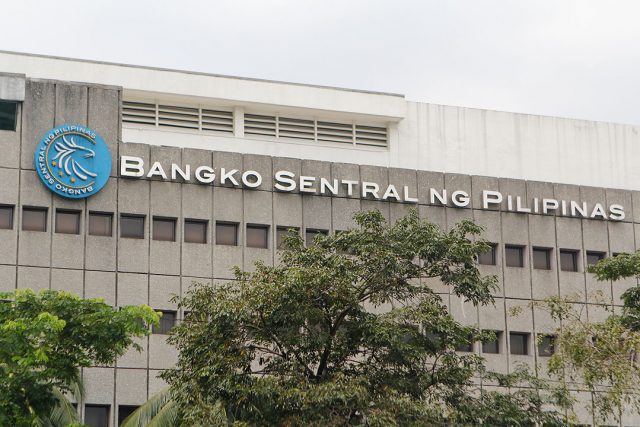
BSP presses Congress to approve key reforms

BW FILE PHOTO

The Philippine central bank is pressing Congress to approve several key reform measures, including one that would amend the bank secrecy law. 

Lawmakers are under pressure to pass the Duterte administration’s priority bills before they go on break on Feb. 4 for the election campaign. 

The Bangko Sentral ng Pilipinas (BSP) identified bills that would support the economy’s recovery after the pandemic — the Bank Deposits Secrecy Bill, the proposed Financial Products and Services Consumer Protection Act, amendments to the Agri-Agra Act, amendments to the charter of the Philippine Deposit Insurance Corporation (PDIC), and the Bank Accounts and E-wallets Regulation Bill. 

“The BSP’s legislative agenda aims to strengthen the banking system, foster financial inclusion, enhance the delivery of and address social issues related to access to financial products and services, and support economic growth,” BSP Governor Benjamin E. Diokno said in a press release Friday. 

The BSP supports the Bank Deposits Secrecy bill, saying this would equip it with necessary tools to prove fraud, irregularities, and unlawful activity. 

“The bill will also allow the BSP to holistically examine a banking institution to consider all risk areas in assessing a bank’s financial condition, risk management, and corporate governance,” BSP said. 

The measure would allow the central bank to look into accounts of bank officials and employees when there are grounds for fraud. 

The House Committee on Banks and Financial Intermediaries in February 2021 approved House Bill (HB) 8991, which amends Republic Act No. 1405 or the Secrecy of Bank Deposits Law, while there are five versions of the bill in the Senate. 

Mr. Diokno also said the proposed Financial Products and Services Consumer Protection Act is “envisioned to provide an armor of protection to all financial consumers.” House Bill 6768 have been approved on third and final reading, while six versions have been filed in the Senate. 

“It will ensure that relevant government institutions and financial regulators will be fully equipped with the legal authority to enforce prudent, responsible, and customer-centric standards of business conduct,” he added.  

Meanwhile, BSP said amendments to the Agri-Agra Reform Credit Act of 2009, which sets a percentage of a bank’s loan portfolio for agriculture, would strengthen rural development. 

The central bank wants to amend the law so that loans in the agricultural value chain – including distribution, manufacturing, processing, and manufacturing – are part of compliance with the quotas. 

House Bill 1634, which tackles the expansion of eligible agri-agra loans, was passed on third reading in March 2020, while the Senate counterpart is pending at the committee level. 

Finally, the BSP supports amendments to the charter of the Philippine Deposit Insurance Corporation (PDIC) and the Bank Accounts and E-wallets Regulation bill. 

Changes to the PDIC charter, it said, would make the state deposit insurer an attached agency of the BSP instead of the Department of Finance to promote policy coordination and streamline the financial sector’s regulatory framework. 

“To protect people from falling prey to various cybercrime schemes, the BSP also supports the legislative measure that will regulate and prohibit the use of bank accounts, e-wallets, and other financial accounts for criminal activities,” BSP said. 

“Should this measure become a law, it will strengthen consumer protection and inspire trust and confidence in the financial system.” — Jenina P. Ibañez  

ADVERTISEMENT
ADVERTISEMENT