Home Blog Page 6899

Democratizing access 
PHILIPPINE STAR/ MICHAEL VARCAS

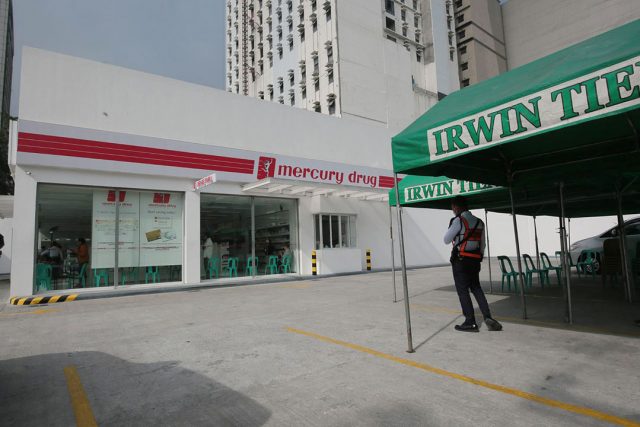
On Jan. 20, the country started booster vaccinations for coronavirus disease 2019 (COVID-19) in at least seven pharmacies and primary care clinics in Metro Manila.  

People 18 years old and older registered for booster shots at Mercury Drug, Generika Drugstore, Southstar Drug, The Generics Pharmacy, Watsons, and Ayala Healthcare’s clinics, namely, Healthway and Qualimed. The government announced that this initiative, called Resbakuna sa Botika, will be scaled up to include more pharmacies and clinics. 

The Pharmaceutical and Healthcare Association of the Philippines (PHAP), composed of providers of life-saving medicines and vaccines across the supply chain, welcomes and supports measures that will widen access to COVID-19 therapies and vaccines. 

This undertaking by the Inter-Agency Task Force (IATF), announced by vaccine czar Carlito G. Galvez, Jr. and Vivencio B. Dizon, deputy chief implementer of the country’s pandemic plan, last week, will be crucial as the country confronts a surge of cases due to Omicron among other SARS-COV-2 variants. The World Health Organization has consistently said that vaccines prevent people from getting seriously ill or dying from COVID-19. 

The rollout of COVID-19 vaccines in private retail pharmacies and primary care clinics was one of the recommendations we have advocated to enable faster roll-out. Under Department of Health Administrative Order 2020-0017, drugstores may conduct “other additional activities but may require appropriate regulation or be handled on a case-to-case basis,” but should properly apply for variation of their License to Operate. 

With the government centrally procuring vaccines, the inventory may be shared with retailers and clinics, multiplying the available number of vaccination sites in the country. Pharmacies and primary care clinics could augment vaccination efforts by local government units affected by the current COVID-19 surge. This move will help decongest current vaccination sites, and reduce the waiting time for the people. Since pharmacies and clinics are also strategically located in cities and provinces, individuals won’t need to travel far. 

Pharmacies and private clinics participating in this effort must conform to government standards as vaccines require strict temperature handling and storage, among others. There are specific requirements under Food and Drug Administration Advisory 2017-131, including: qualification of the person administering the vaccine; dedicated space for the activity; sanitation; compliance to good distribution and storage practices, in particular, cold chain requirements; patient counseling; and monitoring and reporting of adverse events following immunization. 

Professionals administering the vaccine must also be trained in administering, monitoring of adverse events, counseling, and proper disposal. Like other healthcare professionals, pharmacists have been serving as frontliners, extending their commitment and services in hospitals, clinics, drugstores and pharmaceutical companies. Under the Pharmacy Law, administration of adult vaccines by duly trained pharmacists in licensed drugstores is permitted. In fact, pharmacists have been training on immunization even prior to the pandemic. Pharmacies have been sites for adult flu and pneumococcal vaccination.  

Overall, Resbakuna sa Botika will help the country achieve its target of vaccinating 90 million Filipinos, as well as in providing boosters to the eligible adult population. 

This new framework may be expanded to other COVID-19 therapies with Emergency Use Approval (EUA). In an interview with The Chiefs on One News, PHAP Chairman Dr. Beaver Tamesis said that making COVID-19 therapies available in pharmacies and clinics would be “democratizing” access to these life-saving interventions. Easy access to these COVID therapies will help save more lives, improve home care management, as well as reduce the risk of hospitalization and burden on the healthcare system.


Teodoro B. Padilla is the executive director of Pharmaceutical and Healthcare Association of the Philippines (PHAP), which represents the biopharmaceutical medicines and vaccines industry in the country. Its members are at the forefront of research and development efforts for COVID-19 and other diseases that affect Filipinos.
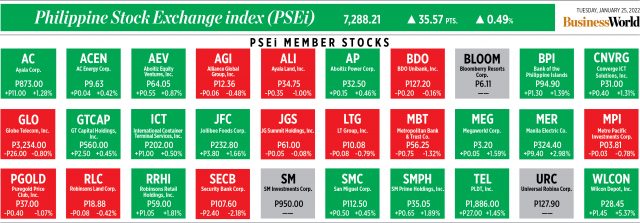
How PSEi member stocks performed — January 25, 2022

Here’s a quick glance at how PSEi stocks fared on Tuesday, January 25, 2022.


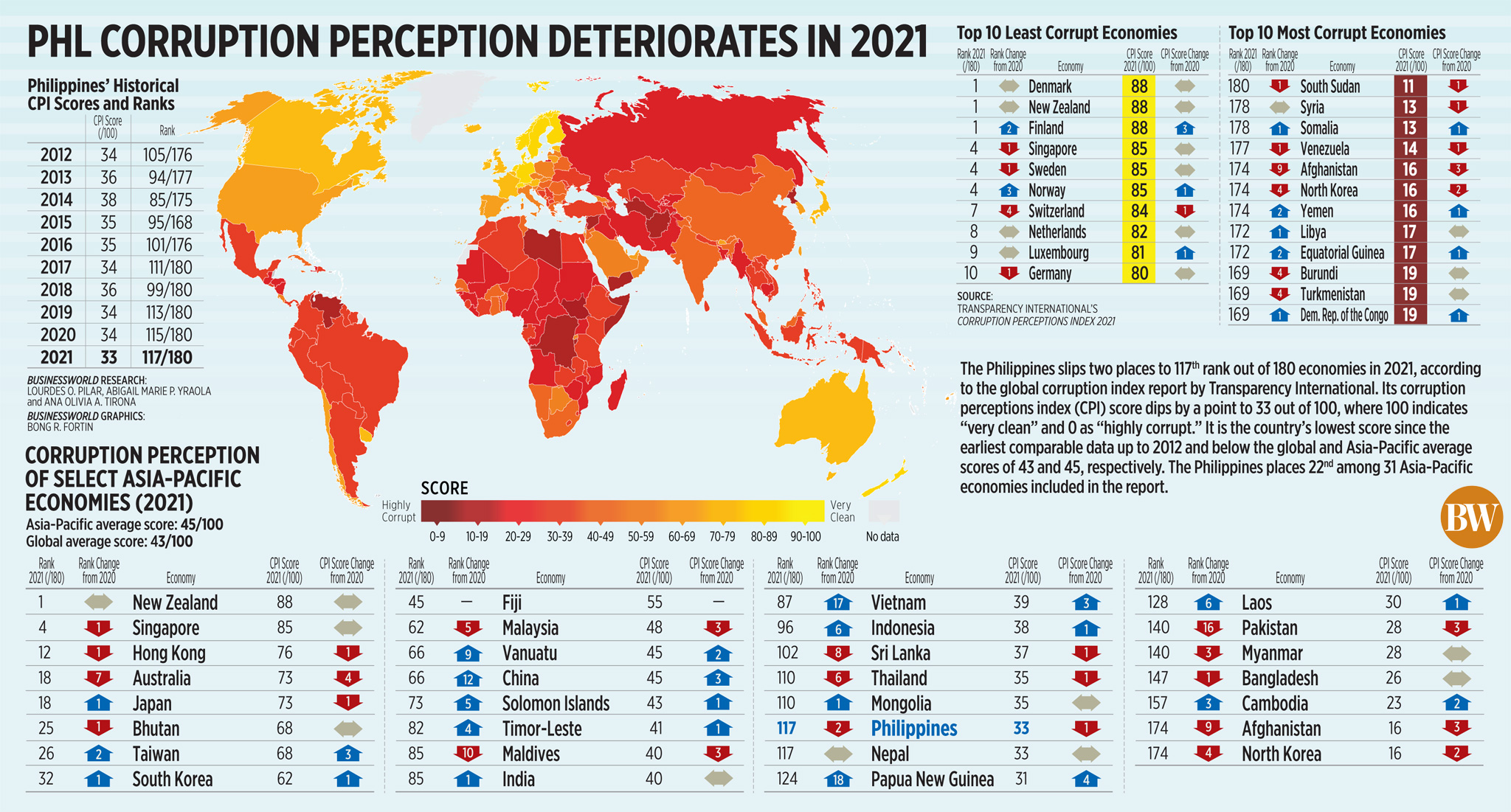
PHL corruption perception deteriorates in 2021

THE PHILIPPINES slumped to a historic low in a global corruption index released by Transparency International, which noted the “sharp” decline in freedom of expression under the Duterte administration that made it difficult for citizens to speak up against corrupt activities. Read the full story.

PHL corruption perception deteriorates in 2021

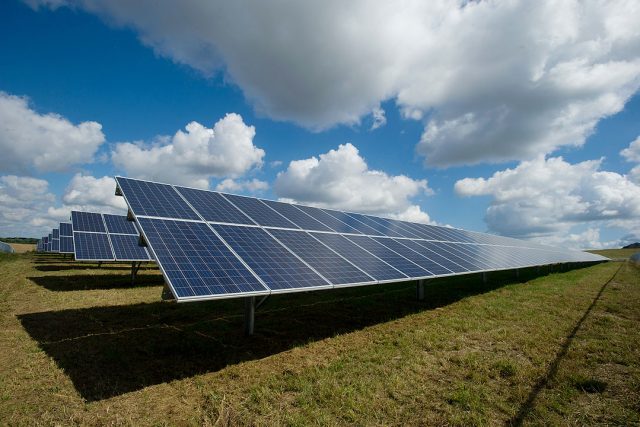
DoE solicits green energy bids for 2,000 MW

AMERICAN PUBLIC POWER ASSOCIATION-UNSPLASH

THE Department of Energy (DoE) said it is inviting companies to supply 2,000 megawatts (MW) of renewable energy (RE) in the first round of its Green Energy Auction Program (GEAP).

In a Notice of Auction released on Tuesday, the DoE said the power will be supplied to Luzon, the Visayas, and Mindanao at the following volumes: 1,400 MW, 400 MW, and 200 MW respectively.

For Luzon bidders, the total capacity for auction is 900 MW of solar energy, 360 MW wind, 80 MW hydro power and 60 MW biomass.

The breakdown for the Visayas is 120 MW biomass, 260 MW solar, and 20 MW wind. For Mindanao, the target volumes are 100 MW solar, 50 MW biomass, and 50 MW hydro.

The GEAP aims to boost RE as a source of energy, with RE generators participating in an auction for their output.

The auction will be administered by the DoE’s Green Energy Auction Committee.

RE facilities are deemed eligible if they have been in operation and were built in compliance with the RE law. They must have no legal issues and have no power purchase agreements or power supply agreements with any distribution utility (DU) that may conflict with the agreed delivery dates.

The GEAP features the Green Energy Tariff, which influences the commercial value of power generated from qualified RE facilities, and sets a benchmark price for DUs under an Opt-in Mechanism.

With the Opt-in mechanism, the DU can procure power from the GEAP pool of winning bidders to reduce Feed-in Tariff-All charges to the end-users.

The rules also require the DoE to design an auction specific to geothermal and impounding hydropower facilities participating in the bid.

“The DoE has determined that the competitive bidding process under the GEAP is one of the best ways to accelerate the development of renewable energy systems and the promotion and commercialization of its applications, encourage free and active private sector participation and investment in all energy activities, and provide adequate capacity to meet demand, including reserve requirements,” according to the guidelines.

The government is targeting a 35% RE share of the energy mix by 2030. — Marielle C. Lucenio

PEZA, other IPAs bat for RCEP treaty approval

INVESTMENT PROMOTION agencies (IPAs) including the Philippine Economic Zone Authority (PEZA) said the Senate needs to ratify the Regional Comprehensive Economic Partnership (RCEP) trade agreement, citing the need to participate in the bloc in order to better integrate the Philippine economy with those of major trading partners.

PEZA, the Authority of Freeport Area of Bataan, the Aurora Pacific Economic Zone and Freeport Authority, the Clark Development Corp., the Cagayan Economic Zone Authority, the John Hay Management Corp., the Poro Point Management Corp., the Regional Board of Investments-Bangsamoro Autonomous Region in Muslim Mindanao, the Subic Bay Metropolitan Authority, the Subic-Clark Alliance for Development Council, and the Zamboanga City Special Economic Zone Authority issued a statement on Tuesday batting for ratification of the RCEP treaty.  

“The RCEP Agreement promotes greater openness, creates a more business-friendly environment, encourages closer integration of economies, and provides a more stable and predictable rules-based system of trade,” they said.

On Sept. 2, President Rodrigo R. Duterte signed the RCEP agreement, which is now awaiting the Senate’s concurrence.

The trade agreement took effect on Jan. 1 this year and is now in force with members Brunei, Cambodia, Laos, Singapore, Thailand, Vietnam, Australia, China, Japan, and New Zealand. On Feb. 1, South Korea is also set to implement the trade deal.  

The Senate has until Feb. 4 to ratify RCEP before the chamber takes a break for the election campaign.

According to the investment promotion agencies, the Philippines cannot afford to delay its participation, or to stay away from the trade deal, because other countries in the region which are members will be deemed more attractive investment destinations.  

 “In this respect, the Philippines’ immediate participation in RCEP is important as it will allow firms in the country, particularly those geared towards exports, to benefit from the lowering of trade barriers, and improved market access for goods and services in fourteen export destinations,” they said.

They said RCEP will benefit Philippine companies by lowering import tariffs, making imported raw materials cheaper. The treaty is also expected to improve the business environment by making trading rules more transparent and friction-free.

“The RCEP region remains a strong bastion of economic activity and opportunity as trade and investment shift to Asia. Thus, given the extent of economic activity in the region, the Philippines cannot afford to delay or not participate in this free trade deal when all our neighbors in Southeast Asia are reaping the advantages of the agreement,” they said.

Separately, the Tuna Canners Association of the Philippines (TCAP) and the Canned Sardines Association of the Philippines (CSAP) also batted for Senate concurrence, saying that the trade deal will benefit their industries.  

TCAP and CSAP Executive Director Francisco Buencamino said in a statement that participation in the RCEP will give the industries equal footing with Indonesia, Thailand, Vietnam, and Malaysia.

“The canned tuna industry stands to gain from RCEP via the expected increase in domestic demand resulting from the improved economic performance of key sectors such as manufacturing, the service sector and even agriculture due to access to markets as well as investment,” Mr. Buencamino said.  

“A growing export base for the sardine industry will help keep prices for the domestic market more manageable and allow the category to continue to grow. The industry and its suppliers provide direct employment to at least 80,000 to 100,000 workers and impact around 500,000 individuals directly,” he added.

In a statement, the Japanese Chamber of Commerce and Industry of the Philippines, Inc. (JCCIPI) also called for RCEP’s ratification.

“The ratification of the RCEP would provide an immense boost to the country’s economic activity and further strengthen the intra-region free trade system, especially as a recovery mechanism from the impact brought by the pandemic which has made international cooperation on trade more important than ever,” JCCIPI said. — Revin Mikhael D. Ochave

Building materials wholesale price growth up 5.4% in Nov.

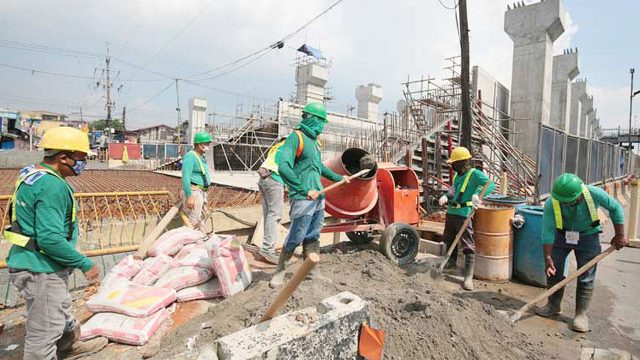
Workers are seen mixing cement at a construction site in Quezon City, May 19, 2020. — PHILIPPINE STAR/ MICHAEL VARCAS

WHOLESALE PRICE growth of building materials in the National Capital Region (NCR) hit a nearly three-year high in November, the Philippine Statistics Authority said.

The Construction Materials Wholesale Price Index (CMWPI) for Metro Manila grew 5.4% year on year in November, against 4.7% print in October and 0.8% in November 2020.

It was the highest growth rate since December 2018, when the CMWPI rose 5.7%.

The index reflects large purchases by major construction companies and property developers, and serves as a leading indicator for future activity by those industries.

In the year to date, growth in the Metro Manila CMWPI averaged 3.0%, against the year-earlier expansion of 1.3%.

November growth was led by the prices of fuels and lubricants, which accelerated to 38.3% year on year from 33.3% in October; concrete products and cement (3.0% from 1.2%); plumbing fixtures and accessories/waterworks (1.8% from 1.1%); plywood (2.6% from 2.1%); reinforcing and structural steel (8.8% from 8.4%); electrical works (7.2% from 6.9%); sand and gravel (3.0% from 2.7%); and doors, jambs and steel casements (2.5% from 2.3%).

Year-on-year price growth slowed down in hardware (2.6% from 2.8%); lumber (2.8% from 3.1%); and tileworks (minus 1.8% from minus 0.1%).

“Primary factors… would have been the looser restrictions due to lower infections before the 2021 holidays and the general perception that it was now safer to go out, supporting more demand particularly construction-related products and services,” UnionBank of the Philippines, Inc. Chief Economist Ruben Carlo O. Asuncion said in an e-mail.

“The reduced restrictions (allowed builders) to buy and push through with construction plans. This may also be true not only for retail sales, but more so for wholesale ones involving bigger construction projects,” Mr. Asuncion added.

Metro Manila and its surrounding areas were under general community quarantine (GCQ) Alert Level 3 between Nov. 1 and 15. The GCQ was eased to alert level 2 between Nov. 15 and 30, during which the coronavirus disease 2019 (COVID-19) Omicron variant was first detected.

Mr. Asuncion expects CMWPI growth in December to be higher, then slowing down in January.

“(T)his will be short-lived and may unfreeze come February especially if the government eventually shifts to Alert Level 2 (from Alert Level 3) with the decline of the Omicron surge in the NCR,” Mr. Asuncion added. — Ana Olivia A. Tirona

Small fishermen urge government to enforce poaching laws

PHILSTAR

AN ASSOCIATION of small fishermen, Pambansang Lakas ng Kilusang Mamamalakaya ng Pilipinas (PAMALAKAYA), said the government needs to enforce poaching in order to deter illegal exploitation of Philippine fisheries.

“Foreign fishermen are taking all our fish, especially in areas like the West Philippine Sea. It is an insult that we have to import fish from abroad when it comes from our own waters,” PAMALAKAYA Vice Chair for Luzon Bobby C. Roldan said in a statement.

He said fish being imported from China and Vietnam, primarily galunggong (round scad) and mackerel, were likely taken from Philippine waters.

“We are most likely importing balikbayan (returnee) fish. We are fully aware that the countries where we are going to import fish from are the same countries that frequent our territorial waters in the West Philippine Sea. This is an insult to us as an archipelagic country as we might be importing fish that came from our very own fishing grounds,” Mr. Roldan added.

Mr. Roldan, a Zambales fisherman, said galunggong is mostly caught in the West Philippine Sea and off Batangas, Mindoro, and Palawan.

PAMALAKAYA also called for price controls to stabilize rising fish prices.

“At P250 per kilogram retail price, galunggong is no longer a ‘poor man’s fish.’ This unreasonable pricing is mainly caused by government’s failure to regulate private fish traders who secure their profits by jacking up the wholesale prices and eventually push up retail prices to unaffordable levels,” the organization’s Chairman Fernando L. Hicap said in a statement.

“The unregulated middleman system in the fish trade results in manipulation of farmgate and market prices which are detrimental to small fishers and ordinary consumers,” he added.

Mr. Hicap proposed that instead of imports, the Department of Agriculture should directly procure from fisherfolk and set a standard retail price.

“Instead of imports, which are harmful to the fishing industry, the government should intervene by imposing a price ceiling on fish that (is) reasonable and beneficial to local producers, retailers, and consumers. This effort would preempt greedy wholesalers and traders from manipulating the price of galunggong and other fishery products that serve as primary protein sources for many Filipinos,” Mr. Hicap said.

On Jan. 17, the DA said it had issued certificates of necessity to import 60,000 metric tons of small frozen pelagic fish, in order to ease rising prices and augment supply in typhoon-hit areas. — Luisa Maria Jacinta C. Jocson

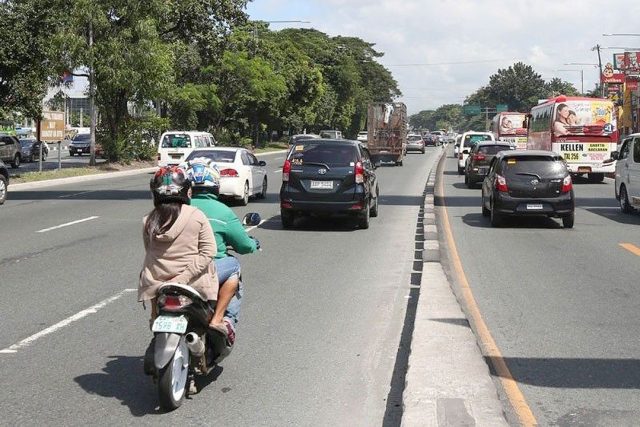
House Bill regulating hire motorcycles wins second reading passage

PHILSTAR

A BILL setting registration requirements and safety parameters for motorcycles for hire was approved on second reading by the House of Representatives on Tuesday.

House Bill 10571 or the proposed Motorcycles-For-Hire Act gives the Department of Transportation (DoTr) to regulate the industry, including setting guidelines for which types of motorcycle are eligible for hire, according to proceedings of the chamber’s plenary session.

The bill gives the Land Transportation Office the authority to determine whether motorcycles are roadworthy.

Meanwhile, the Land Transportation Franchising and Regulatory Board (LTFRB) and local government units, will have the authority to issue hire-motorcycle franchises in cities, with the numbers to depend on a route plan to be developed by the DoTr.

The measure also gives the LTFRB the power to set fares and other fees operators can charge.

A Senate counterpart bill was approved last year at the committee level and is awaiting second-reading approval. — Jaspearl Emerald G. Tan

Well-milled rice prices fall in five regional centers

NEDA

THE Philippine Statistics Authority said the average retail price of well-milled rice decreased in five trading centers between Dec. 1 and 5, which it calls the first phase of December.

Prices fell by P0.13 to P1.52 per kilogram, compare with Nov. 15-17, or the second phase of November.

They were down P0.13 at P42.83 in the National Capital Region (NCR), P0.75 at P49 in Batangas City, P0.95 at P38.47 in Kidapawan City, P1.26 at P44.78 in Calapan City and P1.52 at P39.80 Iloilo City.

Of the trading centers reporting gains, average prices rose P0.37 to P38.56 in Legazpi City, P0.51 to P39.50 in Pagadian City, P1.96 to P42.70 in Digos City, and P0.96 to P40.57 in Butuan City.

The retail price of bone-in pork rose P5.00 to P21.67 per kilogram in five trading centers.

Prices rose P5.00 to P285 in Cabanatuan City, P11.27 to P371.35 in Legazpi City, P15.65 to P303.42 in Calapan City, P15.00 to P308.89 in the NCR, and P21.67 to P216.67 in Cebu City.

Prices declined by P0.50 to P179.50 in Cagayan de Oro City, P2.50 to P342.50 in Batangas City, P8.17 to P207.70 in Butuan City, and P17.86 to P232.14 in Digos City.

Galunggong (round scad) prices rose in six trading centers. They rose P3.16 to P234.74 in the NCR, P8.31 to P178.70 in Iloilo City, P11.11 to P266.67 in Calapan City, P14.88 to P156.28 in Kidapawan City, P25 to P220 in Tuguegarao City, and P50 to P190 in Cagayan de Oro City.

Prices dropped P1.56 to P191.63 in Butuan City, P10 to P215 in Cabanatuan City, P17.50 to P140 in Pagadian City, and P40 to P160 in San Fernando City. — Luisa Maria Jacinta C. Jocson

Aboitiz, SM group companies ink urban agriculture deals with DA

PHILSTAR

THE Department of Agriculture (DA) said it is entering into an urban agriculture partnerships with TriMerA Integrated Farm, SM Prime Holdings, Inc. unit SM Super Malls, Aboitiz Foundation, Inc. and Pilmico Foods Corp.

On Jan. 24, Secretary William D. Dar signed the memorandum of agreement with the four companies, the DA said in a statement. The department said the urban farms are intended to bolster food security.

TriMerA farm, located in Nueva Ecija, will develop rabbit farms for the program and offer training for participants. DA offices like the Bureau of Plant Industry, the Bureau of Animal Industry, and the National Livestock Program will provide starter kits, other materials and education support in coordination with the Agricultural Training Institute.

SM Supermalls, under a separate agreement, will establish food gardens, which are being positioned as a source of “safe, accessible, and affordable food to households and communities in urban areas,” the DA said.

The gardens will also generate income for project participants, who will undergo training and capacity enhancement from the DA.

Aboitiz Foundation and Pilmico will also promote gardens in urban areas and other sites on the urban periphery, as well as launch livelihood programs. They will supply starter kits to participants.

Also being contemplated are projects for egg and swine production, as well as aquaponic farming, with similar support from the companies. — Luisa Maria Jacinta C. Jocson 

Vaccination of kids 5-11 years to start next month

PHILSTAR

THE PHILIPPINES will start vaccinating children aged five to 11 on Feb. 4, the country’s vaccine chief said on Monday night.

The first batch of vaccines for children will arrive next week, vaccine czar Carlito G. Galvez, Jr. told a taped Cabinet meeting with President Rodrigo R. Duterte. The Department of Health (DoH) would release the guidelines this week.

The US Embassy briefed local officials this month on how to proceed with the vaccination, he added.

Mr. Galvez said kids in the five to 11 age group would be given doses lower than the ones given out to children aged 12 to 17.

He said the vaccination of children would be in phases, adding that two sites would be set up per area in Metro Manila in the pilot implementation.

After the initial rollout, the vaccination of kids would be expanded to other sites in the metropolis and other regions, he added.

The country would get 780,000 doses of the pediatric formulation for Pfizer, Inc.’s COVID-19 vaccine on Jan. 31, National Task Force Against COVID-19 consultant Ted Herbosa told a televised news briefing on Tuesday.

About 1.8 million more doses would be delivered a few days later, he added.

The Pfizer vaccine has an efficacy rate of 90% among children aged five and above, with very mild adverse events, according to former Food and Drug Administration (FDA) chief Rolando Enrique D. Domingo.

There are about 13.5 million children aged 5 to 11 in the Philippines, according to the Health department.

The government aims to vaccinate about 14.7 million children aged 5 to 11 this year.

Children and adolescents usually show fewer and milder COVID-19 symptoms compared with adults, and are less likely to experience severe coronavirus, according to the World Health Organization.

But vaccinating them could cut transmission from children and adolescents to older adults, and may help reduce the need for mitigation measures in schools, it said on its website.

The Philippines had fully vaccinated almost 51.9 million people as of Jan. 24, while almost 59.9 million received their first dose, according to data from the Health department. Almost 6.5 million booster shots have been given out.

Meanwhile, pharmacies in Baguio City would be allowed to inject booster shots starting Jan. 26, Cabinet Secretary Karlo Alexei B. Nograles told a separate news briefing.

The program’s pilot implementation started at some pharmacies in Metro Manila last week.

In a related development, Transportation Secretary Arthur P. Tugade told the Cabinet meeting four Metro Rail Transit Line 3 stations would hold vaccination activities. 

He announced the plan after his agency was criticized for banning unvaccinated people from public transportation in the capital region.

Mr. Tugade on Jan. 11 issued an order limiting public transportation access to vaccinated people in the National Capital Region (NCR) under Alert Level 3 or higher. The ban took effect on Jan. 17.

Senators have called the ban confusing after the Labor department said workers were not covered by the ban.

Meanwhile, the FDA on Monday night said it had approved the use of two brands of COVID-19 antigen self-test kits.

FDA officer-in-charge Oscar G. Gutierrez, Jr. said the agency had issued a special certification to the self-test kits made by Labnovation Technologies, Inc. and Abbott Rapid Diagnostics.

“There will be additional brands aside from these two,” he told the Cabinet meeting. The Research Institute for Tropical Medicine was still evaluating the performance of 31 other brands.

DoH last week said 11 makers of personal test kits applied for approval. Health advocates have been urging the government to allow the use of at-home test kits, which other countries have been using. — K.A.T. Atienza

Stealth Omicron now predominant in Philippines, says DoH

PHILIPPINE STAR/ MICHAEL VARCAS

THE STEALTH Omicron or BA.2 sub-lineage of the coronavirus variant is now predominant in most regions in the country, according to the Department of Health (DOH).

The subvariant BA.1 has been detected in eight regions and is now predominant in the Bicol region and among returning migrant Filipino workers, Health Undersecretary Maria Rosario S. Vergeire told an online news briefing on Tuesday.

The Philippines now has 535 Omicron cases.

Ms. Vergeire said there was no significant difference between the two subvariants. “This still needs to be further studied because there’s only limited observation.”

She earlier said the World Health Organization (WHO) was still studying the stealth Omicron, noting that initial findings showed that infected patients had felt symptoms similar to those infected with the other subvariant.

The UK Health Security Agency has designated the stealth Omicron subvariant as a variant under investigation as cases of it were rising “even if, in Britain, the BA.1 lineage currently remains dominant,” Aljazeera reported.

The subvariant, which has been circulating in Asia, has taken hold in Denmark, according to Agence France Presse, citing French epidemiologist Antoine Flahault.

The WHO has reported three subvariants of the Omicron variant — BA.1, BA.2 and BA.3.

DoH reported 17,677 coronavirus infections on Tuesday, bringing the total to 3.46 million. The death toll hit 53,598 after 79 more patients died, while recoveries rose by 33,144 to 3.16 million, it said in a bulletin.

It said 37.2% of 43,874 samples on Jan. 23 tested positive for COVID-19, way above the 5% threshold set by the WHO.

There were 247,451 active cases, 7,464 of which did not show symptoms, 235,181 were mild, 2,996 were moderate, 1,502 were severe and 308 were critical.

The agency said 97% of the latest cases occurred from Jan. 12 to 25. The top regions with new cases in the past two weeks were Calabarzon with 2,629, Metro Manila with 2,570 and Central Luzon with 2,266 infections.

It added that 76% of deaths occurred in January, 5% in December, 1% in November and 8% in September.

It said 87 duplicates had been removed from the tally, 52 of which were reclassified as recoveries, while 35 recoveries were relisted as deaths. Six laboratories failed to submit data on Jan. 23.

The agency said 50% of intensive care unit beds in the country had been used, while the rate for Metro Manila was 44%.

Meanwhile, Health Secretary Francisco T. Duque III said the risk classification of the Philippines and Metro Manila had been lowered to high from critical. The virus growth rate was slowing down, he told a taped Cabinet meeting on Monday night.

The country’s average daily attack rate was still high at 24.46 for 100,000 people, he added.

Mr. Duque said infections in Metro Manila and nearby provinces have been falling, while the rest of areas in Luzon were showing signs of plateauing.

The average daily attack rate in the capital region remained high at 84.56 for 100,000 people.

Mr. Duque earlier said the surge in Metro Manila had peaked. The Soccsksargen, Bangasamoro and Mimaropa regions were also at high risk from the virus. 

The Bicol region, Cordillera, Western Visayas, Davao region, Cagayan Valley, Northern Mindanao, Zamboanga Peninsula, Ilocos region, Caraga, Central Visayas, Eastern Visayas, Calabarzon and Central Luzon were at critical risk, he added. — Kyle Aristophere T. Atienza

ADVERTISEMENT
ADVERTISEMENT