Home Blog Page 6888

BSP launches 6-year plan to reduce unbanked population

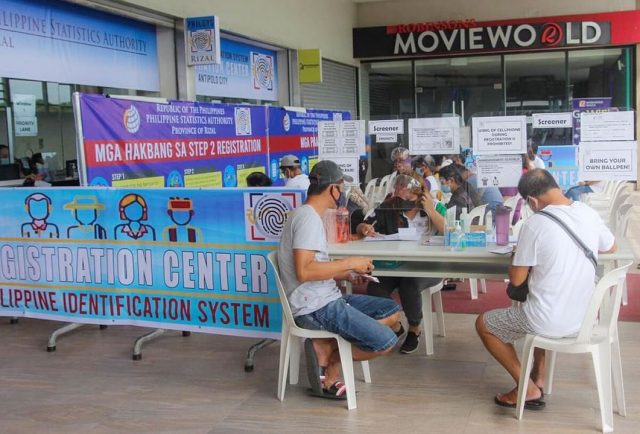
The central bank’s financial inclusion plan over the next six years is targeting the unbanked ranks within the consumer small business, and agriculture sectors.

The National Strategy for Financial Inclusion 2022 to 2028 launched by the Bangko Sentral ng Pilipinas Friday targets four key outcomes, including reduced disparities in financial inclusion; improved health and resilience; more financially capable and empowered consumers; and increased access to financing by micro, small and medium enterprises (MSMEs), including startups, and the agriculture sector workers.

“This signifies our greater collective commitment and aspiration for a more financially included and empowered citizenry. It takes a deliberate stance to address the significant disparities in financial inclusion levels across demographics and segments,” BSP Governor Benjamin E. Diokno said.

The new strategy succeeds the first national government directive for financial inclusion in 2015.

“(This) benefits the disadvantaged and low-income groups to reduce financial stress and help them to become more productive,” President Rodrigo R. Duterte said in a video message at the launch.

The central bank sought the assistance of the Asian Development Bank to update its inclusion strategy.

The BSP’s goal is for 70% of adult Filipinos to have a formal financial account by 2023.

Mr. Diokno has said 53% of adults had a basic deposit or an e-money account as of the first quarter of 2021. — Luz Wendy T. Noble

Peso rises as PHL relaxes border restrictions

The peso rebounded Friday after the government relaxed restrictions on international travel and expectations that quarantine rules will ease next month.

The peso closed at P51.23 against the dollar Friday, appreciating from its Thursday finish of P51.34, according to the Bankers Association of the Philippines.

The peso also strengthened from its P51.37 close on Jan. 21.

The peso opened Friday’s session at P51.34. The low was P51.35 and the high P51.21.

Dollar trading volume rose to $1.124 billion Friday from $886.8 million Thursday.

The peso was reacting to the government’s announcement that it will ease travel restrictions on arriving Filipinos and some foreigners, Rizal Commercial Banking Corp. Chief Economist Michael L. Ricafort said in a Viber message.

Cabinet Secretary Karlo Alexei B. Nograles said at a briefing Friday that fully-vaccinated international passengers will no longer need to go to a designated facility to quarantine upon arrival starting February. They will instead need to present a negative PCR test, taken within 48 hours before departure from the country of origin.

Arriving travelers are currently categorized under color-coded scheme depending on the perceived infection risk of their country of origin.

A trader said the market was hopeful that restriction measures will ease as infections are decreasing.

The Department of Health said active cases rose 18,191 to 226,521 on Friday.

Metro Manila and some provinces which saw a COVID-19 surge are under Alert Level 3 until the end of the month. — Luz Wendy T. Noble

Stocks dip ahead of next mobility classification

Philippine Stock Exchange index

Philippine shares retreated on Friday as investors chose to stay on the sidelines as they await the government’s decision on the next quarantine classification.

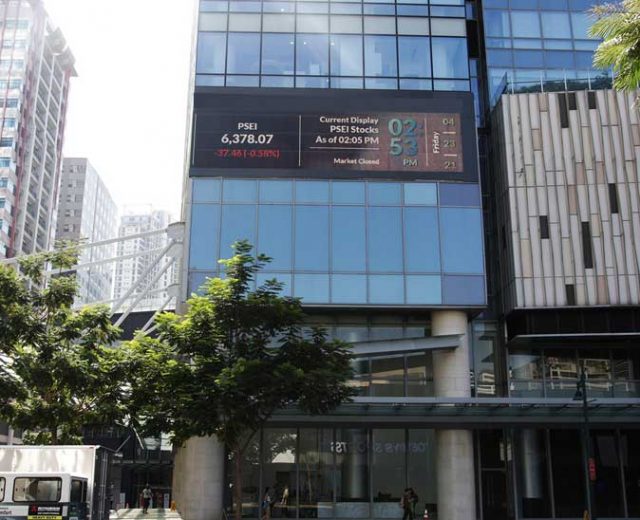
The 30-member Philippine Stock Exchange index (PSEi) slipped 21.55 points or 0.29% to end at 7,251.97, while the broader all shares index skidded 5.41 points or 0.14% to close at 3,856.08 on the last trading day of the week.

“The local bourse declined as investors booked gains on the last trading day of the week while waiting for the government’s announcement of the quarantine measures for February,” Philstocks Financial, Inc. Senior Research and Engagement Officer Claire T. Alviar said in a Viber message.

The government is set to announce over the weekend the country’s new alert level, which signals the allowed mobility for age groups and activities for establishments.

The market is expected to move sideways in the coming days if the government will extend the current restrictions while investors wait for further catalysts, Ms. Alviar added.

She also noted that the value turnover has improved compared with the average of P5.60 billion this month.

Value turnover rose to P8.01 billion with 1.23 billion issues traded on Friday, from P6.25 billion with 1.66 billion shares switching hands the previous trading day.

Regina Capital Development Corp. Head of Sales Luis A. Limlingan said investors also weighed the US Federal Reserve’s stance on raising interest rates against the latest gross domestic product (GDP) data of the country and the US.

The local economy grew by of 5.6% last year, beating projections and the government’s revised target of 5% to 5.5%, while the US economy rose 5.7% in 2021.

On Thursday, the US central bank indicated it is likely to increase rates in March, while affirming its plan to stop bond purchases that month before launching a significant reduction in its asset holdings, Reuters reported.

“Internationally, market participants may still be digesting the latest US Federal Reserve monetary policy decision,” Timson Securities, Inc. Trader Darren Blaine T. Pangan said in a Viber message.

US stocks retreated after the US Fed’s hawkish move. The Dow Jones Industrial Average was down 0.02%; the S&P 500 lost 0.54%; and the Nasdaq Composite fell 1.4%; while the MSCI world equity index, which tracks shares in 45 nations, fell 0.94%, Reuters reported.

Back home, sectoral indices were mixed. Financials gained 52.59 points or 3.18% at 1,694.89, and industrials climbed 109.22 points or 1.03% to close at 10,616.98.

On the other hand, property declined 54.2 points or 1.70% to 3,126.00; services dropped 27.51 points or 1.38% to 1,952.96; holding firms lost 68.21 points or 0.95% to 7,063.07; and mining and oil slipped 18.66 points or 0.18% to end at 10,189.02.

Decliners beat advancers, 109 against 76, while 57 names closed unchanged.

Foreigners turned buyers with P688.70 million, a reversal from the P676.14 million in net selling recorded on Thursday.

Mr. Pangan pegged the PSEi’s support to remain at the 6,940 level, while 7,450 may be considered the closest resistance area for the index. — Marielle C. Lucenio

Zalora expands user base through buy now, pay later scheme

ZALORA.COM.PH

Fashion e-commerce platform Zalora is seeing an average quarterly increase of 50% in number of users in all its Southeast Asian markets following the April/May 2021 launch of its Buy Now, Pay Later (BNPL) payment option, which is proving popular among 30-to-35-year-olds.

The e-commerce platform has over 59 million user visits from Southeast Asia per month, according to a 2021 Trender report.

BNPL transactions accounted for more than 5% of total Zalora orders in 2021. Singapore and Malaysia are driving BNPL’s use in the region, with up to 12% of transactions paid via BNPL.

“Customers need to be able to pay however they want, so we have significantly expanded the available payment options on Zalora to lower any barrier to purchase and facilitate the process,” said Paulo L. Campos III, Zalora Philippines CEO, in an e-mail to BusinessWorld.

In the Philippines, Zalora offers BNPL through superapp Grab’s PayLater service, which allows customers to pay the following month for a small fee; and Atome, a Singapore-based BNPL brand, which allows customers to break down purchases into three payments at 0% interest.

UNEQUAL ACCESS

BNPL is gaining ground in Southeast Asia, wherein some 290 million individuals remain unbanked.

In Indonesia, where many do not own credit cards, the option is popular among 55% of new e-commerce users, according to a survey by Kredivo and the Katadata Insights Center, a market research firm.

A 2021 report by Worldpay from FIS, a global payment processing provider, expects BNPL’s share in the Asia Pacific to more than double from 2020 to 2024.

“These share gains will come at the expense of credit cards, bank transfers, cash on delivery, and prepaid cards, all of which will lose share through 2024,” the report said.

In the Philippines, factors like the unequal penetration rate of bank cards hamper the adoption of contactless payment methods, said Mr. Campos, who added that many customers continue to prefer COD (cash on delivery) because it is risk-free.

“They only pay upon receiving their goods, and it allows for faster order processing because banks or credit cards are bypassed,” he said.

The pandemic, which spurred the rise of e-commerce, has ripened the entry of payment platforms such as BNPL. Since partnering with Atome, Zalora has seen a 70% growth in the number of customers choosing BNPL in Singapore and Malaysia.

“As digital adoption across the region continues to accelerate, app-based services such as BNPL can make financial services straightforward to access despite the lack of robust tech or digital infrastructure,” Mr. Campos added. — Patricia B. Mirasol

Smart is Philippines’ undisputed fastest 5G mobile network in latest Ookla® report

Smart 5G sweeps Ookla® Speedtest Awards TM in H1 and H2 2021

PLDT mobile services arm Smart Communications, Inc. (Smart) remains as the country’s undisputed fastest 5G mobile network as it delivered significantly higher speeds for its subscribers during the second half of 2021, according to the latest report by Ookla®, the global leader in mobile and broadband network intelligence.

Using 325,396 user-initiated 5G tests, Ookla declared Smart as the winner of its Speedtest AwardsTM for Q3-Q4 2021 with a Speed ScoreTM of 201.95, while its closest competitor posted a Speed ScoreTM   of 116.08.

Sweeping awards for H1 and H2 2021

To bag the award, Smart posted a median download speed of 218.82 Mbps and a median upload speed of 22.46 Mbps, while its closest competitor posted a median download speed of 116.92 Mbps and a median upload speed of 10.81 Mbps.

Ookla also reported Smart’s median latency to be at 14 milliseconds while its closest competitor recorded a median latency of 19 milliseconds.

Having won ‘Fastest 5G Mobile Network’ for Q1-Q2 back in August last year, Smart’s latest accomplishment meant it effectively swept the Ookla Speedtest Awards for all award periods of 2021 amid its accelerated 5G rollout and continuous network improvement efforts across the country.

Huge speed gaps in Manila, Cebu, CDO

In its latest report, Ookla also showed huge speed gaps between Smart and its closest competitor in select cities.

In Manila, for example, Smart recorded a median download speed of 263.67 Mbps while its closest competitor posted 98.44 Mbps. Smart also registered a median upload speed of 28.27 Mbps while its closest competitor hit 9.77 Mbps.

In the Visayas, Smart also dominated Cebu City with a median download speed of 214.27 Mbps while its closest competitor recorded 125.93 Mbps. Smart also led with an upload speed of 19.85 Mbps while its closest competitor clocked 10.34 Mbps.

In Mindanao, Smart led in Cagayan de Oro City with a median download speed of 217.83 Mbps while its closest competitor recorded 143.71 Mbps. Smart also posted a median upload speed of 21.82 Mbps while its closest competitor posted 12.20 Mbps.

Speed as key network performance metric

“As the pandemic sped up digital adoption across the world, we have made it our mission to provide Filipinos with the best customer experience through our superior network and innovative services that enable our subscribers to live the Giga Life and pursue their passions,” said Jane J. Basas, SVP and head of Wireless Consumer Business at Smart.

“Speed is the key metric when it comes to network performance and simply providing amazing digital experiences, and we are extremely proud that our 5G network has consistently been recognized as the fastest in the country based on the real-world experience by our subscribers,” she added.

Pioneering 5G services

Since it launched its 5G commercial service nationwide back in 2020, Smart has relentlessly pushed 5G revolution in the Philippines, deploying around 7,200 5G base stations around the country.

Smart also enables Filipinos to adopt 5G and enjoy its benefits through innovative products and services, such as the Rocket WiFi, Smart’s first and fastest 5G Pocket WiFi; and the Smart Bro Prepaid Home WiFi 5G, Smart’s first 5G-powered prepaid WiFi service that makes it easier for families to enjoy fiber-like wireless speeds at home.

Smart also introduced the groundbreaking Unli 5G data offer via the GigaLife App to give subscribers more data to enjoy all their favorite online activities powered by Smart 5G. Smart later brought this unlimited 5G experience to postpaid customers by launching the Signature Plans+.

Make the Smart move now

Through its superior network, Smart is gearing up to bring more exciting 5G experiences to subscribers.  To take part in these amazing experiences, non-Smart customers can now make the Smart move without having to change their mobile number through Mobile Number Portability (MNP).

To know more about switching to Smart via MNP, users may visit x.smart/switch or make the switch via the GigaLife App.

*Based on analysis by Ookla® of Speedtest Intelligence® data Q3–Q4 2021. Ookla trademarks used under license and reprinted with permission.

ASC Ref No: S022PO12822SS


Spotlight is BusinessWorld’s sponsored section that allows advertisers to amplify their brand and connect with BusinessWorld’s audience by enabling them to publish their stories directly on the BusinessWorld Web site. For more information, send an email to online@bworldonline.com.

Join us on Viber to get more updates from BusinessWorld: https://bit.ly/3hv6bLA.

Mapúa launches fintech-focused business incubator

FREEPIK
Mapúa University launched on Jan. 27 its Think and Tinker Laboratory, a technology business incubator (TBI) that aims to develop digital education tools, research and development (R&D) projects, and micro-certification courses in collaboration with information technology company Digital Pilipinas.
“We hope, through this, to contribute to the nation’s efforts of ramping up tech commercialization,” said Reynaldo B. Vea, president of Mapúa University. “We believe that Think and Tinker will bring knowledge directly to the classroom … and we look forward to partnering with entrepreneurs, upon whom depends the dynamism of our economy.”

The incubation program will focus on fintech, according to Jacinto M. Asuncion Jr., TBI manager for Think and Tinker, and open calls for startups will be issued this year. Proposal-writing assistance will be extended to applicants.

‘KILLER ENVIRONMENT’

Mapúa’s TBI has partnered with Digital Pilipinas to develop R&D projects, including micro-certification courses under the latter’s academy.

“Now more than ever, we need to put a compelling innovation agenda for the country,” said Amor L. Maclang, co-convenor of Digital Pilipinas and Mapúa TBI advisor. “Digital Pilipinas’ [role] is to catapult us to a brighter future by fostering, not a killer app, but a killer environment for technology and innovation in the Philippines.”

Digital Pilipinas has a 12-point agenda that includes addressing the threat of student learning being at risk of further disruption.

These micro-certification courses will be cheaper than a Wagyu burger, added Ms. Maclang.

“Many might not have the intent to take long-term classes … they can learn on demand from market leaders,” she said at the launch. “In this decentralized world, the barriers of learning are not as formidable as they used to be.”

Micro-certifications are open to all, not just Mapúans, and might be included in the university’s curriculum.

NO-BRAINER 

Microsoft Philippines chief marketing and operating officer Abid Zaidi, who is also part of the advisory group that will help develop Digital Pilipinas Academy’s micro-certifications, said this is the right time for startups to think about possibilities.

E-commerce is a no-brainer,” he added, as startups now are “getting good funding” because of the established need for online purchasing.

“When you look at the global acceptance of startups, AI [artificial intelligence] and big data are showing a lot of promise,” Mr. Zaidi said. “When we look at exits at a five-year period, the highest successes are in [those areas].”

Microsoft partners with the private sector and the government to upskill and mentor at scale. “It is heartening to see the government bringing in the right fuel and providing a conducive environment,” he said.

The Think and Tinker Laboratory is supported by the Department of Science and Technology’s Philippine Council for Industry, Energy, and Emerging Technology Research and Development (DOST-PCIEERD). — Patricia B. Mirasol   

Non-fossil fuels forecast to be 50% of China’s power capacity in 2022

UNSPLASH

BEIJING — Non-fossil fuel energy sources such as wind, nuclear, solar, and hydropower may make up half of China’s total power generation capacity by the end of 2022, for the first time ever, the country’s electricity council has forecast.

China, the world’s biggest greenhouse gases emitter and coal consumer, is expected to add 180 gigawatts (GW) of new power generation capacity from non-fossil fuel sources during 2022, driving total non-fossil fuel capacity to 1,300 GW, according to a report issued by the China Electricity Council (CEC) late on Thursday.

That equates to half of the CEC’s forecast of total installed power generation capacity in China of 2,600 GW by the end of 2022, of which 1,140 GW would be coal-fired power capacity, the report said.

China has pledged to “control” coal consumption in the 2021–2025 period and bring total wind and solar capacity to at least 1,200 GW by the end of this decade in order to cap carbon emissions by around 2030 and reach carbon neutrality by 2060.

The CEC earlier this month said that China’s power industry, which causes about 41% of the country’s total carbon emissions, could aim to cap its carbon emissions by 2028.

In Thursday’s report, the council also forecasted China’s electricity consumption in 2022 will increase by 5%6% from a year earlier, reaching 8.7 trillion to 8.8 trillion kilowatt-hours.

“[We] expect the electricity supply and demand situation in 2022 to be generally balanced across the country. But some regions could see power crunch during peak demand hours in summer and winter season,” the CEC said.

More than half of Chinese regions suffered from a months-long power shortage in 2021, partly because of low hydropower generation and insufficient coal supply. — Reuters

Flurry of missile tests displays North Korea’s increasingly diverse arsenal

KCNA VIA REUTERS

SEOUL — This January has been one of the busiest months ever for North Korea’s missile testing, with launches displaying a dizzying array of weapon types, launch locations, and increasing sophistication.

From hypersonic missiles and long-range cruise missiles to missiles launched from railcars and airports, the tests highlight the nuclear-armed state’s rapidly expanding and advancing arsenal amid stalled denuclearization talks.

North Korea hasn’t tested its longest-range intercontinental ballistic missiles or nuclear weapons since 2017, but leader Kim Jong Un has pushed for more “military muscle” to counter what he sees as threats from the United States and its allies in Asia.

Mr. Kim visited an unidentified “important” munitions factory, state media said this week, underscoring his vow not only to improve capabilities, but mass produce and deploy more weapons.  Here are the different types of weapons tested so far this month:

‘HYPERSONIC’ MISSILES  

North Korea said it tested a new type of “hypersonic missile” on Jan. 5 and again on Jan. 11, with Kim Jong Un reported to have attended the second launch.

Hypersonic weapons usually fly towards targets at lower altitudes than ballistic missiles and can achieve more than five times the speed of sound — or about 6,200 kms per hour (3,850 mph).

Despite their name, analysts say the main feature of hypersonic weapons is not speed but their maneuverability, which can help them evade missile defense systems.

South Korean officials questioned the capabilities of the missile after the first test, saying it did not appear to demonstrate the range and maneuverability claimed in a state media report and featured a Maneuverable Reentry Vehicle (MaRV) rather than the type of next-generation hypersonic glide vehicle developed by countries like China and Russia. Those officials later said the second test appeared to demonstrate greater performance.  Analysts said if Pyongyang can perfect such weapons, it would represent a potential major upgrade in its striking power against its nearby adversaries, complicating efforts by the United States and its Asian allies to counter that.

KN-23 SRBM 

On Jan. 14 North Korea launched a pair of short-range ballistic missiles (SRBMs) from a train near the northern border with China, in what state media said was a short-notice drill aimed at boosting the proficiency of the troops operating the missiles.

North Korea first tested the rail-based system in September, saying it was designed as a potential counter-strike to any threatening forces.

Despite the country’s limited and sometimes unreliable rail network, rail mobile missiles are a relatively cheap and efficient option to improve the survivability of their nuclear forces, making it difficult for enemies to detect and destroy them before being fired, according to analysts.

The missiles appeared to be KN-23 SRBMs, which were first tested in May 2019, and are designed to evade missile defenses by flying on a lower, “depressed” trajectory, experts said.

North Korea fired another pair of KN-23 missiles on Thursday, this time from a wheeled launching vehicle.

The tests confirmed the “explosive power” of its conventional warhead, state media said, while analysts noted it traveled on its lowest trajectory yet.

KN-24 SRBM  

North Korea launched two short-range ballistic missiles (SRBMs) in a rare test from an airport in its capital, Pyongyang, on Jan. 17.

The pair of missiles “precisely hit an island target” off the east coast, according to state media.

Analysts said the missiles appeared to be KN-24 SRBMs which were last tested in March 2020 and appear to have entered mass production and deployment with military units.

The KN-24 resembles the US MGM-140 Army Tactical Missile System (ATACMS) and, like the KN-23, is designed to evade missile defenses and carry out precision strikes on a flatter trajectory than traditional ballistic missiles.

LONG-RANGE CRUISE MISSILE  

State media reported two long-range cruise missiles were fired on Tuesday, traveling 1,800 km before hitting a target island in the sea off North Korea’s east coast.

The cruise missile would play a role in “boosting the war deterrence of the country,” state news agency KCNA said.

In September, North Korea tested a new “strategic” cruise missile for the first time, seen as possibly the country’s first such weapon with a nuclear capability.

Analysts said the latest cruise missile appeared to be similar, but also showed signs of being a possible variant.

North Korea’s cruise missiles usually generate less interest than ballistic missiles because they are not explicitly banned under UN Security Council Resolutions, but analysts say land-attack cruise missiles can be no less a threat than ballistic missiles. — Josh Smith/Reuters

Apple sales and profit top estimates as hit from chip shortages eases

UNSPLASH

Apple Inc. is overcoming the costly global shortage in computer chips, posting record sales over the holiday quarter, beating profit estimates and forecasting that its shortfall is narrowing.

The iPhone maker, which is the world’s largest company by market capitalization, has handled supply-chain challenges such as factory shutdowns and shipping delays brought on by the pandemic better than any of its top peers, analysts said. Apple shares rose about 5% in after-hours trading, erasing half their losses on the year. The gains came after the company teased its ambitions for augmented reality in the metaverse.

More people wanted iPhones, iPads, and other gadgets over the holiday quarter than Apple had to sell, costing the company over $6 billion in sales, or in line with what it feared. Yet, Apple, which is the biggest client of many part suppliers, used its buying power to squeeze those vendors to ship enough gadgets to power record sales in its iPhones, Mac and wearables and accessories segments. Apple executives said chip shortages are mostly affecting older models of its products and particularly slowed iPad sales.

“They’ve navigated the supply chain better than everybody, and it’s showing in the results,” said Ryan Reith, who studies the smartphone market for industry tracker IDC.

The four best-selling phones in urban China were all iPhone models, Apple said, as competitors struggled to manufacture rival offerings. It was the top-selling vendor in China for the first time in six years, research firm Counterpoint Research reported on Wednesday.

Nicole Peng, who tracks China’s smartphone sector at research firm Canalys, said comparatively low prices and the retreat of chief rival Huawei from the market led to a strong quarter.

Ms. Peng said Apple was unlikely to repeat that quarterly performance this year, given it was driven by one-off factors. However, she said the company could still have a strong 2022 if Chinese consumers warm up to a new iPhone SE, which is expected to be released this year.

Apple’s growing sales of services such as music, TV and fitness subscriptions also are helping soften the blow of low device supply. The company said it now has 785 million paying subscribers across its at least seven subscription offerings, up by 40 million from last quarter and soothing investors concerned about slowing growth at rivals such as Netflix Inc .

Even better, Apple Chief Financial Officer Luca Maestri told Reuters that easing chip shortages should mean less than $6 billion in lost revenue in the current quarter. But he declined to estimate further in the future.

“The level of constraint will depend a lot on other companies, what will be the demand for chips from other companies and other industries,” he said.

RECORD IPHONE UPGRADES 

The iPhone 13, which started shipping days before the quarter began, led to worldwide phone sales revenue for Apple of $71.6 billion, a 9% increase from the 2020 holiday season that handily beat Wall Street targets, according to Refinitiv data. Mr. Maestri attributed the sales bump to a record number of upgrades from older iPhones and double-digit growth in people switching from rivals.

Apple’s overall fiscal first-quarter revenue was $123.9 billion, 11% up from last year and higher than analysts’ average estimate of $118.7 billion. Profit was $34.6 billion, or $2.10 per share, compared with analysts’ expectations of $31 billion and $1.89 per share.

Mr. Maestri warned though that revenue growth will slow in the current quarter compared with the December quarter primarily due to less favorable foreign exchange rates and the different launch dates of products.

Apple’s only category segment to miss sales expectations was iPads. Sales fell 14% to $7.25 billion compared with analyst estimates of $8.2 billion, seeming to confirm industry predictions that the tablets would have low priority for any scarce parts.

Services, Apple’s second-biggest segment after iPhones, increased sales 24% to $19.5 billion.

Revenue from Mac computers rose 25%, and Apple said the last six quarters have been its best for Mac sales.

The pandemic has accelerated adoption of digital tools for communication, learning and entertainment, powering Apple to blowout sales over the last two years.

But investors this year have been shifting funds toward safer assets and away from tech stocks such as Apple that have soared during the pandemic with people spending more time online.

Wall Street has questioned how long it will take Apple to deliver its next big product, such as an augmented reality (AR) headset for the metaverse.

“We see a lot of potential in this space and are investing accordingly,” Chief Executive Tim Cook told investors on Thursday.

Apple also is facing antitrust pressure in the United States and Europe that could lead to new regulations that cut into its services revenue.

Late last month, the Dutch Authority for Consumers and Markets (ACM) ordered Apple to make changes for apps on offer in the Apple App Store in the Netherlands by Jan. 15 or face fines, after it found that the US company had abused its market dominance by requiring dating app developers to exclusively use Apple’s in-app payment system.

Still, Apple is trading at 27 times expected earnings over the next 12 months. While down from as much as 35 a year ago, it remains above the company’s five-year average of 20 times expected earnings, according to Refinitiv. — Danielle Kaye, Paresh Dave, and Nivedita Balu/Reuters 

Fiscal stimulus powers US economy in 2021 to its best performance since 1984

UNSPLASH

WASHINGTON — The US economy notched its strongest growth in nearly four decades in 2021 after the government pumped trillions of dollars in coronavirus disease 2019 (COVID-19) relief, and is seen forging ahead despite headwinds from the pandemic, strained supply chains as well as inflation. 

A surge in gross domestic product (GDP) in the fourth quarter as businesses replenished depleted inventories to meet strong demand for goods was the final push. Last year’s robust growth reported by the Commerce Department on Thursday supports the Federal Reserve’s pivot towards raising interest rates in March. 

Fed Chair Jerome Powell told reporters on Wednesday after a two-day policy meeting that “the economy no longer needs sustained high levels of monetary policy support,” and that “it will soon be appropriate to raise” rates. 

“While Omicron will lead to weaker growth in the first quarter, activity is expected to rebound nicely once the latest pandemic wave abates and supply-chain glitches ease,” said Sal Guatieri, a senior economist at BMO Capital Markets in Toronto. 

“The Fed will need to be ‘humble and nimble’ as it navigates underlying economic strength, worsening labor shortages, and stubbornly high inflation.” 

The economy grew 5.7% in 2021, the strongest since 1984, as the government provided nearly $6 trillion in pandemic relief. It contracted 3.4% in 2020, the biggest drop in 74 years. 

It was the first time in 20 years that the US economy grew faster than the Chinese economy. 

President Joseph R. Biden, Jr., quickly took credit for the stunning performance, which he said was “no accident.” 

Mr. Biden’s popularity is falling amid a stalled domestic economic agenda after Congress failed to pass his signature $1.75 trillion Build Back Better legislation. 

“We are finally building an American economy for the 21st Century, and I urge Congress to continue this momentum by passing legislation to make America more competitive, bolster our supply chains, strengthen our manufacturing and innovation, invest in our families and clean energy, and lower kitchen table costs,” Mr. Biden said in a statement. 

Gross domestic product increased at a 6.9% annualized rate in the fourth quarter, the government said in its advance GDP estimate. That followed a 2.3% growth pace in the third quarter. 

Growth is 3.1% above its pre-pandemic level. 

Economists polled by Reuters had forecast GDP growth rising at a 5.5% rate. 

The momentum, however, faded by December amid an onslaught of COVID-19 infections, fueled by the Omicron variant, which contributed to undercutting spending as well as disrupting activity at factories and services businesses. But there are signs that infections have peaked, which could lead to increased demand for services by spring. 

Inventory investment increased at a $173.5 billion rate, contributing 4.90 percentage points to GDP growth, the most since the third quarter of 2020. Businesses had been drawing down inventories since the first quarter of 2021. 

Spending shifted during the pandemic to goods from services, a demand boom that pressured supply chains. Excluding inventories, GDP grew at a moderate 1.9% rate. 

Stocks on Wall Street were trading higher. The dollar gained versus a basket of currencies. US Treasury yields fell. 

BALANCING ACT 

Some economists viewed the modest growth in the so-called final sales as a sign that the economy was set to slow down significantly, especially if not all the inventory accumulation was planned. They also worried that rate hikes as well as reduced government aid, especially the loss of the childcare tax credit, could hurt demand. 

So far inventory-to-sales ratios remain low by historical standards. 

“Fed policymakers will have to be extremely careful at threading the needle when they raise interest rates as every other Federal Reserve in history has raised interest rates too high and brought the economy crashing back down,” said Christopher Rupkey, chief economist at FWDBONDS in New York. 

Growth last quarter was also lifted by a jump in consumer spending in October before retreating considerably as Omicron raged. Consumer spending, which accounts for more than two-thirds of economic activity, grew at a 3.3% rate after rising at a 2.0% pace in the third quarter. 

A decrease in purchases of motor vehicles, which are scarce because of a global chip shortage, was offset by increases in spending on healthcare as well as at membership clubs, sports centers, parks, theaters, and museums. 

Inflation increased at a 6.9% rate, the fastest since the second quarter of 1981, way above the Fed’s 2% target. That resulted in income at the disposal of households dropping at a 5.8% rate, which also limited consumer spending. 

Still, households remained cushioned by huge savings, which were at $1.34 trillion. Wages surged at an 8.9% rate before adjustment for inflation, reflecting a labor market that is experiencing an acute shortage of workers, with 10.6 million job openings at the end of November. 

Though the labor market took a step back in early January as Omicron surged, it is at or near maximum employment. A separate report from the Labor Department on Thursday showed initial claims for jobless benefits dropped 30,000 to a seasonally adjusted 260,000 during the week ended Jan. 22. 

There were sharp declines in claims in Illinois, Kentucky, Texas, New Jersey, New York as well as Pennsylvania. 

Support to GDP growth last quarter also came from a rebound in business spending on equipment. But government spending fell at both the federal and state and local levels. 

Trade made no contribution after being a drag on GDP growth for five straight quarters, while investment in homebuilding contracted for a third consecutive quarter. The sector is being constrained by expensive building materials, which has resulted in a record backlog of homes yet to be built. 

Despite the economy’s struggles at the start of the year, most economists believe the run of good fortunes will prevail. Growth estimates for this year top 4%. 

“This year may well be an even better year for the economy,” said Scott Hoyt, a senior economist at Moody’s Analytics in West Chester, Pennsylvania. “Growth will slow and monthly job gains will lag last year’s lofty rates. Nonetheless, the economy should be near full employment and inflation near the Fed’s target by year’s end.” —  Lucia Mutikani/Reuters

As Omicron ebbs, England revives Plan A: living with COVID

REUTERS

LONDON — After an uncomfortable but relatively brief return to coronavirus restrictions triggered by the Omicron variant, England is going back to “Plan A” — learning to live with a disease that is probably here to stay. 

The bet is that booster jabs, antiviral pills, and Omicron’s lower severity will enable the government to manage outbreaks of a virus that cannot be shut out. Other countries equally keen to unshackle business and personal freedom will be watching. 

Work-from-home guidance ended last week, and measures such as mask mandates and coronavirus disease 2019 (COVID-19) passes, also introduced in England last month, lapsed on Thursday, returning the rules to where they were last July. 

The UK Health Security Agency (UKHSA) is preparing to switch focus to supporting vulnerable individuals rather than imposing national rules, according to a draft policy seen by Reuters. 

“As we evolve to move to living with COVID, UKHSA’s COVID-19 response will move from a whole nation approach to a targeted response, focused on protecting the vulnerable,” read the paper, titled UKHSA COVID-19 Vision – DRAFT

“We will ensure that our future response is more streamlined, flexible, and convenient for citizens and delivers value for money.” 

British Prime Minister Boris Johnson, who has presided over a death toll of 150,000 that ranks seventh in the world, was forced in December to introduce the “Plan B” restrictions, angering some of his own lawmakers. He now has a strong political imperative to scrap them. 

As police investigate gatherings at his offices during COVID lockdowns, in apparent violation of laws he had himself imposed, he faces the biggest crisis of his career, while many of his members of parliament are determined that he must return life to near-normal. 

BECOMING ENDEMIC 

Conservative lawmaker Andrew Bridgen told Reuters that further COVID-19 restrictions were “unlikely, unnecessary and politically impossible”. 

Mr. Johnson himself told lawmakers last week: “As COVID becomes endemic, we will need to replace legal requirements with advice and guidance.” 

He also said he would let the law that obliges people with COVID-19 to self-isolate lapse in March, and even look to bring that date forward. 

Much of his confidence stems from the nature of Omicron, which drove infections to record levels in December without increasing hospitalizations and deaths to the same extent. 

Graham Medley, chair of the government’s COVID modeling group, told Reuters that when Plan B was introduced, the severity of Omicron and the impact of boosters had been unclear. 

In the event, even at the peak, with social restrictions stopping short of a full lockdown, daily deaths stayed below 300 on a seven-day average, compared to more than 1,000 a day in the third national lockdown a year earlier. 

Mr. Medley said growing immunity — with 83% of over-11s having had two doses of vaccine, and 63% a booster — meant each future wave should be less challenging, though there might be hiccups: 

“Whilst I expect next January to be better than this one, and the following January to be better than next January, I wouldn’t be surprised if at some point we have to go backwards.” 

There is also a potential new resource, in the shape of antiviral drugs — aimed at preventing high-risk individuals who catch the virus becoming seriously ill, but not yet rolled out widely. 

“Things have changed so much over the last six or seven months,” said Harkishan Mistry, 58, who was included in the “Panoramic” trial of Merck’s molnupiravir after catching the virus. 

“We’ve got a clear path going forward. I’m optimistic now,” Mr. Mistry said on a video call from Bradford, where he was self-isolating. 

His view was echoed by health minister Sajid Javid, who said: “Our vaccines, testing, and antivirals ensure we have some of the strongest defenses in Europe and are allowing us to cautiously return to Plan A, restoring more freedoms to this country.” 

NOT THERE YET? 

But evolutionary virologist Aris Katzourakis of Oxford University warned that diseases such as malaria and polio may be endemic, but are not harmless. 

“A disease can be endemic and both widespread and deadly,” he wrote in the science journal Nature

“It frustrates me when policy makers invoke the word ‘endemic’ as an excuse to do little or nothing.” 

A relentless focus on managing COVID, rather than preventing infections, also has unwanted side effects. 

Because National Health Service resources have been diverted towards vaccination boosters, thousands of other appointments have been postponed, adding to a vast backlog of elective care in the state-run system. At the same time, high infection rates among staff and patients continue to weigh heavily on hospitals. 

“It’s about living safely with COVID. It’s not just about living with COVID,” said Matthew Ashton, Director of Public Health at Liverpool City Council. 

“We all desperately want the pandemic to end,” he added. “Minimizing disruption is part of that solution. I definitely feel like we’re on the journey towards living safely with COVID — but I don’t think we’re there yet.” 

Nick Thomas, a family doctor in Witney, central England, supporting the Panoramic trial, said local practices were also feeling the strain, despite the success of vaccines and the prospect of effective antivirals. 

“We have to manage all of those [other conditions] as well as an Omicron wave right now. And so that balance is really important – and the more tools we have, the better.” — Alistair Smout and Elizabeth Piper/Reuters

Beginning a new year with hope

Welcoming a new year usually sparks excitement for whatever there is to come. The new year has always brought hope for what can be and the opportunity to start fresh. But as the world continues to grapple with the current health crisis, many of us still carry some uncertainties for the year ahead.

In the midst of these difficulties and challenges, we have seen Filipinos from all over the country take the lead in empowering us and giving us hope for the better future to come. One such person is Kiefer Ravena. Kiefer is not only a UAAP Basketball legend, but also an avid advocate for financial literacy and the importance of life insurance. He is currently the brand ambassador of Cocolife and has made it part of his mission to reach Filipinos all over the country with his message of preparation and planning for not only ourselves, but also for our families.

For this new year, Kiefer gave a message in his capacity as the brand ambassador of Cocolife. His message was one of hope and promise for an amazing year ahead. With such in mind, he encouraged Filipinos not to give up and always be thankful to God:

Hindi lang ito simpleng pagsalubong sa bagong taon. Ito ay pagpapasalamat sa lakas na binigay sa atin ng Diyos at ng bawat isa para kayanin nating manatiling nakakapit sa kabila ng lahat ng problemang hinaharap natin,” he said.

From his message, we can see that the Cocolife brand ambassdor believes that the difficulties and challenges we have faced in the past two years have taught us to be more generous, caring, and loving towards our fellow countrymen. And that these experiences will lay the foundation for a more united Filipino nation:

Pinaghusay tayo ng lahat ng nalagpasan natin. Dalhin natin ito kasama ang lahat ng aral at masasayang alaala na tumlong sa ating bumangon,” he said.

Kung kinaya natin dati, mas kakayanin natin ngayon,” he further reassured.

Taking inspiration from his past experiences, he fervently talked about how all of our experiences, big or small, good or bad, serve as lessons to us now and a foundation for what we will be:

Ang lungkot, hirap, at ang mga tagumpay na naabot natin, maliit man o malaki, ang magiging sagisag ng ating katatagan sa pagharap sa mga panibagong hamon ngayong taon,” he said.

Kasama niyo kami sa pagharap sa 2022,” the Cocolife brand ambassador ensured.

Through this video message for 2022, Cocolife expresses its yearning for a bright and colorful future ahead for Filipinos this coming year.

Cocolife is a believer in the Filipino, and knows that the Filipino deserves nothing but the best. Through its array of quality insurance products and services, Cocolife supports the Filipino in the pursuit of their passions and goals without fear of the uncertainties that lay ahead.

“Our brand ambassador, basketball legend Kiefer Ravena, has always been focused on his goals, on and off the court — on the court and as a young man; and off the court as the Cocolife brand ambassador. He tells us that he earnestly believes in the importance of investing in one’s health, education, savings, and retirement. As successful as he is now, Kiefer’s dreams are the same as yours and ours,” said Cocolife’s President and CEO Atty. Martin Loon.

“For Cocolife, it is our duty to serve our clients with the best insurance products, together with the highest standards of customer servicing especially during these most trying times,” he added.

Have someone who will believe and support you in facing the possibilities of the new year and beyond. Know more about Cocolife’s products designed to meet your needs by visiting  www.cocolife.com.


Spotlight is BusinessWorld’s sponsored section that allows advertisers to amplify their brand and connect with BusinessWorld’s audience by enabling them to publish their stories directly on the BusinessWorld Web site. For more information, send an email to online@bworldonline.com.

Join us on Viber to get more updates from BusinessWorld: https://bit.ly/3hv6bLA.

ADVERTISEMENT
ADVERTISEMENT