Home Blog Page 6872

A year after Myanmar coup, growing surveillance threatens lives

PIXABAY

A group of young men was recently stopped at a security checkpoint in Yangon and asked to hand over their mobile phones. After being questioned about social media apps on their phones, one was fined for using a virtual private network (VPN). 

The crackdown on VPNs, which anonymize a user’s Internet Protocol address and help bypass firewalls, is the latest attack on digital rights in Myanmar — alongside internet shutdowns and growing surveillance — since a military coup on Feb. 1, 2021. 

Authorities say the surveillance measures are part of a drive to improve governance and curb crime. 

Fearful of being tracked, citizens have turned off the location setting on their phones, and used encrypted messaging apps, VPNs, and foreign SIM cards to communicate and organize protests, and document human rights abuses in the country. 

“Even before the coup, there was an assumption that there was surveillance — it has just gotten much more heavy-handed and overt since Feb. 1,” said Debbie Stothard, founder of the Alternative Asean Network on Burma, an advocacy group. 

“But people are determined to keep communication channels open, and they are being very resourceful in expressing dissent and recording abuses — even at great risk to themselves,” she told the Thomson Reuters Foundation in Bangkok. 

Security forces have killed about 1,500 people and arrested thousands since Feb. 1, 2021, according to the non-profit Assistance Association for Political Prisoners. 

People in the Southeast Asian nation had already lived under military control for nearly half a century until 2011. 

During the decade of democratic transition that followed, Myanmar welcomed multiple mobile networks, and purchased drones, facial recognition software, and spyware from foreign firms that the junta is using to track civilians, rights groups say. 

Now, a draft cybersecurity law that is expected to take effect in the coming weeks, is aimed at complete control of electronic communications, data protection, and VPN services in the country, posing grave risks to citizens. 

The bill will mean “the death of online civic space in Myanmar — throttling any remaining rights of the people to freedom of expression, association, information, privacy, and security,” digital rights group Access Now said in a statement. 

Myanmar authorities could not be reached for comment. 

LIVES AT RISK
Across the world, authoritarian governments are tightening their control of the digital space, monitoring social media posts, demanding that critical posts be taken down, and using spyware and internet shutdowns to track and silence dissenters. 

In Myanmar, telecom and internet service providers had been secretly ordered months before the coup to install intercept technology that would allow the army to eavesdrop on the communications of citizens, a Reuters investigation found. 

With the junta in command, activists are concerned that telecom firms will come under more pressure to deepen surveillance. 

Two of the four telecom firms in Myanmar — MPT and Mytel — are backed by the state and the military, respectively. 

Norwegian telco Telenor announced in July it would sell its Myanmar unit to Lebanese firm M1 Group, later clarifying that this was to avoid European Union sanctions after “continued pressure” from the junta to activate surveillance technology. 

Activists had called on Telenor to halt or delay the sale, as it would entail handover of call data records of some 18 million users, putting “customers’ lives at risk” from potential abuse of their meta-data by the Myanmar military. 

Earlier this month, Reuters reported that the junta is backing a deal for M1 Group to partner with a Myanmar firm linked to the military to take over Telenor’s local business. 

It clearly indicates that the military is “consolidating control over the telecom sector to expand surveillance and invade privacy,” said Access Now, which had asked Telenor to take steps to prevent any rights abuses from the transfer of customer data to its buyer. 

“They need to be clear on how the data is being handled, who the data is being handed over to, and why they can’t take mitigative steps right now to reduce some of the potential harms of any transaction that goes through,” said Raman Jit Singh Chima, Asia policy director at Access Now. 

A spokesperson for Telenor did not respond to a request for comment. 

’EXISTENTIAL THREAT’
The surveillance equipment that the junta is using with impunity on Myanmar’s population now was available even before the coup, and underlines the dangers of adopting such technology, said Mr. Chima. 

“No matter the intent or character of any political administration, once surveillance architecture is put in place, it can be used by any future regime or repressive actor to intrude on privacy and further digital authoritarianism,” he said. 

Meanwhile, mobile phone users in Myanmar are also contending with higher costs to make calls and use mobile internet. 

In the last month, mobile data prices have increased by almost 50%, and call charges and SIM card activation fees have also risen sharply, according to Myanmar rights groups. 

In addition, the new cybersecurity law is a “clear and existential threat” to anyone who opposes the junta, said John Quinley, a senior human rights specialist at Fortify Rights. 

The junta will “use this Orwellian law to target critics and undermine people’s right to security and privacy online,” said Quinley, whose organization has heard of several cases of civilians being stopped on the street by security forces and having their mobile phones checked. 

The restrictions on VPNs — with strict penalties including fines and jail terms for those found to be using them illegally — will have severe impacts on the local population, said Thinzar Shunlei Yi, an activist in Myanmar. 

“We use VPNs to access information about COVID-19, for education, daily transactions, and social activities,” she said.  “When we are punished for using VPNs, it’s like killing us.” — Rina Chandran/Thomson Reuters Foundation

Thai cafe serves up crypto advice with coffee and cake

FACEBOOK/HIP Coffee & Restaurant

NAKHON RATCHASIMA, Thailand — A cafe in northeast Thailand has become home to cryptocurrency traders, adding banks of screens showing the latest market moves and dishing out investment advice alongside coffee and cake. 

Behind a calm exterior of cherry blossom trees, customers of HIP Coffee & Restaurant stare at their laptops, supping nervously on iced coffee — part of a surging interest in digital assets in Thailand that has regulators worried. 

“It’s exciting for me to be here because I get to meet people who share the same interests,” said Detnarong Satianphut, a 35-year-old crypto trader. 

“We [traders] get to exchange information because in the trading world we are coming up against millions of people.” 

Cryptocurrencies have been gaining momentum in Thailand, with as much as 251 billion baht ($7.62 billion) in digital asset traded in November, according to the latest official data. 

Earlier this month, Thailand said it would start to regulate the use of digital assets as payments, warning of potential risks to financial stability and the overall economic system. 

HIP cafe, which has been around since 2013, got its crypto makeover in 2020. 

Since then, according to staff, its customers have doubled. Manager Oakkharawat Yongsakuljinda said the cafe provides alternative investment opportunities for people in the surrounding Nakhon Ratchasima province. 

It offers free investment consulting and is planning on starting its own cryptocurrency coin. 

Its customers say trading in the cafe offers them the best chance of success in a volatile market, in which the most well-known cryptocurrency, bitcoin, hit six-month lows this week. 

“Having so many screens helps a lot … We immediately know and get to analyze crashing factors and whether we should buy,” said 23-year-old trader Apakon Putnok. — Jiraporn Kuhakan/Reuters

Singapore-based mobile app offers e-commerce solutions

Kaddra.com

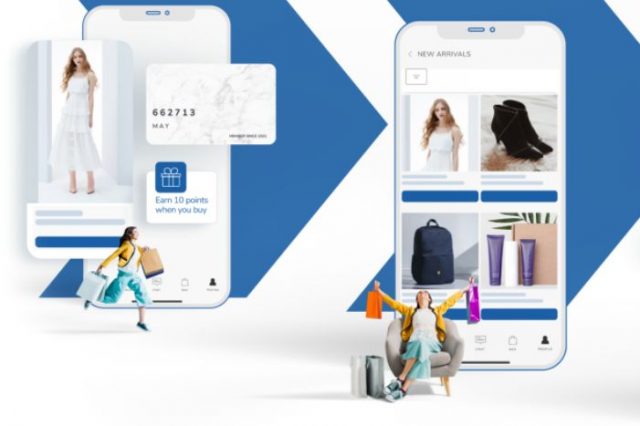
Kaddra, a Software as a Service (SaaS) company that develops loyalty, commerce, and remarketing solutions for small and medium businesses (SMBs), is looking to strengthen its foothold in Asia, including the Philippines. 

The Singapore-based provider offers an all-in-one mobile app for retail and consumer brands.

“Whether you want it as simple as a commerce app to just do purchases, or you want it to be as complex as having a loyalty program, push notifications, marketing, setting up audiences — from simplicity to complexity, we’ve got everything,” said Natalie Ang, Kaddra’s global sales head, in a video interview with BusinessWorld.  

“I think, for businesses today, they feel that we’re a comprehensive product. We can be with them through their growth journey,” she added. 

The technology startup has served SMBs in over 20 different sectors across Asia and Europe since its launch in 2020. In the Philippines, it quadrupled its revenue in the fourth quarter of 2021 compared to the previous quarter, counting brands such as Happy Cup, ShareTea, and Make Up For Ever as clients. 

“In one app, merchants can do everything from A to Z, compared to our competitors who each provide different tools that are not put together. Merchants have to clumsily find manual workflows and processes. It takes up resources, time,” said Dave Yu, head of marketing at Kaddra, adding that a website alone cannot automatically generate traffic and maintain brand loyalty.

Pain points that businesses must address include setting up a mobile storefront, structuring inventory, marketing to customers, crafting the customer journey, and integrating payment gateways and delivery systems. 

“[Consumers] are very resourceful in the way that they look for content, products, and ways that they want brands to engage with them,” Mr. Yu said. “And the thing about our mobile storefront is that there are so many combinations [for brands] to get creative and entice consumers to not only engage, but also convert and transact on the app.” 

In the 2021 e-Conomy Southeast Asia report by Google, Temasek, and Bain & Co., the Philippines was touted as the fastest-growing internet economy in the region, fueled mainly by e-commerce and food delivery services. 

The country’s overall internet economy in terms of gross merchandise value (GMV) is projected to reach $40 billion in value by 2025, the report said. 

Kaddra is in talks with local logistics and payment partners. — Brontë H. Lacsamana

UAE intercepts Houthi missile attack as Israeli president visits

DUBAI — The United Arab Emirates (UAE) said on Monday it had intercepted a ballistic missile fired by Yemen’s Iran-aligned Houthi movement as the UAE hosted Israel’s President Isaac Herzog in his first official visit to the Gulf business and tourism hub. 

Washington condemned the assault, the third on US-allied UAE within the last two weeks, including a deadly strike on the capital Abu Dhabi on Jan. 17. 

The missile attacks mark an escalation of the Yemen war between the Houthis and a Saudi-led coalition, that includes the UAE. 

A senior Emirati official described the attacks as “useless” provocations that would be dealt with to safeguard national security and sovereignty. “Those who test the UAE are mistaken,” the official, Anwar Gargash, said in a Twitter post. 

The UAE defense ministry said the latest missile attack was intercepted 20 minutes past midnight and that its debris fell on an uninhabited area. It did not say whether it was aimed at Abu Dhabi or Dubai, which is hosting a world fair. 

It came while Israel’s president was visiting Abu Dhabi where he discussed security and bilateral relations with the UAE’s de facto ruler Abu Dhabi Crown Prince Sheikh Mohammed bin Zayed Al Nahyan. 

Mr. Herzog spent the night in Abu Dhabi, an Israeli official told Reuters. He is due to visit the Expo 2020 Dubai world fair on Monday. 

“While Israel’s president is visiting the UAE to build bridges and promote stability across the region, the Houthis continue to launch attacks that threaten civilians,” US State Department spokesman Ned Price said in a tweet. 

The UAE and Bahrain forged ties with Israel in 2020 under US-brokered pacts dubbed the “Abraham Accords.” 

“We are determined in our strategic vision and goals to help build a stable and prosperous region for all and provoking us is useless,” said Mr. Gargash, diplomatic adviser to the UAE president. 

The UAE civil aviation authority said air traffic in the Gulf country was normal and all flights operating as usual. 

The UAE’s defense ministry said coalition warplanes had destroyed missile launchers that were located in Yemen. 

A Houthi military spokesman said they would provide details of a new military operation “deep inside” the UAE. 

The UAE is part of the Saudi-led coalition that has been battling the Houthis for nearly seven years in a conflict largely seen as a proxy war between Saudi Arabia and Iran. 

The Houthis, who have repeatedly launched missile and drone attacks on Saudi Arabia, have warned they would continue targeting the UAE unless it stopped “interfering” in Yemen. 

The UAE largely ended its military presence on the ground in 2019 but holds sway through Yemeni forces it arms and trains and which recently joined battles against the Houthis in key energy-producing regions. 

The coalition has also launched deadly air strikes on Houthi-held areas in the past two week in the conflict, which has killed tens of thousands of people and pushed Yemen to the brink of famine. —  Mahmoud Mourad/Reuters

‘Virtual influencers’ are here, but should Meta really be setting the ethical ground rules?

Via instagram.com/lilmiquela

By Tama Leaver and Rachel Berryman

Earlier this month, Meta announced it is working on a set of ethical guidelines for “virtual influencers” — animated, typically computer-generated, characters designed to attract attention on social media.

When Facebook renamed itself Meta late last year, it heralded a pivot towards the “metaverse” — where virtual influencers will presumably one day roam in their thousands.

Even Meta admits the metaverse doesn’t really exist yet. The building blocks of a persistent, immersive virtual reality for everything from business to play are yet to be fully assembled. But virtual influencers are already online, and are surprisingly convincing. But given its recent history, is Meta (née Facebook) really the right company to be setting the ethical standards for virtual influencers and the metaverse more broadly?

Who (or what) are virtual influencers? Meta’s announcement notes the “rising phenomenon” of synthetic media – an umbrella term for images, video, voice or text generated by computerized technology, typically using artificial intelligence (AI) or automation.

Many virtual influencers incorporate elements of synthetic media in their design, ranging from completely digitally rendered bodies, to human models that are digitally masked with characters’ facial features. At both ends of the scale, this process still relies heavily on human labor and input, from art direction for photo shoots to writing captions for social media. Like Meta’s vision of the metaverse, influencers that are entirely generated and powered by AI are a largely futuristic fantasy.

But even in their current form, virtual influencers are of serious value to Meta, both as attractions for their existing platforms and as avatars of the metaverse.

Interest in virtual influencers has rapidly expanded over the past five years, attracting huge audiences on social media and partnerships with major brands, including Audi, Bose, Calvin Klein, Samsung, and Chinese e-commerce platform TMall.

A competitive industry specializing in the production, management, and promotion of virtual influencers has already sprung up, although it remains largely unregulated.

So far, India is the only country to address virtual influencers in national advertising standards, requiring brands “disclose to consumers that they are not interacting with a real human being” when posting sponsored content.

ETHICAL GUIDELINES 

There is an urgent need for ethical guidelines, both to help producers and their brand partners navigate this new terrain, and more importantly to help users understand the content they’re engaging with.

Meta has warned that “synthetic media has the potential for both good and harm,” listing “representation and cultural appropriation” as specific issues of concern.

Indeed, despite their short lifespan, virtual influencers already have a history of overt racialization and misrepresentation, raising ethical questions for producers who create digital characters with different demographic characteristics from their own.

But it’s far from clear whether Meta’s proposed guidelines will adequately address these questions. Becky Owen, head of creator innovation and solutions at Meta Creative Shop, said the planned ethical framework “will help our brand partners and VI creators explore what’s possible, likely and desirable, and what’s not.”

This seeming emphasis on technological possibilities and brand partners’ desires leads to an inevitable impression that Meta is once again conflating commercial potential with ethical practice.

By its own count, Meta’s platforms already host more than 200 virtual influencers. But virtual influencers exist elsewhere too: they do viral dance challenges on TikTok, upload vlogs to YouTube, and post life updates on Sina Weibo. They appear “offline” at malls in Beijing and Singapore, on 3D billboards in Tokyo, and star in television commercials.

GAMEKEEPER, OR POACHER? 

This brings us back to the question of whether Meta is the right company to set the ground rules for this emerging space.

The company’s history is tarred by unethical behavior, from Facebook’s questionable beginnings in Mark Zuckerberg’s Harvard dorm room (as depicted in The Social Network) to large-scale privacy failings demonstrated in the Cambridge Analytica scandal.

In February 2021 Facebook showed how far it was willing to go to defend its interests, when it briefly banned all news content on Facebook in Australia to force the federal government to water down the Australian News Media Bargaining Code. Last year also saw former Facebook executive Frances Haugen very publicly turn whistleblower, sharing a trove of internal documents with journalists and politicians.

These so-called “Facebook Papers” raised numerous concerns about the company’s conduct and ethics, including the revelation that Facebook’s own internal research showed Instagram can harm young people’s mental health, even leading to suicide.

Today, Meta is fighting US antitrust litigation that aims to restrain the company’s monopoly by potentially compelling it to sell key acquisitions including Instagram and WhatsApp.

Meanwhile, Meta is scrambling to integrate its messaging service across all three apps, effectively making them different interfaces for a shared back end that Meta will doubtless argue cannot feasibly be separated, no matter the outcomes of the current litigation.

Given this back story, Meta seems far from the ideal choice as ethical guardian of the metaverse.

The already extensive distribution of virtual influencers across platforms and markets highlights the need for ethical guidelines that go beyond the interests of one company — especially a company that stands to gain so much from the impending spectacle. — The Conversation

Tama Leaver is Professor of Internet Studies at Curtin University in Australia.

Rachel Berryman is a PhD Candidate in Internet Studies at Curtin University in Australia.

This article is republished The Conversation under a Creative Commons license. Read the original article.

Scientists on alert over rising cases caused by Omicron cousin BA.2

CHICAGO — The highly transmissible Omicron variant of the SARS-CoV-2 virus — the most common form of which is known as BA.1 — now accounts for nearly all of the coronavirus infections globally, although dramatic surges in coronavirus disease 2019 (COVID-19) cases have already peaked in some countries.

Scientists are now tracking a rise in cases caused by a close cousin known as BA.2, which is starting to outcompete BA.1 in parts of Europe and Asia. The following is what we know so far about the new subvariant:

 ‘STEALTH’ SUBVARIANT 

Globally, BA.1 accounted for 98.8% of sequenced cases submitted to the public virus tracking database GISAID as of Jan. 25. But several countries are reporting recent increases in the subvariant known as BA.2, according to the World Health Organization (WHO).

In addition to BA.1 and BA.2, the WHO lists two other subvariants under the Omicron umbrella: BA.1.1.529 and BA.3. All are closely related genetically, but each features mutations that could alter how they behave.

Trevor Bedford, a computational virologist at Fred Hutchinson Cancer Center who has been tracking the evolution of SARS-CoV-2, wrote on Twitter on Friday that BA.2 represents roughly 82% of cases in Denmark, 9% in the UK and 8% in the United States, based on his analysis of sequencing data from the GISAID database and case counts from the Our World in Data project at the University of Oxford.

The BA.1 version of Omicron has been somewhat easier to track than prior variants. That is because BA.1 is missing one of three target genes used in a common PCR test. Cases showing this pattern were assumed by default to be caused by BA.1.

BA.2, sometimes known as a “stealth” subvariant, does not have the same missing target gene. Instead, scientists are monitoring it the same way they have prior variants, including Delta, by tracking the number of virus genomes submitted to public databases such as GISAID.

As with other variants, an infection with BA.2 can be detected by coronavirus home tests kits, though they cannot indicate which variant is responsible, experts said.

MORE TRANSMISSIBLE? 

Some early reports indicate that BA.2 may be even more infectious than the already extremely contagious BA.1, but there is no evidence so far that it is more likely to evade vaccine protection.

Danish health officials estimate that BA.2 may be 1.5 times more transmissible than BA.1, based on preliminary data, though it likely does not cause more severe disease.

In England, a preliminary analysis of contact tracing from Dec. 27, 2021, through Jan. 11, 2022, by the UK Health Security Agency (HSA) suggests that household transmission is higher among contacts of people infected with BA.2 (13.4%) compared with other Omicron cases (10.3%).

The HSA found no evidence of a difference in vaccine effectiveness, according to the Jan. 28 report.

A critical question is whether people who were infected in the BA.1 wave will be protected from BA.2, said Dr. Egon Ozer, an infectious disease expert at Northwestern University Feinberg School of Medicine in Chicago.

That has been a concern in Denmark, where some places that saw high case counts of BA.1 infections were reporting rising cases of BA.2, Dr. Ozer said.

If prior BA.1 infection does not protect against BA.2, “this could be sort of a two-humped camel kind of wave,” Dr. Ozer said. “It’s too early to know if that will happen.”

The good news, he said, is that vaccines and boosters still “keep people out of the hospital and keep people from dying.” — Julie Steenhuysen/Reuters 

Filipinos’ financial literacy needs more push, Home Credit survey reveals

Recently, the pandemic pushed many Filipinos to be mindful of their personal finances. However, there’s still immense concern on the state of financial literacy in the country. Both the 2015 World Bank (WB) survey and Central Bank’s 2019 financial inclusion survey revealed that only half of Filipino adults correctly answered financial literacy questions.

This was supported by a survey from Home Credit where only 10% of the respondents correctly answered questions that test their knowledge on various financial concepts.

The said survey was drawn from the consumer finance company’s self-crafted financial literacy quiz found in the My Home Credit App. A two-part quiz, it offers users a chance to answer a series of questions involving personal finance and other financial literacy items.

To get an in-depth analysis of the quiz results, here’s a breakdown of the findings for each question:

Findings of Quiz 1: Basics of Budgeting, Digital Literacy, and Cybersecurity

More than 25,000 respondents took the first quiz that covers topics on basics of budgeting, digital literacy, and cybersecurity. Within May to December 2021, the respondents mostly belong to the age group of 25-39 years old and 63% or majority are female.

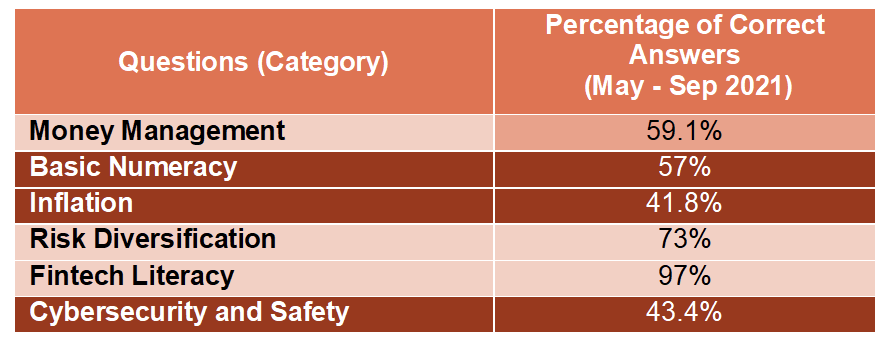
From the results, only 10% got all correct answers from the six questions. When asked about managing finances, almost half (as many as 10,000) did not apply the ideal saving formula in their monthly budget; they prioritize expenses first and save what is left.

On interest computation, 57% got the correct answer and the remaining half either got the wrong computation or does not know how to answer. On a related question about inflation, respondents were asked about the impact of inflation and only 41.8% had the right understanding of its effects on their purchasing power and borrowing decisions.

Filipinos seemed to be more knowledgeable on investments and risk diversification. When asked whether they will spread their money to multiple investments or focus on just one, almost 73% chose to put it into multiple investments to limit their losses, 22.5% for one investment and 4.6% do not know the answer.

Aside from inflation and basic numeracy concepts, cybersecurity and safety are also one of the concepts that are not well-understood by the takers with only 43.4% getting the correct answer – a number slightly lower than 47.8% before the covered period.

On the flip side, most respondents aced the question on what tasks can be done using digital financial tools at 97%. The social distancing measures brought by the pandemic might be a huge factor on how well-versed Filipinos have become in using fintech tools for daily transactions.

In summary, results show that the respondents’ knowledge on all financial literacy concepts mentioned above are in the intermediate level with scores falling under 3 to 4 out of 6. Basic numeracy, inflation, and cybersecurity and safety are the least understood concepts as indicated in the survey.

Findings of Quiz 2: The Basics of Budgeting, Saving and Borrowing

The second leg of the financial literacy quiz zoomed in on the basics: budgeting, saving and borrowing. Launched in September, it covers the period of launch until September., there are over 19,000 responses, with more females attempting to take the quiz and from the age group of 25-39 years old.

The first three questions concentrated on how to properly plan a monthly budget and how to compute for an emergency fund. Most quiz takers (66.8%) know that every month, they should at least make a budget plan and 88.4% know that the ideal amount of emergency fund should cover 3 to 6 months’ worth of expenses. However, only ¼ of users know how to set a SMART Financial goal.

Regarding the basics of borrowing, almost all (95%) of quiz takers know that paying bills on time every month can help improve their credit score. A total of 77.1% also answered that a consumer finance company is an institution that could help them avail cash or product loans.

On the similar topic of loan application, 83% knows the concept of loan repayment but only half of respondents know what a cooling off period in a loan is about; 65% knows that there are different ways that could help them approve their loans (such as preparing requirements ahead of time, borrowing an amount that you can pay, etc).

Looking at the findings of the second quiz, majority of Filipinos have a proper understanding of the basics of some financial concepts but would need guidance on comprehending more specific terms. Regardless, the results of the second quiz show that the level of financial literacy in the country is promising and would continue to improve if taught properly.

This is where companies advocating for financial literacy come in. One of which is Home Credit Philippines, a longtime financial provider and financial educator both in global and domestic markets. Through Wais sa Home, their financial and digital literacy program, they address the concerns revealed in the survey through various initiatives and activities aimed at driving financial inclusion and raising financial literacy standards amongst Filipinos.

“Our business model and the focal point of our corporate social responsibility efforts is centered on responsible lending. We want to help create responsible borrowers and good payers through financial education and digital financial literacy,” says Home Credit Philippines Chief Marketing Officer Sheila Paul.

To reach a wider audience and have a steady source of important financial and digital literacy concepts, Home Credit is launching its Wais sa Home website soon to allow more people to gain knowledge on basic money management and digital skills.


Spotlight is BusinessWorld’s sponsored section that allows advertisers to amplify their brand and connect with BusinessWorld’s audience by enabling them to publish their stories directly on the BusinessWorld Web site. For more information, send an email to online@bworldonline.com.

Join us on Viber to get more updates from BusinessWorld: https://bit.ly/3hv6bLA.

[B-SIDE Podcast] Strengthening the healthcare system (Part 1)

Follow us on Spotify BusinessWorld B-Side

The days of zero-COVID policies are long past, and learning to live with the coronavirus will require major adjustments to how things were done in the first year of the pandemic. “Coping with it, living with it, adjusting our policies and the way we live with the COVID threat (is) a matter of reducing risk,” said Dr. Regina P. Berba, head of infection control at the Philippine General Hospital (PGH).

In this B-Side episode — the first of two parts on the future of healthcare — Dr. Berba speaks with BusinessWorld reporter Brontë H. Lacsamana about a wide range of topics, including how to take care of the medical frontliners who are taking care of us, how civic spaces have to transform themselves just as hospitals have, and how the universal healthcare law can expand access to quality and affordable health services if implemented properly.

Recorded remotely in December 2021. Produced by Brontë H. Lacsamana, Jino D. Nicolas, and Sam L. Marcelo.

To read the related story, get the January 2022 issue of BusinessWorld In-Depth.

Follow us on Spotify BusinessWorld B-Side

An agile, forward-looking central banker

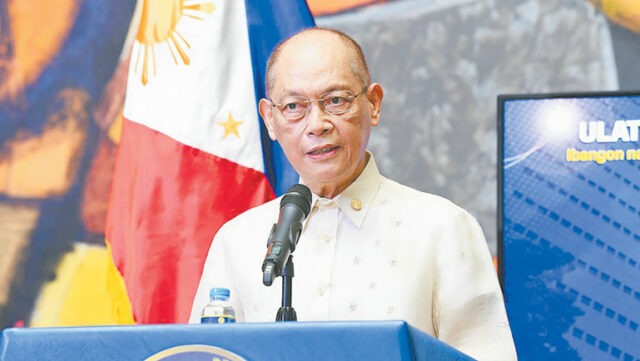
Bangko Sentral ng Pilipinas Governor Benjamin E. Diokno

At the start of this year, the business and banking communities have received great news with an outstanding recognition accorded to one of the country’s long-standing public servants.

The Banker, a publication owned by the Financial Times, recently awarded the Global Central Banker of the Year 2022 to Bangko Sentral ng Pilipinas (BSP) Governor Benjamin E. Diokno. This is the first time for a Philippine central banker to receive the accord. Along with the said honor, the publication also recognized the governor as the Asia Pacific Central Banker of the Year.

In giving the award, the publication cited Mr. Diokno for helping “to see the Philippines through the COVID-19 pandemic” while pushing “ahead with his modernization agenda for the country’s banking system.” It also recognized the governor’s goal of “creating a strong banking sector that supports individual consumers while moving forward with the digital banking agenda.”

The fifth governor of the BSP, Mr. Diokno was appointed in March 2019, taking over the late BSP governor Nestor Espenilla, Jr. Aside from pursuing the BSP mandates of price stability, financial stability, and efficient payments, and settlements system, the governor also endeavors “to bring central banking closer to the Filipino people.”

This is very much evident with his vision of a ‘cash-lite’ economy and a financially inclusive society. Driven by this vision, Mr. Diokno aims to shift at least 50% of retail payment transactions to digital form and achieve 70% transaction account ownership among adult Filipinos by 2023, when his term ends. He is also supporting local payment providers through the use of the national ‘QR PH’ standard for QR code payments, and he strongly advocates for the Philippine ID System.

Mr. Diokno, The Banker also noted, pledged to bolster existing financial literacy programs with additional support in digital skills development in order to ensure that no citizen will be left behind in the move to digital payments.

“He has called for customer centricity across the whole financial space, including insurance and capital markets, to help the underserved feel comfortable and secure accessing financial services. Greater levels of regulation are also being introduced to payment providers to protect consumers from fraud,” the publication continued.

Mr. Diokno was also noted by The Banker for his call for more mergers and acquisitions (M&As) between local banks to strengthen the banking sector through a memorandum of agreement pledging to allow bank M&As to proceed within 55 days. The governor’s support for transition to low-carbon, evidenced by the BSP-headed ‘Green Force’ technical working group and the Philippine Sustainable Finance Roadmap, was also recognized.

Regarding the central bank’s response to the pandemic, The Banker noted Mr. Diokno’s stance of holding interest rates low for as long as possible to maintain stability. “Believing that the current environment is transitory, he decided to hold on to an accommodative monetary policy to support the economy,” the magazine wrote.

As early as February 2020, the BSP cut policy rates by 25 basis points (bps), and then it was cut by another 175 bps before the year ended. Other measures implemented during the pandemic included reducing the reserve requirement ratio to increase the volume of loanable funds in the system and incentivizing bank lending to micro, small, and medium enterprises.

Prior to serving BSP governor, Mr. Diokno served three administrations of the government, particularly under the Department of Budget and Management. He served as Budget Undersecretary from 1986 to 1991, then Budget Secretary from 1998 to 2001 and from 2016 to 2019. He also served as Fiscal Adviser to the Philippine Senate, chairman and chief executive officer of the Philippine National Oil Company, and chairman of the Local Water Utilities Administration.

The following major policy reform contributions are attributed to Mr. Diokno: providing technical assistance to the 1986 Tax Reform Program to simplify the income tax system and introduce the value-added tax; helping design the 1991 Local Government Code of the Philippines; initiating a What-You-See-Is-What-You-Get policy to streamline the release of funds; and sponsoring the internationally lauded Government Procurement Reform Act to modernize, regulate, and standardize government procurement activities in the Philippines.

Outside government work, Mr. Diokno is professor emeritus of the University of the Philippines (UP)-Diliman, having taught Public Sector Economics, Microeconomics, Macroeconomics, and Development Economics, among others, for over 40 years. He was also chairman of the Board of Trustees of the Pamantasan ng Lungsod ng Maynila.

Mr. Diokno has also participated in international conferences hosted by international organizations such as the International Monetary Fund, Asian Development Bank, World Bank, Asia-Pacific Economic Cooperation, and the United Nations.

He authored numerous publications and discussion papers regarding his research interests that have been published in academic journals and policy reports. He also wrote the “Core” column in BusinessWorld years ago.

Mr. Diokno finished his Bachelor’s Degree in Public Administration (1968) and his Master’s Degree in Public Administration (1970) and Economics (1974) at the University of the Philippines. He also holds an M.A. in Political Economy (1976) from Johns Hopkins University in Baltimore, Maryland, USA and a Ph.D. in Economics (1981) degree from the Maxwell School of Citizenship and Public Affairs, Syracuse University in Syracuse in New York. — Adrian Paul B. Conoza

A cash-lite vision for the country

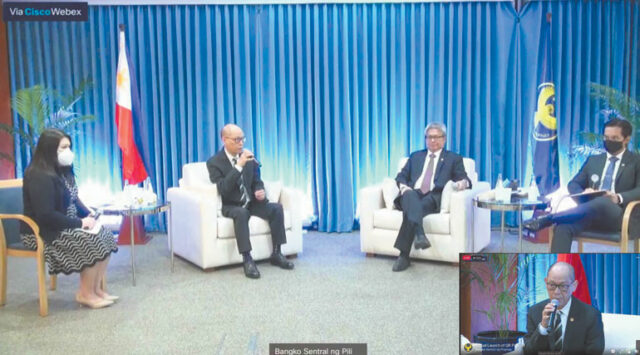
In this October 2021 handout, Bangko Sentral ng Pilipinas (BSP) Governor Benjamin E. Diokno (inset) expressed confidence that the full launch of the QR Ph Person-to-Merchant (P2M) payment facility will pave the way for the digitalization of micro, small, and medium-sized enterprises (MSMEs), including small vendors and sari-sari stores. The governor said that the low-cost and easy-to-use QR Ph P2M, which uses the Quick Response technology and code scanning for payments, will help MSMEs realize greater opportunities for growth. Also in the photo is Deputy Governor Mamerto Tangonan who heads BSP’s Payments and Currency Management Sector (second from right).

As the digital space expands in the financial sector and gets embraced by more and more people, a cash-lite economy is a great possibility. Among those envisioning a cash-lite Philippines in the near future is the country’s central banker Benjamin E. Diokno.

“As Governor of the BSP (Bangko Sentral ng Pilipinas), one of my personal goals is to have not less than 50% of transactions, by volume and value, to be done digitally by 2023. With the pandemic, I am optimistic that this goal will be met even sooner,” Mr. Diokno said in a speech back in 2020. “Of course, this is consistent with my other vision of shifting from a cash-heavy to a cash-lite economy.”

BSP had already been pushing for digital transformation in the country’s financial services even before the pandemic. “We believe that the promotion of financial technology and digitalization will lead us toward achieving financial inclusion,” Mr. Diokno said.

In October 2020, the central bank presented the Digital Payments Transformation Roadmap 2020-2023 (DPTR), which the BSP Governor has referred to as “our blueprint for transforming the Philippines into a cash-lite society” in his speech during an HSBC virtual forum.

One of the strategic outcomes of the roadmap is a strengthened consumer preference for digital payments by converting 50% of the total volume of retail payments into digital, and for 70% of Filipino adults to be financially included. Another outcome is to make more innovative and responsive digital financial services available.

“Our thrust to promote digitalization of payments is also strategically geared towards furthering financial inclusion as we view the two to be mutually reinforcing: they go hand in hand, with each one enabling the other,” Mr. Diokno stressed further in the central bank’s DPTR press release.

The roadmap stated the strategic initiatives and priority actions mostly for 2020-2021.

One of the progress in these initiatives is the launch of the QR Ph person-to-merchant (P2M) payment facility in October.

“With today’s event, we are well on our way to becoming a cash-lite society. This milestone is testament to our commitment to overcome the challenges of broadening digital transformation in the country in our pursuit of the delivery of universal access to safe, affordable, and convenient digital payment services for all Filipinos,” the BSP Governor said during the launch.

In terms of the progress in digital payments adoption, according to BSP’s 2021 edition report on the country’s digital payments status, the volume of monthly digital payments reached 20.1% in 2020, thereby meeting its goal of “20% in 2020.”

Meanwhile, as of the first quarter of 2021, the proportion of banked Filipino adults reached 53%, Mr. Diokno  shared in the said HSBC forum. This included basic deposit and e-money accounts.

“We are optimistic that digital payments adoption will sustain the upward momentum during the post-pandemic years and would allow us to achieve the 50% target by 2023,” Mr. Diokno said in the aforesaid central bank report. “The BSP has laid out regulatory reforms that served as strong foundations and is well-positioned to take advantage of fintechs in boosting the adoption of digital payments toward a cash-lite economy.” — Chelsey Keith P. Ignacio

Improving the country’s healthcare reach and efficiency

Photo from doh.gov.ph

As the Philippines fights the battle against the coronavirus disease 2019 (COVID-19) pandemic, healthcare has become more crucial for many Filipinos. While there are still many hurdles to overcome, recent initial reforms in the system, along with the acceleration of digital, have come in time to attend to Filipinos’ heightened healthcare needs.

Back In April 2021, a report on the country’s healthcare, commissioned and financed by the Embassy of the Kingdom of the Netherlands in the Philippines in cooperation with the Netherlands Enterprise Agency and prepared by Orange Health Consultants (OHC), described Philippine healthcare to be continually changing after a decade of increased public spending on healthcare.

The report also noted that the sector is characterized by “a well-developed private healthcare sector next to the public sector,” as well as a “decentralized” structure, with the National Capital Region and Luzon regions seen to be containing the largest share of both public and private healthcare infrastructure.

“The distribution of health infrastructure as well as human resources is heavily skewed towards [NCR] and Luzon. This physical imbalance is compounded by unequal financial access to health services,” the report noted.

These apparent imbalances in the system are seen to be addressed by the Universal Health Care (UHC) law, or Republic Act No. 11223, which was signed in 2019.

With the UHC law, every Filipino citizen is automatically enrolled in the National Health Insurance Program. Also, the report noted, the law calls for enhancing the effectiveness of health insurance by the major inflow of extra resources to health insurance from restructured sin taxes, as well as for improving local health systems and health infrastructure by means of extra resources to health insurance earmarked to a special fund exclusive for local government units.

As of last October, the Department of Finance said that the UHC will not be compromised by the pandemic, with P80 billion proposed to be allocated this year for the premium subsidies for indirect contributors under the UHC law, which include senior citizens and persons with disabilities.

The following month, the Asian Development Bank (ADB) has approved a $600 million loan to support the UHC program. In a statement, the ADB expects the program to “expand the use of digital tools in and support the Department of Health (DoH) and the Philippine Health Insurance Corp. (PhilHealth) as they implement universal healthcare.” It also said the program will “support local government access to health care workers and facilities, especially in underserved areas.”

Furthermore, OHC’s report stressed that recent reforms in Philippine healthcare also emphasize the strengthening of the Service Delivery Network by means of practicing gatekeeping through a wide network of general p ractitioners and family physicians; complying with established clinical practice guidelines of all medical specialties; providing health services closer to people through mobile clinics, subsidies to patient transport costs, and telemedicine; making emergency medical services available 24/7 even during disasters; and enhancing services by increased use of telemedicine and digital health.

One of the most notable recent advancements in healthcare is that of the increased use of digital tools in efforts to reduce risks of spreading the coronavirus, as well as to make consultations, transactions, and even operations more seamless as possible.

“Digitalization is taking hold in different areas such as e-prescriptions, hospital management information systems, Integrated Clinic Information System (iClinicSys) for primary care facilities, and electronic patients records,” OHC’s report wrote regarding e-health initiatives in the country.

A notable national e-health project is the Philippine Health Information Exchange, a platform designed to integrate and harmonize health data coming from different electronic medical record systems and hospital information systems. It is hoped to address issues such as redundancy in getting information, repeating diagnostic procedures that may have been already facilitated, duplication of treatments, inappropriate medication prescription, and incorrect diagnosis due to insubstantial health history, among others.

Moreover, as OHC’s report observed, the DoH and PhilHealth are collaborating on an integrated decision-support and reporting system to foster and support the optimization of DoH’s nationwide disease registry and PhilHealth’s benefit programs. This partnership aims to develop standards for the continued harmonization of data collection and reporting of PhilHealth, DoH, and partners.

Regarding telemedicine, meanwhile, the DoH and the University of the Philippines (UP) manage the National Telehealth Service Program (NTSP), which aims to expand this service in 4th- to 6th-class municipalities nationwide. Using a mobile and Internet-based interface and triaging system, NTSP facilitates consults between primary care physicians and clinical specialists at UP.

Within the private sector, on the other hand, many telemedicine services have started to surface. Most likely the most well-known among these is KonsultaMD, a subscription-based service that provides 24/7 access to skilled and licensed doctors who can provide safe medical assessment and advice.

While these developments have received a boost, however, challenges have emerged. OHC’s report saw that “the reliance on paper-based administration in the public sector will continue to provide a disincentive” to e-health, while the increased use of telemedicine caused unintended consequences such as billing and reimbursement issues and resistance from doctors to protect physical practices.

Opportunities still abound, nonetheless, for digital solutions to elevate healthcare in the Philippines.

The report notes that e-health, as it picks up fast, creates opportunities to provide systems and software solutions for patient registration and maintenance for patient records, solutions on scoring data to calculate the likelihood of illness and other risks (relevant to complementary health insurance markets), software systems for hospital, laboratory and pharmacy, and clinical decision support services, to name a few.

In its outlook for the Philippines’ health technology market, Ken Research sees the adaptation of technological tools to potentially address difficulties in reaching medical facilities and purchasing medicines, as well as expand healthcare access outside the capital city. “Due to alarming gap in healthcare accessibility and vast unharmonized data, the market is expected to grow exponentially in the coming years,” the market research publisher added in a statement.

In addition, artificial intelligence (AI) has been seen to begin playing a vital role in healthcare. Last June, the Department of Science and Technology launched two AI-powered apps: the CHERISH App that seeks to determine whether a patient has contracted COVID-19 or pneumonia; and the COVID-19 Cases Monitor, a gender-sensitive dashboard that maintains COVID-19 related indicators that are relevant to decision making and appropriate response of the LGU managers. — Adrian Paul B. Conoza

Understanding the complex, multifaceted issues in healthcare

The scope of the pandemic continues to grow and disrupt every aspect of our lives. None is more evident than the disruptions being faced by the healthcare industry.

According to the World Health Organization (WHO), in 2020 alone, COVID-19 was responsible for at least three million excess deaths — deaths that are beyond what would have been expected under “normal” conditions.

The WHO further stated that the pandemic has likely increased deaths from other causes due to disruption to health service delivery and routine immunizations, fewer people seeking care, and shortages of funding for non-COVID-19 services. The second WHO “pulse survey” of 135 countries in March 2021 highlighted persistent disruptions at a considerable scale over one year into the pandemic, with 90% of countries reporting one or more disruptions to essential health services.

After all, due to the undue stress the crisis has placed on global healthcare systems, many of the patients with serious illnesses, those who would have been treated pre-pandemic, are inadvertently not getting the attention they deserve from overworked healthcare staff. Many fail to receive medical attention at all.

“All countries must have the necessary capacity and resources to accurately collect and use health data even in the midst of an ongoing crisis,” Dr. Tedros Adhanom Ghebreyesus, director-general of WHO, said.

“The COVID-19 pandemic has shown the importance of data and science to build back more resilient health systems and equitably accelerate towards our shared global goals.”

The pandemic has revealed significant gaps in countries’ health information systems. Clearly, these gaps are persistent issues that have only been revealed by the current crisis, but have been languishing for far longer. Inequalities by income, age, race, sex and geographic location are made larger as the complex, interconnected threats to global health and well-being are rooted in social, economic, political and environmental issues. Due to its scope, COVID-19 threatens to jeopardize the hard-won health and development gains made in recent decades.

To address those gaps, Mr. Ghebreyesus stressed the importance of national and sub-national health systems, as these systems comprise “the foundation of global health security.”

“Strong and resilient health systems are the best defense not only against outbreaks and pandemics, but also against the multiple health threats that people around the world face every day,” he said.

Navigating issues in the healthcare system

The challenges are daunting. According to the World Economic Forum, the world currently spends approximately $7.5 trillion on health each year, or 10% of global gross domestic product (GDP). While spending has increased steadily, dangerous public health gaps found in rural or conflict-ridden areas where access is difficult and infrastructure is lacking remain difficult to address.

Significant investments could alleviate some of the gaps. A study by the United Nations titled “Primary Health Care on the Road to Universal Health Coverage,” increasing spending on primary health care in just low- and middle-income countries by $200 billion annually could save 60 million lives.

Meanwhile, a shortage of trained healthcare workers is looming. The 2020 State of the World’s Nursing report found that the world would need six million more nurses by 2030 to reach global health targets, and such shortages would acutely impact low- and middle-income countries.

A recent WHO global assessment of health information systems capacity found that only half of countries include disaggregated data in their published national health statistical reports. Investing in strong health information systems, the report stated, is vital to ensure disaggregated data reaches decision-makers and achieve equitable health outcomes.

Creating robust, accessible healthcare for all

To improve access to data, the organization launched the World Health Data Hub to provide an interactive digital platform and trusted source for all global health data, offering easy access to powerful visualization tools that reveal trends, patterns and connections; and draw insights. It will also allow WHO member states to upload and review their data in a secure environment; will be scalable to allow different varieties, volumes and velocities of data; and will provide access to the latest predictive analytics technologies.

The Hub brings together all of WHO’s data assets including the Global Health Observatory, the GPW 13 Triple Billion dashboard, the health equity monitor, and the WHO Mortality Database.

Worldwide, healthcare leaders are stepping up. In McKinsey’s recent Global Leadership Survey which included more than 850 senior executives from nine industries, healthcare leaders indicated that throughout this crisis, they have made significant improvements in the way they communicate with employees, their organizations’ culture and purpose, and their ability to drive execution and accountability and make decisions at speed.

Furthermore, survey respondents noted several changes to catalyze greater organizational speed, including flattening the organization, empowering leaders closer to the work to make decisions, creating clarity and alignment around common objectives and milestones, maintaining the ability to collaborate effectively in remote or hybrid models, and improving access to and disseminating data across the enterprise.

“We are now less than nine years away from 2030,” Dr. Samira Asma, assistant director-general for the Division of Data, Analytics and Delivery for Impact at WHO, said.

“We know where the gaps are and we have the solutions to address them. What we need now is commitment and investment to accelerate progress and reach our goals.” — Bjorn Biel M. Beltran