


Semiconductor industry declares support for RCEP ratification

THE Semiconductor and Electronics Industries in the Philippines Foundation, Inc. (SEIPI) said the Senate needs to ratify the Regional Comprehensive Economic Partnership (RCEP), declaring it beneficial to the industry.
SEIPI President Danilo C. Lachica said in a position paper issued on Monday that participation in the RCEP trade deal will allow industries to improve their market access, diversify their sources of raw materials, and improve trade with other participating countries.
“Due to its liberalization of trade by eliminating 90% of tariffs within member countries, active participation in RCEP will reduce the overall cost of imported materials and exported goods for the electronics industry,” Mr. Lachica said.
“Being the largest trade pact representing 50% of global manufacturing output and 70% of electronics, RCEP can provide the Philippines greater market access by increasing trade with China, Australia, New Zealand, and other Association of the Southeast Asian Nations (ASEAN) countries,” he added.
RCEP, which started to come into force on Jan. 1, has been ratified by Brunei, Cambodia, Laos, Singapore, Thailand, Vietnam, Australia, China, Japan, New Zealand, and South Korea.
According to Mr. Lachica, the trade deal will also allow the Philippines to improve its competitiveness as an investment hub for the electronics industry.
“The ratification of RCEP is a big step in improving our competitiveness as an investment destination for semiconductors and electronics, most especially against our ASEAN neighbors who are significantly doing better,” Mr. Lachica said.
Mr. Lachica said foreign direct investment (FDI) may be affected if the Philippines fails to participate in the trade deal.
Citing data from the Bangko Sentral ng Pilipinas, Mr. Lachica noted that FDI net inflows rose 48.1% year on year in the 10 months to October.
“Non-ratification of the RCEP may affect these numbers by discouraging investors and deterring post-pandemic growth and recovery,” Mr. Lachica said.
Mr. Lachica said RCEP will complement the provisions of Republic Act No. 11534 or the Corporate Recovery and Tax Incentives for Enterprises (CREATE) Act, which lowered corporate income tax rates and rationalized incentives.
Separately, British Chamber of Commerce Philippines Executive Director Chris Nelson said in a television interview on Monday that the Philippines will be able to compete and not lose out on trade if it participates in RCEP.
Mr. Nelson said economic reforms such as the recent passage of amendments to the Retail Trade Liberalization Act and other pending economic bills show that the Philippines can be competitive.
“The Philippines has a very talented workforce; that is why people come. The Philippines has certain definite skillsets, and is obviously strong in certain areas,” Mr. Nelson said.
“Let us not forget (that) RCEP will be a key area for FDI. I believe strongly that the Philippines can compete. I think the benefits of this much wider market are going to be much more beneficial for the Philippines,” he added. — Revin Mikhael D. Ochave
Challengers invited to top bid for Mindanao coal concession areas

THE Energy department said it is seeking challengers for a bid put in by a coal trading company for seven coal blocks in northeastern Mindanao.
“This is to inform the public that the Grand Thermal Power Corp. is applying for 40-L-249, 40-L-250, 40-L-251, 40-L-252, 40-L-253, 40-L-290 and 40-L-293 Coal Blocks located in Bislig City, Surigao del Sur, and Trento, Agusan del Sur,” the Department of Energy (DoE) said in its Invitation to Challenge posted on its website on Jan. 28.
Bacolod-based Grand Thermal is one of 77 coal traders accredited by the DoE as of Nov. 30. Its main coal supplier is KCAL Coal Centre, Inc., according to the department.
BusinessWorld queried the DoE for more details on the application, but it had not replied at deadline time.
The pre-submission conference was set for Feb. 3. Interested parties must pay a non-refundable P200,000 to the DoE’s Treasury Division upon submission of the challenge application to the DoE Records Management Division on or before March 15. The challenge follows the procedures set in the Philippine Conventional Energy Contracting Program Guidelines.
The DoE estimates the supply of coal in 2020 was 42.476 metric tons of coal, with 69.51% of the total imported. — Marielle C. Lucenio
DENR to seek removal of illegal occupants from over 100 protected areas

THE Department of Environment and Natural Resources (DENR) said it is hoping to remove illegal occupants from over 100 protected areas.
“We have taken for granted these protected areas. The perennial problem of illegal occupants is the reason why these areas are polluted and destroyed,” Environment Secretary Roy A. Cimatu said in a statement.
Republic Act No. 11038 or the Expanded National Integrated Protected Areas System Act of 2018 added 94 areas to the list of locations under special government protection, bringing the number of such sites to 107.
Public lands within these protected areas are classified as national parks under the 1987 Philippine Constitution.
He said the Upper Marikina River Basin Protected Landscape will be one of the priority sites.
The department said it is planning on private security personnel to turn away illegal occupants and may tap the Armed Forces of the Philippines and the Philippine National Police for overall security.
The law prohibits “occupying or dwelling in any public land within a protected area without clearance from the concerned Protected Area Management Board.”
Violators are liable for fines of between P200,000 and P1 million or imprisonment of one to six years.
“We are expediting the complete demarcation of all legislated protected areas to set their final boundaries, along with the creation of the Protected Area Management Office or PAMO,” Director Natividad Y. Bernardino of the DENR’s Biodiversity Management Bureau said.
Ms. Bernardino said a current program on Protected Area Development and Management covers measures to conserve biodiversity within and adjacent to protected areas. — Luisa Maria Jacinta C. Jocson
Energy efficiency industry wants retrofit, upgrade projects to qualify for incentives

THE ENERGY efficiency (EE) industry said it is seeking the inclusion of retrofitting and system upgrade projects in the list of investments deemed strategic in order to be eligible for fiscal incentives.
“We hope that strategic EE investments do not outrightly exclude retrofitting and system upgrades,” Philippine Energy Efficiency Alliance (PE2) President Alexander D. Ablaza told BusinessWorld in a Viber message, adding that the majority of EE projects needing third-party funding are retrofits and upgrades for existing buildings and industrial facilities.
“If we exclude retrofits and upgrades from the strategic EE investment endorsement of the Department of Energy (DoE) to the Board of Investments (BoI), then the Tier III incentives would be limited to a very few green building construction and electric vehicle projects,” he added.
Mr. Ablaza said any such exclusions will not help achieve the broader objective of raising up to P12 trillion in capital to help over 33,000 designated establishments comply with their obligations under the Energy Efficiency and Conservation Act.
During a virtual meeting with the DoE, which was consulting the public on a draft department circular on Jan. 27, Mr. Ablaza reiterated his call for the DoE and BoI to consider EE projects, even those considered non-strategic, as Tier III or to be considered “critical to the structural transformation of the economy.”
Energy efficiency projects involving upgrades have thus far been classified as Tier I. When reclassified under Tier III, companies with such EE projects can avail of one to two additional years of income tax holiday.
This incentive, Mr. Ablaza said, is crucial for EE projects to attract capital from third-party investors, such as energy service companies and third-party project developers. — Marielle C. Lucenio
House approves hire motorcycle, maritime bills on third reading

THE HOUSE of Representatives on Monday approved three transportation bills, including one regulating motorcycles for hire, on third and final reading.
House Bill (HB) 1075 or the proposed Motorcycles-for-hire Act, seeks to set up a registry for motorcycles to be used for public transport and delivery services. It was approved on third reading after receiving 189 affirmative votes and no negative votes, according to the proceedings of the House, sitting in plenary session.
Two maritime measures were also approved on third reading including one which seeks to improve the competitiveness of maritime trade and another designating the Department of Transportation as the lead agency for enforcing maritime rules.
HB 10575 or the proposed International Maritime Trade Act received 189 affirmative votes, while HB 10612 or the proposed International Maritime Instruments Domestication Act of The Philippines got 192 votes. — Jaspearl Emerald G. Tan
House ratifies bicam reports on contractor licensing, military marshals, teacher education
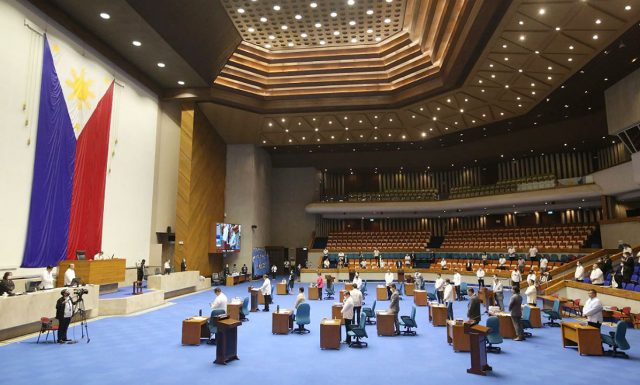
THE HOUSE of Representatives ratified on Monday three bicameral conference committee reports, including one amending the law on the renewal of contractor licenses.
The committee report harmonizing House Bill 10301 and Senate Bill 2152, which seek to amend the Contractors’ License Law, was ratified, according to the proceedings of the House sitting in plenary session, which was streamed online.
Meanwhile, the bicameral report on the House and Senate bills proposing to establish the Philippine Military Judiciary Marshals Service was also ratified.
In a related development, the bicameral report on a bill strengthening the Teacher Education Council was also ratified. — Jaspearl Emerald G. Tan
House approves bill dev’t planning department to absorb NEDA
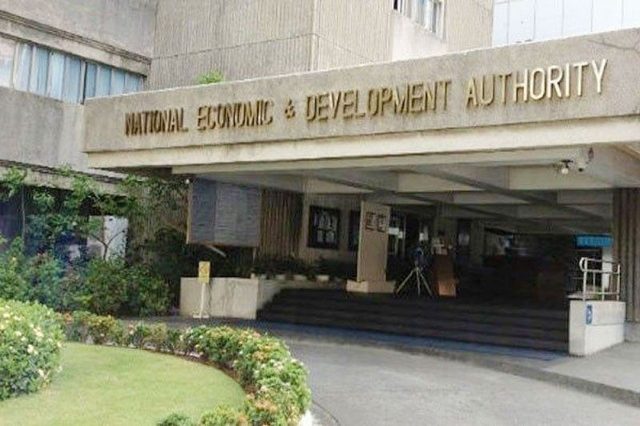
THE HOUSE of Representatives on Monday approved a measure that seeks to create a department for economic and development planning, absorbing the current economic planning agency.
House Bill 10625 or the proposed Department of Economics and Development Planning (DEDP) Act, was approved on third and final reading after receiving 195 votes, according to the proceedings of the House, sitting as a plenary body.
Under the bill, the National Economic and Development Authority (NEDA) will be absorbed by the DEDP, which is intended to streamline national economic planning, ensure their continuity, as well engage more stakeholders. — Jaspearl Emerald G. Tan
Are your related party transactions at arm’s length yet?

It’s been almost two years since the Bureau of Internal Revenue (BIR) released several issuances involving updated reporting requirements for related party transactions (RPTs) and compliance with transfer pricing (TP) regulations. Since then, a lot of businesses have been anticipating how the tax authorities will be conducting audit investigations into RPTs, and whether they will be among the first ones to experience a TP audit.
While it is normal to feel anxious about matters that involve uncertainty, it helps to be equipped with at least a bit of knowledge about what to expect.
On Jan. 27, P&A Grant Thornton held a free webinar on TP concepts and documentation requirements. Here are the salient points from the webinar.
1. CONCEPT OF TRANSFER PRICING AND THE ARM’S LENGTH PRINCIPLE (ALP)
TP issues occur when transactions between two or more related entities, especially those from different tax jurisdictions with different income tax rates, are entered into in a manner that is not conducted within ALP — with the apparent intent of minimizing tax payments while maintaining the same level of group profits.
The ALP states that transactions among associated enterprises should be made under comparable conditions and circumstances as transactions with an independent party. Simply stated, the material contractual terms and conditions, including the price charged, that a particular entity would agree to transact with a related party, must not differ significantly if transacted with an independent third party.
2. RPTS AND INTRA-GROUP SERVICES
There is a wide variety of RPTs which include, but are not limited to, purchases or sales of goods, purchases or sales of property and other assets, rendering or receiving of services, leases, royalties, trademark, license, provision of guarantees or collateral, and loans.
RPTs also include “intra-group services” or those that are rendered by one party within the group which provide benefits for one or more other members of that same group. Some examples are services related to management, technical, purchasing, marketing, administration, distribution, and routine support services (e.g., accounting and auditing, accounts receivable and accounts payable processing, IT support, payroll and employee benefits support, general administration, legal services, staffing and recruitment, and training and employee development).
Intra-group services require an arm’s length service fee to comply with the ALP. Hence, mere reimbursements at cost or without mark-up, or not charging any amount at all for these intra-group services, are not conducted at arm’s length.
3. TAX-DRIVEN TRANSFER PRICING SCHEMES
Transfer pricing, per se, is not illegal nor is it discouraged. However, due to global related party transactions becoming more and more complex over the years, transfer pricing has become subject to abuse by many entities with the intent of avoiding or minimizing taxes.
Tax authorities around the world are allocating enormous resources towards TP enforcement because they suspect that companies use TP to shift profits to low-tax jurisdictions by failing to charge appropriate prices for intercompany transactions. On a global scale, TP has led to harmful tax practices which have resulted in governments around the world losing significant tax revenue.
TP schemes are also present in intra-firm or domestic transactions with the aim of maximizing income tax incentives or tax assets of a related entity through RPTs.
4. TRANSFER PRICING METHODOLOGIES
There are five commonly-used transfer pricing methods (TPMs) in determining whether the RPTs are arm’s length. These are the Comparable Uncontrolled Price (CUP) Method, Resale Price Method (RPM), Cost Plus Method (CPM), Profit Split Method (PSM), and the Transactional Net Margin Method (TNMM). While the BIR does not have a specific preference for any one of these methods, the regulations require that the TPM that produces the most reliable results should be used depending on the available data and present circumstances.
5. SUBSTANCE OVER FORM
Just like how this concept applies to accounting standards, TP also gives more importance to the substance or the actual nature of an RPT over any documentation that otherwise provides for its supposed characteristics. In conducting a TP analysis, consistency must be established between the material terms and conditions as stated in contracts or agreements supporting the RPTs with the facts and conditions as per the actual conduct of the transaction by the contracting parties. Any significant differences may provide room for the tax authority to assume that the RPT was entered into without a commercially rational purpose. Consequently, the tax authority may re-characterize the RPT involved and impose a corresponding tax penalty if it is proven that the misrepresentation of the RPT resulted in improper reporting of a taxable event.
6. LOSSES
Operating losses are normal for businesses, especially during challenging times like these. However, reporting consistent losses might cast doubt on the part of the tax authorities as to the actual purpose and intent of the entity’s existence. The risk of being investigated would be even greater if the entity is involved in several RPTs.
In determining whether operating losses incurred are commercially acceptable, it is important to ensure that RPTs entered into are commercially realistic and make economic sense. Therefore, a taxpayer with RPTs needs to establish or justify that the losses it incurred are commercial in nature and not merely because of an RPT. Maintaining documentation which clearly outlines the non-TP factors that have contributed to the losses is therefore beneficial for a taxpayer in providing support for any questions that may be raised by the tax authorities.
In terms of justifying operating losses due to the adverse impact of the COVID-19 pandemic, taxpayers are advised to maintain relevant reports and documents, among others.
7. TRANSFER PRICING DOCUMENTATION (TPD) REQUIREMENT
Under current regulations, there are only several taxpayers explicitly required to comply with the requirements for maintaining TPD. However, nothing prevents any taxpayer from preparing TPD and presenting the same during a tax audit. Though not required to prepare TPD, the taxpayer must still present sufficient evidence to prove that their RPTs were conducted at arm’s length.
Preparing TPD is no simple task. A wide array of information and data are needed to complete TPD, including internal information such as organization structure, nature of business of each party and RPT, and financial data. External data and information are also necessary such as research papers, articles, and publications about the industry in which the company operates, a database of comparable companies, contracts, agreements, market interest rates, credit ratings, audited financial statements, a general information sheet on comparable companies, and market prices, if any. While the BIR has probably not started doing TP audits at full scale, taxpayers should anticipate such audits soon, especially now that the tax authorities have received enough information to perform their initial TP risk assessments through the analysis of BIR Form 1709 or the Information Return on Related Party Transactions submitted by taxpayers. Instead of having a sit-and-wait mindset, taxpayers should start performing internal risk assessments on their RPTs, check compliance with the TP requirements, and be prepared to face a TP audit. It also helps to be in the know about developments in this subject matter by regularly attending tax and transfer pricing webinars, as well as to talk to experts who can give sound advice and assist taxpayers with their TP woes.
Let’s Talk Tax is a weekly newspaper column of P&A Grant Thornton that aims to keep the public informed of various developments in taxation. This article is not intended to be a substitute for competent professional advice.
Arianne Cyril L. Mandac-Villarama is a manager from the Tax Advisory & Compliance division of P&A Grant Thornton, the Philippine member firm of Grant Thornton International Ltd.
Opinion vs Marcos revealed before division ruling

AN ELECTION commissioner on Monday released her separate opinion where she voted to disqualify the son and namesake of the late dictator Ferdinand E. Marcos from the presidential race this year, days after alleging that a politician was trying to meddle in the lawsuit.
In a 24-page opinion, election commissioner Ma. Rowena Amelia V. Guanzon said Ferdinand “Bongbong” R. Marcos, Jr.’s conviction by a trial court for tax evasion in the 1990s disqualified him from seeking public office.
“After an assiduous analysis of the arguments of the parties and the evidence on record, I find that the respondent’s repeated and persistent non-filing of income tax returns in 1982, 1983, 1984 and 1985, which resulted in his conviction, constitutes an offense involving moral turpitude,” she said.
“In a very real sense, the respondent’s failure to file his tax returns, which in turn led to the belated discovery of deficiency taxes, had a deleterious effect on public interest,” she added.
Ms. Guanzon, who is retiring on Feb. 3 last week dropped a bombshell and revealed her vote to disqualify Mr. Marcos pending the release of the main decision by the election body’s First Division.
Ms. Guanzon’s vote hangs in the balance pending the release of the ruling that will be written by Commissioner Aimee Ferolino.
Ms. Guanzon has accused her fellow commissioner of delaying the decision so her unfavorable vote would not be counted. She said division members had agreed to rule on the lawsuit by Jan. 17.
Ms. Ferolino has cited case volume for the delay.
The Comelec Second Division on Jan. 17 rejected a similar lawsuit seeking to bar the presidential run of Mr. Marcos, who is leading several opinion polls. The case is on appeal before the Comelec en banc.
In her opinion, Ms. Guanzon said the facts surrounding Mr. Marcos’s tax evasion “are markedly telling of the character or nature of the acts or omissions committed by the respondent.”
She added that by failing to submit his annual income tax returns for four straight occasions, the former senator showed a deliberate intent to violate the law.
Mr. Marcos did not submit certified receipts that showed he had paid for the tax deficiencies as ordered the Court of Appeals (CA), the commissioner said, citing the preliminary conference on Jan. 7.
Civic groups earlier asked the election body to disqualify the former senator, saying he was unfit to run for public office after he was convicted of tax evasion.
“The separate opinion would be on the record but as far but as far as disposing of the case, we wait for the main decision written by the assigned writer,” Comelec spokesman James B. Jimenez told reporters in a video streamed live on the ABS CBN News Channel.
“My duty is to protect the people from disqualified people,” Ms. Guanzon said in a separate video streamed live on her Facebook page on Monday.
Political analysts have said Comelec should investigate allegations of interference at the agency to keep its independence and avoid public distrust.
The integrity of the presidential elections this year are at stake, said Maria Ela L. Atienza, a political science professor from the University of the Philippines.
Partido Federal ng Pilipinas, Mr. Marcos’s political party, on Friday asked Comelec to probe Ms. Guanzon for divulging her unfavorable vote in his disqualification case.
She should be disbarred and forfeit her retirement benefits and lifetime pension for destroying the reputation of the institution with the leak of her unpromulgated dissenting opinion, party lawyer George Briones said in a statement.
“The Marcos camp appears to be trying to affect public perception because they labeled Guanzon’s decision as ‘dissenting opinion’ when there is officially no majority decision yet,” Ms. Atienza said. “Or it appears that they are confident that their client will get a favorable verdict.”
The Bagong Alyansang Makabayan last week expressed alarm over Ms. Guanzon’s revelation and urged the Comelec to investigate it.
“Who is this politician trying to influence the Comelec?” the group said in a statement. “Shouldn’t there be an investigation by the en banc and shouldn’t this politician be cited in contempt?” — John Victor D. Ordoñez
Philippines to use six Metro Manila areas to vaccinate kids 5-11

By Kyle Aristophere T. Atienza, Reporter
THE PHILIPPINES will use six commercial and public sites in Metro Manila to vaccinate children aged five to 11 starting Feb. 4., according to the presidential palace.
The vaccination will be done in several areas in the capital region, including the Philippine Heart Center, Philippine Children’s Medical Center and National Children’s Hospital, Cabinet Secretary Karlo Alexei B. Nograles told a televised news briefing on Monday.
It will also be held at the Manila Zoo, SM North EDSA and San Juan Gym, he added. “This is important in our preparation for the return to face-to-face classes.”
The first batch of Pfizer, Inc.’s COVID-19 vaccines for Filipino kids will arrive this week, Mr. Nograles said.
Philippine health authorities earlier said 168,355 children aged five to 11 have registered for vaccination.
The government earlier said 780,000 doses of coronavirus vaccine for children were set to arrive on Jan. 31.
Mr. Nograles said about 7.5 million children aged 12 to 17 years had been fully vaccinated against the coronavirus as of Jan. 29.
The Philippines had fully vaccinated 58.79 million people as of Jan. 30, while 60.34 million have received their first dose, the palace official said. Almost 7.34 million booster shots have been given out.
Meanwhile the tourism industry has been ready to safely reopen even before an inter-agency task force decided to resume international travel on Feb. 10, Tourism Secretary Bernadette Romulo-Puyat told the same briefing.
She said 100% of tourism workers in the country have been fully vaccinated against the coronavirus.
Ms. Puyat said only fully vaccinated leisure travelers from visa-free countries would be allowed to enter the country.
The Philippines aims to fully vaccinate 77 million Filipinos by the end of the quarter.
The Department of Health (DoH) posted 14,546 coronavirus infections on Monday, bringing the total to 3.56 million.
The death toll hit 54,003 after 112 more patients died, while recoveries rose by 26,500 to 3.32 million, it said in a bulletin.
It said 28.4% of 52,013 samples on Jan. 29 tested positive for COVID-19, still above the 5% threshold set by the World Health Organization (WHO).
There were 190,818 active cases, 8,239 of which did not show symptoms, 177,584 were mild, 3,126 were moderate, 1,540 were severe and 329 were critical.
DoH said 70% of the latest cases occurred from Jan. 18 to Jan. 31. The top regions with new cases in the past two weeks were the Davao region with 1,381, Metro Manila with 1,053 and Central Visayas 973 infections. It added that 96% of deaths occurred in January.
DoH said 24 duplicates had been removed from the tally, 11 of which were recoveries, while recoveries were relisted as deaths. Three laboratories did not submit data on Jan. 29.
The agency said 46% of intensive care unit beds in the country had been used, while the rate for Metro Manila was 38%.
The government has lowered the virus alert in the Philippine capital and nearby cities to level 2 starting Feb. 1.
OCTA Research fellow Fredegusto P. David said the government should have kept Metro Manila under Alert Level 3.
“I might have taken a slightly more cautious approach and maybe waited one or two weeks,” he told an online forum. “One to two weeks in the scheme of things will not be a long wait.”
Mr. David said the transition to a more relaxed alert level should be done gradually.
The OCTA fellow, meanwhile, said the country’s pandemic task force might have based its decision on different metrics.
He noted that during infection surges spurred by the Delta, Alpha and Beta variants last year, the government had to wait for cases to go down below 2,000 daily before easing the lockdown. “We calculated that number to be the threshold based on the number of people getting hospitalized.”
Mr. David said the country’s health system is not facing the same threats as before “because of the predominantly mild cases.”
“The surge capacity is probably much higher,” he said. “What that means is 3,000 cases a day in the National Capital Region, even if we’re going to have that level for a while, that will be a level of cases that will not really threaten our hospital care system.”
Meanwhile, Mr. Nograles said Bacolod, Cebu and Iloilo in central Philippines are expected to use pharmacies as vaccination cites starting this week. Baguio City was the first local government unit outside Metro Manila to use drug stores as vaccination sites.
The pandemic task force earlier said only booster shots would be given at participating pharmacies during the initial rollout. — with Revin Mikhael D. Ochave