Home Blog Page 6854

Filipinos more aware of data privacy — NPC

FILIPINOS are more aware of data privacy and privacy issues, according to a survey commissioned by the National Privacy Commission (NPC).

In a statement on Monday, the NPC said it commissioned a nationwide survey which showed that public awareness and knowledge of Republic Act 10173 or the Data Privacy Act increased to 25% in 2021 compared with 13% in 2017.

However, the survey also showed that most Filipinos with internet access still lack awareness in terms of internet security, with only a 9% awareness of proper social media usage.

The commission said the survey revealed that data privacy awareness is concentrated in the National Capital Region and other urban areas where internet access is high.

“Furthermore, the survey also found that dissemination of information through social media channels (Facebook, Twitter, YouTube) and television contributed to the growth of public awareness and knowledge,” the NPC said.

According to the NPC, the survey showed that individuals who consider the Data Privacy Act as relevant are aware of data privacy and can effectively explain its use.

In contrast, the survey revealed that those who find the law to be irrelevant have insufficient awareness on data privacy.

Privacy Commissioner John Henry D. Naga said data privacy awareness should have increased promotion in rural areas and those in the lower economic classes.

“We are planning to focus our efforts in increasing data privacy and protection awareness, which in effect will educate and empower data subjects, making them less vulnerable to data privacy abuses,” Mr. Naga said.

“Heightened awareness and familiarity with data privacy concepts and the Data Privacy Act is essential in improving public satisfaction, trust, and engagement with the NPC,” he added.

According to the NPC, the nationwide survey was conducted by the Philippine Survey and Research Center (PSRC) from October to November 2021. The survey’s respondents are males and females aged 18 years old and above from homes belonging to all income categories. — Revin Mikhael D. Ochave


Chinese New Year (02/01/22)

Robinsons Malls kick off the Chinese New Year

ROBINSONS Malls celebrates the Year of the Tiger with a line-up of events and activities with “Great Leaps at Robinsons Malls.” Robinsons Malls offers Roaring Promotions as select retail partners welcome shoppers with big discounts and other offers. Check out the malls’ restaurants and food outlets which offer treats and deals. For families and barkadas looking for fun and memorable Lunar New Year experiences, Robinsons Malls has installed majestic Chinese New Year attractions and organized activities with special prizes awaiting shoppers. On Feb. 1, to commemorate the year of the Water Tiger, Lion and Dragon Dances will be performed in several Robinsons Malls nationwide. Robinsons Malls in partnership with feng shui master, Marites Allen, will feature 2022 Chinese Zodiac forecast to guide interested shoppers discover what’s in store for them in love, wealth, career, and health. The RMalls+ app, the newest mobile app of Robinsons Malls, give everyone app-exclusive Roaring Deals and freebies from partner tenants, first dibs on special offers and promos, and free access to mall services such as parking and VIP pay lounge. The app also lets users purchase e-gift certificates that they can send as New Year gifts. For those who choose to celebrate the Lunar New Year at home, Robinsons Malls will not charge shopping fees for use of its personal shopper service, Robbie & Rosie in select malls nationwide. Customers can also order from multiple restaurants in one go through Malldash.ph and enjoy up to P168 discount for a miminum spend of P800.

Diamond Hotel Manila ushers in the Tiger

TO INVITE prosperity and luck this Chinese New Year, welcome the Year of the Water Tiger at Diamond Hotel Philippines. The Corniche restaurant will offer Chinese dishes until Feb. 6, created by Chinese chef Yang Yong. At the Lunch and Dinner Buffet, indulge in traditional Chinese New Year favorites and other celebratory dishes for P3,300 net per person. Dishes include Roast suckling pig, Braised chicken soup with Chinese herbs, Chinese New Year Pan Cai (all-in-one dish), Chinese New Year Yu Sheng, among others. Plus, every minimum of P5,000 spent at Corniche during this period entitles diners to “pick-a-prize” from the Prosperity Tree for prizes from the hotel. Corniche also features the Chinese Lauriat and Unlimited Dimsum until Feb. 6. Three Chinese Lauriat sets are available during lunch and dinner with prices starting at P3,600 net good for six persons. For an all-dimsum treat, head over during lunch for P1,088 net per person. For families commemorating the occasion at home, visit Diamond Hotel’s online shopping site onlineshopping.diamondhotel.com and browse the selection of featured Chinese delicacies to order. There are four Lucky Chinese Set Menus with prices starting from P2,999 net, all of which come with the Yu Sheng dish for the traditional Prosperity Toss. The Chinese Grazing Box good for four persons has a selection of cold cuts, appetizers, Chinese New Year tikoy and wine. Prosperity platters, namely the Chinese New Year Wealth Fortune Pot, Happiness Yu Sheng, New Year Wealth Roast suckling pig with Mantou and Fortune Cake are also recommendations to bring more luck. For reservations, call 8528-3000 ext.1121, or mobile number 0975-792-1473 from 9 a.m. to 5 p.m., or visit onlineshopping.diamondhotel.com. Dining guests must be fully vaccinated and other conditions apply. Diamond Hotel Philippines is located at Roxas Boulevard corner Dr. J. Quintos Street, Manila.

Sheraton Manila Bay offers Chinese New Year Lucky Bundles

SHERATON Manila Bay welcomes the Year of the Tiger with a trio of auspicious creations. Usher luck and sweeten the Chinese New Year feast by taking home freshly baked Mandarin Choux for P165 per piece, Asado pork bun for P155 per set of tree, and Chinese custard bun for P130 for a set of three. These are available at the Sheraton Kiosk located at Robinsons Place Manila, Padre Faura Wing, Mall Entrance, and for delivery by calling 5318-0788, 0917-583-7294, 0917-583-7326, or e-mail reservations.manilabay@sheraton.com. Sheraton Manila Bay is located at M. Adriatico cor. Gen. Malvar Streets, Malate, Manila.

RCBC looking to raise at least P3B from bond offer

BW FILE PHOTO

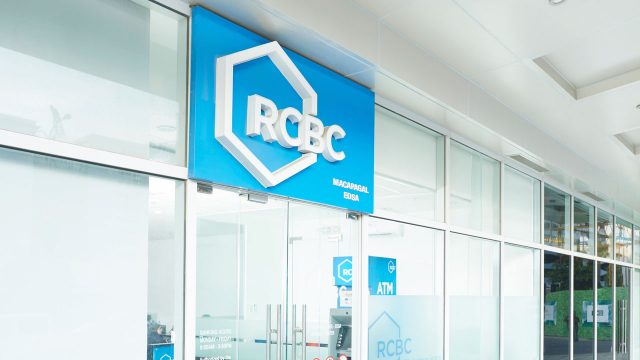
RIZAL COMMERCIAL Banking Corp. (RCBC) on Monday started its offering of sustainability bonds, with the proceeds to be used for general funding purposes in line with the bank’s sustainable finance framework.

The bank targets to raise a minimum of P3 billion from the offering with the option to upsize, it said in a filing with the local bourse on Monday.

The latest offering makes up the seventh tranche of RCBC’s P100-billion bond and commercial paper program, which still has an unissued balance of P27.96 billion.

“The funds to be raised from the offer will be used to support asset growth, refinance maturing liabilities and other general funding purposes in line with the bank’s Sustainable Finance Framework,” RCBC said.

RCBC’s ASEAN sustainability bonds have a tenor of two years and three months, and carry a fixed interest rate of 3% per annum.

The offer period runs from Jan. 31 to Feb. 11, unless modified by RCBC. The papers will be issued and listed on the Philippine Dealing and Exchange Corp. on Feb. 21.

The Hongkong and Shanghai Banking Corp. (HSBC) is the sole lead arranger for the transaction. It will also be a bookrunner together with RCBC Capital Corp.

The bonds will be sold by HSBC and RCBC.

Asked for details, RCBC said the minimum investment for the bonds starts at P100,000, with increments of P10,000 thereafter.

RCBC raised P17.87 billion in March 2021 through 2.5- and 5.2-year ASEAN sustainability peso bonds.

The bank’s net profit more than doubled to P2.01 billion in the third quarter of 2021, backed by higher interest earnings and trading income.

This brought RCBC’s net income for the first nine months of 2021 to P5.338 billion, increasing by a third from the P4 billion booked in the same period of 2020.

The Yuchengco-led lender’s shares closed at P20.40 apiece on Monday, up by five centavos or 0.25% from its previous finish. — Luz Wendy T. Noble

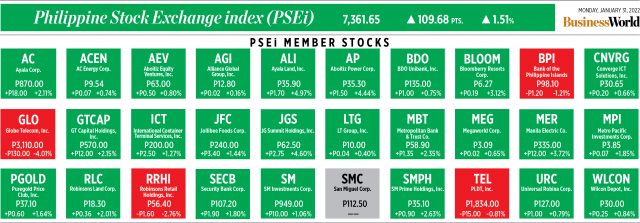
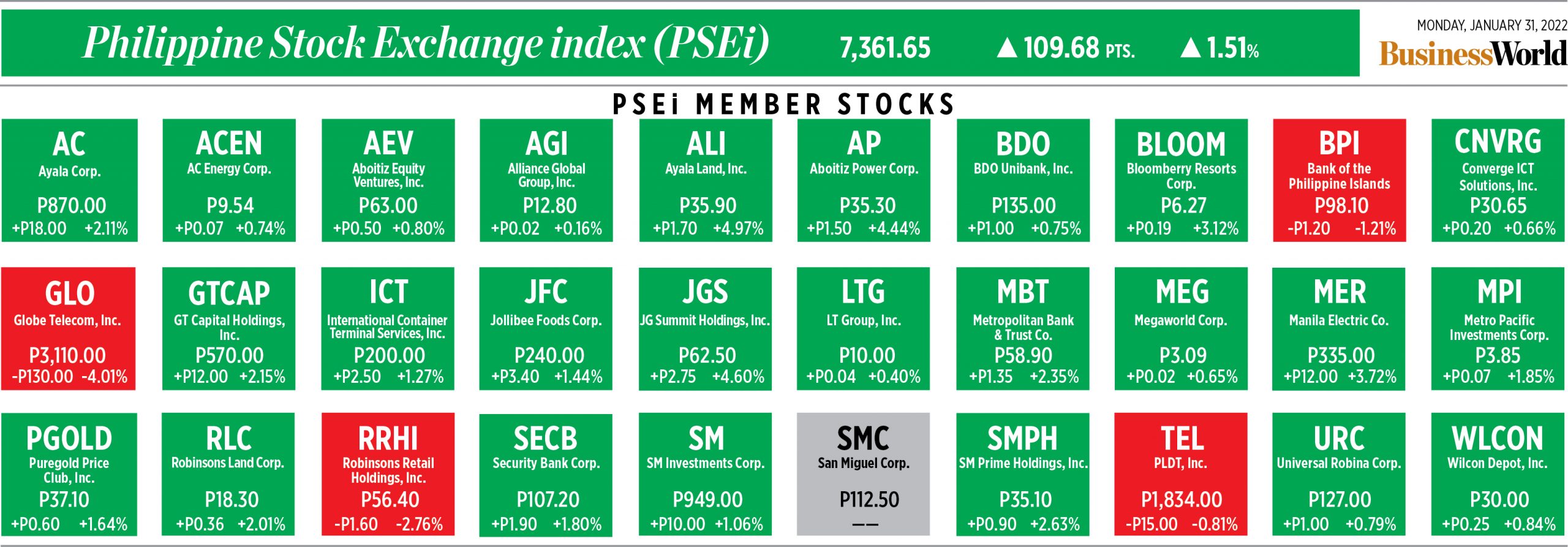
How PSEi member stocks performed — January 31, 2022

Here’s a quick glance at how PSEi stocks fared on Monday, January 31, 2022.


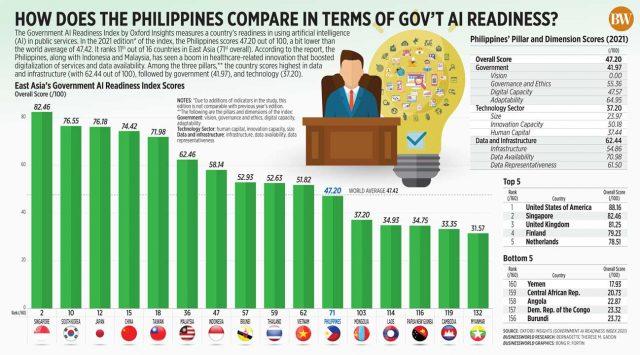
How does the Philippines compare in terms of gov’t AI readiness?

How does the Philippines compare in terms of gov’t AI readiness?

Semiconductor industry declares support for RCEP ratification 

PHILSTAR FILE PHOTO

THE Semiconductor and Electronics Industries in the Philippines Foundation, Inc. (SEIPI) said the Senate needs to ratify the Regional Comprehensive Economic Partnership (RCEP), declaring it beneficial to the industry. 

SEIPI President Danilo C. Lachica said in a position paper issued on Monday that participation in the RCEP trade deal will allow industries to improve their market access, diversify their sources of raw materials, and improve trade with other participating countries.

“Due to its liberalization of trade by eliminating 90% of tariffs within member countries, active participation in RCEP will reduce the overall cost of imported materials and exported goods for the electronics industry,” Mr. Lachica said.

“Being the largest trade pact representing 50% of global manufacturing output and 70% of electronics, RCEP can provide the Philippines greater market access by increasing trade with China, Australia, New Zealand, and other Association of the Southeast Asian Nations (ASEAN) countries,” he added.  

RCEP, which started to come into force on Jan. 1, has been ratified by Brunei, Cambodia, Laos, Singapore, Thailand, Vietnam, Australia, China, Japan, New Zealand, and South Korea.

According to Mr. Lachica, the trade deal will also allow the Philippines to improve its competitiveness as an investment hub for the electronics industry.

“The ratification of RCEP is a big step in improving our competitiveness as an investment destination for semiconductors and electronics, most especially against our ASEAN neighbors who are significantly doing better,” Mr. Lachica said.

Mr. Lachica said foreign direct investment (FDI) may be affected if the Philippines fails to participate in the trade deal.

Citing data from the Bangko Sentral ng Pilipinas, Mr. Lachica noted that FDI net inflows rose 48.1% year on year in the 10 months to October.

“Non-ratification of the RCEP may affect these numbers by discouraging investors and deterring post-pandemic growth and recovery,” Mr. Lachica said.

Mr. Lachica said RCEP will complement the provisions of Republic Act No. 11534 or the Corporate Recovery and Tax Incentives for Enterprises (CREATE) Act, which lowered corporate income tax rates and rationalized incentives.

Separately, British Chamber of Commerce Philippines Executive Director Chris Nelson said in a television interview on Monday that the Philippines will be able to compete and not lose out on trade if it participates in RCEP.

Mr. Nelson said economic reforms such as the recent passage of amendments to the Retail Trade Liberalization Act and other pending economic bills show that the Philippines can be competitive.

“The Philippines has a very talented workforce; that is why people come. The Philippines has certain definite skillsets, and is obviously strong in certain areas,” Mr. Nelson said.

“Let us not forget (that) RCEP will be a key area for FDI. I believe strongly that the Philippines can compete. I think the benefits of this much wider market are going to be much more beneficial for the Philippines,” he added.  — Revin Mikhael D. Ochave

Challengers invited to top bid for Mindanao coal concession areas

REUTERS

THE Energy department said it is seeking challengers for a bid put in by a coal trading company for seven coal blocks in northeastern Mindanao.

“This is to inform the public that the Grand Thermal Power Corp. is applying for 40-L-249, 40-L-250, 40-L-251, 40-L-252, 40-L-253, 40-L-290 and 40-L-293 Coal Blocks located in Bislig City, Surigao del Sur, and Trento, Agusan del Sur,” the Department of Energy (DoE) said in its Invitation to Challenge posted on its website on Jan. 28.

Bacolod-based Grand Thermal is one of 77 coal traders accredited by the DoE as of Nov. 30. Its main coal supplier is KCAL Coal Centre, Inc., according to the department.

BusinessWorld queried the DoE for more details on the application, but it had not replied at deadline time.

The pre-submission conference was set for Feb. 3. Interested parties must pay a non-refundable P200,000 to the DoE’s Treasury Division upon submission of the challenge application to the DoE Records Management Division on or before March 15. The challenge follows the procedures set in the Philippine Conventional Energy Contracting Program Guidelines.

The DoE estimates the supply of coal in 2020 was 42.476 metric tons of coal, with 69.51% of the total imported. — Marielle C. Lucenio

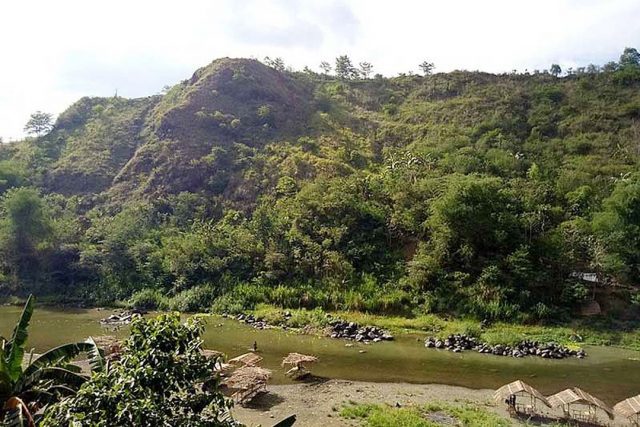
DENR to seek removal of illegal occupants from over 100 protected areas

WIKIMEDIA COMMONS, ARIUS1998

THE Department of Environment and Natural Resources (DENR) said it is hoping to remove illegal occupants from over 100 protected areas.

“We have taken for granted these protected areas. The perennial problem of illegal occupants is the reason why these areas are polluted and destroyed,” Environment Secretary Roy A. Cimatu said in a statement.

Republic Act No. 11038 or the Expanded National Integrated Protected Areas System Act of 2018 added 94 areas to the list of locations under special government protection, bringing the number of such sites to 107.

Public lands within these protected areas are classified as national parks under the 1987 Philippine Constitution.

He said the Upper Marikina River Basin Protected Landscape will be one of the priority sites.

The department said it is planning on private security personnel to turn away illegal occupants and may tap the Armed Forces of the Philippines and the Philippine National Police for overall security.

The law prohibits “occupying or dwelling in any public land within a protected area without clearance from the concerned Protected Area Management Board.”

Violators are liable for fines of between P200,000 and P1 million or imprisonment of one to six years.

“We are expediting the complete demarcation of all legislated protected areas to set their final boundaries, along with the creation of the Protected Area Management Office or PAMO,” Director Natividad Y. Bernardino of the DENR’s Biodiversity Management Bureau said.

Ms. Bernardino said a current program on Protected Area Development and Management covers measures to conserve biodiversity within and adjacent to protected areas. — Luisa Maria Jacinta C. Jocson

Energy efficiency industry wants retrofit, upgrade projects to qualify for incentives

THE ENERGY efficiency (EE) industry said it is seeking the inclusion of retrofitting and system upgrade projects in the list of investments deemed strategic in order to be eligible for fiscal incentives.

“We hope that strategic EE investments do not outrightly exclude retrofitting and system upgrades,” Philippine Energy Efficiency Alliance (PE2) President Alexander D. Ablaza told BusinessWorld in a Viber message, adding that the majority of EE projects needing third-party funding are retrofits and upgrades for existing buildings and industrial facilities.

“If we exclude retrofits and upgrades from the strategic EE investment endorsement of the Department of Energy (DoE) to the Board of Investments (BoI), then the Tier III incentives would be limited to a very few green building construction and electric vehicle projects,” he added.

Mr. Ablaza said any such exclusions will not help achieve the broader objective of raising up to P12 trillion in capital to help over 33,000 designated establishments comply with their obligations under the Energy Efficiency and Conservation Act.

During a virtual meeting with the DoE, which was consulting the public on a draft department circular on Jan. 27, Mr. Ablaza reiterated his call for the DoE and BoI to consider EE projects, even those considered non-strategic, as Tier III or to be considered “critical to the structural transformation of the economy.”

Energy efficiency projects involving upgrades have thus far been classified as Tier I. When reclassified under Tier III, companies with such EE projects can avail of one to two additional years of income tax holiday.

This incentive, Mr. Ablaza said, is crucial for EE projects to attract capital from third-party investors, such as energy service companies and third-party project developers. — Marielle C. Lucenio

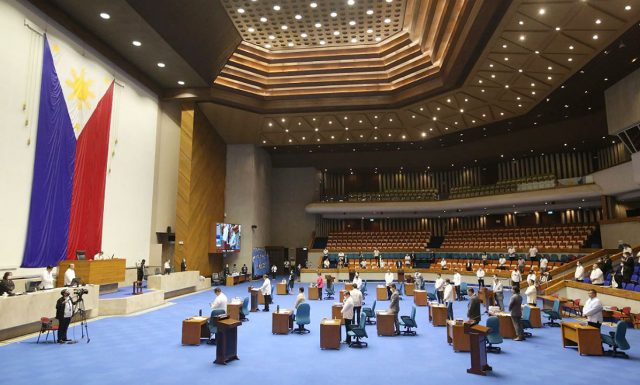
House approves hire motorcycle, maritime bills on third reading

INTERAKSYON

THE HOUSE of Representatives on Monday approved three transportation bills, including one regulating motorcycles for hire, on third and final reading.

House Bill (HB) 1075 or the proposed Motorcycles-for-hire Act, seeks to set up a registry for motorcycles to be used for public transport and delivery services. It was approved on third reading after receiving 189 affirmative votes and no negative votes, according to the proceedings of the House, sitting in plenary session.

Two maritime measures were also approved on third reading including one which seeks to improve the competitiveness of maritime trade and another designating the Department of Transportation as the lead agency for enforcing maritime rules.

HB 10575 or the proposed International Maritime Trade Act received 189 affirmative votes, while HB 10612 or the proposed International Maritime Instruments Domestication Act of The Philippines got 192 votes. — Jaspearl Emerald G. Tan

Senator calls for imports to be ‘last option’ in lowering food prices

THE GOVERNMENT should import food only as a last resort when it seeks to address high food prices, Senator Ana Theresia N. Hontiveros-Baraquel said.

Speaking at a virtual forum, Ms. Hontiveros-Baraquel said on Monday that imports “should be the last option. There must be other policy instruments and programs that can help lower food inflation.”

“We need to prioritize our farmers and fishermen,” she added.

“When we allow too many imports, farmgate prices drop. How is this sustainable? How will our farmers sustain domestic supply? We need to implement targets in food production. If there are targets, the government will know where to prioritize investment,” she said.

In the third quarter of 2021, trade in agricultural goods was in deficit by $2.4 billion, with imports of farm goods accounting for 13.5% of overall imports, according to the Philippine Statistics Authority.

“We must consider agriculture as a growth driver for the economy and the whole of society. It must be a main engine of our economy post-pandemic and post-recession. We must lift up the whole sector,” she added.

With regard to the Regional Comprehensive Economic Partnership (RCEP), she said the Philippines must be ready before it joins the regional trade deal.

“We don’t say no to competition. But it should be fair competition. This cannot be denied by countries with bigger economies. We must have the right support, policy protection and promotive programs from our side. We must be equipped before we open up to competition,” Ms. Hontiveros-Baraquel said.

The RCEP was signed by President Rodrigo R. Duterte in September and is now awaiting ratification in the Senate.

RCEP started coming into force on Jan. 1 in Brunei, Cambodia, Laos, Singapore, Thailand, Vietnam, Australia, China, Japan, South Korea, and New Zealand.

The Senate has until Feb. 4 to ratify the RCEP deal. As a treaty, it cannot be amended and can only be acceded to, rejected, or deferred.

Farm and fishing organizations urged the Senate to defer, if not reject, RCEP claiming that the agricultural sector is not yet ready for the expected disruption.

“Let’s give us time to prepare. If not, the rich will get richer, the poor will get poorer. The agriculture sector is always forgotten. You will hear this now from the people because no one is listening,” Former Agriculture and Trade Undersecretary Ernesto M. Ordoñez said in a separate virtual forum.

“No meetings have been called, there is incomplete information and no consultation,” he added.

The farmers and fishermen estimated that the Philippines is five to 10 years away from being ready for the effects of the free trade agreement.

“Have all the threats been identified? Assuming we have identified the transition measures, are the measures in place and is the budget sufficient? Is there necessary assistance available? So when we enter RCEP, we have a fighting chance to be competitive,” according to Leonardo Q. Montemayor, president of the Federation of Free Farmers (FFF).

Labor Education and Research Network Senior Researcher Rolly Czar Joseph M. Castillo said according to studies conducted by his organization, the industries most negatively affected will be sugar, wool, wheat, plant-based fibers, electrical equipment, ferrous metals, and metal products.

“We import about P600 billion worth of agricultural products every year.  Every 1% reduction in tariffs means a tariff revenue loss of P6 billion,” FFF National Manager Raul Q. Montemayor added. — Luisa Maria Jacinta C. Jocson

House ratifies bicam reports on contractor licensing, military marshals, teacher education

PHILSTAR

THE HOUSE of Representatives ratified on Monday three bicameral conference committee reports, including one amending the law on the renewal of contractor licenses.

The committee report harmonizing House Bill 10301 and Senate Bill  2152, which seek to amend the Contractors’ License Law, was ratified, according to the proceedings of the House sitting in plenary session, which was streamed online.

Meanwhile, the bicameral report on the House and Senate bills proposing to establish the Philippine Military Judiciary Marshals Service was also ratified.

In a related development, the bicameral report on a bill strengthening the Teacher Education Council was also ratified. — Jaspearl Emerald G. Tan