Home Blog Page 6827

393 of candidates’ YouTube accounts verified

THE COMMISSION on Elections (Comelec) has verified about 393 YouTube accounts of candidates for the May elections, it said in a statement on Thursday. 

The verification of accounts was in time with the launch of Comelec e-rallies on Tuesday night, which live-streams national candidates on the election body’s Facebook Page and Youtube accounts. 

“Verification of accounts is a step towards ensuring the availability of trusted and credible sources of information for the public,” Comelec Spokesman James B. Jimenez said in the statement. 

All official candidates who submitted their YouTube account information to the election body now have verified badges on their channels.

“We have worked with YouTube to verify these channels, regardless of the number of subscribers, and we will continue to work closely to push out helpful information to voters,” Mr. Jimenez added. 

Comelec Resolution 10748 requires that all social media platforms used for official campaigning must be registered with the election body.

Comelec also announced on Thursday that it has started the deployment of election equipment to be used for the May 9 polls.

Vote-counting machine batteries and ballot boxes were dispatched to local hubs nationwide from the Comelec warehouse in Laguna, it said in a statement. 

The vote-counting machines along with consolidation and canvassing system machines will be distributed from April 2 to 19. 

The official ballots and indelible ink, which are stored in the National Printing Office, will be sent to city and municipal treasurers starting April 20. 

Comelec earlier announced that the printing of ballots for local distribution will be completed by April 21. — John Victor D. Ordoñez

On the campaign trail: Robredo visits Batangas; loyalties shift among long-serving politicians

PRESIDENTIAL CANDIDATE Vice President Maria Leonor “Leni” G. Robredo visited the vote-rich province of Batangas on Thursday, the third day of the campaign period.

Supporters wearing pink shirts and face masks welcomed Ms. Robredo and her running mate, Senator Francis “Kiko” N. Pangilinan, in Padre Garcia, Batangas. 

The opposition tandem also visited Lipa City and the towns of Balayan and Tanuan. 

Ms. Robredo won in Batangas in the 2016 vice-presidential race. 

Batangas Rep. Maria Rosa “Vilma” T. Santos and her husband, Senator Ralph G. Recto, who are both former members of Ms. Robredo’s political party, are backing the presidential run of Manila Mayor Francisco “Isko” M. Domagoso. 

The couple backed the vice-presidential run of Ms. Robredo in 2016. 

Meanwhile, Albay Rep. Jose Ma. Clemente “Joey” S. Salceda endorsed Ms. Robredo’s bid, but not her running mate. 

Mr. Salceda is backing presidential daughter and Davao City Mayor Sara Duterte-Carpio for vice president, who is running alongside presidential candidate Ferdinand “Bongbong” R. Marcos, Jr. 

He said Ms. Robredo and Ms. Duterte-Carpio will make a good team because they have both shown sound public fund management. 

“They make a good combination because they are fiscally responsible. If you look at the projects of Sara and Leni, you can see that both of them are catered to social development. They have so many innovations, like their pandemic response,” he told reporters at a virtual press briefing on Thursday.

Mr. Salceda and Ms. Robredo both come from the Bicol Region. The solon earlier expressed support for Ms. Duterte-Carpio as a presidential candidate before the official filing of applications for the May 9 elections. 

Mr. Salceda, as quoted in an emailed statement from Ms. Robredo’s office, told a public event that he was backing the opposition bet not because she was a fellow Bicolano but because her good governance platform is also “good for the economy.”

In 2010, Mr. Salceda left the political party of ex-President Gloria M. Arroyo to support the presidential bid of the late Benigno S.C. Aquino III of the Liberal Party. Ms. Duterte-Carpio is running for vice president under Ms. Arroyo’s party. 

Ms. Duterte-Carpio told reporters at a public event that she and Mr. Marcos “will not refuse endorsements whether individually or collectively.”

Ms. Duterte-Carpio, in a statement in mixed Filipino and English sent via Viber by her campaign team on Thursday, said she will “support” Mr. Salceda, who is running for reelection, in “whatever direction he takes in politics. He is a friend — whether there is politics or none.” — Kyle Aristophere T. Atienza and Jaspearl Emerald G. Tan 

Legal manager needed at pandemic task force after series of botched policies, senator says

PHILIPPINE STAR/ MICHAEL VARCAS

THE INTER-AGENCY task force managing the coronavirus response needs to hire a legal manager to evaluate policies before these are carried out following a series of botched rules that caused confusion among the public and implementing authorities, a senator said. 

Senator Francis N. Tolentino said in a statement on Thursday that a legal division within the ad hoc group “will be in charge of filtering, scrutinizing, consolidating, polishing, and harmonizing all its upcoming policies prior to its actual implementation.” 

The legal team will serve as the government’s “final clearing house” before implementing any health emergency policy, especially those that affect individual liberties guaranteed under the Constitution. 

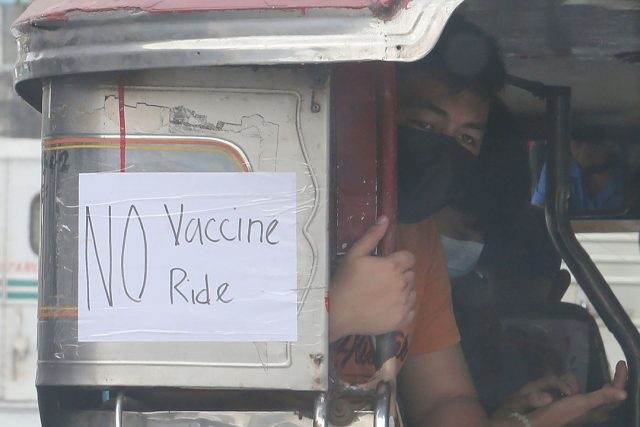
The senator cited the “no vaccination, no ride” policy in all public transport and mandatory pediatric vaccination against coronavirus disease 2019 (COVID-19). 

Last month, the Department of Transportation had to clarify that workers are exempted from the “no vaccination, no ride” policy two days after it was implemented. 

The Department of Health also had to modify its pediatric vaccination circular, removing a provision allowing children to get vaccinated without parental consent after two parents filed complaints at a regional trial court questioning its legality. — Alyssa Nicole O. Tan

Bayan Muna to keep pushing for better agrarian reform bill if it wins congressional seats again

PHILSTAR

BAYAN MUNA, a left-wing party-list group that holds a maximum of three seats in the current Congress, vowed to refile a bill that aims to improve the agrarian reform program if they win again in the May elections. 

“We will refile it, surely [if our party-list gets reelected],” Bayan Muna Rep. Carlos Isagani T. Zarate told BusinessWorld in a Viber message. 

The group filed House Bill (HB) 239 or the proposed Genuine Agrarian Act of 2019, which remains at the committee level. 

“This was never a legislative priority of President Rodrigo R. Duterte’s administration, which was why, despite our HB 239 among others filed in the House of Representatives, this was never given importance,” said Bayan Muna Rep. Ferdinand R. Gaite in a separate Viber message.  

“It is also known that more representatives in Congress are not in favor of genuine land reform and side with the landlords,” he added.

Mr. Zarate said all previous administrations are also to blame since they only gave “token importance to agrarian reforms” and do not want to change the current system. 

The law on the Comprehensive Agrarian Reform Program was passed in 1988 under the administration of the late President Corazon C. Aquino. Amendments have since been passed. 

Mr. Zarate said previous agrarian reforms failed because members of Congress intentionally put loopholes in those laws.

“The previous agrarian reform programs (including CARP and CARPER) failed because of the many legal loopholes inserted by the landlord-dominated  Congress, which were taken advantage of by landowners and corrupt bureaucrats,” he said. 

Agrarian Reform Undersecretary David D. Erro said they support House Bill (HB) 239, which is similar to a measure filed by a former department secretary and congressman, Rafael V. Mariano. 

“DAR (Department of Agrarian Reform) has been supporting bills catering to the interest and welfare of the small farmers such as HB 239,” he said.

“Free amortization or beneficiaries will not pay the land awarded to them and giving DAR the power to cover again agricultural lands are the striking provisions of HB 239. [We] fully support these provisions,” he added. — Jaspearl Emerald G. Tan

Forward guidance and patience in monetary policy

MACROVECTOR-FREEPIK

If there’s anything that best describes former IMF Managing Director Christine Lagarde’s preferred approach to economic challenges, it is invariably her dogged insistence that strategy should always be consistent with institutional mandate. We believe this is where former Deutsche Bundesbank President Dr. Jens Weidmann was coming from when he quoted Dennis Gabor, the British physicist who invented holography and won the Nobel Prize in 1971, who argued that the future cannot be predicted, but it can be created. This also applies to monetary policy and central banks. If they remain true with their statutory responsibilities, they can help create macroeconomic stability.

But alas, central banks are not gods that they can always deliver on their primary mandates of price and financial stability through business and financial cycles.

And today, central banks lock horns with higher prices and fragile economic recovery. It’s not an easy task to tame soaring oil prices today because they are beyond monetary policy; they respond more to oil and geo politics. What irks interest rate pushers is how sensitive oil prices could be to market movements that are in turn driven by, for instance, the current Russia-Ukraine standoff. There is limited direct fallout from fundamental oil dynamics, but there is an abundance of market jitters.

Speculative movements in oil prices could be serious even as the US and some friendly Middle East countries might jack up oil production. Although still tentative, the global business recovery appears to be gaining more traction than oil supply, challenging central banks around the world and roiling risk assets.

In the Philippines, the Banko Sentral ng Pilipinas’ (BSP) bold declaration in January that inflation would keep within target of 2-4% in 2022 and 2023 is now close to transgressing its basis. Against the assumption of $95 per barrel, Brent crude hit a seven-year high of $94 per barrel in intra-day trading last Monday. In fact, our own Department of Energy is more than bothered, such that it has decided to establish some contingency relief should oil prices hit $100 per barrel this year. If anything at around this level is sustained, we might be seeing sharper adjustments in oil pump prices than we have seen so far. If we add up the potential second-round effects on transport fares, food prices, and wage increases, it is likely that the current forecasts will need some recasting. This is one wild card for inflation busters.

It’s good that the BSP is now talking of radical uncertainty, though not in these terms. “It’s hard to predict how oil prices would look like this spring or summer. As policy makers, we monitor, assess risks and act accordingly. We continue to gather data and assess various scenarios,” BSP Governor Ben Diokno was quoted by this broadsheet the other day. When it comes to various scenarios, he must be referring to different combinations of assumptions and risks with assigned probabilities.

Parallel thinking is therefore critical.

Some market analysts have highlighted the stagflation narrative in the last half of 2021 with the emergence of Omicron. It is still uncertain but prospects are looking up as inventory rebuilds and supply disruption unwinds. This should be positive for growth and inflation in the short run. This much was claimed late last year by former US Treasury Secretary Larry Summers when he stressed the need for the US to reduce trade barriers and lift restrictions on energy production in order to stimulate supply and stabilize prices. Inflation is more than transitory, and has been firmly entrenched in the US, more than ever in the last four decades.

Sadly, the Philippines is also in the same boat as many developed and emerging markets today. The pandemic and economic lockdown squeezed supplies and inventories, contributing to the loss of jobs and income, and worsening inequality and poverty. Only time will tell, but the extraordinary infusion of domestic liquidity and negative real policy rate could have some repressed consequences on inflation and financial stability at some point in the future. We have a situation where price movements appear very moderate but this is due more to weak domestic demand courtesy of income loss and poverty.

Clearly, under these circumstances, it is an enlightened fiscal and business policy that must carry the day. The fiscal deficit this year and the next are expected to taper off to about 7.7% and 6.1%, respectively, with fiscal consolidation. Thus, there is still some space for supporting economic growth. With an easing trajectory, the pandemic demand for public resources is likely to go easy on borrowings. We need to bear in mind that it is but a matter of time before “the music of ample global liquidity stops playing,” as the American Enterprise Institute put it last December in obvious reference to the unavoidable raising of interest rates in the US and elsewhere very soon.

Thus, monetary policy should have an easier lay of the land if it will just abide by its institutional mandate. While the BSP failed to hit the target of 2-4 % in 2021 with 4.5% average inflation, its forecasts for this year and the next are just a little above the midpoint of the target range. With real GDP growth of 7.7% in the last quarter of 2021 and a whole year output growth of 5.6%, BSP assistance may be superfluous.

It can choose to be forward looking and gradually align its policy rate with the fundamentals. We have a negative real policy rate while the US Fed is considering at least four adjustments this year that could siphon off foreign exchange from the emerging markets, including the Philippines, that are still busy supporting their domestic economic activities with low interest rates. We don’t want to see capital reversal happening with dire consequences on the peso, FX reserves, and the asset markets. Domestic liquidity remains excessive and it would not hurt the financial markets and the real sector if some withdrawal of liquidity is initiated and interest rates are rationalized to avoid costly catching up in the future. It’s the increased uncertainty of an inflation spiral and capital reversal that monetary policy should have its eyes on.

In addition, the BSP can already launch what it announced recently — that it would be focusing more on its analysis of the inflation dynamics and the appropriate monetary steps in order to manage the inflation drivers and achieve its inflation goals. More forward guidance may be forthcoming from the BSP to help shape a more stable market sentiment about future inflation. This could be a potent tool to possibly manage market expectations and guide it to receive and digest more information on how the economy is shaping up. Central bank communication and transmission of strategic information to the market may be as important as the announcement of both the inflation numbers and the policy stance itself. There is growing literature that attempts to disentangle the information inherent in monetary policy announcement into a monetary policy shock, forward guidance regarding future interest rates and the so-called information effect about the state of the macroeconomy.

Following Lagarde, it is always useful to have a monetary policy that is strongly consistent with its institutional mandate, always upholding the institution’s statutory independence. The BSP can be patient with monetary policy, but with abundant economic scarring of the pandemic and economic recession, nothing beats agility in monetary response. We do not have to spell out that monetary policy works with a long and variable lag. 


Diwa C. Guinigundo is the former deputy governor for the Monetary and Economics Sector, the Bangko Sentral ng Pilipinas (BSP). He served the BSP for 41 years. In 2001-2003, he was alternate executive director at the International Monetary Fund in Washington, DC. He is the senior pastor of the Fullness of Christ International Ministries in Mandaluyong.

Controlling the media narrative

When asked their views on media and press freedom as well as free expression, politicians of the Philippine variety will swear to high heaven their respect for both. But the most clueless among them about what both freedoms mean and what they consist of will do their all to diminish them once given the excuse and the opportunity.

Such an effort has been much in evidence during the last five and a half years. Whether they are in Congress, Malacañang, local government, or anywhere else, they gleefully shut down ABS-CBN, sued journalists for this or that offense, and through their foul mouths and worse misdeeds encouraged the harassments, physical assaults, and even murders not only of journalists but also of many others who dared exercise their right to free expression.

The purpose is to silence both truth and criticism and to replace them with falsehood and mindless approval — and to engage the media in keeping alive such lies as the dynasts’ and political oligarchs’ claims to competence, honesty, incorruptibility, and love of country and people: those illusions so necessary to their taking and keeping power and assuring their unlimited and unaccountable access to public funds.

The same intent guided the hand of Ferdinand Marcos, Sr. when on the very first day of his dictatorship in 1972, he shut down newspapers, radio stations, and television networks and had regime critics and journalists arrested and detained, with some of them being forcibly disappeared and murdered by his military minions.

But there are other, subtler forms of controlling the media narrative, among them corrupting journalists; preventing them from covering events, issues, and policies that officials cannot defend; favoring only those whom they and the bureaucrats under their wing think they can easily manipulate; and denying access to their exalted presence those who are more discerning, critical, and courageous.

Ferdinand Marcos, Jr.’s media tactics during his ongoing campaign for President are a variation of the latter, and at the same time a means of evading the responsibility of giving the country and people he wants to rule some sense of his platform of government, if he has any. Providing the electorate that service is precisely the point of the forums the more responsible media organizations are organizing, but Marcos Jr. has refused to participate in two of them.

The first was the Jan. 22nd Jessica Soho interview with Presidential candidates to which he was invited together with Vice-President Maria Leonor “Leni” Robredo, Senators Emmanuel “Manny” Pacquiao and Panfilo “Ping” Lacson, and Manila Mayor Francisco “Isko Moreno” Domagoso.

The second was the Feb. 4 Kapisanan ng mga Brodkaster ng Pilipinas’ (KBP — Association of Broadcasters of the Philippines) “Panata sa Bayan” forum in which VP Robredo, Senators Lacson and Pacquiao, Mayor Domagoso, and labor leader and activist Leodegario “Ka Leody” de Guzman participated.

To explain his refusal to participate in the first event, Marcos Jr. claimed “bias” on the part of broadcaster Soho, which he said, consists of her being “anti-Marcos.” What he most likely feared was Soho’s asking him such hard questions as why he has falsely claimed to be a graduate of this and that university, or whether, if elected, he would attempt to take back part of his father’s ill-gotten wealth that the Philippine government has recovered. In the best traditions of journalistic enterprise, Soho indeed raised even harder questions of his rivals during her interview with four of them.

What Marcos Jr. alleged as bias was only a journalist’s being true to the right and duty of getting the information that matters so as to enhance the citizenry’s capacity to make wise decisions during such critical moments in the life of this nation as elections.

The real reasons for his non-attendance in the KBP forum he disguised by saying it was in conflict with another event in his schedule. But one suspects that if pressed he would probably make the same claim of bias. The interviewers during that occasion are known, like Soho, for doing their homework and asking the hard questions of those in power — and those aspiring for it.

By refusing both, he limited the chances of his being exposed as the less qualified candidate and staved off demands that he reveal his program of government. But he agreed to be interviewed by others less demanding. He thus conveyed to the public only what he wants it to see and hear.

He refused to participate in either despite the millions of Filipinos here and abroad who heard and watched the Soho interview, and the second forum’s airing over the KBP’s membership of more than 300 radio stations and television channels throughout the country.

Both were his rivals’ gain and his loss. As if to confirm the suspicion that he refused to join his fellow aspirants for the Presidency and will most probably continue to do so for fear of being perceived as less qualified than they, since comparisons between the candidates and how they fared are inevitable, he has so far accepted only one-on-one interviews, among them with ALC Media Group and ONE News on Jan. 24, and radio station DZRH on Jan. 26.

From what he said during those interviews, it seems that what he is trying to pass off as his platform of government mostly consists of plans to revive his father’s discredited and long-dead programs. Among them is the revival of the training program for OFWs that during the Marcos Sr. dictatorship encouraged the export of Filipino labor as a cure-all for the unemployment problem that the Marcos Sr. regime could have solved by making more jobs within the country available.

Marcos Jr. is apparently unaware that the Migrant Workers and Overseas Filipinos Act of 1995 (Republic Act 8042) explicitly declares that the deployment of workers to foreign countries is a temporary measure, and should not discourage national development nor preclude the creation of the jobs that will keep workers home.

Two of his other supposed plans is to dig up the nearly half a century-old “Kadiwa” stores, the success of which he exaggerates, and the commissioning of the Bataan Nuclear Power Plant, which was not only corruption- and kickback-ridden but also so badly designed and built on an earthquake fault as to constitute a threat to the country in the event of a nuclear meltdown.

What is evident from these plans to resurrect those failed and dangerous alleged solutions to the country’s problems despite the passing of nearly half a century is the still glaring absence of any coherent, 21st century-relevant economic recovery program in the pre- and post- pandemic period.

Neither, for that matter, does he have any workable plan in mind to address the urgent issues and problems the COVID-19 pandemic has revealed need to be addressed. Among these are the inadequacies of the public healthcare system, the shortfall in the number of teachers and classrooms, and the limited access of students to the internet and to laptops and other devices that have made educating them even more problematic.

The inevitable conclusion is that behind the glittering generalities and slogans Marcos Jr. has been peddling is nothing more than the dangerous illusion his partisans have embraced. It is that Marcos Sr.’s rule was perfection itself and that, as his father’s son, he can replicate it.

The latter, as anyone familiar with what transpired during the 14 dark years of the Marcos kleptocracy knows, is not a promise, but a threat.


Luis V. Teodoro is on Facebook and Twitter (@luisteodoro).

www.luisteodoro.com

New study declares lockdowns inutile and harmful. Time to hold government accountable

ERIK MCLEAN

After the UK, Denmark, and — of course — Sweden lifted COVID restrictions, including mask and vaccination requirements, comes a study conclusively putting the lie on the futility, inanity, and insanity that are lockdowns.

LOCKDOWNS: NOT WORTH THE SQUEEZE
The January 2022 paper from the Johns Hopkins Institute for Applied Economics, Global Health, and the Study of Business Enterprise (“A Literature Review and Meta-Analysis of the Effects of Lockdowns on COVID-19 Mortality” by Jonas Herby, et. al.) definitively declared:

“What does the evidence tell us about the effects of lockdowns on mortality? We provide a firm answer to this question: The evidence fails to confirm that lockdowns have a significant effect in reducing COVID-19 mortality. The effect is little to none.”

On the other hand, “while this meta-analysis concludes that lockdowns have had little to no public health effects, they have imposed enormous economic and social costs where they have been adopted. In consequence, lockdown policies are ill-founded and should be rejected as a pandemic policy instrument.”

In case government and lockdown supporters still can’t understand what was just said: “Overall, we conclude that lockdowns are not an effective way of reducing mortality rates during a pandemic, at least not during the first wave of the COVID-19 pandemic. Our results are in line with the World Health Organization Writing Group (2006), who state, ‘Reports from the 1918 influenza pandemic indicate that social-distancing measures did not stop or appear to dramatically reduce transmission.’”

In fact, the damage wrought by lockdowns is emphatically not merely economic but also health-wise: “Several studies find a small positive relationship between lockdowns and COVID-19 mortality. Although this appears to be counterintuitive, it could be the result of an (asymptomatic) infected person being isolated at home under a SIPO [“shelter in place order”] can infect family members with a higher viral load causing more severe illness.”

Also, “unintended consequences may play a larger role than recognized. We already pointed to the possible unintended consequence of SIPOs, which may isolate an infected person at home with his/her family where he/she risks infecting family members with a higher viral load, causing more severe illness. But often, lockdowns have limited people’s access to safe (outdoor) places such as beaches, parks, and zoos, or included outdoor mask mandates or strict outdoor gathering restrictions, pushing people to meet at less safe (indoor) places. Indeed, we do find some evidence that limiting gatherings was counterproductive and increased COVID-19 mortality.”

Indeed, this statement alone shows the utter derangement of relying on lockdown policies: “According to stringency index studies, lockdowns in Europe and the United States reduced only COVID-19 mortality by 0.2% on average.”

TIME TO START SUING
The paper employed a “systematic review and meta-analysis” specifically “designed to determine whether there is empirical evidence to support the belief that ‘lockdowns’ reduce COVID-19 mortality.” “Lockdowns” here include to mean “policies that limit internal movement, close schools and businesses, and ban international travel.” The scope of the paper was utterly comprehensive, involving “systematic search and screening procedure in which 18,590 studies are identified that could potentially address the belief posed. After three levels of screening, 34 studies ultimately qualified. Of those 34 eligible studies, 24 qualified for inclusion in the meta-analysis.”

It’s time therefore for citizens, individuals, and companies to start making plans to sue the government or its officials for the damage they wrought in unjustifiably and arbitrarily insisting on destructive lockdown policies.

And let no one claim that when the pandemic started they didn’t know lockdowns were ineffective but harmful — experts have been shouting that fact from the beginning.

There is a common-sense reason why “lockdowns have not been used to such a large extent during any of the pandemics of the past century. However, lockdowns during the initial phase of the COVID-19 pandemic have had devastating effects. They have contributed to reducing economic activity, raising unemployment, reducing schooling, causing political unrest, contributing to domestic violence, and undermining liberal democracy. These costs to society must be compared to the benefits of lockdowns, which our meta-analysis has shown are marginal at best. Such a standard benefit-cost calculation leads to a strong conclusion: lockdowns should be rejected out of hand as a pandemic policy instrument.”

SUITS BY FOREIGN CORPORATIONS
Foreign corporations should study the possibilities of bringing a suit for damages before the International Center for the Settlement of Investment Disputes (ICSID; see “Foreign investment damages under lockdowns,” BusinessWorld, Nov. 12, 2020). The ICSID overcomes State immunity from suit by allowing private entities to protect the investments they made in a foreign country. Complaints could include improper expropriation of the investment or unfair treatment, either through violation of most-favored-nation or national treatment principles. Thus, Article 25 of the ICSID Convention: “The jurisdiction of the Center shall extend to any legal dispute arising directly out of an investment, between a Contracting State (or any constituent subdivision or agency of a Contracting State designated to the Centre by that State) and a national of another Contracting State, which the parties to the dispute consent in writing to submit to the Center. When the parties have given their consent, no party may withdraw its consent unilaterally.”

ICSID proceedings are self-contained: no appeals to local courts, no diplomatic protection, and once ICSID is engaged all other remedies are deemed excluded. The ICSID Convention obliges each contracting State to recognize and enforce pecuniary obligations imposed by awards of ICSID tribunals as if they were final judgments of the State’s own courts. Note that State immunity may still hold but then that State will have to answer for possible treaty violation.

Bilateral investment treaties may also provide an opening for recovery of damages. BITs will normally contain an “Investor-State Dispute Settlement” clause, which essentially allows foreign investors to sue a government for discriminatory practices.

The Philippines, for example, has entered into several BITs with ISDS clauses, amongst them the 2000 investment agreement with India. Aside from the Article IX (i.e., the ISDS clause), there is also: Article III.1 — “Each Contracting Party shall encourage and create favorable conditions for investors of the other Contracting Party to make investments in its territory, and admit such investments in accordance with its laws and policy.”

Furthermore, Article VI provides: “Investors of one Contracting Party whose investments in the territory of the other Contracting Party suffer losses owing to war or other armed conflict, a state of national emergency or civil disturbances in the territory of the latter Contracting Party shall be accorded by the latter Contracting Party treatment, as regards restitution, indemnification, compensation or other settlement, no less favorable than that which the latter Contracting Party accords to its own investors or to investors of any third State.”

Admittedly, a government can argue that its policies equally apply to both foreign and local companies, and that the latter suffered equally as well. A counter to this argument would be to charge the government as having violated the international “minimum standard of treatment,” which allows for greater and more effective protection to foreign investors than would have been available under Philippine domestic law. The point is that, in terms of holding governments accountable, the law and tribunals are certainly there.

SUITS BY CITIZENS AND LOCAL BUSINESSES
In the local setting, citizens or private institutions can sue the national or local government, individual government officials, even private establishments, whether it be businesses, schools, or residential condominiums, for damages incurred due to illegal and unjustified COVID-19 measures, including lockdowns, mandatory vaccination, and even mask requirements.

The constitutional prescription that no person shall be deprived of life, liberty, or property without due process of law or be denied equal protection of laws is applicable to all and the responsibility of all.

That responsibility has been further legislated specifically in the Civil Code, particularly Article 19 (every person must, in the exercise of his rights and in the performance of his duties, act with justice, give everyone his due), Article 20 (every person who causes damage to another, shall indemnify the latter for the same), and Article 26 (every person shall respect the dignity, personality, privacy and peace of mind of his neighbors and other persons. The following and similar acts, though they may not constitute a criminal offense, shall produce a cause of action for damages, prevention and other relief: meddling with or disturbing the private life or family relations of another; intriguing to cause another to be alienated from his friends; vexing or humiliating another on account of his religious beliefs or other personal condition).

Then there is Article 32: Any public officer or employee, or any private individual, who directly or indirectly obstructs, defeats, violates or in any manner impedes or impairs any of the following rights and liberties of another person shall be liable to the latter for damages, which includes: freedom of religion; freedom of speech; freedom from arbitrary or illegal detention; the right against deprivation of property without due process of law; the right to the equal protection of the laws; the right to be secure in one’s person, house, papers, and effects against unreasonable searches and seizures; the liberty of abode and of changing the same; the right to take part in a peaceable assembly to petition the Government for redress of grievances.

The penal code also provides for criminal proceedings where private individuals, without authority of law, coerced people to do things or stay in a place against their will (see “illegal detention,” “unlawful arrest” or “grave coercion,” Articles 267, 268, 269, and 286, respectively of the Revised Penal Code) or where government officials, without authority of law, coerced people to do things or stay in a place against their will (see “arbitrary detention,” “violation of domicile,” “interruption of religious worship,” Articles 124, 128, 132, respectively, of the Revised Penal Code).

BOTTOMLINE, ACCOUNTABILITY
Somebody must be thoroughly held accountable for the incredible loss or damage to life, liberty, property, the national economy, individual livelihoods, people’s futures. All for what? For a measly “0.2%” benefit just so some people could satisfy their lazy dictatorial tendencies through never-ending lockdowns.

(For further information about “A Literature Review and Meta-Analysis of the Effects of Lockdowns on COVID-19 Mortality” by Jonas Herby, et.al.,” visit https://www.poynter.org/fact-checking/2022/what-to-know-about-a-study-on-lockdowns-and-covid-19-deaths-by-economists-affiliated-with-johns-hopkins/ — Editor)


Jemy Gatdula is a senior fellow of the Philippine Council for Foreign Relations and a Philippine Judicial Academy law lecturer for constitutional philosophy and jurisprudence

https://www.facebook.com/jigatdula/

Twitter@jemygatdula

Fact-checking COVID-19 posts isn’t working. There’s a better way.

THE RIGHT and left may not agree on what constitutes misinformation, but both would like to see less of it on social media. And as the world faces the third year of the COVID-19 pandemic, the threat medical misinformation poses to public health remains real. Companies like Twitter and Facebook have a stake in cleaning up their platforms — without relying on censoring or fact-checking.

Censoring can engender distrust when social media companies expunge posts or delete accounts without explanation. It can even raise the profile of those who’ve been “canceled.”

And fact-checking isn’t a good solution for complex scientific concepts. That’s because science is not a set of immutable facts, but a system of inquiry that constructs provisional theories based on imperfect data.

A recent post on Politifact illustrates the problem. The claim at issue: a meme circulating on Facebook that viruses evolve to be less virulent. Politifact deemed it false, but Purdue University virologist David Sanders disagrees. “I would say that it actually is true that viruses do tend to evolve to be less harmful to their host,” he told me, though it’s a process than can sometimes take decades — or even centuries — from the time a new virus jumps from animal to a human host. Sanders said Politifact had conflated virulence with other things, such as resistance to drugs. When a complex issue is still a matter of scientific uncertainty and debate, rating it “true” or “false” doesn’t work very well.

Another limitation of fact-checking: There’s so much dubious content floating around Facebook and Twitter that human fact checkers can only get to a miniscule fraction. Consumers may wrongly assume what’s left over has been reviewed and is reliable. 

“It’s not a truth-seeking medium — it’s meant for entertainment,” says Gordon Pennycook of the University of Regina in Canada.

But he is convinced that Facebook and Twitter can be made less deceptive by harnessing the analytical power of the human brain.

One way is to harness the phenomenon known as “the wisdom of the crowds.”  If you ask enough independent sources a tough question — like how deep the Pacific Ocean is at its deepest point — people converge on the right answer. But social media misguides our crowd-seeking compasses.

Crowdsourcing only works when each person is thinking independently. On social media, users get cues that lead to mobbing and piling on, and fake accounts or automated “bots” can give the illusion that vast crowds are impressed or outraged by a news item. 

“It’s not necessarily that [users] don’t care about accuracy. But instead, it’s that the social media context just distracts them and they forget to think about whether it’s accurate or not before they decide to share it,” said his research partner David Rand, a professor of management science and cognitive sciences at MIT.

Rand admits he fell into that trap himself, sharing a made-up tidbit attributed to Ted Cruz — a statement that he’d believe in climate change when Texas freezes over. “It was the time when there were all those snowstorms in Texas. And I was like, ‘Oh my God, that’s so good.’”

What Rand and Pennycook found in a recent study, published in the journal Nature, was that people improved the accuracy of their sharing when first asked to rate the accuracy of a headline. The idea was that this would shift people’s attention toward accuracy, which people say they believe is important even as they share things based on how popular they’re likely to be.

Rand and Pennycook found that combining enough social media users to evaluate news generated a wisdom-of-the-crowds effect, and the system yielded answers that matched multiple fact checkers as well as the fact checkers matched each other.

“About 10 or 15 lay people, that’s equivalent to about one fact-checker,” said Pennycook.

Facebook and Twitter could harness crowdsourcing to elevate the stories most likely to be true. “You could use that to inform your ranking to correspond to the actual accuracy,” Pennycook said. “In a certain sense that’s taking it out of the hands of the third parties and give it back to the people.”

Instead, algorithms on platforms like Twitter, YouTube, Instagram, and Facebook are structured to suppress learning and feed people an informational junk food diet that reinforces existing beliefs and biases, according to a series of models and experiments led by Filippo Menczer, a professor at the Center for Complex Networks and Systems Research at Indiana University.

“What we are exposed to on social media is strongly affected by our own pre-existing opinions,” he told me on my podcast about medical misinformation. And that’s one reason seemingly apolitical medical topics become politicized. “Political entities have an interest in using whatever people are paying attention to — for example, a health crisis — to manipulate people.”

The “people are getting dumber” myth has been embraced on both the political right and left. We’re not getting dumber. We are all struggling to understand what’s going on in a complex, fractured world. Censorship and even fact-checking social media won’t solve that problem. To do that, platforms can change the system, giving users more power over what they see.

BLOOMBERG OPINION

World Bank drafts new report to replace canceled ‘Doing Business’

REUTERS

THE WORLD Bank is working on a new approach to measuring the business and investment climate in economies after its previous flagship report known as “Doing Business” was canceled last year following an outside audit that concluded data were manipulated.

The development lender is seeking input for the new project, with the working title “Business Enabling Environment,” to take into account the views of experts and potential users in government, the private sector and civil society, the World Bank said on its website. The project will be led by the same development economics global indicators group that produced “Doing Business.”

Some changes proposed include evaluating the business environment from the standpoint of private-sector development overall rather than just individual firms; including the provision of public services in an economy and not just the regulatory burden; and the inclusion of data based on practical implementation of regulations rather than just laws on the books.

“The data collection and reporting process will be governed by the highest possible standards,” the World Bank said in a note on the project released yesterday.

The Washington-based institution is targeting a bank-wide review of the project for late March, with a goal of releasing the first full report in late fall 2023.

The World Bank abandoned the “Doing Business” report last September. The move came after a review by an outside law firm accused current International Monetary Fund (IMF) Managing Director Kristalina Georgieva of pressuring World Bank staff to boost China’s position in the 2018 edition of the report when she was the organization’s No. 2 official.

Ms. Georgieva consistently denied the allegations, and the IMF board decided to keep her as the fund’s head after its own review, saying that the evidence didn’t “conclusively demonstrate” that she played an improper role. The scandal rocked the IMF and World Bank last year, and the fund last week appointed an independent outside panel led by former Bundesbank President Jens Weidmann to strengthen institutional safeguards.

The “Doing Business” report played a notable role in emerging markets, with governments often showcasing moves up in ranking in appeals for foreign investment. But the integrity of the ratings had been the source of heated debate in recent years, with Paul Romer quitting as the World Bank’s chief economist in 2018 after questioning changes to Chile’s order in the report.

While the proposal says that the new project will avoid the hype around rankings that plagued its predecessor, it says that whether the indicators will be grouped to produce aggregate scores is yet to be determined. That could leave it open to the debate that plagued its predecessor, said Justin Sandefur, a senior fellow at the Center for Global Development and a participant in a panel that reviewed “Doing Business” last year.

“It’s not super categorical or committal about not going with an index or aggregate scores,” he said. “It sounds like the jury is still out there.” — Bloomberg

Sweden declares pandemic over, despite warnings from scientists

LINUS MIMIETZ-UNSPLASH

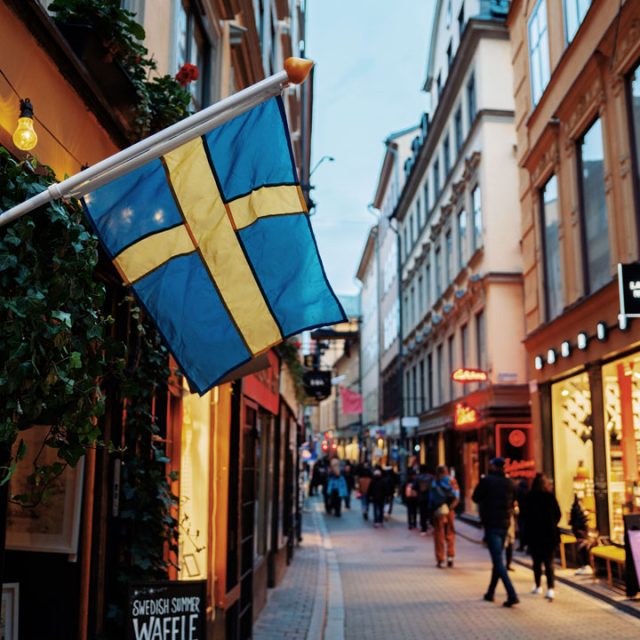
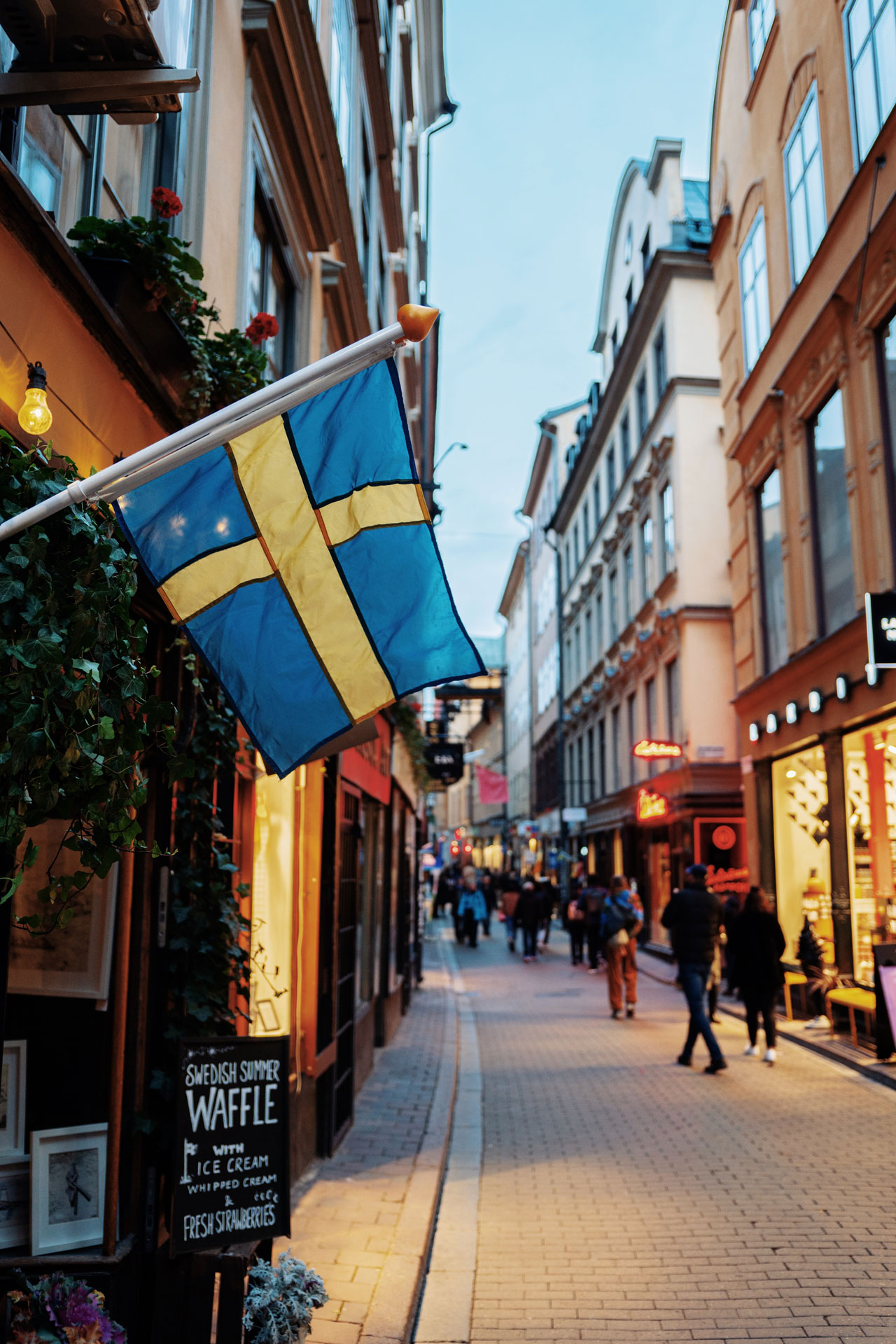
STOCKHOLM — Sweden scrapped almost all of its few pandemic restrictions on Wednesday and stopped most testing for COVID-19, even as the pressure on the healthcare systems remained high and some scientists begged for more patience in fighting the disease.

Sweden’s government, which throughout the pandemic has opted against lockdowns in favor of a voluntary approach, announced last week it would scrap the remaining restrictions — effectively declaring the pandemic over — as vaccines and the less severe Omicron variant have cushioned severe cases and deaths.

“As we know this pandemic, I would say it’s over,” Minister of Health Lena Hallengren told Dagens Nyheter. “It’s not over, but as we know it in terms of quick changes and restrictions it is,” she said, adding that COVID would no longer be classified as a danger to society.

  As of Wednesday, bars and restaurants will be allowed to stay open after 11 p.m. again, and with no limits on the number of guests. Attendance limits for larger indoor venues were also lifted, as was the use of vaccine passes.

Swedish hospitals were still feeling the strain, however, with around 2,200 people with COVID requiring hospital care, about the same as during the third wave in the spring of 2021. As free testing was reduced earlier this month and effectively stopped from Wednesday, no one knows the exact number of cases.

“We should have a little more patience, wait at least a couple of more weeks. And we are wealthy enough to keep testing,” Fredrik Elgh, professor of virology at Umea University and one of the staunchest critics of Sweden’s no-lockdown policy, told Reuters.

“The disease is still a huge strain on society,” he said.

Sweden’s Health Agency said this week that large-scale testing was too expensive in relation to the benefits. Sweden spent around 500 million Swedish crowns ($55 million) per week on testing for the first five weeks of this year and around 24 billion crowns since the start of the pandemic.

On Wednesday, Sweden registered 114 new deaths where the deceased was infected with the virus. In total, 16,182 people have died either of the virus or while infected by it. The number of deaths per capita is much higher than among Nordic neighbors but lower than in most European countries. — Reuters

New North Korea nuclear, ICBM testing would trigger instant crisis — Moon

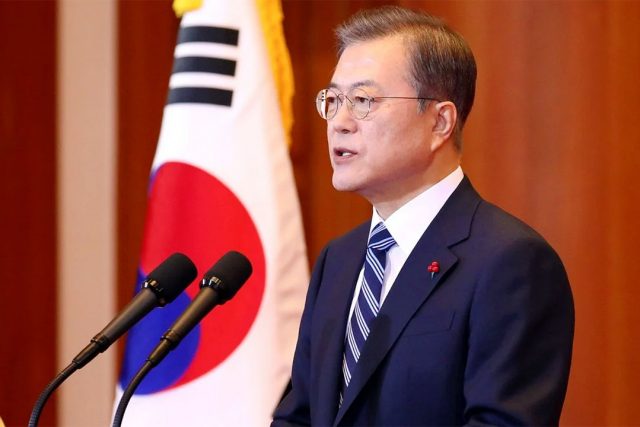
SOUTH KOREAN PRESIDENT MOON JAE-IN — REUTERS

SEOUL — A resumption of North Korea’s nuclear weapon or long-range missile tests would “instantly” send the peninsula back into crisis, outgoing South Korean President Moon Jae-in said this week, calling for measures to prevent that from happening.

A record month of North Korean missile testing in January highlighted failures of Mr. Moon’s efforts to engineer a breakthrough as his term ends in May, and North Korean leader Kim Jong Un has suggested  he could order new nuclear tests or intercontinental ballistic missile (ICBM) launches for the first time since 2017.

“If North Korea’s series of missile launches goes as far as scrapping a moratorium on long-range missile tests, the Korean Peninsula may instantly fall back into the state of crisis we faced five years ago,” Mr. Moon said in a written interview with media in Seoul scheduled for publication on Thursday.

“Preventing such a crisis through persistent dialogue and diplomacy will be the task that political leaders in the countries concerned must fulfil together,” he added.

Mr. Moon had expressed concern that the series of missile tests was so close to the March 9 presidential election in South Korea, where the candidate from Mr. Moon’s Democratic Party is in a tight race with a conservative opponent.

Mr. Moon admitted he appears to have run out of time, saying it is unlikely a last-minute summit with Mr. Kim or the adoption of his proposal for a declaration ending the 1950-1953 Korean War would happen before he leaves office.

Still, he said the United States and South Korea have agreed on the text of the declaration, and that a summit between Mr. Kim and US President Joseph R.  Biden “is just a matter of time” if all sides wish to avoid a crisis.

“Since dialogue is the only way to resolve problems, a meeting between President Biden and Chairman Kim is expected to take place eventually,” he said.

Mr. Moon has pushed for a formal end to the Korean War to replace the armistice that stopped the fighting but left it and the US-led U.N. Command still technically at war.

“I would at least like to make conditions ripe for an end-of-war declaration and pass that on to the next administration,” he said.

Mr. Moon said his most rewarding achievement was helping “shift the direction toward dialogue and diplomacy rather than military confrontation.”

The biggest regret of his term, however, is the failure of the US-North Korea summit in Hanoi, he said, where Kim and then-US President Donald Trump walked away with no agreements on reducing North Korea’s nuclear weapons or missiles in return for easing international sanctions.

“It is very regrettable that the summit ended in ‘no deal’ when the continuation of dialogue should have been ensured at least,” he said, arguing that a smaller, phased deal should still have been pursued when it became clear that a “big deal” was out of reach.

“Still now, if they learn from that experience and put their heads together to discuss mutually acceptable, realistic measures… I believe there will be ample opportunities to find a solution,” he added.

In a phone call with his US and Japanese counterparts on Thursday, South Korean Defense Minister Suh Wook said the recent launches posed a “direct and serious threat”, and vowed to bolster response capabilities based on the US alliance.

Mr. Biden’s administration has said it is willing to meet the North Koreans any time without preconditions, but Pyongyang says it will not resume negotiations unless Washington and Seoul drop “hostile policies” such as military drills, sanctions, and arms buildups.

Despite the stalled talks and increase in tensions, Mr. Moon says “necessary communication” with Mr. Kim has continued, and he doesn’t think Mr. Biden has returned to the “strategic patience” policies of the Obama administration because he continues to make practical efforts to resume dialogue.

“We cannot afford to give up this task,” he said. — Reuters

Super Bowl tickets are costliest ever, $7,542 a seat

GENERAL overall aerial view of the Super Bowl LVI Experience at the Los Angeles Convention Center and downtown skyline. — REUTERS

TICKETS to Sunday’s Super Bowl between the Los Angeles Rams and the Cincinnati Bengals are the most expensive on record at $7,542 on average, according to ticket reseller TickPick.

Even so, prices are down from an average of $8,257 per ticket on Feb. 4, the company said. The cost dropped after the San Francisco 49ers, a franchise with a large and wealthy fan base, lost to the Rams in the NFC Championship game on Jan. 30.

Super Bowl tickets are pricey by nature, but the average cost has become increasingly steep over the past five years. The current average price is more than double 2017’s end-of-season matchup and remains strong even after the winter surge of the pandemic’s Omicron variant.

Hope for fans to secure tickets without breaking the bank isn’t entirely lost. TickPick says there is still a possibility that prices will continue to drop in the days leading up to the game.

“Fans looking for the most affordable tickets should keep their eyes on that get-in over the coming days,” said Brett Goldberg, co-founder of TickPick.

The cheapest seats were just under $4,500 on Wednesday, the lowest since the day the matchup was set. About a third of buyers have come from a California zip code and 27% came from Ohio or Kentucky residents, TickPick said. — Bloomberg

ADVERTISEMENT
ADVERTISEMENT