Home Blog Page 6801

Hontiveros again calls for action on Luzon power supply threat during May polls

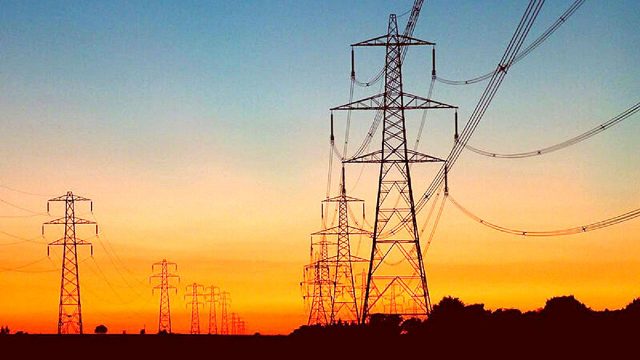
A SENATOR on Wednesday reiterated her call for agencies to perform their respective mandates to address the thinning power supply in Luzon, the Philippine’s northern mainland, which may affect the May elections. 

Senator Ana Theresia “Risa” N. Hontiveros-Baraquel, who is running for reelection, said a power disruption may lead to cheating and confusion.

“The integrity of the elections depends significantly on stable and sufficient power supply.” 

“Sufficient reserves should have already been laid beyond the 1,200 MW (megawatts) expected margin by adding additional ancillary service contracts and ensuring that no players will play the market to charge more for the price of electricity,” she added. 

This comes after the Institute for Climate and Sustainable Cities warned of an impending blackout in the Luzon grid during the second quarter of the year, which could impact voting on May 9 and the vote count in the succeeding days.

Ms. Hontiveros cited a previous Senate hearing where the Department of Energy assured that they had already found solutions to this problem such as firm ancillary services contracts on the part of the National Grid Corporation of the Philippines and the prevention of unplanned maintenance shutdown by generation companies. 

The senator also said that recurring power supply problems due to regulatory failures and market abuse should be solved.

“The ERC (Energy Regulation Commission) must have the teeth to hold accountable the power players who have been slipping through the rotational brownout for years,” she said. — Alyssa Nicole O. Tan

Domagoso vows to build Luzon-Visayas bridge

PHILIPPINE STAR/EDD GUMBAN

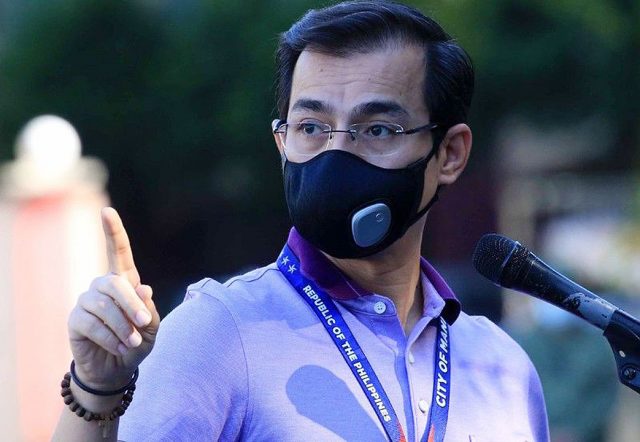
MANILA MAYOR and presidential aspirant Francisco “Isko” M. Domagoso vowed to pursue the construction of a bridge that will link Luzon and the Visayas, the northern mainland and central islands in the Philippines through Samar province.

“Because if we connect Luzon and the biggest island (in the Visayas), which is Samar, then everything would become easier, costs will be reduced, there will be transactions, there will be economic movement. Then there will be jobs and job opportunities for our citizens living in the provinces,” Mr. Domagoso was quoted as saying in Filipino in a statement on Wednesday as he continued his campaign sortie in the Visayas.

A bridge connecting Sorsogon and Samar was among the projects dropped from the initial list of priority infrastructure projects of the Duterte administration.  

Meanwhile, the Manila chief defended his distribution of cash assistance to fire victims in Cavite, saying it should not be considered as vote buying, a violation of election rules. 

“I wish them (fire victims) well. I hope they are in a better situation because as far as I’m concerned, the residents of Cavite City are in a bad situation,” he told reporters in Filipino. “It’s hard to be affected by a fire, and under exception, under the law, there are exceptions like in times of calamity or disasters. It’s not wrong to help.” 

“Besides, this is aid and a presidential candidate will not win through 790 families anyway. That is help from the private sector and from my personal things,” he added. — Jaspearl Emerald G. Tan

Comelec junks disqualification case vs Pichay

THE COMMISSION on Elections (Comelec) has junked a disqualification case against reelectionist Surigao del Sur Rep. Prospero A. Pichay, Jr. filed by his rival, Construction Workers’ Solidarity Party-list Rep. Romeo S. Momo.

In an 11-page resolution released on Tuesday, the Comelec’s First Division said Mr. Momo had wrongly claimed that Mr. Pichay was disqualified based on his conviction in an Ombudsman case linked to his position as Local Water Utilities Administration chair during the Arroyo administration. 

“Pending the resolution of his appeal with the Supreme Court, we cannot hold that the perpetual disqualification is effective against Pichay. Consequently, there was no false material representation when he declared that he was eligible to run for office,” the poll commissioners said in their resolution. 

Mr. Pichay said his opponent had filed similar petitions against him in the past, but these were all denied by the Comelec as well as the House of Representatives Electoral Tribunal.

Mr. Pichay is currently on his second as Surigao del Sur representative. Congressional representatives are allowed a maximum three consecutive terms. — Jaspearl Emerald G. Tan

A skip and a hop

FREEPIK

We need a skip and a hop soon, because being just a step ahead of another COVID-19 surge is simply not enough. In the near future, COVID mutations will continue to outpace medical advances intended to eliminate the virus. Medical science will continue to play catch-up at least until the end of the year. So, what’s next for us, under a new government, will matter a lot.

On May 9, less than three months from now, a new government will be elected, to take office by June 30. By then, half the fiscal year will be done, and perhaps also at least half of the annual national budget. And, as with any administration change, it will take a month or two to reorganize the bureaucracy and for Congress to start working on a new legislative agenda. No, the new administration will not hit the ground running.

Also, as with any transition period, little may be expected by way of continuity. Policies, programs or projects started or initiated between 2016 and 2022 will not necessarily be kept or continue on. The same will go for the COVID-related strategy and programs at the national level. At the local level, reelection of incumbents will determine the life cycle of anti-COVID projects.

It is safe to presume that national and regional lockdowns are things of the past, including the use of plastic face shields, unless in the extreme possibility of another major COVID surge. Further restrictions on people movement will be among the last options, but local lockdowns remain a possibility. And the mandatory use of masks in public will certainly continue, indefinitely.

In the case of Makati City where I live, from March 2021 to date, it saw the number of local COVID cases peak at 1,544 on April 22, 2021 (old variant), then on Sept. 9, 2021 at 3,298 (Delta), then on Jan. 30, 2022 at 2,435 (Omicron). Since the Delta peak, which was the worse COVID period so far, the “interventions” have not been as severe despite Omicron cases rising.

The mitigating factors include the massive vaccination effort since 2021 as well as people themselves also learning to “live” with the virus and to self-regulate their movement. As Delta tapered during Christmas season 2021, it seemed like the “normal” was well on its way. On Dec. 10, Makati City reported only 18 active cases. Unfortunately, Omicron came along, and got the better of us.

Complacency was the enemy. We celebrated the holidays with gusto, relying on the false hope that COVID was on its way out. But it came back with a vengeance. Omicron found its way here and wreaked havoc. However, as more and more people got sick, the healthcare system managed to cope. Thanks to a “weaker” virus, perhaps, but not necessarily to new or more effective interventions.

With the case count declining and Metro Manila back at Alert Level 2 until the end of February, are we to expect complacency to rear its ugly ahead once again? In the case of another surge, whether or not due to a new variant, what else are the government and people prepared to do other than the usual interventions? Do we still bother to improve our pandemic management? Or, is this as good as it gets?

Moreover, with COVID cases dropping, are we being misled to believe that things are “normal” enough for us to actual hold national and local elections by May 9 in the usual manner — people lining up at voting precincts to fill up ballots? Other than requiring masks, and physical distancing (if at all possible), are we introducing other interventions to ensure public health during the polls? Or, again, is this as good as it gets?

Offhand, we seem to be a step ahead in terms of managing another surge. It also seemed like we did better in managing Omicron than Delta. Although, in my opinion, we didn’t actually do anything new and relied simply on our ability to vaccinate more people. But as we know, the efficacy of vaccines wane over time. And, obviously, we cannot simply continue to “boost” people indefinitely. We need to skip and hop now.

With Omicron, it seemed like luck was on our side. But, will the case be the same when the next variant or surge comes along? It is the responsibility of any incoming administration to determine to what extent we can keep the case count low. They should already be thinking of new ways, methods, approaches, and interventions to further improve and to future-proof pandemic management.

Vaccination, bio-surveillance, testing, contact tracing, localized lockdowns, physical distancing, and masks may be tried and tested interventions, but they will not always work in the future. We should be preparing for future pandemics, after living through a very devastating one in the last two years. We need to review which temporary ad hoc interventions will have to be made permanent, and what other interventions may be required in similar events in the future.

More important, we should look into continuity and permanence of time-bound strategies and interventions that actually worked, and then improve them. Ad-hoc task forces should be replaced by permanent institutions devoted to dealing with pandemics and the like. Otherwise, as governance goes back to Square One on June 30 as a new administration takes office, so does our pandemic management.


Marvin Tort is a former managing editor of BusinessWorld, and a former chairman of the Philippine Press Council

matort@yahoo.com

Miners are scouring the earth again as reserves dwindle

SENIVPETRO-FREEPIK

THINK your life has been unadventurous over the past few years, as the pandemic and closed borders have kept you bottled up at home? Spare a thought for the mining sector.

An industry built on the romance and horror of finding riches on the wild frontier — from the Klondike to Kimberley, Kolyma and Katanga — has for years barely needed to get out its passport.

Take the BHP Group. Under former Chief Executive Officer Andrew Mackenzie, the biggest miner developed a mantra that it would focus only on “stable, low-risk jurisdictions” — meaning, for the most part, rich countries. Over the past decade, it’s been getting rid of operations in Algeria, Brazil, Colombia, Mozambique, Pakistan, South Africa, and Trinidad and Tobago, to focus almost entirely on Australia and the Americas.

That’s an attitude that makes sense as long as the world seems adequately supplied with essential minerals. Why take the operational, legal, and reputational risk of going to places where you may be expected to pay bribes or cope with lurching policy reversals, when there’s plentiful assets available in friendlier jurisdictions?

With markets looking tighter, however, things can change rapidly. The Bloomberg Industrial Metals index, a good proxy for the value of miners’ key products, is running at its highest levels in a decade. Aluminum prices are at a 34-year record. Cash-to-three-month spreads — one indicator of the strength of non-speculative demand since only genuine buyers are likely to pay a premium to get hold of material quickly — have been surging. All six of the main commodities on the London Metal Exchange have been simultaneously trading at a cash premium in recent months, for the first time since the mid-2000s.

Mackenzie’s successor at BHP, Mike Henry, has made no secret of his appetite for adventure. “We won’t ignore if there is an attractive enough opportunity in new jurisdictions or harder jurisdictions,” he told investors in 2020 at his first results briefing after taking over. Last month, the miner made its first major move into sub-Saharan Africa in years, with plans to invest as much as $100 million buying a minority stake in Tanzania’s Kabanga nickel project.

That’s in line with a general rise in animal spirits in the industry. Shareholders who’ve spent much of the past decade encouraging miners to slim down and return more cash as dividends are finally stated, and turning a worried eye to the problem of growth. The ore grades of key elements in major mines are in decline across the world, while demand looks set to surge as the planet engages in a resource-intensive drive to decarbonize its energy and industrial systems. Most of the key deposits being exploited were discovered decades ago, and it’s not clear where their successors are coming from. Investors who worried the major miners had grown too big are now worried they’re starting to look too small.

With BHP’s first-half net income reported on Tuesday more than doubling to $9.4 billion and margins of 64%, Henry is now in a position to invest accordingly. The question is where to go.

Looking at the way mineral resources have developed in recent decades, it’s hard to avoid the notion that restricting activity to developed countries is an unnecessary limitation. About 56% of the world’s copper resources are now outside the traditional tier one mining jurisdictions of Australia, Canada, Chile, Poland, and the US, up from 49% two decades ago.

Considering the strength of expected demand, companies simply aren’t developing enough pits for the metal. “The response has been timid when you consider both the very strong prices of today and copper’s future-facing halo effect,” BHP wrote in its commodity outlook this week. “That underscores the idea that the option set of the industry as a whole is constrained.”

A more outgoing approach to mining assets will come with its own problems. Miners’ shift toward developed jurisdictions wasn’t an accident, but a long pendulum swing away from places where they’d gotten themselves entangled in corruption and rights scandals, political fights with royalty-hungry governments, and other governance issues. Moving back in the other direction will expose them again to reputational risks they’ve worked hard to free themselves from. It will be more difficult than ever to thread that needle to the satisfaction of the current generation of ESG-conscious investors.

That seems to be where the world is headed, though. To acquire the minerals we need to manage the energy transition, we’re going to need to scour every corner of the planet for the resources we’ll need. Those who don’t venture out will get left behind.

BLOOMBERG OPINION

The young and their future

MARYMARKEVICH-FREEPIK

A few days ago, we had a very animated conversation with a friend from way back who has had extensive experience in industry and government. In the course of the conversation, he told me that he had been asked by a group of former classmates to speak before college students of a provincial college run by their own classmate. The speaking engagement was timed with the 36th anniversary of the EDSA People Power uprising. Being one of the active members of the parliament of the streets in the 1970s and ’80s, and one of millions of direct participants in the uprising from Feb. 22 to 25, 1986, our friend expected to talk about People Power and share his experiences with the college youth aged 18 to 22.

To prepare for the talk, our colleague, a research-oriented opinion leader who has had professorial stints in several leading graduate schools, commissioned a group to organize a Focus Group Discussion (FGD) among college students. He had hoped that the FGD, a qualitative research methodology, would help him gain a better or in-depth understanding of “how the youth saw the future,” his topic for the virtual convocation. The FGD is a method that endeavors to obtain data from a group selected by design as opposed to selecting participants or respondents from a statistically representative sample from a wider population.

Our friend summarized the findings of the FGD. He stated that the youth agreed that alleviating poverty should be the priority of any government. I was not surprised that poverty should be the main and immediate concern of any government because it breeds other inequalities: access to education, malnourishment at an early age which in turn affects one’s long run mental and physical abilities and, in general, the inequitable situations it creates in other fields like health and medical care.

The youth expressed concern about corruption and dishonesty in both government and private industry but especially the former since taxpayers’ money is involved. Improving education was repeatedly mentioned as a priority issue.

While a number of issues were brought up by the youth, FGD participants remain optimistic that the country’s overall situation will improve with the right leadership.

How do these local FGD findings, albeit limited and which need to be validated by a quantitative survey, compare with studies about the youth from different parts of the world and how they view the future?

We turn to a United Nations International Children’s Emergency Fund (UNICEF) survey sponsored by Global Development which the Bill and Melinda Gates Foundation support through a “$50 billion endowment which is in a charitable trust which is irrevocable.”

Peter Beaumont writes about the UNICEF survey in an article entitled “What do young people think about the future?” It is dated Nov. 18, 2021.

On the question, what do young people need the most? Beaumont says, “young people going through adolescence need what we they have always needed from their parents. They want your love, your support, your encouragement, your nurture, acceptance and attention.”

Beaumont says that the landmark intergenerational study, constructed for UNICEF by Gallup for World Children’s Day, surveyed two age groups in 21 countries — aged 15-24 and 40 plus — sampled from different socioeconomic groups, to compare attitudes. Beaumont reports that young people can change the future because they “have the ideas, the creativity and great energy to shape a better world. Young people are full of hope and through innovation and imagination, they are problem solvers and have a great potential to generate a positive social change in the world.”

On the question, how do young people view the world, a study of the responses shows that, “born into a more digital, interconnected and diverse reality, young people see a world that is largely a better place for children than the one their parents grew up in — a safer and more abundant world that offers children better education, opportunities and hope for the future.”

The report adds that young people are more optimistic about the world than the older generations.

The report, however, says young people are often seen as having a bleak world view, plugged uncritically into social media and anxious about the climate crisis, among other pressing issues.

The report, however, tries to offer a balanced view when it states that a global study commissioned by UNICEF appears to turn that received wisdom on its head. Beaumont says that (the report) paints a picture of children believing that the world is improving with each generation, even while they report anxiety and impatience for change on global climate.

The results of the survey suggest that the younger generation is more positive and globally minded than their elders, skeptical of what they read on social media (only 17% of young people said they trusted social media platforms “a lot” for information), and more invested in science and the possibility of global cooperation and international institutions.

The study offers a wealth of data for social scientists, marketing strategists, behavioral psychologists, and those who simply want to know the young better so they can be better served and educated. Most of all, data in the study will help older generations communicate with the young so that both can serve society better.


Philip Ella Juico’s areas of interest include the protection and promotion of democracy, free markets, sustainable development, social responsibility and sports as a tool for social development. He obtained his doctorate in business at De La Salle University. Dr. Juico served as secretary of Agrarian Reform during the Corazon C. Aquino administration.

Self-portrait

RAWPIXEL.COM-FREEPIK

IN the Van Gogh Museum three years ago, there was a special exhibit of the eponymous artist featuring his self-portraits, about 30 of them. The depictions were of various moods, mostly tortured and troubled, and none with a sunny disposition. This is to be expected of an artist so wracked with anxieties as to cut off one ear. And there is this famous Vincent self-portrait with a bandage on one ear.

Michelangelo in his Sistine Chapel painting of the Last Judgment placed a self-portrait of his in that much admired ceiling. He depicts himself as an old man clutching his own flayed skin waiting to be judged. It must have been the frustration of the work taking too long that made him think of his own death. Also, in his pique with his patron, Michelangelo also placed the pope among the souls burning in hell. So, self-portraits can drag along other personalities with them.

Self-descriptions are a facet of the digital age as well.

Dating sites on the internet are not known for their honesty in self-portrayal. Even the photos can be digitally altered. Generous characterizations of physical attributes are common. Someone describing herself as petite, almond-eyed, fair-skinned, and possessing a compelling ability to turn heads may in truth be drab and chubby (I never said I was slim), even shorter than a child actress. And claims of being a good conversationalist usually mean loving to hear one’s own voice, before the gong sounds.

Autobiography seldom works as objective history. The importance that even a principal player attaches to his role, say in controlling the excesses of martial law, is seen from a self-justifying point of view. Better to read a memoir which limits the role of the writer to an observer of others in a historical setting. The difference between the two forms of self-description has been proffered by a publisher. An autobiography describes how the lion feels as he walks through the open field. A memoir describes what the lion sees around him, including the presence of other predators.

In all self-portraits, there is the challenge of what events and details to include or exclude. The latter may be more important in the case of a shady past, like an occupation best left unmentioned such as the oldest profession after landscape gardening. (I did what I could to stave off hunger.) Even rags-to-riches stories have some gaps in the road to wealth and comfort. The shady corners of this narrative are best left in the dark.

CVs of job applicants are self-portraits that can take a fanciful turn. The line between receiving copies of a report and writing it is blurred. The team member of a task force evolves into its leader and catalyst — they didn’t even want to do it until I convinced them. Someone serving coffee can describe himself as a participant in a momentous meeting: there were loud voices in that room addressed to me — Can I have more cream, please?

We should not be too trusting of the merit of self-appropriated titles and declared competencies. Even calling cards may not be reliable. There are too many chiefs nowadays. So, is the Chief Future-proofing Officer just a meddler everyone ignores? The other “CFO” may have a weightier role.

Political self-portraits are now the stuff of electoral advertising. The paper windmill is one example of a symbol that seems to imply a Da Vinci type of invention by one candidate. The claim to being a proponent of renewable energy may be a little farfetched. But there it is.

Brand marketers that politicians use love to create “ownable” attributes. Aren’t candidates, after all, just products to be sold to the voting public? Does this deodorant make you smell like freshly laundered bedsheets? Or does it just stop perspiration, so there are no wet underarm spots when one raises his hands in a victory pose?

The smart phone now allows one to take one’s own photo. The resulting “selfie” (photographer and subject are one) is meant to be uploaded to the social page for friends to view and envy. Travel photos are favorites — I am standing in front of my mansion in San Francisco… without a face mask. (Is the house really his?)

Like the interviewee invited to talk about himself, there is the danger of inviting yawns by providing too much information…or doubts from giving out too little.


Tony Samson is chairman and CEO of TOUCH xda

ar.samson@yahoo.com

Ukraine hit by cyber-attack as US questions Russian troop pullback

UKRAINIAN and Russian flags are seen in this picture illustration taken, Feb. 1. — REUTERS

KYIV/MOSCOW/WASHINGTON — Kyiv appeared to blame Russia for a cyber-attack on Tuesday as US President Joseph R. Biden warned that more than 150,000 Russian troops were still amassed near Ukraine’s borders after Moscow’s announcement of a partial pullback was met with skepticism.

World powers have been engaged in one of the deepest crises in East-West relations for decades, jostling over post-Cold War influence and energy supplies as Moscow wants to stop the former Soviet neighbor ever joining the NATO military alliance.

Western nations have suggested arms control and confidence-building steps to defuse the standoff, which has prompted them to urge their citizens to leave Ukraine because an attack could come at any time. Russia denies it has any plans to invade.

On Tuesday, the Russian defense ministry published footage to demonstrate it was returning some troops to base after exercises. Mr. Biden said the United States had not verified the move. “Our analysts indicate that they remain very much in a threatening position.”

Hours after Moscow’s announcement, Ukraine said the online networks of its defense ministry and two banks were overwhelmed in what is called a distributed denial-of-service. The maneuver works when hackers flood a network with unusually high volumes of data traffic to paralyze it.

Although Kyiv did not name who was behind the incident, a statement suggested it was pointing the finger at Russia.

“It is not ruled out that the aggressor used tactics of dirty little tricks because its aggressive plans are not working out on a large scale,” said the Ukrainian Centre for Strategic Communications and Information Security, which is part of the culture ministry.

Ukrainian bank Privatbank users reported problems with payments and a banking app, while Oshadbank said its systems had slowed down.

Russia’s Federal Security Service did not immediately reply to a request for comment from Reuters.

“If Russia attacks the United States or our allies through asymmetric means like disruptive cyber-attacks against our companies or critical infrastructure, we’re prepared to respond,” Mr. Biden said in televised remarks from the White House.

One European diplomat said the hacking was concerning because a full military attack on Ukraine would likely be preceded by a cyber-attack.

“It could mean a physical attack is imminent, or it could mean Russia is continuing to mess with Ukraine,” the diplomat said, on condition of anonymity. While such attacks are difficult to attribute, the diplomat said there was no doubt that Russia was behind them.

‘MEANINGFUL DE-ESCALATION’
The White House said energy prices could be hit if sanctions are imposed on Moscow following an invasion as diplomatic efforts continued on Tuesday to resolve the crisis.

Secretary of State Antony Blinken told Russian counterpart Sergei Lavrov on a call that there needed to be “verifiable, credible, meaningful de-escalation” by Moscow.

Mr. Biden and French President Emmanuel Macron discussed their readiness to hit Russia with “severe consequences” over the crisis.

NATO Secretary-General Jens Stoltenberg said there “are signs from Moscow that diplomacy should continue” but also that Russia often left military equipment behind after exercises, creating the potential for forces to regroup.

At a joint news conference with German Chancellor Olaf Scholz, Russian President Vladimir Putin referred only briefly to the troop moves.

Mr. Putin told reporters Russia would not be satisfied with talk that Ukraine was not ready to join NATO any time soon and was demanding that the issue be resolved now.

“As for war in Europe… about whether we want it or not? Of course not. That is why we put forward proposals for a negotiation process, the result of which should be an agreement on ensuring equal security for everyone, including our country,” he said.

Russia has been pressing for a set of security guarantees from the West and says it can exercise troops on its own territory as it sees fit.

Russia’s show of force near Ukraine’s borders has prompted months of frantic Western diplomacy and drawn threats of severe sanctions if it invades.

The Kremlin sought to portray its moves as proof that Western talk of war had been both false and hysterical.

“February 15, 2022 will go down in history as the day Western war propaganda failed. Humiliated and destroyed without a single shot fired,” Foreign Ministry spokeswoman Maria Zakharova said.

The defense ministry published footage showing tanks and other armored vehicles being loaded onto railway flatcars. Western military analysts said they needed more information to judge the significance of the latest troop movements.

Commercial satellite images taken on Sunday and Monday showed a flurry of Russian military activity at several locations near Ukraine.

Russian shares, government bonds and the rouble rose sharply on hopes the situation was easing, and Ukrainian government bonds rallied. Major stock indices rose in the United States and Europe.

Oil tumbled over 3%, retreating from a seven-year high.

“The situation is very fluid, but today is definitely a calmer day,” said Robert Yawger, executive director of energy futures at Mizuho. “It’s going to be a minute-to-minute, day-to-day type of thing.” — Reuters

Malaysian businessman Jho Low’s wild nights on display with $250,000 for DiCaprio

UNSPLASH

A QUARTER of a million dollars for Leonardo DiCaprio. A $385,773 bar tab. Five grand for “model wrangling.”

These were among the expenses that jurors in the federal conspiracy trial of former Goldman Sachs Group, Inc. banker Roger Ng heard about Tuesday, as a government witness described how millions of dollars siphoned off in the 1MDB scandal were frittered away on lavish parties hosted by a high-flying Malaysian financier.

Mr. Ng is accused of conspiring with former star Goldman banker Tim Leissner to help the now-fugitive financier, Jho Low, steal the funds in exchange for kickbacks.

The jury in Brooklyn, New York, learned of invoices from a Las Vegas party for Mr. Low in which food, beverages, “talent” and “top quality models,” among other items, added up to more than $3.6 million. That big bar tab included 65 bottles of Cristal Champagne for about $100,000 and a $38,955 tip.

Mr. Ng, the only former Goldman Sachs employee to stand trial in the US for the scandal, is charged with conspiring to violate US anti-money-laundering law to steal billions of dollars from the Malaysian fund 1MDB. The expenses are what Mr. Low did with some of the $700 million he made off with in the global fraud, according to prosecutors.

As the government described the fruits of a scam stretching from Malaysia to Wall Street, the jury got a look at some celebrity fees:

• DiCaprio: $250,000

• Paris Hilton: $100,000

• Megan Fox: $250,000

• Kim Kardashian: $50,000

Basically, the panel was told, Mr. Low partied like there was no tomorrow.

The sums flew by as Alex Cohen, the chief financial officer of Strategic Group, an entertainment and marketing company that arranged parties for Mr. Low, testified. Mr. Cohen described a series of shindigs that featured guests and entertainers such as Sean “Diddy” Combs, Jamie Foxx and Fergie.

He said Mr. Low provided the entertainment company with at least 25% of its profit in 2012 and that for one event it was paid $5,000 for the said model wrangling alone — all allegedly fueled by money Low took from 1MDB.

A July 2012 event Strategic handled for Mr. Low aboard a yacht on the French Riviera dictated that models be flown in. During cross-examination by defense lawyer Zach Intrater, Mr. Cohen was asked why he’d written “Strategic Escorts LLC” when referring to the company’s efforts to hire the models.

“I was poking fun that there were women coming on this boat trip and we were procuring these women,” he said.

The case is US v. Low Taek Jho, 18-cr-538, US District Court, Eastern District of New York (Brooklyn). — Bloomberg

No way back for Prince Andrew after abuse settlement, royal watchers say

WIKIPEDIA

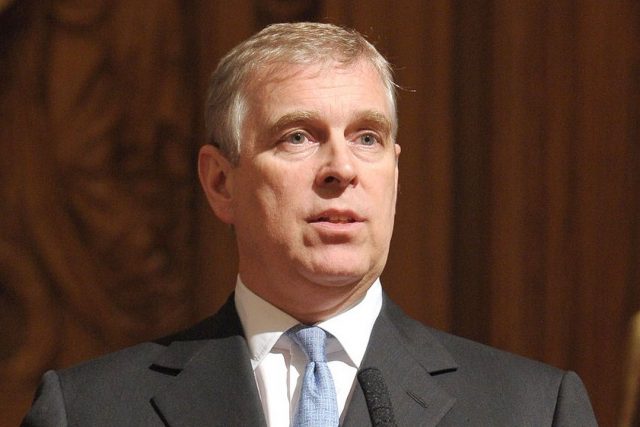
LONDON — Prince Andrew’s decision to settle a claim that he sexually assaulted a teenage girl decades ago may bring an end to his legal difficulties but the damage done to his reputation means he is unlikely to ever play a role in public life again.

The settlement by the 61-year-old Duke of York includes an undisclosed payment to Virginia Giuffre, a woman who had accused him of sexually abusing her when she was a teenager. The settlement, revealed on Tuesday in a Manhattan court filing, said he had never intended to malign her character.

That marked a stunning reversal after his lawyers previously accused Ms. Giuffre of seeking a payday with a “baseless” lawsuit, a strategy that drew condemnation from women’s rights groups. Andrew had said as recently as late January that he wanted the case to be heard before a US jury.

Royal biographers and commentators said after the settlement that Andrew would likely not be able to resume a public role, while Britons who spoke to Reuters said the case had done huge damage to the whole family.

Insurance worker Anthony Joho, 21, said the allegations had shredded the mystique of a family that is supposed to represent the nation.

“Once the flaws come out and you see the actual human within them, which is the allegations, the problems they’ve had, I think that’s the problem now. It’s hard to maintain their actual role as a royal family,” he said.

At the heart of the case was the late financier and sex offender Jeffrey Epstein, a friend of Andrew’s through his associate Ghislaine Maxwell. Ms. Giuffre had accused Mr. Epstein of trafficking her for sex.

Ms. Maxwell was found guilty of helping Epstein sexually abuse teenage girls in December.

Royal biographer Penny Junor told Reuters that Andrew’s previous failure to show any support for Mr. Epstein’s victims had been unforgivable. “He came across as a really unsympathetic figure,” she said.

Andrew has always denied that he forced Ms. Giuffre to have sex more than two decades ago at the London home of Ms. Maxwell, Mr. Epstein’s mansion in Manhattan, and Mr. Epstein’s private island in the US Virgin Islands. The prince did not admit wrongdoing in the settlement.

In a bid to put the matter to rest, he gave a rare and disastrous interview to the BBC in 2019, saying he had no recollection of Ms. Giuffre and that he did not regret ties with Mr. Epstein because of all the business people he had met in the process.

Asked if he had questioned why young women were also travelling with Mr. Epstein, Andrew replied that while he did not “wish to appear grand,” he had grown up in a palace with staff.

“As far as I was aware, they were staff,” he said.

FALL FROM GRACE
Shortly afterwards Andrew stepped back from royal duties, and in January he was further stripped of his military links and royal patronages, and gave up his “Royal Highness” title.

Charles Rae, a former royal correspondent at the Sun newspaper, said the settlement would at least prevent a potentially lurid court case from taking place in the same year Queen Elizabeth celebrates her 70th year on the throne.

“I should imagine that there is a big sigh of relief at Buckingham Palace,” he said.

Andrew’s very public fall from grace has come at a difficult time for the British royal family, which has also faced accusations of racism in the household from the queen’s grandson Prince Harry and his wife Meghan.

Royal commentators said such was the respect for the 95-year-old monarch that the fallout from Andrew’s case was unlikely to permanently damage the more senior members of the family, including the queen, heir Prince Charles, and Prince William.

But polls already show that support for the royals among younger people has declined significantly. The news could also spark questions about the family’s wealth.

Graham Smith, head of the anti-monarchy group Republic, questioned how the undisclosed damages were being funded.

“There are lots of questions about Andrew’s personal wealth and how he manages to fund the lifestyle he leads,” he said.

Buckingham Palace declined to comment on the settlement. — Reuters

Novak Djokovic prepared to miss Grand Slams rather than have COVID-19 vaccine

NOVAK Djokovic is prepared to miss the French Open and Wimbledon rather than have a coronavirus disease 2019 (COVID-19) vaccination but is not an anti-vaxxer, the world number one said in his first interview since his failed attempt to play at the Australian Open.

After an 11-day rollercoaster involving two visa cancellations, two court challenges and five nights in two stints at an immigration detention hotel, the unvaccinated Djokovic was deported before the tournament began.

The debacle deprived the 34-year-old the chance to win a record-extending 10th Australian Open and a men’s record 21st Grand Slam title.

Instead career-rival Rafa Nadal won the title and moved to 21 and with Djokovic unwilling to have a vaccine limiting where he might be able to play, the Serb is jeopardizing his dream of ending his career with the most Grand Slam titles.

“I understand the consequences of my decision,” Djokovic told the BBC, adding that he had been prepared not to travel to Australia due to his unvaccinated status. “I understand that not being vaccinated today, I am unable to travel to most of the tournaments at the moment. Yes, that is the price that I’m willing to pay.

“Because the principles of decision making on my body are more important than any title or anything else.”

Djokovic’s hopes of trying to defend his French Open and Wimbledon titles, travel rules in France and Britain have been eased for unvaccinated travellers and they no longer need to undergo quarantine.

His prospects of playing in the United States, including the US Open, look bleak at the moment, however, as vaccination certificates remain compulsory.

Defending his right to shun vaccines, Djokovic, who follows a strict diet, said: “I just don’t have enough clarity of how the COVID vaccine will affect me and whether it’s going to create a certain effect on my game and I wouldn’t have the benefits that I would normally have.” — Reuters

Manchester City runs riot in 5-0 rout of Lisbon

LISBON — Manchester City ran riot in a 5-0 away thrashing of Portuguese side Sporting, with Bernardo Silva scoring twice as Pep Guardiola’s team all but sealed their place in the Champions League quarterfinals on Tuesday.

The English champions were simply unstoppable as they tore apart their stunned hosts in the Jose Alvalade Stadium and the tie was as good as over by half time.

Riyad Mahrez opened the scoring after seven minutes with a goal initially ruled out but allowed after a VAR check, before Silva almost broke the net with a stunning half-volley after 17 minutes to open his account.

Mahrez then set up Phil Foden for a tap-in and Silva made it 4-0 just before half time after being picked out by Raheem Sterling, with Sporting’s defense all at sea.

There was no let-up after the break and former Benfica player Silva had a hat trick goal ruled out for offside before Sterling made it 5-0 with a superb curler before the hour mark.

City could have added more to their tally on a night in which they made a huge statement in their bid to go one better than last season when they lost to Chelsea in the final.

“It’s a very good performance,” Silva said. “I honestly think in the first half we weren’t good enough to be 4-0 up.

“I’m Portuguese, I’m from the other side of the city. My mum is Sporting, my dad is Benfica. It was special to score here in my hometown.

“We still have a job to do in Manchester.”

Sporting were meant to give the Premier League leaders at least a test in the Portuguese capital, but right from the off, the hosts were no match for the City juggernaut.

Kevin De Bruyne looked offside as he set up Mahrez for the opener, and City did not even celebrate as the linesman’s decision appeared clear cut, only for VAR to rule that the goal should stand.

The strike was the Algerian’s 10th in his last 11 Champions League appearances, and soon enough it was two as Silva hammered home off the underside of the crossbar.

The defending from Sporting — playing their first Champions League last-16 tie in 13 years – left much to be desired as Foden poked home the third, unchallenged, before Silva’s second, via a deflection, caused more frustration on the Jose Alvalade terraces.

It was a matter of how many more City would get in the second half and Sterling scored the goal of the night, curling into the net from 25 meters for his 150th club career goal.

The goal also ensured City became the 14th team to score 200 goals in the Champions League — with more surely to come as they continue to hit top gear, at home and abroad.

“I don’t think the team were nervous, it is just Manchester City is the best in the world, and they killed us every time they came into our box,” sporting coach Ruben Amorim said.

“The quality of the players and the manager was the difference.” — Reuters

ADVERTISEMENT
ADVERTISEMENT