Home Blog Page 6793

Meta shares sink 20% as Facebook loses daily users for the first time

DESIGN.FACEBOOK.COM

FACEBOOK owner Meta Platforms Inc.’s shares plunged more than 20% late on Wednesday after the social media company posted a weaker-than-expected forecast, blaming Apple’s privacy changes and increased competition for users from rivals like TikTok.

Facebook’s global daily active users declined from the previous quarter for the first time, to 1.929 billion from 1.930 billion.

Meta said it faced hits from Apple Inc’s privacy changes to its operating system, which have made it harder for brands to target and measure their ads on Facebook and Instagram. It also cited macroeconomic issues like supply-chain disruptions.

The 18-year-old tech giant, which also faces pressure from platforms like TikTok and Google’s YouTube, said it expected slowing revenue growth in the coming quarter due to increased competition for users’ time and a shift of engagement toward such features as its short video offering Reels, which generate less revenue.

Facebook reported 2.91 billion monthly active users in the fourth quarter, showing no growth compared with the previous quarter.

The after-hours slump in Meta shares vaporized $200 billion of its market value, while peers Twitter Inc, Snap Inc and Pinterest Inc lost another $15 billion in value.

Shares of Alphabet Inc, which posted record quarterly sales that topped expectations on Tuesday, were down nearly 2%.

Meta, owner of the second-largest digital ad platform in the world after Google, had previously warned its advertising business faced “significant uncertainty” in the fourth quarter.

Meta’s chief financial officer, Dave Wehner, told analysts on a conference call that the impact of Apple’s privacy changes could be “in the order of $10 billion” for 2022.

Apple’s changes to its operating software give users the choice to prevent apps from tracking their online activity for ads, making it harder for advertisers that rely on data to develop new products and know their market.

Meta forecast first-quarter revenue in the range of $27 billion to $29 billion. Analysts were expecting $30.15 billion, according to IBES data from Refinitiv.

“It’s clear that there are many big roadblocks ahead as Meta faces tough new competition for ad revenue such as TikTok, and as it contends with ongoing ad targeting and measurement challenges from Apple’s iOS changes,” said Insider Intelligence analyst Debra Aho Williamson.

The company’s total revenue, the bulk of which comes from ad sales, rose to $33.67 billion in the fourth quarter from $28.07 billion a year earlier, beating analysts’ estimates of $33.40 billion, according to IBES data from Refinitiv.

“I’m encouraged by the progress we made this past year in a number of important growth areas like Reels, commerce, and virtual reality, and we’ll continue investing in these and other key priorities in 2022 as we work towards building the metaverse,” CEO Mark Zuckerberg said in the earnings release.

In Meta’s earnings call, he said competition for users was one factor impacting the business, mentioning short video app TikTok by name and emphasizing Meta’s commitment to providing services for young adults.

Net loss from Meta’s Reality Labs, the company’s augmented and virtual reality business, was $10.2 billion for the full year 2021, compared with a $6.6 billion loss the previous year. It was the first time the company had broken out this segment in its results.

Mr. Zuckerberg had previously warned that the company’s investment in this area would reduce 2021 operating profit by $10 billion and would not be profitable “any time in the near future.”

Reality Labs posted revenue of about $2.3 billion in 2021. The company has not made public the sales numbers for its virtual reality Quest headsets.

The company said on Wednesday it would this year change its stock ticker to “META,” the latest step in its rebrand to focus on the metaverse, a futuristic idea of virtual environments where users can work, socialize and play. Meta did not comment on the price of a deal with Roundhill Investments, which said in January it would stop using the symbol for its Roundhill Ball Metaverse ETF.

The tech giant, which changed its name in October to reflect its metaverse aims, is betting the metaverse will be the successor to the mobile internet.

“Investors looking at Meta are starting to realize that buying their stock is no longer mostly an investment into their ad platform,” said Flynn Zaiger, CEO of social media agency Online Optimism. “Investing in Meta now looks more like a commitment that you believe that the metaverse will replace much of the internet consumers’ experience today.”

Meta’s rebrand comes at a time of increasing scrutiny from lawmakers and regulators over allegations of anticompetitive conduct and over the impacts of how it handles harmful or misleading content across its Facebook and Instagram platforms. — Elizabeth Culliford and Nivedita Balu/Reuters

EU’s border-free Schengen zone needs overhaul, political leadership – Macron

REUTERS

TOURCOING, France — The European Union’s (EU) border-free Schengen area should be managed by regular ministerial meetings, just like the euro zone, French President Emmanuel Macron said on Wednesday, adding that this could start as early as next month.

National security concerns, waves of migration and, most recently, the coronavirus pandemic have led to the re-emergence of border controls in the Schengen zone and much criticism of how it functions, eroding what had been hailed as a milestone achievement in Europe’s post-World War Two integration.

Speaking to EU justice and interior ministers, Mr. Macron said what he dubbed the “Schengen Council” would evaluate how the border-free area was working but would also take joint decisions and facilitate coordination in times of crisis.

“This Council can become the face of a strong, protective Europe that is comfortable with controlling its borders and therefore its destiny,” he said in the northern French town of Tourcoing. He said its inaugural meeting could take place when the EU’s justice and home affairs ministers next gather, on March 3.

Such a proposal would need the support of other member states in the 27-nation bloc to take effect, though French officials say it would not require any change to EU treaties.

The EU has been deeply divided for years in its response to immigration and on how to police Schengen’s common external borders, and it remains to be seen how much France can achieve during its six-month presidency of the EU Council of Ministers — which mostly involves setting the agenda for meetings.

But Mr. Macron, who is all but certain to seek re-election as French president in April in a campaign largely dominated by security and identity issues, said he hoped that a step-by-step approach could win over a number of reluctant EU countries.

“We must reform Schengen,” he said. “There can be no freedom of movement if we do not control our external borders.”

France has also proposed an emergency response mechanism that could be triggered when the bloc’s external borders are under threat. — Reuters

Fighting COVID will help economy recover faster, lower inflation — IMF’s Georgieva

A participant stands near a logo of the International Monetary Fund at the annual meeting in Nusa Dua, Bali, Indonesia, Oct. 12, 2018. — REUTERS/JOHANNES P. CHRISTO/FILE PHOTO

WASHINGTON — The coronavirus disease 2019 (COVID-19) pandemic remains the biggest risk to the global economy, and is contributing to rising inflation in many countries, International Monetary Fund (IMF) chief Kristalina Georgieva said on Wednesday.

Ms. Georgieva urged redoubled efforts to boost vaccinations and beef up defenses against the coronavirus, saying such moves — coupled with interest rate increases now being eyed or executed by central banks — would help ease supply chain disruptions and combat inflation.

“Pandemic policy is economic policy,” the IMF chief said. “The biggest risk for the performance of the world economy remains this year COVID and the disruption it causes.”

The IMF chief conceded that inflation had turned out to be a “more significant economic and social problem” than expected, and said economists had underestimated the impact of both delayed consumption and climate shocks on food prices.

Ms. Georgieva noted that vaccination rates in 86 countries had not reached a target of vaccinating at least 40% of their populations in 2021, and vaccination rates were at just 5% in low-income countries, compared with 70% in rich countries.

“Why is this a problem? Because what we do is we retain a breeding ground for more and more and more COVID variants,” she told an event hosted by the Washington Post.

The IMF last week cut its economic forecasts for the United States, China, and the global economy, and said uncertainty about the pandemic, inflation, supply disruptions and US monetary tightening posed further risks.

Ms. Georgieva said interruptions in global supply chains —  initially expected to be brought under control as early as the first half of 2022 — were likely to continue because of COVID restrictions and other factors, including far higher demand for consumer goods such as computers and cars.

She warned that the dispute between Russia and Western countries over Ukraine was already driving energy prices higher, particularly in Europe, and complicated the already uncertain outlook for the global economy.

Ms. Georgieva’s deputy, Gita Gopinath, last week said an escalated conflict between Russia and Ukraine would likely further increase energy costs and commodities prices for many countries, keeping headline inflation rates elevated for longer.

She said the IMF underestimated the impact of climate change on food prices. “We have to recognize we are in a more shock-prone world, and we do have to expect these kind of shocks to be a factor in the future,” Ms. Georgieva said.

Economists also underestimated the impact of stimulus funding in fueling “more stronger consumer demand,” she said.

Ms. Georgieva said the US Federal Reserve was doing a good job communicating its plans to tighten monetary policy, and she expected it to sustain its well-calibrated and well-communicated approach to combat inflation while keeping the recovery going.

“If we reduce the risks of more variants and more lockdowns, we are helping supplies to come on time and we are helping the economy to recover faster,” she said. — Andrea Shalal and David Lawder/Reuters 

Congress ratifies amendments to Public Service Act

GLOBE.COM.PH

Congress on Wednesday evening ratified the bicameral conference committee report of a bill amending the Public Service Act (PSA), which would now allow 100% foreign ownership in telecommunications, airlines and railways.  

Under the reconciled version of House Bill No. 78 and Senate Bill 2094, telecommunications, domestic shipping, railways and subways, airlines, expressways and tollways, and airports have excluded from the definition of public utility. 

Since these are no longer considered as public utilities, they will no longer be subject to the 40% foreign ownership cap under the Constitution. 

Certified urgent by President Rodrigo R. Duterte, the measure will now be sent to Malacañang for his signature. 

Lawmakers said the amendment to the PSA bill would open these key sectors to much-needed foreign investment and competition, which would translate to cheaper airfares, lower transportation and shipping costs, and affordable Internet services for consumers. 

“Not only will the passage of this measure speed up the country’s economic recovery from the devastating effects of the pandemic, but it will also make our country competitive when it comes to attracting foreign investments which we sorely lack and need,” said Senator Mary Grace Natividad S. Poe-Llamanzares, who led the Senate contingent to the bicameral committee, during the plenary session late Wednesday. 

Marikina City Rep. Stella Luz A. Quimbo said the bicameral committee was able to strike a balance between “opening up the economy to more foreign investors, protecting small businesses like jeepney operators, and ensuring that national security is safeguarded.”  

Ms. Poe said the liberalization of these industries is not an invitation for foreign countries to take advantage of the Philippines’ resources, adding adequate safeguards were placed to protect national security and sovereignty.  

Under the reconciled version, foreign state-owned enterprises are prohibited from owning capital in any public service classified as public utility or critical infrastructure. 

Also, the measure prohibits foreign nationals from owning more than 50% of the capital of entities engaged in the operation and management of critical infrastructure, unless his or her country accords reciprocity to Philippine nationals. 

The President is also given the authority to suspend or prohibit any proposed merger or acquisition, or investment in a public service that results in giving control to a foreigner or foreign corporation. 

The measure also states that “no person shall be deemed a public utility unless otherwise subsequently provided by law.” 

Under the measure, the definition of public utilities still includes distribution and transmission of electricity; petroleum pipeline transmission systems; water distribution systems; seaports and public utility vehicles. These will continue to be subjected to the 40% foreign ownership cap. 

Senate President Pro Tempore Ralph G. Recto reiterated that he was against the passage of this proposed measure. 

“I have no problem with foreign investments, especially when it comes to manufacturing, that’s where we need it the most,” he said. “But I do think that there are certain industries that need to be reserved for Filipinos, and that is consistent also with our Constitution, particularly certain critical infrastructure or industries.” 

At the House, Gabriela Party-list Rep. Arlene D. Brosas also objected to the ratification of the measure. 

“By providing a limited definition of public utility, this measure exploits the loophole in the 1987 Constitution to allow the circumvention of foreign ownership limits for all other types of public services…Ironically, we are ratifying this measure on the anniversary of the 1987 Constitution,” she said.   

SIM CARD REGISTRATION
Meanwhile, Congress also ratified the bicameral committee report on the proposed SIM Card Registration law, which aims to co curb fraud and other crimes aided by subscriber identity module (SIM) cards. 

“We hope that by legislating this measure, we would be able to eradicate mobile phone, internet or electronic communication-aided criminal activities,” said Ms. Poe.  

The committee agreed to use the House version as the working draft, said Ms. Poe. 

Under the approved version, all public telecommunications entities (PTEs) must require the registration of SIM cards as a prerequisite to their sale and activation. 

An individual’s real name and phone number must also be provided upon the creation of an account in any social media network. 

Data collected from registration will be kept by the respective PTE in a centralized database, strictly serving as a register for the processing, activation, or deactivation of subscription, and not for any other purpose. 

PTEs and social media providers must keep relevant data and information for 10 years from the time the end-user deactivates their number or account. 

All existing SIM card subscribers with active services are required to register within 180 days from the when the law takes effect. PTEs are mandated to deactivate SIM card numbers not registered within this period. 

Ms. Poe said the sale of SIM cards to foreign nationals will be allowed, provided they comply with certain requirements. — Alyssa Nicole O. Tan

Manufacturing growth loses steam

REUTERS

By Jenina P. Ibañez, Senior Reporter

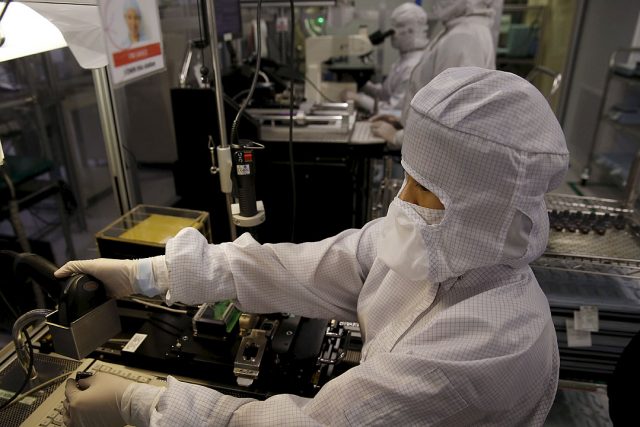
PHILIPPINE MANUFACTURING GROWTH lost steam in January, as the impact of Typhoon Odette and the surge in coronavirus disease 2019 (COVID-19) infections hampered demand and production, IHS Markit said on Wednesday.

The IHS Markit Philippines Manufacturing Purchasing Managers’ Index (PMI) reading slipped to 50 in January, from 51.8 in December 2021, ending four straight months of growth.

A reading of 50 indicates no changes in manufacturing conditions, while a reading above signals improvement and anything below suggests the opposite.

Manufacturing Purchasing Managers’ Index (PMI) of select ASEAN Economies, January 2022

“The latest PMI data revealed an unfortunate start to the year for the Philippine manufacturing sector, with the surge in case numbers and Typhoon Odette hitting large parts of the nation,” said Shreeya Patel, an economist at IHS Markit.

“Anecdotal evidence suggested both factors weighed heavily on both domestic and international demand as well as firms’ ability to produce goods. Material shortages and delivery delays were also prominent, continuing pressure on vendor performance.”

Typhoon Odette struck the central and southern parts of the Philippines in December, causing billions in damage to both agriculture and infrastructure.

Starting January, Metro Manila and nearby areas were placed under Alert Level 3, a stricter lockdown, to contain another surge in COVID-19 cases, this time driven by the more infectious Omicron variant.

PMI is the weighted average of five sub-indices — new orders (30%), output (25%), employment (20%), suppliers’ delivery times (15%) and stocks of purchases (10%).

IHS Markit said the Philippines’ moderate PMI reading was mostly caused by a decline in output, with production volumes falling at its quickest rate in five months due to both the lockdown restrictions and bad weather. The stricter mobility curbs also caused weak demand and slower delivery times.

“International demand declined at the fifth quickest rate in the series with the pandemic and the typhoon reportedly weighing on sales to foreign markets,” IHS Markit said.

“Delivery times were also affected by adverse weather conditions and the pandemic with lead times lengthening at the start of the year.”

Meanwhile, factories continued to reduce their workforce, although at a softer rate.

Despite the production and demand declines, companies raised their pre-production inventories to prepare for possible shortages in the future. In contrast, post-production stocks dropped.

“Whilst the full impact of the typhoon and the Omicron variant are unknown, it’s clear production will certainly be impacted in the coming months as companies adapt once again,” Ms. Patel said. “Firms will hope for a quick recovery and remain prepared through advance ordering strategies.”

Out of the Association of Southeast Asian Nations (ASEAN) PMI reports released so far, both Indonesia and Vietnam recorded the highest growth in the region at 53.7, followed by Thailand at 51.7. Myanmar is behind the Philippines at 48.5.

Demand conditions in Indonesia improved on the back of new orders from overseas, while both new orders and output in Vietnam increased due to the absence of widespread restrictions, IHS Markit said.

The full ASEAN report will be released on Thursday.

Rizal Commercial Banking Corp. Chief Economist Michael L. Ricafort said storm damage from Typhoon Odette likely caused disruptions in some manufacturing activities, especially in the hardest-hit cities in Visayas and Mindanao.

Factory activity could pick up in the coming months after Metro Manila was again placed under a more relaxed Alert Level 2 this month, he said in a Viber message.

Nicholas Antonio T. Mapa, ING Bank N.V. Manila senior economist, said the surge in cases due to the Omicron variant weighed on business sentiment. The rapid spread of the Omicron variant showed how new variants could still impact the country’s growth outlook.

According to IHS Markit, both the pandemic and typhoon moderated business sentiment to its weakest since August 2021. However, the overall outlook was still positive as firms hope for a “return to normality” and “fruitful market conditions” this year.

“Future growth aspirations and outlook will need to always consider the possibility of a return to tighter mobility curbs during episodes of virus waves,” Mr. Mapa said in an e-mail.

“Despite this recent disruption, firms remain optimistic that the Omicron wave and the fallout from Odette will be short-lived, a speed bump that merely saps some momentum but is unable to change the overall growth narrative. We believe expansion in manufacturing may continue for as long as virus mitigation is effective.”

Trade Secretary Ramon M. Lopez in a Viber message to reporters said the typhoon had a huge impact on manufacturing capacity as many areas lost basic utilities like power and water.

“But these factors are now getting resolved and on Omicron, we are seeing a downward trend, so we can expect an improvement in the PMIs in the months to come.”

Rising food, fuel prices likely drove inflation in January, says BSP

PHILIPPINE STAR/ MICHAEL VARCAS

JANUARY INFLATION may have been driven by higher prices of fuel and food staples, although this could have been offset by lower electricity costs, the Bangko Sentral ng Pilipinas (BSP) said.

The central bank did not give its monthly inflation range for January, as the Philippine Statistics Authority (PSA) shifts to the 2018-based consumer price index (CPI).

“The BSP will not publish its forecast range for the month while waiting for the official release of historical series for the 2018-based CPI by the PSA. This will allow the BSP to re-estimate its inflation models used in monetary policy analysis and macroeconomic forecasting,” the central bank said in a statement. 

National Statistician Claire Dennis S. Mapa has said the rebasing was done to reflect changing Filipino household consumer patterns and the shift to e-commerce. He said the food index will still have the largest weight for the rebased CPI.

The BSP identified several factors that could have affected inflation in January.

“Price monitoring for January 2022 indicate that inflation could be driven by higher fuel prices, upticks in the prices of rice, meat, fruits, and vegetables due to weather disturbances along with the annual adjustment in the excise taxes on alcoholic beverages and tobacco,” the BSP said.

Farm damage from Typhoon Odette in December reached P13.3 billion, according to the Department of Agriculture. Analysts have said it takes a month before the impact of weather disturbances is reflected in price increases.

Under the Republic Act 10351 or Sin Tax Reform law, excise taxes on alcoholic beverages and tobacco products are increased 4% every year.

Starting Jan. 1, excise taxes on cigarettes rose to P55 from P50 per pack. Excise taxes for alcoholic beverages went up by P2-P6 per liter, depending on the classification.

On the other hand, the BSP said lower rates for areas serviced by the Manila Electric Co. (Meralco) may have eased inflation in January.

Meralco said rates for a typical household declined by 0.0746 per kilowatt-hour (/kWh) to P9.7027/kWh in January from the P9.7773/kWh in December.

Inflation in December eased to 3.6%, falling within the 2-4% BSP target for the first time last year since the 4% in July.

However, inflation for the whole of 2021 stood at 4.5%, beyond the target and much faster than the 2.6% in 2020.

A BusinessWorld poll of 16 analysts held last week yielded a median estimate of 3%. Analysts said favorable base effect could offset the rising oil and food prices and could slow inflation to within target for the second straight month.

“Looking ahead, the BSP will remain watchful of economic and financial developments to ensure the delivery of its primary mandate of price stability conducive to a balanced and sustainable economic growth,” the BSP said.

For 2022, the central bank expects inflation to ease to 3.4%.

The January inflation data will be released on Friday. — Luz Wendy T. Noble

Lost income from coronavirus pandemic may be recovered by 4th quarter of 2023 — FSCC

PHILIPPINE STAR/ MICHAEL VARCAS

THE PHILIPPINE ECONOMY is expected to continue to rebound, but it may take until the fourth quarter of 2023 to recover lost incomes from the coronavirus pandemic, the Financial Stability Coordination Council (FSCC) said.

FSCC Chairman and Bangko Sentral ng Pilipinas (BSP) Governor Benjamin E. Diokno said the 5.6% gross domestic product (GDP) growth in 2021 reflects a “solid turnaround” from the previous year’s record contraction.

“Our economy progressed strongly last year. We are pleased to see how regulators and economic agents came together to help achieve, and even exceed, growth expectations. We welcome these gains, recognizing that there will always be improvements we can pursue, while maintaining a watchful eye over changing market conditions,” he said during the virtual launch of the FSCC’s second semester 2021 Financial Stability Report on Wednesday.

In its report, the FSCC said there are concerns over some “speed bumps” this year.

“There are still costs from the pandemic and recouping these (at the aggregate) will depend on future gross domestic product (GDP) growth rates. Assuming a 5% real growth for 2021 and 7% thereafter, the point of recovering lost incomes takes us to the fourth quarter of 2023,” the FSCC said, adding it assumes there are no more “complications” with the coronavirus disease 2019 (COVID-19).

Economic managers expect GDP to grow by 7-9% this year and in 2023.

The FSCC identified several issues that need to be addressed to sustain the economy’s recovery, namely public infrastructure, supply bottlenecks, social inequity, and climate change.

“While handling COVID-19’s myriad of health-related challenges is complicated — from capacity limitations to vaccines to communication — it is a mistake to think of COVID-19 as a black swan event. COVID-19 is a materialized systemic risk because of its contagion effects, and we need to think about these butterfly effects,” it said.

The FSCC said damage from the pandemic was mostly felt by nonfinancial corporations and vulnerable households.

As inflation remained elevated, the FSCC noted lower income groups were disproportionately affected, with prices of essential items like food and non-alcoholic beverages, clothing, and fuel increasing at a faster pace.

“What one will find is that socioeconomic inequities have been widened by COVID-19, driven by more adverse effects on those in the informal market and/or economically less fortunate. This socioeconomic impact will have lasting effects,” the FSCC said.

It also warned the continued disruption in education will have an adverse impact on the labor force and economy, with future workers likely not to be fully prepared for the demands of an increasingly digital world.

“The combined effect of lost learning opportunities, and uncertainty in job and financial security may affect the local economy even after the country exits from the pandemic,” it said.

The Philippines is among the last countries to bring back face-to-face learning for students.

Also, the FSCC said climate change is a pressing concern that could affect financial stability, noting the Philippines faces severe weather occurrence like typhoons and floods every year.

“While there is no doubt that climate change is global in nature, the expectation remains that lower-income countries are more vulnerable to losing a larger share of their economic output due to climate change,” it said.

The government should also proactively prepare for another health crisis, taking into account the impact of the pandemic on the country’s financial stability.

The FSCC stressed the importance of increasing hospital care capacity, consistent research, and the production of vaccines — which all need funding.

“The existing capacity to handle surges in medical needs can stand improvements. The real challenge in all these is how the costs of these improvements will be funded and borne by stakeholders,” the FSCC said.

The FSCC is composed of the BSP, the Department of Finance, the Insurance Commission, the Philippine Deposit Insurance Corp., and the Securities and Exchange Commission. It focuses on assessing systemic risks or the potential for an event to trigger severe instability or the collapse of an entire industry or economy, taking on the lessons from previous downturns like the Global Financial Crisis and the Asian Financial Crisis. — L.W.T.Noble

Customs beats Jan. collection target by 12%

Over a thousand cases of cigarettes worth P36 million were seized by the Bureau of Customs – Port of Zamboanga on Jan. 25. — COURTESY OF BUREAU OF CUSTOMS

THE BUREAU of Customs (BoC) collected P58.16 billion in January, beating its target by 11.58% as international trade rebounded.

This was also 23% higher than the P47.27 billion the BoC collected in the same month in 2021.

The BoC in its preliminary report said that 14 out of 17 collection districts hit their targets last month as they ramped up efforts to go after illegal imports.

Revenue collections also improved because of “compliance by traders to customs laws, the gradual improvement of importation volume, and the government’s effort in ensuring unhampered movement of goods domestically and internationally,” the bureau said in a news release on Wednesday.

Among BoC collection districts, the ports of San Fernando, Port of Manila, Manila International Container Port, Batangas, Legaspi, Iloilo, Cebu, Surigao, Zamboanga, Davao, Subic, Clark, Aparri and Limay hit their targets.

It has set itself an internal target to collect nearly P700 billion this year, after being assigned to collect P679 billion by its supervising agencies.

The BoC collected P645.77 billion in 2021, 20% higher than the P537-billion collection in 2020 and 4.7% above the target.

Last year’s collection already exceeded the P630.31 billion generated in 2019 as international trade rebounded after the economic downturn.

Imports had declined in 2020 due to the disruption of business activity and internal movement restrictions among the Philippines’ trading partners, the World Bank said in a recent report. — Jenina P. Ibañez

CREIT kicks off offer period for P6.4-billion IPO 

By Keren Concepcion G. Valmonte, Reporter

CITICORE Energy REIT Corp. (CREIT) started the offer period for its P6.4-billion initial public offering (IPO) on Wednesday after securing a permit to sell from the Securities and Exchange Commission (SEC).

CREIT is sponsored by Citicore Renewable Energy Corp. It will be the country’s first energy-focused real estate investment trust (REIT), following five REIT listings with office-leasing portfolios.

“While primarily the asset portfolio of the REIT consists of solar plants, it is open to look at other renewable technologies,” CREIT President and Chief Executive Officer Oliver Y. Tan said during an investors’ briefing on Wednesday, adding that the company already started constructing a run-of-river hydro project.

Proceeds from the offer will be used to acquire properties in Bulacan and South Cotabato.

The company currently has five properties in its portfolio — the Clark solar power plant, Armenia property, Toledo property, Silay property, and the Dalayap Property. CREIT leases these properties to the Citicore group.

“The Lessees operate solar power plants on the Leased Properties with a total combined installed capacity of 123.7MWpDC (megawatt-peak direct current),” CREIT said in its final prospectus dated Jan. 27, 2022.

Philstocks Financial, Inc. noted that the company’s lessees might benefit from the Philippines’ renewable energy road map.

“CREIT’s growth is seen to depend on the country’s renewable energy sector which is, in turn, seen to have bright prospects as the local economy’s recovery and next growth phase is expected to require more energy while supply remains tight,” Philstocks Financial said in a report.

The company will be selling to the public over 2.18 billion common shares at an offer price of P2.55 apiece, a 19% discount from the P3.15 ceiling it set. The company said it set its IPO price “more reasonably” to attract a wider investor base.

“The Company believes that a more affordable pricing will allow a broader set of investors to participate in CREIT’s value proposition, especially since these individuals and institutions will be our long-term partners,” Mr. Tan said in a statement on Wednesday.

“What we want to offer in CREIT is a sustainable investment in various aspects — economical (for the investor), social (for the communities), and environmental (towards a zero-carbon future),” he added.

With the P2.55 tag, the company’s implied dividend yields based on its projected earnings stand at 7% for 2022 and 7.4% for 2023.

“This is higher than its peers’ average of 5.76% based on their offer prices. Unlike other office-leasing REITs, CREIT enjoys guaranteed lease income throughout its lessees’ term,” Philstocks Financial said.

CREIT has a base offer of 2,181,819,000 and an overallotment option of up to 327,273,000 common shares. Should the over-allotment option be fully-exercised, the company’s public float post-IPO would stand at 38.3%.

The company’s offer period will last until next week Tuesday, Feb. 8. Its listing on the main board of the Philippine Stock Exchange is scheduled on Feb. 17, under the ticker symbol “CREIT.”

CREIT engaged Unicapital, Inc., BDO Capital and Investment Corp., PNB Capital and Investment Corp., Investment & Capital Corp. of the Philippines, CLSA Ltd., and CIMB Investment Bank Bhd to be part of the transaction’s underwriting syndicate.

A place where every day is Christmas

And it’s in Tandang Sora, not the North Pole

THERE’s a wonderful expression in Filipino that goes, “Hindi araw-araw ay Pasko (Not all days are Christmas).” Aside from it being a wagging finger to manage expectations, it also acknowledges what a great day Christmas can be. At actor Ken Chan’s Christmas-themed Cafe Claus, located in Tandang Sora, maybe this expression loses its power, and yes, every day can be Christmas.

Mr. Chan, star of shows Destiny Rose and My Special Tatay, has a childlike glee in expressing his love for the holiday during an interview just about a month after Christmas. Appearing at a Zoom meeting dressed in the café’s uniform (a chef’s jacket embroidered with sprigs of holly), he positioned himself in front of a television screen showing a roaring fire, with a Christmas tree somewhere in the background. “I love Christmas,” he said. “Sobra.” (A lot.)

The presence of family, as in the holiday, is strong in the cafe: “’Yung family ko kasi, mahilig sa Christmas talaga (My family really likes Christmas),” he said. This is why Mr. Chan, along with his brother Mark, and their business partner, model Ryan Kolton, decided to open a Christmas-themed cafe. Most of the recipes come from their families, including Mr. Kolton’s (his contribution was a Ukrainian-style roast chicken). Mr. Chan also notes that just like the rest of the country, they begin to celebrate Christmas as early as September. “Hanggang January, nagse-celebrate kami ng Christmas (we celebrate Christmas until January),” he said. In fact, Mr. Chan says that the decor for the restaurant comes from their own home: from a Christmas tree he bought 10 years ago, as well as trimmings and baubles he has received from friends and fans. “Gusto kong maramdaman ng mga tao na bahay rin nila ’yung Cafe Claus (I want people to feel that Cafe Claus is like their home).”

The menu has the dishes named after elements of Christmas (no surprise there). BusinessWorld began with Mushroom Soup, listed as “Myrrh” (as in one of the gifts of the Three Wise Men). It was hearty, thick, creamy, and wonderfully earthy and bursting with flavor with the taste of roasted mushrooms. It makes one wish for colder days just so the soup could be eaten with the right weather. It is, however, very heavy, and someone could tuck into this and call it a day: good and all, but maybe avoid it if you’re staving off the holiday weight.

“Uriel’s Love” (as in the angel) is a beef lasagna topped with mesclun greens, and layered with a meaty red sauce with a strong flavor of bacon. Like the soup, it was intense and heavy.

The food has a quality of dishes served at holiday tables — festive, rich, and designed not to be eaten very often. You’d be fat as jolly old St. Nick if you eat like this every day. Still — the dishes have a fighting chance against those from more well-established restaurants.

Furthermore, each dish is imbued with some sort of story from Mr. Chan’s own holidays. He notes that the puto bumbong (a kind of rice cake) hold a memory of his grandmother. “’Yung lola ko noon, lagi siyang bumibili ng puto bumbong sa labas ng simbahan (My grandmother used to buy puto bumbong outside church),” he recounted, sharing a memory of the traditional midnight mass. Even the times that he couldn’t make it to mass, his grandmother still brought home some to him. He pays tribute to this story by naming the puto bumbong after his lola: “Soledad’s Munting Pasalubong” (little gift).

“Everytime matitikman mo ’yung meron sa Cafe Claus, maaalala mo ’yung pasko dati (everytime you taste what we have at Cafe Claus, you’ll remember a Christmas from the past),” he said.

Cafe Claus is at the Genito Apartments, Tandang Sora, Quezon City. For details visit the café’s Facebook page (https://www.facebook.com/CafeClaus), its Instagram page (https://www.instagram.com/cafeclaus) or send a message by e-mail (cafeclausmanila@gmail.com). — Joseph L. Garcia

ACEN to buy 49% stake in Vietnam solar energy platform

A UNIT of AC Energy Corp. (ACEN) is acquiring a 49% interest in the Vietnamese solar energy platform of a Thai company ahead of their plan to build solar power plants across Southeast Asia.

In a stock exchange disclosure on Wednesday, ACEN said its subsidiary in Vietnam and a unit of Thailand’s Super Energy Corp. Plc. Co. Ltd. are to form a “strategic partnership to develop, own and operate renewable energy projects across the Association of Southeast Asian Nations (ASEAN).”

AC Energy Vietnam Investments Pte. Ltd. (ACEV) forged a share purchase agreement to acquire a 49% interest in Solar NT, which is a solar energy platform owned by the Thai firm’s subsidiary Super Energy Group (Hong Kong) Co., Ltd.

“The transaction will be via secondary shares acquisition for a total consideration of US$165 million,” ACEN said in the disclosure.

“Post-restructuring, Solar NT will own and operate nine solar power plants across Vietnam with a total capacity of approximately 837 megawatts (MW),” it added.

It described the transaction as the beginning of a strategic partnership, which it said would “continue to expand their renewable footprints in Vietnam as well as exploring other Southeast Asian markets.”

Eric T. Francia, ACEN president and chief executive officer, said the company’s new partner “has accomplished a lot in Vietnam, and we wish to support its solar expansion in Vietnam and beyond through our partnership.”

“This will help accelerate ACEN’s aggressive renewables expansion across the region,” he added.

ACEN said its latest investment will expand its international portfolio to more than 1,900 MW, of which more than 1,000 MW are in Vietnam.

Patrice R. Clausse, ACEV director and head of ACEN’s international group, said the deal “reinforces ACEN’s position as a pioneer player in the ASEAN renewable market. ACEN is committed to supporting the energy transition in the region. This helps create more sustainable jobs as we expand our operational portfolio, which brings us closer to achieving our goal to become the largest listed renewables platform in Southeast Asia.”

ACEN quoted Jormsup Lochaya, chairman and chief executive of Super Energy Corp., as saying that the company “has an objective to form a strategic partnership in order to join forces in joint investment and solar energy power plant business development in ASEAN.”

The official also said that the partnership would boost the company’s capacity “for growth through synergies and supports from the strategic partner in many areas, including capital, personnel, technology and networks for additional investment opportunities in the future.”

ACEN has more than 3,000 MW of attributable capacity in the Philippines, Vietnam, Indonesia, India, and Australia. Of this capacity, the share of renewable energy is about 80%.

The Ayala-led company is targeting to become the biggest listed energy platform in Southeast Asia as it eyes to put up 5,000 MW of renewable energy capacity by 2025.

ACEN’s shares on Wednesday dropped four centavos or 0.42% to close at P9.50 apiece. — M.C. Lucenio

Appearance, aroma and mouthfeel: All you need to know to give wine tasting a go

NICOLAEVNA ARNAUTOVA/UNSPLASH

So, you like drinking wine, but don’t actually know much about it? You want to feel more confident when talking about wine? You would like to know how to choose a “good” wine? You are not alone — but I am here to help.

Many of us enjoy drinking wine but do not really understand or appreciate the complexity of this amazing beverage. And many feel nervous about discussing wines, thinking they may say the wrong thing.

Fear not — there is no right or wrong when appreciating wine, however the more you know and understand, the more you will really treasure and enjoy the experience of wine tasting.

Here are my top tips for giving wine tasting a go.

When appreciating wine, all of the senses are employed.

APPEARANCE, AROMA AND MOUTHFEEL
Formal wine judges and critics will appraise the appearance, aroma, and taste (or “mouthfeel”) of a wine, and anyone who has heard the pop of a cork from a bottle of sparkling has appreciated the sound.

A wine should be clear: free of any haziness or solids (“natural” wines may have some haziness due to yeast residue).

The color of a wine is also important. A young white wine should be a very pale yellow or “straw” color, and a young red may have purple notes. Brown tinges of a young wine indicate that the wine may be spoilt — possibly premature ageing due to poor storage.

There are hundreds of aroma compounds which all contribute to the smell of a wine. The term “aroma” refers to the smells originating from the grape, and “bouquet” from the smells resulting from the wine making process.

A good wine should not be simple — it should have an interesting array of aromas. A wine should not have any undesirable or off odors, as this can also indicate spoilage. The smell of a wine should make you want to have a taste of it!

While you are tasting, you can observe how wines range in style from dry (lacking any sugar) to very sweet, still to sparking, and may have varying concentrations of alcohol (ethanol). Pay attention to how acidic the wine is, and notice if the wine has an astringency or bitterness — these are the tannins found particularly in red wines.

Notice the different flavors derived from both the grape and the winemaking process.

All of these components contribute to the mouthfeel of a wine and should be in “balance”: no one component should over-dominate the others.

HOW TO TASTE
There are a number of factors which will improve your wine tasting experience, and three main steps taken when wine tasting.

Make sure you have clean wine glasses which can hold a reasonable volume of wine — at least 100 ml with room to swirl! Wine should not be cold or too hot — room temperature is best.

Step 1: look

Is the wine clear and free from any deposits or solids? Does it have any bronzing? Does it have bubbles when it is not a sparkling style?

Step 2: smell

Swirl the glass to coat the insides with wine. This helps to release the aroma compounds. Put your nose right into the glass and take a deep sniff. Does it smell good? Free from any off odors? Can you smell fruity and floral aromas that come from the grape? Are there any oak or yeasty aromas from the winemaking process?

Step 3: taste

Take a big sip and move it about your mouth. Can you taste grape flavors, acid, warmth, some viscosity or oiliness? You can even suck some air in through your teeth which helps to release aroma compounds in your mouth, which can then travel through your nose to help you taste and smell the wine even better.

Is the wine complex? Does the taste last for a long time in your mouth, or does the wine taste quickly disappear?

There are also tools such as aroma wheels and tasting guides which may be beneficial to have on hand when tasting wines — these provide suggestions of wine descriptors. It may also be useful to write down your thoughts in a journal.

AND HOW TO APPRECIATE
The best way to really appreciate and enjoy wine is to talk about it. Enjoy wine with others such as a group of friends or a local wine enthusiast group. Taste wines side by side so you can compare the differences.

There is a wealth of information on wine appreciation available — wine critics give reviews of wines in print and online, and most larger wine retailers will also provide wine reviews. Or get out to wineries and talk to the cellar door staff or winemakers about their wines. It is very useful to talk to other people as this helps you to build up your “wine vocabulary.”

Consider the appearance, aroma, and taste and then the overall impression of the wine. Your opinion is your opinion — nobody is right and nobody is wrong. If you want to go back for another taste, or another glass, then you have found the wine for you.

Ursula Kennedy is a Lecturer of Wine Science, University of Southern Queensland