Home Blog Page 6778

STI Holdings reports P171-M profit in second quarter

STI Education Systems Holdings, Inc. generated a P171.09-million net income attributable to the parent firm in its second quarter ending Dec. 31, 2021 after the company saw an 18% increase in revenues.

STI Holdings’ fiscal calendar starts July 1 and ends on June 30 the following year.

In a statement on Tuesday, the listed educational institution said it saw an 18% increase in overall enrollment to 82,629 students for the school year 2021 to 2022 from the 70,223 students enrolled the previous school year. STI Holdings said it saw a 40% increase in tertiary enrollment to 56,342 students from 40,176 previously.

“The increase in our enrollment and in the number of COVID-19 (coronavirus disease 2019) vaccinations throughout the country are signs that the ‘new normal’ may be just in our midst,” STI Holdings President and Chief Executive Officer Monico V. Jacob said.

According to a regulatory filing on Feb. 21, the P171.09-million profits generated during the quarter are nearly double the P90.32 million logged in the same period last year. Total revenues grew 18% to P749.1 million from P632.42 million.

For the first six months, STI Holdings swung to profitability. The listed educational institution recorded a P56.85-million net attributable income, a turnaround from the P112.32-million loss in the same period in 2020.

Meanwhile, its earnings before interest, tax, depreciation, amortization (EBITDA) for the period grew 37% to P419.1 million from P305.6 million last year. The company posted an 11% topline growth to P1.12 billion from P929.06 million.

STI Holdings said classes are still fully conducted online through the ONline and ONsite Education at STI (ONE STI) Learning model for the STI Education Services Group (STI ESG) and STI West Negros University, while iACADEMY uses the Guided Online Autonomous Learning (GOAL) program.

The company said its schools transitioned “seamlessly” as they had a blended learning model even before the pandemic hit.

STI ESG collaborated with the country’s major telecommunications providers for monthly data plans and loads of up to 34 gigabytes, allowing students to access their electronic Learning Management System, Microsoft Office 365 accounts, One STI Student Portal app, among others.

Meanwhile, Bacolod-based STI WNU subscribed to online school management software SchoolAutomate system by GTI Software Developer.

iACADEMY also upgraded its subscription to Adobe Creative Cloud-All Apps to accommodate more students.

“These technological enhancements are our ways of strengthening our commitment to help our students, faculty, and staff, not just survive, but thrive in days to come,” Mr. Jacob said.

STI shares at the stock market closed unchanged at 35 centavos apiece on Tuesday. — Keren Concepcion G. Valmonte

A look at our bloody past

By Jonathan Best

Book Review
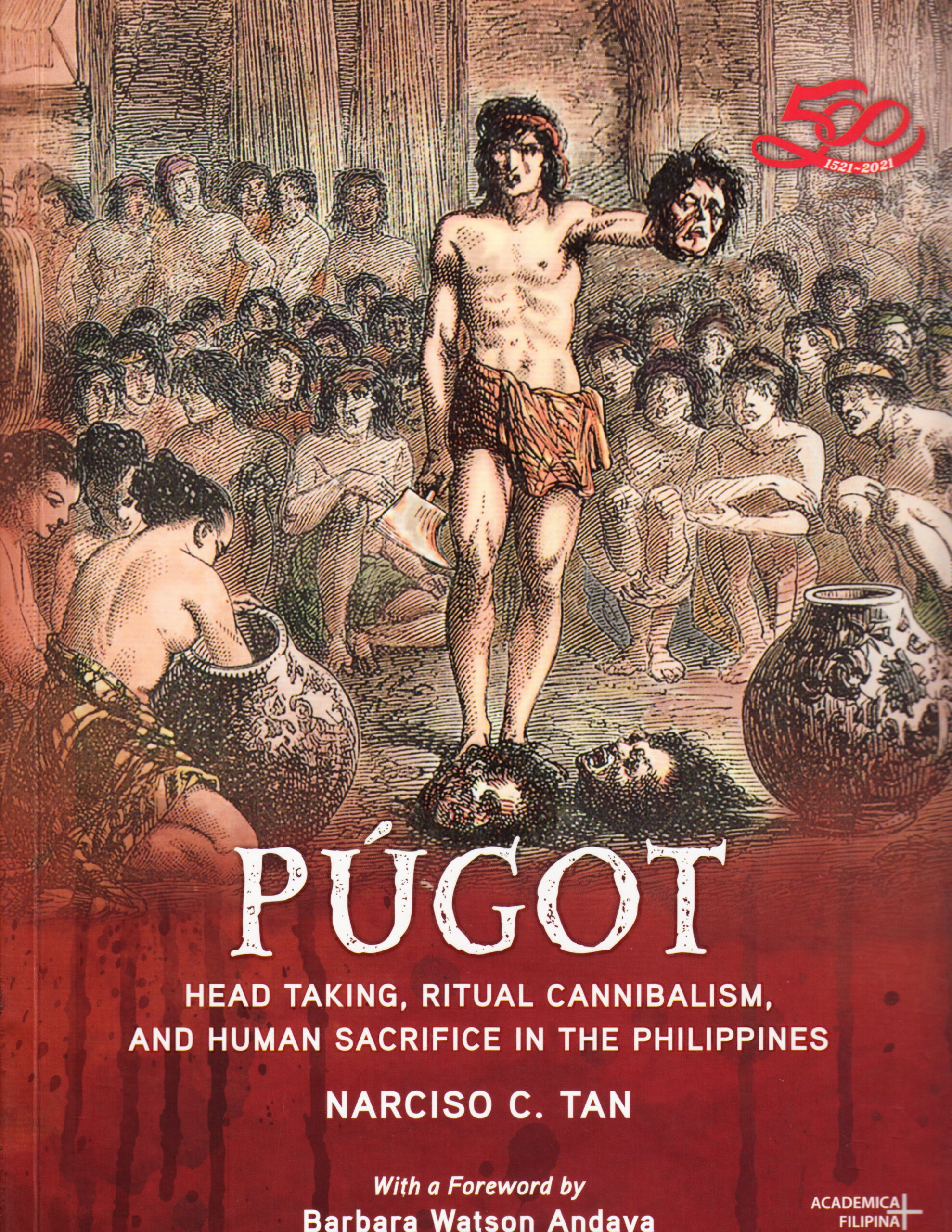
Púgot: Head Taking, Ritual Cannibalism, and
Human Sacrifice in the Philippines
By Narciso C. Tan

Vibal Foundation –
Academica Filipina.
shop@vibalgroup.com.
Hardbound, P2,500

NARCISO C. Tan’s long-awaited study of the ritual practices of the Philippine’s many ancestral, ethnolinguistic groups has finally been launched by the Vidal Foundation as part of its Academica Filipina series of books on Philippine history, culture, and the arts. This latest publication is in the form of an elegant coffee table book, fully illustrated, annotated and designed with all the necessary addendum of a truly scholarly work. The title is Púgot: Head Taking, Ritual Cannibalism, and Human Sacrifice in the Philippines. The subject matter is both disturbing and controversial; however, Tan manages to handle it in such a professional manner that despite the gruesomeness at times, it never fails to be fascinating and informative. It rises above the sensational aspects of the violent subject matter and thoroughly explores the deep religious and spiritual beliefs which evidently sustained these ritualistic practices over centuries and possibly millennia before the modern Filipino nation fully evolved. Some of these lingering practices have been documented in remote mountainous areas as late as the mid-20th century during the Japanese occupation and the chaos of World War II.

The book is divided into three sections devoted to the three rituals noted in the title but in reverse order; human sacrifice, ritual cannibalism, and head taking. Barbara Watson Andaya of the University of Hawai’i provides a foreword which clearly establishes the importance of Mr. Tan’s book in the long line of studies and anecdotal references to “ritualistic violence” in early and even modern Philippine ethnographic history. Each section of the book provides numerous quotes relating to the given subject matter in both the original language of the source and accompanied by an English translation. As an added benefit to the reader, Mr. Tan includes brief biographical sketches in the footnotes for all the major scholars and informants he quotes, giving their names, dates, and when they were active in the Philippines if they were foreigners, which the majority of them were.

The research covers practices documented from Mindanao and Jolo in the south, to Apayao and the Batanes Islands in the north. From one end of the Philippine archipelago of 7,641 island to the other and with 77 different ethnolinguistic groups listed. The majority of information comes from groups in Mindanao or the Mountain Province region in northern Luzon. The author makes a point of only listing practices which can be defined as community sanctioned rituals, either of a religious nature or condoned by the local community as legitimate acts associated with ongoing regional conflicts. This criterion becomes somewhat ambiguous at times because the practice of slave taking and trading both had a commercial aspect and also was in many instances tied to human sacrifice. Racial attacks against the indigenous Negrito population were not necessarily motivated by any religious beliefs, and attacks against Spanish colonizers, lowland Christian communities, or Japanese occupiers during the war would be better characterized as political or military actions.

The rituals that Narciso Tan discusses can be broadly characterized as acts of supplication or acts to propitiate good or evil preternatural entities or to placate the spirits of the constantly watchful deceased ancestors or powerful members of the community who had recently died. Killing one or more male or female slaves or a loyal servant or even the wife of an important man so that the victim’s spirit could accompany the dead and serve him or her in the afterlife was a common belief. In some cases, the bravery or strength of the victim of a head-taking was believed to be transferred of the warrior who made the killing. Eating the victim’s heart, liver, or brain was also believed to magically transfer beneficial powers to warriors or to the male shaman or female priestesses who officiated at sacrificial rituals on behalf of the community.

In some instances, the entire community would be involved in these gruesome rituals, women and children included. Their aim was to placate spirits hungry for blood to insure good harvests, protection from illness and natural disasters such as typhoons or volcanic eruptions, or for protection from headhunting and slave trading raids from hostile neighbors or marauding pirate fleets. To win a wife and ensure a fertile marriage, young men were expected to bring home a head or at least be part of a successful head-taking raid.

When a community acquired a slave to sacrifice or a head or several heads or even a few body parts from a successful raid or an outright battle, it was cause for a cañao or festive celebration with many laudatory speeches, hours of dancing to the gansa (brass gongs), feasting and binge drinking. With the slow yet relentless pressure over the centuries of the more civilizing influences of Islam and Christianity, many of these violent rituals died out and animals such as carabaos, pigs, or chickens were substituted for hapless human victims. After 1900, American colonial administrators, more intent on building modern infrastructure, and mining for gold than on saving souls, were better able than the obsessively religious Spanish administration to pacify outlying and inaccessible regions. Eventually most of these cruel and barbaric practices died out as schools, clinics, and modern transportation systems were developed.

The author provides useful tables in each section listing the numerous groups involved and their specific practices.

Narciso Tan, a graduate of Xavier College in Manila, spent 10 years combing through libraries here and abroad, accompanied by his wife, Sharon, interviewing any scholars who could add to his almost encyclopedic archive of historical source material. His book includes quotations from rarely seen 11th century Chinese historical records, early Spanish colonizers such as Antonio Pigafetta, Juan de Salcedo, Sinabaldo de Mas, and numerous Catholic missionaries and chroniclers from the 17th through the 19th century such as Francisco Colin, Manuel Buzeta, Fr. Pablo Pastells, and many others. In the late 19th century, famous French and German anthropologists made extended visits to the Philippines such as Dr. Joseph Montano who researched in Mindanao, and Fedor Jagor and Alfred Marche who traveled in the Visayas, and Hans Meyer, Alexander Schadenberg, and Otto Scheerer who explored the Mountain Province region. The Americans arrived late on the scene but Fay Cooper Cole, R. F. Barton, Otley Beyer, Albert and Maud Jenks, Laura Benedict, Dean Worcester, and David Barrows all published important findings. More recently, William Henry Scott of Sagada published numerous books and articles which were valuable sources for Mr. Tan’s project. Although he never visited the Philippines, Jose Rizal’s good friend Dr. Ferdinand Blumentritt wrote extensively on the anthropological history of migrating Filipino ethnic groups.

The author repeatedly compares and contrasts similar violent ritualistic practices found in neighboring Southeast Asian countries, Polynesia, South Asia, and China so there can be no question of this study being a biased critic of Filipinos or their early history and evolutionary development. Some of his sources’ findings have been questioned as sensational exaggerations or racially and religiously prejudiced, but these issues Mr. Tan fully acknowledges and tries to offer as much explanatory context as possible so the reader can fully evaluate any questionable or biased misinformation. The breadth of his own research is overwhelming as evidenced in the 52-page glossary, bibliography, and index at the back of the book. This alone is a veritable gold mine of information and sources for anyone studying Philippine history.

The book is fully illustrated in color with reproductions of antique prints, maps, photographs, and drawings, from the Boxer Codex to National Geographic magazine, and many other sources interspersed with illustrative watercolors by talented local artists.

I first met Narciso Tan several year ago while he was doing research at the Ortigas Foundation Library and lent him four vintage photographs from my collection which he added to “An Early 20th Century Photo Folio of Headhunting Rituals” which he has placed at the end of the main text of his book. This folio of 28 sepia toned photos taken in the early 20th Century give the reader a somewhat lurid glimpse of the primitive rituals which existed centuries ago, common not only to the Philippines but to all evolving societies over the millennia.

Púgot is not an easy read but it is always fascinating and an invaluable source of arcane information regarding rarely explored aspects of the Philippine past.


Jonathan Best is a senior consultant at the Ortigas Foundation Library in Greenhills, Metro Manila.

PLDT says 11th data center to rise in Sta. Rosa, Laguna

THE PLDT group announced plans on Tuesday to build additional 100 megawatts (MW) of data center capacity, starting with a new hyperscale, telco-neutral, and purpose-built facility in Sta. Rosa, Laguna.

The project will be carried out by PLDT, Inc.’s information and communications technology arm ePLDT.

Prior to this project, PLDT has been serving the “unique requirements of hyperscalers” through the existing facilities, the group said in an e-mailed statement.

The group’s 11th data center will rise in a five-hectare PLDT property in Sta. Rosa.

“The city is geographically ideal being 100 meters above sea level and far from liquefaction, earthquake, and other natural disaster risks. Sta. Rosa is also a highly developed industrial area accessible through three major highways,” the group noted.

The project will be the “first of a series of hyperscale data centers totaling to a power requirement of 100 MW over the medium term,” it added.

PLDT and Smart President and Chief Executive Officer Alfredo S. Panlilio said the group’s data centers are being expanded “to accommodate the [growing] demand [and] to ensure that we are able to keep up and deliver future requirements.”

In 2021, the group announced that it would start building a hyperscaler data center in the country this year. It targets to complete the project in 2024.

Hastings Holdings, Inc., a unit of PLDT Beneficial Trust Fund subsidiary MediaQuest Holdings, Inc., has a majority stake in BusinessWorld through the Philippine Star Group, which it controls. — Arjay L. Balinbin

Art in busy spaces

Nurturing Ubuntu (Connected in our Humanity) by Woman Create

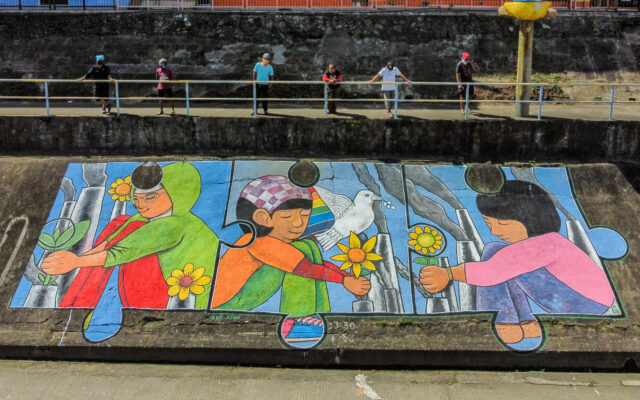
IN a busy business district filled with high-rise buildings, otherwise blank walls are painted with colorful murals that not only beautify the area but also make a statement.

The Bonifacio Global City (BGC) district, through its Public Art program ArtBGC, recently added new murals throughout the area.

The business district began its mural project in 2014. Currently, there are 36 murals, 22 art installations, and 110 pieces of street furniture scattered in and around BGC. The project aims at improving the area’s open spaces with parks and art installations.

In the past year, the Bonifacio Art Foundation commissioned artists to create seven additional murals which carry the theme “Rolling Out a Better World.”

“With all the crises we are all experiencing led by the [COVID-19] pandemic, including those brought on and further deepened by the pandemic, like the crisis in education, culture, environment, we all want our common areas to help shape an attitude that we have the power to roll out a better world,” BGC Arts Program’s Head of Content Maria Isabel Garcia told BusinessWorld in an e-mail.

Ms. Garcia said that muralists can join ArtBGC by signing up with the ArtBGC Artist Pool and submitting the requirements.

Shortlisted artists have to submit a design concept based on the location and theme, and these are assessed. Artists are then chosen based on the approved concept and are awarded a mural contract.

Ms. Garcia noted that their team has “an inventory of BGC surfaces that we got consent from property owners” to paint murals on. The designs, she said, “stems from what the partner stands for” and will be related to the umbrella theme.

“We prioritize surfaces that are new, but when there are partners who would like [to use] surfaces that have existing murals and the partnerships for [those old murals] have already lapsed, we consider those as well,” Ms. Garcia added.

The artists behind the approved mural designs are then given four to six weeks to complete the work after the partnership is sealed.

The new murals will be on display for a maximum of five years, depending on the duration of the partnerships.

THE NEW MURALS
The seven new murals were painted by Glendford Lumbao, Patmai, Zoë Rosal, Deafeye Studio, Kankan Ramos, Elie Quial, and Woman Create. The murals were finished by the end of 2021. They are:

What’s Your Culture? by Glendford Lumbao

W Global Center, 30th street corner 9th Avenue

The mural highlights how different narratives are intertwined to make it part of a bigger picture. It hints the Pinoy concept of “kapit-bisig” (joining arms) to visualize how a community could be of service to one another.

Atin ang Love for All by Patmai

Hobbes-Timezone Corridor, Lane O, Bonifacio High Street

The parallel murals depict images on various kinds of love — love for family, friends, and even pets.

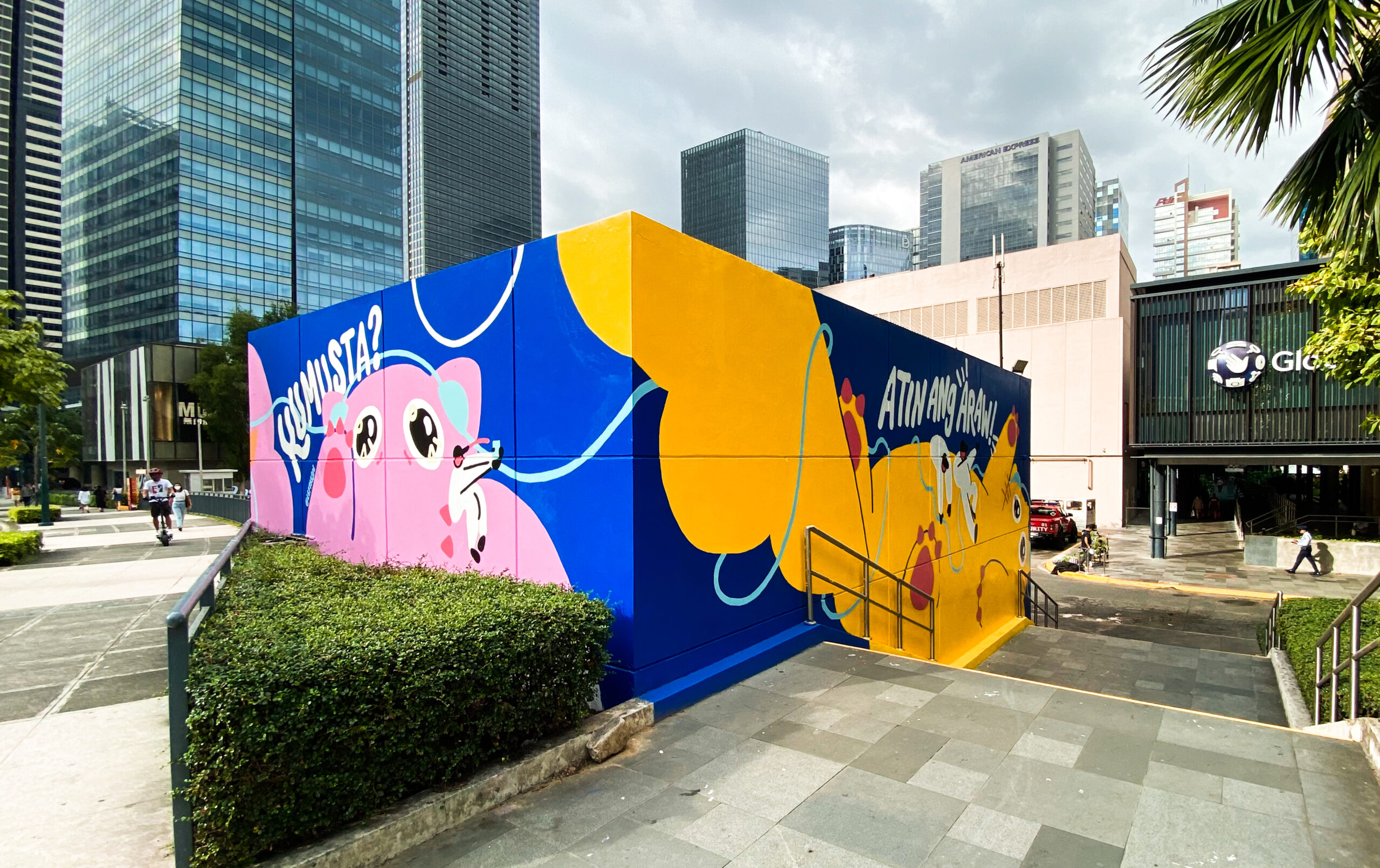
Atin ang Araw by Zoë Rosal

C1 MRF, BHS Central, 28th Street

The mural presents playfulness with large images of animals. Yarn is used to link humans from one side of the artwork to the other.

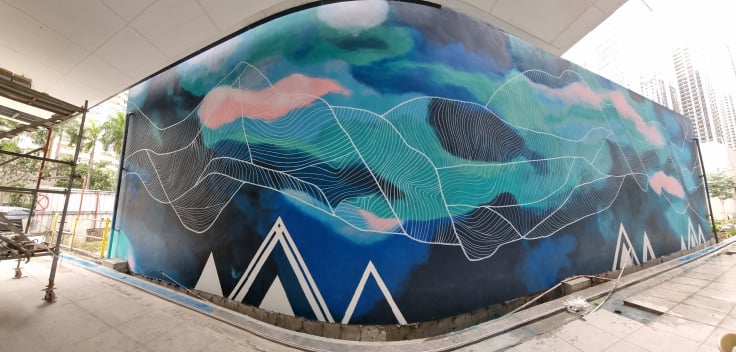
Let Compassion, Empathy and Kindness Flow by Kankan Ramos

High Street South, 11th Avenue

The abstract mural emulates the flow of waves. With the use of cool tone colors, the piece represents the vibrance of the sea.

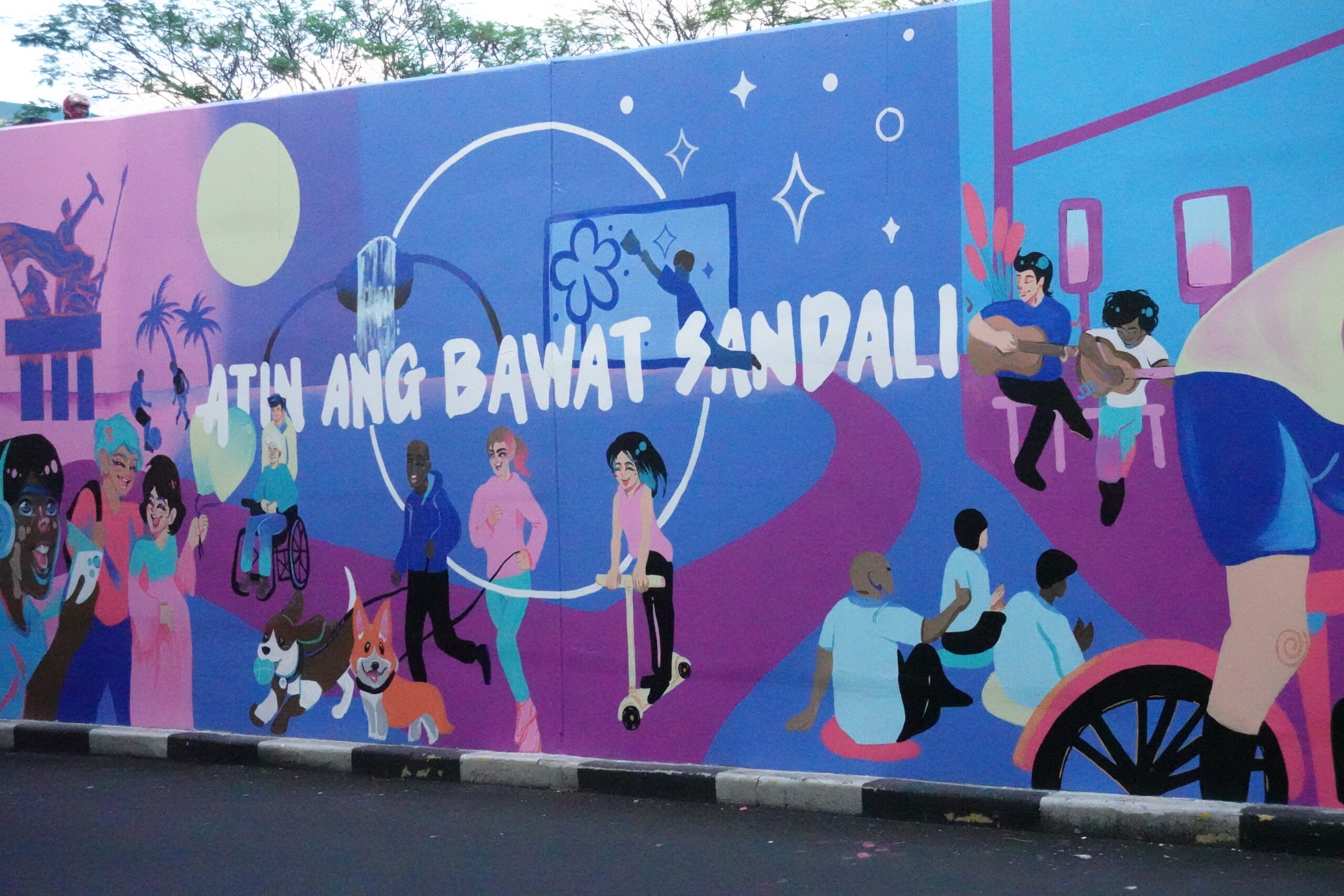
Atin ang Bawat Sandali by Deafeye Studio

Kalayaan Flyover, 32nd Street

The collective of fine and digital artists Deafeye Studio said that the mural depicts hopefulness and happiness. “We featured moments and memories that might spark a sense of nostalgia and belongingness to each person passing by, representing people from different backgrounds,” the collective said in an e-mail to BusinessWorld. “It’s a quick reminder before they enter to take it easy, have a break and say that life is kind and beautiful, that they are deserving of a relaxing day.”

The Land We Walk On by Elie Quial

The Flats Parklet, 5th Ave. cor. 34th St.

The mural features a jungle in the middle of the city. “As an artist, I feel privileged to use my art as a voice to bring awareness to issues that I feel passionate about. When Art BGC gave me the opportunity to create a mural concept from the prompt: ‘Rolling Out A Better World,’ what better way to bring to the forefront, the plight of Philippines’ endangered species,” Ms. Quial told BusinessWorld.

The wall features species such as the Philippine eagle, the Palawan peacock pheasant, the Red-vented cockatoo, the Philippine forest turtle, the Philippine tarsier, Walden’s hornbill, and the Visayan spotted deer. A portion of the mural also features the waling-waling orchid with bees pollinating the flowers.

“Among the flora and fauna are sets of giant feet representing our role and intentions in our actions towards our ecosystem. It is a reminder that we create an impact on our surroundings and that we affect the lives around us,” Ms. Quial said.

Nurturing Ubuntu: Connected in Our Humanity by Woman Create

The Flats, 5th Ave. cor. 34th St.

The mural depicts the expansion of oneself through community. Ubuntu is an African philosophy which directly translates as “humanity” or “I am because we are.”

“As someone whose work mainly dabbles on the identity theme, I found it fascinating that the Self becomes fully realized when we recognize the value of other people — living fully the ideals of acceptance, empathy, and connection, despite differences. Ingrained behind ubuntu is the hope that our communities and the world can be a better place if we could see through the lens of others,” Marika Callangan, founder of Woman Create, said of the mural’s design.

The various gemstones scattered across the mural represent healing, strength, empowerment.

To know more about BGC’s public art, a virtual art tour is accessible via https://www.bgcartscenter.org/artsatbgc. For updates on the arts program, visit the official Facebook pages of Bonifacio Global City and Bonifacio High Street.

The project is supported by Yamaha Motor Philippines, Globe Telecom, and Boysen Paints Philippines. The Bonifacio Art Foundation accepts donations to help sustain the art programs. Donors can visit https://www.bgcartscenter.org/support or send an e-mail to programs@artsatbgc.org. Michelle Anne P. Soliman

Aces face the Road Warriors in resumption of Governor’s Cup

ALASKA ACES’ JERON TENG — PBA IMAGES

ALASKA coach Jeff Cariaso braces for the Aces’ toughest test in the middle of their farewell tour today when they battle NLEX in the Philippine Basketball Association (PBA) Governors’ Cup at the Ynares Center in Antipolo City.

The Aces have racked up three straight victories, posting two of them last week when management announced the franchise’s exit at tournament’s end, to climb to solo third at 5-2. But standing in the way in the 3 p.m. match are the Road Warriors (5-3), who have been a major force all conference.

“With all due respect to our last two opponents (Rain or Shine and Terrafirma), I feel tomorrow (today) will be our biggest test since our resumption,” Mr. Cariaso said ahead of the encounter that marks the PBA’s Antipolo return after nearly three years.

“They (NLEX) have a phenomenal import (KJ McDaniels) with a very good local support. They’re always a tough opponent.”

The Aces, according to Mr. Cariaso, are embracing the mantra “living the moment” and “staying within what we’re doing” as they continue the final stretch of their PBA journey.

NLEX, for its part, eyes to make it back to back after a 117-97 beatdown of Blackwater and wrest third spot from Alaska.

“We have to come out of the jump ball with high-energy defense,” said coach Yeng Guiao. “Every game, we have to go out and set the tone defensively; if we can do that, we feel our offense comes easier.”

Meanwhile, San Miguel Beer (SMB) (4-3) and Phoenix Super LPG (4-3) break their tie for fifth in the 6 p.m. second game.

SMB guns for its fifth win amid reports it is bringing in Philippine Basketball Association (NBA) veteran Shabazz Muhammad to replace Orlando Johnson, who posted 31 points, 10 rebounds and eight assists in the team’s 110-102 victory over Barangay Ginebra last Sunday.

Dominique Sutton and the Fuel Masters are bent on rebounding from their 103-83 blowout loss to pacesetter Magnolia last Saturday. — Olmin Leyba

App offers confidential care for HIV patients

QUICKRES.ORG

By Brontë H. Lacsamana, Reporter

QUICKRES, a digital platform under a global initiative to end the human immunodeficiency virus (HIV) epidemic by 2030, aims to deliver testing and healthcare services to persons living with HIV (PLHIV). 

“The Philippines is part of a global effort towards ending HIV by the 95-95-95 fast-track targets, which means [getting] 95% of people tested, 95% [of positive cases] enrolling for treatment, and 95% [of those being treated] having the virus suppressed,” said Teresita Marie P. Bagasao, director of Meeting Targets and Maintaining Epidemic Control (EpiC) Project Philippines, at the app’s launch on Feb. 16.  

Citing epidemiologic data from the Department of Health (DoH), she pointed out that these percentages, as of December 2021, are at 63-63-95 in the Philippines (63% of PLHIV getting tested and knowing their HIV status, 63% of people who know their HIV-positive status on treatment, 95% of people on treatment with suppressed viral loads). 

The QuickRes platform is also part of “Free to Be U,” an HIV awareness campaign backed by DoH and community-based organizations that provide healthcare facilities for PLHIV.  

Through the app, clients can set an appointment in pilot sites in Metro Manila, Central Luzon, and Calabarzon (Cavite, Laguna, Batangas, Rizal, and Quezon). A nationwide online reservation system is among the project’s long-term goals. 

“QuickRes has a call-me-back feature and counselors can contact a person who books an appointment so that they can address all the other concerns of the client. The counselors are also trained to be client-centered,” said Joven R. Santiago, EpiC Philippines technical advisor for social and behavior change communication. 

For HIV case manager and counselor Anthony Louie V. David, case management and education regarding accessible services require more effort in the Philippines.  

“People don’t know that PhilHealth has packages for free viral load count tests and budget for cartridges for viral load aside from what DoH supplies,” he said. “Viral load count is important to see the antiretroviral therapy’s adherence on the body.”  

Mr. David added that he is a living example of treatment rendering HIV undetectable and untransmittable. He and his boyfriend, who tested negative, are proof, too, that a serodiscordant relationship (PLHIV with a negative partner) is possible.  

“We must share knowledge on how to handle HIV stigma and discrimination,” he said, mentioning his own YouTube channel PLHIV Diaries as his own way of doing so. 

EpiC’s Ms. Bagasao said that a “welcoming approach” toward the prevention, testing, and treatment of HIV should be the aim.   

HIV prevention drugs such as pre-exposure prophylaxis and the tenofovir, lamivudine, dolutegravir combination are approved by the DoH and will be procured by the government.  

Their distribution is being scaled up in the Philippines through donations from the US President’s Emergency Plan for AIDS Relief and the US Agency for International Development, which are also funding the EpiC Project.

Converge seeks better technologies to make internet safe for children

CONVERGE ICT Solutions, Inc. on Tuesday said it is increasing its investments in technologies that would ensure its services are safe from the online sexual abuse and exploitation of children.

“In the recent months, we invested a lot of money (over P100 million) to have substantial upgrades on our system to ensure that our network is safe against children sexual abuse,” Converge Chief Technology Officer Ronald G. Brusola said during a virtual briefing.

“We will continue to invest more in latest and best technologies available to ensure that the internet service we are providing is safe. We will continue to partner with other organizations with the same goal of reducing sexual abuse and exploitation of children,” he added.

Converge signed a memorandum of agreement with child rights protection group Stairway Foundation, Inc. to advance the cause of preventing the abuse of children online.

“More than curbing the consumption of OSAEC (online sexual abuse of children) content, the market for which is the West, we are making strides to ensure the creation of such content is stopped,” Converge Strategy Officer Benjamin B. Azada said.

“Through programs of rights awareness and education, Converge can more actively contribute to child protection in a preventive, not just a palliative way,” he added.

According to Stairway Foundation, the average age of children first going online is 10 years old. “With the basic education continuity plan of the Department of Education, the number may be much lower. They spend an average of two hours online. The internet is very much ingrained into children’s lives today and we have to be aware of the greater risk involved,” said Ysrael Diloy, Stairway Foundation child protection specialist.

Converge also introduced its own information and awareness campaign, “Undo Filter.” The campaign aims to encourage Converge employees and third-party stakeholders to monitor their children’s activities online.

The company said it has blocked 20,000 websites that host images and videos of child sexual abuse. — Arjay L. Balinbin

‘Artivism’ amid gentrification

PHOTO BY BASILIO SEPE/GREENPEACE

IN CELEBRATION of National Arts Month, Filipino artists called on today’s generation of creatives to continue the dialogue in public spaces and pursue creative forms of activism — or “artivism” — in the new normal.

“Public art can create connections and be a catalyst for change, for creating places for people to evolve,” said AG Saño, a landscape architect turned street artist and environmental activist, at a Feb. 18 webinar organized by the National Committee on Architecture and the Allied Arts.

He added that though public art includes big monuments, its most common form in the Philippines is street art due to the ease of access to spaces and materials.

Some well-known locations that have murals are Bonifacio Global City, the outside of Camp Aguinaldo, and the Balara Freedom Wall along Katipunan Avenue.

“The Tawi-Tawi murals stand out because of the beauty of seeing Muslim kids and Christian soldiers paint together for peace and nature,” he added of the Camp Aguinaldo piece, when asked about the most significant wall art he had encountered in his career.

One of his latest projects was a collaboration with Greenpeace Philippines about climate justice, wherein youth and environmental groups painted on various public walls in Albay, Bacolod, Bataan, Bohol, Iriga, Marikina, and Tacloban in Nov. 2021.

Meanwhile, Angely Chi, a film worker and artist from Davao City, documented the use of stickers as a form of graffiti art in public spaces.

“In this movement of communing through a simple object like a sticker, you get to know people and you get to take their works elsewhere,” she said.

However, public spaces are now shrinking due to the gentrification of many areas in the country, making public art a way to claim space for communication amid their decline.

“Our public activities are becoming activities that are performed in commercial spaces owned by big corporations and business tycoons. Sometimes that becomes the death of the public market and plaza that are really important to our identity,” said Ms. Chi.

She called on today’s generation of artists to stop playing it safe and to take risks when it comes to public art.

Mr. Saño, who gained widespread recognition over the last decade for painting a dolphin on a public wall for every dolphin captured or trafficked from the wild, said that an advocacy can be formed just by putting a message on a wall using paint.

In 2020, during the first few months of the pandemic, one of his works was a mural of the Filipino comic book character Captain Barbell wearing a mask, which was a tribute to frontliners and a call for mass testing painted on the exterior of Sterten Place in Quezon City. — Bronte H. Lacsamana

Some 74% of CIMB’s loan clients are first time borrowers — survey

NEARLY three in four or 74% of CIMB Bank Philippines’ personal loan clients are first time borrowers, its survey conducted in December showed.

CIMB Bank Philippines Chief Executive Officer Vijay Manoharan said the long evaluation process for credit underwriting is among factors that hinder borrowers from getting loans for urgent needs.

“One of the biggest barriers to formal credit is the application itself. Banks would usually ask for a lot of income and supporting documents, which Filipinos working in the informal sectors may not necessarily have,” he said in a statement on Tuesday.

To respond to this, CIMB started offering their REVI Credit and Buy Now Pay Later products via online applications processed in less than five minutes. For preselected users eligible to access the product, submitting income-related documents is not required anymore as the bank uses an alternative credit scoring process.

Since REVI Credit was launched in December, CIMB has extended a credit limit of P2 billion to users.

CIMB said it is eyeing to offer REVI to more than a million clients in the next two years.

The service gives clients access to higher credit limits of up to P250,000 and interest rates as low as 1%. There are no annual fees to maintain the credit line as clients only pay when they use it.

The credit line can be used to pay bills and will also soon be available for online shopping payments with installments through its Buy Now Pay Later feature. REVI also allows clients to convert a portion of their credit lines into cash or a term loan at any time, making it ideal for emergency needs.

CIMB has 5.2 million clients in the Philippines to date and over one million lending customers.

Its total assets as of September 2021 stood at P18.833 billion, based on central bank data. — L.W.T. Noble

S. Korea pulls out of FIBA Asian Qualifiers on COVID issue

GILAS Pilipinas will be up against only two opponents in India and New Zealand for the start of the 2023 FIBA World Cup (WC) Asian Qualifiers following South Korea’s pullout due to the team’s coronavirus disease 2019 (COVID-19) issues.

In an emergency meeting on Tuesday, the Korean Basketball Association (KBA) announced the tough decision after another player tested positive for COVID-19 according to the report of South Korean sports outlet Jumpball.

The development hours before South Korea’s flight to the Philippines prompted the whole squad to be listed as close contacts following the said player’s participation in their tune-up game against Korea University on Monday.

Last week, South Korea already dealt with an initial wave of infections that ravaged its 16-man pool led by naturalized player Ra Gun-A, also known as Ricardo Ratliffe.

South Korea was scheduled to face Gilas Pilipinas (twice), New Zealand and India in the Group A games of the WC qualifiers starting tomorrow until Monday at the Smart Araneta Coliseum.

Samahang Basketbol ng Pilipinas, as host, is yet to release a statement on the major development as of writing time.

There is also no official word yet from FIBA, the world basketball governing body, if the four matches of SoKor would be forfeited or rescheduled in the next window in June.

As for Gilas, it will only have two scheduled games against India and New Zealand on Feb. 25 and 27, respectively with South Korea now out of the picture. The Filipinos were to play their South Korean rivals twice on Feb. 24 and 28.

Gilas is already in the International Basketball Federation (FIBA) bubble at the nearby Novotel Araneta City along with India following its arrival on Tuesday while New Zealand is expected to follow suit. — John Bryan Ulanday

Heart failure registry, chronic care model can help ease burden of cardiovascular disease

UNSPLASH

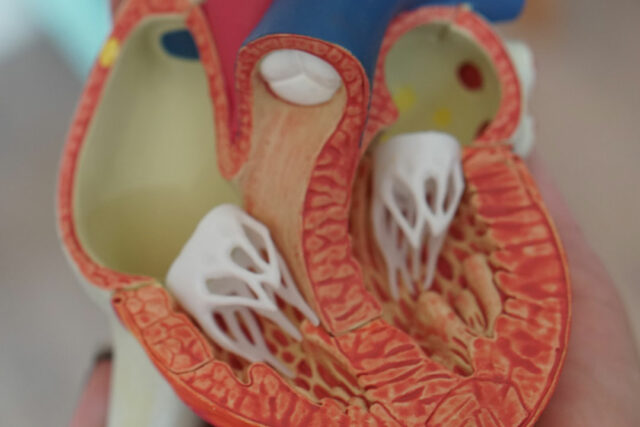
WHILE February is known as a time for love and romance, Filipino cardiologists on Feb. 15 shined the light on matters of the heart of a different kind: heart health, specifically heart failure.  

“Nearly a third of patients with heart failure have high risk of hospitalization or cardiovascular death, including those who appear stable,” said Lotis Ramin, country director of AstraZeneca Philippines, which is working with the Heart Failure Society of the Philippines (HFSP) on health programs that will raise awareness of heart disease.  

“Unfortunately, it’s not getting as much attention as it should,” she said at the briefing.  

Heart failure, defined as a condition where the heart can’t pump enough blood to fulfill the body’s needs, includes symptoms like shortness of breath and easy fatigability.   

The Philippine Statistics Authority found that heart disease was the top cause of mortality across the country, accounting for 17.9% of total deaths from January to November 2021. Two major risk factors of the disease, diabetes and hypertension, were also among the leading causes of death.    

“Seventy-four percent of heart failure patients suffer from at least one comorbidity that is more likely to worsen the patient’s overall health status,” said Dr. Chito C. Permejo, a fellow of the Philippine College of Cardiology.  

With hospitalization driving the cost of heart failure, the key to lessening its burden on the country would be a change in the care model, which would require collaboration to back the implementation of health policies.  

“We need to move towards the chronic care model, with multidisciplinary integrated care and patients stratified by need, with more complex patients being ‘case managed,’” he said.  

CAPACITY BUILDING
Dr. Liberty O. Yaneza, head of the heart failure section at the Philippine Heart Center, said that research assistance, education, manpower, and clinics across the country will need beefing up.  

She pointed out that the majority of heart failure clinics are in Metro Manila, with only a few advanced specialists in the Philippines catering to a large population of patients.  

“The plan [to set up more clinics] is already there; it’s just due for implementation,” she shared, referring to delays in capacity building due to the pandemic. “Later on, we need to emphasize that this should be seen as a multidisciplinary entity, not only cardiology.”  

The National Heart Failure Network — an alliance of stakeholders including the HFSP, the Philippine Heart Association, and other regional medical groups — aims to ease the burden of heart failure in the country.  

A registry can help this network as well as the government to be better equipped for the challenge, according to cardiologist Dr. Michael-Joseph F. Agbayani of the University of the Philippines College of Medicine.  

“The registry is a database that collects information that can be used to answer clinical questions and measure quality of care,” he said. “We can use it to generate studies about heart failure in the local setting.”  

For now, the one thing standing in the way of this database being built is funding, which has been difficult to come by due in large part to the pandemic.  

Dr. Permejo noted that the bulk of what can be done now is information dissemination.  

“We must educate people to look into their own profile, family history, and lifestyle. All of these taken together can create cardiovascular disease,” he said. — Brontë H. Lacsamana

Antibodies induced by mRNA shots improve for months; blood cells damaged by COVID cause blood vessel problems

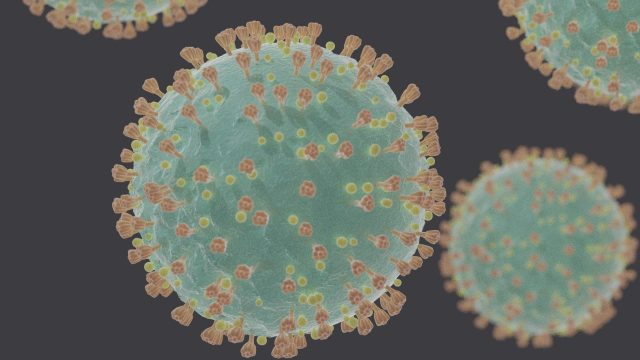
COMPUTER-GENERATED representation of COVID-19 virions via Felipe Esquivel Reed / CC BY-SA

THE following is a summary of some recent studies on coronavirus disease 2019 (COVID-19). They include research that warrants further study to corroborate the findings and that has yet to be certified by peer review.  

ANTIBODIES IMPROVE FOR MONTHS AFTER mRNA VACCINE
Antibodies induced by mRNA COVID-19 vaccines keep improving in quality for at least six months while the immune system continues to “train” its antibody-producing B cells, according to a new study.  

After vaccination, some B cells become short-lived antibody-producing cells, while others join “germinal centers” in lymph nodes — essentially, a training camp where they mature and perfect their skills.  

“Cells that successfully graduate (from germinal centers) can become long-lived antibody-producing cells that live in our bone marrow or ‘memory B cells’ that are ready to engage if the person gets infected,” explained Ali Ellebedy of Washington University in St. Louis.  

Animal studies have suggested that so-called germinal center reactions last only weeks. But analyses of blood, lymph node tissue and bone marrow from volunteers who received the Pfizer/BioNTech vaccine showed germinal center reactions induced by the shots lasted at least six months, with antibodies becoming increasingly better at recognizing and attacking the spike protein of the original version of SARS-CoV-2, Mr. Ellebedy’s team reported on Tuesday in Nature.  

They did not test the mature antibodies’ ability to neutralize variants, but in theory, Mr. Ellebedy said, the antibodies should be better able to recognize parts of the spike common to the variants and the original strain.  

More research is needed to know whether this robust germinal center response is unique to mRNA vaccines or if it is also induced by more traditional vaccines.  

RED BLOOD CELLS DAMAGED BY COVID CAUSE BLOOD-VESSEL PROBLEMS
Dysfunctional red blood cells contribute to the blood vessel injuries common in severe COVID-19, according to laboratory studies that also may suggest a way to treat the problem.  

Many patients hospitalized for COVID-19 are thought to have damage to the endothelial cells lining the blood vessels, which can lead to blood clots, organ impairment, and other complications.  

New findings from the blood of 17 moderately ill COVID-19 patients and 27 healthy volunteers confirm “profound and persistent endothelial dysfunction” as an effect of the coronavirus, researchers reported on Wednesday in JACC: Basic to Translational Science.  

Compared to the red blood cells in healthy people, those from COVID-19 patients release fewer beneficial nitric oxide molecules and more detrimental inflammation-causing molecules, said Dr. Ali Mahdi of Karolinska University Hospital in Stockholm.  

In combination with elevated levels of a certain enzyme, the inflammatory molecules injure the blood-vessel lining, his team found. As a result, the vessel cannot relax properly.  

The dysfunction is reversed by drugs that restore normal enzyme levels and limit production of the harmful molecules, Dr. Mahdi said.  

Whether test-tube findings can be replicated in people is not yet clear. The experiment was performed on the original coronavirus, so it is also unclear whether red blood cells are similarly affected in infections caused by variants of SARS-CoV-2.  

GLOBAL PROJECT HELPS LOW-INCOME COUNTRIES REUSE N95 MASKS
An international group of physicists, engineers and physicians has designed a cheap, easy-to-construct cabinet with ultraviolet-C (UV-C) bulbs that has allowed health clinics in lower-income countries to decontaminate and reuse over 900,000 protective N95 masks.  

The prototype was constructed using a metal office storage cabinet lined with household aluminum foil, with UV-C bulbs at the front and back, consortium members reported on Wednesday in NEJM Catalyst.  

“You simply load the masks on a rack, put them in the cabinet, shut the doors and turn the device on to apply the right dose of UV-C to inactivate the COVID-19 virus,” said Dr. Nicole Starr, a surgery trainee at the University of California, San Francisco who led the effort. The process takes about 10 minutes.  

Once the group had a workable design, they recruited members of local student chapters of the optics society Optica to build the cabinets, sometimes working with embassies to arrange for shipments of the necessary components. Engineering teams in nine countries and hospitals in 12 countries worked on the project.  

“Overall, 21 cabinets were put into use in hospitals, and we estimate that 930,000 N95s were decontaminated for reuse from July 2020 to January 2022,” Dr. Starr said.  

Decontamination equipment currently used in US hospitals can cost $80,000 per unit, according to the report. The team estimated that their cabinet can be built for about $500 to $1,500 depending on location and can process nearly 5,000 masks per day at maximum capacity. — Reuters