THE UNITED States’ “ongoing tug of war” with Russia over the situation in Ukraine is comparable to its trade and maritime tensions with China, and the Philippines should be wary of being used as a proxy by superpowers, a global think tank said on Wednesday.
“The Philippines should avoid following the footsteps and avoid the fate of Ukraine,” Philippines-BRICS Strategic Studies (Phil-BRICS) political analyst Anna Rosario Malindog-Uy said at the Pandesal Forum.
She said Ukraine, which is bracing for defense as Russia has reportedly started to send troops in breakaway border areas, is being used as a pawn in the geopolitical maneuvers of the US because of its strategic geographical location.
“The country (Philippines) should refuse and prevent at all costs the possibility of being a proxy or a pawn of any superpower in their proxy wars,” Ms. Uy said, as this is not aligned with core national interests and will only add burden to the territorial dispute in the South China Sea.
Phil-BRICS President Herman T. Laurel noted that the US had used the Philippines as its Ukraine in the South China Sea since post-martial law — until President Rodrigo R. Duterte came into position in 2016 with his China-friendly policies.
“President Duterte sinks the US pivot to Asia by reversing the course of events between China and the Philippines from mutually defeating conflict and destabilization of Asia as a whole towards mutually beneficial dialogue, cooperation and trade, thereby stabilizing the Asia region for continuing economic construction and prosperity,” he said during the same forum.
Senator Panfilo M. Lacson, Sr., who is gunning for the presidential seat, noted that all countries, including the Philippines, will be affected by sanctions that are intended to pressure Russia, a major oil supplier, against an all-out invasion on Ukraine.
“Let’s not say that Ukraine is far from us,” he told reporters on Wednesday.
“If all NATO (North Atlantic Treaty Organization) countries, the members of the European Union, the US, Australia simultaneously impose economic sanctions on Russia because of the invasion, that will indirectly hit our economy,” Mr. Lacson said, noting the impact on an already historically high global oil prices.
Also on Wednesday, Foreign Affairs Secretary Teodoro L. Locsin, Jr. reiterated his commitment that the Philippine government would prioritize the safety of Filipinos in Ukraine.
“Our chief and singular concern is to take out of harm’s way our fellow Filipinos in Ukraine and bring them to the nearest places of safety by the fastest possible way,” he said in a statement.
Six Filipino nationals, including one with a baby, have been repatriated from Ukraine, and received funding assistance from the Philippine Embassy in Warsaw.
There are about 380 Filipinos in Ukraine, including immigrants and workers. — Alyssa Nicole O. Tan
THE CITIES of Baguio, Makati, and San Fernando in La Union joined an international partnership with the World Wide Fund for Nature (WWF) Philippines for action plans that target net zero carbon emissions.
“No matter how good our data, climate transition today is less of an information and technology issue, and more about implementation and cooperation,” the WWF said in a statement.
“Sharing knowledge, in real time, across countries, contexts and continents, about what works and what doesn’t, aligning experts within cities and across departments behind an overarching political plan and motivating everyone to take ownership, will lead to success,” it added.
The partnership will be under the One Planet Cities project, led by WWF-Philippines and climate technology software company Futureproofed.
Under the project, the local governments of each city will “develop more impactful climate action plans while collaborating with their own city departments, residents, and other cities across countries.”
This initiative will strengthen both external and internal collaborations and move forward to an effective climate action plan for the cities, WWF said.
The project is in line with the Paris Agreement, the international treaty on climate change, and will provide measures and policies on effective and cost-efficient actions to reduce emissions.
In February, city government officials from Baguio, Makati, and San Fernando City began working on climate change action plans with other cities from Indonesia, Sweden, Turkey, and the United Kingdom. — Luisa Maria Jacinta C. Jocson
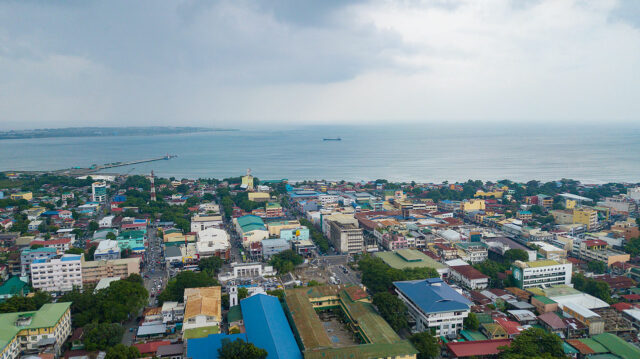
KOREAN manufacturer Tai San Hitech Co. is considering Bacolod City as site for an electronic vehicle plant, the local government announced following a visit by the company’s top executives earlier this week.
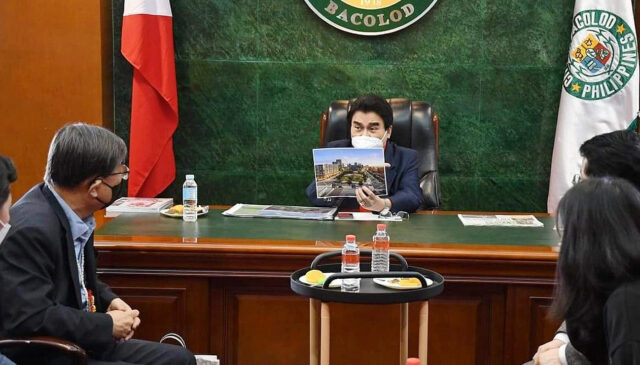
Bacolod officials led by Mayor Evelio R. Leonardia met with Tai San Hitech President Sung-Jin Kwon, Vice President Tae-Soo Jeong, and their Manila-based partner Min Soo Kim on Feb. 22 to discuss the city’s guidelines and perks for investors.
“It is so encouraging because this is coming at the right time when we are transitioning from a very tight COVID society. This will be a big thing for us and this is going to bridge the city to a post-COVID situation,” Mr. Leonardia said in a statement.
The City Development Council has been updating the local Investment Promotion Program in line with the plan for recovery from the economic impact of the coronavirus pandemic.
“This is my first time in Bacolod and I immediately felt that this city is very active… Bacolod is growing and developing into the future,” Mr. Kwon is quoted as saying.
“I’m expecting that our electric tricycles will be successful here,” he added.
Tai San Hitech, headquartered in Daegu, South Korea, manufactures motors, e-bicycles, and three- and four-wheeled e-vehicles, according to the company’s website.
The company delegation also met with officials of Central Negros Electric Cooperative, the city’s electricity distributor, and Bacolod Real Estate Development Corp.
Meanwhile, the mayor also reiterated his call on the public to continue observing minimum health protocols such as wearing of face mask and distancing even as the city recorded no new cases of coronavirus disease 2019 (COVID-19) on Feb. 21 and 22.
“The virus is still here, but we need to learn how to live with it… and adjust to it accordingly and cautiously,” Mr. Leonardia said.
As of Feb. 22, the city had 367 COVID-19 active cases out of the 27,774 recorded since the start of the pandemic, based on data from the Department of Health-Western Visayas regional office.
The city with about 590,000 residents has fully vaccinated its target population, according to the city health office. — MSJ
THE SUPREME Court has appointed retired Associate Justice Rosmari D. Carandang as chancellor of the Philippine Judicial Academy (PhilJA).
Ms. Carandang, who took her oath Wednesday, is the second female retired high court judge to head the judicial education institution.
She mandatorily retired on Jan. 9 after serving the court for more than three years.
Ms. Carandang is replacing Arturo D. Brion, also a former Supreme Court associate justice.
The first chancellor of PhilJA was the late Ameurfina A. Melencio-Herrera, who was also the second woman appointed to the High Court.
Ms. Carandang has a degree in political science from the University of the Philippines, where she also earned her law degree. She served as trial court judge in Manila before becoming a Court of Appeals associate justice, and eventually was appointed to the country’s Highest Court. — John Victor D. Ordonez
A SOUTH Korean fugitive allegedly involved in illegal gambling activities in his home country was nabbed at the Ninoy Aquino International Airport in Manila Friday, the Bureau of Immigration (BI) reported.
The name of the foreigner, who was exiting the Philippines with a flight to Cambodia, registered a positive hit in the BI and the International Criminal Police (Interpol) system while going through immigration check.
The fugitive has a standing arrest warrant issued by a district court in South Korea for violating his country’s national sports promotion act.
Interpol also tagged the South Korean with a red notice, identifying the individual as a fugitive wanted for prosecution.
Communication between BI and the Interpol central bureau in Manila showed that the South Korean is wanted for conspiring with other suspects in managing various gambling sites online which earned them about $33.6 million.
The South Korean national is currently detained at the BI holding facility in Taguig while awaiting deportation. — John Victor D. Ordonez
DUŠAN Vlahovic scored the second-fastest goal ever for a Champions League debutant as his Juventus side were held to a 1-1 draw at Villarreal in a last-16 first-leg tie on Tuesday.
The Serbian striker, who joined the Turin side from Fiorentina in January, needed only 33 seconds to net a perfect cross shot.
Juventus dominated the game until a mistake by their defence in the 66th minute gave Dani Parejo the chance to score the equalizer.
Étienne Capoue spotted Parejo alone and unmarked behind defenders and sent a perfect pass over the top for the Spanish midfielder to tap into the net.
After the goal, Villarreal had a couple of clear opportunities and could have gone ahead if their forwards had been more efficient.
“I have a bittersweet taste in my mouth, I believe we deserved more,” Capoue told reporters.
“It’s not a bad result because of the end of the away-goal rule. We are confident that we can go there and get the result we need to advance.”
The 22-year-old Vlahovic lived up to expectations, posing a constant danger to the Villarreal defence and hitting Juve’s only two shots on target in the game. On the second one, late in the second half, goalkeeper Geronimo Rulli made a great save.
“He is very young, was making his debut and managed to score. That says everything about who he is,” Juventus striker Álvaro Morata said of Vlahovic.
“One can only imagine the career he has in front of him. He is an extraordinary kid; in one week, he has completely adapted to the club. It looks like he has been with us for months now. We are delighted to have him.”
Juventus could have ended the game with 10 men after a bad, studs-up foul by midfielder Adrien Rabiot on Nigerian winger Samuel Chukwueze but the Video Assistant Referee took the controversial decision to let a yellow card stand. — Reuters
LILLE’S Sven Botman in action with Chelsea’s Kai Havertz. — REUTERS
LONDON — Chelsea rediscovered some of their fluent attacking form as they beat Lille (2-0) in the first leg of their Champions League last-16 tie on Tuesday, but the talk at Stamford Bridge was more about the striker who did not play than the ones who did.
Record signing Romelu Lukaku sat on the bench as an unused substitute while fellow strikers Kai Havertz and Christian Pulisic claimed the goals that put reigning champions Chelsea in the driving seat to advance to the quarterfinals.
On Saturday, against Crystal Palace, Lukaku had the fewest touches of the ball — seven — ever recorded for a player on the pitch for at least 90 minutes in a Premier League game since such data began to be collected in full in the 2003-04 season.
That unwanted record added to the questions being asked about the Belgian’s role in Thomas Tuchel’s side which has often looked more dangerous this season when Lukaku was absent with injury or due to coronavirus disease 2019 (COVID-19).
Lukaku scored 24 league goals and provided 11 assists for Inter Milan last season to help them clinch the Serie A title and he got off to a good start in his second spell at Stamford Bridge after his move to London in August.
He scored three goals in his first three Premier League games and linked up well with fellow strikers.
But he has scored only two more goals in the league since then and comments that he gave in a television interview, in which he said Tuchel’s system did not suit him, only added to the sense that Lukaku is not the right fit for Chelsea.
Tuchel told reporters after the win over Lille that he had decided Lukaku needed a break after starting in a string of games recently.
“The focus was today on intensity, on a high-speed game and hard work off the ball,” the German coach said. “Romelu struggled in the last games to deliver that.”
Lukaku did score two of Chelsea’s three goals during the Club World Cup tournament that the Londoners won in Abu Dhabi earlier this month.
But the threat posed by Havertz throughout Tuesday’s defeat of Lille, and his hard work rate, suggested the German may get the nod ahead of the Belgian when Chelsea comes out of the tunnel at Wembley on Sunday for the League Cup final against Liverpool. — Reuters
THE Major League Baseball Players Association made a counteroffer with minor adjustments during Tuesday’s bargaining sessions with the league in Jupiter, Fla., multiple outlets reported.
The union lowered its ask of 80 percent of players with two to three years of service being arbitration-eligible down to 75 percent. It also reduced its call from an eight-team draft lottery to seven, one day after the league outlined a four-team lottery.
The MLBPA sought $30,000 increases of the players’ minimum salary year over year — up from $25,000 — raising the minimum from $775,000 in 2022 to $895,000 by 2026.
For the second time, management asked for the talks to continue with a federal mediator, but the union again refused.
The issue of the competitive balance tax, better known as the luxury tax, was not brought up Tuesday, reports said.
The two sides will return to the table Wednesday, with the league set to take its turn countering.
Spring training has been postponed as a result of the lockout, with games delayed until March 5 at the earliest.
A recent report by USA Today said the owners provided a deadline of Feb. 28 for a new agreement in order to begin the regular season on time. Opening Day is tentatively slated for March 31. — Reuters
PHIL Mickelson apologised on Tuesday for comments he made about the proposed Saudi-backed Super Golf League that set off a firestorm of controversy and said he planned to take “time away” from the sport.
In a November interview that was published on the firepitcollective.com last weekend, Mickelson criticised the government of Saudi Arabia for its “horrible record” on human rights, which he said included the 2018 killing of journalist Jamal Khashoggi and the execution of gay people.
Despite the government’s “scary” actions, he said he would use the prospect of a new, highly-lucrative tour to gain economic leverage over the PGA Tour, a position that drew the ire of fellow golfers including Rory McIlroy and Justin Thomas.
Saudi Arabia’s government denies accusations of human rights abuses.
“Although it doesn’t look this way now given my recent comments, my actions throughout this process have always been with the best interest of golf, my peers, sponsors, and fans,” Mickelson said at the beginning of a lengthy social media post, where he claimed his previously reported comments were “off the record,” a charge the journalist denies.
“The bigger issue is that I used words I sincerely regret that do not reflect my true feelings or intentions. It was reckless, I offended people, and I am deeply sorry for my choice of words. I’m beyond disappointed and will make every effort to self-reflect and learn from this.”
The six-time major champion said golf “desperately needs change” and that real change is always preceded by disruption.
“I have always known that criticism would come with exploring anything new. I still chose to put myself at the forefront of this to inspire change, taking the hits publicly to do the work behind the scenes.”
No golfers have publicly signed up for the proposed rival league, which is trying to lure top players away from the PGA Tour with the promise of huge paydays.
Mickelson praised LIV Golf Investments, Super Golf League’s financial backer, and called the people he has worked with there “visionaries”.
“They have a clear plan to create an updated and positive experience for everyone including players, sponsors, networks, and fans,” he said.
But the 51-year-old closed by saying he planned to take a break from the sport.
“The past 10 years I have felt the pressure and stress slowly affecting me at a deeper level,” he said.
“I know I have not been my best and desperately need some time away to prioritize the ones I love most and work on being the man I want to be.”
Accountancy firm KPMG, who began sponsoring Mickelson in 2008, said shortly after his statement that both parties had “mutually agreed to end our sponsorship effective immediately.” — Reuters
RUSSIA’S Daniil Medvedev defeated Benoit Paire of France 6-3 6-4 in the first round of the Abierto Mexicano tournament in Acapulco on Tuesday to get his quest for the world number one ranking off to a winning start.
World number two Medvedev is looking to ascend to the top ranking for the first time by displacing Serbian Novak Djokovic, who is competing at the Dubai Tennis Championships.
Djokovic will be forced to relinquish the crown even if he wins Dubai for a sixth time, provided the Russian wins the ATP 500 event in Acapulco, where he is making his tournament debut.
“If Novak would not be playing, then maybe it would be a little bit more in my mind because it would only be me and it depends on what I can do,” Medvedev said.
Taking to the main showcourt after Medvedev’s win, Rafa Nadal breezed past 100th-ranked American Denis Kudla 6-3 6-2 in his first match since winning the Australian Open last month for his 21st Grand Slam title.
The 35-year-old Spaniard seemed to have some problems with the humidity on a warm night in the coastal resort town and decided to save as much energy as he could, sealing the contest in 76 minutes with his 16th forehand winner and 26th overall.
Nadal lost just four points on his serve while breaking his opponent three times to race to his 11th consecutive win in the 2022 season.
Medvedev’s contest also appeared to be a one-sided affair when Paire dumped a lifeless forehand into the net to hand the Russian the first set in 51 minutes. But Paire flexed his muscle in the second, attacking the Russian’s serve for a 4-2 lead.
Playing for the first time since his defeat to Nadal in the Australian Open final, Medvedev kept his focus and outworked the Frenchman in a back-and-forth deuce game to level at 4-4 and sealed the win when Paire’s backhand sailed into the net.
“It’s always not easy to come back after some rest and some time off competition,” Medvedev said. “Sometimes better, sometimes worse.
“I felt like my sensations were not at the top today, but I managed to fight until the end against a very tough opponent and I’m happy that I managed to win.”
In other contests, Italian world number six Matteo Berrettini won the first set 6-4 against American Tommy Paul but retired with injury while trailing 1-5 in the second.
Australian John Millman was also forced to retire against American Marcus Giron when he suffered a freak injury by hitting the tennis ball into his own eye. — Reuters
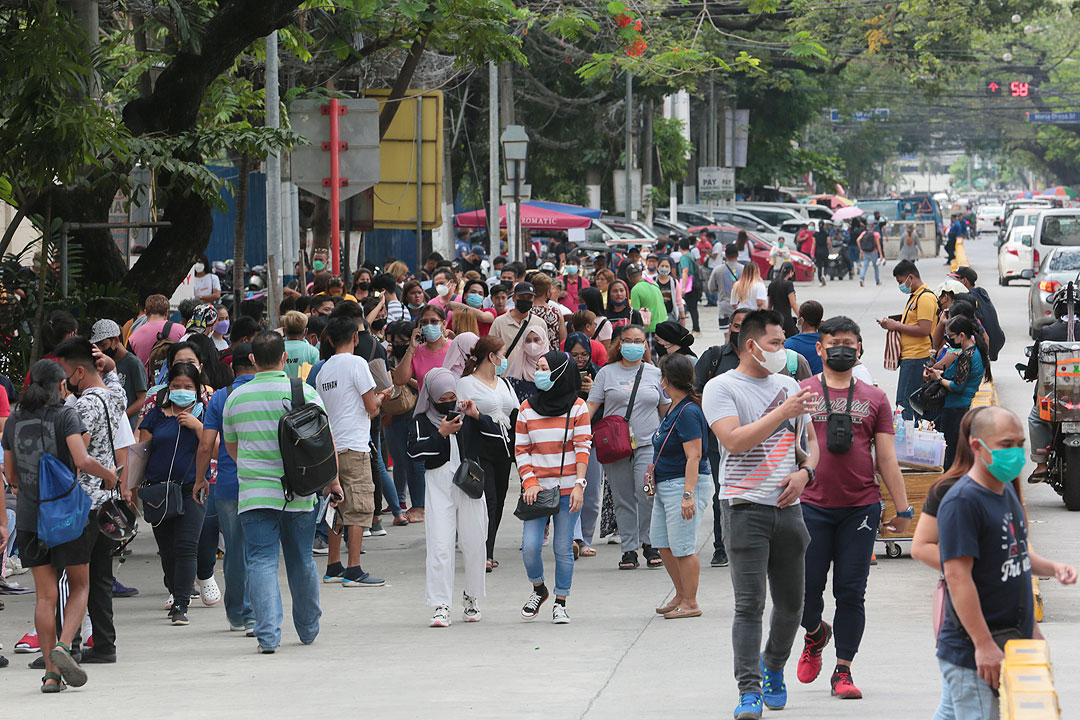
PEOPLE go about their daily lives as seen at a busy stretch of Taft Ave., Manila. — PHILIPPINE STAR/ MICHAEL VARCAS
Metro Manila mayors met Tuesday night, according to news reports quoting Parañaque City Mayor and Metro Manila Council (MMC) Chairman Edwin Olivarez, and “unanimously” voted to downgrade the National Capital Region to Alert Level 1 starting next week, March 1. Metro Manila is under Alert Level 2 until Feb. 28.
Personally, I have misgivings about the recommended downgrade. I believe we need to give ourselves a longer runway. Perhaps until after Easter on April 17. That is, if we can maintain the downtrend in COVID-19 cases and related hospitalizations until then. To me, the question is not whether the NCR (National Capital Region) qualifies for a downgrade by March 1, but whether Metro Manila and its residents are actually ready for further easing of restrictions from then, and onwards.
Timing is crucial, especially now that school is still ongoing but mostly online; public transportation is not at 100% capacity; and, fuel prices are at all-time highs and continue to rise. Add to this the start of the campaign season for the 2022 elections: Feb. 8 for national candidates, and March 25 for local candidates.
I would not want to think the mayors are batting for Level 1 by next week mainly as a way to court more votes or to make it easier for their supporters to prepare, and then go out and campaign starting March 25. I am worried that campaign sorties, and similar activities, under Alert Level 1 can become super-spreader events for COVID-19, and might just prompt another surge. The same goes for Holy Week events under Alert Level 1.
By government definition and rules, Alert Level 1 can be recommended for areas “wherein case transmission is low and decreasing, and total bed utilization rate and intensive care unit utilization rate is low.” This is based on IATF (Inter-Agency Task Force for the Management of Emerging Infectious Diseases) Guidelines for the implementation of the Alert Level system nationwide. Given recent statistics, Metro Manila qualifies for a downgrade.
Under the same rules, Level 1 also means “intrazonal and interzonal movement shall be allowed without regard to age and comorbidities,” and “all establishments, persons, or activities, are allowed to operate, work, or be undertaken at full on-site or venue/seating capacity provided it is consistent with minimum public health standards; provided further, that face-to-face classes for basic education shall be subject to prior approval of the Office of the President.”
In short, under Alert Level 1, perhaps other than keeping masks on in public and best-efforts in maintaining physical distance, everything goes for Metro Manila businesses and residents. No more restrictions on capacity and movement. It will be as if COVID-19 is already a thing of the past, and that people need not worry about the virus anymore. While this may not really be the case, the downgrade will surely bring on the feeling that the battle is over and has been won.
Until the next surge occurs.
And this is where the problem lies for me. We have always been just a step ahead of the next COVID-19 surge. In the near future, COVID mutations will continue to outpace medical advances intended to eliminate the virus. Medical science will continue to play catch-up at least until the end of the year. And other than present ad hoc tools that have been in use since March 2020, nothing new has been implemented or has been put in place for the long term.
Under Alert Level 2, some local restrictions continue to apply with respect to “intrazonal and interzonal movement.” Also, establishments or activities are allowed only up to 50% indoor venue capacity for fully vaccinated individuals and those below 18 years of age, even if unvaccinated, and 70% outdoor venue capacity. Provided, that all workers/employees of these establishments are fully vaccinated against COVID-19 and minimum public health standards shall be strictly maintained.
By next week, however, if Metro Manila mayors will have their way, all these limits will be removed, including those on face-to-face or in-person classes for schools; in-person religious gatherings; licensure examinations; and transactions at government offices, among others.
As for the private sector, offices will resume work on site, and all restrictions will be removed on dine-in services; personal care establishments such as barbershops, hair spas, hair salons, and nail spas; fitness studios, gyms, and venues for individual non-contact exercise and sports; film, music, and television production; contact sports; funfairs or kid amusement industries such as playgrounds, playroom, and kiddie rides; and, venues with live voice or wind-instrument performers and audiences such as in karaoke bars, clubs, concert halls, and theaters.
Is Metro Manila really ready to go back to normal? For that is what Level 1 means: Business-As-Usual, but with face masks. In the case of Makati City where I live, from March 2021 to date, it saw the number of local COVID cases peak at 1,544 on April 22, 2021 (old variant), then on Sept. 9, 2021 at 3,298 (Delta), then on Jan. 30, 2022 at 2,435 (Omicron). The lowest case count ever was on Dec. 21, 2021 at 16 active cases. Even with that, we never went to Alert Level 1. As of Feb. 22, 2022, the active case count was still at a higher 95.
My take is that we are far from being in the clear. And while cases may be declining to date, and that based on government guidelines we can already be downgraded to Alert Level 1, I still doubt if we are ready for it. There have been mitigating factors, of course, including the massive vaccination effort since 2021. But with lifting of restrictions, the demand for vaccination will also likely wane.
We need to give Alert Level 2 a little more time to work its magic, and for authorities to ensure that based on available data, the risk of another surge is minimal. Yes, I call for at least one more month under Alert Level 2, if feasible, especially now that we have again opened our borders to travelers and foreign visitors. We shouldn’t rush into shifting to Alert Level 1. I believe it can wait until after Holy Week.
Complacency was, is, and will always be the enemy. In December, under Alert Level 2, we celebrated the Christmas holidays amidst the arrival of Omicron. But people confidently went out, on the back of the declining case count. A surge occurred, but luckily, the healthcare system managed to cope with it. Still, a lot of people got sick in December and January, with case numbers hitting new highs.
Invariably, as we downgrade to Alert Level 1 by March 1, complacency will surely be a problem once again. But will luck still be on our side in the next surge? Or should we stop relying on luck and exercise restraint instead?
Marvin Tort is a former managing editor of BusinessWorld, and a former chairman of the Philippine Press Council
SMART PHONES have made life so much more convenient for everyone — well, apart from compliance sheriffs and record keepers at global banks.
HSBC Holdings Plc alerted investors on Tuesday that it was being investigated in the US for its bankers’ use of WhatsApp and other personal messaging services for business purposes. It put the news in a single line in its 2021 results and declined to give more detail.
This is the latest of several signs of a growing crackdown by US market regulators worried that communications convenience has led to complacency. But this isn’t about finance alone. In an era of greater freedom to work wherever, monitoring messages is going to become an uncomfortable issue for employers and their bosses in many more industries.
Bankers’ use of WhatsApp and similar tools has grown alongside the rest of society, but bankers have serious regulatory responsibilities to track information and record who has had access to private news about companies or pending trades. Concern about this has been bubbling for years, but the unavoidable switch to remote working for most people during the COVID-19 pandemic over the past two years has sharpened regulators’ attention on communications in financial markets.
Deutsche Bank AG has begun tightening up its rules and monitoring around messaging apps, Bloomberg reported this month, while Credit Suisse last year asked employees for access to their personal mobile phones.
It’s not that banks or regulators think they can block people from quick and easy modern technology, it’s about ensuring that complete records are kept. Banks need to be able to show that inside information has been controlled and procedures for things like risk management were followed – for banks’ own financial safety as well as for preventing wrongdoing.
JPMorgan Chase & Co.’s failures to ensure proper records were kept, including among senior bankers, led to $200 million in fines late last year from the Securities and Exchange Commission (SEC) and the Commodity Futures Trading Commission (CFTC). The SEC said the failures had hindered several investigations.
HSBC, which is being investigated by the CFTC, declined to say whether or not it could face any fines. But Ewen Stevenson, its chief financial officer, said the bank “obviously” has procedures and requirements governing staff use of non-official communications.
Banks aren’t alone. Politicians’ use of personal communications — private e-mail accounts and messaging apps — has been tied up in several scandals. In the US, Hilary Clinton’s personal e-mail use became a major point of contention in the 2016 Presidential election. In the UK, there have been calls for inquiries into health ministers’ use of non-official e-mails to deal with people seeking government business related to pandemic-fighting equipment.
In fact, most companies of any size ought to think harder about what communications they need to archive. It’s not only tightly regulated financial activities that can be investigated. In late 2019, the Dutch competition authority said it hit an unidentified company that was being investigated for anticompetitive practices with a roughly $2-million fine because staff deleted WhatsApp messages during a dawn raid.
Most of us want to resist our work lives bleeding into our personal lives. Companies have growing reasons to keep a good barrier there too.