Home Blog Page 6727

Wishes

The invasion of Ukraine in Europe has become a major concern for the world. We pray for peace and the protection of the affected people and their children who are in peril.

Our children, the future citizens, deserve to inherit a brighter, kinder world. The current pandemic has caused so much upheaval, distress, anxiety, confusion and pain. They need to adapt and grow stronger.

Resilience is the key to adjusting to all changes and moving forward. In this context, here is a wish list for the children.

1. A home with loving parents who will provide, guide, and care for them. That all parents will lead by example and teach spiritual and family values, and good manners. That all children will be safe from domestic violence and abuse. Many families are affected by the absence of parents who are working abroad. May they have responsible relatives who can take care of them.

2. That all children, in turn, learn to appreciate, respect and be grateful to their parents, grandparents, and caregivers. That they learn good values, manners, and traditions. That they will be aware but not be contaminated by the materialistic world that they are exposed to.

3. Good health and protection from the pandemic. That children in marginalized and remote areas will have proper nourishment, medical and dental care to grow strong and healthy. That the essential vaccines will be available to them as soon as possible.

4. Quality education. Children need regular and affordable access to the internet. Online learning has been the new norm. That the public school system will have adequate support from government, the private sector and the telecom companies. That dedicated teachers will continue to teach despite the challenges of the prolonged crisis. That our complete factual history be taught in schools.

5. A pollution-free environment — clean air, pure water, open fields and parks with trees and flowers. That they may appreciate nature and learn how to protect the seas, rivers, lakes, and forests.

6. A comprehensive sports program for national, regional, and international competitions. The kids will learn the values of friendly competition and the art of winning and losing gracefully.

7. A society free of gender discrimination that will encourage girls and boys to aspire to become leaders with integrity in their chosen professions. That they will have the resources and opportunities to attain their goals and give back to their communities and country.

8. A progressive national arts and culture program and outreach projects to expand and enrich the consciousness of children.

9. More education grants for scholarships for deserving students at all levels. That the grants from corporate foundations would include adequate living and clothing allowances.

10. Quality and balanced programming on national television with more educational shows (such as those shown on the award-winning Knowledge Channel.) That producers will stop the exploitation of aspiring young performers in their noontime shows. That there would be more shows on history, science and environment.

11. An accelerated program for science, math, engineering, and internet technology to equip all future graduates with skills to compete in the international markets.

12. A stable economy. More jobs and livelihood programs so that children can go to school and concentrate on their studies.

13. A country with visionary national leaders — hardworking, honest public officials who serve with integrity, wisdom, and heart.

14. A safe, crime-free, drug-free, abuse-free environment. That all kids will be protected from the menace of predators, incest, and physical and emotional abuse.

15. That children in armed conflict areas will not be used as soldiers or couriers.

16. Freedom of expression. The right to be themselves. That adults realize that children need respect and are entitled to be heard. Open communication with parents and teachers.

17. Innocence. A happy childhood and the chance to enjoy being a child. Time to play, study, rest, and develop. Time to grow up at his own pace.


Maria Victoria Rufino is an artist, writer and businesswoman. She is president and executive producer of Maverick Productions.

mavrufino@gmail.com

Sexual mutilations

FREEPIK

For some reason, it’s now a thing for progressives to push sex reassignment for children. While the general minimum age is 18 years of age, there have been moves to allow such procedures for supposed transgenders as early as 16.

Enter Texas, which intends to prosecute the performing of sex reassignment surgery for children, treating the same as “child abuse.” State governor Greg Abbott, citing an opinion by Texas Attorney General Ken Paxton, pointed out that it is “against the law to subject Texas children to a wide variety of elective procedures for gender transitioning, including reassignment surgeries that can cause sterilization, mastectomies, removals of otherwise healthy body parts, and administration of puberty-blocking drugs or supraphysiologic doses of testosterone or estrogen.”

The concern really is the possible damage done to those undergoing such surgeries: “The most thorough follow-up of sex-reassigned people — extending over 30 years and conducted in Sweden, where the culture is strongly supportive of the transgendered — documents their lifelong mental unrest. Ten to 15 years after surgical reassignment, the suicide rate of those who had undergone sex-reassignment surgery rose to 20 times that of comparable peers” (“Sex reassignment surgery doesn’t work. Here’s the evidence” by Ryan Anderson, The Heritage Foundation, March 2018).

John Hopkins University’s revered psychiatry professor Dr. Paul McHugh pointed out that “Transgendered men do not become women, nor do transgendered women become men” and, in fact, “sex change is physically impossible, it frequently does not provide the long-term wholeness and happiness that people seek.” (“Transgenderism: A Pathogenic Meme,” Dr. Paul McHugh, Public Discourse: The Journal of The Witherspoon Institute, June 10, 2015)

Governor Abbot relied on the Texas Family Code, particularly on its definition of “abuse.” There is, however, also the Stop Female Genital Mutilation Act of 2020, which criminalized “female genital mutilation” (or FGM), which is commonly referred to also as “female circumcision” or “female genital cutting,” usually for cultural or religious reasons. Then US President Donald Trump, who signed the law, also labeled FGM “a form of child abuse, gender discrimination, and violence.”

In the Philippines, a 2020 study (“Exploratory Action-Research on Female Genital Mutilation Practices in the Philippines,” Professor Aminoding Limpao of Mindanao State University, et al) found a staggering four out of five Bangsamoro females that participated in the study underwent FGM. And there is no law particularly regulating sex reassignment surgery for the young. One can only presume that reaching the age of majority (i.e., 18) is needed to go through that procedure.

Nevertheless, considering the psychological damage that such surgeries can bring to those that undergo them, the government may want to seriously look into the matter of prohibiting such. It would be good for Congress to pass legislation criminalizing sex reassignment surgery for children, as well as FGM, but the Executive branch still has legal instruments with which to prosecute.

There is Art. 262 (“mutilation”) of the Revised Penal Code, which punishes “any person who shall intentionally mutilate another by depriving him, either totally or partially, of some essential organ for reproduction.” There is also RA 9745 (the “Anti-Torture Act of 2009”), which deals with the “mutilation or amputation of the essential parts of the body such as the genitalia.”

Then there is the case of Silverio vs. Republic (G.R. No. 174689), where the Supreme Court — quite correctly — ruled that while surgery may alter a person’s “body and appearance through the intervention of modern surgery, no law authorizes the change of entry as to sex in the civil registry for that reason.” The Court went on to say (again correctly) that to recognize the sex change “will have serious and wide-ranging legal and public policy consequences.” First is its effect on marriage, which is a “special contract of permanent union between a man and a woman.” Furthermore, “there are various laws which apply particularly to women such as the provisions of the Labor Code on employment of women, certain felonies under the Revised Penal Code and the presumption of survivorship … These laws underscore the public policy in relation to women which could be substantially affected” if sex changes were recognized.

Because, as the Supreme Court wisely points out (in a great example of rejecting judicial legislation), “the sex of a person is determined at birth” and is “immutable.” Thus, “sex is defined as ‘the sum of peculiarities of structure and function that distinguish a male from a female’ or ‘the distinction between male and female.’ Female is ‘the sex that produces ova or bears young’ and male is ‘the sex that has organs to produce spermatozoa for fertilizing ova.’”

There is, however, that interesting case of Aguirre vs. DoJ (G.R. No. 170723), where the Court tackled the issue of “does vasectomy deprive a man, totally or partially, of some essential organ of reproduction,” thus categorizing the same as a “mutilation” punishable under the Revised Penal Code? The answer is no, the Supreme Court for some reason saying that while a vasectomy denies a man his power of reproduction, such procedure does not deprive him, “either totally or partially, of some essential organ for reproduction.”

Ok then.


Jemy Gatdula is a senior fellow of the Philippine Council for Foreign Relations and a Philippine Judicial Academy law lecturer for constitutional philosophy and jurisprudence

https://www.facebook.com/jigatdula/

Twitter@jemygatdula

Human rights org develops method to estimate prevalence of online sexual exploitation of children

The International Justice Mission (IJM), a global organization focused on human rights, has developed a research approach to estimate the prevalence of the trafficking to produce child sexual exploitation material. The method is set for implementation in the Philippines this year.

“This is a remarkable win for everyone working and desiring to end this crime against children. We now have the methodology to measure the prevalence of online sexual exploitation of children that previously was not available,” said Samson R. Inocencio, Jr., Regional Vice-President of IJM’s programs against online sexual exploitation of children, in an official statement. 

“This was made possible through a remarkable group of advisers from the Philippine government and global stakeholders, including the world-leading research team from Nottingham Rights Lab,” he added. 

The method was developed as a result of IJM’s Scale of Harm project, launched in March 2021. It convened a council of 24 experts and researchers from organizations across technology, financial, government, and non-government child protection sectors.

To develop the method, the council combined national household surveys using the Network Scale-up Method (NSUM), a research method that estimates the prevalence of hard-to-reach populations, with data science analysis of a range of secondary datasets. 

“Ultimately, successful child protection interventions should lead to fewer children being harmed in the first place. Scale of Harm proves that through global collaboration, we can collectively develop world-leading standards of data measurement to measure violence reduction,” said John E. Tanagho, executive director of IJM’s Center to End Online Sexual Exploitation of Children.

IJM also emphasized that the trafficking of children to produce child sexual exploitation materials (referred to as TCSEM) is a form of online exploitation where “offenders, typically in Western countries, pay adults to livestream the sexual abuse of children in real time, or to produce new abuse photos and videos.”

In the Philippines, the Local Survivor Network (LSN) provided feedback and input for the project. Its goal is to create a network that keeps survivors safe and empowers them to become advocates of enabling justice systems that protect the vulnerable. 

Crystal (a pseudonym), a member of LSN, extended her gratitude to those involved in the project: “Thank you for sharing your expertise and ideas in order to assist us in determining the prevalence of this crime … I hope our efforts lead to the rescue of more survivors or vulnerable individuals from the online sexual exploitation of children.” 

IJM is open to collaboration with internet service providers, electronic service providers, financial sector companies, and others who are interested in implementing the Scale of Harm methodology in the Philippines in 2022. — Bronte H. Lacsamana

EXPLAINER | Why $100 oil could hurt the energy transition more than it helps

STOCK PHOTO | Image by Schmucki from Pixabay

The surge in crude oil prices past $100 a barrel has raised a big question: Will this latest spike in the notoriously volatile oil market help to speed the global transition from fossil fuels to cleaner energy sources to fight climate change?

The answer is probably not.

On the one hand, energy analysts say, soaring prices for gasoline, diesel and other products made from crude oil LCOc1CLc1 will drive cost-conscious consumers more quickly into electric vehicles and boost investment in competing clean technologies like hydrogen.

But at the same time, these high prices will also drive more drilling of oil and gas around the globe, as fossil fuel companies rush to cash in, sowing the seeds for the boom to turn to bust. That will make oil abundant and affordable again.

That is a pattern that the world has seen repeatedly in the oil age, and one that has punished clean energy investors harshly in the past.

Here are some of the arguments on either side of the debate:


CONSUMER SHIFT

When fossil fuel prices rise, consumers start to take electric vehicles and clean energy alternatives more seriously – not just for their environmental benefits but in hopes of eventually saving cash. It is a scenario that played out after oil nearly broke $150 a barrel in 2008, giving a boost to electric vehicle sales.

Global sales of electric vehicles are growing, particularly in China and Europe, and to a lesser extent, the United States.

And the Paris-based International Energy Agency, the industrialized world’s energy watchdog, has said rising oil prices could increase the pace of electrification of the transport sector and also accelerate the transition to renewable power sources like solar and wind, whose costs have dropped in recent years.

But at the same time, sales of gas-guzzling sports utility vehicles in 2021, a year of steadily rising oil prices, were on track to hit 45% of global car sales, which would set a record in both volume and market share, according to the IEA.

That SUV demand canceled out the efficiency gains of EVs and has raised questions about the degree to which high oil prices influence the transition.

Analysts also point out that cars and trucks only burn about 20-25% of the world’s petroleum, with other sectors such as manufacturing, marine transport, aviation and agriculture making very few gains in fuel efficiency.

“We have not seen any sign of energy transition yet,” in those sectors, said Claudio Galimberti, an analyst at Oslo-based consultancy Rystad Energy.


HIGH PRICES SPUR DRILLING

There is another dynamic at play. For decades oil has been caught in a boom and bust cycle: High prices spur investment in oil and gas drilling which, in turn, leads to lower prices that increase demand for oil. There is little reason to think this time would be any different.

In the United States, for example, the world’s largest oil producer, drillers are already preparing to boost output. U.S. oil production is expected to soar next year to an all-time high above the 2019 record of 12.25 million barrels per day before peaking at 13.88 million bpd in 2034, according to the U.S. Energy Information Administration.

High prices would only accelerate this trend, not slow it.

Most of the world’s oil reserves, meanwhile, about 65%, are controlled by national oil companies fully or partially owned by state governments.

The governments of Saudi Arabia, Russia, Iran and Iraq all quickly get richer when oil prices rise because they are among the world’s lowest cost producers of crude, a trend researchers say deepens commitments to the petro-economy.

“High oil prices prolong the idea even with the most high-cost producers among the national oil companies that they can survive the energy transition, rather than work on pivoting away from oil into clean energy,” said Paasha Mahdavi, a political science professor at University of California, Santa Barbara.

They also reinforce the notion that reinvesting the society’s wealth in oil is “optimal for balancing government budgets today and in the future,” he said.

There is some nuance, though: Saudi Arabia, for example, is leading an effort to generate hydrogen produced with green energy like wind and solar at its mega city of the future NEOM, a project that it is funding with petrodollars.

“Higher oil prices do allow low cost petro states to continue making investments in some of these decarbonized solutions, but only among this small group,” said Mahdavi.


VOLATILITY KILLS COMPETITION

This tendency to meet high prices with increased supply leads to another problem for clean energy: volatility.

Rapid swings in prices make it hard for investors to plan and can even kill some alternative energy projects, said Deborah Gordon, who leads the oil and gas solutions initiative at RMI, a Colorado-based research group on energy innovation and efficiency.

“The much bigger risk for the energy transition is volatility,” Gordon said. “It’s not high prices or low prices, it’s this ongoing shift.” – Reuters

App offers professional pasabuy service for malls

An app, mymall, that offers a pasabuy service for 39 malls in Metro Manilawas launched on March 2. The Philippine quick commerce company has professional shoppers trained to shop in its customers’ stead, according tomymall co-founder Shahab Shabibi.

Mr. Shabibi, who also started the errands app MyKuya, said that there is no limit to the number of stores within a mall one can request a shopper to make a purchase from. Glorietta, Uptown Mall, SM Mall of Asia, Araneta Mall, SM San Lazaro, Alabang Town Center, and Festival Mall are some of the malls included in the app. 

“Whenever I go to the mall, I drop by the grocery, the pharmacy… People typically shop in two to four stores [when they go to malls]. We’re here to make the same thing happen,” he said. 

The app’s professional shoppers, who are a mix of gig workers and full-time employees, come from the service providers and manpower agencies the company partners with. 

Among this group are former merchandisers and promodizers – people who worked in malls before, were laid off because of the COVID-19 pandemic, and have now been trained to know which exact items to pick for the app’s customers. 

Other features of the service include a single fee of P79 (sans markups or hidden charges), in-app voice and video calls with one’s personal shopper to check for updates, and the option to have the purchased items delivered later in the day. 

“It doesn’t take an hour to place an order. Just give your list the way you would, then you will get it exactly that way,” Mr. Shabibi said as he received several items that he bought through the app during the hour-long press conference. 

Payments are coursed through the app’s MyKoins, which unifies payment methods like credit cards and e-wallets into a single system.

The maximum weight per transaction is pegged at 15 kilos for now.

“We look forward to adding delivery methods like cars or vans,” Mr. Shabibi said, noting that the app was already preparing to expand to the greater Manila area, Cebu, and Davao.

Critical to mymall’s growth is its goal to “delight” customers. 

“If people love the service, if they see how much money and time they save, they’ll be telling other people,” said Mr. Shabibi. “We will grow if our customers want us to.” — Patricia B. Mirasol

First Atkins Holdings Corp. unveils largest cold storage facility in South Luzon

In photo (from left to right) are Deputy CEO Hillary Kay L. Ang, DTI Assistant Secretary Atty. Claire Cabochan, Hon. Mayor of Naic Junio Dualan, Deputy Director-General and PEZA Zone Administrator Atty. Norma Tañag, First Atkins Holdings Corp. Chairman & CEO Engr. Gabriel J. Ang, PNB Capital President Gerry B. Valencia, Ms. Lulu Chua, Rolando J. Ang, Management Trainee Gavin Christian L. Ang, Level & Details Devp. Corp. President Marissa Ducat, Atkins Group COO Jun DeAcosta, and Atkins Group CFO Myk Gamora.

Starting its expansion in strategic agricultural areas in the Philippines, First Atkins Holdings Corp. (FAHC) launched its newest cold storage facility in South Luzon that aims to help address food security.

Last Feb. 28, 2022, the company held a ground-breaking ceremony on its sixth cold storage facility, housed in a one-hectare property in Cavite Technopark in Naic, Cavite — an industrial zone owned and developed by listed company Ayala Logistics Holdings.

The said cold storage, costing about a billion pesos, has the capacity to store up to 14,000,000 kilograms (kgs) or 14,000 metric tons (MT), making the facility the largest in the South Luzon area. Also, the company partnered with the local Public Employment Service Office (PESO) to bring in more than 100 jobs, which is hoped to help propel the local economy in the area.



The new cold storage is part of FAHC’s goal in the next 10 years to build additional five more cold storage strategically located in the rich-producing agricultural areas in the country. For FAHC, building more cold storages is their solution to food security, which has been regarded a long issue due to scarcity of cold storage facility that can house produced agricultural products.

FAHC, through subsidiary Atkins Import and Export Resources, Inc., has been in the business of importation and distribution of meat product since 2006. Prior to the new facility in Cavite, the company operates five cold storage facilities in Meycauayan, Bulacan, which altogether have a total combined capacity of 13,000,000 kgs or 13,000 MT. The new facility in Cavite is projected to increase the total combined capacity to about 65,000,000 kgs or 65,000 MT.

In addition, FAHC is currently working on building a facility powered by a sustainable energy source like solar power through another subsidiary, First Atkins Power Gen Corp. The proposed solar power facility is expected to generate at least one megawatt, which is about 50% of supply requirement. Once operational, the facility is expected to significantly reduce carbon footprint and lower cost of operation.


Spotlight is BusinessWorld’s sponsored section that allows advertisers to amplify their brand and connect with BusinessWorld’s audience by enabling them to publish their stories directly on the BusinessWorld Web site. For more information, send an email to online@bworldonline.com.

Join us on Viber to get more updates from BusinessWorld: https://bit.ly/3hv6bLA.

Hong Kong transport operators, supermarkets cut services as COVID cases surge

 – Hong Kong‘s subway operator, bus companies and one of the city’s biggest supermarket chains said they were reducing services this week due to a worsening COVID-19 outbreak that has seen daily infections explode since early February.

The latest strains came as Hong Kong authorities clung firmly to their “dynamic zero” coronavirus strategy which, like mainland China’s seeks to curb all outbreaks at any cost.

The global financial hub’s Transport Department said 98 bus routes would be suspended with operators facing critical manpower shortages.

A rise of infected people coupled with a drop in customers due to stringent social distancing measures made it hard to maintain operations, it said in a statement late on Wednesday.

The city’s subway operator MTR Corp 0066.HK, known for its efficiency, said on Thursday it would cut services on eight lines because of staff shortages and a sharp drop in customers.

“We have been striving to maintain train service despite the worsening COVID-19 situation. However, the latest development of the pandemic is affecting the manpower for daily operations,” it said on its website.

ParknShop, one of the city’s largest supermarket chains, said it was shortening opening hours for more than 200 outlets to protect its staff and customers. Some stores would close as early as 3 p.m., it said.

Since the pandemic began in 2020, the tally of infections in the Chinese-ruled city stands at more than 290,000, with a death toll of about 1,100.

About 700 of those deaths have been in the past week, with the majority unvaccinated people.

Health experts from the University of Hong Kong estimated about 1.7 million people were already infected by Monday, with the coming week expected to bring a peak of about 183,000 daily infections.

There has been widespread confusion and chaos among many residents this week due to the government’s mixed messaging over whether a city-wide lockdown would take place and the almost daily tweaking of coronavirus rules.

Hong Kong‘s international reputation had been “very damaged” by the confusing messages, creating alarm, said prominent businessman and government adviser Allan Zeman. – Reuters

Japan set to extend coronavirus limits, ease border rules

PEOPLE wear face masks at Shinagawa station during the rush hour in Tokyo, Japan, April 20, 2020. — REUTERS

 – Japan is set to loosen border controls to allow more people to enter the country, especially students, while extending infection control measures to limit the spread of the coronavirus in several areas, including Tokyo.

Prime Minister Fumio Kishida will raise the number of people who can enter Japan to 7,000 a day from 5,000 at present, while students will be exempted from the daily intake and considered in a separate category, media reports said.

The move will extend an easing of the country’s strict border measures earlier this week that opened the doors to more students and foreign workers amid criticism from business leaders and educators.

Kishida is set to announce the new measures, along with an extended coronavirus quasi-emergency, at a news conference at 7:00 p.m. local time (1000 GMT).

Some 150,000 foreign students have been kept out of Japan since 2020, along with workers desperately needed by an ageing nation with a shrinking population, prompting warnings of labour shortages and damage to Japan‘s international reputation.

While the number of new coronavirus cases has started to fall, hospitals remain under stress as they battle the Omicron variant of COVID-19. February was also the deadliest month of the pandemic so far, with 4,856 fatalities, a tally by national broadcaster NHK showed.

The central government has received requests from five prefectures, including Kyoto and Osaka in western Japan, to extend infection control measures set to expire on Sunday, chief cabinet secretary Hirokazu Matsuno said on Wednesday.

Ten other prefectures, including Tokyo, are expected to seek an extension of two to three weeks of measures that include shorter business hours for restaurants and limits on alcohol sales, local media reported.

Kishida is also expected to address the issue of Russia’s invasion of Ukraine. Japan has joined with overseas allies to slap sanctions on Russia, and Kishida said on Wednesday the country is also ready to take in Ukrainian refugees.

Separately, discount Japanese retailer Pan Pacific International, formerly Don Quijote Holdings, said on Thursday it would accept 100 refugee families from Ukraine. It did not provide any further details. – Reuters

BW Insights | Digitally Upskilling the Workforce

In enabling digitalization in an organization, it is not enough to simply integrate technological solutions in the processes or inventories. Employees must be equipped with the skills that match a more digitalized setup of their businesses.
Watch the replay of TCS Philippines’ and BusinessWorld Insights’ “Digitally Upskilling the Workforce” online forum to learn the importance of having the right digital skills and how businesses ensure that their people are adequately equipped with the skills they need in the now normal.

This session of #BUSINESSWORLDINSIGHTS is supported by the British Chamber of Commerce Philippines, Management Association of the Philippines, Philippine Chamber of Commerce and Industry, and The Philippine STAR.

Russian troops enter strategic Black Sea port city of Kherson, mayor says

Cropped from screenshot of Google Maps.

 – Russian troops are in the Ukrainian city of Kherson and forced their way into the council building, the mayor said after a day of conflicting claims over whether Moscow had make the first major gain of a city in its invasion that began eight days ago.

Moscow’s attack on its neighbour has yet to overthrow the government in Kyiv but thousands are thought to have died or been injured and it could cause another deep hit to the global economy still emerging from the coronavirus pandemic.

The biggest attack on a European state since 1945 has caused over 870,000 people to flee, led to a barrage of sanctions against Russia, and stoked fears of wider conflict in the West unthought-of for decades.

The Black Sea port of Kherson, a southern provincial capital of around 250,000 people, is strategically placed where the Dnipro River flows into the Black Sea and would be the first significant city to fall into Moscow’s hands.

Russia’s defence ministry said on Wednesday morning it had captured Kherson but several hours later an adviser to President Volodymyr Zelenskiy responded that the Ukrainian side was continuing to defend the location.

Late on Wednesday, Mayor Igor Kolykhayev said Russian troops were in the streets.

“There were armed visitors in the city executive committee today,” he said in a statement. “My team and I are peaceful people – we had no weapons and there was no aggression from our side.”

“I didn’t make any promises to them… I just asked them not to shoot people,” he wrote.

Russia calls its actions in Ukraine a “special operation” that is not designed to occupy territory but to destroy its neighbour’s military capabilities and capture what it regards as dangerous nationalists. It denies targeting civilians. – Reuters

Ukraine’s tech diaspora races to mobilize Silicon Valley in war with Russia

 – Ukrainians working at Western tech companies are banding together to help their besieged homeland, aiming to knock down disinformation websites, encourage Russians to turn against their government and speed delivery of medical supplies.

They are seeking, through email campaigns and online petitions, to persuade firms such as internet security company Cloudflare Inc NET.N, Alphabet Inc’s Google GOOGL.O and Amazon.com Inc AMZN.O to do more to counter Russia‘s invasion of Ukraine.

“Companies should try to isolate Russia as much as possible, as soon as possible,” said Olexiy Oryeshko, a staff software engineer at Google and a Ukrainian American. “Sanctions are not enough.”

He was one of nine tech activists interviewed by Reuters who are of Ukrainian heritage or are Ukrainian immigrants and are responding to a call by Kyiv to form a volunteer “IT army”. Read full story

Many companies have severed Russian ties due to new government trade curbs, but the activists are demanding more.

They are appealing to cybersecurity companies in particular, asking them to drop Russian clients, especially publishers of what they say is disinformation. If that happens, the publishers would be more vulnerable to online attacks.

Igor Seletskiy, chief executive of Palo Alto-based software maker CloudLinux, has pleaded for Cloudflare to drop several Russian news websites.

“Given that even Switzerland took sides, I think it would be an important statement if Cloudflare would do the same,” he wrote in an email to top executives, which he shared with Reuters.

Cloudflare said it terminated some clients because of sanctions and has begun reviewing accounts flagged in Seletskiy’s email, adding it was proceeding cautiously because cutting ties would jeopardize customer security.

Spurred on by bombs exploding outside his parents’ home last week and concerned for the safety of a few of his Ukrainian colleagues who had not recently checked in, Vlad Goloshuk has appealed to a swathe of companies to help pressure Russia.

More than a dozen, among them security and web hosting providers, said they would do what they can. Some have dropped Russian customers or were considering doing so, according to replies shown to Reuters by Goloshuk, CEO of Brightest Minds, a company that helps businesses generate sales leads.

Philipp Lypniakov, who works for Spanish delivery app Glovo and has supported efforts to take down Russian websites, said he hopes the “IT war” will protect Ukraine.

Disruptions will send “a message, starting from average citizens to the high officials that, ‘Hey, this is unacceptable,'” he said.


SUSPENSION OF SERVICES URGED

At Google, workers including hundreds of Ukrainian heritage have signed an internal letter addressed to CEO Sundar Pichai calling on the search giant to deliver more aid to Ukraine and modify its services such as Maps and advertising tools, according to a company software engineer who spoke on condition of anonymity.

Google declined to comment. In recent days, it has barred Russian state media from advertising and distribution tools and increased safety measures for users in Ukraine.

Activists also are looking at ways to disrupt the lives of Russian civilians, aiming to weaken support for the war within Russia.

An online petition organized by Stas Matviyenko, CEO of restaurant order-ahead company Allset in Los Angeles, has called on U.S. developers of entertainment, payment, dating and other apps to block access in Russia.

Big Tech‘s financial and supply chain muscle could help, too.

Silicon Valley-based humanitarian aid group Nova Ukraine has urged Amazon to donate worker time along with space for bandages and other crucial supplies on its cargo planes and vehicles heading to neighboring countries such as Poland.

“They have the scale no one else has,” said Igor Markov, a director of Nova Ukraine and a tech research scientist.

Amazon declined to comment. This week it said it would donate up to $10 million to organizations providing support in Ukraine.

Organizing aid for Ukraine online has consumed Julia Nechaieva, a product director at Amazon’s live streaming unit Twitch.

“I have only opened my working computer three times since last Wednesday,” she said. “To let my manager know that I’ll be off and to use donation matching.” – Reuters

Duterte approves inclusion of nuclear power in Philippine energy mix

WIKIMEDIA COMMONS

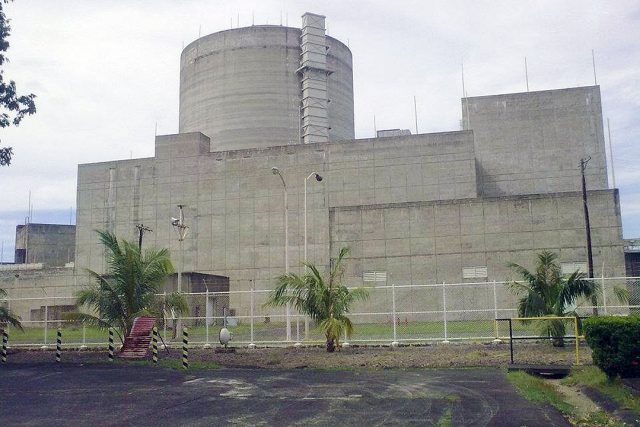
 – Philippine President Rodrigo Duterte has signed an executive order to include nuclear power in the country’s energy mix, as authorities prepare for the phasing out of coal-fired power plants and after earlier efforts failed due to safety concerns.

The order, signed on Feb. 28 and made public on Thursday, could be a major milestone for the country’s energy sector which suffers regular power outages and high prices but will concern opponents of the move.

Signed just three months before Duterte ends his single six-year term, the order also directs an inter-agency panel the president created in 2020 to look into the viability of reopening the mothballed Bataan Nuclear Power Plant (BNPP).

“The national government commits to the introduction of nuclear power energy into the state’s energy mix for power generation,” the order stated.

Despite public concerns over safety, Energy Secretary Alfonso Cusi has passionately advocated for nuclear power, which he said could be the answer to the twin problems of precarious supply and high electricity prices.

Taking into consideration the experience of developed economies, Duterte said nuclear power would be tapped as a viable alternative baseload power source as the Philippines seeks to retire coal plants in line with its commitment to help limit climate change.

Previous attempts to pursue nuclear energy in the Philippines failed due to safety concerns, but central to the new plan is the revival of the BNPP, built during the rule of the dictator Ferdinand Marcos.

Built in 1976 in response to an energy crisis, and completed in 1984, the government mothballed it two years later following Marcos’ ouster and the deadly Chernobyl nuclear disaster.

Since 2009, the BNPP has been opened as a tourist attraction for a fee, helping defray the cost of maintaining it.

The late dictator’s son, Ferdinand Marco Jr, who is currently the front-runner in the May presidential election, has said he plans to “revisit” the BNPP project, local media has reported. – Reuters

ADVERTISEMENT
ADVERTISEMENT