Home Blog Page 6707

US spies see grim outlook with Russia as top foe

REUTERS
U.S. and Russian flags are seen printed on paper in this illustration taken Jan. 27, 2022. — REUTERS

CHINA is developing one of the greatest nuclear weapons forces in history while Russia will exploit every opportunity to undermine the US and its allies, according to the annual threat assessment by the Office of the Director of National Intelligence.

In a stark, declassified 31-page document, the report released late Monday by the House Intelligence Committee says Iran will continue to threaten American interests as it seeks to erode US influence in the Middle East. At the same time, North Korea is committed to expanding its nuclear arsenal and ballistic missile development, according to the assessment.

“In the coming year, the United States and its allies will face an increasingly complex and interconnected global security environment marked by the growing specter of great power competition and conflict, while collective, transnational threats to all nations and actors compete for our attention and finite resources,” according to the document.

The nation’s top intelligence chiefs will present — and expand upon — the assessment when they testify before the House committee on Tuesday. Speakers will include Avril Haines, director of national intelligence; Central Intelligence Agency chief William Burns; General Paul Nakasone, head of the National Security Agency; and Federal Bureau of Investigation Director Christopher Wray.

The annual assessment represents a consensus among the nation’s 17 intelligence agencies of major threats confronting the US, and is used by lawmakers and policy makers as a baseline to make critical decisions, advance legislation and craft budgets.

The assessment is dated, however, as it was written before Russia invaded Ukraine last month and was based on information available as of Jan. 21. Lawmakers are certain to press the intelligence chiefs for the most current assessments and implications of Russia’s invasion during Tuesday’s hearing.

Still, the assessment warns that Russia is determined to “dominate Ukraine and other countries” in the near term, while not wanting a direct conflict with American forces.

“We assess that Moscow will continue to employ an array of tools to advance its own interests or undermine the interests of the United States and its allies,” according to the assessment. “We expect Moscow to insert itself into crises when Russia’s interests are at stake, the anticipated costs of action are low, or it sees an opportunity to capitalize on a power vacuum.”

The intelligence agencies assess that the Wagner Group and other private security companies managed by Russians close to the Kremlin “extend Moscow’s military reach at low cost in areas ranging from Syria to the Central African Republic and Mali, allowing Russia to disavow its involvement and distance itself from battlefield casualties.”

The Chinese Communist Party, on the other hand, “will work to press Taiwan on unification, undercut US influence, drive wedges between Washington and its partners, and foster some norms that favor its authoritarian system,” according to the document.

‘NUCLEAR FORCE EXPANSION’
China “will continue the largest ever nuclear force expansion and arsenal diversification in its history,” as Beijing isn’t “interested in agreements that restrict its plans and will not agree to negotiations that lock in U.S. or Russian advantages,” according to U.S. intelligence.

China’s efforts to control Taiwan — a self-governing island which Beijing claims as its territory — will probably ensure more disruptions to the global supply chains for semiconductor chips.

“China will remain the top threat to US technological competitiveness as Beijing targets key sectors and proprietary commercial and military technology from US and allied companies and institutions,” according to the document. And China “almost certainly is capable of launching cyberattacks that would disrupt critical infrastructure services within the US, including against oil and gas pipelines and rail systems.”

The statement disclosed that when it was launched by China last year, a hypersonic weapon designed to evade US defenses “flew completely around the world and impacted inside China.” The US originally labeled all details of the test highly classified. 

Other issues highlighted in the report include:

While Iran is not currently undertaking key nuclear weapons-development activities that would be necessary to produce a nuclear device, if Tehran doesn’t receive sanctions relief, officials probably will consider further enriching uranium up to 90%. Negotiations to revive a 2015 nuclear accord with Iran are believed to be in their final stages at talks in Vienna.

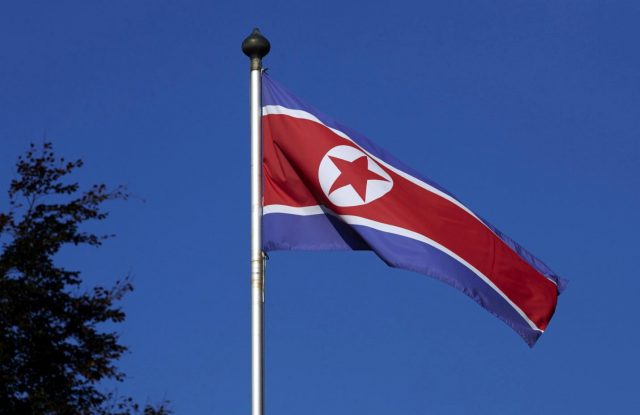
North Korea remains strongly committed to expanding its nuclear weapons arsenal and continuing ballistic missile research and development. “North Korea’s continued development of ICBMs, IRBMs, and SLBMs demonstrates its intention to bolster its nuclear delivery capability,” according to the assessment.

The North Korean regime “is continuing to prioritize efforts to build an increasingly capable missile force designed to evade US and regional missile defenses.”

North Korea’s leader Kim Jong Un “probably will continue to order missile tests,” including of short-range ballistic missiles, cruise missiles, submarine-launched ballistic missiles, and hypersonic glide vehicles “to validate technical objectives, reinforce deterrence, and normalize Pyongyang’s missile testing”

North Korea’s “cyber program poses a sophisticated and agile espionage, cybercrime, and attack threat” and “is well positioned to conduct surprise cyberattacks given its stealth and history of bold action.”

North Korea also “probably possesses the expertise to cause temporary, limited disruptions of some critical infrastructure networks and disrupt business networks in the United States.”

The terrorist groups Islamic State and al-Qaeda “will take advantage of weak governance” in Afghanistan “to continue to plot terrorist attacks against US persons and interests, including to varying degrees in the United States, and exacerbate instability in regions such as Africa and the Middle East” the assessment states. — Bloomberg


Working from home is a breeze — for men

CHARLESDELUVIO-UNSPLASH

IT’S GREAT to be able to work from home, but even better if you’re a man.

That’s according to a New Zealand study, which found that while most people liked working from home during the pandemic, women still did the lion’s share of the housework and childcare.

“Our study makes it clear that although flexible working has many benefits, it also highlights the difference between what men and women are expected to do around the home,” said Vittoria Shortt, chief executive at ASB Bank, which commissioned the survey. “With women still taking on responsibility for the bulk of domestic chores, the risk is that they are being disadvantaged both at work and in the home.”

New Zealand was already adopting more flexible working arrangements before the pandemic, including discussions about shorter working weeks, but the strict nationwide lockdown in 2020 accelerated the trend toward working from home. As the country’s surging Omicron outbreak takes hold, more employers are encouraging staff to stay away from workplaces, while school closures and disruptions require parents to be on hand for their children.

The study, conducted by the New Zealand Institute of Economic Research, shows more than 60% of those surveyed thought working from home was positive. However, when it came to juggling that with household responsibilities, women were significantly more likely to report doing all or most of the housework and childcare.

Only 22% of respondents felt the home-schooling load was shared fairly.

Women were also less likely than men to report having the ideal equipment and space to work from home, ASB said.

The study’s authors encouraged employers to challenge a culture in which workers are always on call and “any hint of meaningful interests outside of work or dedication to family is seen as a lack of commitment.”

This significantly impacts women, who are expected to balance domestic labor on top of paid work, increasing risks of burnout, they said.

The study was released to coincide with International Women’s Day. — Bloomberg

China says Hong Kong’s priority is to cut COVID infections, deaths

REUTERS

HONG KONG — Hong Kong needs to stick to its “dynamic zero” coronavirus strategy, focused on reducing infections, severe illnesses and death, a senior Chinese health official said, as the city braced for details of an expected mass testing plan this month.

Liang Wannian from China’s National Health Commission, who is in Hong Kong to coordinate efforts to battle a growing outbreak, said the mass testing needed to be done at the right time with all details carefully arranged, the official Xinhua news agency said.

“Reducing infection, severe cases and deaths is Hong Kong’s most urgent and top priority at the current stage,” it quoted him as saying. “After we achieve the first target, we will then move on to the second and third goals.”

Dynamic zero does not mean zero infections with coronavirus disease 2019 (COVID-19) transmissions so strong, Mr. Liang said. However, the city should do its best to reduce infections and take measures to cut off further transmissions.

Mr. Liang’s comments come as infections in the Asian financial hub have surged to record highs with a total of around 500,000 cases and more than 2,200 deaths — most of which have been in the past two weeks.

Authorities have given contradictory and confusing messages about a compulsory mass testing scheme and whether it would coincide with a city-wide lockdown.

Food prices in the city have shot up and supermarket shelves have been emptied every day for a week as anxious residents’ stock up, worried about a potential lockdown.

Hong Kong is expected to report tens of thousands of new coronavirus infections on Tuesday after the launch of a self-reporting website on Monday night where people can register if they are infected with the coronavirus.

After registering on the government’s website, authorities will try and admit people to isolation facilities if their homes are too crowded, officials said. — Reuters

Construction spotted at N.Korea nuclear test site for first time since 2018 -report

REUTERS

 – Commercial satellite imagery shows construction at North Korea’s nuclear testing site for the first time since it was closed in 2018, U.S.-based analysts said on Tuesday, amid fears the country could resume testing major weapons.

Images captured by satellite on Friday showed very early signs of activity at the new site, including construction of a new building, repair of another building, and what is possibly some lumber and sawdust, specialists at the California-based James Martin Center for Nonproliferation Studies (CNS) said in a report.

“The construction and repair work indicate that North Korea has made some decision about the status of the test site,” the report said.

Punggye-ri has been shuttered since North Korea declared a self-imposed moratorium on nuclear weapons tests in 2018. Leader Kim Jong Un, however, has said he no longer feels bound by that moratorium as denuclearization talks are stalled.

At the time, North Korea said it was closing the site‘s tunnels with explosions, blocking its entrances, and removing all observation facilities, research buildings and security posts. It invited a handful of foreign media to observe the demolition, but refused to allow international inspectors.

After North Korea’s ninth missile launch of the year on Sunday, South Korea’s National Security Council said it was even more closely monitoring North Korea’s nuclear and missile-related facilities including its main nuclear reactor facility at Yongbyon and the Punggye-ri nuclear weapons test site, without elaborating. Read full story

The CNS analysts said the changes at Punggye-ri occurred only in the past few days, and it is still difficult to conclude what precisely is being built or why.

“One possibility is that North Korea plans to bring the test site back to a state of readiness to resume nuclear explosive testing,” the report said.

The CNS analysts cautioned that the test site is many months, if not years, from being ready for new nuclear explosions.

“How long it would take North Korea to resume explosive testing at the site depends on the extent of the damage to the tunnels themselves, something we do not know with confidence,” they wrote in the report. “It is also possible that North Korea will resume nuclear testing at another location.”

Punggye-ri is North Korea’s only known nuclear test site. It conducted six nuclear weapons tests in tunnels at the site from 2006 to 2017.

Talks aimed at persuading North Korea to surrender its arsenal of nuclear weapons and long-range ballistic missiles have been stalled since 2019. Read full story

The United States says it is open to talks without preconditions, but North Korea says Washington and its allies must first stop their “hostile policies.” – Reuters

EXPLAINER | How sanctions against Russia are battering the global aviation industry

Russia‘s size and close integration into the global aviation industry since the end of the Cold War means sanctions related to its invasion of Ukraine are having outsized consequences relative to earlier freezes on Iran and North Korea.

Manufacturers, lessors, insurers and maintenance providers to Russian carriers like Aeroflot AFLT.MM, S7 Airlines and AirBridgeCargo are among those outside Russia that are hit directly by sanctions.

Foreign airlines, meanwhile, are reeling from higher oil prices and longer routes needed to bypass airspace over Russia that are expected to drive up ticket prices and air freight rates.


AIRCRAFT LEASING, INSURANCE IMPACT

Russian airlines have been highly reliant on the global aircraft leasing industry to modernize their fleets with the latest Airbus AIR.PA and Boeing BA.N planes.

Russian carriers have 980 passenger jets in service, of which 777 are leased, according to analytics firm Cirium.

Of these, 515 jets with an estimated market value of about $10 billion are rented from foreign firms such as AerCap AER.N and Air Lease AL.NRead full story

The European Union has given leasing companies until March 28 to wind up current rental contracts in Russia.

But getting the planes back could be challenging due to airspace bans, potential SWIFT payment transfer issues and industry concerns the Russian government could nationalize the fleet to maintain domestic capacity.

Russia‘s state aviation authority recommended that airlines with foreign-leased planes stop flying them abroad. Read full story

Even if the planes are returned quickly, the huge number needing to be placed elsewhere could depress rental prices globally, analysts say.

Russian airlines have also been cut off from the insurance and reinsurance markets in the European Union and Britain.

An insurance industry source said it was unclear if lessors unable to repossess planes would be covered for losses under their own policies, which typically contain clauses cancelling coverage in the event of sanctions.

Legal action may be needed to settle the issue, said the source, who was not authorized to speak publicly.


SALES, MAINTENANCE, REPAIR AND PARTS BANS

Russian airlines have 62 planes on order with Airbus and Boeing, according to aviation consulting firm IBA, and those deliveries will be barred.

Manufacturers and maintenance firms are also banned from providing parts and services for the existing fleet. Read full story

Germany’s Lufthansa Technik LHAG.DE said it had stopped serving Russian customers, involving hundreds of planes.

Tass news agency reported the Russian transport ministry had drawn up a draft bill to help airlines until September 2022 that would allow maintenance by third-party firms and suspend all inspections of carriers. Read full story

Some aviation executives are concerned that the sanctions prevent planemakers from sharing service bulletins and airworthiness directives that are key for safety.

Viktor Berta, vice president of aviation finance advisory at ACC Aviation, said there was also a high risk that Russian airlines would need to strip parts from their existing fleet once spares run out.


RISING OIL PRICES, LONGER FLIGHT TIMES

Oil prices have surged to the highest level since 2008 as the United States said it was willing to ban Russian oil imports. Read full story

Oil hedging, fuel surcharges and fare increases are among the measures airlines are taking to offset some of the pain at a time when demand remains low due to the pandemic. Read full story

High oil prices are in some cases compounded by circuitous flight paths needed to avoid Russian airspace after reciprocal bans that can add up to 3.5 hours of flying. Read full story

The biggest impact is on flights between Europe and north Asian destinations like Japan, South Korea and China but other affected routes include those between southeast Asia and Europe and the United States and India.

Longer flight times also lead to higher staff costs, less cargo carrying ability and higher maintenance costs on contracts that are charged on a flight hour basis, said Brendan Sobie, an independent aviation analyst based in Singapore.

“Another concern is the impact on international passenger demand in some markets, resulting in a setback in the overall recovery of international air travel,” he added. – Reuters

Asian farmers turn to drones, apps for labor, climate challenges

STOCK PHOTO | Image by DJI-Agras from Pixabay

 – As a child, Manit Boonkhiew watched his grandparents plough their rice farm near Bangkok with water buffaloes, and harvest by hand. His parents switched to tractors and threshers, while he now uses a zippy drone to spray pesticide in his field.

Manit, who grows rice, orchids and fruit trees on about 40 acres (16 hectares) of land in Ban Mai, is part of a community enterprise that recently acquired a drone under a Thai government programme to digitise agriculture.

Drones to plant seeds, and spray pesticide and fertilisers are growing in popularity in the Southeast Asian country as it grapples with a labour shortage that worsened during the coronavirus pandemic, with restrictions on movement of workers.

Labour is the biggest challenge for us – it’s hard to get, and it’s expensive,” said Manit, 56, a leader of the Ban Mai Community Rice Centre farm that comprises 57 members with nearly 400 acres of land.

“With the drone, we not only save money on labour, we can also be more precise. It’s faster and safer, as we are not exposed to the chemicals, and it can help us deal with climate-change impacts such as less rain more easily,” he said.

The Ban Mai community is part of a wider transformation of agriculture in Asia Pacific, where artificial intelligence (AI) and big data are powering smartphones, robots and drones to improve farming techniques, boost crop yields and incomes.

The trend towards data-based precision agriculture and other digital tools is being driven by demographic changes, technological advances and climate change, according to the Food and Agriculture Organization (FAO).

“They help farmers produce more with less water, land, inputs, energy and labour, while protecting biodiversity and reducing carbon emissions,” the FAO said in a report at a regional conference on digitalisation in agriculture this week.

Farmers can optimise yields and obtain major cost savings, enhanced efficiency, and more profitability,” it said.

But agricultural technology – or agri-tech – also poses risks from job losses to social inequities and data governance concerns. The technologies can be costly and hard to adopt, particularly for women and older farmers, experts said.

“In India, there are far more pressing concerns that the government should be paying attention to,” said Nachiket Udupa with the Alliance for Sustainable and Holistic Agriculture.

“We’ve seen massive farmers‘ protests in India on issues like the minimum support price and lack of support from the government. Drones are not the biggest issue for farmers,” he told the Thomson Reuters Foundation.


MORE DEMOCRATIC

Worldwide, the rise of cloud computing and AI technologies have popularised the use of big data in numerous applications in agriculture – from irrigation controllers to services that capture and analyse data on the soil, weather and crop yields.

Asia Pacific is one of the fastest growing markets for digital farming information and marketplaces, fintech solutions, and blockchain technologies for food traceability.

But smallholders in Asia largely use only low-cost tools such as digital soil-testing kits and app-based or text-based services for weather forecasting because of cost barriers, skills gaps and regulatory bottlenecks, the FAO said.

Women too, face more constraints in accessing technologies.

In India, the average size of a land holding is less than 2 hectares, which does not lend itself to much mechanisation or digitisation – which are also expensive for most farmers, said Udupa.

There are about 20 million farmers in India who use some technology, a fraction of the nearly 500 million farmers in the country, said M. Haridas, co-founder of DataVal Analytics, that has an AI-based mobile app to provide real-time crop analysis.

“Data makes farming more democratic – even smallholders can access AI and machine learning to improve yields and returns,” he said.

“The biggest challenges are the lack of devices, lack of internet connectivity and lack of training,” he added.

To improve rural internet connectivity, the FAO’s “digital villages” initiative has teamed up with tech firms such as Microsoft and IBM in 1,000 sites worldwide, including in Nepal, Bangladesh, Fiji, Indonesia, Papua New Guinea and Vietnam.

“The aim is to use technology to advance and improve agriculture, nutrition, health and well-being of citizens, especially rural populations,” said Sridhar Dharmapuri, a senior food safety and nutrition officer at FAO, noting that this is particularly crucial after disruptions from COVID-19.

“As 4G services expand and 5G services are rolled out, the decreasing costs of smartphones and data are accelerating the adoption of digital tools, including among small holders and family farmers, therefore powering further inclusion” he added.


LURE YOUNGSTERS

Despite regulatory hurdles and land fragmentation, the Asia-Pacific region is the fastest growing market for agricultural drones, according to the FAO, driven by local providers, falling prices, and rising labour costs.

Governments in the region are using drones, with satellite imagery, for weather forecasts, disaster management and crop insurance, as well as for monitoring and mapping crops strategic for food security, mostly rice.

In India, so-called kisan drones, or farmer drones, are to be used for crop damage assessment and digitisation of land records, which risks excluding women and tillers who are typically not named in land records, said Udupa.

“Land records are a mess in India – so using drones won’t solve the issue,” he said.

Drones are largely being pushed as a means of greater mechanisation because there is a perception that farm labour is getting relatively expensive. But for the average small or marginal farmers, these technologies are simply unaffordable.”

In Thailand, the state digital economy promotion agency has, since 2020, given individual farmers a 10,000-baht ($306) grant for agri-tech, while community enterprises get a 300,000-baht grant.

In Ban Mai, a bright orange 10-litre agriculture drone from the agency sits in a black carton, waiting to be used as soon as some farmers get a licence to operate it.

In the meantime, the community has been hiring a drone from one of its members, who bought a 30-litre drone with his savings after battling constant labour shortages on his rice farm.

“A lot of people hire me to spray their farms, because they see how efficient and cost-effective it is,” said Sayan Thongthep, 52.

“I’m going to train my daughter also to operate the drone – it’s a good way to get youngsters interested in farming.” – Reuters

Russia warns on oil import ban as little progress is made at Ukraine talks

Army soldier figurines are displayed in front of the Ukrainian and Russian flag colors background in this illustration taken, Feb. 13, 2022. — REUTERS/DADO RUVIC/ILLUSTRATION

 – Fears of an energy war between Russia and the West grew on Tuesday after the United States pushed its allies to ban Russian oil imports as punishment for Moscow’s invasion of Ukraine, where talks on humanitarian corridors made little progress.

Russia warned it could stop the flow of gas through pipelines from Russia to Germany in response to Berlin’s decision last month to halt the opening of the controversial new Nord Stream 2 pipeline. Russia supplies 40% of Europe’s gas.

“We have every right to take a matching decision and impose an embargo on gas pumping through the Nord Stream 1 gas pipeline,” Russian Deputy Prime Minister Alexander Novak said on Monday.

Novak also warned that oil prices could more than double to $300 a barrel if the United States and its allies banned imports of Russian oil, a crucial source of revenue after the country was effectively frozen out of Western financial markets.

Analysts at Bank of America however said that if most of Russia‘s oil exports were cut off there could be a shortfall of 5 million barrels per day (bpd) or more, pushing prices as high as $200. Read full story

Oil prices see-sawed near 14-year highs on Tuesday, with Brent crude LCOc1 futures up $1.06, or 0.9%, at $124.27 a barrel at 0223 GMT, after trading as high as $125.19. Read full story

U.S. President Joe Biden held a video conference call with the leaders of France, Germany and Britain on Monday as he pushed for their support to ban Russian oil imports.

But if need be the United States was willing to move ahead without allies in Europe, two people familiar with the matter told Reuters. Many countries on the continent are heavily reliant on Russian energy. Read full story

Russia‘s invasion, the biggest attack on a European state since World War Two, has created 1.7 million refugees, a raft of sanctions on Moscow, and fears of wider conflict as the West pours military aid into Ukraine.

Japan tightened its sanctions on Tuesday, freezing the assets of an additional 32 Russian and Belarusian officials and executives of companies with close ties to the government. Read full story

Russia calls its actions in Ukraine a “special operation” that it says is not designed to occupy territory but to destroy its southern neighbour’s military capabilities and capture what it regards as dangerous nationalists.


HUMANITARIAN CORRIDORS

Sieges and the bombing continued as Kyiv rejected possible humanitarian corridors to Russia and Belarus, but said some limited progress had been made on agreeing logistics for the evacuation of civilians.

Moscow would give the residents of the Ukrainian cities of Sumy and Mariupol the choice of moving elsewhere in Ukraine on Tuesday, setting a deadline in the early hours for Kyiv to agree, Russian news agencies reported. Read full story

More than 1.7 million Ukrainians have fled to Central Europe since the conflict began on Feb. 24, the United Nations refugee agency said on Monday. Read full story

After the third attempt to ease the bloodshed at talks in Belarus, a Ukrainian negotiator said that although small progress on agreeing logistics for the evacuation of civilians had been made, things remained largely unchanged.

Russia has proposed two corridors inside of Ukraine, according to Interfax. Escape routes to Russia and Belarus, its close ally, were earlier called “completely immoral” by a spokesperson for Ukrainian President Volodymyr Zelenskiy.

Kremlin spokesman Dmitry Peskov told Reuters Moscow would halt operations if Ukraine ceased fighting, amended its constitution to declare neutrality, and recognised Russia‘s annexation of Crimea and the independence of regions held by Russian-backed separatists.

A Russian strike on a bread factory killed 13 in the town of Makariv in the Kyiv region, Ukrainian officials said. Reuters could not verify the details. Russia denies targeting civilians.

In the encircled southern port city of Mariupol, hundreds of thousands of people remained trapped without food and water under regular bombardments.

In the eastern city of Kharkiv, police said the death toll from the Russian bombardment was 143 since the start of the invasion. It was not possible to verify the toll.

Ukraine said on Monday its forces had retaken control of the town of Chuhuiv in the northeast after heavy fighting and of the strategic Mykolayiv airport in the south. Neither could immediately be verified.

A senior U.S. defence official said Putin had now deployed into Ukraine nearly 100% of the more than 150,000 forces that he had pre-staged outside the country before the invasion. – Reuters

Biden to order studies on regulating, issuing cryptocurrency -source

REUTERS

 – U.S. President Joe Biden is expected to sign a long-awaited executive order this week directing the Justice Department, Treasury and other agencies to study the legal and economic ramifications of creating a U.S. central bank digital currency, a source familiar with the matter said on Monday.

The White House last year said it was considering a wide-ranging oversight of the cryptocurrency market – including an executive order – to deal with growing threat of ransomware and other cyber crime.

Biden‘s order sets an 180-day deadline for a series of reports on “the future of money” and the role that cryptocurrencies will play in the evolving landscape.

“We could see a significant shift in policy in 180 days. This is a likely step toward creation of a central bank digital currency,” the source said, citing significant momentum behind such a move within the Biden administration.

However the reports being ordered could still raise concerns about such a move, or conclude that it would require congressional approval, the source cautioned.

The Biden order, likely to come on Wednesday, comes amid heightened concern about the use of cryptocurrencies by Russian elites to circumvent Western sanctions that have cut Russia off from large portions of the global economy, and moves by China and other economies to create their own cryptocurrencies.

The timing of the order was first reported by Bloomberg.

The Financial Crimes Enforcement Network (FinCEN) on Monday warned financial institutions to watch out for potential attempts by Russian entities to evade sanctions imposed by Washington over Moscow’s invasion of Ukraine. Read full story

Biden‘s order will ask the Justice Department to look at whether a new law is needed to create a new currency, with the the Federal Trade Commission, the Consumer Financial Protection Commission and other agencies to study the impact on consumers.

Other studies will be ordered on the impact of a cryptocurrency on competitiveness, the market and technical infrastructure needed, and the environmental impact of bitcoin mining, the source said.

U.S. Treasury Secretary Janet Yellen last year warned about an “explosion of risk” from digital markets, including the misuse of cryptocurrencies, but said new financial technologies could also help fight crime and reduce inequality. – Reuters

International Women’s Month: Globe fetes women leaders, employees as pillars of strength

Globe celebrates women leaders and employees this International Women’s Month. (First row, L-R) Rizza Maniego-Eala, Chief Finance Officer and Chief Risk Officer; Issa Guevarra-Cabreira, Chief Commercial Officer; Rebecca Eclipse, Chief Transformation & Operations Officer and Chief Customer Experience Officer; Yoly Crisanto, Chief Sustainability Officer and SVP for Corporate Communications; Atty. Irish Salandanan-Almeida, Chief Privacy Officer (Second row, L-R) Atty. Marisalve Ciocson-Co, Chief Compliance Officer; Rosalin Palacol, Chief Audit Executive; Saw Phaik Hwa, Independent Director and Chair of Board Risk Oversight Committee; Martha Sazon, President and Chief Executive Officer of GCash; Minette Navarrete, Vice-Chairman and President of Kickstart Ventures, Inc. (Third row, L-R) Mharicar Castillo-Reyes, President and CEO of Asticom; Cindy Toh, Chief Executive Officer of Purego; Gretchen Largoza, Chief Executive Officer of AdSpark; Denise Seva, Director of Events and Production, LIVE MNL; Joan Penaflorida, President of Yondu, Inc.; and Jasmin Montelibano, Chief Executive Officer of ECPay.

The world may have come a long way in gender equality, yet women’s dominance in top business leadership is still rare. But in Globe, the Philippines’ leading digital solutions group, this is precisely the case.

As the world celebrates International Women’s Day on March 8, Globe acknowledges the undeniable impact its female leaders have had on the business and the lives of its customers.

“At Globe, we value talent because we believe it is our people that will keep our Circle of Happiness going. We are fortunate to have many female leaders and employees who possess the qualities necessary to carry out Globe’s mission and vision to keep us moving forward,” said Globe President and CEO Ernest Cu.

Globe currently has seven top women leaders taking on crucial roles, serving as strong and sturdy pillars of the organization.

They are Rizza Maniego-Eala, Chief Finance Officer and Chief Risk Officer; Issa Guevarra-Cabreira, Chief Commercial Officer; Rebecca Eclipse, Chief Transformation & Operations Officer and Chief Customer Experience Officer; Yoly Crisanto, Chief Sustainability Officer and Corporate Communications SVP; Atty. Irish Salandanan-Almeida, Chief Privacy Officer; Atty. Marisalve Ciocson-Co, Chief Compliance Officer; and Rosalin Palacol, Chief Audit Executive.

Since 2017, Globe has also implemented a Board Diversity Policy, which promotes and observes diverse membership among its directors. In 2021, Saw Phaik Hwa held the role of Independent Director and chair of the Board Risk Oversight Committee in Globe.

Eight of the Globe Group Leaders are also women, all of whom have contributed significantly to Globe’s business beyond telco and the company’s pivot into a digital solutions platform.

First on the list is Martha Sazon, who was instrumental in making GCash the country’s leading e-wallet platform, with 55 million registered users. Mynt, the financial technology firm behind GCash, is the only double unicorn in the Philippines.

Kickstart Ventures’ Minette Navarrete is a well-respected figure in the startup scene. Through her strong leadership, Kickstart is now the largest venture capital asset management company in the Philippines, managing $255M in assets, and funding 55 investments across 7 countries, with two unicorns in its portfolio.

Mharicar Castillo-Reyes, on the other hand, has led shared services company Asticom to a significant revenue growth at a CAGR of 33% since 2015. Asticom launched four subsidiaries last year alone. Cindy Toh, who leads e-commerce platform PureGo, also steered the company’s growth in the retail services industry with its convenient e-grocery services, with over 75% growth in sales since January 2021.

Similarly, digital and mobile marketing solutions provider AdSpark continued its success by hitting the P1.2-billion in revenues under the leadership of Gretchen Largoza. At the same time, Denise Seva led LIVE MNL, previously Globe’s production and events management arm Globe Live, to become the partner of choice for on-ground and digital events, especially during the pandemic shift.

Meanwhile, Joan Penaflorida led Yondu’s growth into one of the country’s top IT Managed Services providers. Jasmin Montelibano did the same to ECPay, now directly managing over 89,000 general trade retail base as of end-2021.

Globe’s dedication to diversity and gender equality extends to the rest of its employees. Forty-six percent of its over 8,000-strong workforce are women.

As a signatory to the United Nations Global Compact (UNGC), the company ensures that no employee is discriminated against, based on age, gender, marital status, personal beliefs, religion and spiritual practices, political affiliation, and sexual orientation.

Globe is committed to 10 of the 17 United Nations Sustainable Development Goals, supporting UN SDG No. 5, giving equal opportunities to women for leadership.

To learn more about Globe, visit www.globe.com.ph.


Spotlight is BusinessWorld’s sponsored section that allows advertisers to amplify their brand and connect with BusinessWorld’s audience by enabling them to publish their stories directly on the BusinessWorld Web site. For more information, send an email to online@bworldonline.com.

Join us on Viber to get more updates from BusinessWorld: https://bit.ly/3hv6bLA.

Surging oil a key risk to PHL — Diokno

PHILIPPINE STAR/ MICHAEL VARCAS

By Luz Wendy T. Noble, Reporter

RUSSIA’S INVASION of Ukraine may continue to drive oil prices even higher, which could push inflation beyond the target range for a second straight year, Bangko Sentral ng Pilipinas Governor Benjamin E. Diokno said.

“The main channel through which the Russia-Ukraine war could affect the Philippines is higher oil prices,” Mr. Diokno said in a Viber message to reporters late Sunday evening.

“Based on the BSP’s oil price simulation, inflation could settle above the target range of 2% to 4%, only if crude oil prices average higher than $95.00 per barrel in 2022 and 2023,” he added.

Last month, the central bank said the assumed average Dubai crude oil price for 2022 is now at $83 per barrel, higher by $10 than the previous assumption in December. Mr. Diokno noted that Dubai crude reached a record high of $141.33 per barrel in July 2008.

“Should the worst-case scenario of oil prices reaching $120-140 per barrel occur this year, inflation would be 0.7-1 percentage point above baseline in 2022. In brief, inflation would average between 4.4% and 4.7% under the worst-case scenario,” the BSP chief said.

In 2021, inflation reached 4.5% which exceeded the 2-4% target range. The BSP attributed this to the low supply of meat and high oil prices which caused faster price increases.

The BSP raised its inflation forecast for the year to 3.7% from 3.4% previously as it cited the impact of higher global oil and nonoil prices. The forecast priced in a threshold of $95 per barrel for Dubai crude, with the governor stressing only a sustained increase of beyond $95 a barrel will warrant an adjustment to their forecast.

“Below $95 per barrel, inflation would settle within the target range. But the oil price scenarios considered only the direct effects and do not incorporate any potential second-round effects on transport fares, food prices, and wages among others,” Mr. Diokno said.

Inflation was steady at 3% for the second straight month in February as food prices eased. However, headline inflation could surpass the BSP’s target by April or May given the continued fuel price hikes and rising consumption demand, Security Bank Corp. Chief Economist Robert Dan J. Roces said.

“Significant upside risks [to inflation] are to be expected in the next couple of months with oil assumed to remain at the $110-12 per barrel level given the current situation. Demand-driven inflation is also materializing with looser curbs nationwide which will also cause upward movements in core inflation as well,” Mr. Roces said in a Viber message.

Bank of the Philippine Islands Lead Economist Emilio S. Neri, Jr. also believes global oil prices will continue to edge higher as the conflict between Ukraine and Russia remains far from resolved. Higher fuel prices could hit the local transport sector, he said.

“With mobility at pre-pandemic level, transportation groups have more bargaining power to request for fare adjustments,” Mr. Neri said in a note on Friday.

By the end of 2022, Mr. Neri expects the BSP will already have raised the key policy rate by 75 basis points to 2.75%, with factors like inflation risks and the Federal Reserve’s monetary policy tightening taken into consideration.

The BSP in February kept rates steady as it continued to focus on supporting growth, but officials said they will be ready in case there is need to respond to second-round effects of inflation.

Mr. Diokno has previously said they would rather wait for four to six quarters of consecutive economic expansion to ensure the recovery has become sustainable.

The gross domestic product (GDP) rose by 7.7% year on year in the three months to December, the third straight quarter of growth. It brought full-year GDP expansion to 5.6%, a turnaround from the record 9.6% slump in 2020.

The continued increase in oil prices is making the situation “somewhat difficult” for the accommodative policy settings of the central bank, Security Bank’s Mr. Roces said. He expects the first policy rate hike to take place either towards the end of the second quarter or early part of the second half of 2022.

“[The] current situation and projections make it somewhat difficult for the BSP to maintain a ‘no hike’ scenario in the first half of 2022. [The situation] could force its hand if oil prices lead to untenable inflation expectations,” Mr. Roces said.

“It will be very important to get solid forward guidance from the monetary authorities starting in the next Monetary Board meeting,” he added.

The central bank has two more remaining policy reviews within the first half of 2022 — on March 24 and May 19. Meanwhile, the first meeting for the second semester is on June 16.

Mr. Diokno also said the Russia-Ukraine war has also caused a “slight depreciation” in the peso.

The peso’s close of P52.18 on Monday is its weakest finish in more than two years or since its P52.211 finish on Sept. 25, 2019.

“The BSP views such development as a result of the impact of the geopolitical tensions on oil prices, which likewise affected the peso. But this is in line with the behavior of other currencies in the region which also depreciated against the dollar,” he said.

Despite such an impact, Mr. Diokno said the country’s ample dollar reserves and inflows from remittances, business process outsourcing receipts, as well as foreign direct investments will temper volatility and the foreign exchange market.

“In addition, the BSP has various liquidity-enhancing tools that can be deployed in case the domestic liquidity situation becomes unexpectedly tight or disorderly including actions adopted during previous crises episodes,” he added.

NEDA weighs impact of fare hike on inflation

PHILIPPINE STAR/ MICHAEL VARCAS

A PESO increase in transport fares could add 0.3 percentage point (ppt) to inflation, National Economic and Development Authority (NEDA) Undersecretary Rosemarie G. Edillon told the hearing.

“For sure there will be an impact on inflation,” she said in mixed English and Filipino, adding that economic managers are studying other potential inflation triggers.

“We are looking at other triggers on inflation coming from — God forbid — interest rate hike, that sort of thing,” Ms. Edillon said.

Party-list Rep. Sharon S. Garin was asking her how big an impact the 0.3-ppt increase in inflation would have on the Philippine economy.

“What are the risks of all these prices going up — pork and other basic needs — will those highly impact our economy, if we increase it by P1?” she asked, referring to transport fares.

She also asked the NEDA official why the government did not seem willing to grant the petition for a fare increase.

“What is the effect of the fare hike on our economy?” Ms. Garin, who heads the Committee on Economic Affairs, asked. “We won’t push it if that would lead to an economic crash.”

“If the fare increase snowballs into wage hikes, that will have a huge impact,” Ms. Edillon said. “We are also looking how big its impact is for the rest of the economy.”

She added that ideally, the government could grant a “reasonable fare increase” as long as it is accompanied by state subsidies.

The central bank last month raised its inflation forecast for the year to 3.7% from 3.4% previously as it cited the impact of higher global oil and nonoil prices.

Spiraling global oil prices could slash Philippine economic growth by as much as 0.9 ppt or about P300 billion, according to estimates by the NEDA.

“The initial estimate is somewhere between 0.3 and 0.9 (percentage point) from various (sectors). But these are initial estimates because these are subject to discussions later,” NEDA Director Reynaldo R. Cancho said during the same hearing.

Economic managers set a 7-9% growth target for this year. The Philippine economy grew by 5.6% in 2021.

Meanwhile, lawmakers discussed various policy options to ease the burden of soaring oil prices on businesses and consumers.

The Department of Energy (DoE) renewed its call for amendments to the oil deregulation law that will give the government the power to intervene and act in times of sustained oil increase.

The DoE wants the measure to include an automatic suspension of excise tax on fuel if the crude oil hits $80 per barrel for three consecutive months, as well as the unbundling of cost of retail petroleum products.

Committee on Ways and Means Chairperson and Albay Rep. Jose Maria Clemente S. Salceda said in his presentation that a six-month suspension of the excise tax on oil would lead to a P55.04 billion loss in government revenue.

He noted that the estimated revenue from the oil excise tax worth P75.2 billion can be used for fuel subsidies instead.

Meanwhile, economists urged the government to carefully consider proposed suspension of excise tax on oil, especially its impact on revenue collection.

UnionBank of the Philippines, Inc. Chief Economist Ruben Carlo O. Asuncion said the move may ease pump prices and help the public transport sector but there are some trade-offs that have to be considered.

“This has direct impact on revenue collections of the government, and this may mean an eventual bigger budget deficit that would require more deficit financing in medium term. Furthermore, it may add to debt pressures that we have already been dealing with due to the COVID pandemic,” he said in a Viber message.

The budget deficit reached P1.7 trillion as of end-2021, up by 21.87% from the previous year, driven by better-than-expected revenues. Tax collections jumped by 9.4% to P2.74 trillion in 2021.

University of Asia and the Pacific Senior Economist Cid L. Terosa expressed support for the DoE’s proposal to automatically suspend excise tax if crude oil reaches $80 per barrel for three consecutive months.

“It will lay the foundation for a more equitable approach to the imposition of the excise tax on gasoline and petroleum products,” Mr. Terosa said in an e-mail response.

“At present, it would appear that the risks will outweigh the benefits since the government cannot sacrifice a reliable source of revenues,” he said.

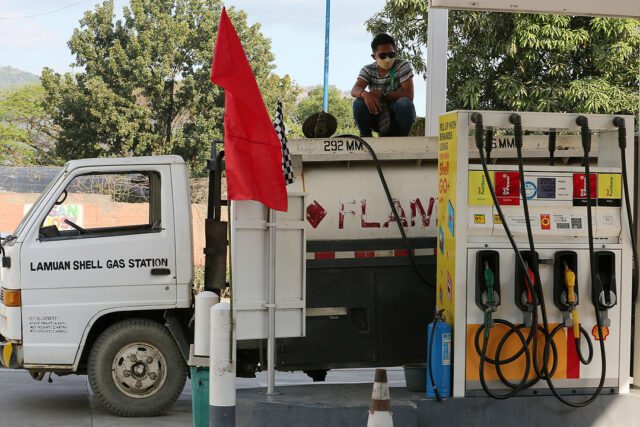
The conflict between Russia and Ukraine continues to push fuel prices upwards. Fuel prices will increase for the 10th consecutive week on Tuesday: P3.60 per liter for gasoline, P5.85 for diesel, and P4.10 for kerosene.

Since the start of the year gasoline, diesel, and kerosene prices per liter have risen by P13.25, P17.50, and P14.40, respectively.

If excise taxes on oil are suspended, pump prices will be reduced by P6 per liter for diesel, P10 per liter for gasoline, and P4 per liter for kerosene.

The Department of Budget and Management has yet to release the P500-million budget for the fuel discount of farmers and fishermen, as well as the P2.5-billion subsidy for public utility vehicles under the Pantawid Pasada program. — Marielle C. Lucenio with JEGT

Shipping costs may rise by as much as 25%, industry group warns

TAWATCHAI07-FREEPIK

By Arjay L. Balinbin, Senior Reporter

SHIPPING COSTS may rise as much as 25% as global oil prices continue to skyrocket amid the Ukraine-Russia conflict, according to an industry group.

Philippine Liner Shipping Association (PLSA) President Mark Matthew F. Parco said that fuel is usually 40% to 50% of vessel cost.

With Brent crude now at $130 per barrel, up from $80 per barrel at the start of the year, the PLSA expects that other operating expenses, aside from the vessel cost, will also be affected. 

“Higher energy prices will affect other costs such as drydocking, spare parts, trucking, etc.,” Mr. Parco said during a House committee hearing on the fuel crisis on Monday.

“We expect approximately 15%-25% increase in shipping cost,” he added.

The industry is seeking fuel subsidies, the removal of excise tax on oil, and reduction in charges imposed by regulating agencies to soften the impact of the rising fuel prices on shipping costs.

“We join the other transport sectors for a fuel subsidy, probably, or the suspension of the excise tax,” Philippine Interisland Shipping Association Executive Director Pedro G. Aguilar said during the same House committee hearing on fuel crisis on Monday.

Mr. Aguilar said that removing the excise tax on fuel will be a relief for the industry. “The impact of the excise tax on cargo ships is an increase of P400 to P500 per 20-foot container depending on the fuel consumption of the vessel and the port of destination of the cargo,” he said.

“For passenger ships, while we don’t have data right now, I’m pretty sure ship owners and operators of RORO (roll-on, roll-off vessels) have made their own increase just to recover the cost of the excise tax,” he added.

As relief for the shipping industry suffering from high fuel prices, Mr. Aguilar said they are seeking a “substantial” reduction in the fees and charges imposed by the regulatory agencies such as the Philippine Ports Authority (PPA).

“We have been subjected to so many increases in port charges by the PPA,” he added.

Sought for comment, Chelsea Logistics and Infrastructure Holdings Corp. President and Chief Executive Officer Chryss Alfonsus V. Damuy said that “increasing prices will also mean increase in costs to operate ships and even on our logistics business.”

“The industry intends to pass these costs to shippers as these are too huge to absorb. The passing (of costs) to shippers may not be outright as it entails notices and effectivity, a certain period, ship operators absorb the costs for a certain period of time,” he said via WhatsApp messenger.

PPA General Manager Jay Daniel R. Santiago has yet to respond to a request for comment as of press time.

At the same time, Chelsea Logistics’ Mr. Damuy said there are concerns over the stability of oil supply considering the recent developments in the Ukraine-Russia war.

“It is very tough that it will not be passed on as the industry is yet to recover from the pandemic. To soften the impact, I am not sure if a subsidy to shipping is feasible being one of the prime movers of the economy considering the Philippines being an archipelago,” Mr. Damuy added.

In a phone interview, Philippine Exporters Confederation, Inc. President Sergio R. Ortiz-Luis, Jr. said the possible increase in shipping cost will negatively affect exporters’ competitiveness.

“There are already so many charges. There are also so many problems, including the shortage of vessels and all the charges that may increase, so they are already beginning to feel that they are losing their competitiveness,” he noted. 

“You can pass it on to consumers, but there is a certain point where you cannot pass it on because our consumers have various options where they can buy goods.”

ADVERTISEMENT
ADVERTISEMENT