Home Blog Page 6705

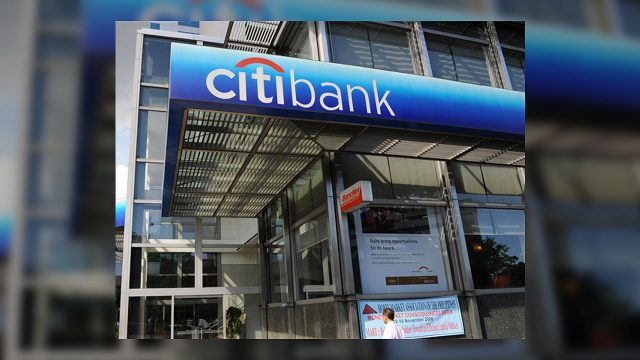
UnionBank to buy Citi’s retail unit

BW FILE PHOTO

UNIONBANK of the Philippines, Inc. will buy the local consumer unit of Citigroup, Inc. for P55 billion, in a deal that could boost the local lender’s retail banking segment.

The transaction would include Citi’s credit card, personal loans, wealth management and retail deposit businesses in the country, UnionBank said in a statement to the Philippine Stock exchange on Thursday.

The acquisition also includes Citi’s real estate interests in relation to Citibank Square in Eastwood, three full-service bank branches, five wealth centers and two bank branch lites.

“This acquisition further cements our position as a leading bank in the Philippines, as well as fast-tracks our growth aspirations in the retail banking segment,” UnionBank Chairman Erramon Isidro M. Aboitiz said in the statement.

The transaction is part of Citi’s global plan to shed consumer franchises in 13 overseas markets, 10 of them in the Asia-Pacific region. It will continue to offer consumer banking in Hong Kong, Singapore, London and the United Arab Emirates, the bank’s four wealth hubs.

About 1,750 Citi employees including senior management are expected to join UnionBank, Mr. Aboitiz said. “With the strong cultural similarities between the organizations, we believe Citi’s employees will feel at home at UnionBank.”

The transaction will be effected through an asset and liability transfer of the consumer banking activities of Citibank, N.A., Philippines Branch, the sale of the shares in Citicorp Financial Services and Insurance Brokerage Philippines, Inc. and the sale of Citibank Square building, the local lender said.

UnionBank will pay for the net assets of Citi Philippines’ consumer business in cash, plus a premium of P45.3 billion. Based on the anticipated increase in risk-weighted assets, the required equity is about P9.7 billion as of June 30.

UnionBank will finance the acquisition through a combination of internal resources and a stock rights offering. The bank’s key shareholders — Aboitiz Equity Ventures, Insular Life Assurance and Social Security System — are fully committed to the stock sale, it said.

The Aboitiz-led lender said the transaction is expected to be finalized by the second half of next year. The deal is subject to regulatory approvals including by the Monetary Board of the Bangko Sentral ng Pilipinas, Philippine Competition Commission, Philippine Deposit Insurance Corp., Securities and Exchange Commission, and Insurance Commission.

“We look forward to this game-changing opportunity to leapfrog our credit card business and significantly expand our banking business in the higher end segment of the consumer market,” UnionBank President and Chief Executive Officer Edwin R. Bautista said in the statement.

He noted that City has the third-largest credit card franchise and is a pre-eminent wealth management provider in the Philippines.

To fund the acquisition, the board approved a plan to raise additional capital of as much as P40 billion through the sale of additional shares from the bank’s unissued authorized capital stock via a stock rights offering to all existing shareholders, UnionBank said in a separate statement.

Citi said there would be no change in the service provided to its consumer banking and wealth customers during the transition to the closing of the deal.

“We are delivering on our renewed strategy, focusing resources in areas where our global network positions us to deliver optimal growth and returns,” Citi Asia Pacific Chief Executive Officer Peter Babej said in a separate statement.

“We are very pleased with today’s announcement, and we will use the capital generated to invest in our strategic priorities,” he added.

Citi’s consumer banking operations, including call centers, online and mobile banking services, will continue to serve their clients.

“Customers will be contacted in the coming months with more details,” UnionBank said. “Citi will continue to operate its institutional business in the Philippines.”

Asian Institute of Management Economist John Paolo R. Rivera expects more merger and acquisition deals in the local banking industry.

“Mergers and acquisitions would persist given the uncertainties in financial markets and the changing preferences of clients that other banks can address,” he said in a Viber message. 

UnionBank shares closed P8.60 lower at P101.20 apiece on Thursday after the local bourse approved a one-hour voluntary trading halt in the morning. — Luz Wendy T. Noble

Gov’t to borrow P200 billion from domestic market

THE GOVERNMENT plans to borrow P200 billion from the domestic market in January, according to the Treasury bureau, after raising less than half of its planned local borrowing this month amid increasing rates.

In an advisory posted on its website on Thursday, the bureau said it would borrow P60 billion in Treasury bills (T-bills) and P140 billion in Treasury bonds (T-bonds) next month.

The January borrowing plan is higher than the P70 billion planned for December. The Treasury last borrowed P200 billion in November.

It will auction off P15-billion each in T-bills on Jan. 3, 10, 17, and 24. It plans to offer P5 billion each in 91-day, 182-day and 364-day debt at each auction.

For the longer-term T-bonds, the government will sell P35 billion each in seven-year debt on Jan. 4 and Jan. 25. It also plans to offer P35 billion in four-year securities on Jan. 11 and another P35 billion in 10-year debt on Jan. 18.

The January borrowing program was expected to return to the November volume so the Treasury could resume normal borrowing levels, a bond trader said in a Viber message. It was too early to comment on demand expectations, the trader added.

“Initially, we think this will put pressure on the seven- to 10-year space, which will cause a steepening of the yield curve.”

Another bond trader said the return to the regular borrowing plan was expected after the reduced volume in December.

“With no auction awards for fixed-rate Treasury notes this month, investors who are still awash with liquidity welcome the government’s borrowing plan to start the year.”

National Treasurer Rosalia V. de Leon did not immediate reply to a Viber message seeking comment.

She said this month that the government would borrow less from the domestic market next year to make way for private sector lending.

The Treasury raised P30 billion out of the P70 billion planned in December. It sold P30 billion in T-bills as planned, but rejected all bids for P40 billion in T-bonds.

Ms. De Leon had said the government rejected all bids for the reissued bonds on Dec. 14 because there was room for rates to decline, with inflation easing and with the central bank vowing to keep borrowing costs steady to support economic recovery.

The government borrows from foreign and local sources to plug its budget deficit that is expected to hit 8.2% of economic output this year.

DISASTER LOAN
Meanwhile, the Department of Finance (DoF) will draw $80 million (P4 billion) from a World Bank loan to support the government’s rehabilitation efforts in regions devastated by Typhoon Rai, locally named Odette.

In a statement, Finance Secretary Carlos G. Dominguez III said the government would draw from the $500-million World Bank credit line for disaster recovery.

“This week, the DoF will draw $80 million from the World Bank disaster financing loan to fund the amount with cover in the 2021 budget,” he said.

The World Bank in November approved the $500-million fund for a contingent line of credit the Philippines can use to manage the financial impacts of disasters and diseases.

The loan can be drawn as soon as the president declares a state of calamity or public health emergency.

President Rodrigo R. Duterte on Tuesday declared a state of calamity in six regions affected by the typhoon to speed up aid deliveries and relief efforts.

Western, Central and Eastern Visayas, Mimaropa (consisting of the provinces of Mindoro, Marinduque, Romblon, and Palawan), Northern Mindanao and the Caraga Administrative Region have been placed under a state of calamity.

Mr. Dominguez said the government would draw another $120 million from the same loan program in the first week of January, when the loan cover will become available in the 2022 national budget.

The agency said the loan program would help support the country’s ability to manage climate risks and disease outbreaks.

Meanwhile, Mr. Dominguez said that the Budget department would release P1 billion to local government units affected by the typhoon from the president’s contingent fund.

The money would be released on Friday, he told reporters in a Viber group message, citing Budget Officer-in-Charge Tina Rose Marie L. Canda.

Mr. Duterte on Tuesday said he would spend P10 billion for typhoon recovery efforts.

While P2 billion is available under the national disaster risk management fund, another P2 billion will come from the president’s contingency or special purpose fund, Ms. Canda told a news briefing on Wednesday.

The remaining P6 billion is expected to come from the 2022 national budget. — Jenina P. Ibañez

State projects boost infra expenditures

PHILIPPINE STAR/ MICHAEL VARCAS

By Jenina P. Ibañez, Senior Reporter

GOVERNMENT TRANSPORT and flood control projects boosted state infrastructure spending in October, according to data from the Budget department, in a potential boost to the Philippine economy.

Spending on infrastructure and other capital outlays rose by 6.7% to P60.9 billion, though this was lower than P71.2 billion a month earlier, when expenditures surged by 25% year on year.

“The increase is accounted by the implementation of various infrastructure projects of the Department of Public Works and Highways (DPWH),” the Budget department said in a report on Thursday.

The government is under pressure to revive an economy that  shrank by 9.6% last year — one of the worst in Asia and the Philippines’ deepest recession since World War II — after enforcing one of the strictest and longest coronavirus lockdowns in the world.

Economic managers last week said infrastructure spending this year could hit P1.095 trillion, higher than the P1.019 trillion it had programmed and accounting for 5.6% of economic output.

DPWH projects in October included construction, maintenance and repair work on roads, bridges, flood control and drainage systems, along with the construction of multi-purpose buildings, the Budget department said.

The direct payments made by development partners for the various foreign-assisted road network and flood control projects of the DPWH and the foreign-assisted rail transport sector projects of the Department of Transportation also contributed to the said increase,” it added.

The slower year-on-year growth was likely due to the higher base in 2020, when the economy started to reopen in the second half after lockdowns were enforced to contain the pandemic, said Michael L. Ricafort, chief economist at Rizal Commercial Banking Corp.

“Wider budget deficits that resulted in more borrowings and overall debt after the lockdowns earlier this year could have also slowed down the growth in infrastructure spending,” he said in a Viber message.

“Nevertheless, the year-on-year growth in infrastructure spending remains decent and similar to the latest gross domestic product growth of 7.1% in the third quarter.”

Infrastructure and capital outlay spending in the 10 months to October increased by 38.1% to P702.4 billion.

“Government spending especially on infrastructure could still pick up in the coming months in preparation for the May 2022 elections especially in view of the election ban on some public works,” Mr. Ricafort said.

“The timely approval of the 2022 national budget and the carry-over of unused funds for 2021 up to end-2022 would also fundamentally lead to continued growth in infrastructure spending,” he added.

The ban on public works starts 45 days before general elections, or from March 25 to May 8, 2022. The law, which also prohibits social welfare dole-outs during the period, seeks to prevent politicians from using state resources for their election campaign.

Lechon, kare-kare, galantina, ham, and roast beef are the stars of these celebrity chefs’ Noche Buena

CHEF Myke ‘Tatung’ Sarthou’s Chicken Galantina

By Dolly Dy-Zulueta

CHEFS are among the busiest people during Christmastime. Not only do they cater to the edible gift-giving needs of their clientele, they also go the extra mile to make sure that their own families get to sample their specialties.

So most of them, even celebrity chefs, work on Christmas Eve and Christmas Day. Some are lucky if they are still be able to make it home early enough to celebrate with their loved ones. For others, the celebration takes place on an earlier — or later — date via the annual family reunion.

Besides the company of family and relatives they have not seen for a long time, these chefs actually look forward to the food that sparks many happy memories of past Christmases — when times were better and life was simpler.

Have you ever wondered what they look forward to eating during family reunions? Read on as these celebrity chefs share the stars of their Noche Buena feasts:

MYKE ‘TATUNG’ SARTHOU
Cookbook author, and owner of Pandan Asian Café

“I haven’t been home for Christmas for many years because of work commitments, and I am doubly sad this year because my hometown Cebu is badly hit by Typhoon Odette. This means that my fellow Cebuanos won’t have a very merry Christmas this year.

“Growing up, I spent Christmas Eve with my father’s side of the family, opening gifts and sharing Noche Buena. On Christmas Day, we would celebrate it with my mother’s side because it was also the birthday of my lola (grandmother), Natividad Atillo. We would hold the Christmas Day party at home, where I shared kitchen duties with my mom. It’s how I learned to prepare all my favorite Christmas dishes. My mom generously entrusted me with some family recipes which I mastered through the years. I learned to debone a chicken for galantina (stuffed deboned chicken) at 12.

“What I miss most is my Lola Juanita Sarthou’s kare-kare (a stew in a peanut-based sauce). I have never been able to recreate it, as it required practically the hide of an entire cow — trotters, tail, and face. She fed a lot of people, and she told me that you needed to complete the set of trotters to achieve the best kare-kare. In my opinion, yes, she made the best kare-kare.”

CLAUDE TAYAG
Artist, chef, owner of Bale Dutung

“Our Tayag family reunion is usually held during Christmas Day lunch, in our parents’ house in Pampanga. Ten of my siblings and their respective families (which could easily be around 60 persons) would come for a traditional Kapampangan Christmas lunch. Our menu had just lechon (two big ones) and Nilagang Pasko (similar to Cocido Madrileño, short of the morcilla). I learned at a young age that this menu was started by our grandfather, Dr. Jose Tayag, with his growing family (16 children) in the 1950s. But when I grew older and met other Pampangos from San Fernando, Bacolor, Guagua and Sta. Rita, I found out that they had the same menu for Christmas Day.

“I really looked forward to the lechon, lechon and more lechon (whole roast pig). Even the fourth generation always look forward to that. They get excited with the mere mention of it. It’s a free-for-all thing, serving themselves the crispy skin up to sawa (satiation). Then they move on to the main meal, Nilagang Pasko (Christmas stew). Trying to replicate this experience is what I’ve been doing by serving 5-Ways Lechon in Bale Dutung.”

JESSIE SINCIOCO
Owner, Chef Jessie Rockwell Club

“Christmas has always been a yearly get-together of the Sincioco family in Bulacan. My lola Maria wanted her nine children and her apos (grandchildren) gathered on Christmas Eve for the Paawagan done before the Christmas Mass at 5 a.m.

“I always looked forward to the family’s pork barbecue, arroz caldo (rice porridge) and some kakanins (rice cakes) that we had after the Mass. But the main dish of the day was a whole lechon, roasted in the backyard, for lunch.

“Our Christmas was not complete if we didn’t experience picking at the crunchy skin of the lechon. Today, we still continue the tradition even if lola is not with us anymore, and the palaro (games) among cousins, that she told me to start, has now become the palaro for the whole barrio, with hundreds of children attending from the neighboring barrios.

“For the food, everybody would bring something, but my aunts, my mom and my lola always made sure there were more than enough food for the family and the many guests and inaanaks (godchildren) who come to visit.

SAU DEL ROSARIO
Owner, Café Fleur and 25 Seeds

“We have our Christmas family reunion a day before Christmas, which so happens to be the birthday of my lolo (grandfather) as well. Lolo serves as Santa Claus, and everyone in the Del Rosario clan brings their potluck dish. It’s quite a huge clan, almost 70 people in one reunion.

“I’m now based in Manila, while most of my siblings live in the US. Our parents passed away already.

“For potluck, my mother used to cook lengua (ox tongue) with crema or white sauce. I would also look forward to my aunt’s chicken galantina. She knew it’s my favorite, so she would always set aside some for me to take home. On Christmas Day, I would eat it with hot pan de sal (a bread bun). The galantina recipe is in my cookbook.

JACKIE ANG PO
Owner, Fleur de Lys Patisserie

“The Christmas family reunion usually takes place during the New Year. On Christmas Day, it’s just me and my husband Mitch Po and our kids Kylie and Joaquin, plus my brothers. I take care of the food on Christmas, and since there’s just a few of us, I prepare less complicated food. It differs from year to year. This year, I’m thinking of throwing a seafood party because my family likes seafood. Seafood Hofan (a noodle dish) is going to be part of the menu. My friend, chef Vincent Tan, who works as an executive chef in the Maldives, taught me how to make Seafood Hofan from scratch. So I am definitely going to make that for Christmas.

“For the family reunion on New Year’s, it is usually potluck. Generally, though, my Tita Millie, Tita Dina, and I bring the main dishes. What I bring differs from year to year. It depends on what challenges me — lechon belly roll, whole lechon, Korean themed food. This year, it’s going to be prime rib with the whole set of sides.”

GENE GONZALEZ
Owner, Café Ysabel

Noche Buena is still celebrated in my parents’ house, where we serve very traditional items — from turkey, Chinese Hoc Chiu Ham, smoked glazed ham, lengua, Pato al Caparas (a duck dish), roast beef, and grilled prawns. Most of these dishes are prepared in the Café Ysabel kitchen, while lechon is ordered. Cousins and aunts come to visit and dine.

“Christmas evenings are my tapas night, highlighted by a leg of acorn-fed Jamon Salamanca or Guijuelo, salami, and chorizos, with various tapas. These tapas include our Calderetta de Cabrito (goat stew) and a huge cheese grazing table of dried and fresh fruits, nuts, and other food gifts. I take out wines from my collection, which I age. And because my birthday also happens to fall on Dec. 25, my closest friends, a handful of Café Ysabel regulars, my siblings and cousins all attend this get-together.”

KALEL CHAN
Corporate chef, Raintree Restaurants

“When the world was normal, we usually had our family reunions on Christmas Eve and Christmas Day. Dec. 24 was for family, and Dec. 25 was for the whole Avila clan.

“When I had more time, I was the one who did most of the cooking, but when I became busier and busier, it became potluck, and I ended up purchasing food instead of cooking my own contribution to the potluck party.

“When I was younger, though, what I usually looked forward to was sopas (soup) for breakfast on the 24th. It was so special because my lola, Emilia Avila, was the one in charge of waking up the entire barangay (neighborhood). She sponsored a whole marching band that would play and wake up people to attend the last Simbang Gabi (dawn mass). After that, she would feed the band with sopas, suman and puto (glutinous rice cake and steamed rice cake). When my lola moved to the US, my mom kept that tradition. But when my mom herself migrated, the tradition ended. I will try to continue that simple food tradition in the morning so my son can also have that food memory.”

ROLANDO LAUDICO
Owner, Chef Laudico’s Guevarra’s

“My wife Jackie, our kids Orlando and Keona, and I usually went to my dad’s place to celebrate Christmas Eve in the company of my siblings and sometimes cousins. I’m usually in charge of the food, but my siblings also bring some cold cuts and cheeses.

“I always get excited to eat whole hams, such as Chinese-style ham or the whole glazed baked ham, which my dad always gets and, of course, the lechon. We still buy the whole ham we have for Christmas these days, but we make our own glaze. As for the lechon, we roast our own lechon belly or whole shoulder of pork.”

HIM UY DE BARON
Owner and chef instructor, Himpossible Recipes

“We usually have our Christmas family reunion on the 24th, Christmas Eve. I used to cook for this when I was still single and they’d ask for Beef Wellington or paella. Now, I would just potluck a dish. But on the 25th, it’s my mom, Mercy Uy de Baron, who cooks all of our favorites such as kare-kare, menudo (pork stew), and crab.

“Truth is that we already have a menu for Christmas Day lunch: Mamita’s Chicken Mushroom Soup, skinless oxtail kare-kare, traditional menudo, pork barbecue by Florabel, pork leg bihon (a noodle dish), and Farmacy Ice Cream selection.”

JAYME NATIVIDAD
Executive chef, Taal Vista Hotel

“Back when I was a kid, we would have Noche Buena at my lola Thelma and lolo Jing’s house (my mother’s side) with all my mom’s siblings and their respective families. Christmas is usually spent with the Natividad side. It’s usually a potluck party, but bulk of the dishes are made by the host. Then it’s Christmas dinner again at my mom’s side, in the company of other relatives who were not able to attend Noche Buena.

“Since most of my uncles and aunts live abroad with their families, only those who are left here get together for Christmas lunch or dinner. It’s still a potluck affair.

“What I miss the most are my lola’s kare-kare, Chicken ala Roco, lengua, roast beef, and my mom’s baked lapu-lapu (grouper).”


Figaro slashes IPO size by 57% to P767 million

FIGARO COFFEE FACEBOOK PAGE

By Keren Concepcion G. Valmonte, Reporter

FIGARO Coffee Group, Inc. cut the size of its initial public offering (IPO) by over half to P767.39 million from P1.77 billion.

In a listing notice on Thursday, the Liu-led food holding company said it will be selling 930,166,000 primary common shares for 75 centavos each, with an overallotment option of up to 93,016,000 primary common shares.

“The pricing was arrived after discussion with the underwriters as would reflect the fair value of the company and at the same time, in the view of the company, allows a reasonable return to investors,” Figaro said in a statement.

Figaro is behind brands such as Figaro Coffee, Angel’s Pizza, Tien Ma’s Taiwanese Cuisine, TFG Express, and Café Portofino.

“The final IPO price is at 75 centavos apiece, a 41.41% discount to its max offer price of P1.28 per share,” Regina Capital Development Corp. Head of Sales Luis A. Limlingan said in a Viber message.

The company tapped Abacus Capital & Investment Corp., China Bank Capital Corp., and PNB Capital and Investment Corp. to be the joint issue managers, joint lead underwriters, and joint bookrunners of the offer.

Figaro was eyeing to offer 1.26 billion primary shares for up to P1.28 each, while it had an overallotment option of up to 126 million common shares. At this IPO size, the company may have raised up to P1.77 billion.

Rizal Commercial Banking Corp. (RCBC) Chief Economist Michael L. Ricafort said the company’s lowered IPO size may have been affected by recent market conditions that priced in recent events, such as concerns over the coronavirus disease 2019’s (COVID-19) new Omicron variant, “more hawkish Fed signals,” as well as proposed regulatory changes.

“Adjustments could have also been a function of recent supply and shares sold and the pipeline of upcoming new share sales on the market,” Mr. Ricafort said in a separate Viber message.

The company previously delayed its IPO to January next year, instead of listing at the PSE on Dec. 31. Its offer period was tentatively set to Jan. 10 to 14.

According to its preliminary prospectus dated Dec. 10, the company had planned to use net proceeds from the offer for store launches and branch renovations, commissary expansion, debt repayment, information technology infrastructure developments, and for potential acquisitions.

Figaro has yet to publish its final prospectus as of press time.

MMFF returns to the big screen

A STILL from the film Nelia

A DARK comedy, a horror anthology, two dramas, two romances, an action film, and a comedy horror movie make the lineup of the 47th Metro Manila Film Festival (MMFF) as it returns to actual cinemas from Dec. 25 to Jan. 8, 2022.  Last year’s festival had been held online.

The Metropolitan Manila Development Authority (MMDA), the film festival’s organizer, has expressed its support for screenings in cinemas to help the local film industry recover after movie houses closed for 20 months because of coronavirus disease 2019 (COVID-19) restrictions.

Now that the country is under Alert level 2, 300 movie theaters will be allowed to open their doors to those who are vaccinated, at 50% capacity.

“Despite the limited cinemas that will be operational, we are optimistic that the box office results will definitely be better than last year!” wrote MMFF spokesperson Noel Ferrer in a Facebook post. “With your help, let us make the 47th MMFF a success as it goes back to cinemas!!!”

“A lot of our theaters need to be fixed and upgraded after more than a year of not being used,” Mr. Ferrer told BusinessWorld via Instagram chat about the limited number of participating theaters.

In October, the Cinema Exhibitors Association of the Philippines (CEAP) reported that the closure of cinemas in the country because of the pandemic led to the loss of an estimated 336,000 jobs in the movie industry. The Philippine box office lost P19 billion in potential revenue from March 2020 to Sept. 2021.

Mr. Ferrer said that the film festival earned less than P50 million in 2020 when it had been held online, compared to 2019 when it made P995 million. The MMFF’s box office record was in 2018, earning P1.060 billion.

“Amidst all the challenges that we are facing, COVID-19 and the natural calamities, let us help revive a sector that has been serving us really well and keeping our artistic and cultural well-being alive,” Mr. Ferrer said.

According to a press release about the MMFF on the MMDA website, the MMFF is held annually every Christmas “organized primarily to help promote and enhance the preservation, growth and development of local films.” — Michelle Anne P. Soliman


The 2021 MMFF full-length film entries

A HARD DAY

The action drama is an adaptation of the South Korean thriller of the same title. It follows a detective who accidentally kills a man in a road crash. This incident further complicates a day involving the funeral of his mother and a quarrel with a fellow cop. Directed by Lawrence Fajardo, the film stars Dingdong Dantes, John Arcilla, and Meg Imperial

MTRCB Rating: R-13

BIG NIGHT!

The dark comedy centers on a gay beautician, Dharna, who is falsely suspected of a crime as he finds his name on the Oplan Tokhang watchlist. He seeks help from the members of his community to clear his name. Directed by Jun Robles Lana, the film stars Christian Bables, Nico Antonio, Eugene Domingo, Soliman Cruz, John Arcilla, Gina Alajar, Ricky Davao, and Janice De Belen.

MTRCB Rating: R-13

HULING ULAN SA TAG-ARAW

Luis, a seminarian on leave, interrupts an entertainer/sex worker’s transaction with a client. To compensate, Luis pays her in exchange for her going on a trip with him to his parent’s house in Pagsanjan. Directed by Louie Ignacio, the film stars Rita Daniela, Ken Chan, Lotlot De Leon, and Richard Yap.

MTRCB Rating: PG

HUWAG KANG LALABAS

This is a horror anthology of three stories: “Kumbento,” which revolves around nuns in a convent; “Bahay,” a mother gets anxious when her uncircumcised son goes for his river-side ritual after boys were killed there by a river monster; and, “Hotel,” which follows an OFW who returns from Japan and encounters a creepy old man while in quarantine. Directed by Adolf Alix, Jr., the film stars Kim Chiu, Jameson Blake, Beauty Gonzalez, and Aiko Melendez.

MTRCB Rating: PG

KUN MAUPAY MAN IT PANAHON (WHETHER THE WEATHER IS FINE)

Set during and after Typhoon Yolanda in 2013, the drama follows a mother and a son who struggle for survival. Directed by Carlo Francisco Manatad, the film stars Daniel Padilla, Rans Rifol, and Charo Santos.

MTRCB Rating: PG

LOVE AT FIRST STREAM

The film follows four people: a streamer, a student, a breadwinner, and a heartthrob, as they find love and friendship online. Directed by Cathy Garcia-Molina, the film stars Kaori Oinuma, Jeremiah Lisbo, Daniella Stranner, and Anthony Jennings.

MTRCB Rating: PG

TELIA

The suspense drama follows a hospital nurse who attempts to uncover information about the mysterious deaths of patients in Room 009. Directed by Lester Dimaranan, the stars Wynwyn Marquez and Raymond Bagatsing.

MTRCB Rating: R-13

THE EXORSIS

The comedy horror film follows Gina, who must find an exorcist after her younger sister gets possessed by a dead woman’s spirit. Directed by Fifth Solomon, the film stars Toni and Alex Gonzaga.

MTRCB Rating: PG

Meralco proceeds with bids for 170-MW emergency supply

MERALCO.COM.PH

POWER distributor Manila Electric Co. (Meralco) will proceed with emergency procurement of 170-megawatt (MW) power supply in preparation for the dry months and the national elections, it said on Thursday.

Jose Ronald V. Valles, head of Meralco’s regulatory management office,  said the Department of Energy (DoE) had approved the terms of reference for the competitive selection process (CSP) for the supply of peaking power.

“[T]his will help Meralco ensure availability of reliable and cost-competitive supply, which is especially critical during the 2022 dry months and the upcoming national elections,” he said in a statement.

The Energy Regulatory Commission (ERC) through Resolution No. 13, Series of 2015, mandated all distributing utilities to conduct CSP, or a bidding scheme, to procure their power supplies from generators.

The CSP will be deemed successful if the electricity distribution utility, in this case Meralco, receives at least two qualified bids, the ERC rules state.

The DoE approval came in a letter to Meralco dated Dec. 17. Companies willing to participate in the bidding must submit their expression of interest by Jan. 5 next year, while the deadline for bid submission is on Feb. 2.

The approved terms of reference, which was published on Thursday, said the contract for the 170-MW power supply will cover the period Feb. 26 to July 25, 2022.

In August, DoE Undersecretary Felix William B. Fuentebella said the DoE was not expecting power outages to disrupt the Luzon grid on election season.

In September, Mr. Fuentebella assured lawmakers during budget deliberations that there would be a minimum of 1,500-MW power reserves in the Luzon grid to avoid power interruptions during the elections.

The Energy department earlier said there would be thinning in power reserves due to higher demand and lack of water in hydro plants in middle of next year.

Shares in Meralco dropped P1 or 0.33% to close at P302 apiece at the local bourse on Friday. — Marielle C. Lucenio

James Franco admits sleeping with students, says he had sex addiction

James Franco — ANGELA GEORGE/ EN.WIKIPEDIA.ORG

LOS ANGELES —  Oscar-nominated actor James Franco has acknowledged sleeping with students of an acting school he previously ran, saying he struggled with a sex addiction and has been working to improve his behavior in recent years.

In excerpts from The Jess Cagle Podcast made public on Wednesday, Mr. Franco, 43, said that while teaching, he “did sleep with students, and that was wrong.” He said he did not start the school to lure women for sexual purposes.

“I suppose at the time, my thinking was if it’s consensual, okay,” he added in the SiriusXM podcast. “At the time I was not clearheaded.”

The remarks were Mr. Franco’s first extended comments about accusations leveled against him nearly four years ago when the Los Angeles Times reported that five women had accused Mr. Franco of conduct they considered inappropriate.

Later, in Oct. 2019, two women filed a civil suit against the Pineapple Express star, accusing him of exploiting aspiring actors at his now-defunct school and duping young women into shooting explicit sex scenes.

Mr. Franco said he developed a sex addiction after he became sober from an alcohol addiction he developed at a young age.

“It’s such a powerful drug,” he said. “I got hooked on it for 20 more years. The insidious part of that is that I stayed sober from alcohol all that time.”

Franco co-hosted the Oscars ceremony in 2011 and was a nominee at the 2012 awards for his performance in 127 Hours.

The actor agreed this year to pay $2.2 million to settle the 2019 civil lawsuit, according to documents filed in Los Angeles Superior Court.

In the podcast interview, Mr. Franco also said he has been in recovery from sex addiction since 2016 and has “been doing a lot of work” after the allegations against him “and changing who I was.”

“I didn’t want to hurt people,” he said. —  Reuters

SIM card registration seen to complement mobile number porting

TELECOMMUNICATIONS Connectivity, Inc. (TCI), the joint venture run by the Philippines’ main mobile service providers, said on Thursday that the proposed legislation requiring the registration of subscriber-identity-module (SIM) cards will strengthen its resolve to ensure safe and secure mobile number porting (MNP) service.

“It will complement the objective of TCI,” TCI General Manager Melanie A. Manuel said in an e-mailed statement. “Subscribers will also now have a more compelling reason to keep their numbers, which would be registered under their name.”

The Senate recently approved on third and final reading a bill requiring the registration of SIM cards, a measure intended to deter cybercrime committed using mobile phones.

Senate Bill 2395 or the SIM Card Registration Act was filed to add another layer of security for mobile users targeted for Internet or electronic communication-aided crimes, which include terrorism, fraud, unsolicited and indecent messages, and bank fraud.

If passed, the measure will require all telecommunications companies to make registrants give out information and present valid government-issued identification cards upon the sale of the card.

TCI is operated by DITO Telecommunity Corp., Globe Telecom, Inc. and PLDT, Inc.’s Smart Communications, Inc.

The new company enables number porting services in line with the mobile number portability initiative of the government through Republic Act No. 11202, also known as the Mobile Number Portability Act.

Mobile number portability, the law says, refers to the ability of a mobile postpaid or prepaid subscriber, who has no existing financial obligation to the service provider, to retain an existing mobile number despite having moved from one mobile service provider to another, or to change subscription mode from postpaid to prepaid or vice versa.

TCI said around 5,000 customers have availed of the MNP service nationwide since its commercial launch at the end of September.

“Customers now have the choice which network they want to be in without changing their number,” Ms. Manuel said. “MNP gives them the power to choose the network that suits their needs.”

Hastings Holdings, Inc., a unit of PLDT Beneficial Trust Fund subsidiary MediaQuest Holdings, Inc., has a majority stake in BusinessWorld through the Philippine Star Group, which it controls. — Arjay L. Balinbin

BSP to banks: Practice fair treatment

BW FILE PHOTO

Directive warns against ‘broad, all encompassing’ disclaimer

By Luz Wendy T. Noble Reporter

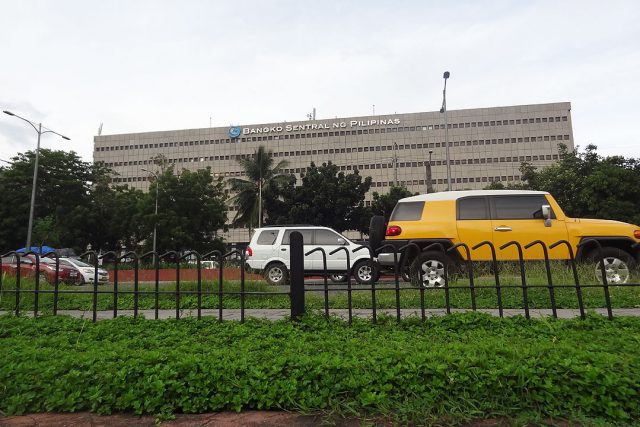
THE central bank told its supervised financial institutions to ensure compliance with standards on consumer protection in their terms and conditions for clients.

Memorandum No. M-2021-069 signed by Bangko Sentral ng Pilipinas (BSP) Deputy Governor Chuchi G. Fonacier called on BSP-supervised financial institutions (BSFIs) to implement fair and equitable terms and conditions as part of their compliance with consumer protection.

“Given that BSP is pushing for financial inclusion, it should also be incumbent upon us to ensure that financial consumers are protected,” Ms. Fonacier said in a Viber message.

The new memorandum reiterates provisions of Circular No. 1048 or the Financial Consumer Protection Framework issued in September 2019.

“Noncompliance with the provisions of the aforementioned Circular shall be subject to supervisory enforcement action/s,” Ms. Fonacier said in the memorandum.

The new directive stressed that terms and conditions that have “broad and all encompassing” disclaimer of legal liability on the part of a bank for losses incurred by customers is not in line with the Circular 1048.

“[T]he BSP reiterates the need to uphold the ‘Fair Treatment’ principle whereby BSFIs are required to observe fair and equitable terms and conditions…” the memorandum said.

In addition, the BSP also called on its supervised financial institutions to adhere to a “do no harm” principle in their implementation of a Consumer Protection Risk Management System and Consumer Assistance Mechanism.

“Practices that harm consumers introduce risks not only at the level of the financial institution, but also to the overall health of the financial sector particularly through decreased public trust and confidence,” the memorandum said.

Amid the rise of cyber-related incidents, Ms. Fonacier said the central bank is set to issue regulations on fraud management systems of financial institutions to strengthen their cybersecurity capabilities.

To recall, some netizens have posted photos of what they alleged as “new and improved” terms and conditions following the incident where some clients of BDO Unibank, Inc. saw unauthorized fund transfers to UnionBank of the Philippines, Inc. accounts.

Based on the screenshot, BDO’s liability clause says the bank is not liable for losses from improper transactions “with or without” the participation of the account owner.

BDO refuted such claims of revisions in its terms and conditions.

“There was no added clause due to the recent incident. BDO made exceptions and shouldered the losses not caused by the clients to maintain good customer relationship even if the bank is not legally liable,” the bank said in a statement on Tuesday.

Ms. Fonacier said the BSP’s investigation and examination regarding the fraud incident is still ongoing.

BDO last week said it had processed about 700 reimbursement claims related to the incident. UnionBank said it had identified about six persons of interest in relation to the unauthorized fund transfers.

Frayna keeps chess lead

WOMAN GM JANELLE MAE FRAYNA — NCFP FB PAGE

WGM Janelle Mae Frayna battled Jan Jodilyn Fronda to a 40-move draw of a Queen’s Pawn duel in the 10th and final round on Wednesday and move on the verge of topping the 2021 Philippine National Women’s Chess Championships at the PACE in Quezon City.

The standoff kept the 24-year-old Frayna at the helm with 7.5 points but her one point lead before the round was cut to just a half point by Kylen Joy Mordido and Shania Mendoza, who blasted separate foes.

Ms. Mordido, who is being groomed to become the country’s second Woman Grandmaster (WGM) next to Ms. Frayna, used the Sicilian Defense to flatten Francois Marie Magpily in 36 moves while Ms. Mendoza pulverized 13-year-old wunderkind Ruelle Canino’s Pirc Defense in 44 moves to breathe life to their title hopes.

Both Mses. Mordido and Mendoza have seven points.

Mses. Frayna and Mendoza, who were former Far Eastern University teammates, was battling each other at press time while Ms. Mordido was facing off with a dangerous Mariel Calimbo also in the last round.

Ms. Frayna, an Army woman from Bicol, is gunning for her third national women’s crown after she reigned supreme in the same event in 2013 and 2016.

If she could accomplish the feat, Ms. Frayna would pocket the top prize worth P50,000 and the lone seat to the Hanoi Southeast Asian Games in May next year.

Ms. Fronda dropped to No. 4 with 6.5 points while Marie Antoinette San Diego, who outlasted Rinoa Mariel Sadey in 48 moves of yet another Sicilian encounter.

In other results, Bernadette Galas drew with Allaney Jia Doroy and Lexie Hernandez bested Ms. Calimbo.

The event is backed by PSC chair Butch Ramirez, Chess Movement, Inc. chair Dr. Ariel Potot, PCSO general manager Royina Garma, Endgame Sports founder Atty. Cris Aspiras, POC President Bambol Tolentino, NCFP chief Butch Pichay and Atty. Roel Canobas. — Joey Villar

Mahershala Ali moves into the spotlight in Swan Song

NAOMIE Harris and Mahershala Ali in Swan Song (2021) — IMDB.COM

NEW YORK —  Double Oscar winner Mahershala Ali has finally found the right project to make his debut as lead actor in a feature film.

Mr. Ali, who won Oscars for his supporting roles in Green Book and Moonlight, is starring in the new drama Swan Song, which will begin streaming on Apple TV+ on Dec. 27.

“Whether you’re leading or supporting or in an ensemble, you’re always trying to look for good material,” Mr. Ali said. “And especially being an actor of color in this business and coming up there … if you see yourself a certain way and you want to be of a certain type of ilk … you get stuck in these little weird pockets if you’re not careful.”

Swan Song is set in the near future and tells the story of a terminally ill man who gets a chance to duplicate himself to save his family from the sadness of his passing.

While it sounds high tech, co-star Naomie Harris said it’s not a sci-fi movie.

“I think it’s ultimately about love. It’s an ode to love and real love, not the romanticized version of love, but real deep, meaningful love,” Harris said.

The movie is director Benjamin Cleary’s feature film debut. Mr. Cleary won an Oscar in 2016 for his short film Stutterer.

Mr. Cleary hopes Swan Song sparks thought-provoking conversations around death.

“I hope it’s getting us to ask, ‘What would what would you do in the situation?’ and starting some interesting emotional conversations for people,” Mr. Cleary said. —  Reuters