Home Blog Page 6702

Dollar reserves rise to $107.98B as of end-Feb.

REUTERS

By Luz Wendy T. Noble, Reporter

THE PHILIPPINES’ gross international reserves (GIR) edged higher as of end-February amid the higher valuation of the central bank’s gold reserves.

Preliminary data released by the Bangko Sentral ng Pilipinas (BSP) showed the GIR increased by 0.26% to $107.98 billion last month from the $107.69 billion seen as of end-January. It also went up by 2.68% from the $105.161 billion a year ago.

“The month-on-month increase in the GIR level reflected mainly the upward adjustment in the value of the BSP’s gold holdings due to the increase in the price of gold in the international market and the BSP’s net income from its investments abroad,” the BSP said in a statement on Tuesday.

The level of dollar reserves as of end-February is enough to cover about 8.4 times the country’s short-term external debt based on original maturity and 5.8 times based on residual maturity.

It is also equivalent to 10.2 months’ worth of imports of goods and payments of services and primary income.

Ample foreign exchange buffers protect an economy from market volatility and ensure the country is able to pay its debts in the event of an economic downturn.

“The GIR would help strengthen the country’s external position and, in turn, fundamentally support the country’s credit ratings,” Rizal Commercial Banking Corp. Chief Economist Michael L. Ricafort said in a Viber message.

Broken down, reserves in the form of gold were valued at $9.585 billion as of end-February, 4.4% higher than the $9.181 billion as of end-January and up 4.5% from the $9.17-billion level a year earlier.

Mr. Ricafort said global prices of gold may continue to appreciate as investors rush to safe-haven assets due to the ongoing Russia-Ukraine war.

The central bank’s foreign investments amounted to $93.107 billion, up by 0.18% from the $92.939 billion in the previous month and by 2.7% from the $90.679 billion in February 2021.

Meanwhile, foreign currency deposits dropped by a third to $554.4 million from $831.7 million a month earlier and by 83% from the $3.266-billion level a year ago.

The country’s reserve position in the International Monetary Fund (IMF) slipped by 0.14% to $798.9 million as of end-February from $800.7 million in the prior month and by 1.7% from the $812.5 million last year.

Special drawing rights — or the amount the country can tap from the IMF — was steady at $3.934 billion for the second straight month. It was more than three times the $1.232 billion as of end-January 2021.

Mr. Ricafort said ample foreign exchange buffers will be crucial for the Philippines amid heightened volatility in the markets due to the Russia-Ukraine war.

“High GIR provides greater cushion versus any further increase in the country’s import bill and widening of the country’s trade deficit, which could happen due to the sharp increase in the prices of imported oil and global commodities largely due to Russia’s invasion in Ukraine,” he said.

Oil prices have reached multi-year highs in recent days due to concerns over oil supply, with Russia being the second-biggest exporter of crude.

The BSP projects the GIR to reach $112 billion by the end of 2022.

Number of OFWs fell nearly a fifth to 1.8M in 2020

PHILIPPINE STAR/EDD GUMBAN

By Abigail Marie P. Yraola, Researcher 

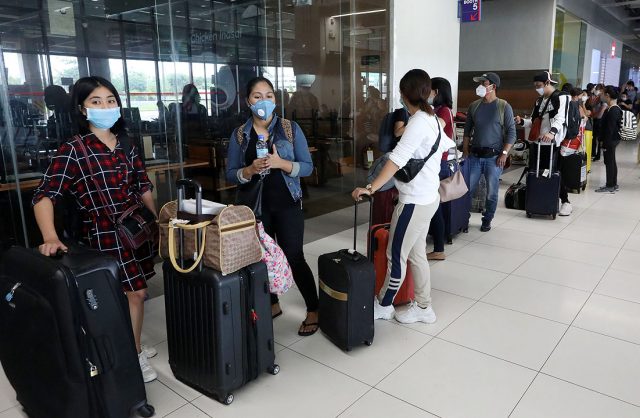
THE NUMBER of registered overseas Filipino workers (OFW) declined by nearly a fifth year on year in 2020 amid the coronavirus disease 2019 (COVID-19) pandemic, data from the Philippine Statistics Authority (PSA) showed. 

The ranks of OFWs dropped by 18.6% to 1.77 million in 2020 from 2.18 million in 2019, the latest PSA’s Survey on Overseas Filipinos showed.

In 2020, there were around 1.71 million overseas contract workers (OCWs), accounting for 96% of the total. However, this was a 19% drop from the 2.11 million OCWs in 2019.

Other Filipinos who worked abroad without working visa or work permits such as tourist, visitor, student, medical, and other types of non-immigrant visas but were presently employed and working full time in other countries accounted for 3.6% of the total. The population of these workers slipped by 7.4% to 63,810 in 2020 from 68,940 in 2019.

Economists largely blamed this to the pandemic, as many countries implemented strict lockdowns and closed their borders in an effort to contain the spread of COVID-19 in 2020. As a result, many businesses shut down and workers lost their jobs.

UnionBank of the Philippines, Inc. Chief Economist Ruben Carlo O. Asuncion said the pandemic is the only reason for this massive decline of Filipino workers working abroad.

In an e-mail interview, he said the Department of Foreign Affairs (DFA) and the Department of Labor and Employment (DoLE) acknowledged that many OFWs were repatriated after losing their jobs and had nowhere else to go due to the pandemic.

More than 800,000 OFWs returned to the country since the onset of the pandemic, DoLE said last year.

“The COVID-19 pandemic is a global phenomenon adversely affecting both rich and poor economies worldwide, with world GDP (gross domestic product) declining by 3.9% in 2020,” said University of the Philippines School of Labor and Industrial Relations Professor Emily Christi A. Cabegin in an e-mail interview.

“To contain the contagion, countries have imposed restrictions on domestic and cross-border mobility that led to the disruption of global supply chains and closures of businesses, with severe impacts on the tourism and travel industry,” she added.

The PSA data also showed more women worked abroad than men. Female OFWs accounted for 59.6% of the total in 2020, while 40.4% were men.

Around 22.4% of OFWs were aged 30 to 34, while 20% were aged 35 to 39 and 19% were aged 45 and above.

In 2020, nearly half or 47% of OFWs were employed in “elementary occupations,” higher than the 39% share in 2019. These include household service workers, cleaning and kitchen staff, and others involved in manual labor.

Workers in services and sales accounted for 14.4%, lower than the 17.6% share in 2019, as many restaurants and shops were shuttered during the lockdowns. OFWs working as plant and machine operators and assemblers accounted for 11.5%, slightly lower from the 12.3% share in 2019.

Around 18% or 185 in every 1,000 OFWs came from the Calabarzon Region. OFWs from Central Luzon accounted for 11.8% of the total, followed by Western Visayas with 9.2%, and the National Capital Region with 8.4%.

Majority or 83.6% of the OFWs worked in Asian countries such as Saudi Arabia (26.6%), United Arab Emirates (14.6%) and Kuwait (6.4%). Other destinations were Europe (with 6.7% share), North and South America (5.2%), and Australia (3.4%).

The decline in OFWs resulted in a large decrease in remittances as well.

An OFW sent an average of P86,810 in 2020, down by 18.6% from P106,618 average in 2019.

Total remittances from OFWs reached P134.77 billion, falling by 35.9% from P210.40 billion in 2019. These comprised of cash sent home with P113.08 billion from P157.04 billion, cash brought home (P18.98 billion from P46.20 billion), and in kind (P2.71 billion from P7.17 billion).

Banks are the most preferred mode of sending cash remittances. Results of the survey show that in 2020, about 51% were sent by OFWs through banks, and 45.9% were sent through money transfer services.

“The Philippines is a major global labor-sending country and is the fourth-largest remittance recipient in the world. The economic crisis brought about by the COVID-19 pandemic resulted in massive loss of employment of OCWs in their host countries, many of whom have been forced to repatriate to the Philippines,” said Ms. Cabegin.

The pandemic brought the country’s cash remittances down by 0.8% to $29.90 billion in 2020, the first annual contraction in more  than two decades since the 18.3% contraction in 1999, central bank data showed.

With tourism and travel industry among the hardest hit by the pandemic, many  sea-based OFWs lost their jobs and many others with labor permits could not be immediately deployed.

“The COVID-19 pandemic rendered many OFWs jobless…The decline in actual remittances sent was also because of the recession brought by the 2020 lockdowns and movement restrictions,” Mr. Asuncion said.

The reference period for the survey was in April to September 2019 and April to September 2020 while estimates were based on the 2015-based Population Projections.

Number of overseas Filipino workers

DMCI Holdings profit soars on units’ strong growth

DMCI Holdings, Inc. on Tuesday reported a core net income of P5.01 billion in the fourth quarter, up 145% year on year, bringing its full-year core earnings to P17.4 billion or higher by 164% from a year earlier.

Earnings growth last year was due to surging commodity prices, recovering electricity rates, and boosted productivity, the diversified engineering conglomerate’s stock exchange disclosure said.

“Nearly all of our subsidiaries grew triple digits in 2021 because of higher productivity and what we believe is the start of a commodities super cycle,” DMCI Holdings Chairman and President Isidro A. Consunji said.

Including nonrecurring gains, fourth-quarter net income rose 152% to P4.9 billion. For the full year, net income without one-off items grew 214% to P18.4 billion.

The diversified engineering conglomerate recognized a non-recurring income of P1 billion from deferred tax re-measurement arising from Republic Act No. 11534, or the Corporate Recovery and Tax Incentives for Enterprises Act.

In 2020, it recorded a nonrecurring loss of P708 million largely from sales cancellations for a real estate project.

Last year, Semirara Mining and Power Corp. (SMPC) and DMCI Project Developers, Inc. (DMCI Homes) accounted for 79% of core net income for the period.

Of DMCI Holdings’ subsidiaries, SMPC contributed P9.2 billion, a 360% upswing from P2 billion previously, following an increase in coal sales, average coal selling prices, and a hike in the average electricity selling prices.

Net income contributions from DMCI Homes more than doubled with a 127% growth to P4.4 billion from P1.9 billion on higher revenue recognition from accelerated construction accomplishments.

DMCI Mining Corp. recorded a 150% boost in its contributions to P1.2 billion from P483 million due to record-high shipments of nearly 2 million wet metric tons and a 40% increase in the average nickel selling prices.

DMCI Power Corp.’s share grew 8% to P580 million from P537 million due to the combined effect of higher electricity sales and lower fuel costs because of the commercial operation of its Masbate thermal plant.

D.M. Consunji, Inc. grew its contributions more than three times or 247% to P378 million from P109 million, owing to higher construction accomplishments and marginal pandemic-related expenses.

Meanwhile, coronavirus disease 2019 (COVID-19) restrictions translated to flat contributions from affiliate Maynilad Water Services, Inc. at P1.6 billion.

This year, DMCI Holdings said: “We expect intense volatility in the coal and nickel markets because of global supply disruptions and economic sanctions on Russia, the world’s third-largest and sixth-largest producer of nickel and coal, respectively.”

“While the escalation and prolonged aftermath of these sanctions will keep index prices elevated, possible policy interventions by China and Indonesia could create significant drawbacks for SMPC and DMCI Mining. Supply disruptions could also mean higher fuel expenses and raw materials costs for DMCI and DMCI Homes,” it added.

“Meanwhile, we expect our power and water businesses to benefit from the full economic reopening of the Philippines. Consumption should return to normal as companies and schools revert to on-site arrangements,” it added.

DMCI Holdings said its strong operating cash flow from higher commodity and electricity prices allowed it to pay out a total of P6.37 billion, or P0.48 per share, in special cash dividends last Nov. 10.

“This raised 2021 total cash dividends to P12.75 billion or P0.96 per share, which translates to a payout ratio of 194% — well above the company dividend policy of 25% of the previous year’s core net income and another all-time high for the group,” it added.

DMCI Holdings shares fell by 2.84% or 27 centavos to finish at P9.23 per share at the stock exchange on Tuesday. — Luisa Maria Jacinta C. Jocson

Petron swings to P6-B profit amid easier mobility

PETRON.COM

PETRON Corp. swung to profitability in 2021 with a reported net income of P6.14 billion from P11.4-billion net loss in 2020 on the back of higher sales volume due to more relaxed quarantine restrictions.

In a press release on Tuesday, Petron said it “continued to bounce back from the impact of the pandemic” after its sale grew by 5% to 82.24 million barrels last year.

“To say that we’ve come a long way since the start of this pandemic would be an understatement. We have recovered significant volumes in key market segments, and more importantly, we have returned profitability to our business,” Petron President and Chief Executive Officer Ramon S. Ang said.

The country’s largest oil refining and marketing company said its retail volume rose 6.4% during the implementation of granular lockdowns, while its industrial sales went up by 2%, pushed by the re-opening of the economy.

“Petron’s lubricant sales recorded the highest growth at 11%, highlighting the strong performance and presence of its locally produced engine oils and other lubricant products in the market,” the company said.

The increase in international prices also played a huge role in the firm’s economy, driving its consolidated revenue for last year to P438 billion, 53% higher than the P286 billion posted in 2020.

“Dubai crude prices breached the $80 per barrel level in the fourth quarter due to recovering oil demand and tighter supply. As a result, it averaged nearly $70 per barrel in 2021, 64% higher than 2020’s $42 per barrel. This is Dubai crude’s highest annual average in the past three years,” the company said.

The San Miguel Corp. unit is also looking forward to the completion of its 184-megawatts (MW) power plant in Limay, Bataan, which, it said, will reduce its refinery’s usage of fuel oil and will convert the feedstock into more fuel for sale.

In January, Petron said it would offer and issue $500-million worth of senior notes to repay debts and partially fund its P12-billion power plant project in Bataan.

Petron shares at the Philippine Stock Exchange on Tuesday went up by 14 centavos or 3.68% to close P3.94 apiece. — Marielle C. Lucenio

Manila Water unit acquires Davao water company

MANILA Water Philippine Ventures, Inc. (MWPV), a wholly owned subsidiary of Manila Water Co., Inc., acquired full ownership of Davao Del Norte Water Infrastructure Co., Inc. (Davao Water) after it bought the shares held by iWater, Inc.

“The acquisition is in line with the company’s strategic direction to maximize the business potential of existing ventures and take on opportunities for growth and expansion in Visayas and Mindanao,” Manila Water said in a disclosure on Tuesday.

Prior to the purchase, MWPV held 51% and iWater held a 49% equity interest in Davao Water.

Davao Water and the water district in Tagum, Davao del Norte partnered to implement a bulk water supply and purchase project, which is being carried out by their joint venture company, Tagum Water Co., Inc.

In 2015, Davao Water formalized a joint venture agreement with the Tagum City water district and formed Tagum Water Co., Inc.

The agreement covers the construction of a bulk water supply system, which includes an intake structure through riverbank filtration, a transmission pipeline, a 5,000-cubic meter water reservoir, and a water treatment plant with a capacity of 38 million liters per day.

The project began delivering water in May 2020 but is expected to fully complete its contract term in 2035.

It is estimated to benefit almost 300,000 people and will serve the water requirements of commercial and industrial establishments in Tagum City.

Manila Water brings water and wastewater services to the east concession zone of Metro Manila and Rizal province. Meanwhile, MWPV serves key metropolitan areas in Batangas, Laguna, Bulacan, Pampanga, Boracay, Iloilo, and Samar.

Manila Water Co., Inc. reported consolidated earnings of P3.7 billion for 2021, which was 18% lower than the previous year due to the pandemic.

In its unaudited report for 2021, revenues dropped 4% to P20.3 billion from P21.1 billion in 2020, due to lower billed volume across all segments in its east zone concession area and in several local subsidiaries, as well as lower customer consumption due to the pandemic.

At the stock exchange on Tuesday, Manila Water shares fell by P1.00 or 5.01% to P18.98 each. — Luisa Maria Jacinta C. Jocson

Art Fair Philippines goes hybrid

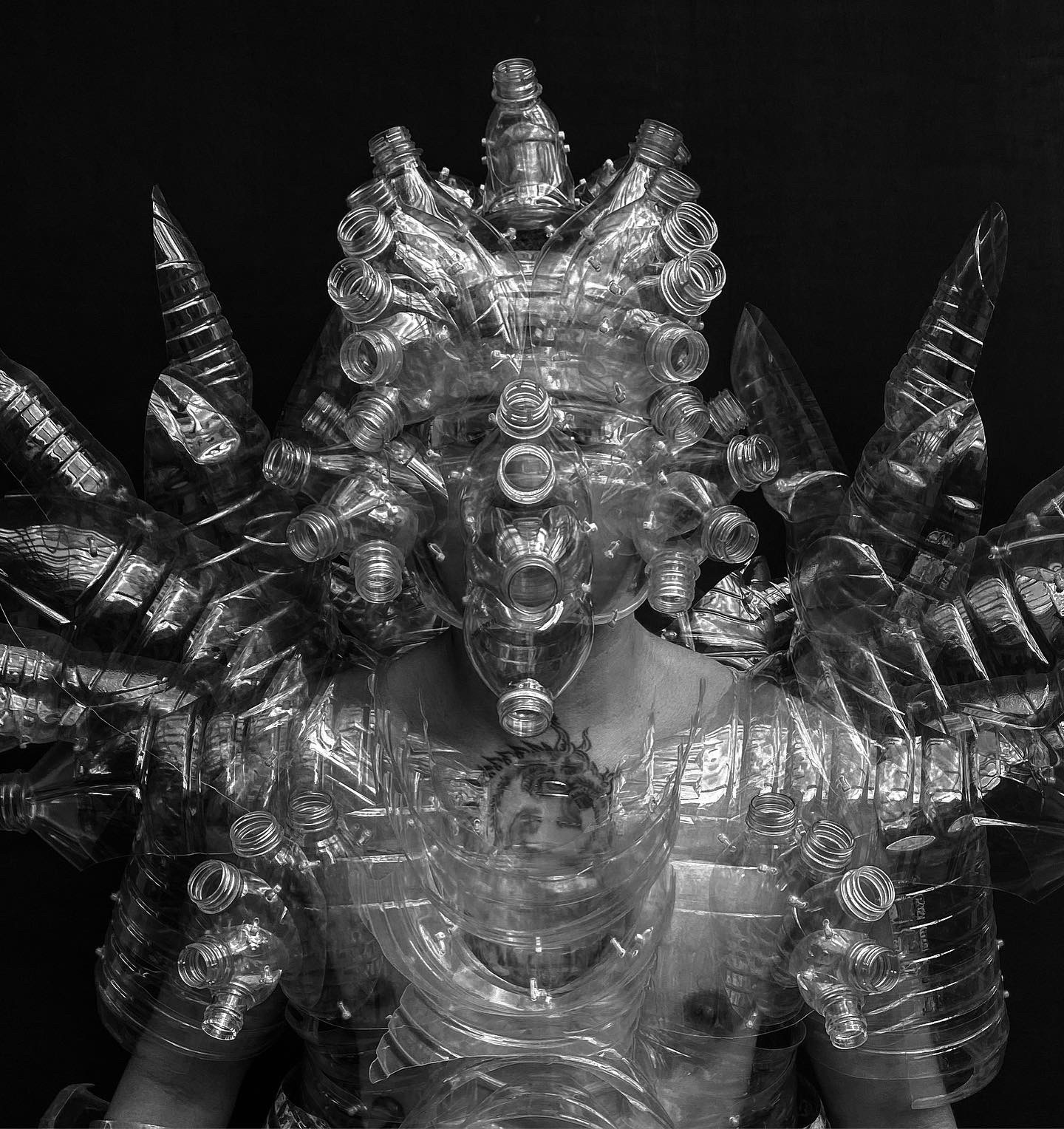
AR Art Trail featuring Leeroy New’s artwork Aparisyon (Apparition)

AFTER getting more than 276,000 website views and over 40,000 visitors in its first online edition in 2021, Art Fair Philippines returns as a hybrid event for the 10th edition, which runs from March 23 to April 1.

Since the Art Fair’s first year in 2013 and its last onsite show in 2020, a physical exhibition takes a new space at the Ayala Triangle Gardens and gallery venues, while online exhibitions and activities can be accessed at www.artfairphilippines.com.

“Coming from the pandemic, it’s about time that we move forward by encouraging people to attend activities in person. We thought it was ideal to give everyone a chance to go out and see more things,” said Art Fair Philippines co-founder Geraldine “Dindin” B. Araneta in an online press conference on March 1.

‘DELIBERATELY UGLY’
Art consultant Norman Crisologo and exhibition designer and theater director Ed Lacson will present art installations at the Ayala Tower One Fountain Area for the ArtFairPH/Projects section. The outdoor works will showcase the “baroque quality” of Philippine art, according to Mr. Crisologo.

Art Fair Philippines co-founder Lisa Ongpin-Periquet described the art installations as “the deliberately ugly, the seemingly spontaneous, the recklessly experimental with a unique Filipino sensibility.”

The other featured artists for the Projects section with special exhibitions around the space are the late Arô Soriano, social realist Nune Alvarado, Bjorn Calleja, Johanna Helmuth, Ryan Jara, Doktor Karayom, Tyang Karyel, Aze Ong, Wyndelle Remonde.

Joining the exhibition is Ilonggo artist Melvin Guirhem, this year’s recipient of the Karen H. Montinola Selection.

The inflatable sculpture of Russian artist Sasha Frolova will no longer be shown due to shipping difficulties brought about by the Russia-Ukraine crisis.

“Logistically it became difficult to ship Sasha’s artwork to Manila, after the invasion of Ukraine. We also felt that, perhaps, showing her work for the upcoming fair did not suit the times, when the war has been so devastating for the people of Ukraine,” said Ms. Lopa in a Viber message to BusinessWorld.

The ArtFairPH/Photo section also joins the physical exhibition. Curated by Neal Oshima, Michael Salientes, Mark Nicdao, and Gio Panlilio, the photography exhibition is titled Tattoos, Ternos and Couture, A Celebration of Philippine Fashion Photography.

According to Ms. Araneta, the exhibition hopes to present fashion photography as an art beyond its attachment to fashion brands.

“The curators were afraid that we’re seeing that it’s really been looked at as a service to the garment industry, but this is really a way to highlight the practice of photographers within the fashion industry,” she said.

Appearing on screen at a public amphitheater is a work by New York-based new media artist Jeremy Couillard for The ArtFairPH/Film section. The showcase includes his new film There Is No Up Or Down, Only Attraction (2022) which “explores curious creatures across galactic vistas, pixelated gaming maps, and streetscapes.” Mr. Couillard’s Fuzz Spiral series — a collection of three films based on the artist’s video game Fuzz Dungeon (2021) will also be featured.

The physical art fair will also exhibit works by the chosen artists for #ArtFairPH/Residencies: Derek Tumala for Manila Observatory, Hannah Nantes for Linangan Art Residency, Jao San Pedro for Emerging Islands, Alwin Reamillo for Orange Project, and Faye Abantao for Butanding Barrio. 

Launched in 2021, ArtFairPH/Residencies is open to Filipino artists across all disciplines. The application period for 2022 will be from March 23 to April 23. The chosen artists shall be announced by May 20.

Also returning to the art fair is “10 Days of Art,” a series of events around the Makati Central Business District in celebrating art. As in previous years, the public may visit art installations around Makati City.

This year’s three major public art exhibits will include an art installation by James Clar called I Can’t Tell You What I Don’t Know, Only That I Don’t Know at the plinth in front of the Ayala Museum; works by Juanito Torres and Norman Dreo, two solo exhibits titled Perspectives, will also be on view at the Greenbelt 5 Gallery. For schedules and updates, visit www.10daysofart.com.

DIGITAL MEETS PHYSICAL
New to the fair is an interactive augmented reality (AR) Art Trail at the Ayala Triangle Gardens, which uses the Daata AR app.

The AR Art Trail features Leeroy New’s artwork Aparisyon (Apparition), sculptures made from discarded plastic bottles; and visualized elements from author Eliza Victoria’s fantasy short story, Let Me Hold Your Hand.   

Forty-six exhibitors from the Philippines and abroad will showcase artworks in their respective galleries and through online viewing rooms at the fair’s website.

This year’s Philippine exhibitors include 1335Mabini, Altro Mondo Gallery, Art Cube Gallery, Art Elaan, Art For Space, Art Underground, Art Verite Gallery, Artery Art Space, Avellana Art Gallery, Boston Art Gallery, CANVAS, District Gallery, Eskinita Gallery, Galerie Roberto, Galerie Stephanie, Grounded Holistic Arts and Culture Studio, J Studio, Kaida Contemporary, León Gallery, Luzviminda, Modeka, MONO8 Gallery, Paseo Art Gallery, Pinaglabanan X, Qube Gallery, Salcedo Private View, Secret Fresh, Silverlens, Strange Fruit, The Crucible Gallery, Tin-aw, The Metro Gallery, White Walls Gallery, and Ysobel Art Gallery. 

Physical visits to the respective spaces of exhibitors can be planned with help from the fair website’s Gallery Hop section, which organizes galleries per location from Quezon City to Muntinlupa City.

This year’s art fair also goes beyond Metro Manila with the participation of art groups from the three main islands in the Regional Focus section. The exhibitors are: Ibagiw Art Fest x Gallery 2600 (Luzon), VIVA ExCon Dasun Bacolod x Orange Project (Visayas), Langgikit x Museo De Oro x Art Portal Gallery (Mindanao), and Lawig-diwa x Gallery Down South (Mindanao).

The six participating international galleries are: Art Agenda (Singapore/Jakarta), Gajah Gallery (Singapore/Yogyakarta), Mayoral (Paris/Barcelona), Yavuz Gallery (Singapore/Sydney), Gallery Kogure (Tokyo), and YOD Gallery (Osaka). NFT galleries A/terhen and Cyber Baat will also present exhibitions.

The exhibits by this year’s participants will be viewed at the Art Fair’s official website. Art Fair Philippines guests can also join the virtual gallery walkthrough scheduled on March 23 and 24.

WHAT’S ONLINE?
The ArtFairPH/Talks returns online this year with discussions presented in partnership with the Ateneo Art Gallery, Museum Foundation of the Philippines, and the Embassy of Spain.

This year’s ArtFairPH/Talks will include a series of discussions with Paco Barragán, an independent curator and arts writer based in Madrid, about art collecting and advice for artists. A discussion on the special photo exhibit Tattoos, Ternos and Couture, A Celebration of Philippine Fashion Photography will feature curators Messrs. Oshima, Michael Salientes, Mark Nicdao, and Gio Panlilio.

There will also be a panel discussion on NFTs — the main focus of the fair’s 2020 edition.

“The NFT talks were one of our best attended events last year,” said Art Fair Philippines co-founder Trickie Lopa.  “We were lucky because we discussed it and we put it out at the right time. It’s part of the art conversation now that there’s a very strong crypto art community here.”

Art Fair Philippines 2022 also continues to develop ArtFairPH/Open Studios. For this edition, Art Fair Philippines has collaborated with J Studio and ceramicist Pablo Capati to showcase a three-part series of pottery demos entitled Conversations on Clay with Jezzel Wee, Marco Rosario, Ella Mendoza, Krista Nogueras, Jon Pettyjohn, and Joey de Castro.

Other activities include virtual art tours. In the lineup for ArtFairPH/Tours is Baguio Artists Studio Visits: Part 2, a continuation of last year’s video documentation of visits to artists’ studios by Nona Garcia, Abbie Lara and Kawayan de Guia. Meanwhile, visual artists Plet Bolipata and Elmer Borlongan will take fair visitors on a virtual tour of their new studio called the Bolipata and Borlongan Talyer Video Tour.

“Grappling with whether we can move or not outdoors was one of the things that we had to contend with,” Ms. Araneta said. “Organizing for an online event also has its share of challenges. I think we worked with a good team. We subjected the site to several tests to make sure that everything will go well.”

Visiting hours are from 10 a.m. to 10 p.m. For more information on this year’s program and schedule of activities, visit the Art Fair Philippines website www.artfairphilippines.com and follow Art Fair Philippines on Instagram (@artfairph) and Facebook (www.facebook.com/artfairph). — Michelle Anne P. Soliman


Slow recovery seen for consumer goods industry

THE country’s fast moving consumer goods (FMCG) industry is projected to have a slow return to pre-pandemic levels, according to data and consulting company Kantar.

Kantar said in a statement on Tuesday that the country’s FMCG industry declined 4% year on year during the first nine months of 2021.

“Total beverages only saw a 1% growth, while dairy experienced a -11% growth in year-to-date September 2021 compared to the same period the year before. Moreover, breakfast categories like total coffee, coffee creamer, cereal and oatmeal further declined in the last two years since the pandemic started,” Kantar said.

“Filipinos instead turned to easier or more convenient ways of cooking via bouillons, instant noodles, cooking oil, seasonings and sauces. Healthier beverages such as cultured milk, family and adult milk, and energy drinks also showed stable growth locally,” it added.

According to Lourdes Deocareza-Lozano, Kantar Philippines Worldpanel Division new business director, local FMCG companies should consider the changes to consumer behavior following the coronavirus disease 2019 (COVID-19) pandemic in order to boost the industry.

“Our data reveal that major markets around the world are slowly showing signs of pre-pandemic times. While restrictions are being lifted in many countries, including the Philippines, FMCG companies, including our small and medium enterprises, must pay attention to behaviors that consumers have developed since the pandemic and capitalize on these in order to sustain the momentum,” Ms. Lozano said.

In comparison, Kantar said FMCG growth slowed to 0.8% in countries such as the United Kingdom, France, Spain, mainland China, Indonesia, Brazil, and Mexico from January to September last year.

“Globally, food categories under breakfast and lunch benefit most from the shift to a work-from-home setup, especially during the first nine months of 2021. Beverages (2.5%) and dairy (1.8%) such as milk, flavored milk, coffee, ready-to-drink tea, juices and carbonated soft drinks saw steady growth across the seven major markets covered by Kantar’s recent study,” it said.

“In addition, the return of face-to-face socializing in other parts of the globe may be having a positive impact on the health and beauty category with a 1.8% increase in consumer spend. This covers makeup, sun protection, and fragrances,” it added.

Meanwhile, Kantar said 1.8 million Filipino homes purchased in-home FMCG items online at least once last year.

It added that products usually bought via online channels include bar bath soap, shampoo, laundry powder, lotion, baby diaper, and frozen or chilled meat.

“During the height of quarantine restrictions, the Philippines shared the same upward trend for e-commerce activity as the other countries. From September 2019 to September 2021, the total online FMCG penetration increased from 5% to 7.2%. This was even higher in the National Capital Region (7.8% to 9.9%), North Luzon (5.6% to 8.5%), and South Luzon (6% to 9.4%),” Kantar said.

However, Ms. Lozano said e-commerce still plays a small part in the overall growth of the local FMCG industry, adding that there is still room for growth.

“E-commerce is here but there’s still room to increase its share of the FMCG market in the country. Companies that are able to optimize traditional, modern and online space to retain customers and attract new ones can help drive the sector’s growth back to pre-pandemic numbers,” Ms. Lozano said. — Revin Mikhael D. Ochave

Expect risk of COVID-19 reinfection, experts say

PHILIPPINE STAR/ MICHAEL VARCAS

By Brontë H. Lacsamana, Reporter

LOCKDOWNS have been lifted and the number of coronavirus disease 2019 (COVID-19) infections have tallied below 1,000 cases daily for the past few days, giving hope that the worst is over.

Still, experts warned that Filipinos should expect the risk of mild COVID-19 reinfection.

“A repeat case of COVID means a person was infected, then recovered, then became infected again. The difference between the first and second infection should be at least 90 days or 3 months apart,” said Regina P. Berba, head of infection control at the Philippine General Hospital, at a webinar on March 4.

This definition of reinfection is based on the US Centers for Disease Control’s (CDC) official description last updated in January.

Of the 3,058 healthcare workers in PGH who were infected in the two-year span of the pandemic, 285 or 9.3% were reinfected, reported Dr. Berba. All the reinfections were mild or asymptomatic, she added.

“Fully vaccinated individuals and also those who have been previously infected have developed a good, robust immune response to reduce risk of reinfection, but of course this is not 100%,” she said, citing studies by the CDC.

With the high possibility of a new variant causing another surge in the future, recovered individuals may experience reinfection, as was the case with every wave of COVID-19 that the Philippines had since 2020.

“Reinfections happened a lot because of the evolution of variants,” she said. “Variants allowed the viruses to have increased transmissibility, and the mutations that happened allowed these viruses to evade the current immune system of the host.”

Dr. Berba reiterated that people must continue to wear masks and observe minimum health standards. Vaccination efforts, too, must continue despite the recent downward curve of infection.

ANOTHER SURGE?
On Sunday, OCTA research fellow Fredegusto P. David told ABS-CBN Teleradyo that another surge might occur in April or May since the country usually has a resurgence of cases every three months, with the most recent one in January caused by the Omicron variant.

Several factors can bring about a surge, including a new variant, large campaign period gatherings, complacency in following health rules, and waning immunity, he said.

Meanwhile, the Department of Health, on March 7, shifted to weekly COVID-19 bulletins from daily case tallies, attracting criticism.

In a tweet, Antonio C. Leachon, a doctor and former special adviser to the country’s pandemic task force said: “Weekly reporting is quite a long wait for the government and the people to react particularly on Alert Level 1 and campaign mode which could trigger surges due to mobility.”

TnT Tropang Giga gun for safe passage to quarterfinals today

THE REIGNING Philippine Cup champions TnT Tropang Giga — PBA IMAGES

By Olmin Leyba

RECHARGED after a relatively long five-day breather in the PBA Governors’ Cup, TnT guns for a safe passage to the quarterfinals today against also-ran Terrafirma in the penultimate day of eliminations at the Smart Araneta Coliseum.

Despite early struggles and a lung-busting schedule due to Gilas Pilipinas duties, the Tropang Giga (5-4) have put themselves in good position to not just advance to the next round but also to vie for the coveted playoffs incentives.

The reigning Philippine Cup champs can bring this drive for one of the top four slots to completion with victories over the Dyip (2-8) and their final elims opponent, resurgent NorthPort (5-5), on Friday.

Coach Chot Reyes and his streaking charges, however, aren’t looking past the 3 p.m. encounter with the Dyip, are out of it all but remain motivated to end their campaign with a bang.

“We’re not thinking of that (chance for a twice-to-beat). Our entire focus now is preparing for our game tomorrow (today),” said Mr. Reyes.

The Tropang Giga amped up their playoffs bid with back-to-back conquests of San Miguel Beer (96-81) and Barangay Ginebra (119-92) to cap a draining four-game slate prior to Gilas’ stint in the FIBA World Cup Asian Qualifiers in late February.

TnT resumed its PBA campaign last March 4 and made it three in a row at the expense of Blackwater (106-93).

Mr. Reyes noted that the Tropang Giga didn’t play “a full 48-minute game at the level we wanted” in their return match. And they need to get this done against a Terrafirma side that has shown it is capable of upsetting the favorites, if only it could muster the needed finishing kick.

Terrafirma Dyip mentor John Cardel, whose wards held sizable leads against Alaska, Ginebra and NorthPort before fading in the end.

Meanwhile, top meets bottom as Magnolia (9-1) and Blackwater (0-10) face off at 6 p.m. in a game that may be inconsequential to their standings but has everything to do with pride.

Aside from building momentum for the Last-8, the No. 1-seeded Hotshots want to avoid the ignominy of being the team the Bossing beat to end their league-worst 29-game losing streak.

Not just plain prints

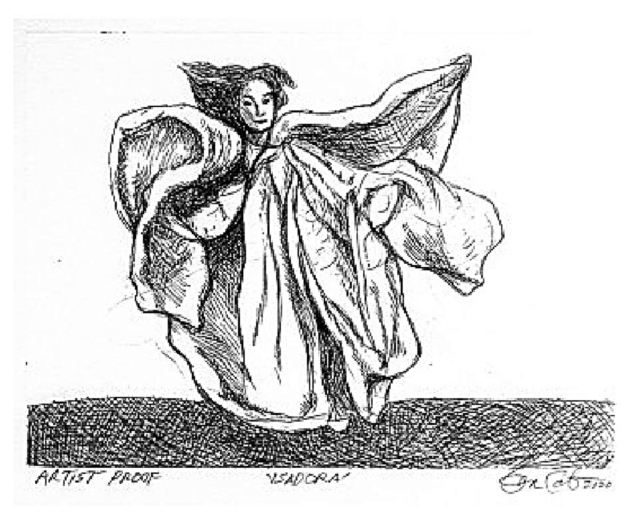
BENEDICTO “BenCab” Cabrera’s Isadora, 22.5 x 30.3 cm etching

PRINTS are mirror images of inked or painted designs transferred to paper, cloth, or wood. The same design can be produced in limited editions and so a work marked “20/30” means that it is the twentieth print from an edition of 30 prints of the same image.

Conrad Manila’s first “Of Art and Wine” exhibit this year features the Association of Pinoyprintmakers (AP)’s 20/30: A Limited Print Portfolio at the hotel’s Gallery C.

20/30 is the second commemorative print folio project of the Cultural Center of the Philippines in partnership with the AP. Their first folio project was produced in 2014 titled 25@45, in celebration of CCP’s 45th anniversary.

The AP formerly known as the Printmakers Association of the Philippines (PAP) was established in 1969. The group was a regular partner under the CCP Visual Arts and Museum Division. The CCP provided PAP with a printmaking studio at the back of the Folk Arts Theater in 1997 which the AP uses to this day. The CCP and AP continue their partnerships through regular programs such as annual exhibitions, demos at the CCP Pasinaya Festival, and workshops.

20/30: A Limited Edition Print Portfolio is a collection of 40 fine prints using traditional printmaking techniques by noted printmakers.

The Print Folio comes in two sets: Folio I with editions of 20 featuring prints by 15 artists, and Folio II with editions of 30 featuring prints by 25 artists.

The artists featured in this portfolio are or were affiliated with AP.

In Folio I contains etchings by National Artist for Visual Arts Benedicto “BenCab” Cabrera, Alfredo Juan Aquilizan, Virgilio Aviado, Ofelia Gelvezón-Téqui, and Jess Flores; woodcut prints by Elmer Borlongan; prints combined with etching and aquatint by Benjamin Torrado Cabrera, Imelda Cajipe Endaya, and Raul Isidro; mezzotint and engravings by Fil Delacruz; rubbercuts by the late Neil Doloricon, and Manuel Ocampo; a serigraph print by Rodolfo Samonte; a special restrike of a woodcut work by the late Rod Paras Perez dated 1963; and an etching by Juvenal Sansó from a restrike of a plate dated 1962.

In Folio 2 are woodcut prints by Ambie Abaño; rubbercuts by Leonard Aguinaldo, Suchin Teoh, Hershey Malinis, and Jonathan Olazo; serigraph prints by Mars Bugaoan, Salvador Ching, Noel EL Farol, Jun-Jun Sta. Ana, and Wesley Valenzuela; collographs by Kristen Cain; embossed method prints by Christina Quisumbing Ramilo, etchings by the late Rhoda Recto, Joey Cobcobo, Janos Delacruz, Eugene Jarque, and Henrielle Pagkaliwangan; prints combined with etching and aquatint by Anton Villaruel, Yas Doctor, Vilia Jefremovas, Angelo Magno, and Caroline Ongpin; detailed drypoint prints by Renan Ortiz and Radel Paredes; and sugarlift process on top of etching and aquatint by Lenore RS Lim.

At the exhibition opening, former AP president and 2015 National Artist nominee Filimon “Fil” Delacruz said that technical know-how of the reverse process makes the craft different from other mediums.

“What gets me excited about the process is that you work in reverse,” Mr. Delacruz told members of the press at the launch on March 1.

“Unlike when you do a painting, there is simultaneous gratification because you can see as you go along. [In printmaking], you cannot see the result until you go to press and print it. Sometimes it’s very rewarding. Sometimes it’s frustrating because it does not come out the way you want it,” he said.

For the folio project, Mr. Delacruz created a mezzotint etching of his signature “diwata” (fairy) image titled, Sulyap.

With the hotel’s regular art exhibitions, exhibition curator Nestor O. Jardin said that their goal is to encourage people to invest in artworks.

“Prints are more affordable than oil or acrylic [paintings]. The younger collectors or young people who are beginning to afford or appreciate acquiring art usually start with acquiring prints. Then, they subsequently graduate to other media,” Mr. Jardin said.

“It’s nice that they put it in their homes, but there are some buyers who buy to invest [in it],” he said.

The prints are for sale as Folio I at P420,000 and Folio II at P240,000.

Of Art and Wine: 20/30 at Conrad Manila’s Gallery C runs until April 2. The exhibit opening is presented in partnership with the Philippine Wine Merchants. For more information, call (632) 8833 9999 or e-mail conradmanila@conradhotels.com. To view the full art catalog, visit: https://bit.ly/OAAW2030Catalog. — Michelle Anne P. Soliman

Scientists identify new gene differences in patients who suffered severe COVID-19

Image via NIAID / CC BY 2.0

SCIENTISTS have pinpointed 16 new genetic variants in people who developed severe coronavirus disease 2019 (COVID-19) in a large study published on Monday that could help researchers develop treatments for very sick patients.

The results suggest that people with severe COVID have genes that predispose them to one of two problems: failure to limit the ability of the virus to make copies of itself, or excessive inflammation and blood clotting.

The scientists said their discoveries, published in the journal Nature, could help prioritize the likely treatments that could work against the disease.

Eventually, the information could even help predict which patients were likely to become severely ill.

“It is potentially possible in future that we will be able to make predictions about patients based on their genome at the point of presenting (for) critical care,” said Kenneth Baillie, consultant in critical care medicine at the University of Edinburgh and one of the study authors, told reporters.

The genetic analysis of nearly 56,000 samples from people in Britain showed differences in 23 genes in COVID-19 patients who became critically ill, when compared with the DNA of other groups included in the study, including 16 differences that had not been previously identified.

The new findings could help guide scientists in their search for existing drugs that might be useful for treating COVID-19.

For example, the researchers found changes in key genes that regulate the level of factor VIII, a protein involved in forming blood clots.

“Blood clotting is one of the main reasons why patients with COVID develop a shortage of oxygen. So that’s potentially targetable to prevent those clots from forming,” Mr. Baillie said.

But “we can’t know if these medicines will work until we try them in people.”

One of the previously discovered genes, TYK2, is targeted by Eli Lilly’s arthritis drug baricitinib, now being studied as a treatment for COVID-19.

The drug was shown last week to cut the risk of death and hospitalization in COVID-19 patients by 13% in a trial. — Reuters

SEC revises corporate dissolution guidelines

THE Securities and Exchange Commission (SEC) released revised guidelines on corporate dissolution to further standardize procedures, according to a memorandum circular on Tuesday.

For voluntary dissolutions where no creditors are affected, or if a dissolution of a corporation does not prejudice the rights of any creditor having a claim against it, the dissolution will be initiated by filing a verified request with the Company Registration and Monitoring Department and or SEC Extension Office.

The filed request must include company details, the reason for dissolution, the form, manner and time when the notices were given, and names of stockholders and directors, among other requirements.

For verifications and certifications against forum shopping, the verified request for dissolution should contain an affidavit, which should include the allegations in the verified request.

Required supporting documents include notarized copies of the board resolution authorizing the dissolution, a publisher’s affidavit of publication of the notice of the meeting, the latest due general information sheet, audited financial statements, and the Bureau of Internal Revenue tax clearance certificate, among others.

The SEC said that no application for the dissolution of banks, banking and quasi-banking institutions, insurance and trust companies, pawnshops and other financial intermediaries will be approved by the commission unless accompanied by a favorable recommendation of the appropriate government agency. — Luisa Maria Jacinta C. Jocson

ADVERTISEMENT
ADVERTISEMENT