Home Blog Page 6701

Closing the gender gap in the workplace

FREEPIK

Though the Philippines has taken strides to improve workplace gender equality, research by various women empowerment groups and inclusive employing industries ahead of International Women’s Day 2022 have found that sustainable practices must be instituted for women to be better off.

For instance, a report titled “Workplace Gender Equality-Sustainability Reporting: Initial Analysis of the Top 30 Publicly Listed Companies (PLCs) in the Philippines as of July 2021” was able to get companies to disclose their policies on board diversity, safe and respectful workplaces, employee training and development, and gender pay equity.

“Gender equality indicators play a significant role in the narrative and conduct of sustainability reports,” said Ma. Aurora “Boots” D. Geotina-Garcia, Philippine Business Coalition for Women Empowerment (PBCWE) co-chair, at a March 4 policy forum. 

“Philippine PLCs are compliant [with] policies and regulations and are making it clear that disclosures concerning people are critical to recover from the pandemic,” she added.

PBCWE is one of the partners engaged in policy reform work for gender equality, along with the Philippine Women’s Economic Network (PhilWEN),the Australian initiative Investing in Women (IW), and the United Nations Entity for Gender Equality and the Empowerment of Women (UN Women). 

The report also uncovered insights on gender composition in the country’s top companies, with reports of over 50% of employees being male in the mining, power, energy, and telecommunications industries.

Jose Solomon Cortez, associate director of the Ramon del Rosario Sr. Center for Corporate Social Responsibility at the Asian Institute of Management, brought up the need for a third-party entity to validate the information the companies were disclosing. 

“One of the challenges that we found companies faced is in finding the right balance of what gender-related information they are to disclose based on existing regulatory requirements, or if they’re adopting to globally accepted standards or business principles,” he explained at the policy forum. 

He also pointed out that one company in the report claimed there was no gender pay gap in their organization, something that as of now there is no means to verify. 

DOING WELL
The World Bank (WB) said in its Women, Business and the Law 2022 report released this month that legal and economic gender equality in the Philippines had no change in the past year, especially in terms of parenthood, marriage, and assets metrics.

Meanwhile, the World Economic Forum (WEF) acknowledged in its Global Gender Gap Report 2021 the country’s progress in narrowing the gender gap in terms of economic participation and opportunities. The Philippines ranked 17th out of 156 countries.

For more marked improvements, policymaking and gender reporting must continuously be ramped up, according to Dr. Allinnettes Go Adigue, head of the Association of South East Asian Nations’ (ASEAN) regional hub of the Global Reporting Initiative (GRI).

“While we do so well in education and health, we’re not doing so well in economy and politics,” she said at the forum. “If the sector is mostly dominated by men, then we have men deciding and creating policies that also impact women. That’s why it is important to have more representation of women in terms of policymaking.” 

She also said the PBCWE report’s findings were consistent with key global findings on women’s issues, adding that sustainability reporting was introduced in 1997 and is still not yet widely adopted and institutionalized to this day. 

Kelvin Lester Lee, commissioner of the Securities and Exchange Commission (SEC), assured that they are working towards making it mandatory in the country by 2023, as stipulated in the Memorandum Circular (MC) No. 04 s. 2019, which requires PLCs to submit an annual sustainability report.

“But one issue we’ve been facing is that it was issued back in 2019. We are a little wary on the effect that COVID has had on the resources of PLCs,” he said. “[2023] is still the goal but we are studying the possibility of moving it a little bit.”

The MC in question obligates companies to create a sustainable business landscape and implement environmental and social initiatives that will benefit future generations. 

NET BETTER OFF
While global and nationwide policies are still being improved, companies in the meantime must start instilling good practices to build a culture of empowering women, according to Ambe C. Tierro, senior managing director and technology lead of professional services group Accenture in the Philippines.

The group’s study, Better to Belonglaunched on March 2, explored the ways women can thrive in inclusive organizations. The results showed that when women feel “net better off” (NBO), or respected, appreciated, and supported in the workplace, their maximized potential will ultimately lead to better corporate results.

These findings came from a 2021 survey of 7,000 employees across 14 countries. 

“Trust, job satisfaction, and great place to work are directly impacted when we address the NBO dimensions,” shared Ms. Tierro. “Top performing employees had higher scores on those three aspects compared to those performing less satisfactorily.” 

The six dimensions in the NBO framework are financial, emotional and mental, relational, physical, purposeful, and employable. If employers address these concerns from women employees, then it will improve the working environment, she said. 

Accenture found that 29% of women surveyed reported having lower support compared with only 26% of the men who said the same. Meanwhile, 20% of women reported dissatisfaction with their job compared with just 17% of the men.
Ms. Tierro stressed: “When leaders support people during moments that matter, employees are left ‘net better off.’ That’s when we promote true inclusion and diversity and a culture where people feel that they belong.” — Bronte H. Lacsamana
Taiwan studies Ukraine war for own battle strategy with China

XANDREASWORK-UNSPLASH

 – Taiwan‘s military strategists have been studying Russia’s invasion of Ukraine, and the country’s resistance, for the island’s own battle strategy in the event its giant neighbor China ever makes good on its threat to take them by force.

While Taiwan‘s government has not reported any unusual activity by the military in China, which views the island as its own territory, Taipei has raised its alert level.

Russia’s use of precision missiles, as well as Ukraine‘s tactically well thought through resistance despite being outmanned and outgunned, are being carefully watched in security circles in Taiwan, whose own forces are likewise dwarfed by China‘s.

Taiwan President Tsai Ing-wen has championed the idea of “asymmetric warfare”, to make its forces more mobile and hard to attack, with for example vehicle-mounted missiles.

Ma Cheng-Kun, director of the Graduate Institute of China Military Affairs Studies at Taiwan‘s National Defense University, said Ukraine had used the same concept with mobile weapons to stymie Russian forces.

Ukraine‘s military has been making full use of asymmetric warfare, very effectively, and so far successfully holding off Russia’s advance,” added Ma, a government advisor on China policy.

“That’s exactly what our armed forces have been proactively developing,” he said, pointing to weapons like the lightweight and indigenously-developed Kestrel shoulder-launched anti-armor rocket designed for close-in warfare.

“From Ukraine‘s performance we can be even more confident in our own.”

Taiwan has been developing other missiles which can reach far into China.

Last week, the defense ministry said it plans to more than double its yearly missile production capacity to close to 500 this year, including the upgraded version of the Hsiung Feng IIE missile, the longer-range Hsiung Sheng land-attack missile which military experts say is capable of hitting targets further inland in China. Read full story

Taiwan‘s Defense Ministry says it has a “close grasp” of the international security situation and that it is working hard to “improve its armaments and national defense combat capability all the time” but that the military is “not provocative”.


NATURAL BARRIER

There are big differences however between Taiwan and Ukraine‘s positions that have offered reassurance.

Taiwan‘s government has repeatedly pointed out, for example, the natural barrier of the Taiwan Strait which separates it from China. Ukraine has a long land border with Russia.

Strategists say Taiwan can also easily detect signs of Chinese military movements and make preparations ahead of an invasion in which China would need to mobilize hundreds of thousands of soldiers and equipment like ships, which could be easily targeted by Taiwanese missiles.

To put boots on the ground China would have to cross the strait, “so it’s a much higher risk” for China, said Su Tzu-yun, an associate research fellow at Taiwan‘s top military think tank, the Institute for National Defense and Security Research.

It’s not only about hardware.

Looming in the background is the perennial debate – given new focus by the Ukraine war – about whether U.S. forces would ride to Taiwan‘s aid in the event of a Chinese attack. Washington practices “strategic ambiguity” on the subject, giving no clear answer either way.

Lo Chih-cheng, a senior lawmaker from the ruling Democratic Progressive Party who sits on parliament’s defense and foreign affairs committee, said the Biden administration sending a team of top former officials to Taiwan last week shortly after Ukraine was invaded should dispel the idea that the United States is not to be relied on.

“At this time it sent a message to the other side of the strait, to Taiwan‘s people, that the United States is a trustworthy country,” he told a party podcast on Tuesday.

Taiwan, a major semiconductor producer, hopes its geographic and supply chain importance makes it different from Ukraine.

But the Biden administration repeatedly ruling out sending troops to Ukraine has caused unease for some in Taiwan.

“Do people in Taiwan really think now that the West and the United States will still come to save us?” said Chao Chien-min, a former deputy head of Taiwan‘s Mainland Affairs Council now at Taiwan‘s Chinese Culture University. – Reuters

Big brands and oil ban punish Russia as Moscow makes new pledge on Ukraine refugees

A RUSSIAN FLAG flies with the Spasskaya Tower of the Kremlin in the background in Moscow, Russia, Feb. 27, 2019. — REUTERS

 – A U.S. ban on imports of Russia‘s oil ratcheted up punishment for the invasion of Ukraine on Tuesday as McDonald’s and Starbucks closed outlets and Moscow promised safe passage for some people to flee.

As the number of refugees created by the biggest assault on a European country since World War Two surpassed 2 million, several of the most internationally famous brands added to the Kremlin’s global isolation on the 13th day of the incursion.

McDonald’s, a symbol of capitalism that opened in Russia as the Soviet Union fell, and coffeehouse chain Starbucks will temporarily close stores, while Pepsi will stop selling its soft drink brands and Coca-Cola is halting business in the country. Read full story

Washington, meanwhile, imposed an immediate ban on imports of Russian energy, sparking a further increase in the oil price, which rose around 4% on Tuesday. Prices have surged more than 30% since Russia‘s incursion began on Feb. 24. O/R

Russia – the world’s second-largest exporter of crude – has warned the cost will skyrocket further if the West implements bans.

Despite the prospect of higher household bills, U.S. President Joe Biden said President Vladimir Putin needed to face consequences for the assault. Read full story

“The American people will deal another powerful blow to Putin’s war machine,” he said.

The Kremlin describes its actions as a “special operation” to disarm Ukraine and unseat leaders it calls neo-Nazis.

Ukraine and Western allies call this a baseless pretext for an invasion that has raised fears of wider conflict in Europe and could deal a further hit to the world economy as it tries to recover from the coronavirus pandemic.

Civilians fled the besieged city of Sumy on Tuesday in the first successful “humanitarian corridor” opened since Russia‘s invasion but Ukraine accused Russian forces of shelling another evacuation route, from Mariupol in the south of the country.

Talks between Kyiv and Moscow over safe passage have previously failed, with Ukraine opposing routes out of the country to Russia or its ally Belarus.

Moscow is ready to provide humanitarian corridors so people can leave capital Kyiv and four other cities – Chernihiv, Sumy, Kharkiv and Mariupol – on Wednesday, Mikhail Mizintsev, head of Russia‘s National Defence Control Centre, was quoted as saying by the Tass news agency.

“In order to ensure the safety of civilians and foreign citizens, Russia will observe a regime of silence from 10 am Moscow time (0700 GMT) on March 9 and is ready to provide humanitarian corridors,” he said. It was unclear if the proposed routes would pass through Russia or Belarus.

Ukrainian President Volodymyr Zelenskiy renewed calls on Tuesday for no-fly zones, something the West has rejected for fears of escalating the conflict.

The United States turned down a surprise Polish offer to transfer MiG-29 fighter jets to a U.S. base in Germany to help replenish Ukraine‘s air force.

The prospect of flying combat aircraft from NATO territory into the war zone “raises serious concerns for the entire NATO alliance,” the Pentagon said. Read full story

Instead, the West has focussed its pressure on sanctions, mainly on individuals and financial institutions. Up until now, oil and natural gas had been excluded.

The United States is not a leading buyer of Russian oil and Europeans, who are far more reliant on it, have been reluctant to follow suit.

Britain, however, said it would also phase out the import of Russian oil and oil products by the end of 2022, while the EU published plans to cut its reliance on Russian gas by two thirds this year. Read full storyRead full story

Vyacheslav Volodin, chairman of Russia‘s State Duma lower house of parliament, said the measures would hurt Europe while helping the United States.

“By promoting sanctions against Russian energy resources, Washington is seeking to occupy the European market,” he said in an online post.


‘APOCALYPTIC’

In Mariupol, hundreds of thousands of people have been sheltering under bombardment for more than a week. Many tried to leave on Tuesday along a safe corridor but Ukraine‘s foreign ministry said Russian forces violated a ceasefire and shelled it.

Moscow denies targeting civilians.

International Committee of the Red Cross spokesman Ewan Watson said people in Mariupol were fast running out of electricity, heat, food, and drinking water.

“The situation in Mariupol is apocalyptic,” he said.

Russia opened a separate corridor out of the eastern city of Sumy. Buses left for Poltava further west, only hours after a Russian air strike which regional officials said had hit a residential area and killed 21 people. Reuters could not verify the incident.

Russia said 723 people had been evacuated via that corridor, including 576 Indian nationals.

Residents were also leaving Irpin, a frontline Kyiv suburb.

Elsewhere, Ukrainian troops repulsed efforts by Russian forces to enter the eastern city of Kharkiv on Tuesday and foiled a planned operation by 120 Russian paratroopers near the border, regional governor Oleh Synehubov said.

Five people, two of them children, were killed late on Tuesday when Russian planes attacked the town of Malyn, some 100 kilometres (62 miles) northwest of Kyiv, and destroyed seven houses, the state emergency service said in an online post. Reuters was unable to corroborate.

The United Nations human rights office said it had verified 1,335 civilian casualties in Ukraine, including 474 killed and 861 injured, since the invasion began on Feb. 24. The real toll is likely higher, it said.

A total of 2 million people, mostly women and children, have fled, according to the U.N. refugee agency UNHCR.


ADVANCE SLOWED

Western countries say Russia‘s initial battle plan for a rapid strike to topple Ukraine‘s government failed early in the war, and Moscow has adjusted tactics for longer sieges of cities.

“The tempo of the enemy’s advance has slowed considerably, and in certain directions where they were advancing it has practically stopped,” Ukrainian presidential adviser Oleksiy Arestovych told a briefing on Tuesday.

Ukraine‘s defence ministry said Vitaly Gerasimov, first deputy commander of Russia‘s 41st army, was killed on Monday, the second Russian major general killed during the invasion. Russia‘s defence ministry could not be reached for comment.

The main Russian assault force heading towards Kyiv has been stuck on a road north of the capital. But to the south, Russia has made more progress along the Black and Azov Sea coasts.

Within Russia, the war has led to a severe new crackdown on dissent, with the last remaining independent media largely shut last week and foreign broadcasters banned.

Russian police arrested at least 100 protesters against the invasion of Ukraine on Tuesday, the OVD-Info monitoring group said. Police made no comment. – Reuters

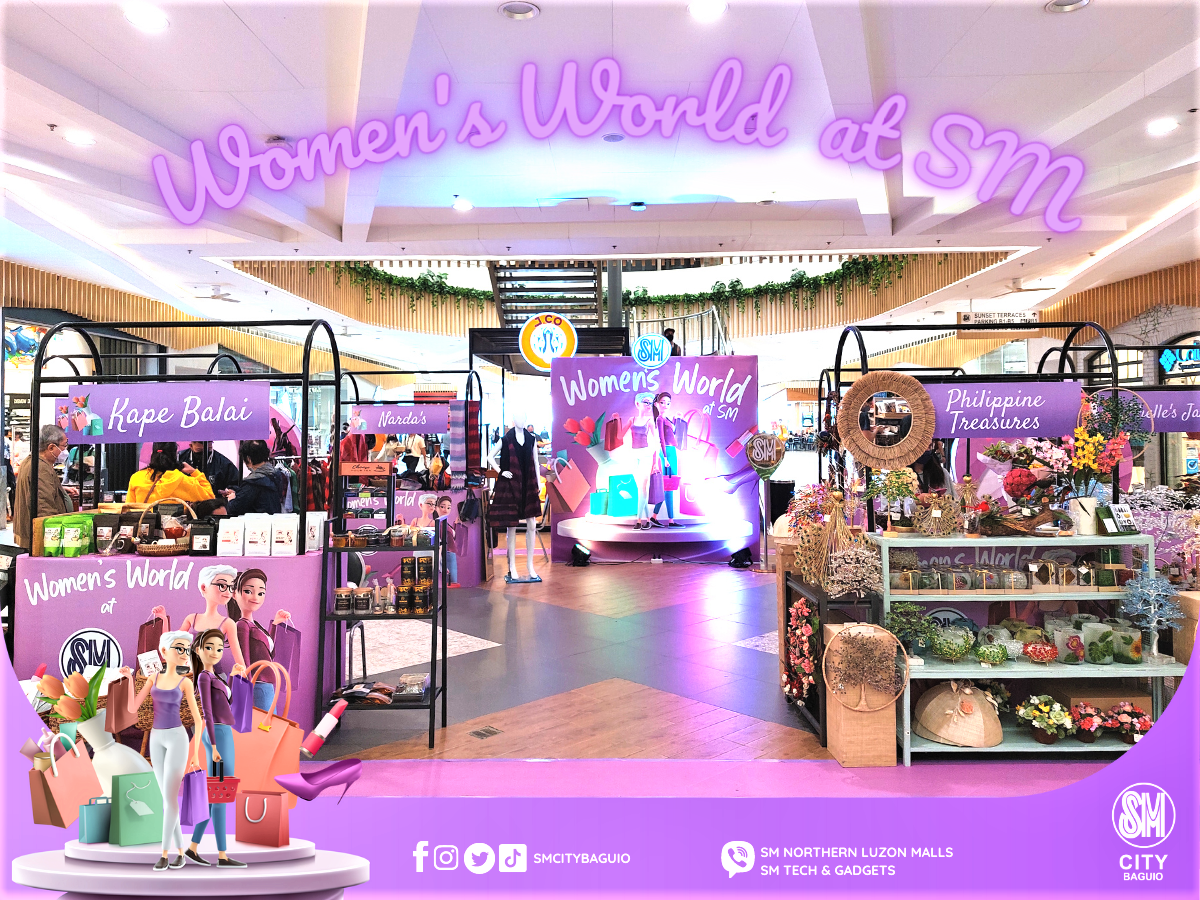
At SM, we know what women want

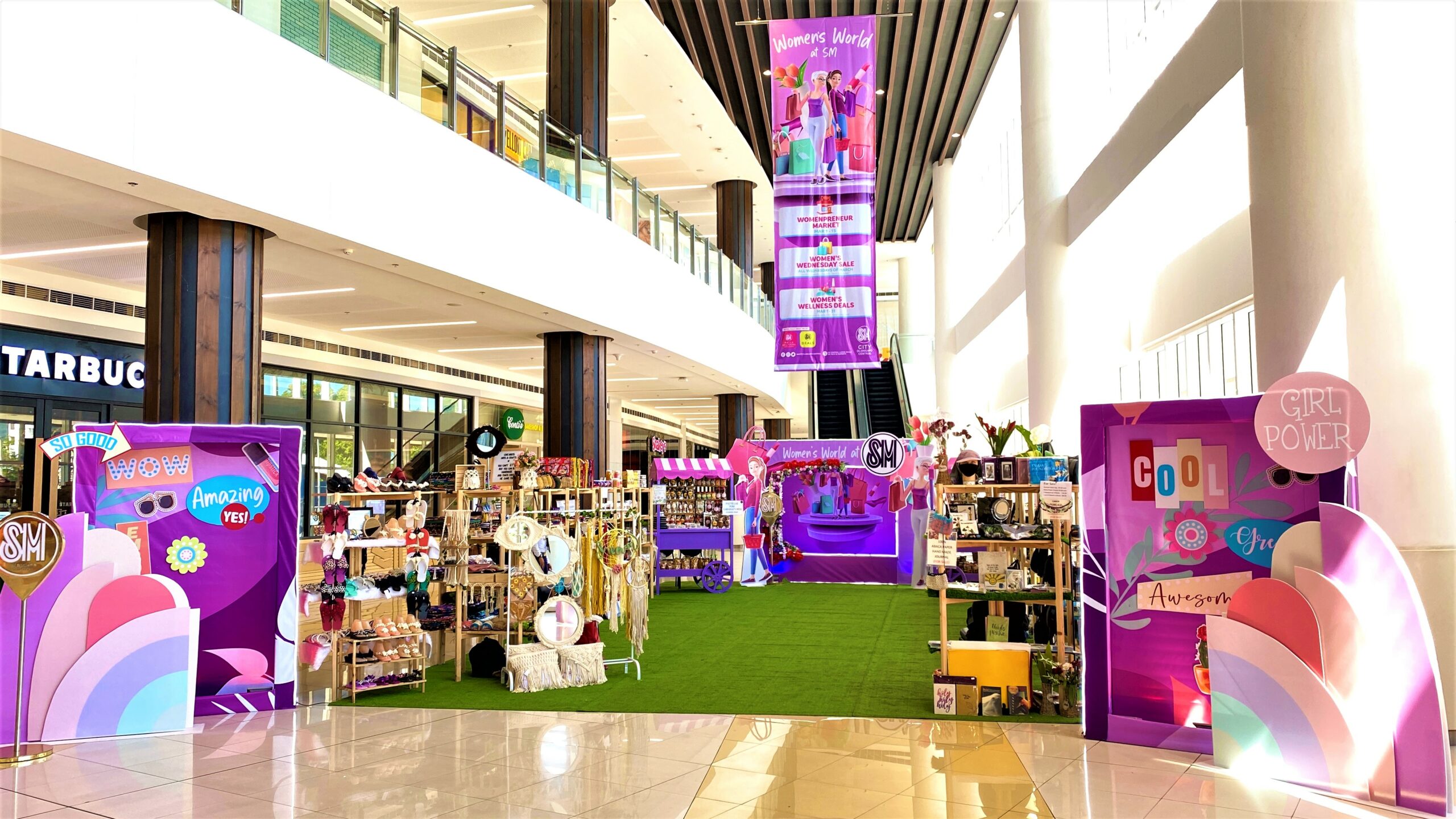
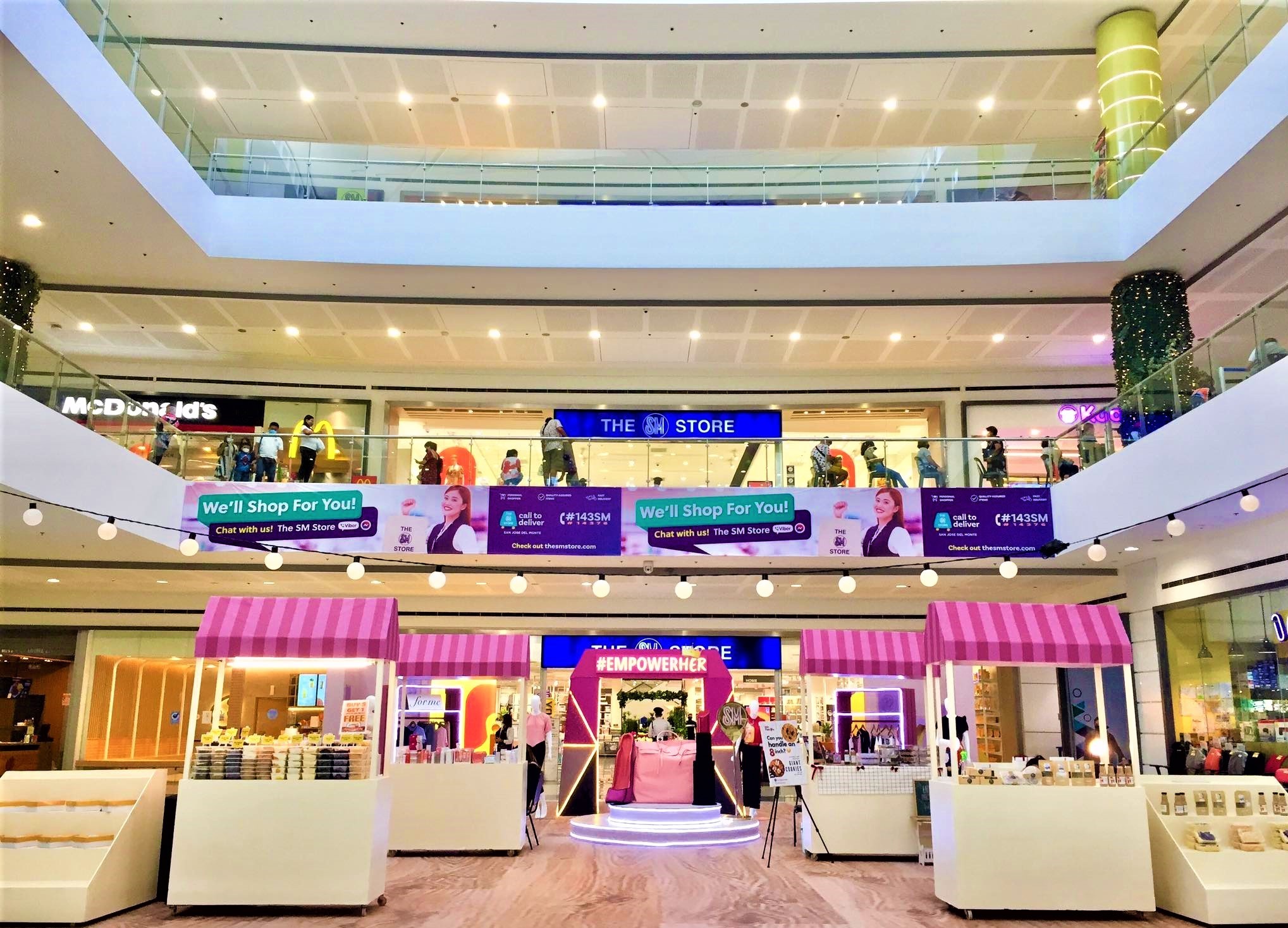
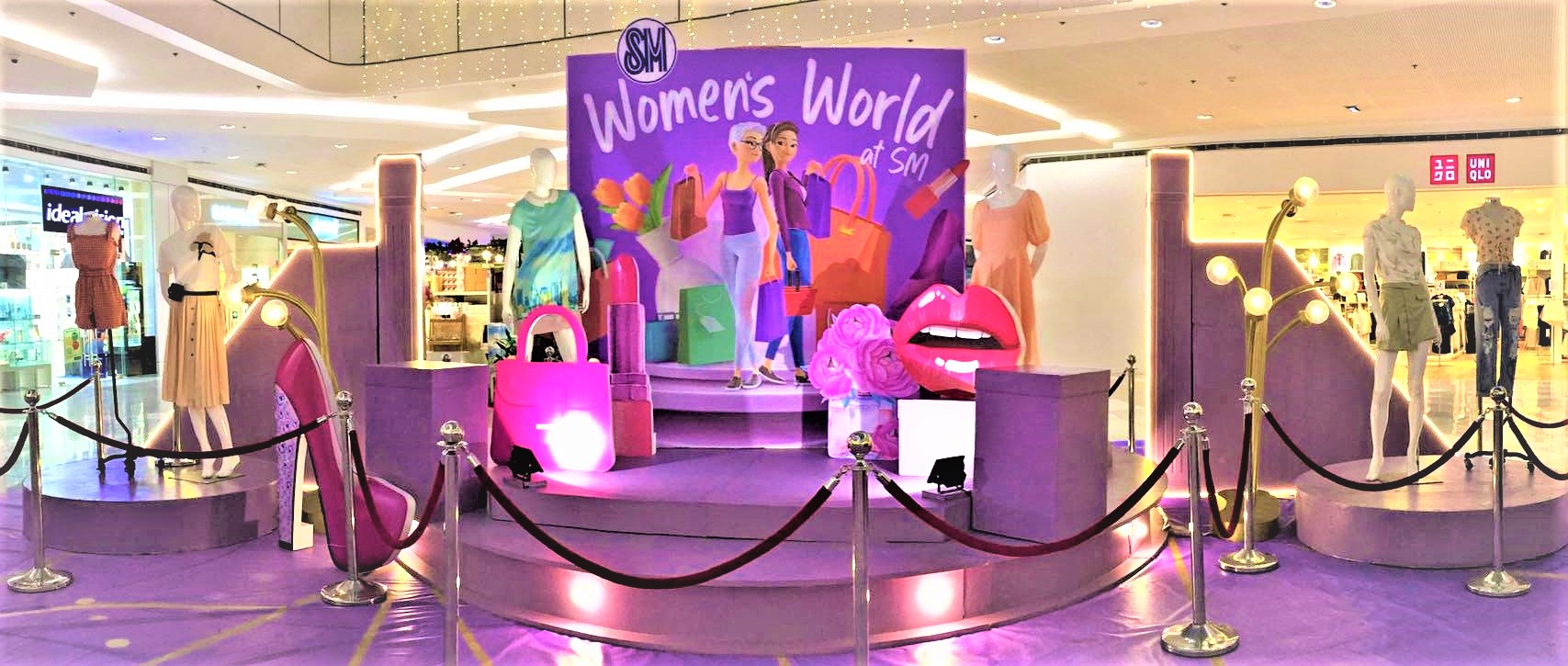
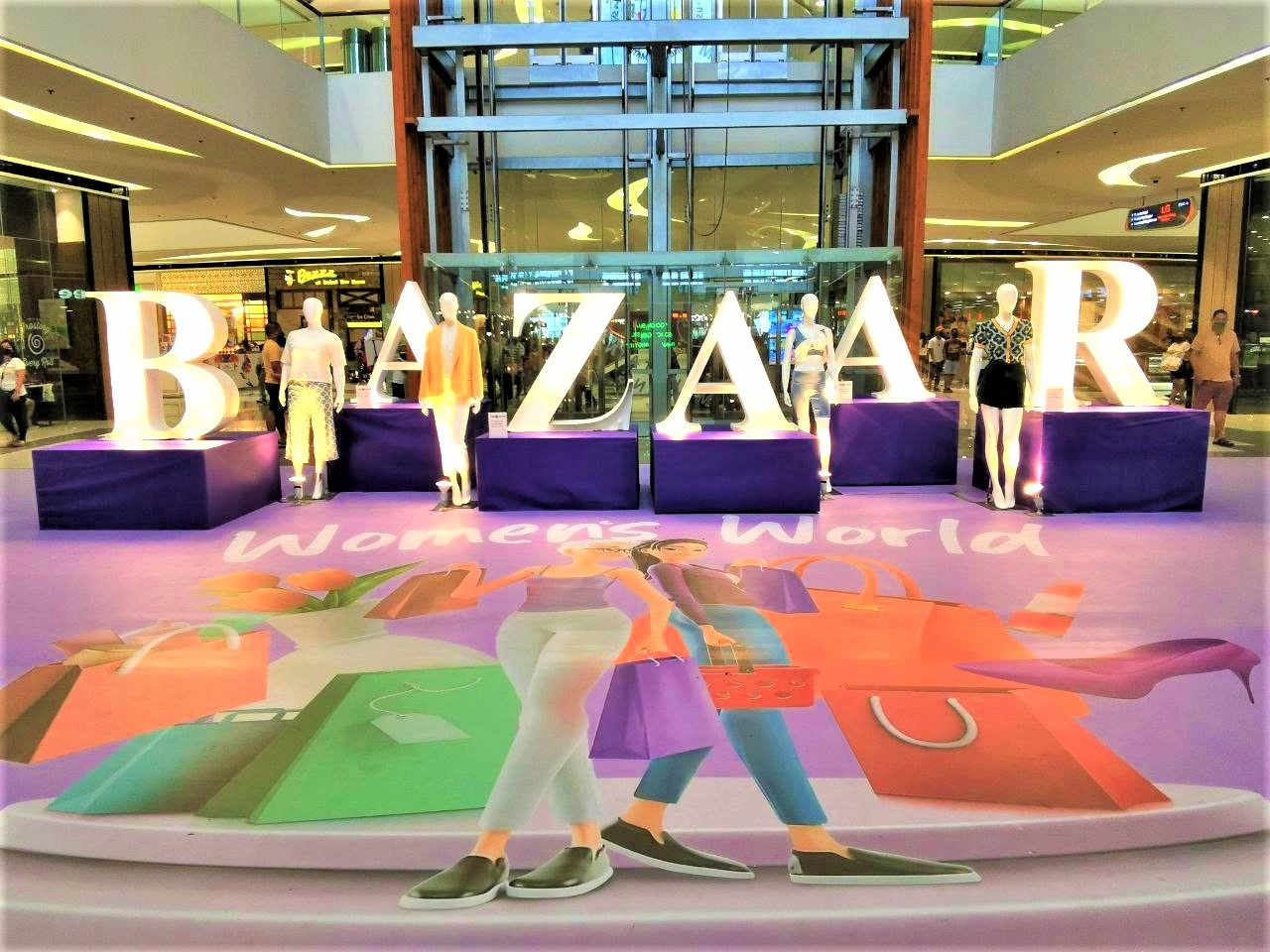
Throughout the whole month of March, women take center stage at SM Supermalls. For inspiring us with their voice, their courage in everything they do, SM Supermalls salutes all Women of The World by giving them what their hearts desire most.

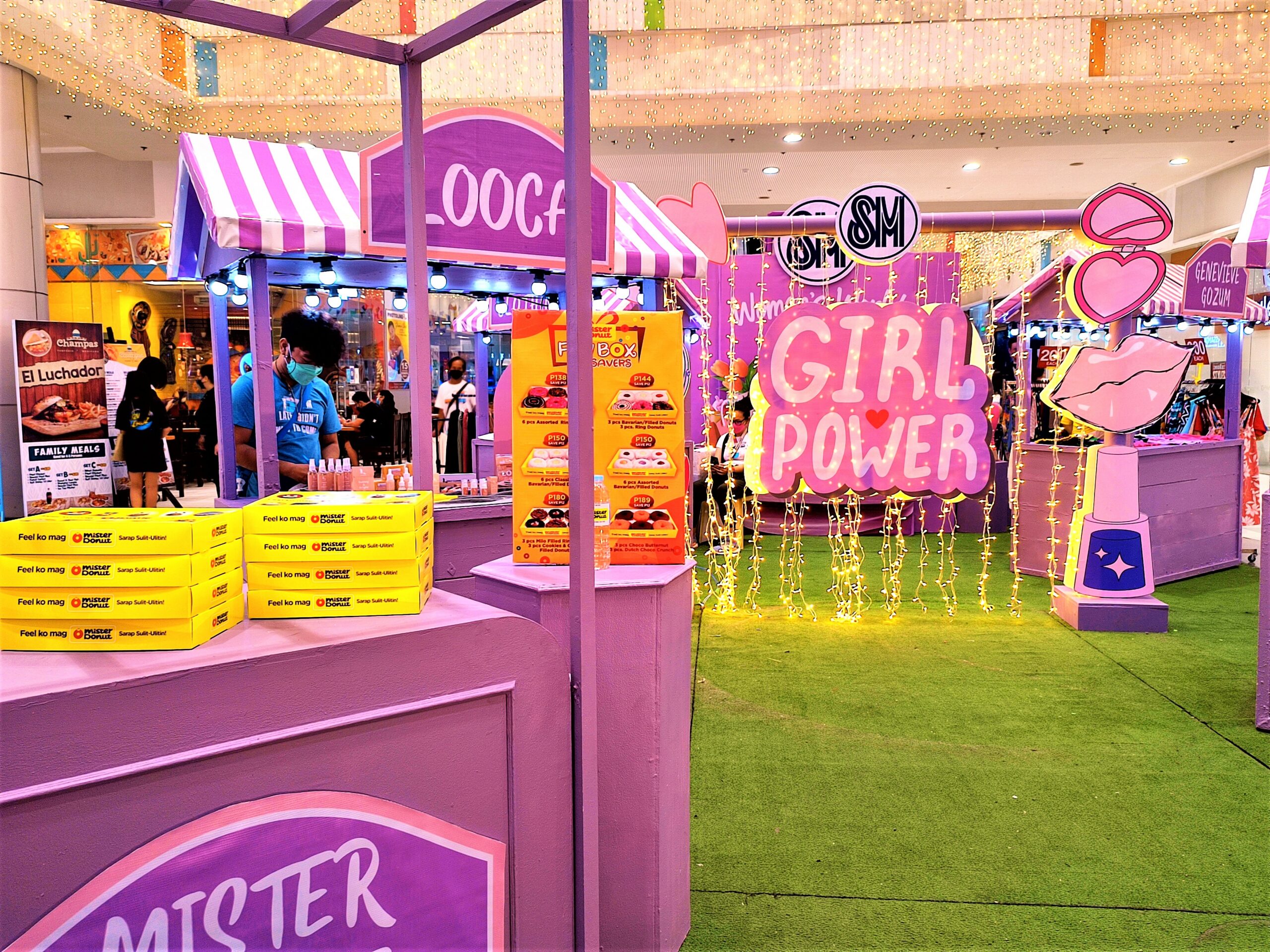
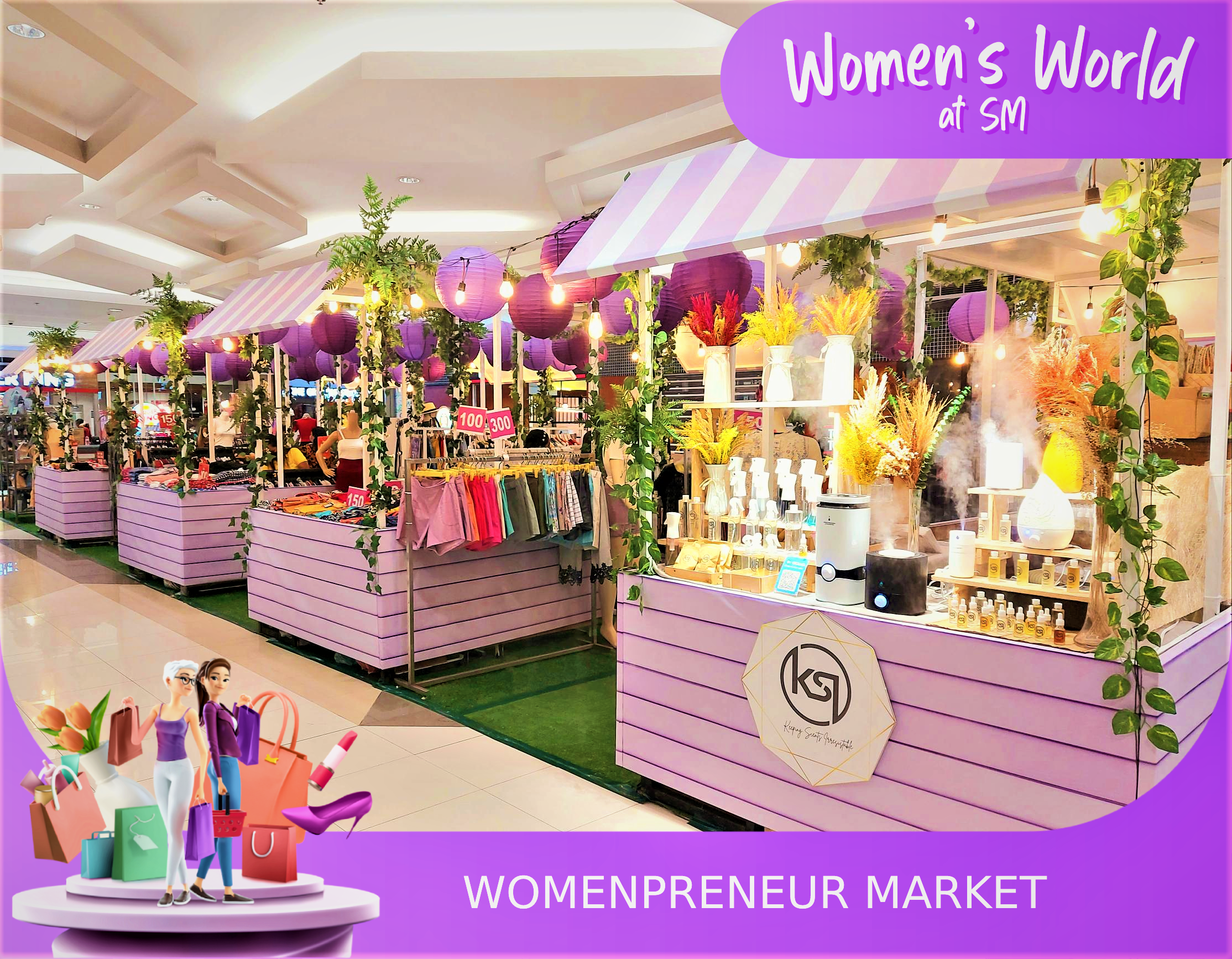
The Womenpreneur Market

From comfort food and beauty cosmetics to active lifestyle and more. Great finds that women love are on sale at the Womenpreneur Market, a gathering of pop ups of small and medium business endeavors for women, by women. Presented in partnership with various SM tenants, affiliates and women’s partner organizations. The Womenpreneur Market is open from March 1 to March 15.

Women at Home

The Home Edit Fair for Women opens a world of hobbies that women love to indulge in. Interior designing, gardening, baking, art and other ways of sprucing up the home have taken the fancy of today’s women. An inviting and charming home for her family and guests is in every woman’s bucket list. The Home Edit Fair is open from March 16 to March 31.

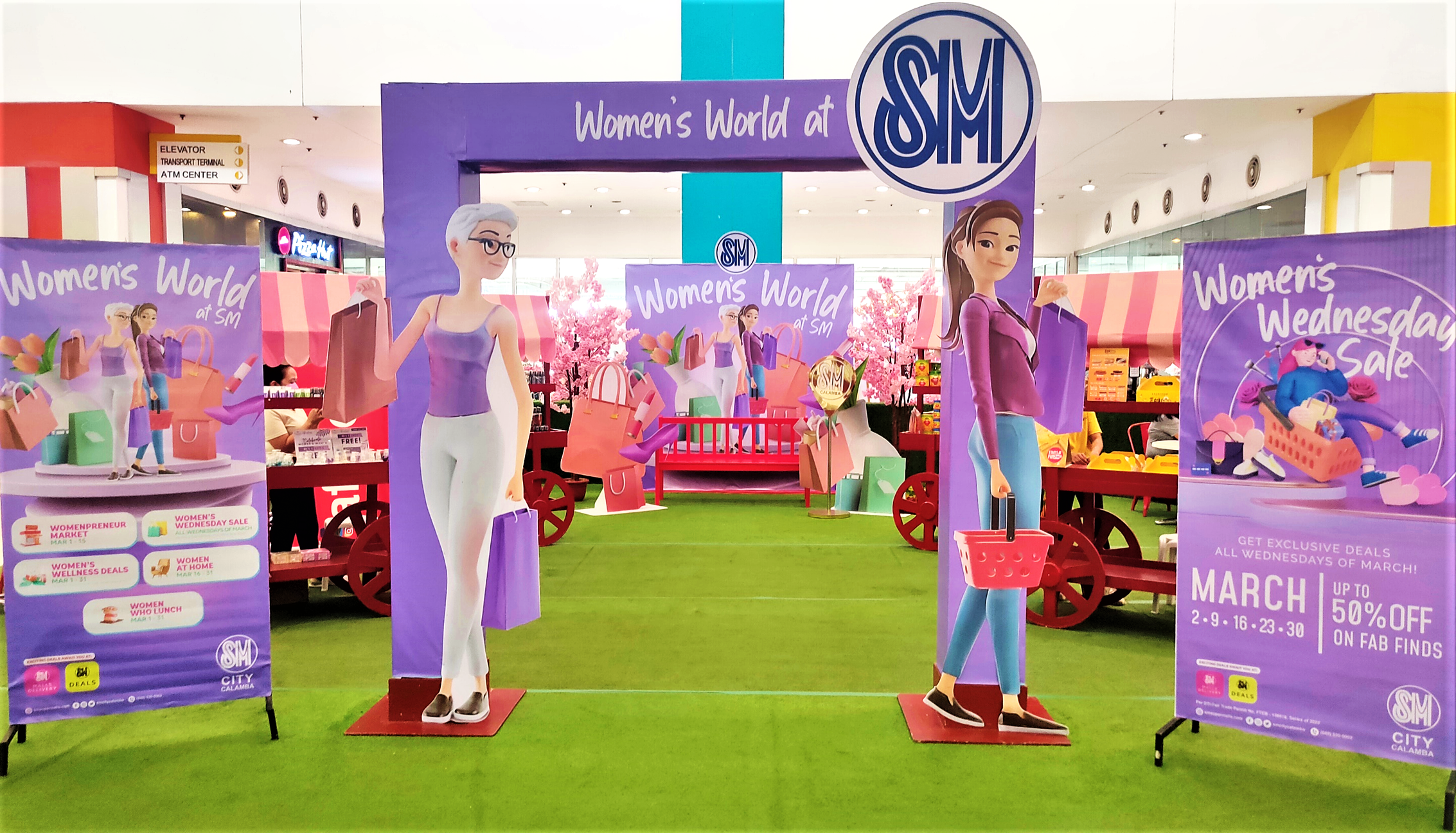
Women’s Wellness and Wednesday Sale

To be pampered from head to foot is an offer no woman can refuse. To avail of the offer at discounted prices makes it even more irresistible. For the whole month of March, women can avail of great deals from wellness salons at SM Supermalls, from facials, hair and body treatments to nail care and massage. Women’s Wellness is on from March 1 to March 31.

The Wednesday Sale is a weekly offering of special deals exclusively for women. Shopping on Wednesdays has become even more tempting for her at SM Supermalls. Catch the sale every Wednesday of the month: March 2,9, 16, 23, and 30

Women Who Lunch

From dining deals to specially prepared dishes and free drinks, women are in for some flavorful treats this month. Moms, Titas, Mars, Lolas, Sis and girlfriends may fulfill their cravings at participating restaurants and food outlets that are whipping up delicious offers exclusively for women. From March 1 to March 31.

Women’s month at SM Supermalls began with a Summit on Women Empowerment for a Sustainable Tomorrow entitled, Women Now and The Future that took place last March 8, in partnership with UN Women, Spark Philippines, Connected Women, and Girl Scouts of The Philippines. The hybrid summit focuses on womenpreneur mentorship with women in business such as, Rissa Mananquil- Trillo, Krie Lopez, Gina Romero and Jammy San Juan-Magsino, as well as empowering the next generation women with Antoinette Taus, Sam Tamayo, Mariane Rosario and Nina Lim-Yuson of Girl Scouts of the Philippines. Hosted by Karen Davila with keynote speech from Steven Tan, live at SM Megamall and the @smsupermalls Facebook page.

Women’s World, a celebration of Women’s month at SM Supermalls, aims to make every woman’s shopping experience more special and meaningful. Because at SM Supermalls, we know what she wants and what she deserves. Visit this link to see all our treats just for you. #WomenFeelAweSM


Spotlight is BusinessWorld’s sponsored section that allows advertisers to amplify their brand and connect with BusinessWorld’s audience by enabling them to publish their stories directly on the BusinessWorld Web site. For more information, send an email to online@bworldonline.com.

Join us on Viber to get more updates from BusinessWorld: https://bit.ly/3hv6bLA.

Do not sabotage Iran deal with new conditions, West tells Russia

 – Western powers on Tuesday warned Russia against wrecking an almost completed deal on bringing the United States and Iran back into compliance with the 2015 nuclear accord, as Iran‘s top negotiator was set to return from consultations in Tehran.

Eleven months of talks to restore the deal which lifted sanctions on Iran in return for curbs on its nuclear program have reached their final stages.

But they have been complicated by a last-minute demand from Russia for guarantees from the United States that Western sanctions targeting Moscow over its invasion of Ukraine would not affect its business with Iran.

U.S. Under Secretary of State for Political Affairs Victoria Nuland said Russia was seeking to reap extra benefits from its participation in the effort to restore the nuclear agreement, but it will not succeed.

Russia is trying to up the ante and broaden its demands with regard to the (nuclear deal) and we are not playing ‘Lets make a deal‘,” Nuland, the No. 3 U.S. diplomat, told a Senate Foreign Relations Committee hearing.

Iran‘s top negotiator Ali Bagheri Kani is due back in Vienna on Wednesday after unexpectedly returning to Tehran on Monday for consultations, an Iranian and a European official said.

The talks’ coordinator, Enrique Mora of the European Union, said on Monday the time had come for political decisions to be taken to end the negotiations.

“The window of opportunity is closing. We call on all sides to make the decisions necessary to close this deal now, and on Russia not to add extraneous conditions to its conclusion,” Britain, France and Germany said in a joint statement to the U.N. nuclear watchdog’s 35-nation Board of Governors.

Iran has sought to remove all sanctions and it wants guarantees from the United States that it will not abandon the agreement once more, after then-U.S. President Donald Trump walked out of the deal in 2018 and reimposed sanctions.

Diplomats have said until now that several differences still needed to be overcome in the talks, including the extent to which sanctions on Iran, notably its elite revolutionary guards, would be rolled back and what guarantees Washington would give if it were to again renege on the deal.

Two Western officials said there was now a final text on the table and those issues had been resolved.

While they couldn’t rule out further last-minute surprises, they said the last big open question was whether Russia‘s demands were manageably narrow and limited to nuclear cooperation spelled out in the agreement, as Moscow’s envoy to the talks has told other parties, or much broader, as Russian Foreign Minister Sergei Lavrov has described them.

“We are very close to an agreement. It is essential we conclude while we still can,” France’s Foreign Ministry spokeswoman Anne-Claire Legendre told reporters in a daily briefing. Read full story

“We are concerned by the risks that further delays could weigh on the possibility of concluding,” she said.


COMMON INTEREST

Moscow threw the potential wrench in the works on Saturday, just as months of indirect talks between Tehran and Washington in Vienna appeared to be headed for an agreement, with Lavrov saying the Western sanctions over Ukraine had become a stumbling block for the nuclear deal.

The EU’s Mora and Russia‘s top negotiator Mikhail Ulyanov held talks in Vienna on Tuesday evening, exchanging views on the “current developments and way ahead,” Moscow’s envoy said on Twitter.

Western officials say there is common interest in avoiding a nuclear nonproliferation crisis, and they are trying to ascertain whether what Russia is demanding regards only its commitments to the Iran deal. That would be manageable, but anything beyond that would be problematic, they say.

The new agreement would lead to Russia taking in excess highly enriched uranium that would be taken out of Iran to bring Tehran back into compliance with the original deal‘s caps on the purity and amount of the enriched uranium it is stockpiling.

Rosatom, a state-run company formed by Russian President Vladimir Putin in 2007, is key to that and has still not been added to Western sanctions.

U.S. Secretary of State Antony Blinken played down the issue during a visit to Estonia on Tuesday and said Russia and the United States still shared a desire to prevent Iran from acquiring a nuclear weapon. Read full story

European negotiators from France, Britain, and Germany had already temporarily left the talks as they believed they had gone as far as they could go and it was now up to the two main protagonists to agree on outstanding issues. – Reuters

McDonald’s, Starbucks, Coke and Pepsi all halt sales in Russia

A closeup shot of a sign that says "Sorry We're Closed" hanging on a glass door Wood photo created by wirestock - www.freepik.com

 – McDonald’s, PepsiCo, Coca-Cola and Starbucks stopped sales of their best-known products in Russia on Tuesday, offering a united rebuke of the war on Ukraine by companies that define America for much of the world.

Pepsi and McDonald’s were corporate pioneers whose work with the Soviet Union and the post-Soviet Russian state decades ago were seen as improving international relations.

All four companies have major operations in Russia.

McDonald’s said it would go on paying salaries to its 62,000 employees in Russia as it closed 847 restaurants. The first location to open in Russia, in central Moscow’s Pushkin Square in 1990, became a symbol of flourishing American capitalism as the Soviet Union fell. Read full story

“I’m glad they came around and made the right decision,” Jeffrey Sonnenfeld, a professor at the Yale School of Management who is tracking major companies’ stances on Russia, said after the move by McDonald’s. “It’s a really important impact, and it’s symbolic as much as it is substantive.”

Starbucks Corp SBUX.O is temporarily closing hundreds of stores. PepsiCo Inc PEP.O will suspend all advertising in Russia and stop the sale of its drinks brands, while continuing to sell essentials such as milk and baby food. Rival Coca-Cola Co KO.N said it will suspend its business there. Read full story

Coca-Cola was the official drink of the 1980 Olympic Games in Moscow, despite the United States boycotting the event in protest of the Soviet invasion of Afghanistan.

Scores of other companies also have rebuked Russia, and Amazon.com Inc AMZN.O said on Tuesday it would stop accepting new customers for its cloud services in Russia and Ukraine. Universal Music suspended all operations in Russia, and online dating service Bumble Inc will remove its apps from stores in Russia and Belarus.

Earlier, Royal Dutch Shell Plc RDSa.L stopped buying oil from Russia and said it would cut links to the country entirely while the United States stepped up its campaign to punish Moscow by banning Russian oil and energy imports.

Moscow has termed the attack a “special military operation” aimed not at occupying territory but at destroying Ukraine’s military capabilities.

The West’s moves to isolate Russia economically for attacking its neighbour have hit hard global commodity and energy markets, sending prices soaring and threatening to derail the nascent recovery from the COVID-19 pandemic. Read full story

Britain too said it would ban imports of Russian oil but only by gradually phasing them out during 2022 to give businesses time to find alternative sources of supply.

The London Metal Exchange (LME) halted trade in nickel on Tuesday after prices of the metal, a key component in electric vehicle batteries, doubled to more than $100,000 a tonne.

Shell’s decision to abandon Russia comes days after it faced a barrage of criticism for buying Russian oil – a transaction that two weeks ago would have been routine.

“We are acutely aware that our decision last week to purchase a cargo of Russian crude oil to be refined into products like petrol and diesel – despite being made with security of supplies at the forefront of our thinking – was not the right one, and we are sorry,” Chief Executive Ben van Beurden said.

Shell and rivals BP Plc BP.L and Exxon Mobil Corp XOM.N have all announced plans to sell holdings in Russia and exit the country, leaving France’s TotalEnergies TTEF.PA relatively isolated in hanging on to its investments there. Read full story


HYBRID DELAYS

Mining group BHP BHP.AX warned the surge in commodity prices could spill over into already-skyrocketing inflation and potentially affect global growth.

Nickel prices soared when China’s Tsingshan Holding Group, one of the world’s top nickel and stainless steel producers, bought large amounts of nickel to reduce its bets that prices would fall, three sources familiar with the matter said. Read full storyRead full story

Tsingshan and the LME declined to comment.

As well as high-grade nickel, the price of other metals used in car production, from aluminium in bodywork to palladium in catalytic converters, has soared, and industry supply chains have been broken. Read full story

Volkswagen AG VOWG_p.DE said it would stop taking orders for numerous plug-in hybrid models from Wednesday, as supply-chain troubles exacerbated the production delays caused by chip shortages.

The carmaker had already halted production in Russia and has also suspended production at several factories in Germany as it has struggled to obtain components. Read full story

Orders for the plug-in hybrid versions of Volkswagen’s Golf, Tiguan, Passat, Arteon and Touareg models would be halted until further notice and delivery of already-placed orders might not happen this year, the company said. – Reuters

OREO inspires playfulness among Filipinos, marks 110th year

For 110 years now, OREO has been satisfying and bringing delightful bonding time to families with its delicious and high-quality taste.

The world’s number one cookie and best-tasting sweet sandwich was born in the Chelsea Market in Manhattan back in 1912. Since then, OREO has been offered in other flavors and varieties yet continues to be the sweet snack that is part of and inspires more playful moments among consumers around the world.

This is how OREO’s maker Mondelēz International wants to celebrate the cookie’s 110th year — make more families have playful moments with OREO.

“OREO is known to be a playful cookie because of the fun experience, the delicious cookie, the high-quality product, and the way that it brings people together because of the fun and playful way to consume it,” said Criselle Villafuerte, senior brand manager for biscuits of Mondelēz International.

Everyone is pretty much aware of the iconic tradition of enjoying an OREO: twist the cookie, lick it, and dunk it in milk. This is what makes the cookie playful and brings families together to have fun.

Mondelēz International wants more Filipinos to have such a fun experience with OREO to mark its 110th year by offering new flavors, making the delight more accessible, and supporting more playful moments among families.

Aside from the original OREO, its beloved taste can also be enjoyed in different and playful snacking formats in the Philippines. Each year, Mondelēz Internatinoal launches seasonal flavors in the market. It brought out around three flavors last year, among which is the new OREO Fizzy and the return of the Peanut Butter and Chocolate OREO and the Golden OREO.

This year, as part of its 110th birthday celebration, new OREO flavors will be available that consumers can enjoy.

“We are also offering different pack offers, the P7.60 pack at sari-sari stores.Iin supermarkets we are also coming up with a more value-for-money or budget pack that will enable people to enjoy an OREO,” Ms. Villafuerte shared.

And to support more fun and playful experiences with OREO among families, the Save Dads campaign was launched in January, which is also part of OREO’s 110th celebration.

The campaign involved the #OREOSaveDads dance challenge that hopes to bring out the playful side of hardworking dads as they join their kids in enjoying Oreo.

“We know that now in the pandemic, work-life balance is difficult as everyone’s working from home. That is why we have the Save Dads campaign to remind everyone to always have playful moments with your kids even you are working from home. And you can use an OREO for that,” Ms. Villafuerte said.

OREO will mark its 110th birthday in the Philippines in May and will be filled with exciting activities that consumers should watch out for. “We want to celebrate the 110 years of making consumers’ lives more playful,” Ms. Villafuerte said.


Spotlight is BusinessWorld’s sponsored section that allows advertisers to amplify their brand and connect with BusinessWorld’s audience by enabling them to publish their stories directly on the BusinessWorld Web site. For more information, send an email to online@bworldonline.com.

Join us on Viber to get more updates from BusinessWorld: https://bit.ly/3hv6bLA.

Manufacturing cools down anew in January

Factory output sustained its slowdown for the second straight month in January as the fresh  surge in coronavirus disease 2019 prompted the government to reimpose stricter mobility curbs.

Preliminary data from the Philippine Statistics Authority’s (PSA) Monthly Integrated Survey of Selected Industries (MISSI) showed manufacturing, as measured by the volume of production index (VoPI), grew by 16.5% year on year in January.

This was slower than December’s revised 21.3% growth and a turnaround from the 14.5% contraction recorded in January 2021.

This is the second month straight the VoPI posted a slower growth. It was also the 10th straight month that factory out posted positive reading.

Sixteen out of 22 industry divisions posted growth in January, led by manufacture of tobacco products which rose by 88.4% annually from -14.5% in December. It was followed by wood, bamboo, cane, rattan articles, and related products (86.8% from 110.3%) and basic pharmaceutical products and pharmaceutical preparations (47.8% from -30%).

Meanwhile, manufacture of wearing apparel (-24.2% from -0.4%) led the decliners that month, followed by leather and related products, including footwear (-6.3% from 0.5%) and chemical and chemical products (-2.3% from 31.5%).

In comparison, IHS Markit’s Philippines Manufacturing Purchasing Managers’ Index ended four consecutive months of growth after hitting the 50 mark in January, signifying no change in manufacturing condition the previous month.

The 50 mark separates manufacturing expansion and contraction.

The capacity utilization — the extent to which industry resources are used in producing goods — averaged 67.9% in January, faster from the revised 67.4% the previous month. Of the 22 sectors, 20 averaged a capacity utilization rate of at least 50%. — A. O. A. Tirona

Today’s visionary, tomorrow’s icon

ArchiNEXT: Young Designers’ Competition believes that young mind transforms the visions into our future’s icon. ArchiNEXT is a platform that challenges the ingenuity and proficiency of young students to showcase a sound design yet sustainable Architectural masterpieces.

ArchiNEXT is in partnership with the United Architects of the Philippines (UAP), the Council of Deans and Heads of Architecture Schools in the Philippines (CODHASP) and HCG (Hocheng Philippines Corporation) to help in recognizing the passion and hard work of each young designer in transforming them from an industrious learner to a trailblazer. ArchiNEXT is a three part program: Competition, Scholarship, and Internship.

From last year’s competition with the theme LINGAP: General Hospital and Extended Emergency Facility, ArchiNEXT related its theme to our nation’s current situation. As the pandemic hit the Philippines, our general healthcare system including General Hospitals and Extended Emergency Facilities was greatly affected, and ArchiNEXT challenged our young students to envision a sustainable and relevant structure that will benefit our rural communities especially in trying times.

FORMOSA: A Proposed Hospital and Extended Emergency Facility, design made by Yvonne Joy Salamero and Adrian Jerome Pajarillo from Bicol University,stood-out from all78 qualified entries and was awarded as last year’s Grand Winner. Coming from second place were students of University of Santo Tomas, Xyruz Jior Caluag, Keilah Raj Segovia and Danison de Guzman, with their design PIKALAWAG COMMUNITY HOSPITAL: An Integrated General Hospital and Community Aquaponic Garden, and the 3rd place was KALINAW by Gelene Francisco and Peter Jhon Marc Tubo from Bicol University

Now on its 8th Season, the theme for this year is LULINGHAYAW: A Localized Sustainable Eco-tourism Destination that challenges architectural students to envision a Filipino-inspired tourist destination. This time, ArchiNEXT takes on the challenge of promoting Philippine Architecture, Filipino Culture, and Philippine customs and traditions.

As ArchiNEXT 2022 gets more exciting it received entries from 26 different colleges and universities nationwide. A total of 151 qualified entries will be screened to determine the Magic Number Finalists who will be up for the Final Screening scheduled to be held on March 18, 2022.

Join us and be part of the ArchiNEXT: Young Designers’ Competition when we do the Final Screening to witness the story of this year’s Winners by visiting our FB page at: www.facebook.com/archinextph. The winners for ArchiNEXT2022 Winners will be announced during the celebration of Construction Expo (CONEX) and National Convention for Architects (NATCON). Likewise the Top 10 entries will also be displayed at the ArchiNEXT Gallery to showcase our very promising architectural students with their exemplary masterpieces.

ArchiNEXT: Young Designers’ Competition believes that this is just the beginning of every young student’s journey as an Architect. Scholarship and Internship awaits all winners which will also help the students to widen-up their limitless creativity because challenges never end.

Browse more amazing stories from ArchiNEXT previous winners and updates for at their Official website at www.archinext.ph.  #archinext2022 #lulinghayaw #archinext


Spotlight is BusinessWorld’s sponsored section that allows advertisers to amplify their brand and connect with BusinessWorld’s audience by enabling them to publish their stories directly on the BusinessWorld Web site. For more information, send an email to online@bworldonline.com.

Join us on Viber to get more updates from BusinessWorld: https://bit.ly/3hv6bLA.

PHL moves to cushion oil shock impact

PHILIPPINE STAR/ MICHAEL VARCAS
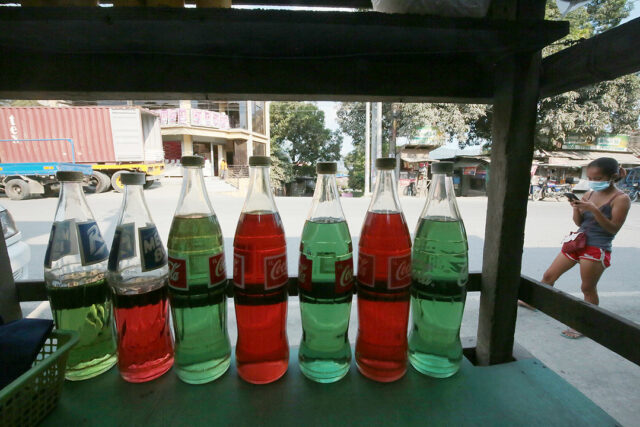
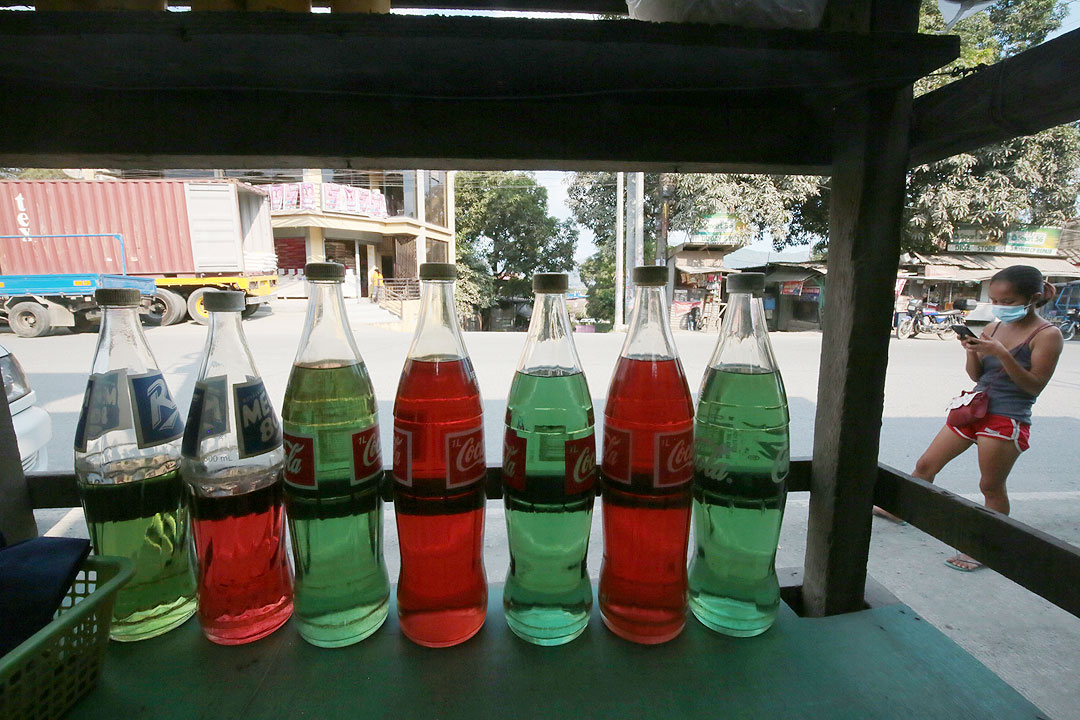
Several bottles are filled with petroleum products in San Jose, Rodriguez, Rizal, March 4. Fuel retailers raised pump prices on Tuesday. — PHILIPPINE STAR/ MICHAEL VARCAS

ECONOMIC MANAGERS approved the implementation of several measures to cushion the impact of the Russia-Ukraine crisis on the Philippine economy, such as temporarily allowing more imports of rice, pork and fish, increasing coal supply, and raising fuel subsidies for public transport drivers.

In a televised Palace briefing on Monday evening, Finance Secretary Carlos G. Dominguez III said he does not expect the Russia-Ukraine crisis to “last very long,” adding the Philippine economy will only be affected because oil and food prices will continue to rise.

“The Philippine economy will likely be collateral damage. It is as if we are hit by a ricocheting bullet,” he said.

“This crisis may increase the prices across several sectors and thereby cause our inflation rate to breach our target, but with the measures that we discussed at the Economic Development Cluster… we are confident that we will be able to keep the inflation within our target range of 2 to 4% and maintain our growth path of 7 to 9% this year,” Mr. Dominguez said.

At the same briefing, Socioeconomic Planning Secretary Karl Kendrick T. Chua detailed the 14 measures approved by the Economic Development Cluster that would help ease the impact of the war between Russia and Ukraine on the economy.

This includes increasing imports of coal, corn, rice, pork, fish, sugar, and wheat.

He told President Rodrigo R. Duterte that economic managers will request for the issuance of an executive order to reduce tariffs.

The government can increase its supply of coal and lower prices by removing the most favored nation tariff rate of 7% until December, Mr. Chua said.

He also said there should be a continuous release of sanitary and phytosanitary import clearances for rice, and that the lower tariff rate for pork be extended.

Tariff rates for corn should be lowered, while direct importation of half of food manufacturers’ sugar stock should be allowed, Mr. Chua added.

He said the economic team recommended legislation that will increase the buffer stock of petroleum to 45 days from 30 days. A new law could also raise the buffer stock of liquefied petroleum gas (LPG) to 15 days from seven, he added.

“When we expand the buffer stock, we can ensure more adequate supply and meet demand in case there is a global shortage,” Mr. Chua said.

Mr. Chua said shifting the entire country to Alert Level 1, the least strict pandemic restrictions, would help strengthen the domestic economy.

“While we cannot prevent the risks coming from the global perspective, we can strengthen our domestic economy to provide the people with more jobs and opportunities,” he said.

The cluster also recommended that the government increase the fuel subsidy program for public utility vehicles to P5 billion from P2.5 billion.

“The first tranche we will give in March, the second tranche in April,” Mr. Chua said.

The additional subsidy can be funded through excess tax collections in March, National Economic and Development Authority (NEDA) Undersecretary Rosemarie G. Edillon said at a public briefing on Tuesday.

In addition, the cluster supports Senate Bill No. 139 or the Philippine Livestock Industry Development Act establishing a development fund for the sector to increase daily production.

Other recommendations by the economic team included allowing foreign ownership in micro-grid, solar, wind and tidal energy; promoting energy conservation; suspending pass-through fees charged by local governments; and including renewable energy and agriculture into the Strategic Investment Priority Plan, which details priority industries for government incentives. — Jenina P. Ibañez

Pressure to raise jeep fares grows

PHILIPPINE STAR/ MICHAEL VARCAS

By Arjay L. Balinbin, Senior Reporter

THE LAND Transportation Franchising and Regulatory Board (LTFRB) is facing pressure to raise the minimum jeepney fare as fuel prices are expected to continue to soar.

The LTFRB on Tuesday held a hearing on the petition to temporarily restore the minimum jeepney fare to P10 while there is no decision yet on two separate petitions to raise the base fare to P14-15.

LTFRB Chairman Martin B. Delgra III said petition to restore the P10 minimum jeepney fare will now be up for resolution, while the other proposed hikes will be heard on March 22.

Transport groups 1-United Transport Koalisyon (1-UTAK), Pasang Masda, Alliance of Transport Operators and Drivers Association of the Philippines (ALTODAP), and Alliance of Concerned Transport Organizations (ACTO) asked the LTFRB to restore the minimum fare to P10 for jeepneys from the current P9 in the National Capital Region and Regions 3 and 4. The LTFRB decided to “temporarily” reduce the minimum jeepney fare to P9 as diesel pump prices fell in December 2018.

The same groups are seeking a base fare of P14, or an increase of 55.56% from the current minimum jeepney fare, while the Liga ng Transportasyon at Operators sa Pilipinas (LTOP) is asking for a P15 minimum fare.

Greg G. Pua, Jr., counsel for 1-UTAK, Pasang Masda, ALTODAP, and ACTO, said the base fare should be reverted back to P10 pending resolution of their fare hike petition.

He noted the price of diesel was only P38 per liter in December 2018, and when they filed the petition in January 2022, diesel was already around P54.37 per liter.

“And now, because of the current increases, there is an additional P5.85, making the price of diesel around P62 to P63, a big difference from the price of P38 when the LTFRB provisionally reduced the minimum jeepney fare and a difference of P15 when it permanently granted a P10 minimum fare for jeepneys,” Mr. Pua said.

Rep. Vigor D. Mendoza II of 1-UTAK said the average daily fuel consumption of a jeepney is anywhere between 50 to 60 liters.

“We are doing around 3.2 to 3.5 kilometers per liter right now, and we are doing a passenger load of around 300 passengers a day (prior to Alert level 1),” he told the board during the hearing.

“The cost of fuel increase translates to around P1,200 additional expense. That’s 60 liters times the P20 jump — from P40 per liter to P60 per liter. If you have 300 passengers a day, the P4 or P5 we are asking for is just enough to cover this increase in fuel price as well as the increase in spare parts cost,” he added.

The conflict between Russia and Ukraine continues to push fuel prices upwards. Fuel prices increased for the tenth consecutive week on Tuesday: P3.60 per liter for gasoline, P5.85 for diesel, and P4.10 for kerosene. Since the start of the year gasoline, diesel, and kerosene prices per liter have risen by P13.25, P17.50, and P14.40, respectively.

Meanwhile, LTOP President Orlando Marquez invoked the section 4 of LTFRB’s Memorandum Circular No. 2019-035 on fare adjustment formula, which stated: “With due consideration to regional data and other surrounding circumstances, the LTFRB shall, without the need for public hearings and other special proceedings, increase or rollback the fare whenever such change occurs in fuel price.”

But LTFRB’s Mr. Delgra argued that the same memorandum stated that “changes to the formula shall be determined by the LTFRB, subject to the concurrence of the Department of Transportation, on the basis of new findings, studies, and other socioeconomic factors.”

In his presentation, LTFRB Officer-in-Charge for Franchise Planning and Monitoring Diosdado B. Santiago, Jr. cited a report by the National Economic and Development Authority in 2018, saying the proposed hike “would mean fueling further inflationary expectations when these costs are transferred to the consumers.”

To avoid transferring the costs to the consumer, Mr. Santiago said that there is a P2.5-billion fuel cash subsidy under the 2022 budget aimed at supporting around 264,443 jeepney operators and drivers under the LTFRB and 113,000 from other agencies or a total of 377,443 beneficiaries.

Mr. Santiago noted that the government has a service contracting program, but Mr. Pua, the transport groups’ lawyer, said not all jeepney drivers and operators are able to join this program.

In an analysis sent to BusinessWorld, transport expert Rene S. Santiago said the jeepney sector, numbering about 180,000 nationwide, is being killed slowly not just by the pandemic but also the worsening traffic congestion.

“Traffic congestion that crept slowly from 2011 to 2019, effectively reducing their revenue potentials by 50% and simultaneously increasing their fuel consumption by 38%; the PUVM (public utility vehicle modernization) program that set a three-year deadline for operators to replace their old fleet with new vehicles costing more than five times their previous capital; and failure of LTFRB to adjust fares with surging cost of fuel, in violation of its own directive MC-2019-035 dated 26-July 2019,” he added.

“The heaviest blow is on the lowly drivers who absorb the fuel cost and bear the market risk, aside from working more than 8 hours a day. Before the pandemic, the public utility vehicle drivers in Metro Cebu managed to earn about P600/day; a little bit higher at P800 in Metro Manila,” he also said.

Dollar reserves rise to $107.98B as of end-Feb.

REUTERS

By Luz Wendy T. Noble, Reporter

THE PHILIPPINES’ gross international reserves (GIR) edged higher as of end-February amid the higher valuation of the central bank’s gold reserves.

Preliminary data released by the Bangko Sentral ng Pilipinas (BSP) showed the GIR increased by 0.26% to $107.98 billion last month from the $107.69 billion seen as of end-January. It also went up by 2.68% from the $105.161 billion a year ago.

“The month-on-month increase in the GIR level reflected mainly the upward adjustment in the value of the BSP’s gold holdings due to the increase in the price of gold in the international market and the BSP’s net income from its investments abroad,” the BSP said in a statement on Tuesday.

The level of dollar reserves as of end-February is enough to cover about 8.4 times the country’s short-term external debt based on original maturity and 5.8 times based on residual maturity.

It is also equivalent to 10.2 months’ worth of imports of goods and payments of services and primary income.

Ample foreign exchange buffers protect an economy from market volatility and ensure the country is able to pay its debts in the event of an economic downturn.

“The GIR would help strengthen the country’s external position and, in turn, fundamentally support the country’s credit ratings,” Rizal Commercial Banking Corp. Chief Economist Michael L. Ricafort said in a Viber message.

Broken down, reserves in the form of gold were valued at $9.585 billion as of end-February, 4.4% higher than the $9.181 billion as of end-January and up 4.5% from the $9.17-billion level a year earlier.

Mr. Ricafort said global prices of gold may continue to appreciate as investors rush to safe-haven assets due to the ongoing Russia-Ukraine war.

The central bank’s foreign investments amounted to $93.107 billion, up by 0.18% from the $92.939 billion in the previous month and by 2.7% from the $90.679 billion in February 2021.

Meanwhile, foreign currency deposits dropped by a third to $554.4 million from $831.7 million a month earlier and by 83% from the $3.266-billion level a year ago.

The country’s reserve position in the International Monetary Fund (IMF) slipped by 0.14% to $798.9 million as of end-February from $800.7 million in the prior month and by 1.7% from the $812.5 million last year.

Special drawing rights — or the amount the country can tap from the IMF — was steady at $3.934 billion for the second straight month. It was more than three times the $1.232 billion as of end-January 2021.

Mr. Ricafort said ample foreign exchange buffers will be crucial for the Philippines amid heightened volatility in the markets due to the Russia-Ukraine war.

“High GIR provides greater cushion versus any further increase in the country’s import bill and widening of the country’s trade deficit, which could happen due to the sharp increase in the prices of imported oil and global commodities largely due to Russia’s invasion in Ukraine,” he said.

Oil prices have reached multi-year highs in recent days due to concerns over oil supply, with Russia being the second-biggest exporter of crude.

The BSP projects the GIR to reach $112 billion by the end of 2022.

ADVERTISEMENT
ADVERTISEMENT