Home Blog Page 6658

Putin’s disinformation and Russia’s loss

RUSSIAN PRESIDENT VLADIMIR PUTIN — KREMLIN.RU/

Putin’s war is predicated on a false narrative. In an hour-long address to the Russian people on the eve of the Ukraine attacks, Vladimir Putin revealed his grand argument as to why the Ukraine deserved to be invaded.

Putin claimed that Ukraine was created by the authors of the Russian Communist Revolution more than 100 years ago to be an extension of Russia. That in the last 30 years, the United States and Europe, collectively referred to as the “West,” connived to install Neo-Nazi leaders in the Ukrainian government. Since taking the reins of power, the Neo-Nazis have been feeding the Ukrainian people anti-Russian rhetoric with the intent of exterminating the Russian-speaking communities in the eastern part of the country.

Putin asserts that Ukraine aspires for full NATO membership. Once a part of the western military alliance, Ukraine will serve as the jumping point of the west to obliterate modern day Russia “just as Hitler did 80 years ago.” This time, Putin assures, the Russian people will be ready.

With clear and present dangers, Russia must invade Ukraine to save the Ukrainian people from Nazi tyranny and protect the Russian motherland from possible NATO attacks. Besides, Putin says, if the Ukrainian people are going to disavow Russia and the land the Communist Party gave them, then it must be taken back.

In summary, Putin’s justification for his war hinges on four points. First, that Ukraine has always belonged to Russia. Second, that Ukraine has been “hijacked” by the west. Third, that the west controls the country through Neo-Nazi puppets. And fourth, that NATO is bound to use Ukraine as a bridge to attack Russia.

Aware that the Russian people will reject a bloody invasion, Putin framed his siege as a rescue mission and a national security necessity. This Russian narrative, however false, is echoed by Russian diplomats around the world including the Philippines.

The Putin narrative is untrue on all levels. In the first place, Ukraine was never a Russian creation. Kiev, the capital, was a thriving independent city even before Moscow came to be. It has its own culture and its own historical borders.

Since gaining independence from the USSR in 1991, Ukraine has had seven presidents, all of whom were democratically elected except for Oleksander Turchynov who was an interim president. None of the presidents were Neo-Nazis. In fact, in the 2019 elections, the political party representing the extreme right (the closest in philosophy to Neo-Nazis) won only 2% of the votes and no seats in parliament. As for NATO, Ukrainian membership was never a possibility since it failed to meet the alliance’s qualifications.

Despite a justification based on falsehoods, Putin ordered an all-out invasion in the early morning of Feb. 22. Entering the Ukraine from eight strategic fronts, the Russian forces first seized rural areas with tanks and missiles, before slowly making their way to the cities.

Putin made a grave miscalculation. He thought the Ukrainian people would not resist given the overwhelming strength of the Russian forces. He believed many would even welcome Russian occupation with open arms, especially the citizenry in the Donbas region. How wrong he was.

In an admirable display of bravery, the Ukrainian people resisted Russian aggression with their lives. There is a long waiting list today to join the Ukrainian army. Men and women took up arms to fight. Molotov cocktails versus Russian missile trucks. Civilians used their bodies to block tanks…. many lay prostrate on the streets to prevent Russian convoys from progressing. With such dedication and bravery from the Ukrainian people, the Russian forces are losing despite their immense firepower.

Ukrainian President, Volodymyr Zelensky was offered to be airlifted to safety by the US but he chose to fight shoulder to shoulder with the people. He said poignantly, “I need ammunition, not a ride.” To that, western democracies came to Ukrainian aid in an unprecedented show of support. Even neutral Switzerland sent arms to help the resistance.

The unshakable resistance of the Ukrainian people and the all-out support of her allies foiled Putin’s plan.

As events unfold, it is highly unlikely that Putin will have the victory he designed. Everybody will lose, but Russia will be the biggest loser.

Putin may succeed in driving the Ukrainian government out of Kiev and seize large swaths of Ukrainian territory for itself. But it is impossible to occupy the entire country without spending hundreds of billions of dollars — dollars Russia does not have. Ukraine has Europe’s largest land mass at 603,548 square kilometers.

The Ukraine Republic will endure but perhaps with a smaller territory than it had before. It will rebuild with massive support from the west and other democratic nations.

As for Russia itself, its economy will suffer the severe aftershocks of the stiff economic sanctions imposed by western democracies. Moving forward, Russia will become increasingly isolated, to its peril. Putin’s cabal of oligarchs will lose large parts of their wealth and will slowly turn their back against their benefactor. Some already have.

In Ukraine, whatever support Russia enjoyed from loyalist in Donbas and Crimea have diminished as Putin’s true colors were revealed. Putin’s stronghold in Ukraine has all but vanished. In contrast, the Ukrainians have witnessed how the West has supported them and this has drawn them closer to the democratic way of life.

As for Putin himself, he lost the trust of the Russian people. The majority now realize that Putin’s narrative was a lie — the Ukrainians, with whom the Russians feel kinship, were never under Neo-Nazi control nor were they preparing to attack the Russian mainland. For this, scores have expressed resentment towards Putin for duping them into war.

If anything, Putin’s war succeeded in uniting the West and strengthened NATO anew. With a common enemy and a common purpose, western democracies have banded together with a renewed resolve. The West got stronger while Russia got weaker. A bitter pill for Putin to swallow.


Andrew J. Masigan is an economist

andrew_rs6@yahoo.com

Facebook@AndrewJ. Masigan

Twitter @aj_masigan

Thousands in Mariupol taken by force to Russia

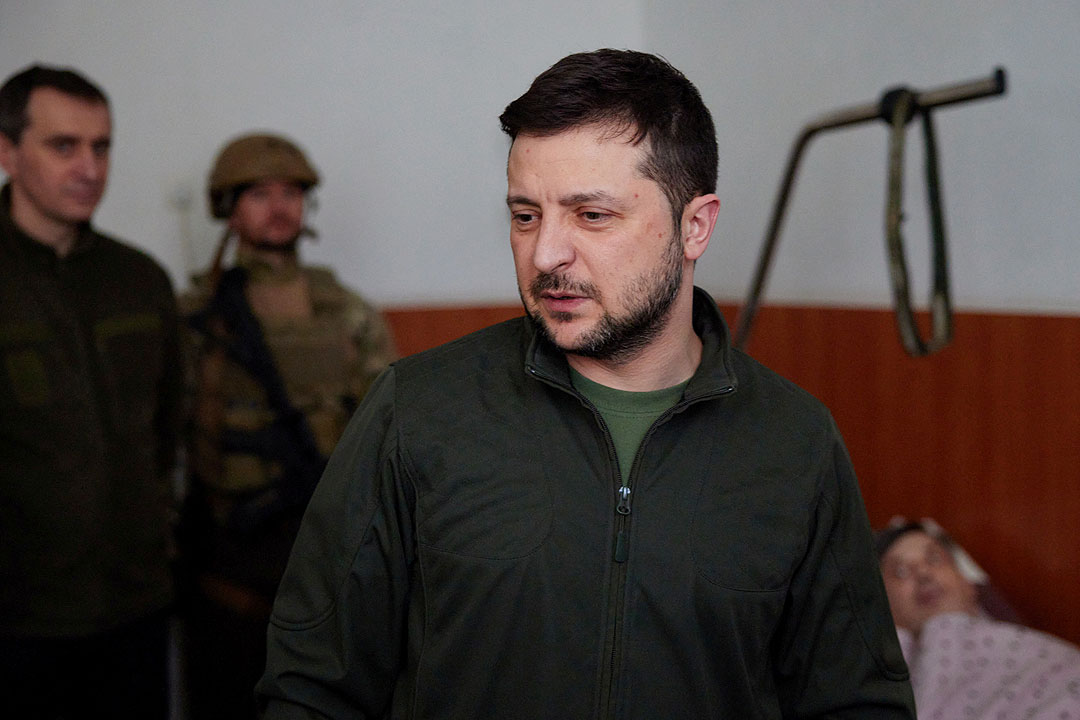
Ukrainian President Volodymyr Zelensky — UKRAINIAN PRESIDENTIAL PRESS SERVICE/HANDOUT VIA REUTERS
Ukraine’s President Volodymyr Zelensky visits people who were injured while fleeing from Kyiv’s outskirts as Russia’s attack on Ukraine continues, at a hospital in Kyiv, Ukraine, March 17. — UKRAINIAN PRESIDENTIAL PRESS SERVICE/HANDOUT VIA REUTERS

LVIV/ODESA, Ukraine — Ukrainian President Volodymyr Zelensky said Russia’s siege of the port city of Mariupol was “a terror that will be remembered for centuries to come,” while local authorities said thousands of residents there had been taken by force across the border.

“Over the past week, several thousand Mariupol residents were deported onto the Russian territory,” the city council said in a statement on its Telegram channel late on Saturday.

Reuters could not independently verify the claim.

Russian news agencies have said buses have carried several hundred people Moscow calls refugees from the strategic port on the Sea of Azov to Russia in recent days.

Air raid sirens sounded across major Ukrainian cities early on Sunday but there were no immediate reports of fresh attacks.

Some 400,000 people have been trapped in Mariupol for more than two weeks, sheltering from heavy bombardment that has severed central supplies of electricity, heating and water, according to local authorities. Rescue workers were still searching for survivors in a Mariupol theatre that local authorities say was flattened by Russian air strikes on Wednesday. Russia denies hitting the theater or targeting civilians. Russia’s defense ministry said on Friday that its forces were “tightening the noose” around Mariupol and that fighting had reached the city center.

In a late-night broadcast, Mr. Zelensky said the siege of Mariupol would “go down in history of responsibility for war crimes.”

“To do this to a peaceful city… is a terror that will be remembered for centuries to come.”

Still, he said, peace talks with Russia were needed although they were “not easy and pleasant.”

Russian forces have taken heavy losses since Feb. 24, when President Vladimir Putin launched what he calls a “special operation” aimed at demilitarizing Ukraine and purging it of what he sees as dangerous nationalists. Ukraine and the West say Putin launched an aggressive war of choice.

Long columns of troops that bore down on the capital Kyiv have been halted in the suburbs.

British intelligence believes Russia has been taken aback by Ukraine’s resistance to its invasion and is now “pursuing a strategy of attrition,” said Britain’s defense attache to the United States.

Mr. Zelensky said the Ukrainian front line was “simply littered with the corpses of Russian soldiers.”

Reuters could not independently verify the veracity of the comments.

On Saturday, Russia said its hypersonic missiles had destroyed a large underground depot for missiles and aircraft ammunition in the western Ivano-Frankivsk region. Hypersonic weapons can travel faster than five times the speed of sound, and the Interfax agency said it was the first time Russia had used them in Ukraine. A spokesperson for the Ukrainian Air Force Command confirmed the attack, but said the Ukrainian side had no information on the type of missiles used.

NEUTRAL STATUS
Russian Foreign Minister Sergei Lavrov said Moscow expected its operation in Ukraine to end with the signing of a comprehensive agreement on security issues, including Ukraine’s neutral status, Interfax reported.

Kyiv and Moscow reported some progress in talks last week toward a political formula that would guarantee Ukraine’s security, while keeping it outside the North Atlantic Treaty Organization (NATO), though each sides accused the other of dragging things out. Mr. Zelensky has said Ukraine could accept international security guarantees that stopped short of its longstanding aim to join NATO. That prospect has been one of Russia’s primary stated concerns.

The Ukrainian president, who makes frequent impassioned appeals to foreign audiences for help, told an anti-war protest in Bern on Saturday that Swiss banks were where the “money of the people who unleashed this war” lay and their accounts should be frozen.

Ukrainian cities “are being destroyed on the orders of people who live in European, in beautiful Swiss towns, who enjoy property in your cities. It would really be good to strip them of this privilege,” he said in an audio address.

Neutral Switzerland, which is not a member of the European Union (EU), has fully adopted EU sanctions against Russian individuals and entities, including orders to freeze their wealth in Swiss banks. The EU measures are part of a wider sanctions effort by Western nations aimed at squeezing Russia’s economy and starving its war machine.

US President Joseph R. Biden warned his Chinese counterpart, Xi Jinping, on Friday of “consequences” if Beijing gave material support to Russia’s invasion of Ukraine.

On Saturday, Chinese Foreign Minister Wang Yi said China stood on the right side of history over the Ukraine crisis and that its position was in line with the wishes of most countries.

“China’s position is objective and fair, and is in line with the wishes of most countries. Time will prove that China’s claims are on the right side of history,” Wang told reporters, according to a statement published by his ministry on Sunday. — Reuters

Majority of Japanese worry China may invade Taiwan, poll shows

REUTERS

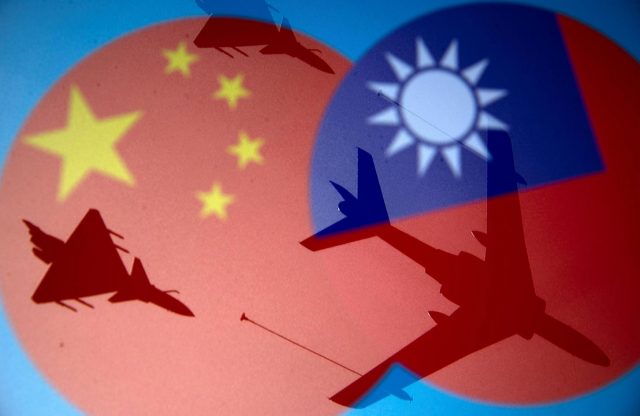
NINE IN 10 Japanese people are concerned that China may invade Taiwan, following Russia’s attack on Ukraine, according to a domestic newspaper poll.

More than half of the 1,040 respondents polled on Saturday by the Mainichi and Saitama University’s Social Survey Research Center said they have “strong concerns” about the prospect of Chinese action against Taiwan, according to the newspaper’s Sunday edition. About 33% said they have some degree of anxiety, according to the report.

Locked in a territorial dispute with China over a chain of islands in the East China Sea, Japan generally sees neighboring Taiwan’s security as closely linked to its own.

Of those surveyed, 87% said they are worried about the Russian invasion of Ukraine, while 30% believed the Japanese government should step up sanctions against Moscow, the newspaper said.

Japan’s decision to send Ukraine bullet-proof vests was “reasonable,” 61% of respondents said. About 11% said Japan doesn’t need to help Ukraine militarily, but twice as many said their country should consider more actively providing the east European nation with military support. — Bloomberg

Philippine unemployment falls to lowest since January 2020

People flock to the Markina public market, March 1. -- Photo by Michael Varcas, The Philippine Star

By Mariedel Irish U. Catilogo

The Philippines’ unemployment rate fell to a two-year low in January as the size of the workforce shrank due to stricter mobility curbs in the capital region, the government said.

Preliminary results of the Philippine Statistics Authority’s (PSA) January round of the Labor Force Survey showed the jobless rate stood at 6.4%, slightly easing from 6.6% in December and 8.8% in January 2021.

This was the lowest share of the jobless to the total labor force in two years or since the 5.3% in January 2020 before the pandemic began.

In absolute terms, the number of unemployed Filipinos decreased by 347,000 to 2.925 million in January, from 3.272 million in December. It went down by 1.038 million to 3.964 million from a year ago.

“However, due to the Omicron surge in January, the labor force participation rate fell from 65.1% to 60.5%,” the National Economic and Development Authority (NEDA) said in a statement. “Another reason for lower employment levels is the end of the holiday season which sheds off seasonal jobs. Despite this, net employment remains at 0.5 million above the pre-pandemic level.”

Metro Manila and other parts of the country were once again placed under Alert Level 3 in January to contain the Omicron-driven surge in new coronavirus disease 2019 (COVID-19) cases.

The size of the labor force in January fell month on month by 3.603 million to 45.943 million. On a year-on-year basis, the size of the workforce rose by 732,000 from 45.212 million.

This translated to a labor force participation rate — the total labor stock to the working age population of 15 years old and over — of 60.5%. This was the lowest level in six months or since a workforce size of 44.740 million and an LFPR of 59.8% in July last year.

With the lower level of labor force that month, the employment rate — the share of the employed to the total working force — increased to 93.6%, higher than December’s 93.4% and January’s 91.2%.

In absolute terms, employed Filipinos reached 43.018 million in January, lower by 3.256 million from previous month’s 46.274 million. However, it was higher by 1.770 million from 41.248 million employed a year ago.

“The Omicron surge caused a temporary decline in our employment levels. Now that we have contained the spread of the virus and shifted to Alert Level 1 in most parts of the country, we look forward to an improvement in employment outcomes in the coming months,” Socioeconomic Planning Secretary Karl Kendrick T. Chua said in a statement.

However, the quality of available jobs slightly worsened as the underemployment rate — the proportion of those already working, but still looking for more work or longer working hours to the total employed — rose to a six-month high of 14.9% in January from 14.7% in December.

This was equivalent to 6.397 million underemployed Filipinos, down by 414,000 from December’s 6.811 million.

A Filipino worker clocked in an average of 41.8 hours per week in January, 2.1 hours more than 39.7 hours in a week in December.

More than half were employed in the services sector in January (58.9% from 56.6% in December), while agriculture accounted for 19.3% (from 17.8%) and industry’s 19.3% (from 17.8%).

The reopening of the economy resulted in the creation of more jobs, but job quality has remained in the doldrums, University of Asia and the Pacific Senior Economist Cid L. Terosa said in an e-mail interview.

“This means that the jobs that were created were either transitory or casual jobs,” he said.

In a separate email, Union Bank of the Philippines Chief Economist Ruben Carlo O. Asuncion said stricter quarantine restrictions contributed to the decline in total working force.

“There is also seasonality with lesser people being employed, particularly in agriculture, after the planting and certain harvest months,” he said.

Meanwhile, Sentro ng mga Nagkakaisa at Progresibong Manggagawa (SENTRO) Secretary General Josua T. Mata is expecting a “bullish economy” for the coming months as restrictions ease, but noted a rough recovery in some sectors such as tourism.

“The easing of restrictions and the election spending would have a positive impact on the employment sector. However, inflationary pressures could dampen employment generation especially if oil prices continue to hike,” he said in e-mail interview.

For the first quarter, the effects of the economy’s reopening and the downgrade to Alert Level 1 will be obvious and the return to pre-pandemic levels of employment may be “just around the corner,” Mr. Asuncion said.

“However, the geopolitical risks of late may have to delay the return to pre-pandemic employment because of the downside risk of rising inflation and dampened business projects,” he said.

Mr. Terosa said the labor data in February will most likely be the same as the current month, citing the impact of the Russia-Ukraine crisis on the country’s economic recovery.

“I believe, however, that the negative effects of the geopolitical tension fomented by the Russia-Ukraine war will eventually manifest itself in the labor market. Rising prices and costs of doing business, particularly in March 2022, will thwart early signs of recovery in the labor market,” Mr. Terosa added.

“Without this unfortunate external factor, I would have been optimistic that the labor market would return to normalcy after the first semester of 2022,” Mr. Asuncion said.

In late February, Russia invaded Ukraine in the pretext of demilitarization and “denazification,” sending shockwaves in the global economy. Global commodity prices, particularly oil, surged to multiyear highs.

International benchmark Brent crude, for one, soared past $100 per barrel for the first time since 2014 at the start of the invasion. Local pump prices also skyrocketed, driving up costs of basic goods and services.

NEDA said the government is set to distribute aid amounting to P6.1 billion to transport, agriculture and fisheries workers to lessen the inflationary pressures brought by the Russia-Ukraine conflict.

In addition, cash assistance amounting P2,400 will be given to the bottom 50% of Filipino households affected by the rising prices of basic goods.

Job quality improves year on year in January

BSP sees wider current account deficit in 2022, 2023

BW FILE PHOTO

MANILA – The Philippine central bank said on Friday it had revised its current account and balance of payments projections for this year to reflect the country’s improving growth prospects as well as the impact of Russia’s invasion of Ukraine.

The country’s current account deficit is projected to reach $16.3 billion this year, or 3.8% of gross domestic product (GDP), the central bank said, wider than its previous forecast of $9.9 billion, or 2.3% of GDP, before slightly narrowing to a deficit equal to 3.7% of GDP in 2023.

It also revised its estimate for the country’s balance of payments (BOP) position this year to a deficit of $4.3 billion, or 1.0% of GDP, a reversal from a surplus projection equal to 0.2% of GDP. For next year, the BOP is expected to remain in a deficit equal to 0.6% of GDP.

Bangko Sentral ng Pilipinas (BSP) Deputy Governor Francisco Dakila told a media briefing robust foreign international reserves and strong growth in remittances should sustain the country’s external position.

The Philippine economy’s limited economic exposure to Russia and Ukraine should insulate it from impact of the war, BSP managing director Zeno Abenoja said.

Money sent by Filipinos working abroad is expected to grow by an annual 4.0% this year and next year, while the country’s gross international reserves are seen reaching $108 billion this year and $109 billion in 2023.

The central bank also forecast exports and imports this year would grow 7.0% and 15%, respectively. — Reuters

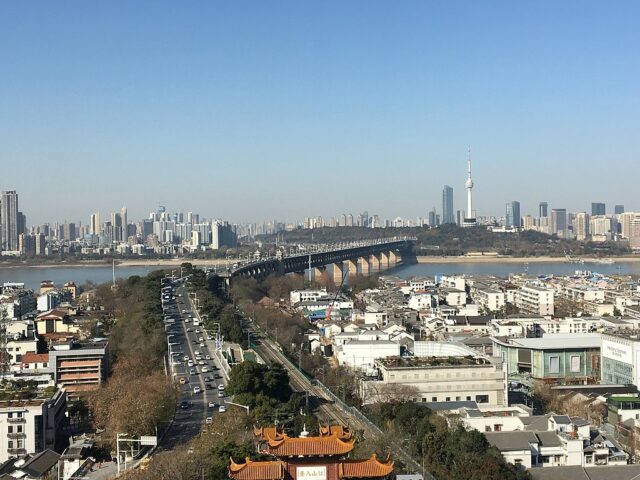
Wuhan aims to become China’s ‘valley of satellites’ in space initiative

ZhengZhou/CC BY-SA 4.0/Wikimedia Commons

BEIJING — The central Chinese city of Wuhan has vowed to create a 100 billion yuan ($15.7 billion) space industry by 2025 and become China’s “valley of satellites,” joining other cities tasked with developing the sector.

Wuhan is offering firms up to 50 million yuan ($7.88 million) in financial incentives each in projects related to the manufacturing of satellites, rockets and spacecraft, according to a notice from the city government on Wednesday.

The amounts for the inland city are modest compared with ambitious plans outlined by other prosperous coastal cities, but the effort suggests a deepening push by China to become a major space power by 2030.

China envisions massive constellations of commercial satellites that can offer services ranging from high-speed internet for aircraft to tracking coal shipments.

The Wuhan city government will encourage companies to use locally sourced equipment, software and services.

If a firm uses local products in more than 10% of the production of high-orbiting and low-orbiting satellites as well as spacecraft, it will get financial incentives of up to 15 million yuan.

If local products account for more than 30%, the firm will get up to 50 million yuan.

Last year, the tech city of Shenzhen in southern Guangdong province offered up to 300 million yuan in incentives for every project related to the development of satellites and related industry applications.

China is also planning a new commercial space port in the southern island province of Hainan.

In the eastern port city of Ningbo in Zhejiang province, China is separately constructing its fifth rocket launch site. — Reuters

Australian watchdog sues Facebook-owner Meta over scam advertisements

STOCK PHOTO | Image by terimakasih0 from Pixabay

Australia’s competition watchdog filed a lawsuit against Facebook owner Meta Platforms on Friday, alleging the social media giant failed to prevent scammers using its platform to promote fake ads featuring well-known people. 

The advertisements, which endorsed investment in cryptocurrency or money-making schemes, could have misled Facebook users into believing they were promoted by famous Australians, the Australian Competition & Consumer Commission (ACCC) said. 

The lawsuit filed in the Federal Court also alleges Facebook “aided and abetted or was knowingly concerned in false or misleading conduct and representations by the advertisers,” the ACCC said in a statement. 

“The essence of our case is that Meta is responsible for these ads that it publishes on its platform,” ACCC Chair Rod Sims said. “It is alleged that Meta was aware … scam ads were being displayed on Facebook but did not take sufficient steps to address the issue.” 

Meta said any ads that scammed people out of money or misled users violated its policies and the company uses technology to detect and block such posts, adding it had “cooperated with the ACCC’s investigation into this matter to date.” 

“We will review the recent filing by the ACCC and intend to defend the proceedings,” a Meta spokesperson said in an emailed statement, declining to comment further as the case was before court. 

The ACCC said the ads used images of several Australian business leaders, TV hosts and politicians and contained links to fake media articles that included quotes attributed to the personalities. 

Users who signed up were contacted by scammers to convince them to deposit funds into the fake schemes, the regulator said. 

“We are aware of a consumer who lost more than A$650,000 ($480,000) due to one of these scams … this is disgraceful,” Mr. Sims said. 

Australian iron ore magnate Andrew Forrest, chairman of Fortescue Metals Group, launched criminal proceedings against Facebook last month over scam ads, including ones using his image to promote cryptocurrency schemes. 

The corporate regulator, the Australian Securities and Investments Commission (ASIC), usually handles financial fraud complaints against companies. The ACCC, which is seeking financial penalties, said it was given temporary powers to file the lawsuit. 

Facebook earlier this week announced a program to help train Australian political candidates and influencers on cyber security to stop the spread of potential misinformation during campaigning for the country’s upcoming federal election. — Renju Jose/Reuters

Facebook’s ‘double standard’ on hate speech against Russians

REUTERS

BANGKOK/BEIRUT — Facebook’s decision to allow hate speech against Russians due to the war in Ukraine breaks its own rules on incitement, and shows a “double standard” that could hurt users caught in other conflicts, digital rights experts and activists said. 

Facebook owner Meta Platforms will temporarily allow Facebook and Instagram users in some countries to call for violence against Russians and Russian soldiers in the context of the Ukraine invasion, Reuters reported last week. 

It will also allow praise for a right-wing battalion “strictly in the context of defending Ukraine,” in a decision that experts say demonstrates the platform’s bias. 

The move represents a “glaring” double standard when set against Meta’s failure to curb hate speech in other war zones, said Marwa Fatafta at digital rights group Access Now. 

“The disparity in measures in comparison to Palestine, Syria, or any other non-Western conflict reinforces that inequality and discrimination of tech platforms is a feature, not a bug,” said Ms. Fatafta, policy manager for the Middle East and North Africa. 

“Tech platforms have a responsibility to protect their users’ safety, uphold free speech, and respect human rights. But this begs the question: whose safety and whose speech? Why were such measures not extended to other users?” she added. 

Last year, hundreds of posts by Palestinians protesting evictions from East Jerusalem were removed by Instagram and Twitter, who later blamed technical errors. 

Digital rights groups slammed the censorship, urging greater transparency on how moderation policies are set and ultimately enforced. 

ONE POLICY FOR ALL? 

Facebook has come under fire for failing to curb incitement in conflicts from Ethiopia to Myanmar, where United Nations investigators say it played a key role in spreading hate speech that fuelled violence against Rohingya Muslims. 

“Under no circumstance is promoting violence and hate speech on social media platforms acceptable, as it could hurt innocent people,” said Nay San Lwin, co-founder of advocacy group Free Rohingya Coalition, who has faced abuse on Facebook. 

“Meta must have a strict policy on hate speech regardless of the country and situation — I don’t think deciding whether to allow promoting hate or calls for violence on a case-by-case basis is acceptable,” he told the Thomson Reuters Foundation. 

Scrutiny over how it tackles abuse on its platforms intensified after whistleblower Frances Haugen leaked documents showing the problems Facebook encounters in policing content in countries that pose the greatest risk to users. 

In December, Rohingya refugees filed a $150 billion class-action complaint in California, arguing that Facebook’s failure to police content and its platform’s design contributed to violence against the minority group in 2017. 

Meta recently said it would “assess the feasibility” of commissioning an independent human rights assessment into its work in Ethiopia, after its oversight board recommended a review. 

UKRAINE EXCEPTION 

In a report on Wednesday, Human Rights Watch said tech firms must show that their actions in Ukraine are “procedurally fair,” and avoid any “arbitrary, biased, or selective decisions” by basing them on clear, established, and transparent processes

In the case of Ukraine, Meta said that native Russian and Ukrainian speakers were monitoring the platform round the clock, and that the temporary change in policy was to allow for forms of political expression that would “normally violate” its rules. 

“This is a temporary decision taken in extraordinary and unprecedented circumstances,” Nick Clegg, president of global affairs at Meta, said in a tweet, adding that the company was focused on “protecting people’s rights to speech” in Ukraine. 

Russia has blocked Facebook, Instagram, and Twitter. 

And Meta’s new tack underlines how hard it is to write rules that work universally, said Michael Caster, Asia digital program manager at Article 19, a human rights organization. 

“While the policies of a global corporation should be expected to change slightly from country to country, based on ongoing human rights impact assessments, there also needs to be a degree of transparency, consistency and accountability,” he said. 

“Ultimately, Meta’s decisions should be shaped by its expectations under the UN Guiding Principles on Business and Human Rights, and not what is most economical or logistically sound for the company,” he said in emailed comments. 

UNILATERAL DECISION 

For Wahhab Hassoo, a Yazidi activist who has campaigned to hold social media firms accountable for failing to act against Islamic State (ISIS) members using their platforms to trade Yazidi women and girls, Facebook’s moves are deeply troubling. 

Mr. Hassoo’s family had to pay $80,000 to buy the release of his niece from the jihadists, who abducted her in 2014 then offered her “for sale” in a WhatsApp group. 

“I am shocked,” said Mr. Hassoo, 26, of Meta’s decision to allow hate speech against Russians. 

“When they can make certain decisions unilaterally, they can basically promote propaganda, hate speech, sexual violence, human trafficking, slavery and other forms of human abuse related content — or prevent it,” he said. 

“The last part is still missing.” 

Mr. Hassoo and fellow Yazidi activists compiled a report that urged the United States and other nations to probe the role social media platforms including Facebook and YouTube played in crimes against their minority Yazidi community. 

Meta’s actions on Ukraine confirm what their research showed, said Mr. Hassoo, who resettled in the Netherlands in 2012. 

“They can promote or ban what fits in their interests and what they find important,” Mr. Hassoo said. “It is not fair that a company can decide on what’s good and what’s not.” — Rina Chandran and Maya Gebeily/Thomson Reuters Foundation

Clear roadmap needed for Hong Kong’s revival as COVID sweeps through city — experts

UNSPLASH

HONG KONG — In just under two months, Hong Kong went from being one of the best places in the world at controlling coronavirus disease 2019 (COVID-19) to one of the worst.

Deaths have skyrocketed, the health system is swamped, morgues are overflowing and public confidence in the city government is at an all-time low.

While the government sticks to a “zero-COVID” policy similar to that of mainland China, city leader Carrie Lam hinted on Thursday she could ease restrictions amid concerns over the city’s status as a global financial hub.

But with infections spilling over on to the mainland and local cases hovering around 30,000 per day among a population of just 7.4 million, there needs to be a clear exit strategy, in line with learning to live with the virus, like other major cities, rather than trying to eradicate it, health experts say.

Densely populated Hong Kong has registered the most deaths per million people globally in recent weeks — more than 24 times that of rival Singapore — due to a large proportion of elderly who were unvaccinated as the highly transmissible Omicron variant ripped through care homes since February.

The tragedy could have been avoided had, experts say, authorities offered incentives for vaccinations and used medical resources more effectively to prepare for COVID-19, which was first identified in late 2019 in the central Chinese city of Wuhan.

“The disaster unfolding within our hospital system is predictable, preventable, and political,” said Dr. David Owens, a founder of OT&P clinics and an honorary clinical assistant professor in family medicine at the University of Hong Kong.

Ms. Lam’s administration has been lambasted repeatedly by politicians, pro-Beijing media and on Chinese social media, just weeks before the city is due to hold an election on May 8 to choose who will lead the territory for the next five years.

Businesses and residents are frustrated at what they see as constant mixed messaging from the government and measures which have heavily disrupted business and damaged the economy for much of the past two years.

Tens of thousands have left, with net outflows showing an exodus of more than 45,000 people so far in March, compared with nearly 17,000 in December before the fifth wave of the pandemic hit, prompting fears for Hong Kong’s longer-term competitiveness.

LIVING WITH COVID

Ms. Lam has yet to give guidance for how Hong Kong can resume some semblance of normality, despite daily press briefings where she discusses details from sewage testing to thanking mainland authorities for their support. The former British colony returned to Chinese rule in 1997.

“Hong Kong was certainly not ready when we entered into the fifth wave as evidently shown, but let’s see whether we can get better prepared for that eventuality of that transition towards normality,” said Gabriel Leung, University of Hong Kong’s dean of medicine and a government adviser on the pandemic.

Mr. Leung said Hong Kong needed to decide whether it was going to stick with its “zero-COVID” policy, or try to live with it as an endemic.

“We need to be doing all that heavy thinking process now. Because you have to make plans accordingly.”

Even if the government were to stick with zero-COVID by mass testing and extensive contact tracing, Hong Kong would still need to transition to living with the virus eventually, the experts said.

About half of the city’s residents have likely already been infected, according to a study from the University of Hong Kong this week.

Increasing vaccinations to over 90% from about 80% currently is key, while protecting the most vulnerable, like those in nursing homes, the experts said. Currently only 56% of those over 80 have been vaccinated.

With residents developing immunity from vaccinations and infections, it’s likely that future outbreaks will be less severe, said Dr. Siddharth Sridhar, clinical assistant professor of Microbiology at the University of Hong Kong.

“So that gives us a certain degree of freedom in terms of opening up more and having more reasonable travel restrictions that what we have seen before.”

Hong Kong has implemented its most draconian measures since the pandemic began in 2020.

Flights from nine countries, including the United States and Britain, are banned. Inbound travelers who test negative on arrival must stay in a hotel for 14 days, a harsher rule than for an infected resident who needs to isolate for seven days until testing negative.

Both rules have no scientific basis and should be lifted immediately, some experts said.

Social distancing measures, such as a ban on public gatherings of more than two people, the closure of most venues and a curfew on restaurant dining past 6 p.m., could also be progressively relaxed, said epidemiologist Ben Cowling.

Hong Kong could aim to do what Singapore has done so that after “three to six months, where all those measures have been relaxed, it is simply up to individuals to manage their own risks and there is no need for community-wide policies.” — Farah Master/Reuters

Be ready to lose all your money in crypto, EU regulators warn

PIXABAY

LONDON — Consumers risk losing all their money invested in cryptoassets and could fall prey to scams, the European Union’s securities, banking and insurance watchdogs said in a joint statement on Thursday.

“Consumers face the very real possibility of losing all their invested money if they buy these assets,” the three EU authorities said in a statement.

It marks a ratcheting up of direct warnings to consumers about cryptoassets by EU authorities, spelling out that consumers have no protections or recourse to compensation under existing EU financial services law.

Regulators are increasingly worried that more consumers are buying 17,000 different cryptoassets, including bitcoin and ether, which account for 60% of the market, without being fully aware of the risks, the regulators said.

“Consumers should be alert to the risks of misleading advertisements, including via social media and influencers. Consumers should be particularly wary of promised fast or high returns, especially those that look too good to be true,” the statement said.

Consumers should also be aware of that energy consumption for producing some cryptoassets is high and the environmental impact this has, the statement said. — Reuters

A Renewed Commitment to Living Well

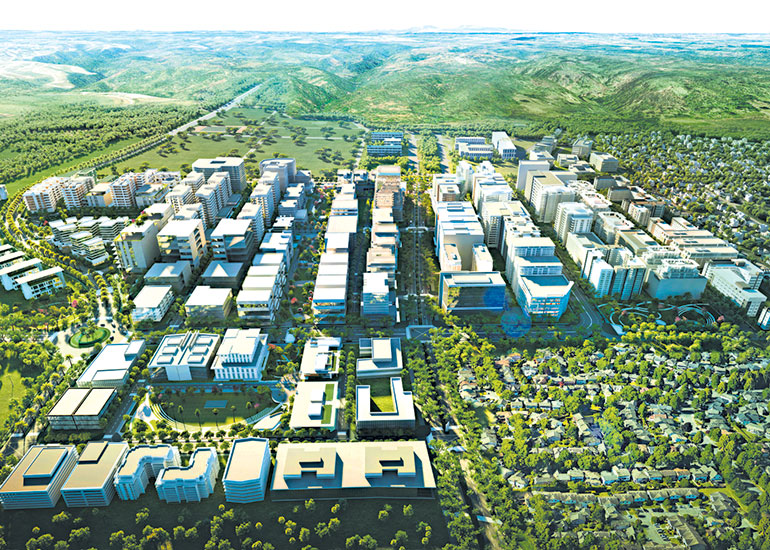
The Lattice at Parklinks (C5-Pasig)

Alveo Land celebrates 20 years of shaping spaces in the Philippines

The past few years have shown the value of living well right at one’s home. Now more than before, individuals and families have further recognized the need to nurture themselves holistically and adapt to the demands of their multi-faceted lives.

As it celebrates 20 years of serving the upscale real estate market this year, Alveo continues to meet the evolving demands for homes and communities that enable prime living experiences. Grounded on Ayala Land’s excellence in well-planned and integrated mixed-use developments, Alveo Land remains committed to innovating vibrant communities that pave the way for living and working well.

Alveo Land’s remarkable two decades in Philippine real estate can be traced back to its beginnings as Community Innovations, Inc. (CII) in 2002. Its first project, Two Serendra, in Bonifacio Global City (BGC), Taguig City back in 2004, transformed the city condominium offering with its greenery and open spaces covering 65% of the project. At that time, such a feature was rare in the local property market, and has since remained to be one of Alveo’s signature developments until this day.


The then-CII further pioneered sustainable developments when it unveiled in 2007 the Treveia subdivision within Ayala Land’s NUVALI green estate in Laguna. Having embraced eco-friendly lifestyles fused with a technology-ready environment, Treveia finely fits in the country’s first large-scale development, which is primarily built on the principles of sustainable design.

A year later, the company sharpened its commitment to building communities for living well as CII changed its name to Alveo — taking from the Latin word “salveo,” which means “to be well.” Carrying this name, the company further strengthened its commitment towards improving the overall quality of life with groundbreaking living solutions all across the country.

Alveo Land then continued developing prime projects within the residential market, while also expanding to commercial and leisure developments built with well-being in mind. Its extensive line of properties is driven by a principle of “shaping buildings that shape the people within them.”


Foremost of these projects in the years that followed include Escala Salcedo, an iconic parkfront address in Salcedo Village in Makati City, and High Street South Corporate Plaza, Alveo Land’s first office-for-sale development located in BGC.

Alveo Land has since been showing significant growth, and retained its status as a leading innovative developer in the Philippines. Today, it is present in at least 14 of Ayala Land’s townships and estates across the country. Its portfolio of over 64 projects to date is located within strategic areas of Metro Manila, as well as Pampanga, Cavite, Laguna, Cebu City, Davao City, and Cagayan de Oro, among others.

It has also since won over 79 recognitions from both local and international award-giving bodies. Among these include multiple accolades from the Titan Property Awards for its key residential properties such as Viento at Cerca across Ayala Alabang, The Lattice at Parklinks in C5-Pasig City, and Orean Place at Vertis North, Quezon City.

Alveo now marks 20 years in the industry with a stronger commitment to developing vibrant living and working solutions, especially as this gain new relevance and meaning in the present.

The company looks forward to taking the lead in redefining what it means to live well and work well. This trend towards the importance of wellness physically, mentally, emotionally, socially, and even financially has increasingly been seen as a primary consideration for today, as well as the direction that residential and business spaces are headed to in the future.

Alveo continues on with shaping and building its various residential spaces, with more recent projects such as Parkford Suites Legazpi in Makati, The Residences at Evo City in Cavite, and Sentrove in Cloverleaf Quezon City; and distinct workspaces including Alveo Financial Tower in Ayala Avenue, Makati, Tryne Enterprise Plaza in Arca South Taguig, and The Stiles Enterprise Plaza in Circuit Makati. It is also present within vibrant city districts like Broadfield in Biñan, Laguna, and Portico in Ortigas, Pasig.

With years of real estate expertise built on a solid foundation, Alveo Land continues to offer choice residential properties and flexible workspaces. These communities allow people all across the country to live and work meaningfully well.

Know more about Alveo Land’s latest properties at www.alveoland.com.ph.


Spotlight is BusinessWorld’s sponsored section that allows advertisers to amplify their brand and connect with BusinessWorld’s audience by enabling them to publish their stories directly on the BusinessWorld Web site. For more information, send an email to online@bworldonline.com.

Join us on Viber to get more updates from BusinessWorld: https://bit.ly/3hv6bLA

ADVERTISEMENT
ADVERTISEMENT