CloudSwyft Global Systems, Inc. added Mapúa University, De La Salle-College of Saint Benilde, and Ateneo de Zamboanga University this March to the roster of schools using its education computing platform, bringing the total number of Philippine institutions using its virtual laboratories to more than a dozen.
The Makati-based company, which offers bundled products through its partnerships with Lenovo and SoftwareONE, has deployed its virtual laboratory across several territories.
“DepEd [Department of Education] teachers use our platform for the upskilling of senior high school [SHS] and college students,” said Dann Angelo O. De Guzman, CloudSwyft’s founder and chief executive officer, in an e-mail. “[This] leads towards a better quality of employability in the digital world.”
CloudSwyft, together with multinational technology corporation Microsoft, has two projects with DepEd: a focused skilling program for SHS students calledOplan TAWID (Technology-Assisted World Immersion Delivery), and a retooling of the virtual lab to make applications such as Adobe Creative Suite and TinkerCAD accessible to students minus the expensive hardware.
Its platform — offered as either a Software-as-a-Service (SaaS) model or a Platform-as-a-Service (PaaS) model — can be designed to align with the existing curriculum for subjects such as engineering, architecture, videography, robotics, blockchain, and machine learning.
Enderun Colleges has been offering data analysis, python development, and data science for AI (artificial intelligence) courses through CloudSwyft since 2019.
The virtual lab — which is also used in San Beda College, Miriam College, and the STI Education Group — can be accessed with an Internet connection and a web browser.
“Since the lab environments are purely cloud-based, it can run on any operating system and on any device — even on the cheapest tablets and oldest computers,” said Mr. De Guzman.
“CloudSwyft’s technology was built even before the pandemic — [which] served as a catalyst to accelerate the tailwinds of opportunities for our customers,” he added. “Our solution is designed to achieve… automation for purely offline, asynchronous, and hybrid modalities.” — Patricia B. Mirasol
NEW DELHI – U.S. President Joe Biden has said only India among the Quad group of countries was “somewhat shaky” in acting against Russia over its invasion of Ukraine, as India tries to balance its ties with Russia and the West.
While the other Quad countries – the United States, Japan and Australia – have sanctioned Russian entities or people, India has not imposed sanction or even condemned Russia, its biggest supplier of military hardware.
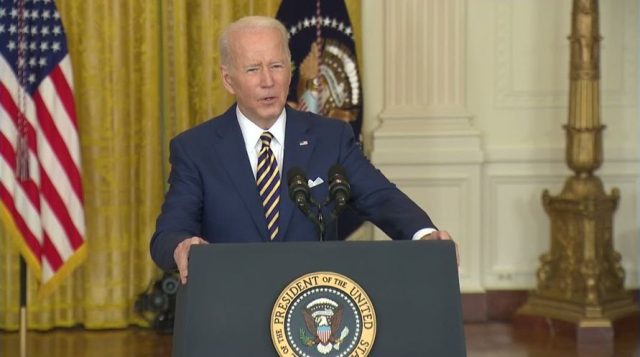
“In response to his aggression, we have presented a united front throughout the NATO and in the Pacific,” Biden told a business forum on Monday, referring to Russian President Vladimir Putin.
“The Quad – with the possible exception of India being somewhat shaky on some of these – but Japan has been extremely strong, so is Australia in terms of dealing with Putin’s aggression.”
Putin says Russia is carrying out “a special military operation” to stop the Ukrainian government from committing “genocide” – an accusation the West calls a baseless fabrication.
After a virtual summit between Australian Prime Minister Scott Morrison and his Indian counterpart, Narendra Modi, on Monday, India‘s foreign ministry said Australia understood India‘s position on Ukraine, which “reflected our own situation, our own considerations”. Read full story
India has urged an end to the violence in Ukraine but has abstained from voting against its old Cold War ally Russia.
Even though India has grown close to the United States in recent years, it still depends on Russia for a continuous supply of arms and ammunition amid a Himalayan border standoff with China and perennial tension with Pakistan.
India is also considering buying more Russian oil at a discount, with two Indian state companies recently ordering 5 million barrels.
Indian analysts and government officials point out that European countries are buying gas from Russia. – Reuters
BARCELONA – As the war in Ukraine highlights the perils of relying on Russian fossil fuels, France has been fast-tracking efforts to wean households off oil-fired heating, insulate their homes better and swap petrol and diesel cars for electric.
Climate policy discussions in recent years have focused on phasing out coal – the most carbon-polluting fuel – but the Ukraine crisis is pushing some governments to confront their ongoing addiction to oil and natural gas, too.
“Whatever the obstacles before us, the transition to a world without fossil fuels is more than ever the safest and most effective way to guarantee our future and our energy sovereignty,” French ecological transition minister, Barbara Pompili, told reporters last week.
With energy shipments disrupted and prices skyrocketing, the war has made switching away from oil and gas even more urgent, Pompili said at the launch of a 10-point plan to cut oil use from the International Energy Agency (IEA).
France aims to end the use of oil to heat buildings by 2030, boosting subsidies to make choosing heat pumps or biomass boilers a more affordable choice for lower-income families.
But as countries hurry to shore up their energy supplies in uncertain times, U.N. Secretary-General Antonio Guterres warned that some might be tempted to “neglect or knee-cap policies to cut fossil fuel use”.
That would be “madness”, he said on Monday, adding that short-term measures could create long-term fossil fuel dependency and shut the small window for limiting global warming to 1.5 degrees Celsius, the most ambitious international goal.
Guterres wants wealthy governments to put an end to coal production and use by 2030, with less-developed countries following suit by 2040.
But global deadlines for phasing out oil and gas have yet to receive much attention, in the interests of richer nations that want to keep powering their economies with those fuels, climate scientist Kevin Anderson told the Thomson Reuters Foundation.
A new report co-authored by Anderson, energy and climate change professor at Britain’s University of Manchester, says there is no room for any nation to boost oil and gas output if the world is to have a 50% chance of staying below 1.5C of warming.
The effort required to cut production must be shared fairly, the report says, with poorer countries given longer to replace the income they receive from oil and gas, in line with its greater importance to their economies.
CUTTING DEMAND
The report, released on Tuesday, calculates that rich countries – including the United States, Britain, Norway, Canada, Australia and the United Arab Emirates – must end oil and gas production by 2034 and cut it by about three-quarters by 2030, to stay on track for the 1.5C target.
Those least able to make a so-called “just transition” away from fossil fuels, such as Iraq, Libya, Angola and South Sudan, should be given until 2050 to end output, as doing so abruptly could threaten their political and economic stability.
The research was completed before Russia invaded Ukraine on Feb. 24, but soaring oil and gas prices linked to the war strengthen the case for ditching the fuels, Anderson said.
“Had we spent the last 20 years establishing an efficient and sensible use of energy alongside a massive roll-out of renewables, we would not now be scrabbling around for alternative oil and gas supplies and facing the impacts of volatile prices,” he said in a statement.
Reducing demand for oil and gas should be central to policy efforts, according to climate and energy analysts.
Besides making homes more energy efficient and boosting the market for electric vehicles, that could involve lowering speed limits, reducing private car use or simply turning down heating thermostats by 1C.
In the meantime, higher costs mean more consumers are being pushed into energy poverty, which will require governments to offer financial support to ease the pain, said researchers with the U.S.-based World Resources Institute, a research nonprofit.
The European Union is now paying the price for dependence on overseas fossil fuels, said the institute’s regional director for Europe, Stientje van Veldhoven.
Russia accounts for about 45% of EU gas imports, a quarter of incoming oil shipments and 45% of coal purchases.
EU foreign ministers disagreed on Monday on whether and how to put sanctions on Russia’s energy sector, with Germany saying the bloc was too dependent on Russian oil to decide an embargo.
The best solution is to boost investment in renewable energy sources such as solar and wind, said van Veldhoven, with the current crisis likely to mobilise more money for new projects.
“In the short-term, we need to solve Europe’s problems for the next winter – and it’s uncertain how that will play out. It might also depend on how much energy savings Europe is actually able to realise,” she told reporters.
LUXURY SACRIFICE
As countries consider winding down oil and gas production, wealthy governments will need to boost funding for poorer nations to leapfrog high-carbon economic growth and adopt clean technologies, said Anderson.
The world‘s richest people should also sacrifice luxury habits such as frequent flying and lavish consumer spending, enabling a fairer distribution of limited energy resources and freeing up the labour needed to build green economies, he added.
Retrofitting homes to use less and cleaner power, constructing renewable energy infrastructure and expanding public transport systems would all provide decent employment opportunities, he noted.
“That’s a fantastic jobs agenda for two or three generations to do all of that and improve air quality as well,” said Anderson.
WUZHOU, China – Rescuers in China scoured heavily forested slopes on Tuesday with hopes fading of finding any survivors from the 132 people aboard a China Eastern Airlines 600115.SS jet that crashed a day earlier in the mountains of southern Guangxi.
Parts of the Boeing 737-800 were strewn across mountain slopes charred by fire after China‘s first crash involving a commercial jetliner since 2010. Burnt remains of identity cards and wallets were also seen, state media reported.
Flight MU5735 was en route from Kunming, capital of the southwestern province of Yunnan, to the port city of Guangzhou when it suddenly plunged from cruising altitude at about the time when it would normally start to descend ahead of its landing. Read full story
Chinese media carried brief highway video footage from a vehicle’s dashcam apparently showing a jet diving to the ground at an angle of about 35 degrees off vertical. Reuters could not immediately verify the footage.
Si, 64, a villager near the crash site who declined to provide his first name, told Reuters he heard a “bang, bang” at the time of the crash. “It was like thunder!” he said.
Another villager described seeing the plane overhead, hearing the crash, and then soon after, seeing tiny flakes of dust in the air. “Of course, I was scared,” the man said.
State media have described the situation as “grim”, and that the possibility of all onboard perishing could not be ruled out.
The crash site was hemmed in by mountains on three sides, according to state media reports, with access provided by just one tiny path. Rain was forecast in the area this week.
Video footage from People’s Daily showed search and rescue workers and paramilitary forces scaling tree-covered hillocks and placing markers wherever debris was found.
Police set up a checkpoint at Lu village, on the approach to the site, and barred journalists from entering.
ABRUPT DESCENT
U.S.-based aviation analyst Robert Mann of R.W. Mann & Company said investigators will need the flight data recorders to understand what might have caused the abrupt descent suggested by Automatic Dependent Surveillance-Broadcast (ADS-B) data. ADS-B is a technology that allows aircraft to be tracked.
The crash comes as Boeing BA.N seeks to rebound from several overlapping crises, including the coronavirus pandemic and crashes involving its 737 MAX model. The cockpit voice recorder could also yield clues to what went wrong once it is found.
“Accidents that start at cruise altitude are usually caused by weather, deliberate sabotage, or pilot error,” Dan Elwell, a former Federal Aviation Administration head, told Reuters.
Elwell, who led the FAA during the 737-MAX crisis, said mechanical failures in modern commercial jets were rare at cruise altitude.
China Eastern and two of its subsidiaries on Monday grounded its fleet of 737-800 planes. The group has 225 of the aircraft, data from British aviation consultancy IBA shows.
Other Chinese airlines have yet to cancel any of their flights that use 737-800 aircraft as of Tuesday, according to data from Chinese aviation data provider Flight Master.
Onshore-listed shares of China Eastern slumped more than 6.5% on Tuesday, while those trading in Hong Kong 0670.HK fell nearly 6%.
Among the passengers was the chief financial officer of Dinglong Culture 002502.SZ, a Guangzhou-headquartered firm whose businesses range from entertainment to titanium mining.
A provincial daily cited a woman as saying six of her family members and friends were on the flight to Guangzhou, where they had been due to attend a funeral.
The last crash of a commercial jetliner in China was in 2010, when an Embraer E-190 regional jet flown by Henan Airlines crashed, killing 44 of 96 people on board. – Reuters
SHANGHAI – Not a single country managed to meet the World Health Organization’s (WHO) air quality standard in 2021, a survey of pollution data in 6,475 cities showed on Tuesday, and smog even rebounded in some regions after a COVID-related dip.
The WHO recommends that average annual readings of small and hazardous airborne particles known as PM2.5 should be no more than 5 micrograms per cubic meter after changing its guidelines last year, saying that even low concentrations caused significant health risks.
But only 3.4% of the surveyed cities met the standard in 2021, according to data complied by IQAir, a Swiss pollution technology company that monitors air quality. As many as 93 cities saw PM2.5 levels at 10 times the recommended level.
“There are a lot of countries that are making big strides in reduction,” said Christi Schroeder, air quality science manager with IQAir. “China started with some very big numbers and they are continuing to decrease over time. But there are also places in the world where it is getting significantly worse.”
India’s overall pollution levels worsened in 2021 and New Delhi remained the world’s most polluted capital, the data showed. Bangladesh was the most polluted country, also unchanged from the previous year, while Chad ranked second after the African country‘s data was included for the first time.
China, which has been waging war on pollution since 2014, fell to 22nd in the PM2.5 rankings in 2021, down from 14th place a year earlier, with average readings improving slightly over the year to 32.6 micrograms, IQAir said.
Hotan in the northwestern region of Xinjiang was China’s worst performing city, with average PM2.5 readings of more than 100 micrograms, largely caused by sandstorms.
It fell to third on the list of the world’s most polluted cities after being overtaken by Bhiwadi and Ghaziabad, both in India. – Reuters
TOKYO – The Japanese government on Tuesday issued its first–ever power supply warning amid a power shortage after an earthquake last week shut several plants, with the deficit compounded by technical troubles affecting Tokyo Electric Power Co.
Japan‘s Ministry of Economy, Trade and Industry issued the warning for areas supplied by Tokyo Electric (Tepco) and Tohoku Electric Power Co in anticipation of a demand spike to meet heating needs as temperatures dropped. The government also called on citizens to reduce their energy consumption.
“We request your cooperation to save electricity as much as possible, such as by setting your thermostats at around 20 degrees Celsius and switching off any unnecessary lights,” Chief Cabinet Secretary Hirokazu Matsuno told a news conference.
Matsuno added that the request for power savings was unlikely to extend beyond Tuesday given the expected rise in temperatures and the addition of more solar power generation as the weather improves.
A magnitude 7.4 earthquake that struck northeast Japan last Wednesday destroyed equipment and forced six thermal power plants in regions serviced by Tepco 9501.T and Tohoku Electric 9506.T to shut. Industry Minister Koichi Hagiuda earlier told parliament that some of those plants could take weeks or months to return to operation.
In Tokyo, snow fell on Tuesday with temperatures forecast to peak at just 4 degrees Celsius (39.2 degrees Fahrenheit), compared with a high of 14 degrees on Monday.
Coinciding with the supply warning, Tepco said on Tuesday that technical troubles caused a power outage for about 2,120 households in three prefectures near Tokyo as of 11:34 a.m. (0234 GMT).
Hiroshi Okamoto, a senior executive for TEPCO Power Grid, told reporters at a government news conference those outages were unrelated to the power shortage.
Tepco said it had no plans to conduct any planned outages but warned that blackouts could occur in the evening. The company has requested seven regional utilities to provide electricity supply of up to 1.42 million kilowatts. – Reuters
H.E. Shambhu S. Kumaran, Ambassador of India to the Philippines
India is a global IT powerhouse and has emerged as a leading country for technology startups. The country now ranks third globally in terms of unicorns. Of the 90-plus unicorns in India, a remarkable 46 were added in 2021 alone, testifying to the dramatic spike in global interest in India’s tech-ecosystem.
While fintech and e-commerce are leading the boom, the health sector is emerging as a key area of focus. There are nearly 4,000 health-tech startups operating in India, undertaking multiple innovations, which are helping boost the health-tech market.
Indeed, especially after the wide-ranging impact of COVID-19, health-tech companies are bringing in record levels of funding globally. Health-tech startups raised about $15.3 billion in 2020 worldwide, a 44% spike from 2019’s $10.6 billion. In India, health-tech startups raised $455 million across 77 deals.
These companies are developing capabilities for design and manufacturing of high-tech products and leveraging technologies such as 3D printing, artificial intelligence, smart sensors and others to manufacture medical devices and provide digital healthcare solutions for the future.
India is also the fourth largest medical device market in Asia, valued roughly around US$11 billion. This includes implants, consumables, diagnostics and medical electronics. Innovations happening across MedTech startups is giving a new dimension to this sector, as they combine medical devices with the Artificial Intelligence (AI) or cloud capabilities.
Some of these market-defining innovations include ‘VAPCare’, a device developed by a Bengaluru-based startup Coeo Labs. The device treats Ventilator-associated Pneumonia (VAP), an infection of the lungs resulting from the bacteria in the fluids that collect in the lungs of a patient who has been on a ventilator for more than 48 hours. The device removes saliva and also pushes anti-microbial liquid into oral cavities just in case some of the saliva trickles into the lungs. The device was developed by the company with grant funding from the Department of Biotechnology (DBT) of the Government of India.
Sattva MedTech developed an alternative ‘ECG-based fetal distress monitor,’ as it was working out on a solution to the issue that the traditional fetal monitor used to measure fetal heart rate was very ambiguous, as it could not differentiate between sounds from the mother’s heart from the one from the baby’s heart, thus making the whole interpretation quite subjective. It was able to find out a solution, which worked on electrical signals rather than sound, making it much more accurate. Interestingly, the price of its innovative product was almost three times less than the traditional fetal monitor devices available in the market. Another Bengaluru-based startup, Remidio offers a portable eye screening tool with telemedicine and AI triage capabilities.
Other interesting innovative solutions, to name a few, include radiation-free, non-touch, accurate, breast cancer screening solution (Niramai); A-powered microscope imaging solutions for diagnostic purposes (SigTuple); retinal imaging devices (Forus Health); triangular patch that can be stuck on a patient’s chest for medical-grade data on pulse, respiration and blood oxygen, and also for a spot ECG (ten3T Healthcare) and others.
Besides these MedTech startups, there are larger health-tech and life science platforms such as doctor appointment platform like Practo; MedGenome; and others. Overall, this sector is expected to record a five-fold rise at a CAGR of 37% to reach US$ 50 billion in 2025, from US$10.36 billion in 2020.
The MedTech sector has helped in enhancing the quality of healthcare products in the Indian market, providing real-time diagnosis, reducing healthcare costs and giving accurate data for further analysis. Given its immense potential, plenty of opportunities exist ranging from online platforms and marketplaces to medical devices and applications of deep tech such as AI, internet of things, and genomics for analytics. Investors, both domestic as well as foreign, are riding on this latest wave of medical innovations in India, as Indian healthcare sector moves towards reaching $372 billion by end of this year.
With concerns on persisting unequal access to medical care, limited access to health facilities, medical professionals and devices, adaptation of similar technological innovations is an important dimension of the way forward for solution providers and decision makers in the Philippines. This opens up immense opportunity for bilateral cooperation between India and the Philippines.
Many of these Indian MedTech companies have already started exploring new geographies, including countries in ASEAN. The Philippines with its usage of English language, large professional workforce and need for affordable quality healthcare, is relatively well-placed to take advantage by exploring linkages and partnerships with these Indian companies. Early adoption of such partnerships can enable the Philippines to emerge as a leader in this sector within ASEAN.
As democracies, India and the Philippines recognize the importance of putting people first. Thus people-centric as well as business-driven, knowledge-based and technology-led initiatives are at the heart of our emerging partnership. India and the Philippines can mutually support each other’s efforts to develop an accessible and affordable healthcare sector.
For a structured discussion on the pathways and prospects for India-Philippines engagement, the Embassy of India to the Philippines, in partnership with BusinessWorld, is organizing the first-ever bilateral business conference on healthcare and medical cooperation on March 23, 2022 (Wednesday) at Shangri-La, The Fort, BGC. The Conference will be in hybrid format, with open participation in online mode. Please register at https://www.virnew.com/bworld-india-philippines-conference/.
Spotlight is BusinessWorld’s sponsored section that allows advertisers to amplify their brand and connect with BusinessWorld’s audience by enabling them to publish their stories directly on the BusinessWorld Web site. For more information, send an email to online@bworldonline.com.
THE PHILIPPINE government is looking to raise funds via a benchmark-sized US dollar-denominated bond issue with tenures of five, 10.5 and 25 years, according to a government document seen by reporters on Monday.
The borrower has opened orders for a five-year bond at the 125 basis points (bps) over Treasuries area, a 10.5-year note at the 165 bps over Treasuries area and a 25-year bond at the 4.7% area, the document showed.
Proceeds from the two shorter-term issues will be used for budget financing, while the 25-year bond offer was specifically intended to raise money for the government’s “sustainable finance framework” program.
The settlement date is March 29. The size of the offering is set at the US dollar benchmark.
National Treasurer Rosalia V. de Leon declined to comment on the issuance.
Finance Secretary Carlos G. Dominguez III last month said the Finance department had been in talks with banks on a $500-million green bond offering.
Funds raised from green bonds are used for climate change mitigation and environmental projects. The country’s sustainable finance framework seeks to harness public and private investments to support the transition to a clean, sustainable and climate-resilient economy, Mr. Dominguez said.
The maturity dates for the five-, 10.5-, and 25-year bonds are March 29, 2027; Sept. 29, 2032; and March 29, 2047, respectively.
For this three-tranche offering, the Bank of China, Citigroup, Credit Suisse, Deutsche Bank, Goldman Sachs, Mizuho Securities, Morgan Stanley, Standard Chartered and UBS are joint lead managers and bookrunners.
Moody’s Investors Service assigned senior unsecured ratings of “Baa2” to the Philippines’ dollar-denominated global bond offerings. This mirrors the “Baa2” credit rating with a stable outlook for the Philippines given by Moody’s in July 2020.
Fitch Ratings last month kept the Philippines’ investment grade “BBB” rating, but maintained the “negative” outlook. S&P Global Ratings kept the country’s “BBB+” rating with a stable outlook in May last year.
“The government still needs to fund the relatively wider budget deficit since the pandemic started in 2020,” Rizal Commercial Banking Corp. (RCBC) Chief Economist Michael L. Ricafort said via Viber.
“(The pandemic) reduced the government’s tax revenue collections especially since the lockdowns and the relatively slower recovery thereafter.”
The Philippines, one of Asia’s most-active sovereign debt issuers, is looking to raise P2.2 trillion ($42 billion) to plug its budget deficit this year, about 75% of which is to be sourced from the domestic market.
As of the end of last year, the government recorded P11.73 trillion in outstanding debt, up by 19.7% year on year. Foreign borrowings represented just over 30% of the total.
This meant the debt-to-GDP ratio is now at 60.5%, higher than the 54.6% a year earlier and slightly above the 60% threshold considered as manageable by multilateral lenders for developing economies.
Mr. Dominguez previously said he expects the debt-to-GDP ratio to moderate by the end of 2022 or in 2023 as the economy expands and tax collections grow. — ReuterswithJenina P. Ibañez
PRESIDENT Rodrigo R. Duterte on Monday signed a law that allows full foreign ownership in more public services such as telecommunications and domestic shipping, a move that would further liberalize the Philippine economy.
Republic Act No. 11647, which amends the 85-year-old Public Service Act, excludes telecommunications, domestic shipping, railways and subways, airlines, expressways and tollways, and airports from the definition of a public utility. This means they will no longer be subject to the 40% foreign ownership cap for public utilities under the Constitution.
The law also bars foreign nationals from owning more than 50% of capital in public services engaged in the operation and management of critical infrastructure, unless their country accords reciprocity to Filipino nationals.
Foreign state-owned enterprises are also prohibited from owning capital in any public service classified as a public utility or critical infrastructure.
The President is also given the authority to suspend or prohibit any proposed merger or acquisition, or investment in a public service that results in giving control to a foreigner or foreign corporation.
The government is hoping the measure will help the Philippine economy recover from the pandemic by creating much-needed jobs.
“I believe that the easing of foreign equity restrictions would attract more investors, modernize several sectors of public service, and improve the delivery of essential services,” Mr. Duterte said in a speech at the signing ceremony.
He also said that the law would generate more jobs for Filipinos and improve services for Filipino consumers.
“By easing foreign equity restrictions in key industries, the law will spur critical investments to fast-track inclusive recovery and development that will leave no Filipino behind,” Senate Committee on Public Services Chair Mary Grace S. Poe-Llamanzares said in a statement.
Critics, however, have raised concerns over national security risks.
Last year, Senator Ralph G. Recto said allowing total foreign ownership of telecommunications companies would pose risks to national security.
Increasing foreign ownership in key industries will make it even more difficult for Filipino enterprises to develop, according to think tank Ibon Foundation. — Kyle Aristophere T. Atienza
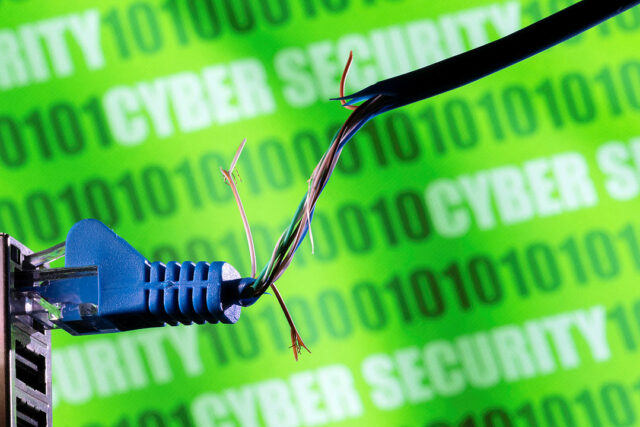
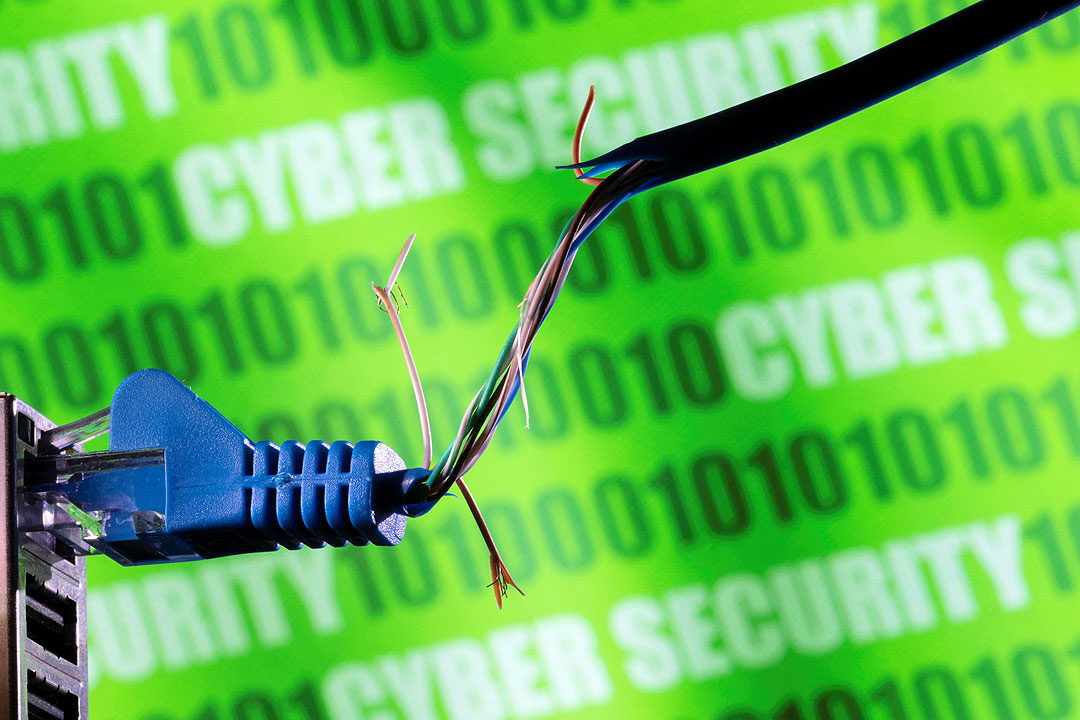
A broken ethernet cable is seen in front of binary code and words “cyber security” in this illustration taken on March 8, 2022. — REUTERS
A broken ethernet cable is seen in front of binary code and words “cyber security” in this illustration taken on March 8. — REUTERS
By Arjay L. Balinbin, Senior Reporter
AS CYBERATTACKS surge around the world, the Philippines is still at the “infancy” stage in terms of cybersecurity, raising worries over the government and private sector’s ability to handle present and future cyberthreats.
Six years after the country’s cybersecurity framework was launched, Department of Information and Communications and Technology (DICT) Acting Secretary Emmanuel Rey R. Caintic said that based on observations, there is still much work to be done to strengthen the country’s defenses against cyberthreats and attacks.
“Well, Rome wasn’t built in a day,” he said in a virtual interview.
Of the five levels of maturity in terms of cybersecurity, Mr. Caintic noted the Philippines is still at level 1 (initial or ad hoc) in terms of awareness and communication; and cybersecurity skills and expertise. According to the Cobit (control objectives for information and related technology) maturity model, level 1 means “no standardized processes are in place.”
The Philippines fared better in terms of policies, plans, tools and responsibility, but procedures are not sophisticated enough.
Mr. Caintic said the DICT is aiming to reach the maturity level 5, or the “resilient enterprise” level in around five years.
The Philippines ranked fourth in Kaspersky’s 2021 global ranking of countries most targeted by web threats.
“This means Filipinos who have been mostly stuck at home surfing, working, banking, or studying via the web during the entire second year of the pandemic have had a heightened exposure to further dangers of the internet,” the Russian cybersecurity firm said in its report released in February.
This year, the DICT has a budget of up to P600 million intended for cybersecurity, significantly bigger than the previous budget of P300 million, according to Mr. Caintic.
He said the government is looking to upgrade the Security Operations Center (SOC), which was acquired in 2019. At least 10 government agencies are connected to the SOC, which is involved in cyber defense and closely monitors the agencies’ networks for unusual activities or cyberattack.
The DICT also plans to conduct this year a “cyber range,” or simulation training, with the Armed Forces of the Philippines, the Department of National Defense, and the National Intelligence Coordinating Agency. Mr. Caintic said the cyber range platform is being set up for drills in April.
The country’s Cybersecurity Plan 2022 was updated in 2021 to strengthen the cybersecurity capabilities of both government and private organizations.
“The DICT is mandated to ensure the security of critical ICT infrastructures including information assets of the government, individuals, and businesses,” Mr. Caintic said.
The DICT is also pushing for the creation of a cybersecurity agency, which is aimed at boosting the Philippines’ cybersecurity capabilities.
Mr. Caintic said a bill is being prepared for the next Congress. The bill would also require organizations to hold cyberattack drills and comply with minimum security standards.
GLOBAL CYBERATTACKS Russian cyberattacks against Ukraine, including its critical national infrastructure, have worried governments around the world.
The governments of the United States, United Kingdom and Australia publicly attributed the cyberattacks against the Ukrainian banking and government websites in February to the Russian Main Intelligence Directorate. Russia has rejected these allegations.
The Philippines, given the status of its cybersecurity capabilities, may not be able to survive a similar attack, ethical hacker Allan Jay “AJ” Dumanhug said in a virtual interview.
“Unfortunately, we can’t even prevent cyberattacks from local cybercriminal groups, so why are we even talking about international cyberattacks or state-sponsored attacks if we can’t prevent our local cybercriminal groups?” said Mr. Dumanhug, the chief executive officer of cybersecurity testing platform Secuna.
“So, imagine China attacking the Philippines. We can’t even keep up with them. We don’t have the right capability in terms of resources, in terms of leadership, especially in our government,” he added.
The government and the private sector should also ramp up efforts to increase the number of cybersecurity professionals in the country, said Angel T. Redoble, chairman and founding president of the Philippine Institute of Cyber Security Professionals.
“We need more skilled professionals… Cyberattackers are innovating and evolving on a daily basis, so we, on the defender side, should do the same,” he said in a virtual interview.
Secuna’s Mr. Dumanhug said the National Government should require all agencies to perform a “thorough security assessments of all their applications that store, process, and transmit sensitive and critical information of our government and fellow citizens.”
“As we all know, we have around 100 million Filipinos in the country right now, and we hold a lot of pieces of data, and cybercriminals will target any kind of organization. As long as you hold thousands of data, you will be targeted, because per data it can be sold for $5 to $10, I guess, in the black market,” he noted.
The implementing rules of the Data Privacy Act of 2022 already require the National Privacy Commission to manage the registration of personal data processing systems in the country. Mr. Dumanhug said most startups appear to be unaware of the law, which is why the government should slap fines on those that violate it or else these lapses will continue.
CYBERSECURITY AWARENESS As the pandemic drove a shift to digital services, there was also an increase in cybercrimes against consumers.
Losses from bank fraud, such as unauthorized withdrawals or illegal transfers, during the pandemic reached P1 billion, the Bankers Association of the Philippines (BAP) said.
“However, as more Filipinos are shifting towards online banking, cybercriminals have found an opportunity to exploit victims on a wider scale,” the group told BusinessWorld in a statement.
The rise in cybercrimes highlighted the need for banks to continually upgrade their systems to deter cryberattacks, as well as for the government to hold cybercriminals accountable, the BAP said, adding the industry launched a CyberSafe campaign to raise cybersecurity awareness among the public.
Yeo Siang Tiong, Kaspersky’s general manager for Southeast Asia, said the government and the private sector should start working on cybersecurity awareness.
“Regulations, policies, and private-public partnership must be there… There must be general awareness that they need to beef up their defenses,” he said during a virtual interview. “The reality today is that it is all pretty random.”
Mr. Yeo said people should be aware that cyberattacks can occur via social media and messaging apps, and should know how to respond.
For Mr. Redoble, there are already a lot of intelligent devices that can protect one from cyberthreats and attacks, but are very expensive especially for these micro, small and medium enterprises (MSMEs).
“Only the large enterprises can afford new technologies and hire the right people,” he said. “The MSMEs are unable to put up a team and unable to buy new technologies. That is a big problem for us, because we have 99% of the business sector vulnerable to cyberattacks.”
Mr. Redoble said a culture of cybersecurity starts by changing the mindset of people, from the top management to the users.
Kaspersky’s Mr. Yeo pointed out that a study done by his company last year showed that only 48% of Filipinos who use digital payment methods believe they need an antivirus software to protect their money and data online, even if they’re aware of phishing scams and bank and credit card fraud.
Mr. Dumanhug warned cyberattacks are expected to become “more complex” in a few years.
“We have to keep up with them by implementing whatever they are doing or they will perform. Probably, cyberattackers will also use new technologies like artificial intelligence, so the organizations and the National Government should also use this stuff to keep up with the attackers,” he noted.
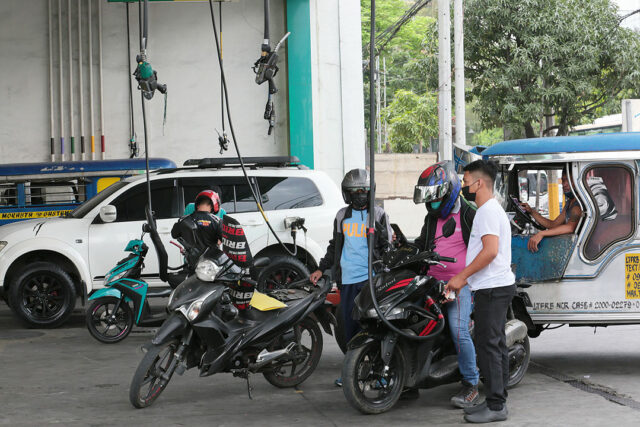
FUEL RETAILERS on Tuesday implemented a rollback in the prices of gasoline, diesel and kerosene, ending 11 straight weeks of steadily rising pump prices.
The price of gasoline, diesel, and kerosene products were slashed by P5.45, P11.45, and P8.55 per liter, respectively, as Dubai crude oil prices dropped last week.
This is the first reduction in pump prices this year, but it was not enough to offset the accumulated increase of P20.35 per liter for gasoline, P30.65 for diesel, and P24.90 for kerosene as of last week.
Energy Secretary Alfonso G. Cusi said the rollback is due to the drop in average prices of petroleum products based on the Mean of Platts Singapore (MOPS), the pricing yardstick for many refined products in Southeast Asia, last week.
In a text message, Mr. Cusi said the average price of gasoline was $120 per barrel last week, down from $138 per barrel the previous week. The average price of diesel slipped to $125 per barrel from $157 per barrel previously.
During the Laging Handa press briefing on Monday, Energy Undersecretary Gerardo D. Erguiza, Jr. said crude oil prices fell due to concerns the lockdowns in China would lower demand and the progress in Russia-Ukraine talks.
Despite the decline in fuel prices, Mr. Cusi said the government will increase the P3-billion budget for fuel subsidies to P6.1 billion. — Marielle C. Lucenio
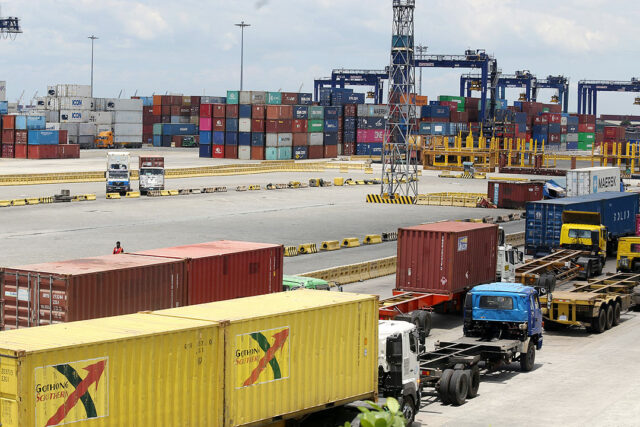
Trucks enter a port in Manila. — PHILIPPINE STAR/EDD GUMBAN
by Arjay L. Balinbin, Senior Reporter
Some shipping companies have started hiking their freight fees, the Philippine Liner Shipping Association (PLSA) said, noting that the industry is currently in survival mode due to the rising fuel prices.
“As far as I know, rates of the ROROs (roll-on, roll-off vessels) in Batangas have gone up. In other provinces, I know that they are putting increases also,” PLSA President Mark Matthew F. Parco told BusinessWorld in a phone interview on Monday.
The average increase in freight fees, according to Mr. Parco, is 25%.
“That’s the average based on the increase in their operating costs… There is no single rate that applies to all. They have different rate levels and structures,” he added.
Chelsea Logistics and Infrastructure Holdings Corp. President and Chief Executive Officer Chryss Alfonsus V. Damuy said in a phone message that they are “sending notices” to their clients.
Maritime Industry Authority (Marina) Administrator Robert A. Empedrad said the industry is deregulated.
Under Republic Act No. 9295, domestic ship operators are authorized to set their own domestic shipping rates, provided that “effective competition is fostered and public interest is served.”
The agency monitors all shipping operations and exercise regulatory intervention where it is established that “public interest needs to be protected and safeguarded.”
Mr. Empedrad said that Marina will “evaluate the validity” of the increases.
“But eventually, we cannot control them,” he added.
Mr. Parco said the domestic shipping companies have been losing money and that it is “a matter of survival” now.
“Cumulatively, it was a P600-million loss for all the lines in 2019, which should reflect the state of the industry. In 2020, it was a P1.5-billion loss. For 2021, I expect it will still be negative,” he noted.
“But they were not increasing rates because of Marina’s request” in consideration of the coronavirus pandemic.
The cost of operations has increased by around 25%. “I’m just talking about the increase in fuel prices. I’m not even talking about the increase in trucking, spare parts, and dry-docking costs,” Mr. Parco said.
The prices of gasoline, diesel, and kerosene are expected to fall by P5.45, P11.45, and P8.55 per liter on Tuesday, after 11 straight weeks of increases. Last week, fuel retailers raised gasoline and diesel prices by P7.10 and P13.15 per liter, respectively.
Fuel accounts for around 40 to 50% of shipping companies’ operating costs, Mr. Parco said. “But then again, shipping lines have different cost structures.”
On whether the higher freight rates will be passed on to end consumers, he said: “There will be a pass-on; but again, because shipping [rates] went up doesn’t mean that all the increases are due to shipping.”
“Shipping is just from the port to the port. It’s just part of the total logistics. From the farm to the port, there are a lot of things that happen there: there’s trucking, there’s consolidation, distributors — they put their markups,” he added.
“So when we look at that portion — just from port to port, which we are responsible for, it’s just around 5% of the total price of a [product].” The industry has been seeking fuel subsidies, removal of excise tax on oil, and reduction in charges imposed by regulating agencies to soften the impact of the fuel prices on shipping costs Philippine Interisland Shipping Association Executive Director Pedro G. Aguilar said during a recent House committee hearing on fuel crisis that the impact of the excise tax on cargo ships is an increase of P400 to P500 per 20-foot container depending on the fuel consumption of a vessel and the port of destination.