Home Blog Page 6614

Agri worker groups file more cases vs anti-communist task force spokesperson 

FARMER and fisherfolk groups on Wednesday filed complaints against the spokesperson of the governments anti-communist task force for allegedly using her position to spread fake news and tagging groups and personalities as reds or terrorists without basis.   

Anakpawis Party-list led the filing of a case against Undersecretary Lorraine Marie T. Badoy, who serves as spokesperson of the National Task Force to End Local Communist Armed Conflict (NTF-ELCAC) at the Office of the Ombudsman. 

Usec. Lorraine Badoy-Partosa should prepare to face ton-loads of legal cases courtesy of her baseless accusations meant to intimidate the opposition,Anakpawis National President Ariel B. Casilao said in a statement. 

The other petitioners include the Kilusang Magbubukid ng Pilipinas (KMP), Amihan National Federation of Peasant Women, Unyon ng mga Manggagawa sa Agrikultura (UMA), and fishersgroup Pambansang Lakas ng Kilusang Mamamalakaya ng Pilipinas (PAMALAKAYA). 

Theres a lot of social issues besetting the Filipinos and the last thing we want are tall tales and politically-motivated fictions aimed to discredit and implicate the progressive groups and activists. Usec. Badoy, along with her gang in the NTF-ELCAC are simply irrelevant in our modern society, Mr. Casilao said.  

They also called for the abolition of the NTF-ELCAC.  

Last week, 26 complaints were filed against Ms. Badoy by activists that included party-lists under the Makabayan bloc, teachers, and student leaders. Jaspearl Emerald G. Tan

Cebu BRT civil works deal due for awarding by May — DoTr

PHILSTAR FILE PHOTO

THE Department of Transportation (DoTr) said on Wednesday that it expects to award the civil works contract of the World Bank-funded Cebu Bus Rapid Transit (Cebu BRT) project by May.

“The notice of award for civil works contractor should be issued by May 2022. Hence, earth-balling activities for the project should start earlier,” the department said in a statement.

Transportation Secretary Arthur P. Tugade said the construction of the project should proceed by June.

The department said Mr. Tugade directed the DoTr’s road sector officials on Tuesday to “expedite the immediate construction of the BRT to help ease traffic conditions, while enhancing the mobility of commuters in Cebu City.”

“A 13.18-kilometer busway, the Cebu BRT will (run) from South Road Properties through Mambaling up to IT Park with 17 bus stations, one terminal (for trunk service), and a depot,” the DoTr said.

The BRT system is expected to benefit around 60,000 passengers once operational.

The government has extended the deadline to submit bids for the “Package-1: Works Cebu South Bus Terminal to Capital Urban Realm Enhancement (Link to the port)” to April 21 from March 28 because of the need to give prospective bidders more time to evaluate the bid documents.

In its invitation to bid, the DoTr said the project will be supported by financing from the World Bank.

The department intends to “apply part of the proceeds with a sum of P1.05 billion toward payments under the contract for Package 1.”

The contractor is required to complete the project within 365 calendar days.

The DoTr said the government expects the project to be fully operational by 2023. — Arjay L. Balinbin

Senator backs giving Agri, Trade departments authority to confiscate smuggled farm goods

REUTERS

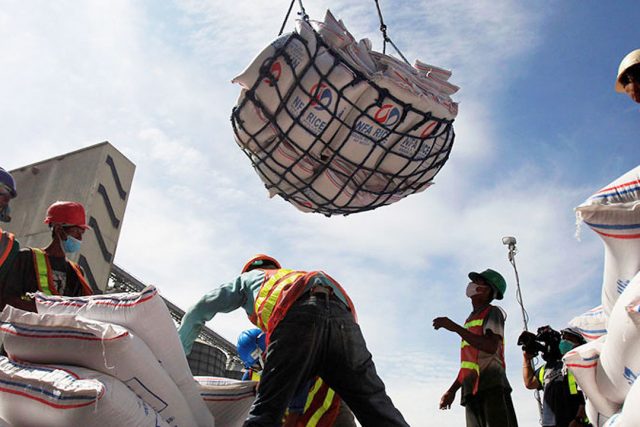
THE Departments of Agriculture (DA) and Trade and Industry (DTI) need to be authorized to confiscate smuggled goods, a Senator said on Wednesday.

“A new law is needed if we want to empower the DA and DTI to confiscate smuggled items,” Senator Aquilino Martin L. Pimentel III, who chairs the chamber’s committee on Trade, Commerce and Entrepreneurship, said in a Viber message.

During an earlier hearing on agricultural smuggling, both departments had asked for greater control over agricultural products since they are currently only allowed to inspect items in public markets but not verify whether they were imported legally.

Mr. Pimentel noted that although the current law allows the Bureau of Customs (BoC) to apprehend smuggled items, their implementation is lacking.

“Customs must intensify its law enforcement powers in pursuing smuggled items,” he said.

The La Trinidad Vegetable Trading Areas, the largest agriculture organization in Benguet with about 10,000 members, said in a statement at the weekend that vegetable farmers are losing an average of P2.5 million a day with daily orders declining by up to 40% due to the influx of smuggled vegetables.

Agriculture Assistant Secretary Federico E. Laciste, Jr. has alleged that some politicians have blocked the filing of charges against smugglers of farm goods. He did not identify them.

“We have a situation where agencies take no action even when smuggling is brazenly committed. So aside from the fact that the BoC and the DA have been compromised, there are untouchables,” Senator Francis Pancratius N. Pangilinan said.

In a statement on Monday, Agriculture Secretary William D. Dar said DA personnel who participate in such arrangements will be punished according to the law.

“We condemn whoever these personalities are, and we at the Department of Agriculture will act swiftly and decisively to reprimand those involved among our ranks, officials and staff. If found guilty, we will file the appropriate administrative charges against these individuals,” he said.

Mr. Pimentel said the current system has sufficient tools to penalize politicians who facilitate smuggling; however, “the problem is nobody complains.” — Alyssa Nicole O. Tan

Gov’t must manage demand to ensure adequate power for May polls — think tank

BW FILE PHOTO

THE Institute for Climate and Sustainable Cities (ICSC) said the possibility of blackouts during election season should spur the government into undertaking demand-side management activities to ensure power supply and avoid questions about the credibility of the May elections.

At a virtual briefing on Wednesday, ICSC Energy Transition Advisor Alberto R. Dalusung III called on the government to start preparing the market for demand-side management measures as such a course of action is “the quickest to implement” among the realistic options, such as requiring solar rooftops and encouraging industrial firms with their own generating facilities from drawing power from the gird.

“The Department of Energy (DoE) has to make an assessment what else that needs to be done and I suppose things like triggering the interruptible load program where industries do not consume from the grid, but use their own generation,” he said.

“It’s important that even the general public participate. If you can reduce your consumption particularly during 10 a.m. to 2 p.m., during the peak in Luzon… the proper choices (can help ensure more power supply),” he added.

On Wednesday, the think tank reiterated its earlier projection of a power shortage around the time of the elections on May 9 as well as the vote count. It expects rotating blackouts if some power plants have to shut down.

“From the National Grid Corp. of the Philippines’ (NGCP) official power outlook, the thin operating reserves will start on the third week of April until the last week of May,” ICSC Chief Data Scientist Jephraim C. Manansala said during a virtual briefing.

Mr. Manansala said that if baseload coal plants remain shut down during these months, forced outages could deplete the operating reserve and could trigger rotating brownouts.

“Blackouts will only occur if the operating reserves are depleted below the grid requirements,” he added, noting that two coal-fired power plants with a total combined capacity of 423 megawatts (MW) are currently shut down.

Over the weekend, the grid operator placed the Luzon grid on yellow alert, signifying thinning power reserves, after seven power plants suffered forced outages.

Nazrin Camille D. Castro, manager of nonprofit organization The Climate Reality Project, said “unreliable electricity supply will undermine the credibility of the elections.”

“We will expect power outages on election day, like previous elections, which will cast doubt again on the whole electoral process due to the delay of the casting and counting of ballots. It happened several times before, so there should be no excuses (if it happens) again,” Ms. Castro said.

Ms. Castro noted that household consumers have the highest share of total energy consumption at 31%.

“If all consumers would chip in and practice energy efficiency during these peak hours, I think it would be a big help during these seasons,” she said.

Mr. Dalusung said that urging the consumers to manage their usage “can’t be done unless there are cues from the government that it has to be done to ensure credibility in our elections.”

Last week, the DoE issued an advisory to government agencies to conserve energy as fuel prices rose, to ensure adequate supply during the May elections.

The DoE had called on the public to observe Earth Hour, noting that shutting off non-essentials resulted in a savings of 65.32 MW nationwide.

The savings included 35.26 MW in Luzon, 15.3 MW in Mindanao, and 14.76 MW in the Visayas, the DoE said.

“We hope to sustain this reduction through consistent energy efficiency and conservation practices. The first step is to be mindful of our energy consumption habits, especially during periods of high demand such as this summer,” Energy Secretary Alfonso G. Cusi said previously in a statement. — Marielle C. Lucenio

Housing readied for Tagum families along rail line

PHILIPPINE STAR/KRIZ JOHN ROSALES

A RESETTLEMENT AREA for families affected by the Mindanao Railway Project in Tagum City, Davao del Norte has been offered to bidders, the Department of Transportation (DoTr) said.

The project is funded by the National Government through the DoTr. The Tagum City government, the procuring entity for the project, invited interested bidders or suppliers to bid for the P114.48-million design and build contract. The deadline to submit bids was March 29, according to the invitation to bid posted on the Philippine Government Electronic Procurement System.

The housing project will be known as Tagumpay Train Village and will consist of 62 quadruplex housing units for families affected by the railway project.

Under the special conditions of the contract, completion of the project must be within 270 days upon receipt of the notice to proceed. 

Implementation of site development work is expected to start next month.

The Mindanao Railway Project is a 1,544-kilometer railway system connecting Davao, General Santos, Cagayan de Oro, Iligan, Cotabato, Zamboanga, Butuan, Surigao, and Malaybalay. It is financed through official development assistance from the Chinese government.

The government awarded the P3.08-billion project management consultancy contract of the Mindanao Railway Project Phase 1 to a Chinese consortium composed of China Railway Design Corp. and Guangzhou Wanan Construction Supervision Co., Ltd.

The project management consultant will assist in the preparation and management of the overall project implementation program, including land acquisition activities, coordination with government offices, review of the project’s detailed design, and supervision of construction activities.

The first phase covers a 100-kilometer railway connecting Tagum in Davao del Norte, Davao City, and Digos in Davao del Sur, featuring eight stations. It is expected to accommodate 122,000 passengers per day and cut travel time between Tagum and Digos from three hours to one. — Arjay L. Balinbin

Construction of three ADB-funded Metro Manila bridges to start in first half

PHILSTAR

THE Finance department said on Wednesday that it expects the construction of the three Asian Development Bank (ADB)-funded bridges in Metro Manila to start in the first half of the year.

“The construction of these three infrastructure projects, the Marcos Highway-Saint Mary Avenue Bridge, Homeowner’s Drive-A Bonifacio Bridge, and the Kabayani Street-Matandang Balara Bridge, will start in the first half of this year and due for completion in 2026,” the Department of Finance (DoF) said in a statement.

“The three bridge projects will be financed through a $175.1-million loan from the ADB,” the DoF said.

The bridges’ combined span is more than three kilometers, all across the Marikina River.

The three bridges are also among the 12 to be built under the Metro Manila Bridges Project.

The Department of Public Works and Highways said the Marcos Highway-St. Mary Avenue Bridge will span 1,606.30 meters, the Homeowner’s Drive-A. Bonifacio Bridge 691 meters, and Kabayani Street-Matandang Balara Bridge 726.30 meters.

Finance Secretary Carlos G. Dominguez III and ADB Managing Director-General Woochong Um exchanged copies of the loan documents for the construction of the three bridges on Wednesday.

Mr. Dominguez described the bridge projects as “crucial components of the Build, Build, Build program that will help our economy bounce back from the adverse effects of the pandemic.”

“With their high multiplier effect and job-generating potential, investments in infrastructure will be the engine for our rapid economic recovery,” he added.

He said the bridges will have the ability to “absorb strong earthquake shocks and reduce flood risks in the area, making them climate- and disaster-resilient.”

According to the Finance department, among the big-ticket projects that the ADB has supported through its financing assistance totaling $2.3 billion are the Malolos-Clark Railway project, the Improving Growth Corridors in Mindanao Road Sector project, the EDSA Greenways project, and the Angat Water Transmission Improvement project. — Arjay L. Balinbin

Adamson University, BoI sign R&D capacity development deal

ADAMSON UNIVERSITY FB PAGE

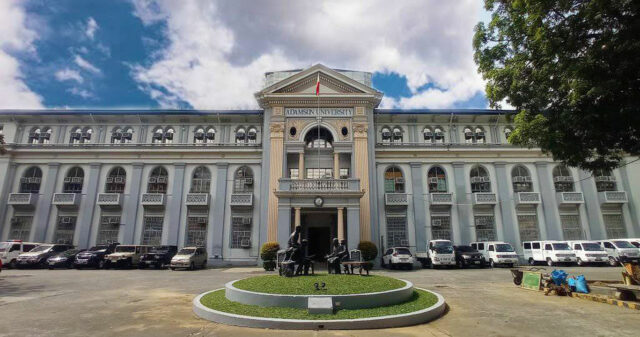
THE Board of Investments (BoI) said it has signed an agreement with Adamson University that will encourage students and academics to explore and tap technology transfer opportunities from industry.

In a statement on Wednesday, the BoI said the memorandum of understanding (MoU) was signed with Adamson University on March 29. The agreement defined the areas of cooperation as technology pitching, reverse technology pitching, research and development consultation, and capacity-building activities for both the academic staff and students.

“(The MoU) will help faculty and students understand the different industries — their needs and challenges — and possibly adapt to the future skills requirements as well as close the gaps in the industry value chains to achieve our shared objectives of industry development for quality employment of our graduates,” BoI Managing Head Ceferino S. Rodolfo said.

“This is a step forward in utilizing expertise and gaining access to skilled faculty researchers and students providing solutions to industry problems,” he added.

According to the BoI, the MoU is an offshoot of its Academe-Industry matching activity conducted in October 2021, undertaken with two foreign companies and 17 academic institutions. The matching activity explored opportunities for on-the-job training, recruitment, and industry collaboration, and discussions of workplace skill requirements.

“The activity was followed by the joint organization of Adamson’s Talk-N-Tech event in November 2021, which aimed to connect local industries with the university’s research and development initiatives,” the BoI said. — Revin Mikhael D. Ochave

BoI registers Medtecs EV, textile, PPE project

THE Board of Investments (BoI) said Medtecs International Corp. Ltd. is planning to develop an industrial estate focused on producing e-mobility products and electric vehicles (EVs), personal protective equipment (PPE), and textiles that use tropical fibers such as abaca, bamboo, and banana.

At a meeting with the BoI on March 23, Medtecs Chairman Clement Yang said the planned industrial estate is expected to generate $1.9 billion worth of foreign direct investment and 125,000 jobs over seven years.

Mr. Yang said the project hopes to address a gap in the supply chain for textiles, including yarn, spinning, weaving, and products made from recycled polyester.

“The planned business activities of Medtecs are all listed in the Strategic Investment Priority Plan and are eligible for incentives under Republic Act No. 11534 or the Corporate Recovery and Tax Incentives for Enterprises (CREATE) Act, including the processing of green metals such as nickel for EV batteries,” Mr. Rodolfo said.

Medtecs has started producing melt-blown non-woven fabric, which is the filter medium used in medical-grade face masks. Its facility has a capacity of 25 million face masks per month. The total project cost was $600,000 and employs 15 staff.

“The project is registered with the Authority of the Freeport Area of Bataan and is located at the Medtecs Compound in Mariveles City, Bataan,” the BoI said. — Revin Mikhael D. Ochave

Amended Public Service Act: Dismantling economic protectionism

Economic protectionism was the main intention of the members of the 1986 Constitutional Commission when they adopted the foreign equity limitations incorporated in Article XII of the 1987 Constitution. Despite the constitutional impediments, such as the Filipinization of public utilities, our need for foreign investment and technology to improve the economy is undeniable. Ever since, foreign investment has played an important role in our infrastructure, more recently via modes of investment like Public-Private-Partnerships.

The late Father Joaquin G. Bernas, S.J., one of the members of the 1986 Constitutional Commission, said that the purpose of the Filipinization of “public utilities” under the constitution is to prevent foreigners from assuming control of the sector, which may be inimical to the national interest. Filipinization is pursuant to an overriding economic goal of the 1987 Constitution: to “conserve and develop our patrimony” and ensure “a self-reliant and independent national economy effectively controlled by Filipinos.”

However, what is covered under the term “public utilities” has been the subject of several court decisions. The Supreme Court has consistently held that being a public utility is a matter of judicial, not legislative, determination. The existence of a legislative declaration such as the definition by enumeration in the 86-year-old Public Service Act (PSA) does not ipso facto render a business or service a public utility. Instead, the courts look at the nature of the business or service rendered. These Supreme Court decisions might have validated the reluctance of foreigners to invest in industries that are vital to our economic progress.

“Even after their enactment, laws may be changed by future amendments like the decisions of the Supreme Court, which form part of our laws. Policy revisions may be adopted to address unforeseen conditions or refine legal provisions over time.

To stimulate investment, the government recently passed Republic Act (RA) No. 11659, which was approved by the President on March 21. The law amends the 86-year-old PSA. The amendments now limit the coverage of public utilities to key sectors that will remain subject to the 40% foreign equity cap. These key sectors are considered natural monopolies where a single firm can effectively serve the market at lower cost than two or more firms. This includes the distribution and transmission of electricity, petroleum and petroleum product transmission, water distribution and wastewater systems, seaports, and public utility vehicles.

Key industries such as telecommunications, expressways, airports, and shipping have been removed from the category of public utility. Under the new law, these industries may now be 100% foreign-owned.

While the newly amended law may attract critically-needed investment, some may consider the law’s liberality as running contrary to the constitutional dictate to conserve the national patrimony and ensure a Filipino-controlled national economy. To address these concerns, the law lays down five key safeguards:

1. The President has the power to suspend or prohibit any investment in public services in the interest of national security upon the review, evaluation, and recommendation of the relevant government agencies;

2. Restrictions are imposed on foreign state-owned enterprises (SOEs) owning capital in a public service classified as public utility or critical infrastructure;

3. Information security clauses ensure that entities engaged in the telecommunications business meet relevant ISO standards;

4. The reciprocity clause prevents foreign nationals from owning more than 50% of capital in the operation and management of critical infrastructure unless the foreign nationals’ home countries accord reciprocity to Philippine nationals; and

5. The performance audit provision mandates an independent evaluation to monitor the cost, the quality of services provided to the public, and the ability of the public service provider to immediately and adequately respond to emergency cases.

Why talk about investment when businesses are barely surviving the COVID-19 pandemic?

Sure, the past two years have been challenging. COVID-19 took a heavy toll on our livelihoods: some lost their source of income without any opportunities to look for new ones. As we struggle to adapt to the post-pandemic world, we need more investment to boost our economy. We should not only combat the public health issues due to the pandemic but also take necessary steps to revive our economy. We can do this by attracting more foreign investment. Together with the recently amended Retail Trade Liberalization Act and the Foreign Investments Act, the new PSA is timely and relevant to our most challenging times.

The nationalistic views of the framers of the 1987 Constitution, as reflected in the economic protectionism provisions in Article XII, are not discounted by allowing the entry of foreign investors. The responsibility of boosting economic growth should not be limited to Filipinos in the spirit of nationalism. If protectionism is maintained, it will only create a barrier to achieving the goal of a prosperous society. As the Supreme Court put it: “Nationalism is not a mindless ideal. It should not unreasonably exclude people of a different citizenship from participating in our economy. If it were so, nationalism will not foster social justice; rather, it will sponsor a kind of racism quite like what our ancestors had suffered from in our colonial past.” (G.R. No. 205835, June 23, 2020)

Indeed, opening the doors of nationalized industries to foreign investors does not represent the unhampered entry of foreign entities. Domestic market players should not cower in fear of competition. Instead, competition dismantles market inefficiencies like high consumer prices, low-quality products, lack of incentives for innovation, and limited consumer choice. With the PSA safeguard provisions in place, the economy can remain independent and self-reliant while generating employment opportunities, promoting competition, encouraging the inflow of capital, and boosting economic performance.

The views or opinions expressed in this article are solely those of the author and do not necessarily represent those of Isla Lipana & Co. The content is for general information purposes only, and should not be used as a substitute for specific advice.


Robert Jhon C. Salazar is a senior associate at the Tax Services Department of Isla Lipana & Co., the Philippine member firm of PricewaterhouseCoopers global network.

robert.jhon.c.salazar@pwc.com

Four not five

PHILIPPINE STAR/MICHAEL VARCAS

The judiciary started on Monday its four-day workweek schedule for thousands of court employees in Metro Manila. The new work arrangement, which was prompted by rising fuel and energy prices, covers the Supreme Court (SC), Court of Appeals, Sandiganbayan, and Court of Tax Appeals. The National Economic and Development Authority (NEDA) earlier proposed the shorter workweek for energy conservation.

One group of court employees is scheduled to report onsite 7 a.m.-5:30 p.m. Monday-Thursday, while another second group is to work at the same time slot, but Tuesday-Friday. This way, judicial service will not be compromised. While the workweek is only four days, court operations still remain at five days weekly.

Chief Justice Alexander G. Gesmundo was quoted in a news report that the shorter workweek took into consideration “the adverse effect created by the series of oil price increases….” He also said the SC Employees Association, in a letter dated March 21, actually requested the new work schedule. Judicial workers not covered by the new arrangement will continue to report for work onsite Monday-Friday, 8 a.m. to 4:30 p.m.

The thing is, despite the shorter workweek, people are still made to work the same number of hours they log during a regular workweek. Convention, regulation, and law put those hours at 40-44 weekly: eight hours daily for five days, or 10 hours daily for four days. Many also put in a half-day’s work on Saturdays. And this is where the problem lies, I believe.

In a column late last year, I recall citing a report on Iceland and how their government offices actually benefitted from a shorter workweek; how productivity rose enough to ensure that all services were still provided as needed; and, as a consequence of the study, why 86% of Icelanders would eventually have the right to a shorter workweek of four days.

It was online publication Big Think that reported on a new study in Iceland which documented “the recent success of one of the largest experiments to date on a reduced workweek.” Carried out by the Icelandic government and published by Autonomy, a UK think tank, the report suggests that a substantial portion of the economy could switch over to a short workweek with little in the way of negative effects, Big Think said.

Big Think reported that two experiments were done. The first, from 2014 to 2019, was by Reykjavík’s city government, and involved more than 2,500 workers at playschools, city maintenance facilities, care-homes for people with various disabilities and special-needs, and beyond. The second, by the Icelandic national government from 2017 to 2021, involved 17 workplaces across the country.

But the big difference between their experiment and the Philippine experience is that “workers in the experimental locations [in Iceland] saw their hours reduced from 40 to 36 or 35 hours per week with no loss in pay. The exact way these hours were organized was determined by the individual workplace involved. Many opted to split the hours among four days, while others worked a five-day week with one workday being shorter,” Big Think reported.

The overall goal, in fact, is not just to cut the number of work days in the week, but also the hours. To give workers more time outside the office or workplace, and spend this time either with family or leisure. Work-life balance and workers’ health were the main considerations, and how promoting these actually lead to higher productivity.

“Both studies produced similar results. The reduction in hours caused either no change or an increase in productivity and improvements in the reported work-life balance of employees. While many employees were concerned that more work would be crammed into less time, the data show that the workers were actually working less,” Big Think reported.

It also noted that “improvements in efficiency were found in every workplace. Employees worked faster. Time-wasting events, like unnecessary meetings, were curtailed. Routines were changed to be more efficient, and shifts and schedules were restructured. Overtime was needed in some offices, but only sparingly. Importantly, services were provided at the same levels as they were before the reduction in work hours. The well-being of workers dramatically improved, with many reporting increased time with their families, lower stress levels, and a better ability to balance their work and home lives.”

And, as a result of the two trials, Big Think noted that 86% of Icelandic workers were now on contracts that either reduce their workweek or grant them the right to reduce their workweek in the future. In general, it is safe to assume that the shorter workweek forces everyone to be more efficient and more conscious of time.

Fewer days but more work is the main argument locally against a shorter workweek. No work-no pay arrangements also lead to lower income for many day workers. And this is where the local system must change. Fewer days, fewer hours, but better pay can work, if remuneration is based on output, productivity, and efficiency, and not just on the number of days or hours worked.

This, of course, is easier said than done. But Iceland is already showing the way. There are plenty of lessons from its twin experiments. However, there will be growing pains, like with any system change. There will be plenty of unexpected consequences from shortening the workweek, and as people adjust to it, even more changes will occur inside and outside the workplace.

But now is the time to push for a shorter workweek, as well as the wider use of work-from-home arrangements. Already, 30 companies in the United Kingdom are taking part in a six-month trial to test a four-day workweek: fewer work days with no decrease in pay. The trial also involves researchers at Cambridge University, Oxford University, Boston College, and the think tank Autonomy.

But, other than the Iceland experiment as well as the UK trial, labor history has lessons to share as well. As noted by the Financial Times’ Sarah O’Connor in a report on March 25, “in Britain in the 1840s, a campaign to reduce the length of the working day in factories from 12 hours to 10 prompted predictions of disaster. One parliamentarian called the idea ‘dangerous’… But in 1846, parliament heard the results of an experiment run by an owner of large mills in Manchester and Preston. When he reduced the working day to 11 hours, he found production volumes remained the same and the quality of work improved.”

She also wrote, “Similarly, when Henry Ford reduced the working week in his car factories from six days to five with no cut in pay in 1926, the decision followed several years of experiments, which had assured him production would not suffer. ‘We can get at least as great production in five days as we can in six, and we shall probably get a greater, for the pressure will bring better methods,’ he said.”

That was in 1926, almost a century ago. Henry Ford, among others, already proved that shortening the workweek would not result in catastrophe. But employers need to keep an open mind, and the willingness to discover what Ford referred to as “better methods” of production.


Marvin Tort is a former managing editor of BusinessWorld, and a former chairman of the Philippine Press Council

matort@yahoo.com

Saidy Pangarungan’s task: Transparent elections

COMELEC COMMISSIONER Marlon Cascuejo, Comelec Chair Saidamen Pangarungan, and Comelec Commissioner George Erwin M. Garcia during the Comelec walk through at National Printing Office on March 15. — PHILIPPINE STAR/ MICHAEL VARCAS

There’s a newly designated Chairman of the Commission on Elections (COMELEC), Saidamen Balt Pangarungan, also known as “Saidy” or “Gob” for Governor. Pangarungan once served as Governor of Lanao del Sur. President Corazon Aquino appointed him Officer-in-Charge (OIC) Governor in 1986, right after the EDSA People Power uprising. He would later serve as the elected Chief Executive of Lanao del Sur from 1988 to 1992.

Pangarungan was a street parliamentarian battling the Marcos authoritarian regime after the execution of former Senator Ninoy Aquino at the then Manila International Airport. Pangarungan and other oppositionists from Muslim Mindanao, particularly from Lanao del Norte and Lanao del Sur, Basilan, Zamboanga del Sur and Zamboanga del Norte, North and South Cotabato, Tawi-Tawi and Sulu, joined us in protest rallies and demonstrations in different parts of Metro Manila in the early 1980s.

Huge delegations from these provinces would join rallies held Wednesday and Friday afternoons at Ayala Avenue and the Ugarte Field in Makati. They were also present at Mendiola, Welcome Rotonda in Quezon City, Liwasang Bonifacio, the Batasan Complex, the Comelec Main Office, Plaza Miranda, at the Prayer Rally on Feb. 20, 1986 at Luneta Park where more than a million gathered to protest the cheating by the Comelec for Marcos and the proclamation of Marcos and Arturo Tolentino as winners of the presidential snap election by the Legislative Assembly, and, finally, from Feb. 22 to 25 at EDSA.

As governor of Lanao del Sur, Saidy Pangarungan, challenged the leadership of Ali Dimaporo and other politically powerful clans in Lanao. Dimaporo, a staunch ally of Marcos, maintained his grip on Lanao del Sur through a combination of patronage politics, hardball politics, and support from the national government.

Dimaporo received huge chunks of revenue allotments from Marcos to support infrastructure development at the grassroots. Lanao del Sur was known for thousands of barangays which received financial support for roads, bridges, irrigation systems and other infrastructure. Most of these funds were used to buy cement, steel bars, and other materials for infrastructure construction.

During the snap elections, the opposition continued to closely monitor funds downloaded to these barangays. It was discovered that most of these barangays were non-existent. A rudimentary geodetic survey (there was no Google Maps at that time) showed that some barangays were located in the middle of lakes. Others were discovered to be in isolated inhabitable areas for which infrastructure projects could not be reasonably justified. The surveys concluded that if all that money that went to Lanao del Sur for roads and bridges were actually used for such infrastructure, thousands of roads would be crisscrossing the province like spaghetti served on a plate. The joke was that if all those hundreds of thousands of bags of cement were indeed used for all those so-called projects, the province would be in great danger of sinking under the weight of thousands of kilos of cement and steel bars.

The abolition of 2,000 “ghost” barangays” was one of the tasks given to Pangarungan, aside from challenging the formidable and well-entrenched Dimaporo political dynasty, when he was appointed Undersecretary of the then Department of Local Government and Community Development (DLGCD). Later on, the DLGCD was renamed the Department of the Interior and Local Government (DILG).

Appointed by President Corazon Aquino to the DILG post, Pangarungan chaired the inter-agency committee tasked to investigate the notorious and well-known ghost barangays in the Muslim provinces. The creation of these barangays, which later received allotments for ghost projects, had become the modus operandi of politicians with the knowledge and consent of Marcos and his enablers. Malacañang in fact instigated the creation of these ghost projects in return for the loyalty of local warlords.

The thorough investigation resulted in President Aquino signing an Executive Order abolishing the ghost barangays in the two Lanao provinces on the recommendation of the inter-agency committee headed by Pangarungan. President Aquino remarked upon signing the order that the government saved billions in abolishing these ghost barangays. The hard truth was that the government experienced some kind of a double whammy: taxpayers paid for nonexistent projects which did not have a chance to earn even a single percent return on investment.

Pangarungan later was credited with authorship of another executive order granting regular salaries and allowances to village officials in the country.

Aside from being former governor of Lanao del Sur, Saidamen Pangarungan is also Sultan of the province. Pangarungan’s wife, Princess Johayra Diamond, also comes from a fairly big family with royal ancestry. She belongs to the Ali-Pacasum family which also has political clout in the area.

Pangarugan, a lawyer, finished his Liberal Arts and Law degrees at San Beda College (now University) in 1978 as a consistent college scholar. After passing the bar, he joined the prestigious Siguion-Reyna, Monecillo and Ongsiako law offices. Endowed with a good mix of involvement in private and government business practice, Pangarungan was legal counsel of multinational firms such as the Bank of America, Goodyear, Caltex, and San Miguel Corporation, among other firms.

One can say that Pangarungan walked into some problems at the Comelec as he inherits issues unresolved by his predecessor and others created or unacted upon by the present board of commissioners appointed way before he came into the picture.

Pangarungan emphasizes that in appointing him, President Duterte’s principal concern was “to leave a legacy of clean and honest elections.” And “that is what you can expect from me,” Pangarungan promises.

Pangarungan’s work is cut out for him. He and his commissioners will have to resolve the Marcos Jr. disqualification case, the long resolution of which has resulted in justifiable flak from recently retired Comelec commissioner Rowena Guanzon. The feisty Guanzon has squared off with commissioner Aimee Ferolino on the case, which has naturally attracted the attention of a skeptical public.

The most recent controversy that is haunting the poll body is the printing of ballots and the configuration of Secure Data (SD) cards without citizens’ observers monitoring these critical parts of the election process.

The challenge before Pangarungan and his commissioners is to gain the trust and confidence of a public that remains skeptical of Comelec’s commitment to clean and honest elections due in large part to past experience. Some say the skepticism is unfortunate because the “last four or five elections have been “generally and fundamentally clean.”

Trust in the results of the forthcoming elections is essential if we want to continue developing a national consensus for political and economic stability. We have a situation of extreme partisanship, and a clean, honest, and transparent election is necessary to lower the temperature and move on to make democracy work.

At the end of the day, however, trust is to be earned.


Philip Ella Juico’s areas of interest include the protection and promotion of democracy, free markets, sustainable development, social responsibility and sports as a tool for social development. He obtained his doctorate in business at De La Salle University. Dr. Juico served as secretary of Agrarian Reform during the Corazon C. Aquino administration.

Physical signals

RAWPIXEL-FREEPIK

NOW that face-to-face meetings are back, we need to revisit our dictionary of body language. These tell-tale physical signals may have been quietly forgotten after two years of virtual meetings that have their own protocol. (Raise the virtual hand for questions.)

It’s back to the round table and watching out for body movements from raised eyebrows to distended nostrils, and, yes, foot-tapping — known as under-the-table communications.

In his book Focus, published in 2013, Daniel Goleman (of Emotional Intelligence) wrote on the importance of “social sensitivity” which entails reading others, and understanding what they are communicating without words. A rather long interrogation on an irrelevant issue, like Argentinian bonds, can elicit a suppressed yawn from the Chair or an impatient turning of the wrist to check the time. Cluelessness to these signals can be disastrous.

Body language is part of our culture and reading it well is a necessary skill for the corporate gamesman.

Facial expressions can be unspoken warnings. A distracted look indicates more pressing matters than the approval of a vacation leave. (So, you’re off to Sydney?) The “worried look” is hard to conceal. There may be no mention of unmet targets deserving attention that is being diverted to a visit to the Sydney Opera House. (This is not the time to take a break.)

The “avoidance game” is trackable. When X moves to the right, does Y discreetly move to the left? Here, crowds are used as screens the same way a three-point shooter uses blockers to get an open look. And an overt plea to the “avoider” (Is something wrong?) only makes things worse — I’m just going to the buffet table.

Cancelled meetings are also hints of a fall from grace. When regularly scheduled meetings are scrapped, it only means unscheduled ones have taken their place, often involving a smaller group.

Subsets of the cancelled meetings for the higher-ups involve sessions outside the office, or the country. (You didn’t get a business class ticket for Wednesday?) The unwritten rule on unscheduled meetings states: The more inconvenient the time and place for a meeting called by a superior, the higher the probability of bad news for the person not summoned.

Not receiving an invitation for corporate events, especially those that do not require attendance checks, indicate removal from a list. While these proceedings are not formally classified as meetings, they too have an invitation list which indicates who’s up or down. They may be terrace cocktails or even out-of-town sorties by the beach though swimming is not required.

Not being invited to a video tribute session can only mean that you are the subject of the farewell messages — he was an avuncular presence whom we tried to ignore.

Julius Caesar, the clueless victim of a palace coup, had all the warnings from people whispering in small groups and even a soothsayer impeding his progress to the forum with a clear warning to beware the ides of March. The protestation of Caesar that the ides of March have come is met by the soothsayer with a cheeky — “Aye, but not yet gone.” You know what happened next… or maybe you don’t.

Still, there is the danger of reading too much between the lines so that even the most innocent gestures are given ominous meanings. What did he mean by “have a nice day” with a raised eyebrow, just the left? Was there a touch of irony in his voice when he greeted me in the elevator?

Words, after all, have their literal meanings and thinking too much of their perhaps unintended connotation leads to paranoia. Overreaction can be unproductive. What can be worse than being dismissed as “too insecure”? (Doesn’t he have enough to do than read eyebrow movements?)

Body language, just like any form of communication, is not always accurate. The boss may just be playing the same divide-and-conquer games with gazes at the ceiling when someone is making a presentation on corporate transformation. Maybe he’s just checking for flies in the ceiling.

Even in politics, physical signals are becoming significant. Crowds in a rally are indications of support and even passion, especially when presented from an aerial view showing a sea of pink.

For sure, a crowd of almost yawning and seated followers being warmed up by an equally lukewarm cheerleader can only invite apathy. Cancelled meetings and an absence from public discussion are no help… except for those who need to relax for quite a long time.


Tony Samson is chairman and CEO of TOUCH xda

ar.samson@yahoo.com

ADVERTISEMENT
ADVERTISEMENT