Home Blog Page 6572

Tiger mania

Fred Couples is no stranger to winning. After all, he does have 15 United States Professional Golfers Association Tour and 131 Champions Tour victories. He was especially fearsome in the early nineties, when his buttery swing made him a regular fixture on tournament leaderboards. And, needless to say, he made his biggest mark when he took the Green Jacket in 1992. Since then, he has been a fan favorite at the Augusta National Golf Club, where he seems to contend every year he can manage to tee off — “manage” being the operative word, of course, given his chronic back ailments.

This week, Couples is back at the Masters, where the teeming spectators love to see him play just as much as he loves playing. That said, it seems he has been reduced to mere cheerleader amid the discernible buzz heading into the start of golf’s premier event. If followers in the practice rounds he has been part of resemble those otherwise exclusive to final pairings, it’s because Tiger Woods shares in his walks. In the pride of Georgia, no one has moved the needle more than his good friend.

Needless to say, anticipation is at a high because Woods was not at all expected to tee off. Just 14 months ago, he was involved in a vehicular accident of his own making. He nearly lost his leg — his life, even — then, and although surgeries and painful rehabilitation allowed him to walk again (albeit with a noticeable limp), logic dictated that wielding a club, let alone negotiating the demanding terrains of Augusta National, had to be far from his mind. But he’s obstinate, and when he sets his sights on an objective, he works as hard as he can to at least try to meet it. Which was why Couples gushed, and was only too happy to act as the bringer of good news.

Most other golfers would deem attendance a triumph in and of itself. Not Woods. For all that he endured and notwithstanding his admission of the myriad challenges he faced during his convalescence, he’s out to win. Nothing less will do for him — a mindset he carried in his prime, and which he evidently continues to display despite his handicaps. Make no mistake, though; he’s in for an uphill battle, literally and figuratively. Perhaps no one can trump his determination, but his physical frailties and lack of reps figure to set him back, especially in the crunch.

Not that Couples cares about the minuses, because, well, Woods is Woods, which is to say only a fool would dare count him out. Forget that he’s not the best, or the best prepared. History beckons, and all eyes are on him as he aims to make it.


Anthony L. Cuaycong has been writing Courtside since BusinessWorld introduced a Sports section in 1994. He is a consultant on strategic planning, operations and Human Resources management, corporate communications, and business development.

Immodest proposals

VECTORJUICE-FREEPIK

A satire in the guise of one of those economic treatises that were so popular at the time, “A Modest Proposal” was written in 1729 by the English author Jonathan Swift.

In that essay Swift proposed a “solution” to the hunger and poverty of 18th century Ireland. The problem, he said, contains its own solution, and that is, for the Irish poor, burdened as they were with so many mouths to feed, to butcher their children and to sell them as food to the English landlords who were exploiting them.

Swift was expressing his outrage over the rule of the then English (later British) Empire over Ireland, and in that piece was conveying, through what he believed was the most compelling way of awakening the public to the brutal realities of poverty, how desperate was the situation of the Irish poor, and how inhuman were the English and Irish politicians who did not care whether they lived or died.

His real proposal was the opposite of his literal one: it was a demand for humane treatment and for concrete measures to remedy the hunger and poverty that haunted Ireland under English rule. It was, indeed, a modest proposal.

Practically the same as what Swift was demanding has again and again been proposed in these isles: enough compassion from government for it to address the needs of the legions of the poor, and the adoption of such measures as authentic land reform and industrial development to release the poor farmers in the countryside from feudal bondage.

Like Ireland in the 18th century, the Philippines in the 21st is also besieged by hunger and poverty, and its own versions of the politicians and their minions then dominant in that country are as uncaring about the poor.

What the Philippine ruling dynasties, their cohorts and their minions do care about is putting a stop to the protests, social instability, and even those attempts by the conscience-stricken to ameliorate the lot of the poor that hunger and poverty inevitably provoke and encourage. They fear that both the demands for change as well as citizen initiatives at self-help are exposing their corruption and incompetence, and hence endangering their rule.

In furtherance of addressing the symptoms rather than the rot that afflicts Philippine society, Ferdinand Marcos, Sr., their leading agent and himself the patriarch of a rising dynasty at the time, in 1972 and the years after caused the arrest, detention, and in a number of instances the torture and summary execution of government critics including members of opposition parties; worker, farmer, student, and human rights activists; journalists and media workers; and academics, lawyers, doctors, poets, artists, film makers and writers, in the process ravaging practically all those sectors vital to the existence and advancement of the Filipino nation.

But Marcos at least had a name for his far from modest program of remaking Philippine society in his own image and for his, his family’s, and the ruling elite’s benefit. He proclaimed that in behalf of the making of a “New Society,” he had to impose “Constitutional Authoritarianism,” implying thereby that he was a reformist, and that while his was indeed a dictatorship, it was nevertheless well within the bounds of the Constitution.

His successors — the pretenders to the throne of tyrannical rule— have not been as courteous as to attempt some explanation or legal basis for what they have been doing. But what they lack in coherence they make up for in policies and acts that amount to the same thing as authoritarianism — without, however, claiming them to be sanctioned by the Constitution.

Those policies and their implementation have over the past six years been evident enough. Press freedom, free expression, and the right to peaceable assembly may not have been as curtailed as during Marcos Sr.’s martial law regime, but they have certainly been abridged, and so have the rights to life and due process.

As in the 14 years of open, declared dictatorship, during the reign of the current despotism the abridgment of those rights has been implemented through semi-legal and outrightly illegal means such as the filing of fabricated charges against dissenters, social and political activists, journalists and other perceived critics of bad governance; preventing the reporters of independent media organizations from covering public events; and even the assassination of some of those who dared exercise their Constitutional right to free expression.

Also, as in the years of the Marcos dictatorship, in force still is the double standard, under the terms of which well-connected and moneyed felons and others convicted of high crimes such as graft and plunder are immune from punishment while those not similarly endowed suffer incarceration for such petty offenses as stealing a tin of corned beef to feed one’s starving children.

Citizen attempts to provide their poorer countrymen with medical care and legal aid, and to assuage their hunger through “community pantries” have also been attacked as communist conspiracies, in a naked attempt to suppress such initiatives for their implicit criticism of government incompetence.

Something similar was also at work during the Marcos dictatorship. The efforts by members of nongovernment and religious organizations, as well as of doctors and social workers to mitigate the sufferings of the poor were then similarly condemned, and their advocates imprisoned.

There is one area in which, however, present day anti- democratization plotters are outdoing the Marcos Sr., kleptocracy. It is in the planned and sustained campaign against information and knowledge. It is evident not only in the deliberate spread of disinformation and propaganda via the online troll farms and the mercenaries in print and broadcast media, but also in the attacks on independent journalists, universities, books, and book stores.

It has so far not reached the same stage as Nazi Germany’s burning of “undesirable” books. But at least two universities have yielded to police and military pressure to “cleanse” their libraries of “subversive” books, while only recently was the word “terrorist” painted on the facades of two book stores. The Marcos regime did censor the media and spied on schools, academics, and their students, but it neither censored their libraries nor terrorized book store owners and patrons.

Both are in the same category of thought control and censorship that the political elite and their lackeys in the civilian and military bureaucracies favor, and both are direct threats against academic freedom, free expression, and, most critical of all, against everyone’s right to multiple sources of information that are as varied as possible as an indispensable factor in arriving at the human need for the truth that, as the Bible correctly puts it, will set us free.

What is behind all these is the unarticulated but nevertheless all-encompassing determination to once more, as during Marcos Sr.’s benighted rule, make the democratization that has been long in coming to this country as difficult if not as impossible of an achievement quite simply because its realization would be contrary to dynastic interests.

It is a regressive and far from modest proposal, and one that is being steadily implemented with only a precious few being the wiser. Whether it will persist, or can be stopped and the democratization of governance that has been interrupted, sabotaged, and undermined for decades resumed, is what is at stake in next month’s elections. It is what makes that exercise the most pivotal in this country of uncertainty and crisis since the “snap elections” of February 1986, the results of which began the process of ending the Marcos Sr. dictatorship.


Luis V. Teodoro is on Facebook and Twitter (@luisteodoro).

www.luisteodoro.com

Ensuring orderly inflation expectations

BW FILE PHOTO

After two months of steady inflation at 3%, the Philippine Statistics Authority (PSA) reported that inflation climbed to 4% in March, right on the upper end of the official target of 2-4%. High imported fuel prices spilled over to domestic transport, food and utility prices.

This is not exactly unexpected.

For the Bangko Sentral ng Pilipinas (BSP) itself, as early as its Feb. 17 policy meeting, had projected 3.7% inflation for 2022 and 3.3% for 2023. In its March 24 policy meeting, the BSP further increased its forecasts to 4.3% and 3.6% for the next two years. With an actual average inflation rate of only 3% for January and February, the BSP expected faster price movements for the rest of the year through the next.

Without question, the BSP’s outlook was driven by the unprecedented rise in both global crude oil and non-oil prices as well as the sharp depreciation of the peso. More positive base effects are also expected for the next three quarters through the end of 2022 to further motivate higher inflation. Finally, a prolonged geopolitical conflict in Eastern Europe could only result in elevated prices of corn, wheat, nickel, and fertilizer.

What is unexpected is the BSP’s decision to keep its policy rate at 2%. Against the actual average inflation of 3.4% for the first quarter, the policy rate is negative in real terms. Against the forecast for 2022 of 4.3%, the BSP would breach the target. Next year, at 3.6%, inflation is uncomfortably close to exceeding the inflation target.

What underlies the BSP’s patience to wait out all these supply shocks must be the view that they are just transitory. This has been pervasive since last year. For instance, the IMF’s World Economic Outlook of January 2022 assumed that if “inflation expectations stay well anchored, inflation should gradually decrease as supply-demand imbalances wane in 2022.”

Until today, with economic scarring still being felt from COVID-19 and the supply shocks arising from the Eastern European conflict, some think tanks like Pantheon Macroeconomics, continue to entertain the notion that the inflation surge is transitory. “(It) is not expected to last long, even taking into account the lagging impact of higher oil prices following the Russian invasion of Ukraine.”

This point of supply-driven inflation being transitory is the same point that differentiates European Central Bank President Christine Lagarde from US Fed Chairman Jerome Powell. Lagarde argues that such “drivers are likely to fade over the medium term, which is the horizon that matters for monetary policy.” For Powell, even “the recent rise in COVID-19 cases… poses increased uncertainty for inflation.”

Anchoring central bank policy on what is believed to be just transitory supply shocks could be problematic. What if those exogenous supply shocks prove to be more durable, more lasting than Lagarde’s policy horizon of monetary policy?

It would be useful to remember that inflation surged when the pandemic began to ease and mobility improved with the lifting of lockdowns across the world. Before the global reopening, consumer savings and domestic liquidity expanded with ultra-easy monetary and fiscal policies. Our experience in the Philippines consisted of five successive quarters of negative growth before the economy shaped up starting in the second quarter of 2021. No monetary policy action seemed required because the PSA was generating benign inflation rates while the economy remained fragile for most of the quarters during the pandemic. In the middle of 2021, when the economy showed greater resilience and inflation peaked at 4.4% in August, it had become a more difficult call for the monetary authorities.

But there is an interesting economic piece that came out in January 2022 from two finance professors, Francesco D’Acunto of Boston College and Michael Weber of the University of Chicago (“Rising inflation is worrisome. But not for the reasons you think,” Center for Economic Policy Research). Consumers’ inflation expectations could explain the recent escalation in consumer prices and inflation.

The argument is that price surges are concentrated in a few commodities which are typically consumed by ordinary households. But for central banks, this phenomenon is normally ignored, especially by those which focus on core inflation based on trimmed means and medians. Unfortunately, inflation expectations of consumers are based precisely on those few commodities whose price movements are rather rapid. Such inflation expectations could be self-fulfilling. Consumers could spend more on these commodities. Today in the Philippines, the higher oil and food prices could drive demand for higher transport fares and in turn, higher wages. These price developments are likely to cause firms’ marginal costs to increase and ultimately pass this on through to higher prices.

Here, some non-monetary measures have been put in place to prevent higher fuel costs from leading to higher transport fares, and to break the wage-price spiral. But our limited budget may also set a ceiling on mitigation measures. The two professors suggest that central banks may wish to tighten monetary policy or reduce their balance sheet, but this risks triggering another recession, if the timing is off. The other option is to engage in laymanized communication outreach programs directed to ordinary consumers who may not be familiar with monetary policy. Central banks could do both.

However, it looks like there are now indications that supply shocks are more long lasting. The March inflation reading is one. As of this month, the various Regional Tripartite Wage and Productivity Boards are busy reviewing various petitions for higher minimum wages. It has been four years since the last adjustment. A number of transport associations, while withdrawing their initial petitions for an increase in the minimum fare, would also like to restore the original minimum fare to P10. The Government’s pledge to increase the subsidy to drivers and operators of public utility vehicles is the only reason that prevents the transport group from reviving their petitions.

If we see a prolonged crisis in Eastern Europe and elevated fuel prices, it is not impossible to see second round effects. The BSP itself admitted and described the geopolitical crisis as a “significant headwind” to the global economic recovery and consequently “on inflation through transport fares, wages and food prices.”

If in the past this remote dynamic could be dismissed as too remote and indirect, today the BSP has indicated it is ready to take preemptive action if inflation expectations are at risk of being de-anchored. True, its report on private-sector inflation forecasts indicates higher inflation expectations but is still anchored on the 2-4% inflation target. But the same respondents also indicate that the risks to their outlook are more on the upside. A preemptive move may therefore be warranted.

Which brings us to Charles Goodhart of LSE and Manoj Pradhan of Talking Heads Macroeconomics (“What may happen when central banks wake up to more persistent inflation?,” Center for Economic Policy Research, October 2021) who suggested that a necessary but “sudden policy reversal could lead to severe downturns in financial markets and significantly damage public sector balance sheets.”

This is a possibility when, after months of keeping policy rates steady, central banks realize those supply shocks are more than transitory, that inflation expectations have been de-anchored and they are looking at a more persistent inflation with second round effects in real, labor, and financial markets.

Goodhart and Pradhan propose the preparation and announcement of a monetary policy plan even if it is still tentative. They propose a specific way to implement it: “symbolic tiny increases in nominal interest rates in the immediate future.”

It is also important for central banks to start thinking how such an increase in nominal rates could affect both real and financial markets by their own, even as the real interest rates may remain negative. It will take time before the real rates reach zero or positive. Finally, some decisions have to be made on central banks’ balance sheets as this affects the monetization of public debt and its implications on central bank independence and credibility of its monetary policy.

The point of Goodhart and Pradhan is to convince the market “that an orderly evolution is not just possible, but likely.”

This is how to anchor inflation expectations and keep price movement within the official target. We need this very badly in the Philippines.


Diwa C. Guinigundo is the former deputy governor for the Monetary and Economics Sector, the Bangko Sentral ng Pilipinas (BSP). He served the BSP for 41 years. In 2001-2003, he was alternate executive director at the International Monetary Fund in Washington, DC. He is the senior pastor of the Fullness of Christ International Ministries in Mandaluyong.

The Philippines is right to reject divorce

RAWPIXELS.COM-FREEPIK

The pejorative argument has always been is that the Philippines is the only country in the world (aside from the Vatican) that doesn’t allow for divorce. The reply should be: So what? After all, 165 countries in the world don’t recognize same sex marriages and that fact is not raised against it. The bandwagon fallacy should therefore be recognized for what it is and truth — as a wise man once said — is never decided by majority opinion.

DIVORCE WORSE THAN DEATH
There are two significant arguments made by pro-divorce advocates which are effectively debunked by scientific studies. One is that children are better off with their parents divorcing rather than seeing them constantly arguing. Such is not true. Researchers from Radboud Universiteit Nijmegen, culling data from 17 countries, saw parental divorce having a larger negative impact over even that of parental death (see “Variation in the educational consequences of parental death and divorce: The role of family and country characteristics”; Carlijn Bussemakers, et al.; Demographic Research, March 31, 2022).

Thus, “parental death and divorce may not be equally harmful to all children’s educational attainment. Although both experiences lead to family stress, due to either the loss of a parent or conflict between parents, the reduction of resources may be less profound for children who face parental death (Biblarz and Gottainer 2000). This is because in families where a parent has died, children often receive support from extended family members and friends of the deceased parent, who take over some parenting duties and support children’s educational attainment (Albertini and Dronkers 2009; Sapharas et al. 2016; Steele, Sigle-Rushton, and Kravdal 2009). Children of divorced parents, however, tend to have much less contact with their nonresident parent, as well as that parent’s family and friends over time, providing less opportunity to compensate for the loss in parental resources and support (Steele, Sigle-Rushton, and Kravdal 2009; Westphal, Poortman, and Van der Lippe 2015).”

Furthermore, “the emotional and relational pain caused by divorce can lead to a parenting style that is harsher, less consistent, and less involved, which may negatively affect children’s educational performance.”

BETTER TOGETHER THAN APART
The foregoing essentially substantiates previous studies (see foryourmarriage.org, citing Paul R. Amato and Alan Booth, “A Generation at Risk,” Harvard University Press, 1997; also “Ten Findings from a National Study on the Moral and Spiritual Lives of Children of Divorce,” Elizabeth Marquardt, 2002) putting the lie to the myth that divorce is a positive alternative for children. While children in quite high conflict homes may benefit by being removed from that environment (not necessarily through divorce), the situation of children in lower-conflict marriages (of which two-thirds of divorces are of this type) can get much worse following a divorce.

Furthermore, such children experience lasting tension even after their parents’ divorce, particularly because of increasing differences in parental values and ideas. The point: children of even so-called “good divorces” fare worse emotionally than children who grew up in an unhappy but “low-conflict” marriages.

DIVORCE IS NOT A SOLUTION
Which leads us to the second argument and that is divorce is a good remedy for unhappy couples. Again not true. A 2002 study (“Does Divorce Make People Happy? Findings From a Study of Unhappy Marriages”; Linda J. Waite, Maggie Gallagher, et. al.; Institute for American Values, January 2002) found the following profound insights:

• Unhappily married adults who divorced were no happier than unhappily married adults that stayed married;

• Divorce did not reduce symptoms of depression for unhappily married adults or raise self-esteem, on average, compared to unhappy spouses who stayed married;

  Unhappy marriages were less common than unhappy spouses;

• Staying married did not typically trap unhappy spouses in violent relationships. Eighty-six percent of unhappily married adults reported no violence in their relationship (including 77% of unhappy spouses who later divorced or separated); 93% of unhappy spouses who avoided divorce reported no violence in their marriage five years later.

But the most important finding is this: Two out of three unhappily married adults who avoided divorce or separation ended up happily married five years later. Just one out of five unhappy spouses who divorced or separated had happily remarried in the same time period.

And another equally important finding: The kinds of marital troubles that lead to divorce cannot be sharply distinguished from marital troubles that other spouses overcome. Many marriages that experience serious problems survive and eventually prosper.

CHILDREN ARE BETTER OFF WITH MARRIED PARENTS
Such corroborates previous studies showing that “children benefit if parents can stay together and work out their problems rather than get a divorce.” Read this alongside research showing that if couples only stick together, reform themselves, and pull through, they’ll find themselves much happier later on (see “The Case for Marriage: Why Married People are Happier, Healthier and Better Off Financially,” Linda J. Waite and Maggie Gallagher, Crown Publishing, 2001).

Hence, this famous passage: “We know the statistics — that children who grow up without a father are five times more likely to live in poverty and commit crime; nine times more likely to drop out of schools and 20 times more likely to end up in prison. They are more likely to have behavioral problems, or run away from home, or become teenage parents themselves. And the foundations of our community are weaker because of it.” (Barack Obama, Father’s Day speech, 2008).

FORGET DIVORCE, PROTECT MARRIAGE
Rather than divorce, the better policy is to look for ways to raise the quality of marriages. Many divorces being contemplated are simply cases of one spouse self-indulgently wanting to “self-actualize” even though the marriage or the family are not undergoing any problem whatsoever. The promotion of virtue and encouragement leading away from self-centeredness is a good step forward.

The other is to discourage pre-marital cohabitation. Stanford’s Michael J. Rosenfeld and Katharina Roesler (“Cohabitation Experience and Cohabitation’s Association With Marital Dissolution,” 2018) reaffirms that premarital cohabitation remains a significant risk factor for divorce: “The results show that in the first year of marriages, couples who cohabited before marriage have a lower marital dissolution rate than couples who did not cohabit before marriage, a difference that may be due to the practical experience of cohabitation, as couples who have cohabited learned to adapt to each other. We find that the association between marital dissolution and premarital cohabitation has not changed over time or across marriage cohorts. The benefits of cohabitation experience in the first year of marriage has misled scholars into thinking that the most recent marriage cohorts will not experience heightened marital dissolution due to premarital cohabitation.”

To protect marriage is utterly crucial because — as data and common experience demonstrated — the stability of a country is very much dependent on it. And it certainly deserves greater thought than merely inanely saying the Philippines is only one of two countries without a divorce law.


Jemy Gatdula is a senior fellow of the Philippine Council for Foreign Relations and a Philippine Judicial Academy law lecturer for constitutional philosophy and jurisprudence

https://www.facebook.com/jigatdula/

Twitter@jemygatdula

Find your ideal vacation home investment at AmiSa Private Residences

Having a place to escape away from the hustle and bustle in the city is a dream vacation for many Filipinos. After all, who would not want to take a break from business matters and have time to breathe and relax in a fresh scenery?

Now, busy people who travel for leisure or work in Cebu can find their ideal vacation home in AmiSa Private Residences by RLC Residences. This leisure condo development strategically located along Punta Engaño Road in Mactan presents a home where residents can experience life in bliss and relaxation at any moment’s notice.

The Perfect Vacation Home

On the lookout for a home that offers the best views every day? AmiSa Private Residences is the ideal property to check out. Unveiling its newest tower last quarter, this vacation home prides itself on the spacious studio, one- and two-bedroom living spaces that allow future homeowners to enjoy the unobstructed seascape view of the Magellan Bay, Olango Island, and Hilutungan Channel right at the comforts of their own home.

Each unit at the Tower D of this property features generous window sizes and a glass balcony railing so residents can fully immerse in the stunning beach view and let in the refreshing air breeze inside their own space. An ambiance that any homeowner can bask in all day.

Aside from this, AmiSa Private Residences provides convenience to its residents given its strategic location and close access to the Mactan International Airport and shopping centers like Marina Mall and Park Mall.

Resort-Like Lifestyle All Year Long

Relaxation is not complete without top-notch amenities and services. At AmiSa Private Residences, homeowners are given access to a wide array of vacation-inspired amenities such as the Sky Lounge located on the topmost floor of the new tower. This new facility is curated to allow residents to unwind with the seascape view as their background. Aside from this, leisure and recreational amenities are also open exclusively to homeowners, such as the swimming pool, clubhouse, grilling and picnic area, game room, private theatre, and game room.

Complementing this is the development’s resort-like services provided by the property management group plus exclusive five-star hotel privileges to nearby Dusit Thani Mactan Resort. From beach access, and shuttle services, to in-unit dining and massage/spa services, residents can fully experience an upgraded home life where relaxation is the main priority.

Future-Proof Units for a Restful Living

Connectivity and convenience are best experienced in the generous living spaces of AmiSa Private Residences, as each unit is equipped with RLC Residences’ signature Smart Home Features. Carefully designed to provide homeowners with ease and comfort, these home innovations come in form of Smart Lockset for enhanced safety, Audio/Video Intercom for easier communication with guests, and Smart Lights for convenient home lighting setup to name a few.

For upgraded connectivity, the property is upgraded to be a fiber-optic ready development, along with internet connection enhancements in form of a mesh gateway/router.

Interested in owning a vacation where all these exclusive features are just within reach? It’s time to find out more about this exceptional development by connecting with a Property Specialist. Get more information about AmiSa Private Residences by visiting rlcresidences.com or by following RLC Residences on Facebook and Instagram.


Spotlight is BusinessWorld’s sponsored section that allows advertisers to amplify their brand and connect with BusinessWorld’s audience by enabling them to publish their stories directly on the BusinessWorld Web site. For more information, send an email to online@bworldonline.com.

Join us on Viber to get more updates from BusinessWorld: https://bit.ly/3hv6bLA.

Mimecast offers cybersecurity services in SEA

UNSPLASH

US-based Mimecast Limited, an e-mail defense and cyber resilience company, today opened a new office in Singapore, which will act as a regional hub for the Philippines and the rest of Southeast Asia (SEA). 

“As employees continue to communicate in innovative ways, as they adapt to the future of work, there are increased security risks across e-mail and collaboration tools,” said Stanley Hsu, the newly appointed regional vice-president of Mimecast in SEA, in a press statement.  

He added that Mimecast is “strongly positioned to support regional efforts to strengthen the defenses of organizations, build resilience, and create a safe digital environment to succeed.” 

Southeast Asia is a focused strategic growth market, with organizations in the region experiencing rapid digital transformation and cybercrime becoming a growing concern for governments and businesses alike, according to the Mimecast. 

“Cybersecurity needs to be a core component in their transformation journeys,” it said. 

The Philippine Department of Information and Communications and Technology (DICT) in March acknowledged the danger of cyberattacks in the country, with the Philippines still in its “infancy” stage in terms of awareness and communication, and skills and expertise.  

Globally, Mimecast has supported over 20,000 customers in need of resilience solutions for Microsoft 365. Its focus now turns to the demand in Southeast Asia, where it plans to “build a channel partner ecosystem through regional distribution.” 

“The demand for cybersecurity solutions is expected to come from industry sectors that are witnessing rapid digital adoption,” it said. 

A 2021 report by Google, Temasek, and Bain & Co found that the Philippines is the fastest-growing internet economy in Southeast Asia, fueled in the pandemic by e-commerce and food delivery services. 

Mimecast added that the hybrid working model that arose in the past two years also contributed to an increase in the number of connected devices and remote workers — hence a larger attack surface and a greater need to educate. — Brontë H. Lacsamana

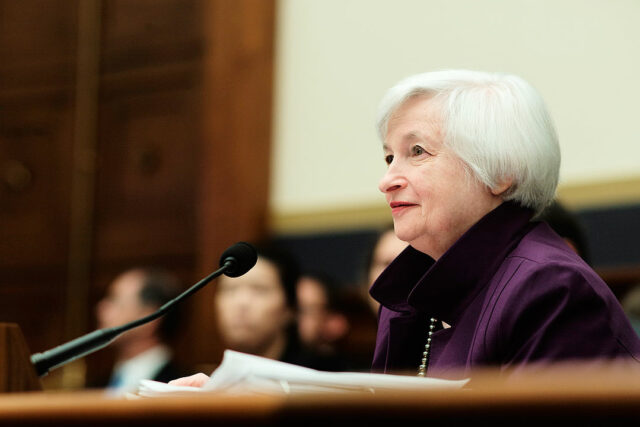
Yellen says Russia should be expelled from G20, US may boycott some meetings

US Treasury Secretary Janet Yellen. — US FEDERAL RESERVE

US Treasury Secretary Janet Yellen said on Wednesday that Russia should be expelled from the Group of 20 (G20) major economies forum, and the United States will boycott “a number of G20 meetings” if Russian officials show up. 

Her comments at a US House Financial Services Committee hearing raised questions about the G20’s future role in the wake of Russia’s invasion of Ukraine. 

Since 2008, the club has served as a key international forum for issues from coronavirus disease 2019 (COVID-19) relief to cross-border debt and also includes China, India, Saudi Arabia, and other countries that have been reluctant to condemn Russia’s actions. 

Ms. Yellen told lawmakers Russia’s invasion of Ukraine and the killings of civilians in Bucha “are reprehensible, represent an unacceptable affront to the rules-based global order, and will have enormous economic repercussions in Ukraine and beyond.” 

The United States and its key allies have placed greater emphasis in recent months on the G7 grouping of industrial democracies, whose interests are more aligned, using G7 meetings to coordinate their response to Russia’s war in Ukraine. 

Ms. Yellen said the Biden administration wants to push Russia out of active participation in major international institutions, but acknowledged it was unlikely that Russia could be expelled from the International Monetary Fund (IMF) given its rules. 

“President Biden’s made it clear, and I certainly agree with him, that it cannot be business as usual for Russia in any of the financial institutions,” Ms. Yellen said. “He’s asked that Russia be removed from the G20, and I’ve made clear to my colleagues in Indonesia that we will not be participating in a number of meetings if the Russians are there,” Ms. Yellen said. 

Indonesia holds the presidency this year and will host a finance meeting in July and a leaders summit in November. 

A Treasury spokesperson later said that Ms. Yellen was referring to an April 20 G20 finance ministers and central bank governors meeting on the sidelines of the IMF and World Bank Spring Meetings in Washington and associated deputies meetings. 

The April finance meeting will be held both in-person and virtually and Russia’s participation is unclear at present. 

Russia has said that President Vladimir Putin intends to attend the G20 summit in Bali this year and has received China’s backing to stay in the group. 

Indonesia could not expel or “disinvite” any G20 members, including Russia, a government official familiar with the matter said, adding whether a country attended was up to that nation. 

ENERGY FLEXIBILITY
Ms. Yellen’s testimony came as the Biden administration announced a new round of sanctions to punish Russia, including banning Americans from investing in Russia and locking Sberbank, Russia’s largest lender and holder of a third of its bank deposits, out of the US financial system, along with other institutions. 

But transactions allowing European allies to purchase Russian oil and natural gas were exempted through special Treasury licenses. 

Ms. Yellen said that flexibility on Russian energy transactions was needed because many European countries “remain heavily dependent on Russian natural gas, as well as oil, and they are committed to making the transition away from that dependence as rapidly as possible.” 

But she acknowledged that this would take time. 

A complete ban on oil exports from Russia, the world’s third-largest producer after the United States and Saudi Arabia, would likely prompt “skyrocketing” prices that would hurt both the United States and Europe, Ms. Yellen said. 

She added that she hoped that currently high prices would entice oil companies in the United States and elsewhere to ramp up production in the next six months, which, along with Mr. Biden’s release of oil from the US Strategic Petroleum Reserve, may allow for tougher restrictions on Russian oil. 

CHINA WARNING
Ms. Yellen also issued a warning to China that Treasury was prepared to turn its sanctions tools against Beijing in the event of Chinese aggression against Taiwan, which China claims as a wayward province. 

Asked if the United States would take such steps if Taiwan was threatened, she said: “Absolutely. I believe we’ve shown that we can. In the case of Russia, we threatened significant consequences. We’ve imposed significant consequences. And I think that you should not doubt our ability and resolve to do the same in other situations.” — David Lawder and Dan Burns/Reuters

Meta plans virtual currency, creator coins for its apps — FT

Screenshot via Meta/YouTube

Meta Platforms Inc. is readying plans to introduce virtual tokens and cryptocurrencies to its family of apps with an aim to use such virtual tokens for rewarding creators and lending and other financial services, the Financial Times (FT) reported on Wednesday. 

The move, which is reported to be in its early stages, comes as Meta grows its focus on services centered around the metaverse, a virtual environment where people interact, work and play. 

If implemented, it could also give Meta a new revenue channel and control over transactions in its suite of apps and services, which include Facebook, Instagram, WhatsApp, and the Meta Quest virtual reality platform. 

Meta’s cryptocurrencies, internally dubbed “Zuck Bucks”, are intended for the metaverse and may not be based on blockchain, the FT report said, citing people familiar with the matter. 

Meta could introduce in-app tokens that would be centrally controlled by the company, the report said, and such tokens could be used to pay favorite creators on Instagram or reward people who make meaningful contributions in Facebook groups. 

“We have no updates to share today,” a Meta spokesperson told Reuters on Wednesday, adding that the company is focused on building for the metaverse “and that includes what payments and financial services might look like.” 

Mark Zuckerberg, chief executive officer of Meta, said last month that Instagram will introduce non-fungible tokens (NFTs) in the “near-term.” 

Earlier this year, Meta joined the Crypto Open Patent Alliance (COPA), a group of companies led by Jack Dorsey’s Block Inc that has pledged to promote open access to cryptocurrency technologies. — Reuters

Britain plans nuclear power, offshore wind to boost energy independence

A 3D model of Hinkley Point C nuclear power station in Somerset, England. — GOV.UK

LONDON — Britain will set out a plan to expand nuclear and offshore wind power on Thursday in a drive to bolster its energy independence at a time of surging prices and Russia’s invasion of Ukraine. 

It will increase wind, nuclear and solar generation, while supporting production of domestic oil and gas in the near term, the government said, adding that 95% of electricity by 2030 could be low-carbon. 

Nuclear is central to the plan, with an ambition to increase capacity to 24GW by 2050. That would meet around a quarter of projected electricity demand, up sharply from about 14% today. 

Prime Minister Boris Johnson said the plan would scale up “affordable, clean and secure energy made in Britain, for Britain.” 

He said it would “reduce our dependence on power sources exposed to volatile international prices we cannot control, so we can enjoy greater energy self-sufficiency with cheaper bills.” 

The targets include up to 50GW of offshore wind by 2030. Up to 5GW would come from floating installations in deeper seas. There would also be a new licensing round for North Sea oil and gas, and a consultation on rules for solar projects. 

Mr. Johnson had promised the strategy almost a month ago but it has been delayed by disputes over funding and opposition by some lawmakers to onshore wind farms. 

The plan will have no immediate impact on supply or prices that have helped push UK inflation to a 30-year high, but increased nuclear, solar, wind and hydrogen will help the long-term shift from fossil fuels. 

Energy prices surged last year as the global economy reopened after the pandemic. Russia’s invasion of Ukraine sent them higher again. 

Unlike Germany, Britain is not dependent on Russian energy, with the country supplying 8% of oil demand and less than 4% of natural gas — but it will be hit by competition as Europe seeks alternative sources. 

London said on Wednesday it would ban imports of Russian oil and coal by the end of the year, and would phase out Russian gas as soon as possible. 

Surging prices caused British consumer bills to rise 54% in April, and industries such as producers of glass, steel and chemicals say they cannot compete when prices are so high. 

Gas-fired plants generated 40% of Britain’s electricity in 2021, with wind providing 20%, nuclear 14%, imports 9% and others such as bioenergy, solar and coal the rest. 

The government said it would push forward new nuclear projects as soon as possible, including at the Wylfa site in Anglesey, Wales. 

A new body — Great British Nuclear — will be set up, it said, and up to eight new reactors could be delivered, equivalent to one a year instead of one a decade. 

All but one of Britain’s existing nuclear plants are scheduled to close by 2030 and the first new plant in more than 20 years, Hinkley Point C, is expected to come online in 2026, almost a decade later than originally promised. — Kate Holton and Susanna Twidale/Reuters

US FBI says it disrupted Russian hackers

PIXABAY

WASHINGTON — The US Federal Bureau of Investigation (FBI) has wrested control of thousands of routers and firewall appliances away from Russian military hackers by hijacking the same infrastructure Moscow’s spies were using to communicate with the devices, US officials said on Wednesday. 

An unsealed redacted affidavit described the unusual operation as a pre-emptive move to stop Russian hackers from mobilizing the compromised devices into a “botnet” — a network of hacked computers that can bombard other servers with rogue traffic. 

“Fortunately, we were able to disrupt this botnet before it could be used,” US Attorney General Merrick Garland said. 

The Russian Embassy in Washington did not immediately return an email seeking comment. 

The targeted botnet was controlled through malware called Cyclops Blink, which US and UK cyberdefense agencies had publicly attributed in late February to “Sandworm,” allegedly one of the Russian military intelligence service’s hacking teams that has repeatedly been accused of carrying out cyberattacks. 

Cyclops Blink was designed to hijack devices made by WatchGuard Technologies Inc. and ASUSTeK Computer Inc., according to research by private cybersecurity firms. It provides Russian services with access to those compromised systems, offering the ability to remotely exfiltrate or delete data or turn the devices against a third party. 

Watchguard issued a statement confirming it worked with the US Justice Department to disrupt the botnet but did not disclose the number of devices affected — saying only that they represented “less than 1 percent of WatchGuard appliances.” 

AsusTek, better known as Asus, did not immediately return messages seeking comment. 

FBI Director Chris Wray told reporters the FBI, with court approval, secretly reached into thousands of routers and firewall appliances to delete the malware and reconfigure the devices. 

“We removed malware from devices used by thousands of mostly small businesses for network security all over the world,” Mr. Wray said. “We shut the door the Russians had used to get into them.” 

The affidavit noted that US officials launched an awareness campaign “to inform owners of WatchGuard devices of the steps they should take to remediate infections or vulnerabilities” and yet less than half the devices had been fixed to expel the hackers. 

The affidavit noted that the FBI had carried out its work in cooperation with WatchGuard. 

The announcement came amid a flurry of new sanctions announced against Russian banks and elites, days after grim images emerged of the bodies of civilians shot at close range in the town of Bucha. 

Russia says its “special military operation” is aimed at demilitarizing and “denazifying” Ukraine, and it has denied targeting civilians. — Sarah N. Lynch/Reuters

S. Korea’s president-elect wants US nuclear bombers, submarines to return

US Navy illustration

SEOUL — Advisers to South Korea’s president-elect sought redeployment of US strategic assets, such as nuclear bombers and submarines, to the Korean peninsula during talks held on a visit to Washington, one of the advisers said on Wednesday. 

The team of foreign policy and security aides to incoming president Yoon Suk-yeol met US national security adviser Jake Sullivan as Yoon seeks a more constant security presence to deter threats from North Korea as it steps up weapons tests. 

“Deploying the strategic assets is an important element of reinforcing the extended deterrence, and the issue naturally came up during the discussions,” Park Jin, a four-term lawmaker who led the delegation, told reporters. 

He added that both sides explored ways to bolster US extended nuclear deterrence at the talks on coordinating efforts against the North Korean threat held on a trip that also aimed to secure an early summit with President Joseph R. Biden, Jr. 

A White House official asked about such talks, and whether Washington supported the deployments to South Korea, responded that both sides had “discussed generally” the US defense commitments, but did not elaborate. 

Mr. Yoon, set to be sworn in on May 10, is mapping out his foreign policy agenda after winning the March 9 election, just as tension flares after neighboring North Korea launched a new intercontinental ballistic missile (ICBM) last month. 

The deployment of US bombers, aircraft carriers and nuclear submarines is part of Mr. Yoon’s election plank promising to “respond firmly” to the North’s threats. 

JOINT DRILLS 

Mr. Yoon has also vowed to “normalize” joint military drills with the United States that were scaled back under outgoing liberal President Moon Jae-in, in a bid to placate Pyongyang and resume stalled talks to rid the peninsula of nuclear weapons. 

North Korea has long denounced the exercises as a rehearsal for war, and the allies have reduced field training and shunned use of major weapons such as bombers and air carriers, focusing instead on computer simulations. 

But Mr. Park did not elaborate when asked about plans for regular spring exercises, which domestic media have said could include nuclear bombers for the first time in nearly five years. 

“We agreed that what’s most important is to maintain deterrence so that we can strongly respond to any possible North Korean provocations,” he said, whether ICBM launches or psychological warfare in the form of verbal attacks. 

The delegation invited Biden to visit Seoul when he travels to Asia to meet the Quad grouping of nations, which also includes Japan, Australia and India, Park added. 

He also delivered a letter to Mr. Biden from Mr. Yoon highlighting his “solid willingness and vision” to advance ties not only on North Korea but also economic security and other issues, he said. 

Mr. Park’s name is being floated as a strong candidate to be foreign minister, along with that of Cho Tae-yong, a lawmaker of Mr. Yoon’s conservative People Power Party (PPP) who was also in the delegation. — Hyonhee Shin/Reuters

SM turns to rainwater harvesting: a key to living flood-free

• Rainfall is often seen as a foe by Filipinos who face about 20 typhoons a year causing disruption and mass evacuations, but it can also be a friend as rainwater can be a solution to help address water scarcity.

• SM turns rainwater from a foe to a friend by building rainwater catchments in its malls to harvest large volumes of rainwater particularly in flood-prone areas, helping keep neighboring communities to be safe and flood-free.

• 20 SM malls can catch and store a total of 79,257 cubic meters of rainwater, equivalent to almost 32 Olympic-size swimming pools.

Climate change is real and Filipinos are among those who can attest to the devastating effects it brings to everyday life. Faced with about 20 typhoons a year, the Asian Development Bank reported that the total impact from storms have reached about US$20 billion from 1990 to 2020. It causes a temporary disruption due to mass evacuations which bring about an average of 2%-8% reduction in gross domestic product annually.

Despite the reoccurring devastation felt during calamities, Filipinos still manage to see the humorous side of life and are often reported as one of the happiest people in the world. However, this may soon be tested as, according to the latest report of the UN Intergovernmental Panel on Climate Change, things are about to get worse as the planet heats up, accelerating the effects of climate change and making the Philippines more vulnerable to drastic changes in weather patterns.

On average, the Philippines receives about 2,400 millimeters of rainfall each year, one of the highest in the world. While this poses a problem for the country, there is a silver lining, as it can also be the solution for water scarcity. However, currently the Philippines only harvests around 6% of its rainwater compared to India, which harvests around 60% of the 700-millimeter average rainfall it receives each year.

Rainwater — a friend or a foe?

Water is a scarce resource. The United Nations Sustainable Development Goal number 6 identifies access to clean water as one of the global priorities to be achieved by 2030. Aligned to its environmental responsibility programs, SM takes a closer look at the use of water and how it can be turned from a foe to a friend.

SM builds its malls and integrated lifestyle cities with resilience and sustainability in mind. Understanding the value of water, SM builds rainwater catchments in its malls to harvest large volumes of rainwater particularly in flood-prone areas.

“We approach it two ways: resilience — to help communities be flood-free; and sustainability — to optimize water which is a scarce resource so we can use it for other purposes rather than just waste it,” says Architect Fides Garcia-Hsu, vice-president at SM Engineering Design and Development.

Vermont Park and Vermont Royale are two communities that once saw rain as a foe. Every time it rained, their neighborhoods ended up under water, damaging their homes. Today, homeowners welcome the rain as water that can be harvested and stored for future use. The reason? SM City Masinag’s rainwater catchment facility! It has a 17,681 cubic meter water capacity. The two communities connected their drainage systems to the mall which is equipped with three 30HP submersible pumps which are used to pump out accumulated rainwater.

“Wherever SM is, we try to help our communities become resilient to changing weather patterns,” explains Arch. Garcia-Hsu. “Nationwide, we have 20 malls equipped with rainwater catchment facilities that help rainwater management to avoid flash floods for surrounding communities.”

As a company, SM invests 10% of its capital expenditure to integrate disaster-resilient and sustainability features in its malls and integrated lifestyle city designs. “We take a long-term view on resilience and when we talk about sustainability, we look at how we can address perennial problems like flooding and address systemic change,” Arch. Garcia-Hsu expounds.

Serving as pioneers in the installation of rainwater catchment facilities, SM was instrumental in the passing ordinances and inclusion of the installation of water catchment facilities for developments by regulatory bodies. In recent years, Senator Manny Pacquiao passed the ‘Rain Water Harvesting Act – Senate Bill 1309’ mandating the establishment, maintenance and management of rainwater harvesting systems in the country.

“Aside from building resilient infrastructure, we also build the resilience of our stakeholders by providing disaster preparedness training through our SM Cares programs,” shared Chito Bauzon, SM Cares Marketing assistant vice-president. “We have programs targeted to senior citizens and those with special needs as they are the ones left most vulnerable during times of calamities.”

With the threat of climate change looming, typhoons are only expected to get stronger with intensified rainfall. With more Filipinos moving to urban centers, the Philippines will need to retrofit its cities for resiliency or build new sustainability cities to finally live flood-free.


Spotlight is BusinessWorld’s sponsored section that allows advertisers to amplify their brand and connect with BusinessWorld’s audience by enabling them to publish their stories directly on the BusinessWorld Web site. For more information, send an email to online@bworldonline.com.

Join us on Viber to get more updates from BusinessWorld: https://bit.ly/3hv6bLA.