Home Blog Page 6571

Public transport contracting program resumes with free rides for commuters 

PHILIPPINE STAR/ MICHAEL VARCAS

THE LAND Transportation Franchising and Regulatory Board (LTFRB) said it is set to roll out on Monday, April 11, the third phase of its service contracting program, which includes free rides for all commuters.  

The P7-billion program aims to help operators, drivers, and commuters who continue to be affected by the pandemic crisis and rising fuel prices, the agency said in a statement on Sunday.  

Funded under the General Appropriations Act of 2022, the program started in 2021 as part of the Bayanihan II, a law on the pandemic response, with P5.58 billion allotted to the Transportation department. 

Transport sector workers have said they need fixed wages to cope with increasing oil prices and the continuing impact of the pandemic crisis. 

For gross contract under Phase 3 of the program, the LTFRB will pay consolidated public buses, including tourist buses, P84 per kilometer from P82.50 previously.   

Meanwhile, the agency will pay consolidated modern and traditional public jeepneys and UV Express vehicles P54 per kilometer from P52.50 previously.  

The increased rates are in consideration of higher fuel prices, according to the agency. 

The free-ride program will start on the EDSA Busway on Monday, initially with 510 public utility buses.  

Previous rollouts of the free-ride program mainly covered healthcare and other essential workers as mobility restrictions were in place.    

Under the governments current alert level system, most areas across the country are under eased pandemic guidelines.   

LTFRB is also planning to open new routes and authorize more public utility vehicles for the nationwide implementation of the program. Arjay L. Balinbin 

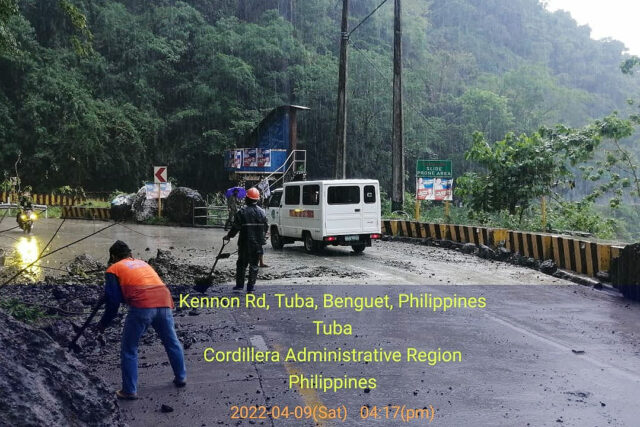
Kennon Road closed again from April 9 due to potential landslides 

TUBA MUNICIPAL POLICE STATION

KENNON Road, one of the highways going to Baguio City, has been temporarily closed starting April 9 immediately following a rock fall incident that indicates a potential landslide, the regional disaster management council announced.   

Isolated rainshowers and thunderstorms have been forecast in the area and Saturdays rock fall could mean presence of landslide hazards or possible repeated rock falls in other parts of the national road,the Cordillera joint inter-agency task force on Kennon said in a public advisory.   

In relation to these threats/risks due to the prevailing weather system, Kennon Road is hereby temporarily closed until further notice to ensure public safety,it said.  

The road, the fastest route to the mountain city and where an iconic Lion head statue is located, was just reopened to motorists on April 2 after rehabilitation works.   

It has long been closed to non-residents except for occasional access granted on weekends or during major events in Baguio.   

There are three alternate routes, namely: the Marcos Highway, Baguio-Bauang Road, and the recently-built Asin-Nangalisan-San-Pascual Road. 

Choose leaders who are unafraid to confront China — Hontiveros 

PHILIPPINE COAST GUARD PHOTO

A SENATOR rallied voters on April 9, set as the PhilippinesDay of Valor, to choose leaders who are unafraid to confront China while being able to avoid military conflict in the disputed waters.  

“In this coming election, we must choose leaders who are not afraid to stand up against China,Senator Ana Theresia RisaN. Hontiveros-Baraquel, who is running for reelection under the banner of opposition presidential bet Vice President Maria Leonor LeniG. Robredo, said in Filipino.   

We also insist that uprising does not equal war.” 

She said that with the best and brightest political and diplomatic minds in the region, Chinas aggression can be stopped without the use of force.  

The ability of a country to protect its sovereignty, she added, equates to its capacity to protect its wealth and resources.  

The South China Sea, a key international shipping route, is subject to overlapping territorial claims involving China, Brunei, Malaysia, the Philippines, Taiwan and Vietnam. Each year, trillions of dollars of trade flow through the sea, which is also rich in marine resources and gas.  

These are resources that can strengthen our economy for a healthy life and livelihood for all,said the senator. So, in the elections, lets elect leaders who wont sell us to China. Let’s not waste this opportunity.”   

Philippine President Rodrigo R. Duterte and Chinese President Xi Jinping had a telesummit on Friday, considered as the conclusion of their discussion on the disputed sea.   

The Philippines is holding national and local elections on May 9. Mr. Duterte, who maintained friendly ties with China during his six-year term, is stepping down from office on June 30.  

The leaders stressed the need to exert all efforts to maintain peace, security, and stability in the South China Sea by exercising restraint, dissipating tensions, and working on a mutually agreeable framework for functional cooperation,the presidential palace said in a statement after the meeting.   

Two decades of negotiations since the declaration on the Code of Conduct on the South China Sea was signed by China and the Association of Southeast Asian Nations, no agreement has been made to effect a dispute settlement mechanism aligned with the United Nations Charter and the 2016 UN arbitral ruling.  

China has refused to recognize the 2016 arbitral ruling that confirmed the Philippinesterritorial claim over parts of the disputed sea. Alyssa Nicole O. Tan 

P6.4-M air quality monitoring station to be built in Palawan mining town 

A P6.4-MILLION air quality monitoring station will be established at the mining community in Bataraza, a town located in southern Palawan.   

Rio Tuba Nickel Mining Corp., Coral Bay Nickel Corp., and Graymont Philippines, Inc. announced that they are partnering with the Department of Environment and Natural Resources to procure the station, which is expected to be set up by the third quarter this year.   

Monitoring air quality, especially in a mining community is crucial for an effective air quality management system in order to take necessary corrective actions to reduce air pollution and maintain the health of the air that people breathe,the firms said in a joint statement on Sunday.  

The continuous ambient air quality monitoring station (CAAQMS) is capable of monitoring particulate matter of 10 and 2.5 micron particle size.  

It will also be equipped with a data acquisition system and can display real-time results of air quality that will be visible to the public.  

Rio Tuba Nickel Mining said it conducts monthly in-house air quality monitoring, but the CAAQMS will further strengthen the quality of the mining companys monitoring system to ensure that the environment and public health are protected from the dangers of air pollution.  

Funding support and other relevant technical assistance for the CAAQMS, including procurement, maintenance, and operational expenses, will be provided by the three companies.  

This will be the second CAAQMS in Palawan, with the first located in Puerto Princesa, the capital city.  

The government has been strictly enforcing measures on the mining industry to ensure that it continuously adapts environmentally-sustainable and responsible practices by adhering to environmental laws in the country. Private companies in the country prove that responsible mining can happen,Environmental Management Bureau Mimaropa Regional Director Joe Amil M. Salino said in a statement. Luisa Maria Jacinta C. Jocson 

Justice dep’t seeks more info from BuCor on Palparan interview 

THE DEPARTMENT of Justice has asked the Bureau of Corrections (BuCor) to submit additional information to determine if violations of prison rules were committed in a recent interview of a jailed ex-military general.  

The BuCor submitted a report last week, but according to (Justice Undersecretary Deo L. Marco), he found the report insufficient to determine full compliance of the procedural requirements before acting on the request for interview with a PDL (person deprived of liberty),Justice Secretary Menardo I. Guevarra told reporters on Viber on Sunday.   

So, he asked the BuCor to submit an additional report, Mr. Guevarra said.   

The case involves the interview with convicted Jovito S. Palparan, Jr. at the Bilibid Prison by a spokesperson of the governments anti-communist task force. It was aired over a television network owned by Filipino religious leader Apollo C. Quiboloy, who is wanted in the United States for sex trafficking and other charges.  

Mr. Palparan, who is serving a life sentence, and two co-accused were found guilty of kidnapping two University of the Philippines students. The two students, who were abducted in 2006, remain missing. Jaspearl Emerald G. Tan 

Fuel subsidy rollout hindered by absence of driver database

PHILSTAR

NEARLY a month after the Land Transportation Franchising and Regulatory Board (LTFRB) commenced its P3-billion Pantawid Pasada program on March 15, only 110,287 beneficiaries as of April 4 have received the fuel subsidy, with a senior legislator blaming the absence of a database for the delay.

The program, which seeks to provide 377,443 public utility vehicle (PUV) drivers with fuel discount cards amounting to a P6,500 subsidy, is intended as a relief mechanism for the public transport sector, which currently has to absorb high fuel prices.

According to Senator Sherwin T. Gatchalian, Chairman of the Senate Energy Committee, the lack of a database has led to the delay in the distribution of the fuel subsidy.

He said the election spending ban, which began on March 25, has also hindered distribution.

Mr. Gatchalian called for the development of a centralized database by various agencies and stakeholders to ensure “proper coordination and implementation of the program.”

The proposed database will need to be updated yearly and will help minimize waste and misappropriation of government resources.

On March 23, the Department of Trade and Industry (DTI) identified 27,777 beneficiaries from the delivery services sector while the Department of the Interior and Local Government (DILG) has yet to submit the list of tricycle driver beneficiaries. — Ram Christian S. Agustin

TUCP says wage boards not acting fast enough

THE Trade Union Congress of the Philippines (TUCP) said Sunday that wage boards are not responding adequately or quickly enough to address petitions seeking to raise the minimum wage.

The TUCP, the Philippines largest labor federation, said in a statement that the labor bureaucracy was not being responsive to the needs of workers, who have had to live with high prices, calling the bureaucracy’s approach “business as usual, time-consuming, (and) technically tedious.”

Such an attitude “will further push under the workers who are trying to keep their heads above the rising waters of (the rising) cost of living,” it said.

The wage board in Metro Manila recently dismissed a petition seeking to raise the minimum wage in the region to P1,007 per day.

It said last week that it may release its wage-setting decision four days before the 2022 elections.

“TUCP is outraged and fears that the Department of Labor and Employment (DoLE) and wage boards are just ‘dribbling the ball’ to calm the fears of workers now facing hunger as the cost of living escalates. TUCP condemns this apparent insincerity of the DoLE and wage board as the height of insensitivity to the real hunger being faced by our minimum wage earners,” group president Raymond Mendoza said.

TUCP last week refiled its petition for a P470 increase in the daily wage for Metro Manila.

“If it is true that (Labor) Secretary Silvestre Bello III ordered all the regional wage boards to review the existing wages as they have become insufficient for the needs of workers and their families, why did the National Capital Region Wage Board dismiss the original TUCP petition on a mere technicality?” the TUCP said, noting that the decision of Metro Manila’s wage board “conveys a political signal” to its counterparts elsewhere in the country.

Mr. Bello recently proposed a P5,000 wage subsidy for three months or until such time as a wage order is given. Assistant Secretary Dominique Rubia-Tutay provided a separate estimate for such a subsidy of P8,000.

The TUCP said talk of a subsidy represents attempts by the Labor department “to raise false hopes and to dampen the mobilization plans of workers to protest the sub-poverty level minimum wage nationwide.”

The TUCP is set to file a minimum wage petition in the Soccsksargen Region in the southern Philippines on Monday, following similar filings in the Central Visayas and Davao Region.

Minimum wages are set by regional boards, which can only entertain new wage hike petitions on the anniversary of their last ruling. — Kyle Aristophere T. Atienza

IPAs still undergoing training on CREATE incentives for locators

DOF.GOV.PH

INVESTMENT Promotion Agencies (IPAs) have been attending training sessions on the incentives on offer from the Corporate Recovery and Tax Incentives for Enterprises (CREATE) Law, Finance Assistant Secretary Juvy C. Danofrata, the head of the Secretariat of the Fiscal Incentives Review Board (FIRB), said.

She said in a statement Sunday that the FIRB Secretariat holds town meetings with IPAs and releases newsletters to raise awareness of such incentives and the investments being encouraged under the Strategic Investment Priority Plan (SIPP). 

So far, the FIRB has held three town hall meetings with IPA staff, while three e-newsletters have been published, she said.

Ms. Danofrata said the training sessions stem from data generated by the Fiscal Incentives Registration and Monitoring (FIRM) program launched last year. FIRM allows companies to apply for tax incentives and monitor the status of their applications, and offers instructional videos to help IPAs and Registered Business Enterprises in using the platform.

“Finance Secretary Carlos G. Dominguez III instructed (the Secretariat) to hold a seminar as well with the heads of the various IPAs to provide them the information they need about the CREATE Law,” the statement said.

Only 45 FIRMS accounts have been registered as of Feb. 14, Ms. Danofrata said.

Separately, the FIRB said it approved tax incentives for seven government agencies and state-run corporations in 2021.

The tax incentives, valued at P4.28 billion, were granted to the University of the Philippines-Baguio (UP-Baguio), the Philippine Deposit Insurance Corp. (PDIC), the Armed Forces of the Philippines Commissary and Exchange Service (AFPCES), the Small Business Corp. (SBCorp), the Government Service Insurance Corp. (GSIS), the Department of Interior and Local Government (DILG), and the Intercontinental Broadcasting Corp. (IBC-13), Ms. Danofrata said in a report to Mr. Dominguez.

“Our efforts to enhance the country’s fiscal incentives system lead to attracting large amounts of investments from foreign investors, which in turn, will generate more employment opportunities and promote economic stability,” Ms. Danofrata said.

The government is expecting more foreign investment after the passage of key economic measures, which include amendments to the Foreign Investment Act, the Public Service Act, and the Retail Trade Liberalization Act.

Last week, Trade Secretary Ramon M. Lopez said that the Department of Trade and Industry (DTI) is following up on investment leads from about 250 companies, adding later that these leads are expected to generate P450 billion in investment.

The FIRB, which oversees the granting of incentives for projects involving P1 billion worth of investment or above, approved tax incentives for five big-ticket projects in 2021, four of which were located outside of Metro Manila, and one located in Makati.

Ms. Danofrata said that the five projects will involve capital investment of P119.5 billion. The four outside the capital region include cement and mass housing projects in Iloilo, Davao, Batangas, and Pampanga. The proposed Makati City Subway was also approved for tax incentives. 

Three more such applications endorsed by the Board of Investments are awaiting review, while one application was rejected.

CREATE incentives include income tax holidays and enhanced deductions, on top of the gradual reduction of corporate income taxes. The tax reform program had sought to make the incentive regime more time-bound and performance-based. — Tobias Jared Tomas

Think tank says hidden costs erode appeal of cheap coal power

By Ram Christian S. Agustin 

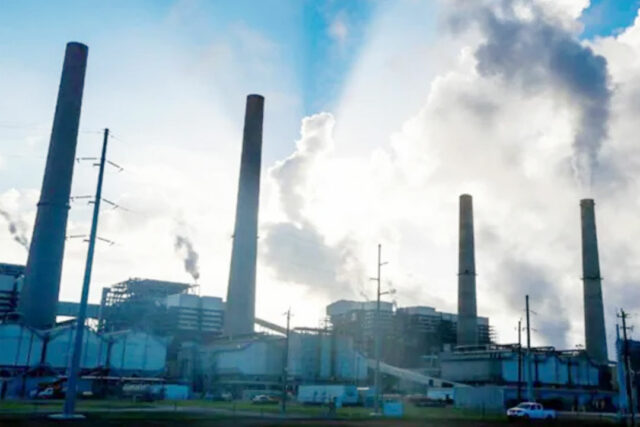
THE low-cost argument for using coal-fired power does not consider hidden costs as well as price volatility in times of crisis, such as the present time, the Institute for Climate and Sustainable Cities (ICSC) said.

In an e-mail interview, ICSC Executive Director Renato Redentor Constantino said the “coal-is-cheapest” argument is undermined by the higher-than-expected cost of coal-fired power generation and the power industry’s ability to pass on the cost of more expensive coal to the end user.

“A quick look at actual coal generation costs of major distribution utilities shows that these costs range from over P4.00 per kilowatt-hour (kWh) to approaching P9.00 pesos per kWh. Not only are these costs much higher than expected but they are also volatile as they reflect the ‘Pasaload’ of fuel costs to the consumer,” he added.

Pasaload is the telecommunications industry practice of allowing users to share prepaid credits with others. 

Fitch Solutions Country Risk and Industry Research found in a recent report that coal-fired power remains the dominant source for electricity in the Philippines.

According to Mr. Constantino, the ability to pass on coal costs has allowed power project proponents to understate the initial all-in cost of power when developing their projects. Their lack of exposure to volatile fuel prices makes coal-fired power generation a “virtually risk-free business.”

Fitch Solutions also issued a positive outlook for renewable energy (RE) development in the Philippines, providing support for ICSC’s contention that RE will bring substantial economic benefits in the form of affordable and reliable power.

“The economy is easier to manage and is more productive when one is energy secure. The opposite of this is our current setting, where the Philippine economy is subjected to the intense financial storms brought about by volatility risks associated with fossil fuels,” Mr. Constantino said.  

The Philippine Energy Plan and the National Renewable Energy Program has a target of at least a 35% share of RE in the power generation mix by 2030, and greater than 50% by 2040.

UP TechnoHub inspected for compliance with energy-efficiency norms

UP AYALA LAND TechnoHUB (UPTH) has been visited by inspectors seeking to check the economic zone’s compliance with Energy Efficiency and Conservation (EEC) standards, the Department of Energy (DoE) said.

The DoE’s Energy Utilization Management Bureau (EUMB) conducted the inspection as authorized by the EEC Act.

“It is imperative for the whole nation to actively participate in the implementation and promotion of EEC,” Energy Secretary Alfonso G. Cusi said.

UPTH, an IT park located on a site in Quezon City owned by the University of the Philippines (UP), was found to have adopted measures such as switching to Light Emitting Diodes (LEDs)-type lighting, the adoption of high-efficiency variable-speed motors, and scheduled operations of the complex’s water chillers.

The inspection was carried out by EUMB Assistant Director Artemio P. Habitan.

UPTH’s EEC installations are operated by the Ayala Property Management Corp. (APMC).

“The challenges of the pandemic have highlighted the urgent need for us to scale-up the business-as-usual model. The DoE is always here to guide and assist all our stakeholders to achieve our goal of making EEC a way of life,” Mr. Cusi added.

The EUMB is carrying out inspections to verify compliance at all government entities, which must observe EEC best practices under the Government Energy Management Program guidelines. — Ram Christian S. Agustin

BoC to roll out new billing system in all ports by April 13

PHILSTAR FILE PHOTO

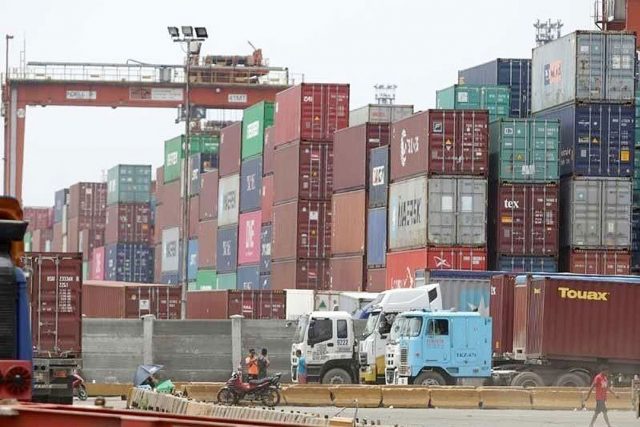
THE Bureau of Customs (BoC) said it will launch this week a new liquidation and billing system (LBS) at all ports of entry.

In a statement Saturday, the BoC said its Management Information Systems and Technology Group (MISTG) is launching on April 13 the LBS, “a web portal that allows the BoC Liquidation and Billing Division (LBD) to efficiently audit and evaluate the post-entry transactions of shipments, in which it effectively determines and informs consignees regarding fines, penalties, and other charges that are due for collection.”

The system will also help LBD personnel manage the Post Release Adjustment process, allowing them to verify a shipment’s details, such as value, classification, and duties and taxes, among others.

It will also allow personnel to generate documents, including a Notice of Discrepancy, which notifies users of payments outstanding on duties, taxes and other charges, and a Final Demand Letter, signed by the District Collector, as a final warning to settle outstanding charges.

The LBS aims to strengthen post-clearance audit processes, allowing ports to easily monitor and detect fraud and unpaid charges.

The BoC posted collections of P643.56 billion in 2021, exceeding the target by 4.7%. The bureau also exceeded collection targets in the first three months of 2022, which the Department of Finance attributed to the modernization and automation of its processes.

The BoC aims to collect P671.66 billion in 2022. — Tobias Jared Tomas

Accounting considerations for the oil and gas sector as renewable energy adoption drives ESG reporting

Globally, more and more countries continue to increase their focus on developing renewable energy sources, both due to the increasing pressure from various stakeholders, as well as the acknowledgement of the clear and present danger posed by climate change. Because of this, environmental, social, and governance (ESG) reporting has become a top priority for most boards.

As the country gains momentum in shifting to renewable energy, we expect that financial reporting will have to reflect the commitments and actions of most organizations, notably those in the oil and gas sector, in tackling climate change. As a signatory to the Paris Agreement, the Philippines, being a country that is particularly vulnerable to climate-related risks, has pledged to reduce its own greenhouse gas emissions by 75% from its 2015 levels by the year 2030.

Given the increasing global climate concerns and strong interest in achieving the United Nations Sustainable Development Goal 7 of ensuring access to affordable, reliable, sustainable and modern energy for all, the Department of Energy (DoE) is pursuing a Clean Energy Scenario setting a target of 35% renewable energy share in the power generation mix by 2030 and more than 50% by 2040. As of 2020, renewable energy accounted for 21.2% of the Philippine power generation mix.

OIL AND GAS REMAIN VITAL TO ENERGY SECURITY
The DoE reported that in 2020, indigenous sources comprised almost 53% of the energy supply mix, out of which 6.6% was accounted for by the oil and gas sector, mainly from three petroleum service contracts (SCs): SC38 Malampaya, SC14C1 Galoc, and SC49 Alegria. Malampaya and Galoc are projected to be depleted by 2024 and 2025, respectively.

However, in October 2020, the President lifted the moratorium on oil and gas exploration in disputed areas in the West Philippine Sea. One of the areas that will significantly benefit from renewed exploration is SC72 Recto Bank, which is operated by a subsidiary of PXP Energy Corp. SC72’s Sampaguita Gas Field is reported to contain prospective resources of 3.1 trillion cubic feet of gas. This project, once developed and made operational, can fill the void that will be left by Malampaya and Galoc.

The reality is that until more renewable energy sources are developed, oil and gas will remain a significant component of the Philippine energy mix. This is why, given the global emphasis on climate-related reporting, oil and gas industry players should be seen as being proactive and taking the lead in addressing ESG concerns.

FINANCIAL REPORTING FOR CLIMATE CHANGE
Sustainability reporting is an important factor in improving a company’s sustainability commitment and its relationship with investors and customers.

With this, the Securities and Exchange Commission, through its Memorandum Circular No. 4-2019, has provided guidance regarding disclosure requirements relating to sustainability reporting as an attachment to Publicly-Listed Companies’ annual reports (SEC Form 17-A).

As climate-related matters continue to evolve and entities make further commitments and take additional actions to tackle climate change, it is important that they ensure their financial statements reflect the most updated assessment of climate-related risks. In November 2021, the International Financial Reporting Standards (IFRS) Foundation announced the establishment of the International Sustainability Standards Boards (ISSB), which is tasked to develop global standards linked to sustainability disclosures including climate and other environmental matters. As of 31 March 2022, the ISSB has issued two Exposure Drafts on IFRS Sustainability Disclosure Standards for public comment.

While the Philippine Financial Reporting Standards (PFRSs) do not as yet explicitly reference climate change, climate risk and other climate-related matters, there may still be anticipated impacts on oil and gas companies over several areas of accounting as follows.

General disclosure requirements. Entities are required, at a minimum, to follow the specific disclosure requirements in each PFRS standard. In determining the extent of disclosure, entities are required to carefully evaluate whether users of financial statements can assess the effects of climate change on their financial statements. If climate-related matters could reasonably expect to influence the decisions of the users of the financial statements, this information must be disclosed.

Going concern. In many cases, climate risk may not add significant going concern uncertainty in the short term. However, Philippine Accounting Standards (PAS) 1 requires disclosures of material uncertainties. Climate-related matters could create material uncertainties related to events or conditions that cast significant doubt upon an entity’s ability to continue as a going concern. In such a case, although going concern may be assumed, additional disclosures explaining the uncertainties associated with the assumption would be required.

Exploration and evaluation assets. Entities should consider the impact of climate risk and potential future developments, including the sustainability of its current business model and commercial viability, in assessing the recoverability of its exploration and evaluation assets (i.e., deferred exploration costs) and provide appropriate disclosures.

Property, plant and equipment (PP&E). Climate-related matters have the potential to significantly impact the useful life, residual value and decommissioning, and restoration of PP&E (e.g., wells, platforms and related assets, refineries, retail service stations, etc.). Climate change and the associated legislation to promote sustainability increase the risk that PP&E items become “stranded assets” whose carrying value can no longer be recovered within the entity’s existing business model. Given the uncertainties around the impact of climate change, disclosures should be enhanced to allow the users of financial statements to understand and evaluate the judgements applied by management in recognizing and measuring items of PP&E.

Impairment of assets. The extent to which certain assets, processes or activities will be impacted by climate-related business requirements and how climate-related risks and opportunities will affect an entity’s forward-looking information, such as cash flow projections, may require significant judgement. Entities should consider what information users rely on in assessing the entity’s (lack of) exposure to climate-related risks.

Provisions. As entities take actions and initiatives to address the consequences of climate change, these actions may result in the recognition of new liabilities or, where the criteria for recognition are not met, new contingent liabilities have to be disclosed. Entities should ensure that sufficient disclosures are provided to allow users of financial statements to understand those uncertainties, how climate transition has been considered in the measurement of a provision or disclosure of a contingent liability, and the assumptions and judgements made by management in recognizing and measuring provisions.

In a world that is increasingly sitting up and taking note of ESG concerns, the pressure on the oil and gas sector to help address climate risks will likewise continue to mount. While the above list of climate-related considerations is by no means all-inclusive and may vary between entities, they offer a starting point for the industry to take a proactive and progressive stance and demonstrate how it is doing its part to make the global climate change ambition a reality.

This article is for general information only and is not a substitute for professional advice where the facts and circumstances warrant. The views and opinion expressed above are those of the author and do not necessarily represent the views of SGV & Co.


Arthur M. Maddalora is a senior manager from the Assurance Service Line of SGV & Co.

ADVERTISEMENT
ADVERTISEMENT