Home Blog Page 6486

Tourist favorite Thailand’s recovery lags on COVID rule changes

BANGKOK — When 23-year-old Norwegian Anastasia Johansen and her boyfriend were planning their first vacation in two years, they considered going to Thailand but chose nearby Vietnam instead, for its simpler entry rules on the coronavirus.

“The regulations to enter Thailand … were complicated to me and we had to pay for the hefty PCR test,” Ms. Johansen said.

Thailand, one of the world’s tourism destinations before the pandemic, was among the first nations in Asia to reopen its borders to vaccinated visitors last year with limited quarantine norms, hailed at the time as a model for re-opening.

But as regional peers have eased entry requirements, Thailand has clung to a cumbersome process.

“Whichever (country) offers easy, smooth, less complicated procedures wins my heart,” said Ms. Johansen.

Tourism professionals say Thailand’s complicated entry rules are now holding back recovery in an industry that contributed 12% of GDP before the pandemic.

Forward bookings for 2022 show Thailand reaching 25% of pre-pandemic levels, behind levels of 72% and 65% each for Singapore and the Philippines.

Many blame the Thailand Pass pre-entry approval system, which can take up to seven days, although the government recently vowed to streamline it.

“The red tape is killing us,” said Bill Barnett, the managing director of hospitality consultancy C9 Hotelworks.

“If you’re in Singapore and want to come to Thailand for the weekend, it’s not easy. Those short-term trips matter.”

American Kiran Stallone, who is visiting family in Thailand, said getting the Thailand Pass required proof of vaccination, insurance coverage of at least $20,000 and reservations at a qualified hotel, all submitted on a Thai government website.

“The government website was hard to navigate, and I had to seek outside help,” Ms. Stallone added.

Ms. Stallone said she was told to avoid some steps known to cause submission glitches that would delay her application.

The website does not allow users to save progress or return to previous pages and rejects PDF files.

A Facebook group on the Thailand Pass has ballooned to 90,000 members, with would-be travelers asking anxious questions about changing flights, new entry rules and some venting frustration over rejected applications.  Similar forums have also emerged on sites such as TripAdvisor.

YOU SHALL NOT PASS  

Thailand received 39.9 million visitors in 2019 when Bangkok, the capital, was named the world’s most visited city.

That year, Singapore and the Philippines recorded 19.1 million and 8.26 million arrivals respectively.

Thailand aims to attract 5 million to 10 million visitors this year, but critics call its Thailand Pass system an unnecessary obstacle.

“It’s uncompetitive for Thailand and complicated for travelers … who lose all flexibility,” hotel tycoon William Heinecke, chairman of Minor International Pcl, told Reuters.

An approved Thailand Pass can only be used one week before or after the date indicated.

The tourism council also said the system’s requirement of individually filed documentation made it tougher for tour operators to bring in groups.

Thailand’s coronavirus taskforce spokesperson, Taweesin Visanuyothin, said tourist arrivals have been increasing as measures were relaxed and recognized that domestic infections outnumbered those from abroad.

However, Thailand’s staggered approach to relaxing the rules has also caused confusion.  Entry for vaccinated tourists with limited quarantine resumed in February after a brief suspension over the Omicron variant.

At the time, travelers had to take at least three COVID-19 polymerase chain reaction (PCR) tests; one each before departure, on arrival and on the fifth day of their stay.

In March, that final test was replaced with a rapid antigen test and insurance coverage was dropped to $20,000 from $50,000. In April, the pre-departure PCR test was scrapped.

From next month, insurance of $10,000 is required but tests for vaccinated travelers and advance hotel bookings have been dropped. — Chayut Setboonsarng/Reuters 

US economy shrinks in first quarter; trade, inventories mask underlying strength

UNSPLASH

WASHINGTON — The US economy unexpectedly contracted in the first quarter amid a resurgence in coronavirus disease 2019 (COVID-19) cases and a drop in pandemic relief money from the government, but the decline in output is misleading as domestic demand remained strong.

The first decrease in gross domestic product since the short and sharp pandemic recession nearly two years ago, reported by the Commerce Department on Thursday, was mostly driven by a wider trade deficit as imports surged, and a slowdown in the pace of inventory accumulation.

A measure of domestic demand accelerated from the fourth quarter’s rate, allaying fears of either stagflation or a recession. The Federal Reserve is expected to hike interest rates by 50 basis points next Wednesday. The US central bank raised its policy interest rate by 25 basis points in March, and is soon likely to start trimming its asset holdings.

“The economy is still showing some resilience, but the first-quarter GDP report signals the start of more moderate growth this year and next, largely in response to higher interest rates,” said Sal Guatieri, a senior economist at BMO Capital Markets in Toronto. “Despite the contraction, the Fed has little choice but to hike aggressively in May to corral inflation.”

Gross domestic product (GDP) fell at a 1.4% annualized rate last quarter, the government said in its advance GDP estimate. The economy grew at a robust 6.9% pace in the fourth quarter. Economists polled by Reuters had forecast GDP growth rising at a 1.1% rate. Estimates ranged from as low as a 1.4% rate of contraction to as high as a 2.6% growth pace.

The economy also took a hit from supply-chain challenges, worker shortages and rampant inflation. Last quarter’s decline is a head fake as GDP remains 2.8% above its level in the fourth quarter of 2019 and the economy grew 3.6% on a year-on-year basis. Further, 1.7 million jobs were created in the first quarter and manufacturing output grew at a 5% pace.

“It is nonsense that real GDP declined,” said Conrad DeQuadros, senior economic advisor at Brean Capital in New York.

But the mismatch hints at weaker productivity last quarter.

Front-loading by businesses fearful of shortages because of the Russia-Ukraine war contributed to a surge in imports. Exports tumbled, leading to a sharp widening of the trade deficit, which chopped 3.20 percentage points from GDP growth, the most since the third quarter of 2020. Trade has now been a drag on growth for seven straight quarters.

Businesses have turned to imports to satisfy demand, with local manufacturers lacking the capacity to boost production. Business inventories increased at a $158.7 billion pace, slowing from the robust $193.2 billion rate in the October-December quarter. Inventory investment cut 0.84 percentage point from GDP growth.

Stocks on Wall Street were higher as investors shrugged off the drop in GDP. The dollar rose against a basket of currencies. U.S. Treasury prices fell.

STRONG DEMAND 

Growth in consumer spending, which accounts for more than two-thirds of US economic activity picked up at a rate of 2.7% from the fourth-quarter’s 2.5% pace, despite taking a hit from the winter wave of coronavirus cases, driven by the Omicron variant.

The loss of pandemic money to households from the government was partially offset by rising wages amid a tightening labor market. Government spending fell for a second straight quarter.

Strengthening labor market conditions were reinforced by a separate report from the Labor Department on Thursday showing initial claims for state unemployment benefits fell 5,000 to a seasonally adjusted 180,000 for the week ended April 23. With a near record 11.3 million job openings at the end of February, employers are desperately hanging on to their workers.

Even with food and gasoline prices soaring, there is no sign yet of consumers pulling back. The government’s measure of inflation in the economy surged at a 7.8% rate, the fastest in 41 years, after increasing at a 7.0% pace in the fourth quarter. Inflation by all measures has overshot the Fed’s 2% target.

At least $2 trillion in excess savings accumulated during the pandemic are providing a cushion against inflation.

Workers shortages saw businesses boosting investment, with spending on equipment increasing at a 15.3% rate last quarter. They mostly bought computers and industrial machinery.

That combined with solid consumer spending to hoist final sales to private domestic purchasers at a 3.7% rate. This measure of domestic demand, which excludes trade, inventories and government spending, increased at a 2.6% rate in the fourth-quarter. Final sales to private domestic purchasers account for roughly 85% of aggregate spending.

The housing market notched another second straight quarterly gain, but with the 30-year fixed mortgage shooting above 5%, the outlook is uncertain.

While concerns remain that the Fed could aggressively tighten monetary policy and tip the economy into recession, most economists are not convinced, pointing to the strong domestic demand and signs that inflation may have peaked.

Consumer spending last quarter was driven by services. The shift in demand from goods is likely to help ease pressure on supply chains, though the coronavirus-related lockdowns in China pose a risk.

“The US economy is not anywhere close to recession,” said Gus Faucher, chief economist at PNC Financial in Pittsburgh, Pennsylvania. “Underlying demand remains strong, and the labor market is in excellent shape. Growth will resume in the second quarter.” — Lucia Mutikani/Reuters

Shift to a modern, sustainable workplace with Lenovo Device as a Service (DaaS)

IT solutions and services that support organizations in a post-pandemic work-from-anywhere setup are integral to business continuity and growth. Lenovo, one of the world’s largest PC makers, offers a new way to provide the latest devices to customers via the Lenovo Device as a Service (DaaS) model.

Available through Integrated Computer Systems, Inc. (ICS), a Lenovo Platinum Partner and leading provider of IT solutions in the Philippines for over four decades, Lenovo DaaS lets businesses support their work-from-anywhere employees while staying within their budget and not compromising productivity.

Since the onset of the COVID-19 pandemic, businesses have increasingly turned to IT services to enable employees to work from anywhere remotely. Research shows that IT consumers want to pay for exactly what they want, when they want it.

With Lenovo Device as a Service (DaaS), organizations of all sizes can now experience a customized modern IT environment with the top-of-the-line technology from across a full range of Lenovo products, including devices and support and lifecycle services alike.

The solution has introduced a new way for business owners to procure end-user technology that simplifies their organizations’ IT management–from mitigating the costs of providing hardware devices for the team, bundling it with a variety of software and services, to offering a single, predictable periodic fee.

Lenovo DaaS enables organizations to transition to a user-driven, digital environment by helping customers strategize a device catalog that matches the right solutions to the right users. The experts at Lenovo work closely with organizations via Lenovo Premier Support, assisting them in handling configuration tasks, deploying the new devices to employees and resolving technical issues with the convenience of having one point of contact. This ensures operational and cost effectiveness.

IT expenses often take up a significant portion of an organization’s operating budget. DaaS and the bundled software and services it offers with hardware, let organizations strategically outsource costly individual IT requirements or completely eliminate the entire PC support lifecycle from their workload, reducing the burden on internal teams and more importantly, on the organization’s profitability. Tracking and reporting dashboards that provide details on asset tracking usage, software installation, and outages can be added as a part of the service.

Lenovo DaaS also provides options to quickly scale up or down based on the current operating environment and business needs. Whether growing or downsizing, organizations can pay for exactly what they need, when they need it. With Lenovo services, obsolete hardware can easily be disposed of, letting businesses avoid accelerated depreciation schedules and financial losses related to poor liquidation values at the end of the unit’s lifecycle.

Lenovo DaaS pushes service delivery boundaries and continues to set new standards for IT support. The business of PC-buying is changing. DaaS is the future.

For more information, contact info@ics.com.ph or visit ics.com.ph.


Spotlight is BusinessWorld’s sponsored section that allows advertisers to amplify their brand and connect with BusinessWorld’s audience by enabling them to publish their stories directly on the BusinessWorld Web site. For more information, send an email to online@bworldonline.com.

Join us on Viber to get more updates from BusinessWorld: https://bit.ly/3hv6bLA.

RCBC participates in PHL’s first ETF deal

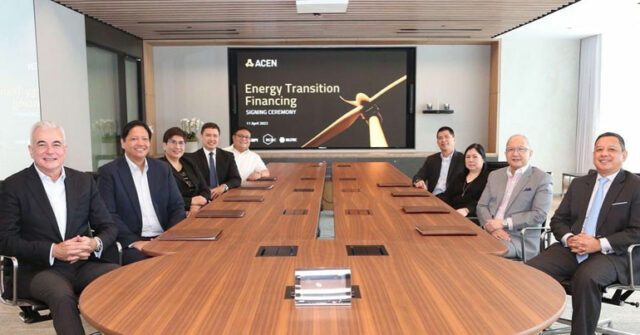
ACEN Leadership Team headed by Chairman Fernando Zobel de Ayala, President & CEO Eric Francia, CFO Maria Corazon Dizon, SLTEC CEO Miguel de Jesus, and SLTEC President & COO Miguel Angelo Fernandez are joined by RCBC Capital Corp. President & CEO Jose Luis Gomez, BPI Capital Corp. President Rhoda Huang, RCBC President & CEO Eugene S. Acevedo, and BPI Executive Vice-President and Head of Corporate Banking John-C Syquia.

The Rizal Commercial Banking Corp. (RCBC) has participated in the first Energy Transition Financing (ETF) deal in the Philippines for an early decommissioning of a coal-fired power plant while re-investing funds in renewable energy.

This month, the RCBC Corporate Banking Group and RCBC Capital Corp. signed financing agreements relating to the ETF for South Luzon Thermal Energy Corp. (SLTEC) of AC Energy Corp. (ACEN), a subsidiary of the Ayala Corp.

“In 2020, RCBC ceased funding new coal power plants while redirecting resources towards renewable energy projects, and our participation in this ETF deal is part of that commitment,” RCBC President and Chief Executive Officer Eugene S. Acevedo said.

As part of the ETF deal, ACEN signed an amended and restated omnibus loan and security agreement for SLTEC’s 2×135-megawatt (MW) power plant in Calaca, Batangas with RCBC as one of the lenders.

In a regulatory filing, ACEN explained that the loan facility of up to P13.7 billion is intended to refinance SLTEC’s outstanding P9.8-billion loan facility, fund the partial redemption of capital in SLTEC held by ACEN, and finance other transaction-related expenses. In turn, ACEN will use the proceeds of the equity redemption to reinvest in renewable energy projects.

Through this mechanism, ACEN’s power plant would be decommissioned by 2040, or 15 years ahead of the plant’s technical life.

ACEN explained that the concept of this deal with RCBC and another bank adopts the principles of the Energy Transition Mechanism (ETM) being piloted by the Asian Development Bank (ADB) in South and Southeast Asia.

The ETM aims to use public, private, and philanthropic financing to provide low-cost capital to coal-fired power plants to accelerate their retirement and help jump-start reliable and affordable clean energy.

RCBC has been implementing its Environmental and Social Management System since 2011 under the guidance of the International Finance Corp. (IFC). This collaboration has continued for more than a decade now.

“With the IFC’s guidance, RCBC gained access to the Partnership for Carbon Accounting Financials (PCAF) and 2 Degree Investing Initiative (2DII) for the use of the Paris Agreement Capital Transition Assessment (PACTA) methodology. The PCAF and 2DII’s PACTA methodologies will enable RCBC to build a low-carbon and climate-resilient lending portfolio. The recent ETF with ACEN complements this objective,” Mr. Acevedo said.


Spotlight is BusinessWorld’s sponsored section that allows advertisers to amplify their brand and connect with BusinessWorld’s audience by enabling them to publish their stories directly on the BusinessWorld Web site. For more information, send an email to online@bworldonline.com.

Join us on Viber to get more updates from BusinessWorld: https://bit.ly/3hv6bLA.

AI platform to solve the pain of recruitment manual work launched

Recruiting and hiring talent is one of the most important HR functions. Currently, employer demand for workers remains high in the Philippines and is fueling the trend known as the Great Resignation in our side of the world. This means recruiters are making ends meet to ensure quality talent are properly identified and promptly hired before the competition.

But this is easier said than done given an average recruiter spends at least three to five hours every working day for CV or resume screening as well as initially interviewing applicants. This is the most manually intensive portion of the process. The time utilized at this phase by recruiters could have been applied to other priorities.

This insight inspired MetroCity AI to develop a recruitment platform that solves the pain of long hours spent on CV screening and initial virtual interviews. Companies can make use of the asynchronous video interview (AVI) functionality in the platform to invite applicants to record themselves on camera as they answer questions related to culture-fit, behavior, and skills provided by the company.

The submitted applicant videos are then processed by the platform. The applicants with answers that align with the company continues on to the next steps. Since it uses AI, the platform further refines the answers and profiles that would pass the screening process resulting to a more robust screening system unique to a company as it processes more applicants.

The platform also has a CV screening function that can match unprocessed CVs to the job opportunities in the company. Once matched, it will send an invite to the pre-screened applicants to take the asynchronous video interview at their own time.

Just this month, MetroCity AI released a Freemium package for companies to take advantage on. This means, companies can utilize the platform absolutely free.

MetroCity AI is part of the Batch 10 startups of UP Diliman’s UPSCALE Incubation Program. They are one of the recipients of the Accenture startup grant via UP Engineering Research and Development Foundation, Inc. (UPERDFI) and UPSCALE Innovation Hub.

For more information and to sign-up for a freemium account, visit www.metrocity.ai or e-mail the founders at hello@metrocity.ai.

The Huddle Room unveils its future; laddering up as the first growth agency in the country

The Huddle Room after more than 2 years of remote working, come together as one at Sofitel Hotel, Pasay City. Prepped with their best comeback to office outfit, they formally kicked off their ninth year anniversary as a prelude to its decade of existence in 2023. They unveiled its future as an agency, that stood up for nine years as a start-up shop that turned as a standout with multiple recognitions, achievements and wins. The Huddle Room strengthened its grip on a growth mindset which is poised for a go, get and grow attitude. It officially announced its growth leadership team to further boost its organization as the premiere Growth Agency in the country. The launch culminated with a dinner by the bay spiced up by food carts and unlimited booze to graze the night.

Growth Story: Friends before Partners

The Huddle Room’s growth story started with an affirmation of partnership. Talking to the founders headed by Dimples Cruz and ably supported by Eugene Manalo, Julia Garcia, Pat Dizon and Reena Robles, as said before, they always root back on why they started? “We started as 6 friends dreaming of an agency but only 5 of us eventually grew the agency when we forged our commitment to fuel growth of our services”.

A Bond that Grows through time

Armed with unwavering integrity and sheer hard work – a bond forged the 5 of them to overcome challenges. Recounting on how they forged that bond, from a tiny room they have now The Huddle Room. “We were housed in a small room because we were the pitch team…hindi kami umuuwi, but we were very happy in that tiny room… dun nabuo friendship namin” (Reena Robles)

Reena Robles

Growth fueled by Determination

When they started, their skills were sharpened by courage – like learning from 0 on digital. They really embraced growing their skills. They were unfazed with whatever challenges along the way. “ When we started, everyone said we would fail. It’s not always rosy, but one thing is for sure, all for one, one for all” (Dimples Cruz).

Dimples Cruz

Change for growth

Even if they are getting old, these five founders are always on the go to be the sole authors of a new chapter in their story. “Kahit 9 years na tayo, I am happy to hear that everyone is open to change, to do new things” (Julia Garcia)

Julia Garcia

Growth from Within

While they are continuously coping with external changes and challenges, the 5 founders do not forget that growth should start from within. “We are built to create organic growth. Even if we started as media, we slowly grew our clients business alongside growing our business as well.” (Eugene Manalo)

Eugene Manalo

Growing a New Path

While they recognize that they were molded by great mentors and leaders, they acknowledge the need to change and make some balancing acts and embrace changing the rules. “Everyday is a delicate balancing of act of making the company grow but at the same time finding how our people will enjoy their work and grow with us”. (Pat Dizon)

Pat Dizon

These stories of embracing changes and realizing to take a new path with determination and courage led to the essence and purpose of The Huddle Room – to advocate growth. Witnessing the growth of their people, partners and brands is what delights, excites and gives their work meaning.

Country’s Premiere Growth Agency

Inspired by our growth story, The Huddle Room is committed to help everyone find your own growth path and will do everything to enrich and empower everyone’s journey towards optimum and holistic growth – for oneself, organization and things we all value.

As the country’s pioneering growth agency, THR believes that everyone would grow with them as an indispensable partner, to clients, raw and diverse talents all over the country. This belief is anchored on the very foundation of the agency built from trust.

  • The unquestionable principles and ethics of the founders.
  • Customized integrated growth strategic approach
  • Their edge through an agile and growth mindset and
  • A commitment to build lasting relationships.

In an industry, crowded with creative, media and digital agencies, THR is proud to take the higher ground. We are a GROWTH AGENCY. Because this is our greatest desire – for everyone to grow with us.

Learn more about The Huddle Room so you can grow with us too. www.huddleroom.com.ph / ask@huddleroom.com.ph / www.facebook.com/TheHuddleRoomPH


Spotlight is BusinessWorld’s sponsored section that allows advertisers to amplify their brand and connect with BusinessWorld’s audience by enabling them to publish their stories directly on the BusinessWorld Web site. For more information, send an email to online@bworldonline.com.

Join us on Viber to get more updates from BusinessWorld: https://bit.ly/3hv6bLA.

More ‘hot money’ left country in March

Dollar and pound banknotes are seen in this picture illustration taken April 28, 2017. — REUTERS/DADO RUVIC/ILLUSTRATION
Dollar and pound banknotes are seen in this picture illustration taken on April 28, 2017. — REUTERS

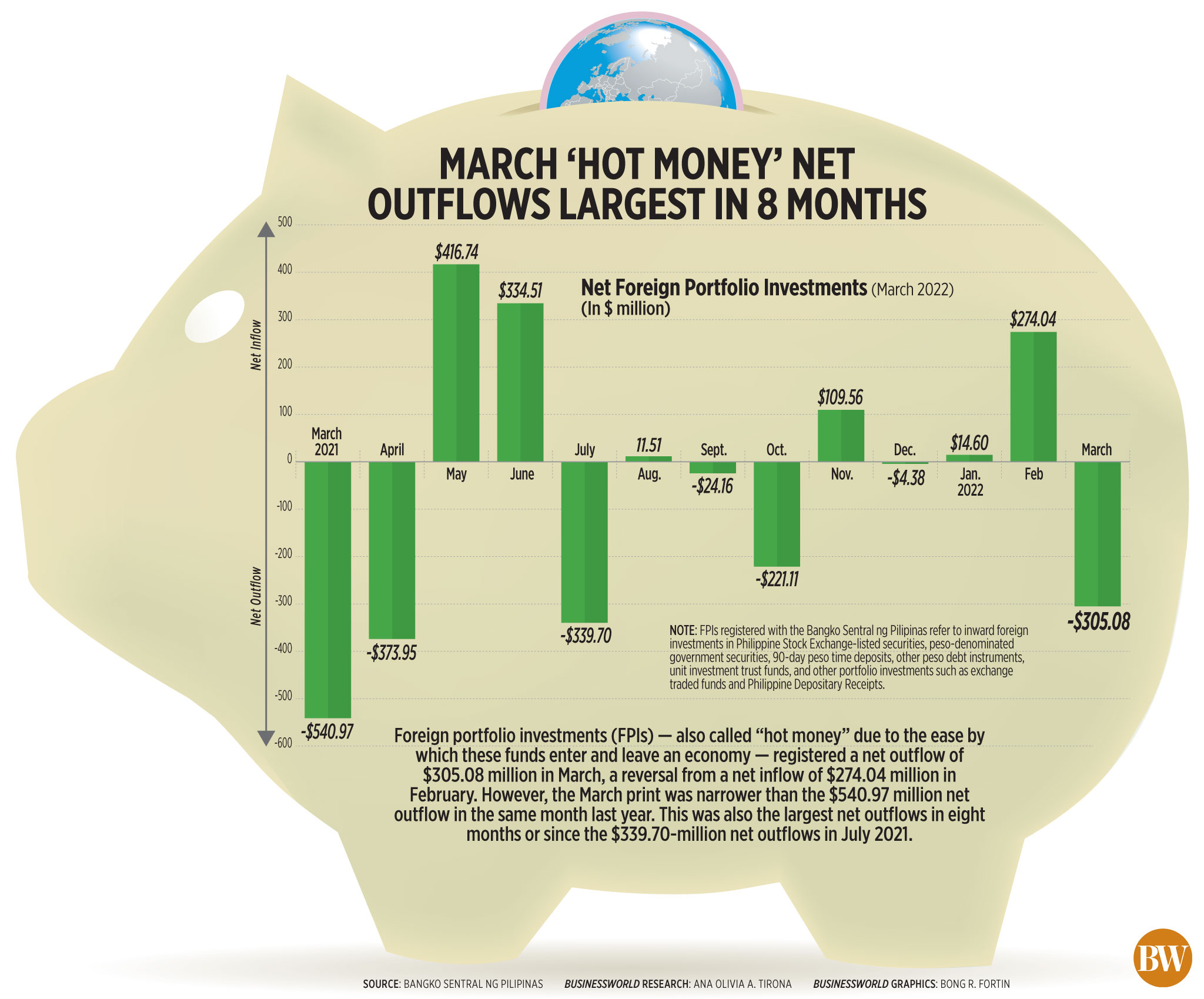
MORE SHORT-TERM foreign investments left the Philippines than what entered in March, reflecting heightened uncertainty from the Russia-Ukraine war and monetary policy tightening in the United States.

Data from the Bangko Sentral ng Pilipinas (BSP) showed foreign portfolio investments or “hot money” yielded a net outflow of $305.08 million in March, 43.6% lower than the $540.97 million in net outflow a year earlier.

However, this was a reversal from the $274.04 million in net inflow in February.

March ‘hot money’ net outflows largest in 8 months

March’s net outflow was also the biggest since $339.7 million in July 2021.

The net outflow of foreign portfolio investments reflected the volatility in international markets since the Russia-Ukraine war erupted in late February, Rizal Commercial Banking Corp. Chief Economist Michael L. Ricafort said in a Viber message.

The monetary policy tightening by the US Federal Reserve might have also spurred the exit of more hot money from the Philippines, he added.

The US central bank last month raised its policy rate by a quarter percentage point as part of its battle against decades-high inflation. The Fed is expected to raise interest rates by 50 basis points at next week’s meeting, Reuters reported.

Asian Institute of Management economist John Paolo R. Rivera said investors were also on a risk-off sentiment ahead of the national elections on May 9.

“This may be due to investor sentiment regarding the upcoming political landscape as a new administration is about to enter. This may be reflective of market and investor sentiment about politics,” he said in a Viber message.

Former Senator Ferdinand R. Marcos, Jr. remains a frontrunner in pre-election polls, but a Bloomberg poll showed analysts and investors preferred Vice-President Maria Leonor G. Robredo as the country’s next president.

BSP data showed gross inflows of hot money climbed by 55% to $1.277 billion in March from $824.23 million a year earlier.

The top five investor economies during the month included the United Kingdom, United States, Luxembourg, Singapore and Hong Kong, which accounted for 78.4% of foreign portfolio investment inflow.

The bulk of investments went to securities of holding companies; property; banks; food, beverage and tobacco; and transportation services. The rest were invested in peso government securities.

Meanwhile, gross outflows rose by 15% to $1.582 billion in March from $1.365 billion a year ago.

For the first quarter, hot money yielded a net outflow of $16 million, 96.6% lower than $483 million a year earlier.

International developments as well as risk-off sentiment as the election draws nearer would likely continue to cause worry among foreign investors, Mr. Ricafort said.

“For the coming months, more aggressive Fed rate hikes, the lingering Russia-Ukraine conflict for more than two months already, some lockdowns in China, as well as election-related uncertainties could be headwinds to the recovery in the local economy and financial markets,” he said.

The BSP expects hot money to yield a net inflow of $4 billion in 2022. — Luz Wendy T. Noble

Central bank sanctions BDO, UnionBank over online fraud incident

REUTERS/KACPER PEMPEL/FILE PHOTO

By Luz Wendy T. Noble, Reporter

THE BANGKO SENTRAL ng Pilipinas (BSP) on Thursday said it has approved sanctions on BDO Unibank, Inc. and UnionBank of the Philippines, Inc. over an online fraud incident involving customer accounts in December.

In a statement, the BSP said it has completed the investigation into the incident that “originated from a compromised web service” and involved unauthorized access of BDO accounts and fund transfers mostly to UnionBank accounts.

“Based on the results of the investigation, the Monetary Board approved the imposition of sanctions on BDO and UnionBank to ensure that both banks will swiftly address the issues,” it said.

The sanctions “emphasize the importance of continuously enhancing risk management systems involving cybersecurity, anti-money laundering, and combating terrorism and proliferation financing,” the BSP said.

UnionBank President and Chief Executive Officer (CEO) Edwin R. Bautista said the BSP did not impose monetary penalties.

“All the recommendations of BSP to avoid such incidents have been implemented. No monetary penalties. But we were asked to increase our capital charge against operations risk,” he said in a text message.

He said UnionBank has fully cooperated with BDO and the BSP, and has frozen a “sizeable amount and returned it to BDO.”

BDO President and CEO Nestor V. Tan said the bank would comply with the BSP’s sanctions. “We will work with the BSP to ensure a more secure banking environment,” he said via Viber message.

In deciding on sanctions, the BSP said it took into consideration the corrective actions implemented by both banks related to the cyber incident, including BDO’s move to reimburse the funds of its affected clients.

“This incident is a reminder that we should continue to enhance our defenses against cyberthreat actors to protect the integrity of the financial system and the interests of depositors,” BSP Governor Benjamin E. Diokno said in a statement.

In December, some customers of BDO took to social media to complain about unauthorized fund transfers from their accounts to fictitious accounts at UnionBank.

The National Bureau of Investigation in January arrested several people allegedly behind the hacking incident that affected more than 700 BDO clients.

The hackers stole about P1.2 million but could have potentially embezzled more than P50 million if the transactions were not immediately tagged as suspicious, the NBI has said.

NCR’s economic output rebounds but still below pre-pandemic level

PHILIPPINE STAR/ RUSSELL PALMA
A vendor arranges eggs at the Paco public market in Manila. — PHILIPPINE STAR/ RUSSELL PALMA

By Bernadette Therese M. Gadon, Researcher

THE NATIONAL Capital Region’s (NCR) economy bounced back last year from a double-digit contraction in 2020, but remained below the national growth rate due to strict lockdowns meant to contain the coronavirus.

Preliminary results from the latest regional accounts released by the Philippine Statistics Authority (PSA) showed NCR’s economic output expanded by 4.4% last year, reversing the 10% drop in 2020. However, this was still lower than the 7% growth in 2019.

Metro Manila’s growth was also well below the Philippines’ revised 5.7% economic growth last year.

Regional share in gross domestic productNCR’s growth was the third slowest among the 17 regions in the country, only ahead of Bicol (4.3% in 2021 from -8.3% in 2020) and Mimaropa Region (3.3% from -7.5%).

Other regions that missed the national average last year were Central Visayas (5.4%), Soccsksargen (5.2%), Cagayan Valley (5.1%), and the Ilocos Region (4.6%).

Calabarzon had the fastest growth rate among the 17 regions with 7.6%, a turnaround from 10.5% decline in 2020. It was followed by the Bangsamoro Autonomous Region in Muslim Mindanao (7.5% from -1.9%), Cordillera Administrative Region (7.5% from -10.2%), and Central Luzon (7.4% from -13.9%).

Still, NCR remained the largest contributor to national economic output last year with a 31.5% share, slightly lower than 31.9% in 2020. This was followed by Calabarzon with a 14.7% share, Central Luzon with 10.9%, and Central Visayas with 6.5%.

PSA-NCR Regional Director Paciano B. Dizon said the capital region grew slower than other regions in 2021 due to strict lockdowns amid the COVID-19 outbreak.

“If you will differentiate some of the regions and cities, mas marami talagang lockdowns sa NCR [last year] (there were a number of lockdowns in NCR last year). So that’s a contributor to the slow growth rate of NCR in comparison to other regions,” Mr. Dizon told a press briefing in Quezon City on Thursday.

Metro Manila was placed under varying degrees of lockdowns last year. The strictest form of lockdown was implemented in April and August as COVID-19 infections surged.

The government only shifted to an alert level system with granular lockdowns in the fourth quarter, with restrictions further loosened in November and December.

Aside from the mobility curbs, economists said Metro Manila’s growth last year was due to base effects coming from the contraction in the previous year and the gradual reopening of the economy.

“The interruptions in economic reopening might have contributed to slower growth unlike in other regions where restrictions and new policies are quite predictable unlike in NCR,” Asian Institute of Management economist John Paolo R. Rivera said in an e-mail.

ING Bank N.V. Manila Branch Senior Economist Nicholas Antonio T. Mapa noted that NCR’s growth was one of the slowest due to the stricter lockdowns and high number of cases.

“Thus, it’s clear that economic recovery and public health go hand in hand,” he said in a separate e-mail. “Base effects and the reopening may have driven the pickup in transport and storage while mining and quarrying may have benefited from the presidential decision to allow new mining agreements.”

In terms of sectoral output, Caraga led the regions in the service sector with an 8.1% increase last year, reversing a 5.3% drop in 2020. Soccsksargen and BARMM trailed with 6.7% (from -8.9%) and 6.6% (from -4.5%), respectively.

By industry, CAR grew by 16.3% (from -13.7%), followed by Central Luzon (13.8% from -19.9%) and Calabarzon (11.2% from -12.6%).

BARMM had the fastest growth among the regions in the agriculture sector with 8.3% (from 2.7%), followed by Central Visayas (5.6% from 4.2%) and NCR (5.5% from -3.3%).

On the expenditure side, Caraga recorded the quickest pace in household spending with 10.6%, a reversal of the 7.8% contraction in 2020. It was followed by Eastern Visayas (10.2% from -7.9%) and Cagayan Valley (9% from -8.4%).

The pace of government spending was fastest in BARMM with 12.6% (from 11.3%), followed by Cagayan Valley with 11.6% (from 8.8%) and Central Luzon with 8.9% (from 9.1%).

BARMM had the fastest growth in gross capital formation, the investment component of the economy, with 93.9% (from -50.1%), followed by Calabarzon (46.4% from -53.9%) and Central Luzon (42.6% from -46.3%).

NCR and Eastern Visayas recorded the highest export of goods and services to the rest of the world last year at 12.3%, after double-digit contractions in 2020.

Meanwhile, BARMM’s imports surged by 100.9%, a reversal of the -26.9% seen in 2020. Imports of Western Visayas and Northern Mindanao grew by 27.2% (from -17.5%) and 17% (from -12%), respectively.

On a per-capita basis, Metro Manila led the regions with P418,530 at constant 2018 prices, up by 3.2% — a turnaround from -11.1% in 2020. However, this was still below the 5.6% growth in 2019.

This year, analysts expect much faster economic growth as COVID-19 cases decline and restrictions ease.

“Assuming no other disruptions happen due to pandemic or other factors, it should continue to grow at a faster rate. No exact figure for now but the trajectory is promising,” Mr. Rivera said.

The government is targeting 7-9% gross domestic product (GDP) expansion this year.

Mr. Mapa said consumer spending, particularly for leisure, dining and recreational activities are likely to “improve dramatically” thanks to more relaxed lockdown levels.

Metro Manila and most parts of the country are under the most lenient alert level.

“It is imperative for authorities to ensure the economy can remain as open as possible, however always mindful to ensure support for the public healthcare sector,” he added.

Security Bank Corp. Chief Economist Robert Dan J. Roces said any renewed lockdowns this year could delay economic recovery.

“Risks remain as to further outbreaks given that we remain in a pandemic, notably lockdowns being experienced by some major Asian [cities], although the vaccination level in the capital is encouraging and could hopefully be enough to prevent case spikes and sustain the reopening,” he said in a separate e-mail.

“Another major risk is inflation due to the conflict between Russia and Ukraine, with commodity prices spiking and causing capital goods to become pricier and thereby possibly slow down productivity,” he added.

Gov’t sets P200-billion borrowing plan for May

BW FILE PHOTO

THE NATIONAL Government plans to borrow P200 billion from the domestic market in May, the Bureau of the Treasury (BTr) said on Wednesday.

In an advisory, the BTr said the borrowing plan for next month is the same volume programmed for April. However, the government was only able to raise P160.38 billion last month.

The BTr will hold auctions for Treasury bills (T-bills) every week, which are expected to generate P60 billion.

The auctions for Treasury bonds (T-bonds) are expected to generate P140 billion.

According to the BTr, P5 billion worth of 91-day, 182-day, and 364-day T-bills would be offered every Monday of May (May 2, 9, 16, and 23).

For the long-term tenors, BTr will raise P35 billion in three-year T-bonds on May 3, P35 billion in five-year instruments on May 10, P35 billion in seven-year debt on May 17, and P35 billion in 10-year securities on May 24.

A trader said in Viber message he does not expect the Treasury to scale down its scheduled borrowings in the coming months.

A second trader in an e-mail said borrowings are expected to rise as the Bangko Sentral ng Pilipinas (BSP) is expected to start normalization of monetary policy soon.

BSP Governor Benjamin E. Diokno said on Monday that the central bank might consider a rate hike in June. The Monetary Board is set to meet on May 19.

Rizal Commercial Banking Corp. Chief Economist Michael L. Ricafort said via Viber government borrowings might increase after the May 9 national elections.

“Government borrowings could again pick up after the elections, consistent with the need to manage the increase in maturing government securities after the elections and also after the end of election campaign period-related restrictions,” he said.

The government borrows from local and external sources to plug a budget deficit capped at 7.7% of gross domestic product this year.

The National Government has a gross domestic borrowing program of P1.91 trillion this year. Of this amount, T-bills will generate P52 billion, while fixed-rate T-bonds will bring in P1.86 trillion. — Tobias Jared Tomas

Accelerating inflation seen to hurt consumer spending, growth this year

PHILIPPINE STAR/ RUSSELL PALMA
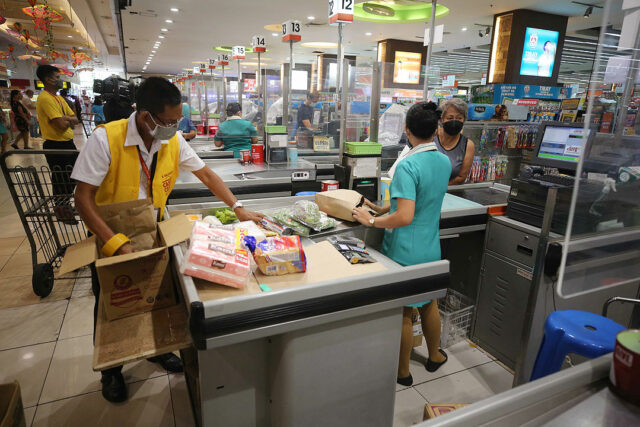
People shop at a supermarket in Makati City. — PHILIPPINE STAR/ RUSSELL PALMA

THE Philippine economy may grow slower than initially expected this year, as accelerating inflation may hurt consumer spending, an economist said.

Security Bank Corp. Chief Economist Robert Dan J. Roces said he now expects gross domestic product (GDP) to expand by 6% in 2022, slower than the previous forecast of 6.5%. This is below the 7-9% growth target set by economic managers this year.

“We’re anticipating slower domestic consumption because of inflation. We’re seeing that emanate from rising commodity prices, due mostly because of the war, the war, so that could dampen recovery, although it’s not going to drain it,” he said at the bank’s virtual economic forum held on Thursday.

The central bank now expects inflation to reach 4.3% amid the surge in oil and commodity prices due to the Russia-Ukraine war. The consumer price index rose by 4% in March, already matching the upper end of the 2-4% target.

Ateneo de Manila University professor and former Socioeconomic Planning Secretary Cielito F. Habito said economic growth this year may get a boost from the election campaign. He said elections in the past contributed about one percentage point to growth, although this could be less now.

“This time, in the sense, a lot of it going into expenses in both mainstream and social media and perhaps a large part of it in social media,” Mr. Habito said.

“To that extent, or it’s not going as much into manufacturing and services. The effect of that will not be as inclusive or broadly benefiting,” he added. — Luz Wendy T. Noble

SEC flags three online lending firms, warns public of Leefire

THE Securities and Exchange Commission (SEC) warned the public about the illegal operations of three online lending firms and an unauthorized investment firm.

In an advisory on Thursday, the SEC ordered the three online lending operators to stop their activities without the necessary authorization from the commission, and to stop their abusive collection practices.

The commission en banc in an order issued April 26 directed Golden Cash, Help Cash, and Grace Cash to immediately cease and desist from engaging in, carrying out, promoting and facilitating any lending activity or transaction until they have secured the necessary registration and license from the commission.

“[T]he commission finds that the continued operations of Golden Cash, Help Cash, and Grace Cash constitute a clear violation of, and should be penalized,” the SEC said, adding that they engage and carry out a lending business without the required license from the regulator.

The commission also ordered the online lending operators to stop offering and advertising their lending business through the internet or any other media, and to delete materials involving such.

The SEC issued the order after finding that the three lending companies are not registered as a corporation with the commission.

“Further findings by the SEC Enforcement and Investor Protection Department (EIPD) revealed that the online lending operators have been employing unfair collection practices,” according to the advisory.

The EIPD reported that the online lending operators have been harassing, threatening, publicly humiliating their respective borrowers, and imposing hidden charges and excessive processing fees.

“The acts of these unregistered online lending operators in illegally offering and providing loans to the public, charging high interest rates, and subjecting its debtors to unfair treatment through abusive and even libelous language in collecting the loaned amount… have no place in a society that is governed by and faithfully adheres to positive laws,” the SEC said.

In a separate advisory, the SEC warned the public about Leefire Philippines, an unauthorized investment firm, for enticing the public to invest in the company without license or registration.

The commission reported that the entity was not registered as a corporation or partnership and was not authorized to solicit investments, since it did not secure prior registration or license.

“Further, since Leefire is also promising its investors to receive its native cryptocurrency ‘LFC coin’ in an apparent Initial Coin Offering (ICO), it is apt to once again remind the public that an ICO is the first sale and issuance of a new virtual currency to the public usually for the purpose of raising capital for startup companies or funding independent projects,” the SEC said. 

The commission said the unauthorized firm was seeking to use the money it gathered from the public to fund its purported project on the promise of profits.

“Based on the contents of posts found online, Leefire is offering investments to the public through a mobile application available in Google Play Store. Signing up through a personal mobile number will entitle investors to receive a cash bonus of P120 which can be used to buy corresponding level of goods,” the advisory read.

The SEC said that any salesmen, brokers, dealers or agents involved in selling or convincing people to invest in Leefire may be prosecuted and held criminally liable.

Penalties include a maximum fine of P5 million or up to 21 years of imprisonment.

“The public is advised not to invest or stop investing in any investment scheme being offered by any individual or group of persons allegedly for or on behalf of Leefire Philippines, and to exercise caution in dealing with any individuals or group of persons soliciting investments for and on behalf of it,” the commission added. — Luisa Maria Jacinta C. Jocson