Home Blog Page 6476

US Supreme Court potential shock move on abortion sparks protests
REUTERS
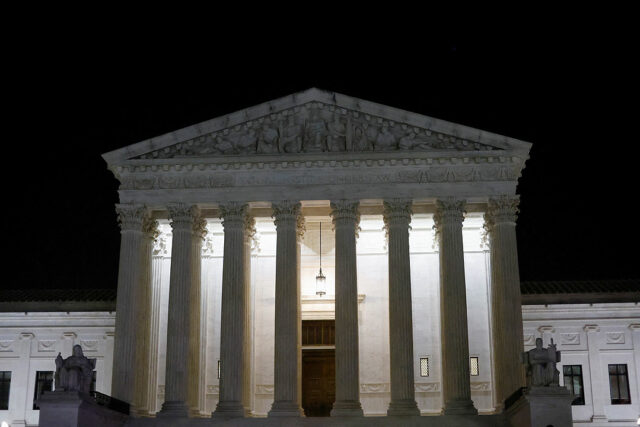
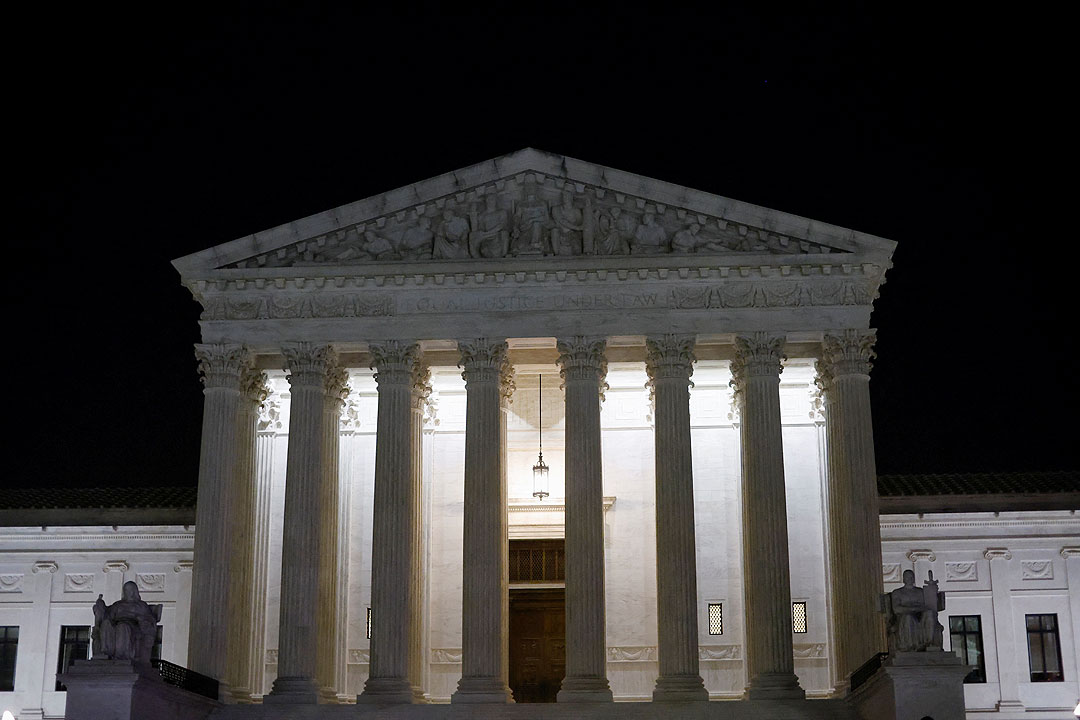
THE US Supreme Court is seen as protestors react outside to the leak of a draft majority opinion written by Justice Samuel Alito preparing for a majority of the court to overturn the landmark Roe v. Wade abortion rights decision later this year, in Washington, US, May 2, 2022. — REUTERS

WASHINGTON — Anti-abortion activists and pro-abortion supporters took to the streets of Washington on Tuesday after news that the US Supreme Court may overturn the 1973 Roe v. Wade ruling which legalized abortion nationwide.

A leaked initial draft majority opinion suggests the court has voted to overturn Roe v. Wade, Politico reported on Monday.

Reuters was not immediately able to confirm the authenticity of the draft opinion. The Supreme Court and the White House declined to comment.

Within hours of the news, anti-abortion activists chanting “hey, hey, ho, ho, Roe v. Wade has got to go” and abortion rights supporters shouting “abortion is healthcare” were facing off outside the court.

Abortion is one of the most divisive issues in US politics and has been for nearly a half century.

A 2021 poll by the Pew Research Center found that 59% of US adults believed it should be legal in all or most cases, while 39% thought it should be illegal in most or all cases.

“Roe was egregiously wrong from the start,” conservative Justice Samuel Alito wrote in the draft opinion which is dated Feb. 10, according to Politico, which posted a copy online.

Based on Mr. Alito’s opinion, the court would find that the Roe v. Wade decision that allowed abortions performed before a fetus would be viable outside the womb -— between 24 and 28 weeks of pregnancy — was wrongly decided because the US Constitution makes no specific mention of abortion rights.

“Abortion presents a profound moral question. The Constitution does not prohibit the citizens of each state from regulating or prohibiting abortion,” Mr. Alito said, according to the leaked document.

The unprecedented leak sent shock waves through the United States, not least because the court prides itself on keeping its internal deliberations secret and leaks are extremely uncommon.

The news stunned abortion providers.

On Monday night, Andrea Gallegos, executive administrator at Tulsa Women’s Clinic in Oklahoma, had just finished calling some 25 patients scheduled for abortions on Tuesday to tell them that their appointments would need to be canceled because of a soon to be enacted Oklahoma law modeled on a highly restrictive Texas abortion ban.

“I can’t say that I’m surprised,” she said.

“Now all these other conservative states like Oklahoma are passing the exact same legislation that Texas did, I have to say I became less optimistic and way more scared for what the future of Roe looks like.”

CONSERVATIVE MAJORITY
The ruling would be the court’s most sweeping since former President Donald Trump succeeded in naming three justices to the court, cementing a 6-3 conservative majority.

“The Republican-appointed Justices’ reported votes to overturn Roe v. Wade would go down as an abomination, one of the worst and most damaging decisions in modern history,” said US House of Representatives speaker Nancy Pelosi and Senate majority leader Chuck Schumer, both Democrats.

The news broke a little more than six months before the midterm elections that will determine if Democrats hold their razor-thin majorities in the US Congress for the next two years of President Joseph R. Biden’s term in office.

The decision appeared based on an oral argument in December on Mississippi’s bid to revive its ban on abortion starting at 15 weeks of pregnancy, a law blocked by lower courts.

The report said a court majority was inclined to uphold Mississippi’s abortion ban and that there could be five votes to overturn Roe. An official ruling is expected sometime before the end of June.

Four of the other Republican-appointed justices — Clarence Thomas, Neil Gorsuch, Brett Kavanaugh and Amy Coney Barrett — voted with Mr. Alito in the conference held among the justices, the report added.

After an initial vote among the justices following an oral argument, one is assigned the majority opinion and writes a draft. It is then circulated among the justices.

At times, in between the initial vote and the ruling being released, the vote alignment can change. A ruling is only final when it is published by the court.

The Roe v. Wade decision recognized that the right to personal privacy under the US Constitution protects a woman’s ability to terminate her pregnancy.

Christian conservatives and many Republican officeholders have long sought to overturn it.

If Roe is overturned, abortion is likely to remain legal in liberal states. More than a dozen states currently have laws protecting abortion rights. Numerous Republican-led states have passed various abortion restrictions in defiance of the Roe precedent in recent years.

Republicans could try to enact a nationwide abortion ban, while Democrats could also seek to protect abortion rights at the national level.

Democrats said the draft opinion undermines the importance of this year’s elections, in which they are seeking to maintain control of the House and Senate. Republican lawmakers criticized the leak, suggesting it was an attempt to inappropriately pressure the court into changing course. — Reuters

Hong Kong to further ease coronavirus restrictions, bars to open until 2 a.m.

REUTERS

HONG KONG — Hong Kong will further ease COVID-19 restrictions, allowing bars to open until 2 a.m. and raising the number of diners permitted at a table to eight from four, as cases in the global financial hub continue to ease, leader Carrie Lam said on Tuesday.

Beaches and swimming pools would reopen from Thursday, when restaurants could also cater to four more people at each table, Ms. Lam said at a regular news briefing.

The extended hours for bars, as well as the reopening of karaoke rooms and some other venues, would take effect from May 19.

Hong Kong health authorities reported 283 cases of COVID-19 on Monday, the first time the daily tally has dropped below 300 in nearly three months. The city has recorded more than 1.2 million infections and over 9,300 deaths since the start of the pandemic.

“The COVID number has dropped to three digits in mid-April and didn’t rebound, despite foot traffic increasing during two holidays,” Ms. Lam said, adding that it was not right to prevent people from swimming when the weather was so good.

She said she hoped people could enjoy Mother’s Day on Sunday as more family members could dine together.

Coronavirus restrictions have battered business in Hong Kong and helped fuel a net outflow of around 70,000 people in February and March, up from nearly 17,000 in December.

For some, the easing of restrictions may be too late as many businesses in the food and beverage industry have had to lay off staff as they struggle to pay rent in one of the world’s most expensive property markets.

Life in the Chinese-ruled city is gradually returning to normal, with schools resuming face-to-face classes and many people back working from offices. — Reuters

Chinese carrier sails through waters near Okinawa, Japan says

REUTERS

TOKYO — Eight Chinese naval vessels, including an aircraft carrier, passed between islands in Japan’s southern Okinawa chain on Monday, Japan’s defense ministry said in a news release.

The ships, which included several destroyers, sailed between the main Okinawa island and Miyakojima, according to the ministry. Although there was no incursion into Japan’s territorial waters, helicopters on board the Liaoning carrier took off and landed, the ministry said.

China’s Defense Ministry did not answer calls seeking comment during a national holiday.

The US 7th Fleet, part of the Navy’s Pacific force, did not immediately respond to a request for comment. Taiwan’s Defense Ministry said it would monitor the movements of the carrier group, and described the situation as “normal.”

It was the first time that a Chinese aircraft carrier was confirmed to have passed through the area since December last year, according to Japanese national broadcaster NHK. — Reuters

Philippine presidential candidates in final push to woo voters

IMAGES of presidential candidates are printed on drinking cups sold at a popular convenience store. — PHILIPPINE STAR/ RUSSELL PALMA

Philippine presidential candidates will hold final election rallies this week as the campaign enters its homestretch, in a contest that has shaped into a two-way race between frontrunner Ferdinand Marcos Jr. and his main rival Leni Robredo.

Marcos, the son and namesake of the ousted dictator who ruled the country for two decades, has a wide lead in polls over the incumbent vice president, Robredo, ahead of the May 9 ballot.

The frontrunner, who is due to hold on Tuesday the first of three big rallies this week, appears on the verge of completing a once-unthinkable rebranding of the Marcos family name 36 years after a “people power” uprising ended his father’s rule.

Political analysts say his path towards the presidency has been aided by a decades-long public relations effort to alter public perception of his family, even as critics accuse the Marcoses of attempting to rewrite history. Read full story

“I think they (the Marcos campaign) have…the advantage of crafting an appealing narrative, which we know distorts the historical fact and yet has somehow appealed to many voters,” said retired political professor Temario Rivera.

Marcos has pushed a message of unity in his campaign, even as rivals sought to highlight the plundering of the country’s wealth during the harsh authoritarian rule of his late father.

A survey conducted by independent pollster Pulse Asia in mid April showed 56% of 2,400 respondents said they would vote for Marcos if the election was held during that period, while 23% said they would back Robredo. Read full story

Former boxing champion, Manny Pacquiao, and Manila mayor, Francisco Domagoso, had 7% and 4% support, respectively. The last day of official campaigning is on Saturday.

Robredo last week challenged Marcos to a debate so voters can scrutinise their characters and visions, but the former senator declined saying he preferred to speak directly to the public. Read full story

The two have a bitter rivalry, with Robredo’s affiliation firmly with the movement that took to the streets to topple his father in 1986.

Despite Marcos’s commanding lead, Robredo has attracted tens of thousands of people to her recent campaign rallies, support which some analysts say may not have been fully captured in the latest survey.

“We are feeling confident going into the last week of the campaign,” said Robredo campaign spokesperson Barry Gutierrez.

Marcos, 64, has said he would not let his strong showing in polls distract him from work needed to ensure victory.

Robredo and Marcos will hold rallies in the central Philippines on Tuesday, with the frontrunner due in the province of Iloilo and his rival in Panay island and Bacolod city. – Reuters

EU prepares next Russia sanctions including German-backed oil ban

REUTERS

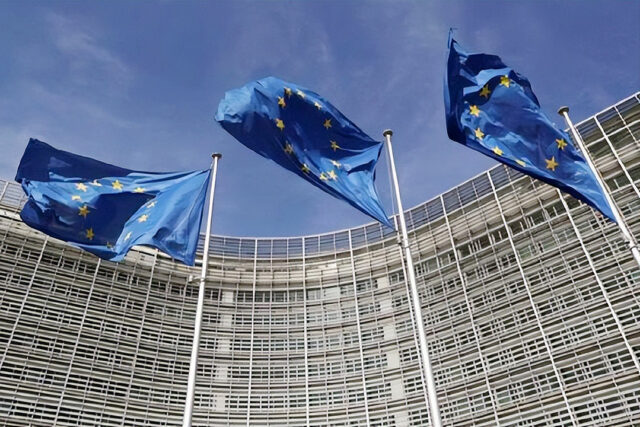
The European Union was preparing sanctions on Russian oil sales over its invasion of Ukraine after a major shift on Monday by Germany, Russia‘s biggest energy customer, that could deprive Moscow of a large revenue stream within days.

The European Commission is expected to propose a sixth package of EU sanctions this week against Russia over its Feb. 24 invasion of Ukraine, including a possible embargo on buying Russian oil.

Kyiv says Russia‘s energy exports to Europe, so far largely exempt from international sanctions, are funding the Kremlin war effort with millions of euros every day.

“This package should include clear steps to block Russia‘s revenues from energy resources,” Ukrainian President Volodymyr Zelenskiy said in his nightly video address.

Germany said on Monday it was prepared to back an immediate EU embargo on Russian oil.

“We have managed to reach a situation where Germany is able to bear an oil embargo,” German Economy Minister Robert Habeck said. Read full story

Chancellor Olaf Scholz, who has been more cautious than other Western leaders in backing Ukraine, has been under growing pressure to take a firmer line.

Scholz vowed sanctions will not be lifted until Russian President Vladimir Putin signs a peace deal with Ukraine that Kyiv can support, he said in an interview with ZDF public television. Read full story

Weaning Europe off Russian oil is likely to be easier than reducing dependence on Russian natural gas. Moscow has demanded European customers pay for gas in roubles, which the EU rejects. Last week, Moscow cut off supplies to Poland and Bulgaria.

EU ministers meeting on Monday warned that complying in full with Moscow’s demand for gas payments in roubles would breach existing EU sanctions.

Ambassadors from EU countries will discuss the proposed oil sanctions when they meet on Wednesday.


EVACUATION FROM MARIUPOL

The first civilians to be evacuated from a giant steel plant in Mariupol arrived on Monday in the Ukrainian-held city of Zaporizhzhia after an overnight bus journey across the front-line.

Ukraine says hundreds of civilians have been trapped inside the Azovstal plant along with the city’s last Ukrainian defenders. Dozens were able to leave on Sunday in an evacuation organised by the United Nations, the first to escape since Putin ordered the plant barricaded last week.

Captain Sviatoslav Palamar, 39, a deputy commander of Ukraine’s Azov Regiment, told Reuters from inside the plant that fighters could hear voices of women, children and elderly people trapped below ground, and lacked the equipment to dig them out. Read full story

“We were planning to tear up the bunkers, the entrance to which is blocked, but all night into Monday naval artillery and barrel artillery were firing. All day today aviation has been working, dropping bombs,” Palamar said by Zoom.

Efforts to organise the evacuation of civilians from other parts of the city, now held by the Russians, ran into delays. Ukraine says 100,000 people are still in the ruined city, enduring desperate conditions after months of Russian siege.

“Our house is completely destroyed. We had a two-story building, it’s not there anymore. It burned to the ground,” said Natalya Tsyntomirska, a Mariupol native who reached Zaporizhzhia on Monday in a funeral service van.

Zelenskiy said the evacuation effort was continuing and he expected more movement of people through humanitarian corridors on Tuesday from Berdyansk, Tokmak and Vasylivka.

For its part, Kyiv hopes a massive influx of Western military aid will allow it to repel that assault and then turn the tide with a counter-attack.

Russian forces shelled the city of Kharkiv five times on Monday, injuring five people, according to regional governor Oleh Sinehubov. Further south, Izyum remained a battleground, with most of the houses in the city destroyed, he said.

After being forced to abandon an assault on Kyiv at the end of March, Russia launched a major offensive in eastern Ukraine focused on the Donetsk and Luhansk provinces, parts of which were already held by Russian-backed separatists before the invasion. Russian troops are now trying to encircle a large Ukrainian force there, attacking from three directions with massive bombardment along the front.

Ukraine’s military said on Monday Russian forces were trying to take over the frontline Luhansk province town of Rubizhne and prepare an assault on nearby Sievierodonetsk.

The heaviest clashes were taking place around Popasna, farther south. Shelling was so intense it was not possible to collect bodies, said regional Governor Serhiy Gaidai.

​”I don’t even want to speak about what’s happening with the people living in Popasna, Rubizhne and Novotoshkivske right now. These cities simply don’t exist anymore. They have completely destroyed them.”

Russia has also been striking targets far from the front line with missiles. A 14-year-old boy was killed and a 17-year-old girl was wounded in a missile strike in the southern port of Odesa when a missile hit a dormitory, Zelenskiy said. Read full storyReuters

Israel demands apology after Russia says Hitler had Jewish roots

Image by Larry Koester/Flickr/CC BY 2.0

Israel lambasted Russian Foreign Minister Sergei Lavrov on Monday for claiming Adolf Hitler had Jewish origins, saying it was an “unforgivable” falsehood that debased the horrors of the Nazi Holocaust.

Leaders from several Western nations denounced the foreign minister’s comments and Ukrainian President Volodymyr Zelenskiy accused Russia of having forgotten the lessons of World War Two.

In a sign of sharply deteriorating relations with Moscow, the Israeli foreign ministry summoned the Russian ambassador and demanded an apology.

“Such lies are intended to accuse the Jews themselves of the most horrific crimes in history that were committed against them,” Israeli Prime Minister Naftali Bennett said in a statement.

“The use of the Holocaust of the Jewish people for political purposes must stop immediately,” he added.

Lavrov made the assertion on Italian television on Sunday when he was asked why Russia said it needed to “denazify” Ukraine if the country’s own president, Volodymyr Zelenskiy, was himself Jewish.

“When they say ‘What sort of nazification is this if we are Jews’, well I think that Hitler also had Jewish origins, so it means nothing,” Lavrov told Rete 4 channel, speaking through an Italian interpreter.

“For a long time now we’ve been hearing the wise Jewish people say that the biggest anti-Semites are the Jews themselves,” he added.

Zelenskiy, in his nightly video message, noted Moscow has been silent since Lavrov’s comments. “This means that the Russian leadership has forgotten all the lessons of World War Two,” he said. “Or perhaps they have never learned those lessons.” Read full story

U.S. Secretary of State Anthony Blinken weighed in later on the comments by his Russian counterpart saying it was “incumbent on the world to speak out against such vile, dangerous rhetoric.”

The German government’s anti-Semitism commissioner, Felix Klein, said Lavrov’s remarks mocked the victims of Nazism and “shamelessly confront not only Jews but the entire international public with open anti-Semitism.”Read full story

Italian Prime Minister Mario Draghi called the top Russian diplomat’s comments obscene, while Canada’s Justin Trudeau expressed disbelief. Read full storyRead full story

Dani Dayan, chairman of Yad Vashem, Israel‘s memorial to the 6 million Jews killed in the Holocaust, said the Russian minister was spreading “an anti-Semitic conspiracy theory with no basis in fact”.

The identity of one of Hitler‘s grandfathers is not known but there has been some speculation, never backed up by any evidence, that he might have been a Jew.

There was no immediate response to requests for comment from the Russian embassy to Israel or from Lavrov in Moscow.


STRAINED RELATIONS

Israeli Foreign Ministry Yair Lapid, whose grandfather died in the Holocaust, said accusing Jews of being anti-Semites was “the basest level of racism”. He dismissed Lavrov’s assertion that pro-Nazi elements held sway over the Ukrainian government and military.

“The Ukrainians aren’t Nazis. Only the Nazis were Nazis and only they dealt with the systematic destruction of the Jewish people,” Lapid told the YNet news website.

Israel has expressed support for Ukraine following the Russian invasion in February. But wary of straining relations with Russia, a powerbroker in neighbouring Syria, it initially avoided direct criticism of Moscow and has not enforced formal sanctions on Russian oligarchs.

However, relations have grown more strained, with Lapid last month accusing Russia of committing war crimes in Ukraine.

The Ukrainian president has also run into flak in Israel by looking to draw analogies between the conflict in his country and World War Two. In an address to the Israeli parliament in March, Zelenskiy compared the Russian offensive in Ukraine to Nazi Germany’s plan to murder all Jews within its reach during World War Two. Read full story Reuters

Musk seeks to put in less money in new Twitter deal financing -sources

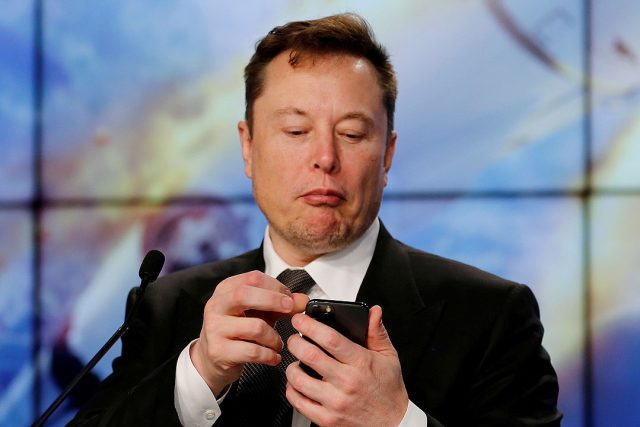
ELON MUSK — REUTERS

Elon Musk is in talks with large investment firms and high net-worth individuals about taking on more financing for his $44 billion acquisition of Twitter Inc TWTR.N and tying up less of his wealth in the deal, people familiar with the matter said.

Musk is the world’s richest person, with Forbes estimating his net worth at about $245 billion. Yet most of his wealth is tied up in the shares of Tesla Inc TSLA.O, the electric car maker he leads. Last week, Musk disclosed he sold $8.5 billion worth of Tesla stock following his agreement to buy Twitter. Read full story

The new financing, which could come in the form of preferred or common equity, could reduce the $21 billion cash contribution that Musk has committed to the deal as well as a margin loan he secured against his Tesla shares, the sources said.

The banks that agreed last month to provide $13 billion in loans based on Twitter‘s business balked at offering more debt for Musk‘s acquisition given the San Francisco-based company’s limited cash flow, Reuters reported last month. Read full story

Musk has also pledged some of his Tesla shares to banks to arrange a $12.5 billion margin loan to help fund the deal. He may seek to trim the size of the margin loan based on the new investor interest in the deal financing, one of the sources said.

Major investors such as private equity firms, hedge funds and high net-worth individuals are in talks with Musk about providing preferred equity financing for the acquisition, the sources said. Preferred equity would pay a fixed dividend from Twitter, in the same way that a bond or a loan pays regular interest but would appreciate in line with the equity value of the company.

Apollo Global Management Inc APO.N and Ares Management Corp ARES.N are among the private equity firms that have been in talks about providing the financing, the sources added.

Musk is still deciding whether he will have partners team up with him in writing the equity check needed for the deal, the sources said. Musk is not seeking to take on more debt for the Twitter deal currently, the sources added.

Musk has also been in talks with some of Twitter‘s major shareholders about the possibility of them rolling their stake into the deal rather than cashing out, one of the sources said. Former Twitter Chief Executive and current board member Jack Dorsey is examining whether he will roll his take, one source added.

Large institutional investors, such as Fidelity, are also in talks about rolling over their stake, according to the source.

Musk has tweeted that he would try to keep as many investors in Twitter as possible as he takes the company private.

The sources requested anonymity because the matter is confidential. Musk, Dorsey, Fidelity, Apollo and Ares did not respond to requests for comment.


TESLA SHARES RALLY

Tesla shares ended trading on Monday in New York up 3.7% at $902.94. Wedbush Securities managing director Dan Ives said the news helped ease investors’ concerns that Musk was relying too much on his Tesla shares for the Twitter deal financing.

“This is big if it materializes as we believe the Twitter deal has been a $100+ per share overhang on Tesla’s stock due to the Musk financing concerns,” Ives tweeted.

Investors have been fretting over whether Musk will complete the Twitter deal given that he has backtracked in the past. In April, he decided at the last minute not to take up a seat on Twitter‘s board. In 2018, Musk tweeted that there was “funding secured” for a $72 billion deal to take Tesla private but did not move ahead with an offer.

Twitter shares ended trading up 0.2% at $49.14 in New York on Monday, closer to the $54.20 per share acquisition price, as investors interpreted the news on the new financing discussions as making it slightly more likely that the deal will close.

Musk would have to pay a $1 billion termination fee to Twitter if he walked away, and the social media company could also sue him to complete the deal.

Musk, who calls himself a free speech absolutist, has criticized Twitter‘s moderation policies. He wants Twitter‘s algorithm for prioritizing tweets to be public and objects to giving too much power on the service to corporations that advertise. Read full story Reuters

India’s private school aspiration increasingly out of reach as inflation bites

STOOCK PHOTO | Image by Anil sharma from Pixabay

Indian financial consultant Waqar Khan has seen his income drop by about a fifth since the coronavirus pandemic began. When his younger son’s private school raised fees by 10% this year, he had no choice but to move him to the state system.

With three children and living in a small house in the capital, New Delhi, the 45-year-old can no longer afford private school fees for his boy of 10. He moved his older boy into a state school in early in 2021.

“I had no option,” Khan told Reuters, adding that rising education costs had come on top of a nearly 25% increase in household expenses in the past two years.

While inflation is putting the heaviest burden on the poorest, the relatively well-off are coming under the sort of pressure to make cuts in household budgets not seen in years.

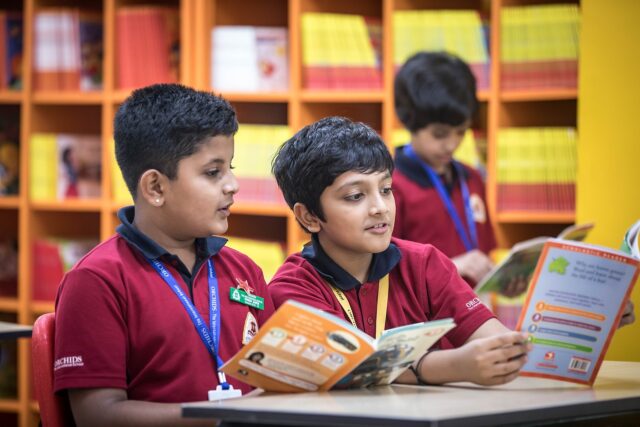
Khan is among millions of parents who have moved children from private to state education since 2020, or from elite schools to cheaper ones. In 2021, four million children switched from private to state, more than 4% of all children in school.

That is a reversal of a trend that has swept India over the past two decades, as more families in an increasingly prosperous society opted for private education to give their children an advantage in the job market.

But now inflation means that such aspirations are becoming unaffordable for some.

“My family life is shattered. I often feel distressed and helpless at being unable to provide good education for my children despite all the hard work,” Khan said.

His daughter, a 12th grade student, is still at the school where his 10-year-old had been, as he has not been able to find a place in the state system for her.

For the fast-growing middle class, the appeal of lessons in English and better teaching is huge.

The private sector covers a range of schools and fees, from a few dollars a month to hundreds, and so serves lower- and middle-income families as well as the wealthy.

On top of fees, transport companies that take children to school have raised prices by more than 15% this month in Delhi and some other places to cover higher wages and fuel, parents’ associations said.

Arjun Singh, 47, who drives a school van and owns three school cabs, said he increased his charges by up to 35% in April because of higher costs. Prices for compressed natural gas (CNG) for his vehicles had almost doubled, he said.

Broader inflation is biting hard, touching 6.95% in March – a 17-month high and above the central bank’s target, and economists say that households are bracing for worse as companies pass on the costs.


‘ADVERSE CONSEQUENCES’

Many private schools have raised fees and other charges by more than 15% this year, said Aparajita Gautam, president of the Delhi Parents Association, although some had delayed doing so during the worst of the pandemic.

Her association has protested at a number of private schools in the capital, drawing the attention of the media and authorities.

In response, Delhi’s government has simplified the procedure for enrolling in state education and promised to audit school accounts, while trying to encourage schools to cap fee increases at 10%, with little success.

“Most private schools are forcing parents to accept steep hikes or face adverse consequences,” Gautam said.

In the city of Kolkata, nearly 70% of private schools raised fees by up to 20% last month, and some parents have asked authorities to press schools to soften the blow.

Schools defend the higher fees.

Sudha Acharya, head of the National Progressive Schools’ Conference and principal at ITL Public School, understood that many parents were going through tough times but schools faced rising costs.

“Without increasing school fees again, maintaining quality is a little difficult,” she said.

The Delhi-based Centre Square Foundation, a consultancy, found in a 2021 study that a majority of 450,000 private schools in India, 70% of which charged up to 1,000 rupees ($13) a month per student, faced financial losses of 20%-50% during the pandemic.

As parents defaulted, some schools cut teachers’ pay and thousands of schools, particularly those catering to lower-income families, closed, according to school associations and state authorities.

Enrolment in private schools has skyrocketed to more than 35% of students from about 9% in 1993, and nearly 50% of households spend nearly 20% of their earnings on children’s education, according to government and industry estimates.

A family with monthly income of 20,000-50,000 rupees ($260-$650) might pay 2,000-10,000 rupees a month on tuition and another 1,500-5,000 rupees on transport.


DEBT TRAP

There are about 90 million Indian children in private schools in total.

Federal and state governments spent 6.43 trillion rupees ($84 billion) to fund about 1.1 million schools in 2019/20, or about 3.1% of gross domestic product against 6% recommended by various government panels.

Economists said rising private education costs were not fully captured in inflation data, as it is weighted at just 4.5% in the consumer prices index based on a decade-old model.

Devendra Pant, chief economist at India Ratings, the Indian arm of the Fitch rating agency, said rising education costs were part of a second wave of inflation households were facing after a rise in global crude oil and other commodity prices.

“It would significantly impact households’ monthly budget and could force many to cut spending on other products and services.”

Some parents have been caught in a nightmare debt trap that could rob their children of education altogether.

Sanjay Kumar Vaghela, a driver in Ahmedabad city who had to borrow money after losing work, said he could not afford to pay the higher fees for his daughter nor clear the 18,000 rupees he still owed her school.

The school asked him to pay the outstanding fees before it issued a transfer certificate, without which no state school was prepared to admit his daughter, he said.

“My daughter may remain without education forever as I have no funds to pay,” he said. – Reuters

Philippines planning to give Myanmar 5 million Sputnik V vaccines

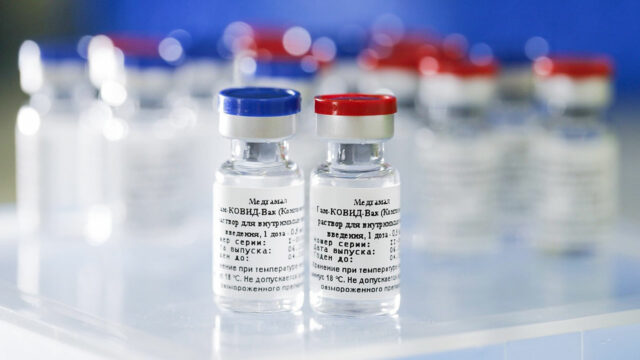
MANILA – The Philippines is considering donating to Myanmar five million doses of Sputnik V COVID vaccine that are close to expiry, a senior health official said on Monday.

The donation would be the first by the Philippines to another nation, after it scrambled for much of last year to procure vaccines for its 110 million population. 

Health officials have said the Philippines now has ample supplies. 

Authorities are seeking clearance to donate the Russian vaccines through the Myanmar Red Cross Society, health undersecretary Maria Rosario Vergeire told a regular news conference.

According its health ministry, less than half of the 53 million population have received two doses of a COVID vaccine in Myanmar, a country in turmoil since the military seized power 15 months ago. 

That compares to nearly 67.9 million people vaccinated in the Philippines, which has battled one of the worst COVID crises in Asia. — Reuters

April PMI jumps to over 4-year high

REUTERS

By Tobias Jared Tomas

THE PHILIPPINE manufacturing sector in April posted its best performance in over four years, reflecting the significant improvement in business conditions as pandemic restrictions eased.

S&P Global Philippines on Monday said the Philippines Manufacturing Purchasing Managers’ Index (PMI) rose to 54.3 in April, from 53.2 in March, as new orders and production increased.

The PMI reading in April is the highest since the 54.8 PMI reading in November 2017.   

Manufacturing Purchasing Managers’ Index of Select ASEAN Economies (April 2022)

April was also the third consecutive month that the PMI was above the 50 mark, which separates growth from contraction.

The headline PMI measures manufacturing conditions through the weighted average of five indices: new orders (30%), output (25%), employment (20%), suppliers’ delivery times (15%) and stocks of purchases (10%).

“Looser pandemic restrictions led to a stronger improvement in operating conditions across the manufacturing sector in the Philippines at the start of the second quarter,” S&P Global economist Maryam Baluch said in a report released on Monday.

S&P Global said output and new orders went up for the third month in a row, both with the quickest growth rate since November 2018. It cited anecdotal evidence that more relaxed coronavirus restrictions supported higher customer demand and production.

Metro Manila and most parts of the country have been under the most lenient alert level since March, as coronavirus disease 2019 (COVID-19) infections remained low.

However, S&P Global noted the demand from international markets declined for a second straight month, as the Russia-Ukraine war and higher shipping costs hurt new export orders.

“Although output growth picked up in April, global headwinds, notably from the Russia-Ukraine war and lockdowns in China, led to further pressure on supply chains,” Ms. Baluch said.

Raw material shortages and supply chain disruptions also delayed delivery times, but S&P Global said that lead times were the least severe in nearly two and a half years.

Buying activity grew at the fastest pace in over three years, as firms’ production requirements increased. S&P Global also noted firms raised their stocks of raw materials and semi-finished items at the quickest pace since the survey began in January 2016.

S&P Global also said there was no change in employment numbers across the Philippine manufacturing sector, ending 25 straight months of job losses. However, there are still reports of widespread worker resignation, which affected companies’ ability to expand.

“The rate of input cost inflation eased only slightly from the record high seen in March, leading to another sharp increase in selling prices…It will be important to see how growth momentum is sustained amid ongoing supply chain disruption and sharply rising costs,” Ms. Baluch said.

S&P Global said business confidence in the next 12 months improved to a four-month high in April.

“Weaker COVID-19 containment measures underpinned forecasts of stronger demand conditions and rising output in the coming months,” it added.

ING Bank N.V. Manila Senior Economist Nicholas Antonio T. Mapa said in an e-mail that output and new orders picked up “considerably” due to the reopening of the economy and lower number of COVID-19 cases.

“We note, however, that the supply chain disruptions caused by the ongoing conflict in Ukraine have already caused longer lead times for inputs, which could eventually slow output and fan price pressures further,” he said.

Rizal Commercial Banking Corp. Chief Economist Michael L. Ricafort said the manufacturing sector’s recovery was supported by the implementation of the most lenient alert level in most areas of the country.

“Unemployment rate at the lowest since the pandemic started supported and reflected the manufacturing PMI gauge at new pre-pandemic highs, as also supported by near record-high OFW remittances and exports data,” he said via Viber.

Mr. Ricafort said a nationwide Alert Level 1 and other measures to further reopen the economy would help minimize the impact of the Russia-Ukraine war on the Philippines, as well as help drive the manufacturing sector’s recovery.

ASIA FACTORY ACTIVITY
Meanwhile, Asia’s factories managed a fitful recovery in April that highlighted their economies’ resilience to the impact on global supply chains of China’s lockdowns and conflict in Ukraine.

Manufacturing hub South Korea’s PMI climbed to 52.1, according to S&P Global, recovering some ground lost from a sharp drop in March. Price and supply pressures were exacerbated by Russia’s war on Ukraine and China’s expanding COVID restrictions, it added.

Manufacturing PMIs advanced in Myanmar and Australia. Only Taiwan proved an outlier — reflecting its deep economic links to China — reporting its lowest reading since July 2020.

Asia-Pacific economies, which include some of the world’s top exporters, largely held up through April. The impact from weaker activity in China — the top trading partner for much of the region — was offset by renewed demand in other key markets such as the US.

China remains a significant risk as the latest surge in COVID cases and subsequent lockdowns threatens to choke off supply chains and restrain trade.

“While strengthening client demand has been able to support the recovery so far, it will be important to see how growth momentum is sustained amid ongoing supply chain disruption and sharply rising costs,” said Ms. Baluch.

The April PMI releases are scattered across several days given holidays across the region, including Eid al-Fitr in Southeast Asia’s biggest economy, Indonesia. Thailand’s PMI is set for release on Tuesday, with Vietnam and Indonesia following on Wednesday and Malaysia’s due on Thursday.

The fallout from China’s latest COVID struggles was evident in the nation’s manufacturing data, with a gauge of factory activity plunging to the lowest level in more than two years in April, data released over the weekend showed.

“Taiwan’s manufacturing sector performance weakened in April as the recent increase in COVID-19 cases and lockdowns in mainland China impacted supply and demand,” said Annabel Fiddes, economics associate director at S&P Global. — with Bloomberg

BSP to ensure sustainable recovery before tightening

PHILIPPINE STAR/ RUSSEL PALMA
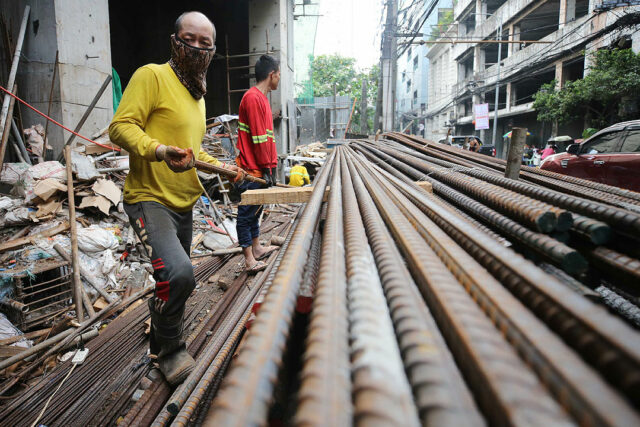
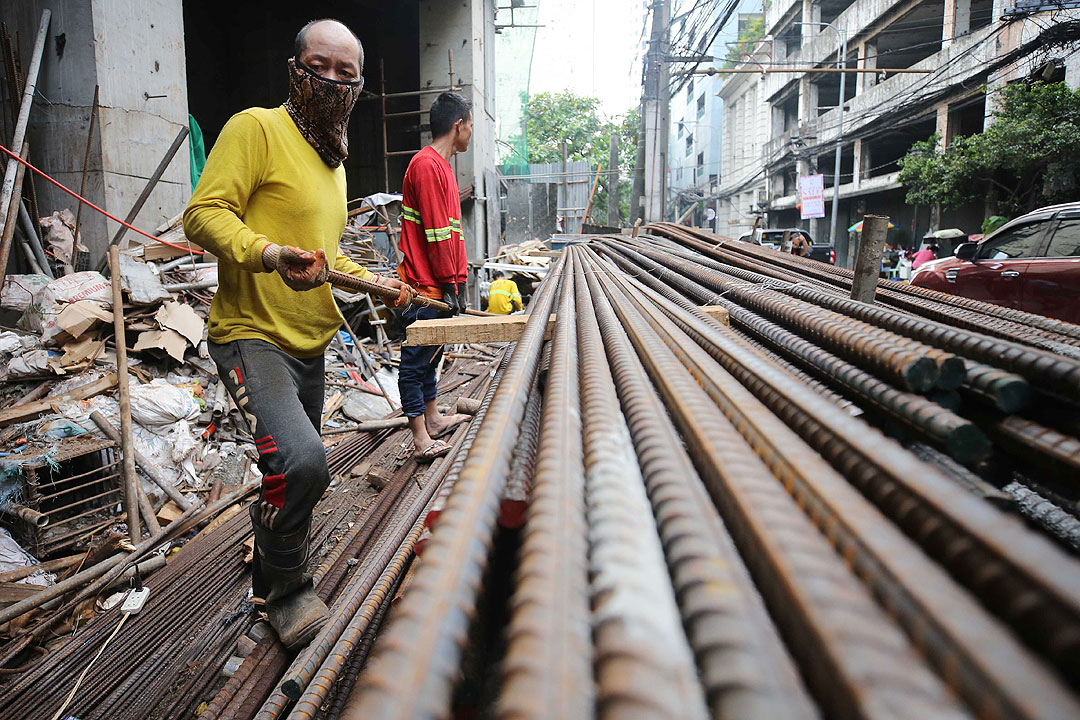
A worker cuts metal in a construction site in Binondo, Manila, March 24, 2022. — PHILIPPINE STAR/ RUSSEL PALMA

THE BANGKO SENTRAL ng Pilipinas (BSP) may consider hiking its key interest rate in June if economic growth and employment data show recovery is now entrenched, its governor said.

“We really have to balance whether the recovery that we are seeing is sustainable. That’s why we are going to wait for the GDP (gross domestic product) number for the first quarter,” BSP Governor Benjamin E. Diokno said when asked by ABS-CBN News Channel if the BSP is prepared for the possible consequences of raising interest rates by June.

“By [June]…we’ll also have more data on employment, whether employment continues to improve, and so forth, and [if] those things suggest that the recovery is sustainable, maybe we will act accordingly under these cases,” he added.

First-quarter GDP data is expected to reflect the impact of looser pandemic restrictions as coronavirus disease 2019 cases dropped. Metro Manila and other parts of the country have been under a more relaxed Alert Level 1 since March.

The government is targeting a 7-9% GDP growth this year.

The jobless rate stood at 6.4% in February, unchanged for the second straight month. However, the number of unemployed Filipinos in absolute terms increased by 201,000 on a monthly basis to 3.126 million.

The Philippine Statistics Authority will release first-quarter GDP data on May 12, while the Labor Force Survey for March and April will be out on May 6 and June 10, respectively.

The BSP has kept its policy rate at a record low of 2% since November 2020. The Monetary Board will have a rate-setting meeting on May 19.

Mr. Diokno last week said they may consider starting to increase rates at the next policy meeting on June 23 as they expect strong first-quarter growth. He previously signaled a possible rate hike in the second half.

Some major central banks like the United States and United Kingdom have already tightened monetary policy to curb soaring inflation, but Mr. Diokno said the Philippines’ case is different.

“Their inflation is much more intense than ours. So, there’s a big difference between what’s happening in other countries than the Philippines,” he said.

“You really have to look at interest rate differential in real terms. Knowing that they are coming from such a high level of inflation, it would appear that the inflation level [in these countries] is kind of entrenched because it’s broad based. They have real estate prices going up, they have minimum wage going up because of constraint labor supply,” Mr. Diokno added.

The US Federal Reserve is expected to fire a 50-basis-point (bp) hike this week following its 25-bp increase in March.

Headline inflation in the Philippines rose to a six-month high of 4% in March due to surging oil prices brought by the war in Ukraine. The BSP has already raised its inflation forecast for the year to 4.3%, which is beyond the 2-4% target range.

April inflation likely quickened further to 4.6%, based on the median estimate of a BusinessWorld poll of 17 analysts. Inflation data is scheduled to be released on May 4.

Mr. Diokno said the BSP continues to monitor possible second-round effects of inflation from the demand side.

“We [the government] targeted those who are directly affected by [rising] oil prices, rather than a more general approach like cutting the tax on oil, which benefits everybody, the rich, poor, and middle income. So I think we do not expect second-round effect, but we closely monitor them every time we meet,” Mr. Diokno said.

Groups have filed petitions to raise transport fares and wages following the spike in oil and commodity prices.

EXPERIMENTAL CBDC
Meanwhile, Mr. Diokno said the pilot launch of the wholesale central bank digital currency (CBDC) is planned within the fourth quarter.

“We are going to do this on experimental basis, which will start in the fourth quarter of this year. We will experiment with some large financial institutions, limited in the Philippines,” he said.

Mr. Diokno said several banks have expressed intention to participate in the pilot program. The BSP is still open to accept those who want to join the pilot run.

Consultations with other institutions like the Monetary Authority of Singapore and the Bank for International Settlements have been done to ensure the smooth launch of the CBDC project, he added.

Last week, Mr. Diokno said the pilot project will cover the experimental CBDC use to allow large value financial transactions on a 24/7 basis. — Luz Wendy T. Noble

Megawide, 2 Japanese firms secure P13-B subway deal

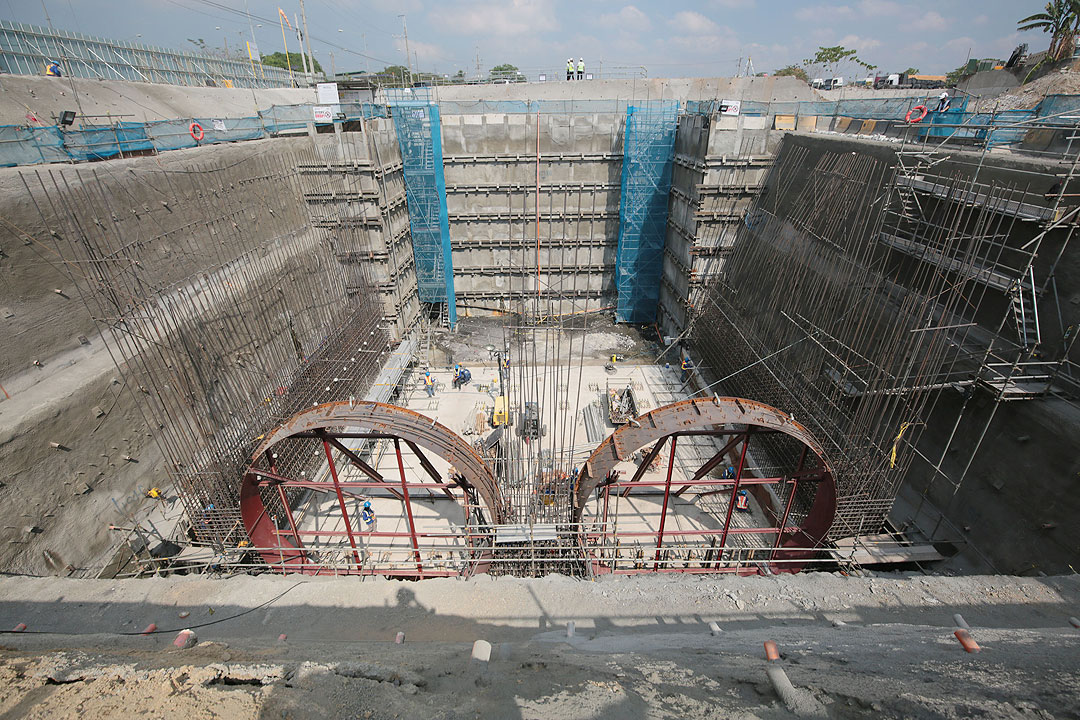
Metro Manila subway will run from Valenzuela City to the Ninoy Aquino International Airport. Photo taken on March 8. — PHILIPPINE STAR / MICHAEL VARCAS
CONSTRUCTION of the Metro Manila subway project is seen in Valenzuela, March 8. — PHILIPPINE STAR/ MICHAEL VARCAS

A JOINT VENTURE composed of two Japanese construction companies and Megawide Construction Corp. bagged the P13.26-billion contract to build the two stations of the Japan-funded Metro Manila Subway, the Department of Transportation (DoTr) said.

The contract was awarded to the joint venture of Tokyu Construction, Tobishima Construction, and Megawide, according to a notice of award issued by DoTr Undersecretary for Legal Affairs Reinier Paul R. Yebra on April 22.

The contract involves the construction of the Ortigas North and South subway stations and tunneling works.

However, the contract award still requires concurrence by the Japan International Cooperation Agency and compliance with the procurement standards for the Japanese official development assistance (ODA) loans. 

Sought for comment, a Megawide representative said: “As the official award/contract is yet to be announced by the DoTr, we defer to them first on releasing any information regarding the project.”

The DoTr began seeking bidders for the construction of the two subway stations and tunneling works in 2020.

Since the Metro Manila Subway project is funded by ODA from Japan, a Japanese firm should be the prime contractor. Companies from any country are eligible to serve as sub-contractors, according to the DoTr’s bid bulletin.

A joint venture will be eligible for the contract as long as “the nationality of the lead partner is Japan, that the nationality of other partners is Japan and/or the Republic of the Philippines, and that the local share of work of Japanese partners in the joint ventures is more than 50% of the contract amount,” the DoTr said.

The Metro Manila Subway will have 17 stations between Valenzuela and Bicutan.

Transportation Undersecretary for Railways Timothy John R. Batan said at a forum last week that the Metro Manila Subway involves 13 contracts, six of which have been awarded. This includes a P26.75-billion contract to supply 240 train cars that was awarded to the joint venture of Japan Transport Engineering Co. and Sumitomo Corp.

Transportation Secretary Arthur P. Tugade said in January that the tunnel works for the country’s first underground railway system was expected to start by the second quarter.

The government initially planned to launch partial operations this year and full operations in 2025, but Mr. Tugade has said this is no longer possible due to the limitations brought by the pandemic. Partial operation of the subway is now expected in 2025, while full operation is eyed by 2027.

“Once operational, the (Metro Manila Subway) will reduce travel time between Quezon City and NAIA (Ninoy Aquino International Airport) from 1 hour and 10 minutes to just 35 minutes,” the DoTr said in a January statement.

Two out of 25 tunnel boring machines from Japan that will be used for the project arrived in Manila in February.

The project was first proposed and planned in 1973 as part of the Urban Transportation Study in the Manila Metropolitan Area, according to the DoTr.

Shares in Megawide went up by 0.80% to P5.04 each on Monday. — Arjay L. Balinbin

ADVERTISEMENT
ADVERTISEMENT