Home Blog Page 6435

Fil-Chinese chamber says DoF, DTI, Agri appointments being closely watched

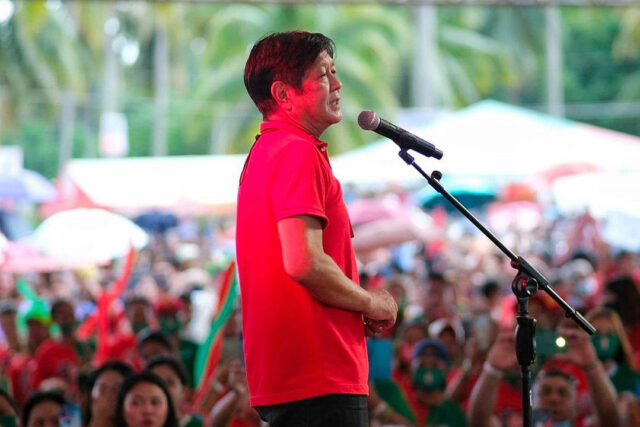
FACEBOOK.COM/BONGBONGMARCOS

THE incoming secretaries of the Departments of Finance (DoF), Trade and Industry (DTI), and Agriculture (DA) will be critical for the incoming Marcos administration, the head of a major chamber of commerce said.

Henry Lim Bon Liong, president of the Federation of Filipino Chinese Chambers of Commerce & Industry, Inc., said in a radio interview on Sunday that these appointments will be key to the running of the next government.

“This is important, including during the transition. It is important to find good Secretaries for the departments,” he said. 

Mr. Lim Bon Liong said the Finance Secretary should have the standing to manage the national debt, which climbed by 17.7% to P12.68 trillion at the end of March.

“Finance Secretary Carlos G . Dominguez III is doing a good job. Kung pwede i-retain ay okay din sa amin ’yun. And another one, Trade Secretary Ramon M. Lopez is also doing a good job for DTI. Nakikita rin namin itong dalawa kung puwede ma-retain muna in the meantime (If only Mr. Dominguez were kept on, we will be fine with that. Mr. Lopez also… We hope these two can be retained in the meantime),” he said.

He also endorsed the performance of Agriculture Secretary William D. Dar, who he said is being hampered by the limited funds set aside for agriculture.

Ferdinand R. Marcos, Jr. is set to win the Presidency by a landslide, according to the partial and unofficial tally of the Commission on Elections.

His spokesman, Victor D. Rodriguez, has said that Mr. Marcos has selected former Metropolitan Manila Development Authority Chairman Benjamin D. Abalos, Jr. as his Interior Secretary, while the top vote-getter in the vice-presidential field, Davao Mayor Sara Duterte-Carpio, has agreed to become the new government’s Education Secretary. — Revin Mikhael D. Ochave

Supermarket association expecting further hikes in goods prices 

FURTHER PRICE increases are expected in grocery items beyond the recent adjustments to the government’s price control scheme, known as the suggested retail price (SRP), the supermarkets association said.

The category of goods known as basic necessities and prime commodities (BNPC) will continue to increase in price over the rest of the year, according to Steven T. Cua, Philippine Amalgamated Supermarkets Association president.

In a mobile phone interview with BusinessWorld, Mr. Cua said: “I expect (price increases) to carry on until the rest of the year regardless of who wins as president and vice-president.”

According to Mr. Cua, BNPC prices are rising in line with the prices of imported raw materials.

“This is due to overdependence on imported raw materials, intermediate and finished goods. (We) can’t fix this overnight. It boils down to the lack of long-term planning and serious development of industries,” Mr. Cua said.

On May 11, the Department of Trade and Industry’s (DTI) latest SRP notice raised prices on 82 BNPCs, while prices of 136 BNPCs held steady from levels prescribed in the SRP bulletin of Jan. 27.

The DTI said price increases for the 82 stock keeping units range from 2% to 10%. Approved for higher prices were bread, canned fish, potable water in bottles and containers, processed milk, locally manufactured instant noodles, coffee, salt, laundry soap, detergent, candles, flour, processed and canned pork, processed and canned beef, vinegar, fish sauce (patis), soy sauce, toilet soap, and batteries.

Mr. Cua said it is up to the next administration to address the rising prices of BNPCs.

“I’m afraid this time there’s nothing very much (consumers) can do. The ball is in the court of the new administration to avert runaway inflation, hyper-inflation and social unrest,” Mr. Cua said.

Trade Secretary Ramon M. Lopez said in a radio interview on Sunday that the manufacturers are cautious in seeking price increases to maintain the competitiveness of their products.

Ang manufacturers, ayaw din itaas ng todo (ang presyo) kasi may competition. Lilipat ang mga consumer sa ibang brand or sa ibang produkto kapag tinaasan mo. Maingat din sila, (Manufacturers do not want the full measure of price increases because they might suffer competitively. Consumers might switch to other brands or alternate products if prices rise too much. They are cautious this way,”) Mr. Lopez said.

Mr. Lopez added that some manufacturers are selling their products below the SRP, and are treating the SRP as a maximum price. — Revin Mikhael D. Ochave 

DBM releases over P1 billion in COVID compensation

PHILIPPINE STAR/ MICHAEL VARCAS

THE Department of Budget and Management (DBM), in a statement on Sunday said it released P1.081 billion worth of compensation for both private and public healthcare workers (HCW), as well as non-HCWs working in health facilities.

Individuals who contracted coronavirus disease 2019 (COVID-19) will also be eligible for compensation.

Those who contracted a mild or moderate case of COVID-19 will receive P15,000, while those who contracted severe or critical cases will be eligible to receive P100,000.

Families of HCWs and non-HCWs will receive P1 million if they contract COVID-19 and die in the line of duty.

Funds will be sourced from the regular budget of the Department of Health (DoH), under the 2022 General Appropriations Act.

“Thus, the compensation will be transferred by the Department of Health to DoH-retained and corporate hospitals, DoH Treatment and Rehabilitation Centers, and Centers for Health Development, among other attached agencies and institutions,” the DBM said.

According to Joint Circular (JC) 2022-0002 of the DBM and DoH, which outlines the conditions for granting compensation, compensation entitlements in this budget cycle run from Jan. 1, 2022 “until the state of public health emergency throughout the Philippines due to COVID-19 is lifted.”

HCWs and non-HCWs cover workers at any public or private health facility, including consultants, residents, fellows-in-training in hospitals, treatment and rehabilitation centers, and sanitaria.

These also include swabbers, vaccinators, encoders, contact tracers, ambulance drivers, barangay health workers, and other medical-related personnel providing COVID-19 services, including the Armed Forces of the Philippines, the Philippine National Police, the Bureau of Fire Protection, and the Department of the Interior and Local Government, among others.

The JC defined mild and moderate cases to include symptomatic cases and non-severe fever and cough, respectively.

Severe cases were those patients presenting with pneumonia and respiratory infections, while critical cases were those patients experiencing Acute Respiratory Distress Syndrome, sepsis, and/or septic shock.

Beneficiaries are not allowed to receive compensation a second time, except in cases of re-infection.

There are currently 3,008 active cases of COVID-19, based on the DoH’s COVID tracker website. Last month, OCTA Research, a University of the Philippines institute, warned of a surge in infections by May or June, mirroring the surge in South Africa, India, and the US. — Tobias Jared Tomas

Winning consumers with a future-fit operating model

(Second of two parts)

Consumer product companies face the challenge of transforming to stay relevant to rapidly changing consumer needs, but global research commissioned by EY reveals concerns in whether leaders are taking the right actions to steer their organizations.

In a recent global C-Suite survey, “Becoming Future Fit: Challenges and Opportunities for Today’s Consumer Products Companies,” which was commissioned by EY from MIT SMR Connections, 86% of the surveyed C-Suites said transformation was essential to become future-ready, but they face uneven progress due to conflicting priorities and a shortage of talent necessary to facilitate change. Unless companies find ways to overcome these hurdles, they will fail to achieve their transformation goals and grow increasingly out of step with the demands of tomorrow’s consumers.

In the first part of this two-part article, we discussed the first two key design principles necessary to drive agility, responsiveness and resilience: becoming part of dynamic business ecosystems and building upon data and analytics with data fabric. In this second part, we discuss the remaining three key design principles: encouraging talent flexibility, innovating at scale and embedding Purpose into every facet of the organization.

For these principles to be at their most effective, it is best that organizations excel in all rather than merely do well in one or two, and they must be accomplished in a manner that builds and sustains trust not just with consumers but with their people and all their ecosystem partners.

ENCOURAGE TALENT FLEXIBILITY
Transformation will require developing people with deep skills in key areas such as data transformation, but organizations will also need generalists across functions capable of working together in new ways. An adaptive workforce and culture will be able thrive when supported by emerging technologies and new methods of collaboration in a reimagined workplace. In the EY 2021 Work Reimagined Employee Survey, emphasis is placed in putting humans at the center with the future of work enabled by transformative digital tools.

INNOVATE AT SCALE
Everyone must be involved in the effort to innovate. People on the frontlines are often the best sources of ideas, as they deal with consumer and ecosystem partners directly and on a daily basis, but these ideas are often either not captured or are weighed down by rigid processes.

By taking a future-back approach to strategic planning, investing in data and moving toward resilient supply networks driven by data, companies will be able to innovate at scale and enable hyper personalization. The most successfully innovative ideas support technologies and cultures that capture, rapidly develop and scale ideas that work, and move to the forefront of reshaping both customer and industry expectations.

EMBED A PURPOSE-LED STRATEGY
The purpose of an organization defines its value propositions, its role in ecosystems, how it attracts and retains talent, its partners and which consumers it serves. Although purpose and sustainability are key drivers of value, they are not always made an integral part of operations. Although sector-specific issues vary, a purpose-led growth strategy can address critical issues of trust, technology, trade and sustainability while keeping humans at the center of every decision.

As leaders look to reframe for the future of their organizations, investors, consumers, employees and the wider society mandate them to become more purpose-led in creating long-term value. The objectives are growth that is accelerated yet sustainable, a stronger market position, and a better working world for all stakeholders.

KEY ACTIONS FOR A FUTURE-FIT OPERATING MODEL
While there is no clear finish line in the race to become future fit, organizations that transform around the five principles will be in a much better position to stay ahead of changing market forces. Fostering better relationships with their consumers will lead to long-term relationships on foundations of trust while being in a stronger position to collaborate with partners with increased agility, enabling them to bring products to market quicker.

CEOs can take three key actions that are crucial in delivering a future-fit operating model, the first of which is to set a leadership vision that disrupts organizational barriers. Although the organization is on a transformation journey, it is essential to ensure the entire organization is on the journey as well. CEOs are meant to challenge the orthodox and inspire action, but the Becoming Future Fit global survey reveals that 63% of leaders expected corporate culture to be a source of resistance, while 55% cited the failure to orchestrate a transformation roadmap to be another potential barrier.

Second, CEOs must be realistic in setting timelines to build capabilities. In the global survey, 61% of leaders said it was critical to create a flexible talent pool within two years, but an adjunct professor quoted in the survey reports that it takes three to seven years just to onboard everyone, align incentives, and get buy-in.

Lastly, leaders must start from what is necessary in the future, and not based on what they are capable of today. The global survey found that although 77% of leaders said they had the emerging technologies necessary to transform their operating model, 70% identified the need to upgrade their technology infrastructure as a significant barrier to transformation. This contradiction highlights the gap between having the needed capabilities for today instead of tomorrow, creating consequences in delivering the transformation agenda.

THE NEED FOR CONTINUOUS ADAPTATION
It should be established that there is no single business model that can win in the future at scale, as CEOs will need to deliver many different models, strategies and propositions from a core operating model. Leaders will need to keep adapting business strategies and priorities to anticipate potential disruptors and reflect volatile market conditions.

This requires a perspective that does not make the present and future mutually exclusive. Leaders must employ the mindset that the value they create today will fund their transformation in the future, while investments made in future transformation will aid in creating value today — presenting the opportunity to create a virtuous cycle.

This article is for general information only and is not a substitute for professional advice where the facts and circumstances warrant. The views and opinions expressed above are those of the author and do not necessarily represent the views of SGV & Co.


Maria Kathrina S. Macaisa-Peña is a business consulting partner and the consumer products and retail sector leader of SGV & Co.

Locked-down Shanghai to start gradually reopening malls, other businesses

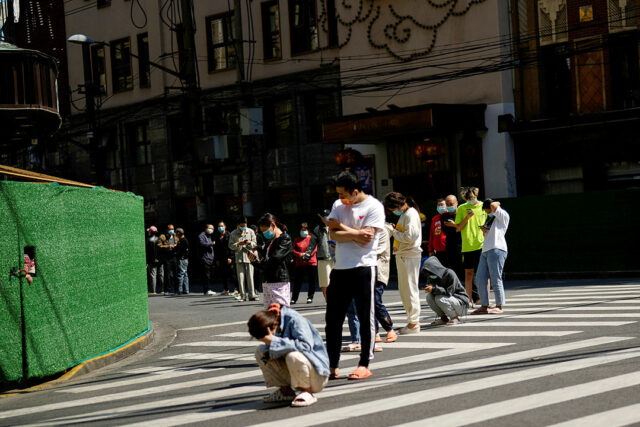
RESIDENTS line up for nucleic acid tests during a lockdown in Shanghai, China, April 17. — REUTERS

SHANGHAI — The Chinese financial and manufacturing hub of Shanghai will gradually begin reopening businesses such as shopping malls and hair salons from Monday after weeks in a strict coronavirus disease 2019 (COVID-19) lockdown, the city’s vice mayor told a media briefing on Sunday.

Shanghai, which has been locked-down for more than six weeks, is in the midst of a recent tightening in some areas that it hopes marks a final push in its battle with the virus.

Shopping malls, department stores, and supermarkets will begin resuming in-store operations and allow customers to shop in “an orderly way,” while hair salons and vegetable markets will reopen with limited capacity, Vice Mayor Chen Tong said, but gave no specifics on the pace or extent of such reopenings.

During Shanghai’s lockdown, residents have been mainly limited to purchasing necessities, with normal shopping on online platforms largely suspended.

Shanghai will also soon announce a third “white list”, of more than 820 companies engaged in import and export, that can resume operations, a city official said. — Reuters

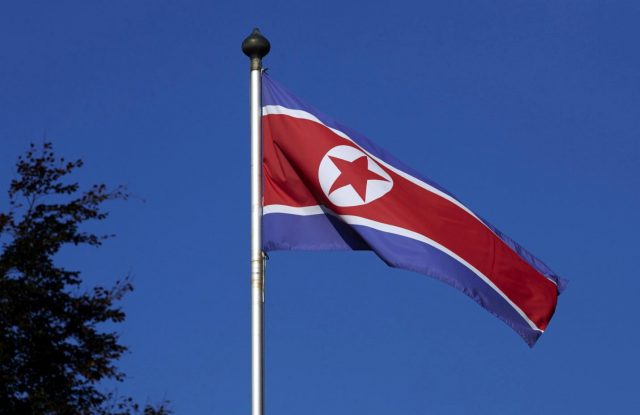
N.Korea taking ‘swift measures’ against COVID outbreak

REUTERS

SEOUL  — North Korea said on Sunday a total of 42 people had died as the country began its fourth day under a nationwide lockdown aimed at stopping the impoverished country’s first confirmed COVID-19 outbreak.

North Korea’s admission on Thursday that it is battling an “explosive” COVID-19 outbreak has raised concerns that the virus could devastate a country with an under-resourced health system, limited testing capabilities and no vaccine programme.

State news agency KCNA said the country was taking “swift state emergency measures” to control the epidemic, but there is no sign that Pyongyang was moving to accept international offers of vaccines.

“All provinces, cities and counties of the country have been totally locked down and working units, production units and residential units closed from each other since the morning of May 12 and strict and intensive examination of all the people is being conducted,” KCNA reported on Sunday.

A day earlier North Korean leader Kim Jong Un said the spread of COVID-19 had thrust his country into “great turmoil” and called for an all-out battle to overcome the outbreak.

Despite the lockdowns, Kim and other senior officials on Saturday attended funeral services for Yang Hyong Sop, a former de facto head of state during the rule of Kim’s father, Kim Jong Il, KCNA reported.

Health authorities set up more epidemic prevention posts, and urgently transported medical supplies to hospitals and clinics, while senior officials had donated reserve medicines, KCNA reported.

A “large proportion” of the deaths have been due to people “careless in taking drugs due to the lack of knowledge and understanding of stealth Omicron variant virus infection disease and its correct treatment method,” the report said.

Korean Central Television on Saturday night broadcast treatments for the fever. A doctor at Kimmanyu Hospital suggested “gargling with salt water” and taking different medications in case of high temperature, headache and muscle and joint pains.

KCNA yesterday also suggested drinking lonicera japonica tea or willow leaf tea three times a day.

At least 296,180 more people came down with fever symptoms, and 15 more had died as of Sunday, the outlet said.

Experts say North Korea appears to lack the capacity to test those tens of thousands of symptomatic patients. KCNA did not report how many of those suspected cases had tested positive for COVID-19.

Overall North Korea has reported 820,620 suspected cases, with 324,550 still under medical treatment, KCNA said.

North Korea had previously claimed no confirmed cases of the virus, and is one of only two countries in the world that have yet to begin a COVID vaccination campaign, according to the World Health Organization.

Its self-imposed lockdowns have slowed trade to a trickle and raised concerns about food shortages or other hardships, aid organizations have said. — Reuters

Gunman kills 10 in live-streamed racial attack on New York state supermarket

BUFFALO, N.Y. — An 18-year-old white gunman shot 10 people to death and wounded three on Saturday at a grocery store in a Black neighborhood of upstate New York, before surrendering after what authorities called an act of “racially motivated violent extremism.”

Authorities said the suspect, who was armed with an assault-style rifle and appeared to have acted alone, drove to Buffalo from his home several hours away to launch the afternoon attack that he broadcast in real time on social media platform Twitch, a live video service owned by Amazon.com.

Eleven of the 13 people struck by gunfire were Black, officials said. The two others were white. The racial breakdown of the dead was not made clear.

Court papers named the suspect as Payton Gendron of Conklin, a town of about 5,000 people in New York’s Southern Tier region near the Pennsylvania border.

He was arraigned hours after the shooting in state court on first-degree murder charges, which carry a maximum penalty of life in prison without parole, said Erie County District Attorney John Flynn. New York has no capital punishment.

Mr. Flynn said the judge also ordered Mr. Gendron to remain in custody without bail and to undergo a “forensic examination.” Mr. Gendron was scheduled to return to court on May 19.

Authorities said the teenager, reported by local media to have been a student at the State University of New York’s Broome Community College near Binghamton, had come close to taking his own life before he was arrested.

When confronted by officers at the store, the suspect held a gun to his own neck, but they talked him into dropping the weapon and surrendering, Buffalo police commissioner Joseph Gramaglia told a news briefing.

Mr. Gramaglia said the gunman shot and killed three people in the parking lot of the Tops Friendly Markets outlet before exchanging fire with a retired police officer working as a security guard for the store, but the suspect was protected by his body armor.

The guard was one of the 10 people shot to death, the nine others all being customers. Three other employees of the store, part of a regional chain, were wounded but are expected to survive, authorities said.

Shonnell Harris, a manager at Tops, told the Buffalo News she thought she heard as many as 70 gunshots and that she fell several times as she ran through the store to a rear exit.

“He looked like he was in the army,” she told the newspaper, describing the camouflage-clad assailant.

Retired firefighter Katherine Crofton, who lives nearby, said she witnessed the start of the bloodshed from her porch.

“I saw him shoot this woman,” Ms. Crofton told the paper. “She was just going into the store. And then he shot another woman. She was putting groceries into her car. I got down because I did not know if he was going to shoot me.”

‘PURE EVIL’
Stephen Belongia, the FBI special agent in charge of the bureau’s Buffalo field office, said the attack would be investigated both as a hate crime and as an act of “racially motivated violent extremism” under federal law.

“This person was pure evil,” Erie County Sheriff John Garcia said at a news conference, his voice quaking with emotion. “It was a straight-up racially motivated hate crime from somebody outside of our community.”

US President Joseph R. Biden decried the shooting as “abhorrent to the very fabric of this nation” in a statement issued late Saturday. “Hate must have no safe harbor. We must do everything in our power to end hate-fueled domestic terrorism.”

New York Governor Kathy Hochul told a late-evening news conference she was dismayed that the killer managed to live-stream his attack on social media, which she blamed for hosting a “feeding frenzy” of violent extremist ideology.

“The fact that that can even be posted on a platform is absolutely shocking,” Ms. Hochul said. “These outlets must be more vigilant in monitoring social media content.”

Twitch said in a statement that it removed the livestream less than two minutes after it started and was working to ensure no other accounts re-posted the content. Ms. Hochul said it should have been taken down “within a second.”

Screenshots of the broadcast were posted on social media, including some that appeared to show the shooter holding a gun and standing over a body in the grocery store.

A document circulating online that appeared to have been written by the killer sketched out a to-do list for the attack, including cleaning the gun and testing the livestream.

In addition, a 180-page manifesto outlining ‘The Great Replacement Theory’ — the idea that white people are being replaced by minorities in the United States and other countries — also circulated online, reportedly authored by Mr. Gendron.

A spokesperson for Mr. Flynn’s office declined to comment on the documents. The FBI could not immediately be reached for comment.

The governor also said she would introduce a previously planned “comprehensive” gun control package on Tuesday to “address further loopholes that exist in our (state) laws.”

Ms. Hochul said the firearm used in the killings was legally purchased but had been illegally modified with a high-capacity magazine, which she said could easily have been purchased legally in Pennsylvania.

The Buffalo shooting follows a pattern of other racially motivated mass murders in recent years, including a Pittsburgh synagogue attack that left 11 congregants dead in Oct. 2018, and the Atlanta spa shootings in March 2021 in which a white man killed eight people, targeting Asians.

Saturday’s shooting spree was also reminiscent of the attack on a mosque in Christchurch, New Zealand, in 2019, when the killer live-streamed the murders on Facebook.

Buffalo Mayor Bryon Brown called for unity on what he called a “day of great pain for our community.”

“Many of us have been in and out of this supermarket many times,” he told reporters. “We cannot let this hateful person divide our community or our country.” — Reuters

Envoy says Russian diplomats in US are threatened, enticed by FBI

UNSPLASH

RUSSIAN diplomats in Washington are being threatened with violence and US intelligence services try to make contact with them, Tass news agency cited the ambassador as saying on Saturday.

Anatoly Antonov told Russian television that since Russia invaded Ukraine on Feb. 24, face-to-face meetings with US officials had ended.

“It’s like a besieged fortress. Basically, our embassy is operating in a hostile environment … Embassy employees are receiving threats, including threats of physical violence,” Tass quoted him as saying.

“Agents from US security services are hanging around outside the Russian embassy, handing out CIA and FBI phone numbers, which can be called to establish contact.”

The CIA, the FBI, the Office of the Director of National Intelligence and the US State Department did not immediately return messages seeking comment.

The Russian ambassador to Poland was doused in a red substance on Monday by people protesting against the war.

Russia and the United States had been locked in a dispute over the size and functioning of their respective diplomatic missions long before Russia invaded Ukraine.

Moscow expelled a number of US diplomats in March after Washington said it was kicking out 12 Russian diplomats at the country’s U.N. mission in New York. — Reuters

Walang imposible

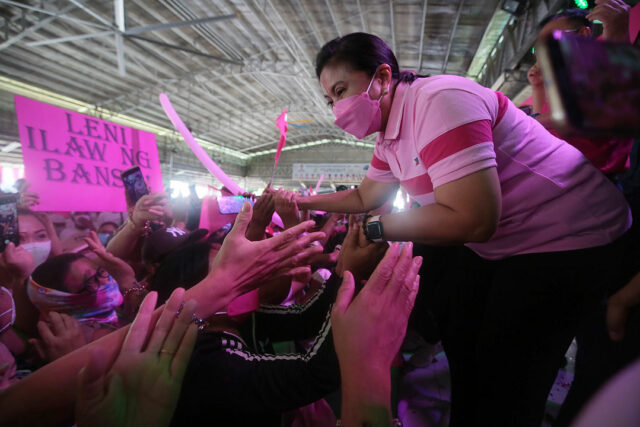
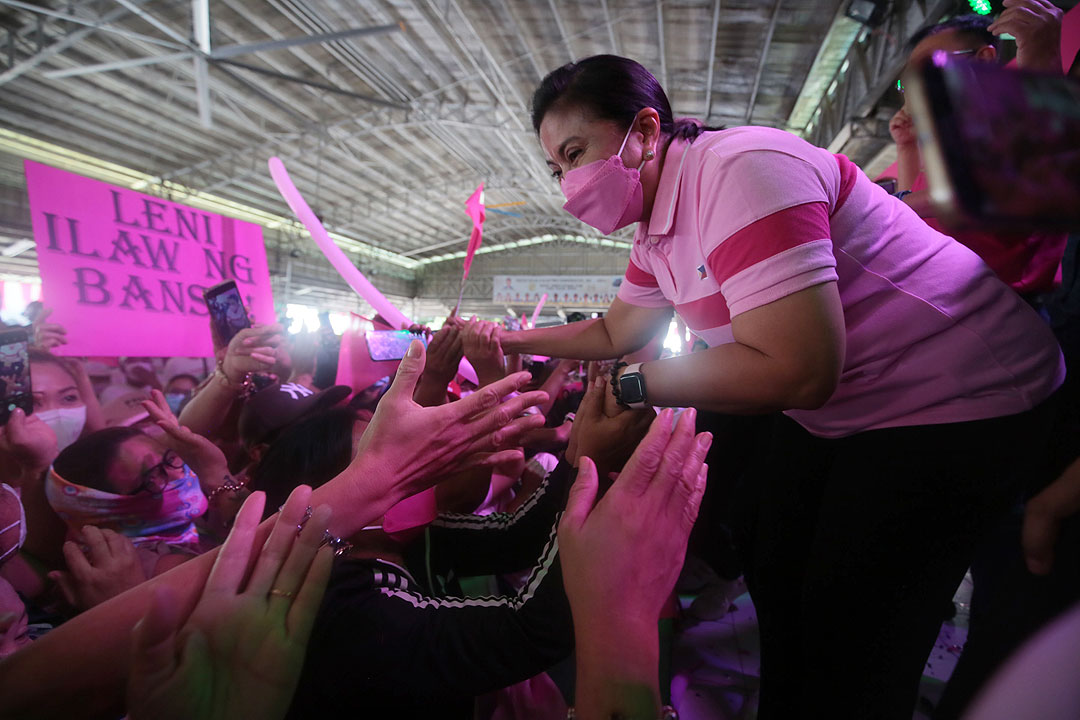
PRESIDENTIAL ASPIRANT Vice-President Leni Robredo greets her supporters during a sortie at Brgy. Calipahan, Talavera, Nueva Ecija, March 22. — PHILIPPINE STAR/MICHAEL VARCAS
PHILIPPINE STAR/ MICHAEL VARCAS

Part 2

This is a sequel to the column “Walang imposible,” which I wrote on the eve of the elections (May 8) and which BusinessWorld published online on the same date.

In that column, not only did I say that nothing is impossible —walang imposible — but also affirmed that we will win — magwawagi tayo!

I stand by those words.

During the campaign for Leni Robredo, I worked with many young Leni volunteers. They are passionate, focused, smart, intelligent, agile, resourceful, creative.

Like Leni and her many other volunteers, my young colleagues had the spirit and conviction to fight even as they were aware that the campaign was an uphill climb.

Leni’s campaign was set up late, for she first tried to unite the opposition. That failing, she decided to be on the hustings in the face of a looming deadline for the declaration of candidacy. Worse, Leni has been bombarded by trolls for years, which has scattered tons and tons of lies.

Meanwhile, the adversary had years of preparation. He enjoyed huge resources and a well-oiled political machinery.

Clearly, Leni was the underdog. The pre-election surveys conducted by credible outfits showed Ferdinand Marcos, Jr. having a wide lead.

Despite the formidable odds, the Leni campaign took off and gained momentum. She ignited a giant movement. The back-to-back campaign rallies culminating in the miting de avance drew the participation of hundreds of thousands of people. The outpouring of sustained support through collective action over a four-month campaign period has been unprecedented in Philippine history.

Not even the imposing resources of Marcos Jr. could match Leni’s massive movement. Leni beat Marcos Jr. in mass mobilization and public sentiments expressed through media.

The challenge, however, was to conjoin the mass movement and the traditional election campaign. To paraphrase fellow columnist Diwa Guinigundo, “delivering the votes is primordial.” The gains from the gigantic movement, unfortunately, did not translate into massive votes for Leni to win.

The surveys suggested a Marcos landslide, but as National Scientist Raul Fabella said in a text message, “miracles can come true.” Even science has an allowance for miracles. Thus, scientific surveys have confidence intervals, usually a confidence level of 95%, that likewise measure the degree of uncertainty.

We all had a heavy heart when we saw the votes pouring in. It was particularly painful for the young. Tricia, a young mom and the niece of an old friend, messaged me: Tito Men, grabe ’yung feeling of despair. Arjay, a millennial who did intense house-to-house campaigning, said he felt that he got crushed or buried by an avalanche.

Especially after my text conversation with Gilda, another long-time friend who sent feedback that my words were comforting, I decided to share my thoughts with a bigger public.

When I wrote “Walang imposible” and when I said magwawagi tayo, I meant every word I said.

Winning the election was a long shot, but the election was just the beginning. The election was a big battle, but the struggle did not end there. I dare say that despite the electoral loss, it presages strategic victory.

Yes, losing it hurts. The enemy had tremendous advantages. Leni entered the race with a big handicap. We had our weaknesses and shortcomings, but we fought hard and threw our strongest punches.

We lost that battle, but one battle does not define the outcome of a long war.

Or perhaps, it does in a different way. To those who are familiar with the history of the Vietnamese war for national liberation, recall the Tet offensive. It was a turning point in the Indochina war.

Ho Chi Minh’s revolutionary forces launched a dramatic offensive, but they were beaten. Yet that became the turning point of the war. Instead of demoralizing the Vietnamese revolutionaries, they learned the lessons, achieved moral ascendancy, and gained the confidence that US aggression could be eventually defeated.

The 2022 election is our Tet offensive. We have come out stronger in the Leni campaign.

Election is one arena of struggle. And new arenas of struggle — the formal institutions and the parliament of the streets — are available to us. We have a weapon that Marcos Jr. does not have — a new version of people power. He might have won by a landslide, but the votes he got are not derived from conviction. They remain soft.

On the other hand, we have the courage and determination. We have the energy and stamina for a protracted fight, especially from our main force, the educated youth. And the lessons we have learned, including from failure, will strengthen us.

Thus, from a strategic viewpoint, we have won.

We now need to consolidate. We have to remove the baggage we haul, reject the bias and hubris afflicting some of us, and be firm in grasping Leni’s radikal na pagmamahal (radical love). And have faith in the people, especially the youth.

Let’s heed Leni’s statement “We need to accept the decision of the majority, and I implore everyone to be with me on this.” Moreover, “Let your tears flow. But after you’re done, wipe away the tears because there is still work ahead.”

I find comfort in Ecclesiastes:

“The heart of the wise is in the house of mourning, but the heart of the fools is in the house of mirth.”

And “to everything there is a season.”


Filomeno S. Sta. Ana III coordinates the Action for Economic Reforms.

www.aer.ph

The Philippines votes Right

PHILIPPINE STAR/KRIZ JOHN ROZALES

Many analysts and pundits got this election wrong.

First, they were analyzing the candidates and the election using the lens of morality and values. In other words, this election was a fight between “good” and “evil,” with one side reportedly the evil empire and the other, righteous rebels. This was also supposed to be a fight between honesty and good governance vs corruption.

Or, they try to explain the people’s vote as some kind of amnesia because the voters were not educated on the horrors of martial law.

Second, they confused technology with politics, i.e., they said that one side was a master of social media and that’s why one side won. The voters — the “bobotantes” — were a gullible mass, easily manipulated by Tiktok or Facebook posts. They ascribed no human agency to the voters, i.e., they were just mechanistic devices manipulated by social and mass media. Perhaps, it’s a reflection of so-called analysts’ elitist (matapobre) views of the great majority.

What is striking in the analyses, even by so-called political analysts, is the absence of politics, i.e., the people’s vote does not reflect a political viewpoint or political vision.

I contend, however, that this election has shown us that the Philippine electorate has shifted definitively to the Right. For this, blame Duterte.

Here, in the Philippines, we normally don’t ascribe political forces as Right or Left, other than to the Makabayan Bloc, which is only a marginal political player due to the absence of ideological, programmatic political parties. Most candidates are populists, catering to the broad masses with simplistic appeals.

In my view, Duterte has changed that. He represents the Right. Why is that?

He represents Fiscal Conservatism. Despite his populist rhetoric, Duterte is fiscally conservative, shown by the tightfistedness of his Finance Secretary, Sonny Dominguez. His administration increased revenue collection and was very prudent in expenditures, leading to an improvement in the country’s credit rating. Even during the height of the pandemic, while other countries like the US and Japan busted budgets, the administration’s COVID expenditures were relatively modest as a percentage of GDP.

He represents Law and Order. He won the presidency in 2016 as a tough, no-nonsense former City Mayor promising to make war on criminals and drug addicts. He has delivered on his promise with a harsh crackdown that critics say was characterized by human rights abuses.

While President Duterte won with some assistance from the communist Left and briefly flirted with them by appointing them to Cabinet positions, he has turned fiercely anti-communist. His administration has passed an anti-Terrorism law and created a National Task Force to End Local Communist Armed Conflict (NTF-ELCAC) with a well-funded program to eliminate the communist insurgency.

He’s Pro-Business and has cut taxes. While Duterte appeared populist and anti-business in the 2016 elections, his actions speak otherwise. He listened to the concerns of Business and vetoed the End ENDO (End of Contract) bill. Through the CREATE (Corporate Recovery and Tax Incentives for Enterprises Act) law, his administration has cut taxes for businesses, from 30% to 25% for big corporations and down to 20% for MSMEs, giving a windfall to Business. His administration has passed many pro-business laws, such as the Ease of Doing Business Act, Amendments to the Corporation Code, Real Estate Investment Trust Revised IRR, an EO liberalizing satellite internet, the Personal Property Act, lifting the mining permit and open-pit mining ban, etc.

He has adopted liberal, pro-growth policies. His administration dismantled the NFA (National Food Authority) rice import monopoly — which no administration before him dared to do — and liberalized rice importation through the Rice Tariffication Act. Rice prices stabilized and he became more popular than ever, to the consternation of protectionists, leftists, and populists.

He lifted the ban on the issuance of mining permits and reversed the Gina Lopez-initiated open-pit mining ban. He has liberalized foreign investments through the three laws, namely, the Retail Trade Liberalization Law, the Amendments to the Foreign Investment Act, and the Public Service Act (PSA) Amendments. In particular, the PSA Amendment is historic because it removed foreign ownership restrictions in transport and telecommunications, which had been in place since 1935, while safeguarding national security. It will usher in competition in industries presently dominated by monopolists and duopolists — a very liberal (even Teddy Roosevelt-like) act.

Despite the Duterte administration’s pro-business policies, his administration has passed the most social legislation of any President: the Universal Health Care Law, the Institutionalization of the Conditional Cash Transfer, the Mental Health Care Act, the 1,000 Day Law (for newborns), and the 150-day Maternity Leave Law.

In foreign policy, Duterte is labeled as pro-China but he’s more pragmatic than ideological. The fact of the matter is that he renewed the VFA or Visiting Forces Agreement with the United States. In the recent voting to eject Russia from the Human Rights Council in the United Nations, the Philippines was one of the few Asian countries which voted “yes,” in alignment with the United States and other Western countries. Other countries like Singapore, Thailand, and Indonesia abstained while Vietnam sided with Russia and voted “no.”

We can therefore sum up Dutertismo as Rightist: Pro-business, Anti-Communist, Pro-Law and Order, Liberal and Pro-growth economic Policies with social inclusion, and Pragmatic Foreign Policy.

In surveys showing that President Duterte remains overwhelmingly popular with high approval ratings (almost 80%) and in the overwhelming electoral mandate given to the Marcos-Duterte tandem, the Filipino voters have moved solidly Right and are giving their nod to the Rightist direction of the country.

The victory of Ferdinand Marcos, Jr. (BBM) must, therefore, be seen not through the lens of the 1970s. It doesn’t represent historical amnesia but a vote today, 34 years after the Yellow revolution. On the contrary, the BBM-Duterte tandem must be seen as an extension of Dutertismo and the fusion (the Unity, which is the theme of the BBM campaign) of Rightist forces in the country.

The one area where Marcos-Duterte can’t be called Rightist is on the issue of divorce and abortion. BBM has expressed support for divorce and selected cases of abortion. Again, the political alliances explain this stance with the Yellow forces allied with the Catholic Church and therefore opposed while the Red forces are allied with non-Catholic religious groups and in favor.

Even if President Duterte had not openly endorsed BBM, the BBM-Sara team must be seen in the context of Dutertismo. BBM failed to win over Leni Robredo for VP in 2016 but his partnership with Sara Duterte catapulted him in the 2022 polls. Duterte’s party, the PDP-Laban, also endorsed BBM-Duterte. For the very first time, the voters have elected a President and Vice-President from the same team, clearly seeing them as one. Remarkably, both garnered almost the same number of votes, so voters saw them as a team.

The victory is also the culmination of the anti-Yellow counter-revolution started by Duterte. Who represents anti-Yellowism more than Marcos?

Interestingly, the BBM-Duterte team doesn’t have leftists in its alliance, unlike Duterte in his 2016 campaign, and therefore, may not have the baggage of leftist policies in mining, social welfare, and land reform that Duterte had in the early years of his administration.

As for the opposition, it is not Left in contrast to the Marcos-Duterte Right. It’s more precisely Yellow (not Pink), representing the old alliance of anti-Marcos oligarchs, Catholic Church hierarchy, hard leftist and left-of-center forces, and middle-class elements that toppled Marcos in the People Power Revolution. It ran a values-based campaign, anchored on “honesty,” “human rights,” and “good governance.” However, the voters showed that those issues are irrelevant to their lives. Instead, they have judged the Yellow People Power Revolution to have failed and ushered in a Red or Rightist counter-revolution.

The problem of the opposition is that while it takes a liberal stance concerning human rights, it’s illiberal in its economic philosophy. Its foundational ideology is economic protectionism and economic nationalism, reflected in the protectionist 1987 Yellow Constitution with its Filipino First and Filipino Only provisions. (It explains the negative vote of Yellow Senators, Francis Pangilinan and Risa Hontiveros, against the liberal PSA Amendment). Its approach to so-called social justice concerns is heavily statist and emphasizes distribution without increased productivity. This is reflected in the 1987 Comprehensive Agrarian Reform Law, which substituted an inefficient and corrupt government for the landlord, and imposed restrictions on the farmer. The problem is that this law made farmers poorer and the countryside more vulnerable to criminality and drug addiction.

Its foreign policy is strongly pro-American and anti-China. As I mentioned before, this can be traced back to the American support to the Yellow forces for removing Marcos from Malacañang (“cut and cut cleanly,” said US Senator Paul Laxalt) and his exile to Honolulu.

Judging from the results of the election, with the BBM-Duterte tandem getting a majority mandate, the first-ever in the history of Philippine elections, the opposition will be in the political wilderness for some time. The Filipino voters have shifted hard to the Right. So pronounced is this shift that the Left failed to win even in the party-list elections (with the possible exception of the Kabataan party-list with a single representative) which they have traditionally dominated. If BBM lives up to the Rightist promise and delivers a successful presidency, Sara Duterte will become his successor. That will be 12 more years when the opposition will be out of power.

The danger, of course, is that a weak opposition may tempt the ruling power to commit abuses. It’s important, therefore, for the Yellow opposition to do a self-examination and review its alliances and political philosophy, which the Filipino majority have overwhelmingly rejected, to recoup from its political losses.

As for President-elect Ferdinand Marcos, Jr. (BBM), his takeaway should be to continue and extend the Rightist policies of Dutertismo. Reversing the Rice Tariffication Law, a great legacy of President Duterte, for example, would go against the Rightist principles that voters put him in power for.

Instead, he must pursue policies that promote Law and Order, Economic Liberalism, Fiscal Prudence, Pro-Growth and Pro-Business with inclusion, a balanced Foreign Policy, and anti-Communism. That is the key to his success as a president.

Oh, I can already see the objections to this analysis. Unlike in the rest of the world, Filipino voters supposedly don’t think politically that way. They can’t distinguish between Right and Left. What explains their votes is that they are manipulated receptors of social media disinformation. They are “bobo.”


Calixto V. Chikiamco is a member of the board of IDEA (Institute for Development and Econometric Analysis).

totivchiki@yahoo.com

Motorsports, an election stress buster

JCOMP-FREEPIK

This election exercise was physically, mentally, and emotionally exhausting regardless of which side of the political fence you stood on. Now that the dust has settled, we all deserve a break from the toxicity of it all.

Hobbies are the best diversions. They make you happy, feed your soul, and keep you young. For myself and many others belonging to Generation X, motorsports is our hobby of choice. Inside every grown man (and many a woman) is a young tyke with a need for speed. Whether a taipan, top executive, or entrepreneur, many fantasize about racing at top speed in a bona fide sports car.

Motorsports have had a long history in the Philippines spanning more than 50 years. Its heyday was in the 1970s and early ’80s when rallies dominated the scene. Old timers will remember Dante Silverio, Pocholo Ramirez, Arthur Tuazon, and Freddie Masigan as the vanguards of the sport. For a brief moment, the Philippines even hosted several grand prix races in Greenhills, Luneta, and Cebu where racers from Asia and Europe participated. In the 1980s, several Filipino rally drivers competed regionally, including MP Turbo’s Mike Potenciano.

Car rallies took a back seat in the 1990s as circuit racing emerged. With the support of Toyota Racing Development (TRD), the Corolla Cup racing series became the entry point for fledgling racecar drivers. Champions of the Corolla Cup got to compete in the higher league Toyota Formula 3. We remember Tyson Sy, Gabby Dela Merced, and Enzo Pastor as being the fastest drivers of their generation.

The 2000s saw the rise of JP Tuazon’s Ford Focus Cup, Ford Fiesta Cup and, later, the Toyota Vios Cup. JP is the son of the motorsports legend, Arthur Tuazon. As many as 60 cars participated in these circuit races which were held in the Clark international speedway, Subic, and the Batangas Racing Circuit. Young guns like Dominique Ochoa, Red Diwa, and Sam YG reigned supreme.

After the Vios Cup, motorsports lay low for a few years, except for a few rally crosses and drifting races at the Driftwood Adventure Park and R-33 race track.

Following the pandemic-induced hiatus, three young Filipino motorheads are again fanning the flames for motorsports in the Philippines. The trio, collectively known as the Radical Group PH (@radicalcarsph on Instagram), is composed of Enrique Hormillo, Antonio Brias, and Mark Stöckinger.

Hormillo has been racing go-carts since he was 14 and is both the driving coach and business manager of the group. Brias is the technical director, having graduated from the Royal College of London with a degree in Auto Engineering. He was once the chief engineer of Ferrari Philippines. Stöckinger is a famed Filipino driver who raced for the Lotus F1 Team, the Status Grand Prix, and Formula Renault. Stöckinger leads the drivers academy of the Radical Group.

In 2019, Radical Group PH obtained the rights to distribute Radical cars in the Philippines and organize races according to Fédération Internationale de l’Automobile (FIA) standards.

For those unaware, Radical is based in the United Kingdom and is the world’s largest manufacturer of track sportscars. Radical cars offer the best of both worlds — they are faster than supercars but priced at a fraction of a Porsche. With more than 2,000 cars sold worldwide, Radical has also become a specialist in organizing races. There are Radical Cup races in the UK, Scandinavia, Canada, the US, South Korea, Australia, and the Middle East.

Radical has nine sportscar models in its lineup, two of which are available in the Philippines, the SR1 and SR3. Both are open top models.

The SR1 is the first step in the Radical ladder. They are ideal for enthusiasts looking to take their circuit driving to the next level. The SR1 has a 182-horsepower engine that takes you from one to 100 kph in 3.5 seconds. It has a top speed of 222 kph. It is as fast as an Aston Martin Vantage, but nimbler.

Hormillo says that the SR1 is ideal for those training to become competitive drivers. It is forgiving of mistakes but rewards you if you get the technique right. The SR1 is equipped with on-board telemetry and videos that allow you to replay and analyze your drive.

The SR3 is a more sophisticated sports car. Not only is it slightly bigger, it also has more torque. Its engine has a power output of 226 horsepower that takes you from 0 to 100 kph in 3.1 seconds. Its top speed is 237 kph.

This SR3 is equipped with all-new electrical architecture that allows the driver access to more data and feedback than the SR1. It also features a multi-function steering wheel with a built-in LCD display to bring real-time information to the driver. The steering wheel is akin to those used in high-level Le Mans cars.

The SR3 is for the gentleman driver who insists on the best when playing on the track. It is half the price of a comparable supercar.

Radical Cars Philippines carries all the spare parts and maintenance facilities to keep the car in top condition. They even offer garage services, right on the race track, for a small fee.

For those who wish to try out track racing without the responsibility of purchasing their own car, Radical Cars has a program called Arrive & Drive. For a minimum fee, one gets a dedicated car for one race season that includes the maintenance crew, car fluids and brakes, and three sets of tires. One season is comprised of three weekends where Fridays are dedicated to testing and practice laps, Saturdays are for qualifying heats, and Sundays are for sprint and endurance races. Additional practice days can be arranged. The winner of the Philippine Radical Cup gets to compete in the UK as the Philippine representative in the global grand prix.

All those who purchase a Radical sports car or subscribe to the Arrive & Drive program will be trained by Marlon Stöckinger who heads the Radical Training Academy.

The men behind Radical Philippines are committed to the vision of reviving motorsports in the Philippines. At first, they admit, motorsports will be confined to “gentlemen drivers,” mostly from the business community. The cost of entry could be prohibitive, after all. But as circuit racing becomes more popular, the trio hopes to attract more sponsors to make it more affordable for the next generation of Filipino drivers. With support from the government and private sponsors, Philippines motorsports can be completive again as it was in the ’70s.

For the next few weeks, I will be at the racetrack in Clark to clear my head and shake off the election stress. By the end of it, I will emerge refreshed, ready to fight another day.


Andrew J. Masigan is an economist

andrew_rs6@yahoo.com

Facebook@AndrewJ. Masigan

Twitter @aj_masigan

The powerful machine that brought Bongbong to victory

PHILIPPINE STAR/ RUSSELL PALMA

IN THE DAYS following the landslide victory of Ferdinand Marcos, Jr., friends and colleagues in the US and Europe with memories of his father’s kleptocracy asked me how this could have happened. With all the forces working in Marcos’ favor, a more pertinent query might be: What was going to stop it?

If you spent time before the Philippines’ presidential election in the Manila area, you might have been forgiven for thinking that Marcos’ chief opponent, Leni Robredo, would waltz into office. She appeared to have the support of the urban professional class, civil-society advocates, students, and portions of the business elite. Her last rally, in the financial district, was attended by hundreds of thousands of people. In tony neighborhoods, like White Plains in Quezon City, Robredo posters far outnumbered those for Bongbong, as Marcos is known. (I was reminded of Brooklyn, where I lived during the 2016 US election, with its Hillary Clinton paraphernalia.) Drive an hour or so north and the picture changed dramatically. A massive truck dealership along a highway sported Bongbong billboards along the length of its roof — a political marker as much as the geographic end of the Manila exurbs.

Like the 2016 US election, the lead-up to Bongbong’s win was influenced by a formidable social media machine, one that sought to sanitize the autocratic rule of his father. Ferdinand Marcos, who declared martial law in 1972, was forced to flee in 1986 amid a popular uprising, deep recession, debt spiral and the erosion of US support for his regime. “They presented fake news and revisionist history,” Robredo voter Mark Domingo, 42, told me after the extent of the Marcos landslide became clear. He held the hand of his wife, Amor, as they sat in a volunteer compound expressing ire for Meta Platform, Inc.’s Facebook and TikTok, Inc. Social media companies “have ruined the Philippines,” he said.

At the same time, Marcos, unlike Trump, led a disciplined campaign. He shied away from direct engagement with the media, leaving image promotion to social media — Filipinos are among the world’s most active users — and scripted campaign events.

In fact, the Marcos’ campaign was light on policy specifics, which reduced the chances he’d trip. It also allowed people to project onto him what they wished, and conversely, gave him an opportunity to gin up nostalgia for glory days that never existed. The strategy worked for a range of reasons. While gross domestic product surged at the start of the year, the pandemic recession was a deep one that’s left lasting trauma. The nation has one of the youngest populations in Asia, something normally considered a plus. It also means a big cache of voters either weren’t alive or were very young when Marcos Sr. ruled with an iron fist and looted state coffers. When his epic flaws are pointed out, many fans shrug and say it means nothing to them, or worse, claim it’s fake news.

China’s role in the Philippines also has become a double-edged sword. While Beijing has helped bankroll much-needed new infrastructure, its reach into the South China Sea has hurt coastal communities that earned their livelihoods on the water for generations. During a visit in 2019, I met fishermen who claimed Marcos’ father brought strength and respect to their country. China wouldn’t dare push them around if he were still alive and in power, they asserted.

Bongbong deftly tapped into this angst on social media. But he also benefited from the careful construction of allegiances with regional political bosses. His family is from northern Luzon, the biggest and most populous island. His running mate, Sara Duterte, who’s also the daughter of the outgoing president, drew support from the southern stronghold of Mindanao, where she was a mayor (like her father).

Religion, too, came through for Bongbong and Duterte. In the Philippines, faith means mainly Christianity, particularly Catholicism — before its American administration, the country had been a Spanish colony for three centuries. While the Catholic Church played a huge role in rallying opposition to Marcos’ father, its influence is in relative decline. Prevalent now are American-style megachurches, as well as congregations that appear to resemble conservative evangelical groups. Iglesia Ni Cristo (INC), which disdains the Catholic Church, is the most prominent. It threw its weight behind Bongbong and did the same for Rodrigo Duterte in 2016.

INC, as it is known, demands complete obedience from its members — and delivers bloc votes to candidates it endorses. Founded in the early 20th century, the group has grown in stature and influence over the past few decades, along with peers. “Though comprising a small minority dwarfed by the Catholic Church, these churches have been able to mobilize financial and electoral power through careful organization and disciplined pastoral teaching,” John Choo, Evelyn Tan, and Daniel P.S. Goh, wrote in a 2020 report for the ISEAS Yusof Ishak Institute in Singapore. (INC endorsed the successful presidential runs of Benigno S. Aquino III in 2010 and Gloria Macapagal-Arroyo in 2004, suggesting an ability to spot winners and shape them.)

In the end, Marcos’ triumph was driven by several mutually reinforcing factors, from the urban-rural divide and the electoral weight of religious fault lines, to economic lopsidedness and perceptions of identity. These themes, of course, are recognizable beyond the Philippines, having propelled the 2016 Brexit vote in the UK and the likely return of Republican control of Congress in November. But while historical parallels make the outcome seem all but inevitable, the disappointment among Marcos’ opponents underline the benefit of hindsight.

In the early hours of Tuesday morning, as the crushing size of Bongbong’s victory sank in, Robredo supporters gathered at a volunteer center in central Manila. They shed a few quiet tears, sang, held hands, and nibbled at some comfort takeout from McDonalds. That contrasted with the wild scenes outside Marcos’ headquarters. There, less than an hour earlier, a writhing crowd of flag-waving, cheering supporters — few of whom wore face masks, which are still required — crowded around your columnist, shouting and gesticulating. They blocked traffic and climbed on cars.

That ephemeral moment could portend a much longer legacy. The Philippines limits presidents to single six-year terms, a product of the post-1986 constitutional overhaul designed to prevent another dictatorship. Will the machine that delivered Bongbong to the top job outlast him? Sara Duterte and her backers may well be counting on it.

BLOOMBERG OPINION

ADVERTISEMENT
ADVERTISEMENT