Home Blog Page 6429

Luka Doncic, Mavs demolish Suns with 33-point blowout in Game 7

LUKA Doncic recorded 35 points and 10 rebounds and the Dallas Mavericks dismantled the host Phoenix Suns with a convincing 123-90 victory in Game 7 to claim a spot in the Western Conference finals.

Spencer Dinwiddie poured in 30 points off the bench and Jalen Brunson added 24 as fourth-seeded Dallas steamrolled the top-seeded Suns. The Mavericks led by as many as 46 points while reaching the finals in the West for the first time since winning the 2011 NBA Finals.

Dallas will face the third-seeded Golden State Warriors in the conference finals. Game 1 is Wednesday night in San Francisco.

Devin Booker scored 11 points on 3-of-14 shooting in his first career Game 7 for the Suns, who won an NBA-best 64 games. That output also set a franchise record.

Booker missed his first nine field-goal attempts before sinking a jumper with five minutes left in the third quarter.

Starting anchors Booker, Chris Paul (10 points, 4-of-8 shooting) and Deandre Ayton (five points, 2-for-5) totaled 26 points on combined 9-of-27 shooting. Overall, Phoenix shot 37.9 percent from the field, including 12 of 34 from behind the arc.

The Mavericks were the first road team to win in the seven-game series. Dallas lost its first three visits to Phoenix by an average of 19 points, including a dismal 110-80 setback in Game 5.

After falling behind 2-0 and 3-2 in the series, Dallas won the final two games by an average of 30 points.

The Mavericks shot 56.8 percent from the field and made 19 of 39 from 3-point range in the wire-to-wire victory. Doncic was 6 of 11 from behind the arc and Dinwiddie made 5 of 7.

Cameron Johnson scored a team-high 12 for Phoenix.

The home fans booed the Suns off the court at halftime when the score was 57-27. Phoenix’s halftime total matched the output of Doncic, who was 9 of 12, including 4 of 7 from 3-point range.

Dinwiddie added 21 in the half on 7-of-10 shooting and 4 of 5 from behind the arc.

Meanwhile, the Suns’ trio of Booker (0 of 7), Ayton (1 of 4) and Paul (0 of 4) were 1 of 15 for six points in the half.

Doncic scored 12 points in the first quarter as the Mavericks built a 27-17 lead.

Doncic (15) and Dinwiddie (13) combined for 28 points in the second quarter as Dallas outscored Phoenix 30-10.

After halftime, Dallas scored 15 of the first 20 points to stretch the lead to 40 at 72-32 with 7:44 left in the third quarter.

Dinwiddie’s final 3-pointer, coming with 48.3 seconds left in the stanza, gave the Mavericks a 92-50 lead and they remained well ahead in the fourth quarter while finishing the startling wipeout win. — Reuters

Pinoy boxers begin SEA Games campaign

BAC NINH City, Vietnam — Tokyo Olympics women’s boxing silver medalist Nesthy Petecio stakes her world-class mettle against Myanmar’s Kay Thwe in the 31st Southeast Asian Games on Wednesday at the Bac Ninh Stadium.

A victory by Ms. Petecio will guarantee her a bronze medal as fellow Olympian Eumir Felix Marcial, who owns a bronze from Tokyo last year, drew a bye on Wednesday and will only fight in Thursday’s quarterfinals against the winner between Peerapat Yeasungnoen of Thailand and Bui Phuoc Tung of Vietnam.

Ms. Petecio, the women’s featherweight Tokyo Olympic silver medalist, battles Myanmar Kay Thwe in the quarterfinals on Wednesday, while pro Olympic bronze medalist Marcial drew a bye to get into the semifinals and wait for the winner between quarterfinalists Peerapat Yeasungnoen of Thailand and Bui Phuoc Tung of Vietnam on Thursday.

The other Tokyo Olympian, Irish Magno, will collide against Indonesia’s Novita Sinadia on Friday in a women’s flyweight semifinals fight, while Marjon Piañar, who also drew a bye, will fight in Friday’s semifinals in men’s welterweight against either Sarohatua Lumbantobing of Indonesia or Cambodia’s Vy Sophors.

“We are going to do our very best to match our last SEA Games performance three years ago, that’s what we prepared for,” Association of Boxing Alliances in the Philippines training director Don Abnett said.

Filipino boxers won seven gold, three silver and two bronze medals in the Philippines 2019 Games.

Mr. Marcial, meanwhile, has gotten his skill set back to Olympic boxing following his successful fight as a pro in the US earlier this year.

“I’m focusing on my fights for now,” said the 26-year-old Mr. Marcial, who has dominated the middleweight class in the Games since 2015 in Singapore.

Mr. Abnett, however, warned Mr. Marcial on Mr. Yeasungnoen, the 2018 International Boxing Association Youth World Championship bronze medalist, saying the 19-year-old Thai can pull off an upset.

“Anything can happen here,” Mr. Abnett said. “That Thai boy is very dangerous, but Eumir is training very nicely and he’s fit.”     

Ian Clark Bautista battled Mohammad Hanurdeen Bin in men’s featherweight quarterfinals and James Palicte faced Vietnamese Vu Thanh Dat in men’s lightweight preliminaries late Monday.

On Tuesday, Thai Open champion Rogen Ladon faces Malaysia’s Muhammad Abdul Qaiyum in a men’s flyweight quarterfinals clash.

Josie Gabuco will defend her title in the semifinal phase of women’s flyweight when she clashes with Thai Chuthamat Raksat on Thursday and Riza Pasuit meets Vietnamese Vuong Thi Vy also in a semifinal lightweight bout.

Tan rules the men’s single event in bowling

HANOI. — Merwin Tan finally ended the country’s 11-year dry spell in bowling on Monday, coming from behind to rule the men’s singles event at the Royal City Hanoi Bowling Lanes and fueling the Philippine drive in the 31st Southeast Games here.

Tan, 22, a left-hander, rolled a six-bagger in the sixth and last frame to erase a 52-pin deficit and beat Yannaphon Larpapharat of Thailand and Ryan Leonard Lalisang of Indonesia, to the delight of Pinoy officials, especially those from the Philippine Bowling Federation.

Tan finished with a total score of 1292, his bid immensely helped by six straight strikes in the sixth frame where he scored 249, after a 234 in the fifth frame that bumped him up to No. 3 overall.

Larpapharat and Lalisang were relegated to silver and bronze, respectively, with scores of 1286 and 1221.

“Sobrang saya and shocking din po, na nanalo po ng gold ang Pilipinas. For the whole game, try lang po ako mag-maintain ng aking focus and execution. Execution, make good shots and maximizing every frame,” said Tan, who knew he had to come up with something big in the sixth frame to turn things around.

The other Pinoy bowler in the field, Ivan Malig, finished 11th with 1087.

“I am so overwhelmed, after 11 years… I cannot thank the Lord enough. Talagang coming from behind si Merwin. We prayed he could recover, and he did,” said PBF Secretary General Bong Coo, who anxiously watched from the sidelines.

Tan, a former junior bowler, delivered the country’s first bowling gold since Frederick Ong last did the trick in the 2011 Indonesia Games and the 21st for the Philippine delegation here, which is jostling with Thailand for second place overall behind runaway leader Vietnam.

It helped that Tan is a left-hander, according to coach Biboy Rivera. “Being a southpaw, Merwin had an advantage going into the last few games because the lanes were more difficult for right-handers,” said Rivera.

Alexis Sy and Mades Arles were still competing in the distaff side on Monday.

Rivera prevents shutout in MTB cross-country

HOA BINH City — Jericho Rivera saved a bronze medal in the mountain bike’s cross-country event for men to prevent a Philippine shutout at the resumption of cycling competitions on Monday.

Rivera, racing outside of the country for the first time, held his ground against more exposed opponents in the four-lap 20.80-km race particularly against two grizzled Indonesians who finished 1-2 in the event.

“I stuck with them [Indonesians] for more than three laps, but they didn’t break,” said Rivera, who clocked one hour and 20.40 seconds in securing the country’s third bronze medals after John Derick Farr and Naomi Gardoce in men’s and women’s downhill on Sunday.

Indonesians Zainal Fanani and Ihza Muhammad showed legs of steel to occupy the top of the podium. Fanani clocked 1:16.41 and finished some two and a half minutes ahead of his compatriot.

“It’s a satisfying bronze for Jerico,” said Oscar “Boying” Rodriguez, PhilCycling’s vice president and head of the MTB commission. “Tomorrow, we’ll have another shot at the gold.”

The mixed relay event is set on Tuesday, the first time that the MTB race is being included in the SEA Games. Each team will have two men and two women riders who’ll alternate in riding the course.

Philippine Olympic Committee President Rep. Abraham “Bambol” Tolentino expressed satisfaction over the cyclists’ performance so far and hoped for more medals in the mixed relay and road events.

“Congratulations to the cyclists, they did a good race,” said Tolentino, who also heads the PhilCycling.

The women’s team didn’t fare well but got precious experience that they’ll nurture for their budding careers, particularly national team first timers Nicole Quinones and Shagne Yao.

Quinones finished sixth (1:28.48) and Yaoyao 11th (1:33.14) in the three-lap 15.60-km race Vietnam’s Dinh Thi Nhu Quynh (1:18.06) easily ruled.

The country’s top crosscountry female rider, Ariana Thea Patrice Dormitorio, completed the race at 10 out of 14 participants in 1:32.38.

Malaysia’s Nur Assyira Zainal Abidin (1:22.14) and Natashya Soon (1:23.00) completed the podium.

Racing for the Philippine in the crosscountry mixed relay set at 9 a.m. (Hanoi time) are Rivera, Yaoyao, Quinones and Flores in that order.

Max’s Group expands into manufacturing with multi-capacity commissary 

By Brontë H. Lacsamana, Reporter

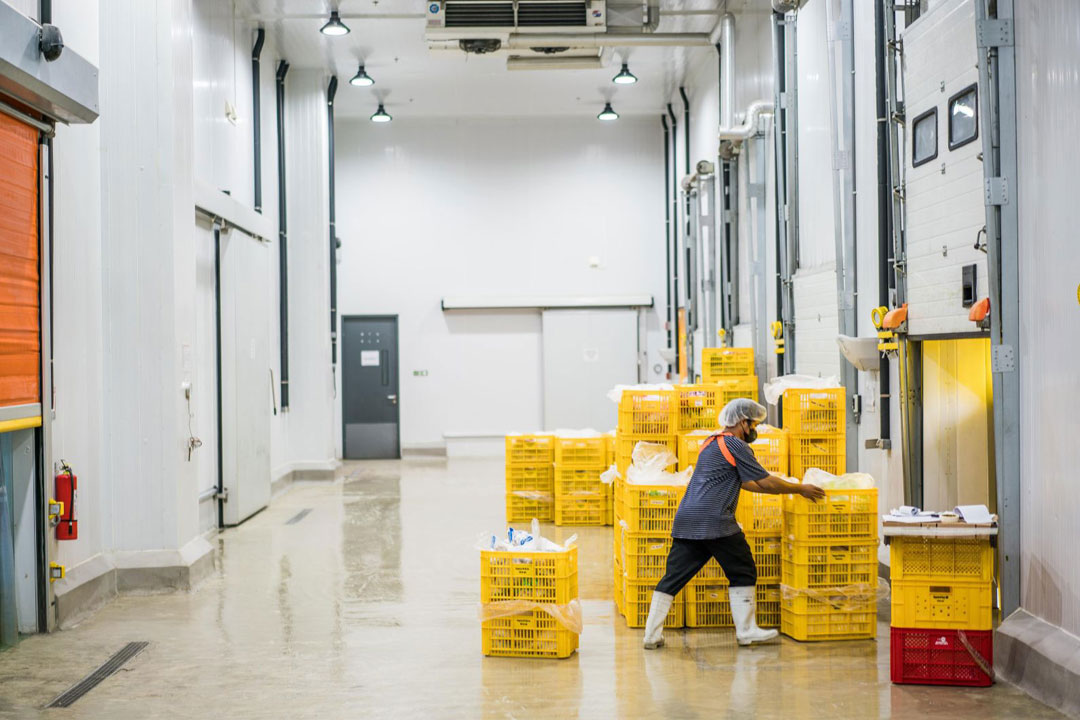
MAX’S Group, Inc. (MGI) continues to expand from restaurant operation to manufacturing and distribution through its commissary in Carmona, Cavite, which produces almost 2,000 metric tons of food each month.  

Costing P1 billion, the No Bia Food Manufacturing and Distribution Center supports over 300 retail partner stores that offer product lines from the company’s brands, as well as its local network of more than 600 stores in the Philippines, according to Robeson S.D. Mateo, MGI’s supply chain management director.  

“Even before the pandemic, and especially during the pandemic, we realized that it is important for us to bring our supply chain closer to both the source and the market in order to respond to the ever-changing requirements of our business,” he toldBusinessWorld at a tour of the facility on May 12. 

Completed in 2020 after two years of construction, the 20,000-square-meter Carmona commissary to support the growth of the company’s brands, which include Max’s Restaurant, Pancake House, Yellow Cab Pizza Co., and Krispy Kreme. Then, the coronavirus disease 2019 (COVID-19) pandemic threw a wrench in the company’s initial plans.  

“We wanted to expand the reach of our brands in Luzon, Visayas, and Mindanao, but unfortunately for everyone, the pandemic happened so we had to shift our strategy … all while integrating manufacturing facilities into this mega commissary,” said Mr. Mateo, on MGI’s pivot to manufacturer in the local market. “It’s a blend of renewal and continuity,” he added. 

 The facility has a meat and sauce line, and a halal-certified bakery line. Both ready-to-cook and ready-to-eat products are manufactured under the meat and sauce line while the bakeshop produces cakes, bread, pizza, and other pastries. These food line capabilities have allowed MGI to land contracts to supply these products of other known local brands.

 “Every day, we are fueled by innovation and our new commissary plays an integral role in helping us realize our vision as an operator, manufacturer, and distributor, and merchant,” said Ariel P. Fermin, president of MGI, in a statement.  

“We’ve seen the importance and positive impact that being part of an ecosystem can do and we are proud that we’ve been able to work together with our peers from the food industry as they look to expand as well,” he added.

New Zealand targets EVs, industry with new $2.8B climate response fund

Image via Anup Shah/Flickr/CC BY-SA 2.0

WELLINGTON — The New Zealand government said on Monday it would set up a NZ$4.5 billion ($2.83 billion) climate response fund, spending at least NZ$2.9 billion on cutting pollution over the next four years as it targets net zero emissions by 2050. 

The plan puts money towards a broad range of activities including making electric vehicles more accessible, reducing food going into landfill, improving public transport and truck emissions and helping industry to decarbonize. 

The government is also introducing a ban on some coal boilers and said it will introduce an emissions pricing mechanism for its key agricultural sector from 2025. 

The government said the new Climate Emergency Response Fund will initially receive NZ$4.5 billion from Emissions Trading Scheme revenue, with NZ$2.9 billion to be allocated in this week’s budget. 

The new Emissions Reduction Plan “delivers the greatest opportunity we’ve had in decades to address climate change but also move to a high wage, low emissions economy that provides greater economic security by creating jobs,” New Zealand Prime Minister Jacinda Ardern said in a statement. Ms. Ardern missed the release of the plan after contracting coronavirus disease 2019 (COVID-19).

The most significant emissions reductions for the period ending December 31, 2025, will come in the energy, industrial, and transport sectors, government documents said, adding every sector will have to play a role. 

The budget will allocate NZ$1.3 billion to the transport sector for projects such as moving people into electric vehicles, decarbonizing the freight and public transport sectors and reducing the need for short car trips. A further NZ$380 million is earmarked for agriculture and NZ$692 million for the energy sector. 

“We will directly recycle the costs of pollution back into projects that reduce emissions. This means the polluters are paying, not the households,” Finance Minister Grant Robertson said in a statement. 

The government said NZ$865 million of the NZ$4.5 billion had previously been allocated to international climate finance and a decarbonizing fund. 

The fund will be topped up with future revenue from the Emissions Trading Scheme. ($1 = 1.5911 New Zealand dollars) — Lucy Craymer/Reuters

Poor workers bear the brunt of India’s heatwave

Ville Miettinen/CC BY 2.0/Wikimedia Commons

NOIDA, India — For construction worker Yogendra Tundre, life at a building site on the outskirts of the Indian capital New Delhi is hard enough. This year, record high temperatures are making it unbearable. 

As India grapples with an unprecedented heatwave, the country’s vast majority of poor workers, who generally work outdoors, are vulnerable to the scorching temperatures. 

“There is too much heat and if we won’t work, what will we eat? For a few days, we work and then we sit idle for a few days because of tiredness and heat,” Tundre said. 

Temperatures in the New Delhi area have touched 45 degrees Celsius (113 Fahrenheit) this year, often causing Tundre, and his wife Lata, who works at the same construction site, to fall sick. That in turn means they lose income. 

“Because of heat, sometimes I don’t go to work. I take days off… many times, fall sick from dehydration and then require glucose bottles (intravenous fluids),” Lata said while standing outside their house, a temporary shanty with a tin roof. 

Scientists have linked the early onset of an intense summer to climate change, and say more than a billion people in India and neighboring Pakistan were in some way at risk from the extreme heat. 

India suffered its hottest March in more than 100 years and parts of the country experienced their highest temperatures on record in April. 

Many places, including New Delhi, saw the temperature gauge top 40 degrees Celsius. More than two dozen people have died of suspected heat strokes since late March, and power demand has hit multi-year highs. 

Prime Minister Narendra Modi has called on state governments to draw up measures to mitigate the impact of the extreme heat. 

Tundre and Lata live with their two young children in a slum near the construction site in Noida, a satellite city of New Delhi. They moved from their home state of Chhattisgarh in central India to seek work and higher wages around the capital. 

On the construction site, laborers scale up walls, lay concrete and carry heavy loads, using ragged scarves around their heads as protection against the sun. 

But even when the couple finish their day’s work, they have little respite as their home is hot, having absorbed the heat of the sun all day long. 

Avikal Somvanshi, an urban environment researcher from India’s Centre for Science and Environment, said federal government data showed that heat stress was the most-common cause of death, after lightning, from forces of nature in the last 20 years. 

“Most of these deaths occur in men aged 30–45. These are working class, blue-collar men who have no option but to be working in the scorching heat,” Mr. Somvanshi said. 

There are no laws in India that prevent outdoor activity when temperatures breach a certain level, unlike in some Middle-Eastern countries, Mr. Somvanshi said. — Sunil Kataria/Reuters

In Indonesia, climate change takes a bite out of apple crops

PIXABAY

PASURUAN, Indonesia — As dark clouds gather in the morning sky, Indonesian apple farmer Ali Akhbar hurries to finish spraying pesticides onto his trees before yet another afternoon downpour. 

It is officially the start of the dry season in East Java province, but non-stop rains have caused havoc for thousands of apple growers like Akhbar again this year — upsetting the flowering season, damaging blossoms and shrinking harvests. 

The unseasonable weather has also caused an increase in pests and diseases, forcing some growers to take out loans to keep up with the surging cost of pesticides to ensure years of work do not go to waste. 

“It’s so difficult now — the weather is unpredictable,” Mr. Akhbar, 49, told the Thomson Reuters Foundation at Andonosari village in East Java, which is home to the country’s largest apple orchards. 

He used to spray pesticides on his crops once a week, but has to do it twice weekly now, and uses more potent chemicals. 

After years of similarly unpredictable weather, disappointing harvests are barely enough to cover farmers’ production costs, said Mr. Akhbar. 

Agriculture experts blame climate change for the prolonged rainy season and a rise in temperatures that pose a serious threat to Indonesian apple farming, a sector that once brought stable incomes for thousands of rural families. 

HOTTER AND RAINIER
Apples are not native to Indonesia. The fruit is said to have been brought into the country by Dutch colonizers in 1930 and first planted in the Pasuruan regency, where Andonosari village is located. 

Today, some of the largest apple-growing areas in the country of 270 million people include Batu, Malang and Pasuruan — all in East Java province which has a subtropical highland climate. 

Apple plantations are also a huge draw for agro-tourism in these areas, with Indonesians flocking to the orchards to pick the fruit and enjoy the cooler air. 

But from its heyday in the early 1990s, when the number of trees reached nearly 10 million, the sector has quickly declined. There were only about 2.4 million trees left by 2016, according to the latest official statistics. 

Successful apple-growing needs just the right amount of rain and sunshine, as too much or too little can severely affect the fruit’s quality. 

In Pasuruan, where the dry season usually kicks in from April and lasts until September, farmers plan the flowering and harvesting seasons according to the weather. 

They usually start pruning trees in January to prepare for the flowering season in the following two months, and then begin harvesting in April. 

Indonesia’s weather agency forecast higher-than-usual rainfall again for 2022, after last year saw 70-100% more than normal levels. 

This April, rain continued well into the month and, combined with rising temperatures, severely impacted harvests. 

Both rainfall and temperatures have been increasing steadily in Pasuruan over the last decade, data from Indonesia’s statistics agency shows. 

Annual precipitation rose to about 4,032 mm (159 inches) in 2021, from 2,600 mm a decade earlier. The average temperature hit 24.4 degrees Celsius (76 Fahrenheit) in 2021, up from 21.8C in 2011. 

“The problem is, it’s getting hotter,” said Otto Endarto, a researcher at the Indonesian Citrus and Subtropical Fruits Research Institute at Indonesia’s Ministry of Agriculture. 

“Some farmers are trying to move to higher ground for cooler temperatures, but climate change is making the weather erratic and the rainfall is increasing. (This weather) is the enemy for the apple crop,” he added. 

Endarto said the rise in temperatures disrupts the way the crops interact with sunlight, water and carbon dioxide to create sugar, leading to diseases such as stem rot and green lice. 

The government institute has been researching apple varieties that could adapt to the changing local climate, but so far it has not been successful. 

Local officials said they are aware of the impact of climate change on apple-growing activity and have been holding monthly meetings with growers to discuss how to tackle the issue. 

Lilik Widji Asri, the local head of the Agriculture Department in Pasuruan, said the problem was also compounded by deteriorating soil quality in the area, and efforts to help farmers with better seeds have yet to yield results. 

“If this continues, we don’t know what will be the future for apple plantations here,” she added. 

ORANGE SWAP
Many apple growers in the region have started switching to planting oranges, which they say are easier to maintain, or have begun growing other produce on the same plot of land. 

Since 2017, Ahmad Solikin has replaced most of his apple fields with oranges, and now just one hectare (2.47 acres) of his six-hectare plot has apples. 

“Oranges don’t need a lot of treatment,” said the 50-year-old grower, adding he only needs to use pesticides every two weeks on oranges, compared to twice a week for apples. 

Production costs can climb to about 100 million rupiah ($6,882) for each hectare of apple trees — and most farmers have to take out loans to cover at least half of that, he added. 

“When the harvest falls short, they are forced to sell their livestock or any other possessions they have to cover the debt,” said Mr. Solikin. 

Many local growers fear apple orchards will become a thing of the past in Indonesia unless the state steps in with financial aid. 

“If this continues, we don’t know about the future of apple cultivation in Indonesia,” said Heri Subhan, 45, the chairman of Citra Alami, a local group for farmers. 

“Apple farming has lost its glory.” ($1 = 14,530.0000 rupiah) — Asad Asnawi/Thomson Reuters Foundation

Economists sound the alarm over UK’s post-Brexit finance plans

REUTERS

LONDON — More than 50 economists warned on Monday that Britain’s post-Brexit plans to boost the competitiveness of its huge finance industry risked creating the kind of problems that led to the global financial crisis. 

The government, seeking to use its “Brexit freedoms”, announced this month that it would require regulators to help the City of London to remain a global financial center after the country left the European Union. 

The group of 58 economists, including a Nobel Prize winner and former business minister Vince Cable, said making competitiveness an objective could turn regulators into cheerleaders for banks and lead to poor policymaking. 

It also raised the risk of hurting the real economy as the finance sector sucks in a disproportionate share of talent, they said in an open letter to finance minister Rishi Sunak. 

“The UK instead needs clear regulatory objectives that promote economy-wide productivity, growth and market integrity, and also protect consumers and taxpayers, advance the fight against climate change and tackle dirty money to protect our collective security,” the letter said. 

Britain’s financial services minister, John Glen, has said the new competitiveness objective for the Bank of England and the Financial Conduct Authority would be secondary to keeping markets, consumers and companies safe and sound. 

Banks have sought more focus on competitiveness than proposed, but the government has faced push-back from the BoE which has warned against a return to the “light touch” era that ended with lenders being bailed out during the financial crisis. 

The signatories of the open letter included Cable, a former leader of the centrist Liberal Democrats, Mick McAteer, a former FCA board member, and Nobel Prize-winning economist Joseph Stiglitz. — Reuters 

First electric scooter series on mission to push safer micromobility

via eSkootr Championship

LONDON — Organizers of the world’s first electric scooter series say they are on a mission to promote and develop micromobility as a safe and integrated element of city life after a race debut in London.

Khalil Beschir, a co-founder of the eSkootr Championship (eSC), saw a role similar even to the one played by motorsport in the early days of the automobile.

“Yes, we are creating a new sport, we are creating an accessible sport,” the Lebanese entrepreneur and former car racer told Reuters ahead of Saturday’s race.

“At the same time we have a mission to help governments, cities, to develop safe riders and to work with cities on the right way of using these scooters.”

“It’s where cars used to be in 1910,” he said of the arrival in numbers of electric scooters on city streets four or five years ago.

“People complained about them, hated them when they came to the cities: ‘they are not safe, they are everywhere,’” he said. “We use the racing to be a lab, of safety, of infrastructure, of technology.

“This is the aim of eSC — to develop this, as motorsport and Formula One did with the car industry.”

Austrian former F1 racer and twice Le Mans 24 Hours winner Alex Wurz, who is also the chairman of the Grand Prix Drivers’ Association (GPDA), is a co-founder along with Brazilian former Formula E champion Lucas Di Grassi.

Formula One veteran Nico Hulkenberg has a team and there are plenty of people in the background with links to motorsport’s world body, the International Automobile Federation (FIA).

The series has, however, set up its own commission, headed by Mr. Wurz, with a stated aim “to regulate and promote the safe and sustainable development of micromobility in sport and urban micromobility”.

“We think that we have a really strong product,” Mr. Wurz, who first started working on the concept in 2018, told Reuters at a former newspaper printing site in London’s Docklands that hosted the first race.

“We have a huge opportunity for grassroots sport to be definitely the cheapest motorsport entry you can find and then a career ladder through to world championship level.

“Beside our sporting ambition, from the first minute I said micromobility is such a hot, fast growing topic and sector we have an obligation to create a synergy between racing and road safety.”

SPEED RESTRICTIONS
Insurers see e-scooters as inherently more dangerous than bikes or cars while trial projects for e-scooter providers in some cities have featured speed restrictions and tight regulations.

In London, electric scooters are a common sight but currently legal only on private land or via authorized hire schemes, although the government has said it is planning new rules to expand usage.

Mr. Wurz said it was “mind blowing” how many interested cities and stakeholders had approached eSC, and he hoped to have an influence on urban design.

“The way we are consuming mobility is fundamentally changing,” he added.

“In the future some of our roads will actually become living space, a shared space where you walk, some on cycles, some on electric scooters and we need to co-exist.

“And we can. That’s the journey — to educate people, to regulate, to create the engineering. How we are separated but yet together. The legislation needs to be in line.”

The eSkootr machines raced by 30 riders from 10 teams weigh some 40kg and feature two six kw motors with top speeds in excess of 100kph.

The tyres are produced from vegetable oil and the grip allows the male and female riders — drawn from sports ranging from snowboarding and speed skating to hockey, cycling and motorbikes — to lean 60 degrees into the corners.

The inaugural winner around the 12-turn 470 meter course was Swiss rider Matis Neyroud, ahead of Britain’s Dan Brooks and India’s Anish Shetty.

Other races will follow in Switzerland, Italy, France, Spain and the United States with Asia and Africa likely to be added from next season.

A global broadcast agreement has been signed for races to be shown in more than 200 countries on sports streaming platform DAZN.

“I think it will catch on. Everyone I’ve told about it and who has seen about it, they think it’s so interesting and going to be fun,” said Britain’s former BMX world championship bronze medallist Tre Whyte. “I just loved it straight away.” — Reuters

[B-SIDE Podcast] We can be heroes

Follow us on Spotify BusinessWorld B-Side

The story of the bayani — the local term for “hero” — is the story of the Filipino people.

In this B-Side episode, historian and author John Ray B. Ramos tells BusinessWorld reporter Tobias Jared Tomas about the lesser-known side of celebrated heroes and heroes who may have been forgotten: “Our history is not a history of defeat, it is not a history of being weak, but rather it is a history of struggle. Our heroes died and fought for the values and ideals we uphold today.”

A hero is different from a bayani. 

Mythic heroes are celebrated for their personalities and their individual journeys. Bayanis, on the other hand, are tied to their background. 

“You cannot separate Jose Rizal from Philippine society, or Andres Bonifacio from the Katipuneros. … You cannot remove them from their context,” said John Ray B. Ramos, a historian and the author of Bayani Biographies: Jose Rizal and the coauthor of Bayani Biographies: Andres Bonifacio, published by Kahel Press. “They are not much different from us. That’s what makes the stories of our bayanis inspiring.” 

Stories matter. 

Jose Rizal, Andres Bonifacio and Apolinario Mabini were “superfans” of Florante at Laura by Francisco Balagtas, an epic poem that was an allegory of Spain’s colonization of the Philippines.

“It contains themes of society being unequal, unfair, and full of injustices. It left a mark on our bayanis, which, perhaps, contributed to their ‘wokeness,’” said Mr. Ramos.

History should be taught because heroes die when they are forgotten.  

“The story of our heroes will die if we do not continue telling them,” said Mr. Ramos.  

“Keep telling our story of being Filipinos — our struggle for freedom, democracy, and equality is a very interesting and inspiring story to tell over and over, and to pass on to the next generations.” 

Recorded remotely on April 27, 2022. Produced by Earl R. Lagundino and Sam L. Marcelo.

Follow us on Spotify BusinessWorld B-Side

Collaboration redefines corporate social responsibility

Photo from rawpixel.com — freepik

By Adrian Paul B. Conoza, Special Features Assistant Editor

One of the many things that has gone widespread in the past years since the coronavirus disease 2019 (COVID-19) pandemic brought our then normal ways of life and work to a pause are collaborations. This was seen among companies within their respective industries as they dealt with their respective disruptions and, much more, between the private and public sectors in responding to the pandemic.

The latter was very much noticed in efforts to expand COVID-19 testing in the country; and, as representatives from the Asian Development Bank and ThinkWell Philippines noted, there is much to learn from it.

“The very nature of both public and private sectors allows for a more synergistic response as they bring to bear their respective strengths and adapt these to the context of the greater challenges and needs confronted by our country, such as the COVID-19 pandemic,” the authors wrote in a piece published on the website of Health Systems Governance Collaborative back in 2020.

This is also apparently a lesson companies are beginning to further appreciate as they push forth their corporate social responsibility (CSR) programs in the new normal.

For one foundation, the public-private model serves as the guidepost that drives its current CSR efforts and aligns them with what their partners in the public sector require.

“The collaboration between the public and private sectors is an integral partnership that sees both sides addressing what the other may not be able to. It is a co-beneficial collaboration that allows the private sector to alleviate some of the weight carried by the government, all for the upliftment of the lives of the Filipino people,” Melody M. Del Rosario, president of Metro Pacific Investments Foundation (MPIF), told BusinessWorld in an e-mail.

The CSR arm of the Metro Pacific Investments Corp., MPIF aims to address the socioeconomic issues of unemployment by creating livelihood opportunities for locals; access to quality education, by supporting scholars from underprivileged families; access to quality healthcare by mobilizing medical missions for coastal community folk; and access to nutrition and food security by distributing at-home planting kits and fresh vegetables to vulnerable communities.

“MPIF’s corporate social responsibility is not only confined to helping in times of need. Beyond relief and response, we have invested our efforts into long-term commitments with our partner communities — to inspire a movement that prioritizes positive and sustained impact in the long run,” Ms. Del Rosario, who also is MPIC’s vice-president for public relations and corporate communication, added.

The MPIF president shared how they apply public-private collaboration in their programs. “Across our main guiding pillars of social infrastructure, particularly for environment and economic empowerment, it is part of our program process to engage in meaningful discourse with our partner local government units to determine what initiatives will best benefit their communities in the long run, as well as which sectors of the community will best benefit from them. The public sector is involved throughout the implementation of our efforts from beginning to end,” she shared.

MPIF, nonetheless, has been an active collaborator with fellow companies within the Manuel V. Pangilinan (MVP) Group of Companies through Tulong Kapatid, the corporate social responsibility alliance of foundations and companies within the MVP group.

With sister companies and foundations such as One Meralco Foundation, PLDT-Smart Foundation, Makati Medical Center Foundation, Alagang Kapatid Foundation Inc., and Maynilad, Ms. Del Rosario shared, MPIF has determined its CSR pivot to be the champion of coastal and underwater protection and conservation in the group.

“Aligned with this is the empowerment of coastal communities, primarily with the provision of employment opportunities for the benefit of locals. The other companies focus on addressing other areas of social development,” the MPIF president continued.

Having witnessed these dynamics of collaboration adding further meaning to MPIF’s CSR initiatives, Ms. Del Rosario noted that CSR has been redefined from corporate social responsibility to collaborative social response.

“Rooted in the idea that no single company, organization, or government unit can take on this responsibility alone, it is imperative that we create, develop, and continue to foster meaningful partnerships that will benefit our country and our fellow Filipinos the most. Every ripple of intention and initiative that each sector makes can result in a greater wave of purpose and passion that will create a better and brighter future for everyone,” the MPIF president shared.

Moving forward from the pandemic, Ms. Del Rosario expects MPIF to continue addressing the same societal issues of unemployment, while nonetheless aiming to help more communities and organizations through their “tried-and-tested processes.”

“The public-private partnership will remain as our guidepost in developing our efforts and ensuring their long-term sustainability,” she stressed. “Guided by our mutual purpose of reaching out to change and uplift the lives of Filipinos, the collaboration with the public sector is at the heart of the legacy projects that we create and leave behind for our countrymen.”

ADVERTISEMENT
ADVERTISEMENT