Home Blog Page 6417

Filinvest Land residential business grows 9% in Q1 2022

Filinvest Land, Inc. (FLI), one of the country’s largest real estate developers, reported P4.31 billion in revenues and other income for the first quarter of 2022. It posted P2.69 billion of residential revenues which is a 9% growth compared to the same period last year. The growth in residential revenues was due to continued construction progress and high reservation sales. Net income attributable to equity holders of parent amounted to P678 million.

Reservation sales in the first quarter also reached P4.39 billion, an increase of 28% compared to the same period last year. The increase in reservation sales was due to high OFW Sales and strong demand for housing products in the Laguna, Cavite, Rizal, Bulacan, and Pampanga market areas.

“We are pleased with the continued growth of our residential revenues, and we expect to sustain this momentum as the economy, both here and abroad, continues to open. Our OFWs are starting to gain traction once again. We plan to boost our international sales network further and improve our digital and online platforms to reach out to more OFW markets abroad. FLI will continue accelerating construction completions and rolling out projects in emerging markets with large unserved housing demand. We anticipate an improvement in rental revenues going forward now that the traffic has improved in malls and rental concessions will be reduced,” said Tristan Las Marias, FLI’s President.

FLI was also given the highest credit rating by domestic credit rating agency Philippine Ratings Services Corp. (PhilRatings) for its planned bond issuance worth P8 billion, with an oversubscription option of up to P3.9 billion.

According to FLI CEO Josephine Gotianun Yap, the funds generated from the proposed bond issue would be used to support the company’s capital expenditures and service debt repayments within 2022. FLI aims to expand its leasing business to reach 2.1 million square meters of GLA in 2026 and is ready to launch P30 billion worth of residential projects. “We are grateful for this development as we reach our growth targets for our leasing and residential businesses,” Ms. Gotianun Yap said.

FLI President Tristan Las Marias added, “We are delighted with the PhilRatings report as it reaffirms our investors’ confidence in our company and our track record.”

The forthcoming bond issuance will be the third and last tranche of the P30-billion bond program of FLI as registered with the Securities and Exchange Commission last October 2020.


Spotlight is BusinessWorld’s sponsored section that allows advertisers to amplify their brand and connect with BusinessWorld’s audience by enabling them to publish their stories directly on the BusinessWorld Web site. For more information, send an email to online@bworldonline.com.

Join us on Viber to get more updates from BusinessWorld: https://bit.ly/3hv6bLA.

California church shooter upset over Taiwan-China tensions -police

The man accused of killing a doctor and wounding five other people in a shooting at a Taiwanese-American church banquet in California methodically planned the attack because he was upset over Chinese-Taiwanese tensions, authorities said on Monday.

The suspect, David Chou, 68, chained the doors and placed glue in the locks at Geneva Presbyterian Church in Laguna Woods, California, about 45 miles (72 km) southeast of Los Angeles, before opening fire inside the church on Sunday, Orange County Sheriff Don Barnes said Monday.

Up to 40 people, members of a Taiwanese Presbyterian congregation from nearby Irvine, California, that has space in the church, were attending a luncheon honoring a former local pastor when the shooting began, sheriff’s officials said.

Chou, described by the sheriff as a U.S. citizen and Las Vegas resident born in China, drove to Southern California on Saturday and came to the church on Sunday morning, authorities said. After the shooting, investigators found three bags placed around the church building with various items, including additional ammunition and four Molotov cocktail-like devices.

The FBI said it was opening a hate crimes investigation in the case.

The sheriff’s department issued a statement late on Monday saying investigators had “determined that the suspect was upset about political tensions involving China and Taiwan” but did not elaborate.

In Chou’s car, Barnes said, investigators found notes written in Mandarin that indicated an obsession with Taiwan and a dislike of Taiwanese people.

China views Taiwan, a democratically governed island, as its “sacred” territory and has never renounced the possible use of force to bring it under Beijing’s control.

Taiwan rejects Beijing’s sovereignty claims, saying that it is already independent and that only its 23 million people can decide their future.

All of the victims – whose names have not been released – were of Asian heritage.

The gun violence in California came on the same day as a separate mass shooting at a grocery store in a predominantly Black neighborhood of Buffalo, New York, that left 10 people dead and three others wounded. Most of the victims of that attack, which the FBI has labeled an act of racially motivated violent extremism, were Black. Read full story

Among those killed in the Laguna Woods church shooting was a physician Dr. John Cheng, 52, who was shot when he tackled the gunman, Barnes said, crediting Cheng’s act of bravery with preventing more fatalities.

Subduing Chou gave other congregants, including a pastor, the opportunity to overpower him and tie his legs with an electrical cord, detaining him until sheriff’s deputies arrived and broke through the chains on the doors.

Chou, who remains in custody, was believed to be acting alone, Barnes said. He purchased two guns used in the attack legally in Las Vegas, where he rented a room in a shared home. He likely will be charged with one count of murder, five counts of attempted murder and four counts of unlawful possession of explosives at an arraignment set for Tuesday, Orange County District Attorney Todd Spitzer told reporters.

The wounded, four men ranging in age from 66 to 92 and an 86-year-old woman, were taken to area hospitals for treatment, the sheriff’s department said.

The shooting unfolded during a lunch reception the Taiwanese Presbyterian Church congregation had arranged for a former pastor who had left United States and relocated in Taiwan but returned for a visit, Tom Cramer, leader of the Presbytery of Los Ranchos and a former pastor at the Geneva Presbyterian Church, said in an interview.

Spitzer said he was considering seeking the death penalty in the case, though California has not executed a prisoner in more than a decade. Spitzer said he visited the church social hall on Sunday to see the carnage for himself.

Taiwan President Tsai Ing-wen was deeply concerned about the incident and has instructed the island’s foreign ministry to help the victims and their families, the ministry said on Tuesday. – Reuters

China’s COVID controls will impact foreign investment for years – US lobby

STOCK IMAGE | FREEPIK

 – China’s strict COVID-19 controls will hamper foreign investment into the country for years to come as limits on travel block the pipeline for projects, the President of the American Chamber of Commerce warned on Tuesday.

There are few signs that American companies are leaving the China market, but the years-long process of research and due diligence for projects has been delayed, Michael Hart said at an event launching the chamber’s annual report.

“We’re very concerned about the ongoing and future investment by U.S. and other foreign companies into China because people can’t get access in terms of travel,” he said.

“Unfortunately the COVID lockdown this year and the restrictions for the last two years are going to mean three, four, five years from now, we will see investment decline, most likely.”

While much of the world has lifted coronavirus restrictions, China has strictly limited flights into the country and insisted a zero-COVID approach is necessary to prevent the country’s health resources from being overwhelmed.

The restrictions are also leading foreign companies with supply chains in China to look for alternative sources to reduce disruption, Hart said.

The chamber’s report cited market access restrictions, discriminatory regulations and intrusive cybersecurity requirements as among the main concerns of U.S. businesses.

Last week the chamber released a flash survey that warned of an “exodus” of foreign staff in China due to the COVID measures and ongoing lockdowns, saying that 58% of members had decreased their revenue projections for the year. Read full story

European businesses are braced for the next wave of disruption from COVID outbreaks, with little chance of improvement likely until China increases vaccination rates, the European Chamber of Commerce in China said on Monday. Read full storyReuters

Musk suggests that he could seek to cut price for Twitter buy

STOCK IMAGE | SYIFA5610-FREEPIK

Elon Musk suggested on Monday that he could seek a lower price for Twitter Inc TWTR.N, saying that there could be at least four times more fake accounts than what the company has said.

“You can’t pay the same price for something that is much worse than they claimed,” he said at a conference in Miami.

Musk, who on Friday said his $44 billion deal to buy Twitter was on hold pending information on spam accounts, said that he suspects they make up at least 20% of users – compared to Twitter’s official estimates of 5%.

When asked at the conference whether the Twitter deal is viable at a different price, Musk responded, “I mean, it’s not out of the question.”

“The more questions I ask, the more my concerns grow,” he said at the All-In Summit 2022 conference.

“They claim that they’ve got this complex methodology that only they can understand … It can’t be some deep mystery that is, like, more complex than the human soul or something like that.”

Twitter shares extended losses in late afternoon trading following Musk’s comments.

The stock dropped more than 8% to close at $37.39, lower than its level the day before Musk revealed his Twitter stake in early April, sowing doubts that the billionaire entrepreneur would proceed with his acquisition of the company at the agreed price.

Twitter Chief Executive Officer Parag Agrawal tweeted earlier on Monday that internal estimates of spam accounts on the social media platform for the last four quarters were “well under 5%,” responding to days of criticism by Musk of the company’s handling of phony accounts.

Twitter’s estimate, which has stayed the same since 2013, could not be reproduced externally given the need to use both public and private information to determine whether an account is spam, he added.

Musk responded to Agrawal’s defense of the company’s methodology with a poop emoji.

“So how do advertisers know what they’re getting for their money? This is fundamental to the financial health of Twitter,” Musk wrote.

Musk has pledged changes to Twitter’s content moderation practices, railing against decisions like the company’s ban of former President Donald Trump as overly aggressive while pledging to crack down on “spam bots” on the platform. Read full story

Musk has called for tests of random samples of Twitter users to identify bots. He also said, “there is some chance it might be over 90% of daily active users.”

Independent researchers have estimated that anywhere from 9% to 15% of the millions of Twitter profiles are bots. Read full story

Twitter does not currently require users to register using their real identities and expressly permits automated, parody and pseudonymous profiles on the service.

It does ban impersonation and spam, and penalizes accounts when the company determines their purpose is to “deceive or manipulate others” by engaging in scams, coordinating abuse campaigns or artificially inflating engagement.

Musk’s comments to a private audience could add to concerns about his disclosures of market moving information.

Musk, known for his candid Twitter posts, has a long history of skirmishes with the U.S. Securities and Exchange Commission; recently, a U.S. judge slammed him for trying to escape a settlement with the SEC requiring oversight of his Tesla tweets. – Reuters

Ukrainian troops evacuate from Mariupol, ceding control to Russia

Courtesy of Doctors Without Borders (Médecins Sans Frontières or MSF)

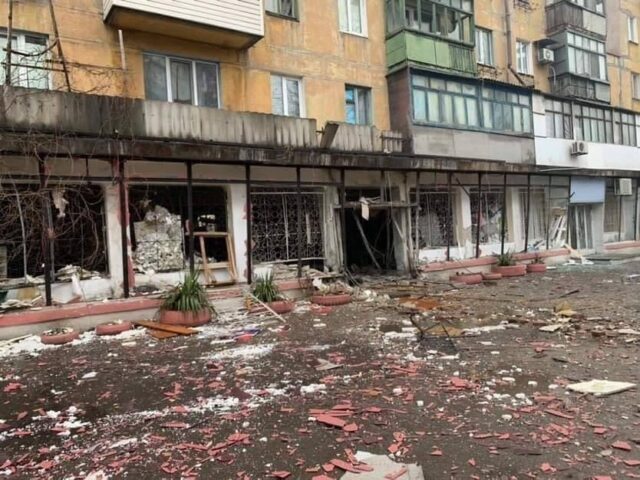
 – Ukraine’s military said on Tuesday it was working to evacuate all remaining troops from their last stronghold in the besieged port of Mariupol, ceding control of the city to Russia after months of bombardment.

The evacuation of hundreds of fighters, many wounded, to Russian-held towns, likely marked the end of the longest and bloodiest battle of the Ukraine war and a significant defeat for Ukraine. Mariupol is now in ruins after a Russian siege that Ukraine says killed tens of thousands of people in the city.

With the rest of Mariupol firmly in Russian hands, hundreds of Ukrainian troops and civilians had holed up beneath the city’s Azovstal steelworks. Civilians inside were evacuated in recent weeks, and more than 260 troops, some of them wounded, left the plant for Russian-controlled areas late on Monday.

“The ‘Mariupol‘ garrison has fulfilled its combat mission,” the General Staff of Ukraine’s Armed Forces said in a statement.

“The supreme military command ordered the commanders of the units stationed at Azovstal to save the lives of the personnel … Defenders of Mariupol are the heroes of our time,” it added.

Ukrainian Deputy Defense Minister Anna Malyar said 53 injured troops from the steelworks were taken to a hospital in the Russian-controlled town of Novoazovsk, some 32 km (20 miles) to the east, while another 211 people were taken to the town of Olenivka, in an area controlled by Russian-backed separatists.

All of the evacuees will be subject to a potential prisoner exchange with Russia, she added.

About 600 troops were believed to have been inside the steel plant. Ukraine’s military said efforts were under way to evacuate those still inside.

“We hope that we will be able to save the lives of our guys,” Ukrainian President Volodymyr Zelenskiy said in an early morning address. “There are severely wounded ones among them. They’re receiving care. Ukraine needs Ukrainian heroes alive.”

Reuters saw five buses carrying troops from Azovstal arrive in Novoazovsk late on Monday. In one, marked with Z like many Russian military vehicles in Ukraine, men were stacked on stretchers on three levels. One man was wheeled out, his head tightly wrapped in thick bandages.


LVIV EXPLOSIONS, KHARKIV FIGHTING

Moscow calls its nearly three-month-old invasion a “special military operation” to rid Ukraine of fascists, an assertion Kyiv and its Western allies say is a baseless pretext for an unprovoked war.

Russia‘s invading forces have run into apparent setbacks, with troops forced out of the north and the environs of Kyiv in late March. A Ukrainian counterattack in recent days has driven Russian forces out of the area near Kharkiv, the biggest city in the east.

Ukraine’s general staff said Russian forces were reinforcing and preparing to renew their offensive near Slovyansk and Drobysheve, southeast of the strategic town of Izyum, having suffered losses elsewhere.

Areas around Kyiv and the western city of Lviv, near the Polish border, have continued to come under Russian attack. A series of explosions struck Lviv early on Tuesday, a Reuters witness said. There were no immediate reports of casualties or damage.

On Monday, Ukraine’s defense ministry said troops had advanced all the way to the Russian border, about 40 km north of Kharkiv.

The successes near Kharkiv could let Ukraine attack supply lines for Russia‘s main offensive, grinding on further south in the Donbas region, where Moscow has been launching mass assaults for a month.

A village in Russia‘s western province of Kursk bordering Ukraine came under Ukrainian fire on Tuesday, regional Governor Roman Starovoit said. Three houses and a school were hit but there were no injuries, he said.

Russian border guards returned fire to quell the shooting from large-caliber weapons on the border village of Alekseyevka, Starovoit wrote on messaging app Telegram.


PUTIN CLIMBDOWN OVER NATO

Russia has faced massive sanctions for its actions in Ukraine, but EU foreign ministers failed to pressure Hungary to lift its veto of a proposed oil embargo. Read full story

McDonald’s Corp MCD.N became one of the biggest global brands to exit Russia, laying out plans to sell all its restaurants after operating in the country for more than 30 years. Read full story

Russian President Vladimir Putin appeared on Monday to climb down from threats to retaliate against Sweden and Finland for announcing plans to join the U.S.-led NATO military alliance.

“As far as expansion goes, including new members Finland and Sweden, Russia has no problems with these states – none. And so in this sense there is no immediate threat to Russia from an expansion to include these countries,” Putin said. Read full story

The comments appeared to mark a major shift in rhetoric, after years of casting NATO enlargement as a direct threat to Russia‘s security, including citing it as a justification for the invasion of Ukraine itself.

Putin said NATO enlargement was being used by the United States in an “aggressive” way to aggravate an already difficult global security situation, and that Russia would respond if the alliance moved weapons or troops forward.

“The expansion of military infrastructure into this territory would certainly provoke our response,” Putin said.

Finland and Sweden, both non-aligned throughout the Cold War, say they now want the protection offered by NATO’s treaty, under which an attack on any member is an attack on all.

Finalnd and Sweden’s plans, however, hit a snag when NATO member Turkey’s president said he would not approve either bid. Read full storyReuters

Iraq balks at greater Chinese control of its oilfields

STOCK PHOTO | ZBYNEK BURIVAL-UNSPLASH

 – Iraq‘s oil ministry thwarted three prospective deals last year that would have handed Chinese firms more control over its oilfields and led to an exodus of international oil majors that Baghdad wants to invest in its creaking economy.

Since the start of 2021, plans by Russia’s Lukoil LKOH.MM and U.S. oil major Exxon Mobil XOM.N to sell stakes in major fields to Chinese state-backed firms have hit the buffers after interventions from Iraq‘s oil ministry, according to Iraqi oil officials and industry executives.

Selling a stake to a state-run Chinese company was also one of several options being considered by Britain’s BP BP.L, but officials persuaded it to stay in Iraq for now, people familiar with the matter said.

China is Iraq‘s top investor and Baghdad was the biggest beneficiary last year of Beijing’s Belt and Road initiative, receiving $10.5 billion in financing for infrastructure projects including a power plant and an airport.

But when it comes to further Chinese investment in major oilfields, Baghdad has drawn a line in the sand.

Iraq‘s government and officials at state-run firms are concerned that further consolidation of fields in the hands of Chinese companies could accelerate an exodus of Western oil companies, a total of seven Iraqi oil officials and executives with companies operating in Iraq told Reuters in interviews.

Supported by state-run oil company officials, Iraq‘s Oil Minister Ihsan Abdul Jabbar dissuaded Lukoil last year from selling a stake in one of the country’s largest fields, West Qurna 2, to Chinese state firm Sinopec 6000028.SS, three people familiar with the matter said.

Iraqi officials also intervened last year to stop Chinese state-backed firms buying Exxon’s stake in West Qurna 1 and to persuade BP BP.L to stay in Iraq rather than offloading its interest in the giant Rumaila oilfield to a Chinese company, people familiar with the matter said.

Combined, Rumaila and West Qurna produce about half of the crude coming out of Iraq, which sits on the fifth-largest oil reserves in the world.

Iraq‘s oil ministry did not respond to requests for comment about the deals or the minister’s role in any interventions.

The government worried that China’s dominance could make Iraq less attractive for investment from elsewhere, two government officials said.

China’s strengthening relationship with Iran has helped its position in Iraq due to Tehran’s political and military influence there, but the oil ministry is wary of ceding more control over the country’s key resources, some officials said.

“We don’t want the Iraqi energy sector to be labelled as a China-led energy sector and this attitude is agreed by government and the oil ministry,” another Iraqi official said.


RISKY STRATEGY

The interventions over BP, Exxon and Lukoil’s positions in Iraq come after British oil major Shell SHEL.L decided in 2018 to withdraw from Iraq‘s vast Majnoon oilfield.

The interventions also mark a shift in stance after Chinese companies won most energy deals and contracts awarded over the past four years. Iraqi oil officials said Chinese firms have accepted lower profit margins than most rivals.

“All the rules regarding tenders were formulated jointly by the Chinese and Iraqi sides and were conducted under transparent and fair principles,” said state-owned China National Offshore Oil Corporation (CNOOC) 0883.HK in an emailed statement.

Pushing back against further Chinese investment is a risky strategy, though, as there’s no guarantee others will step up and the government needs billions of dollars to rebuild the economy after the Islamic State insurgency was defeated in 2017.

Over the past decade, oil revenue accounted for 99% of Iraq‘s exports, 85% of the country’s budget and 42% of its gross domestic product, according to the World Bank.

While oil majors jostled to get access to Iraq‘s vast oilfields after the U.S.-led invasion in 2003, they are increasingly focused on the energy transition and more profitable plays elsewhere. They also want better terms to develop fields, oil executives said.

China is among the biggest buyers of Iraq‘s crude and Chinese state firms have built up a dominant position in its oil industry.

But when Lukoil notified the government last summer that it was considering selling some of its stake in West Qurna 2 to Sinopec, the oil minister intervened, people familiar with the matter said.

It has not previously been reported that Sinopec was the potential buyer of Lukoil’s stake. The Chinese company did not respond to a request for comment.

To encourage Lukoil to stay, Iraq offered a sweetener, a person with direct knowledge said.

A few months after Lukoil signaled it was considering a sale, Baghdad finally approved its plan to develop a field known as Block 10, where the Russian company had discovered an oil reservoir in 2017. Afterwards, Lukoil dropped the idea of selling its stake in West Qurna 2, the source said.

Lukoil did not respond to a request for comment.


BP AND EXXON

Over the past few years BP has also spoken to the government about its options – including leaving Iraq altogether – before settling on spinning off its stake in Rumaila into a standalone company last year, two people familiar with the matter said.

Oil minister Abdul Jabbar led efforts to convince BP not to leave as the government was concerned its partner in the field, China National Petroleum Corporation (CNPC), would buy BP’s stake, the people said. Baghdad was also keen to keep such a high-profile international oil major in the country, they said.

BP declined to comment.

When Exxon flagged its intention to leave Iraq in January 2021, meanwhile, U.S. officials told Exxon they were unhappy with the prospect of the biggest U.S. oil major pulling out – for reasons that echoed Iraqi concerns.

State department officials said Exxon’s departure could create a vacuum for Chinese companies to fill, a person familiar with the conversations said.

U.S. officials then asked Exxon what it would take to stay in Iraq, the person said, declining to give further details.

A State Department spokesperson said: “We regularly engage with our Iraqi counterparts on fostering an environment conducive to private sector investment.”

Exxon had signed an agreement for the sale of its interest in West Qurna 1 to CNOOC and PetroChina 601857.SS, the listed arm of CNPC, people familiar with the matter said.

Neither CNOOC nor CNPC responded to requests for comment about the deals.

Exxon’s stake was valued at $350 million to $375 million, said people familiar with the matter.

Iraq has veto power over oilfield deals, however, and did not approve the transaction.

Exxon filed for arbitration with the International Chamber of Commerce against Basra Oil Co., arguing that it had followed the terms of its contract for West Qurna 1 and had a good deal on the table, people familiar with the matter said.

The oil ministry then took the unusual step of trying to broker a deal on Exxon’s behalf. The ministry offered Exxon’s stake to other Western companies including Chevron Corp CVX.N.

No one was interested. Rather than let the stake go to the Chinese companies, Baghdad said the state-run Iraq National Oil Company (INOC) would take it instead, though INOC is still in the process of being revived after being defunct for many years.

“(Exxon) will continue to work closely and constructively to reach an equitable resolution,” said a spokeswoman.


SERVICE CONTRACTS

Iraq‘s oil industry is mostly based on technical service contracts between the state-backed Basra Oil Co. and foreign companies that are repaid costs plus a fee per barrel to develop fields, while Iraq retains ownership of the reserves.

Oil majors typically prefer deals that allow a share in profits rather than a set fee.

The priority for Chinese firms, however, is achieving secure oil supplies to feed China’s growing economy, rather than returns for investors, said a Chinese oil executive with direct knowledge of CNPC’s global investments.

There are some signs, however, that Iraq is attempting to make its terms more appealing.

France’s TotalEnergies TTEF.PA signed a $27 billion deal in September that included payment of 40% of revenue from one field. The deal has stalled, however, due to disputes over terms and it still needs approval from some Iraqi government agencies, Reuters reported in February. Read full story

TotalEnergies said it was fully committed to the project.

One oil company executive said they were skeptical Iraq would introduce more attractive terms. But unless they improve significantly, analysts say it is hard to imagine Iraq will be able to stem the exodus as the energy transition accelerates.

“Many of the energy majors are looking at the carbon emissions, their ability to generate cash flows if commodity prices are low, and they’re looking at improving returns,” said Ian Thom, research director at consultancy Wood Mackenzie.

“As the priorities of the energy companies are changing, the relative attractiveness of Iraq is changing.” – Reuters

Philippines removes last hurdle for stalled Tampakan copper-gold project

PIXABAY

MANILA – A provincial government in southern Philippines has reversed its 12-year-old policy banning open-pit mining, removing the final regulatory hurdle for the stalled Tampakan copper-gold project, the industry regulator said on Monday.

The Tampakan project in South Cotabato province is the Southeast Asian country’s biggest stalled mining project with development cost previously estimated at $5.9 billion before it was hampered by the provincial ban imposed in 2010.

In 2016, President Rodrigo Duterte picked an anti-mining advocate as environment minister, who enforced a nationwide ban on open-pit mining the following year, adding to the challenges that dismayed investors and stalling other open-pit projects.

Duterte, who will end his six-year term next month, lifted the nationwide ban late last year, one of his two landmark policy reversals that sought to revitalise the mining industry. (Full Story)

“South Cotabato’s local legislative body has voted to lift the provincial ban, clearing the only hurdle remaining in developing one of the largest copper-gold reserves in Southeast Asia,” Wilfredo Moncano, director of the regulator, the Mines and Geosciences Bureau, told Reuters.

“All the major requirements to legally support the mining operation has been complied with,” he added.

The Tampakan project, in which commodities giant Glencore previously had a controlling stake before it decided to quit amid regulatory uncertainties, has estimated resources of 15 million tonnes of copper and 17.6 million ounces of gold, according to developer Sagittarius Mines Inc.

But Duterte’s former environment minister who had opposed mining – the late Gina Lopez – had described Tampakan as “a 700-football field open-pit mine on … agricultural lands, affecting four provinces and six rivers”.

Duterte’s successor, Ferdinand Marcos Jr., said in an interview with local media during the campaign that he was open to allowing “sustainable” mining but was wary about the open-pit method of mineral extraction. — Reuters

Vivant Corp. set to hold annual stockholders’ meeting on June 16


Spotlight is BusinessWorld’s sponsored section that allows advertisers to amplify their brand and connect with BusinessWorld’s audience by enabling them to publish their stories directly on the BusinessWorld Web site. For more information, send an email to online@bworldonline.com.

Join us on Viber to get more updates from BusinessWorld: https://bit.ly/3hv6bLA.

SOCResources announces annual stockholders’ meeting on June 17 via remote communication


Spotlight is BusinessWorld’s sponsored section that allows advertisers to amplify their brand and connect with BusinessWorld’s audience by enabling them to publish their stories directly on the BusinessWorld Web site. For more information, send an email to online@bworldonline.com.

Join us on Viber to get more updates from BusinessWorld: https://bit.ly/3hv6bLA.

Citicore Energy REIT Corp. to hold annual stockholders’ meeting on June 8


Spotlight is BusinessWorld’s sponsored section that allows advertisers to amplify their brand and connect with BusinessWorld’s audience by enabling them to publish their stories directly on the BusinessWorld Web site. For more information, send an email to online@bworldonline.com.

Join us on Viber to get more updates from BusinessWorld: https://bit.ly/3hv6bLA.

Remittances jump 3.2% in March

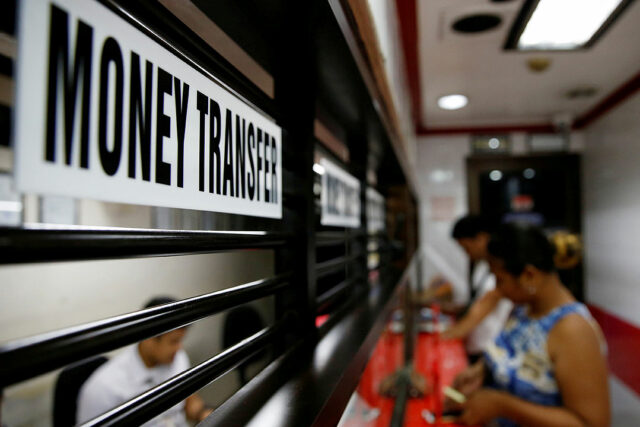
CUSTOMERS receive money from their families working abroad at a remittance center in Makati City in this file photo. — REUTERS

By Keisha B. Ta-asan

MONEY SENT HOME by overseas Filipinos rose by 3.2% in March, reflecting improved economic conditions in many host countries as pandemic restrictions eased.

Data released by the Bangko Sentral ng Pilipinas (BSP) on Monday showed cash remittances sent through banks stood at $2.59 billion in March, up from $2.51 billion in the same month in 2021.

This is the biggest monthly inflow recorded since the $2.66-billion remittances seen in January.

Overseas Filipinos’ cash remittances (March 2022)The March remittance growth is also the fastest in three months or since the 3.3% rise in December 2021.

“The expansion in cash remittances was due to the growth in receipts from land-based and sea-based workers,” BSP said in a statement.

In March, remittances sent by land-based workers jumped by 3.7% to $2.02 billion from last year’s $1.94 billion, while those sent by sea-based workers increased by 1.3% to $573 million from $566 million a year ago.

“Cash remittance growth was sustained as deployment, both official and unofficial continued. Meanwhile, better economic prospects in host countries also helped OFs (overseas Filipinos) send home more of their income back home to beneficiaries,” ING Bank N.V. Manila Senior Economist Nicholas Antonio T. Mapa said in an e-mail.

Rizal Commercial Banking Corp. (RCBC) Chief Economist Michael L. Ricafort said in a note that global economic recovery prospects have been improving as many countries reopened their economies, boosting jobs outlook for some overseas Filipino workers (OFWs).

However, UnionBank of the Philippines, Inc. Chief Economist Ruben Carlo O. Asuncion said the weakness of the peso against the US dollar may have affected the remittances sent by OFWs in March. 

“OFWs are usually encouraged to see an exchange rate more favorable to them. If the peso is weaker (nominally a higher value), then they are attracted to have their hard-earned money sent home and eventually exchanged,” Mr. Asuncion said in an e-mail.

Mr. Asuncion said some OFWs may have also sent more money to help their families with household and school expenses amid rising prices.

Inflation quickened to 4% in March, amid a spike in oil and food prices.

For the first three months of the year, cash remittances rose by 2.4% to $7.77 billion, from $7.59 billion in the comparable period last year. This was mainly due to higher inflows from the United States, Japan, Singapore, Taiwan, and Saudi Arabia.

By country, the United States, Singapore, Saudi Arabia, Japan, the United Kingdom, the United Arab Emirates, Canada, Taiwan, Qatar, and Malaysia accounted for 79.1% of total cash remittances in the first quarter.

Meanwhile, personal remittances, which include inflows in kind, increased by 3.1% to $2.88 billion from the $2.80 billion posted in March 2021.

This brought personal remittances 2.3% higher to $8.64 billion in the first quarter, from the $8.45 billion recorded in the comparable period in 2021.

“Remittances will likely prove to be steady this year as deployment continues but we are unlikely to see growth accelerate from hereon given global headwinds and with no particular changes to deployment of overseas Filipinos,” Mr. Mapa said.

Mr. Asuncion said their forecast for April remittance annual growth has been penciled in at 11.1%.

“If factors cited (weak peso and rising inflation) continue, we may see April actual growth outperform,” he added.

The BSP expects remittances to grow by 4% this year.

PHL ‘likely’ to achieve upper middle-income status by 2023 — Chua

PHILIPPINE STAR/ MIGUEL DE GUZMAN

By Tobias Jared Tomas

THE PHILIPPINES is “likely” to achieve upper middle-income status by next year, Socioeconomic Planning Secretary Karl Kendrick T. Chua said, given the strong first-quarter print and economic reforms.

“It’s likely, especially since we broadened the economy’s potential with all the reforms that we have done,” Mr. Chua said at an ANC interview on Monday. “We were hit by a pandemic like the rest of the world, but we are seeing one of the biggest bounce backs in the entire world.”

Philippine gross domestic product (GDP) expanded by 8.3% year on year in the first quarter, a turnaround from the 3.8% contraction in the same period last year. The first-quarter growth was also within the government’s 7-9% target for this year. 

Mr. Chua said the economy needs to grow by 6.6% in the next three quarters to achieve the full-year target.

“That’s doable. The bulk of the growth is going to come from domestic demand and we have to ensure a strong domestic rebound, which we are seeing,” he said, adding that recent economic liberalization measures will help attract more investments.

The Philippines had originally targeted to graduate to the upper middle-income status by 2022, but this was derailed by the coronavirus pandemic.

Last year, the World Bank increased its income range for the upper middle-income bracket to a gross national income (GNI) capital of $4,096-$12,695 from $4,046-$12,535. This definition is expected to be updated by the World Bank by midyear.

According to Philippine Statistics Authority (PSA) data, the country’s GNI per capita stood at P182,438, or about $3,500 in 2021, slightly higher than the GNI per capita of P177,546 in 2020. However, this is still lower than the GNI per capita of P200,135 in 2019.

Mr. Chua last week said the country’s GNI per capital had significantly fallen in the last two years as remittances took a hit after nearly a million overseas Filipino workers lost their jobs and were repatriated due to the pandemic.

Other economists have also expressed optimism the Philippines will reach the upper middle-income status by next year.

“I think it’s more than doable, just simply going by the strict definition of what an upper middle-income country is… The Philippines looks set to cross that threshold next year, assuming no material shock to the economy,” Pantheon Chief Emerging Asia Economist Miguel Chanco said in an e-mail.

At present, upper middle-income countries include Malaysia, Thailand, and China.

“We believe that the goal is now more achievable given that the economy appears to be on the mend after the strong first-quarter GDP showing and a likely robust second-quarter GDP print as well,” Nicholas Antonio T. Mapa, ING Bank N.V. Manila senior economist, said in an e-mail.

Rizal Commercial Banking Corp. Chief Economist Michael L. Ricafort said in a Viber message that improving employment data, with unemployment rates already below pre-pandemic levels, and the further reopening of the economy makes a strong case for the Philippines to reach the upper middle-income status.

The resumption of face-to-face classes, increased tourism, and higher infrastructure spending, among other reopening measures, would temper growth headwinds caused by the Russia-Ukraine war and pandemic scarring.

However, Security Bank Corp. Chief Economist Robert Dan J. Roces was more cautious.

“We are emerging from the deep scarring we experienced from the pandemic faced with elevated inflation, as such, the prime driver — private consumption, may be dampened with price growth, and by this definition, this also dampens growth recovery,” Mr. Roces said in an e-mail.

Headline inflation for April surged to a three-year high of 4.9%, as energy and food prices continued to soar.

“Nonetheless, with fiscal support poised to complement the monetary side, and with most indicators near or at the pre-pandemic level, the trajectory for an upper middle-income country status may be returning,” Mr. Roces said.

ADVERTISEMENT
ADVERTISEMENT