Home Blog Page 639

[B-SIDE Podcast] Let’s Unpack Outsourcing F&A in the PH

Follow us on Spotify BusinessWorld B-Side

As global firms seek dependable financial management, the Philippines offers expertise among its growing pool of certified public accountants that meets the expectations of foreign businesses operating in the country. In a BusinessWorld B-Side episode, D&V Philippines CFO and Legal Compliance Head Atty. Jose B. Calzas Jr. shares why outsourced bookkeeping helps businesses meet financial demands while keeping up with international standards.

Follow us on Spotify BusinessWorld B-Side

Government must hold flood control scandal accomplices accountable to restore public trust, says Stratbase

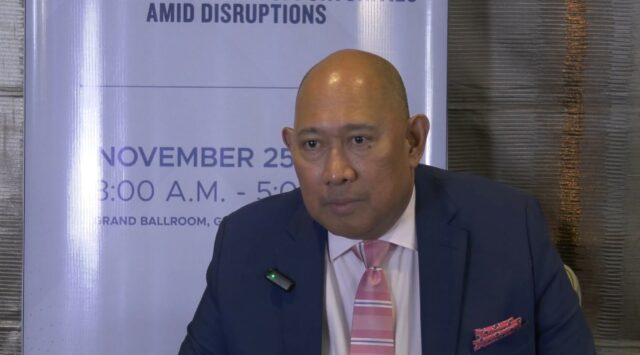
Victor Andres D. Manit during an interview at the BusinessWorld Forecast 2026 event.—RICHARD JAMES M. MENDOZA

The government must strengthen efforts to hold those potentially involved in the flood control scandal accountable, as public trust wanes amid allegations that have reached even the President, according to a top official of Stratbase ADR Institute. 

Victor Andres D. Manhit, president of Stratbase ADR Institute, made this remark, noting that although the Marcos administration has done enough since the issue emerged as a nationwide concern in July, it needs to do more in catching the “bigger fish,” which, based on recent probe hearings, appear to be the lawmakers. 

“To step up more means turning the evidence and documents they said they gathered from interviews into actual arrests. They have started, but the focus has been on smaller people,” Mr. Manhit said on the sidelines of BusinessWorld Forecast 2026 in Taguig City on Tuesday. 

“When we start seeing top officials being charged with enough documents that could lead to actual convictions, possibly—maybe not immediately—then trust in the government will slowly start to build,” he added. 

In the Sept. 27 to 30 survey released by Pulse Asia, 69 percent of respondents disapproved of how the Marcos administration handles issues related to graft and corruption, up from 50 percent in June. Only 17 percent of respondents approved of the government’s actions. 

When asked if the survey may further decline amid the series of allegations thrown at President Ferdinand R. Marcos Jr. by former lawmaker Elizaldy S. Co, Mr. Manhit said that he must first provide proof for his allegations. 

“My concern with Co as a whistleblower is that he was both the chairman of the Appropriations Committee and a recipient of these funds. So, I put him aside in terms of credibility,” he said. “But if he has documents that can prove his allegations, that would be a different game.” 

In a recent video posted on his social media page on Tuesday, Mr. Co implicated presidential son and House Majority Leader Sandro Marcos for making P9.636 billion worth of insertions in the 2023 budget, which ballooned to P20.174 billion in 2024 and P21.127 billion in 2025. 

This follows the first part of his video released Nov. 14, in which he claimed that President Marcos ordered the insertion of P100 billion worth of projects into the 2025 national budget. 

Mr. Manhit said that if evidence shows the President as an accomplice, he should be held accountable, and responsibility should cascade down the line. 

Apart from accountability, the government can also regain the people’s trust through public services such as infrastructure, particularly flood control projects, which should address the country’s recurring flooding issues. 

Meanwhile, FPJ Panday Bayanihan representative Brian P. Llamanzares emphasized the importance of passing anti-corruption measures, such as the Freedom of Information Act. 

“There seems to be a strong clamor for it to get passed. I really hope that we will be the first Congress to be able to pass this,” he told BusinessWorld on the sidelines of the forum. 

If passed, he said it would expand the transparency portal similar to the Department of Public Works and Highways (DPWH) system, where all agency project details are made publicly available—a platform launched just last week. 

“But in order for us to do this properly, government agencies have to provide access to their data and ensure good interagency sharing of information,” he added. 

He also said the need to pass the Blockchain in National Budget Bill and implement the use of Artificial Intelligence to combat corruption. — Edg Adrian A. Eva 

Finance chief Go vows Philippine economic rebound after corruption scandal

PHILIPPINE STAR/WALTER BOLLOZOS

Philippine economic growth will return to 5.5% as early as next quarter as government spending bounces back to levels seen before a corruption scandal stalled project rollouts, the nation’s new finance chief said.

A state spending pause should be expected given the scale of corruption uncovered in flood control programs, Finance Secretary Frederick Go said Thursday, in his first interview since his appointment last week by President Ferdinand Marcos Jr. He said the halt was a necessary sacrifice to plug leaks in the billions of dollars the government invests in infrastructure.

“It’s short-term pain,” Mr. Go said. “But we believe in the first quarter of next year, and more so in the second and third quarters of next year, we’ll resume that growth that we’ve become accustomed to.”

Mr. Go’s predecessor, Ralph Recto, had previously estimated that 25% to 70% of the budget for flood control projects was lost to corruption, costing the economy up to $2 billion annually from 2023 to 2025. Recto was named Mr. Marcos’ executive secretary during the cabinet reshuffle last week.

Contractors allegedly cut corners by building substandard projects, if they were even built at all. Worsening floods have routinely destroyed homes, disrupted business and killed hundreds in the Philippines, one of the world’s most disaster-prone nations.

Mr. Marcos has tried to stay ahead of the corruption crisis and the public anger that it’s triggered. Two cabinet ministers were forced to resign to distance his administration from allegations of wrongdoing and negligence, which his vice president and top rival, Sara Duterte, has tried to capitalize on.

Mr. Go said he believes prosecuting officials involved in corruption, recouping funds they stole and implementing “genuine reforms” in state spending will put the economy back on the path of faster growth.

The external environment is also improving, with the US-China trade truce and greater clarity around reciprocal tariffs. He nodded to several investors that have recently signed deals in the Philippines, including Samsung Electro-Mechanics Co. Ltd.’s $860-million factory expansion.

Mr. Go will need to steady one of Asia’s fastest-growing economies after the widespread corruption allegations also damped investment and consumer confidence. Economic growth in the third quarter slumped sharply to 4%, its weakest since the pandemic.

The central bank, which is weighing a rate cut next month, sees the corruption fallout dragging on through next year, with economic growth only returning to the 6%-7% target in 2027.

Mr. Go will gather the public works, transport, energy, agriculture and tourism departments next week to identify projects that are easy to deploy or are near completion. “They will make up for what they underspent,” he said.

Government expenditures account for nearly 17% of GDP, higher than the average in Southeast Asia, he said.

However, there are no plans to dramatically increase spending through a stimulus program. Mr. Go said he would prioritize fiscal discipline and reaffirmed the government’s target to bring the budget deficit to 5.5% of gross domestic product this year and 5.3% in 2026.

While neighboring Thailand and Indonesia have put together billions of dollars worth of stimulus this year to spur domestic consumption and offset the blow of the global trade war, the Philippines has limited room to maneuver. Its budget deficit was on a trajectory of roughly 3% before the pandemic.

“Our goal really is to keep that fiscal consolidation going. That number should keep going down,” Mr. Go said. — Bloomberg

Philippines posts $3.8 billion trade deficit for October

The Philippines posted a $4.4-billion trade deficit in May. — REUTERS

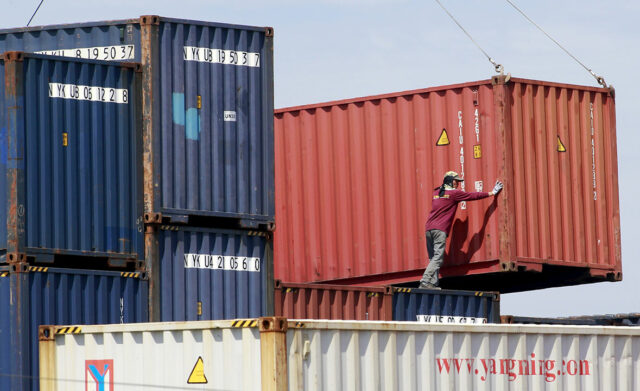
MANILA – The Philippines posted a trade deficit of $3.83 billion for October, 34.2% narrower than the deficit a year ago, preliminary official data showed on Friday. Imports fell 6.5% in October from a year earlier to $11.2 billion, while exports increased by 19.4% to $7.4 billion, the Philippine Statistics Authority said. — Reuters

Ambition meets action: Turning goals into reality through economic & financial smarts

Ambition is the fuel that drives the engine of achievement.” — Brian Tracy

Ambition is what fuels your drive to succeed. It is that inner spark that drives you to chase your goals, build your dreams, and live a life that actually means something. It is the energy behind every breakthrough, the mindset that helps you level up, and the reason you keep pushing even when things get tough.

Without ambition, it is easy to drift — going through the motions without real purpose. But when you combine ambition with knowledge and smart choices, it becomes a powerful force that can lead your ambition to real success and lasting fulfillment.

What are your ambitions? Is it stability, a comfortable lifestyle, or a peaceful life? Regardless of your hopes and dreams, money plays a crucial role in your pursuit of goals.

Achieving your ambitions begins with mastering smart money management habits. Whether you’re aiming to start a business, pursue higher education, or travel the world, wise financial management is key. Start by estimating the monetary cost of your ambitions. This helps turn vague dreams into concrete goals by giving you a clear financial target. It also allows you to plan, save, invest wisely, and increase your chances of success. Without estimated costs, you will not know how much to save and invest to successfully accomplish your ambition.

Arming yourself with even the most basic economic and financial knowledge can help significantly boost your chances of making informed, responsible financial decisions. This year’s observance of Economic and Financial Literacy Week aims to highlight the importance of making wise decisions today to achieve success in the future.

Be consistent in applying economic and financial knowledge. Doing so helps turn knowledge into habits, at which point they become automatic, yielding very positive results over the long term.

One of the most important financial habits to develop is that of saving money in banks, which protects it from damage or loss due to calamities, accidents, or theft. And with the Philippine Deposit Insurance Corporation’s (PDIC) increased deposit insurance of up to ₱1 million per depositor per bank, your hard-earned money in banks is more protected than ever.

As you consistently apply the knowledge you have gained, keeping tabs of the results vis-à-vis your goals helps you determine if there’s a need to adjust or merely maintain what you are doing to stay on course toward achieving your ambitions.

For example, if you’re saving money for a trip you plan to take next year, regularly checking how much you have already saved and being updated on prevailing travel costs will enable you to recalibrate your saving targets and re-strategize. Otherwise, you may be shocked to find that with the increases in airfare and hotel rates you were not aware of, the amount you saved or targeted to save will not be sufficient to fund your planned trip.

Ambition drives a person but for it to be powerful, it needs direction. Set clear goals, learn basic money skills, and build smart financial habits. Track your progress and adjust when needed. With the right mindset and decisions on money, your dreams can be achieved. Start now, be consistent, and let your ambition lead the way.


Spotlight is BusinessWorld’s sponsored section that allows advertisers to amplify their brand and connect with BusinessWorld’s audience by publishing their stories on the BusinessWorld Web site. For more information, send an email to online@bworldonline.com.

Join us on Viber at https://bit.ly/3hv6bLA to get more updates and subscribe to BusinessWorld’s titles and get exclusive content through www.bworld-x.com.

St. Luke’s unveils the Evelyn D. Ang/Dāna Ward: A legacy of love, compassion, and community care

(In photo from left to right: Hon. Gian Carlo G. Sotto, Vice Mayor of Quezon City; Mrs. Carmina O. Ang, Executive Vice President of EDA Scholarships & Charities, Inc.; Atty. Cirilo P. Noel, Vice Chair of Board of Directors St. Luke’s Medical Center; Dr. Dennis P. Serrano, President and CEO of St. Luke’s Medical Center; Mr. Philip T. Ang, Chairman of NI Capital Corporation; Dr. Benjamin S.A. Campomanes Jr., President of St. Luke’s Medical Center Foundation, Inc.)

The newly inaugurated Evelyn D. Ang/Dāna Charity Ward at St. Luke’s Medical Center Quezon City marks a significant milestone for the St. Luke’s Medical Center Foundation, Inc. (SLMCFI). This remarkable 40-bed facility stands as a testament to the profound impact that compassion and generosity can achieve. Made possible by the heartfelt donation of Mr. Philip Ang, along with the support of another foreign benefactor, the ward embodies the spirit of giving.

“Dāna,” a Sanskrit word signifying the practice of cultivating generosity and uplifting others through selfless giving, perfectly captures the essence of this initiative. More than just an expansion of medical care, the new charity ward reflects a powerful belief: healing is not solely a medical duty, but a shared human responsibility. Through this collective act of kindness, St. Luke’s continues its unwavering commitment to providing hope and healing.

A Legacy Born From Love

The ward was named in honor of Philip Ang’s beloved late wife, Evelyn Ang. Evelyn was renowned for her compassion and generosity — a spirit that now lives on in every patient cared for, every family given hope, and every life transformed within these walls.

Mr. Philip Ang’s remarkable donation stands as a testament to how a single act of kindness can spark generations of healing. His generosity set this transformation in motion, creating a ripple effect that the entire community can now nurture and expand.

This is more than just a space for healing — it is a lasting legacy of love and compassion, a tribute to Evelyn D. Ang’s extraordinary heart, and a beacon of hope for those in need.

A Sanctuary of Healing for Those Who Need It Most

The mission of the Evelyn D. Ang/Dāna Ward is clear: to ensure that quality healthcare is available to all, especially to patients who face financial hardship. Built under the vision and commitment of the St. Luke’s Foundation, the ward provides compassionate, world-class medical care without burdening families with overwhelming costs.

From the moment you enter the Dana ward, you feel its purpose. The environment is peaceful, thoughtfully designed, and centered on patient care. Each room offers comfort and privacy, while the dedicated team of doctors, nurses, and staff care for patients with kindness, respect, and unwavering commitment.

A Vision of Healing and Equity

The Evelyn D. Ang/Dāna Ward stands as a powerful testament to St. Luke’s unwavering dedication to closing the healthcare gap in the Philippines. By extending high-quality medical and surgical services to underserved patients, the ward delivers life-changing procedures, reinforcing the institution’s mission to ensure that no Filipino is left behind in receiving the care they deserve.

By seamlessly integrating with St. Luke’s renowned medical teams, advanced technologies, and established systems, the ward guarantees that indigent patients receive the same uninterrupted, world-class care as any other patient. This is more than just a charity initiative — it is a bold affirmation of St. Luke’s core mission: to make world-class healthcare accessible to every Filipino, regardless of circumstance.

The Evelyn D. Ang/Dāna Ward goes beyond simply providing access; it redefines what compassionate, equitable healthcare can look like, proving that excellence and empathy belong together at the heart of every healing journey.

A Testament to Shared Compassion 

For Dr. Benjamin S.A. Campomanes, Jr., President of the SLMCFI, the Evelyn D. Ang/Dāna Ward stands as a cornerstone of the Foundation’s broader efforts toward inclusive and sustainable healthcare.

“Evelyn D. Ang/Dāna Ward is more than a facility. It’s really a movement of collective generosity,” said Dr. Campomanes. “Each donation represents a life changed. It’s a model of how generosity can be institutionalized to create systemic impact, helping families find hope and healing when they need it most.”

Sustaining Compassion Through Community Giving

Although the Evelyn D. Ang/Dāna Ward was built through a profound act of philanthropy, its continued mission depends on ongoing support. Every donation — no matter how small — directly helps provide essential services.

When you contribute, you become part of Evelyn Ang’s legacy of compassion. You give a parent peace of mind, a child another chance to heal, and a struggling family the support they desperately need.

Be Part of This Legacy of Hope

The St. Luke’s Foundation invites the community to join in sustaining the Evelyn D. Ang/Dāna Ward’s mission. Together, we can ensure that this remarkable gift continues to shine as a beacon of hope — one that reaches every person in need, regardless of their circumstances.

Your generosity can keep this legacy alive.

Your kindness can help save a life.

Your support can carry Evelyn Ang’s spirit of love into the future.

Hope lives here — and with your help, it will thrive for generations.

Contact Information:

St. Luke’s Medical Center Foundation, Inc.

http://www.stlukesfoundation.org.ph/

slmcfoundation@stlukes.com.ph

BGC: (632) 8789-7000 ext. 5076 

Rizal Dr. cor. 32nd St., BGC, Taguig 


QC: (632) 8723-0101 ext. 3823 

279 E. Rodriguez Sr. Blvd., Kalusugan, Quezon City


Spotlight is BusinessWorld’s sponsored section that allows advertisers to amplify their brand and connect with BusinessWorld’s audience by publishing their stories on the BusinessWorld Web site. For more information, send an email to online@bworldonline.com.

Join us on Viber at https://bit.ly/3hv6bLA to get more updates and subscribe to BusinessWorld’s titles and get exclusive content through www.bworld-x.com.

New Zealand navy ship made rare transit through Taiwan Strait this month

STOCK PHOTO | Image by Kerin Gedge from Unsplash

WELLINGTON/HONG KONG/TAIPEI — The New Zealand navy’s largest ship, the oiler HMNZS Aotearoa, made a rare transit through the sensitive Taiwan Strait earlier this month, Defense Minister Judith Collins told Reuters.

One source with knowledge of the situation said the ship was tracked and followed by Chinese forces as it sailed through the strait.

Ms. Collins did not comment on any Chinese activity but said the transit was conducted in accordance with international law. “This includes exercising the right to freedom of navigation, as guaranteed under the United Nations Convention of the Law of the Sea,” she said in an e-mail.

The ship sailed from the South China Sea to the North Asian region via the Taiwan Strait on November 5, the minister added.

The New Zealand Defense Force said the ship was shadowed by seven different Chinese warships which maintained “a safe and professional distance throughout”.

The mission had not been previously reported.

China, which claims democratically governed Taiwan as its own, says it alone exercises sovereignty and jurisdiction over the strait. Both the US and Taiwan say the strait – a major trade route through which about half of global container ships pass – is an international waterway.

The last publicized strait transit by New Zealand’s navy, accompanied by an Australian navy ship, took place in September last year. That was the first time a New Zealand naval ship had passed through the strait since 2017.

The source said that during the sailing, Chinese ships and aircraft monitored the Aotearoa, with Chinese jets carrying out simulated attacks.

The Chinese defense ministry did not respond to a request for comment.

Taiwan’s defense ministry said in a statement that its armed forces “maintain comprehensive awareness of all military activities across the region and respond appropriately, ensuring national defense security”. It did not elaborate.

The transit coincided with Taiwan reporting that China had, on November 6, carried out another “joint combat readiness patrol” around the island involving J-16 fighter jets, with the activity concentrated in the strait and to Taiwan’s southwest.

The South Korea-built Aotearoa is not armed with heavy weapons, but is equipped to carry a helicopter. The New Zealand Defense Force said its helicopter did not fly in the strait due to weather conditions.

It is used for replenishment of fuel and other goods at sea.

The New Zealand Defense Force said last month the ship was planning to take part in United Nations sanctions enforcement missions related to North Korea around Japan.

New Zealand, like most countries, has no formal diplomatic ties with Taiwan, but Taipei sees it as an important like-minded democratic partner and both maintain de facto embassies in each other’s capitals.

New Zealand is also one of only two major countries, along with Singapore, to have a free trade agreement with Taiwan.

US warships sail through the strait every few months, drawing the ire of Beijing, and some US allies like Canada and Britain have also made occasional transits.

China, which has never renounced the use of force to bring Taiwan under its control, has over the past five years stepped up military activities around the island, including staging war games.

Taiwan’s democratically elected government rejects Beijing’s sovereignty claims.—Reuters

Hong Kong nears end of search and rescue mission as tower fire toll rises to 94

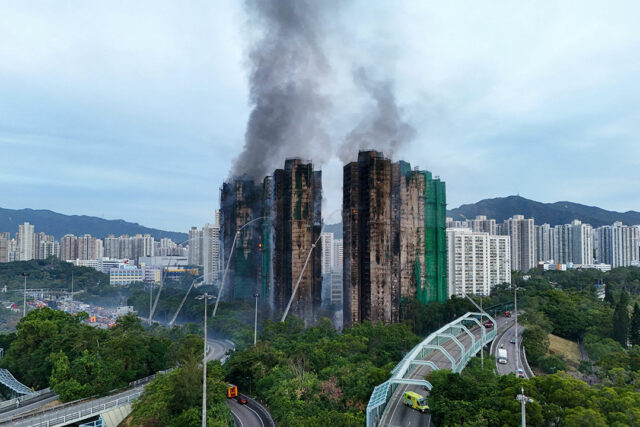
A DRONE view shows flames and thick smoke rising from the Wang Fuk Court housing estate during a major fire in Tai Po, Hong Kong, China, Nov. 27. — REUTERS/TYRONE SIU

HONG KONG — Hong Kong fire authorities said they expected to wrap up search and rescue operations after the city’s worst fire in nearly 80 years tore through a massive apartment complex on Friday, killing at least 94 people and leaving dozens still missing.

Firefighters had mostly contained the blaze that destroyed the Wang Fuk Court housing complex in the northern district of Tai Po. The eight-tower estate housing more than 4,600 people had been undergoing renovations and was wrapped in bamboo scaffolding and green mesh when the fire started and quickly spread on Wednesday afternoon.

Police said they had arrested three construction company officials on suspicion of manslaughter for using unsafe materials, including flammable foam boards blocking windows.

Firefighters said they were hoping to wrap up search and rescue operations at the still-smoldering complex on Friday morning.

“We’ll endeavor to effect forcible entry to all the units of the seven buildings, so as to ensure there are no other possible casualties,” Deputy Fire Services Director Derek Chan told reporters early on Friday.

As many as 279 people were listed as missing in the early hours of Thursday morning, but that figure has not been updated for more than 24 hours. Chan said 25 calls for help to the Fire Department remain unresolved, including three in recent hours which would be prioritized.

“Hope they can find more survivors in the building, I think they had tried their best, the firefighters have done a lot,” resident Jacky Kwok said. “It is a terrible disaster that no one wanted to happen.”

Rescuers had battled intense heat, thick smoke and collapsing scaffolding and debris as they fought to reach residents feared trapped on the upper floors of the complex.

On Thursday, a distraught woman carrying her daughter’s graduation photograph searched for her child outside a shelter, one of eight that authorities said are housing 900 residents.

“She and her father are still not out yet,” said the 52-year-old, who gave only her surname, Ng, as she sobbed. “They didn’t have water to save our building.”

Most of the victims were found in two towers in the complex, while firefighters found survivors in several buildings, Mr. Chan said, but gave no further details.

WORST FIRE SINCE 1948
The confirmed death toll rose to 94 early on Friday, the Hospital Authority said. It is Hong Kong’s deadliest fire since 1948, when 176 people died in a warehouse blaze.

Police arrested two directors and an engineering consultant of Prestige Construction, a firm that had been doing maintenance on the buildings for more than a year.

“We have reason to believe that the company’s responsible parties were grossly negligent, which led to this accident and caused the fire to spread uncontrollably, resulting in major casualties,” Police Superintendent Eileen Chung said on Thursday. Prestige did not answer repeated calls for comment.

Police seized bidding documents, a list of employees, 14 computers and three mobile phones in a raid of the company’s office, the government added.

The city’s development bureau has discussed gradually replacing bamboo scaffolding with metal scaffolding as a safety measure.

Hong Kong’s leader, John Lee, said the government would set up a HK$300 million ($39 million) fund to help residents while some of China’s biggest listed companies announced donations.

On the second night after the blaze, dozens of evacuees set up mattresses in a nearby mall, many saying official evacuation centers should be saved for those in greater need.

People – from elderly residents to schoolchildren – wrapped themselves in duvets and huddled in tents outside a McDonald’s restaurant and convenience shops as volunteers handed out snacks and toiletries.

Hong Kong, one of the world’s most densely populated cities, is scattered with high-rise housing complexes. Its sky-high property prices have long been a trigger for discontent and the tragedy could stoke resentment towards authorities despite efforts to tighten political and national security control.

The leadership of both the Hong Kong government and China’s Communist Party moved quickly to show they attached utmost importance to a tragedy seen as a potential test of Beijing’s grip on the semi-autonomous region.

The fire has prompted comparisons to London’s Grenfell Tower inferno, which killed 72 people in 2017. That fire was blamed on firms fitting the exterior with flammable cladding, as well as failings by the government and the construction industry. ($1=HK$7.7779). — Reuters

S&P affirms Philippines’ investment grade credit rating

S&P GLOBAL RATINGS said it kept its long-term “BBB+” and short-term “A-2” credit ratings on the Philippines. — PHILIPPINE STAR/MIGUEL DE GUZMAN

By Katherine K. Chan

S&P GLOBAL RATINGS on Thursday affirmed the Philippines’ investment grade credit rating with a “positive” outlook, noting that its growth prospects remain strong even as the corruption scandal weighs on the economy this year.

In a statement, S&P said it kept its long-term “BBB+” and short-term “A-2” credit ratings on the Philippines, as well as its  positive outlook.

The “BBB+” sovereign rating is a notch below the “A”-level grade targeted by the government, while a positive outlook means the Philippines’ credit rating could be raised within 24 months if improvements are sustained.

“A slowdown in public infrastructure investment in the Philippines is weighing on its near-term growth prospects. However, we believe this is temporary and economic growth prospects remain strong,” the debt watcher said.

S&P noted the ongoing probe into anomalous flood control projects halted some infrastructure works and slowed public works spending, which is expected to dent gross domestic product (GDP) growth this year.

“However, we believe this will not derail the country’s long-term growth trajectory, which remains healthy,” it said.

The Philippine economy expanded by 4% in the third quarter, its slowest pace in over four years amid a slump in state spending and consumption due to the corruption scandal. This brought the nine-month GDP growth to 5%, below the government’s 5.5-6.5% full-year target.

Allegations of widespread corruption in public works projects have sparked outrage and protests, and dampened investor and consumer confidence.

S&P earlier this week trimmed its Philippine GDP growth forecast to 4.8% from 5.6% for 2025. If realized, economic growth would undershoot the government target.

It also lowered its Philippine growth projection to 5.7% for 2026 from 5.8%, also below the government’s 6-7% goal.

“Nevertheless, we envisage growth in the Philippines will remain well above the average for peers at a similar level of development, on a 10-year weighted-average per-capita basis,” S&P said.

“The country has a diversified economy with a strong record of high and stable growth. This reflects supportive policy dynamics and an improving investment climate.”

S&P said growth in investments as well as robust public and private consumption will fuel the Philippine economy next year until 2028.

“The Philippines government has generally enacted effective and prudent fiscal policies over the past decade, in our opinion. Improvements in the quality of expenditure, manageable fiscal deficits, and low general government indebtedness testify to this,” S&P said.

The Philippines first obtained a positive outlook from S&P in November 2024, when it also affirmed the country’s credit ratings.

“The positive rating outlook reflects our view that the Philippines will maintain its external strength and healthy growth rate, and fiscal performance will strengthen over the next 12-24 months,” S&P said.

The National Government is aiming to secure an “A” credit rating, but then-Finance Secretary Ralph G. Recto had said that the multibillion-peso flood control corruption mess may have derailed its chances of earning a credit rating upgrade.

However, S&P said the Philippines’ credit rating could be raised if it reduces its current account deficit and budget gap faster over the next two years.

S&P could also shift its outlook back to “stable” if the country’s GDP continues to grow slower than expected and if it maintains a wide current account deficit that would weaken its external financial position.

The debt watcher said that the “BBB+” credit rating was affirmed as it saw the government stabilizing its debt burden amid its fiscal consolidation efforts.

“The country’s external position remains a rating strength, although current account deficits in recent years have decreased net external assets,” it added.

S&P said the government’s fiscal position will also “gradually strengthen as the economy stabilizes.”

It expects the country’s budget deficit to average around 3% of GDP within the next three years.

“The long-term rating outlook remains positive, reflecting our assessment that institutional and policy settings in the Philippines could provide stronger support for sovereign credit metrics over the next 12-24 months,” S&P said.

Meanwhile, Bangko Sentral ng Pilipinas (BSP) Governor Eli M. Remolona, Jr. and Finance Secretary Frederick D. Go welcomed S&P’s rating affirmation.

“S&P’s rating decision confirms our view of the favorable long-term economic growth prospects,” Mr. Remolona said in a statement.

He said the Philippines “remains well-positioned against external risks,” supported by $110.2 billion in gross international reserves.

For his part, Mr. Go said the government will continue to ensure that its policy decisions will support sustainable growth and long-term stability.

“Having a high credit rating will benefit Filipinos because this means cheaper financing for the government, and in effect, more resources for essential public services. This supports our goal of uplifting the life of every Filipino,” he said.

The Philippines holds investment grade ratings with the two other major debt watchers, with a “BBB” from Fitch Ratings and “Baa2” from Moody’s Ratings.

Philippines jumps to 75th in talent competitiveness index

STUDENTS graduate from senior high school in this file photo. — PHILIPPINE STAR/EDD GUMBAN

By Chloe Mari A. Hufana, Reporter

THE PHILIPPINES jumped nine spots in an annual ranking of countries’ ability to attract and retain talent, according to a report by business school Institut Européen d’Administration des Affaires (INSEAD) and the  Portulans Institute.

In the Global Talent Competitiveness Index (GTCI) 2025, the Philippines ranked 75th out of 135 economies, improving from 84th in 2023. It had an overall score of 42.39 out of a possible 100.

This was the country’s best ranking since 2021 when it was at 70th place.

Philippines improves in talent competitiveness list, its best ranking in three years

The index looks at how countries and cities grow, attract and retain talent.

“These developments highlight the Philippines’ ongoing efforts to strengthen managerial capability, enhance workforce adaptability, and foster an innovation-driven, digitally connected talent landscape,” the report read.

The Philippines ranked eighth among its peers in the East and Southeast Asian region.

Singapore ranked first overall with a score of 73.29, followed by Japan (28th), South Korea (31st), Brunei (43rd), Malaysia (46th), China (53rd) and Mongolia (65th).

The Philippines was also the top performer among lower middle-income economies, outpacing regional peers such as Vietnam (76th), Thailand (77th) and Indonesia (80th).

“Among lower middle-income economies, Lebanon, the Philippines, and India stand out for their growing emphasis on transferable and future-oriented skills,” the report said.

SOFT SKILLS
Also, the Philippines was surprisingly the only lower middle-income economy in the soft skills top 10, which was dominated by high-income economies led by Denmark, Iceland and Switzerland.

The report said this underscores that “human-centric capabilities — such as communication, teamwork, and adaptability — are increasingly vital drivers of talent competitiveness across all income groups.”

The Philippines ranked 50th in the “Grow” pillar, supported by strong outcomes in lifelong learning (27th), employee development (27th) and high digital engagement, including the 20th ranked use of virtual social networks among professionals.

Market competitiveness also improved, with the Philippines placing 35th in the extent of market dominance and 54th in sustainability.

The Philippine labor market continues to show strong private sector management practices — 12th in professional management, 19th in cluster development and 22nd in ease of finding skilled employees.

“Economies that align education, labor and innovation systems towards adaptive talent development can achieve high performance even with modest income levels,” said Paul Evans, emeritus professor of organizational behavior at INSEAD and co-editor of the report.

Rafael Escalona Reynoso, chief executive officer of Portulans Institute, said the most crucial skills today are adaptive ones: “the ability to collaborate, think across disciplines, innovate under pressure and navigate fast-moving, tech-driven environments.”

“These are the skills that increasingly define a country’s competitiveness — and the GTCI now captures this reality more clearly than ever,” he added.

However, the report noted persistent weaknesses in the Philippines’ ability to attract foreign talent. The Philippines ranked 88th in the “Attract” pillar, dragged down by low external openness metrics such as migrant stock (135th).

Governance and regulatory indicators also pulled down scores in the “Enable” pillar, where the Philippines placed 77th, reflecting gaps in the rule of law, corruption control and political stability.

Despite these challenges, the GTCI findings suggested the Philippines is developing the right capabilities to support higher-value industries.

The country scored above its income-group average in overall GTCI performance — 42.39 versus 33.64 — and demonstrated strong upward mobility relative to peers.

The results come as the Marcos administration pushes reforms in education, skills training and digitalization to strengthen the workforce and attract investment.

The report’s emphasis on adaptability and lifelong learning aligned with efforts to reskill Filipino workers for artificial intelligence- and technology-intensive sectors.

Singapore, Switzerland, Denmark, Finland and Sweden led the index as top performers. The five lowest-ranking countries were all in Africa — Burkina Faso, Madagascar, Mozambique, the Democratic Republic of the Congo and Chad.

On the Philippines’ low score in attracting foreign talent, University of the Philippines Diliman School of Labor and Industrial Relations Assistant Professor Benjamin B. Velasco said labor migration continues to drain the Philippines of skilled workers, even as the country’s strong English proficiency helps drive its rise in global talent competitiveness.

“It is a good thing that the Philippines is rising in talent competitiveness. Despite evident deficits in basic education, our English proficiency drives talent competitiveness given the reality of global supply chains in services,” he said via Facebook Messenger.

To sustain and expand this progress, he said the government must fix basic education gaps, significantly increase higher-education spending to 6% of gross domestic product and rationalize vocational-technical training.

He also urged the full implementation of the Labor Education Act to embed workers’ rights and career guidance into higher education and technical-vocational curricula.

Federation of Free Workers President Jose Sonny G. Matula said the Philippines’ rise in the index is a bright spot amid concerns over corruption and substandard infrastructure projects.

The improvement showed the country’s strength in developing lifelong learning, digital skills and professional management, he added.

“This is also a reminder to government and business: rankings are not enough — people must feel it in their wages, job security, and quality of education,” he said via Viber, noting the importance of building awareness of decent work through education.

While Filipino talent is globally competitive, Mr. Matula said the larger challenge is ensuring workers aren’t compelled to migrate or endure precarious employment to make ends meet.


Business groups call for mandatory lifestyle checks on all gov’t officials

PHILSTAR FILE PHOTO

By Justine Irish D. Tabile, Reporter

SOME TOP business groups on Thursday called for the public submission of statements of assets, liabilities, and net worth (SALN) by all government officials, as well as mandatory lifestyle checks to enforce accountability.

“Without rigorous verification, SALNs remain symbolic records rather than effective tools against corruption,” six groups, including the Makati Business Club (MBC) and the Management Association of the Philippines (MAP), said in a joint statement.

Other signatories of the statement include the Financial Executives Institute of the Philippines (FINEX), Shareholders’ Association of the Philippines, Justice Reform Initiative, and Institute for Solidarity in Asia.

The groups said lifestyle audits can be done much more easily as public officials and their family members’ digital footprints are more accessible these days. Social media posts can show their spending patterns, travel, social media activities, and luxury assets.

“They are essential to uncover if declared wealth aligns with actual living standards,” they added.

The Philippine government is investigating a multibillion-peso public works scandal involving government officials, lawmakers and private contractors.

This corruption scandal has sparked widespread outrage and street protests, especially after the spread of social media posts showing the lavish lifestyles of some officials, contractors and their family members who were tied to the scandal.

Amid the government probe, Ombudsman Jesus Crispin C. Remulla reopened public access to SALNs last month.

“While the recent Ombudsman decision restoring public access to SALNs is welcome, transparency alone is insufficient,” the groups said.

They noted that under Republic Act (RA) No. 1379, any property “manifestly out of proportion” to an official’s lawful income is presumed ill-gotten and subject to forfeiture.

“Lifestyle audits enable this legal presumption. Discrepancies uncovered through these checks must trigger immediate, impartial investigations and prosecutions under the Ombudsman’s constitutional mandate,” the groups said.

They also called on the public to report signs of “excessive or unexplained wealth” among public officials.

“The corruption we now see, we cannot unsee. We can no longer allow pilferage to prosper under the cover of pretense, political patronage, and public indifference,” they added.

Ederson DT. Tapia, a political science professor at the University of Makati, said that the lifestyle checks among politicians are “long overdue.”

“Mandatory lifestyle checks are feasible and long overdue,” he said in a Facebook Messenger chat.

“Today’s digital footprints make it much easier to validate whether an official’s declared wealth matches real-world spending and assets,” he added.

However, Mr. Tapia said it will be a challenge to ensure that tools are applied uniformly and not influenced by political interests.

“If enforced impartially, lifestyle checks can turn the SALN from a symbolic requirement into a genuine anti-corruption safeguard,” he added.

IBON Foundation Executive Director Jose Enrique “Sonny” A. Africa said that lifestyle checks are absolutely necessary, especially amid the calls for reform.

“The constitutional, statutory, and ethical basis is already sound and just made ineffectual by elite political opposition and capture of the government’s anti-corruption agencies,” he said in a Viber message.

“Overcoming this will be a key test of the Marcos administration’s sincerity in cracking down on corruption,” he added.

He said that with the advent of digital databases and artificial intelligence tools, the government now “cannot use technical infeasibility as an excuse.”

“The people and even the Constitution require the ‘highest standard of ethics’ for public officials. The corruption scandals are exposing how much dishonest wealth is amassed at the expense of the public welfare,” he said.

Meanwhile, Edmund S. Tayao, president and chief executive officer of Political Economic Elemental Researchers and Strategists, said that the SALNs and lifestyle checks are a temporary solution.

“It’s not going to hurt to improve the reporting of SALNs… On the other hand, whether or not we make it more comprehensive and complicated, there’s still no certainty that it will effectively improve accountability,” he said in a phone interview.

He said elected officials will have a way to hide ill-gotten wealth, highlighting the need to improve accountability by changing the whole political setup.

“We don’t have an existing political system. We call it a system, but anything and everything depends on the personality or the individual, which means that whoever runs for office will always be spending money as a person,” he said.

“Until such time that we change the political setup, where real political parties can really support qualified candidates to run for office and not for candidates to spend for their campaigns, this will be a vicious cycle,” he added.

Under the Constitution, every public official is mandated to submit a sworn SALN upon assuming office. However, high-ranking officials are required to make full public disclosure.

RA 6714 extended the SALN requirement to spouses and minor children, and also mandated annual updates.

The Anti-Graft and Corrupt Practices Act imposes penalties such as disqualification from public office and imprisonment.

Meanwhile, under the Plunder Law, those who amass ill-gotten wealth of at least P50 million face life imprisonment. The groups noted that the P50 million is “a low benchmark given what we now know.”

Bulacan contractors tied to ‘ghost’ projects face tax evasion raps — BIR

Bureau of Internal Revenue (BIR) Commissioner Charlito Martin R. Mendoza (left) lodged criminal complaints against IM Construction Corp. and SYMS Construction Trading for tax evasion before the Department of Justice. Courtesy of BIR

THE BUREAU of Internal Revenue (BIR) has filed tax evasion complaints against two Bulacan-based contractors allegedly involved in “ghost” flood control projects.

In a statement on Thursday, the agency said newly appointed BIR Commissioner Charlito Martin R. Mendoza lodged criminal complaints against IM Construction Corp. and SYMS Construction Trading before the Department of Justice (DoJ) over fictitious expenses, underreported income, and false value-added tax declarations.

The BIR said combined assessments for IM Construction and SYMS Construction amounted to P13.8 million in total tax deficiencies.

“The BIR will not allow contractors to enrich themselves through fake projects and falsified tax filings. We will pursue every offender, recover every peso, and continue filing criminal charges until this practice ends,” said Mr. Mendoza, who assumed office on Nov. 13.

The two firms were charged with violation of Section 254 of the tax code or tax evasion, and Section 255 or willful failure to supply correct and accurate information.

The BIR said IM Construction Corp. received payments for the construction of a pumping station and flood gate in Barangay Sto. Rosario, Hagonoy, Bulacan.

However, physical verification confirmed that no structure of any kind was built, it said. The company’s claimed project costs, deductions, and input taxes were entirely fictitious, resulting in significant tax deficiencies, it added.

“These false declarations constitute a deliberate, willful attempt to evade taxes while misusing public funds intended for critical flood control infrastructure,” the BIR said.

A separate BIR investigation showed SYMS Construction Trading collected the full contract amount for a reinforced river wall in Barangay Piel, Baliuag, Bulacan but inspectors found no river wall at the site.

“Because the project had no actual accomplishment, the taxpayer had no legal basis to claim deductions or input taxes. The false filings submitted by SYMS Construction Trading reflect a clear, intentional effort to conceal income and evade taxes derived from a fully paid but nonexistent government project,” the agency said.

The BIR has now filed a total of 12 criminal complaints linked to anomalous flood control projects, with estimated total potential tax liabilities of P8.87 billion under investigation.

Separately, Public Works Secretary Vivencio “Vince” B. Dizon said the two contractors are also facing bid-rigging and bid manipulation complaints. — Aubrey Rose A. Inosante

ADVERTISEMENT
ADVERTISEMENT