Home Blog Page 6385

Are ethical leaders weak?

RACOOL_STUDIO-FREEPIK

In my strategic management classes, I remind my students that a weakness is merely a lack of a resource or capability that one or more competitors might have. For instance, the ability of a restaurant to serve pizza is a strength shared by many players in the industry, but is not a devastating weakness for competitors that perform well despite their not having pizza on their menus. I then emphasize that in this context, having weaknesses is normal. Every organization has weaknesses that limit what it can do, and so does every leader.

However, not everything that limits what can be done is a weakness. For instance, when a leader has decided to strictly abide by a set of ethical principles, the leader will not consider acts that will violate these principles. What then becomes an issue is if the “weaknesses” and limitations that stem from being ethical outweigh the benefits of ethical leadership. Another issue is how ethical leadership might affect the amount of power that a leader can harness. Given that ethical leaders limit their own options by being unwilling to compromise their values, would it be fair to say that ethical leaders are weak?

An ethical leader might be criticized as being too idealistic, too inefficient, or unwilling to do what is needed to succeed. Such criticisms are common in societies that either fail or refuse to reward ethical behavior and instead, occasionally reward unethical behavior. In such environments, the freedom to do business and develop competitive advantages unethically without any negative consequence makes unethical business practices seem essential for superior performance.

However, if regulatory and governing bodies such as the Department of Trade and Industry and the Securities and Exchange Commission can ensure that penalties and punishments for unethical behavior are justly and effectively executed, then the benefits of ethical leadership would be readily apparent. After all, the mere avoidance of harm and other negative consequences would be reason enough for many people to do the right thing regardless of their moral standards.

Furthermore, if these governing bodies could reward good behavior, then perhaps ethical practices could be better encouraged. Unfortunately, the ability to reward ethical behavior usually requires resources, which regulatory bodies may not always have. Consequently, large private companies and professional organizations are often left to fill the void by coming up with their own recognition and reward systems for ethical practices. It would be nice if governing bodies could institute similar systems so that they could promote ethical behavior while also being directly answerable to the public.

It is challenging but possible to transform an environment that is not favorable to ethical leadership into an environment that rewards ethical leaders. However, even such a transformation might not be enough, especially when (even just a few) powerful members and leaders from the economic elite decide that ethical standards should not apply to them. Such behavior can be associated with their ideas on power and how that power is communicated to the public.

Power is broadly defined as the ability to do something or act in a particular way. It can be appreciated in terms of abilities, including, sadly, the ability of a person to get away with violating ethical principles. The more a person can get away with, the more powerful he or she is perceived to be. An ethical leader’s power is therefore “limited” by his or her abiding by ethical principles.

In a sense, persons who are repeatedly being called out for failing to pay penalties or accept their punishments from authorities gain power when they flaunt their ability to escape such obligations. The more publicized such situations are, the greater the unethical persons’ power becomes. These persons subscribe to ethical egoism; their moral decision-making is guided entirely by self-interest. They do not consider the greater good, the rights of others, and their duties to society.

Ethical leaders are strong. It takes mental, emotional, and moral strength to achieve ethical outcomes only through ethical means. Weak leaders will always seek the easiest way out.

What is true of business leaders is also true of a nation’s leaders. This May, we have the opportunity to choose leaders who will consistently shun unethical alternatives despite their seductive fruits. It behooves us to elect leaders who will do the right thing simply because it is the right thing to do.


An engineer, Rafael Gerardo S. Tensuan is a lecturer at the Department of Management and Organization of the Ramon V. Del Rosario College of Business of De La Salle University, and at the Export Management Program of the De La Salle-College of St. Benilde.


rstensuan@gmail.com

Russian central bank hikes rates, tries to limit fallout of sanctions

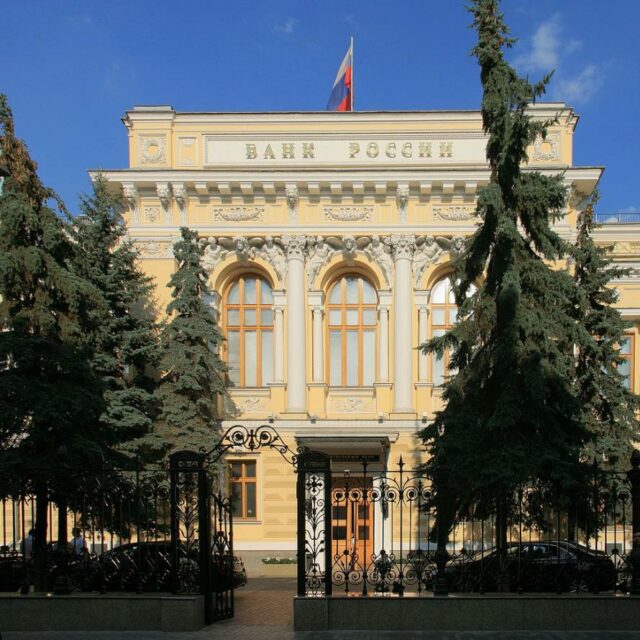
BANK OF RUSSIA headquarters in Moscow — WWW.CBR.RU

RUSSIA’s central bank on Monday sharply raised its key policy rate to 20%, a day after announcing a slew of measures to support domestic markets, as it scrambled to manage the fallout of harsh Western sanctions in retaliation against Moscow’s invasion of Ukraine.

The bank hiked the key rate from 9.5% to counter risks of ruble depreciation and higher inflation, and also ordered companies to sell 80% of their foreign currency revenues.

“External conditions for the Russian economy have drastically changed,” the central bank said in a statement, adding that the rate hike ‘will ensure a rise in deposit rates to levels needed to compensate for the increased depreciation and inflation risk.”

Monday’s steps bolster other measures announced on Sunday, which include the central bank’s assurance that it would resume buying gold on the domestic market, launch a repurchase auction with no limits and ease restrictions on banks’ open foreign currency positions.

It also increased the range of securities that can be used as collateral to get loans and ordered market players to reject foreign clients’ bids to sell Russian securities.

Central Bank Governor Elvira Nabiullina was scheduled to hold a briefing at 1300 GMT, the bank said in its statement on Monday.

The steps came after Western allies ratcheted up sanctions on Saturday, taking action to banish big Russian banks from the main global payments system SWIFT and announced other measures to limit Moscow’s use of a $630 billion war chest to undermine sanctions.

The new set of sanctions were likely to deal a devastating blow to the Russian economy and make it hard for Russian banks and companies to access the international financial system. The ruble plunged nearly 30% to an all-time low versus the dollar on Monday.

RUN ON BANKS?
Russians waited in long queues outside ATMs on Sunday, worried that new Western sanctions over Moscow’s invasion of Ukraine will trigger cash shortages and disrupt payments.

“A bank run has already started in Russia over the weekend … and inflation will immediately spike massively, and the Russian banking system is likely to be in trouble,” said Jeffrey Halley, Asia-based senior market analyst at OANDA.

Nomura analysts said the fresh reprisal measures by the West against Russia is likely to have wider global implications.

“These sanctions from the West are likely to eventually hurt trade flows out of Russia (around 80% of FX transactions handled by Russian financial institutions are denominated in USD), which will also hurt the growth outlook of Russia’s key trading partners including Europe and lead to greater inflationary pressures and risk of stagflation, we think,” the analysts wrote in a note to clients.

Energy major BP opened a new front in the West’s campaign to isolate Russia’s economy, with its decision to abandon its stake in state oil company Rosneft at a cost of up to $25 billion, the most aggressive move yet by a company in response to Moscow’s invasion of Ukraine.

The Russian business operations of other Western corporations are also in the spotlight as governments tighten the financial screws on Moscow.

Several European subsidiaries of Sberbank Russia, majority owned by the Russian government, are failing or likely to fail due to the reputational cost of the war in Ukraine, the European Central Bank, the lenders’ supervisor, said on Monday.

FINANCIAL STABILITY
The Russian central bank in several announcements on Sunday sought to ensure financial stability. It said it would resume buying gold on the domestic market from Feb. 28.

It added that customers of sanctioned banks would be unable to use their bank cards outside Russia, and that cards issued by the sanctioned banks won’t work on Google Pay or Apple Pay.

It also ordered market players to reject attempts by foreign clients to sell Russian securities, according to a central bank document seen by Reuters.

That could complicate plans by the sovereign wealth funds of Norway and Australia, which said they planned to wind down exposure to Russian-listed companies.

In a bid to inject cash into the financial system, the central bank said there would be no limit at a “fine-tuning” repo auction it plans to hold on Monday and added that the banking system remained stable after the new sanctions targeting Russia’s financial institutions.

The central bank said bank cards were working as normal and that customers’ funds could be accessed at any time. It said it would substantially increase the range of securities that can be used as collateral to get central bank loans.

The central bank also said it is temporarily easing restrictions on banks’ open foreign currency positions after the sanctions. The measure, allowing banks suffering from “external circumstances” to keep positions above the official limits, will be in place until July 1, it said in a statement.

The central bank said that it would continue to monitor changes in currency positions “in order to guarantee the normal functioning of the currency and money markets and the financial stability of lending institutions”. — Reuters

Is WHO’s aim to vaccinate 70% of world by June still realistic?

REUTERS

LONDON — Vaccinating 70% of the population in every country in the world against coronavirus disease 2019 (COVID-19) by mid-2022 has been the World Health Organization’s (WHO) rallying cry to end the pandemic.

But recently, public health experts say that while boosting immunity globally remains essential, the figure is neither achievable nor meaningful. It has always been ambitious: Currently, just 12% of people in low-income nations have had one shot, according to Our World In Data. Earlier targets set by WHO — to reach 10% by Sept. 2021, for example — were also missed.

WHO head of immunization Kate O’Brien said 70% remained more than just a “rallying cry”, even though some well-equipped countries with plenty of vaccines have also struggled to reach it.

“We are calling for countries to be serious about their actions towards achieving that target, while acknowledging that — on a country-by-country basis — there may be a rationale why that target is not specifically suited to that country,” she told Reuters.

Gavi, the Vaccine Alliance — WHO’s partner in the COVAX initiative aimed at getting shots to the world’s poorest — has pulled back from the “one-size-fits-all” 70% focus.

At a virtual briefing last week with WHO Africa, Aurelia Nguyen, managing director of COVAX within Gavi, said it was important to instead “meet the targets that countries have set for themselves, whether it’s in line with the 70% WHO target or a lower or a higher target.”

Reservations about the 70% target are a further sign that ending the pandemic globally may be a trickier, and longer, challenge than many had hoped.

Documents from a high-level internal UN meeting held earlier this month, reviewed by Reuters, showed eight countries that were extremely unlikely to reach the target by June 2022, and had been identified for “immediate focus”: Afghanistan, the Democratic Republic of Congo, Ethiopia, Ghana, Kenya, Nigeria, Sierra Leone and Sudan. A further 26, including Yemen, Uganda and Haiti, are also in need of “concerted support”, the document said.

NEVER JUST A MAGIC NUMBER
However, there is a bigger issue the WHO is focusing on Ms. O’Brien said.

“The question in the here and now, with Omicron ripping through the population around the world and continuing to do that … does 70% still hold?” she said.

The figure was never a “magic number”, she said, but just an assessment of risk, something to aim for that could — optimistically — keep the virus under control.

But new evidence showing that the vaccines only have a limited impact on transmission, alongside the ability of the Omicron variant to infect previously vaccinated or infected people, suggests that achieving that level of population immunity and therefore stopping the spread of the virus is a fading hope.

“We are in the process of looking at scenarios of how the pandemic might play out”, Ms. O’Brien said. “Obviously across the scenarios, the role of the vaccines, the target of the 70%, the goal of transmission reduction, would have to be evaluated.”

For example, setting higher targets among at-risk groups may be important to prevent hospitalizations and deaths, she added.

But some public health experts said the initial target was now largely symbolic.

Edward Kelley, former director of health services at WHO and now global health officer at ApiJect, said the 70% had been based on what science said was needed to manage transmission, which had been blown out of the water by Omicron.

“Of course we need to continue to raise immunity levels everywhere”, he said. “But the target is being kept at the moment because the international community does not have anything else to cling to.” — Reuters

Facebook-owner Meta says Ukraine’s military, politicians targeted in hacking campaign

REUTERS

META PLATFORMS said a hacking group used Facebook to target a handful of public figures in Ukraine, including prominent military officials, politicians and a journalist, amid Russia’s ongoing invasion of the country.

Meta said in the last 48 hours it had also separately removed a network of about 40 fake accounts, groups and pages across Facebook and Instagram that operated from Russia and Ukraine targeting people in Ukraine, for violating its rules against coordinated inauthentic behavior.

A Twitter spokesperson said it had also suspended more than a dozen accounts and blocked the sharing of several links for violating its rules against platform manipulation and spam. It said its ongoing investigation indicated the accounts originated in Russia and were attempting to disrupt the public conversation around the conflict in Ukraine.

In a blog post on Monday, Meta attributed the hacking efforts to a group known as Ghostwriter, which it said successfully gained access to the targets’ social media accounts. Meta said the hackers attempted to post YouTube videos from the accounts portraying Ukrainian troops as weakened, including one video which claimed to show Ukrainian soldiers coming out of a forest and flying a white flag of surrender.

Ukrainian cybersecurity officials said on Friday that hackers from neighboring Belarus were targeting the private email addresses of Ukrainian military personnel “and related individuals,” blaming a group code-named “UNC1151.” The US cybersecurity firm FireEye has previously connected the group with Ghostwriter activities.

Meta’s security team said it had taken steps to secure targeted accounts and had blocked the phishing domains used by the hackers. It declined to give the names of any of the targets but said it had alerted users where possible.

Meta said the separate influence campaign, which used a number of fictitious personas, claimed to be based in Kyiv and ran a small number of websites masquerading as independent news outlets. These outlets published claims about the West betraying Ukraine and Ukraine being a failed state.

The company said it had found links between this influence network and an operation it removed in April 2020, which it had connected to individuals in Russia, the Donbass region in Ukraine and two media outlets based in Crimea — NewsFront and SouthFront, which are now sanctioned by the US government. Neither NewsFront or SouthFront immediately responded to requests for comment.

Meta declined to give a number of impressions or views for the influence campaign’s content but said it had seen a “very low level” of shares, posts or reactions. It said the campaign had fewer than 4,000 Facebook accounts following one of more of its pages and fewer than 500 accounts following one or more of its Instagram accounts. It did not say how long the campaigns had been active on its platforms.

It said the campaign had also used Alphabet Inc.’s YouTube, Telegram and Russian social media sites Odnoklassniki and VK. YouTube, Telegram and VK, which also owns Odnoklassniki, did not immediately respond to requests for comment.

The crisis in Ukraine has seen escalating clashes between Moscow and major tech companies. On Friday, Russia said it would partially restrict access to Facebook, a move Meta said came after it refused a government request to stop the independent fact-checking of several Russian state media outlets. On Saturday, Twitter also said its service was being restricted for some Russian users.

Ukraine’s health ministry said on Sunday that more than 300 children, had been killed since the beginning of the invasion.

Russia calls its actions in Ukraine a “special operation.”

Ukraine has been buffeted by digital intrusions and denial-of-service actions both in the run-up to and during the Russian invasion. Several big tech companies have announced measures to bolster the security and privacy of their users in the country.

Meta, which has in recent days made changes like removing the ability to view and search the friends lists of Facebook accounts in Ukraine, said on Monday it was also making this change in Russia in response to public reports of civil society and protesters being targeted. — Reuters

Liverpool holds nerve to beat Chelsea on penalties in League Cup final

LONDON — Liverpool held their nerve to win an astonishing penalty shoot-out 11-10 and edge out Chelsea in the English League Cup final on Sunday after a rip-roaring contest had somehow ended 0-0 after extra time at Wembley.

Both sides could claim to have been deserving winners in a classic free-flowing encounter full of goalscoring chances, remarkable saves and four disallowed goals.

Even in the penalty shoot-out the two heavyweights were inseparable with 21 successful kicks ratcheting up the tension.

In the end, it came down to an unlikely duel between two goalkeepers with Liverpool’s young Irish shot-stopper Caoimhin Kelleher belting his penalty past Kepa Arrizabalaga who had replaced Edouard Mendy for the shoot-out.

Spaniard Arrizabalaga then blazed his effort over the bar into the massed ranks of Liverpool supporters who celebrated the club’s first domestic Cup silverware for a decade.

While Liverpool manager Jürgen Klopp had won the Premier League and Champions League since arriving at Anfield, it was a rare cup success for the German who had won only two of his previous eight finals with Borussia Dortmund and Liverpool.

For Chelsea manager Thomas Tuchel, it meant his hopes of a fourth trophy in just over a year at Stamford Bridge fell just short. He won the Champions League last season and the European SuperCup and International Association of Association Football (FIFA) Club World Cup this season.

Klopp’s decision to stay loyal to stand-in keeper Kelleher, who has featured throughout the run to the final, rather than revert to Alisson, was richly rewarded, although the Irishman could hardly have imagined scoring the decisive penalty in a shootout.

“It’s a mad one. When it came down to me, I didn’t even think I had scored the winning penalty,” he said. “It was more hit and hope.

“I got close to (stopping) a few, but all the penalties were very high quality; thankfully, we were able to win.”

Chelsea, bidding to win a sixth League Cup, might well feel aggrieved after having arguably the better chances.

Kelleher was to prove a thorn in their side all afternoon, making one superb reflex save early on after Cesar Azpilicueta’s ball in was met by the unmarked Christian Pulisic.

Chelsea was sharper in the early exchanges but was fortunate in the 17th minute when Sadio Mane got his angles all wrong with a header from Trent Alexander-Arnold’s cross.

Liverpool gradually grew into the game and Chelsea were indebted to a stunning double save by Mendy, first keeping out Naby Keita’s low strike from the edge of the area and then springing across to deflect Mane’s follow-up over the bar.

A relentless first half ended with Chelsea threatening again, with Mason Mount volleying wide from a Kai Havertz cross.

Three minutes after the break, Havertz handed Mount an even better chance with a dinked-through pass but this time, the England midfielder’s shot rebounded off the inside of the post, leaving Tuchel beating the ground in frustration.

The chances continued to flow, with Mohamed Salah played clean through, but his chip over Mendy lacked weight and Thiago Silva cleared the ball off the line. — Reuters

Utah Jazz hold off Phoenix Suns in Western Conference battle

UTAH JAZZ guard Jordan Clarkson (00) shoots over Phoenix Suns guard Aaron Holiday (4) during the first half at Footprint Center. — REUTERS

DONOVAN Mitchell scored 26 points to lead the Utah Jazz to a 118-114 victory over the Phoenix Suns on Sunday in Phoenix.

Rudy Gobert tallied 16 points, 14 rebounds and three blocks for the Jazz. Jordan Clarkson chipped in 22 points off the bench.

Utah made 17 3-pointers. Mitchell led the way, making six of 11 from the perimeter. The Jazz also outscored the Suns 43-11 in bench points.

Devin Booker tallied 30 points, seven rebounds and seven assists to lead Phoenix. Cameron Johnson added 23 points and five assists for the Suns. DeAndre Ayton chipped in 23 points and seven rebounds.

All five Phoenix starters scored in double figures. It wasn’t enough to keep the Suns from suffering back-to-back losses for the first time since late December.

The Jazz led the entire fourth quarter. Mitchell banked in a 3-pointer to beat the shot clock with 1:51 remaining. That established a 116-106 lead for the Jazz, who then had to hold off a late rally.

Jae Crowder hit a 3-pointer that cut Utah’s lead to three with 30.7 seconds left, but Crowder threw a pass out-of-bounds with 2.1 seconds remaining.

The Suns scorched Utah’s defense early and surged out to a 24-10 lead midway through the first quarter. Phoenix made its first 10 shots and scored baskets on 10 of its first 12 possessions overall. Johnson and Ayton combined for five baskets over the first five minutes to provide extra offensive heat for the Suns.

Utah erased the deficit before the end of the first quarter. The Jazz took their first lead of the game when Mike Conley, Jr. buried a stepback 3-pointer to open the second quarter. Utah eventually built up a 50-43 lead when Bojan Bogdanović capped off a 7-0 spurt with a pair of baskets.

Phoenix got off to another strong start in the third quarter and built an 86-78 lead on back-to-back baskets from Aaron Holiday and Mikal Bridges. The Jazz clamped down defensively, allowing one basket over the final three minutes of the quarter. It opened the door for Utah to reclaim the lead.

Mitchell and Clarkson combined to hit 3-pointers on four straight possessions to fuel a 16-3 run that gave the Jazz a 94-89 lead entering the fourth quarter.Reuters

Peso up as NCR shifts to Alert Level 1

THE PESO strengthened versus the greenback on Monday after the government eased restrictions.

The local unit closed at P51.27 per dollar on Monday, gaining seven centavos from its P51.34 finish on Friday, based on Bankers Association of the Philippines data.

The peso opened Monday’s session weaker at P51.39 against the dollar. Its weakest showing was at P51.42, while its intraday best was at P51.265 versus the greenback.

Dollars exchanged dropped to $780.5 million from $1.16 billion.

The peso appreciated after the government announced that restriction measures will be eased in Metro Manila, which could help improve recovery prospects, Rizal Commercial Banking Corp. Chief Economist Michael L. Ricafort said in a Viber message.

The National Capital Region and 38 other areas will be under Alert Level 1 from March 1-15, the most relaxed classification, the Palace announced on Sunday.

The move was initially supposed to be implemented in late December, but was postponed in light of the Omicron surge.

Meanwhile, a trader said some positive progress between Ukraine and Russia also helped boost market sentiment.

Reuters reported on Sunday that Ukrainian and Russian officials have agreed to discuss at a venue on the Belarusian border with Ukraine.

This comes after Russian forces invaded various areas within Ukraine’s territory on Thursday.

For Tuesday, Mr. Ricafort gave a forecast range of P51.20 to P51.50 per dollar, while the trader expects the local unit to move within P51.15 to P51.50. — L.W.T. Noble with Reuters

PSE index rebounds as gov’t eases restrictions

REUTERS

SHARES rebounded on Monday as Metro Manila and other areas will be under eased restrictions for the next two weeks, allowing businesses to operate at full capacity and increased mobility.

The benchmark Philippine Stock Exchange index (PSEi) went up by 98.78 points or 1.37% to close at 7,311.01 on Monday, while the broader all shares increased by 46.24 points or 1.20% to close at 3,889.09.

“Investors digested the government’s latest decision on the social restrictions of the country beginning March 1 [and] cheered the downgrade of the alert level status in the National Capital Region and other areas of the country since this is expected to lead to more economic activities which in turn would help in sustaining our recovery momentum,” Philstocks Financial, Inc. Senior Research Analyst Japhet Louis O. Tantiangco said in a Viber message.

“Market is domestic oriented and has for now ignored geopolitical risks [and the] war in Ukraine as it prices in gross domestic product growth and corporate earnings sustainability with the implementation of looser mobility restrictions starting tomorrow,” First Metro Investment Corp. (FMIC) Head of Research Cristina S. Ulang said in a Viber message.

Metro Manila and nearby cities will be under the Alert Level 1 starting on Tuesday as health authorities reported fewer than 2,000 coronavirus infections and prepared to transition the country to an endemic phase.

Under Alert Level 1, there are no restrictions on indoor and outdoor operating capacities. Intrazonal and interzonal travel will also be allowed.

All establishments can likewise operate at full capacity. Minimum public health standards will still need to be followed.

“Market is up most likely because today is the last day for MSCI index rebalancing. This is also the reason why we are enjoying net foreign buying during the past few days,” COL Financial Group, Inc. First Vice-President April L. Tan added in a Viber message on Monday.

Majority of sectoral indices ended in the green except for services, which dropped by 2.21 points or 0.11% to 1,913.55.

Meanwhile, property climbed 138.31 points or 4.06% to 3,540.79; mining and oil rose by 329.50 points or 2.76% to 12,232.74; industrials went up by 245.34 points or 2.43% to 10,341.27; holding firms improved by 49.55 points or 0.72% to 6,895.99; and financials gained by 1.85 points or 0.11% to 1,689.88.

Value turnover increased to P11.61 billion with 2.11 billion shares changing hands on Monday from the P9.94 billion with 2.82 billion issues seen the previous trading day.

Advancers outnumbered decliners, 108 versus 79, while 49 names closed unchanged.

Net foreign buying dropped to P202.74 million on Monday from P748.68 million on Thursday. — L.M.J.C. Jocson

Hong Kong domestic helpers abandoned as COVID takes a toll

REUTERS

HONG KONG/MANILA – A rapid spread in COVID-19 cases in Hong Kong has put the plight of domestic helpers in the global financial hub in the spotlight after some were fired or made homeless by their employers when they tested positive for coronavirus.

Hong Kong has around 340,000 domestic helpers, most hailing from either the Philippines or Indonesia. Many families in the city depend on live-in helpers for housekeeping and to look after the elderly and children, with the minimum wage set at HK$4,630 ($593) per month.

Under Hong Kong law, migrant domestic workers must live with their employers, often residing in tiny rooms or sharing the bedrooms of the children they care for.

Reports from helper support groups and local media of these workers being kicked out or fired have triggered appeals from Philippine authorities for the Chinese-ruled city to protect and support the domestic workers.

The Hong Kong Federation of Asian Domestic Workers Unions told Reuters last week it had received more than 20 cases of domestic helpers who had tested positive for COVID being fired.

Hong Kong’s Labor Department has warned employers it is an offense to sack those infected. People who break the law could face a fine of up to HK$100,000. The department did not immediately respond to a Reuters request for comment.

Two domestic helpers who said they were abandoned by their employers and left on the streets after testing positive for COVID told Reuters they felt helpless and traumatised by the experience.

“I was depressed, hopeless, and felt anxiety because I am in a foreign country,” said one of the helpers, who declined to be identified due to the sensitivity of the issue. She said her employers gave her medicine, but told her to leave their home and find a shelter to stay at, so she did not infect the family.

“All I was thinking about was where to get food and where to find a place to stay because it was very cold outside,” said the woman, who has been working in Hong Kong as a domestic helper since 2005.

The other helper, who has been in Hong Kong for four years, said she felt discriminated against, and would now rather return to the Philippines than stay in Hong Kong.

Both the helpers found shelter with HELP for Domestic Workers, a non-governmental organisation which provides shelter and basic supplies to those in need.

“At the moment, the supply is not keeping up with the demand. And given that there are so many mandatory testing notices, so many people that are testing positive, we are unable to find isolation facilities for everybody,” said Manisha Wijesinghe, executive director of HELP for Domestic Workers.

As the government grapples to contain the COVID outbreak, authorities have banned flights from nine countries, including the Philippines, and tightened entry restrictions, leading to a shortage of domestic helpers.

Many domestic helpers work long hours and are only allowed one day off a week, when they usually get together in parks and open spaces throughout the city.

Hong Kong’s public hospitals have been severely stretched, struggling to cope with an influx of COVID patients including the elderly, many of whom have resisted vaccinations.

Since the start of the epidemic, Hong Kong has recorded more than 171,000 coronavirus infections and over 650 deaths, much lower than most major cities.

Healthcare and isolation facilities are overwhelmed, with the government scrambling to build new units to deal with a surge in cases.

“I was sitting in a taxi area while waiting for information on where I could go. I told myself I have to stay strong, I am alone and I don’t have help. But at that time, I was already in tears,” said one of the two domestic helpers, relating her experience. — Reuters

Human-like AI still a long way off

PIXABAY

The world is still a long way off from human-like AI (artificial intelligence), according to experts at a Feb. 24 event by Facebook parent Meta.

“When you train a system with a data set, the data is collected in a particular way in one place. When you deploy it in a different place and time, [however], it breaks down,” said Yoshua Bengio, a professor at Université de Montréal known for his pioneering work in deep learning, a machine learning technique which teaches computers to learn by example.

In contrast, a human who learns how to drive in North America —  where drivers keep to the right side of the road — can adapt to left-hand traffic in London.

“The people are the same, the physics is the same… our brains are structured so that we can separate pieces of knowledge, infer our way around [this one change], and retrain our habits so we can do well in London as well,” Mr. Bengio said. 

Yann LeCun, Meta vice president and chief AI scientist, said AI does not have the ability of humans and animals to learn how the world works. Teenagers, he expounded, can drive a car with a degree of certainty after hours of training. They also know better than to drive off a cliff — something that a tabula rasa AI machine will not be able to figure out.

“How do we get AI to accumulate the enormous amounts of background knowledge humans accumulate in the first few months of their lives?” he asked. “In my opinion, this is what constitutes the basis for common sense.”

Deep learning is a possible way out of this conundrum. So is self-supervised learning, in which AI is given raw data (instead of being trained on labeled data).

According to Meta Chief Executive Officer Mark Zuckerberg, self-supervised learning seems closer to how the brain learns, because it compels AI to fill in the missing data and learn abstract representations along the way.

“You don’t need to show a kid thousands of pictures of cats to make a kid learn what a cat is,” he said. “This has become the primary method of AI to learn natural text.”

The technical question under self-supervised learning is how to deal with uncertainty and prediction, added Mr. LeCun.

“The type of architecture we have to build is where the prediction doesn’t necessarily have to be at the level [where the system has to predict the next frame by reconstructing all the details], but where useful information is present and irrelevant stuff isn’t,” he said.

Mr. Bengio said that, architecture-wise, AI can take inspiration from how human brains can attend to and reason around new situations, and then integrate this into machine learning.

“We can find out how knowledge is presented in a modular way, and how these pieces of knowledge that are reusable can be used on the fly to solve new tasks,” he said.

Meta is creating what it calls a more immersive version of the Internet through the metaverse. AI has been touted as the most important foundational technology for this ecosystem. — Patricia B. Mirasol

After much praised waste export ban, Australia under fire for shipping plastic trash as ‘fuel’

REUTERS

SINGAPORE — Australia will allow plastic trash to be shipped overseas and burned as fuel under a law introduced last year that banned the export of some plastic waste, the environment minister’s office said, prompting accusations from critics of hypocrisy. 

Australia was praised for passing a landmark waste export ban in response to a public backlash against rich countries sending trash to poor countries where it often ends up being dumped, burned or leaking into the ocean. 

But days after the Recycling and Waste Reduction Act came into effect on July 1 last year, Australia granted a license to its largest waste-to-energy facility to export plastic waste in the form of a fuel, a spokesperson for Minister for the Environment Sussan Ley confirmed in response to Reuters’ questions. 

The license granted to Cleanaway Waste Management Limited and ResourceCo Pty Ltd., which has not previously been reported, is the first confirmation that Australia will ship plastic trash under the classification of Processed Engineered Fuel (PEF). 

ResourceCo declined to comment and Cleanaway did not respond to a request for comment. 

Waste-derived fuels such as PEF — a shredded and compressed mix of trash like plastic, wood and metal — are used as a cheap alternative to coal by cement companies and incinerators, which promote its use as a way of reducing fossil fuel consumption. 

Some scientists and environmentalists say burning plastic as a fuel undermines a much-needed switch to cleaner energy, increases planet-warming greenhouse gas emissions and releases toxic chemicals that put public health at risk. 

Environmental groups said Australia had misled the public and ensured its waste would continue to pollute developing countries, especially in Southeast Asia which has become the main destination for the rich world’s waste. 

“Australians were very proud and excited when the government announced its world-first ‘waste export ban,’” said Jane Bremmer, plastic advisor to the International Pollutants Elimination Network (IPEN). 

“Now we see this was disingenuous and a cynical political announcement as they are rebranding plastic waste exports as fuel.” 

Ms. Ley’s spokesperson said the law states that processed plastic can be exported, adding that only “a small number” of export licenses had been issued. 

The spokesperson said there was no available data on how much plastic had been exported as fuel since the ban was introduced or information about where it was sent. 

WASTE CRISIS
Australia’s new law bans the export of mixed plastic waste, which could include a hard-to-recycle jumble of items like bags, polystyrene cups and bubble wrap. 

It permits the shipment of plastic waste that has been separated, like bales of drinks bottles that can be sent to recyclers overseas, as well as “processed” waste fuels. 

Australia provided $30 million ($21.6 million) in loans to ResourceCo and Cleanaway for a plant to be built in New South Wales that will process 250,000 tonnes of waste a year into fuel for a nearby cement factory and exports to Asia, Ms. Ley’s spokesperson confirmed. 

With only 10% of global plastic waste recycled, burning plastic as a fuel is becoming increasingly popular as a way to get rid of soaring volumes of single-use plastic trash. 

Plastic production, a key growth area for the petrochemicals industry, is due to double over the next 20 years. 

Big oil companies that make plastic and major brands that use single-use packaging are investing in plastic-to-fuel projects in poor countries like Indonesia, Reuters revealed in a series of investigations last year. 

United Nations members are holding a summit in Nairobi this week to agree on terms for the first ever plastic pollution treaty, including the role of waste-to-fuel processes. 

Australian Environment Minister Ley said this month that she wants to use the summit to urge other countries to “follow Australia’s lead” on waste export bans so plastic is “not shipped offshore where it becomes another country’s problem,” according to local media. 

But environmentalists in Southeast Asia said Australia’s rebranding of plastic waste as a fuel raised fears that rich countries would agree to a deal to continue exporting pollution to the developing world. 

“Countries in Southeast Asia continue to be the dumping ground of wastes and discards for the developed and industrialized world,” said Aileen Lucero, National Coordinator for EcoWaste Coalition in the Philippines. 

“This not only exacerbates environmental and health risks but also amplifies the waste crisis facing countries like the Philippines.” —  Joe Brock and Kanupriya Kapoor/Reuters

Russian central bank scrambles to limit fallout of tough sanctions

WIKIMEDIA COMMONS

Russia’s central bank announced a slew of measures on Sunday to support domestic markets, as it scrambled to manage the broadening fallout of harsh Western sanctions over the weekend in retaliation against Moscow’s invasion of Ukraine. 

The central bank said it would resume buying gold on the domestic market, launch a repurchase auction with no limits and ease restrictions on banks’ open foreign currency positions. It also increased the range of securities that can be used as collateral to get loans and ordered market players to reject foreign clients’ bids to sell Russian securities. 

The central bank did not reply to a Reuters request for comment. 

The steps came after Western allies ratcheted up sanctions on Saturday, taking action to banish big Russian banks from the main global payments system SWIFT and announced other measures to limit Moscow’s use of a $630 billion war chest to undermine sanctions. 

The new set of sanctions were likely to deal a devastating blow to the Russian economy and make it hard for Russian banks and companies to access the international financial system. The rouble plunged nearly 30% to an all-time low versus the dollar on Monday. 

Russians waited in long queues outside ATMs on Sunday, worried that new Western sanctions over Moscow’s invasion of Ukraine will trigger cash shortages and disrupt payments. 

“A bank run has already started in Russia over the weekend … and inflation will immediately spike massively, and the Russian banking system is likely to be in trouble,” said Jeffrey Halley, Asia-based senior market analyst at OANDA. 

Nomura analysts said the fresh reprisal measures by the West against Russia is likely to have wider global implications. 

“These sanctions from the West are likely to eventually hurt trade flows out of Russia (around 80% of FX transactions handled by Russian financial institutions are denominated in USD), which will also hurt the growth outlook of Russia’s key trading partners including Europe and lead to greater inflationary pressures and risk of stagflation, we think,” the analysts wrote in a note to clients. 

Energy major BP opened a new front in the West’s campaign to isolate Russia’s economy, with its decision to abandon its stake in state oil company Rosneft at a cost of up to $25 billion, the most aggressive move yet by a company in response to Moscow’s invasion of Ukraine. 

The Russian business operations of other Western corporations are also in the spotlight as governments tighten the financial screws on Moscow 

Several European subsidiaries of Sberbank Russia, majority owned by the Russian government, are failing or likely to fail due to the reputational cost of the war in Ukraine, the European Central Bank, the lenders’ supervisor, said on Monday. 

The Russian central bank in several announcements on Sunday sought to ensure financial stability. It said it would resume buying gold on the domestic market from Feb. 28. 

It added that customers of sanctioned banks would be unable to use their bank cards outside Russia, and that cards issued by the sanctioned banks won’t work on Google Pay or Apple Pay. 

It also ordered market players to reject attempts by foreign clients to sell Russian securities, according to a central bank document seen by Reuters. 

That could complicate plans by the sovereign wealth funds of Norway and Australia, which said they planned to wind down exposure to Russian-listed companies. 

In a bid to inject cash into the financial system, the central bank said there would be no limit at a “fine-tuning” repo auction it plans to hold on Monday and added that the banking system remained stable after the new sanctions targeting Russia’s financial institutions. 

The central bank said bank cards were working as normal and that customers’ funds could be accessed at any time. It said it would substantially increase the range of securities that can be used as collateral to get central bank loans. 

The central bank also said it is temporarily easing restrictions on banks’ open foreign currency positions after the sanctions. The measure, allowing banks suffering from “external circumstances” to keep positions above the official limits, will be in place until July 1, it said in a statement. 

The central bank said that it would continue to monitor changes in currency positions “in order to guarantee the normal functioning of the currency and money markets and the financial stability of lending institutions.” — Reuters