Home Blog Page 6380

Farmers, fisherfolk press gov’t for fuel subsidy

PHILSTAR FILE PHOTO

FARMERS and fisherfolk said they will need fuel subsidies if the government is to meet its agriculture production targets, noting that the higher cost of fuel is hindering their operations.

In a statement on Tuesday, the agriculture organizations asked the government to roll back fuel prices and to subsidize their industries.

“The cumulative increases in fuel prices have taken their toll on the marginalized sectors, who are still reeling from the economic impact of the pandemic and successive natural calamities. Specifically, the rural sectors are being pushed to bankruptcy and chronic poverty due to increases in production expenses following unabated oil price hikes,” Anakpawis Party-list President Ariel B. Casilao said. 

Mr. Casilao said that according to Pamalakaya an organization of small fishermen, diesel fuel currently accounts for 80% of their production costs, limiting them to four to six hours of fishing a day instead of eight, and three days a week of fishing instead of the usual four.

In a news conference early on Tuesday, Acting Presidential Spokesman Karlo Alexei B. Nograles said the government has appropriated P500 million from its 2022 national budget to provide fuel discounts for farmers and fisherfolk.

Mr. Nograles was referring to the Fuel Discount for Farmers and Fisherfolk Program, which was authorized by Special Provision No. 20 of the General Appropriations Act for Fiscal Year 2022 or Republic Act 11639.

Under the program, qualified fishermen and farmers who operate and own their own equipment can avail of 1.5% discount on fuel purchase, with the trigger event for the discounts being a Dubai crude oil price, as reflected in the Mean of Platts Singapore index for the region, in excess of $80 per barrel for three months.

BusinessWorld asked the Department of Agriculture to comment on possible fuel subsidies, but it had not replied at the deadline.

On Monday, domestic fuel prices increased by P1.20 for gasoline, P1.05 for diesel, and 65 centavos for kerosene. This is the seventh consecutive time fuel prices have risen.

Since the start of the year, prices of gasoline, diesel, and kerosene products have risen by P7.95, P10.2, and P9.10, respectively. — Marielle C. Lucenio

SEC generates over P119M in fines via online system

THE Securities and Exchange Commission (SEC) collected over P119 million in penalties and fees since March 2021 through its online system, following an initiative to end face-to-face transactions, the Department of Finance (DoF) said.

The SEC collected a total of P119.07 million between March 2021 and the end of January, from nearly 17,000 online transactions.

The commission’s electronic payments system that collects fees, penalties, and other charges through credit cards and other cashless payment options, the DoF said in a statement on Tuesday.

The SEC’s electronic submission tool for audited financial statements and general information sheets processed nearly 170,000 enrollments since its launch in March last year up to the end of January.

The electronic system for registrations processed over 48,000 applications.

SEC Chairman Emilio B. Aquino said the commission is working with the Development Bank of the Philippines (DBP) to firm up cybersecurity measures for the financial sector.

“DBP and SEC will hold knowledge-sharing exercises on cybersecurity. And (DBP) President Manny (Emmanuel G. Herbosa) will report on the progress, as well as outcomes,” Mr. Aquino said.

He added that the SEC will try to fully shift to online services and end face-to-face transactions towards the end of the Duterte administration.

Last week, the commission released its submission timetable for audited financial statements and general information sheets of stock and nonstock corporations.

This year, all stock and nonstock corporations are required to submit their annual reports through its online submission tool, adding that it no longer requires hard copies and will not process submissions sent through e-mail, courier, or in person.

Corporations and their authorized filers may enroll on the electronic submission tool until March 31. — Jenina P. Ibañez

PEZA pitches UAE on setting up PHL refineries, storage

REUTERS

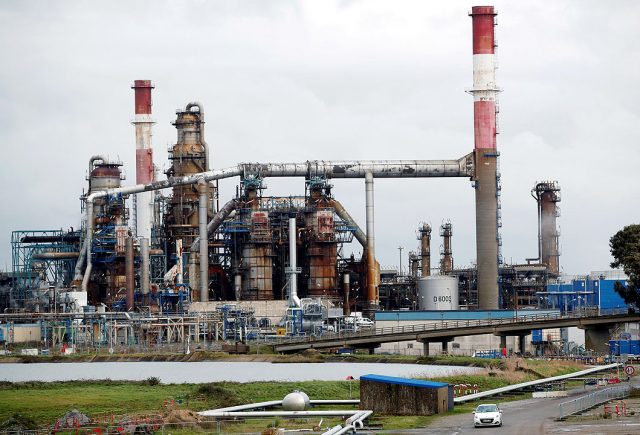
THE Philippine Economic Zone Authority (PEZA) said it has invited oil companies from the United Arab Emirates (UAE) to establish and operate oil refineries in Philippine economic zones (ecozones).

PEZA Director-General Charito B. Plaza said during a virtual Global Biz with PEZA presentation conducted in Dubai on Tuesday that UAE investors are being invited to explore the Philippines’ ecozones for refineries.

PEZA’s proposals also involve petroleum products storage in the Philippines to make it “their distribution hub for Southeast Asian countries,” Ms. Plaza said.

Ms. Plaza said PEZA is also inviting Emirati investors in other industries, including Islamic banks and halal food producers.

“I am encouraging our Emirati stakeholders and businessmen to come and to take their operations and enterprises to our ecozones. We are targeting Emirati enterprises who are into manufacturing, information technology business process outsourcing (IT-BPO), tourism, medical tourism, agro-industry, and refining,” Ms. Plaza said.

Ms. Plaza said the Dubai Islamic Bank will soon establish a branch in the Philippines in partnership with PEZA and the Bangko Sentral ng Pilipinas.

“The Dubai Islamic Bank will soon sign a memorandum of understanding with PEZA and with the Central Bank (to) put up a branch in the Philippines. Dubai investors and Muslim investors, even local investors, are now welcomed by the Dubai Islamic Bank (which will provide) credit facilities,” Ms. Plaza said.

Ms. Plaza added that PEZA has identified candidate sites for ecozones in Mindanao, including locations in Bukidnon, Agusan del Norte, Davao City, Sulu, Sultan Kudarat, Surigao del Sur, Misamis Occidental, Lanao del Norte, Davao del Norte, North Cotabato, Zamboanga del Norte, Zamboanga del Sur, Zamboanga Sibugay, Agusan del Sur, Basilan, Tawi Tawi, Lanao del Sur, and Maguindanao.

“These are areas rich in agriculture, aquaculture, and agro-forestry,” Ms. Plaza said.

According to Ms. Plaza, six Emirati enterprises are currently registered with PEZA, which are engaged in the BPO industry, fabricated metal products, engineering, and other design services. — Revin Mikhael D. Ochave

Foreign visitor tally tops 9,000 since border reopening

VISITOR ARRIVALS amounted to 9,283 as of Feb. 14, following the reopening of the borders to fully vaccinated foreign nationals on Feb. 10, according to the Department of Tourism (DoT).

The DoT said in a statement on Tuesday that the border reopening to fully vaccinated travelers from countries that require no visas to visit the Philippines, with no requirement to quarantine, include 4,209 balikbayans, or returning Filipinos holding foreign nationality, while 5,074 are foreigners.

Of the foreigners, 2,227 are from the US, 661 from Canada, 404 from, Australia, 344 from the UK, 189 from South Korea, 169 from Japan, and 168 from Germany.  

Tourism Secretary Bernadette Romulo-Puyat said the DoT is expecting a gradual recovery in tourist numbers, which in turn will aid in the recovery of the domestic travel industry.

“International travel and tourism saw an unprecedented decline in visitor arrivals amid the pandemic; the reopening of Philippines’ borders to visitors from visa-free countries will surely help in improving our numbers,” Ms. Puyat said.

Separately, the DoT said 323,206 or 93.09% of workers in the tourism sector were fully vaccinated against coronavirus disease 2019 (COVID-19) as of Feb. 11.

Of the fully vaccinated workers, 57,347 or 17.74% have received booster shots.

“The DoT’s goal has since shifted to providing fully vaccinated workers with booster shots, which will not only give them extra protection against the virus, but will also add to the confidence of local and foreign tourists as they make their way to the country’s many breathtaking destinations,” Ms. Puyat said.

“Fully vaccinated tourists are required to present proof of vaccination as approved by the Inter-Agency Task Force for the Management of Emerging Infectious Diseases or the World Health Organization, as well a negative reverse transcription polymerase chain reaction (RT-PCR) test result taken within 48 hours prior to departing the country of origin,” the DoT said.

Fully vaccinated Filipinos have been granted quarantine-free entry since Feb. 1. — Revin Mikhael D. Ochave

DPWH says 394 projects in capital region completed in 2021

DPWH

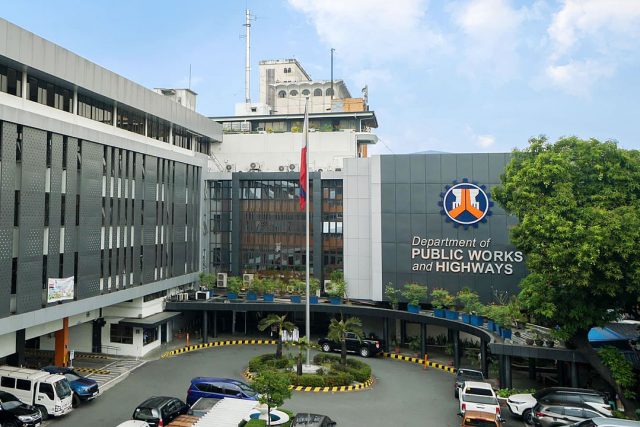
THE Department of Public Works and Highways (DPWH) said on Tuesday that it completed a total of 394 projects in the National Capital Region (NCR) in 2021, including bicycle lanes and quarantine facilities.

“2021 is a year of many milestones for the DPWH-NCR. We were able to implement vital infrastructure projects and programs that are responsive to the special needs of the region with the biggest population,” DPWH NCR Regional Director Nomer Abel P. Canlas said in a statement.

The department noted that the NCR projects for 2021 include dredging along the Marikina River near SM Marikina, Barangay Olandes, Marikina City; bike lanes along Roxas Boulevard, Osmeña Highway, Kalayaan Avenue, Shaw Boulevard, Araneta Avenue, Radial Road 8, Epifanio delos Santos Avenue, and C-5; and a bridge across Parañaque River adjacent to Parañaque Integrated Terminal Exchange.

The DPWH added that it also completed quarantine facilities in Las Piñas, as well as the Malacañang Park, the Pasig Modular Hospital, the Zapote River Drive, the Mandaluyong City Jail, the DENR Multi-Purpose Building, and the Marikina River Restoration Project.

“The DPWH-NCR and its District Engineering Offices, despite the challenges, achieved an overall absorptive capacity of 94.89% after obligating a total of P44.3 billion, and a prior year disbursement rate of 83.13% from disbursing a total of P46.6 billion,” the department noted.

In terms of right-of-way acquisition, the department said it posted a 96.88% accomplishment for the North Luzon Expressway-South Luzon Expressway Connector project, with 690 families relocated, 81 families given housing or financial assistance, and 873 paid the replacement cost of their property.

For the Mindanao Avenue Project, the DPWH said 182 families were relocated and seven families given financial assistance.

The DPWH-NCR also announced a plan to transfer all overhead cable lines underground.

Public Works Undersecretary Emil K. Sadain said last week that the department is targeting to finish “about 24” major projects this year, with 18 out of the 119 infrastructure flagship projects completed by the end of President Rodrigo R. Duterte’s term in June.

He said that of the 18 projects, 11 projects have been finished and seven more are in the final stages of completion, including the Flood Risk Management projects for the Cagayan River, Tagoloan River, and Imus River; the Binondo-Intramuros Bridge; the Samar Pacific Coastal Road Project; the LRT-2 East Extension; the Motor Vehicle Recognition and Enhancement System; the Unified Grand Central Station or North Triangle Common Station; and the Malitubog-Maridagao Irrigation Project Stage 2. — Arjay L. Balinbin

Negros Occidental provincial board issues resolution against sugar imports

PHILSTAR FILE PHOTO

THE Negros Occidental Office of the Sangguniang Panlalawigan said it issued a resolution objecting to a plan by the Sugar Regulatory Administration (SRA) to import 200,000 metric tons of sugar.

Resolution No. 0126 called Sugar Order (SO) No. 3 badly timed, saying that the sudden influx of foreign sugar will disrupt pricing during the milling season and dampen the industry’s earnings.

“The timing of the entry of the imported sugar into the Philippines will coincide with the ongoing milling season which will severely affect the income of sugar farmers who at the moment are reeling from the prohibitive cost of fertilizer and fuel,” according to the resolution.

“Only a week before the issuance of SO No. 3, the SRA Administrator, Hermenegildo R. Serafica, (came) out saying there was no reason for prices to increase since supply is stable despite the effects of Typhoon Odette (international name: Rai); that in effect, Mr. Serafica has directed monitoring on prices and if needed, impose appropriate sanctions on sellers,” it added.

The sugar industry sustained P1.2 billion in lost production with 51,159 hectares planted to sugar damaged by the typhoon, according to government data.

“With the influx of imported sugar, the sugar producers who are still reeling from the destruction of their plantations and facilities will have to carry the added burden of competing with cheaper prices of imported sugar. Hence, excluding sugar producers from the sugar import program is adding insult to injury,” it added.

Separately, the United Sugar Producers Federation (UNIFED) said it is seeking a Temporary Restraining Order (TRO) against the SRA’s import plans.

“We must put a stop to the damage already caused by the SRA and Mr. Serafica with SO No. 3 and their inaction on our various appeals to avert an agricultural crisis,” the group said in a statement.

“Mr. Serafica said the sugar order was to ensure that local market prices of sugar will be stabilized as there are complaints from the consumers, particularly local vendors, that sugar prices are high at the moment. However, if you look at SO No. 3, it does not answer directly the so-called complaints of these vendors as half of the imported supply will go to bottling companies. That alone (indicates that) something fishy is going on,” it added.

On Feb. 6, UNIFED released a statement calling for the resignation of Mr. Serafica.

“Is he under pressure from these multinational companies that have been feeding off from our people and yet, cannot give back to our farmers? Instead, they’d rather buy imported sugar than patronize the hand that feeds them. Again, we are in an agricultural crisis and what is happening in the sugar industry now falls on the shoulders of Serafica. (We) appeal once more to President Rodrigo Duterte to fire him,” UNIFED President Manuel R. Lamata said.

“Since last year, we have been appealing to SRA, the DA (Department of Agriculture), and other government agencies to help us with the high price of farm inputs, whether through a price freeze or subsidies, but nothing came through. SRA pushed us to the wall, thus the filing of this TRO,” UNIFED Director Joseph Edgar M. Sarrosa said.

Senator Juan Miguel F. Zubiri filed a resolution on Feb. 14 seeking an inquiry on sugar imports, as well as other DA moves to buy foreign food.

“Farmers have been complaining since last year on the import-dependent programs of the DA when it comes to agricultural products such as rice, corn, pork, beef, chicken, and fish as it negatively impacts their income and productivity,” according to the resolution.

Mr. Zubiri called for a policy that supports farmers and promotes food security instead of import dependency.

“There is a need to provide a clear-cut government policy on imports during the harvest and milling season not just for sugar but for other agricultural products as well so as not to unnecessarily burden our small and poor farmers,” according to the resolution. — Luisa Maria Jacinta C. Jocson

Comelec asked to reverse ruling favoring Marcos

MARTIAL law victims have asked the Commission on Elections (Comelec) en banc to reverse a division ruling that allowed the son and namesake of the late dictator Ferdinand E. Marcos to run for president this year.

In separate motions, Akbayan Citizens’ Action Party and the Campaign Against the Return of the Marcoses and Martial Law said former Senator Ferdinand “Bongbong” R. Marcos, Jr.’s conviction for tax evasion in the 1990s disqualified him from running for public office.

“The respondent’s failure to file his income tax returns was not out of sheer ignorance or innocent neglect,” Akbayan said in a 16-page motion. It added that the crimes involved “moral turpitude.”

The First Division last week junked three consolidated lawsuits seeking to disqualify Mr. Marcos from the presidential race, as it ruled that his failure to file his tax returns in the 1980s did not involve wicked, deviant behavior.

Comelec has six members and one chairman. Its two divisions have three members each. Decisions issued by the two divisions are eventually appealed to the seven-member en banc. The election body only has four members now after its chairman and two members retired this month.

Akbayan said the First Division ruling is void because only two commissioners signed it — Aimee P. Ferolino and Marlon S. Casquejo.

The vote of former First Division Presiding Commissioner Maria Rowena V. Guanzon, who had voted to disqualify Mr. Marcos, was not counted because the ruling came out after she retired.

She earlier accused Ms. Ferolino of delaying the case, alleging that a senator from Davao was trying to meddle in the case.

“Since there were only two commissioners in the so-called First Division, there clearly was no validly constituted division of the Comelec to begin with,” Akbayan said.

Meanwhile, the Campaign Against the Return of the Marcoses said the former lawmaker had belatedly filed his evidence in the disqualification case. The formal offer of evidence was filed on Jan. 13, four days after the deadline, it said.

It also said Mr. Marcos’s repeated failure to file his tax returns when he was vice-governor of Ilocos Norte from 1981 to 1983 and governor from 1983 to 1986 is a crime involving moral turpitude, contrary to the Comelec division’s ruling.

“Four consecutive years cannot be regarded as a simple omission,” they said. “It shows an utter disregard of the laws which as chief executive of the province of Ilocos Norte, respondent convicted candidate Marcos, Jr. took an oath to uphold.”

In a separate statement, Akbayan nominee Raymond S. Naguit also asked Ms. Ferolino to inhibit herself from the case, citing bias. “Let us not add to the existing doubt and dwindling trust of our citizens in the election process,” he said in Filipino.

Ms. Guanzon released a separate opinion on Jan. 31. in which she voted to disqualify Mr. Marcos, whom she called an ex-convict. She said his repeated failure to file his tax returns showed a deliberate intent to violate the law.

Political analysts at the weekend said Comelec risks losing its credibility after the delayed ruling that favored Mr. Marcos.

The ruling does not improve people’s confidence about the election body’s independence, Maria Ela L. Atienza, a political science professor from the University of the Philippines, said at the weekend.

Comelec should ensure it can settle internal issues, work swiftly, diligently and fairly because the campaign period is in full swing and elections are approaching, she added.

Marcos lawyer and spokesman Victor D. Rodriguez last week called the lawsuits a nuisance.

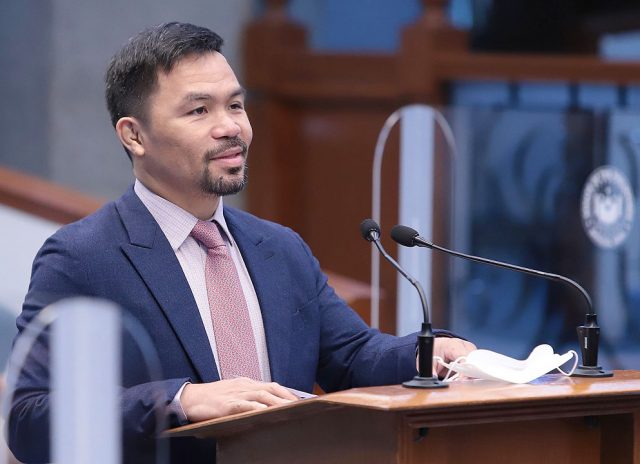
Meanwhile, boxing champion and Senator Emmanuel “Manny” D. Pacquiao challenged his fellow presidential candidates to public face-to-face debates.

In a statement, the lawmaker said rivals who refuse to participate in debates to avoid public scrutiny are incompetent and are trying to hide something.

“I’m challenging my fellow presidential candidates: Let us have a face-to-face debate,” he said in Filipino, adding that these would show “who is really honest and who is pretending.”

“You cannot promise to unite the nation if you cannot even have the guts to face your foes like a man,” he added, alluding to Mr. Marcos who has declined invitations to at least three major presidential debates and interviews this month.

He declined an invitation from GMA Network, Kapisanan ng mga Brodkaster ng Pilipinas and CNN Philippines, citing bias and scheduling conflicts. His running mate Davao City Mayor and presidential daughter Sara Duterte-Carpio will also skip the CNN debate.

“When such people avoid face-to-face debates, the people should know that they should not be trusted,” Mr. Pacquiao said. “That’s no different from thieves who don’t want to take a polygraph test but totally deny the crime they committed.”

He urged Comelec and the National Movement for Free Elections to organize these debates.

The Comelec plans to hold presidential debates for the May elections in different venues across the country’s three main island groups.

The debates will be face-to-face but with a limited audience. These will be streamed live on the election body’s Facebook page. — John Victor D. Ordoñez, Kyle Aristophere T. Atienza and Alyssa Nicole O. Tan


Philippines at low risk from COVID-19, says health chief

PHILSTAR

THE PHILIPPINES is now at low risk from the coronavirus, health authorities said on Tuesday, after the heavily mutated Omicron variant triggered a surge in infections last month.

Metro Manila and 12 other regions are also now at low risk, Health Secretary Francisco T. Duque III told a taped Cabinet meeting on Monday night. The Davao region, Cordillera Administrative Region, Western Visayas and Soccsksargen were at moderate risk, he added.

The healthcare use rates in the Philippines and most regions were low, he said. The intensive care unit rate in the Davao region was moderate.

Metro Manila and other areas will remain under Alert Level 2 until the end of February.

Mr. Duque separately told CNN Philippines the capital region would likely be under Alert Level 1 in the first week of March depending on businesses’ compliance with the government’s safety seal certification program.

“The safety seal program will have to be assessed this coming Thursday and see how the establishments, both public and private sector, are complying with it,” he said.

The Department of Health (DoH) posted 2,010 new coronavirus infections on Tuesday — the lowest daily tally this year — bringing the total to 3.64 million. 

The death toll reached 55,146 after 52 more patients died, while recoveries rose by 6,293 to 3.51 million, it said in a bulletin.

The agency said 10.4% of 20,084 samples on Feb. 13 tested positive for coronavirus disease 2019 (COVID-19), still above the 5% threshold set by the World Health Organization (WHO).

Of 72,305 active cases, 1,498 did not show symptoms, 66,093 were mild, 2,961 were moderate, 1,441 were severe and 312 were critical.

DoH said 78% of new cases occurred on Feb. 2 to 15. The top regions with cases in the past two weeks were Metro Manila with 238, Calabarzon with 183 and Western Visayas with 159 infections. It added that 56% of new deaths occurred in February and 44% in January. 

It said 12 duplicates had been removed from the tally, nine of which were recoveries, while 34 recoveries were relisted as deaths. Five laboratories failed to submit data on Feb. 13.

“Average daily cases this week is 56% lower than cases last week,” Health Undersecretary Maria Rosario S. Vergeire told a televised news briefing. Infections in many regions were declining.

The capital region is expected to control the transmission of coronavirus disease 2019 (COVID-19) by March 1, OCTA Research Group fellow Fredegusto P. David told another televised news briefing.

He said the positivity rate in the metro was 6.8%, closer to the 5% WHO threshold.

The government is scrambling to vaccinate more people as it reopens the national economy.

The country had fully vaccinated 61.63 million people as of Feb 14., while 61.23 million have received their first dose, Cabinet Secretary Karlo Alexei B. Nograles said. The government has injected 9.16 million booster shots.

He said the government’s pandemic response would be turned over to President Rodrigo R. Duterte’s successor. — K.A.T. Atienza

Broadcaster and Erap spokesman Puno dies at 76

VETERAN broadcaster Ricardo “Dong” V. Puno, Jr., who served as ex-President Joseph E. Estrada’s press secretary in the early 2000, passed away on Tuesday, his family said. He was 76.

Mr. Puno, a lawyer who became popular through his TV show Viewpoint in the 1980s, had succumbed to a lingering illness, according to his sons Ricky and Donnie.

“The palace extends its condolences to the family, friends, and colleagues of former Press Secretary Ricardo “Dong” Puno, Jr.,” Cabinet Secretary Karlo Alexei B. Nograles said in a statement.

“Known for his intelligent, insightful interviews, Secretary Puno received numerous distinctions for his work in public affairs programs that helped provide the public with a better understanding of the issues of the day,” he added.

Mr. Puno was appointed press secretary in 2000 and ran unsuccessfully for a Senate seat the following year. He also ran for congressman in Muntinlupa City in 2007 and lost.

He was born on Jan. 20, 1946 in Manila. He was the son of Ricardo C. Puno, Sr., who was the Justice minister of the late dictator Ferdinand E. Marcos from 1979 to 1984.

He graduated with a Bachelor of Arts degree from the Ateneo de Manila University in 1965, a Bachelor of Laws degree from the same University in 1969 and a Master of Laws degree from Harvard Law School.

Mr. Puno was reported in 2015 to be suffering from Parkinson’s disease. — Norman P. Aquino and Kyle Aristophere T. Atienza

Pacquiao appeals dismissal of libel suit 

SENATOR MANNY PACQUIAO FB PAGE

BOXING champion and Senator Emmanuel “Manny” D. Pacquiao has asked the Makati Prosecutor’s Office to reconsider its dismissal of his libel suit against the spiritual adviser of President Rodrigo R. Duterte. 

“While we respect the decision of the Makati City Prosecutor’s Office, we respectfully disagree,” his lawyer Nikki De Vega said in a statement on Tuesday. “A distinction must be made between mere criticism and the proliferation of fake news.” 

The case was dismissed even without a counter-affidavit from the defendant, Apollo C. Quiboloy, she said. 

Mr. Pacquiao earlier sued the religious leader, seeking P100 million in damages, for allegedly accusing him of corruption. 

Ms. De Vega said that they were considering withdrawing the motion to allow the US government, through the Federal Bureau of Investigation, “to properly facilitate the extradition and arrest of Apollo Quiboloy in relation to his sex trafficking case in the US.” 

The religious leader is set to be tried in a federal grand jury in California in March next year for alleged sex trafficking and money laundering. He has denied the charges. — Alyssa Nicole O. Tan

PHL, India foreign ministers discuss stronger maritime security ties, trade links

DFA.GOV.PH

FOREIGN MINISTERS of the Philippines and India discussed stronger maritime security cooperation as well as expanding trade ties during a meeting in Manila on Monday.

“India has been our partner in promoting peace and security in the region, as well as in advocating the rule of law in the face of armed ambition and the anarchy that follows it,” Philippine Foreign Affairs Secretary Teodoro L. Locsin, Jr. said in a statement released on Tuesday. 

“As maritime countries, the Philippines and India, both at the crossroads of the busiest sea lanes in the world, know the critical role of the rule of law in maintaining stability on the water — that most unstable element yet so vital to the life and thriving of nations,” he added. 

Indian Minister of External Affairs Subrahmanyam Jaishanka and Mr. Locsin also discussed cooperation in health, trade and investments, science and technology, defense and security, and tourism. Views on current and regional global issues were also noted.

“We are entering a new phase of our partnership. Its basis is the mutuality of national security and development aspirations,” Mr. Jaishanka said in a tweet. 

“Expect to take forward a shared agenda through sustained engagement.”

The top diplomats also assessed the impact of the coronavirus pandemic and possible collaboration to promote economic recovery. 

The Philippine Trade department previously said there is a “big room for opportunity for strengthened economic relations” with India, noting that both countries are looking to forge preferential agreements to improve current trade levels in terms of value and volume. 

India was the Philippines’s 14th highest trading partner, and 13th export and import partner in 2020. 

About 1,300 Filipinos work and reside in India, while more than 120,000 Indian nationals are in the Philippines as migrants, students, or for work. — Alyssa Nicole O. Tan

Advocates, business group want next administration to ensure forceful freedom of information law

FOI.GOV.PH

THE POSITION of presidential candidates on transparency and accountability needs further scrutiny, said advocates and a business group, as a bill enhancing the operational provisions of the country’s laws on freedom of information remains pending in Congress.

“We talk about the concept of taxpayers’ money only in the context of debt, only in the context of corruption, but transparency and accountability when it comes to public funds is so much more than that,” said Zy-za Nadine Suzara, Institute for Leadership, Empowerment, and Democracy (I-LEAD) executive director, during a Freedom of Information (FOI) Forum on Tuesday. 

“It’s really about our socio-economic development, it’s about economic growth, and it’s about good governance.”

Ms. Suzara, citing information from the Office of the Ombudsman, said around 20% of the national budget is lost to corruption as there is lack of legislation on FOI. 

“The lack of transparency means increased discretion. We do not like discretion because it becomes so political, it becomes a tool for patronage politics,” she said.

Right to Know Right Now! (R2KRN) Coalition Co-Convenor Malou Mangahas noted that most of the prominent presidential candidates have promised the same — an open, honest government — but the public must ask for more concrete measures. 

“The key is to look at what exactly they are promising in terms of (the) program of government,” she said in the same forum. 

Ms. Mangahas, a veteran journalist, said while presidential aspirants aim to put corrupt officials behind bars, the reality is that the Philippine legal process is long and arduous.

What is needed, she said, are enactments and legislation that will ensure not only freedom of speech but also freedom to know.

Senate Bill 265 and the consolidated House version of the bill are pending with the respective Public Information and Mass Media committees of the two chambers. 

Makati Business Club Executive Director Francisco Alcuaz, Jr. said lack of information makes it harder for organizations and businesses to make plans and decisions.

“In countries with an FOI law, the business sector is the biggest customer,” he said. 

“A freedom for information law will require government to make public information available to citizens, organizations and businesses. However, it has been 35 years and counting, but a freedom of information law has still not been passed,” MBC Governance Committee Chairman Patricia A. O. Bunye said. 

“Good governance reforms are crucial in promoting sustainable and inclusive growth,” she said. “FOI will function as an anti-corruption rule.” — Alyssa Nicole O. Tan