Home Blog Page 6332

BSP fully awards 28-day bills

THE BANGKO SENTRAL ng Pilipinas (BSP) fully awarded the short-term securities it auctioned off on Friday as the average rate declined on easing inflation. 

The central bank raised P120 billion as planned from its offer of 28-day bills that drew P190.2 billion in tenders, higher than the P137.4 billion in bids last week. 

Accepted rates for the one-month securities ranged from 1.63% to 1.69%, narrower than the 1.6% to 1.71% band seen a week ago. This brought the tenor’s average yield to 1.6723%, lower than 1.6809% previously. 

The central bank uses its short-term securities and term deposit facility to mop up excess liquidity in the financial system and guide market rates. 

Rizal Commercial Banking Corp. Chief Economist Michael L. Ricafort said the average yield on the 28-day bill continued to ease as inflation slowed in January. 

The rate also declined on a stronger peso and hawkish signals from the US Federal Reserve, he said in a Viber message. 

“The more hawkish Fed signals recently on possible rate hike every FOMC (Federal Open Market Committee) meeting and possible reduction of the Fed’s balance sheet or bond holdings led to some fund shifts to short-term tenors,” he said. 

Inflation slowed to 3% year on year in January from 3.6% in December, the fifth straight month of deceleration, as housing and utilities prices eased, preliminary data showed. 

Meanwhile, Fed Chairman Jerome H. Powell has said the central bank may raise interest rates starting in March, although the pace of later hikes is yet to be decided, Reuters reported. — J.P. Ibañez with Reuters 

PBCom gets universal bank license

THE CENTRAL BANK has approved the universal banking license of Philippine Bank of Communications (PBCom). 

PBCom on Friday said the Bangko Sentral ng Pilipinas’ Monetary Board has approved the upgrade of its license to a universal bank from a commercial bank. 

The bank will now be able to function as an investment house and put money in non-allied enterprises. The new license will also allow the bank to expand its product and service offerings, PBCom said in a press release. 

“Our steady growth the past years beginning with the entry of the Lucio Co Group has been noteworthy,” PBCom Chairman Eric O. Recto said. 

“We now have a solid capital base from which we can expand our banking services in order to serve the needs of our valued customers.” 

Retail industry businessman Lucio L. Co bought a stake in PBCom for nearly P6 billion in 2014. 

PBCom’s net income in the third quarter last year fell 35% to P361.12 million year on year as its operating income slipped due to net trading losses. 

The bank’s net earnings in the first nine months of 2021 dropped by 25.6% to P1.125 billion compared to the same period in 2020. — J.P. Ibañez 

BAP, DoJ launch anti-cybercrime partnership

THE Bankers Association of the Philippines (BAP) and the Department of Justice (DoJ) launched an anti-cybercrime partnership as losses from bank fraud during the pandemic hit P1 billion. 

The public-private agreement signed at an event on Friday will involve cybersecurity information sharing and training between the two groups. 

“Banking fraud damage during the pandemic had reached P1 billion in terms of unauthorized withdrawals in illegal transfers,” Justice Secretary Menardo I. Guevarra said, quoting data from the BAP cybersecurity committee. 

“Through this memorandum of understanding, both parties are assured to be kept abreast of the latest developments in cybersecurity to better protect the banking industry and the general public from fraudulent activities in cyberspace.” 

Ramon L. Jocson, the cybersecurity committee vice chair of the BAP, said information sharing between the private and public sectors would help identify methods used by cybercriminals and improve prosecution. 

“By providing (the government) with information, this can be the basis for future legislation,” he added. 

He said the Cybercrime Prevention Act, which was signed in 2012, mostly covers crimes done at the time, such as automated teller machine (ATM) and bank card hacking. 

“When you look at the definitions, it’s primarily about stolen cards, credentials based on artifacts that are concrete, not abstract. Not like accounts, electronic accounts and so on. No mention of social engineering methods like phishing.” 

Noting the small number of cybersecurity experts in the Philippines, he said information sharing should be done so that the Department of Justice can recognize the different methods used by criminals to exploit technology. 

The National Bureau of Investigation last month said they caught five people involved in the hacking of more than 700 BDO Unibank, Inc. accounts in December. 

The bureau is also investigating the alleged phishing scam that stole funds from the Land Bank of the Philippines accounts of several teachers. — Jenina P. Ibañez 

Peso weakens on rate bets

BW FILE PHOTO

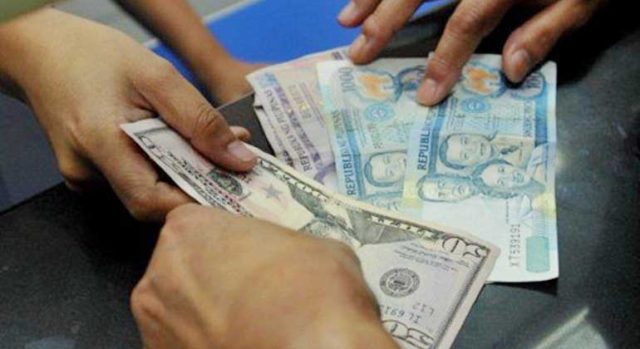
THE PESO weakened against the dollar on Friday due to slower January inflation, which caused investors to make bets on the central bank’s policy move. 

The local currency closed at P51.14 per dollar on Friday, down nine centavos from its P51.05 finish a day earlier, data from the Bankers Association of the Philippines’ website showed. 

The peso opened at P51 against the greenback. Its weakest showing was P51.14, while its intraday best was P50.95 versus the dollar. 

Dollars exchanged fell to $892.5 million on Friday from $1.05 billion on Thursday. 

Michael L. Ricafort, chief economist at Rizal Commercial Banking Corp., said the peso weakened on easing inflation, which he said could support a more accommodative monetary policy despite hawkish signals from the US Federal Reserve. 

Inflation slowed to 3% in January, the fifth straight month of deceleration, as housing and utilities prices eased, preliminary data showed. 

This was slower than both the 3.2% in December and the 3.7% in January last year. 

The central bank on Friday said the slower inflation seen in January is consistent with its expectation that the consumer price index would be within target this year and next. 

The Bangko Sentral ng Pilipinas’ Monetary Board will meet to review its policy settings on Feb. 17. It has kept borrowing costs at record lows since November 2020. 

Meanwhile, a trader in an email said the peso weakened as a result of some caution ahead of US employment data for January, which was set to be released later on Friday. — JPI 

PSEi ends higher as inflation eased in Jan.

COURTESY OF PHILIPPINE STOCK EXCHANGE, INC.

SHARES went up on Friday as inflation eased last month, which fuelled bets that the central bank would continue to keep borrowing costs low. 

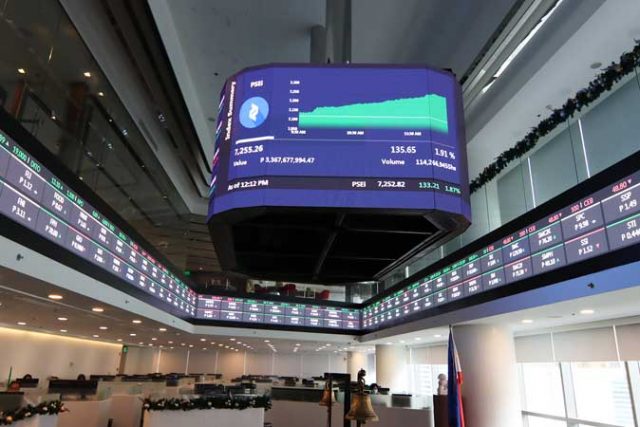
The benchmark Philippine Stocks Exchange index (PSEi) rose 73.58 points or 0.99% to end 7,456.35, while the broader all shares index inched up 27.74 points or 0.71% to close 3,933.94 on Friday. 

“Market moved up today as inflation rate sustained its downward trajectory further. This gives the signal to Bangko Sentral ng Pilipinas (BSP) to maintain monetary policy rate at current low overnight rate so as to support economic activity,” Diversified Securities, Inc. Equity Trader Aniceto K. Pangan said in a Viber message on Friday. 

Headline inflation eased to its lowest level in 15 months in January as housing and utilities prices slowed. 

Under rebased 2018 prices, preliminary data from the Philippine Statistics Authority showed inflation slowed to 3% year on year in January from 3.2% in December and 3.7% print in the same month last year.  

It was the fifth consecutive month that headline inflation decelerated since the 4.4% peak seen in August last year.  

January’s print matched the pace logged in November 2020 and was the slowest in 15 months or since the 2.3% inflation rate recorded in October 2020.  

The headline figure also matched the 3% median estimate in a BusinessWorld poll conducted a week ago.  

The central bank on Friday said the slower inflation seen in January is consistent with its expectation that the consumer price index would be within target this year and next. 

The Bangko Sentral ng Pilipinas’ Monetary Board will meet to review its policy settings on Feb. 17. It has kept borrowing costs at record lows since November 2020. 

“Philippine shares were bought as inflation continued to cool down in the latest reading, while investors sought refuge from the sell-off last night in the US,” Regina Capital Development Corp. Head of Sales Luis A. Limlingan said in an email. 

Mr. Limlingan said US shares dropped after Meta Platforms’ earnings miss and due to the rise in 10-year US Treasury yields ahead of the release of the latest non-farm payrolls report. 

Wall Street snapped a four-session winning streak on Thursday, with all three benchmarks ending lower after Facebook owner Meta Platforms’ dour forecast sent its stock plummeting and halted a nascent recovery built on upbeat earnings from other big tech, Reuters reported. 

Meta shares sank 26.4%, wiping around more than $200 billion off its market value, according to Reuters calculations, as it blamed Apple’s privacy changes and increased competition from rivals such as TikTok for its disappointing outlook. 

The Dow Jones Industrial Average fell 518.17 points or 1.45% to 35,111.16; the S&P 500 lost 111.94 points or 2.44% to 4,477.44; and the Nasdaq Composite dropped 538.73 points or 3.74% to 13,878.82. 

Back home, most sectoral indices ended in the green except for financials, which went down 4.38 points or 0.35% to 1,373.12 and services, which slid 2.05 points or 0.10% to 1,962.02. 

Meanwhile, mining and oil climbed 206 points or 1.99% to 10,552.75; holding firms gained 117.08 points or 1.64% to 7,235.76; property advanced 53.21 points or 1.62% to 3,327.05; and industrials rose 62.84 points or 0.58% to 10,825.84. 

Value turnover jumped to P8.64 billion with 1.75 issues traded from the P6.75 billion with 1.69 shares that switched hands on Thursday. 

Advancers beat decliners, 110 versus 80, while 54 names remained unchanged. 

Net foreign selling was at P25.76 million on Friday versus the P162.06 million in net purchases logged the previous trading day. — MCL with Reuters 

Flaminiano Arroyo & Dueñas promotes two lawyers to partnership

(From left to right) Atty. Aufelene Anne P. Laxamana and Atty. Jesi Howard S. Lanete

The law firm of Flaminiano Arroyo & Dueñas has promoted lawyers Aufelene Anne P. Laxamana (San Beda College of Law, 2012) and Jesi Howard S. Lanete (Ateneo de Manila School of Law, 2013) as new partners.

Atty. Aufie Laxamana has extensive experience in various practice areas, namely, litigation and employment, aviation, and corporate-commercial practice. She handles a wide range of matters and cases before the Civil Aeronautics Board and the Civil Aviation Authority of the Philippines. She also represents several high-profile clients before the Sandiganbayan and the Office of the Ombudsman.

Atty. Jesi Lanete has extensive experience in handling complex commercial, civil, and criminal litigation. He represents clients in high-profile criminal cases before the Sandiganbayan and the Office of the Ombudsman. He also handles several election-related matters and cases in connection with the upcoming 2022 national elections.

Attys. Laxamana and Lanete are both seasoned litigators.

“I am thrilled to call Attys. Laxamana and Lanete my partners. Aside from diligence and willingness to learn, they have more importantly demonstrated their respect for the courts and their colleagues in the profession,” said Atty. Jose B. Flaminiano, the firm’s most senior partner, and recognized as one of the leading criminal trial lawyers in the Philippines.

Meanwhile, the law firm also welcomes the addition of Richard Brett S. Uy (Ateneo de Manila School of Law, 2018) as one of its associates.

Flaminiano Arroyo & Dueñas is a full-service law firm founded in 2011 by Attys. Laurence Hector B. Arroyo (Ateneo de Manila School of Law, 1994), Jonathan C. Flaminiano (Ateneo de Manila School of Law, 1997), and Alejandre C. Dueñas II (Ateneo de Manila School of Law, 1998).




PDAX adds five cryptocurrencies to its platform

PDAX, a cryptocurrency exchange licensed by the Bangko Sentral ng Pilipinas (BSP), added five more coins to its listed cryptocurrencies on Feb. 3 to meet the demand of its Philippine market. It now has 19 coins available on its mobile app.

The new coins are Polygon (MATIC), Cardano (ADA), Dogecoin (DOGE), Polkadot (DOT), and Avalanche (AVAX).

“We see the Philippines as a hotbed for mass crypto adoption and digital transformation, which is why our team is constantly seeking new ways to improve our products and services,” said PDAX Chief Executive Officer Nichel O. Gaba, in a statement Jan. 31. “We’re set on listing more coins soon and take advantage of our growth as a company to grow the local crypto community as well.”

In August 2021, the crypto exchange also raised P630 million from a funding round led by a UK-based venture capital firm and joined by BC Group, a Hong Kong-based financial technology company. PDAX’s volume of cryptocurrency transactions reached 20 million in June 2021.

 “Our team is grateful for our investors’ confidence in our business. We will continue to take their support to grow PDAX as a homegrown cryptocurrency exchange that local crypto investors can fully trust,” Mr. Gaba added.

Over 4.3 million Filipinos — or 3.98% of the total population — own cryptocurrency. This adoption is more than its neighboring countries like South Korea (3.79%) and Australia (3.36%), according to TripleA, a Singapore-based cryptocurrency payments company.

Virtual currencies (VCs) have proven to be useful in remittances, payments, and gaming in the Philippines. Among the brands that accept crypto payments are StarbucksBooking.com, and Burger King.

In a March 2021 interview, Mr. Gaba said, “Between December 2020 and today, something happened to put bitcoin and crypto into a space where even traditional portfolio managers need to consider them. We are living in interesting times in crypto.”

The country has at least 17 cryptocurrency exchange service providers approved by the BSP. The central bank issued Circular No. 944 on February 6, 2017, requiring companies that intend to transact VCs to register as remittance and transfer companies. — Patricia B. Mirasol

Inside US raid on ISIS leader: Months of preparation, then a deadly blast

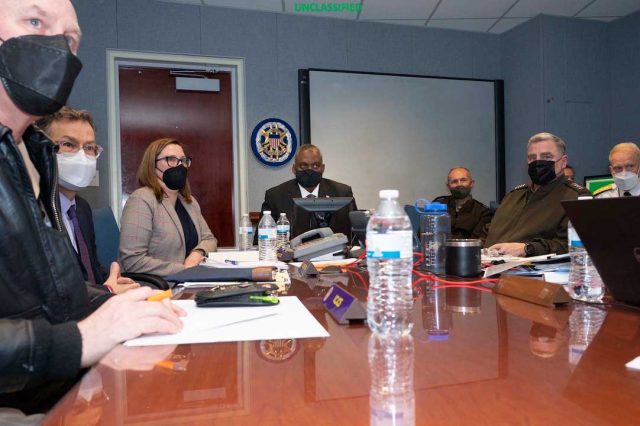
Secretary of Defense Lloyd J. Austin III and Chairman of the Joint Chiefs of Staff Mark A. Milley observe the US raid in Syria against ISIS leader Abu Ibrahim al-Hashimi al-Quraishi, also known as Amir Hajji Abdullah, from the National Military Command Center in the Pentagon, Washington, D.C., Feb. 2, 2022. -- Image via DVIDS

WASHINGTON — US forces rehearsed the helicopter raid over and over, hoping to capture Islamic State’s leader on the third floor of a residential building in a Syrian town on the Turkish border, where he was holed up with his family.

But before they could reach him, Abu Ibrahim al-Hashemi al-Quraishi detonated a suicide bomb, triggering a large explosion that blew mangled bodies — including his own — out of the building into the streets outside.

President Joseph R. Biden, Jr., who monitored the raid from the White House’s Situation Room, called Quraishi’s suicide a “final act of desperate cowardice.” It echoed of the self-detonation of a bomb by his predecessor, Islamic State founder Abu Bakr al-Baghdadi, during a US raid in 2019 in Syria.

For residents in the town of Atmeh, the events were terrifying, as US forces swept in aboard helicopters before trying to evacuate civilians from the cinder-block building, using loudspeakers to tell them to leave.

“Men, women, and children raise your hands. You are in safety of the American coalition that is surrounding the area. You will die if you don’t get out,” said one woman recounting the US warnings.

Marine General Frank McKenzie, who oversees US forces in the region and was providing updates to Mr. Biden, said US troops got six civilians, including four children, to leave the first floor of the building before the blast ripped apart the top floor.

“The explosion, which was more massive than would be expected from a suicide vest, killed everyone on the third floor and in fact ejected multiple people from the building,” Mr. McKenzie said, adding that Quraishi, his wife and two children died.

A second US official later said two of Quraishi’s wives and one child were killed.

As US troops advanced to the second floor, one of Quraishi’s lieutenants and his wife started firing on the Americans and were killed. One child was found dead there, Mr. McKenzie said, and three other children and an infant were brought to safety from the second floor.

Syrian rescue workers said at least 13 people died, most of them women and children.

The Pentagon said at least two armed members of a local al Qaeda affiliate were killed by gunfire from a US helicopter after they approached the scene of the raid while US troops were still at the site.

TARGET ON THIRD FLOOR 

US officials said Quraishi’s death was another setback for a group that once ruled a self-proclaimed caliphate stretching across territory in Syria and Iraq. It is now waging insurgent attacks.

Planning for the operation began in early December, when officials became convinced the Islamic State leader was living in the building, the officials said. Mr. Biden received a detailed briefing on options for capturing Quraishi alive on Dec. 20, a senior White House official said.

One official said the operation was complicated by the fact Quraishi rarely left his residence on the building’s third floor and relied on couriers to interact with the outside world.

The number of children seen in the area and families believed to be living on the first floor led US officials to try to craft a mission aiming to safeguard civilians, they said.

That ultimately required putting US forces at risk in a raid, instead of launching a remote strike, the officials said.

US military procedures to guard against civilian casualties are under scrutiny following a high-profile mistaken drone strike in Kabul during the US evacuation of civilians from Afghanistan that the Pentagon initially hailed a success.

The Pentagon said it would review all the information from the Atmeh raid to ensure no civilians were harmed by US forces, but stressed all indications so far were that civilian deaths were caused by Islamic State fighters themselves.

Biden gave final approvals for the mission on Tuesday during an Oval Office meeting with Defense Secretary Lloyd Austin and General Mark Milley, who as chairman of the Joint Chiefs of Staff is the top American military officer, US officials said.

Mr. Biden, Vice President Kamala Harris and other administration officials received real-time updates from Austin, Milley and McKenzie as they watched the operation unfold on several screens from the Situation Room, the officials said.

Mr. Biden joined the group in the Situation Room around 5 p.m. ET on Wednesday after finishing a call with French President Emmanuel Macron on an unrelated topic, the White House official said.

At one point, a helicopter involved in the raid suffered a mechanical failure and had to be destroyed rather than left behind, the Pentagon said.

Mr. Biden said “God bless our troops” once US forces were wheels up after the operation, and kept tabs on them during the night as they flew to safety, officials said.

Once US forces were in safety, Mr. Biden reflected on an airstrike carried out in 2015 — when he was serving as vice president — that killed another ISIS leader and injured Quraishi, costing him a leg, the White House official said.

Mr. Milley told Mr. Biden that US forces hit “a visual ID jackpot” when they viewed Quraishi’s body and confirmed his identity using biometric data taken from a fingerprint during the flight back, the official said. They waited to announce his death until after a DNA test was completed, the official added.

“He was on our target list from the earliest days of the campaign. He was Baghdadi’s right-hand man, and … was personally responsible for some of the most vicious ISIS atrocities,” the official said. — Phil Stewart and Trevor Hunnicutt/Reuters

OPEC+ meets quickly, sticks to script, dodges debate on geopolitics

PIXABAY

LONDON — After a month in which oil prices surged 15% and geopolitical tensions seethed around the world, the Organization of the Petroleum Exporting Countries (OPEC) and its allies took a record-quick 16 minutes to decide that they would stick to their previously planned output increase.

Apparently, there were no lengthy discussions at Wednesday’s meeting about member nations of the producer group failing to hit their production targets or about one of the busiest months on the geopolitical front in years, featuring: a potential war between Russia and Ukraine; rare unrest in Kazakhstan; hints of progress in nuclear talks progress between the United States and Iran; and repeated Houthi drone attacks on the United Arab Emirates.

They instead chose to complete their regular monthly meeting in record time, avoiding any thorny discussions. OPEC+, which groups OPEC and its allies led by Russia, agreed to a small increase for March, raising the collective oil production target by 400,000 barrels per day (bpd).

Brent crude prices hit a seven-year high of $91.70 a barrel on Jan. 28 and are currently trading at about $90.

Several OPEC+ delegates said the latest leg of oil’s rally was a result of concern over the potential for supply disruption due to conflict rather than an issue with undersupply.

“Prices are high not because of market fundamentals but because of geopolitics,” one delegate said.

The source said, however, that geopolitical tensions were not discussed. “Nothing political [was] raised,” he said.

The group has been making the same monthly adjustment to targets since August as it slowly unwinds record cuts made at the height of the pandemic, when fuel demand slumped worldwide.

OPEC+ has fallen well short of meeting the rising target, and is trailing the recovery in fuel demand, because several members failed to make needed investments to maintain oilfields during the pandemic.

As well as the international crisis over Ukraine, tension this month also arose on the Arabian Peninsula where Yemen’s Iran-aligned Houthis have launched drones and missiles to attack the United Arab Emirates in an escalation of a conflict with a military coalition led by Saudi Arabia.

“A geopolitical premium is baked into prices with the Russia-Ukraine standoff continuing and trigger-happy Houthi rebels in Yemen,” PVM analyst Stephen Brennock said.

CAPACITY CONSTRAINTS 

Asked about the main driver behind the decision, another OPEC+ delegate said,  “This decision … suits everyone, both those who have the capacity to increase their supply and those who cannot.”

“With this decision, we maintain the cohesion of the group and we leave the difficult discussions for later,” he added, referring to dwindling capacity among some members.

OPEC+ data shows that in 2021 the group produced on average over 800,000 bpd below its production targets as some — mainly Western African — producers struggled with underinvestment.

The group’s lack of spare capacity — idled oilfields ready to come online quickly to deal with unexpected outages in global supply — along with a post-pandemic demand recovery, has put a charge into energy prices and driven global inflation higher.

Just a few producers hold most of that global spare capacity: Saudi Arabia, the United Arab Emirates, and Iraq.

Several analysts, including Goldman Sachs, argue that the very thin spare capacity could push oil prices over the $100 mark later this year. US sanctions are also keeping millions of barrels of production offline in Iran and Venezuela.

The quick decision gives the group more time to wait for the direction of the Iran nuclear talks with the West which would pave the way for the lifting sanctions on oil exports from the OPEC member.

Indirect talks between the United States and Iran are entering the “final stretch,” with all sides having to make tough political decisions, a senior US State Department official said this week.

Meanwhile Iranian oil minister Javad Owji was quoted as saying Tehran was ready to return to the oil market quickly, which could boost supply by an additional 1.5 million bpd.

This month, China’s customs reported the first import of Iranian crude in a year despite ongoing sanctions, offloading nearly 4 million barrels of Iranian crude oil into state reserve tanks.

“The White House has already seemingly dispensed with the maximum pressure sanctions enforcement policy, and more Iranian [and Venezuelan] barrels are making their way to China,” RBC Capital’s Helima Croft said.

Any nuclear deal with Iran will most likely force OPEC+ to rearrange its production quotas to make room for Iranian barrels as in previous years.

Extra Iranian supply, however, could help plug the hole in OPEC+’s output target misses, one of the sources said. — Ahmad Ghaddar and Alex Lawler/Reuters 

All in a day: Zuckerberg loses $29B, Bezos set to pocket $20B

REUTERS

Mark Zuckerberg lost $29 billion in net worth on Thursday as Meta Platforms Inc.’s stock marked a record one-day plunge, while fellow billionaire Jeff Bezos was set to add $20 billion to his personal valuation after Amazon’s blockbuster earnings.

Meta’s stock fell 26%, erasing more than $200 billion in the biggest ever single-day market value wipeout for a US company. That pulled down founder and Chief Executive Officer Zuckerberg’s net worth to $85 billion, according to Forbes.

Mr. Zuckerberg owns about 12.8% of the tech behemoth formerly known as Facebook.

Mr. Bezos, the founder and chairman of e-commerce retailer Amazon, owns about 9.9% of the company, according to Refinitiv data. He is also the world’s third richest man, according to Forbes.

Amazon’s holiday-quarter profit surged, thanks to its investments in electric vehicle company Rivian; and the company said it would hike annual prices of Prime subscriptions in the United States, sending its shares up 15% in extended trading and readying it for its biggest percentage gain since October 2009 on Friday.

Mr. Bezos’ net worth rose 57% to $177 billion in 2021 from a year earlier, according to Forbes, largely from Amazon’s boom during the pandemic when people were highly dependent on online shopping.

Mr. Zuckerberg’s one-day wealth decline is among the biggest ever and comes after Tesla Inc. top boss Elon Musk’s $35 billion single-day paper loss in November. Mr. Musk, the world’s richest person, had then polled Twitter users if he should sell 10% of his stake in the electric carmaker. Tesla shares have yet to recover from the resulting selloff.

Following the $29 billion wipeout, Mr. Zuckerberg is in the twelfth spot on Forbes’ list of real-time billionaires, below Indian business moguls Mukesh Ambani and Gautam Adani.

To be sure, trading in technology stocks remains volatile as investors struggle to price in the impact of high inflation and an expected rise in interest rates. Meta shares could very well recover sooner rather than later, with the hit to Mr. Zuckerberg’s wealth staying on paper.

Mr. Zuckerberg sold $4.47 billion worth of Meta shares last year, before 2021’s tech rout. The stock sales were carried out as part of a pre-set 10b5-1 trading plan, which executives use to allay concerns about insider trading. — Reuters

Facebook usage dips for first time. Will Instagram follow?

Image via Instagram.com

TikTok, the pandemic and mobile data costs in India all helped draw people away from Facebook at an unprecedented rate last quarter. The big question is when will it be Instagram’s turn? 

One forecaster, Insider Intelligence, does not expect Meta Platforms Inc.’s Instagram social media service to lose users in the next three years. But its November estimates show Instagram’s growth in monthly users will fall to 5.8% this year and 3.1% by 2025 from 16.5% last year. 

Instagram, which the tech giant acquired in 2012 for $1 billion, has been viewed as an antidote to slowing growth at Facebook, with revenue from ads on Instagram increasingly crucial to Meta. 

The company is putting those funds toward building out a new business selling virtual-reality goggles and related metaverse technologies. A decline in Instagram users and inability to raise ad prices could halt Meta Chief Executive Mark Zuckerberg’s ambitions. 

Fewer people checked their Facebook every day per quarter than they did the year before for the first time ever during the last three months of 2021, Meta said on Wednesday. It was one of several troubling signs, along with profit below expectations and a disappointing revenue outlook, that dropped shares over 26% on Thursday. 

Meta Chief Financial Officer Dave Wehner on Wednesday told financial analysts part of the usage decrease for the main Facebook app and website came from fewer coronavirus disease 2019 (COVID-19) lockdowns, which have tended to generate a boom in online activity. He also blamed rising internet costs for consumers in India and increasing interest in ByteDance Inc.’s video-sharing app TikTok. 

Meta does not regularly break out usage of Instagram, but analysts say TikTok is hurting Instagram’s growth, too. 

Facebook and, to a degree, Instagram have overcome challenges before, including data privacy disasters, scrutiny over the wellbeing of users and competition from Snap Inc.’s Snapchat, Twitter Inc. and many others over the years. 

Indeed, Instagram is investing billions of dollars into video-related features, such as a TikTok-style option called Reels. Mr. Zuckerberg told analysts Wednesday that Reels was its fastest growing content format “by far” and the biggest contributor to engagement growth on Instagram. 

Analysts say Reels eventually could become a bigger revenue-generator than ads set against photo and text posts. But in a nod to the challenge ahead, Mr. Zuckerberg noted, Reels is not popular enough yet to attract the ad sales that older features do. — Paresh Dave and Elizabeth Culliford/Reuters

US warns Russia may stage video as pretext to invade Ukraine

US troops prepare for Poland deployment. Image via DVIDS

WASHINGTON/MOSCOW/KYIV — Russia has formulated several options as an excuse to invade Ukraine, including the potential use of a propaganda video showing a staged attack, the United States said on Thursday, as the Kremlin condemned American troop deployments in the region. 

Russia, which seized Crimea from Ukraine in 2014 and backs separatists in the east of the country, is demanding security guarantees including a promise NATO (North Atlantic Treaty Organization), will never admit Kyiv as it has amassed some 100,000 troops near the Ukrainian border. 

The United States has said there is little chance of Ukraine joining NATO soon but that the country should decide its own future as the powers clash over their spheres of influence in post-Cold War Europe. 

US intelligence believes Russia could use a fabricated video showing the graphic aftermath of an explosion, including equipment appearing to belong to Ukraine or allied nations, to justify an incursion. 

It “would involve actors playing mourners for people who are killed in an event that they [Russia] would have created themselves… [and] deployment of corpses to represent bodies purportedly killed,” US Deputy National Security Advisor Jonathan Finer told MSNBC. 

Kremlin spokesman Dmitry Peskov dismissed the reports, according to the TASS news agency, saying similar things had been said previously but amounted to nothing. 

Moscow has denied accusations in the past that it is trying to manufacture a conflict and says it is not planning an invasion but that it could take unspecified military action if its security demands are not met. 

The Kremlin accused Washington on Thursday of ignoring its calls to ease the standoff, a day after the United States announced it would send nearly 3,000 extra troops to Poland and Romania. 

“It’s obvious that these are not steps aimed at de-escalating tensions, but on the contrary they are actions that lead to increasing tension,” Mr. Peskov said on a conference call on Thursday. 

“We constantly call on our American counterparts to stop aggravating tensions on the European continent. Unfortunately, the Americans continue to do so,” he said. 

Paratroopers with the US Army boarded aircraft on Thursday to leave for Eastern Europe “in support of assuring our NATO allies and our partners in deterring Russia,” US Army spokesman Matthew Visser said. 

The soldiers were departing from Fort Bragg in North Carolina. Around 1,700 service members, mainly from the 82nd Airborne Division, were being deployed to Poland, while 300 others will move to Germany, he said. 

Washington and NATO have expresses a readiness to discuss arms control and confidence-building measures. Russian President Vladimir Putin said earlier in the week that Moscow was still interested in dialogue. 

RUSSIAN TROOP MOVEMENTS INTO BELARUS 

In Brussels, NATO Secretary-General Jens Stoltenberg said there had been a significant movement of Russian military forces into Ukraine’s northern neighbor Belarus in recent days. 

The Russia-Belarus joint military drills, running until Feb. 20, have provided Moscow with cover to further increase forces near Ukraine. 

“This is the biggest Russian deployment there since the Cold War,” said Mr. Stoltenberg, adding the expected deployment includes 30,000 combat troops, Spetsnaz special operations forces, SU-35 fighter jets, S-400 air defense systems and nuclear-capable Iskander missiles. 

The Kremlin has described the Allied Resolve exercises as a rehearsal for repelling external aggression and says its forces will withdraw after the drills. 

Russian Defense Minister Sergei Shoigu arrived in Belarus on Thursday to inspect the troops. 

The Belarusian defence minister released images from the exercises showing troops parachuting to the ground, fighter jets in the sky, soldiers dismounting from a helicopter holding weapons, and tanks firing and maneuvering. 

Belarus shares its western border with NATO members Poland, Lithuania and Latvia, while Ukraine lies to its south. 

WORLD LEADERS KEEP TALKING 

Support for Russia came from China. 

Their two foreign ministers “coordinated their positions” during a meeting in Beijing on Thursday, the Chinese foreign ministry said. 

China expressed understanding and support for Russia’s position on security regarding Russia’s relationship with the United States and NATO, it said. 

Mr. Putin was set to meet Chinese President Xi Jinping on Friday before attending the opening ceremony of the Beijing Winter Olympics. 

The US State Department warned Russia that a closer relationship between Moscow and Beijing would not make up for the consequences of an invasion and only make the Russian economy “more brittle.” 

Elsewhere, world leaders continued their efforts to resolve the crisis. 

In Kyiv, Turkish President Tayyip Erdogan held talks with his Ukrainian counterpart Volodymyr Zelenskiy and offered to host a meeting between Messrs. Putin and Zelenskiy. 

In a move likely to grate with Moscow, Mr. Zelenskiy used the meeting to trumpet a deal enabling Ukrainian factories to produce Turkish drones that have already been deployed in Ukraine’s war against Russia-backed rebels in its eastern Donbass region. 

In Paris, French President Emmanuel Macron said he and Polish President Andrzej Duda had discussed the possibility of a three-way meeting along with Germany’s Olaf Scholz in coming days on the situation in Ukraine. 

European Commission President Ursula von der Leyen called for Russia to return to a path of “peace and dialogue” or face sanctions as the EU worked on a joint response to a letter many of its members received from Russia seeking security guarantees. — Steve Holland, Dmitry Antonov, and Pavel Polityuk/Reuters