IS A revamp looming over the horizon for the national men’s and women’s volleyball teams that failed to take home a medal in the Hanoi Southeast Asian Games last month?
Expect the Philippine National Volleyball Federation (PNVF) to lean towards this direction next month as it hopes to strengthen the team that painfully crashed out of medal contention in Hanoi.
The country wound up fourth of five teams in the women’s division and fifth of seventh in the men’s side.
But first, the Nationals will play a couple of exhibition games against Thailand on Saturday and Japan the next day for the women’s team and Japan on June 16 and Germany on June 27 for the men’s squad at the Filoil Flying V Arena.
VOLLEYBALL NATIONS LEAGUE The PNVF is taking advantage of the presence of these foreign teams, who were among the top nations scheduled to play in the two Volleyball Nations League (VNL) the country will host this month.
The first one is the second week of the VNL women’s preliminary round set on June 14 to 19 at the Smart-Araneta Coliseum, and the other is the men’s pool matches slated for June 21 to 26 also at the Big Dome.
Tokyo Olympics gold medalist and three-time VNL champion United States, Asian titlist Japan, Thailand, China, Bulgaria, Poland and Canada will comprise the women’s meet while France, Japan, Slovenia, Argentina. Germany, Italy, the Netherlands and China will see action in the men’s section.
Quezon City Vice-Mayor Gian Sotto was thankful to the PNVF for bringing the VNL to their city that he thinks will create volleyball awareness especially to the youth and boost their sports programs. — Joey Villar
LENDERS left the rediscount facility of the central bank untouched in May as there was ample liquidity in the financial system.
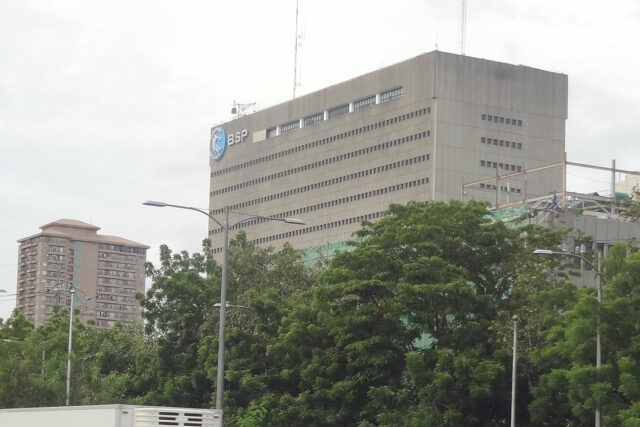
The Bangko Sentral ng Pilipinas (BSP) said on Tuesday that its peso rediscount window was untapped anew last month following the P4.08-billion availment by a universal bank in April.
In 2021, banks only tapped the facility in June, July, and September. These peso rediscount loans amounted to P6.12 million.
The Exporters’ Dollar and Yen Rediscount Facility (EDYRF) was also untouched in May. The last time an availment was made under the EDYRF was a dollar rediscounting loan in 2016.
The BSP’s rediscount window gives banks access to additional money supply by posting their collectibles from clients as collateral.
In turn, banks may use the cash — denominated in peso, dollar or yen — to extend more loans to their corporate or retail clients and service unexpected withdrawals.
Rizal Commercial Banking Corp. Chief Economist Michael L. Ricafort said there were no rediscount loans last month amid “continued excess liquidity in the financial system as the banks have other alternative sources of funding, such as the interbank market and through capital markets.”
Bank lending jumped by 10% in April, reflecting the rebound in economic activity as restrictions were eased alongside the steady decline in coronavirus cases.
This was the fastest loan growth seen in 23 months or since the 11.2% in May 2020.
Preliminary data from central bank showed outstanding loans of big banks expanded by 10.1% to P9.9 trillion in April from P8.99 trillion in the same month of 2021.
As lending increased, M3, which is considered as the broadest measure of liquidity in an economy, grew by 7.3% to P15.3 trillion in April year on year.
The declining trend in banks’ nonperforming loan (NPL) ratio also reduced the need for lenders to tap the BSP rediscounting facility, Mr. Ricafort said.
The banking industry’s gross NPL ratio went down to 4.08% in March from 4.21% a year ago. It is also lower than the 4.24% seen in February.
The March ratio is the lowest since the 4.1% logged in December.
JUNE RATES For June, the applicable rate for peso rediscount loans will remain at 2.75%, regardless of maturity.
Meanwhile, dollar and yen-dominated borrowings will be priced at 3.61071% and 1.98246%, respectively. — K.B. Ta-asan
KEVIN SPACEY in a scene from the drama series House of Cards. — NETFLIX/IMDB.COM
NEW YORK — A federal judge on Monday rejected Kevin Spacey’s bid to dismiss a civil lawsuit in which fellow actor Anthony Rapp accused the Oscar winner of making an unwanted sexual advance during a party at Spacey’s Manhattan home in 1986, when Mr. Rapp was 14.
US District Judge Lewis Kaplan in Manhattan said there was a genuine factual dispute about whether the now 62-year-old Mr. Spacey forcibly touched Mr. Rapp’s “intimate parts” to gratify his own sexual desire.
Mr. Kaplan said Mr. Rapp, 50, who is seeking compensatory and punitive damages, can pursue claims of battery and intentional infliction of emotional distress. The judge dismissed an assault claim because Mr. Rapp brought it too late.
A lawyer for Mr. Spacey did not immediately respond to requests for comment. Mr. Spacey has in court papers “categorically” denied Mr. Rapp’s accusations.
Mr. Rapp’s lawyer Peter Saghir declined to comment.
Once among Hollywood’s biggest stars, Mr. Spacey fell from grace after Mr. Rapp accused him of misconduct in October 2017, and more accusers came forward.
Last month, British authorities authorized criminal charges against Mr. Spacey for alleged sexual assaults against three men between 2005 and 2013. Mr. Spacey could formally face the charges if he entered England or Wales.
The actor’s awards have included Oscars in 2000 for best actor in American Beauty and in 1996 for best supporting actor in The Usual Suspects. He also won a Tony in 1991 for best featured actor in a play in Neil Simon’s Lost in Yonkers.
Netflix dropped Mr. Spacey from his starring role in House of Cards after accusations began surfacing, and the series finished without him.
In the alleged 1986 encounter, Mr. Spacey grabbed Mr. Rapp’s buttocks, lifted him onto a bed and laid on him before Mr. Rapp “wriggled out,” court papers say.
Mr. Rapp has said under oath there was no kissing, undressing, reaching under clothes, sexualized statements or innuendo, and the encounter lasted no more than two minutes.
He sued Mr. Spacey in September 2020 and invoked the Child Victims Act, a New York law giving accusers a since-expired window to sue over abuses from decades earlier. — Reuters
Cervical cancer is the second leading cause of cancer death among women in the Philippines. The Department of Health (DoH) estimates almost 7,300 new cases of cervical cancer and 3,800 deaths due to the disease occur in the country every year.
Globally, cervical cancer is the fourth most common cancer among women, said the World Health Organization (WHO).
Signs and symptoms of cervical cancer include blood spots or light bleeding between or following periods; menstrual bleeding that is longer and heavier than usual; bleeding after intercourse, douching, or a pelvic examination; increased vaginal discharge; pain during sexual intercourse; bleeding after menopause; and unexplained, persistent pelvic and/or back pain.
The main cause of cervical cancer is persistent infection with high-risk types of human papillomavirus (HPV), an extremely common family of viruses that are transmitted through sexual contact, according to the International Agency for Research on Cancer (IARC).
The WHO added that two HPV types (16 and 18) account for close to half of high grade cervical precancers.
Other risk factors include becoming sexually active at a young age (especially younger than 18 years old), having many sexual partners, smoking, having a weakened immune system, chlamydia infection, long-term use of oral contraceptives, low socioeconomic status, having multiple full-term pregnancies, young age at first full-term pregnancy, and a diet low in fruits and vegetables, said the American Cancer Society.
Vaccines are available that protect against high-risk HPV types, and screening programs can detect signs of disease at an early stage, allowing for effective treatment and management.
“This means that cervical cancer should be one of the most preventable and treatable forms of cancer,” the IARC said.
According to a study by Samantha Carr and Charlotte Hespe, risk factors for cervical cancer are more prevalent among Filipino women than the global community. These include young age at first intercourse, low socioeconomic status, multiple full-term pregnancies, smoking, use of oral contraception and risky sexual behaviors.
They noted that the main barrier to Pap smear screening in low-resource countries is the lack of pathology services, infrastructure or trained practitioners. The authors cited a cost-utility analysis of different methods for cervical cancer screening and prevention in the Philippines.
The analysis found that screening women aged 35 to 45 every five years using visual inspection with acetic acid (VIA) was the most cost-effective strategy.
The DoH currently recommends that cervical cancer screening targets women aged 25 to 55 years every five to seven years using the VIA method.
HPV vaccination of girls at age 11 would also be cost-effective if there was high coverage (more than 80%) and providing the vaccine resulted in lifelong immunity.
The US Centers for Disease Control and Prevention (CDC) said that HPV vaccines are safe and work well. They have the potential to prevent more than 90% of HPV-attributable cancers, and that the protection they give last a long time. The CDC added that the HPV vaccine is recommended earlier as it could protect children before they have contact with the virus.
While some parents may be hesitant to have their child vaccinated, the CDC said that it is important to note that HPV is a common infection and that nearly everyone will get HPV in their lives.
The CDC added that studies have shown that getting vaccinated does not make teens think to start having sex. The HPV vaccination is given earlier to protect a child before they are exposed to an infection.
Vaccinations can be likened to wearing a helmet for protection. A helmet protects a person wearing it, and does not increase the likelihood of an accident.
To eliminate cervical cancer as a public health problem, the WHO Global Strategy to Eliminate Cervical Cancer recommends that all countries must reach and maintain an incidence rate of fewer than four new cases of cervical cancer per 100,000 women per year.
Achieving that goal rests on three key pillars and their corresponding targets: 90% of girls should be fully vaccinated with the HPV vaccine by the age of 15 years; 70% of women should be screened using a high-performance test by the age of 35 years, and again by the age of 45 years; and 90% of women with precancer should be treated and 90% of women with invasive cancer managed.
Each country should meet the 90-70-90 targets by 2030 to get on the path towards eliminating cervical cancer by the end of this century, the WHO said.
The WHO emphasized that cervical cancer can be cured if diagnosed at an early stage and treated immediately.
Teodoro B. Padilla is the executive director of Pharmaceutical and Healthcare Association of the Philippines (PHAP), which represents the biopharmaceutical medicines and vaccines industry in the country. Its members are at the forefront of research and development efforts for COVID-19 and other diseases that affect Filipinos.
ROXAS Holdings, Inc. (RHI) said on Tuesday that the merger among entities within the company had been approved by the Securities and Exchange Commission.
The merger involved Central Azucarera Don Pedro, Inc. (CADPI) and the other wholly owned RHI subsidiaries, namely: Central Azucarera De La Carlota, Inc., Roxol Bioenergy Corp., RHI Agri-Business Development Corp., and Roxas Pacific Bioenergy Corp.
CADPI is the surviving corporation, the listed sugar and ethanol producer said.
“The merger is expected to provide better operational and fiscal management across the other remaining entities in operation under the Issuer,” the company said.
It added that since all entitles involved in the merger are existing subsidiaries of RHI, there will be no material impact to the parent company or issuer’s financial position or business post-merger.
RHI said that as a consequence of the merger, the remaining operating entities under the Issuer will be CADPI and San Carlos Bioenergy, Inc.
Last month, RHI reported that its net loss for the six months ending March 31, 2022 was trimmed to P496 million from P574 million previously.
RHI Chairman Pedro E. Roxas said that while the group’s revenues were higher last year, these gains were adversely affected by the contracted milling operations in CADPI, resulting in lower tons of canes milled, and the “significantly higher” fuel costs for refinery operations.
CADPI’s milling operations were significantly hampered by the decline in the supply of sugarcanes, particularly in the Batangas area, RHI said.
SYDNEY Sy Tancontian needed just less than a month to snare the Southeast Asian Games silver medal in kurash and the Asian champion in sambo.
The 22-year-old Ms. Tancontian made it a reality after ruling the 2022 Asian Sambo Championships held at the Bouddha Sports Center in Jouneih, Lebanon over the weekend.
The Davao City lass turned back an old, familiar foe in Arailyn Abenova of Kazakhstan with a one-sided 5-0 victory to capture the women’s +80-kilogram mint.
It was sweet revenge for Ms. Tancontian after she lost to the same opponent in the round-of-16 of the World Championship in Tashkent, Uzbekistan.
The recent feat came after she copped a silver in Hanoi a month back.
Ms. Tancontian, a five-time World Sambo Championship bronze medal winner, has been competing not just in sambo and kurash but also in judo as well being a varsity of University of Santo Tomas.
Her father, Pilipinas Sambo president Paolo Tancontian, later thanked the Philippine Sports Commission and Philippine Olympic Committee for their support. — Joey Villar
INFLATION QUICKENED in May to its highest level in three and a half years, fueled by soaring food and transport costs, the statistics agency said on Tuesday. Read the full story.
THE PESO dropped versus the dollar on Tuesday as headline inflation surged above 5% in May and amid high global oil prices.
The local unit closed at P52.95 on Tuesday, shedding nine centavos from its P52.86 finish on Monday, Bankers Association of the Philippines data showed.
The peso opened Tuesday’s session at P52.90 against the dollar. Its weakest showing was at P52.975, while its intraday best was at P52.87 versus the greenback.
Dollars exchanged decreased to $745.120 million on Tuesday from $1.07 billion on Monday.
The peso weakened after the latest headline inflation from the Philippine Statistics Authority, Rizal Commercial Banking Corp. Chief Economist Michael L. Ricafort said.
“The peso weakened, tracking the increase in international oil prices from global demand optimism after Beijing loosened major coronavirus lockdown restrictions,” a trader said in an e-mail.
Inflation quickened to its fastest pace in over three years in May due to higher food and transport costs, preliminary data from the Philippine Statistics Authority released on Tuesday showed.
Headline inflation in May surged by 5.4% year on year from 4.9% in April and 4.1% a year ago. This matched the 5.4% median estimate in a BusinessWorld poll conducted late last week, which was the midpoint of the 5-5.8% outlook range given by the Bangko Sentral ng Pilipinas for that month.
May’s headline print was also the fastest since the 6.1% seen in November 2018.
Year to date, inflation has averaged 4.1%. This is lower than the central bank’s 4.6% forecast but above its 2-4% target for the year.
Meanwhile, oil prices inched higher as demand for fuel increased and supplies tightened amid relaxed mobility restrictions in China, Reuters reported.
Brent crude futures were up 28 cents or 0.2% at $119.79 barrel at 0601 GMT.
US West Texas Intermediate crude futures were up 31 cents or 0.3% at $118.81 a barrel.
Beijing and Shanghai have been returning to normal in recent days after two months of lockdowns to curb the surge of the Omicron variant.
Traffic bans were lifted and restaurants were opened for dine-in service on Monday in most parts of Beijing.
For Wednesday, Mr. Ricafort and the trader expect the peso to move between P52.80 and P53 against the dollar. — Keisha B. Ta-asan with Reuters
STOCKS recovered on bargain hunting on Tuesday despite data showing faster inflation in May.
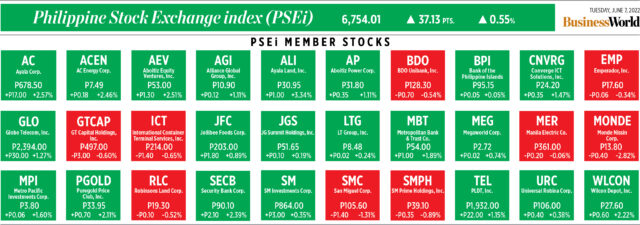
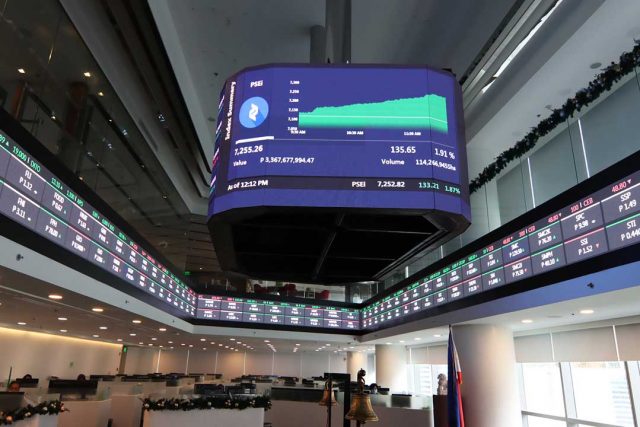
The benchmark Philippine Stock Exchange index (PSEi) improved by 37.13 points or 0.55% to close at 6,754.01 on Tuesday, while the broader all shares index inched up by 12.66 points or 0.35% to 3,598.51.
“Philippine shares rebounded today on bargain hunting. The market has already factored in the headline inflation for May that jumped to 5.4%, the highest recorded since the 6.1% seen in November 2018,” Papa Securities Corp. Equities Strategist Manny P. Cruz said in a Viber message on Tuesday.
“Consequently, the monetary authorities are looking to raise rates in their June and August meetings to contain inflation pressure. On top of this, the central bank is also looking to cut the reserve ratio by 200 bps (basis points) to 10% by yearend,” Mr. Cruz added.
“Philippine shares edged higher in a relatively quiet session despite the release of the May CPI (consumer price index) reading… which was in line with the Bloomberg median consensus, making this more of a non-event. Food and transportation were the main culprits as usual…,” Regina Capital Development Corp. Head of Sales Luis A. Limlingan said in a Viber message.
Headline inflation in May surged by 5.4% year on year from 4.9% in April and 4.1% a year ago, preliminary data from the Philippine Statistics Authority released on Tuesday showed.
Year to date, inflation averaged 4.1%. This is lower than the central bank’s 4.6% forecast but above its 2-4% target for the year.
On Tuesday, Monetary Board member and incoming Bangko Sentral ng Pilipinas (BSP) chief Felipe M. Medalla said in a Bloomberg interview that they are “almost” sure to hike at their June 23 meeting and there is also a “90% chance” of another increase at their subsequent review on Aug. 18.
Mr. Medalla said the real question is if an August hike would be the last one for the year and noted decisions beyond this would be data-dependent.
Increases worth 25 bps in the Monetary Board’s June and August meetings would bring the benchmark rate to 2.75% from 2.25% currently following a hike of the same magnitude at its last May 19 meeting to curb growing inflationary pressures.
All sectoral indices ended in the green on Tuesday. Mining and oil advanced by 233.03 points or 1.91% to 12,431.34; holding firms rose by 56.13 points or 0.90% to 6,260.49; property climbed by 16.39 points or 0.51% to 3,182.34; services went up by 6.20 points or 0.33% to 1,856.46; financials gained 2.64 points or 0.22% to 1,611.51; and industrials added 13.18 points or 0.14% to end at 9,132.22.
Advancers beat decliners, 96 versus 90, while 42 names ended unchanged.
Value turnover slid to P4.96 billion with 877.07 million shares changing hands from the P5.94 billion with 1.88 billion issues seen the previous trading day.
Net foreign selling grew to P512.12 million on Tuesday from P287.1 million on Monday. — Luisa Maria Jacinta C. Jocson with Bloomberg
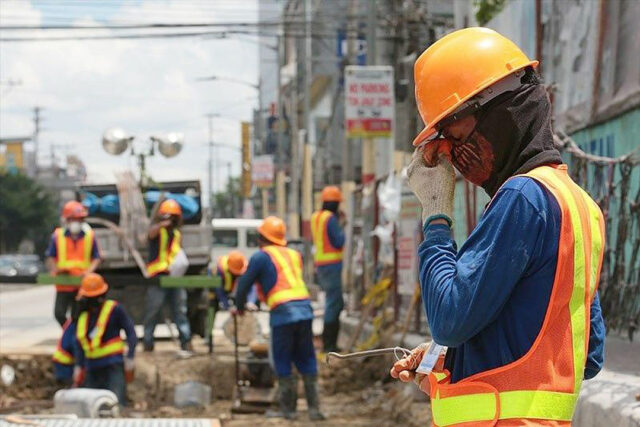
THE Department of Finance (DoF) said infrastructure spending need not be “sacrificed” in the process of reducing the budget deficit, which is expected to contract even with no new taxes and shrink even faster if the government can find additional funding of P250 billion a year.
In an economic bulletin on Tuesday, DoF Chief Economist Gil S. Beltran said the way forward will involve “shoring up revenue and cutting non-priority expenditure… without sacrificing infrastructure spending.”
He said that assuming no new taxes, the deficit is expected to hit the equivalent of 4.1% of gross domestic product (GDP) by 2025, down from the 2021 deficit-to-GDP ratio of 8.6%. Raising an additional P250 billion a year would bring the ratio down to 3.2% by 2025, just under the pre-pandemic level of 3.4%.
“It is therefore important to restore fiscal health and build up reserves when the economic weather is fine so as to have the capacity to respond again should shocks materialize,” Mr. Beltran added. “This is akin to having an insurance (policy) that covers for contingencies. Not having one is a fool’s game and fiscal heartaches hit the hardest when it’s too late.”
Separately, Manulife Philippines Head of Equities Mark A. Canizares said in a statement on Tuesday that it considers infrastructure and mining to be critical for the incoming administration.
The statement, which referenced Manulife Investment Management’s outlook for the market in the context of the impending change of government, declared the Philippines to be on a recovery path from the pandemic, after the economy posted 8.3% growth during the first quarter.
“Infrastructure-related sectors are likely to benefit from the priorities of the incoming administration,” Mr. Canizares said. “We expect a continuation of the decentralization of infrastructure investment.”
Mr. Canizares noted that under the Duterte administration, Mindanao was a main recipient of infrastructure projects, including the Davao City Bypass Construction and Coastal Road projects, the loans for which were obtained at the height of the pandemic in 2020.
“Mining is another sector that could be in focus. Marcos has previously said that he wants better laws and regulations on mining for the industry to contribute more to the economy,” he added.
He said his view on the utility sector is more subdued, given Mr. Marcos’ comments on lowering energy costs.
Aside from continuing with the Build, Build, Build program, Mr. Marcos also earlier signaled his plans to reduce the price of rice to P20 per kilo and reopen the Bataan Nuclear Power Plant.
“Key to the success of these programs is the passage of revenue-enhancing measures that can expand the contribution of fiscal spending to economic growth. This will allay fears of a blowup in the country’s fiscal balances and a runaway increase in debt levels which hounded the later years of the first Marcos presidency.”
Mr. Canizares also warned that the economic recovery remains fragile, with consumer spending at risk of slowing down due to the continued increase in prices.
Headline inflation in May was 5.4%, accelerating from the 4.9% posted in April. The May result was within the central bank’s 5-5.8% target range.
Inflation was driven mainly by rising costs of food, non-alcoholic beverages, and fuel. — Tobias Jared Tomas
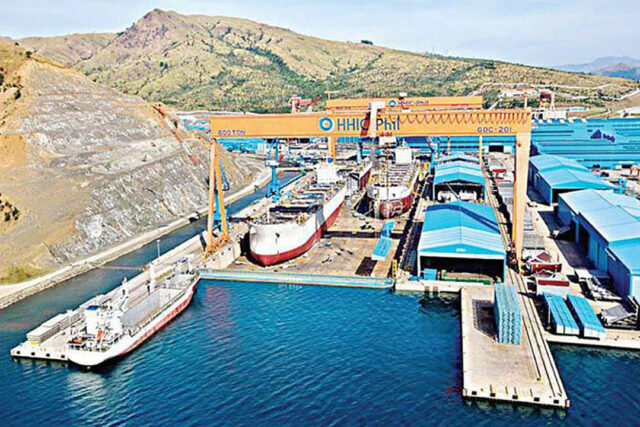
THE Fiscal Incentives Review Board (FIRB) said it will have to evaluate grants of incentives more thoroughly in the wake of the 2019 collapse of Hanjin Heavy Industries and Construction Philippines, Inc. (HHIC-Phil), the operator of a shipyard in Subic Bay.
“This is the reason why we must impose stringent evaluation and impact analysis before the grant of tax incentives,” Finance Assistant Secretary and FIRB Secretariat head Juvy C. Danofarata said.
“Given the failure of this shipyard in Subic, jobs were lost and productivity in the area declined. The project cost the government so much money in foregone revenue that could have been granted to performing and more deserving business enterprises.”
The DoF said that in 2015, HHIC-Phil received tax incentives totaling P370 million. It had first sought tax perks from the Subic Bay Metropolitan Authority and the Board of Investments in 2006 and 2009, respectively.
HHIC-Phil is a subsidiary of South Korean shipbuilder Hanjin Heavy Industries & Construction Co., Ltd.
“During the company’s existence, it was granted seven years of income tax holiday (ITH) and a special corporate income tax (SCIT) rate of 5% on gross income earned (GIE) upon the expiration of its ITH,” the DoF said.
It was also granted additional tax and duty-free import privileges on raw materials and equipment.
“HHIC-Phil also received power subsidies for its operations at the Subic Bay Freeport Zone amounting to P5.17 billion from 2009 to 2018,” the DoF said.
However, HHIC-Phil failed to maintain an employment of an estimated 20,000 workers, and abandoned a $2-billion Mindanao shipyard in 2008, which was supposed to generate 30,000 jobs.
Hanjin Shipyard, formerly owned by HHIC-Phil, was acquired by US private equity firm Cerberus Capital Management for $300 million.
When HHIC-Phil filed for corporate rehabilitation in 2019 with an Olongapo court, it left $412 million in outstanding loans with BDO Unibank, Inc., Metropolitan Bank & Trust Co., Land Bank of the Philippines, Bank of the Philippine Islands, and Rizal Commercial Banking Corp.
HHIC-Phil owed Korean lenders another $900 million. — Tobias Jared Tomas