Home Blog Page 6315

Scottie Thompson named PBA Most Valuable Player

PBA Season 46 Most Valuable Player Scottie Thompson — PBA IMAGES

By Olmin Leyba

THE do-it-all-guard largely considered as the “new face of Barangay Ginebra” is also the top dog of the entire league.

Gin Kings star Scottie Thompson formalized his new-found status by hoisting the coveted Season 46 Most Valuable Player (MVP) trophy to loud applause from fans and peers alike during Sunday’s Philippine Basketball Association (PBA) Leo Awards.

Mr. Thompson, the first guard since Ginebra great Mark Caguiao won the plum in Season 37, said this achievement should serve as an example of how a role player like himself can make it big through persistence.

The top individual plum put the cherry on top of Mr. Thompson’s memorable 2021-22 season that saw him cop the Best Player of the Conference and Finals MVP plums plus the championship in the Governors’ Cup.

The former NCAA MVP from Perpetual Help piled up 2,836 points from stats and votes from players, media and the PBA to beat TnT’s Mikey Williams (1,332), NorthPort’s Robert Bolick (1,295) and Magnolia’s Calvin Abueva (10,66) for the Leo Trophy.

He was joined in the Mythical First Team by Messrs. Williams, Abueva, six-time MVP June Mar Fajardo of San Miguel Beer (SMB) and NorthPort’s Arwind Santos.

Mr. Bolick headlined the Mythical Second Team with SMB’s CJ Perez, Ginebra’s Christian Standhardinger, Phoenix’s Matthew Wright, and Magnolia’s Ian Sangalang.

Mr. Williams, meanwhile, was feted as Rookie of the Year while Juami Tiongson of Terrafirma received the Most Improved Player accolade.

Meralco’s Cliff Hodge, Santos, TnT’s Kelly Williams, Magnolia’s Jio Jalalon, and SMB’s Chris Ross composed the All-Defensive Team while NLEX’s Kevin Alas was handed the Sportsmanship Award during the hour-long ceremonies preceding the Season 47 opening.

Bigger DA budget seen needed prior to RCEP market opening

REUTERS

By Alyssa Nicole O. Tan, Reporter

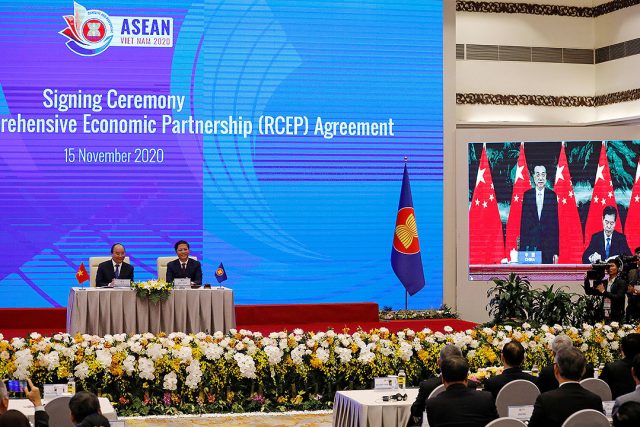
SENATORS who will serve in the next Congress said agriculture budgets must be enlarged to make farmers more competitive in preparation for the market opening contemplated under the proposed Regional Comprehensive Economic Partnership (RCEP).

Francis Joseph G. Escudero, a recently proclaimed Senate candidate, told BusinessWorld in a Viber message that the agriculture industry can only be made more competitive “by increasing the budget of agriculture which, for 2022, is only 10% of the budget of the DPWH (Department of Public Works and Highways).”

About P786.6 billion was allocated to the DPWH in the 2022 General Appropriations Act, while the Department of Agriculture (DA) and National Irrigation Administration were provided P102.5 billion.

Business groups that support RCEP have backed bigger agriculture budgets that are more closely aligned with the spending levels of other ASEAN economies.

“We see our membership in RCEP as an important challenge to our government to step up genuine and meaningful support for Filipino producers, especially in the agriculture sector, which is the backbone of the Philippine economy. We, therefore, urge the government to provide a substantial increase in the agriculture budget commensurate to that provided in our comparable ASEAN neighbors, as we urge our Senators to ratify the RCEP Agreement without delay,” various chambers of commerce said in a joint statement.

Re-elected Senator Ana Theresia N. Hontiveros-Baraquel told BusinessWorld in a Viber message also pointed to the need for increased budget utilization and measures against the smuggling of farm goods.

“According to the farmers and fishermen themselves, the government must first prove that it is monitoring the DA budget because its unliquidated expenses have reached P22 billion, according to the 2020 report of the CoA (Commission on Audit),” she said.

“We also need an oversight committee against smuggling and strict trade safeguard mechanisms to ensure that the sales of our producers are not affected,” she added, noting that she agreed with demands for stronger quarantine and border control measures to prevent the entry of viral diseases such as African Swine Fever.

The best indicator that the Philippines is strengthening and developing the industry is if the budget set aside for the DA is at least 8% of total appropriations, or about P424 billion of the proposed P5.3-trillion 2023 budget, Ms. Hontiveros said.

“Pushing for this marked increase is a strong signal of institutional support for all farmers, fisherfolk, and various producers,” she added.

Senate Foreign Relations Committee Chairman Senator Aquilino Martin L. Pimentel III has said it would be up to President-elect Ferdinand R. Marcos, Jr. to endorse the trade deal to the Senate when the 19th Congress opens next month.

“The 19th Congress (will) wait for (Office of the President) to endorse the said treaty again to the Senate,” he said in a mobile message to BusinessWorld, noting that previous deliberations on the free trade deal will be made part of the committee’s records while new hearings will be held by the appropriate Senate committee in the incoming administration.

Mr. Pimentel said there was no vote on the RCEP since only 17 senators were present during plenary. The trade deal needed 16 affirmative votes to be ratified by the Senate.

“Two senators were abroad, one quarantined, two went out. In short, many members were not on the floor. We didn’t want to deprive them the chance to participate and or vote on the measure,” he said.

The RCEP, which came into force on Jan. 1 in other signatory countries, involves Australia, China, Japan, South Korea, New Zealand and the 10 members of the Association of Southeast Asian Nations (ASEAN).

The Philippines is one of three ASEAN countries that have not signed on to RCEP, along with Indonesia and Myanmar.

“The only question that needs to be answered is what is the real benefit of RCEP for Filipinos? Because we seem to be on the losing side,” Ms. Hontiveros said.

She noted that the agreement is predicted to worsen the Philippines’ trade balance, leading to job losses and a $58 million or a P3 billion drop in annual tariff revenue. Under the RCEP, the Philippines only made concessions on 33 tariff lines, which are equivalent to 0.8% of total imports and 1.9% of all agriculture tariff lines.

Although net exporters of intellectual property may benefit more due to the increased protection under the treaty, Ms. Hontiveros said the Philippines is a net importer.

She also said the treaty is not likely to benefit small and medium enterprises as cooperation mechanisms between developed countries and developing countries are voluntary and not enforceable.

“Virtually all agricultural groups in the Philippines have opposed RCEP — from small farmers to big agriculture groups,” she said. “We must listen to why there is an overwhelming consensus because they are the ones who will experience the first wave of impact after its implementation.”

Mr. Escudero said: “The playing field between our farmers and that of other countries is clearly not level and will only result in benefits to the more competitive country and its farmers, not ours.”

“Putative future gains should never outweigh definite losses and suffering by our farmers given the imbalance I mentioned above,” he added.

The DA has recommended that its budget be reoriented towards diversification, value addition and consolidation of production to improve volume and productivity. 

An enhanced marketing campaign for Philippine products should also be implemented so producers can maximize benefits from expanded market access once RCEP is ratified, the DA said.

T-bills, bonds may fetch higher rates with inflation seen surging

BW FILE PHOTO

GOVERNMENT SECURITIES to be auctioned off this week could fetch higher yields as investors want higher returns, with inflation seen to have surged last month.

The Bureau of the Treasury (BTr) will offer P15 billion in Treasury bills (T-bills) on Monday or P5 billion each in 91-, 182- and 364-day securities.

On Tuesday, it will auction off P35 billion in reissued seven-year Treasury bonds (T-bonds) with a remaining life of three years and eight months.

Traders said the government debt on offer this week could be quoted at higher rates as inflation is expected to have breached 5% in May.

“With consumer price index (CPI) poised to print 5.4% for May, we may see a cautious market next week,” a trader said in an e-mail.

The first trader said the average rate of the reissued seven-year T-bond would likely be between 5.3% and 5.5%.

“Expect upward pressure on rates to continue but the extent will be clearer once CPI data for May is out on Tuesday,” a second trader said via Viber, noting the data will influence the central bank’s rate hike path going forward.

The second trader added that the results of the T-bill auction will dictate the tone for Tuesday’s T-bond offering.

Meanwhile, Rizal Commercial Banking Corp. Chief Economist Michael L. Ricafort said T-bill rates could move slightly higher to track yield movements at the secondary market following the release of data showing outstanding National Government debt reached a new record high as of May.

The Philippine Statistics Authority will release the May inflation report on Tuesday, June 7.

Analysts said inflation likely accelerated and went above 5% last month as food and oil prices continued to climb due to disruptions in global supply chains.

A BusinessWorld poll of 16 analysts yielded a median estimate of 5.4% for May inflation, matching the midpoint of the Bangko Sentral ng Pilipinas’ (BSP) 5% to 5.8% outlook.

If realized, this would be faster than the 4.9% in April and the 4.1% print in May 2021. This would also be well above the central bank’s 2-4% target for the year.

Headline inflation last hit the 5% level in December 2018 and stood at 5.2% that month.

BSP Governor Benjamin E. Diokno last month said the central bank is likely to raise key interest rates by another 25 basis points (bps) at its next policy review on June 23 following a hike of the same magnitude at its May 19 meeting to curb growing inflationary pressures.

At the May meeting, the central bank upwardly revised its average inflation forecast for 2022 to 4.6% from the previous forecast of 4.3%, above the 2-4% target band. For 2023, the BSP’s inflation forecast was hiked to 3.9% from 3.6% previously.

Meanwhile, the National Government’s debt rose to a new record high of P12.76 trillion as of May due to loans for the state’s pandemic response.

At the secondary market on Friday, the 91- 182- and 364-day T-bills were quoted at 1.4464%, 1.8098%, and 2.2203%, respectively, based on the PHP BVAL Reference Rates published on the Philippine Dealing System’s website.

Meanwhile, the four-year bond, the closest benchmark to the remaining life of the reissued seven-year papers to be auctioned off on Tuesday, fetched a yield of 5.3559%.

Last week, the BTr partially awarded its offer of T-bills despite tenders reaching P42.88 billion, nearly triple the P15 billion on offer.

Broken down, the government fully awarded the 91-day T-bills, raising P5 billion as programmed as tenders for the tenor reached P22.34 billion. The average yield on the three-month debt paper was at 1.46%, 21.5 bps lower than the 1.675% seen previously.

The BTr also raised P5 billion as programmed from the 182-day securities as bids for the tenor reached P14.96 billion. The average rate on the six-month T-bill was at 1.812%, down by 8 bps from the 1.892% fetched at the previous auction.

Lastly, the Treasury rejected all bids for its P5-billion offer of one-year T-bills even as bids reached P5.58 billion. Had the government made a full award, the average rate of the one-year tenor would have been at 2.716%, 67.59 bps higher than the 2.0401% fetched at the secondary market prior to the auction. 

Meanwhile, the last time the government offered the reissued seven-year bonds to be auctioned off on Tuesday was on Jan. 21, 2020. At that auction, the BTr raised just P27.203 billion from the papers out of the P30-billion program despite bids reaching P52.71 billion. The papers fetched an average rate of 4.732% and carry a coupon of 6.25%.

The BTr wants to raise P250 billion from the domestic market in June, or P75 billion through T-bills and P175 billion from T-bonds.

The government borrows from local and external sources to help plug a budget deficit capped at 7.7% of gross domestic product this year. — T.J. Tomas

A new day for Hyundai

Hyundai Creta — PHOTO FROM HYUNDAI

Get ready for a revitalized brand this July

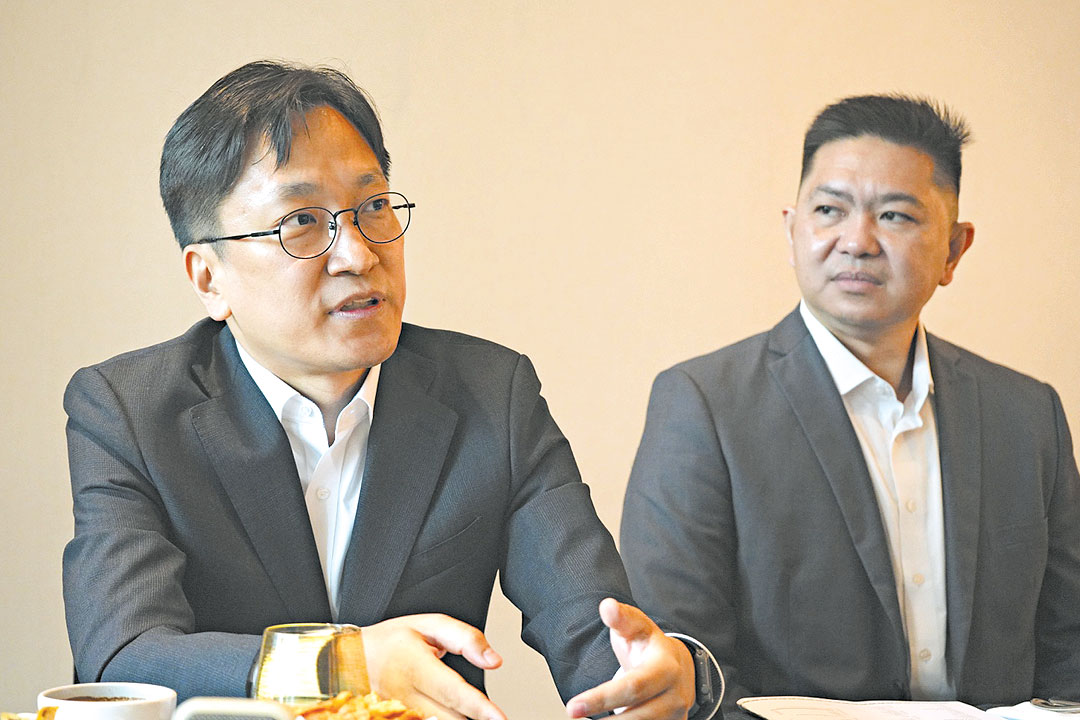
“EXACTLY ONE MONTH and two weeks ago,” Lee Dong Wook recalled with a smile after he was asked when he was tapped to head Hyundai’s passenger car business in the Philippines. “You have to move to the Philippines,” he remembers being told.

It’s an assignment that is both daunting and promising.

At one point, Hyundai was the third most popular brand in the Philippines by sales volume until a precipitous fall from grace overtly caused by a number of problems — including an acute lack of model units. I’ve spoken to a dealer principal who rued that even newly launched models were not supported with inventory.

The situation had gotten so bad that some dealers were putting in other brands in their previously Hyundai-exclusive showrooms. On the other hand, the same group responsible for Hyundai had brought in the Changan automobile brand in 2020. Just last January, Hyundai’s passenger car business literally hit bottom with a thud. That month, not one Hyundai automobile was sold. Zero.

For the South Korean auto giant, this obviously has to change.

“The Philippines is one of our major markets in Southeast Asia, and we have seen such substantial growth here in the past. Obviously, we would like to increase our growth, business and partnership with various of shareholders in the country,” said Mr. Lee in a speech to a handful of motoring media last week. “Hyundai is coming back here to the Philippine market with a refreshed brand and high-quality standards to connect local customers to community.”

Over about two hours, Mr. Lee patiently and gamely fielded questions pertaining to how the next chapter of Hyundai will be like in the Philippines.

First, Hyundai Asia Resources, Inc. (HARI), responsible for the brand since 2001, will be turning over the passenger and light commercial vehicle portfolio to Hyundai Motor Philippines, Inc. (or HMPH). However, HARI will retain control of Hyundai’s thriving truck and bus business.

Mr. Lee, who brings a wealth of international experience borne of stints in India and Malaysia, also crucially has had responsibility for Asia-Pacific territories.

Asked by this writer if he had already met with HARI President Ma. Fe Perez-Agudo, he replied, “Not yet, but I think we’ll have a chance to. We already have a good relationship when I was working for (Hyundai Asia Pacific) from 2013 to 2019. I don’t hesitate to meet with her. We’re already friends.”

Mr. Lee was candid, but also sometimes appeared to temper his words. “It’s not a takeover,” he corrected. “We’re building up a business. It’s a totally different concept.” Referring to Ms. Perez-Agudo, he declared, “We are partners; I’m focusing on passenger cars, Miss Ma. Fe is focusing on trucks and buses. Together we’re Hyundai family.”

Still, Mr. Lee is cognizant of the work to be done to bring Hyundai back to a position of leadership — or at least where the brand had peaked in terms of market position. “Customer satisfaction and experiences will be the benchmarking rules for (the) new Hyundai in the Philippine market,” he continued in his speech.

He spoke of working on customer experience, customer satisfaction, and rebuilding the brand. But, first things first. Perhaps one of the most urgent asks from beleaguered dealerships is making vehicles available to be viewed — and to be sold. Indeed, it’s hard to sell cars when even the showroom has none.

“Dealers would say ‘I don’t have any cars for display in my showroom. So many customers visit our showroom, and the customer (would ask) when can I buy our Hyundai cars?’” shared Mr. Lee. “I gave a promise to our dealer principals like this: My first role is to fill up our cars in your showroom display, then customers will visit (so) they can enjoy and see the choices. We will move forward.”

HMPH currently has 39 dealerships, with a plan to grow the number to 44 by yearend.

As for other brands encroaching in Hyundai showrooms, Mr. Lee compared it with going to an Apple store for an iPhone and a Google shop for a Google device. “When our customer visits our showroom dedicated to Hyundai, I don’t want to give them confusion,” he stated.

I asked if he was going to ask them to move. “Yes. It’s related to customer satisfaction. This situation gives confusion to customers,” he repeated.

Another persistent problem that has long undercut and hampered the brand’s growth is the proliferation of gray market imports. “We cannot stop gray market importers immediately. But we have to try continuously. We will minimize the number, like what we did in Vietnam. We have to protect our customers and dealers.”

Mr. Lee said he even so far as to check on the vehicle identification numbers of the “three to five Starias” that have made their way into the country through parallel importers. Remember that HARI hasn’t even officially launched the MPV yet. “We can tell if it’s a gray one,” he underscored.

HMPH will be focusing on Hyundai’s SUV models from the B-segment SUV Creta (to be launched in July) to the Palisade. Mr. Lee is particularly excited about the Creta, which will be sourced from Indonesia and has been launched there. He said that the model now leads its segment with 45% market share, followed by the Honda HR-V with 40%. The MG ZS is a distant 0.7% there. The new Tucson will also be launched here in July, along with a “Mitsubishi Xpander competitor” (also manufactured in Hyundai’s Indonesia facility able to churn out 250,000 vehiles a year) which, by all indications, is the Stargazer. Expect the Staria to debut as well. Meanwhile, the subcompact sedan Reina will be discontinued; the Kona appears to be dead in the water, too.

What of the Venue? Well, there’s a bit of a kerfuffle here. While the Venue never really had a chance after it was launched with no supply of units to back it up, production will be transitioned to India. What that means is that import duty will rise from five percent (when it was sourced from Korea) to a whopping 30%. “We have to think carefully if we will sell it or not,” said Mr. Lee.

As far as electric vehicles are concerned, HMPH is mulling over bringing in the Ioniq 5 — “triple-crowned” in 2022 via the World Car Awards as “World Car of the Year,” “World Electric Vehicle of the Year,” and “World Car Design of the Year.” The company is looking at the feasibility of bringing it vis-à-vis availability of charging infrastructure and government policies.

For now, it’s about “starting from the bottom,” said Mr. Lee. The company just inaugurated its BGC headquarters last week, and is looking at “three or four candidates” for a parts warehouse. HMPH also secured a stockyard in Laguna.

HMPH is still adding to its 50-strong complement of people at the moment. One of the key departments is Mobility. “This is our future,” he intimated. “This will prepare activities like shuttling service, subscription (or leasing).” Imagine paying a monthly sum then driving away in your Hyundai of choice. “We will check the regulations if this method is available or possible.”

“Every company will start like this,” declared Lee Dong Wook. “Frankly speaking, we are facing the same challenges as other brands when it comes to supply.”

Still, the 48-year-old executive is obviously full of excitement for what’s to come despite the challenges. You could say that there’s nowhere to go but up. After all, Hyundai has a wide array of popular vehicles and has certainly moved forward even if its presence here stagnated. It might truly just be a matter of making the products available to the Filipino buyers who want them.


‘No luck this time, just hard work’

POLAND’S Iga Świątek celebrates with the trophy after winning the women’s singles final match against Cori Gauff of the US. — REUTERS

Says French Open champion Iga Swiatek

PARIS — Iga Świątek said she felt lucky when she won her first French Open title in 2020, but the world number one credits hard work for her second Grand Slam title on the Parisian clay.

Świątek, who beat American teenager Coco Gauff 6-1, 6-3 in Saturday’s final at Roland Garros, went from being a largely unknown 19-year-old, ranked 54th in the world, to instant celebrity status after lifting her first Suzanne Lenglen Cup 18 months ago.

But she arrived in Paris last month as the overwhelming favorite, having won all five tournaments she had played before the claycourt major.

“I think in 2020 the main thing that I felt was confusion, because I have never really believed 100% that I can actually win a Grand Slam,” the Pole, who turned 21 last week, told reporters.

“This time it was, pure work. Just with everything that was going on, I’m also like more aware of how it is to win a Grand Slam and what it takes and how every puzzle has to come together and basically every aspect of the game has to work.

“With that awareness, I was even more happy and even more proud of myself, because in 2020… I just felt that I’m lucky. This time, I felt like I really did the work.”

Świątek struggled to handle her new-found fame after becoming a first-time major winner but said she felt more prepared this time for what would follow and “even ready to celebrate a little bit more.”

The setting was also different from the 2020 final for Świątek, with that tournament in Paris played with a limited number of spectators in the stands due to the coronavirus pandemic.

On Saturday, the 15,000-capacity center court was full and among those cheering for Świątek was Poland’s football captain and striker Robert Lewandowski.

‘SOMETHING SPECIAL’
Świątek did not drop a set during her 2020 triumph and lost just one during this year’s Roland Garros campaign, extending her winning run to 35 matches.

That took her past Serena Williams’ winning streak of 34 matches while she equaled Venus Williams with Saturday’s win over Gauff on Court Philippe Chatrier.

“It may seem pretty weird, but having that 35th win and kind of doing something more than Serena did, it’s something special,” Świątek added.

“Because I always wanted… to have some kind of a record. In tennis, it’s pretty hard after Serena’s career. So basically, that really hit me.

“Obviously winning a Grand Slam too, but this one was pretty special because I felt like I’ve done something that nobody has ever done, and maybe it’s gonna be even more. Yeah, this one was special.”

Świątek has now won both her majors on clay and having already proved earlier in the season that she has the game to dominate on hardcourts, she will turn her attention to grass — a surface on which she has not had much success — with Wimbledon starting from June 27.

“My coach (Tomasz Wiktorowski) believes I can win more matches on grass. I don’t know about that yet,” she said with a smile. “But I would like to add like one or two. Yeah, but honestly, grass is always tricky.

“I actually like the part that I have no expectations there. It’s something kind of refreshing.

“I’m going to just prepare my best. And maybe with the experiences he had with (Poland’s former world number two) Aga Radwańka, it was her favorite surface, he’s going to give me some tips that are actually going to be really helpful, and I’m going to enjoy playing on grass a little bit more.” — Reuters

Analysts see potential drags to upcoming initial public offerings

INVESTOR appetite for upcoming initial public offerings (IPOs) is seen by some analysts to be weaker than before amid uncertainties, including those that come with the transition to a new administration.

“Demand might not be as strong for IPOs given the weak performance of the market and the recent IPOs. Investors might prefer to just buy stocks that are already listed given that many are already trading at very cheap valuations,” COL Financial Group First Vice-President April Lynn C. Lee-Tan said in a Viber message.

Raslag Corp. is the first company to list this month. The solar energy developer will debut on Monday, June 6, and offer up to 350 million primary shares and up to 52.50 million over-allotment option shares at P2.00 per share.

Balai ni Fruitas, Inc., VistaREIT, Inc., and North Star Meat Merchants, Inc. have also been given the go signal by the Philippine Stock Exchange (PSE) for their respective IPOs.

Rizal Commercial Banking Corp. Chief Economist Michael L. Ricafort said that the sentiment on these IPOs would be taken on a per-company or case-to-case basis, based on fundamentals and future industry prospects.

“However, both external and local risk factors could be potential drags on market sentiment, including the still wait-and-see attitude,” he added.

Mr. Ricafort said that the policy and reform priorities of the incoming administration, especially in tackling debt management, could lead to some pickup in prices, with higher inflation as an unintended consequence.

President-elect Ferdinand R. Marcos, Jr. has chosen Bangko Sentral ng Pilipinas (BSP) Governor Benjamin E. Diokno to be his Finance secretary, with Monetary Board member Felipe M. Medalla taking over as central bank head. Alfredo E. Pascual, former president of the University of the Philippines, was tapped as Trade secretary.

Mr. Ricafort said he sees market sentiment to be partly supported after Mr. Diokno signaled that the government would target a narrower budget deficit of about 3% of gross domestic product by 2028 as part of efforts to improve its fiscal performance. This was after the country reached a new record high outstanding national government debt of P12.76 trillion as of April 2022.

He added that better market conditions would support the demand for new IPOs, especially with the slow reopening of the economy amid eased restrictions.

Malacañang announced last week that Metro Manila will remain under Alert Level 1 until at least June 15. Under the most relaxed quarantine restriction, establishments including workplaces and public transportation are allowed to be fully operational.

“Definitely, better market conditions would support market demand and prices for the coming IPOs, with the further re-opening of the economy towards greater normalcy would be an offsetting positive factor vis-a-via the risk factors that are most external nature that are beyond the country’s reasonable control,” he added. — Luisa Maria Jacinta C. Jocson

Greenbelt gets even more fashionable

By Joseph L. Garcia, Reporter

SOME of the world’s most expensive brands can be found at the Greenbelt complex in Makati’s Ayala Center. Judging from plans laid out by the Ayala Malls’ top executives on May 26, the complex is about to get more fashionable.

Stores are expanding, getting refurbished, moving to new spots, while new ones are also opening their doors.

Interior architect J. Antonio Mendoza was tasked to redesign Greenbelt 3’s façade and interior to seamlessly fit the global prestige of the brands it would carry, as well as meet the needs, desires, and expectations of Greenbelt 3’s discerning shoppers.

Christopher Maglanoc, President of Ayala Land Malls, Inc., points out as well the facelift that Greenbelt 4 is receiving. “More global brands now will call that home.”

NEW BRANDS AND OLD
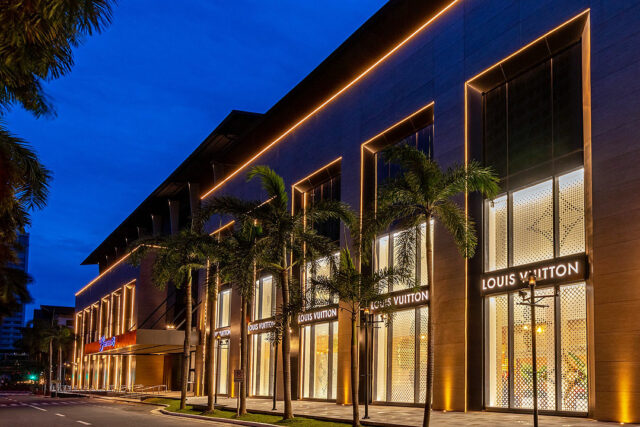
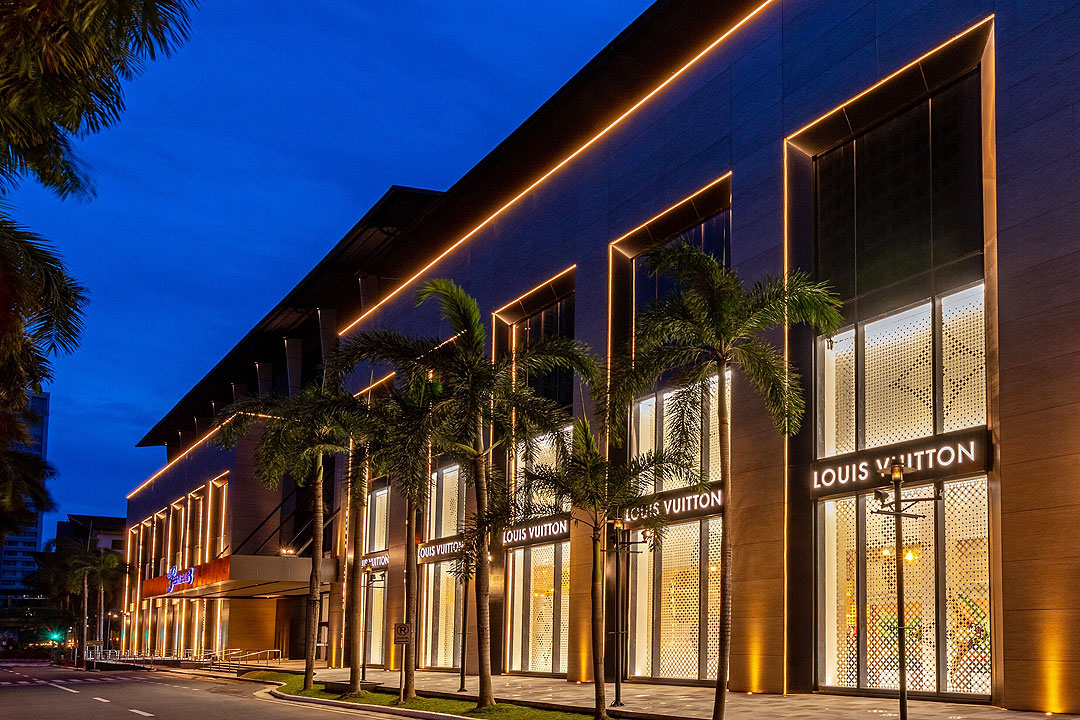
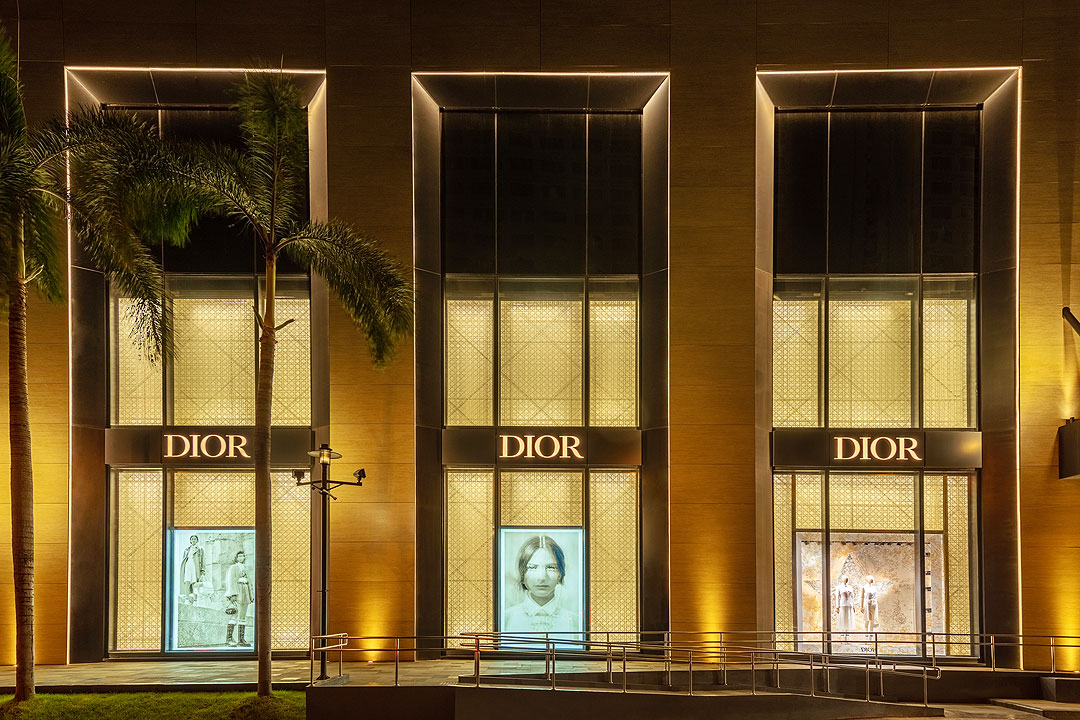
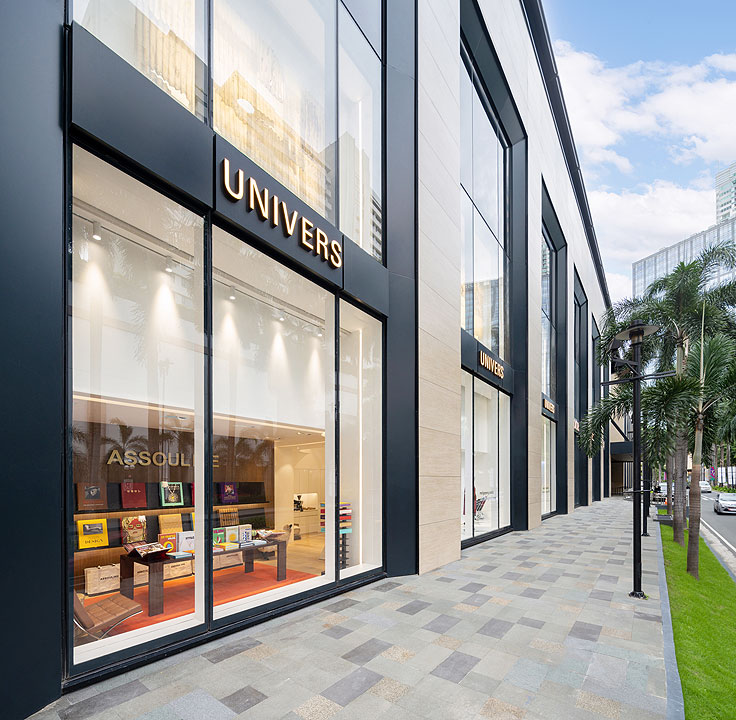
The Louis Vuitton store has expanded, adding ready-to-wear collections to its repertoire. Other stores that have been retouched or have been added to the mix include global brands Dior, Kenzo, Fendi, Univers, Off-White, Thom Browne, L’Officine Universelle Buly, Max Mara, Rimowa, Patek Philippe, and Bvlgari. This month and next, Celine, Loewe, Jimmy Choo, and Ermenegildo Zegna will open their stores. A revamped Tiffany & Co. is slated to open as well as a Cartier.

As these three brands — Ermenegildo Zegna, Tiffany & Co., and Cartier — move from Greenbelt 4 to their new locations, they will remain operational until the final move.

Up to next year, Greenbelt 4 is getting retouched faces for favorites Burberry, Salvatore Ferragamo, Tod’s, Bottega Veneta, Givenchy, Gucci, and Prada. Balenciaga, Alexander McQueen, and Saint Laurent are opening their presence in Greenbelt 4.

Meanwhile, brands completely new to the Philippines — Roger Vivier (once the shoe designer of choice for Queen Elizabeth II; while Jackie O wore their pilgrim pumps) and Faure Le Page (an arms manufacturer for both the royal House of Bourbon and the imperial House of Bonaparte in France; it has since transitioned into creating handbags and other leather goods) will open their doors in the same complex.

“We were able to put together some of the world’s most prestigious global brands,” said Mr. Maglanoc. “This would not be possible without the brands that we’ve worked with through the years.”

Eunice Velasco, Marketing Director for Ayala Malls said, “Greenbelt is indeed the country’s fashion and lifestyle capital.”

“We confidently say this as we take pride in being the only one capable of putting together the most impressive lineup of international brands in one place,” she said.

“It was a huge undertaking,” Mr. Maglanoc said in an interview with BusinessWorld. “We first had to convince the global brands. The LVMH brands (the parent company of Louis Vuitton, among others), if you see them; they’re more or less in full force here.” According to him, negotiations with the brand principals from these luxury brands had been going on since 2018. “We had to sell the vision first.”

He gave the reasons for the brands expanding their operations here, and attracting new brands. “They really see the Southeast Asian market as a growth market. Otherwise, they wouldn’t be here. They’ve been around, but they were working with local partners.”

AHEAD OF THE STANDARD
The pandemic has taught the world about the usage of space. Offices have given way to work-from-home or hybrid arrangements; while restaurants and malls constantly have to be creative in using space, mindful of health risks and pandemic-related restrictions. “Greenbelt has always been about open spaces,” said Mr. Maglanoc. “There was very minimal adjustment.” Asked about other improvements they’ve made, such as more efficient air filters, he said, “We’re ahead of that standard. Even before the pandemic, we met it.”

Since pandemic-related restrictions for occupancy and mobility were imposed early in the pandemic, have the mall operations for the group stabilized? Mr. Maglanoc said, “Not stabilize, but we’re seeing a steady progression. Week on week, month on month.” He said that compared to their pre-pandemic levels of occupancy since 2019 they have since seen 80-85% of those levels return. “That varies per mall location,” he pointed out.

“The luxury category was hardly affected by the pandemic,” he noted. “Despite the lockdowns, people were still spending money on luxury goods.”

Still, present mall operations bear scars from nationwide closures and such incurred during the pandemic. Mindful that the Ayala Center is located in the country’s financial district, he noted that “Greenbelt as well as Glorietta are very dependent on the office market.” He cited data that as of now, only 40% of the country’s office workers are back, with others still serving on remote or hybrid arrangements. “We’re not yet seeing a large part of the office market driving the visits. But we see also — at least from the local community that they serve, they’re back.”

On the question of building anything new, he said, “The main thing is really to get our bearings again. Help our merchants again recover, and basically help our malls get back on track. That’s the main priority now. The expansion will be there when the opportunity presents itself.”

Permit, accreditation rules issued for rabbit importers

CALGARY REVIEWS

THE Department of Agriculture (DA) said it issued rules for importing rabbits which are designed to minimize the spread of animal diseases cross borders.

In a memorandum circular, the department said it “recognizes the increasing interest of many Filipino farmers in raising rabbits for meat production due to the ease in propagation and minimal production costs.”

The rules require accreditation as a live-rabbit importer from the Bureau of Animal Industry-National Veterinary Quarantine Services Division.

Importers will also need to be registered with the Department of Trade and Industry and the Securities and Exchange Commission.

Rabbit farms, including livestock transport vehicles, must be accredited while proposed quarantine sites are subject to inspection.

“The growing awareness and local acceptance of rabbit meat as an alternative protein source amid the rising prices of major livestock commodities such as pork and poultry meat have ignited a subsequent increase in the Sanitary and Phytosanitary (SPS) Import Clearance request for meat-type rabbit breeds,” it added.

“The proposed quarantine site must have sufficient cages and ventilation. It should be thoroughly cleaned and disinfected before the arrival of the imported rabbits. There shall also be no other animals other than the rabbits to be imported,” the circular read.

Only the products of certified rabbit farms and authorized exporters endorsed by the source country will be accepted. Any applicant intending to import rabbits must also apply for SPS import clearance. — Luisa Maria Jacinta C. Jocson

PCIC’s coverage for farmers still inadequate, World Bank study says

A WORLD BANK study found that the Philippine Crop Insurance Corp.’s (PCIC) coverage for farmers remains inadequate, the Department of Finance said on Saturday.

The study was presented by Benedikt L. Signer, a senior financial sector specialist of the WB’s Disaster Risk Financing Insurance Program (DRFIP) at a PCIC board meeting on May 5. Finance Secretary Carlos G. Dominguez III chairs the PCIC board.

The study found that while premium subsidies given to the PCIC have increased, agricultural insurance reached only a third of the country’s farmers and is not well-targeted. The PCIC also holds a de facto monopoly in the agricultural insurance sector, discouraging new entrants into the market, it said.

“So, to put it very bluntly, I guess as a starting point, the World Bank’s findings were that the current agriculture insurance approach in the Philippines is not providing adequate value for money to the Philippine taxpayer nor adequate protection to farmers,” Mr. Signer was quoted as saying in the DoF statement.

The PCIC has received larger subsidies in the past six years, hitting P4.61 billion in 2021 from P3.16 billion in 2020 and just P1.6 billion in 2016. As of end-April 2022, the PCIC has received P299 million in subsidies.

Mr. Signer added that insurance products offered by the PCIC are not suitable for farmers, and insurance claims did not reflect actual losses and “were often paid late.”

The study showed the PCIC is “very exposed to catastrophe losses, which are not reinsured.”

The World Bank proposed several reforms for the PCIC, including clarifying policy objectives by prioritizing who to protect, reviewing government support and subsidies, overhauling the PCIC’s operations and capital management, reviewing products offered and improving existing insurance for high-value crops, and reforming the market structure by giving private entrants access to subsidies or considering alternatives.

The study recommended that the PCIC establish a steering committee to improve cost efficiency. Mr. Signer said the government could also place the PCIC under the Insurance Commission’s oversight, develop and refine rating methods as well as its reinsurance, and revise the coverage and methodologies of existing products.

The PCIC is an attached agency of the Agriculture department.

The World Bank study also recommended that the government conduct feasibility studies for newer products, develop and review options for subsidy reform, conduct exchanges of knowledge with foreign countries, and adopt new technologies, including satellite monitoring and farm geotagging.

In response to the study’s recommendations, Mr. Dominguez said the existing governance committee of the PCIC board can serve as the steering committee. Board officials also said they would work on proposals for legislation to reform the PCIC and products to cover subsistence farmers, among others. — TJT

Chery Tiggo 8 Pro: Ain’t no mountain high enough

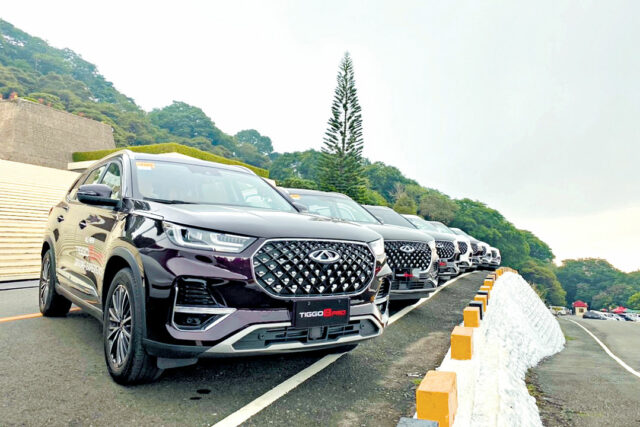
The Chery Tiggo 8 Pro features an eye-catching Diamond Grille flanked by slim LED headlamps. The fog lamps and daytime running lights (DRLs) are all LEDs as well. — PHOTO BY MANNY N. DE LOS REYES

Experiencing luxury in a more affordable price point

NAVIGATION APP Waze told us we were 45 minutes away from the Dambana ng Kagitingin (Shrine of Valor) located at the peak of Mount Samat. We were driving Chery’s newly launched Tiggo 8 Pro on the Bataan Provincial Highway, the passageway of World War II’s infamous Bataan Death March.

Through some of the stretches of the winding provincial road, we could see the gigantic 300-foot cross that marks the shrine, which sits near the peak of Samat. From that distance, the cross looked tiny and the peak seemed so far away. It felt like it would take a very steep, vertical drive literally up the side of the mountain to enable us to make it up in 45 minutes.

But the convoy of motoring media had the pedal to the metal, heavy-footing it on the short straights and apexing the many serpentine curves leading up the mountain. And we had as much as 390Nm of torque under our right foot. Needless to say, we made it in just over 35 minutes — amazing considering the huge cross was but a cloud-covered speck in the sky a few minutes before.

More importantly, we arrived fresh and invigorated from that spirited drive — all because we were behind the wheel of a vehicle that comprehensively blew away all our expectations and prejudices about a new and relatively unknown brand.

I got off from the Tiggo 8 Pro’s driver’s seat marveling at how this midsize seven-seater SUV reminded me of a Volvo XC60 or even XC90 in terms of its understatedly elegant styling, plush and comfortable ride (which is notably softer and more supple than its German rivals), its spacious and finely leather-swathed, soft-touch cabin, and its staggering array of luxury, comfort, convenience, and safety features. Name one feature — any feature — you’ll find in a BMW, Mercedes, Lexus, Audi, or Volvo and there’s a 99% chance you’ll find it in the new Chery Tiggo 8 Pro.

UNDERSTATEDLY ELEGANT STYLING
The new Tiggo 8 Pro sports distinctive styling fronted by a big, bold, European-inspired Diamond Grille and upscale-looking slim LED headlamps. The fog lamps and daytime running lights (DRLs) are all LEDs as well.

More upmarket styling touches come from smooth character lines, large 18-inch alloy wheels with comfort-oriented 235/55R18 tires, and upmarket silver-chrome trim on the lower portion of the doors, upper window line, and roof rails.

The rear is consistent with the luxury theme, with artfully designed LED taillamps, beautifully integrated chrome-tipped dual tailpipes, and a rear spoiler that seamlessly extends from the roof.

TRUE LUXURY CAR INTERIOR
The Tiggo 8 Pro’s well-crafted, leather-covered cabin reflects the same upscale style and premium build quality. A luxurious soft-touch dashboard and classy diamond stitching on the seats remind me of those found in a Bentley, while an expansive Apple CarPlay-enabled 12.3-inch touchscreen (with eight speakers, wireless smartphone charging, and the USB ports) and a seven-inch instrument cluster elevate the Tiggo 8 Pro to true luxury-car levels of infotainment and connectivity.

Facing the driver is a plush flat-bottom leather steering wheel, which has multiple buttons for infotainment and cruise control. Six-way power front seats (with adjustable wraparound headrests similar to those found in airplanes), programmable multi-color cabin ambient lighting, panoramic sunroof, and digital touch panel A/C controls further underscore the luxury car feel. Other premium Tiggo 8 Pro features include a power tailgate, a push-button electronic parking brake, and a rear camera with front and rear proximity sensors.

POWERFUL YET EFFICIENT STATE-OF-THE-ART TGDI ENGINES
Delivering spirited performance during the drive was the new Tiggo 8 Pro 1.6’s new-generation turbocharged gasoline direct-injection (TGDI) 1.6-liter DOHC 16-valve Euro 5-compliant four-cylinder petrol engine that develops 195hp at 5,500rpm and 290Nm widely available from 2,000rpm to 4,000rpm.

Adding even more exhilaration on the mountain drive was the Tiggo 8 Pro 2.0’s even more powerful 2.0-liter engine, which delivers 254hp and 390Nm. This is the engine that could shame many European luxury cars costing two or three times more. It will rocket from 60 kph to 100 kph in about three seconds, making quick and effortless work of overtaking maneuvers.

Both state-of-the-art power plants are coupled with a new seven-speed automatic dual-clutch transmission (DCT), which delivered smooth and responsive gearshifts.

PRACTICALLY AS SAFE AS A VOLVO
The Tiggo 8 Pro also features an Advance Driving Assistance System (ADAS) with 11 functions for unparalleled safety, namely: blind spot detection, autonomous emergency braking, door opening warning, forward collision warning, adaptive cruise control, lane keeping assist, traffic jam assist, integrated cruise assist, intelligent high-beam control, lane departure warning, and speed limit sign recognition.

The Tiggo 8 Pro’s extensive safety features also include anti-lock brakes, electronic brakeforce distribution, electronic stability program, traction control system, hill assist control, hill descent control, tire pressure monitoring system, and Isofix child-seat tethers, among many others. The Tiggo 8 Pro also has a brake override system, which automatically overrides the throttle when the gas and brake pedals are accidentally depressed at the same time.

TREMENDOUS VALUE FOR MONEY
The new Chery Tiggo 8 Pro 1.6 retails for P1.645 million while the Tiggo 8 Pro 2.0 goes for P1.845 million. I didn’t get to drive the top-of-the-line Tiggo 8 Pro PHEV, which stickers at P2.4 million.

Chery is positioning its Tiggo 8 Pro against the slightly bigger (yet no more spacious, more expensive, and vastly more harsh-riding) pickup-based midsize seven-seater diesel SUVs. If you can get over your biases against new (or Chinese) brands, one back-to-back test drive will convince you that this poor man’s Volvo SUV is the far better vehicle.

Tax court denies Nestlé Philippines’ refund appeal for nearly P254 million

THE Court of Tax Appeals (CTA) has rejected Nestlé Philippines, Inc.’s appeal to refund and suspend collection of its erroneously paid sweetened beverage tax (SBT) worth P253.9 million for the period covering March 27 to April 26, 2018.

In a 26-page ruling on May 31, The CTA Third Division ruled that the company’s Milo products fall under products that are subject to SBT.

“In this case, the court finds the petitioner’s Milo products fall within the category of sweetened beverages such are non-alcoholic beverages that are in powdered form, which are pre-packed and sealed in accordance with the Food and Drug Administration (FDA) standards,” according to a copy of the ruling written by CTA Associate Justice Erlinda P. Uy.

“Such being the case, Milo products thus fall within the taxing provision under Section 150-B (A) (1) in relation to the National Internal Revenue Code of 1997, as amended.”

Nestlé Philippines argued that its Milo powdered malt milk drink products should be exempted from the imposition of SBT mandated by law.

Under the country’s revenue code, sweetened beverages are non-alcoholic beverages of any composition that are pre-packed and sealed as approved by the FDA.

The company contended that the Milo products are considered “flavored milk” that the Revised Codex Stan 192-1995 excluded from SBT.

The tribunal noted that there was no indication that the FDA had adopted this measure in the tax code since the Department of Health had issued the Codex and food category system in 2019.

The Food Category System and Descriptors of General Standard for Food Additives was adopted by the Health department to properly classify food products for authorization.

“Clearly, at the time of the transaction, no exclusion can be considered on the removal of Milo products from petitioner’s plants and co-manufacturers plants,” the tax court added.

The court also found that the ingredients of the Milo products include cocoa, which does not classify it as a flavored milk drink, according to the Codex Alimentarius International Food Standards adopted by the FDA.

It added that since Nestlé Philippines did not prove that the FDA had adopted the Codex that excludes flavored milk drinks, the excise tax payments were not erroneous or illegal. — John Victor D. Ordoñez

Bianca Pagdanganan jumps to 46th in third round of US Women’s Open

THE Philippines’ Bianca Pagdanganan shot a one-over 72 and jumped to joint 46th with one round left in the US Women’s Open on Sunday in Southern Pines, North Carolina.

The 24-year-old Ms. Pagdanganan birdied two of the last four holes to be at 4-over 217 through 54 holes and move 13 places up after barely making the Top 60 halfway cut.

Ms. Pagdanganan, the last Philippine ace standing following the early elimination of 2021 champion Yuka Saso and Dottie Ardina, stood 17 strokes off Australian leader Minjee Lee (67).

The Tokyo Olympics veteran Ms. Pagdanganan opened her round with a birdie on the first hole but encountered trouble and dropped shots in three of the next four holes.

Ms. Pagdanganan recovered a shot on No. 15 and canceled out a bogey on the 16th with a birdie on the final hole.

The power-hitting Pinay averaged 267 yards off the tee in the third round. She missed five fairways and seven greens and needed 30 putts to finish her 35-37 card.

Minjee Lee moved up the leaderboard with a 5-under-par 66 on Friday. — Olmin Leyba