Home Blog Page 6310

Pfizer COVID-19 vaccines safe and effective for small kids, FDA staff say

US FOOD and Drug Administration (FDA) staff reviewers on Sunday said Pfizer-BioNTech’s coronavirus disease 2019 (COVID-19) vaccines were effective and safe for use in children aged 6 months to 4 years.

The FDA reviewers said in briefing documents published on Sunday evening that their evaluation did not reveal any new safety concerns related to the use of the vaccine in young children.

The FDA analysis of data from Pfizer’s trial was published ahead of a June 15 meeting of its outside advisers. Recommendations from the external advisers will determine the FDA’s decision on the vaccines.

“Available data support the effectiveness of the Pfizer-BioNTech COVID-19 Vaccine 3-dose primary series in preventing COVID-19 in the age group of 6 months through 4 years,” FDA staff said in the review.

An early analysis of data from Pfizer-BioNTech’s vaccine based on 10 symptomatic COVID-19 cases identified when the Omicron coronavirus variant was dominant suggested a vaccine efficacy of 80.3% in the under-5 age group.

COVID-19 shots for children under the age of 6 are yet not approved in most parts of the world. It remains unclear how many parents will get their young ones vaccinated as demand has been low for kids aged 5 to 11.

US President Joseph R. Biden’s administration expects vaccinations for young children to begin in earnest as early as June 21 if the FDA and the Centers for Disease Control and Prevention approve the vaccines.

Government officials say pre-orders for use in the under-6 age group has been low but demand is expected to pick up once the vaccines gain authorization.

The FDA on Friday released a staff review of Moderna, Inc.’s COVID-19 vaccine which said the doses were safe and effective for use in children aged 6 months to 17 years old. — Reuters

Britain orders review of fuel market as pump prices surge

PIXABAY

LONDON — Britain’s competition watchdog has been asked by the government to review the retail fuel market to see whether a cut in duty has been passed onto consumers as prices at the pump hit unprecedented highs.

Business Secretary Kwasi Kwarteng said on Sunday the investigation would find out why fuel prices were always quick to rise but slow to come down.

The price of oil has surged worldwide, driven by Russia’s invasion of Ukraine and economies reopening after the pandemic.

Britain reduced fuel duty by 5 pence per liter for one year in March in a 5-billion-pound ($6.2 billion) package to ease the burden on motorists amid a worsening cost-of-living crunch for households.

However, prices have continued to rise, and the average cost of filling a family car rose above 100 pounds for the first time last week, according to data firm Experian Catalist.

“The British people are rightly frustrated that the 5 billion pound package does not always appear to have been passed through to forecourt prices and that in some towns, prices remain higher than in similar, nearby towns,” Mr. Kwarteng said in a letter to the Competition and Markets Authority (CMA).

He said the review should consider the health of competition in the market, regional factors, including localized competition, and any further steps that the government or the CMA could take to strengthen competition. He requested an initial report by July 7. — Reuters

Telco DITO launches digital campaign to promote local talent

Local talents featured in the Galing DITO digital campaign.

DITO Telecommunity Corp. launched on Sunday the digital campaign “Galing DITO,” to celebrate Filipino artists, dancers, and musicians on the Philippines’ 124th Independence Day. 

“Galing Dito emboldens Pinoy talents. DITO wants to empower them so they can showcase what it takes to be a Filipino,” explained Jasper O. Evangelista, DITO brand and marketing director, at the pre-launch on Friday. 

A play on the word “galing” that can mean “talent” or “hailing/coming from,” the campaign aims to put Filipino talent center stage, he added.  

The highlight of the campaign is the Galing DITO song and music video that was released on June 12. It features P-Pop (Pinoy Pop) groups Dione and 13C, singers Marga Jayy and Maan Chua, rappers February Bank, Faifai Flojo, Denial RC, Cookie$, and Kaye Seballos, and dance crews Femme MNL and Kingsmen.  

“DITO’s mission has always been to bring Filipinos together,” said Mr. Evangelista, pointing out that all the talents come from different regions in the Philippines. 

The song and video also feature the Buganda Drumbeaters and kulintang players Nurainie Datumanong Ampatuan.  

Evelyn Jimenez, DITO chief commercial officer, said that the telco has now reached nearly 9 million customers in over 500 cities and areas nationwide since it started building its network a little over a year ago. 

DITO’s goal for 2022 is to hit 12 million subscribers. 

“We’re still building our product portfolio and improving our customer experience and all that, but our assurance to all of you is our commitment that we will strive to do better each and every day in the service of the Filipino people,” she said. 

The telco previously said that it is spending over P50 billion on network rollout this year. — Brontë H. Lacsamana

Crypto firm Celsius pauses all transfers, withdrawals as markets tumble

REUTERS

Cryptocurrency lending firm Celsius Network will pause withdrawals and transfers between accounts due to “extreme market conditions”, the company said on Monday, in the latest sign of pressure in the crypto industry.

Bitcoin extended earlier declines after Celsius’s announcement, falling more than 6% to as low as $24,888, an 18-month low. Ether, the world’s second-largest cryptocurrency, dropped more than 8% to $1,303, its lowest since March 2021.

“We are taking this necessary action … in order to stabilize liquidity and operations while we take steps to preserve and protect assets,” the company said in a blog post.

“Furthermore, customers will continue to accrue rewards during the pause in line with our commitment to our customers.”

Celsius Network, which raised $750 million in funding late last year, is a significant player in crypto lending. It offers interest-bearing products to customers who deposit their cryptocurrencies with the company, and lends out crypto currencies to earn a return.

As of May 17, the company had processed $8.2 billion worth of loans and had $11.8 billion in assets, according to its website.

It said in August last year that it had more than $20 billion in assets.

While crypto lending has become increasingly big business, the sector has come under regulatory scrutiny, particularly in the U.S.

Crypto markets have been under pressure in recent months, falling alongside other so-called risk assets as interest rates have risen around the world.

Price falls have also both been caused by and contributed to the collapse of some crypto projects. Most notable was the fall of stablecoin TerraUSD, which last month broke its dollar peg and collapsed in value, rocking the crypto industry. — Reuters

Malaysia firms turn down orders as migrant labor shortage hits

Photo by Craig Morey/Flickr/CC BY-SA 2.0

KUALA LUMPUR — Malaysian companies from palm oil plantations to semiconductor makers are refusing orders and forgoing billions in sales, hampered by a shortage of more than a million workers that threatens the country’s economic recovery. 

Despite lifting a coronavirus disease 2019 (COVID-19) freeze on recruiting foreign workers in February, Malaysia has not seen a significant return of migrant workers due to slow government approvals and protracted negotiations with Indonesia and Bangladesh over worker protections, say industry groups, companies and diplomats. 

The export-reliant Southeast Asian nation, a key link in the global supply chain, relies on millions of foreigners for factory, plantation and service sector jobs shunned by locals as dirty, dangerous and difficult. 

Manufacturers, who make up nearly one-fourth of the economy, fear losing customers to other countries as growth picks up. 

“Despite the greater optimism in outlook and increase in sales, some companies are gravely hampered in their ability to fulfill orders,” said Soh Thian Lai, president of the Federation of Malaysian Manufacturers, which represents over 3,500 companies. 

Palm oil growers are at breaking point, said Carl Bek-Nielsen, chief executive director of oil palm grower United Plantations. 

“The situation is dire and very much like having to play a game of football against 11 men but only being allowed to field seven,” he said. 

Malaysia lacks at least 1.2 million workers across manufacturing, plantation and construction, a shortage worsening daily as demand grows with an easing of the pandemic, industry and government data show. 

Manufacturers say they are short 600,000 workers, construction needs 550,000, the palm oil industry reports a shortage of 120,000 workers, chipmakers lack 15,000 and cannot meet demand despite a global chip shortage, and medical glovemakers say they require 12,000 workers. 

Malaysia’s manufacturing Purchasing Managers’ Index dropped to 50.1 in May from 51.6 in April, barely remaining in expansion, as the sector shed the most jobs since August 2020, according to data from S&P Global. 

Chipmakers are turning away customers, locals are not interested in working in the industry and many who do join leave in less than half a year, says Wong Siew Hai, president of the Malaysia Semiconductor Industry Association. 

The palm oil industry, which contributes 5% to Malaysia’s economy, warns 3 million tonnes of crop could be lost this year as fruit rots unpicked, meaning losses of more than $4 billion. The rubber glove industry estimates $700 million of lost revenue this year if the labor shortage persists. 

WORKERS’ RIGHTS
Malaysia’s Ministry of Human Resources, which is responsible for approving the intake of foreign workers, did not respond to Reuters queries for comment on the labor crunch and its economic impact. 

In April, Minister M. Saravanan said companies had asked to hire 475,000 migrant workers but the ministry had approved just 2,065, rejecting some for incomplete information or lack of compliance with regulations. 

Diplomats from Indonesia and Bangladesh, two of Malaysia’s biggest sources of foreign labor, told Reuters that workers’ rights were part of the hold-up in sourcing migrant workers. 

Bangladesh signed an agreement in December to send workers, but implementation was delayed after Dhaka protested Malaysia’s proposed hiring process, citing fears the plan could lead to increased costs for the workers and debt bondage, said a Bangladeshi diplomatic source. 

“Our main focus is our workers’ welfare and rights,” said Bangladesh’s expatriate welfare and overseas employment minister, Imran Ahmed. “We’re making sure they get standard wages, they have proper accommodation, they spend minimum cost for migration and they get all other social security.” 

He told Reuters that Dhaka does not “want workers to end up falling into a cycle of debt trap”, adding that Malaysia wants to hire 200,000 Bangladeshi workers within a year. 

The United States has banned seven Malaysian companies over the last two years over what Washington called forced labor. 

Malaysia’s Mr. Saravanan, who was in Dhaka early this month, said Malaysia had given the Bangladesh government reassurances that it would ensure better salaries and protection of workers’ welfare. He has denied claims that the hiring process was flawed. 

Mr. Saravanan said last week the government was finalizing technical matters, recruitment procedures and agreements with some source countries. 

Indonesia’s ambassador to Malaysia, Hermono, who like many Indonesians goes by a single name, said concerns over worker protection came up in recent bilateral talks. ($1 = 4.3880 ringgit) — Reuters

Report casts doubt on net-zero emissions pledges by big global companies

REUTERS

LONDON — Corporate plans to slash greenhouse gas emissions fall short of what is needed to combat climate change, with “major credibility gaps” found among the world’s largest companies, according to a new stocktake of net-zero efforts in the public and private sector. 

Roughly half of the Forbes 2000 largest companies have yet to announce plans to reach net-zero — the point at which greenhouse gas emissions are negated by deep cuts in output as well as methods to absorb atmospheric carbon dioxide. Of the 702 companies with a net-zero target, two-thirds haven’t made it clear how they plan to achieve that goal, Net Zero Tracker found in their annual report. 

Net Zero Tracker, run in part by the UK-based Energy and Climate Intelligence Unit (ECIU) and the University of Oxford, assesses publicly available data for about 200 countries as well as large publicly traded companies, including those in fossil fuels. 

“We see a lot of issues with credibility, and the quality and robustness of these targets,” said report co-author Frederic Hans, a climate policy analyst at NewClimate Institute, a German think tank. 

Many companies with net-zero targets have set no interim emissions goals for before 2050, which the report said was “unacceptably low” if the world is to halve emissions in the next eight years, as scientists say is needed. 

Carbon offsetting — or buying credits for emissions reduced elsewhere — also featured prominently among corporate strategies. Nearly 40% of the Forbes 2000 companies with a net-zero target plan to use offsets, despite concerns about the lack of regulation. 

Governments will need to impose legal standards and regulations to ensure net-zero progress, said co-author John Lang of the ECIU. At the moment, companies are confused about what’s needed from them. “They don’t know what information has to be disclosed,” he said. 

At its climate summit in Glasgow last year, the United Nations established an expert group to produce net-zero standards for the private sector and analyze commitments. The European Union is also in the midst of drafting net-zero reporting standards, to be adopted in November. The current draft text bars companies from counting carbon offsets toward net-zero. 

“We have to have mandatory, top-down regulations to guide them,” Mr. Lang said. However, he doubted the issue could be resolved before the next UN climate summit, “COP27,” in Sharm al-Sheikh, Egypt, this November. It “probably can’t be fixed before COP28” in 2023,  he said. — Reuters

Global nuclear arsenal to grow for first time since Cold War — think-tank

US nuclear weapons test in Nevada in 1953. — US Government

STOCKHOLM — The global nuclear arsenal is expected to grow in the coming years for the first time since the Cold War while the risk of such weapons being used is the greatest in decades, a leading conflict and armaments think-tank said on Monday.

Russia’s invasion of Ukraine and Western support for Kyiv has heightened tensions among the world’s nine nuclear-armed states, the Stockholm International Peace Research Institute (SIPRI) think-tank said in a new set of research.

While the number of nuclear weapons fell slightly between January 2021 and January 2022, SIPRI said that unless immediate action was taken by the nuclear powers, global inventories of warheads could soon begin rising for the first time in decades.

“All of the nuclear-armed states are increasing or upgrading their arsenals and most are sharpening nuclear rhetoric and the role nuclear weapons play in their military strategies,” Wilfred Wan, Director of SIPRI’s Weapons of Mass Destruction Program, said in the think-tank’s 2022 yearbook.

“This is a very worrying trend.”

Three days after Moscow’s invasion of Ukraine, which the Kremlin calls a “special military operation,” President Vladimir Putin put Russia’s nuclear deterrent on high alert.

He has also warned of consequences that would be “such as you have never seen in your entire history” for countries that stood in Russia’s way.

Russia has the world’s biggest nuclear arsenal with a total of 5,977 warheads, some 550 more than the United States. The two countries possess more than 90% of the world’s warheads, though SIPRI said China was in the middle of an expansion with an estimated more than 300 new missile silos.

SIPRI said the global number of nuclear warheads fell to 12,705 in January 2022 from 13,080 in January 2021. An estimated 3,732 warheads were deployed with missiles and aircraft, and around 2,000 — nearly all belonging to Russia or the United States — were kept in a state of high readiness.

“Relations between the world’s great powers have deteriorated further at a time when humanity and the planet face an array of profound and pressing common challenges that can only be addressed by international cooperation,” SIPRI board chairman and former Swedish Prime Minister Stefan Lofven said. — Reuters

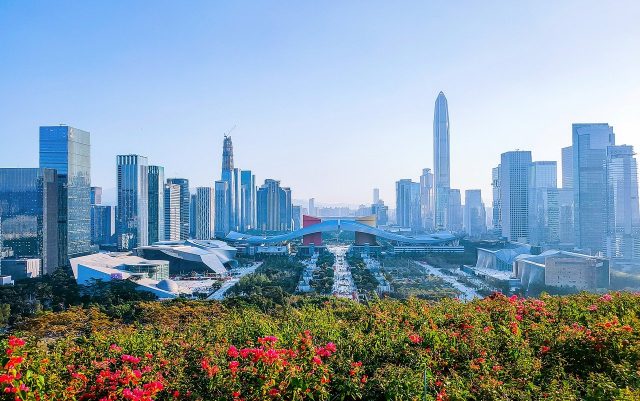
In ‘miracle’ city Shenzhen, fears for China’s economic future

PIXABAY

SHENZHEN, China — David Fong made his way from a poor village in central China to the southern boomtown of Shenzhen as a young man in 1997. Over the next 25 years he worked for a succession of overseas manufacturers before building his own multi-million dollar business making everything from schoolbags to toothbrushes.

Now 47, he has plans to branch out internationally by building internet-connected consumer devices. But after two years of coronavirus lockdowns that have pushed up the price of shipping and battered consumers’ confidence, he worries if his business will survive at all.

“I hope we make it through the year,” said Mr. Fong, surrounded by talking bears, machine parts and his company’s catalogues in his top-floor office overlooking gleaming towers in an area of Shenzhen once filled with sprawling factories. “It’s a tough moment for a business.”

Mr. Fong’s story of rags to riches, now threatened by a wider slowdown worsened by the coronavirus, mirrors that of his adopted city.

Created in 1979 in the first wave of China’s economic reforms, which allowed private enterprise to play a role in the state-controlled system, Shenzhen transformed itself from a collection of agricultural villages into a major world port that is home to some of China’s leading technology, finance, real estate, and manufacturing companies.

For the last four decades, the city posted at least 20% annual economic growth. As recently as October, forecasting firm Oxford Economics predicted that Shenzhen would be the world’s fastest-growing city between 2020 and 2022.

But it has since lost that crown to San Jose in California’s Silicon Valley. Shenzhen posted overall economic growth of only 2% in the first quarter of this year, the lowest-ever figure for the city, aside from the first quarter of 2020 when the first wave of coronavirus infections brought the country to a standstill.

Shenzhen remains China’s biggest goods exporter, but its overseas shipments fell nearly 14% in March, hampered by a coronavirus disease 2019 (COVID-19) lockdown that caused bottlenecks at its port.

The city has long been seen as among the best and most dynamic places for business in China and a triumph of the country’s economic reforms. President Xi Jinping called it the ‘miracle’ city when he visited in 2019.

If Shenzhen is in trouble, that is a warning sign for the world’s second-largest economy. The city is “the canary in the mine shaft,” said Richard Holt, director of global cities research at Oxford Economics, adding that his team is keeping a close eye on Shenzhen.

Mr. Fong, who sells his goods mostly to domestic customers, said sales are down about 40% from 20 million yuan ($3 million) in 2020, hurt by the recent two-month lockdown in Shanghai and a general decline in consumer confidence. China’s strict travel rules mean he has not been able to visit Europe to try to expand there.

LOSING ATTRACTIVENESS

Shenzhen, now a city of some 18 million people, has been hit by a succession of blows from inside and outside the country.

Shenzhen-based telecom equipment makers Huawei Technologies and ZTE Corp were placed on U.S. trade blacklists over alleged security concerns and illegally shipping U.S. technology to Iran respectively. Huawei denies wrongdoing, while ZTE exited probation in March five years after pleading guilty.

Another of the city’s major companies, top-selling property developer China Evergrande, sparked fears of a collapse last year under its heavy debts that would have wreaked havoc with China’s financial system. Down the road, Ping An Insurance Group Co, China’s largest insurer, took big losses on property-related investments.

Even smaller firms have suffered. Amazon.com Inc last year cracked down on how sellers do business on the platform, impacting more than 50,000 e-commerce traders, many based in the city, the Shenzhen Cross-border E-commerce Association said.

On top of that, Shenzhen was locked down for a week in March to prevent the spread of the coronavirus. That lockdown, and those in other Chinese cities, depressed domestic demand for goods made in Shenzhen. The city’s 2% growth in the first quarter was less than half of China’s overall 4.8% growth rate.

Business registrations also fell by almost a third in that time. City authorities are sticking to their 6% growth target for this year, set in April, but the slowdown has sparked alarm in China’s establishment.

“Shenzhen’s economy is faltering, leaning back, and sluggish, while some are doubting if Shenzhen has enough momentum,” Song Ding, a director at the state-linked think tank China Development Institute, wrote in a May essay.

The Shenzhen government did not reply to a request for comment for this story.

City officials privately admit that it is increasingly difficult to keep Shenzhen’s “miracle” alive.

“There’s a lot of people with a stake in Shenzhen remaining predictable, unlike before. You can’t just experiment freely and see what sticks anymore,” one city official told Reuters, on condition of anonymity.

On June 6, state news agency Xinhua reported that Shenzhen plans to build 20 advanced manufacturing industrial parks for telecoms and high-technology companies that will cover 300 square kilometers (115 square miles). It did not provide any further details.

‘TIME TO GO’

The cancellation of most international flights to China, a port snarled by lockdowns and a once-teeming border with Hong Kong that is now all-but-shut have made Shenzhen a difficult place to do business. China’s plans for a Greater Bay Area — melding Shenzhen with Hong Kong, Macau and several mainland cities — appear to have stalled.

“It’s losing attractiveness, and they (authorities) need to realize that,” said Klaus Zenkel, chairman of the European Chamber of Commerce in South China. “We always say they need to balance the restrictions and the economic growth, to find a way to spend more money on the Greater Bay Area and these free trade zones.”

In September, the Chinese government said it would expand what is known as the Qianhai economic zone, a special area within Shenzhen’s borders, to 121 square kilometers from 15 square kilometers. British banks Standard Chartered and HSBC have set up offices there, but border closures mean the area has struggled to attract foreign businesses, Mr. Zenkel and five diplomats in the region said.

Overseas entrepreneurs who flocked to Shenzhen to have their designs turned into products no longer make regular visits to its factories and the world’s largest electronics market in Huaqiangbei, forcing dozens of expat bars and restaurants to close or adapt to local tastes.

International business chambers have warned the Chinese government of an exodus of foreign talent. One diplomat at a major European consulate told Reuters they estimated the number of its nationals in south China had fallen to 750 from 3,000 before the pandemic.

The slowdown has made it harder for graduates to find jobs in what has long been China’s youngest metropolis, where the average resident is 34. The lush, subtropical city that fused manufacturing, technology, and finance into an entrepreneurial hotbed sometimes known as China’s Silicon Valley, was a magnet for ambitious and talented graduates from across the country.

“I’ve interned at companies where classmates a year or two older had found jobs, but it’s much harder to land a position than it was for them,” said Jade Yang, 22, who completed an advertising degree in May and moved 1,400 kilometers from central Chongqing to find work at a Shenzhen tech firm. She said she initially hoped for a salary of up to 10,000 yuan a month but now thinks 6,000 yuan is more realistic.

In a dense area of apartments near High Tech Park, one of the city’s clusters of tech companies, estate agents would normally be swamped with graduates looking to find homes in May. An agent, who gave his name only as Zhao, told Reuters last month that business is down 50% from a year ago.

“This place should be bustling with people, I shouldn’t have a moment of rest,” he said, lounging on his e-scooter outside a building with 30 studio flats where rent is 2,000 yuan a month. He said several have been empty since November.

Shenzhen businesses have always opened and closed at a high turnover, but “to let” signs are increasingly common in once bustling malls, especially those close to border crossings with Hong Kong, which have been closed since early 2020.

The situation is bleak for Shenzhen’s low-income migrant workers, struggling to get by with rising living costs and locked out of home ownership by some of the highest real estate prices in the country.

Masseuse Xue Juan, 44, said her friend recently returned to her small hometown in Chengdu province and opened a hotpot restaurant, and she is thinking of joining her.

“Even food and drink is getting too expensive, the work is hard, and living standards have improved so much in the rest of China,” said Ms. Xue. “Maybe it’s time to go.” — David Kirton/Reuters


WTO chief warns of rocky road to deals amid ‘polycrisis’

REUTERS

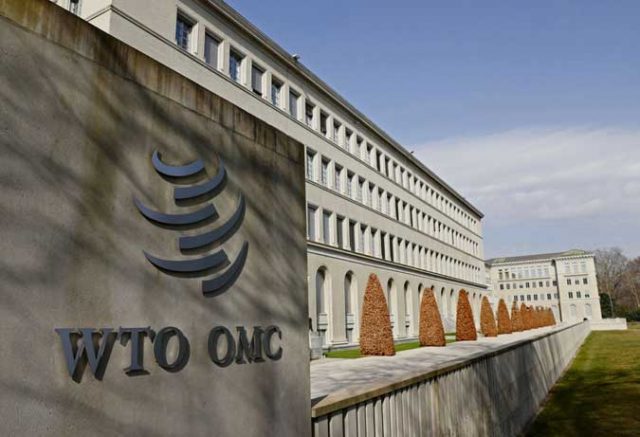
GENEVA — World Trade Organization (WTO) chief Ngozi Okonjo-Iweala expressed cautious optimism on Sunday that more than 100 trade ministers meeting in Geneva would achieve one or two global deals this week, but warned the path there would be bumpy and rocky.

The director-general from Nigeria said the world had changed since the WTO’s last ministerial conference nearly five years ago.

“I wish I could say for better. It has certainly become more complicated,” she told a news conference before the June 12–15 meeting, listing the coronavirus disease 2019 (COVID-19) pandemic, the war in Ukraine, and major food and energy crises as pieces of a “polycrisis.”

As a sign of divisions among the WTO’s 164 members, some 30–40 nations walked out when the Russian economic development minister Maxim Reshetnikov took to the floor.

Earlier, trade ministers from the European Union and 29 other WTO members met with Ukraine to express their solidarity and support and wish to alleviate food supply problems.

Speaking to ministers at the opening, the WTO chief urged them to “show the world that the WTO can step up to the plate” and achieve agreements on subjects such as reducing fishing subsidies, boosting access to COVID-19 vaccines, addressing food security and setting a course for reform of the WTO itself.

“What remains to be decided requires political will — and I know you have it — to get us over the finish line,” she said.

However, she warned that it would be challenging.

“Let me be clear, even landing one or two will not be an easy road. The road will be bumpy and rocky. There may be a landmine along the way,” Ms. Okonjo-Iweala said, adding she was “cautiously optimistic” that the meeting would conclude with one or two deals.

She also cautioned ministers to recognize that compromises are never perfect. The WTO’s 164 members take decisions by consensus, meaning a single member can block progress, and negotiations often last years.

The 27-year-old WTO is itself in trouble. Former US President Donald J. Trump crippled the WTO’s Appellate Body that rules on disputes over two years ago, and WTO members have only ever agreed one global deal, the red-tape cutting Trade Facilitation Agreement, in 2013.

In a sign of the global difficulties, Sunday’s opening session meeting was dedicated to “challenges facing the multilateral trading system.”

Campaign groups gathered near the body’s lakeside headquarters over the weekend, some denouncing capitalism and others calling for an end to “vaccine apartheid.” They were all barred from entering the WTO headquarters on Sunday on security grounds, according to an e-mail seen by Reuters. — Reuters

What’s in a name? Rebranded McDonald’s outlets open in Russia 

McDonald’s restaurants opened their doors in Moscow once again on Sunday under new Russian ownership and a new name, “Vkusno & tochka,” which translates as “Tasty and that’s it.” 

Here’s what we know: 

LOGO 

The famous Golden Arches have been taken down and replaced with a new logo, resembling a letter “M,” comprising two fries and a hamburger patty against a green background. 

Chief executive Oleg Paroev said the new company had settled on the new name — a closely guarded secret — only the day before the launch. 

There was some speculation on social media about how best to translate the new name into English. “Tasty and that’s it” was broadly adopted, although another suggestion was: “Tasty. Full stop.”

BRANCHES

“Vkusno & tochka” reopened on Sunday in Pushkin Square in what was McDonald’s first restaurant in Soviet Moscow in 1990, when it sold as many as 30,000 burgers, but the queue outside the restaurant was much smaller than three decades ago. 

The chain will keep its old McDonald’s interior but will remove any trace of its former name. 

Initially 15 rebranded restaurants will open in and around the capital and another 200 restaurants by end-June and all 850 by the end of summer, executives said on Sunday. 

The new owner said up to 7 billion rubles ($126 million) will be invested this year in the business, which employs more than 50,000 people. 

MENU

McDonald’s flagship Big Mac and other burgers and desserts such as McFlurry are missing, but other popular items are on a smaller menu selling at slightly lower prices. 

A double cheeseburger was going for 129 rubles ($2.31) compared with roughly 160 under McDonald’s and a fish burger for 169 rubles, compared with about 190 previously. 

Mr. Paroev said the chain would keep prices “affordable.” They would likely rise due to inflation, but not higher than its competitors, he said. 

Most ingredients come from within Russia, but some items weren’t immediately available due to logistical difficulties and because some suppliers have left Russia. For instance, it needs to find a new soft drinks supplier after Coca Cola suspended business there. 

OWNERSHIP

Siberian businessman Alexander Govor has taken over the franchise operation through his firm GiD LLC. He has been a McDonald’s licensee since 2015 and had helped the chain expand into remote Siberia, where he operated 25 restaurants. 

McDonald’s will have an option to buy its restaurants in Russia back within 15 years, Russian authorities have said. 

Mr. Govor told reporters on Sunday the price he paid was “far lower than market price” and had been a “symbolic” figure. The US chain booked a $1.4 billion charge for the deal. McDonald’s did not respond to a request for comment on the price. 

Russia and Ukraine accounted for about 9%, or $2 billion, of McDonald’s revenue last year. 

MANAGEMENT/STAFF

McDonald’s former Russian head Mr. Paroev is running the business. Until the takeover, he had worked for McDonald’s for seven years, including as chief financial officer of the Russian business for 6-1/2 years until November 2021, according to his LinkedIn profile. 

He was appointed Russia McDonald’s chief executive officer in February, weeks before Moscow sent tens of thousands of troops into Ukraine on Feb. 24. 

Mr. Govor will retain the chain’s tens of thousands of employees for at least two years, the US company said.  ($1 = 55.75 rubles)  — Reuters

[B-SIDE Podcast] Making art that matters

Follow us on Spotify BusinessWorld B-Side

Chris B. Millado joined the Cultural Center of the Philippines (CCP) after the People Power revolution in 1986 toppled the dictator Ferdinand E. Marcos, Sr.

The CCP was the pet project of first lady Imelda Romualdez Marcos whose ideas of “the good, the true, and the beautiful” were reflected in the center’s projects and productions.

Mr. Millado joined the center as it was reorienting itself and democratizing access. “The CCP believes in freedom of expression,” he said. “[It] allows for the free flow of ideas, engagement of ideas, conversations however difficult they may be.”

And after three decades of serving at the institution, Mr. Millado, CCP’s vice president and artistic director, retires this June just as Ferdinand “Bongbong” Marcos Jr. assumes the presidency of the Philippines.

In this B-Side episode, Mr. Millado talks to BusinessWorld reporter Michelle Anne P. Soliman about good art and what separates it from bad art.

Recorded remotely in June 2022. Produced by Earl R. Lagundino and Sam L. Marcelo.

Read the full story: “Making art that matters”

Follow us on Spotify BusinessWorld B-Side

Make your smart move to the East at Sierra Valley Gardens

It is a wise decision to invest in a home where modern comforts and conveniences are within reach. If these are what you search for, then look no further as RLC Residences recommends Sierra Valley Gardens as your new home investment.

Convenience within arm’s reach

Sierra Valley Gardens offers the convenience of being near essential establishments and destinations as it sits within the Sierra Valley complex, an 18-hectare mixed-use development by Robinsons Land located in Cainta, Rizal. The whole complex is currently being developed as a go-to hub in the East and will soon have commercial, business, and lifestyle establishments. This translates to having all these conveniences as your neighbor, and you can easily be in these places without the need to travel far.

The location of Sierra Valley Gardens gives future homeowners easy access to important places such as hospitals, schools, business districts, and cultural destinations. Given that the property is along Ortigas Extension, one can easily enjoy a comfortable drive from their home to Bridgetowne, Ortigas, Makati, and even BGC. Hospitals like The Medical City and Metro Rizal Doctors Hospital, universities such as Sienna College of Taytay and San Beda University Taytay, and even transportation hubs like LRT 2-Santolan and the future LRT 4-Taytay Tikling Junction station are easily accessible from the property.

Modern comforts inside every unit

Sierra Valley Gardens is considered the first smart suburban community in the area as each unit is equipped with RLC Residences’ signature smart home features. The main door comes with a Smart Lock which can be opened through a key card, keypad, fingerprint, and a mechanical key, while the unit also has an audio-video intercom where one can easily see guests in the lobby right inside their home. Smart lights are also installed in all units which can be controlled using the smart power outlet or through a phone. For easy use of home devices and faster connection, a mesh gateway, infrared emitter, and central control panel are also included inside every unit.

Aside from these, condo units at Sierra Valley Gardens Building 3 feature unique home upgrades in form of a work-from-home nook, water heater provision, glass shower enclosure, range hood, and bidet. A pantry drawer and cabinet and a balcony are also available in select units.

Designed with future residents in mind

Sierra Valley Gardens also makes home living more comfortable with a wide space for indoor and outdoor amenities where one can relax and have an alone time or have fun with their loved ones.

Amenities outdoors that are great for families are the kiddie pool and the kid’s outdoor play area. There are also a lap and wading pool, pool deck, and outdoor shower with changing area.

Residents can get more active at the basketball court and the jog trail. And for residents with furry friends, a pet area is available outdoors.

Meanwhile, the indoor amenities extend from the Ground Level to the third. Among the amenities on the second level are the Game Room and Reading Nook. And there are a dance studio, gym, and yoga studio on the third level. Other indoor amenities are function rooms, a Wi-Fi lounge, Work-Study Lounge, and Kid’s Indoor Play Area/Day Care Facility.

Interested to know more? Make the smart move by connecting with their Property Specialist today through this link or by visiting rlcresidences.com. Make sure to follow their official Facebook, Instagram, and YouTube page for more updates about Sierra Valley Gardens.


Spotlight is BusinessWorld’s sponsored section that allows advertisers to amplify their brand and connect with BusinessWorld’s audience by enabling them to publish their stories directly on the BusinessWorld Web site. For more information, send an email to online@bworldonline.com.

Join us on Viber to get more updates from BusinessWorld: https://bit.ly/3hv6bLA.