Home Blog Page 6229

Guidebook for the next administration

PHILIPPINE STAR/EDD GUMBAN

(Part 1)

The very first book I wrote as an economics educator at the start of the 1970s was entitled A Guide to Economics for Filipinos. Over the next four decades or so, hundreds of thousands of copies of the book were printed in eight successive editions to try to educate high school and even college students all over the country on the very imperfect science of economics. The first seven editions were published by Sinag-tala Publishers, Inc. The latest one (that has been retitled simply Economics for Filipinos) was published in 2020 by Vibal Publishing.

Modesty aside, I think have contributed in a small way to the economics education of at least two generations of the Filipino youth. I still meet people in their forties and fifties who tell me that they used my textbook in their high school years. As long as I retain my mental capacities, I will not stop being an economics educator, especially through columns like this that I write weekly for BusinessWorld. As I always did in the many editions of Guide to Economics for Filipinos, I made sure that I explained economic theories and practices in the context of integral human development. As is indicated by the title of this very column I write for BusinessWorld, I never neglect the “human” side of economics.

One of the many benefits to me of the lockdowns (beside my being able to avoid infection by COVID-19) was the time it gave me to write a book that I am now presenting to the Administration of President Ferdinand R. Marcos, Jr. as a “guide to how he and his economic team can do much to lead our country to First World status in the next 10 to 20 years.” I am convinced that his being able to carry out his “continuity” pledge will further solidify the strong foundations built by previous economic teams so that the road to First World status by 2040 to 2050 will be irreversible. Another six years of an annual 6% to 7% GDP — with a possibility of an upside of 8% to 10% given a significant improvement in good governance (as the President asked the public to pray for on the night he was proclaimed the winner of the presidential election) — almost guarantee our being able to attain our Ambisyon Natin 2040 goal as enunciated by NEDA (National Economic and Development Authority).

The title of the book I have written, The Philippine Economy Towards First World Status, is unapologetically ambitious. Yes, I am strongly convinced that those who are in their twenties and early thirties today (the so-called millennials and centennials) will live to see the Philippines become a First World country.

As mentioned in the Foreword written by banker Francis Sebastian (who led the group that financed the publication of the book), one generation from now — the decade spanning 2040 to 2050 — the Philippines will attain an annual per capita income of more than $12,000 in today’s prices which will bring its economy to the high-income level from the upper-middle-income status in which we will find ourselves in 2024, as recently announced by the Secretary of Economic Planning, Arsenio Balicasan. More importantly, because of the enlightened economic policies that I expect our future leaders (starting with the one that will be inaugurated on June 30) will implement, this level of per capita income will make it possible for all Filipinos to enjoy “a strongly rooted, comfortable and secure life,” as stated in the vision statement of NEDA in its “Ambisyon Natin 2040” declaration.

In my opinion, a high-income level of an annual $12,000 per capita in 2022 prices is sufficient for a country to be considered First World as long as all of us can “enjoy a stable and comfortable lifestyle, secure in the knowledge that we have enough for our daily needs and unexpected expenses, that we can plan and prepare for our own and our children’s future. Our family live together in a place of our own, and we have the freedom to go where we desire, protected and enabled by a clean, efficient and fair government” (Ambisyon Natin 2040). We need not have the astronomical levels of income of today’s so-called First World countries such as Japan ($40,113 in 2019) or the US ($65,280 in 2019). As the articles in the first chapter of the book will illustrate, there are many other human and spiritual values in life that are more important than GDP per capita.

With all due respect to the US, its very high income per capita does not prevent the all too frequent mass shootings of innocent children and adults by trigger-happy malcontents nor the killing of innocent and completely defenseless babies in the wombs of their mothers. I attribute many of these aberrant behaviors to the deterioration of family values in American society. Unfortunately, many families in the US and other advanced economies have forgotten that the family is the very foundation of every strong, peaceful, and happy society.

That is why, although the book is mainly on economics, the first chapter is replete with articles about fundamental philosophical, moral, and theological truths in which should be rooted authentic integral human development. As we increase the amounts of goods and services available to every individual or society, we must also grow in truth, justice, peace, charity, respect for life and the family, etc. That is why we began the book by reviewing certain social and moral principles which are the very foundation of a progressive economy that purports to be “First World.” Having a high per capita income is a necessary but not sufficient condition to deserve being called a “developed economy.”

Chapter 1 can be considered the equivalent of the “Declaration of Principles and State Policies” contained in the Philippine Constitution of 1987. Especially highlighted are the principles of distributive justice and equity in the distribution of income and wealth, the preferential option for the poor, the limits of the free market economy, the duties of the State to address the imperfections of liberal capitalism, the priority of labor over capital, the social responsibility of business, and the great value to a nation of a growing and young population in the midst of a developed world that is greatly suffering economically from rapid ageing and demographic decline, of which China is the most recent victim because of an aggressive population control program in the last century.

As an economist, I am very glad that the training I received at Harvard University in the early 1960s preceded the unhealthy obsession with econometrics and highfalutin quantitative analysis. Without neglecting the quantitative tools of economic theorizing and research, equal emphasis was given to Economic History. We were steeped in the works of the great economic historian Joseph A. Schumpeter, who taught in the faculty of economics of Harvard until his demise just a few years before I started my doctoral studies there. That is why I made sure before I dared to project the state of the Philippine economy one generation from now that I would heed the advice of George Santayana, another famous professor who taught at Harvard. Santayana gave the world the following advice: “Those who cannot remember the past are condemned to repeat it.”

In the second chapter of the book, I made sure that those who are enthusing about the so-called Industrial Revolution 4.0 have a clear understanding of the first three industrial revolutions, which the Philippine economy still has to complete before becoming First World. I also made sure that our leaders in the coming generation will not “reinvent the wheel” by learning important lessons from our neighboring countries in the Indo-Pacific region who preceded us in the road to attaining First World status: Japan, Singapore, Hong Kong, Taiwan, South Korea, and, more recently, China.

It is also in Chapter 2 that I reviewed more recent Philippine economic history by examining the roots of our failures as well as successes, especially in the last 30 years. Our economic failure was dramatically summarized in our having been called for at least two decades “the sick man of Asia.” Whereas we were touted as next only to Japan in facing a bright economic future during the 1950s and 1960s, we fell to the bottom of the list in GDP per capita among our peers in East Asia by the end of the last century. As we compare ourselves to our more successful neighbors, the causes of this failure were not difficult to identify: failed economic policies of inward-looking, import-substitution industrialization that spawned a host of industries that remained “infants” forever; an almost criminal neglect of agricultural and rural development by the State; poor governance; and rampant corruption. Especially debilitating was the “Filipino First” mentality that delivered the Philippine economy to a monopolistic or oligopolistic elite and prevented the flow of much-needed Foreign Direct Investments.

Not everything was bleak, however, in our recent economic history.

Ever since 1986, despite varying qualities of political leadership, we always had the best and the brightest running our various government economic agencies (the Central Bank, the Department of Finance, the National Economic and Development Authority, Department of Trade and Industry, the Department of Public Works and Highways, etc.). Slowly but surely, these honest and competent technocrats were building stronger institutions and crafting and implementing more enlightened policies so that by the second decade of the present century, our GDP consistently grew at 6% to 7% annually, a rate that can be sustained over the next 20 years.

During these last 30 years, as the world experienced three serious global crises (the East Asian Financial Crisis of 1997 to 2000, the Great Recession of 2008 to 2012, and the more recent global economic crisis precipitated by the COVID-19 pandemic and further aggravated by the Russian invasion of Ukraine, the Philippine economy was among the most resilient in the world. Given the incoming Administration of President Ferdinand R. Marcos, Jr.’s choices for his economic team of very competent and experienced technocrats, one can expect a continuation of the yearly GDP growth rate of at least 6% to 7%. There is an upside if the next Administration can manage to significantly improve governance and minimize corruption: the growth rate can even accelerate to 8% to 10%.

(To be continued.)

Those who are interested in purchasing copies of the book (that will be available by mid-July 2022) may contact Rio Quiza at rioangela.quiza@uap.asia or Henry Siy of Totus Book Store at totusbookstore@gmail.com or FB Page: https://facebook.com/totusbookstore or FB messenger: m.me/totusbookstore. For comments, my e-mail address is bernardo.villegas@uap.asia


Bernardo M. Villegas has a Ph.D. in Economics from Harvard, is professor emeritus at the University of Asia and the Pacific, and a visiting professor at the IESE Business School in Barcelona, Spain. He was a member of the 1986 Constitutional Commission.

bernardo.villegas@uap.asia

The lights are going out for crypto’s laser-eyed grifters

KAT J-UNSPLASH/CITYPNG

THERE aren’t many silver linings to be found in the cryptocurrency crash. People have lost money, often those who could least afford it. But one welcome casualty is the army of laser-eyed social media “influencers,” toxic promoters in what must surely rank as the one of the most egregious product-placement manias in financial history. What comes next should be a healthier focus on consumer protection in an age of digital investing.

The simple identifier of a pair of laser eyes — a badge of optimism that Bitcoin was headed for $100,000 and beyond — at its peak adorned the avatars of congresswomen, billionaires, sports stars and, of course, hordes of rank-and-file crypto enthusiasts.

The lasers aren’t shining so brightly after the latest rout in cryptoland, with some going completely dark, presumably in an effort at reputational damage control. The Winklevoss twins are now busy promoting their next act as musicians in covers band called Mars Junction; Elon Musk is insisting he never told anyone to buy. And celebrities who once flaunted their non-fungible tokens have now taken them down.

The real changes will come lower down the speculative food chain, as the fuel runs out for viral economic narratives promoting crypto trading among young and impressionable consumers eager to get rich quicker than the rest of society.

The business model of influencers is to take real dollars in exchange for promoting virtual cash. At one point, YouTubers were being offered $30,000 to promote crypto-linked investments. But those dollars are drying up as trading on exchanges diminishes and startup funding disappears. Even Coinbase Global, Inc., with a market capitalization of more than $12 billion, has slashed affiliate marketing fees, according to Business Insider. Influencers who just months ago were making $40 for each new sign-up to the platform are now being offered $2 to $3.

Celebrities such as Matt Damon and Larry David deserve the mudslinging for promoting ads, but at least their affiliations were clear. Not all social media personalities are scammers. But those with less transparent ties to the products they were promoting — such as YouTuber Logan Paul, a cheerleader to his 23 million followers for collapsed token Dink Doink, a project that he told the New York Times in May went “absurdly wrong” — are clearly eroding the trust of followers in general.

And as the obvious ignorance of some crypto shills filters through to their fans — who will surely tire of the constant claims that crypto is an “inflation hedge” when it’s anything but — more regulatory intervention as well as voluntary crackdowns by TikTok and other social media platforms are likely not far behind. Some reality TV stars’ accounts have been shuttered, with Snapchat suspending Jazz and Laurent Correia last year.

This isn’t about censorship, but transparency. Jackson Palmer, Dogecoin’s co-creator, has an umbrella term to describe our world: Griftonomics. Applying it to crypto, he says, reveals a network of “bought influencers.” One study by the Dutch financial markets regulator of 150 influencers covering more than 1 million followers found that only a tiny fraction — around 1% — weren’t making money from affiliated projects, many of which weren’t disclosed.

The authorities obviously have a role to play in cleaning up the worst excesses. Advertising overseers in the UK and France have done a decent job in halting misleading ad campaigns. Kim Kardashian and Floyd Mayweather were both sued in January, accused of hyping a digital currency called EthereumMax to investors. Mayweather had already been fined by the US Securities and Exchange Commission in 2018 for touting coins without disclosing a financial interest, while last year Kardashian was admonished by the UK Financial Conduct Authority for using her fanbase to promote “a speculative digital token created a month before by unknown developers.”

But there’s an urgent need for more financial and digital literacy, too. Young people are saddled with debts at an increasingly early age and feel the pressure acutely. There’s also a feeling that wealth is accumulated through being lucky — born in the right generation or to the right family, or by backing the right token — rather than due to merit. That helps explain why Buy-Now-Pay-Later loans have flourished among those who struggle to repay them, and why a high percentage of people follow and listen to influencers.

There’s a role here for parents and educators, and maybe even specific apps with guardrails to allow for experimental spending with small amounts of cash. And it should also be possible for regulators to fight fire with fire: misleading economic narratives about inflation hedges could be countered by qualified influencers, as with other forms of misinformation.

But for now, people with laser eyes on their profile photos have unwittingly slapped an obvious health warning on their content. If you see those two red dots, steer clear.

BLOOMBERG OPINION

Mutuality of contracts and higher interest rates

PRESSFOTO-FREEPIK

The Supreme Court has historically used the principle of mutuality of contracts as a lens to scrutinize interest-imposing clauses. This principle, found in Article 1308 of the Civil Code, provides that contracts “must bind both contracting parties; its validity or compliance cannot be left to the will of one of them.” The rule “dictates that a contract must be rendered void when the execution of its terms is skewed in favor of one party” (Vasquez v. Philippine National Bank, G.R. Nos. 228355 & 228397, Aug. 28, 2019). With that said, what are these specific nuances in interest-imposing clauses, expounded upon by the Supreme Court through the principle of mutuality, that are relevant in contract review?

APPRECIATION OF ESCALATION CLAUSES
Escalation clauses allow an increase in the interest rate/s agreed upon by the contracting parties (Juico v. China Banking Corp., G.R. No. 187678, April 10, 2013). This must, however, be accompanied by a corresponding de-escalation clause, otherwise the escalation clause is void (Llorin Jr. vs. Court of Appeals, G.R. No. 103592, Feb. 4, 1993). Additionally, when one party has the sole discretion to increase rates — “completely depriving the debtor of the right to assent” — the escalation clause is also void (Vasquez v. Philippine National Bank, G.R. Nos. 228355 & 228397, Aug. 28, 2019).

This seems straightforward to apply given the vast jurisprudence on the topic, but in legal practice, no contract will expressly state that a debtor has no right to dissent in the escalation of interest rates. Complicated and voluminous contracts also need closer inspection. For example, some interest clauses on their face may seem to grant debtors the right to assent, but once read with the entire contract, the debtors have in fact no choice but to assent. Applying the principle of mutuality, such an escalation clause will likely be deemed null and void.

NOTICE OR ACKNOWLEDGMENT BY THE DEBTOR
In one case decided by the Supreme Court, even if prior notice was given to the debtors with acknowledgment by the debtors of the notice, the escalation clause was still considered void because the debtor could not dissent to the escalation (Spouses Limson v. PNB, G.R. No. 158622, Jan. 27, 2016.).

Thus, preliminarily speaking, notice and/or acknowledgment does not cure a unilateral escalation clause. However, consider a situation where a creditor can unilaterally increase interest rates beyond a certain period, provided that, 1.) notice is given to the debtor, and, 2.) the debtor expressly waives the right to dissent from that point onwards. In this instance, the “notice” might be “curative” per se because the right to dissent was available, enforceable, and known to the debtor — the debtor simply chose to waive it. Arguably, there is no violation of mutuality.

UNREASONABLE RATES
Even if parties can freely stipulate interest rates, certain rates have been deemed “unreasonable” or “unconscionable” such as those providing a 3% monthly rate (Caparuso v. Oliveron, G.R. No. 255179 [Notice], April 26, 2021), or 60% annual rate (Rivera v. Spouses Chua, G.R. Nos. 184458 & 184472, Jan. 14, 2015.). Given varying jurisprudence, the treatment of specific interest rates should be on a case-to-case basis, with the entire contract as context.

But in terms of assessing liability, note that when escalation clauses with unreasonable rates are declared void, they are only deemed unwritten. This does not mean that there will be no interest anymore; it is still possible that a lower or the legal rate will be substituted, as done before by the Supreme Court (see Mallari v. Prudential Bank (now Bank of the Philippine Islands), G.R. No. 197861, June 5, 2013). The principal obligation likewise remains.

FLOATING INTEREST RATES
Floating rates are those where “the rate is not fixed as it is dependent on a market-based reference… agreed upon by the parties.” (Vasquez v. Philippine National Bank, G.R. Nos. 228355 & 228397, Aug. 28, 2019). In the banking sector, the Bangko Sentral has allowed banks and borrowers to agree on a floating rate of interest, provided that it is based on market-based reference rates (Security Bank Corp. v. Spouses Mercado, G.R. Nos. 192934 & 197010, June 27, 2018). However, it is not automatic that with a market rate reference, floating rates are valid with no further scrutiny needed. Reviewing floating rates must still be grounded on the principle of mutuality (e.g., is the market rate preferred by both parties, is the market rate unconscionable, etc.).

A FINAL NOTE
The general phrasing of Article 1308 makes the principle of mutuality a flexible concept in reviewing interest clauses and assessing its benefits and risks to clients. Ultimately, the litmus test is whether both parties stand on equal footing in agreeing and enforcing interest-imposing clauses.

This article is for general informational and educational purposes only and not offered as and does not constitute legal advice or legal opinion.


Roilan Rigil Kent A. Alonzo  is an associate of the Corporate & Special Projects Department of the Angara Abello Concepcion Regala & Cruz Law Offices (ACCRALAW).

kaalonzo@accralaw.com

(632) 8830 8000

Pag-IBIG Fund releases record-high P40.41B home loans in Jan-May 2022, up 15%

Pag-IBIG Fund again surpassed its own record by releasing over P40 billion in home loans in the first five months of 2022, top officials announced on Tuesday (June 28).

From January to May, the agency released home loans worth P40.41 billion, the highest ever amount released during the first five months of any year in its history. Compared to the same period last year, the amount disbursed so far this year grew 15% from the P35.28 billion released during the same period in 2021.

“Pag-IBIG has once again set a new record in the amount of home loan releases to begin the first five months of the year. We are happy that the number of Filipino workers who are able to become homeowners through the Pag-IBIG home loan programs continue to grow. Our consistent performance also indicates that the home loan policies we have set in place have been effective, and we expect that these would continue to enable even more Filipino workers to have decent and affordable homes in safe, sustainable and resilient communities,” said Secretary Eduardo D. del Rosario, who heads the Department of Human Settlements and Urban Development (DHSUD) and the 11-member Pag-IBIG Fund Board of Trustees.

Meanwhile, Pag-IBIG Fund Chief Executive Officer Acmad Rizaldy P. Moti said that the amount released as of May financed the acquisition and construction of 36,865 homes for Pag-IBIG Fund members, 5% higher than the 34,979 homes financed during the same period last year.

He added that out of the total number of homes financed, 6,787 or 18% were socialized housing units which are now owned by minimum-wage and low-income workers and their families.

“Last year, we surpassed the P100-billion peso level in home loan releases, a feat we previously thought was impossible. This year, with our record-high home loan releases from January to May, we are optimistic that Pag-IBIG Fund is well on its way to yet another banner year. Should the current trend hold, we expect to release at least P105 billion pesos in home loans by year’s end. I am confident that our outstanding performance on the home loan front will be sustained, especially under the leadership of our Deputy CEO for Home Lending Marilene C. Acosta, who has been instrumental in our record-breaking performance in home loan releases since 2017”, Moti said.


Spotlight is BusinessWorld’s sponsored section that allows advertisers to amplify their brand and connect with BusinessWorld’s audience by enabling them to publish their stories directly on the BusinessWorld Web site. For more information, send an email to online@bworldonline.com.

Join us on Viber to get more updates from BusinessWorld: https://bit.ly/3hv6bLA.

Online consumers in SEA prefer buying on mobile — iPrice

FREEPIK

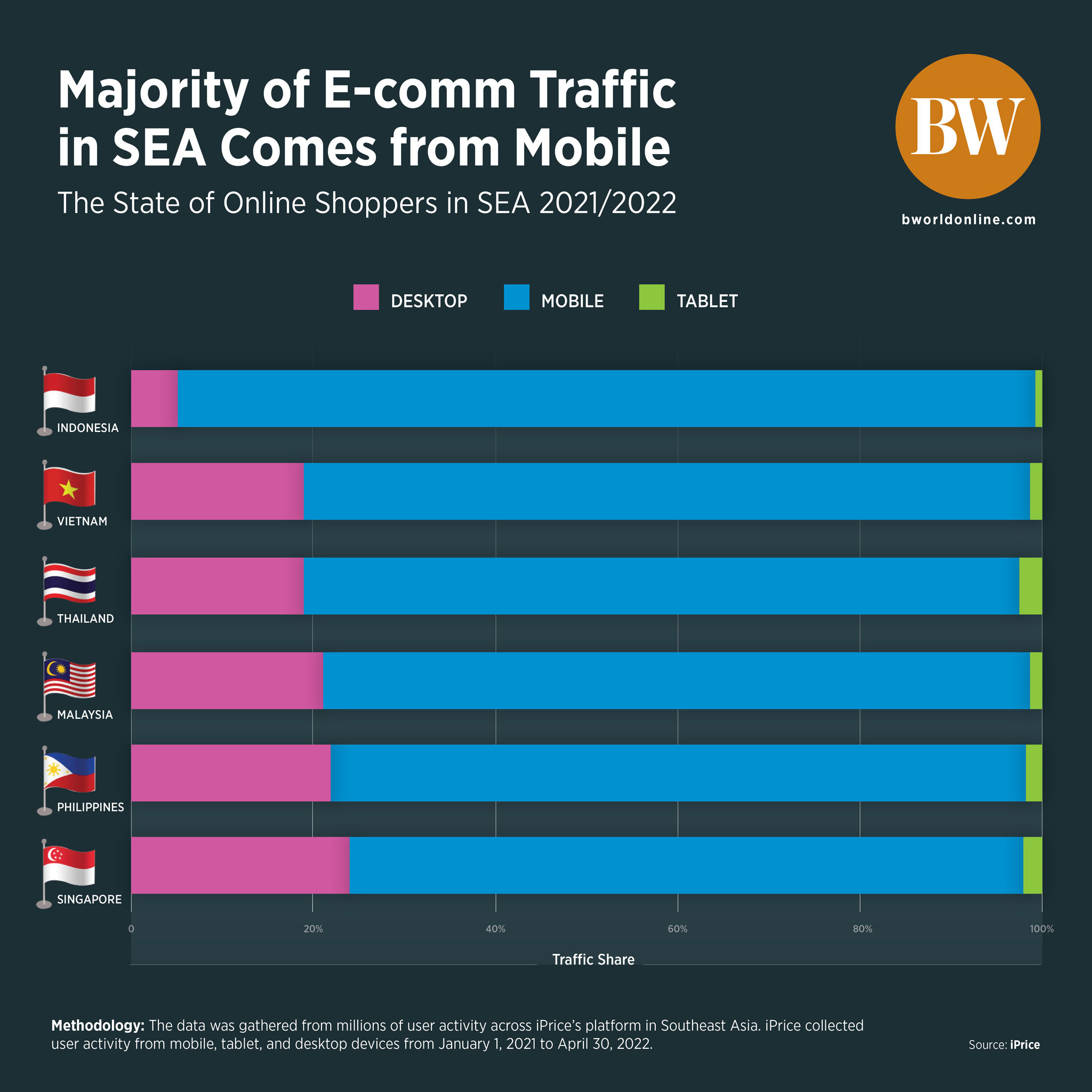
Mobile purchases in the Philippines and most Southeast Asian markets are nearly two times higher than those made on desktops, showing that e-commerce in the region is centered on smaller devices, according to a recent study by iPrice group, a Malaysia-based online shopping meta-search website.  

The State of Online Shoppers in Southeast Asia 2021/2022 also found that, on average, 5% of mobile visitors to the iPrice website end in a transaction, compared to only 3% of desktop visitors.  

“The rapid roll-out of mobile broadband, and a wider and more affordable range of internet-enabled mobile devices (smartphones / tablets), have made it easier for consumers to browse and buy online,” the aggregator said in its report.  

It also pointed out that e-commerce providers have now optimized their sites for smaller devices and launched mobile apps for improved customer experience. 

“Some e-commerce players drive users to mobile via exclusive e-wallet features not available to desktop users, whilst others offer coupons exclusive to mobile users or discounts for first-time purchases via handheld devices,” iPrice said. 

THE ROLE OF DESKTOPS
While Filipinos prefer to make mobile purchases, the desktop remains important in e-commerce due to high device penetration, according to iPrice.  

In the Philippines, Malaysia, and Singapore, online shoppers show “hybrid browsing and buying patterns, moving across multiple platforms as they transition through the purchase funnel” from awareness to research to the decision to purchase: 

  • Product search and “casual browsing” via mobile during their daily commute;
  • Detailed research — product images, specifications, and price comparison — via desktops at work; and
  • Purchase via tablet at home in the evening.

“E-commerce companies track this user behavior to tailor and target their marketing strategies. From in-depth reviews to technical information and product specifications, content needs to be adapted according to the stage in the buying journey,” iPrice said.  

The study is based on data from 125 million unique users from 6 key SEA markets: Philippines, Indonesia, Thailand, Vietnam, Malaysia, and Singapore. The data was collected from January 2021 to April 2022.  

A previous edition of the report conducted from 2016 to 2017, found that there was a high level of mobile usage in the Philippines but a strong preference for making purchases via desktops. — Brontë H. Lacsamana

Hong Kong’s top finance executives bank on city to thrive as gateway to China

STOCK PHOTO

In 1997, the world watched as Britain returned Hong Kong to Chinese rule, with some pessimistic or wary about the outlook for the city and its role in the global financial system.

Twenty-five years later, Hong Kong has so far retained its status as a financial hub, and some of the city‘s top executives are banking on a bright future as the territory remains a crucial springboard for investment into mainland China.

Charles Li, former chief executive of bourse operator Hong Kong Exchanges and Clearing (HKEX) 0388.HK and founder of microfinance platform Micro Connect, said that although he believes the next 25 years will be “very different”, he’s optimistic.

“I’m convinced that the overall prosperity of Hong Kong will remain as strong as before because Hong Kong retains its value to both sides,” Li told Reuters, referring to China and the West.

When he celebrated the handover with friends more than two decades ago in the city‘s bustling nightlife district of Lan Kwai Fong, Li said many people saw it as the “beginning of a very long ride, and the best is yet to come.”

On Friday, Hong Kong reaches the halfway mark of a 50-year experiment designed to give the city a high degree of autonomy under Chinese rule.

Critics of the government say political and civil liberties have been hugely curtailed, especially since the introduction of a national security law in 2020.

The finance sector has thrived since the handover. The value of Hong Kong’s stock market has surged to HK$27.65 trillion ($3.52 trillion) as of end-June, up from HK$3.2 trillion in 1997 and global investors have become increasingly reliant on Hong Kong to trade mainland stocks.

Turnover on the Hong Kong-Shanghai stock connect pipeline – which provides access to closely controlled mainland capital – jumped to 46.5 billion yuan on June 22, up from 12.8 billion yuan when it launched in 2014, according to data from HKEX.

On the Hong Kong-Shenzhen stock connect channel, turnover stands at about 58 billion yuan, up from 2.7 billion yuan at its launch in 2016.


‘INDISPENSABLE’

Although uncertainty clouds the outlook for political and civil liberties under electoral changes and the sweeping national security law, other business executives say Hong Kong’s standing as a financial hub will stay intact.

Some business lobby groups and diplomats have expressed concern over the outlook for Hong Kong, given an exodus of talent and worries over the rule of law and judicial independence.

Hong Kong will remain indispensable, (and) also the most competitive gateway between China and the rest of the world,” Fred Hu, founder and chairman of private equity group Primavera, told Reuters. “I don’t believe any mainland city, including some cities I love, will bypass Hong Kong.”

The city has contended for some of the world’s hottest initial public offerings in recent years, including Alibaba, the New York-listed e-commerce titan, which journeyed to Hong Kong to raise $13 billion in a secondary listing in November 2019.

Hong Kong has been the world’s top stock exchange by IPO value seven times since the handover, most recently in 2019, when 146 companies raised a total of $40 billion on the main board, according to Dealogic data.

In a move that authorities say underscores the importance China attaches to Hong Kong, President Xi Jinping will attend the swearing in of the city‘s new leader, John Lee, on Friday as well as celebrations to mark the handover.

“I believe the central government’s intention toward Hong Kong is benign. They don’t want to mess up Hong Kong,” Hu said.

A former security chief who is sanctioned by the United States, Lee will be closely watched by a financial industry eager to get back on track after crippling COVID-19 restrictions that have triggered an exodus of people and seen the border with mainland China largely closed for two years.

David Chin, UBS’ UBSG.S head of investment banking for Asia-Pacific, is optimistic on Hong Kong’s outlook, although he says China‘s role on the global stage is key.

Hong Kong is also the international gateway for China,” he said. “So the foreign relationship, how China interacts with the rest of the world, is also very important for Hong Kong.” – Reuters

US Supreme Court sides with doctors challenging opioid convictions

The US Supreme Court on Monday made it harder for prosecutors to win convictions of doctors accused of running “pill mills” and excessively prescribing opioids and other addictive drugs, by requiring the government to prove that defendants knew their prescriptions had no legitimate medical purpose.

The 9-0 ruling, authored by liberal Justice Stephen Breyer, sided with Xiulu Ruan and Shakeel Kahn, who argued that their trials were unfair because jurors were not required to consider whether the two convicted doctors had “good faith” reasons to believe the numerous opioid prescriptions were medically valid.

While both doctors were registered under the a US law called the Controlled Substances Act to prescribe such drugs to their patients, prosecutors at their trials argued that the prescriptions fell outside the usual course of professional practice.

Mr. Breyer, who is retiring at the end of the court‘s current term in the coming days, wrote that once the doctors produced evidence that they were authorized to dispense drugs like opioids, prosecutors needed to prove they knowingly or intentionally acted in an unauthorized manner.

Mr. Breyer said a decision by a doctor registered with the Drug Enforcement Administration to intentionally prescribe addictive drugs in an unauthorized way would be illegal, not the prescriptions themselves.

“We normally would not view such dispensations as inherently illegitimate; we expect, and indeed usually want, doctors to prescribe the medications that their patients need,” Mr. Breyer wrote.

The justices, though, declined to decide whether jurors were sufficiently instructed in Mr. Ruan’s and Mr. Kahn’s cases or, if not, whether the mistakes were harmless. The Supreme Court sent the cases back to two federal appeals courts that had upheld the convictions for further proceedings based on Monday’s ruling.

Justice Samuel Alito, writing on behalf of himself and fellow conservative Justices Clarence Thomas and Amy Coney Barrett, said he agreed with the decision’s bottom-line result but said its reasoning could result in “confusion.”

Beau Brindley, Mr. Kahn’s lawyer, said the ruling “totally changes the landscape of these prosecutions” by requiring proof that doctors knew they were committing a crime when they write prescriptions.

Mr. Ruan’s attorney did not respond to a request for comment. The US Justice Department declined to comment.

The United States for more than two decades has struggled with an opioid epidemic that, according to federal health officials, has claimed the lives of more than a half million Americans.

States have sued drug companies and pharmacies to hold them liable, but another key element in the public health crisis has been the role of doctors in prescribing massive volumes of the highly addictive pain medication.

Some doctors have been accused of turning their medical practices into “pill mills” – routinely prescribing controlled substances without a medical necessity and outside the bounds of a normal professional practice.

Mr. Ruan, who practiced in Alabama, and Mr. Kahn, who practiced in Arizona and then Wyoming, were sentenced to 21 and 25 years in prison, respectively, in separate criminal cases.

Prosecutors said Mr. Ruan with a business partner ran a clinic in Mobile that issued nearly 300,000 controlled-substance prescriptions from 2011 to 2015 and was one of the top U.S. prescribers of certain fentanyl-based pain medications.

Prosecutors said he accepted kickbacks from drugmaker Insys Therapeutics Inc to prescribe a fentanyl spray to patients. Insys’ founder, John Kapoor, was later convicted of conspiring to bribe doctors including Mr. Ruan to prescribe the drug and defraud insurers into paying for it. The Supreme Court on June 13 rejected Kapoor’s bid to overturn his conviction. Read full story

Prosecutors said Mr. Kahn regularly sold prescriptions for cash and unlawfully prescribed large amounts of opioid pills, resulting in at least one patient dying of an overdose. – Reuters

Biden swipes at China with memorandum to combat illegal fishing

OFFICIAL WHITE HOUSE PHOTO BY ADAM SCHULTZ

US President Joe Biden on Monday signed a national security memorandum to fight illegal fishing, part of pledged efforts to help countries combat alleged violations by fishing fleets, including those of China.

The White House said in a statement that it would also launch an alliance with Canada and the United Kingdom to “take urgent action” to improve monitoring, control, and surveillance in the fight against illegal, unreported and unregulated (IUU) fishing.

U.S. officials have vowed to introduce policies to better battle illegal fishing, particularly in the Indo-Pacific, as part of stepped up engagement with the region to counter China‘s growing influence.

Some countries in the region chafe at China‘s vast fishing fleet, arguing its vessels often violate their 200-nautical-mile exclusive economic zones (EEZ) and cause environmental damage and economic losses.

Senior US administration officials told reporters in a briefing that the memorandum directs agencies to work toward “ending human trafficking, including forced labor … while promoting safe, sustainable use of the ocean.”

The Department of Labor, the Department of Defense, the US Coast Guard, and other enforcement agencies would engage with private and foreign partners to “investigate fishing vessels and operators expected to be harvesting seafood with forced labor,” the official said.

The effort was not targeted at any specific country, but the official said China was one of the largest violators.

“The PRC (People’s Republic of China) is a leading contributor to IUU fishing worldwide, and has impeded progress on the development of measures to combat IUU fishing and overfishing in international organizations,” the official said.

“The PRC has a responsibility to uphold these commitments as a flag state and actively monitor and correct … fishing fleet activities in other countries’ waters,” she said.

China says it is a responsible fishing country that has been cooperating internationally to clamp down on illegal fishing, and that it fishes in relevant EEZs according to bilateral agreements.

“The US accusation is completely untrue and does nothing to protect the marine environment and promote international cooperation in sustainable fishery,” Liu Pengyu, spokesman for China‘s embassy in Washington, said in a statement.

Earlier in June, the Philippines accused China of illegal fishing in its EEZ, a complaint backed by the U.S. State Department. Read full story

The US Coast Guard has said illegal fishing has outpaced piracy as the top global maritime security threat, and risks heightening tensions among countries vying for overexploited fishing stocks.

US Indo-Pacific policy coordinator Kurt Campbell said in May that countries in the region were cooperating to step up patrolling and training efforts, as well as sharing technologies to track vessels engaged in illegal fishing that turn off electronic transponders. – Reuters

UK’s Northern Ireland trade law clears first parliamentary hurdle

Legislation allowing Britain to scrap some of the rules on post-Brexit trade with Northern Ireland on Monday passed the first of many parliamentary tests, as Prime Minister Boris Johnson pressed on with plans that have angered the European Union.

Despite some fierce criticism, lawmakers voted 295 to 221 in favor of the Northern Ireland Protocol Bill, which would unilaterally overturn part of Britain’s divorce deal from the EU agreed in 2020. The bill now proceeds to line-by-line scrutiny.

Tensions with the EU have simmered for months after Britain accused Brussels of insisting on a heavy-handed approach to the movement of goods between Britain and Northern Ireland – checks needed to keep an open border with EU member Ireland.

Johnson has described the changes he is seeking as “relatively trivial” and ministers insist the move does not break international law, but the EU has started legal proceedings against Britain over its plans. Read full story

“While a negotiated outcome remains our preference – the EU must accept changes to the Protocol itself,” Foreign Secretary Liz Truss said on Twitter after the vote.

Asked if the changes set out in the new bill could be implemented this year, Johnson told broadcasters: “Yes, I think we could do it very fast, parliament willing”.

Johnson’s predecessor, Theresa May, was one of several from his Conservative Party to criticize their leader.

“This bill is not, in my view, legal in international law, it will not achieve its aims and it will diminish the standing of the United Kingdom in the eyes of the world, and I cannot support it,” she said.

Ahead of the vote, Irish Foreign Minister Simon Coveney said the bill would not lead to a sustainable solution and would only add to uncertainty in Northern Ireland.

“I am hugely disappointed that the British government is continuing to pursue its unlawful unilateral approach on the Protocol on Northern Ireland,” he said in a statement.

Johnson has a majority to push the law through the House of Commons, though the vocal group of rebels will add to concerns about his authority following his survival in a confidence vote on June 6 and the embarrassing loss of two parliamentary seats on Friday. Read full story

The bill will face a bigger challenge when it eventually moves to the upper house, the unelected House of Lords, where the government doesn’t have a majority and many peers have expressed concern about it. – Reuters

Infosec leaders decode the new workspace and revolutionize opportunities in the Metaverse at ISOG’s 2nd Cybersecurity Forum 2022

True to its vision of ensuring cybersecurity in the Philippines, the Information Security Officers Group (ISOG) conducted the second installment of its 2022 virtual Metaverse forum series on June 23.

Anchored on the overall theme of “Traversing Beyond the Realm of Cyberspace”, the 2nd Metaverse forum focused on the discussions of the adjustment of each enterprise in the new norm and the measures being done in the integration of the metaverse in their operations. The virtual forum presented diverse and radical insights and significant business opportunities and solutions from great minds.

“This forum underscores our initiative and effort to design, create, and sustain a unified solution in the undertaking of metaverse in the banking industry. We continue to collaborate with our partner institutions and stakeholders to address concerns and promote safe and effective use of the metaverse for business,” said Archie Tolentino, ISOG President and Landbank of the Philippines’ Chief Information Technology Security Officer.

Joining this virtual forum are distinguished field experts, decision-makers, and cyber leaders including banking Metaverse pioneer in the Philippines, Union Bank Senior Executive Vice President, Chief Technology and Operations Officer, and Chief Transformation Officer Henry Rhoel Aguda.

Cybersecurity professionals also gained insights about the Data Reliability & Accessibility within the Security Framework delivered by Arnie Alvarez, the Chief Technology Officer and IT Director of the Enterprise Business Group of Huawei Technologies Philippines. They also gained perspectives on the Bangko Sentral ng Pilipinas (BSP) ‘Financial Services Cyber Resilience Plan presented by Mhel Plabasan, chief person for the agency’s supervision of technology and cybersecurity risk including emerging technologies.

Forum delegates were imparted a knowledge of the concept and implications of the Metaverse and the significance of artificial intelligence in ensuring cyber security through the presentation of Tony Jarvis, Director of Enterprise Security (APJ) of Darktrace. Meanwhile, Palo Alto Network’s Field Chief Security Officer Ian Lim tackled Zero Trust as a guiding principle in securing an organization’s journey into the Metaverse. More exciting Metaverse topics were presented by Exceture’s Chief Information Security Officer and Head of Information Technology Consulting & Software Engineering Mario Demarillas, and BlueVoyant’s Chief Operating Officer Tal Blaustein.

Forum delegates were also engaged with a comprehensive panel discussion entitled “Decoding the New Workspace in the Metaverse”. It was an avenue where industry experts addressed concerns and queries about the virtual presentations. Joining the first panel were Unionbank’s Henry Aguda, Darktrace’s Tony Jarvis, BSP’s Mhel Plabasan, and Huawei Technologies Philippines’ Arnie Alvarez. The second panel discussion with the topic “The Metaverse: Revolutionizing Opportunities” was headlined by Palo Alto’s Ian Lim and Exceture’s Mario Demarillas. Both panels we’re moderated by SQrity Consulting CEO & President, Ricson Singson Que.

“To make the most of the opportunities in the Metaverse without sacrificing any aspect of the business, it is crucial for information security professionals to be equipped with the right knowledge of this new digital ecosystem. Rest assured that ISOG will support them as they continue protecting the cyberspace,” said ISOG’s Vice President Chito Jacinto.

The second installment of the virtual cybersecurity forum was supported by the Bangko Sentral ng Pilipinas, Bankers Association of the Philippines, National Privacy Commission, and the Department of Information and Communications Technology. The last two virtual forums of this series are slated on July 21 and September 1.

Since 2015, ISOG has been organizing programs and events to strengthen cybersecurity awareness and secure network infrastructure in the Philippines. For more details about ISOG and their campaigns, visit ISOG’s official website at www.isog-org.ph and socials at LinkedIn: ISOG (Information Security Officers Group), Facebook: ISOGPH, and YouTube Channel: ISOG SUMMIT.


Spotlight is BusinessWorld’s sponsored section that allows advertisers to amplify their brand and connect with BusinessWorld’s audience by enabling them to publish their stories directly on the BusinessWorld Web site. For more information, send an email to online@bworldonline.com.

Join us on Viber to get more updates from BusinessWorld: https://bit.ly/3hv6bLA.

[B-SIDE Podcast] Upskilling for the digital job market

Follow us on Spotify BusinessWorld B-Side

The Filipino workforce is gradually adapting to a work environment that has been changed forever due to the pandemic. Career fairs and upskilling programs have emerged to address accelerated digitalization and automation.

In this B-Side episode, JobStreet Philippines country manager Philip A. Gioca talks to BusinessWorld reporter Brontë H. Lacsamana about how adapting to the ever-evolving employment landscape is a race against time that threatens to leave many behind.

“Early movers and fast movers are becoming the real deal nowadays,” he said.

TAKEAWAYS 

Benefits need to be adjusted to the changing economy.

Because work-from-home and hybrid set-ups have muddled the lines between one’s work space and personal space, stress from a job and accompanying mental health support (or lack thereof) are now extra considerations that jobseekers consider.

“Now, the benefits have changed to internet subsidy, working freely — meaning flexible in terms of working, in terms of shifts, in terms of timing. [Employees] would also like additional healthcare benefits not just to cover themselves but also to cover the family,” he said.

By understanding what’s worth the while and effort of employees, companies will be more able to attract talents due to an employee-centered work environment, he added.

Future-proof the workforce to withstand automation.

JobStreet’s 2021 study with Boston Consulting which decoded global talent found that customer service and administration roles may be obsolete in the next 3 to 5 years.

“You need to prepare for contingencies for your employees because, sooner or later because of digitalization and automation, those roles will diminish,” said Mr. Gioca.

Upskilling, reskilling, and digital learning must be pushed for the job market to keep up with the times, he said.

While industries like information technology (IT), healthcare, and science quickly did this, others are still struggling.

Jobseekers can also easily access platforms like YouTube, Go1, Coursera, and FutureLearn, due to companies and institutions being aware of the upskilling need.

Don’t forget soft skills.

Soft skills like teamwork are in demand due to limited face-to-face interactions, according to Mr. Gioca.

Critical thinking and active learning skills, for instance, help build an environment where teams easily learn new technologies and eventually better connect with others online.

“How do you now monitor just at home looking after your teams? How do you problem-solve? These are the things now that are very important,” Mr. Gioca said.

Recorded remotely in June 2022. Produced by Earl R. Lagundino and Sam L. Marcelo.

Follow us on Spotify BusinessWorld B-Side

Manila BAYani Awards 2022

The Department of Environment and Natural Resources (DENR) has given recognition to volunteers and partners who had significant contribution to the cleanup and rehabilitation of Manila Bay during the “Manila BAYani Awards” ceremony on June 14, 2022 at the Diamond Hotel in Manila. The signatories of the award are the International Council for Environmental Law (ICEL), the DENR, Normandy Chair for Peace, the Institute for Governance and Sustainable Development (IGSD), Asia Pacific Center for Environmental Law and Juliana Oposa.

DENR Acting Secretary Jim O. Sampulna led the recognition of local government units   (LGUs), private organizations, river rangers, and individuals in Metro Manila, Central Luzon and Southern Luzon for their active participation in the Manila Bay rehabilitation program. Acting Secretary Sampulna also attributed the success of the Manila Bay Rehabilitation Program to the “strong will” of President Rodrigo Roa Duterte to accomplish a monumental task. “We would not have accomplished our task without the people and organizations who helped us as we journey along our rehabilitation and cleanup efforts. We have a lot of heroes amid all this,” Sampulna added.

Senator Cynthia Villar was specially cited in gratitude by the DENR as one of the recipients of the “Manila BAYani Award” in recognition of her efforts as the Chair of the Senate Committee on Environment because of her persistence in strongly reminding the concerned agencies to do their job as mandated by the Supreme Court under the continuing mandamus to clean the Manila Bay issued on December 18, 2008. The continuing mandamus compels the DILG, DENR and 11 other national agencies (NGAs) to rehabilitate and preserve the Manila Bay to make it fit for swimming, skin diving, and other forms of contact recreation in its waters. Based on the Order, the government agencies were given 10 years to rehabilitate Manila Bay.

Senator Villar was also recognized for her efforts in physically initiating the cleaning of Baseco Compound, in Barangay 649, Gasangan, Zone 68, Port Area, Manila which she started in 2015 thereby boosting environmental awareness among Filipinos.

She did monthly clean up and tree-planting activities as well as the construction of toilets and establishment of various livelihood projects for the residents.

Senator Cynthia Villar in addressing the poor sanitary conditions of the people who have no access to toilet facilities in Baseco, she has tapped the help of the DOH, DSWD, the City of Manila and Maynilad together and launched the “Zero Open Defecation for Baseco Compound” project in May 2017. She initiated the paving of the street and built a communal septic tank. She also sought the commitment of authorities for the regular collection of garbage to prevent solid waste accumulation in Manila Bay. In a bid to turn the compound into a model community rehabilitation project and site for urban agriculture and aquaculture, she asked the help of the Bureau of Soils and Water Management (BSWM) to establish urban gardens which have been the source of vegetables for residents’ own consumption and livelihood. Recycling projects were also initiated in the area provided by the Pasig River Rehabilitation Commission.

Together with the residents of Baseco, mangroves were also planted in the area to serve as natural barriers that will protect the community in the event of storm surges. The Baseco compound is located near the sea wall of Manila Bay, making it vulnerable to flooding and storm surges during typhoon. Aquaculture was also introduced in the area with the help of Bureau of Fisheries and Aquatic Resources (BFAR) who provided the training and distribution of fishing boats and tri-bikes to the residents.

The Senator has always mobilized other sectors in helping Baseco such as partner-organizations namely Department of Health, Department of Social Welfare and Development, Department of Public Works and Highways, Department of Environment  and  Natural  Resources,  Bureau  of Fisheries  and  Aquatic  Resources,  Bureau of  Soils and Water Management, Department of Education, Metropolitan Manila Development Authority, Maynilad, Kabalikat sa Kaunlaran ng Baseco, MBC-DZRH, and Gasangan barangay officials.

It may be recalled that on Dec. 18, 2008, the Supreme Court issued a Continuing  Mandamus  on  Manila  Bay  (G.R. 171947-48)  directing  13  government agencies to clean up, rehabilitate, and preserve Manila Bay, and restore and maintain its waters to class “B” level to make them fit  for swimming, sky-driving and other forms  of  contact recreation.  The  13 agencies involved are:

  1. DENR
  2. DILG
  3. DepEd
  4. DOH
  5. DA
  6. DPWH
  7. DBM
  8. Philippine Coast Guard (PCG)
  9. Philippine National Police-Maritime Group
  10. Philippine Ports Authority (PPA)
  11. Metropolitan Manila Development Authority
  12. Metropolitan Waterworks and Sewerage System (MWSS
  13. Local Water Utilities Administration (LWUA)

Among those who also received the Manila Bay Awards were:

  1. Former DENR Secretary Roy A. Cimatu
  2. Former MMDA  Chair Danilo Lim
  3. Manila Mayor Francisco “Isko Moreno” Domagoso
  4. Cavite Gov. Jonvic Remulla
  5. Senator-elect and former DPWH Sec. Mark Villar
  6. NIA Senior Deputy Administrator and former DENR Undersecretary Benny D. Antiporda
  7. Environmental lawyer Antonio Oposa Jr.
  8. Atty. Rita Linda V. Jimeno
  9. Congressman – Elect Edward Hagedorn

Also recognized during the event are the: Villar SIPAG Foundation, Wild Bird Club, Asian Terminal Inc., Brgy. 412 in Sampaloc, Manila, environmental planner Jason Villeza, the “river rangers” of Bacoor City, Cavite City, and the municipalities of Naic, Kawit, and Noveleta in the province of Cavite.

Among the LGUs includes: Balanga Bataan; Palayan, Nueva Ecija; Sasmuan Pampanga; Marilao Bulacan and the Environment and Natural Resources Office of the Provincial Government of Pampanga.


Spotlight is BusinessWorld’s sponsored section that allows advertisers to amplify their brand and connect with BusinessWorld’s audience by enabling them to publish their stories directly on the BusinessWorld Web site. For more information, send an email to online@bworldonline.com.

Join us on Viber to get more updates from BusinessWorld: https://bit.ly/3hv6bLA.

ADVERTISEMENT
ADVERTISEMENT