Home Blog Page 6213

Easy Russia sanctions exhausted, US and allies face economic bite
REUTERS
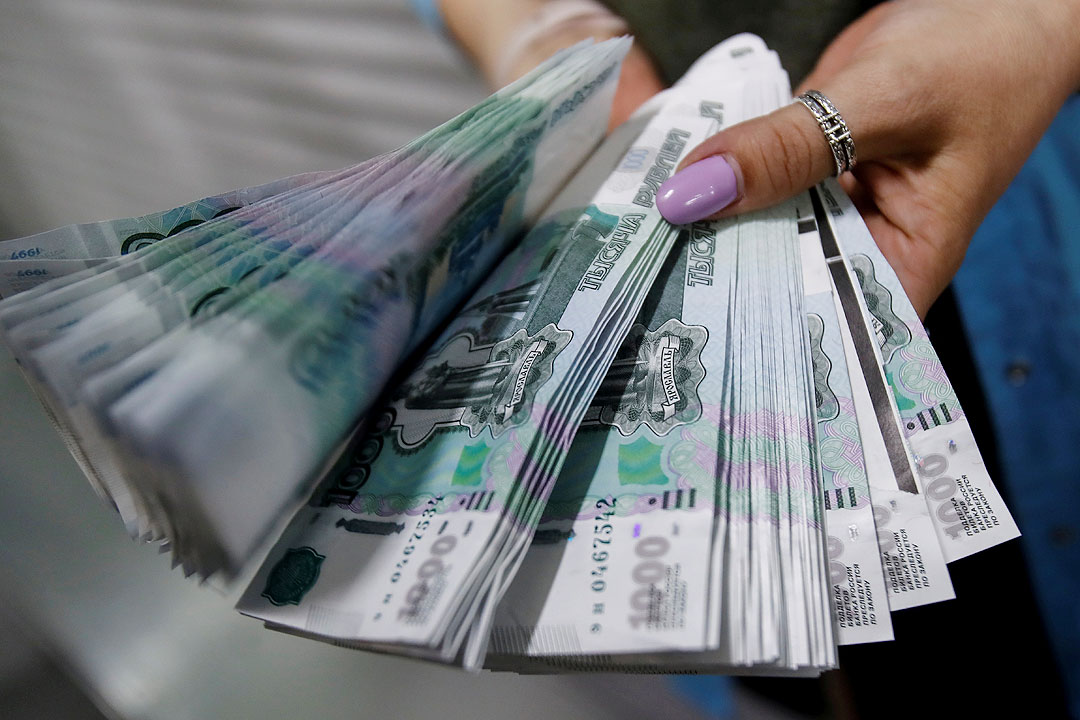
AN EMPLOYEE holds 1000 Russian rouble notes at Goznak printing factory in Moscow, Russia, July 11, 2019. — REUTERS

WASHINGTON — As the world’s wealthy democratic powers roll out new sanctions against Russia in response to horrifying images of executed Ukrainians in the city of Bucha, it has become clear that the easiest options are now exhausted and stark differences have emerged among allies over next steps.

The European Union proposed a first stab at curbing Russia’s energy sector in response to its invasion of Ukraine launched in February, banning imports of Russian coal. But EU countries remain divided even over this move, much less restricting imports of Russian oil and gas that are more important to their economies.

The United States and Group of Seven (G7) allies announced new sanctions on Russia’s largest lender, Sberbank, more state-owned enterprises and more Russian government officials and their family members, cutting them out of the US dollar-based financial system.

The United States also has banned Americans from new investment in Russia and barred Moscow from paying sovereign debt holders with money in US banks.

Although Russia’s heavily restricted rouble rallied to a six-week high on Wednesday, US Treasury officials say the sanctions are starting to turn Russia back into an austere, 1980s Soviet-style closed economy.

But the US sanctions contain carve-outs allowing Russia to continue collecting revenue from energy exports, which can help fuel its Ukraine invasion. US Treasury Secretary Janet Yellen told US lawmakers on Wednesday that stronger curbs on Russian energy are not yet possible for European allies dependent on Russian oil and gas.

Russia supplies around 40% of the European Union’s natural gas consumption, which the International Energy Agency values at more than $400 million per day. The EU gets a third of its oil imports from Russia, about $700 million per day.

“We are at the point where we have to take some pain,” said Benn Steil, international economics director for the Council on Foreign Relations think tank in New York. “The initial batches of sanctions were crafted as much to not hurt us in the West as much as they were to hurt Russia.”

The divisions in Europe have become more apparent this week. After Lithuania announced on Saturday it would stop importing Russian gas for domestic consumption, Austrian Finance Minister Magnus Brunner voiced opposition to sanctions on Russian oil and gas, telling reporters in Luxembourg that these would hurt Austria more than Russia.

NEXT STEPS
Lack of unity on curbing energy imports means that options are limited to increase pressure further, but the investment ban announced on Wednesday could push more multinational firms to leave Russia, said Daniel Tannebaum, a former compliance officer at the Treasury’s Office of Foreign Assets Control.

“You could outright start banning trade in more industries,” a move that would cut Russians off from more types of Western products such as pharmaceuticals, similar to a luxury goods ban imposed in the early days of the war, said Mr. Tannebaum, who leads consulting firm Oliver Wyman’s anti-financial crime practice.

The United States has been pushing European allies to inflict more pain on Russia while trying to make sure that the alliance against President Vladimir Putin does not fray, a balance that only gets tougher.

“You’ve kind of hit the ceiling — on both sides of the Atlantic — for what can be done easily and what can be done in short order,” said Clayton Allen, US director at the Eurasia Group political risk consultancy, referring to the sanctions.

To move to a tougher round of sanctions, US officials will need to provide some assurances to European countries that energy markets and supplies can be stabilized to avoid severe economic hardship, Mr. Allen said. An economically weakened EU helps no one, Mr. Allen added.

“If Western Europe is plunged into a recession, that’s going to drastically limit the amount of support – both moral and material – that they can provide to Ukraine,” Allen said.

U.S. Secretary of State Antony Blinken is expected to press the case for more actions in Brussels this week at NATO and G7 meetings of foreign ministers. U.S. Deputy Treasury Secretary Wally Adeyemo held similar meetings last week in London, Brussels, Paris and Berlin.

There also are still loopholes to close, including continued sales by German and French companies into Russia, and the ongoing hunt for luxury yachts and other assets parked by Russian oligarchs, according to one European diplomat involved in sanctions talks. — Reuters


Hong Kong falls ‘off the map’ as aviation hub amid travel curbs

MDS AYON

HONG KONG has ceased to function as an international aviation hub as it curbs inbound flights and quarantines arriving passengers, according to a trade group representing hundreds of airlines worldwide.

“It’s effectively off the map now, and I think it’s going to be difficult for Hong Kong to recover,” Willie Walsh, director general of the International Air Transport Association, said at a briefing Wednesday. “It’s going to lag significantly behind the recovery that we’re seeing elsewhere and has led to a tough time for all airlines operating there.”

Even the city’s shortened isolation requirements for arriving passengers — quarantine was halved to one week this month — will deter travelers, Mr. Walsh said.

The IATA chief said that with much of the rest of Asia reopening he remained optimistic Hong Kong could start to relax its border restrictions.

However, Hong Kong is still banning flights even after rolling back some of the world’s strictest inbound travel curbs. There’s been increasing frustration over the city’s closure for much of the past two years due to pandemic restrictions.

“The restrictions there have been very severe and have led directly to the cancellation of a lot of services with airlines — effectively finding it incredibly difficult, if not impossible to operate there,” added Mr. Walsh.

IATA has warned places that continue to attempt to lock out the disease, rather than managing it, risk missing out on enormous economic and societal benefits through the restoration of international travel. The group represents almost 300 airlines accounting for 83% of global air traffic.

Singapore Airlines Ltd., Emirates, Cathay Pacific Airways Ltd., Qatar Airways QCSC, Korean Air Lines Co. and Malaysia Airlines were slapped with week-long bans this month after breaching Hong Kong’s so-called circuit-breaker mechanism. A stoppage can be meted out if three or more coronavirus disease 2019 (COVID-19) cases are found on the same flight, or if there’s one confirmed infection and another non-compliant passenger.

Hong Kong eased a raft of travel measures on April 1, including lifting an outright ban on inbound flights from nine countries, including the US, the UK and Australia, and reduced quarantine for inbound travelers to one week.

Mr. Walsh said the feedback IATA was getting from airlines was that quarantine remained discouraging, and people would not fly in the current environment unless they really had to. — Bloomberg

No evidence to support widespread use of fourth COVID shot — EU agencies

PHILIPPINE STAR/ MICHAEL VARCAS

EU HEALTH AGENCIES said on Wednesday there was no evidence to support the use of a fourth dose of coronavirus disease 2019 (COVID-19) vaccines developed by Pfizer and Moderna in the general population, but they recommend a second booster for people aged 80 and above.

There is no clear evidence in the European Union (EU) that vaccine protection against severe disease is waning substantially in adults with normal immune systems aged 60-79, the European Medicines Agency (EMA) and the European Centre for Disease Prevention and Control (ECDC) said in a joint statement.

They cautioned, however, that it may become necessary to consider a fourth dose in this age group if the epidemiological situation changes.

Both agencies agreed a fourth dose can be given to adults 80 years of age and above.

That recommendation came a week after European health ministers urged the bloc’s executive to back a fourth COVID-19 shot for people over 60 to boost immunity in the absence of vaccines that specifically protect against the Omicron variant.

A study from Israel has shown that senior citizens who received a second booster of the Pfizer–BioNTech COVID-19 vaccination had a 78% lower mortality rate from the disease than those who had only one.

The agencies said there was no conclusive evidence of “an added value of a fourth dose” in those aged below 60.

The agencies will consider the best timing for additional doses, possibly taking advantage of updated vaccines when re-vaccination campaigns start in the autumn. — Reuters

Meralco Bolts guns for 2-0 lead

MERALCO coach Norman Black has seen so many battles to get carried away by the Bolts’ 104-91 opening triumph against Barangay Ginebra in the Philippine Basketball Association (PBA) Governors’ Cup finals.

Neither does he get excited by the historical figures that say Game 1 victors went on to win the best-of-seven series in 60 out of 88 instances.

“We got the first game. But I’m going to look at the second game like it’s 0-0 and we have to get the second game,” said Mr. Black.

“I’ll have to make sure that my players are prepared for Game 2, try to anticipate the adjustments they might make and find a few adjustments we can make also.”

His players understand the situation well.

“It’s just one quarter lang kung baga sa championship (match) so we’re still not celebrating this win. Talagang goal namin is to get the four wins and mag-champion,” said Allein Maliksi, Meralco’s top scorer with 22 highlighted by a sizzling 5-of-7 three-point clip in Wednesday’s series kickoff.

The Bolts gun for a 2-0 lead tonight at the MOA Arena in a 6 p.m. tiff that Black expects to be “very exciting” following the heated altercation between his player Raymar Jose and Ginebra’s Arvin Tolentino in the dying seconds.

The two former FEU stalwarts continued their tussle near their respective dugouts and almost came to blows. Messrs. Tolentino and Jose face possible sanction from the Commissioner’s Office for their actions.

Meralco drew first blood in Part IV of its titular showdown with three-time tormentor Ginebra using a relentless defense complemented by a well-oiled offense.

The Bolts forced the usually efficient Justin Brownlee to seven-of-20 shooting (35%) and pouncing on the absence of Japeth Aguilar (calf), dropped 52 points inside the paint and won the rebounding battle, 48-44.

“We really have to match their intensity, physicality and aggressiveness because this series will be dictated by who wants it more,” noted Ginebra skipper LA Tenorio, who himself was held to five points in Game 1.

Mr. Tenorio shared that coach Tim Cone summed it best in his post-game talk.

“He said hindi ito yung team na nakilala niya na naglaro for the past playoff games (against TNT and NLEX). I agree with that. Offensively and defensively, we’re out of whack and playing against a motivated Meralco team, we can’t afford to do that.”

For Brownlee, it’s imperative that Ginebra does a better job defending the lanes as well as Mr. Maliksi’s long bombs next time.  “If we could do that defensively and we keep moving the ball and looking for better looks and really focus on converting our shots, we’ll be okay,” he said.

Ginebra’s resident import isn’t losing faith in his never-say-die teammates. “No series has been decided off one game. They set the tone but I think we can move forward, make adjustments and see where it goes from there,” said Mr. Brownlee.

Ladon, four other PHL boxers eye finals berth in Thailand Open

PHUKET, Thailand — Reigning Southeast Asian Games flyweight champion Rogen Ladon guns for at least a silver finish even as four other Filipino boxers aim for the same in the 2022 Thailand Open International Boxing Tournament on Friday at the luxurious Angsana Laguna Phuket Resort Hotel here.

Mr. Ladon takes on hometown bet Thanarat Saengphet in the men’s fly semifinals scheduled as the opening match of the afternoon session starting at 1 p.m. (2 p.m. in Manila) while Ian Clark Bautista (men’s feather), Riza Pasuit (women’s light), Aira Villegas (women’s fly) and Hergie Bacyadan (women’s middle) face separate opponents.

The Asian Games and Asian Championships silver winner Mr. Ladon earned a bye to the quarterfinals where he overwhelmed Po-Wei Tu of Chinese Taipei, 5-0, on Wednesday.

He now goes up against the 2021 AIBA World Championships bronze medalist Mr. Saengphet who narrowly beat world title holder Saken Bibossinov of Kazakhstan through a 3-2 split decision.

Mr. Ladon, 28, is not taking the much younger Mr. Saengphet (19) lightly even though he already caught a glimpse of the Thai fighter’s potential as the two were sparring partners in the pre-tournament training camp held in Muak Lek District just outside Bangkok.

On the other hand, Mr. Bautista fought all the way from the preliminaries to the semis where he meets Nguyen Van Duong of Vietnam, a silver finisher in the 2019 SEA Games (SEAG).

The SEA Games bronze medalist Mr. Bautista first demolished Cheng Wei Lee of Chinese Taipei, 5-0, then outclassed Alex Mukuka of New Zealand, 4-0, in the quarterfinals.

Mr. Pasuit, who captured a silver in the SEAG held in Manila almost three years ago, squares off against Punam Rawal of Nepal after battering Zann Chee Wai Yee of Singapore, 5-0, in the quarters.

SEAG bronze winner Ms. Villegas clashes against Nillada Meekon of Thailand following dominant 5-0 victories over Novita Sinadia of India and fellow PH campaigner Mary Sinadjan.

Young boxer Bacyadan, for her part, got a bye to the semis where she tests her mettle against Bhagyabati Kachari of India, who scored a 5-0 win against Pornnipa Chutee of Thailand.

Leading the national boxing team’s campaign in this prestigious Thailand Open is coach Don Abnett together with coaches Ronald Chavez, Reynaldo Galido, Roel Velasco and Mitchel Martinez.

A total of 14 Filipino pugilists joined the event including former world champion Josie Gabuco and Tokyo Olympics campaigner Irish Magno. Unfortunately, Gabuco, Magno and the seven other nationals were still finding their rhythm after a long layoff due to COVID lockdowns resulting in their early exit in the tournament.

“All our boxers are still trying to shake off the cobwebs  after two years of not seeing any international competition but they’re slowly getting their rhythm back”, said ABAP president Ed Picson.

“It also helped that they had a two-week training stint in Muaklek, outside of Bangkok, just before the competition and we’re sending them back there right after this for another camp in preparation for the SEA Games in Vietnam and the Women’s World Championships in Turkey next month,” he added.

World champion Nesthy Petecio and fellow Tokyo Olympics silver medalist Carlo Paalam are also here in Thailand but skipped the competition and only joined the training camp.

The Thailand Open, organized by the Thailand Boxing Association headed by its president Pichai Chunhavajira who is also the Asian Boxing Confederation (ASBC) president and joined by top-tier athletes from various countries, is part of the PH boxing squad’s preparations for its overall title defense in the upcoming 31st Southeast Asian Games slated in Hanoi, Vietnam next month.

Seasoned boxing official Karina Picson is serving as the Technical Delegate while 3-star international referee-judge Jonathan Jimenez is working as one of the Technical Officials of the tournament which will award prize money to the podium finishers.

Benzema hat trick gives Real Madrid 3-1 win at Chelsea

LONDON — A hat trick by veteran striker Karim Benzema, including two fine headed goals in the space of three first-half minutes, earned Real Madrid a 3-1 win at reigning European champions Chelsea in their Champions League quarterfinal first leg on Wednesday.

Benzema, 34, claimed his hat-trick when he pounced on an error by Chelsea goalkeeper Edouard Mendy just after half time to put the Spaniards in control of the tie before Tuesday’s second leg in Madrid.

Kai Havertz had restored some hope to the Blues when he headed in an angled pass from Jorginho in the 40th minute to make it 2-1.

But Chelsea’s chances of a comeback were undone by Mendy’s mistake in the 46th minute when, outside his box, he tried to pass to Antonio Rudiger only for Benzema to intercept and steer the ball into an empty net for his 37th goal of the season.

The France striker rocked Chelsea when he converted pinpoint crosses with headers, first from Vinicius, Jr. from the left in the 21st minute and then from Luka Modric on the right in the 24th, leaving Mendy with no chance on either occasion.

Benzema had looked certain to claim his hat trick just before halftime but he fired wide with Chelsea’s usually rock-solid defence looking ragged.

“They’re very important goals. I’m happiest to have scored the third as I missed one in the first half and I was thinking about that chance because it’s very important to score goals. Then I got another and I’m very happy,” Benzema told Spanish television.

“Today we came out to win, to show we’re Real Madrid. Things worked out well for us as we played well, from the first minute to the last.”

The Spaniards were seeking revenge after the Londoners eliminated them in last season’s semifinals before the Blues won the trophy in Porto.

There was an early warning sign for the Londoners when Vinicius, Jr. cracked a shot against the bar in the 10th minute.

Chelsea sought to fight back in the second half with the best chance falling to substitute Romelu Lukaku — Chelsea’s record signing who has struggled to fit in at Stamford Bridge — but he headed narrowly wide as a deflected ball dropped to him on the edge of the six-yard box in the 69th minute.

In the dying moments, Hakim Ziyech, also on as a sub, fired over from 13 yards.

Real — who has been crowned European champions 13 times but had never previously beaten Chelsea — is now in pole position to advance into the semifinals to face either Manchester City or crosstown rival Atletico Madrid.

Real Madrid coach Carlo Ancelotti, who spent two years as Chelsea head coach and led the Blues to the Premier League and FA Cup double in the 2009/10 season, hailed his team’s control of the game and the danger they posed on the counterattack.

“It was a good night but it is only the first half of this round,” he was quoted as saying by the BBC.

Chelsea’s defeat adds to a sense of turmoil with the club put up for sale by Roman Abramovich after Russia’s invasion of Ukraine, which Moscow calls a “special military operation.”

The Russian billionaire has been sanctioned by the British government.

Chelsea coach Thomas Tuchel said his team had been way off the levels he expects.

“You cannot expect a result from this kind of performance,” he told reporters. — Reuters

Villarreal stuns Bayern 1-0 in Champions League last-eight first leg

VILLARREAL, Spain — Villarreal stunned six times European Cup winner Bayern Munich with a deserved 1-0 win after creating a hatful of chances in a frantic Champions League quarterfinal first leg on Wednesday.

In the end, Nigerian-born Dutch forward Arnaut Danjuma’s eighth minute strike gave Unai Emery’s side a slender lead for the second leg at the Allianz Arena in Munich next Tuesday.

Villarreal took the game to Bayern and should probably have won by a larger margin given their clear opportunities.

The Europa League holders suffocated Julian Nagelsmann’s team, who struggled to find their touch in the final third, and were a constant menace to keeper Manuel Neuer on the counter.

Villarreal had a Francis Coquelin effort chalked off by VAR for offside while Gerard Moreno almost scored twice — first with a long-range strike that hit the post and later trying to lob Neuer with an effort from inside his own half that went wide.

Danjuma and Alfonso Pedraza wasted two clear chances in the last few minutes, missing the target from inside the area.

“Our team is very hungry and humble,” Man-of-the-Match Giovani Lo Celso told Movistar Plus. “But we faced one of the best teams in the world and we go out with the sensation that we should have scored several more goals.

“We knew that we needed to shorten the field for them — they are a team that can’t have spaces to work the ball. We played our game, we are a team that always try to be the protagonist and we had a lot of opportunities to win by a bigger margin.”

Villarreal coach Unai Emery has won a record four Europa League titles — three with Sevilla — and his current side look to have inherited his DNA and adapted it to the Champions League in their efforts to compete toe-to-toe with the leading clubs.

They eliminated Juventus in the last 16 and have now shocked Bayern, who was unbeaten in this year’s competition and tasted their first Champions League defeat away from home since 2017.

The buildup to Villarreal’s winner started with Moreno, who is the heart and soul of the Yellow Submarine.

He received the ball close to the right touchline and played it through to Lo Celso whose low cross was struck first time by Dani Parejo. Neuer looked to have it covered but Danjuma got there first and stroked the ball home from close range.

“We know that it will be a completely different game in Germany,” captain Parejo told reporters.

“We had at least five opportunities to score, they didn’t create a single one. That says a lot about what we are capable of. So we will go there and compete with the same passion.” — Reuters

Woods puts finishing touches to Masters preparations

AUGUSTA, GA — Five-times champion Tiger Woods put the finishing touches to his preparations for this week’s Masters by playing nine holes at Augusta National on Wednesday ahead of his highly-anticipated return to competition.

Woods, who suffered career-threatening leg injuries in a February 2021 car crash, arrived at Augusta National early and played the back nine along with 1992 Masters champion Fred Couples and world number seven Justin Thomas.

The scene more resembled the final round of a major rather than a pre-tournament practice as patrons lined the course from tee to green to catch a glimpse of Woods, who 14 months ago many thought would never compete again.

At the par-three 16th, which is played entirely over water, the trio delighted the patrons as they took part in a Masters practice round tradition and simultaneously attempted to skip their balls across the pond fronting the green.

Couples, the only member of the trio to pull off the trick shot and hit the green, said after the round that Woods was hitting the ball plenty far enough to play Augusta National and looked even sharper than he did earlier in the week.

“Tiger is Tiger. I said it on Monday that he’s not like a lot of us where I’ve been injured even at age 35 and I go play just to play,” Couples said.

“He’s not going to do that. He’s won so many times, and he’s just not a guy to go do something mediocre. He’ll compete, and he’ll be ready to roll.”

Woods, 46, arrived at Augusta National on Sunday and played the back nine in a bid to help him decide whether he would play in the year’s first major this week. He played the front nine on Monday with good friends Couples and Thomas.

The 15-times major champion said on Tuesday that not only did he intend to play this week but that he thinks he can win.

Victory for Woods would make him the oldest Masters champion by three weeks over 18-times major winner Jack Nicklaus, who collected his record sixth Green Jacket in 1986.

Woods staged one of the most remarkable comebacks in professional sport when, at 43, he won the Masters in 2019 after enduring years of surgery and personal problems that convinced many the best golfer of his generation was done.

Woods is scheduled to begin his first round on Thursday at 10:34 a.m. ET (1434 GMT), which will mark his first competitive round in 508 days, in a group with South African Louis Oosthuizen and Chilean Joaquin Niemann. — Reuters

Celtics defeat Bulls for 50th victory

JAYLEN Brown scored 25 points and Jayson Tatum added 16 points, 10 rebounds and eight assists to lift the visiting Boston Celtics to a 117-94 victory over the Chicago Bulls on Wednesday.

Brown, who made 10 of 21 shots from the floor, has scored at least 25 points in each of his last 10 games.

Al Horford made all seven of his shots — including three from 3-point range — and finished with 17 points and 10 rebounds. Daniel Theis scored 15 points before fouling out for the Celtics (50-30), who reached the 50-win plateau for the first time since the 2017-18 season.

Boston, which has won three in a row and 14 of its last 17 games, moved a half-game up on the idle Milwaukee Bucks and Philadelphia 76ers into sole possession of second place in the Eastern Conference. The Celtics visit the Bucks on Thursday.

Boston benefited from a fast start and finished by shooting 48.9% from the floor, including 45.9% (17 of 37) from 3-point range.

DeMar DeRozan scored 15 of his 16 points in the first half for the Bulls (45-35), who have lost three in a row and 14 of their last 20 games. Chicago fell 1.5 games behind the fifth-place Toronto Raptors.

Nikola Vučević had 13 points and seven rebounds, while Zach LaVine missed seven of nine shots from the floor — including all five from 3-point range to finish with seven points.

With former President Barack Obama in attendance, the Celtics put their best foot forward and made 12 of their first 18 shots from the floor to seize a 31-14 lead with 2:27 remaining in the first quarter.

Theis made 6 of 8 shots from the floor to score 13 points, while Brown, Tatum and Horford each had 11 to stake Boston to a 67-51 lead at half time. The Celtics shot 57.8% from the floor (26 of 45), had 20 assists and forced 10 turnovers.

Boston pushed its lead to 26 points after Brown tipped home a bucket in the paint late in the third quarter.

The Celtics put it on cruise control from there. — Reuters

Tiger mania

Fred Couples is no stranger to winning. After all, he does have 15 United States Professional Golfers Association Tour and 131 Champions Tour victories. He was especially fearsome in the early nineties, when his buttery swing made him a regular fixture on tournament leaderboards. And, needless to say, he made his biggest mark when he took the Green Jacket in 1992. Since then, he has been a fan favorite at the Augusta National Golf Club, where he seems to contend every year he can manage to tee off — “manage” being the operative word, of course, given his chronic back ailments.

This week, Couples is back at the Masters, where the teeming spectators love to see him play just as much as he loves playing. That said, it seems he has been reduced to mere cheerleader amid the discernible buzz heading into the start of golf’s premier event. If followers in the practice rounds he has been part of resemble those otherwise exclusive to final pairings, it’s because Tiger Woods shares in his walks. In the pride of Georgia, no one has moved the needle more than his good friend.

Needless to say, anticipation is at a high because Woods was not at all expected to tee off. Just 14 months ago, he was involved in a vehicular accident of his own making. He nearly lost his leg — his life, even — then, and although surgeries and painful rehabilitation allowed him to walk again (albeit with a noticeable limp), logic dictated that wielding a club, let alone negotiating the demanding terrains of Augusta National, had to be far from his mind. But he’s obstinate, and when he sets his sights on an objective, he works as hard as he can to at least try to meet it. Which was why Couples gushed, and was only too happy to act as the bringer of good news.

Most other golfers would deem attendance a triumph in and of itself. Not Woods. For all that he endured and notwithstanding his admission of the myriad challenges he faced during his convalescence, he’s out to win. Nothing less will do for him — a mindset he carried in his prime, and which he evidently continues to display despite his handicaps. Make no mistake, though; he’s in for an uphill battle, literally and figuratively. Perhaps no one can trump his determination, but his physical frailties and lack of reps figure to set him back, especially in the crunch.

Not that Couples cares about the minuses, because, well, Woods is Woods, which is to say only a fool would dare count him out. Forget that he’s not the best, or the best prepared. History beckons, and all eyes are on him as he aims to make it.


Anthony L. Cuaycong has been writing Courtside since BusinessWorld introduced a Sports section in 1994. He is a consultant on strategic planning, operations and Human Resources management, corporate communications, and business development.

Immodest proposals

VECTORJUICE-FREEPIK

A satire in the guise of one of those economic treatises that were so popular at the time, “A Modest Proposal” was written in 1729 by the English author Jonathan Swift.

In that essay Swift proposed a “solution” to the hunger and poverty of 18th century Ireland. The problem, he said, contains its own solution, and that is, for the Irish poor, burdened as they were with so many mouths to feed, to butcher their children and to sell them as food to the English landlords who were exploiting them.

Swift was expressing his outrage over the rule of the then English (later British) Empire over Ireland, and in that piece was conveying, through what he believed was the most compelling way of awakening the public to the brutal realities of poverty, how desperate was the situation of the Irish poor, and how inhuman were the English and Irish politicians who did not care whether they lived or died.

His real proposal was the opposite of his literal one: it was a demand for humane treatment and for concrete measures to remedy the hunger and poverty that haunted Ireland under English rule. It was, indeed, a modest proposal.

Practically the same as what Swift was demanding has again and again been proposed in these isles: enough compassion from government for it to address the needs of the legions of the poor, and the adoption of such measures as authentic land reform and industrial development to release the poor farmers in the countryside from feudal bondage.

Like Ireland in the 18th century, the Philippines in the 21st is also besieged by hunger and poverty, and its own versions of the politicians and their minions then dominant in that country are as uncaring about the poor.

What the Philippine ruling dynasties, their cohorts and their minions do care about is putting a stop to the protests, social instability, and even those attempts by the conscience-stricken to ameliorate the lot of the poor that hunger and poverty inevitably provoke and encourage. They fear that both the demands for change as well as citizen initiatives at self-help are exposing their corruption and incompetence, and hence endangering their rule.

In furtherance of addressing the symptoms rather than the rot that afflicts Philippine society, Ferdinand Marcos, Sr., their leading agent and himself the patriarch of a rising dynasty at the time, in 1972 and the years after caused the arrest, detention, and in a number of instances the torture and summary execution of government critics including members of opposition parties; worker, farmer, student, and human rights activists; journalists and media workers; and academics, lawyers, doctors, poets, artists, film makers and writers, in the process ravaging practically all those sectors vital to the existence and advancement of the Filipino nation.

But Marcos at least had a name for his far from modest program of remaking Philippine society in his own image and for his, his family’s, and the ruling elite’s benefit. He proclaimed that in behalf of the making of a “New Society,” he had to impose “Constitutional Authoritarianism,” implying thereby that he was a reformist, and that while his was indeed a dictatorship, it was nevertheless well within the bounds of the Constitution.

His successors — the pretenders to the throne of tyrannical rule— have not been as courteous as to attempt some explanation or legal basis for what they have been doing. But what they lack in coherence they make up for in policies and acts that amount to the same thing as authoritarianism — without, however, claiming them to be sanctioned by the Constitution.

Those policies and their implementation have over the past six years been evident enough. Press freedom, free expression, and the right to peaceable assembly may not have been as curtailed as during Marcos Sr.’s martial law regime, but they have certainly been abridged, and so have the rights to life and due process.

As in the 14 years of open, declared dictatorship, during the reign of the current despotism the abridgment of those rights has been implemented through semi-legal and outrightly illegal means such as the filing of fabricated charges against dissenters, social and political activists, journalists and other perceived critics of bad governance; preventing the reporters of independent media organizations from covering public events; and even the assassination of some of those who dared exercise their Constitutional right to free expression.

Also, as in the years of the Marcos dictatorship, in force still is the double standard, under the terms of which well-connected and moneyed felons and others convicted of high crimes such as graft and plunder are immune from punishment while those not similarly endowed suffer incarceration for such petty offenses as stealing a tin of corned beef to feed one’s starving children.

Citizen attempts to provide their poorer countrymen with medical care and legal aid, and to assuage their hunger through “community pantries” have also been attacked as communist conspiracies, in a naked attempt to suppress such initiatives for their implicit criticism of government incompetence.

Something similar was also at work during the Marcos dictatorship. The efforts by members of nongovernment and religious organizations, as well as of doctors and social workers to mitigate the sufferings of the poor were then similarly condemned, and their advocates imprisoned.

There is one area in which, however, present day anti- democratization plotters are outdoing the Marcos Sr., kleptocracy. It is in the planned and sustained campaign against information and knowledge. It is evident not only in the deliberate spread of disinformation and propaganda via the online troll farms and the mercenaries in print and broadcast media, but also in the attacks on independent journalists, universities, books, and book stores.

It has so far not reached the same stage as Nazi Germany’s burning of “undesirable” books. But at least two universities have yielded to police and military pressure to “cleanse” their libraries of “subversive” books, while only recently was the word “terrorist” painted on the facades of two book stores. The Marcos regime did censor the media and spied on schools, academics, and their students, but it neither censored their libraries nor terrorized book store owners and patrons.

Both are in the same category of thought control and censorship that the political elite and their lackeys in the civilian and military bureaucracies favor, and both are direct threats against academic freedom, free expression, and, most critical of all, against everyone’s right to multiple sources of information that are as varied as possible as an indispensable factor in arriving at the human need for the truth that, as the Bible correctly puts it, will set us free.

What is behind all these is the unarticulated but nevertheless all-encompassing determination to once more, as during Marcos Sr.’s benighted rule, make the democratization that has been long in coming to this country as difficult if not as impossible of an achievement quite simply because its realization would be contrary to dynastic interests.

It is a regressive and far from modest proposal, and one that is being steadily implemented with only a precious few being the wiser. Whether it will persist, or can be stopped and the democratization of governance that has been interrupted, sabotaged, and undermined for decades resumed, is what is at stake in next month’s elections. It is what makes that exercise the most pivotal in this country of uncertainty and crisis since the “snap elections” of February 1986, the results of which began the process of ending the Marcos Sr. dictatorship.


Luis V. Teodoro is on Facebook and Twitter (@luisteodoro).

www.luisteodoro.com

Ensuring orderly inflation expectations

BW FILE PHOTO

After two months of steady inflation at 3%, the Philippine Statistics Authority (PSA) reported that inflation climbed to 4% in March, right on the upper end of the official target of 2-4%. High imported fuel prices spilled over to domestic transport, food and utility prices.

This is not exactly unexpected.

For the Bangko Sentral ng Pilipinas (BSP) itself, as early as its Feb. 17 policy meeting, had projected 3.7% inflation for 2022 and 3.3% for 2023. In its March 24 policy meeting, the BSP further increased its forecasts to 4.3% and 3.6% for the next two years. With an actual average inflation rate of only 3% for January and February, the BSP expected faster price movements for the rest of the year through the next.

Without question, the BSP’s outlook was driven by the unprecedented rise in both global crude oil and non-oil prices as well as the sharp depreciation of the peso. More positive base effects are also expected for the next three quarters through the end of 2022 to further motivate higher inflation. Finally, a prolonged geopolitical conflict in Eastern Europe could only result in elevated prices of corn, wheat, nickel, and fertilizer.

What is unexpected is the BSP’s decision to keep its policy rate at 2%. Against the actual average inflation of 3.4% for the first quarter, the policy rate is negative in real terms. Against the forecast for 2022 of 4.3%, the BSP would breach the target. Next year, at 3.6%, inflation is uncomfortably close to exceeding the inflation target.

What underlies the BSP’s patience to wait out all these supply shocks must be the view that they are just transitory. This has been pervasive since last year. For instance, the IMF’s World Economic Outlook of January 2022 assumed that if “inflation expectations stay well anchored, inflation should gradually decrease as supply-demand imbalances wane in 2022.”

Until today, with economic scarring still being felt from COVID-19 and the supply shocks arising from the Eastern European conflict, some think tanks like Pantheon Macroeconomics, continue to entertain the notion that the inflation surge is transitory. “(It) is not expected to last long, even taking into account the lagging impact of higher oil prices following the Russian invasion of Ukraine.”

This point of supply-driven inflation being transitory is the same point that differentiates European Central Bank President Christine Lagarde from US Fed Chairman Jerome Powell. Lagarde argues that such “drivers are likely to fade over the medium term, which is the horizon that matters for monetary policy.” For Powell, even “the recent rise in COVID-19 cases… poses increased uncertainty for inflation.”

Anchoring central bank policy on what is believed to be just transitory supply shocks could be problematic. What if those exogenous supply shocks prove to be more durable, more lasting than Lagarde’s policy horizon of monetary policy?

It would be useful to remember that inflation surged when the pandemic began to ease and mobility improved with the lifting of lockdowns across the world. Before the global reopening, consumer savings and domestic liquidity expanded with ultra-easy monetary and fiscal policies. Our experience in the Philippines consisted of five successive quarters of negative growth before the economy shaped up starting in the second quarter of 2021. No monetary policy action seemed required because the PSA was generating benign inflation rates while the economy remained fragile for most of the quarters during the pandemic. In the middle of 2021, when the economy showed greater resilience and inflation peaked at 4.4% in August, it had become a more difficult call for the monetary authorities.

But there is an interesting economic piece that came out in January 2022 from two finance professors, Francesco D’Acunto of Boston College and Michael Weber of the University of Chicago (“Rising inflation is worrisome. But not for the reasons you think,” Center for Economic Policy Research). Consumers’ inflation expectations could explain the recent escalation in consumer prices and inflation.

The argument is that price surges are concentrated in a few commodities which are typically consumed by ordinary households. But for central banks, this phenomenon is normally ignored, especially by those which focus on core inflation based on trimmed means and medians. Unfortunately, inflation expectations of consumers are based precisely on those few commodities whose price movements are rather rapid. Such inflation expectations could be self-fulfilling. Consumers could spend more on these commodities. Today in the Philippines, the higher oil and food prices could drive demand for higher transport fares and in turn, higher wages. These price developments are likely to cause firms’ marginal costs to increase and ultimately pass this on through to higher prices.

Here, some non-monetary measures have been put in place to prevent higher fuel costs from leading to higher transport fares, and to break the wage-price spiral. But our limited budget may also set a ceiling on mitigation measures. The two professors suggest that central banks may wish to tighten monetary policy or reduce their balance sheet, but this risks triggering another recession, if the timing is off. The other option is to engage in laymanized communication outreach programs directed to ordinary consumers who may not be familiar with monetary policy. Central banks could do both.

However, it looks like there are now indications that supply shocks are more long lasting. The March inflation reading is one. As of this month, the various Regional Tripartite Wage and Productivity Boards are busy reviewing various petitions for higher minimum wages. It has been four years since the last adjustment. A number of transport associations, while withdrawing their initial petitions for an increase in the minimum fare, would also like to restore the original minimum fare to P10. The Government’s pledge to increase the subsidy to drivers and operators of public utility vehicles is the only reason that prevents the transport group from reviving their petitions.

If we see a prolonged crisis in Eastern Europe and elevated fuel prices, it is not impossible to see second round effects. The BSP itself admitted and described the geopolitical crisis as a “significant headwind” to the global economic recovery and consequently “on inflation through transport fares, wages and food prices.”

If in the past this remote dynamic could be dismissed as too remote and indirect, today the BSP has indicated it is ready to take preemptive action if inflation expectations are at risk of being de-anchored. True, its report on private-sector inflation forecasts indicates higher inflation expectations but is still anchored on the 2-4% inflation target. But the same respondents also indicate that the risks to their outlook are more on the upside. A preemptive move may therefore be warranted.

Which brings us to Charles Goodhart of LSE and Manoj Pradhan of Talking Heads Macroeconomics (“What may happen when central banks wake up to more persistent inflation?,” Center for Economic Policy Research, October 2021) who suggested that a necessary but “sudden policy reversal could lead to severe downturns in financial markets and significantly damage public sector balance sheets.”

This is a possibility when, after months of keeping policy rates steady, central banks realize those supply shocks are more than transitory, that inflation expectations have been de-anchored and they are looking at a more persistent inflation with second round effects in real, labor, and financial markets.

Goodhart and Pradhan propose the preparation and announcement of a monetary policy plan even if it is still tentative. They propose a specific way to implement it: “symbolic tiny increases in nominal interest rates in the immediate future.”

It is also important for central banks to start thinking how such an increase in nominal rates could affect both real and financial markets by their own, even as the real interest rates may remain negative. It will take time before the real rates reach zero or positive. Finally, some decisions have to be made on central banks’ balance sheets as this affects the monetization of public debt and its implications on central bank independence and credibility of its monetary policy.

The point of Goodhart and Pradhan is to convince the market “that an orderly evolution is not just possible, but likely.”

This is how to anchor inflation expectations and keep price movement within the official target. We need this very badly in the Philippines.


Diwa C. Guinigundo is the former deputy governor for the Monetary and Economics Sector, the Bangko Sentral ng Pilipinas (BSP). He served the BSP for 41 years. In 2001-2003, he was alternate executive director at the International Monetary Fund in Washington, DC. He is the senior pastor of the Fullness of Christ International Ministries in Mandaluyong.