Home Blog Page 6196

Local stocks extend climb on bargain hunting
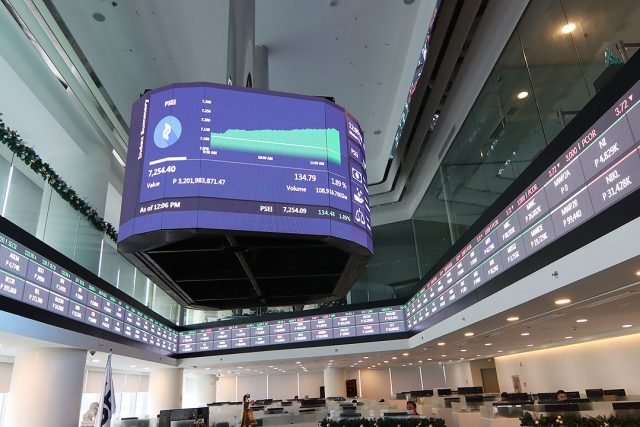
STOCKS climbed further on Tuesday on bargain hunting and despite the release of data showing headline inflation was at a near four-year high in June.

The bellwether Philippine Stock Exchange index (PSEi) rose by 126.37 points or 2.04% to close at 6,309.99 on Monday, while the broader all shares index went up by 50.24 points or 1.50% to 3,398.70.

“I think the market bounce today was due to bargain hunting of selected stocks despite inflation print at 6.10%,” IB Gimenez Securities, Inc. Research Head Joylin F. Telagen said in an e-mail on Tuesday.

“Despite June headline inflation coming in at a four-year high, the PSEi closed higher today, indicating that this has largely been priced in by the market as it looks ahead to the release of Q2 earnings,” RCBC Securities, Inc. Head of Research Erwin Rommel C. Fuentes said in an e-mail on Tuesday.

“We expect the BSP (Bangko Sentral ng Pilipinas) to signal policy rate hikes by as much as 50 bps (basis points) in the next rate-setting meeting to mitigate the risk of second-round effects from higher wages and transportation fares. We believe this will be met positively by the market given the central bank’s dovish stance on inflation thus far,” Mr. Fuentes said.

Diversified Securities, Inc. Equity Trader Aniceto K. Pangan said in a text message that the “market sustained its uptrend as softening of US economic data last Friday manifested a possible reduction of overnight rates by the fourth quarter this year.”

Headline inflation in June surged by 6.1% year on year from 5.4% in May and 4.1% a year ago amid higher food and transport costs, preliminary data from the Philippine Statistics Authority released on Tuesday showed.

The June headline print is a near four-year peak, matching the pace recorded in November 2018 and was the fastest since the 6.9% logged in October 2018.

Year to date, inflation has averaged 4.4%, higher than the 4% seen in the same period a year ago but lower than the central bank’s 5% forecast for the year.

On Tuesday, BSP Governor Felipe M. Medalla said in a Bloomberg Television interview that a hike of at least 25 bps is guaranteed at their Aug. 18 meeting, but he is also open to a bigger increase of up to 50 bps.

All sectoral indices ended in the green. Property climbed by 95.93 points or 3.40% to 2,910.61; financials gained 36 points or 2.44% to finish at 1,510.58; industrials went up by 172.15 points or 1.90% to 9,232.38; holding firms increased by 84.95 points or 1.47% to 5,852.99; mining and oil jumped by 128.05 points or 1.14% to 11,304.05; and services added 13.08 points or 0.78% to end at 1,670.19.

Value turnover increased to P3.98 billion on Tuesday with 509.22 million issues switching hands from the P3.85 billion with 499.98 million shares seen on Monday.

Advancers outnumbered decliners, 119 against 71, while 46 names closed unchanged.

Net foreign selling decreased to P146.06 million from the P613.26 million recorded the previous trading day.

IB Gimenez Securities’ Ms. Telagen put the PSEi’s support at 6,138 and resistance at 6,378. — Justine Irish DP. Tabile


Marcos: PHL, China should not only talk about sea disputes

PHILIPPINE STAR/KRIZ JOHN ROSALES

PRESIDENT Ferdinand R. Marcos, Jr. on Tuesday said the Philippines and China should explore avenues of cooperation and not just discuss territorial disputes, after confirming his upcoming meeting with a high-ranking Chinese diplomat.

“China and the Philippines should not just talk about the West Philippine Sea,” he said referring to parts of the South China Sea that are legally claimed by the Philippines.

Mr. Marcos confirmed during a media briefing in Malacañang that he will have a meeting with China’s State Councilor and Foreign Minister Wang Yi.

“Yes I will meet with him and the agenda I’m sure will be to strengthen ties with China and the Philippines and of course, to find ways to resolve the conflicts that we have,” he said.

“Let’s do other things too that will normalize our relationship.”

Still, Mr. Marcos said he would find ways to resolve conflicts over the disputed waterway.

The new Philippine leader, meanwhile, called on the country’s Southeast Asian neighbors and members of the Asia-Pacific Economic Cooperation “to be active” in “trying to find ways to improve relationships.”

They are “stakeholders” and are important players in regional geopolitics, he said.

Mr. Yi was set to visit Manila on Tuesday for an official meeting with the Philippine’s foreign affairs chief.

In a statement, the Philippine Department of Foreign Affairs (DFA) said its Secretary Luis Enrique Austria G. Manalo and China’s Mr. Yi were set to have a bilateral meeting. “They will discuss a wide range of issues, focusing on maintaining and building on the positive trend of relations between the two countries.”

The invitation came from Mr. Manalo, the department said. Mr. Yi was the first foreign diplomat to be received by the DFA head since he assumed his new post on Friday.

President Ferdinand R. Marcos, Jr. has tagged China as the Philippines’ “strongest partner” in pandemic recovery efforts. In a live-streamed event in June, Mr. Marcos said the Philippine-China relationship is “very important” and “advantageous to both countries.”

Some experts, on other hand, have said it remains to be seen whether Mr. Marcos would pursue closer ties with China since the United States has elevated efforts to strengthen its long-term alliance with the Philippines.

Maritime tension between the Philippines and China has risen in recent years as Beijing has ramped up construction activities in areas claimed by Manila.

China has refused to recognize the 2016 arbitral ruling that voided its claims to more than 80% of the disputed seas.

The Philippines has since filed several diplomatic protests against China due to its continued presence within the country’s exclusive economic zone (EEZ).

The South China Sea, a key global shipping route, is subject to overlapping territorial claims involving China, Brunei, Malaysia, the Philippines, Taiwan and Vietnam. Each year, trillions of dollars of trade flow through the sea, which is also rich in fish and gas.

Mr. Marcos’ predecessor, former President Rodrigo R. Duterte, led a foreign policy pivot to China when he took office in 2016 in exchange of investment pledges, most of which have never materialized into actual projects.

In the past two decades to 2020, Japan was the Philippine’s top source of official development assistance, accounting for $14.139 billion worth of loans or 72% of the foreign aid portfolio, according to data released by the Department of Finance (DoF) in August 2021.

Under the Duterte administration, Japan provided 1 trillion yen ($9 billion) worth of loans mainly to infrastructure and economic development programs.

The European Union provided the equivalent of $3.049 billion, or 16%, during the period, and China $1.185 billion.

ODAs are concessional loans the government obtains from its foreign development partners to help it finance its budget deficit. — Kyle Aristophere T. Atienza

Marcos says gov’t eyes full face-to-face classes by November

PHILIPPINE STAR/ WALTER BOLLOZOS
GRADE 2 pupils along with their teachers form a line as they wait for their respective room assignments for their afternoon class at Malanday Elementary School on June 8, 2022. — PHILIPPINE STAR/ WALTER BOLLOZOS

PRESIDENT Ferdinand R. Marcos, Jr. on Tuesday announced that the Philippine government is targeting to fully implement in-person classes nationwide by November this year, citing his education chief.

It was Vice President Sara Z. Duterte-Carpio, who heads the Department of Education, who made the proposal during their first Cabinet meeting held earlier in the day, Mr. Marcos told a televised news briefing.

“We talked about Sara’s announcement that we have a plan for full face-to-face by November this year,” he said. “By September, the government will start the phased schooling.”

“So by early November, 100% attendance for the school children,” he said in mixed English and Filipino.

Mr. Marcos said he told the Education department and other agencies to implement the plan quickly. “We are careful but we are always in a hurry.”

In May, the government said about 73% of public schools in the country were already qualified for face-to-face classes.

More than 34,000 schools have been nominated for the face-to-face classes as of May 26. Of these, 33,000 are public schools, while 1,174 are private schools.

The Philippine government had ordered the closure of schools soon after a coronavirus pandemic was declared in March 2020. The country was the last in the world to reopen schools for physical classes.

An increase in infections driven by Omicron subvariants has been recorded in the capital Manila and nearby areas recently, causing alarm for some members of the health sector.

“We still have the capability to handle the new COVID-19 cases,” Mr. Marcos said. “Luckily, we should not look at the number of COVID-19 cases in the same way as we look at them in 2020 and 2021 because this is Omicron and Omicron is different.”

Despite the continuing increase in coronavirus infections and the waning immunity among the vaccinated population, Mr. Marcos has yet to name his secretary for the Department of Health. 

At the same briefing, Mr. Marcos said a plan to continue fuel subsidy programs was discussed in the first Cabinet meeting.

The new Philippine leader said he would expand the fuel subsidy for the transport sector to “include the tricycles, which up to now have not been included.”

On June 28, the Interior department under his predecessor announced that more than 617,000 tricycle drivers would be receiving fuel cash subsidy under the agency’s program to address rising fuel prices.

“We talked about funding for additional subsidies,” Mr. Marcos said. “We have enough budget to last for this year and a little bit beyond.” — Kyle Aristophere T. Atienza

US provides environmental law enforcement training to Filipinos

US EMBASSY HANDOUT PHOTO

THE AMERICAN government, through the United States Agency for International Development (USAID), has trained 27 representatives from Philippine government agencies in environmental law enforcement, including  investigation skills on coral reef crimes such as oil spills and coastal pollution.

“The rich bounty that the Philippines is blessed with comes with a responsibility of conserving these resources in a way that is sustainable and regenerative,” USAID Acting Environment Office Director John Piggot said in a statement released on Tuesday by the US Embassy in Manila.

“We hope that this activity will lead to increased cooperation among enforcement agencies on coral reef-related cases, enhancement of existing local training modules on reef protection, and development of local policy and protocols on coral reef-related investigations,” he added.

The training — implemented under the USAID’s Sustainable Interventions for Biodiversity, Oceans, and Landscapes project — revolved around coral reef crime scene investigation, marine wildlife crime forensics, oil spills, and marine and coastal pollution.

Participants included members of the Department of Environment and Natural Resources and the Bureau of Fisheries and Aquatic Resources (BFAR).

They attended lectures delivered by international experts and gained practical experience through diving sessions that simulated responses to environmental crime scenarios.

“The training supports the Philippines’ national action plan for addressing wildlife crimes and its goals of strengthening law enforcement to conserve threatened species and reduce biodiversity threats,” the embassy said.

Illegal fishing practices accounted for about 40% of fish caught in the Philippines in 2019, according to a joint report by USAID and BFAR. This amounts to roughly P62 billion annually. — Alyssa Nicole O. Tan

Cavite opens Swiss challenge process for Sangley airport

CAVITE.GOV.PH

By Arjay L. Balinbin, Senior Reporter

CAVITE province said it is soliciting alternate bids challenging the unsolicited proposal submitted by the SPIA Development Consortium, which is seeking to redevelop the Sangley Point military airfield into an international airport.

“We are waiting for the 30-day Swiss challenge,” Cavite Governor Juanito Victor C. Remulla, Jr. told BusinessWorld in a phone message on Tuesday, when asked for an update on the project.

Cavite has been pushing for a Sangley Point International Airport as an alternative to the Ninoy Aquino International Airport (NAIA), the Philippines’ main gateway, as demand for air transport is expected to increase in the next 30 to 40 years.

Sangley Point is in Cavite City, along a peninsula that juts out into Manila Bay. The peninsula’s southwest-to-northeast orientation encloses two smaller bays —  Cañacao Bay opposite the airstrip and Bacoor Bay closer to the Luzon mainland. The airstrip was first built in 1951 by the US Navy.

Sangley Point is currently operated by the National Government as a supplemental runway to NAIA.

The Cavite government said in an announcement on its website that the competitive challenge process will test the technical and commercial soundness of the unsolicited proposal and the strength of the financial and technical qualifications presented by the SPIA consortium, which enjoys original proponent status with the right to match any challenge. 

The request for proposals (RFP) document package includes an information memorandum, instructions to challengers, and a draft joint venture and development deal. The documents are available for purchase between July 4 and Aug. 18.

“Any interested party must register and submit a written expression of intent, sign the prescribed non-disclosure agreement, and pay the non-refundable participation fee of P1 million on or before the last day of registration and purchase of the RFP,” the province said.

On Aug. 17, or “at least 30 working days after the first publication and RFP release, if there are no challengers, PPP-SC (the public-private partnership selection committee) can proceed to issue the notice of award in favor of the original proponent,” it noted.

If proposals are submitted, the committee will issue a notice of award to the original proponent by Sept. 28 if the challenges are deemed uncompetitive.

The selected party becomes a joint venture partner of the province and is expected to provide equity investment, debt financing, and credit enhancements.

It will also perform the engineering, procurement, and construction, including the operation and maintenance services for the land airport development components of the project.

Among the roles of the Cavite government in the project are supporting all applications for obtaining the necessary project approvals, consents, permits, and licenses from the relevant government authorities and grant exclusive, long-term land use rights over the project land in favor of the joint venture partner and the project company.

Members of the SPIA Development Consortium are Cavitex Holdings, Inc., formerly Coastal Road Corp.; House of Investments, Inc., one of the flagship corporations of the Yuchengco Group of Companies; Samsung C&T Corp., a South Korean construction and engineering company; MacroAsia Corp., a Lucio C. Tan-controlled aviation support services provider; Munich Airport International, a wholly owned subsidiary of Flughafen München GmbH; and Arup, a UK design company.

MacroAsia and its partner China Communications Construction Co. Ltd. had negotiated with Cavite for the project in 2020, but Cavite canceled its notice of selection and award in January 2021 due to the “various deficiencies in the submission of requirements to conclude the joint venture agreement.”

NGCP declares 2 yellow alerts over Luzon grid

NATIONAL GRID Corp. of the Philippines (NGCP) issued a yellow alert twice over the Luzon power grid on Tuesday after five power plant units with a combined capacity of 1,274 megawatts (MW) experienced forced outages.

The yellow alerts were raised at 10-1 a.m. and 1-4 p.m. The second yellow alert was called off by 3 p.m.

A yellow alert is issued during periods when reserves fall below a designated safety margin. It becomes a red alert if the supply-demand balance worsens further, to the extent of requiring rotating brownouts.

The grid operator said the following power plants declared forced outages: unit 1 of GNPower Dinginin Ltd. Co., unit 2 of GNPower Mariveles Energy Center, unit 2 of Calaca Power Station and units 3 and 4 of Southwest Luzon Power Generation Corp.

In addition, unit 1 of Masinloc Power Plant reported that its output was derated to 150 MW from 315 MW.

NGCP is a privately owned company that operates, maintains, and develops the power grid.

President Ferdinand R. Marcos, Jr. has yet to appoint an energy secretary. Also currently unappointed are the heads of the Health, Environment and Natural Resources, Science and Technology, and Human Settlements and Urban Development departments.

According to his chief media officer, the selection process for vacant cabinet posts is now in the final stages, but no target date has been set for announcing the nominees. — Justine Irish D. Tabile

E-governance bill seeking to digitize gov’t services refiled in House

BW FILE PHOTO

LEGISLATORS have refiled a bill in the House that seeks to move most government transactions online after it failed to pass in the previous Congress.

House Bill 3, or the proposed E-Governance Act of 2022, is based largely on the previously filed Senate Bill 1738, which was stuck in committee when the 18th Congress ended.

“The shift to digital platforms has been a long time coming,” Leyte Rep. Martin G. Romualdez, who is expected to become the next Speaker, said in a statement accompanying the bill. “The COVID-19 pandemic only expedited the need for its execution.”

Mr. Romualdez said the government should be responsive to the needs of the populace instead of adding to their burdens. Digitalization of services “is evidently the most efficient solution to the gap in the delivery of government services.”

The proposed measure “seeks to establish an integrated, interconnected, and interoperable information, resource sharing and communications network, which shall include internal records, management information system, information database, and digital portals spanning the entirety of the national and local government for the delivery of public services,” according to the bill.

The measure will promote the use of the internet, intranets, and emerging technologies to provide “citizen-centric government information and services.” It also pushes for the end of paper–based workflows.

Under the bill, the head of each agency, local government unit or state corporation, will be responsible for implementation.

The Department of Information and Communications Technology (DICT) was designated the principal implementer of the proposed E-Governance Act through a project management office organized within a year from the effectivity of the law.

If the measure passes, the DICT will be tasked with harmonizing and coordinating all information technology-related plans and initiatives “to ensure knowledge, information and resource-sharing, database-building, and agency networking linkages among government agencies, consistent with e-government objectives in particular and national objectives in general.”

It must set up an Integrated Government Network which will be the primary means of sharing resources, information, and data on digital platforms across all government offices.

The bill also directs the government to establish and maintain a database of information on all citizens, whether residing here or overseas, and foreigners entering the country through legal channels. Agencies will have access to such data “for legitimate and valid purposes, subject to the Data Privacy Act.”

A Philippine Public Service Directory will also be made available to the public with a listing of all government officials, with their contact information and office location, among other details.

The bill also requires the establishment of a service portal, allowing the public to transact with agencies online. The bill sets timelines for responsible personnel to act or decide on requests or applications. Another portal will be set up for online payments.

If signed into law, a Citizens’ Concerns Center will also be set up as a channel for the public to report their complaints, grievances or concerns.

The bill also requires the government to provide free internet access to the public, including internet-capable devices in all barangay centers. — Alyssa Nicole O. Tan

Hog industry projected to require P48 billion for herd restoration

REUTERS

THE hog industry will require P48.18 billion to return the herd to its pre-African Swine Fever (ASF) population levels, as well as to make the industry globally competitive by 2026, according to an industry plan issued by officials of the Department of Agriculture (DA) from the last administration.

The five-year swine production intervention program, which was launched last year, will use P26.65 billion for repopulation and the establishment of nucleus and multiplier farms. 

“The hog industry faces a big challenge in the years ahead, posed by the ASF epidemic that affected several areas in the country. It needs a boost to propel it back to where it was before; progressive, profitable, and a major contributor to local economic growth… the government needs to provide a substantial budget to support the industry,” former Agriculture Secretary William D. Dar said in the industry roadmap.

According to the plan, the government focus will be on helping swine growers make their operations sustainable en route to increasing their competitiveness. 

“This includes the repopulation of hog inventory through clustering of pig producers especially the backyard raisers, financial and infrastructure support to the industry, technical staff development and establishment of a reliable industry management information system,” it added.

The plan also details the need for reduced input costs, modernized and restructured post-production and marketing systems, increased access of smallholder farmers to information and extension services, and improved food safety regulations and standards.

“The Philippine hog industry is a private-led industry that thrived through the years. It is a major contributor to the local economy among the agriculture sector. Its output is the highest among the livestock and poultry sector in terms of volume and value of production,” according to the report.

In 2019, the DA confirmed the first case of ASF in the Philippines.

“A lot of farms closed, and animals were killed and buried to control the spread of the disease. Inventory of hogs decreased dramatically such that prices of pork went up. It affected consumers in the middle of the COVID-19 pandemic, making the situation worse,” the DA said.

“Given the scenario and the challenges brought about by ASF and the pandemic, the government must do something to rehabilitate and repopulate the Philippine hog industry. The industry needs to reboot,” it added. — Luisa Maria Jacinta C. Jocson

PHL millennial, Gen Z workers report higher levels of stress, anxiety, survey finds 

REUTERS

MILLENNIAL and Gen Z workers in the Philippines reported higher levels of stress or anxiety compared with a year earlier … citing worries about finances, mental health, and family problems, according to a survey conducted by Deloitte Global.

Deloitte Global’s 2022 Gen Z and Millennial Survey released on Tuesday indicated that 48% of Filipino millennials and 68% of the Gen Z generation reported anxiety all or most of the time, up 2 percentage points and 1 percentage point respectively from year-earlier levels. 

The survey also showed that over 50% of millennials and over 40% of Gen Zs expect overall economic and socio-political conditions to improve in the next 12 months.

 “Asked what issues contribute to their feelings of anxiety or stress, more than 60% of Filipino Gen Zs pointed to four: their longer-term financial future, their day-to-day finances, concerns about their mental health, and family/personal relationships,” Deloitte said.

“As for their millennial peers, 63% said concerns about their mental health contribute to their feelings of anxiety, followed by their longer-term financial future, which is a stressor for 56% of Filipino millennials,” it added.

According to Deloitte, the 2022 survey was conducted between November 2021 and January 2022, with 23,220 respondents from 46 countries. Philippine participants included 300 Gen Z respondents and 100 millennials.

Deloitte’s study defined Gen Z as those born between January 1995 and December 2003 and millennials born between January 1983 and December 1994.   

Fredieric B. Landicho, Deloitte Philippines managing partner and chief executive officer, said in a statement that stress and anxiety levels among millennials and Gen Zs will likely not ease in the near future due to adverse conditions on top of the pandemic, and urged business leaders to be ready to provide support in the workplace.

“It appears that our youngest work colleagues in particular have a lot weighing on their minds, which is not surprising considering the circumstances surrounding their milestones,” Mr. Landicho said.

“This is the generation that graduated from high school or college in the middle of a pandemic that transitioned to the workforce at a time when the world of work looked nothing like it did before, and that was probably inundated with news of uncertainty and disruption,” he added.

According to Deloitte, support services could include mental health resources and more manageable workloads.

The survey found 70% of Filipino Gen Zs and 63% of millennials reporting burnout due to their workloads, while 58% of Filipino Gen Zs and millennials said that many of their colleagues have recently left their company due to work stress. 

The Deloitte survey also showed that 80% of Filipino Gen Zs and millennials agreeing with the statement that workplace well-being and mental health have become a point of emphasis for their employers since the beginning of the pandemic.

However, 74% of Gen Zs and 72% of millennials said that the increased focus on mental health had no meaningful impact on them.

The survey found that 27% of Filipino Gen Zs and 21% of millennials said that if they were in charge of their organizations, they would consider as a top priority effort to foster supportive leaders via mental health-related training and measures to improve work-life balance.

Mr. Landicho said that mental health is a complex issue that requires a deeper understanding and more deliberate action.  

“Looking at longer-term initiatives, organizations may want to consider investing in training programs that help build empathetic leadership skills and that equip managers with capabilities to recognize and help with mental health challenges,” Mr. Landicho said. 

“The mental health talks, the free yoga or meditation sessions that organizations rolled out to help people manage their anxiety levels at the height of the pandemic may have helped workers up to a point, but it appears it’s not enough,” he added.

The survey also showed that the top concern of Filipino Gen Zs is the cost of living (30%) while the top concern for Filipino millennials is unemployment (37%). 

As a result, 63% of Filipino Gen Zs and 61% of millennials said that they have taken either a part- or full-time job in addition to their primary job.

“The most popular side jobs for Filipino youth are: selling products or services online (32% of Gen Zs and 37% of millennials); consulting/running their own business (22% of Gen Zs and 14% of millennials); and child/pet care (16% of Gen Zs and 14% of millennials),” the survey found.

“Juggling more than one occupation, while probably necessary for millennials and Gen Zs to meet their financial obligations, could also be contributing to their stress, anxiety, and feelings of being burned out,” it added. — Revin Mikhael D. Ochave

ARTA to seek additional P40 million in 2023 budget to fund field offices

THE Anti-Red Tape Authority (ARTA) said it will propose an additional P40 million in its 2023 budget to support its field offices and to procure vehicles.

ARTA OIC and Deputy Director General Ernesto V. Perez said in a Viber message that the funds will support “the eight cluster regional field offices for the implementation of activities… and additional budget under general management and supervision particularly for the procurement of motor vehicles.”  

According to ARTA’s Accomplishment Report 2018-2022 posted to its website, the agency’s 2022 budget was P289.36 million.

“Given (the) limited fiscal space, (ARTA’s) full potential to initiate various anti-red tape initiatives to deliver more results is quite constrained. With additional funding, ARTA will be able to launch more programs, projects, and other initiatives to speed up the government’s effort to improve the country’s business climate and deliver the necessary services to Filipinos in the most effective and efficient way,” it said.  

As the previous administration was winding down, Mr. Perez said ARTA abandoned its original plan to push for additional funds in its 2022 budget. Instead, the ARTA opted to include the additional budget request in the 2023 budget proposal to the Department of Budget and Management (DBM) for inclusion in the 2023 National Expenditure Program.

“In March 2022, to augment the approved ARTA FY 2022 General Appropriations Act (GAA) budget, the ARTA planned to request a supplemental budget to support the implementation of various programs, activities and projects and ARTA Regional Field Offices amounting to P40 million to the Office of the President (OP) proposed to be sourced from the President’s contingent fund,” Mr. Perez said.  

“However, considering that the term of President Rodrigo R. Duterte was about to end on June 30, 2022 and that the election period/ban would put limitations on the release of funds if ever, the ARTA did not go through with the request for supplemental budget to the OP,” he added.

If approved by President Ferdinand R. Marcos, Jr., “we hope to fully operationalize our regional field offices. Further, we are hopeful that (Mr. Marcos) will approve our budget proposal that would facilitate the continuous implementation of the Ease of Doing Business (EoDB) law,” Mr. Perez said.

ARTA said it will also submit a proposal to the OP, through the DBM, to expand staffing to at least 700 workers. 

“(ARTA) is tasked to monitor around 10,173 priority government agencies in the country, not counting the 42,046 barangays. By the end of December 2021, the (ARTA) only had a total workforce of 182 personnel. Of this figure, 124 or 60% are regular employees out of the 208 available plantilla positions and 58 are contract of service personnel,” it said.

“ARTA’s current plantilla of 208 is not enough to meet the increasing demand for the ARTA’s programs and services,” it added.

ARTA is also seeking additional powers to subpoena, find in contempt, and order the preventive suspension of officials under investigation, to ensure proper enforcement of the EoDB law. Currently, ARTA’s streamlining efforts are only recommendatory and not mandatory. — Revin Mikhael D. Ochave

De Lemos named officer-in-charge as NBI releases report on suspicious prison deaths

NBI FACEBOOK PAGE

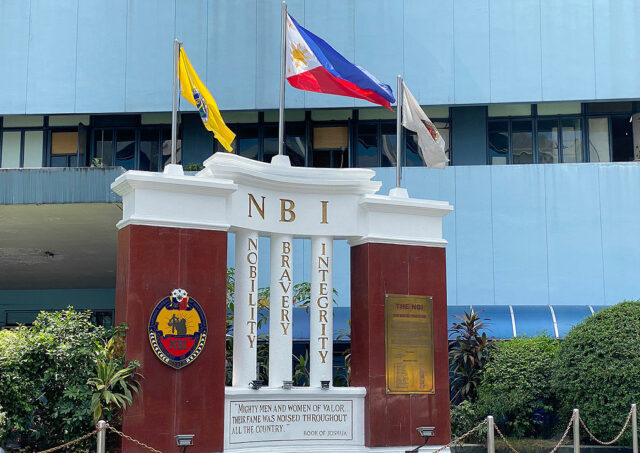
JUSTICE Secretary Jesus Crispin C. Remulla has named National Bureau of Investigation (NBI) Deputy Director Medardo G. De Lemos as officer-in-charge of the agency.  

Mr. Remulla had issued the department order on July 1, assigning Mr. De Lemos until July 31 or until a replacement has been appointed or designated. 

He will replace former NBI OIC Eric B. Distor, who vacated the position after President R. Marcos, Jr. assumed office. 

“Atty. Medardo G. De Lemos, as the next-in-rank and most senior official, is hereby designated as the officer-in-charge of the National Bureau of Investigate,” according to the department order. 

Mr. De Lemos was previously designated as NBI OIC in 2013 by then Justice secretary Leila M. De Lima. His appointment came after former NBI Chief Nonnatus R. Rojas resigned over alleged leaks in the agency linked to the pork barrel scam. The newly appointed NBI OIC was commended in 2009 for apprehending the notorious Alvin Flores robbery group during his tenure as the NBI’s regional director of Central Visayas. 

Meanwhile, the NBI in a separate statement said Metro Manila police reports of the alleged suspicious deaths of eight high-profile inmates at the national penitentiary contradicted witness testimonies and records of the deaths.

Last Friday, the agency filed murder charges against 22 police officers for their alleged involvement in the suspicious deaths of the inmates at the New Bilibid Prison in Muntinlupa City in 2020. 

The eight inmates were transferred to a separate building within the prison’s compound for isolation after police officers claimed they exhibited symptoms of the coronavirus.

NBI noted that witnesses had not observed anything unusual about the prisoners in the isolation areas despite the police officers claiming they were on full alert in an “emergency situation” at the time. 

NBI added that the police officers could have used cremation, the standard operating procedure for COVID-related deaths, to conceal the murders. John Victor D. Ordoñez

Imminent Meralco price hike with SC decision ill-timed — groups 

PHILIPPINE STAR/ MICHAEL VARCAS

PROGRESSIVE groups on Tuesday said an increase in electricity rates at this point is ill-timed, following a Supreme Court (SC) decision upholding a 2013 approved rate hike application by the countrys biggest distributor.  

ACT Teachers Party-List Rep. France L. Castro said the approval of the all-time power rate hikeby Manila Electric Co. (Meralco) will only add to the burden of Filipinos due to the coronavirus pandemic and the economic crisis.  

The government must do its job to uplift the lives of the people rather than impose heavy burdens,he said in a statement in Filipino. 

The lawmaker appealed to the High Court not to revoke the temporary restraining order (TRO) against the implementation of Meralcos staggered charges and recovery costs totaling P22.64 billion.  

The TRO was issued in April 2014. 

Under the latest High Court decision, Meralco may implement an additional charge of P4.15 per kilowatt hour, according to dissenting Justice Amy C. Lazaro-Javier said. 

Meralco applied for the rate increase after the maintenance shutdown of Shell Philippines Exploration B.V.s Malampaya gas-to-power project, which forced the company to purchase more expensive supply from the Wholesale Electricity Spot Market.  

The Energy Regulatory Commission approved Meralcos request to charge consumers in a staggered price-setting but denied payment of carrying costs.  

Meralco said it has yet to receive a copy of the court decision.  

Former Bayan Muna Party-list representative Carlos Isagani T. Zarate said the High Courts decision on the “highest power rate hike in history could not have come at a worse time.”  

“With the prices of basic commodities still skyrocketing due to continued big time oil price hikes and the weakening of the peso, this is another unwanted burden on our people,he said in a statement on Tuesday. 

Meralcos controlling stakeholder, Beacon Electric Asset Holdings, Inc., is partly owned by PLDT, Inc. Hastings Holdings, Inc., a unit of PLDT Beneficial Trust Fund subsidiary MediaQuest Holdings, Inc., has an interest in BusinessWorld through the Philippine Star Group, which it controls. Alyssa Nicole O. Tan