Home Blog Page 6158

Nickel Asia units extend, renew output sharing deals

NICKEL Asia Corp. on Tuesday announced that its mining subsidiaries were granted extensions and renewals for their mineral production sharing agreements by the Department of Environment and Natural Resources (DENR).

Nickel Asia wholly owned subsidiary Hinatuan Mining Corp. was granted an extension for its mineral production sharing agreement and was permitted to resume operations in Eastern Samar.

On March 14, Hinatuan Mining received an order from the DENR extending the first 25-year term of its mineral production sharing agreement with the government for fifteen years.

The order also lifted the suspension of Hinatuan Mining’s operations in a 1,165-hectare area in Manicani Island in Guiuan, Eastern Samar.

Cagdianao Mining Corp., also a wholly owned subsidiary of Nickel Asia, also received a renewal for its mineral production sharing agreement with the government and East Coast Mineral Resources Co., Inc.  for another 25 years, from the expiration of the first 25-year term on Nov. 19.

This covers a 697.0481-hectare area in Valencia, Cagdianao in the Dinagat Islands.

“East Coast Mineral Resources authorized Cagdianao Mining to undertake mineral exploration, development, and utilization activities,” Nickel Asia said in a disclosure on Tuesday.

In 2021, Nickel Asia reported that its net income attributable to equity holders rose by 91.9% to P7.81 billion due to higher global ore prices, expansions in its renewable energy business, and increased equity in nickel processing.

The company’s earnings before interest, tax, depreciation and amortization (EBITDA) climbed 52.1% to P14.4 billion from P9.47 billion in the prior year, due to higher ore sales prices.

Total revenue increased by 26% to P27.4 billion from P21.8 billion in 2020.

At the stock exchange, Nickel Asia shares fell by 52 centavos or 6.52% to close at P7.45 apiece. — Luisa Maria Jacinta C. Jocson

A quarter of symptomatic kids hit by long COVID; mRNA shots provide best protection in breast milk

The following is a summary of some recent studies on coronavirus disease 2019 (COVID-19). They include research that warrants further study to corroborate the findings and that has yet to be certified by peer review.  

ONE IN FOUR KIDS WITH COVID DEVELOP LINGERING PROBLEMS
One in four children with COVID-19 symptoms develop “long COVID,” according to data pooled from 21 earlier studies conducted in Europe, Asia, Australia, and South America.  

Among the 80,071 children with COVID-19 in the studies, 25% developed symptoms that lasted at least 4-to-12 weeks or new persistent symptoms that appeared within 12 weeks, researchers reported on Sunday on medRxiv ahead of peer review.  

The most frequent problems were neuropsychiatric (mood symptoms, fatigue, sleep disorders, headaches, cognitive alterations, dizziness, balance problems), cardiorespiratory (breathing difficulty, congestion, exercise intolerance, chest pain and tightness, cough, irregular heart rhythm), skin-related (excessive sweating, itchiness, hair loss) and gastrointestinal (abdominal pain, constipation, diarrhea, vomiting, and nausea).  

Analyses of data pooled from many different studies with different methodologies cannot yield firm conclusions, the researchers acknowledge.  

What is clear, however, is that “children and adolescents have also physical and mental health consequences derived from COVID-19,” said study coauthor Sonia Villapol of Houston Methodist Research Institute in Texas. “Identifying the main signs and symptoms of pediatric long COVID can help diagnose, develop better treatments, create multidisciplinary teams for optimal clinical management, and find risk factors for prevention.”  

VACCINE PROTECTION IN MOTHER’S MILK STRONGEST AFTER mRNA SHOTS
Women who wish to pass protective antibodies induced by COVID-19 vaccines to their babies via breast milk should opt for the mRNA shots from Moderna or Pfizer/BioNTech, according to a study reported on Monday in JAMA Pediatrics.  

For the study, 124 lactating women each provided 17 milk samples over a period of 100 days. The women had received either an mRNA vaccine or a vector-based vaccine from Johnson & Johnson or AstraZeneca.  

Researchers measured two types of antibodies in the milk samples — IgA antibodies and IgG antibodies, both of which are thought to play important roles in protecting breastfed infants.  

Nearly all — 96% to 97% — of the women who received both doses of an mRNA vaccine had detectable IgA antibodies in their milk, while only 39% had antibodies in their milk after two doses of the AstraZeneca shot and 48% after the one-dose J&J vaccine.  

All the women who received both doses of the Pfizer/BioNTech, Moderna or AstraZeneca vaccines had IgG antibodies, compared to only 28% of women who received J&J’s shot.  

“An mRNA-based COVID-19 vaccine is the optimal choice for lactating women when they want to transfer breast milk antibodies to their infants,” the researchers concluded.  

OMICRON IS INFECTIOUS ON SURFACES LONGER THAN ORIGINAL VIRUS
Omicron particles remain infectious on surfaces for longer periods than particles of the original SARS-CoV-2, according to laboratory experiments.  

Researchers put droplets of infectious virus from the original coronavirus version and the Omicron BA.1 variant on a variety of surfaces at room temperature.  

On smooth surfaces (glass, stainless steel and plastic sheet), Omicron was still infectious after seven days, whereas particles of the original SARS-CoV-2 were no longer infectious on stainless steel and plastic sheets by day 4 and on glass by day 7, the researchers reported on Thursday on bioRxiv ahead of peer review.  

On tissue paper and printing paper, the original virus was no longer infectious at 30 minutes. Omicron was still infectious at 30 minutes, but no longer after an hour, the researchers said.  

For the most part, SARS-CoV-2 is transmitted via respiratory droplets in the air. While infection via contact with contaminated surfaces is less common, the new study “highlights the importance of hand hygiene and cleaning on surfaces that are regularly touched by different persons,” said study coauthor Leo Poon of the University of Hong Kong. “For surfaces and settings contaminated by a COVID-19 patient, proper cleaning should be done.” — Nancy Lapid/Reuters

Oranza of Navy Standard tops the feared Stage Six and grabs 11th LBC Ronda overall lead

TEAM Philippine Navy Ronald Oranza won the Stage 6 of Ronda Pilipinas 2022 in Tagaytay City on Tuesday. — ERNIE PENAREDONDO

TAGAYTAY CITY — Ronald Oranza of Navy Standard Insurance used the first five stages to size up his rivals in the 11th LBC Ronda Pilipinas. When had taken everyone’s measure, he knew no one could stop him.

Finally flashing his dormant and inert climbing prowess in the feared Talisay-Tagaytay road in Sampaloc, Mr. Oranza blew away the field with a scintillating Stage Six performance to sideswipe Jonel Carcueva of Go of Gold from the overall lead in the 11th LBC Ronda Pilipinas on Tuesday.

When he got past the Tagaytay rotunda, the 2018 Ronda titlist was all by his lonesome and checked in at the finish in front of the Praying Hands with a time of three hours, 40 minutes and 45 seconds.

Fellow Navy man El Joshua Carino was second in the stage in 3:42:39 while Jan Paul Morales of Excellent Noodles — the leader from Stage One to Four before he was bumped off by Mr. Carcueva in Stage Five — third in 3:42:41.

The 29-year-old proud son of Villasis, Pangasinan then raised his arms in triumph to the delight of the throng of boisterous crowd who cheered and shouted in unison “Navy, Navy, Navy” and “Oranza, Oranza, Oranza” as he fell to the ground where he grimaced in pain due to cramps.

He was then carried by two race security personnel straight to the team tent near the awarding area where he was embraced and kissed by his coach Reinhard Gorrantes as the two shed tears of joy.

Because, after all, Mr. Oranza has snatched what he knew he would eventually own all along — the red LBC jersey.

And he did it after he had busted tire in Cuenca, Batangas and felt cramps near the finish.

“I had a flat tire in Cuenca and felt cramps about five kilometers to the finish but I prayed I could finish,” said Mr. Oranza. “I knew I would do good in this stage and I would get the chance to snatch the red jersey eventually.

“But I didn’t expect it will come today (Tuesday),” he added.

After six grueling, backbreaking stages, Mr. Oranza has assumed the individual general classification race lead in 18:46:04 ahead of Mr. Morales (18:46:46) and Mr. Carcueva, who fell to No. 3 in 18:49:01.

For the second straight day, there were major movements in the standings as Mervin Corpuz of Excellent Noodles sputtered to No. 4 from No. 3 in 18:50:51, Jeremy Lizardo of Navy Standard Insurance leapt to No. 5 from No. 13 in 18:52:36, and Mar Francis Sudario of Excellent Noodles hopped to No. 6 from No. 12 in 18:55:01.

Ronald Lomotos of Navy Standard Insurance ascended to No. 7 from No. 8 in 18:55:04, Jericho Jay Lucero of Go for Gold climbed to No. 8 from No. 9 in 18:55:10, Daniel Ven Carino slipped to No. 9 from No. 4 in 18:56:21, and John Mark Camingao of Navy Standard Insurance fell to No. 10 from No. 5 in 18:56:45.

In contrast, George Oconer of Navy Standard Insurance, who topped the last edition of this annual cycling spectacle two years ago, kept his downward spiral and was 88th in the stage and 42nd overall.

It was also an all-Navy show as it added more minutes to its growing overall team lead with an aggregate time of 53:41:57.

Go for Gold was at distant second in 54:00:28 while Excellent Noodles, the former leader, continued its alarming downfall and was at third in 54:29:24.

This 10-stage race will take a much-needed respite in Tarlac on Wednesday before resuming tomorrow for a 180.4-km Tarlac-Baler Stage Seven.

This annual event stakes a P3.5 million cash pot including P1 million to the champion courtesy of LBC Express, Inc., MVP Sports Foundation, Quad X, Smart, Twin Cycle Gear, Standard Insurance, Print2Go, Elves Bicycles, Elitewheels, Orome, Maynilad, PhilHydro, Garmin, Petron, Boy Kanin, Green Planet Bikeshop, Prolite, Fujiwara, Black Mamba Energy Drink, Lightwater, LBC Foundation, PhilCycling, and the Games and Amusements Board.

Banning Tchaikovsky won’t win the war in Ukraine

By Martin Ivens

BANNING Tchaikovsky is not the way to win a war. This week, the Cardiff Philharmonic Orchestra removed the composer’s popular 1812 overture from its forthcoming program due to the invasion of Ukraine. The work noisily celebrates Russian resistance to Napoleon’s invasion.

This absurd decision — Tchaikovsky was seen by his nationalist rivals in the 19th century as a westernizer — follows other cultural bans that combine modern cancel culture with old-fashioned war hysteria. One Italian university has even tried to withdraw a course on the great Russian writer Fyodor Dostoyevsky.

At the outbreak of World War I, the English novelist Graham Greene recorded that anti-German feeling was so fierce that a dachshund was stoned on his local high street. (The US Kennel Club renamed the breed “The Liberty Pup,” and the British rebranded German shepherd dogs as “Alsatians,” a name which stuck.) Should we now fear for the safety of borzois on the streets of New York and London?

The Cardiff Philharmonic’s pusillanimity may seem comical, but the severing of cultural ties to Russia is no laughing matter. Sanctions have a role in degrading Russia’s ability to threaten others. A blanket cultural boycott, however, will hurt those we should be helping — the brave artists who stand up to the Kremlin.

We should learn from the mistakes of the past. In the clumsy cultural boycott of South Africa from the 1960s, both the apartheid state and its enemies were subject to censorship. The rules were later softened to allow anti-apartheid artists to work abroad.

Today, cultural and sporting organizations tied to the Russian state should be sanctioned, but innocent individuals should not suffer them. It makes sense to ban Russia’s national team from the soccer World Cup. Similarly, it was right to scupper the Formula 1 Grand Prix due to be held in Sochi and kick Russia out of the Eurovision Song Contest. Vladimir Putin should be denied access to any international stage that normalizes his regime.

In London, the Royal Opera House’s recent cancellation of a co-production of Swan Lake with the Bolshoi Theater falls into the same category, although it is a hard call. The famous company is used as a showcase for state-sponsored Russian culture. “Our beef is not with the Russian people, but with Putin’s regime and the appalling humanitarian consequences of the invasion of Ukraine,” says Alex Beard, chief executive officer of the opera house, which employs a wealth of Russian and Ukrainian talent. However, he believes it would be inappropriate to demand that individual artists denounce the invasion, if only for fear of the consequences to their friends and relatives back home. Mr. Beard lights up the venue at night in the yellow and blue of the Ukrainian flag.

No tears will be shed, however, for Valery Gergiev, the director of the Mariinsky Theater in St. Petersburg, who has been stripped of the directorship of the Edinburgh International Festival and his role as conductor of the Munich Philharmonic. Mr. Gergiev staged a victory concert for his patron, Mr. Putin, after the annexation of Crimea. In return, the Kremlin has bankrolled the musician’s arts empire.

One sporting ban is overdue. Long before the current hostilities, the Russian Olympic team should have been barred from international competition. At the Sunday Times, where I was editor, we helped confirm the existence of an official state doping campaign and yet still the Olympic movement allowed Russian athletes to compete under a flag of convenience. A few weeks ago, the authorities permitted the 15-year-old Russian figure skater, Kamila Valieva, to compete in the Beijing Winter Games, despite her failing a pre-Games test for performance-enhancing drugs.

And yet, the decision to end official cultural exchanges leaves a bitter taste.

At the height of the Cold War, defections by the great stars of Russian ballet, Rudolf Nureyev and Mikhail Baryshnikov, from their touring company were seen as symbolic defeats for the Soviet Union. Young artists and athletes exposed to outside societies and values channeled these in their work.

The British cellist Julian Lloyd Webber recalls one of the greatest Russian practitioners of his art, Mstislav Rostropovich, choosing to play the Czech composer Antonin Dvorak’s Cello Concerto at the BBC’s Promenade Concerts with “tears pouring down his cheeks” after Soviet tanks rolled into Prague in 1968. It “spoke more than words,” he says.

Even when relations between East and West went back to a deep freeze after the 1979 Soviet invasion of Afghanistan, exchanges among artists and intellectuals gave encouragement to dissidents on the wrong side of the Iron Curtain.

Brave Russian artists, priests, and intellectuals have been the backbone of opposition to the country’s autocrats for centuries. The West should be careful not to isolate those who represent the country’s conscience.

Russian artistic dissidents didn’t just disappear with the publication of Aleksandr Solzhenitsyn’s Gulag Archipelago in the mid-20th century. Today their works defy the country’s ultra-nationalist kleptocracy. Perhaps if a few more Western leaders had seen Andrey Zvyagintsev’s film Leviathan, released in 2014, they would have better understood the nature of their Kremlin antagonist. Leviathan, set in the frozen north, was a parable of the Russian state and official Orthodox church, both rotten to the core.

And more than a decade before the current conflict, a best-selling Russian novelist, Vladimir Sorokin, prophesied Mr. Putin’s ultimate destination. The writer’s 2006 novel, Day of the Oprichnik, describes a dystopian Russia in 2027, with a Tsar in the Kremlin served by a secret police resembling the brutal bodyguard of Ivan the Terrible. A “Great Russian Wall” separates the country from its Western neighbors. It emerges that the modern Russian language is filled with Chinese expressions, the country manufactures nothing itself, and the Tsar, readers finally learn, is an underling of Beijing.

Mr. Sorokin’s works should not be canceled. Rather, they should form part of any international affairs curriculum. — Bloomberg


BPI’s new headquarters in use by 2030

BANK OF THE Philippine Islands (BPI) has unveiled the look of its new P13.6-billion headquarters set to be built in compliance with sustainable and environmental-friendly standards.

The 45-storey building to be built in Makati City is set to be completed by 2029 and will house not just the headquarters of BPI but also other firms as commercial spaces will be leased.

“The design of the architecture will reflect our strategic priorities of innovation, inclusivity and sustainability,” BPI President and Chief Executive Officer Jose Teodoro K. Limcaoco said at a briefing following the groundbreaking event on Tuesday.

Located at the corners of Ayala Avenue, Paseo de Roxas, and Dela Rosa at the Makati Central Business District, the building will have a 100% glass facade and energy-saving features.

Officials said the construction is expected to be finished by the fourth quarter of 2029, with BPI set to occupy the building by 2030.

“This will be a joint venture between BPI and Ayala Land, [Inc.] (ALI). BPI will own 51% and Ayala Land will own 49%,” ALI President and Chief Executive Officer Bernard Vincent O. Dy said.

Mr. Dy said their construction timeline already takes into account measures to ensure the adjacent building is protected.

BPI said it will seek authentication from global institutions like EDGE, LEED, and WELL to ensure the building will be sustainable and environment-friendly.

The plan for the new headquarters was conceptualized by global design firm Skidmore, Owings & Merrill in collaboration with Aidea Philippines, Inc.

The new BPI building will have seven basements and will have a height of about 224 meters.

The headquarters will have a gross floor area of 89,000 square meters (sq.m.), where 60,000 sq.m. can be used to accommodate 6,500 occupants. BPI will occupy half of this, while the remaining 30,000 sq.m. will be leased as commercial spaces.

Aside from housing the bank’s main branch, other amenities include a civic space and amphitheater, forum and events space, and food and beverage outlets.

BPI Chairman Jaime Augusto Zobel de Ayala said they expect the construction activities for the headquarters to create 1,800 jobs in the area.

BPI’s headquarters will be built at a time when organizations are rethinking the future of workplaces in a post-pandemic world. Mr. Limcaoco said they have taken this into consideration, but said the notion that office spaces are already a thing of the past is “wrong.”

“I don’t think we’ll ever go to everyone’s working from home. There’s always a need for people to come together, and to work together for collaboration to build trust,” Mr. Limcaoco said.

“New offices of the future probably have a lot more collaboration space and more common areas, probably more on the concept of [people] not having a permanent desk,” he added.

Mr. Dy said future workplaces will likely have a hybrid setup.

“I think for most days, people will be in the office but there will be some flexibility for people to also be able to work in their homes,” he said.

BPI’s net income increased by 11.5% year on year to P23.88 billion in 2021, as the decline in its loan loss buffers and higher fee income offset lower interest earnings.

Its shares closed at P96 apiece on Tuesday, up by P4 or 4.35%. — L.W.T. Noble

PetroEnergy reallocates P168-M offering proceeds

PETROENERGY Resources Corp. on Tuesday said its board of directors had approved the reallocation of the remaining proceeds from its stock rights offering to fund prospective renewable energy power projects.

Of the remaining proceeds, the company earmarked around P167.67 million for the pipeline projects, which are the second phase of its 20-megawatt-peak (MWp) Tarlac solar power project, 14-MW phase two of its Nabas wind power project, and the 10-20 MWp Puerto Princesa solar power project.

The three projects were allotted P37.54 million, P65.06 million, and P65.06 million, respectively.

“The reallocation will allow flexibility in funding multiple projects in the pipeline” including the Nabas and Puerto Princesa projects, the company said.

Last month, PetroEnergy cited a pipeline of solar and wind projects with a combined capacity of around 400 MW as part of its medium- to long-term plan.

The projects will be implemented through its renewable energy subsidiaries, namely: PetroGreen Energy Corp., PetroSolar Corp., “or other new subsidiaries that may be formed.”

PetroEnergy’s stock rights offering was undertaken on Jan. 22 to 26, 2018 for 157,975,512 common shares with gross proceeds of P758.28 million.

The rights offer entitled eligible stockholders as of record date of Jan. 12, 2018 to subscribe to one rights share for every 2.6 shares held at an offer price of P4.80 per share.

The proceeds from the offering were used for the development and expansion plans of the group’s renewable energy projects, general corporate requirements, and payments of loans and the related interest.

In the third quarter of 2021, PetroEnergy reported an attributable net income of P89 million, or more than double the P41.33 million registered in the same period the earlier year.

As of the third quarter of last year, its attributable net income reached P323.46 million, up 59.6% from P202.64 million in the same three quarters in 2020.

On Tuesday, PetroEnergy shares slipped P0.130 or 2.83% to close at P4.47 each.

Running injuries don’t happen for the reasons you think — here’s the three best ways to prevent them

UNSPLASH

Running is one of the most popular forms of physical activity worldwide. But though it requires little expertise or equipment — and can be very beneficial for our health — it unfortunately also comes with a relatively high risk of injury. In fact, one survey found nearly half of all runners experience injury or pain. Another study even estimated that runners experience nearly 18 injuries for every 1,000 hours of running. 

Novice runners have the highest likelihood of sustaining an injury. The most common injuries they experience are in their lower body (such as in the Achilles tendon, shins or knees) and are often the result of overuse — an injury that happens in a muscle or joint due to repetitive trauma, usually as a result of doing more than you’re capable of, or not training with proper technique.

But that doesn’t mean injuries are inevitable. There are many ways you can protect yourself from an injury — so long as you ignore some long-held ideas about the best way to do this. 

One common belief in the running community is that static stretching as part of a warm-up or cool-down can reduce risk of injury. But recent evidence suggests that stretching does little to prevent injuries. It may even reduce running performance in races less than 60 minutes long. 

The belief that footwear is a significant factor in whether or not a person gets injured may also be untrue. While comfortable, properly fitting shoes are important for preventing minor issues such as blisters and can help with running performance, there’s little evidence suggesting that footwear alone reduces injury risk. 

There’s also little evidence that shoes prescribed based on foot posture reduce injury. A study using army recruits during basic training even showed there was little difference in injury risk regardless of the type of support a person’s shoe had. 

If you want to run injury free, here are the best, evidence-based ways: 

1. Build strength 

A recent study of Brazilian runners found that performing an eight-week training program that focused on foot and ankle strength reduced injury risk by nearly 60% compared to a group who didn’t strength-train. 

While exercising to prevent injury in runners is a relatively new concept, such programs have also shown promise in other running-based sports such as football and volleyball where overuse injuries are also common. In general, strength training should be done three to five times a week for at least 15 minutes each session. Exercises should focus on building muscular endurance, coordination and balance — such as lunges and squats. 

2. Not recovering between training sessions 

Failing to recover between training sessions is shown to lead to chronic fatigue or overtraining — which can cause performance decline, low mood and muscle aches. These increase risk of overuse injuries as the body’s muscles and tissues aren’t able to repair and adapt between runs. The amount of time a person’s body needs to recover between runs will vary, though 36–48 hours is typical. 

Not getting enough or not getting good quality sleep can also lead to overuse injuries, as sleep is important for helping the body to recover and restore itself. This is why it’s important to get around seven to nine hours of sleep each night — alongside adequate nutrition. 

3. Avoid doing too much too soon 

Runners are often also advised to follow the “10% rule” when training to avoid injury, meaning they shouldn’t increase their training load (the volume and intensity of their running) by more than 10% each week. Yet research shows that the 10% rule is no better at reducing injury risk than increasing your training load by a greater degree: increasing by up to 24% each week has no greater risk of injury for novice runners. 

On the other hand, increasing running volume by around 30% each week is linked to greater risk of injury in novice runners. In practical terms, this would mean increasing your running load from 10 km per week to 28.5 km per week over a four-week period. 

Given that injuries are typically the result of a combination of factors — including age, gender, experience and injury history — growing evidence suggests that the best way for runners to avoid injury is to learn how to listen to their bodies. A recent study showed that having an obsessive passion for running was associated with an increased risk of injury — this is likely due to runners ignoring their bodies and avoiding the early warning signs of injury. 

Being able to listen to your body improves with experience. But two studies have shown that people suffering from both knee and achilles injuries were still able to run without significantly worsening their pain or injury so long as they listened to their body and modified their running style slightly. 

It’s unlikely a person can avoid getting injured altogether — though following these strategies may help reduce the risk and severity of injuries somewhat. If you do get injured, the best thing to do is consult a professional. But pain permitting, you may still be able to do other types of exercises in the meantime (such as cycling or using an elliptical or even strength training) to help as you recover. And, as you become more experienced as a runner, you may actually suffer fewer injuries than you did at the start. — The Conversation   


Nathan Liddle is a lecturer in physiotherapy at Teesside University, UK.   

Jonathan Taylor is a lecturer in sport and exercise at Teesside University, UK.  

This article is republished from The Conversation under a Creative Commons license. Read the original article

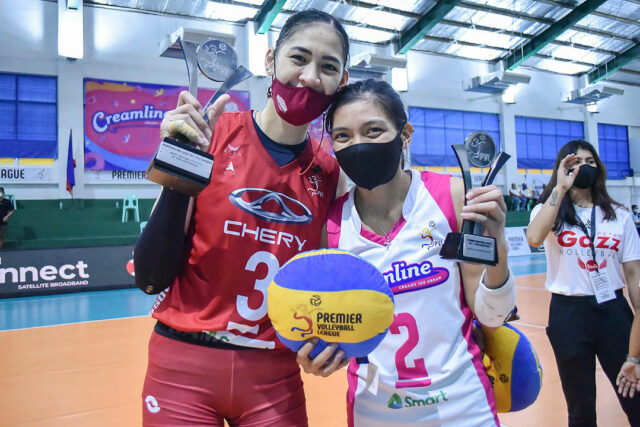
Valdez, Santiago banner PHL women’s volleyball team

(LEFT to right) Jaja Santiago, Alyssa Valdez — PVL

STAR spikers Alyssa Valdez and Jaja Santiago banner the 16-strong Philippine women’s volleyball team for the 31st Southeast Asian (SEA) Games in Hanoi, Vietnam this May.

Mainstays Aby Maraño, Ces Molina, Dawn Macandili, Mylene Paat, Ria Meneses and Kat Arado with Majoy Baron as late addition after her exclusion in the initial pool are also in the cast of the team tasked to end the country’s 29-year gold medal drought.

Completing the squad are Deanna Wong, Jema Galanza, Iris Tolenada, Dell Palomata and Kat Tolentino with high school stalwarts Casiey Monique Dongallo and Jelaica Faye Gajero, who will see action in their first SEA Games.

The stacked team, under the watch of Brazilian mentor Jorge Souza de Brito, will have an overseas training camp in Brazil on April 12 after the Premier Volleyball League (PVL).

The PVL opens shop on Wednesday until April 9.

Aside from the women’s team, the Philippine National Volleyball Federation (PNVF) is also sending the men’s and beach volleyball squads abroad as part of its serious SEA Games bid and long-term program.

“We’re going on the other side of the globe to have an extensive training just before the SEA Games. All of these foreign trips are very important for our national teams,” said PNVF president Tats Suzara, who also thanked Rebisco, Philippine Sports Commission and the Philippine Olympic Committee for their backing.

The men’s team coached by Dante Alinsunurin will fly to Qatar on March 20 while the beach volleyball teams led by Sisi Rondina, Bernadeth Pons, Jude Garcia and Jaron Requiton were to depart for Brisbane, Australia last night.

Mr. Alinsunurin and his wards won the silver medal in the men’s indoor event while both the men’s and women’s beach volleyball squads captured bronze mints in the 2019 SEA Games held here. — John Bryan Ulanday

Discovery to combine its Discovery+ with WarnerMedia’s HBO Max

DISCOVERY, INC. Chief Financial Officer Gunnar Wiedenfels on Monday provided the most concrete details to date about the media company’s plans to combine its Discovery+ streaming service with HBO Max once the acquisition of WarnerMedia closes.

Wiedenfels said the services would unite to create a more broadly appealing consumer product, with HBO Max’s more “male skewing” scripted series complementing Discovery’s reality shows, with their heavily female viewership.

“The acquisition power of HBO Max, combined with the retention power of the Discovery content, I think, is going to make for a blowout DTC (direct-to-consumer) product,” Wiedenfels told the Deutsche Bank Annual Media, Internet & Telecom Conference, using the industry’s term for streaming.

The melding of the two services, following the completion of Discovery’s $43 billion acquisition of AT&T’s WarnerMedia in a deal announced in May 2021, had long been anticipated.

Wiedenfels said the company would need to “harmonize” the separate technology platforms to offer a single streaming product, with more than 200,000 hours of movies and television episodes. There will be an ad-free service and a less expensive, ad-supported tier.

The deal, on track to close in the second quarter, last month passed the US Department of Justice’s antitrust review, clearing another key hurdle toward closing.

Discovery+ has 22 million subscribers, and HBO Max, together with its HBO television network, has 73.8 million subscribers. — Reuters

SB Finance launches loan mobile app

SB FINANCE Co., Inc., the joint venture consumer lending firm of Security Bank Corp. and Thailand’s Bank of Ayudhya (Krungsri), launched a new loan app on Tuesday.

The mobile app called Zuki offers personal and vehicle loans as well as an installment product. The app was created as consumer behavior was altered due to the pandemic, which sped up lenders’ digital transformation, SB Finance President and Chief Executive Officer Abigail M. Casanova said at the virtual launch event.

“The way we’ve designed it is by using the language of our customers. We don’t use a lot of technical terms, and understand what the customer needs. We want to be financial advisors to our customers, and not just a company shoving a product down their throats,” SB Finance Head of Consumer Finance Sales and Distribution Michael Albert R. Rallonza said.

SB Finance is confident of its borrowers’ capacity to pay their due loans, Ms. Casanova said.

“The last quarter of 2021 we have seen improvement, due to higher mobility of the people… Most of our borrowers are people who have jobs. That is one indicator to say that people now have the confidence to repay what they borrow,” she said.

The app currently offers four loan products. Clients do not need to have accounts with Security Bank Corp., SB Finance’s parent lender, to use to app.

Zuki offers personal loans of between P200,000 up to P2 million, payable within 48 months. No postdated checks are required.

Meanwhile, Hooloogan gives customers a P200,000 credit line payable in installment terms within 48 months.

On the other hand, MotorsikLOAN is for those looking to purchase motorcycles for business and personal use. Customers can arrange the release of the motorcycle unit from the app itself, SB Finance Auto Finance Sales Distribution Head Lovely Nenette Galang said.

“Currently, we have 156 dealer partners, and they are located nationwide… This year, we are targeting 600 dealer partners,” Ms. Galang added.

Lastly, Car4Cash allows car owners to submit the original copy of their Official Receipt and Certificate of Registration to get a loan of up to P2 million.

Zuki has a cybersecurity framework compliant with local laws to ensure protection of customer data, SB Finance Chief Information Officer Jericho Catu said.

“We have set up one of the top antivirus and anti-malware providers and next-level firewall,” Mr. Catu added.

He said that they plan to expand and improve the services provided on Zuki, noting there are “already items in the pipeline.”

SB Finance’s parent Security Bank saw its net profit decline by 7.2% in 2021 to P6.9 billion as net interest income fell and expenses rose, while loan loss provisions narrowed sharply.

The listed lender’s shares went down by P1.60 or 1.51% to close at P104.10 each on Tuesday. — T.J. Tomas

Napocor seeks ERC nod to use P335M for watersheds

BW FILE PHOTO

THE National Power Corp. (Napocor) has sought regulatory approval to avail and use around P335.35 million from a component of the universal charge collected from consumers for its environmental function to rehabilitate watersheds.

In its application filed with the Energy Regulatory Commission (ERC), the state-led firm said its environmental projects for 2022 require the budget to address “uncontrolled deforestation” in watershed areas.

“For the past 20 years (2002-2022), [Napocor] continues to embark on nonstop greening initiatives in various watershed areas that gained acceptance and encouraged cooperation from stakeholders,” the government-owned and controlled corporation said.

Under Republic Act No. 9136 or the Electric Power Industry Reform Act of 2001 (EPIRA), Napocor is entitled to the environmental charge collected from electricity users equivalent to one-fourth of one centavo per kilowatt-hour (kWh) of electricity sales or P0.0025 per kWh.

The environmental charge is intended solely for watershed rehabilitation and management, which is a function of Napocor under existing arrangements. ERC is required to file with the ERC to avail of the funds collected from consumers.

In its filing docketed at the ERC on March 14, Napocor said it was granted in 1987 through an executive order complete jurisdiction, control and jurisdiction over five watershed areas surrounding the reservoir of plants or projects it constructed.

These areas are Upper Agno watershed reservation, Angat watershed reservation, Caliraya Lumot watershed reservation, Makiling-Banahaw geothermal reservation, Buhi-Barit watershed, and Tiwi geothermal reservation.

Aside from the six areas, Napocor also listed other areas under its 2022 rehabilitation program called “Plan 18,” namely: San Roque watershed (Lower Agno) and Lake Lanao-Pulangi watershed.

The universal charge is imposed for the recovery of the stranded debts, stranded contract costs of Napocor and stranded contract costs of eligible contracts of distribution utilities.

Aside from managing watersheds and water resources, the corporation is also mandated to provide electricity to rural areas, and to optimize the use of other power generating assets.

Dealing with sore throat

UNSPLASH

AT THE HEIGHT of the latest coronavirus wave in January, sore throat was regarded as a possible sign of having the highly transmissible Omicron variant — but it can actually be a symptom of other illnesses, meaning it has many probable remedies.

“Sore throat is a year-round ailment that Filipinos need to be wary of,” said otorhinolaryngologist or ear, nose, and throat (ENT) Dr. Teresa Luisa G. Cruz, who is also the director of the postgraduate institute of medicine at the University of the Philippines Manila, at a virtual discussion on March 8 organized by Bactidol, an oral gargling solution or lozenge manufactured by Johnson & Johnson.

She clarified that sore throat is often used as an umbrella term for various forms of throat-related pain and discomfort, ranging from viral and bacterial infections to irritation from allergies or acid reflux.

“It’s a common ailment, a common chief complaint to the clinics of general practitioners and ENT doctors all over the Philippines,” she said.

Based on how it’s described by the patient, a doctor can pinpoint the underlying cause of a sore throat. An itchy feeling in the throat, for instance, can arise from triggered allergies, whereas a tight feeling akin to choking can indicate acid reflux.

Behaviors observed prior to the sore throat are also quite telling, added Dr. Cruz. These include loud singing or speaking the day before pointing to vocal fatigue, or eating a lot of sweets and not drinking enough water being a sure irritant to the throat.

“Although infection is the most common cause of sore throat, there are other causes especially if it is not described as actual pain,” she said. The treatment then depends on what the diagnosis is.

If untreated, a sore throat could lead to serious problems, like rheumatic fever due to a bacterial infection of the tonsils or difficulty breathing brought about by airway blockage.

Dr. Cruz emphasized: “Home remedies like gargling saltwater or drinking ginger or honey tea offer symptomatic relief, but there’s no scientific basis that these will effectively treat a sore throat and its underlying cause.”

HEXETIDINE
A science-backed solution that is used to treat sore throat is hexetidine, an anti-bacterial, antiviral, and antifungal agent that is the active ingredient in Bactidol.

“This means it protects against most bacteria and fungi,” she said. “It destroys these microorganisms’ cell walls and cell membranes.”

Dr. Cruz also noted that hexetidine is good to prescribe for infections rather than antibiotics, which tend to be abused: “[Antibiotics] may subject the patients to unwanted adverse effects and, on a global scale, may encourage antibiotic resistance. If we abuse them, there may come a time they might not be needed.”

Aside from relieving sore throat, Bactidol can kill up to 99.9% of sore throat-causing viruses within 30 seconds and protect against them for up to 12 hours, said Karlo S. Patron, senior marketing manager for self-care at Johnson & Johnson Philippines. It can also be used for oral healthcare and hygiene. — Brontë H. Lacsamana

SIDEBAR | Throat lozenges effective against viruses in laboratory study

The combination of Cetylpyridinium Chloride (Cl) and Benzydamine Hydrochloride (HCl) in the form of a throat lozenge was found to be effective in killing the coronavirus infection, according to the Steyer study conducted by the Microbiology and Immunology Institute of the University of Ljubljana in Slovenia in 2021.

The lozenges reduced viral concentration by 99.99% in as fast as one minute. This occurred under in-laboratory simulations of lozenge administration, adapted to mimic physiological conditions of the oral cavity.

“There’s still no conclusive evidence that lozenges are effective against coronavirus outside of that,” said Dr. Anthony C. Leachon, a doctor and former special adviser to the country’s pandemic task force, at a virtual discussion on March 16 hosted by Difflam, an analgesic and anti-inflammatory treatment for the throat and mouth.

However, he added that, prior to the coronavirus pandemic, it’s been common practice to prescribe lozenges and oral antiseptic containing Benzydamine HCl and Cetylpyridinium Cl for their anti-inflammatory effect.

Lagi nating inaalagaan ang (We always take care of the) portal of entry, which is usually the respiratory and oral cavity. You have to protect those particular anatomic organs,” he said. B. H. Lacsamana