Home Blog Page 6159

Nets need luck

Kevin Durant didn’t mince words when asked about the Nets’ fortunes — or, rather, misfortunes — after practice yesterday. “To be honest, I feel like our season was derailed by my injury,” he said in relation to the need for the black and white to go through the play-in tournament as opposed to living up to preseason expectations as title favorites. “So I’m not looking at it like we’re just not a good basketball team. It’s like there wasn’t a lot of continuity with me and Kyrie [Irving] out of the lineup. That’s just what it is. When we’re all on the floor together, I like what we got.”

Durant’s right, of course. There’s a reason he’s a National Basketball Association Most Valuable Player awardee, and it’s why the Nets went a heady 27 and 15 before he injured his left medial collateral ligament in a mid-January match against the Pelicans. That said, his absence over the next 22 outings wasn’t the only cause of their five and 17 swoon. There was Irving’s inability to suit up in games at the Barclays Center because of city protocols. There was likewise the problem of James Harden being James Harden, pouting and then heading out the door.

If there’s any consolation, Durant’s fit anew, and Irving’s unvaccinated status has become immaterial in the face of looser safety guidelines. And for as long as they’re both in uniform, the Nets cannot but be deemed a threat. How and when they will be at their best remains to be seen, however. Projected Big Three stalwart Ben Simmons remains sidelined and a big question mark for the rest of their 2021-22 campaign, while starter Seth Curry has been compelled to play with an ailing left ankle. Chemistry and conditioning issues have also cropped up, what with erstwhile rotation regulars going in and out of the roster.

The Nets still have four regular season matches to negotiate beginning with today’s homestand against the Rockets. Should they run the table, they may yet overtake the Hawks for the eighth spot in the Eastern Conference. They would need no small measure of luck, though, and with Irving still trying to get his sea legs after having been a part-time player for four-fifths of the season, they may find the going tough. Then again, they have Durant, and as head coach Steve Nash noted, “we have the belief and we’ll give it a shot.” And then the real work begins.


Anthony L. Cuaycong has been writing Courtside since BusinessWorld introduced a Sports section in 1994. He is a consultant on strategic planning, operations and Human Resources management, corporate communications, and business development.

Equality and prosperity through good governance

MACROVECTOR-FREEPIK

Reducing inequality and achieving inclusive growth are inseparable. When we narrow inequality, we reinforce the capacity of sectors and individuals to overcome structural factors that limit their mobility in society.

When we promote growth that is beneficial to all classes and encourage people’s productive participation in the economy, we not only neutralize equality barriers. We also make people capable of being upwardly mobile.

In the past two years, the COVID-19 pandemic has exacerbated inequality gaps around the globe. In 2020, the UN World Social Report examined four megatrends on inequality — technological innovation, climate change, urbanization, and international migration — and the challenge to “encourage a more equitable and sustainable world.”

For 2021, the UN report focused on rural development, which involves nearly half of the global population, and raised the goal of not leaving the sector behind amid growing efforts toward economic recovery, reducing inequalities, and tackling the climate crisis.

In the Philippine context, grappling with inequality woes is exemplified by the efforts and initiatives of a wide range of social actors. These activities were discussed during the virtual town hall discussion “Bridging the Gap: Reducing Inequality in the Philippines for Inclusive Growth,” hosted by the Stratbase ADR Institute.

During this pandemic, our society experienced record highs in unemployment, hunger, poverty, business closures, and inflation rates. Much of these could be attributed to the administration’s less-than-desirable management of the pandemic.

But as inequality persists in the Philippines, we have to respond to it through a multi-stakeholder strategy. We need public-private partnerships, investments by the private sector, and a better environment for investment by the incoming administration, with the hope that it can provide jobs, livelihood, and income, and a comfortable life for many Filipinos in the long run.

Dr. Ronald U. Mendoza, Dean of the Ateneo School of Government, commenced the public exchange by discussing the essence of his special study “Reducing Inequality in the Philippines: Rationale and Reforms.”

According to Mr. Mendoza, we should work on three reform areas to establish a more inclusive democracy in our country: social mobility, disaster readiness, and political reforms.

Mr. Mendoza highlighted the need to “liberalize our politics” after we had liberalized the economy. If politics is not liberalized, “eventually, even if you liberalize your economy, you will still hit a ceiling because of bad governance.”

Inasmuch as economics and politics are directly intertwined, Dr. Charlotte Justine Diokno-Sicat, Research Fellow of the Philippine Institute for Development Studies (PIDS) and Vice-President of the Philippine Economic Society (PES), expounded on her study, “Promoting an Investment-Driven Economy Through Good Governance.”

She argued that public sector governance should be improved and be made innovative. Accordingly, two things should be done: fiscal consolidation of the national government, and emphasis on the importance of “strategic investments in both physical and human capital of both national and local governments.”

“This will all encourage private sector participation at all levels and in bridging the gap and reducing inequality in the Philippines for inclusive growth. Every single Filipino has a role to play,” she added.

Ms. Diokno-Sikat’s view is contextualized under a whole-of-society approach to effectively foster equality improvements.

Akin to the focus of the 2021 UN World Social Report I cited earlier, Dr. Carlos Primo “CP” David, Professor at the National Institute of Geological Sciences, University of Philippines Diliman, Trustee and Program Convenor of the Stratbase ADR Institute, and Convenor of Philippine Business for Environmental Stewardship (PBEST), provided an agricultural perspective in addressing food security in his study, “Improving the Philippine Agriculture Sector by Establishing Food Production Areas.”

Specifically, he recommends “a self-contained food production area that consists of industrial farms, coupled with small older farms surrounding it, those one-to-two-hectare farms that actually operate together with industrial farms, but not independent of it.”

“I espouse the idea of pockets of innovation and development,” he concluded.

Using an educational perspective, Christopher Tan, Chief Operating Officer of PHINMA Education, and a Board Member, of the Philippine Association of Colleges and Universities, talked about improving Filipinos’ quality of life through education reforms.

Highlighting three issues to address inequality — access, completion, and employment — he emphasized the need for a responsive, nimble, and continuous learning system. He also stressed the importance of skills development.

“We need to have the ability to channel the power of business as a force for good, banking on the complementarity between the private sector and the public sector,” he added.

Similar with Ms. Diokno-Sicat’s focal point, Francisco del Rosario, Jr., Chairman of the Institute for Solidarity in Asia (ISA), in discussing his topic, “Transforming the Public Sector for Inclusive Growth,” talked about the empowerment of the public sector so it becomes more efficient and less corrupt.

To reverse the worsening cycle of poverty, the country’s next administration would need to exert a holistic effort for these inequality challenges to be significantly addressed.

The next government must uphold the rule of law, strengthen efforts in transparency and accountability, and spearhead political and economic reforms in order to attract more investments that will develop industries that will be long-term prosperity generators.

Indeed, the twin goals of reducing inequality and achieving inclusive growth are only possible through good governance. Let this thought guide us as we choose our next leaders in the coming elections.


Victor Andres “Dindo” C. Manhit is the president of the Stratbase ADR Institute.

Strategic plan for creative industries

VECTORJUICE-FREEPIK

(Part 2)

Straddling two sunrise sectors of the Philippine economy — the Information Technology and Business Process Management (IT-BPM) and the Creative Industries — are the animation and game development subsectors. As part of the Frost & Sullivan Study commissioned by the IT & Business Process Association of the Philippines (IBPAP) in 2015, a detailed Roadmap 2022 for these two sectors benefiting from the abundant creative talents of Filipinos was formulated. It would be very instructive to review the SWOT (Strengths, Weaknesses, Opportunities, and Threats) analysis contained in this document even if there will be a need to update some of the data because of the discontinuity occasioned by the COVID-19 pandemic that wreaked havoc on the global economy. In the overall IT-BPM industry, the animation industry was one of the first to be outsourced. Major US and European studios started outsourcing their work from the 1970s because of the availability of talented animators, including Filipinos, in other locations for a fraction of the cost. Sometime later, the Japanese anime industry followed suit. The Philippines got a significant part of the business.

In 2015, the market generated revenue of $19.5 billion. It was expected to register a healthy compound annual growth rate (CAGR) of 7.1% to reach $31.5 billion in 2022. The movie and TV animation market contributes more than 60% whereas digitally distributed animation accounted for the fastest growth. The increasing adoption of smartphones and tablets, especially pronounced in the Philippines, is leading the growth of digitized animation. Animation outsourcing is widespread among major animation studios. In the overall animation creation process, most of the less creative work is outsourced to low-cost outsourcing hubs while the rest of the work is done in the United States, Europe, and Japan. The Indo-Pacific region is the fastest growing market where a significant amount of work is outsourced, not only to India, China, and the Philippines but also to other emerging destinations, such as Malaysia and Indonesia. Other non-Asian countries in the outsourcing pool are Poland and Brazil.

According to Frost and Sullivan, the following five major trends will increasingly affect the overall animation outsourcing industry:

1. Asia will continue to be the global hub for animation outsourcing work. Some 75-80% of all US-based animation programs are outsourced to Asia mainly for reasons of cost. Industry sources estimate that the cost of developing a full-length animated film is about five to eight times lower in India or the Philippines than in the United States.

2. 3D is the future; 2D, however, still has a large market. Many studios are building capabilities in 3D animation as they invest in human resource development and technology to capitalize on current and future opportunities. When the study was prepared, 2D still accounted for more than 70% of the total animation revenue.

3. The coming of age of digital animation. The Internet, through video sharing or streaming digital sites such as YouTube, Dailymotion, and Vimeo, has long been a platform to deliver animation content. This includes either old re-runs from TV and cable companies or independent studios showcasing their works, typically for free. The advent of video on demand (VOD), however, especially through subscription model-based VODs, such as Netflix, Hulu Plus, Amazon video, and iflix, has opened a new frontier for the animation industry.

4. Moving from purely outsourcing to hybrid business models. Animation outsourcing is a low-risk business but also a low-return business model. Some larger outsourcing studios are delving into a mix of collaborative animation services where they form partnerships with other animation studios, locally or abroad, by leveraging each other’s expertise to create original content where they share their intellectual property, or enter a more ambitious business model where they perform all development work from scratch inhouse.

5. New emerging animation destinations will disrupt traditional outsourcing destinations like the Philippines. With the backing of their governments, countries such as Poland, Malaysia, Singapore, Brazil, and Chile are beginning to build their capabilities in new-generation animation segments, such as 3D and visual effects (VFX). With competitively priced services, these new animation outsourcing destinations are expected to impact the businesses of traditional animation markets, such as India, China, and the Philippines. This a major reason why the next Administration must be very proactive in supporting the various players of the Philippine animation sector with both subsidies and tax credits. TESDA (the Technical Education and Skills Development Authority) can also play a significant role in addressing the human resource requirements in the animation industry, coming out in partnership with business and the academe with all types of short courses for reskilling, upskilling, and retooling our young who have inherent artistic and digital talents.

In 2015 when the Frost & Sullivan study was conducted, there were certain perceived trends that were unique to the animation sector, independent of the general IT-BPM sector. These trends are expected to have intensified during the pandemic, with the acceleration of digitalization in all aspects of the economy as well as the increased importance of home entertainment during the long lockdowns necessitated by safety measures occasioned by the pandemic. As regards the suppliers, studios perform various types of animation work, including traditional hand-drawn animation, 2D, 3D, special effects, modeling, caricatures, medical animation, and the CG format. The extended boom that lasted until 2019 spawned hundreds of animation companies, employing thousands of artists, animators, and technicians using state-of-the art equipment and techniques such as SGI, sound effects (SFX), and motion-capture software and facilities. This trend will be favorable to the local animation industry especially after President Duterte signed into law a measure introducing amendments to the Foreign Investment Act of 1991, opening the SME sector of the country to foreigners who can now own 100% of any business with a minimum paid-up capital of $100,000. Many startups from all over the world in the field of animation can invest in the Philippines, thereby transferring the most advanced technology in this sector as well as contributing to the upskilling, reskilling, and retooling of Filipino workers in the most developed fields of animation.

This greater freedom for small-scale foreign startups to invest in our animation sector is especially significant because many small and medium outsourcing participants are actually located outside of North America and execute outsourced animation projects, more and more of which outsourced jobs are shifting to the Indo-Pacific region. A major factor behind this shift of computer animation production to the Indo-Pacific region is the availability of low-cost computer animation platforms especially in the ASEAN countries. The European region, especially France, has witnessed an upswing of animation producers, e.g., Xilam and Superprod, relocating back due to the incentives offered for locally produced content. Given this trend, our animation industry should make a special effort to market our outsourcing services to countries in Europe, going beyond our traditional US and Japanese markets.

The trend of major animation studios outsourcing animation is irreversible. As developed countries in North America, Europe, and Northeast Asia (including China that is already suffering from the rapid ageing of its population) suffer from the demographic crisis, labor shortages in these countries will widen the difference in manpower costs, giving a distinct advantage to countries like India and the Philippines that are still enjoying their respective demographic dividends. Even before the pandemic, we already were witnessing many entertainment companies like Disney and IMAX outsourcing an increasing amount of their animation production to the Indo-Pacific region. The mass appeal of movies relying on computer graphics has been driving studios to expand their output while keeping their costs down. From traditional (celluloid-based) animation to VFX and computer animation (CGI), the global outsourcing animation industry is growing as an increasing number of studios around the world look for cost-effective production options and as the number of viable overseas studios increase.

Our local animation industry should be aware of the fact that most animation outsourcing contracts are focused on artwork, rather than technology-oriented outsourcing, with 70% artwork and the remaining 30% technology focused. The major animation outsourcing segments are as follows:

a.) Custom content development (enlisting content created for corporate, higher education, aviation, medical sectors); the exponential increase in online instruction during the pandemic will surely lead to more demand for animation services in the educational sector as hybrid learning will be part of the new normal, especially in higher education;

b.) VFX (visual effects for television or motion pictures); and,

c.) Animation entertainment (animation for motion picture, television, advertising stakeholders).

(To be continued.)


Bernardo M. Villegas has a Ph.D. in Economics from Harvard, is professor emeritus at the University of Asia and the Pacific, and a visiting professor at the IESE Business School in Barcelona, Spain. He was a member of the 1986 Constitutional Commission.

bernardo.villegas@uap.asia

Anticompetitive arrangements by property developers and internet service providers

UPKLYAK-FREEPIK

What used to be a slow trend towards digitalization rapidly accelerated as a result of the coronavirus outbreak. Based on recent company disclosures, Converge ICT reported a 75% increase in new subscribers while GlobeAtHome’s subscriber base rose from 3.5 million to 3.7 million. PLDT, Inc. also reported that it connected a record 1.13 million new fiber customers, exceeding its original targets.

Filipinos had to find ways to adapt and continue being productive despite being restricted to their homes. For this reason, access to the internet is essential for Filipinos to continue their work, business, studies, and connect with their loved ones. However, there have been reports wherein some Property Developers have entered into arrangements wherein only a singular internet service provider (ISP) of the developer’s choice can operate within their respective areas. These anti-competitive arrangements prejudice the rights of consumers by depriving them of their right to choose an ISP of their own preference. In choosing their ISPs, considerations such as speed, reliability, and price play an important role in a subscriber’s decision-making.

As more Filipinos shift towards digitalization under the “new normal,” it is timely to remind consumers and businesses alike of the policy of the State to penalize anticompetitive agreements such as exclusivity arrangements between property developers and ISPs, and update them of the actions taken by government.

Section 15 of Republic Act 10667 or the Philippine Competition Act (PCA) of 2015 prohibits an entity’s abuse of its dominant position by engaging in conduct that would substantially prevent, restrict, or lessen competition. Abuse of dominant position refers to the conduct of an entity with a dominant position that substantially prevents, restricts, or lessens competition in the market. An example of conduct constituting abuse of dominant position is when “a dominant firm restricts output or refuses to supply, or restricts access to/use of/ development of a new technology, to the detriment of consumers.”

In March 27, 2019, the Competition Enforcement Office of the Philippine Competition Commission (PCC) filed a Statement of Objections against two property developers for entering into an arrangement wherein internet services in their condominium projects were solely provided by one ISP chosen as their in-house provider. According to the Competition Enforcement Office, the property developers “abused its dominant position in the provision of property management services by preventing other ISPs other than the in-house provider from providing fixed-line internet services to their residents … with which they have complaints regarding its quality and prices.”

In response, the property developers admitted their anticompetitive conduct and committed to implement measures which would “1.) cease the anticompetitive conduct and prevent its recurrence; 2.) restore competition, and, 3.) effect deterrence.” The property developers undertook to post notices stating that the in-house provider was no longer the exclusive fixed-line ISP and that residents were free to avail of services of other ISPs, invite other ISPs to offer or market their services in their condominium projects and, allow customers of the in-house provider to opt-out of their subscription contracts at no cost, among others.

In a decision dated Sept. 30, 2019, the PCC found the foregoing commitments sufficient to address the harm to the condominium’s tenants and that they would restore competition. The property developers were directed to cease and desist from their admitted conduct of abuse of dominant position and to pay an administrative fine of P27 million. In a press release dated Oct. 2, 2019, PCC Chairman Arsenio M. Balisacan called this decision a landmark case for the PCC which “successfully resolved to stop an anticompetitive practice, restore competition in the affected market, and set an example to deter other businesses from employing similar exclusive dealings.” He also warned other businesses from abusing their market power. He added: “[T]his case shows that the PCC is serious about addressing anticompetitive practices that have long been considered par for the course in different industries. Unscrupulous businessmen can only expect the PCC to pursue more cases of a similar nature in the future.”

Staying true to its commitment, the PCC announced on March 3 that it “has taken several property developers to task for their exclusive dealings with internet operators through the issuance of Enforcement Advisory Letters (EALs).” To date, eight developers voluntarily complied with the PCC EALs and opened their properties to other ISPs.

Mr. Balisacan highlighted the importance of a consumer’s freedom to choose their own ISPs and asked the public to report similar cases of developers having exclusive dealings with internet operators. He says: “[A]s remote work, distance learning, and e-commerce have become part of the new normal, PCC understands the value of consumer choice for fast, stable, and affordable internet connection. The lack of competition in this space forced by exclusivity dealings by property developers is an issue that we are determined to solve. We encourage the public to continue reporting to us similar cases and for developers to open their doors to different ISPs.”

In the same press release, the PCC announced that it is working on issuing a joint circular “with various relevant housing and ICT regulators for all property developers to prohibit exclusivity arrangements in internet, telecommunications, and cable TV services.”

Healthy market competition benefits consumers through lower prices, more product choices, and better-quality goods and services. It motivates companies to provide better services to consumers and innovate products. The entry of new market players also causes excitement among consumers, such as the announcement of Trade and Industry Secretary Ramon Lopez that Elon Musk’s SpaceX is already processing Starlink’s application to provide low orbit satellite internet service in the Philippines, the first in Southeast Asia.

With the entry of additional ISPs and the recent amendments to the Public Service Act allowing 100% foreign ownership of public services such as telecommunications, the proactive stance by the PCC in the issuance of a joint circular expressly prohibiting anticompetitive exclusivity arrangements by property developers and internet service providers is a welcome development.

The views and opinions expressed in this article are those of the author. This article is for general informational and educational purposes only and not offered as and does not constitute legal advice or legal opinion.


Luke Morgan B. Codilla is an associate of the Angara Abello Concepcion Regala & Cruz Law Offices (ACCRALAW), Davao Branch.

(6382) 224-0996

lbcodilla@accralaw.com

SM Supermalls partners with GSP to boost DOH’s ‘Resbakuna Kids’ campaign

Laging Handa! SM Supermalls, the PH government’s single biggest private entity partner, together with Girl Scouts of the Philippines (GSP) launched Resbakuna Kids to vaccinate Girl Scouts aged 5-17 and adult members for booster shots at SM Megamall's Kids wonderland-themed vaccination site. The event was attended by SM Supermalls Senior VP for Marketing Joaquin San Agustin, SM Supermalls Asst. VP for Operations Ian Mathay, Mandaluyong City Hospital Director Cesar J. Tutaan and GSP National President Nina Lim-Yuson.

SM Supermalls teamed up with the Girl Scouts of the Philippines (GSP) to boost the Department of Health’s ‘Resbakuna Kids’ nationwide vaccination campaign.

SM Supermalls’ ongoing vaccination efforts will now also welcome over 700,000 members of the GSP to get inoculated against COVID-19 starting April 2.

“We remain devoted to supporting the ‘Resbakuna Kids’ campaign of the Department of Health, and I think what’s more important is being able to administer the vaccinations particularly to the Girl Scouts of the Philippines who have not been vaccinated yet,” said Joaquin San Agustin, Senior Vice President of Marketing at SM Supermalls.

San Agustin also urged those who are still hesitant to get jabbed to safeguard the public’s health and safety.

“We encourage everyone to get vaccinated and for those who were vaccinated to get their boosters. It is not only for the safety of the person [but it is also] for the safety of their families and we, at SM Supermalls, will always welcome everyone for vaccinations here in our malls nationwide,” San Agustin said.

Girl Scouts of the Philippines National President, Dr. Nina Lim-Yuson, expresses the need for children to get vaccinated so they can fulfill their duties of serving their communities.

GSP National President Nina Lim-Yuson also echoed the need for children to get vaccinated so they can fulfill their duty of serving their communities.

“We know the Girl Scouts [of the Philippines] made their promise to serve God and our country and to help people at all times. You cannot help others if you are sick. We want everybody to be healthy and well, and that is why we hope they will all get vaccinated at SM Supermalls,” Yuson said.

McDonald’s, Jollibee, Tom’s World, and Toy Kingdom join hands in making this event all the more special for the Girl Scouts.

This initiative led by SM Supermalls is encouraging members of the GSP who have not been vaccinated yet, especially children aged 5 to 11, 12 to 17 and senior citizens to get jabbed at their nearest SM mall vaccination site.

Prior to the vaccination day, GSP members must register in their respective local councils. Parents and guardians must also secure copies of any of the following documents: birth certificate, health records, school registration or ID, or baptismal certificate.

The collaboration between SM Supermalls and the GSP aims to speed up the vaccination rollout in the Philippines in order to achieve herd immunity in the country as soon as possible.

Senior members of the Girl Scouts of the Philippines proudly serve as great examples to the young girls by receiving booster shots!

As the single biggest entity to vaccinate Filipinos in the country, SM Supermalls has already administered over 9.4 million doses of COVID-19 vaccines nationwide in its 78 mall vaccination sites. The mall chain remains dedicated in its commitment to ensuring a safe malling experience for the public through its staunch support of the government’s nationwide vaccination campaign.


Spotlight is BusinessWorld’s sponsored section that allows advertisers to amplify their brand and connect with BusinessWorld’s audience by enabling them to publish their stories directly on the BusinessWorld Web site. For more information, send an email to online@bworldonline.com.

Join us on Viber to get more updates from BusinessWorld: https://bit.ly/3hv6bLA.

Fintech training platform to focus on blockchain, ESG criteria

UNSPLASH

Financial technology (fintech) training platform 10×1000 Tech for Inclusion, which aims to train 1,000 emerging talents and tech leaders each year for the next 10 years, announced new digital skills focus areas for 2022. 

These include the Fintech Expert Program, geared towards tech professionals continuing their learning journey, and the Green Fintech Miniseries, for those who want to enhance awareness of environmental, social, and governance (ESG) standards in fintech. 

“Deepening understanding of emerging technology applications, cross-region sharing, and local networking are the top three priorities for learners embarking on 10×1000 programs,” said Jason Pau, program lead of 10×1000, in a press release. 

In 2021, the platform reported that 1,067 learners from 66 countries completed the Fintech Foundation Program and Fintech Leadership Program, with the help of 17 expert lecturers and 31 tech organizations and investors from around the world. 

Those who complete 10×1000 programs gain certifications from both the platform and the International Finance Corporation (IFC), which jointly launched the global initiative with a member of the World Bank Group and Alipay in 2018. 

The Philippines, which ranked 51st out of 134 economies in the Digital Skills Gap Index 2021, is among the top three countries that supplies learners, along with Bangladesh and Indonesia. Close to 80% of learners are from South and Southeast Asia, Mr. Pau said. 

He added that the potential for cross-country and cross-region knowledge sharing motivated 10×1000 to foster a vibrant global fintech community of learners and experts. 

Fintech Alliance.ph, an organization of digital players expanding fintech in the Philippine finance sector, is one of 10×1000’s local collaborators that recruits Filipinos to the platform’s basic digital skills program Fintech Foundation Programme Flex. 

The organization’s chairman Angelito “Lito” M. Villanueva, also the executive vice-president of Rizal Commercial Banking Corp. (RCBC), previously toldBusinessWorld in an interview that the Philippines is “a hot spot for more digital hyperscalers.” 

“We are not just talking about talent poaching domestically amongst players in the Philippines but actually even companies from overseas … As the fintech industry continues to boom in the Philippines, so is the need for better technology and more skilled manpower,” he said in March. 

The new Fintech Expert Program includes a deep dive into various relevant topics like artificial intelligence, blockchain, and cloud. 

“We are committed to expand curriculums to provide a continuous and widely accessible learning journey for fintech and tech professionals worldwide. We sincerely welcome more experts and partners to join hands in our collective goal of bridging the digital skills gap and driving financial inclusion,” said Mr. Pau. — Brontë H. Lacsamana

‘Now or never’: Only severe emissions cuts will avoid climate extremes – U.N. report

Drastic cuts to fossil fuel use. Growing forests and eating less meat. These are just some of the actions needed in this decade to contain global warming to 1.5 degrees Celsius above preindustrial temperatures, a major report by the U.N. climate science agency said Monday.

Despite climate change warnings issued by the Intergovernmental Panel on Climate Change (IPCC) since 1990, global emissions have continued to rise in the last decade, reaching their highest point in history. Read full story

The result: global emissions are on track to blow past the 1.5 degrees C warming limit envisioned in the 2015 Paris Agreement and reach some 3.2 degrees C by century’s end.

“We left COP26 in Glasgow with a naive optimism, based on new promises and commitments,” U.N. Secretary-General Antonio Guterres said with the report’s release. “But current climate pledges would (still) mean a 14% increase in emissions. And most major emitters are not taking the steps needed to fulfill even these inadequate promises.”

At this point, only severe emissions cuts in this decade across all sectors, from agriculture and transport to energy and buildings, can turn things around, the report says. Even then, governments would also need to bolster efforts to plant more trees and develop technologies that could remove some of the carbon dioxide already in the atmosphere after more than a century of industrial activity.

“It’s now or never,” IPCC report co-chair Jim Skea said in a statement with the report – the last in a three-part series by the IPCC, with the next review cycle not expected for at least another five years.


DRAMA AND DELAY

While other recent IPCC reports addressed the latest findings in climate change science as well as ways for the world to adapt to a warmer world, Monday’s tackled ways of curbing emissions – making it one of the more contentious reports of the pack for governments.

Some scientists described the process as “excruciating,” and the IPCC was forced to delay the report’s public release by six hours on Monday.

Final approval of the report’s key summary for policymakers – which requires sign-off from all countries – followed a marathon weekend overtime session as government officials quibbled over the wording.

“Different countries have different interests,” IPCC co-author and climate scientist Jan Minx. “Everyone wants to make sure that their concerns are addressed … but scientists have the last word.” – Reuters

U.S. stops Russian bond payments in bid to raise pressure on Moscow

 – The United States stopped the Russian government on Monday from paying holders of its sovereign debt more than $600 million from reserves held at American banks, in a move meant to ratchet up pressure on Moscow and eat into its holdings of U.S. dollars.

Under sanctions put in place after Russia invaded Ukraine on Feb. 24, foreign currency reserves held by the Russian central bank at U.S. financial institutions were frozen.

But the Treasury Department had been allowing the Russian government to use those funds to make coupon payments on dollar-denominated sovereign debt on a case-by-case basis.

On Monday, as the largest of the payments came due, including a $552.4 million principal payment on a maturing bond, the U.S. government decided to cut off Moscow‘s access to the frozen funds, according to a U.S. Treasury spokesperson.

An $84 million coupon payment was also due on Monday on a 2042 sovereign dollar bondRead full story

The move was meant to force Moscow to make the difficult decision of whether it would use dollars that it has access to for payments on its debt or for other purposes, including supporting its war effort, the spokesperson said.

Russia faces a historic default if it chooses to not do so.

“Russia must choose between draining remaining valuable dollar reserves or new revenue coming in, or default,” the spokesperson said.

JPMorgan Chase & Co JPM.N, which had been processing payments as a correspondent bank so far, was stopped by the Treasury, a source familiar with the matter said.

The correspondent bank processes the coupon payments from Russia, sending them to the payment agent to distribute to overseas bondholders.

The country has a 30-day grace period to make the payment, the source said.


DEFAULT WORRIES

The increased pressure comes as the United States and Europe are planning new sanctions this week to punish Moscow over civilian killings in Ukraine. Read full story

Russia calls its move in Ukraine a “special military operation”. Ukraine and the West say the invasion was illegal and unjustified. Searing images of a mass grave and the bound bodies of people shot at close range drew an international outcry on Monday. Read full story

Russia, which has a total of 15 international bonds outstanding with a face value of around $40 billion, has managed to avoid defaulting on its international debt so far despite unprecedented Western sanctions. But the task is getting harder. Read full story

Russia was last allowed to make a $447 million coupon payment on a 2030 sovereign dollar bond, due last Thursday, at least the fifth such payment since the war began.

If Russia fails to make any of its upcoming bond payments within their pre-defined timeframes, or pays in roubles where dollars, euros or another currency is specified, it will constitute a default. Read full story

While Russia is not able to access international borrowing markets due to the West’s sanctions, a default would prohibit it from accessing those markets until creditors are fully repaid and any legal cases stemming from the default are settled. Read full storyReuters

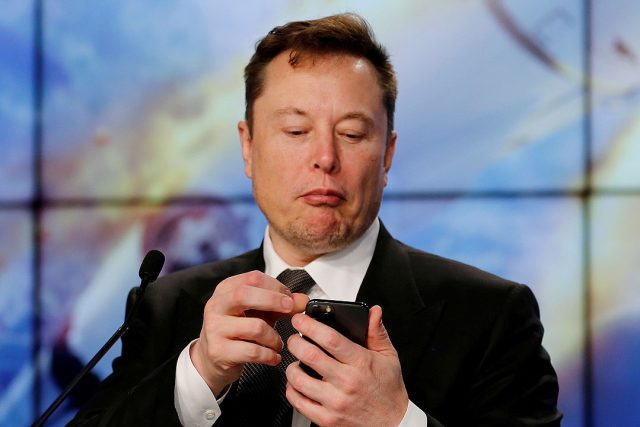
Musk takes 9% stake in Twitter to become top shareholder, starts poll on edit button

ELON MUSK — REUTERS

Tesla Inc TSLA.O boss Elon Musk on Monday disclosed a 9.2% stake in Twitter Inc TWTR.N, worth nearly $3 billion, making him the micro-blogging site’s largest shareholder and triggering a rise of more than 27% in the company’s shares.

Musk‘s move, revealed in a regulatory filing, comes on the heels of his tweet that he was giving “serious thought” to building a new social media platform, while questioning Twitter‘s commitment to free speech.

He also started a poll asking Twitter users if they want an edit button, a long-awaited feature on which the social media platform has been working. It was followed by Chief Executive Parag Agrawal urging users to “vote carefully”.

In less than three hours of starting the poll, more than 1.2 million users voted, with over 75% of them backing an edit option.

Last week, in another poll, Musk had asked if Twitter alogrithm should be open source. More than 82% of the users said yes, while former CEO Jack Dorsey said, “the choice of which algorithm to use (or not) should be open to everyone.”

A prolific Twitter user, Musk has over 80 million followers since joining the site in 2009 and has used the platform to make several announcements, including teasing a go-private deal for Tesla that landed him in hot water with regulators.

Of late, however, the world’s richest person has been critical of the social media platform and its policies, and recently ran a Twitter poll asking users if they believed the platform adheres to the principle of free speech, to which over 70% voted “no.” Read full story

In December, Musk put out a meme that compared CEO Agrawal with Soviet dictator Joseph Stalin and showed Jack Dorsey as a close associate who was later on executed.

Twitter‘s latest quarterly results and lower-than-expected user additions have raised doubts about its growth prospects, even as it pursues big projects such as audio chat rooms and newsletters to end long-running stagnation.

“It does send a message to Twitter … having a meaningful stake in the company will keep them on their toes, because that passive stake could very quickly become an active stake,” said Thomas Hayes, managing member at Great Hill Capital LLC.

Musk – who, according to Forbes, has a net worth of about $300 billion – has been reducing his stake in Tesla since November, when he said he would offload 10% of his holding in the electric-car maker. He has already sold $16.4 billion worth of shares since then.

A regulatory filing on Monday showed that Musk owns 73.5 million Twitter shares, which are held by the Elon Musk Revocable Trust, of which he is the sole trustee. Vanguard is Twitter‘s second-biggest shareholder, with an 8.79% stake, according to Refinitiv data.

Twitter shares rose 27.1% on Monday to close at $49.97. The stock, which had fallen 38% in the past 12 months through Friday’s close, on Monday added as much as $8.38 billion to its market capitalization, which now stands at $39.3 billion.


BUYOUT?

Musk‘s actual investment is a very small percentage of his wealth and an all-out buyout should not be ruled out,” CFRA Research analyst Angelo Zino wrote in a client note.

The stake in Twitter is more likely to result in positive outcomes for shareholders than negative ones, said Ryan Jacob, chief executive officer of Jacob Asset Management, who said Twitter is one of the fund’s largest holdings.

“If (Musk) decides to take an active position and Twitter goes private, it will probably be at a higher price than it is now,” he said. “If it gets other companies interested (in acquiring Twitter), it’ll probably be at a higher price than right now.”

Musk has previously made early-stage investments in companies, including online payment processor Stripe Inc and artificial intelligence firm Vicarious.

He is also the founder and chief executive officer of SpaceX, and leads brain-chip startup Neuralink and infrastructure firm the Boring Company.

Twitter was the target of activist investor Elliott Management Corp in 2020, when the hedge fund argued the social networking company’s then-boss and co-founder, Jack Dorsey, was paying too little attention to Twitter while also running what was then called Square Inc SQ.N.

Dorsey, who owns a stake of more than 2% in Twitter, stepped down as CEO and chairman in November last year, handing the reins to company veteran Parag Agrawal.

Meanwhile, Musk and Dorsey have found some common ground in dismissing the so-called Web3, a vague term for a utopian version of the internet that is decentralized. Read full storyReuters

U.S., Europe plan Russia sanctions as Ukraine warns of more civilian deaths

UKRAINE and Russian flags are seen through broken glass in this illustration taken March 1, 2022. — REUTERS

 – The United States and Europe were planning new sanctions on Tuesday to punish Moscow over civilian killings in Ukraine, and President Volodymyr Zelenskiy warned more deaths were likely to be uncovered in areas seized from Russian invaders.

Russian forces withdrew from towns north of the capital Kyiv last week as it turns its assault to Ukraine‘s south and east. Ukrainian troops recaptured towns devastated by nearly six weeks of war, including Bucha, where dead civilians lined the streets.

Searing images of a mass grave in Bucha and the bound bodies of people shot at close range drew an international outcry on Monday.

U.S. President Joe Biden called for a war crimes trial against Russia’s President Vladimir Putin and the United States will ask the U.N. General Assembly to suspend Russia from the Human Rights Council. Read full story

Russia denied any accusations related to the murder of civilians and said it would present “empirical evidence” to a meeting of the United Nations Security Council on Tuesday proving its forces were not involved. Read full story

In an early morning video address, Zelenskiy said he would also address the Security Council on Tuesday as he builds support for an investigation into the killings in Bucha.

“And this is only one town. One of many Ukrainian communities which the Russian forces managed to capture,” Zelenskiy said. “Now, there is information that in Borodyanka and some other liberated Ukrainian towns, the number of casualties of the occupiers may be even much higher,” he added, referring to a town 25 km (16 miles) west of Bucha. Read full story

Reuters saw several bodies apparently shot at close range, along with makeshift burials and a mass grave in Bucha, but could not independently verify the number of dead or who was responsible.

Ukraine‘s foreign minister, Dmytro Kuleba, said he spoke with U.N. Secretary-General Antonio Guterres about Bucha and stressed “that Ukraine will use all available UN mechanisms to collect evidence and hold Russian war criminals to account.” Read full story

Kuleba also spoke with his Chinese counterpart Wang Yi in a phone call on Monday, with Beijing again calling for talks to end the conflict in UkraineRead full story

The call, which Beijing said was made at Ukraine‘s request, was the first reported high-level conversation between the countries since March 1, when Kuleba asked Beijing to use its ties with Moscow to stop Russia’s invasion, the Ukrainian foreign ministry said at the time.


‘FEEL THE CONSEQUENCES’

Russia launched what it calls a “special military operation” in Ukraine on Feb. 24, aiming to demilitarize and “denazify” Ukraine. Ukraine and the West say the invasion was illegal and unjustified.

Russian forces pulled back from the capital Kyiv in the face of unexpectedly lethal and mobile Ukrainian resistance using Western anti-tank weaponry.

Moscow painted the withdrawal as a goodwill gesture at peace talks, which last convened on Friday. Negotiators had been due to convene on Monday, but neither side has given an update on the talks.

German Chancellor Olaf Scholz said on Monday that Putin and his supporters would “feel the consequences” of events in Bucha and that Western allies would agree further sanctions against Moscow in the coming days.

Biden’s national security adviser, Jake Sullivan, said new U.S. sanctions against Moscow would be announced this week. The U.S. State Department said it was supporting an international team of prosecutors and experts to collect and analyze evidence of atrocities. Read full story

France and Germany said they would expel Russian diplomats.

Russia would respond in kind and “slam shut the door on Western embassies”, Russian ex-president and deputy head of security council Dmitry Medvedev said.

“It will be cheaper for everyone. And then we will end up just looking at each other in no other way than through gunsights.”

German Defence Minister Christine Lambrecht said the European Union must discuss banning Russian gas, though other officials urged caution around measures that could touch off a European energy crisis.

Russia supplies about a third of Europe‘s gas, and Putin has tried to use energy as a lever to fight back against Western sanctions. But Moscow has maintained gas flows through key pipeline routes into Europe, despite uncertainty over Putin’s demands for payments in roubles. Read full story

The United States stopped the Russian government from paying holders of its sovereign debt more than $600 million from reserves held at American banks, in a move meant to ratchet up pressure on Moscow and eat into its holdings of U.S. dollars. Read full story


BATTLES IN THE EAST

Ukraine said it was preparing for about 60,000 Russian reservists to be called in to reinforce Moscow’s offensive in the east, where Russia’s main targets have included the port of Mariupol and Kharkiv, the country’s second-largest city.

Ukraine‘s general staff said Russian forces aimed to fully take over the Donetsk and Luhansk provinces claimed by Russian-backed separatists and encircle a group of Ukrainian forces.

“Russian troops have attacked Mykolayiv with cluster munitions banned by the Geneva convention. Whole blocks of civilian buildings have come under fire, in particular, a children’s hospital. There are dead and wounded, including children,” the general staff said in a daily update on Tuesday.

Reuters could not independently verify the claims.

In Mariupol, a southeastern town on the Azov Sea that has been under siege for weeks, Reuters images showed three bodies in civilian clothes lying in the street, one against a wall sprayed with blood.

A team from the International Committee of the Red Cross (ICRC) was stopped during an attempt to reach Mariupol to evacuate civilians, and is now being held in a nearby town, a spokesperson said on Monday. Read full story

West of Mariupol, in the town of Mykolaiv, shelling on Monday killed 10 people, including a child, and injured 46 others, regional administration head Oleksandr Senkevich said. Reuters was not immediately able to verify the report. – Reuters

West Africa faces historic food crisis driven by conflict, price surge

 – West Africa is facing its worst food crisis on record driven by conflict, drought, and the impact of the war in Ukraine on food prices and availability, aid agencies said on Tuesday.

There are about 27 million people suffering from hunger in the region and that number could rise to 38 million by June, a 40% increase from last year and a historic high, said 11 international aid organizations in a joint statement.

Large swathes of West Africa, including parts of Burkina Faso, Mali, Niger and Nigeria, are facing Islamist insurgencies that have forced millions of people off their land. Along with Chad, those are the countries most affected by hunger.

The region has also seen worsening floods and droughts due to the effects of climate change, making it harder to farm. Cereal production in 2021/22 was down 39% year-on-year in Niger and 15% in Mali, according to West Africa‘s Food Crisis Prevention Network.

On top of that, global food prices have surged and trade has been disrupted due to Russia’s invasion of Ukraine. Border closures due to COVID-19 have also had a negative impact, the Food Crisis Prevention Network said.

“What is new and worsening is mainly all the displaced people and abandoned land because of conflict, but also we are witnessing new drivers,” said Assalama Dawalack Sidi, Oxfam’s regional director for West and Central Africa.

Six West African countries import 30-50% of their wheat from Russia and Ukraine, according to the United Nations Food and Agriculture Organization (FAO).

The Ukraine war also risks redirecting much-needed funding from the region, Sidi warned.

“Many donors have already indicated that they may cut funding for Africa to pay for refugees in Europe,” she said. – Reuters

World Bank cuts East Asia’s 2022 GDP forecast on Ukraine war

MANILA – The World Bank cut its growth forecast for East Asia and the Pacific for 2022 to reflect the economic impact of Russia’s invasion of Ukraine, warning the region could lose further momentum if conditions worsen.

The Washington-based lender said in a report on Tuesday it expected 2022 growth in the developing East Asia and Pacific (EAP) region, which includes China, to expand 5.0% percent, lower than its 5.4% forecast in October.

But growth could slow to 4.0% if conditions worsened and government policy responses were weaker, World Bank said.

China’s economy is expected to grow 5.0% this year, down from a previous estimate of 5.4%, it said, noting its government’s capacity to provide stimulus to offset adverse shocks.

“The region confronts a triad of shocks which threaten to undermine its growth momentum,” said World Bank East Asia and Pacific Chief Economist Aaditya Mattoo.

The war between Russia and Ukraine, which Mattoo said was the “most serious risk” to the region’s growth outlook, is leading to food and fuel price increases, financial volatility and reduced confidence all over the world.

Mattoo said Russia’s invasion of Ukraine was more worrying given that the region was still contending with the effects of the COVID-19 pandemic, a structural slowdown in China and faster inflation that could prompt quicker U.S. monetary tightening.

The war’s impact on economies in East Asia and the Pacific would vary depending on their exposure and resilience, Mattoo said. Excluding China, output in the rest of the region is projected to expand 4.8% this year.

“Just as the economies of East Asia and the Pacific were recovering from the pandemic-induced shock, the war in Ukraine is weighing on growth momentum,” World Bank Vice President for East Asia and Pacific Manuela Ferro said in a statement.

“The region’s largely strong fundamentals and sound policies should help it weather these storms.” — Reuters