Home Blog Page 5996

NEDA’s 8-point plan towards becoming an upper income economy

FREICH ROQUERO-UNSPLASH

The Philippine economy performed below expectations in the second quarter of the year as gross domestic product (GDP) clocked-in a growth rate of 7.4%. This follows a heady expansion of 8.2% in the first quarter. The slower-than-expected performance was due to the usual lackluster output of the agricultural sector and tepid manufacturing growth due to inflationary pressures.

While second quarter growth was our lowest since the fourth quarter of 2021, the Philippines is still ASEAN’s second fastest growing economy this year following Vietnam.

Our economic managers expressed confidence that the economy could still attain its 2022 growth target of between 6.5% to 7.5%. To achieve this, the economy will have to grow by 5.2% in the second half of the year. However, some analysts are not so sure. Japan’s Nomura Research Institute cut its forecast for Philippine growth to 6.3%. They see the economy growing by only 4.9% in the second semester as the low base effects fade out and inflationary pressures persist.

According to Nomura, inflation will continue to dampen consumption, which is a major driver of the economy. Inflation averaged 4.7% in the first seven months of the year but peaked at 6.4% in July. Nomura foresees inflation hovering at above 6% until October before easing gradually.

Outside inflation, domestic and external conditions could dampen growth in the second half of the year. On the domestic front, the possible emergence of a new COVID strain and/or the monkeypox virus could compel government to impose new restrictions on movement. Inclement weather and/or La Niña could affect agricultural output. The limited absorptive capacities of government agencies could limit government spending. And as the central bank tries to battle inflation, higher interest rates could curtail investments and capital formation.

On the external front, the protracted war in Ukraine will continue to disrupt value chains and supply chains. A weaker global economy, or even recession in some countries, will diminish demand for Philippine exports. And the elephant in the room — tensions of war in the Taiwan Strait — could choke trade and investments.

The good news is that the National Economic and Development Authority (NEDA), supported by the Departments of Finance, of Budget and Management, and Trade and Industry have put together an eight-point socioeconomic plan to address these domestic and external threats.

According to NEDA Secretary Arsi Balisacan, “the overall goal (of the eight-point plan) is to reinvigorate job creation and poverty reduction by steering the economy back to its high growth path and more importantly, through economic transformation for a prosperous, inclusive and resilient society.”

By “economic transformation,” NEDA means achieving upper middle-income status, or a minimum per capita income of $4,256, by 2024 and high-income status, or a minimum per capita income of $13,205, by 2047. Barring unforeseen events, NEDA is confident that the Philippines will attain upper middle-income status according to schedule. As for attaining high-income status, the economy would have to grow by an average rate of 7.5% to achieve it by 2043. Should our average growth rate settle at a slower pace of 6.5%, we will attain it by 2047. This is why maintaining high growth is at the center of NEDA’s agenda.

NEDA also aspires for unemployment to drop to under 4% and the poverty rate to settle below 9% by 2028.

First on NEDA’s eight-point agenda is reducing the cost of food and increasing our people’s purchasing power. This will give our people the relief they have long pined for. No less than an agricultural revolution is necessary to unblock the impediments to low agricultural productivity and to attain food security. This is why the president himself assumed the agriculture portfolio. Reducing logistics costs also affects food prices and assures accessibility. To this, the government commits to streamlining the regulatory process as well as inter-island and international shipping. One way to reduce shipping costs is to open the domestic shipping industry to domestic firms that also ply international routes. The cabotage law has only led to an inefficient domestic shipping industry, which is why the law is ripe for amendment.

The second point has to do with the capacitation of our greatest asset — our workforce. Apart from providing basic social protection such as healthcare, housing, and livelihood, the government commits to improving the quality of education with an emphasis on STEM learning. Accessibility and quality of trade skills will also be enhanced through TESDA (Technical Education and Skills Development Authority).

The third point involves attaining sound macroeconomic fundamentals and more efficient government processes. Digitization is the silver bullet that can make government more efficient and less prone to corruption. This will be pursued aggressively, according to NEDA. Correspondingly, tax administration reforms and realignment of expenses shall be implemented to improve revenues and eliminate wasteful spending. The idea is to realize consistent improvement in our macroeconomic fundamentals, especially the budget deficit and debt-to-GDP ratio.

The fourth point is what I consider the heart of this socioeconomic agenda — it is to generate investments, invigorate manufacturing, and create jobs. NEDA commits to leverage on the CREATE Law (Corporate Recovery and Tax Incentives for Enterprises Act) and the recent amendments to the Public Service Law, Trade Liberalization Law, and Foreign Investment Law to attract foreign capital. I reckon the government will do well to empower the Inter-Agency Investment Promotion and Coordination Committee since we need a stronger outbound investment promotion effort. We also need a coordinating body, akin to a concierge service, to help foreign investors navigate the maze that is the Philippine bureaucracy. To further capacitate the economy, the government plans to sustain infrastructure spending at five to six percent of GDP, increase spending on research and development (especially on agriculture and disaster resilience), and aggressively pursue next generation industries such as artificial intelligence, robotics, virtual and augmented reality, and nanotechnology.

The fifth point involves leveling the playing field in business and industry. The National Competition Policy shall be implemented to promote competitive neutrality in both the private and public sectors. Government commits to reduce the barriers to entry for entrepreneurs, ease reportorial requirements and make regulations less cumbersome for corporations. Ease in doing business will be aggressively pursued.

The sixth point involves strengthening the linkage between learning institutions and industry.

The seventh point is aimed towards climate change resiliency and pursuing a green and blue economy. Sustainability will be mandated all the way to the LGU level. To this, performance indicators and a scoring system will be imposed upon LGUs in relation to the protection of the environment and disaster mitigation. In energy, a cleaner, more reliable and secure mix of energy sources shall be built.

The last point is all about securing ourselves against internal and external threats. Internal threats include transnational organized crime and traitors to democracy. External threats include those that imperil our territorial sovereignty, cybercrimes, pandemics and health emergencies. Law enforcement institutions and LGUs will be empowered to address local threats. Correspondingly, government will strengthen our international engagement through diplomacy and dialogue to address external threats. The idea is to gain as many allies as possible towards securing our borders and realizing our development objectives.

The eight-point agenda is sensible and touches on all the critical areas. Done right, we should be well on our way towards achieving upper income status before 2050.


Andrew J. Masigan is an economist

andrew_rs6@yahoo.com

Facebook@AndrewJ. Masigan

Twitter @aj_masigan
When a school closes

RUBEN RODRIGUEZ-UNSPLASH

The Department of Education (DepEd), by its Order No. 034, series of 2022, has set the start of classes on Aug. 22, to end on July 7, 2023. There will be 203 school days, or as may be determined by further issuance/s in case of changes in the school calendar due to unforeseen circumstances (deped.gov.ph/2022/07/12).

The options schools have to hold in-person (face-to-face or F2F) classes five times a week; or use blended learning (a combination F2F and online); or go totally online (full distance learning) will only be until Oct. 31. Starting Nov. 2, 2022, all public and private schools must have transitioned to five days of in-person classes. No school shall be allowed to implement purely distance learning or blended learning except for those implementing Alternative Delivery Modes as provided in DO 21, s. 2019 (Policy Guidelines on the K to 12 Basic Education Program) and DO 01, s. 2022 (Revised Policy Guidelines on Homeschooling Program).

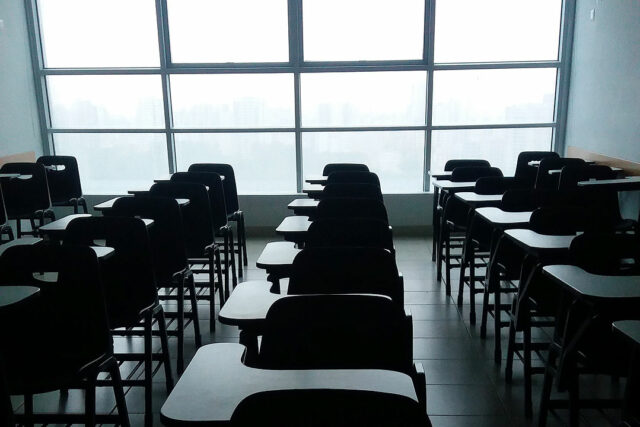
Last week, on Aug. 15, the Colegio de San Lorenzo of Manila (CDSL) announced its sudden closure, the day before the scheduled opening of classes. “We have suffered financial instability and lack of financial viability brought about by the ongoing pandemic and exacerbated by consistent low enrollment,” the school said in an official statement.

“We are sorry about the sudden announcement, but it is better late than never. We couldn’t survive because our finances won’t permit us to operate anymore like paying the salaries of our teaching and non-teaching staff,” the college added (ucanews.com, Aug. 18, 2022).

More than 860 out of 14,000 private schools in the Catholic-majority nation have closed their doors since the pandemic hit two years ago, according to the Department of Education. The closures have affected 58,327 students and 4,488 teachers. The Catholic Educational Association of the Philippines reported that nearly 85%, or more than 700 of the schools that folded, were Catholic schools (Ibid.).

In the strict lockdowns early in the pandemic, schools closed because they had no enrollees. As the COVID-19 restrictions relaxed and tightened, enrollees were still lacking. Then-DepEd Secretary Leonor Briones noted in 2020 that over 398,000 private school students transferred to public schools, mainly due to the COVID-19 pandemic’s effect on the income of families.

The Commission on Higher Education (CHED) Chair J. Prospero de Vera is bristling about the non-compliance of the Colegio de San Lorenzo with the 60-day notice and the non-submission of various documents to justify the decision to close, which should include an audited financial report for citing financial loss as a reason for the closure. He cited possible “deceit” due to the collection of tuition and other fees (a contractual agreement) and then “arbitrarily” deciding not to open. Mr. De Vera ordered the Colegio de San Lorenzo to refund tuition and all other fees collected from enrollees (The Philippine Star, Aug. 16, 2022). In sympathy with the displaced students, many schools spontaneously offered to accept transferees. UST Angelicum, a private Catholic basic and higher education school run by the Dominican order, was one of the first to offer assistance under very considerate terms to the more than 717 students from nursery to Grade 12, and 652 college students, including 172 graduating students, affected by the CDSL closure (inquirerdotnet, Aug. 18, 2022). Teaching and non-teaching personnel of the CDSL will be endorsed to the QC Public Employment Service Office for possible financial assistance or prospective employment (pna.gov.ph, Aug. 16, 2022).

The Colegio de San Lorenzo is not the first school to close due to the COVID-19 pandemic. In 2020, the 109-year-old College of the Holy Spirit School in Manila (CHSM) announced that it will cease operations after academic year 2021-2022, citing difficulties in enrollment which were worsened by the coronavirus pandemic (ABS-CBN News, Nov. 22, 2022).

“Private education has faced an increasingly challenging environment resulting from (i) government policies on K-12; (ii) free tuition in state colleges and universities, local universities and colleges, and state-run technical and vocational institutions; and (iii) the significant increase in public school teachers’ salaries compared to their private school counterparts,” said Sr. Carmelita Victoria, provincial of the Mission Congregation of the Servants of the Holy Spirit, the order that ran the school (Ibid.).

“The recent COVID-19 pandemic has exacerbated the situation. The reduction or loss in family income, mobility restrictions and social distancing requirements, and the new demands of distance learning have adversely affected enrolment, not only in CHSM, but in most private schools as well,” Sr. Victoria said (Ibid.).

The College of the Holy Spirit planned the phase-out timetable that would allow the school “to graduate its current Grade 11 and 3rd Year College students… Therefore, Grade 12 and 4th Year College will be operational, but Levels K to Grade 11, and 1st to 3rd Year College will not be opened for AY (academic year) 2021-2022,” the school said then. A good “Lesson Plan,” in the tradition and professionalism of true academicians. Inspired by the Holy Spirit!

The closures of The College of the Holy Spirit and Colegio de San Lorenzo have made valuable teaching points.

First to be emphasized is the responsibility and accountability that comes inseparably with position and power over others in society, most specially marked in the ascendancy over the youth and their future — such as that which a school has. A school must analyze its financial position and operational viability more closely, before rousing more anxiety with the sudden dislocation of students and staff and the fracturing of the educational system. Maybe planning is difficult with the unstable assumptions in the long-staying COVID-19 situation, but here the alternative courses of action must prioritize human concerns before cutting business losses. Commitment to contract and delivery of services are paramount in the noble calling of a school.

One more lesson learned is that beyond the contemplative appreciation and commitment to mission and role, the school must attend to its real and practical needs towards this mission. Both the College of the Holy Spirit and the Colegio de San Lorenzo cited their financial losses from the changed environment of the COVID-19 pandemic which basically overturned traditional paradigms for administration and management of most enterprises in society. The insistence in bringing new technologies into the workplace cannot be ignored by schools, such as the now-necessary “Learning Management System” (LMS) identified by CHSM as among “the new demands of distance learning” that affected financial viability. One-off set-up fees for a cloud-based LMS is $4,000-$7,000, whilst a self-hosted LMS can require fees of up to $25,000 according to elearningindustry.com, “The True Cost of a Learning Management System.” Add to this the recurring regular high costs of full-time or part-time IT staff, or outsourcing agencies to help with the administration of the LMS and automated systems. Most small schools, especially those that are family-owned, cannot afford the expensive upgrades to new technologies for administration and operations.

The schools that have migrated to automation and high technology enjoy the clear advantages on the ease and efficiency of operations, while delivering content and materials to students faster and with more control, including measurements (tests) and evaluation (grades). Students and professors mostly prefer hybrid learning/teaching (a combination of in-person and online) to the all-in-person class attendance ordered by the DepEd come Nov. 2, 2022.

Perhaps the DepEd can carefully review and improve policies and procedures for schools in the New Now. Closer and more regular monitoring of the operational and financial status of schools can reveal early warning signs of possible closures that, if ever, should be phased out with less pain to society.


Amelia H. C. Ylagan is a doctor of Business Administration from the University of the Philippines.

ahcylagan@yahoo.com

New Zealand to temporarily boost worker intake amid labor shortfall

Image via Anup Shah/Flickr/CC BY-SA 2.0

NEW ZEALAND will make temporary changes to immigration rules, a minister said on Sunday, aiming to lure 12,000 workers over the next year with a working holiday scheme designed to fill labor gaps as businesses scramble to find staff.

The jostling for workers is part of a global trend that has helped push up wages in New Zealand, posing a challenge to the fight on inflation by the central bank, which raised interest rates last week to their highest since Sept. 2015.

“These measures are about providing immediate relief to those businesses hardest hit by the global worker shortage,” Immigration Minister Michael Wood said in a statement, adding that the holiday scheme targeted a doubling of intake.

Other steps include a relaxation of wage rules for skilled migrants in sectors such as care of the aged, construction and infrastructure, meat processing, seafood, and adventure tourism.

The visas of some onshore working holiday makers will also be extended by six months to retain workers now in the country, Mr. Wood added.

“Workforce challenges are being seen across skill levels and sectors,” he said. “New Zealand is not alone in this.”

The measures come as the jobless rate stood at 3.3% in the second quarter, when wages were also up 3.4% on the year, rising at their fastest in 14 years.

Last week, the Reserve Bank of New Zealand lifted the official cash rate by 50 basis points to 3.0%, in a seventh straight hike to rein in inflation. — Reuters

Japan eyes long-range missiles to counter China

CHRIS BARBALIS-UNSPLASH

TOKYO — Japan is considering the deployment of 1,000 long-range cruise missiles to boost its counterattack capability against China, the Yomiuri newspaper reported on Sunday.

The missiles would be existing arms modified to extend their range from 100 km (62 miles) to 1,000 km, the daily said, citing government sources.

The arms, launched by ships or aircraft, would be stationed mainly around the southern Nansei islands and capable of reaching the coastal areas of North Korea and China, the Yomiuri said.

Representatives from Japan’s foreign ministry did not immediately respond to a request for comment on the report.

Japan, which interprets its war-renouncing postwar constitution to mean it may use its military only for self-defense, has stepped up its military spending and taken a more assertive strategy in recent years. But it has refrained from deploying long-range missiles, among its limits on weapons that can strike targets on foreign soil.

Regional tensions ratcheted up this month after a visit by Nancy Pelosi, speaker of the US House of Representatives, to Taiwan, which is self-ruled but claimed by China. Beijing launched missiles near Taiwan and into Japan’s exclusive economic zone. — Reuters

Russia could do something ‘ugly,’ Ukraine warns

Ukrainian President Volodymyr Zelensky — UKRAINIAN PRESIDENTIAL PRESS SERVICE/HANDOUT VIA REUTERS

KYIV — President Volodymyr Zelensky urged Ukrainians to be vigilant ahead of Wednesday’s celebrations to mark 31 years of independence from Soviet rule, as fresh blasts hit Crimea and a missile wounded 12 civilians near a nuclear power plant.

Ukrainians must not allow Moscow to “spread despondency and fear” ahead of the Aug. 24 events, which also come six months after Russia began its full-scale invasion of Ukraine, Zelensky said on Saturday.

“We must all be aware that this week Russia could try to do something particularly ugly, something particularly vicious,” Zelensky said in nightly remarks on video.

Curfew in Ukraine’s second-largest city, Kharkiv, is to be extended for the entire day on Wednesday, said regional Governor Oleh Synehub. The curfew usually runs from 10 p.m. to 6 a.m. in the northeastern city, regularly hit by Russian shelling.

“Remain at home and take heed of warnings!” Mr. Synehub wrote to residents on the Telegram messaging app.

Also on Saturday, a Russian missile hit a residential area of a southern Ukrainian town not far from a nuclear power station, wounding 14 civilians, Russian and Ukrainian officials said.

The strike at the Pivdennoukrainsk (South Ukraine) nuclear station and fresh shelling near the Zaporizhzhia station, Europe’s largest, revived fears of a nuclear accident, Ukrainian officials said.

Zelensky in his speech also referred obliquely to a recent series of explosions in Crimea, the Ukrainian territory Russia annexed in 2014.

Ukraine has not claimed responsibility for the attacks, but analysts have said at least some have been made possible by new equipment used by its forces.

“You can literally feel Crimea in the air this year, that the occupation there is only temporary and that Ukraine is coming back,” Zelensky said.

In the latest attack in Crimea, the Russian-appointed governor, who is not recognized by the West, said a drone had struck a building near the headquarters of Russia’s Black Sea fleet on Saturday morning.

“A drone flew onto the roof. It was flying low,” Mikhail Razvozhayev said on Telegram. “It was downed right over the fleet headquarters. It fell on the roof and burned up. The attack failed.”

Mr. Razvozhayev said the region’s anti-aircraft system had again been in operation and asked residents to stop filming and disseminating pictures of how it was working.

Ukrainian media reported explosions in nearby towns, among them the resorts of Yevpatoriya, Olenivka and Zaozyornoye.

CHILDREN AMONG THE INJURED
Following the strike near the South Ukraine power station, Vitaliy Kim, governor of Mykolaiv region, said on Telegram that four children were among the wounded.

Private homes and a five-storey apartment block were damaged in Voznesensk, 30 km (20 miles) from the plant, Ukraine’s second-largest.

Updating a toll, authorities in the Ukrainian military’s south district said 14 civilians had been wounded.

The attack on Voznesensk was “another act of Russian nuclear terrorism,” said state-run Energoatom, which manages Ukraine’s four nuclear energy generators.

“It is possible that this missile was aimed specifically at the Pivdennoukrainsk plant, which the Russian military tried to seize back at the beginning of March,” it said in a statement.

Russia did not immediately respond to the accusation. Reuters could not verify the situation in Voznesensk. There were no reports of damage to the South Ukraine plant. — Reuters

‘The paycheck has died’: Workers hold funeral for wages

REUTERS

BUENOS AIRES — Some women wore black funeral attire and sported flower crowns. Other people in the procession in Buenos Aires carried a gigantic coffin. But this funeral procession in the Argentine capital was not honoring a person.

Instead it was to mourn the “death” of the wages of Argentine workers in a country where inflation is expected to hit 90% by the end of this year, eating up workers’ purchasing power despite years of government attempts to curb price increases.

“The situation for the workers is devastating. Before the middle of the month, we don’t have any more salary, it’s not enough,” Melisa Gargarello, a representative of the Front of Organizations in Struggle (FOL), the protest’s organizer, told Reuters.

One protester carried a “clinical history” for Argentine wages, a chart showing how inflation has eaten up the value of paychecks.

While much of the world is battling high single-digit inflation this year, Argentina’s struggles are in a different category.

“The paycheck has died” read a banner in the symbolic procession, which toured the main streets of Argentina’s capital and ended in front of the Presidential Palace. The flower crowns worn by women carried the message “RIP the minimum wage.”

The country’s official monthly minimum wage stands at 45,540 Argentine pesos ($334) while a basic food basket for a family of two adults and two children costs more than twice that amount at 111,298 pesos ($817), according to the national statistics institute INDEC.

Years of political efforts to curb inflation have done little to abate price increases, and in July the country registered its highest inflation rate in 20 years.

The latest effort involves the appointment of a new economy minister, Sergio Massa, who has been granted expanded powers to try to tame inflation. Argentines have dubbed him a “superminister.”

“Today we are holding a symbolic funeral for wages, which we have to say expresses the situation that all workers in Argentina are experiencing,” said FOL’s Maximiliano Maita. — Reuters

Congo officials investigating possible Ebola case — WHO

DAKAR — Health authorities in the Democratic Republic of Congo are investigating a suspected case of Ebola in the country’s east, the World Health Organization (WHO) said on Saturday.

A 46-year-old woman died on Monday in the city of Beni, one of the centers of an Ebola outbreak from 2018 to 2020 that killed nearly 2,300 people.

She was initially treated for other ailments but then developed symptoms consistent with Ebola, WHO said in a statement.

Congo’s dense tropical forests are a natural reservoir for the virus, which causes fever, body aches, and diarrhea.

The country has recorded 14 outbreaks since 1976. It declared an end last month to its latest outbreak, in northwestern Congo, which caused five deaths. — Reuters

Somali forces end  30-hour hotel siege

MOGADISHU — Somali forces have ended a siege at a hotel in Somalia’s capital Mogadishu, an army officer told Reuters on Sunday, adding that they were still clearing explosives scattered around the building.

At least 12 people, mostly civilians, were killed as Somalia’s elite armed forces battled al Qaeda-linked militants for 30 hours after they blasted and shot their way into the Hayat Hotel on Friday evening.

“We are still investigating the explosions of many plastic bags that have been scattered around the hotel,” said Mohamed Ali, a military officer at the scene.

The French news agency Agence France-Presse earlier reported that all the gunmen had been killed, citing a security commander.

Friday’s attack was the first such major incident since President Hassan Sheikh Mohamud took office in May.

The al Qaeda-linked al Shabaab group claimed responsibility for the attack.

Al Shabaab has been fighting to topple the Somali government for more than 10 years. It wants to establish its own rule based on a strict interpretation of Islamic law.

The Hayat is a hotel popular with lawmakers and other government officials. — Reuters

vivo brings vivo Y02s, a powerful smartphone with a slimmer body, to the Philippines

vivo Y02s in Vibrant Blue

vivo officially unveiled yet again a powerful and affordable smartphone that is sure to deliver Filipinos plenty of time to enjoy uninterrupted hours of contact and entertainment with friends and loved ones. An upgrade from the vivo Y01, the vivo Y02s now comes in a very thin 8.19-mm body — vivo’s thinnest design in this price range. But don’t let its slim body fool you because the vivo Y02s is an all-around smartphone that is feature-packed and has a huge 5,000 mAh battery capacity.

Launched on Aug. 13 via vivo website, Lazada, Shopee and TikTok shop, the vivo Y02s will also be available through offline stores (experience stores and kiosk) nationwide starting Aug. 20, 2022 for only P6,499. Consumers who will purchase online are eligible to receive a FOOMEE Q4A05 as freebies! *limited stocks only.

Power-packed and dependable

Vivo Y02s in Fluorite Black and Vibrant Blue

With the vivo Y02s’s large 5,000 mAh battery, you can keep your battery anxiety at bay and enjoy many hours of browsing (and online shopping!), binge-watching your favorite Netflix Series with the fam, and more gameplay with the siblings. A single full charge allows you to stream Youtube in HD for up to 18 hours, 20 hours of music playback on Spotify, and 7 hours of resource-intensive gaming like PUBG, or Mobile Legends. The vivo Y02s also supports a C-type port and 5V/1A reverse charging, ensuring long battery life even for your other devices.

For gamers and video streamers, a wide and immersive screen is necessary and the 6.51-inch HD+ Halo FullView Display with 1600*720 (HD+) resolution of the vivo Y02s is just perfect for that. The display also automatically adjusts brightness level depending on ambient light conditions and filters out harmful blue light so users can surf, stream, and play without worrying about eye strain. The device’s Multi-Turbo 5.5 and Ultra Game Modes also help deliver a smooth, lag-free performance which gamers will surely enjoy.

The vivo Y02s is powered by a Mediatek Helio P35 chipset and has 3GB of RAM and 32GB memory to ensure sufficient phone storage and a smooth performance despite having many applications running in the background.

Slim and stylish

This newest Y-series device from vivo screams comfort and elegance. With just 8.15mm thickness and weighing just 182g, the vivo Y02s can easily fit in your pocket or small handy bag. The sophistically designed 2.5D curvature and frame of its body not only adds aesthetic touches but also makes the device more comfortable to the grip.
The vivo Y02s comes in two colorways — Flourite Black and Vibrant Blue. The Flourite Black colorway gives off a classy shine and a touch of sophistication while the Vibrant Blue comes alive with a pattern of dancing waves, rejuvenating you with passion and vitality.

In the camera department, the vivo Y02s also has much to offer. Its 5MP Front Camera + Aura Screen Light can capture beautiful selfies even in low light conditions. Its 8MP main camera complemented by vivo’s AI editing software ensures great photographs every single time.

The vivo Y02s is now available at vivo’s official website, official Shopee and Lazada stores, and Tiktok account for only P6,499.

For more information on vivo’s latest news and updates, please head to vivo’s official Facebook, Instagram, Twitter and YouTube channels.


Spotlight is BusinessWorld’s sponsored section that allows advertisers to amplify their brand and connect with BusinessWorld’s audience by enabling them to publish their stories directly on the BusinessWorld Web site. For more information, send an email to online@bworldonline.com.

Join us on Viber to get more updates from BusinessWorld: https://bit.ly/3hv6bLA.

BIR to pursue rightsizing

BW FILE PHOTO

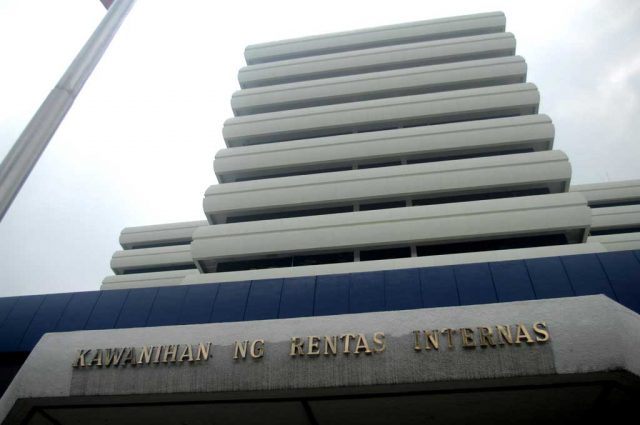
The Bureau of Internal Revenue (BIR) said that it will “rightsize” some of its offices as it ramps up its digitalization efforts, while also noting insufficiencies in the implementation of its electronic invoicing platform.

“[Rightsizing] is what we will do. We will scrap and build some items in the Bureau of Internal Revenue, and introduce cybersecurity experts [and] data scientists … as well as a data governance office; it is very important that we have such positions to make this digital transformation happen and be successful,” BIR Commissioner Lilia C. Guillermo said during the 1st SyCip Gorres Velayo & Co. (SGV) Tax Symposium on Friday.

The revenue collecting agency adheres to four pillars for its digitalization efforts: strengthening of the BIR organization; modernizing the digital backbone of the BIR; enhancing policies, governance, and standards; and elevating taxpayer experience and innovating BIR services.

In his first State of the Nation Address, President Ferdinand R. Marcos, Jr., cited the National Government Rightsizing Program as a legislative priority.

Budget Secretary Amenah F. Pangandaman also previously said that her department is finalizing a proposed measure to rightsize the bureaucracy, which will be submitted to Congress.

Meanwhile, Ms. Guillermo said that only 15 out of 100 large taxpayers have responded to the BIR’s invitation for digitalization through its e-receipts and e-invoicing system.

“Hindi lang po BIR dapat ang mag-digital transformation (The BIR shouldn’t be the only undergoing digital transformation)… [for] audits to be done very conveniently,” Ms. Guillermo said, citing how some firms still prefer a manual system. “Those who are prepared, please volunteer already.” — Diego Gabriel C. Robles

BoP deficit hits $1.82 billion in July

GIORGIO TROVATO-UNSPLASH

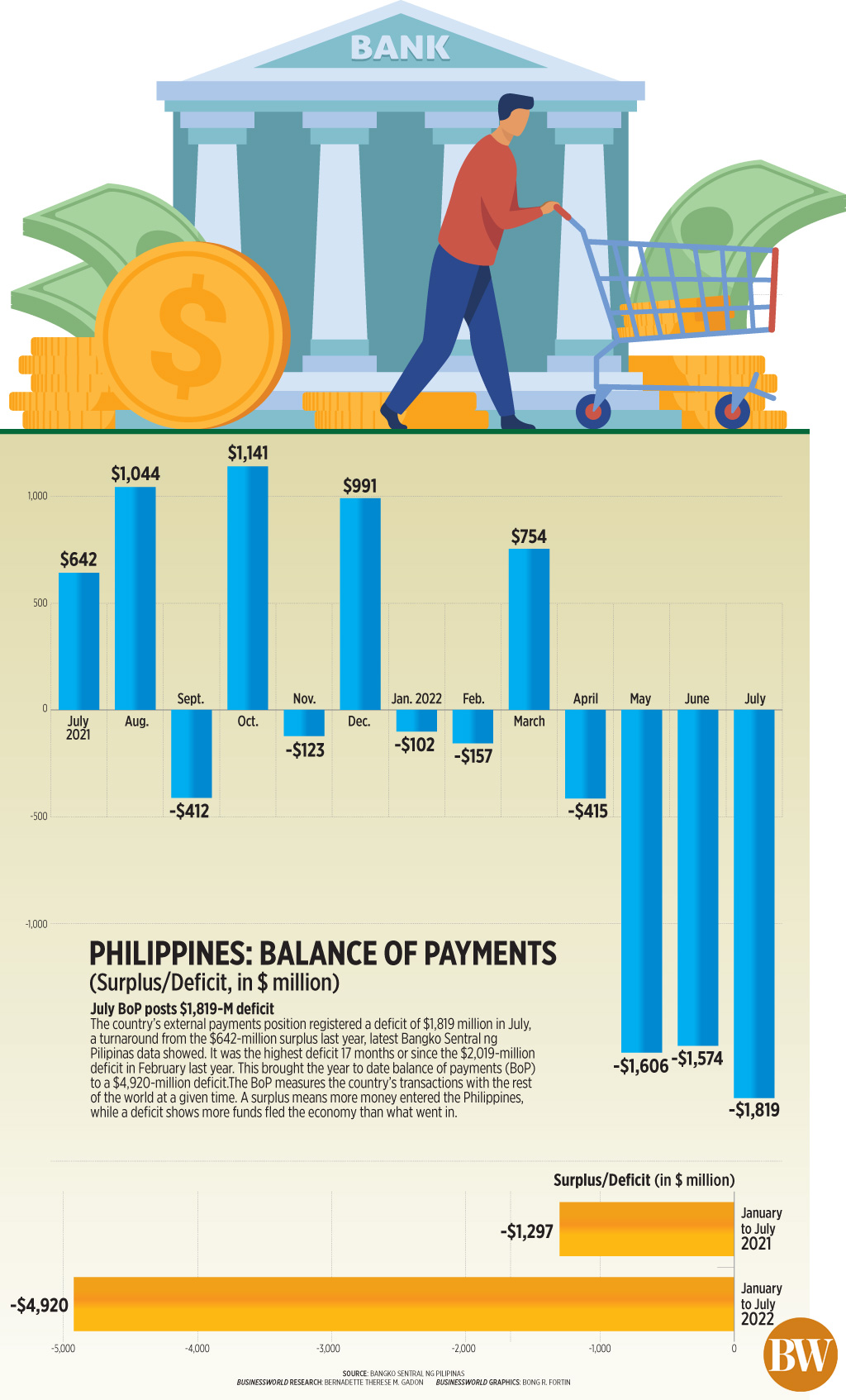
The country’s balance of payments (BoP) position remained in a deficit for a fourth straight month in July, as more dollars flowed out of the country to pay for the government’s foreign debt.

Data released by the Bangko Sentral ng Pilipinas (BSP) on Friday showed the BoP deficit widened to $1.819 billion in July, a turnaround from the $642 million surplus in the same month last year.

This is also the widest deficit posted in 17 months or since $2.019 billion in February 2021. The July deficit is also higher than the $1.574 billion gap in June.

Philippines: Balance of payments“The BoP deficit in July 2022 reflected outflows arising mainly from the National Government’s (NG) foreign currency withdrawals from its deposits with the BSP to settle its foreign currency debt obligations and pay for its various expenditures,” the BSP said in a statement.

The BoP measures the country’s transactions with the rest of the world at a given time. A deficit means more funds fled the economy than what went in, while a surplus shows that more money entered the Philippines.

In the first seven months of the year, the BoP deficit widened to $4.920 billion, from the $1.297 billion deficit in the same period in 2021.

“Based on preliminary data, this cumulative BoP deficit reflected the widening trade in goods deficit,” the central bank said.

The trade deficit for January-June 2022 reached $29.793 billion, up from the $17.953 billion deficit posted in the same period last year, preliminary data from the Philippine Statistics Authority’s (PSA) showed.

The central bank also noted that this BoP position reflects the final gross international reserves (GIR) level of $99.8 billion as of end-July, 1.09% lower than the $100.9 billion as of end-June.

“Nonetheless, the latest GIR level represents a more than adequate external liquidity buffer equivalent to 8.3 months’ worth of imports of goods and payments of services and primary income,” the BSP said.

“Specifically, it ensures availability of foreign exchange to meet balance of payments financing needs, such as for payment of imports and debt service, in extreme conditions when there are no export earnings or foreign loans.”

The GIR can also cover up to 7.2 times the country’s short-term external debt based on original maturity and 4.6 times based on residual maturity.

“Short-term debt based on residual maturity refers to outstanding external debt with original maturity of one year or less, plus principal payments on medium- and long-term loans of the public and private sectors falling due within the next 12 months,” the central bank said.

China Banking Corp. Chief Economist Domini S. Velasquez said the BoP deficit may narrow slightly in the next few months, as global commodity prices subside.

“Downside risks to BoP is that lower import prices will be challenged by anemic growth in exports as global growth slows. Additionally, as the national government pays off its foreign currency debt and shifts to domestic sources, additional withdrawals are likely,” Ms. Velasquez said.

Earlier, the Monetary Board revised its BoP deficit forecast to $6.3 billion, or equivalent to -1.5% of gross domestic product (GDP), higher than the previous projection of a $4.3 billion gap (-1% of GDP).

The BSP also projected a wider current account deficit at $19.1 billion (-4.6% of GDP) this year, from $16.3 billion (-3.8% of GDP) previously.

The country’s GIR is expected to hit $105 billion by end-2022 and $106 billion by end-2023, lower than the March projections of $108 billion and $109 billion, respectively. – Keisha B. Ta-asan

PDP preliminary framework unveiled

PHILIPPINE STAR/ MICHAEL VARCAS

The National Economic and Development Authority (NEDA) unveiled an updated preliminary framework for the Philippine Development Plan (PDP) for 2023 to 2028, focusing on human capital and income development, as well as revitalizing the major sectors of agriculture, industry, and services.

“It has to be about developing and protecting the capabilities of individuals and families. We want them to have the capabilities to be able to earn more and to be able to protect those earnings,” NEDA Undersecretary Rosemarie G. Edillon said during the 1st SyCip Gorres Velayo & Co. (SGV) Tax Symposium on Friday.

In an email to BusinessWorld, Ms. Edillon clarified that the framework she presented during the forum was updated just the previous day (Aug. 18).

As outlined in the presentation, promoting human capital and social development will entail boosting health and nutrition; improving education and lifelong learning; and establishing livable communities.

“We need to address these learning losses, pre-pandemic and then during the pandemic, so we can grow much faster going forward,” Ms. Edillon said in her presentation.

On the other hand, the goal of increasing income earning ability will require expanding training and skills development and intensifying employment facilitation.

At the same time, the protection of purchasing power is envisioned by ensuring food security and rationalizing social protection by targeting help to the most needy.

Meanwhile, another aspect of the framework concerns itself with transforming production sectors to generate more quality jobs and competitive products.

The modernization of agriculture and agri-business, the revitalization of industry, and the reinvigoration of the services sector will be achieved through advanced research and development, technology, and innovation; enhanced inter-industry linkages; and promoted trade and investments.

The framework also mentions appropriate government interventions, namely: to ensure macroeconomic stability; expand and upgrade infrastructure; promote competition and regulatory efficiency; attain peace and security; good governance and bureaucratic efficiency; and accelerate climate action and strengthen disaster resilience.

The framework will be finalized by next week, Ms. Edillon said.

“If ever, [there will be] very minimal changes and perhaps [it] will just need to be reflected in the long [and] more detailed PDP. If the latter, then there is no need to revise the PDP strategy framework,” she said in the email.

During the forum, Ms. Edillon acknowledged the risks to growth, which include inflation, high input costs, the fiscal deficit, and the slowdown in global demand.

“If this one actually factors into inflationary expectations, then it will have an impact on consumption, and that’s easily three-fourths of our GDP (gross domestic product), of our demand,” she said. “The slowdown on global demand would have an impact on our exports [and] manufacturing as well.”

Global commodity prices have surged in recent months due to the ongoing Russia-Ukraine war and supply chain disruptions. Prices of wheat and fertilizer have soared amid tight global supply, putting pressure on the domestic agriculture industry.

Inflation stood at 6.4% in July, bringing the seven-month average to 4.7%.

The government set its inflation rate assumption to 4.5-5.5% for 2022, reflecting the impact of soaring transport, fuel, and food expenses.

The debt-to-GDP also stood at 62.1% at the end of the second quarter, above the threshold prescribed by multilateral lenders for developing markets.

Earlier this week, Ms. Edillon told reporters that the NEDA is working to fast-track the submission of the new PDP before its deadline in December.

The PDP serves as the government’s overall guide in development planning. The new PDP being created by the NEDA is also anchored in an eight-point socioeconomic agenda that also mentions ensuring food security, reducing transportation and logistics costs, and bringing down the high cost of power.

The near-term agenda also includes mitigating the scarring impact of the pandemic by addressing learning losses and strengthening social protection, as well as ensuring sound macroeconomic fundamentals by improving bureaucratic efficiency.

The PDP coincides with the government’s medium-term fiscal strategy which aims to attain 6.5-7.5% GDP growth this year, and 6.5-8% next year until 2028.

ADVERTISEMENT
ADVERTISEMENT