Home Blog Page 5961

India’s Adani becomes world’s third-richest person


EN.WIKIPEDIA.ORG
EN.WIKIPEDIA.ORG

FEW OUTSIDE of India had heard of Gautam Adani just a few years ago. Now the Indian businessman, a college dropout who first tried his luck as a diamond trader before turning to coal, has become the world’s third-richest person.

It’s the first time an Asian person has broken into the top three of the Bloomberg Billionaires Index -— fellow citizen Mukesh Ambani and China’s Jack Ma never made it that far. With a $137.4 billion fortune, Mr. Adani has overtaken France’s Bernard Arnault and now trails just Elon Musk and Jeff Bezos of the US in the ranking.

Mr. Adani, 60, has spent the past few years expanding his coal-to-ports conglomerate, venturing into everything from data centers to cement, media and alumina. The group now owns India’s largest private-sector port and airport operator, city-gas distributor and coal miner. While its Carmichael mine in Australia has been criticized by environmentalists, it pledged in November to invest $70 billion in green energy to become the world’s largest renewable-energy producer.

As his empire has expanded to one of the world’s largest conglomerates fueling the remarkable wealth gains, concerns have grown over the rapid growth. Mr. Adani’s deals spree has been predominantly funded with debt and his empire is “deeply over-leveraged,” CreditSights said in a report this month. 

Some lawmakers and market watchers have also raised concerns over opaque shareholder structures and a lack of analyst coverage at Adani Group companies. Yet the shares have soared — some of them more than 1,000% since 2020, with valuations hitting 750 times earnings — as the tycoon focused on areas that Prime Minister Narendra Modi deems crucial to meeting India’s long-term goals.

The pivot to green energy and infrastructure has won investments from firms including Warburg Pincus and TotalEnergies SE, helping Mr. Adani enter the echelons previously dominated by US tech moguls. The surge in coal in recent months has further turbocharged his ascent.

All told, Mr. Adani has added $60.9 billion to his fortune in 2022 alone, five times more than anyone else. He first overtook Ambani as the richest Asian in February, became a centibillionaire in April and surpassed Microsoft Corp.’s Bill Gates as the world’s fourth-richest person last month.

Mr. Adani was able to move past some of the world’s richest US billionaires partly because they’ve recently boosted their philanthropy. Mr. Gates said in July he was transferring $20 billion to the Bill & Melinda Gates Foundation, while Warren Buffett has already donated more than $35 billion to the charity.

The two, along with Mr. Gates’s ex-wife Melinda French Gates, started the Giving Pledge initiative in 2010, vowing to give away most of their fortunes in their lifetimes. The billions of dollars spent on philanthropy has pushed them lower on the Bloomberg wealth ranking. Mr. Gates is now fifth and Buffett is sixth.

Mr. Adani, too, has increased his charitable giving. He pledged in June to donate $7.7 billion for social causes to mark his 60th birthday. — Bloomberg


Singapore introduces new work visa rules to woo foreign talent

REUTERS

SINGAPORE — Singapore on Monday announced new work visa rules to woo foreign talent as the Asian financial hub looks to bolster its recovery from the COVID-19 pandemic.

The measures include a new five-year visa for people earning at least S$30,000 ($21,445.42) a month that allows holders to job for multiple companies at one time and grants their spouses eligibility to work.

The new visa will be available from January.

Singapore, a popular location for foreign firms to base their regional headquarters, tightly controlled its borders during the pandemic, leading many expatriates to leave and its population to drop for the first time in nearly two decades.

“We cannot leave any room for investors to doubt or have questions as to whether Singapore remains open,” Tan See Leng, the city-state’s manpower minister, told a news conference.

“As a country with little or no resources, talent is our only resource and talent acquisition is an offensive strategy for us,” he added.

Among the other measures, some tech professionals whose skills are in short supply will from September 2023 be eligible for five-year visas, up from a two- to three-years currently. The processing time for employment passes — typically granted to high-paid professionals — will also be immediately reduced to 10 days. — Reuters

NASA delays debut Artemis flight of new moon rocket after engine cooling issue

CAPE CANAVERAL, Fla. — An engine-cooling problem forced NASA on Monday to postpone for at least four days the debut test launch of the colossal new rocketship it plans to use for future astronaut flights back to the moon, more than 50 years after Apollo’s last lunar mission.

The space agency declined to set a precise time frame for retrying a launch of the mission, dubbed Artemis I. But a second attempt was still possible as early as Friday, depending on the outcome of further data analysis, senior NASA officials told a news briefing hours after the aborted countdown.

If engineers can resolve the issue on the launch pad in the next 48 to 72 hours, “Friday is definitely in play,” Michael Sarafin, NASA’s Artemis mission manager told reporters.

The planned journey marks the kickoff of NASA’s highly vaunted moon-to-Mars Artemis program, the successor to the Apollo lunar missions of the 1960s and ‘70s, and the first voyage of both the Space Launch Vehicle (SLS) rocket and its Orion astronaut capsule.

The mission calls for a six-week, uncrewed test flight of the Orion capsule around the moon and back to Earth for a splashdown in the Pacific.

The malfunction on Monday surfaced as the rocket’s fuel tanks were being filled with super-cooled liquid oxygen and hydrogen propellants at the Kennedy Space Center in Cape Canaveral, Florida.

Launch teams had begun a “conditioning” process to chill the four main SLS engines sufficiently, but one engine failed to cool down as expected, NASA said. The flight was called off two minutes after the targeted launch time.

Late-hour launch postponements are routine in the space business, and Monday’s was not in itself an immediate indication of a major setback for NASA or its primary contractors, Boeing Co for SLS and Lockheed Martin Corp for Orion.

“We don’t launch until it’s right,” NASA chief Bill Nelson said in a webcast interview after liftoff was scrubbed. “This is a very complicated machine, a very complicated system, and all those things have to work. And you don’t want to light the candle until it’s ready to go.”

Still, the delay was a disappointment to thousands of spectators who gathered on the shores around Cape Canaveral, with binoculars in hand. Vice President Kamala Harris had just arrived at the space center, joining a throng of invited guests attending the event.

The voyage is intended to put the 5.75-million-pound vehicle through its paces in a rigorous demonstration flight, pushing its design limits, before NASA deems it reliable enough to carry astronauts in a subsequent flight targeted for 2024.

Billed as the most powerful, complex rocket in the world, the SLS represents the biggest new vertical launch system the US space agency has built since the Saturn V rocket flown during Apollo, which grew out of the US-Soviet space race of the Cold War era.

Due to the complexity of the issue that emerged on Monday and constraints on how long a rocket is permitted to remain at a launch tower before blastoff, the spacecraft could end up being rolled back to its vehicle assembly building if trouble-shooting and repairs drag on for too long.

Such a move would involve a more extended delay than a few days or a week. But NASA officials said they were not ready to make that call yet.

Monday’s show-stopping technical snag was foreshadowed weeks ago during NASA’s pre-launch “wet-dress rehearsal” tests of the SLS, when a problem with a hydrogen fuel line on the rocket forced engineers to forgo a full engine-conditioning test.

NASA officials opted to proceed to final launch preparations and essentially defer the first conditioning run-through until the actual countdown, acknowledging then that such a strategy could end up causing a liftoff delay, as occurred on Monday.

One additional hitch was a “vent valve” problem that hampered engineers’ ability to place sufficient pressure on a hydrogen fuel tank, Mr. Sarafin said.

NASA officials said they expected to gain greater clarity on next steps after a meeting set for Tuesday to review data collected from the launch attempt. 

FIVE DECADES SINCE HUMANS LAST ON MOON
If the first two Artemis missions succeed, NASA is aiming to land astronauts back on the moon, including the first woman to set foot on the lunar surface, as early as 2025, though many experts believe that time frame is likely to slip by a few years.

The last humans to walk on the moon were the two-man descent team of Apollo 17 in 1972, following in the footsteps of 10 other astronauts during five earlier missions beginning with Apollo 11 in 1969.

The Artemis program seeks to eventually establish a long-term lunar base as a stepping stone to even more ambitious astronaut voyages to Mars, a goal that NASA officials have said will probably take until at least the late 2030s to achieve.

The program was named for the goddess who was Apollo’s twin sister in ancient Greek mythology.

SLS has been under development for more than a decade, with years of delays and cost overruns. But Artemis also has generated tens of thousands of jobs and billions of dollars in commerce.

Although no humans will be aboard, Orion will be carrying a simulated crew of three — one male and two female mannequins -— fitted with sensors to measure radiation levels and other stresses that real-life astronauts would experience. — Reuters

Russia has faced ‘failures’ with Iranian-made drones, says US official

Army soldier figurines are displayed in front of the Ukrainian and Russian flag colors background in this illustration taken, Feb. 13, 2022. — REUTERS/DADO RUVIC/ILLUSTRATION

WASHINGTON — Russia has faced “numerous failures” with Iranian-made drones acquired from Tehran this month for use in its war with Ukraine, according to a senior US administration official.

The official, who spoke on condition of anonymity, said the United States assesses Russia has received the delivery of Mohajer-6 and Shahed-series unmanned aerial vehicles (UAVs) over several days this month. The official said it is likely part of a Russian plan to acquire hundreds of such vehicles.

“We assess that Russia intends to use these Iranian UAVs, which can conduct air-to-surface attacks, electronic warfare, and targeting, on the battlefield in Ukraine,” the official said.

In July, US National Security Adviser Jake Sullivan told reporters the United States has information that shows Iran is preparing to provide Russia with up to several hundred drones.

The Biden administration last month released satellite imagery indicating that Russian officials visited Kashan Airfield on June 8 and July 5 to view the Iranian drones.

Iran’s foreign minister, Hossein-Amir Abdollahian, said last month that Tehran had “various types of collaboration with Russia, including in the defense sector.”

On Monday, Ukraine said it broke through enemy lines in several places near the southern city of Kherson as it pressed a new campaign to retake territory. Moscow said Kyiv’s counter-offensive had failed as Russia shelled the port city of Mykolaiv.  Reuters

Scientists find clues to what makes ‘immortal jellyfish’ immortal

EN.WIKIPEDIA.ORG

CHICAGO — Scientists in Spain have unlocked the genetic code of the immortal jellyfish — a creature capable of repeatedly reverting into a juvenile state — in hopes of unearthing the secret to their unique longevity, and find new clues to human aging.

In their study, published on Monday in the Proceedings of the National Academy of Sciences, Maria Pascual-Torner, Victor Quesada and colleagues at the University of Oviedo mapped the genetic sequence of Turritopsis dohrnii, the only known species of jellyfish able to repeatedly revert back into a larval stage after sexual reproduction.

Like other types of jellyfish, the T. dohrnii goes through a two-part life cycle, living on the sea floor during an asexual phase, where its chief role is to stay alive during times of food scarcity. When conditions are right, jellyfish reproduce sexually.

Although many types of jellyfish have some capacity to reverse aging and revert to a larval stage, most lose this ability once they reach sexual maturity, the authors wrote. Not so for T. dohrnii.

“We’ve known about this species being able to do a little evolutionary trickery for maybe 15-20 years,” said Monty Graham, a jellyfish expert and director of the Florida Institute of Oceanography, who was not involved in the research.

This trick earned the species its nickname as the immortal jellyfish, a term Mr. Graham admits is a bit hyperbolic.

The study was aimed at understanding what made this jellyfish different by comparing the genetic sequence of T. dohrnii to that of Turritopsis rubra, a close genetic cousin that lacks the ability to rejuvenate after sexual reproduction.

What they found is that T. dohrnii has variations in its genome that may make it better at copying and repairing DNA. They also appear to be better at maintaining the ends of chromosomes called telomeres. In humans and other species, telomere length has been shown to shorten with age.

Mr. Graham said the research has no immediate commercial value.

“We can’t look at it as, hey, we are going to harvest these jellyfish and turn it into a skin cream,” he said.

It has more to do with understanding the processes and protein functionality that helps these jellyfish cheat death.

“It’s one of those papers that I do think will open up a door to a new line of study that’s worth pursuing.” — Reuters

7 in 10 Filipino freelancers run a business while taking side gigs — report

COURTESY OF PAYONEER

MOST freelancers in the Philippines manage their own business while doing gigs on the side, according to a report on the local freelance market by mobile wallet GCash and financial services company Payoneer.  

The Philippines Freelance Market 2022 Report also found that Filipino freelance workers who take jobs from both local and overseas clients earn 57% more per hour than their peers who work just locally. 

Key markets that attract Filipino freelancers include the United States, United Kingdom, Hong Kong, South Korea, Taiwan, and United Arab Emirates, with up to 1.5 million Filipinos registered on international online platforms for freelancing services.  

“As Filipinos are renowned for their creativity, work ethic, and customer service-orientation, it is not surprising that more and more international businesses are willing to pay for Filipino talent,” said Miguel Warren, Payoneer vice president for Southeast Asia, in a statement.  

“This should motivate more freelancers in the Philippines to take their freelancing journey to the global stage and benefit from higher earning potential,” he added.  

The top three freelance jobs Filipinos take are sales and marketing (32%), customer service (21%), and data entry/internet research (20%). The rise of social media has also paved the way for freelancers in creative/media graphic design (7%).  

In Payoneer’s Global Gig Economy Index 2019, the Philippines ranked as the sixth fastest-growing market in the world, which GCash and Payoneer attributed to a 35% rise in freelance earnings.  

The recent study saw that Filipinos turned to freelancing in 2020 and 2021 to make money amid limited mobility in the pandemic. This wave of new freelancers then discovered many issues in the trade — a lack of company-sponsored benefits (37%), uncertainty about future income (29%), and isolation from working alone (23%).   

Still, many are willing to undergo freelance training, whether by taking training related to their job (38%) or attending courses to develop a general freelance skill set (19%).  

“Despite the unpredictability of a steady income stream and job stability, Filipino freelancers continue to take advantage of the benefits of freelancing such as job flexibility, workload control, and greater earning potential from multiple income streams,” the report said. — Brontë H. Lacsamana

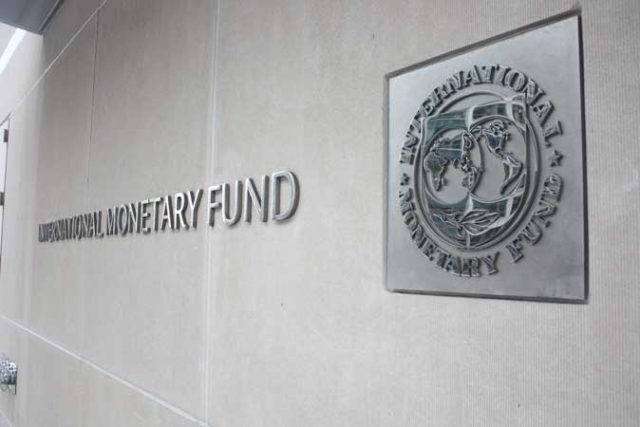
IMF board approves $18.5 bln flexible credit line for Chile

The International Monetary Fund’s (IMF) executive board approved a flexible credit line of around $18.5 billion for Chile to give the world’s leading copper miner greater flexibility to confront risks from commodities price shocks to financial tightening.

Chile is one of Latin America’s most stable democracies but has nonetheless been hit by a depreciating currency and an unexpectedly weak economy. Read full story

Chilean authorities intend to treat the credit line as “precautionary” and plan to exit the arrangement when conditions allow, IMF Managing Director Kristalina Georgieva said in a statement.

The IMF’s Chile mission chief, Ana Corbacho, told the press in a call after the announcement that there were no limits nor time restraints to accessing the full amount of the facility, which would be available in a scenario of economic shock.

“Again, to emphasize…authorities do not intend to draw (on the line),” Ms. Corbacho said.

It will also increase the international liquidity availability of Chile’s central bank by more than 40%, the bank said in a statement following the announcement. The finance ministry did not immediately respond to a request for comment.

The credit line is not subject to any additional conditions from the IMF, according to the central bank.

Chile also told the IMF it would cancel an existing short-term liquidity line of around $3.3 billion, the fund said, meaning on a net basis the central bank gained access to some $15 billion after the announcements.

Chile qualified for the flexible credit line due to its “strong economic fundamentals and institutional policy frameworks” as well as its commitment to maintaining strong policies in the future, the IMF said.

However, Chile is now “facing a marked increase in global risks,” Ms. Georgieva said.

“This announcement is a welcome development that will provide the authorities with near-term breathing room and cheap insurance in a period of heightened domestic uncertainty and volatility,” said Santiago Tellez, economist at Goldman Sachs, in a late Monday note.

Tellez cited the central bank’s ongoing foreign exchange intervention program, which has partly depleted its international reserves, as well as “a large current account deficit, and elevated political and policy uncertainty.”

The credit line is aimed at providing coverage against risks “from a possible abrupt global slowdown; commodity price shocks; spillovers from Russia’s war in Ukraine; or a sharp tightening of global financial conditions,” the IMF said. – Reuters

Pakistan floods cost at least $10 billion, planning minister says

PUNJAB EMERGENCY SERVICE DEPARTMENT/FACEBOOK

 – Early estimates put the damage from Pakistan’s recent deadly floods at more than $10 billion, its planning minister said on Monday, adding the world has an obligation to help the South Asian nation cope with the effects of man-made climate change.

Unprecedented flash floods caused by historic monsoon rains have washed away roads, crops, infrastructure and bridges, killing at least 1,000 people in recent weeks and affecting more than 33 million, over 15% of the country’s 220 million population. Read full story

The climate change minister has called the situation a “climate-induced humanitarian disaster of epic proportions.” Read full story

“I think it is going to be huge. So far, (a) very early, preliminary estimate is that it is big, it is higher than $10 billion,” Ahsan Iqbal told Reuters in an interview.

“So far we have lost 1,000 human lives. There is damage to almost nearly one million houses,” Iqbal said at his office.

“People have actually lost their complete livelihood.”

Iqbal rated the recent floods worst than those that hit Pakistan in 2010, for which United Nations (UN) had issued its largest ever disaster appeal.

The minister said it might take five years to rebuild and rehabilitate the nation, while in the near term it will be confronted with acute food shortages.

To mitigate food shortfalls, Finance Minister Miftah Ismail said the country could consider importing vegetables from arch-rival India. Read full story

The two neighboring countries have not had any trade for a long time.

“We can consider importing vegetables from India,” Ismail told local Geo News TV, adding other possible sources of food imports included Turkey and Iran.

Food prices have already shot up due to flooded crops and impassable roads.

India Prime Minister Narendra Modi said he was saddened by the devastation caused by the floods.


CLIMATE CHANGE VICTIM

Social media users posted videos showing stranded people and whole families washed away by floodwater. Reuters was unable to independently verify the footage.

Southern, southwestern and northern Pakistan have been the hardest hit by the floods, which have swept large swaths of farmland and stored crops, also isolating the regions from rest of the country for the last several days.

Tens of thousands of families have left their homes for safer places, moved in with their relatives, or to state-run camps, while others have been spending nights in the open, waiting for help including tents, food and medicine.

Pakistan has appealed for international help and some countries have already sent in supplies and rescue teams.

The nation’s foreign minister told Reuters on Sunday he hoped financial institutions such as the International Monetary Fund would provide financial aid, taking the economic cost of the floods into account.

However, Iqbal said any formal requests for financial help would need to wait until the scale of the damage was known, something Pakistan was now evaluating with partners, including the World Bank and the Asian Development Bank.

The Chinese government said on Monday it will provide additional humanitarian aid, including $300,000 in cash and 25,000 tents. China had already sent 4,000 tents, 50,000 blankets and 50,000 waterproof tarps to Pakistan.

China’s President Xi Jinping also called his Pakistani counterpart Pervez Musharraf to express his condolences on the severe flooding, according to Chinese state media.

The Canadian government on Monday announced $5 million in funding for humanitarian assistance to Pakistan to deal with the flooding.

Iqbal also said the world owed Pakistan, which was a victim of climate change caused by the “irresponsible development of the developed world.”

“Our carbon footprint is lowest in the world,” he said. “The international community has a responsibility to help us, upgrade our infrastructure, to make our infrastructure more climate resilient, so that we don’t have such losses every three, four, five years,” he said.

“Those areas which used to receive rainfall aren’t receiving rainfall and those areas which used to receive very mild rains are receiving very heavy rainfall,” he added.

Iqbal said 45% of cotton crops had been washed away with early wheat sowing in southern Pakistan also affected, as large swaths of land remained inundated with flood water, and severe damage to rice fields as well as vegetable and fruit crops.

Pakistan’s finance ministry in its latest economic outlook update has warned of the impact on critical seasonal crops, particularly cotton, which is key for Pakistan’s textile sector that makes up more than 60% of the country’s exports.

Analysts say the impact could be devastating for the country, which was already in the midst of an economic crisis, faced with high inflation, a depreciating currency and a current account deficit.

The IMF on Monday approved long awaited over $1.1 bln in bailout funds to resume a program that had been stalled since early this year. Read full storyReuters

Elon Musk subpoenas Twitter whistleblower, seeking details on spam, security

DANIEL OBERHAUS-FLICKER

 – Elon Musk has subpoenaed a Twitter Inc. whistleblower, seeking documents and communications on the company’s spam and alleged security vulnerabilities as the billionaire battles to end his agreement to buy Twitter for $44 billion, according to a court filing on Monday.

Musk sought information from whistleblower Peiter Zatko mostly about the way Twitter measures spam accounts. Musk has said he is walking away from the deal for the company because Twitter misled him and regulators about the true number of spam or bot accounts on the microblogging platform.

But Musk also sought documents and communications about alleged attempts to hide security weaknesses, compliance with a 2011 Federal Trade Commission agreement and “Twitter’s engagement in any unlawful activity.”

A spokesman for Twitter declined to comment.

A famed hacker widely known as “Mudge,” Mr. Zatko ended a stint as the head of Twitter’s security earlier this year, and said in his whistleblower complaint that became public last week that the company falsely claimed it had a solid security plan. Read full story

The information that Mr. Musk obtains from Mr. Zatko might lay the groundwork for the Tesla Inc. chief executive to introduce new fraud claims in his legal battle with Twitter, according to Ann Lipton, a professor at Tulane University Law School.

However, she said it was unclear if the judge in the Twitter litigation would allow Mr. Musk to introduce those claims given the tight schedule for the case and because Mr. Musk waived due diligence before signing the deal contract.

A Twitter attorney said at a court hearing last week that Mr. Musk’s focus on spam as a way to end his agreement to buy the company was “legally irrelevant” because Twitter always said its spam counts were only estimates, not binding representations.

The two sides have sued each other and are heading to a five-day trial on Oct. 17. Musk wants out of the deal and Twitter is asking Chancellor Kathaleen McCormick of the Delaware Court of Chancery to order him to buy the company for the agreed $54.20 per share.

Twitter’s stock ended down 1% at $40.04 on Monday in New York. – Reuters

Zelenskiy urges Russians to ‘go home’ as Ukraine presses offensive in south

Ukrainian President Volodymyr Zelenskiy — REUTERS

 – Ukrainian President Volodymyr Zelenskiy has urged Russian troops to flee from an offensive launched by his forces near the southern city of Kherson saying Ukraine’s military were taking back their territory, though Russia said the assault had failed.

Ukraine’s assault comes after weeks of a stalemate in a war that has killed thousands, displaced millions, destroyed cities and caused a global energy and food crisis amid unprecedented economic sanctions.

It has also fueled worries of a radiation disaster being triggered by shelling near the south Ukraine Zaporizhzhia nuclear plant.

Mr. Zelenskiy, in his nightly address late on Monday, vowed that Ukrainian troops would chase the Russian army “to the border”.

“If they want to survive – it’s time for the Russian military to run away. Go home,” he said.

“Ukraine is taking back its own,” Mr. Zelenskiy said.

Oleksiy Arestovych, a senior adviser to Mr. Zelenskiy, said Russian defenses had been “broken through in a few hours”.

Ukrainian forces were shelling ferries that Russia was using to supply a pocket of territory on the west bank of the Dnipro river in the Kherson region, he added.

Russia’s defense ministry said Ukrainian troops had attempted an offensive in the Mykolaiv and Kherson regions but sustained significant casualties, RIA news agency reported.

The “enemy’s offensive attempt failed miserably”, it said.

But a Ukrainian barrage of rockets left the Russian-occupied town of Nova Kakhovka without water or power, officials at the Russian-appointed authority told RIA news agency.

Reuters could not verify the battlefield reports.

Russian shelling of the port city of Mykolaiv, which has remained in Ukrainian hands despite repeated Russian bombardments, killed at least two people, wounded some 24 and wiped out homes, city officials and witnesses said on Monday.

A Reuters correspondent reported a strike hit a family home directly next to a school, killing one woman. Read full story

The owner of the property, Olexandr Shulga, said he had lived there his entire life and that his wife died when she was buried in debris. “It hit and the shockwave came. It destroyed everything,” he said.

Russia invaded Ukraine on Feb. 24 to wage what it says is a “special military operation” to rid Ukraine of nationalists and protect Russian-speaking communities. Ukraine and its allies describe it as an unprovoked war of aggression.

The conflict, the biggest attack on a European state since 1945, has largely settled into a war of attrition, mainly in the south and east, marked by artillery bombardments and air strikes. Russia captured swathes of the south early on.

Ukraine’s southern command said its troops had launched offensive actions in several directions, including in the Kherson region north of the Crimean peninsula that Russia annexed from Ukraine in 2014.

Ukraine had struck more than 10 sites in the past week and “unquestionably weakened the enemy”, according to a spokeswoman who declined to give details of the offensive, saying Russian forces in the south remained “quite powerful”.


IAEA NUCLEAR MISSION

The Zaporizhzhia nuclear power plant in Ukraine’s south, captured by Russian troops in March but still manned by Ukrainian staff, has been a hotspot in the conflict with both sides trading blame for shelling in the vicinity.

A mission from the International Atomic Energy Agency (IAEA) is headed to the facility, Europe’s largest nuclear plant, and is due later this week to inspect and assess any damage.

Led by IAEA chief Rafael Grossi, the mission will evaluate working conditions and check safety and security systems, the Vienna-based organization said.

It will also “perform urgent safeguards activities”, a reference to keeping track of nuclear material.

A top Russian diplomat said Moscow hoped the mission would dispel misconceptions about the plant’s allegedly poor state. Read full story

The Kremlin said the IAEA mission was “necessary” and urged the international community to pressure Ukraine to reduce military tensions at the plant. The mission must do its work in a politically neutral manner, Russia’s foreign ministry said.

The United Nations, United States and Ukraine have called for the withdrawal of military equipment and personnel from the complex to ensure it is not a target. Read full story

“We continue to believe that a controlled shutdown of the Zaporizhzhia nuclear reactors would be the safest and least risky option in the near term,” White House National Security Council spokesperson John Kirby said.

But the Kremlin again ruled out vacating the site. – Reuters

Germany’s energy bill spirals as Uniper seeks more cash

 – Uniper requested more financial help from the German government on Monday, raising the bill for bailing out the utility group to an eye-watering 19 billion euros ($19 billion), as soaring gas and power prices burn up its cash reserves.

Dramatic price increases in recent days have exacerbated the situation for Germany’s largest importer of Russian gas, prompting it to seek more cash even as the details of last month’s bailout deal with Germany’s government have yet to be hammered out.

Uniper, majority-owned by Finland’s Fortum, said it had already fully drawn down a 9 billion-euro credit line from state lender KfW and requested a further 4 billion euros to reflect the current environment.

Further highlighting the pressure on the firm, leading labor representatives, in a letter to German Economy Minister Robert Habeck dated Aug. 26 and seen by Reuters, asked the government to seek a majority holding in the company.

As part of the rescue deal, Germany has agreed to take a 30% stake.

Uniper shares closed 3% higher while those of Fortum, which earlier on Monday also said it was in talks with the Finnish state on how to safeguard its liquidity needs, ended the day up 5.9%. Read full story

Uniper’s announcement comes less than two days ahead of planned maintenance work that will suspend Russian gas flows to Europe via its main supply pipeline between Aug. 31 and Sept. 2.

The highest-profile corporate victim of Europe’s energy crisis so far, Uniper has been pummeled by cuts in gas flows from Russia, its main supplier, forcing it to cover the shortfall at much higher prices elsewhere.

This is causing cash losses of “well over” 100 million euros a day, Chief Executive Klaus-Dieter Maubach said.

In addition, Uniper has been squeezed by higher security payments to safeguard power sales in light of a sixfold increase in gas prices and a more recent doubling of electricity costs.

“We are working at full speed with the German government on a permanent solution to this emergency, otherwise Uniper will no longer be able to fulfil its system-critical function for Germany and Europe,” Maubach added.

Sources told Reuters last week that KfW was prepared to provide Uniper, which reported a 12.3 billion-euro loss in the first half of 2022, with more credit than previously agreed in last month’s 15 billion-euro bailout deal. Read full story Reuters

On the way towards a financially inclusive country

BDONB SLG Account Officers joined the Brigada Eskwela Regional kick-off in Region 12 at Malaya Elementary School, in Banga, South Cotabato.

Financial inclusion has been one of the Philippine government’s biggest goals towards the development of the country. Access to financial services is hugely important for the welfare and stability of every household and business. The Bangko Sentral ng Pilipinas (BSP) pointed out evidence that indicate that even access to the most basic financial services such as savings, payments and credit make a positive difference in people’s lives.

“Rather than being an end in itself, financial inclusion is a means to achieve broader aspirations. Its goal is not merely providing universal access to financial services, but ensuring that these services truly enhance the financial health of their users,” the BSP noted in the National Strategy for Financial Inclusion 2022-2028.

“Financial health is the ability of an individual to meet financial obligations, absorb and recover from financial shocks, reach long-term goals, and develop a sense of control of their finances. For enterprises, access to appropriate financing and financial services can facilitate business growth and livelihood opportunities for many Filipinos.”

In pursuit of this goal, the Philippine financial system as a whole has made great strides in reaching out to unserved and underserved areas and communities in the country to promote inclusion. This has been particularly evident in the wake of the COVID-19 pandemic, which saw the meteoric rise in the use of digital financial platforms and e-wallets.

SLG Account Officer heading to Blakol Elementary School.

Yet, the mission is far from over. According to the BSP’s Financial Inclusion Dashboard as of the third quarter of 2021, as much as 15.5% of the country’s cities and municipalities still do not have a banking presence, while an estimated 47% of adults do not have an account at a formal financial institution.

The challenge is compounded by many Filipinos’ misconceptions about formal financial institutions. BDO Network Bank (BDONB), the rural bank subsidiary of BDO Unibank, the largest bank in the Philippines in terms of assets, shared that many Filipinos believe that banks are completely inaccessible in remote provinces, or do not have suitable products for those markets.

SLG Account Officers of Region 5 riding a motorboat to the next island destination with underserved schools.

“The common misconceptions that hinder Filipinos from accessing the formal financial system are the same reasons they turn to informal lending sources,” the lender said.

“BDO Network Bank now has over 400 branches, mostly located in the countryside and sales teams that reach out to clients, primarily serving the banking needs of the unserved and underserved markets in rural areas.”

To serve those needs, BDONB offers loan products like salary loans or their Kabuhayan/MSME loans. Salary loans are personal loans specifically designed for government employees who may use the loan proceeds for various purposes like the purchase of real estate; house construction or improvement; education; capital for small business; acquisition of laptop or vehicles, among others. The payment for this is through salary deduction.

BDONB Sales Teams heading to Poh Elementary School in Baganga.

Meanwhile, the Kabuhayan/MSME Loans are business loans for MSMEs designed to help them grow and expand their businesses. Kabuhayan/MSME loans can be used for working capital purposes or fixed asset acquisition. Documentary requirements for Kabuhayan/MSME loan are even made simpler compared to traditional commercial loans.

The common belief that obtaining such loans is a tedious process that requires strict legal, documentary and collateral requirements is also untrue. BDONB said that documentary and collateral requirements for loans are prescribed primarily by the banking regulator, in this case the BSP, but these have been gradually relaxed over time to help improve financial inclusion.

“BDONB salary loans and MSME loans require minimal and uncomplicated documents (e.g., the employee’s pay slip for salary loans, or the firm’s proof of sales for MSME loans) and can be availed of on an unsecured basis,” the bank said.

Once secured, Filipinos also need not fear high interest rates for such loans. ”Banks actually charge lower interest rates than what alternative sources can offer. Institutions like pawnshops, finance companies, fintechs and informal money lenders on average charge higher effective interest rates on loans compared to banks,” BDONB said.

What’s more, despite rising interest rates, BDONB has maintained the interest rates on its salary loans and Kabuhayan/MSME loans to keep them affordable to their target markets.

“Loans for the underserved are less sensitive to rates; access is more important,” the bank added.

Through such efforts does BDONB aim to bring the full range of financial services to the country’s unserved and underserved communities. And it would seem that many Filipinos welcome the efforts. In terms of growth rates, the MSME loans and salary loans in particular have posted the highest expansion rates in 2021, growing by 34.5% and 21.5% respectively.

As with the sudden widespread adoption of digital financial platforms, it is only a matter of time until a tipping point is reached with regards to Filipinos’ misgivings about the credit from the formal financial system. Perhaps in a few more years, every Filipino can enjoy the multitude of opportunities universal access to financial services can provide.


Spotlight is BusinessWorld’s sponsored section that allows advertisers to amplify their brand and connect with BusinessWorld’s audience by enabling them to publish their stories directly on the BusinessWorld Web site. For more information, send an email to online@bworldonline.com.

Join us on Viber to get more updates from BusinessWorld: https://bit.ly/3hv6bLA.

ADVERTISEMENT
ADVERTISEMENT