Home Blog Page 596

ACTAI Summit spotlights artificial intelligence, technology and innovation in Palawan

The ACTAI Asia Pacific Summit recently concluded at Pangulasian Island in El Nido, Palawan, bringing together venture capitalists, tech entrepreneurs, and conservationists to discuss purpose-driven innovation and environmental sustainability.

Directed by Maria Serafica, a Filipino member of the ACTAI Global community, this was the second time the international group has staged its summit in the Philippines.

One of the highlights was an artificial intelligence startup competition co-organized with Ayala Land, which aimed to identify and support ventures using technology to address challenges in sustainability, healthcare, and education.

The standout winner of the AI competition was Perle AI (formerly Kiva AI), a leader in delivering innovative AI-driven solutions that optimize operations, enhance decision-making, and accelerate business growth. By harnessing cutting-edge technologies, Perle AI helps organizations across industries unlock the full potential of their data, streamline workflows, and tackle complex challenges. During the competition, Perle AI distinguished itself by showcasing its ability to tailor solutions that deliver scalable, efficient, and impactful results that empower businesses to stay ahead in today’s fast-paced, data-driven world.

“We are incredibly honored to be recognized by ACTAI Global,” said Ahmed Rashad, founder and CEO of Perle AI. “This event is more than just a competition; it’s a convergence of brilliant minds coming together to create meaningful change. Being part of this network is a game-changer for us, and we’re eager to leverage AI to drive real-world impact on sustainability and economic growth.”

The AI competition provided a platform for entrepreneurs to showcase their groundbreaking ideas, offering them resources, mentorship, and opportunities to scale their innovations. Judges of the competition included Lars Rasmussen, inventor of Google Maps; Bill Tai, co-founder of ACTAI Global; Patrick Chang of Dispersion Capital; and members of the Ayala family, Jaime Alfonso Zobel de Ayala and Mariana Zobel de Ayala.

By bringing together promising startups with industry leaders and venture capitalists, ACTAI Global seeks to accelerate the development of transformative technologies and empower the next generation of tech innovators.

Bill Tai underscored the importance of leveraging technology to tackle global issues. “The future of innovation is not just about creating new technologies — it’s about using those technologies to make a positive difference,” Mr. Tai stated.

“Innovation is at its best when it serves a purpose beyond business success. At ACTAI, we’re not just fostering tech entrepreneurship; we’re championing visionaries who are committed to solving humanity’s biggest challenges.”

He continued, “Perle AI exemplifies the kind of companies we are excited to support — innovators who are using AI not only to drive business growth but to solve some of the world’s most urgent problems. I am thrilled to see how Perle AI and other participants in the competition will continue to push the boundaries of what’s possible.”

ACTAI Global believes in the transformative potential of innovation to create social, environmental, and economic change. By uniting experts across industries, ACTAI fosters collaboration to address global challenges. Its mission is to support entrepreneurs who leverage cutting-edge technologies, including AI, to help provide scalable solutions that improve lives, protect the planet, and build a more sustainable, equitable future.

Another mission of ACTAI Global is ocean conservation, and the gathering included a distinguished panel to discuss ways to help with coral restoration in El Nido and to establish marine protected areas surrounding the Philippines.

The gathering drew participants from more than a dozen countries, including investors, innovators, and advocates. Sponsors included Bank of the Philippine Islands and GCash.


SparkUp is BusinessWorld’s multimedia brand created to inform, inspire, and empower the Philippine startups; micro, small and medium enterprises (MSMEs); and future business leaders. This section will be published every other Monday. For pitches and releases about startups, e-mail to bmbeltran@bworldonline.com (cc: abconoza@bworldonline.com). Materials sent become BW property.

Global Youth Summit 2025 empowers next-generation leaders

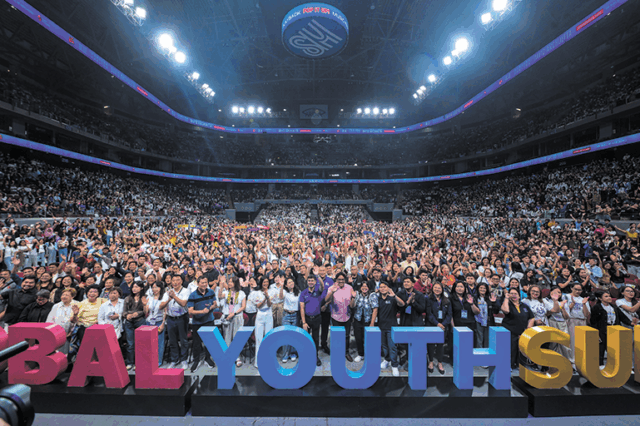
Youth from across the country come together at the Global Youth Summit 2025 in MOA Arena, united in their mission to build stronger communities and shape a more inclusive, sustainable future for the next generation.

The Global Youth Summit (GYS) 2025 brought together more than 33,600 youth changemakers from schools, organizations, and communities nationwide — both on-ground and online — at the SM Mall of Asia Arena on Aug. 3.

The event, organized by Global Peace Foundation (GPF) Philippines and SM Cares, the corporate social responsibility arm of SM Supermalls, served as a dynamic platform for young student leaders, innovators, and advocates to collaborate, share ideas, and take action toward advancing the United Nations Sustainable Development Goals (UN SDGs).

The Manila summit featured inspiring keynote speeches and empowering sessions focused on youth empowerment, sustainability, innovation, and leadership. Among the distinguished speakers were Jessica Sy, Winwyn Marquez, Teacher Georcelle, Edward Barber, and Jessica Soho, who shared their insights and experiences on leadership, creativity, and social impact.

The program also highlighted outstanding performances from Matthew Ifield, NU Dance Company, Over October, and Hori7on, energizing the crowd and celebrating the passion and talent of Filipino youth.

“The youth are not just the leaders of tomorrow — they are the force for change today. Through the Global Youth Summit, we aim to give them the tools, inspiration, and community to turn their vision into reality,” said Royston Cabunag, SM Supermalls’ assistant vice-president and SM Cares program director for Children and Youth.

Leonard Faustino, GPF Philippines executive director, added, “Collaboration across sectors is key to unlocking the potential of the next generation. The Global Youth Summit is proof of what can happen when we come together for a shared purpose.”

The Global Youth Summit at MOA Arena serves as the launchpad for 16 provincial legs across the country. Together with the main event in Manila, these 17 mall locations collectively represent the 17 UN SDGs.

The rollout continued on Aug. 8, with regional events held at SM Seaside City Cebu, SM City Iloilo, SM City Bacolod, and SM City Puerto Princesa. On Aug. 22, the initiative unfolded at SM City Bataan, SM Center Pulilan, SM Center Dagupan, and SM City San Lazaro. The third wave will follow on Aug. 29, with activities at SM CDO Downtown, SM City Butuan, SM Lanang, and SM City General Santos. Finally, the series concludes on Sept. 5, with events at SM City Bacoor, SM City San Pablo, SM City Sto. Tomas, and SM Southmall.

Each leg will feature youth-led solution pitches and partner activations designed to seed community projects aligned with priority SDGs. These provincial events will continue the momentum, empowering more young Filipinos in their own communities to take action on local and global challenges.


SparkUp is BusinessWorld’s multimedia brand created to inform, inspire, and empower the Philippine startups; micro, small and medium enterprises (MSMEs); and future business leaders. This section will be published every other Monday. For pitches and releases about startups, e-mail to bmbeltran@bworldonline.com (cc: abconoza@bworldonline.com). Materials sent become BW property.

Utah Valley University seals educational alliance with Benilde

Aimed at promoting educational development and cultural exchange, Utah Valley University (UVU) established a strategic partnership with the De La Salle-College of Saint Benilde (DLS-CSB), which was recently forged by the signing of a Memorandum of Understanding (MoU) between the two schools at Vatel Restaurant Manila.

UVU, the largest public university in the American state of Utah, is known for its dual-mission model. This merges the rigorous academic programs of a top-grade university with the vocational training opportunities of a community college.

The university has been designated as a United Nations Educational, Scientific and Cultural Organization (UNESCO) Chair on Artificial Intelligence (AI) and Environmental Stewardship for Sustainable Futures.

The US-based institution was represented by Dr. Carl Canlas, an assistant professor of Information Systems and an advocate of ethical AI.

“We all want what’s best for our students. We want them to have meaningful careers and at the same time be at the top of the industry,” Mr. Canlas noted. “Right now, the buzzword is artificial intelligence and hopefully, we can provide the resources that can make our students successful.”

UVU Chief International Officer Dr. Baldomero Lago, who attended the event online, suggested ideas for the initiative involving the learners, faculty members, and experts in the field.

“We could consider some research collaborations,” Dr. Lago shared. “It could be a virtual exchange — synchronous or asynchronous, based on time — where the faculty could present. We could even have round-table discussions.”

On the other hand, De La Salle-College of Saint Benilde Chancellor Benhur Ong, Vice-Chancellor for Academics Angelo Marco Lacson, and School of Management and Information Technology (SMIT) Dean Joana Diñoso represented the local counterpart.

“This agreement stands as a testament to our mutual commitment to foster international understanding, enrich the educational environment of our institutions, and expand individual learning opportunities through meaningful academic and cultural exchange,” Mr. Ong stated. “This partnership aligns deeply with Benilde’s vision of future-proof and socially responsible education.”


SparkUp is BusinessWorld’s multimedia brand created to inform, inspire, and empower the Philippine startups; micro, small and medium enterprises (MSMEs); and future business leaders. This section will be published every other Monday. For pitches and releases about startups, e-mail to bmbeltran@bworldonline.com (cc: abconoza@bworldonline.com). Materials sent become BW property.
Meralco gets ERC go-ahead for 15-year coal supply contract

PHILIPPINE STAR/ MICHAEL VARCAS

THE Energy Regulatory Commission (ERC) has allowed Manila Electric Co. (Meralco) to procure 100 megawatts (MW) of baseload power supply from the coal-fired power plant of a unit of Aboitiz Power Corp.

In a decision promulgated on Aug. 22, the ERC granted interim relief to Meralco and GNPower Dinginin Ltd. Co. (GNPD) for the implementation of their power supply agreement (PSA) at an annual capacity rate of P17,228.88. This translates to P1.9668 per kilowatt-hour, excluding other charges such as fuel costs.

The ERC said the proposed rates are lower than the previously approved PSA rates for the same power plant.

“The Commission also finds that the proposed rate in the subject PSA is lowered compared to the rates of other Meralco suppliers utilizing coal and natural gas as fuel,” the regulator said.

GNPD owns and operates a 1,336-MW coal-fired power plant in Mariveles, Bataan.

The power supplier emerged as one of the winning bidders in the competitive selection process (CSP) conducted by Meralco in August last year, offering 100 MW out of the required contract capacity of 600 MW.

The PSA will cover Meralco’s future baseload requirements over a 15-year period starting Aug. 26.

The ERC directed GNPD to provide replacement power “at all times, even during the planned or forced outage of the plant.”

The companies must file a motion with the ERC and specify the grounds for termination, in accordance with the PSA and CSP Guidelines, if they wish to end the deal.

“Any increase in the contracted capacity under the applicants’ PSA shall require prior approval from the Commission. This is to ensure that Meralco supplies its electricity in the least-cost manner to its captive market,” the ERC said.

Meralco’s controlling stakeholder, Beacon Electric Asset Holdings, Inc., is partly owned by PLDT Inc.

Hastings Holdings, Inc., a unit of PLDT Beneficial Trust Fund subsidiary MediaQuest Holdings, Inc., has an interest in BusinessWorld through the Philippine Star Group, which it controls. — Sheldeen Joy Talavera

This or that?

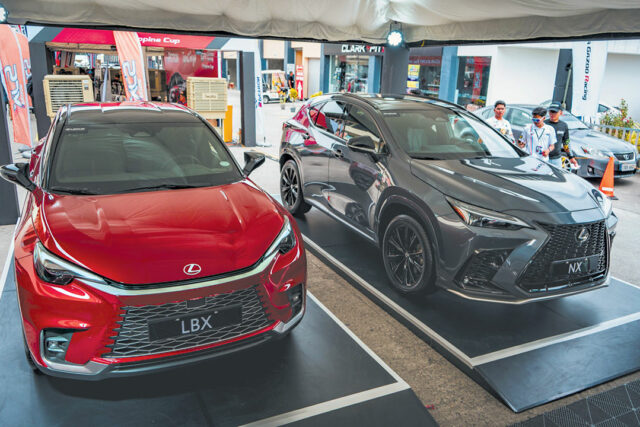
Electrified now. Lexus is known for its hybrid electric vehicles (HEVs), even as it already proffers a full-electric option, the RZ. — PHOTO BY KAP MACEDA AGUILA

Choosing a car is no longer as straightforward as it used to be

I GET THIS question a lot from people intending to buy a car: Which is better, this model or that? Recently, the questions have focused whether a car browser is best served by an internal combustion engine (ICE) vehicle or an electrified vehicle (xEV). Sometimes it gets drilled down even more. Is a hybrid electric vehicle (HEV) better than a plug-in hybrid electric vehicle (PHEV) or a battery electric vehicle (BEV)?

Choosing a car is no longer as straightforward as it used to be. The adage of “all else being equal” no longer applies due to the proliferation of new drivetrains. Before, the default was ICE (fed by gas or diesel) and we chose from all-wheel drive, four-wheel drive or front-wheel drive.

I was taught that answering a question with another question is not polite. In this case, though, it cannot be helped. I tend to reply to the above questions thus: Is it going to be your daily drive? What is your daily drive like?

It is hard to give a non-contextualized answer, really, at the risk of sounding presumptuous, arrogant, or even ignorant. People buy a car that fits their needs. That is a universal truth, at least as far as primary cars are concerned. Additional cars can enjoy the liberty of being chosen as a trophy car, a dream car, a hobby car or some more emotionally motivated purchase other than for sheer reason or purpose. And while external factors — environmental considerations, mainly — have supposedly sounded the death knell on ICE and fossil fuels, these have resulted to the advent of alternative energy mobility. And by the way, I think news of the demise of the ICE is greatly exaggerated.

ELECTRIFICATION FOR THE ENVIRONMENT
These days, mobility solutions are diversifying to align with rising environmental demands. Prior to the introduction of new energy technologies, the auto industry’s response to calls for more environmentally friendly motoring was to improve the fuel efficiency and tailpipe emissions of ICE vehicles. Due to numerous and stricter government policies, automakers were forced to explore other ways to meet tightening regulations. Enter the electrified vehicle.

Toyota chose very early on to actively heed the dangers of rising greenhouse gas emissions. In the early nineties, it launched a program called “G21” that focused on building a car for the 21st century that would achieve twice the fuel efficiency of conventional cars at the time. The Prius HEV was the first outcome of their efforts.

But even then, as Toyota was devoting significant resources to the development of HEV technology, the brand’s leadership already recognized that the road toward environmentally friendly motoring was not to be found in a single solution. A multi-path road map that included more fuel-efficient ICE models, PHEV, BEV, and fuel-cell vehicles (FCV) was already laid out. In fact, I recall that Toyota made several of its HEV patents available for use by other car makers to encourage scale. Toyota had also initially ventured into the development and manufacturing of EVs together with Tesla during its nascent years — via the RAV4 EV. In the end, this didn’t work out. Toyota even joined efforts to develop a hydrogen society with the end-goal of using water to fuel cars.

As a result of its jump-start in the ’90s, Toyota has since sold over 20 million electrified vehicles, mainly its HEV models. Though not the most recent number, Toyota Motor Philippines (TMP) reports in its website that in over two decades since the launch of the Prius, Toyota has reduced CO2 emissions by 160 million tons globally. It also reports that, over the same period, it has saved 65 million kiloliters of gasoline — enough to power 10 million homes in one year or nearly two million trips to the moon and back.

This is even as other car makers are only just starting in their own paths to carbon neutrality. It is really encouraging to hear other auto manufacturers embrace the multi-pathway approach to future mobility because, in the end, the introduction of xEVs is not really the goal. The ultimate objective is to help win the battle for carbon neutrality through any technology possible.

I seem to have digressed, though. So, which is better?

I cannot provide a wholly scientific and data-driven answer, but I am guided by current realities on Philippine roads and my practical experience as a car owner. When auto firms introduce a vehicle, they are obliged to provide potential buyers not only with the latest technology models and ensure that these models are convenient to operate, easy to maintain, and are fully supported in case of repair. So it is not enough that we choose cars based on design, brand value, aggressive discounts or the bells and whistles that come with it — most especially if these are our daily (and only) drivers.

WHEN TO CHOOSE ELECTRIC
If you drive fixed routes based on relatively set schedules, on known terrain and under predictable driving conditions, you are likely a candidate for xEVs. The choice of HEV, PHEV or BEV depends on your charging circumstances. Do you have your own garage where you can use a home charger? Alternatively, do you live near a commercial charging station, or can you charge while you are at the office? If your answer is yes to any of the three options, then you can consider a PHEV or BEV. It helps you contribute to the achievement of carbon neutrality (arguably), reduce operating costs, and minimize maintenance expenses (also arguably). Having strong after-sales support is essential to maximize the use of your car and assure a better resale value.

HEVs are a highly effective choice for those who cannot be assured of easy-charging solutions. An HEV features self-charging technology, so you are not shackled to charging stations and you are not stressed about range. This is true, too, if your routes are more varied, if your mobility needs require more flexibility, if your driving conditions and terrain are less predictable, or if you travel relatively long distances of say 80 kilometers to 100 kilometers a day, the usual range for PHEVs with a fully charged battery.

BEVs usually claim mileage of 400 kilometers to 600 kilometers on a full charge. Yes, that brings a degree of confidence that you can get to your destinations even if you missed being able to recharge your vehicle to full. But just like mobile phones, we rest easier if we carry a full charge — even if we know that a full charge is more than enough to carry us through our normal day. In fact, we always carry our charger — or a power bank — so we are ever ready to juice up, if at all. We never know if or when we might get one phone call too many or watch one video too many, causing our battery to drain faster than usual. Similarly, if charging stations are not yet as readily available, we will fret if we get caught in heavy rain or if traffic grinds to a standstill. Surely our “what-if” scenarios might be getting ahead of us, but this is human nature. I imagine we can manage our range anxieties better as we get more used to using BEVs.

Also, cars are supposed to be available to use on-demand, as and when and where needed. In case of emergencies — a sudden need to head out on a date, an impulsive out-of-town trip with the kids or some such unplanned travel — it would be the worst thing that your car is still charging or needs charging. If you have more than one car, this should not be a problem. Otherwise, it could be a very real consideration.

So, one model or technology is not really better or worse. It either meets your mobility circumstances or not; is relevant to your lifestyle or not. We are and always will be the product of the choices we make, so we must choose wisely.

International fashion brand Pomelo. opens 1st store in the PHL

BRONTË H. LACSAMANA

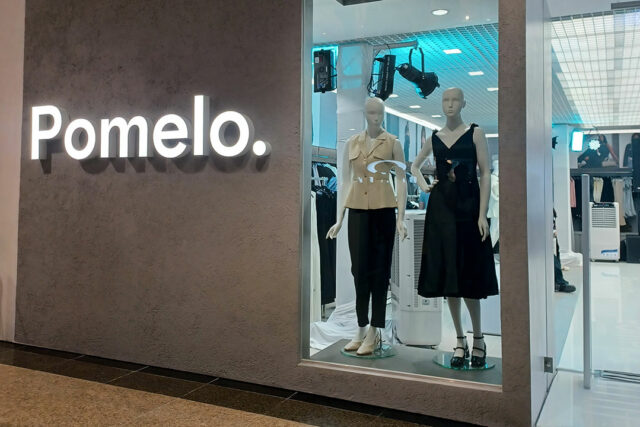
POPULAR fashion brand Pomelo. has brought its stylish pieces for women to Manila, opening its first physical store in the Philippines at Glorietta, Makati, last Wednesday.

“We started selling online in the Philippines maybe seven years ago. We were blown away by how popular the brand was. Honestly, we didn’t know that much about the customer,” said David Jou, chief executive officer and co-founder of Pomelo., at the store’s launch.

“This time, we worked with our partners SSI, who researched the market and what the fashion customer wants. We found a perfect fit with what the ‘Filipino Pomelo. Girl’ is looking for,” he added.

Known for weekend fits, corporate attire, and even beach and gym clothing, Pomelo. focuses on women’s fashion for every occasion. It was founded in 2013 in Bangkok, Thailand.

The name, which is indeed a reference to the fruit, reflects the brand’s identity. “Basically, we wanted to bring something fresh, something new, something that represents the region. We thought, Pomelo. is a perfect name,” said Mr. Jou.

He explained that feedback sessions with the online Pomelo. shopping community was what motivated them to transform from an online omnichannel fashion platform to spread physical stores across Southeast Asia.

“One question was, what’s one thing you want for Pomelo.? Every single one said, ‘please open up a physical retail store!’” he said. “That was back in 2018. We now have stores in Thailand, Singapore, Malaysia, Indonesia, and now, the Philippines.”

Two main collections can be found at Pomelo.: Sophisticated Urban, for “chic, city-ready modern women,” and Velvet Horizon, offering “feminine rustic charm with floral prints and soft color palettes.”

There’s also a wide array of collections for other occasions, from resorts wear to sportswear. One corner of the store is dedicated to an exclusive Pomelo. x Hello Kitty collaboration.

Finally, the store houses VERSE, an independent brand with office-ready pieces that prioritize elegance.

The space spans 270 square meters and is located on the ground floor of Glorietta 1.

“It’s a really nice mall because it’s in the middle of Makati, the business district, and it’s also a transit hub,” Mr. Jou told BusinessWorld. “We felt like we really had to be in the center of the city, so we selected this place.”

He added that the next branch will be in another central location: Robinsons Place Manila in Malate, Manila.

As for what more to expect from these physical spaces, Mr. Jou teased that the “Come Try Buy” experience will be launched in the Philippines soon. It allows Pomelo. app users to select what they want to try in the store ahead of time.

“You can build outfits and create looks online, then everything you want to try on will be waiting for you in the fitting room,” he explained. “That’s coming soon. It will be one of the key experiences.”

Pomelo. is available on Zalora and soon on Shopee. They are also available through their app and website. — Brontë H. Lacsamana

SEC flags 5 more crypto platforms lacking registration

STOCK PHOTO | Image by Diana.Grytsku from Freepik

THE Securities and Exchange Commission (SEC) warned the public in an Aug. 20 advisory against five cryptocurrency platforms it said lack the required registration.

The SEC listed Blofin, CoinW, DigiFinex, LBank, and Pionex in the advisory published on its website.

“[These] entities have been identified as providing features that specifically enable access within the Philippine territory, such as options to register with a Philippine mobile number, accept Philippine peso through on-ramp methods including banks or e-wallets, and make their platforms accessible within the country without securing the necessary registration and crypto asset service provider (CASP) license from the SEC,” the advisory said.

The SEC said its Memorandum Circular (MC) No. 4 on CASP rules and MC No. 5 on CASP guidelines, which took effect on July 5, apply to any person or entity offering, promoting, or facilitating access to crypto asset trading venues or intermediation services such as buying, selling, and derivatives trading of crypto assets.

The commission reminded the public not to invest through unregistered platforms and to verify the registration and licensing status of entities offering crypto asset services.

Investors engaging with unregistered platforms face the risk of total loss of invested funds; lack of legal protection or recourse; exposure to fraud, identity theft, market manipulation, and misuse of personal data; and increased vulnerability to money laundering and terrorist financing, the SEC said.

The SEC added that the new list is in addition to ten crypto platforms flagged in a separate advisory dated Aug. 1 for operating without the required registration.

“Other platforms with similar features designed to onboard Philippine users without registration shall likewise be considered in violation of Philippine securities laws and will be subject to enforcement action,” the SEC said.

The five platforms had yet to respond to BusinessWorld’s e-mailed request for comment as of press time.

Amid its recent enforcement actions against unregistered platforms, the SEC clarified in an Aug. 14 advisory that there is no ban on crypto trading.

It said that CASP rules require entities to secure the necessary registration and licenses before offering their services in the Philippines.

“We recognize the importance of a free, competitive market, but one that is responsibly regulated to protect investors and support the sustainable growth of the crypto industry in the Philippines,” the SEC said. — Revin Mikhael D. Ochave

Great Expectations

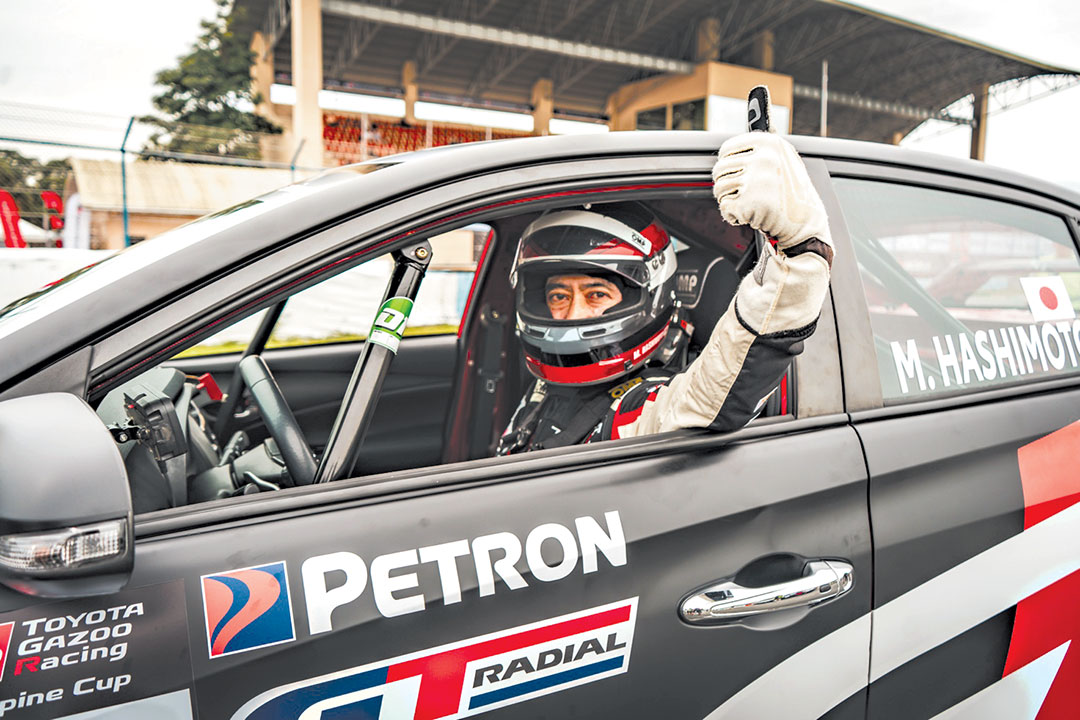
What used to be simply known as the Vios Cup has become a full-fledged Gazoo Racing (GR) spectacle. — PHOTO BY KAP MACEDA AGUILA

Gazoo Racing to continue revving up the excitement for TMP’s future

ELEVEN YEARS AGO, Toyota Motor Philippines (TMP) presented a one-make series that was envisioned to not just safely scratch the itch of a burgeoning group of weekend racers, but to provide access to the spectacle for fans of all ages as well.

That was the Vios Cup, starring the bulletproof sedan product of Toyota that is still being assembled here in TMP’s Santa Rosa, Laguna plant. The ubiquitous car, stripped-down and fortified for on-track use, epitomized not only the durability of the Japan-headquartered car maker’s vehicles but an earnest desire to promote grassroots motorsports.

The beginnings of what would be Toyota’s performance and tuning division, Gazoo Racing, were playing out as future Toyota Motor President (now Chairman) Akio Toyoda raced Celicas in the mid ’70s. Together with the late legendary chief test driver Hiromu Naruse, Mr. Toyoda was logging hours behind the wheel of Toyotas entered into events such as the 24 Hours of Le Mans and others. To assume a lower profile, the Toyota executive used the alias “Morizo,” and substituted “Team Gazoo” for Toyota. Gazoo means “image” or “picture.”

Today, the images evoked when one hears of Gazoo Racing or GR are surely the exciting races of all manner that Toyota participates in — races that have served as the forge to make “ever-better cars.” The company stated that “roads build people and cars.” It is not wrong. And, it continued, “Toyota refines every aspect of its cars on the world’s roads and unsparingly applies the knowledge and technology gained in this way as feedback.”

Gazoo Racing is now a full-fledged sub-brand within Toyota. Its unmistakable decal now symbolizes increased performance and, yes, desirability — particularly in the case of “GR”-prefixed offerings: the GR Supra, GR Yaris, GR Corolla, and GR 86. “Motorsports initiatives have given Toyota broad perspective and deep experience, which the company has applied to the development of numerous production cars. Some of these model lineups are ideally suited for passing on the special motorsports DNA, particularly Toyota’s GR Series… Packed with technologies and pumping with the passion of motorsports.”

Here in the Philippines, even as the GR branding is certainly being driven home and given the prominence it deserves, TMP has also established a section presently under the Marketing Services Division to work on everything related to GR.

We asked TMP Assistant Vice-President Andy Ty what exactly falls under the ambit of this section. “So right now, we have four members, and everything related to GR falls under our purview — any GR-related events, GR vehicles as well whether it’s GR models or GR Sport models, everything.” He added that the section also deals with digital activations. But because it’s presently a four-person operation, they “can only do so much.”

Mr. Ty revealed, “This is why, as part of our direction and also aligning with TMC (Toyota Motor Corp.), Toyota’s head office, and some of the other distributors, we definitely would want to grow our section more. The expansion of Toyota Gazoo Racing is a major focus, especially from the direction of Akio Toyoda. We are definitely aligned in terms of that expansion. So eventually we will grow. Slowly but surely, that’s what we plan.”

The executive did express gratitude to TMP for the support of people outside the section, but the ideal for the long term is to set up a GR “task force” to include members of other departments as well.

Responding to the same question, TMP President Masando Hashimoto added that, in the case of Toyota Thailand, there’s a marketing division within a GR scope. “They are handling as well GR products and variants.” TMP is looking to “cut and paste” organizational functions from other countries into its territory, with respect to product planning and dealership input. “They are the gateway of this brand,” he said of dealerships. “Sometimes, customer service, after-sales service (can be) more important for race organization, for the scrutineering. We are kind of the task force team to develop for making this kind of event or activities happen.”

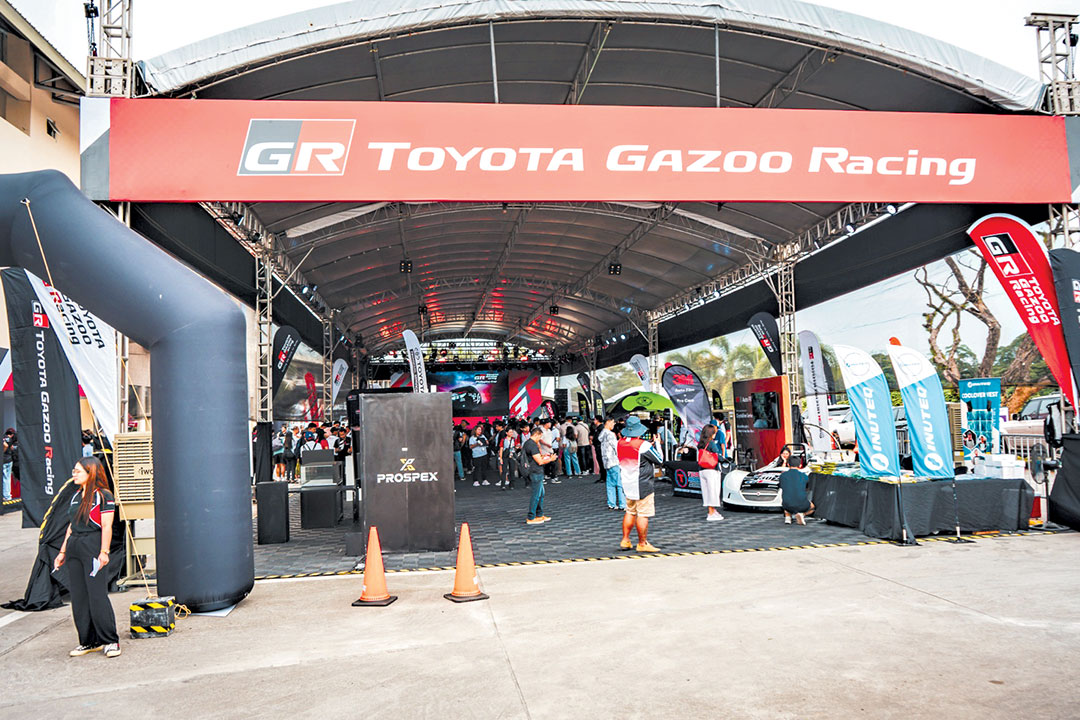
In 2021, the Vios Cup name was changed to Toyota Gazoo Vios Cup; just last year, it became Toyota Gazoo Racing Philippine Cup — ostensibly to reflect the growing girth of the multi-race-weekend event to include models aside from the Vios. We’re seeing a closer affinity for the all-new Tamaraw, for instance.

The just-concluded 2025 season was extra memorable for a number of reasons. “When we went to Villar City for our street race, we gathered a record-breaking crowd witnessing our exciting races,” shared TMP Marketing Services Vice-President Elvin Luciano in a separate interview with media. He, of course, also pointed to the inclusion henceforward of the Tamaraw in the series. The come-backing workhorse model will have its own one-make race, as with the Vios.

He continued, “When we launched the next-generation Tamaraw, one of the key features (we wanted to highlight) is the versatility and the flexibility of this vehicle. What better way to exhibit these than to try them on racetrack?”

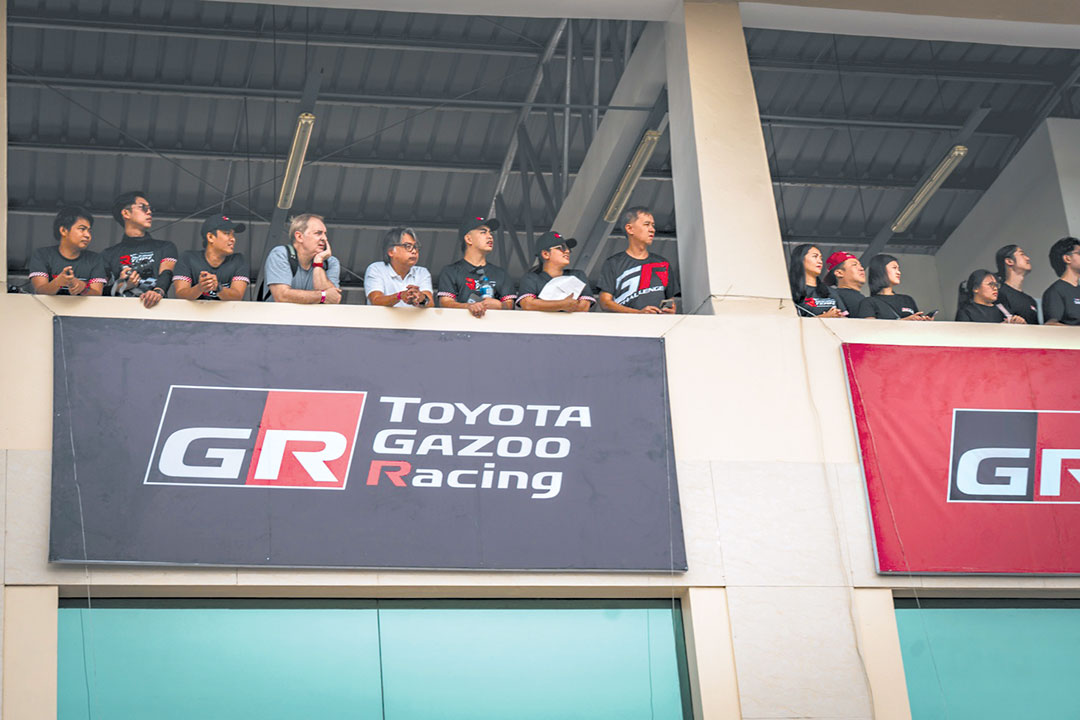
Mr. Luciano also touched on a crucial aspect of what TGR (Toyota Gazoo Racing) is all about. “Toyota Gazoo Racing has always been about community. So, we are building racing communities, the car culture in the country. We are very happy to attract more and more fans into our races, whether here at the Clark International Speedway or in our street race venues,” he maintained. “That’s something that we have always been aspiring for; for TGR to be a venue, not just for Toyota fans or Toyota customers to enjoy, but also to gather like-minded people and to have that one venue for all the race enthusiasts in the country to feel that they belong and it’s something that they can pursue, and the dream of being a racecar driver is closer to their reality.”

That’s perhaps the lingering “gazoo” that people will come away with.

Looking for commute-friendly makeup? Try I’mma Beauty and Vice Co.

By Zsarlene B. Chua

A FEW MONTHS AGO, I transitioned into the corporate world, where showing up at the office means braving the morning and afternoon commute. With the implicit expectation to always look put together, long-wearing makeup becomes essential for those who want to be presentable without the constant need for touch ups.

That’s when I started looking for affordable and accessible local makeup brands I’d be confident carrying in my small office cosmetics bag. The goal was for it to be low-maintenance, long wearing, and versatile enough to take me from my morning commute to after-work errands without fuss.

Here are some of the brands I’ve been trying the past few months.

I’MMA BEAUTY
One of the newest entrants into the growing local beauty scene is I’mma Beauty. Created by iFace, the company that distributes BYS Cosmetics, Bioten, and VMV Hypoallergenics in the Philippines, the newest brand is all about “no-frills, no limits” and “makeup that works.”

Launched in May, the brand introduced a modest line of blushes, blush toppers, lip tints in cream and water formulas, eyebrow pencils, matte lip bullets, and color balms — all priced at P199 each — signaling its positioning as an affordable makeup brand. The collection spans brights, berries, and safe neutrals, giving consumers both playful and everyday options.

The company sent me a couple of products to try and while none of the colors were those I’d choose for an everyday look (as I typically go for more of a natural look) I did give it a good ol’ try just to see if these products are RTO-worthy.

I tried the Hydro Hue Water Lip Tint in Candid, a deep berry shade, which applied smoothly with good color payoff but faded quickly. The Cream Plush Lip Tint in Soiree, a bright coral, fared no better — though its formula works well if you’re after the soft, blurred lip effect. I also tested the Flush Blush Powder in Crochet, another berry shade, and of all the products, this was my favorite. While it doesn’t suit me as a blush since my skin tone leans warm-fair, I enjoyed using it as a smoky eyeshadow. I also tried their Cheek Beam Blush Topper in Playdate, a bright red shade. While designed to be layered over blush for extra dimension, I found it works just as well on its own for a sheer wash of color.

Taken together, these products reflect I’mma Beauty’s positioning as a brand for consumers who want to explore color at an accessible price point. The lineup is playful and affordable, making it easy to experiment with, though product performance can be uneven across the range.

Will I buy I’mma Beauty? I won’t seek them out, especially the tints since I’m finding I’m not really a tint girl, but when it comes to the blushes I definitely will try other shades — mostly because the price point is something that’s hard to beat.

VICE CO. PERFECT KIZZ VELVET LIP SHAPER AND LIP BULLETS
I recently wrote about the launch of these new products from Vice Co. While I’mma Beauty is all about bringing back color for those who want to experiment, the positioning of Perfect Kizz lip products is for those looking for wearable yet understated shades.

The Velvet Blur Diffused Lip Shaper, created for those who want to emulate the diffused, blurred lip effect, comes in eight shades ranging from a light rosy pink (Sweet Kiss) to cocoa brown (Midnight Kiss). Meanwhile, the Velvet Soft Diffused Lip Bullet comes in 12 shades from a neutral nude shade (So Cozy) to a deeper wine red (So Timeless). The products are P345 each.

I’ve been pairing the Soft Kiss Lip Shaper in nude beige with the So Plush Lip Bullet in rosewood — a shade that leans more mauve than brown — and it has quickly become my daily go-to. The texture applies smoothly and settles into a comfortable soft matte finish. Staying power is moderate as I find myself reapplying after a meal, but it does handle drinks well.

I also fell in love with Forbidden Kiss, a brick-red Lip Shaper, paired with So Chic, a pinkish rose petal shade. Together, they create the perfect “I’m not fully committing to red, but I still want a hint of it” look — ideal for days when you need just a bit more color and confidence.

If there’s a minor drawback, it’s that some shades can appear quite similar — for example, Sweet Kiss (rosy pink) and Soft Kiss (nude beige) are close in tone, with the former just a touch lighter. It’s definitely not a deal-breaker as the line has enough colors and tones for those looking for their perfect beige.

Will I buy it again? Yes — because the shades are versatile, the formula is comfortable, and it fits seamlessly into my everyday routine.

In the end, everyday makeup is about balance — products that last through commutes and long office hours while staying effortless to wear. I’mma Beauty offers playful experimentation, while Vice Co. delivers versatile, dependable shades. For my routine, Vice Co. wins out, but both make affordable, long-wearing options more accessible to Filipinas on the go.

I’mma Beauty and Vice Co. are available nationwide via online and offline platforms.


Zsarlene B. Chua is a former BusinessWorld reporter who is now a fledgling PR girl. She’s all about skincare, makeup, and video games — and occasionally food. None of the products she reviews or writes about are the writer’s clients. Contact the author at zsarlene.chua@gmail.com.

Peso may extend rise with BSP likely to cut

BW FILE PHOTO

THE PESO could strengthen further against the dollar before the Bangko Sentral ng Pilipinas’ (BSP) policy meeting on Thursday, where it is expected to deliver a third straight rate cut.

On Friday, the local unit closed at P56.95 per dollar, inching up by a centavo from its P56.96 finish on Wednesday, data from the Bankers Association of the Philippines showed.

Week on week, the peso climbed by 11.5 centavos from its P57.065 close on Aug. 15.

The peso rose on Friday after Japan-based credit rater Rating and Investment Information, Inc. affirmed the Philippines’ investment-grade “A-” rating with a stable outlook amid steady economic growth, Rizal Commercial Banking Corp. Chief Economist Michael L. Ricafort said in a Viber message.

He said this was a “continued vote of confidence on the country’s economic and credit fundamentals from the point of view of international investors and creditors.”

The peso moved sideways against the dollar on Friday on expectations of hawkish signals from US Federal Reserve Chair Jerome H. Powell’s speech at the US central bank’s Jackson Hole symposium, Philippine Institute for Development Studies Senior Research Fellow John Paolo R. Rivera said in a Viber message.

“The peso’s close last Friday reflected lingering pressure from external headwinds, particularly expectations of a prolonged higher-for-longer stance by the Fed and persistent geopolitical tensions,” Mr. Rivera said.

“Despite easing inflation locally, the peso remains vulnerable to global US dollar strength and risk-off sentiment.”

Mr. Powell on Friday signaled a possible interest rate cut at the US central bank’s meeting next month, saying that risks to the job market were rising but also noting inflation remained a threat and that a decision wasn’t set in stone, Reuters reported.

While his comments were not as explicit as those previewing rate cuts following last year’s Jackson Hole conference, investors quickly bumped up bets that the Fed will reduce its policy rate by a quarter of a percentage point at its Sept. 16-17 meeting.

“The stability of the unemployment rate and other labor market measures allows us to proceed carefully as we consider changes to our policy stance,” Mr. Powell told international economists and policymakers at the Fed’s annual conference in Wyoming. “Nonetheless, with policy in restrictive territory, the baseline outlook and the shifting balance of risks may warrant adjusting our policy stance.”

Traders assigned about an 85% probability that the Fed would deliver a quarter-percentage-point rate cut next month, up from about 75% earlier in the day. Market bets also strongly favor a second rate cut in December.

For this week, Mr. Ricafort said the peso could rise ahead of an expected rate cut from the BSP at its policy meeting on Thursday.

The Monetary Board will hold its policy meeting on Thursday (Aug. 28). BSP Governor Eli M. Remolona, Jr. earlier said that a rate cut is “quite likely” this week amid benign inflation.

If realized, this would be the BSP’s third straight reduction since April. The Monetary Board has lowered benchmark interest rates by a cumulative 125 basis points since it began its easing cycle in August 2024, with the policy rate now at 5.25%.

Meanwhile, Mr. Rivera said the peso could weaken if “global oil prices rise or if remittance inflows taper post-back-to-school season.”

“Markets will also watch for US data releases and signals from the BSP on rate adjustments.”

Mr. Ricafort sees the peso moving between P56.75 and P57.25 against the dollar this week, while Mr. Rivera expects it to range from P56.50 to P57.50. — A.M.C. Sy with Reuters

Camarines Sur cold storage complex up and running by Dec.

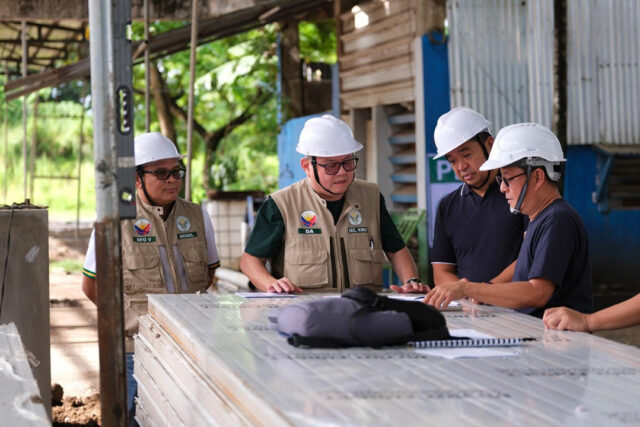
AGRICULTURE Secretary Francisco P. Tiu Laurel, Jr. and Camarines Sur Governor Luis Raymund Villafuerte inspected the ongoing construction of a P500-million cold storage facility. — DA PRESS OFFICE

THE Department of Agriculture (DA) said a P500-million cold storage facility is set to open in Camarines Sur in December.

The proposed facility in Pili is expected to “enhance food security, generate jobs, spur agri-investments, and significantly boost farmers’ incomes in Bicol and nearby regions,” the DA said in a statement.

It is designed to store a wide range of agricultural commodities including vegetables, meat, chicken and fish, the DA added.

The cold storage complex will have six refrigerated warehouses, each capable of storing approximately 224 tons of agricultural products.

With a total capacity exceeding 1,300 tons, the facility is designed to serve not just Camarines Sur, but also other parts of Bicol, the Visayas, and even Mindanao, whose products pass through the province on their way to Metro Manila and other major markets.

The DA said the facility features a solar power system to help cut electricity costs, a blast freezer, and a processing and packing area to support value-adding services for farmers.

“It will allow them to preserve their harvest longer, reduce spoilage, and access new markets,” Agriculture Secretary Francisco P. Tiu Laurel, Jr. said.

The DA said sites in Taguig City, Cabanatuan City, Occidental Mindoro and Isabela are set to open starting next year.

“In addition, over 100 modular cold storage units will be deployed to various farming communities across the country,” it added. — Kyle Aristophere T. Atienza

FedEx hosts webinar to help Filipino businesses navigate US trade policy changes

Federal Express Corp. (FedEx), one of the world’s largest express transportation companies, hosted a special webinar titled, “Understanding the Latest ​US Tariff Changes and ​Their Impact on Shipping” on Aug. 20.

This session aims to help Filipino businesses navigate the impact of the removal of the United States’ de minimis exemption and learn how to adapt to the new trade requirements.

The previous de minimis rule allowed goods valued at $800 or less to enter the US duty-free, simplifying the export process for low-value shipments. With the new policy changes in effect, the webinar will offer practical insights on maintaining compliance, managing costs, and sustaining cross-border operations.

These policy changes come on the heels of broader tariff measures announced by the US government. US President Donald Trump announced a 19% tariff on imports from the Philippines as part of a trade pact under which Manila would remove duties on US goods and deepen military cooperation with Washington.

Currently, the Philippines holds the second-lowest tariff rate in the region at 19%, with Singapore, which has a bilateral Free-Trade Agreement (FTA) with the US, maintaining the lowest at 10%. US tariffs for other Association of Southeast Asian Nations (ASEAN) countries range between 19% to 49%.

This initiative reflects the broader mission of FedEx to support Filipino SMEs as they navigate the complexities of international trade. By providing timely knowledge, expert advice, and access to innovative tools, FedEx continues to empower local entrepreneurs to scale globally, stay ahead of regulatory changes, and unlock new growth opportunities in a rapidly evolving economic environment.


SparkUp is BusinessWorld’s multimedia brand created to inform, inspire, and empower the Philippine startups; micro, small and medium enterprises (MSMEs); and future business leaders. This section will be published every other Monday. For pitches and releases about startups, e-mail to bmbeltran@bworldonline.com (cc: abconoza@bworldonline.com). Materials sent become BW property.