Home Blog Page 5928

A retelling of stories of Filipinas and histories of the motherland

JUAN’s Spolarium and Anna’s Lupang Tigang by Imelda Cajipe Endaya

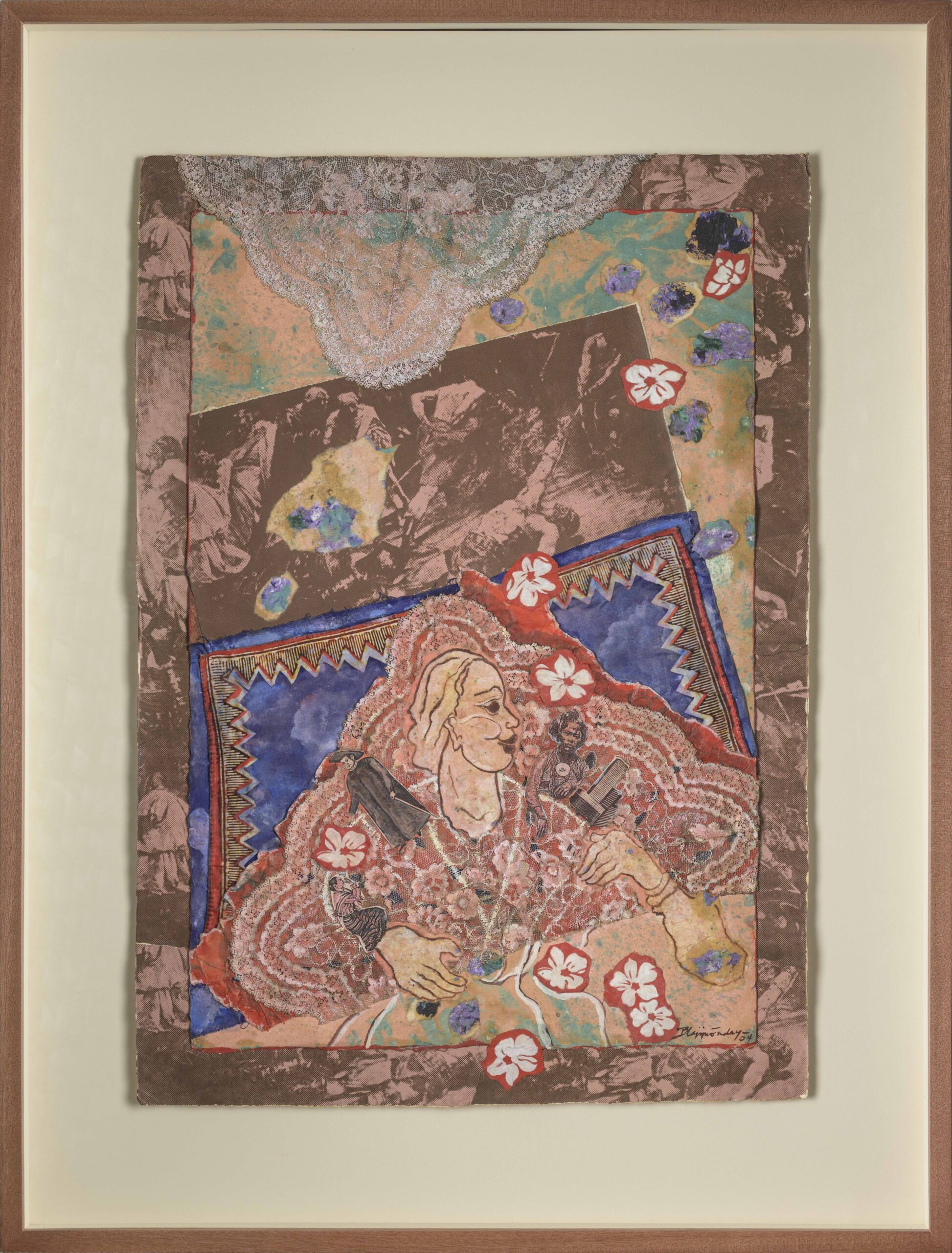
THROUGHOUT her career, artist Imelda Cajipe Endaya focused on works about women and the history and socio-political climate of a nation. These themes can be seen in a new retrospective, “Imelda Cajipe Endaya: Pagtutol at Pag-asa” (Refusal and Hope), which showcases six decades of her work.

Ms. Cajipe Endaya (b. Manila, 1949) is an artist whose work is distinguished by artistic research and conversation across forms and materials. She has also gained recognition in the Asia-Pacific region for a singular Filipina visual language that is focused on the possibilities of feminist art. She is the founding president of Kababaihan sa Sining at Bagong Sibol na Kamalayan (Kasibulan), a feminist arts organization that has been active since 1987, and is also the founder of Pananaw, the first publication of its kind on Philippine art. Ms. Endaya is also a widely published writer, curator, and cultural worker.

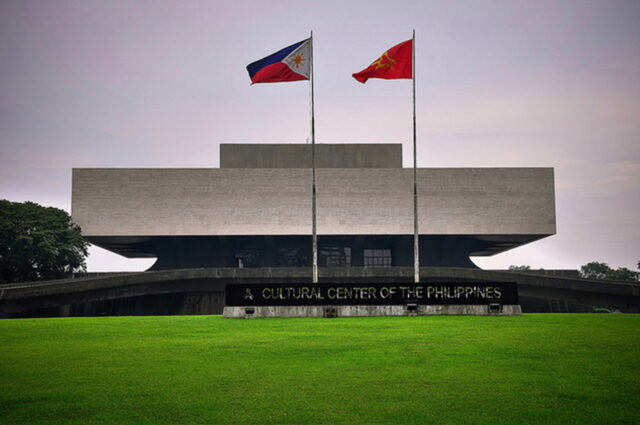
Initially programmed for 2020 but halted with the arrival of COVID-19 that year, the exhibit at the Cultural Center of the Philippines’ (CCP) Main Gallery was two years in the making. It brings together over 200 artworks and archival materials of the artist’s extensive practice in printmaking, painting, collage, and installation art. With themes on women, history, and commitment to the truth, the exhibition adopts an attitude of active remembering.

To describe her art, Ms. Endaya uses the phrase “an art of refusal” — which she adopted from a text by American expatriate activist and professor Dolores Feria’s essay, “On the Literature of Refusal.”

“This sense of non-compliance is modulated today into one that remains resolute as women, and those with whom they link hands sustain an unwillingness to simply concede. It is refusal to relinquish individual including bodily and shared autonomies,” the exhibition’s description states.

The exhibit is curated by Lara Acuin and Con Cabrera.

FOCUSING ON THE FILIPINA
The exhibition begins at CCP’s third floor hallways where Ms. Endaya’s early works from the 1960s and 1970s are displayed. On the hallway facing the gallery are vermillion-accented paintings which, through windows painted in each canvas, represent woman as domesticated and only a witness to events. The prints shown beside the Main Gallery’s entrance are abstracts and images of women at different periods in history.

Ms. Endaya’s paintings also show her unique process of collaging — assembling sawali weave textures, embroidery, and painting.

“[Ms. Endaya] decenters herself from the limelight and in her art making. It’s not a particular voice or stand, but more of trying to depict the condition without drawing attention to her own message,” exhibit co-curator Lara Acuin said of the artist’s work during a walk-through of the exhibit on Aug. 31.

Upon entrance to the main gallery, the first works seen are the artist’s self-portraits done during the coronavirus pandemic.

The biggest work is a recreation of an installation from an exhibit in 1998 at the Metropolitan Museum. The installation, titled Kapatiran ng mga Lakambining may Bahay, shows an altar with the names of women in history who are often overlooked.

“I created an installation of prison windows, knotted and joined with long sheets of textile and made them like blankets people would normally tie together to escape and rescue others when in incarceration, or when a house is on fire. Yet I have arranged them like an altar as a tribute to how the Lakambini turns struggles into triumphs,” Ms. Endaya described of the installation.

The exhibit also showcased Ms. Endaya’s artworks dedicated to the Filipina migrant laborer.

The Wife is a D.H. (Domestic Helper) from 1995 shows parts of the original assemblage, with items such as a figure of the Virgin Mary, an electric iron, and a mop in an open suitcase.

TEXT, WAR, AND FEAR
Aside from art, scattered on the exhibit’s walls are text from the artists lectures and essays.

“A socially committed artist must be encouraged to portray the human condition with an open mind and a free spirit. And the only proper doctrines are truth and artistic integrity,” says one of the texts.

Ms. Endaya also tackles themes of war and imperialism, as seen in a portrait of a man during the Bataan Death March, old posters she made for a campaign in 1984, paintings of important public figures during the first and second EDSA Revolutions, and prints and collages based on the conflict in Kosovo which happened while she was finishing her artist residency in Switzerland in 1999.

During the exhibit launch on Sept. 3, which was livestreamed on social media, the 72-year-old artist recalled words from the founder and vice-president of the women’s chapter of the Katipunan, Gregoria de Jesus: “Matakot sa kasaysayan. Walang lihim na di mabubunyag. (Fear history for no secret goes uncovered).”

“…Iyun ang gusto kong maging tema nitong eksibisyon (That is the theme I want for this exhibition),” Ms. Endaya said.

LAST EXHIBIT
The retrospective is the final major exhibit to be held at the  CCP Main Gallery before the temporary closure of the cultural center’s main building. The building will undergo major renovations starting next January until December 2024.

“We are not going to stop our programs and projects. We will be moving physically somewhere else within the complex and maybe elsewhere beyond the complex,” said Ariel Yonzon, CCP Associate Artistic Director of the Production and Exhibition Department, at the exhibition preview on Aug. 31.

The CCP will be hosting monthly public programs until November, which will be held onsite and streamed online. An off-site exhibition,Imelda Cajipe Endaya: Windows To An Archive,” will also be presented at the Ateneo Library of Women’s Writings from Sept. 9 to Dec. 2, in partnership with the Ateneo Art Gallery.

For more information, visit https://pagtutolatpagasa.carrd.co/. For events related to the exhibition, visit https://www.facebook.com/ccpvamd/. — Michelle Anne P. Soliman

Local research seen as basis for pandemic prevention measures

UNSPLASH

VIRUS-RELATED research conducted in the country can serve as a basis for formulating preventive measures for future pandemics, said a member of the Balik Scientist program, which was established to counterbalance “brain drain.” 

“The pieces of new knowledge generated through careful scientific studies done by our own Philippine scientists could serve as the needed evidence for a sound policy that is focused only on our country,” said Thaddeus M. Carvajal, a specialist in vector biology whose research helps curb the incidence of dengue.  

Dengue, a disease spread by mosquitoes, is common in more than 100 countries around the world, including the Philippines. A person can be infected with a dengue virus as many as four times in his or her lifetime. 

Part of Mr. Carvajal’s work is determining the best approach to controlling Philippine mosquitoes. “There is still more to investigate in this area,” he said.  

Meanwhile, Dr. Homer D. Pantua, a 2021 Balik Scientist and infectious disease drug discovery expert, is developing diagnostic tools for the African Swine Fever virus and training researchers at the Virology and Vaccine Institute of the Philippines (VIP).  

These activities are “essential to prepare our country’s response to the current and future pandemics … and will guide us on generating potential solutions and science-based policies,” he said in a Sept. 2 e-mail.  

“Our hope is for the government to continue supporting the establishment of the VIP, which will help our country in its goal of self-reliance and sufficiency,” he added.  

Through the Balik Scientist Program, Filipino scientists, technologists, and experts are encouraged to return to the country and share their expertise in order to promote scientific, agro-industrial, and economic development, including the development of our human capital in science, technology, and innovation.  

While staying for good in the Philippines is highly encouraged, it is not required. Those who do decide to relocate, however, are given benefits such as housing allowance, health insurance for the Balik Scientist and his/her family, assistance in securing job opportunities for the spouse, and assistance in admission to education for dependents.   

As of this August, 25 individuals have been awarded as Balik Scientists for 2022. The country has had a total of 610 Balik Scientists since 1975, nearly three-quarters (or 74%) of whom are from North America. — Patricia B. Mirasol 

Razon bets on renewables in biggest 2022 Philippine IPO

PHILIPPINE billionaire Enrique K. Razon, Jr. made his fortune operating ports and running casinos. His next target is the country’s nascent renewables industry.

The nation’s second-richest man is focusing on solar farms, battery facilities and water projects in an effort to attract international investors. His green push through Prime Infrastructure Holdings, Inc., which will go public later this year, is aligned with broader plans by the government to increase the use of renewable energy to 50% by 2040.

The need for more energy of any sort is urgent in the Philippines, where growth in power demand has outpaced new capacity. The Southeast Asian nation, which imports almost all of its oil requirements, is looking to spend more on fuel subsidies as a cushion against higher prices. Developing domestic renewable sources will also help the nation reduce dependence on oil and coal.

Prime Infra’s projects will be the first of their kind for Philippines’ renewable market, giving investors an early entry point.

The country is “probably not where we should be in terms of power supply demand. We’re probably not where we should be in terms of water availability and sanitation, or probably not where we should be in terms of waste management and climate. If you take all that into consideration as an investor, it’s perfectly logical to invest into the Philippines and Prime Infra,” Chief Executive Officer Guillaume Lucci said in an interview.

It’s building a solar-and-battery facility that will displace annual consumption of about 1.4 million tons of coal, equivalent to nearly 6% of the nation’s annual needs. Also in the works are a 1,400-megawatt hydropower plant at Laguna de Bay just south of Manila, as well as two water projects that will provide 518 million liters of water to areas around the capital by 2025.

Getting these projects off the ground will depend on the firm’s planned P25.6-billion ($449.2 million) initial public offering (IPO) in November, which is poised to be the biggest IPO this year and among the largest ever in the Philippines. Only eight firms have listed in the nation this year, raising a total of P17.2 billion. That’s set to be the worst showing since 2018 amid a global market slump.

“It will be a major play on Philippine renewable energy, a narrative that’s still in the early stages of growth and a sector the government wants developed,” said Carlos Temporal, analyst at AP Securities. He said the IPO “could attract strong demand because of the industry it’s in and the company’s owner.”

Razon, who is also the chairman of International Container Terminal Services, Inc., which operates more than 30 port terminals in 20 countries, is estimated to be worth $4.8 billion, according to the Bloomberg Billionaires Index.

The Philippines is seeking to increase renewables’ share to the overall energy mix to 50% by 2040 from just a fifth in 2019. President Ferdinand R. Marcos, Jr., in a speech in July, said solar, wind, hydropower and geothermal energy sources are key to achieving his climate agenda.

Still, there are risk to Prime Infra’s renewable ambitions. Supply chain snarls are raising the price of solar panels for the first time in a decade, and strong competition as Europe and the US boost climate ambitions could mean prices stay higher than expected for the next few years. That would raise the cost of Razon’s big solar-battery project and potentially eat into its profitability.

At the moment, Prime Infra gets 80% of its revenue from Manila Water Co., Inc., which supplies half of the Philippine capital. In four to five years, revenue from electricity will account for 40% from below 20% currently, Mr. Lucci said.

While its first project was a 29-megawatt gas-fired power plant in Iraq, Razon’s infrastructure company plans to grow its power, water and waste-management portfolio in the Philippines before expanding overseas, the CEO said. — Bloomberg

BSP tells banks to strengthen guard vs terrorism financing

BANKS must continue to update their targeted financial sanctions (TFS) frameworks amid evolving terrorism and proliferation financing risks, the Bangko Sentral ng Pilipinas (BSP) said on Tuesday.

BSP Deputy Governor Chuchi G. Fonacier through Memorandum No. M-2022-038 told BSP-supervised financial institutions (BSFIs) that regulations on Anti-Money Laundering/Counter Terrorism and Proliferation Financing (AML/CTPF) must be sustainable to effectively implement TFS.

The memorandum was issued as the Monetary Board released a guidance paper titled “Targeted Financial Sanctions Implementation” that includes best practices on TFS implementation, as well as points for improvement and major challenges for local banks.

“As we move forward, the challenge is to achieve sustainability as TFS risk is evolving and TFS implementation is a continuing obligation. BSFIs are therefore expected to establish and/or continuously improve their respective TFS framework to effectively implement TFS obligations,” the BSP said.

TFS are measures like asset freezing and limiting fund availability for designated persons or entities suspected to be involved in terrorism financing (TF), proliferation of weapons of mass destruction, and proliferation financing (PF).

According to the guidance paper, banks are expected to conduct Institutional Risk Assessment (IRA) to ensure that their systems and processes on TFS are working as intended.   

Lenders must likewise identify risks of potential breach, non-compliance, or evasion of TFS obligations and take appropriate mitigating measures for identified risks.

Based on the results of the IRA, BSFIs must adopt proportionate and risk-based sanctions, policies, and procedures approved by the board of directors. Financial institutions shall also conduct effective awareness programs on relevant sanctions.

Banks are also expected to implement electronic and manual screening tools equal to the BSFI’s risk profile and complexity to ensure timely updating of their sanctions lists, conduct of sanctions screening and implementation of TFS without delay.

At minimum, they are expected to practice sanction screening by verifying the names and country of residences of accountholders and other persons acting on behalf of account owners.

Information on wire transfers and trade transactions should also be screened. This should be conducted upon account opening, periodically, and whenever there are updates to a client’s account information including ultimate beneficial ownership, authorized signatories, or change in the names of clients.

Banks must also conduct a periodic screening of all customers whenever there are changes to the sanctions list and designated persons, the BSP said.

“Finally, the Board and Senior Management of BSFIs are expected to continuously provide high-level direction and adequate support and resources in their respective institutions to further strengthen safeguards and prevent the designated persons from accessing and moving funds in financial channels for TF and PF activities.”

The BSP said BSFIs must have appropriate processes to guide personnel in handling name matches, freezing actions in case of potential target match, as well as filing of returns and suspicious transaction reports under existing regulations.

Banks are expected to coordinate with the Anti-Money Laundering Council in resolving name and potential target matches.

The sanctions database of financial institutions includes identified terror groups by the United Nations Security Council, among others.

The guidance paper also noted some typologies on the use of virtual assets in TF. Banks are expected to develop sound risk management frameworks in mitigating TF risk exposures on the use of virtual assets.

“This includes calibration of existing AML processes to mitigate emerging risks such as the use of virtual assets in TF activities. Continuous collaborative and proactive engagement among industry players, regulators and other stakeholders should be pursued to continually address the challenges noted,” it added.

Based on these typologies, red flag indicators were developed to guide lenders in formulating measures to prevent and detect TF activities using virtual assets. — K.B. Ta-asan

CCP program full before bringing curtain down on main building

THE CALENDAR of events of the Cultural Center of the Philippines (CCP) is full of dance and music as it gears up for the long-overdue rehabilitation of its Main Building, which includes closing its theaters and other indoor venues starting January 2023.

After more than 50 years, the Tanghalang Pambansa (CCP Main Building) will undergo a major facelift which will last for three years.

“We will not keep any stone left unturned,” said CCP president Margie Moran-Floirendo in a statement.

“The CCP rehabilitation plan emanates from the building audit done from 2018 to 2019. We initially planned to start reconditioning the Main Building right after the 50th anniversary, but the pandemic happened and we had to make do with what we can, with the budget we have,” she said.

The renovation works have already started at the Tanghalang Aurelio Tolentino (CCP Little Theater) this year, as well as the Silangan Hall, the fourth floor, and the former Design Center Building to which the CCP’s offices will transfer in the coming months.

The executive offices and conference rooms will move to the nearby Ramon Magsaysay Center along Roxas Blvd., Malate, Manila.

PERFORMANCES DURING RENOVATION
While the renovation proceeds as planned, the programs and projects of the country’s premiere art institution continue. Over the next two years, the CCP will mount performances, concerts, and other events inside and outside the CCP Complex, fully utilizing its outdoor venues.

One of these venues is the new Tanghalang Ignacio B. Gimenez, a flexible black box theater which seats 320 and is adjustable to the artistic and technical needs of any production. Named after its donor, the experimental theater will be inaugurated on Sept. 8 with performances highlighting its technical possibilities as well as its inaugural artistic season offerings. These include Tanghalang Pilipino’s Anak Datu and Repertory Philippines’ musical Carousel, among others.

The cultural complex also has several outdoor venues that can be utilized as performance areas, such as the Liwasang Ullalim, which was the venue for the Cinema Under the Stars, the plaza inside the Harbor Square, and the CCP Concert Ground, among others.

Utilizing its strong cultural network, the CCP intends to expand to the regions with outreach programs and art education projects. The Cultural Exchange Department and the Art Education Department already have programs in various parts of the country and will continue to do so in the coming years.

LAST HURRAH SHOWS
For the fourth quarter of the year, the CCP artistic season goes full blast, starting with the CCP Anniversary Gala: Musikal II on Sept. Celebrating the center’s 53rd founding anniversary, the gala featuring excerpts from original Filipino musicals staged from 2015 to 2021.

The last exhibit at the Bulwagang Juan Luna (CCP Main Gallery) is the retrospective “Imelda Cajipe-Endaya: Pagtutol at Pag-asa,” on display until Dec. 4. It exhibits over 200 artworks and archival materials surveying the artist’s extensive practice in printmaking, painting, collage, and installation from the 1960s to the present.

While the CCP galleries are shut down, there will be traveling exhibitions featuring the CCP art collection, starting with a print exhibit at Arthaland Century Pacific Tower on 5th Avenue and 30th Street, Bonifacio Global City, Taguig. The exhibit is opening on Oct. 13.

Part of the collection will be on loan at the Metropolitan Museum of Manila and the National Museum.

Ballet Philippines will present its show, Dance Here and Now: Equus, Bolero and Other Dances, from Sept 17 to 18 at the CCP Main Theater. This is its first live performance after the pandemic lockdowns.

Meanwhile, the CCP Dance Series (Live!) will be held from September to December.  The production features choreography created by National Artists for Dance Alice Reyes and Agnes Locsin, pieces by French choreographer, Redha Benteifour, and promising choreography works by young Filipino dancers. The series starts on Sept. 23 and 24 at the Main Theater, and ends with Puso ng Pasko on Dec. 2 to 4.

This year, the CCP Met Opera in HD returns with a screening on Sept. 27 at the Greenbelt Cinema in Makati. Held in partnership with Ayala Land, Inc. and the Filipinas Opera Society Foundation, Inc., this program runs until March 2023, screening classic opera masterpieces from the Metropolitan Theater in New York such as Carmen, La Traviata, Aida, and Samson et Dalila.

The Philippine Philharmonic Orchestra is all set to return to the concert hall for live performances for its 38th season, with concerts slated at the Main Theater on Sept. 16, Oct. 7, and Dec. 16.  The season will end next April with performances in 2023 to be held at the Manila Metropolitan Theater.

Giacomo Puccini’s opera Turandot will be among the final productions to be held at the CCP Main Theater before it closes for renovation. To be held on Dec.  9, 8 p.m., and Dec. 11, 2 p.m., the production is done in cooperation with the Filipinas Opera Society Foundation, Inc. and the Rustan Group of Companies. Meanwhile, Ballet Philippines will present The Nutcracker at the Main Theater on Dec. 17 and 18.

The CCP performance season ends with Handel’s The Messiah on Dec. 16. Not to be missed are the annual holiday events at the CCP, including dawn masses and facade lighting.

“The CCP Main Building might be closed, but we promise that we remain true on our mandate to promote artistic excellence, nurture our artists, create artistic and educational content, and engage the broadest audiences in art making and cultural experiences. We are committed to remain the leading art institution in the country,” Ms. Moran-Floirendo said.

For inquiries and ticketing concerns, contact 8832-3706, 8832-1125 loc. 1803, 1806. E-mail contact_us@culturalcenter.gov.ph or customercare@culturalcenter.gov.ph.  Follow the official CCP social media accounts on Facebook, Instagram, and Twitter.

Cebu Landmasters’ shelf offering gets SEC’s OK

THE Securities and Exchange Commission (SEC) has approved the P15-billion debt securities program of Cebu Landmasters, Inc.

Cebu Landmasters looks to raise P8 billion from the initial tranche of its shelf offering with series A bonds due 2026, series B bonds due 2028 and series C due 2029.

As earlier approved by the board of directors of the company, the program will cover a principal amount of up to P5 billion and an oversubscription option of up to P3 billion.

“The company could net up to P7.9 billion from the offer, which will be used for project development or capital expenditures for various real estate projects and for general corporate purposes,” the commission said.

The first tranche will be offered at a face value from Sept. 26 to 30 and will be listed on the Philippine Dealing & Exchange Corp. by Oct. 7.

Cebu Landmasters engaged BPI Capital Corp. and China Bank Capital Corp. as joint issue managers, joint lead underwriters, and joint bookrunners for the offer.

Meanwhile, the company tapped PNB Capital and Investment Corp., RCBC Capital Corp., and SB Capital Investment Corp. as co-lead underwriters.

In the second quarter, attributable net income of the company increased to P734.86 million, higher by 22.5% from the recorded P604.1 million in the same period last year.

The company’s topline grew by 39.1% to P3.87 billion in the three months ended in June, from P2.78 million last year.

Sales from its real estate segments contributed the most with P3.83 billion, followed by rental income with P17.81 million, hotel operations with P16.18 million and management fees with P12.46 million.

Year to date, the company’s net income rose by 17.6% to P1.55 billion and its revenues climbed by 45.1% to P7.46 billion.

Cebu Landmasters is a residential developer in the Visayas-Mindanao region. In the first half, it launched seven real estate sale projects worth P7.4 billion.

On the stock exchange on Tuesday, shares of Cebu Landmasters slipped by 2 centavos or 0.81% to P2.46 apiece. — Justine Irish D. Tabile

‘PinasLakas,’ AI chatbot boost vax efforts

PHILIPPINE STAR/ RUSSEL PALMA

The coronavirus disease 2019 (COVID-19) pandemic is not yet over. While cases are slowly trending downward, the highly transmissible Omicron subvariants are still around. Fortunately, total and ICU (intensive care unit) bed utilization rates for COVID-19 at both the national and regional levels remain at low risk, according to the Department of Health (DoH). 

“With a continuous rise in COVID-19 cases, the DoH reminds the general public to remain vigilant and adhere to our minimum public health standards such as wearing the best-fitting masks, social distancing, and immediate isolation at the onset of symptoms. We also encourage the eligible population to get vaccinated and boosted with our COVID-19 vaccines to continue building a strong wall of immunity against the virus,” said Health officer-in-charge Maria Rosario S. Vergeire. 

As of this August, the DoH, working with local government units and private sector partners, has administered more than 160 million total doses through the Bayanihan Bakunahan (National Vaccination Days) and Resbakuna Kids campaigns. At least 71 million Filipinos have completed the primary vaccination series, with over 15 million Filipinos having at least one booster dose, which represents roughly 21% of the fully vaccinated population. 

To increase vaccination coverage, the National Government launched this July a campaign dubbed “Sa Boosters: PinasLakas.” The initiative aims to fully vaccinate 90% of A2 or senior citizen population (1,074,110 recipients), as well as increase booster dose coverage to 50% of the total target population (23,840,032 recipients) before Oct. 8, which marks the first 100 days of the Marcos administration. 

As of this August, more than 18,900 PinasLakas vaccination sites have been launched nationwide, in areas such as markets, schools, workplaces, health facilities, terminals/transport hubs, places of worship, and mobile vaccination sites. All vaccines being freely given in the country have been rigorously studied and deemed safe and effective by experts. Only a small percentage of doses administered had reactions, most of which were mild and resolved spontaneously. 

Staying up to date with COVID-19 vaccines including boosters will enable us to enjoy tremendous benefits. As more and more Filipinos complete their primary doses and their booster shots, the more the country can ease its health requirements, live and work free from worry of alert level restrictions, resume face-to-face learning in schools, and avoid the expenses associated with COVID-19 hospitalization and its complications. 

Key sectors of our society will be able to reap their own benefits as well. Keeping the number of COVID-19 cases low and manageable will unburden the country’s healthcare facilities and healthcare workers. Government spending can be redirected towards other social services and priorities. The national and local government will be able to fulfill their mandate and highlight their success in ensuring the protection of the people. 

With COVID-19 cases under control, the country will be able to keep the economy open and allow it to further generate income and drive progress and prosperity. Schools can remain open, and thus can maximize our children’s literacy and educational outcomes. Tourism will remain open and busy, generating jobs and supporting businesses. 

An SWS survey conducted in December 2021 indicated that 80% of fully vaccinated Filipinos are willing to get a booster dose. To further drive accurate information for the public for the “homeliners,” the DoH made available a chatbot powered by artificial intelligence (AI). Called KIRA or “Katuwang na Impormasyon para sa Responsableng Aksyon,” it can be found on the DoH Facebook page, Viber, and KontraCOVID PH web app. 

KIRA can be used to self-check if one is at risk of COVID-19; it can also answer commonly asked questions. The chatbot, a partnership between startup AI4GOV and the DoH Health Promotions Bureau under OIC-Undersecretary Dr. Beverly Lorraine C. Ho, was one of the winners at the inaugural World Health Organization Western Pacific Innovation Challenge. 

The KIRA chatbot initiative is gaining momentum with 33.5 million interactions, and 1.2 million users who have inquiries related to COVID-19. With this digital tool, people can get answers and combat fake information and misinformation. 

Eligible Filipinos are strongly urged to stay up to date with their COVID-19 vaccines series and booster shots, so that together we can enjoy the benefits of continued recovery from the pandemic. 


Teodoro B. Padilla is the executive director of the Pharmaceutical and Healthcare Association of the Philippines (PHAP), which represents the biopharmaceutical medicines and vaccines industry in the country. Its members are at the forefront of research and development efforts for COVID-19 and other diseases that affect Filipinos.

GoTyme partners with BancNet, Visa to expand reach

GOTYME BANK has teamed up with BancNet and Visa to expand its reach as it starts its operations.

The lender, which is a partnership between the Gokongwei Group, which holds a 60% stake, and Singapore-based digital banking group Tyme, which has 40%, is now operating as a digital bank after getting the go signal from the Bangko Sentral ng Pilipinas last month.

The bank on Tuesday launched its partnership with BancNet and Visa at an event in Makati City.

“Visa’s worldwide reach and expertise in digital payments, synergizing with BancNet’s extensive nationwide and offshore coverage, together with GoTyme Bank and the Gokongwei brand’s reputation, technology and understanding of the Philippines market, will offer consumers high-quality banking to every Filipino, and an exciting and rewarding digital payment and money movement experience,” GoTyme Bank, BancNet and Visa said in a joint statement on Tuesday.

GoTyme Bank will launch next month its GoTyme Visa ATM Debit card, which is free for all accountholders.

The lender said customers can get an account and a debit card instantly through its digital kiosks to be stationed in Robinsons shopping malls throughout the country.

“We have a kiosk, developed in South Africa, that enables a customer to onboard and get an account even without having a high-quality phone and cell. It issues a Visa debit card with their name on it personalized in under five minutes,” GoTyme President and Chief Executive Officer Nathaniel Clarke said on Tuesday, adding they will have 200 kiosks by yearend.

“We’re going to start with a very simple savings product, and then over time we will be expanding into several different asset classes or investment,” Mr. Clarke said.

GoTyme said it offers an interest rate “three to five times” higher than traditional banks for its savings account.

Points earned from transactions can also be converted to cash, which will be credited to one’s GoTyme account.

Mr. Clarke said GoTyme Bank put most of its capital into ensuring the security of its cloud-based platform and customer service.

The bank is also set to release its mobile application on Apple’s App Store and Google’s Play Store soon, he said.

Through the bank’s partnership with Visa, GoTyme accountholders can use their cards at automated teller machines (ATM) outside the country and at over 100 million establishments worldwide.

BancNet CEO Elmarie S. Reyes said GoTyme accounts can also be accessed through BancNet’s 24,000 ATMs and used at 480,000 point-of-sale terminals. — DGCR

Arts & Culture (09/07/22)

FACEBOOK.COM/GATEWAYGALLERYPH

Soprano kicks off the CCP concert series

THE INAUGURAL performance in the CCP Special Concert Series on Sept 7, 7:30 p.m. at the Tanghalang Ignacio Gimenez (Black Box Theater) of the Cultural Center of the Philippines features soprano Stefanie Quintin. Ms. Quintin has premiered and performed works by such composers as National Artist for Music Dr. Ramon P. Santos and the American composer Eli Marshall. She has given solo performances at the Asia Europe New Music Festival in Vietnam, the Yilan International Arts Festival in Taiwan, the soundSCAPE Festival in Italy, the Baroque Festival in Singapore, and the International Bamboo Organ Festival in the Philippines. Ms. Quintin will also hold a voice masterclass on Sept. 8 from 2 to 5 p.m. via Zoom. For those who want to be part of the Masterclass, call the CCP Artist Training Division at 8832-1125 loc. 1605 or e-mail artist.training@culturalcenter.gov.ph. For the health and safety protocols at the venue, visit https://bit.ly/staysafeatCCP.


Visual artists help Angat Buhay Foundation

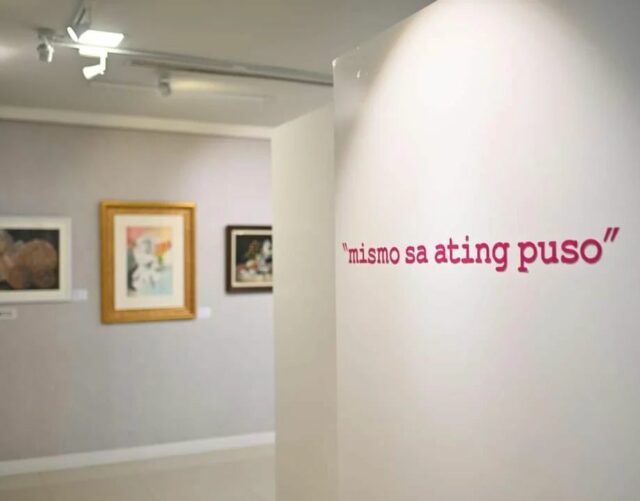
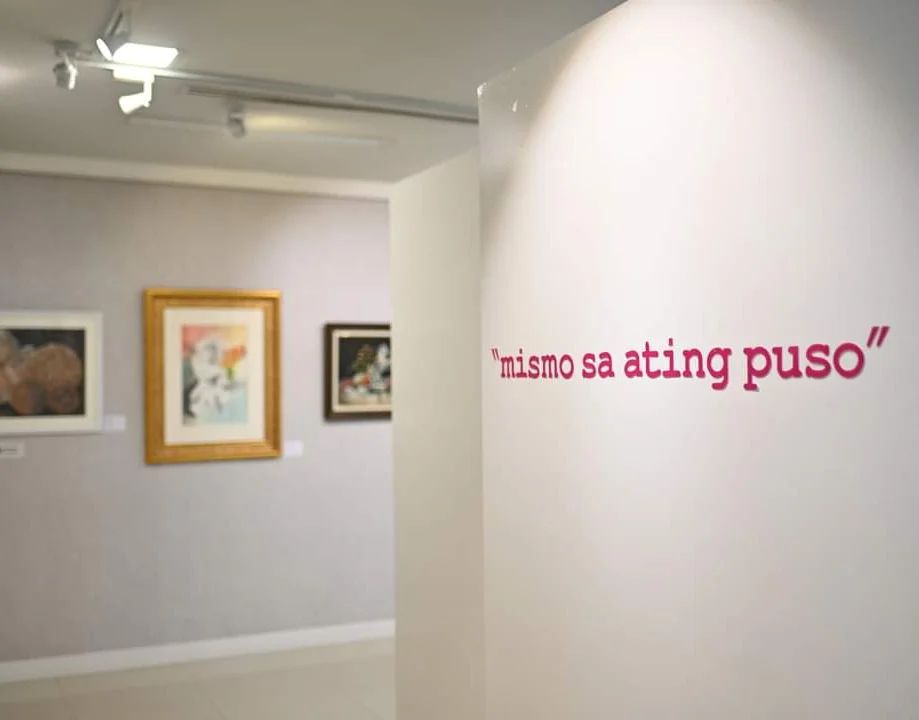
ONGOING until Sept. 8 is an exhibit of works by 48 local artists whose wish for the Philippines is to progress amidst the modern-day challenges united. The special exhibition, “Mismo sa Ating Puso,” is on view at the Gateway Gallery for the benefit of Angat Buhay Foundation. Among the participating artists are Julius Legaspi, Beth Robles, Iris Babao Uy, Joanne Caraiaso Gacayan, Mara Manabat, Mary Ann Venturina Bulanadi, Phoebe Beltran Almazan, Zata Aquino, Charo Defeo Baquial, Menchie Alunan Vitente, Toym Imao,  Rosscapili, Edna Vida, Sinag de Leon, Joel Lloren, Brian Alegre,  and Derrick Macutay.  Part of the proceeds from the sale will be donated to the Angat Buhay Foundation.


Menchu Lauchengco-Yulo directs CCP gala

MUSICAL theater artist Menchu Lauchengco-Yulo returns to directing live shows with Musikal II, the Cultural Center of the Philippines’ (CCP) 53rd anniversary gala on Sept. 10, 8 p.m. at the Tanghalang Nicanor Abelardo. Ms. Yulo envisioned Musikal II to herald the return of the Filipino musicals, after the two years of the pandemic. Musikal II consists of songs from original Filipino musicals staged from 2015 to 2021, featuring songs from Eto Na! Musikal nAPO!, Kanser the Musical, Felix Starro, Ang Larawan, LapuLapu Ang Datu ng Mactan, Guadalupe, Awitin Mo at Isasayaw Ko, F(r)iction, Changing Partners, Ang Huling El Bimbo the Musical, Binondo, A Tsinoy Musical, Dekada ‘70, A Game of Trolls, Mabining Mandirigma A Steampunk Musical, Aurelio Sedisyoso A Rock Sarswela, The Quest for the Adarna, Ding Ang Bato, Kung Paano Ako Naging Leading Lady, Himala Isang Musikal, and Daluyong ng Diwa. Stephen Sondheim’s Follies was Ms. Yulo’s inspiration for Musikal II. “The premise of Follies is they all return to a theater that has run its course and is about to be demolished. And as you see them you also see the ‘ghosts’ of their younger selves roaming the theater,” Ms. Yulo said in a statement. Artists from various theater companies will perform in the show including Bituin Escalante, Bayang Barrios, Arman Ferrer, Shiela Valderrama-Martinez, Carla Guevara Laforteza, Sandino Martin, Reb Atadero, Delphine Buencamino, Topper Fabregas, Upeng Fernandez, Vic Robinson, Ricci Chan and Juliene Mendoza. While the event is invitational, certain sections of the venue will be open to the public for free. Tickets for the public will be released at the CCP Main Ramp two hours before the performance on a first-come, first-served basis. The show will be live streamed on the CCP Facebook page.


Japan Foundation launches the J-CAP program

THE JAPAN Foundation, Manila (JFM) will launch a new project dedicated to the co-development of Japanese and Philippine contemporary art called J-CAP or Jisedai Contemporary Arts Platform. “Jisedai” means “next generation” in Japanese. The program aims to foster dialogue, interaction, idea exchange, and collaboration between artists and curators from both countries. This year’s J-CAP program kicks off with a webinar series, starting with Tokyo based art unit Kyun-Chome on Sept. 10, 2 p.m. Kyun Chome is composed of Nabuchi and Eri Honma who use video installations as their main medium to engage with a broad range of socio-political issues in Japan and abroad. Their work has been exhibited in South Korea, Thailand, the USA, Germany, Denmark, France, the UK, and Japan. In this webinar, the duo will discuss their process, lessons, and goals in creating their art. Eri Homma is currently in the Philippines conducting research under the program of the Agency for Cultural Affairs, Japan. For more details visit JFM website: https://jfmo.org.ph/events-and-courses/j-cap-jisedai-contemporary-arts-platform/. To register for the webinar, visit https://us06web.zoom.us/webinar/register/WN_E6uBfXReTIaOqg8OZTT9lg.


Instituto Cervantes pays tribute to Luis Eduardo Aute

SEPT. 13 marks the 79th birth anniversary of Luis Eduardo Aute, one of the most important Spanish artists of the 20th century, who was born in Manila. On this occasion, Instituto Cervantes and the Embassy of Spain present the video concert Con tu latido: Filipinas canta a Luis Eduardo Aute. A tribute. The event will be held at 2 p.m. on Sept. 13 at the Intramuros branch of Instituto Cervantes. The video concert will feature Filipino singers covering select iconic songs by the celebrated musician. Performing are Bituin Escalante; Mark Anthony Carpio, choirmaster of the Philippine Madrigal Singers; Toma Cayabyab, a member of the Ateneo Chamber Singers and the Villancico Vocal Ensemble, and leader of jazz sextet, Debonair District; tenor Julius Sinoy; James Barbecho; soprano Sheila Ferrer; and Ella Castro. The concert will be completed by Spanish singer Rosa León’s rendition of “Mirándonos los dos.” A respected artist and popular musician in Spain in the latter part of the 20th century, Luis Eduardo Aute was born in Manila in 1943. His father, a Catalan working for Tabacalera since 1919, married a Spanish-Filipina. In his childhood, Mr. Aute studied at the De La Salle School, where he learned English and Tagalog. His family had eventually settled in Spain in 1954. Mr. Aute’s musical career kicked off in the 1960s, and he continued composing songs and recording albums until the 2010s. Mr. Aute passed away in April 2020, leaving behind a vast collection of works in several fields, in literature, music, cinema and painting. For further information about the event, visit the website of Instituto Cervantes at https://manila.cervantes.es or Facebook page at www.facebook.com/InstitutoCervantesManila.


UP Fine Arts students show in Robinsons Galleria

IN “YUPIDI,” the latest exhibition of ARTablado at Robinsons Galleria, eight young artists pay homage to history while synthesizing the naturalist approach using modern ways to realize new forms. The group — composed of Jadie Pasaylo, Cherdee Millen Palmera, Ma. Eliza Torres, Raphael Cruz, Jairus Dianzon, Lucas Viriña, Leo Kim C. Jacinto, and Jose Pamatian Jr. — started in 2019 when the artists were still in their freshman year at the University of the Philippines Diliman. The exhibit is a testament of their time together not only as artists but also as good friends.YUPIDI” runs until Sept. 15 at the 3rd Level of Robinsons Galleria.


Nativity of the Blessed Virgin Mary exhibit opens in Ali Mall

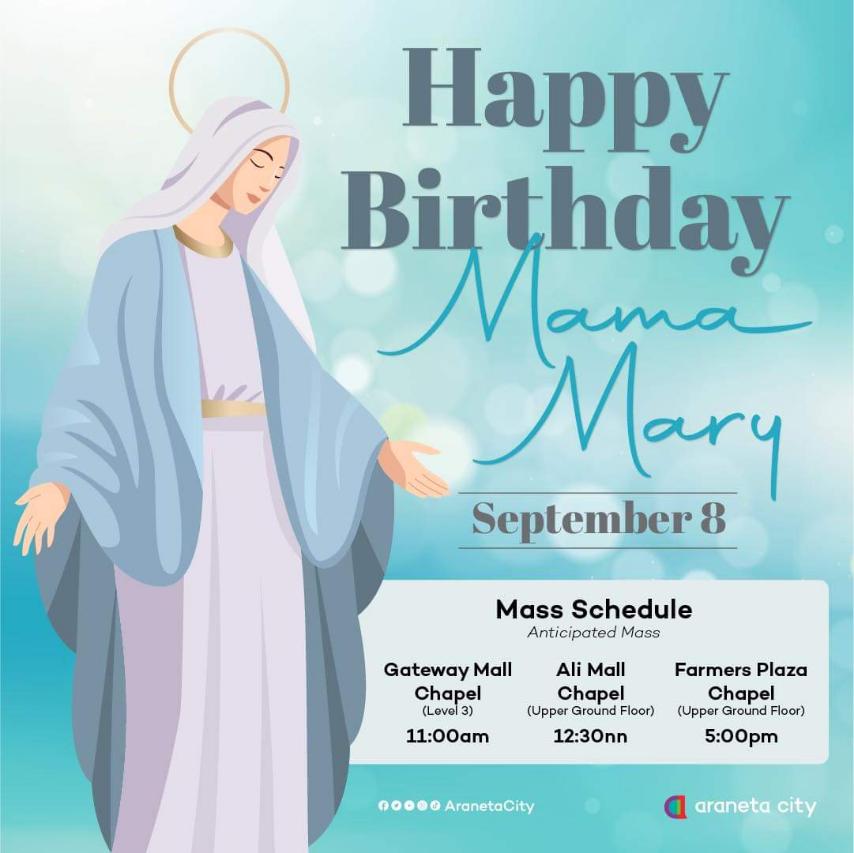
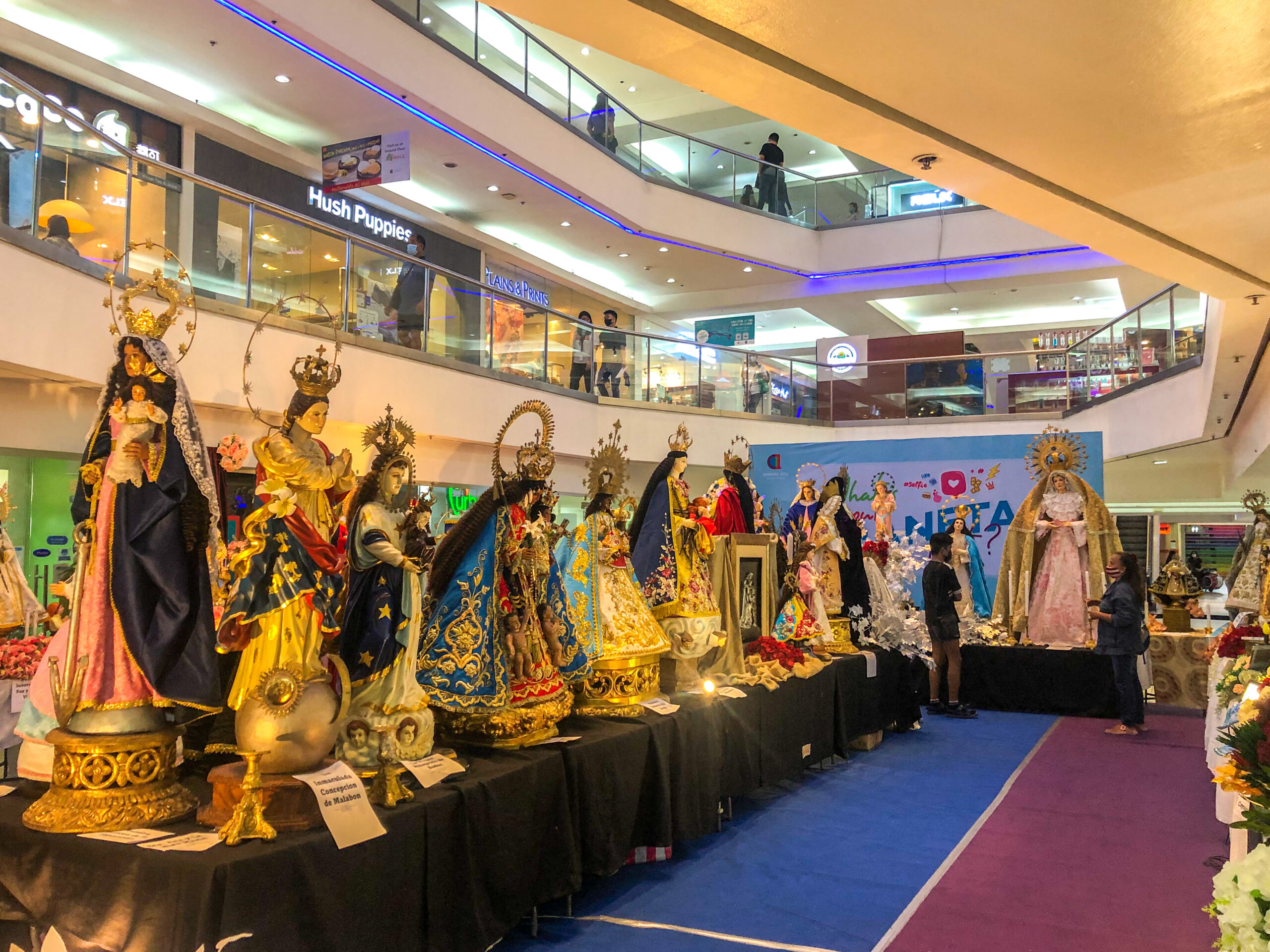
ARANETA City in Quezon City is holding a special Marian exhibit in Ali Mall until Sept. 10 to honor the birth of the Blessed Virgin Mary. More than 50 images of Mary are on display at the exhibit titled “Salamat Maria: Pagpupugay sa kaarawan ng mahal na Ina”. Notable images include the Nuestra Señora De Las Flores from Pola, Oriental Mindoro, the replica of Imaculada Concepcion de Malabon, and the Our Lady of the Abandoned Manila. The exhibit is open to the public during mall hours at the Lower Ground Floor, Activity Area of Ali Mall. The feast of the Nativity of the Blessed Virgin Mary is celebrated by the Catholic Church each year on Sept. 8. Apart from the exhibit, masses are also scheduled at chapels in Gateway Mall, Ali Mall, and Farmers Plaza on this day as part of the occasion.


Angono artists featured in ARTablado

NATIONAL Artist for Painting Carlos “Botong” Francisco dreamed of putting up an art organization to solidify Angono, Rizal’s reputation as the “Art Capital of the Philippines.” In 1975, to commemorate his 6th death anniversary, artists from Angono banded together and set up the Angono Ateliers Association (AAA) Philippines. Fourteen artists from the AAA Philippines are featured in a show at Robinsons Land ARTablado in Robinsons Place Antipolo, which is on view until Sept. 15. They are: Nemesio “Nemiranda” Miranda, Jr., Arnold “Atoy” Apostadero, Rodolfo “Dolpee” Alcantara, Jr., Aries Hernandez, Rading Caringal, Rosalie Vitor Gonzales, Sarah Pallarca, Aaron Bautista, Adonis Carado,  Bernardo “Bernie” Balagtas, Cecille Artillaga, Jeremias “Jeff” Ramos Gamulo, Juno Galang, and Augusto Santiago.


Lindslee on view at ArtistSpace

ORGANIZED by the Pintô Art Museum,The Mind Crossed The Idea” is Lindslee’s latest exhibition. It expands the artist’s repertoire of large-scale, and museum-worthy sculptures. They mostly depict ordinary objects, to which we pay scant attention, which now become total and unavoidable in space. The exhibit runs until Sept. 17 at the ArtistSpace, at the Ground Level, Ayala Museum Annex, Makati Avenue corner De La Rosa Street, Greenbelt Park, Makati City. The gallery is open daily from 11 a.m. to 8 p.m. Admission is free.


PPO launches 38th performance season

AFTER two years of online performances during the pandemic, the Philippine Philharmonic Orchestra (PPO) is all set to return to the concert hall for live performances and to begin the search for its new Music Director. Titled Metamorphosis, PPO’s 38th season begins in September featuring eight conductors taking the podium, five of whom are shortlisted for the Music Director and Principal Conductor position. Spanish conductor David Gomez-Ramirez opens the season on Sept. 16. Grzegorz Nowak conducts the second concert of the season on Oct. 7. Noam Zur takes the helm of the PPO on Nov. 11. Mark Anthony Carpio choirmaster of the Philippine Madrigal Singers, will conduct the PPO on Dec. 16. Japanese-American conductor Shizuo Kuwahara wields the baton on Jan. 27, 2023. Award winning conductor Haoran Li steps on the dais on Feb. 24, 2023. The PPO will conclude its 38th season with two more concerts slated on March 17 and April 28, 2023. Except for the Nov. 11 concert at the Manila Metropolitan Theater, the PPO will be performing at its home at the CCP Tanghalang Nicanor Abelardo for the rest of 2022. In 2023, the PPO will move over to the Manila Metropolitan Theater while the CCP Main Building is closed for rehabilitation. For more information, visit the CCP website (www.culturalcenter.gov.ph) and follow the official CCP social media accounts on Facebook, Twitter, and Instagram for the latest updates.


Raymond Lauchengco launches first NFT collection

SINGER, photographer, and sculptor Raymond Lauchengco  is now adding a new genre to his mediums of expression through crypto art. “Tales of Light” is a collection of four one-of-one digital photographs minted on the Ethereum blockchain via Foundation. Mr. Lauchengco’s spoken narratives accompany the photographs of locations that inspired him to write them. In each NFT (non-fungible token), the viewer is treated to an idyllic scene, accompanied by the singer’s soothing voice — only this time, he is not singing. As he worked on his pieces, his thoughts wove into stories that he would later tell as he shared his finished works on social media. Mr. Lauchengco has performed in over 30 countries as a concert and recording artist and has directed numerous international live events, while documenting both his personal and business travels in digital and film photographs for the past 40 years. After venturing into creating one-of-a-kind functional art and sculpture in 2020, he launched his first NFT collection this year. Mr. Lauchengco’s collection may be viewed at  https://foundation.app/@raymondlauchengco.


CCP to present dance series

FROM September to December, the Cultural Center of the Philippines (CCP) will present the CCP Dance Series (Live!), featuring a diverse line-up of choreography created by National Artists for Dance Alice Reyes and Agnes Locsin, pieces by French choreographer Redha Benteifour, and promising choreography works by young Filipino dancers. The series kicks off with Pulso Pilipinas I at the CCP Tanghalang Nicanor Abelardo on Sept. 23, 8 p.m., and Sept. 24, 3 p.m. This dance performance brings regional dance students and professional dancers for works such as Mamang Kutsero, We-Men by Lester Reguindin, Asong Ulol by Denisa Reyes, Moriones by Ms. Locsin and The Company by Ms. Reyes. It will be followed by Pulso Pilipinas II: Alay nina Alice at Agnes, at the CCP Main Theater on Sept. 30, 8 p.m. (Gala Night), Oct. 1, 3 and 8 p.m., and Oct. 2, 3 p.m.  Locsin’s Igorot, Moriones, and Elias at Salome, as well as Reyes’ Carmina Burana, are featured. The third production of this dance series, Premiere and Encores, is a partnership between the CCP and the French Embassy to commemorate the 75th anniversary of the diplomatic relationship between France and the Philippines. It will run from Oct. 28 (Gala Night) and Oct. 29, at 8 p.m. It showcases works by French choreographer, Redha Benteifour, as well as works by young Filipino choreographers such as Lester Reguindin, Erl Sorilla, John Ababon, AL Abraham, and JM Cabling. The final show in the series is Puso ng Pasko, on Dec. 2, 8 p.m. (Gala Night), Dec. 3, at 3 and 8 p.m., and Dec. 4, 3 p.m. It is an original full-length Filipino ballet based on the hit dance film production Tuloy ang Pasko. The choreography of this production was made by Ronelson Yadao with Erl Sorilla, John Ababon, Lester Reguindin, Bonifacio Guerrero, Al Abraham, and Danilo Dayo, accompanied with music by Ryan Cayabyab, National Artist for Music. For more information, visit the CCP (www.culturalcenter.gov.ph) website.


PETA returns with Batang Rizal

AFTER the Philippine Educational Theater Association’s (PETA) move online during the pandemic, the pioneering Filipino theater company is making a big theater comeback for its 55th Theater Season. The return to the theater features a PETA classic, Christine Bellen’s Batang Rizal. First to launch online via streaming from Oct. 14 to 16, the musical will be the first show to open PETA’s theater stage in November. Co-written, directed for stage, and choreographed by Dudz Teraña, with musical direction, arrangement, and composition by Vincent de Jesus, Batang Rizal was first staged in 2007.


Contemporary art at World Trade Center Manila

ARTISTS for Peace, in collaboration with World Trade Center Metro Manila (WTCMM), present the Contemporary Art Exhibition until Oct. 24 at the mezzanine level of the WTCMM. On view are works by Augusto Santiago, Juno Galang, and Nemi Miranda. The exhibit is open to the public.


How PSEi member stocks performed — September 6, 2022

Here’s a quick glance at how PSEi stocks fared on Tuesday, September 6, 2022.


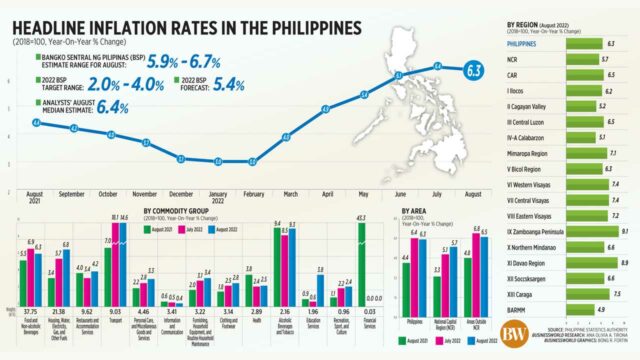
Headline inflation rates in the Philippines (Aug. 2022)

INFLATION eased to a two-month low of 6.3% in August, as the rise in  food and transport costs slowed, the Philippine Statistics Authority (PSA) said on Tuesday. Read the full story.

Headline inflation rates in the Philippines (Aug. 2022)

Marcos eyes Indonesia sea pact to settle China maritime dispute

OPS.GOV.PH

By Kyle Aristophere T. Atienza, Reporter

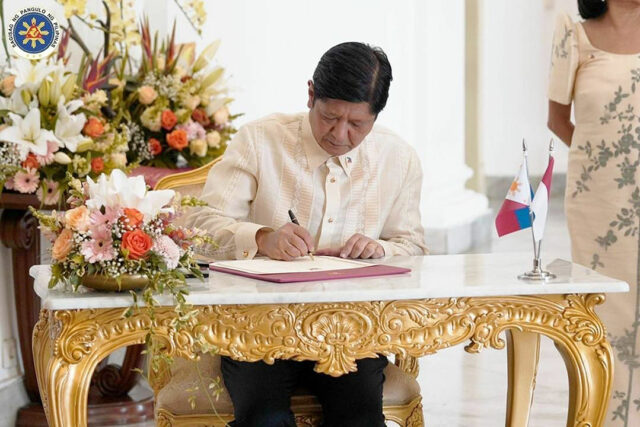
PHILIPPINE President Ferdinand R. Marcos, Jr. on Tuesday said he would consider a 2014 sea border deal with Indonesia to settle the country’s sea dispute with China.

The strategy used by the two countries to settle overlapping claims in the Mindanao and Celebes seas is “worthwhile to explore at the very least,” he told reporters in Jakarta, according to a transcript sent by the presidential palace.

“It is one instance that this kind of discussion, we came to a conclusion and we came to a resolution,” he said. “We should try it.”

The 2014 sea border agreement set the exclusive economic zone borders between the Philippines and Indonesia in the Mindanao and Celebes seas. The deal came after more than two decades of negotiations.

“Hopefully it works,” Mr. Marcos said. “If it doesn’t work, we’ll try something else. At least we have a beginning point.”

China has ignored a United Nations-backed arbitral award that voided its claim to more than 80% of the South China Sea, parts of which are claimed by the Philippines.

Mr. Marcos said the delimitation talks between the Philippines and Indonesia could also be used in settling sea disputes with other countries.

“That could be the template for delimitation talks on the continental shelf that we are undergoing now,” he said. “We can use it even if we are talking to others on the similar delimitation.”

“We should show it to the rest of ASEAN (Association of Southeast Asian Nations) as an example, that it is something that actually, it can be done.”

Ex-President Rodrigo R. Duterte, Mr. Marcos’ predecessor, and the Indonesian Parliament ratified the deal in 2017. The Philippine Senate concurred with the ratification in 2019.

The Philippines and Indonesia are both signatories to the 1982 UN-backed sea borders convention, which allows states to explore, exploit, conserve and manage natural resources within their exclusive economic zones.

Meanwhile, the Philippines and Indonesia renewed a deal that reaffirmed their commitment to a 1997 Defense Cooperation Agreement. The pace complements the 1975 border patrol and crossing agreements between the two countries. 

In a statement, Philippine Defense officer-in-charge Jose C. Faustino, Jr. said the renewal would let the Philippines and Indonesia collaborate on shared concerns, particularly in the Southeast Asian region.

“The Philippines and Indonesia also work together with Malaysia to pursue trilateral cooperation in view of security challenges in maritime areas of common concern,” he said.

Mr. Faustino signed the pact with Indonesian Defense Minister Prabowo Subianto on Monday.

Mr. Marcos left Indonesia on Tuesday for his state visit to Singapore.

“Our economic cooperation with Singapore has grown by leaps and bounds for the past half-century, and more opportunities are just waiting to be tapped by both sides,” he said earlier

There are about 200,000 migrant Filipino workers in Singapore, 84,000 of whom are domestic workers, while the rest are professionals and skilled workers, according to the Department of Migrant Workers.

Singapore has become the Philippines’ top trading partner in the region and the top source of approved investments in 2021.

The Philippines should cooperate with Indonesia on the South China Sea dispute and boost economic activities in areas being claimed by China, political analysts said on Monday.

Mr. Marcos should look at Indonesia’s plan to set up a special economic zone in its key territory in the South China Sea that China claims, they added.

Indonesia is seeking to convert the Natuna Islands, also known as the Natuna Regency, into a special economic zone to boost maritime security while attracting investments there. Indonesia’s exclusive economic zone off the coast of Natuna slightly overlaps with China’s widely disputed South China Sea claim.

Indonesia wants to introduce incentives to boost tourism, fishing, energy and security sectors in the region. The plan came after Indonesian President Joko Widodo signed a decree dividing the Natuna Islands into different regulated zones including exploration, defense and fishing.

It seeks to counter China’s island-building activities at sea.

The South China Sea, a key global shipping route, is subject to overlapping territorial claims involving the Philippines, Indonesia, Brunei, Malaysia, Taiwan, Vietnam and China.

Mr. Duterte led a foreign policy pivot to China when he took office in 2016. He has been accused of gambling Philippine territories to appease China, which pledged P1.2 trillion in investments and loans to fund big-ticket infrastructure projects.

Critics said few have materialized.

Mr. Marcos, 64, took office in June amid tensions in the disputed waterway and naval competition for influence among Southeast Asian countries.

In his first address to Congress on July 25, he promised to protect Philippine territories though he did not name China as an aggressor. He neither sided with China nor the United States, saying the Philippines “shall continue to be a friend to all and an enemy to none.”

ADVERTISEMENT
ADVERTISEMENT