Home Blog Page 589

A celebration of raising workplace standards
Companies honored for excellent workplace practices at BusinessWorld Best Places To Work Awards

By Mhicole A. Moral, Special Features and Content Writer

Workplace quality became a clearer measure of how companies supported their people and built long-term growth. Many workers looked for offices that valued open communication, personal well-being, and a sense of purpose. Because of this, employers faced higher expectations to create systems that helped both staff and business goals.

This trend shaped the BusinessWorld Best Places to Work 2025 Awards, held on Dec. 2 at Dusit Thani Manila, recognizing companies from different sectors that built environments where employees felt supported and heard.

BusinessWorld Editor-in-Chief Cathy Rose A. Garcia opened the program by addressing the global drop in worker engagement and the mixed reaction to artificial intelligence (AI). She said many employees worldwide had expressed uncertainty about the future of their work but noted that the companies honored in this year’s awards proved that growth and people could move forward together.
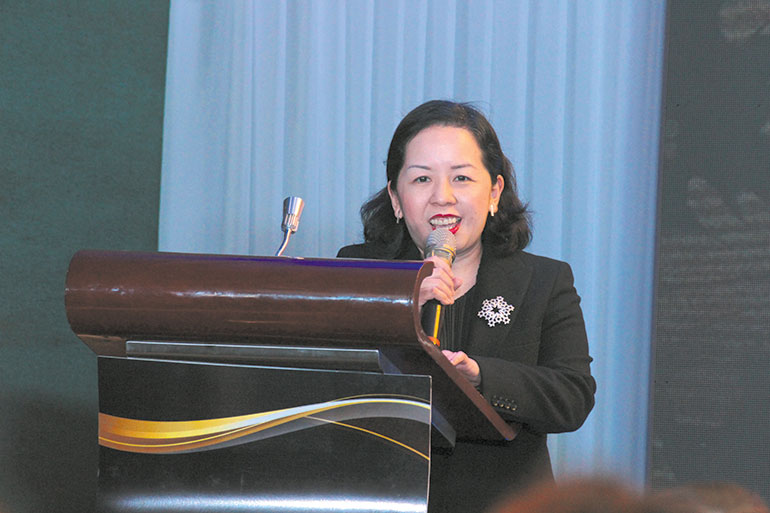
BusinessWorld Editor-in-Chief Cathy Rose A. Garcia

“For the first time in decades, technology isn’t just changing how you work. It’s challenging the very foundation of entire professions. But we all know AI is simply a tool, not a bogeyman, not a catastrophe threatening to take people’s jobs. The real issue here is leadership, culture, how organizations guide their people through this transition,” she explained.

Ms. Garcia also noted that WorkL’s Six Steps to Workplace Happiness — reward and recognition, information sharing, empowerment, well-being, pride, and job satisfaction — are significant indicators that shape a strong workplace. She said that these factors came from measurable experiences that showed how employees truly felt about their jobs.
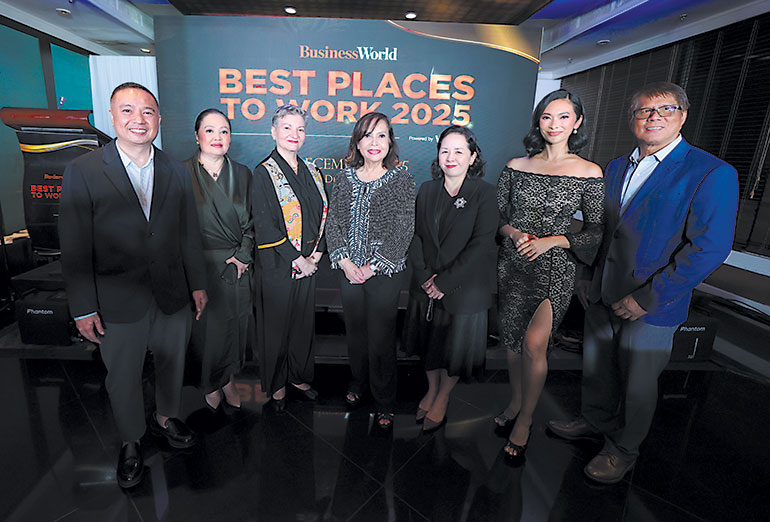
L-R: BusinessWorld Executive Vice-President Lucien C. Dy Tioco, BusinessWorld Vice-President for Sales and Marketing Jay R. Sarmiento, BusinessWorld Associate Editor Alicia A. Herrera, BusinessWorld Board Director Marife B. Zamora,
BusinessWorld Editor-in-Chief Cathy Rose A. Garcia, Awards Night Host Dr. Danie Laurel, and BusinessWorld Chief Finance Officer Carlos R. Dizon

“The result is a grounded, evidence-based standard that says, this is what a strong workplace actually looks like in the lived experience of people. With that foundation, the organizations recognized today share a very distinct DNA. They are companies that reap [a] culture of something fundamental to their success,” she added.

In a recorded message Lord Mark Price, founder of WorkL, noted that the employee engagement platform conducted the surveys for the awards. He explained that the research collected hundreds of millions of data points worldwide that examined different aspects of workplace quality.

The awards night gave a toast to the Philippine companies taking the lead in nurturing happily engaging, empowering, and fulfilling workplaces.

“As you know, we use data points to understand the factors that attract and motivate employees. These include information sharing, empowerment, well-being, pride, and job satisfaction. All of you scored highly across these areas. This means you not only excel at creating positive employee experiences, but you also demonstrate that strong engagement leads to stronger business outcomes,” he said.

The WorkL founder added that the Philippine awardees performed strongly across categories that measured how well employees felt supported.

“The companies with the happiest employees often deliver the best performance, highest productivity, and most sustainable success,” Mr. Price shared.
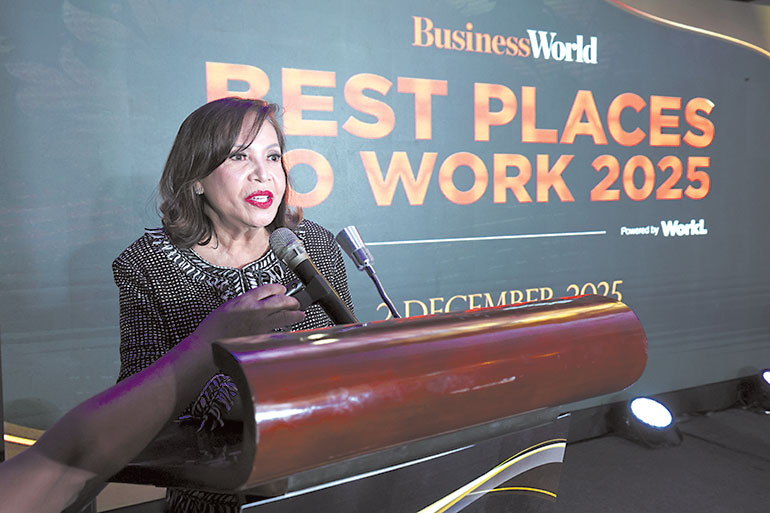
BusinessWorld Board Director Marife B. Zamora

Marife B. Zamora, board director of BusinessWorld, continued the message of leadership development during her talk. Drawing from decades of experience in multinational companies and corporate boards, she noted that workplaces with engaged employees performed better because people stayed motivated and involved in daily operations.

“Your organizations need leaders at every level who can adapt, inspire through uncertainty, [and] who can turn disruption into opportunity. You can acquire your way to that kind of leadership bench. You have to build it,” she added.

Ms. Zamora encouraged companies to identify future leaders among their workforce and give managers the training needed to support their teams. She said leadership should be part of regular work culture instead of something limited to executives.

“The foundation is already there. You have created workplaces where people are valued, engaged, and supported. Now, take the next step. Make leadership [as] fundamental to your culture as it [already is],” Ms. Zamora explained.

Topping among the best
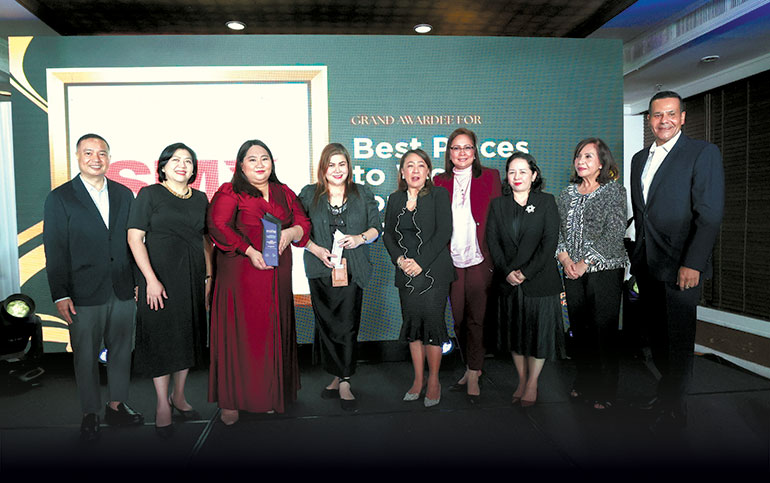
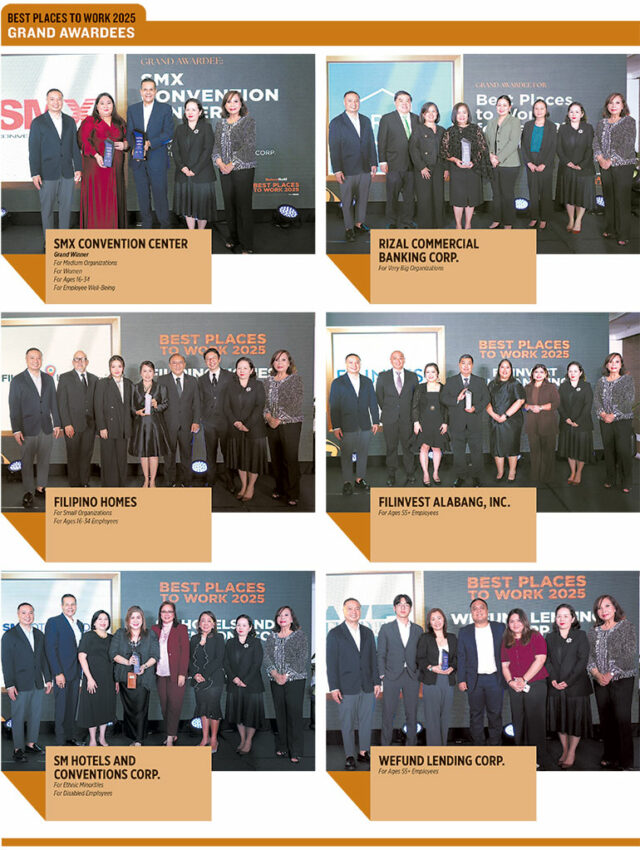
SMX Convention Center

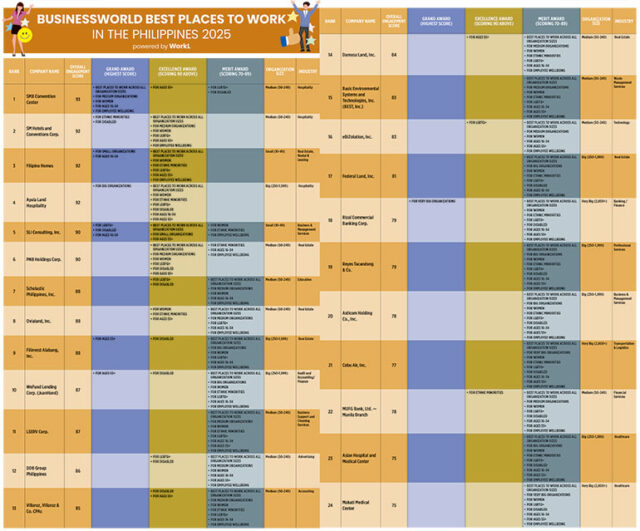
SMX Convention Center was named the overall winner of the BusinessWorld Best Places to Work 2025 Awards. The organization also earned recognition across nine categories, highlighting its standing as a leading workplace in the Philippines.

Walid Wafik, senior vice-president for operations of SM Hotels and Conventions Corp. (SMHCC), accepted the top honor on behalf of SMX Convention Center. In his speech, he said the recognition affirmed the company’s commitment to building a workplace where every employee felt heard and supported.

“To be recognized by BusinessWorld as one of the best places to work in 2025, not just once, but across nine awards categories, is truly an honor that reflects the commitment, spirit, and heart of every individual in our organization. At every turn, we strive to build a workplace where collaboration, pride, and every voice matters,” he said.

Mr. Wafik detailed SMX’s ongoing investment in mentorship programs, learning initiatives, and mental and emotional well-being support. He said these efforts equipped employees with the confidence to perform at their best while contributing to organizational goals.

“At SMX Convention Center, we are reminded every day that our success is built not on structures or stages, but on the people who bring them to life,” Mr. Wafik added. “As we look to the future, we aim to continuously create spaces that inspire, uplift, and empower together.”

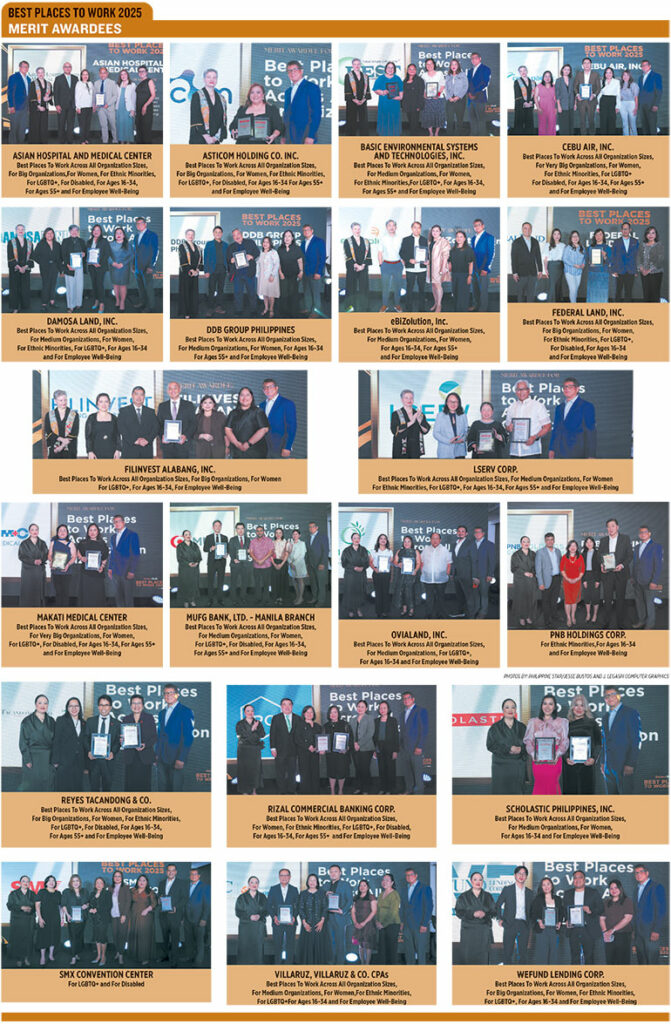
SMX also won the Grand Award for medium-sized organizations, women, employees aged 16-34, and overall employee well-being. It also received the Excellence Award for employees aged 55 and above, along with Merit Awards recognizing lesbian, gay, bisexual, transgender, and queer or questioning (LGBTQ+) employees, and persons with disabilities.

In addition, SMX said the awards reflected the daily efforts of its staff and confirmed that the workplace culture they were building was tangible and appreciated.

“[This recognition] gives us a sense of pride and gratitude because it reflects the everyday efforts of our people. It affirms that the culture we are building is real, felt, and appreciated. Most of all, it inspires us to continue creating an environment where employees feel valued, supported, and proud to be part of the SMX Convention Center,” the company said in an email.

When asked about future plans for improving the work experience, SMX explained the recognition encouraged the company to strengthen the employee experience further.

“As we expand, we look forward to creating more opportunities for the next generation of talent to experience a workplace built on purpose, learning, and connection. This allows us to share who we are, what we stand for, and why SMX is not only a place to build a career but truly one of the best places to work,” SMX added.

Ayala Land Hospitality claimed the top honor for large organizations, while Filinvest Alabang, Inc. earned top recognition as the leading workplace for employees aged 55 and above.

“Earning recognition as one of the best places to work motivates Filinvest Alabang, Inc. to further enhance the employee experience and build on the culture that earned this distinction. Our focus now is on deepening engagement, expanding professional development, and strengthening well-being initiatives through targeted learning programs and additional resources that support personal and professional growth,” Filinvest shared.

Filipino Homes received multiple Grand Awards, including the top awards for small organizations and for workforces aged 16 to 34. The company also received Excellence Awards for overall performance, women, ethnic minorities, LGBTQ+ representation, employees aged 55 and above, and employee well-being.

“Being included in BusinessWorld’s and WorkL’s inaugural Best Places to Work list is both an honor and a validation of our commitment to people-first values. At Filipino Homes, we believe that success in real estate is built not only on properties but on people — our team, our partners, and the communities we serve,” the company shared.

Rizal Commercial Banking Corp. (RCBC) was recognized as the leading workplace for very large organizations. The company credited the award to its “People First” philosophy.

“For our organization, it reaffirms that our consistent and strategic investment in our people directly translates into service excellence, as evidenced by our recognition as Best Customer Experience Bank in the Philippines at the International Finance Awards in 2024,” said RCBC.

In addition to the highest recognition, RCBC won Merit Awards in several categories, including overall performance, women, ethnic minorities, LGBTQ+ representation, employees with disabilities, youth aged 16-24, employees aged 55 and above, and employee well-being.

SMHCC earned a Grand Award for supporting ethnic minorities and employees with disabilities. The company emphasized that the award reflected the active implementation of its service culture.

“SM Hotels and Conventions Corp. being included in BusinessWorld’s and WorkL’s inaugural Best Places to Work list is an incredible honor and a meaningful affirmation of the WE GO BEYOND service culture we continue to build. It is a clear testament that our company’s core values are alive in our actions, decisions, and relationships,” said the company.

SLI Consulting, Inc. received Grand Awards for LGBTQ+ representation, employees with disabilities, and youth engagement, while WeFund Lending Corp., the operator of lending platform JuanHand, was recognized as the top workplace for employees aged 55 and above.

“Being a certified Best Place to Work raises our employer brand and sends a strong message to current and future talent. It shows that JuanHand is a place where people can build meaningful careers, feel supported, and grow,” WeFund stated, adding that its commitment to genuine care sets the company apart, with leaders empowered to celebrate wins, acknowledge challenges honestly, and give space for people to grow.
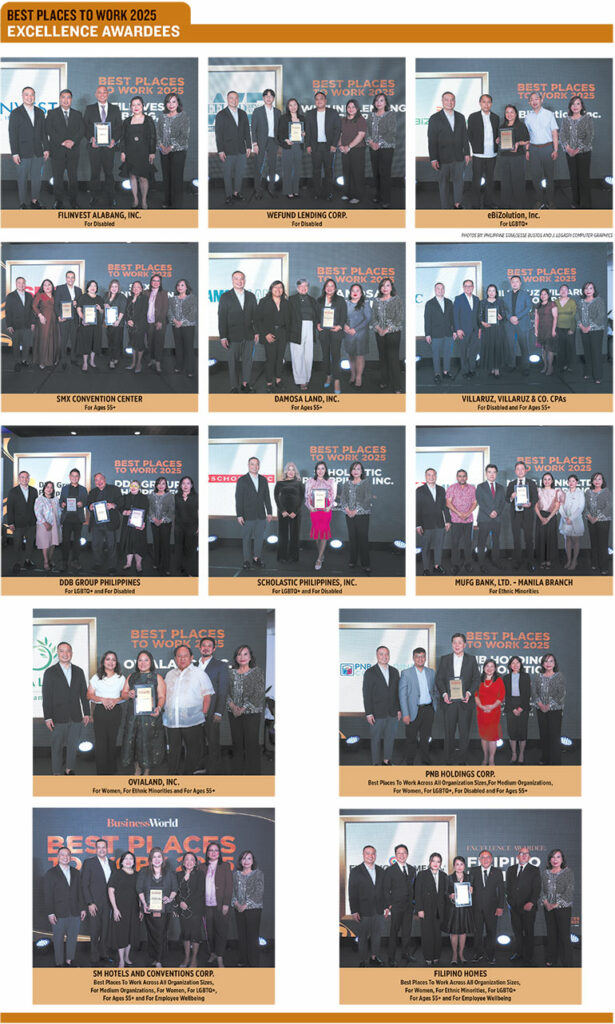
Excellence in the workplace

Damosa Land, Inc. earned the Excellence Award for its programs supporting employees aged 55 and older. The company also received Merit Awards in multiple categories, including overall performance, medium-sized organizations, support for women, ethnic minorities, LGBTQ+ employees, younger workers aged 16 to 34, and employee well-being.

“Behind every company’s success are the people who give their time, energy, and passion every single day. They are the heart of the organization, and their dedication is the true driving force behind any achievement,” the company explained.
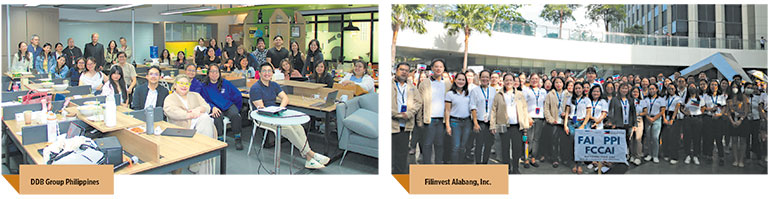
DDB Group Philippines bagged the Excellence Award for supporting LGBTQ+ and disabled employees. The company also got Merit Awards for overall performance, medium-sized organizations, support for women, employees aged 16-34 and 55 and older, and employee well-being.

“DDB Group’s approach to employee well-being is holistic, intentional, and deeply embedded in our operating system. We don’t treat wellness as a program; it is part of our DNA. Through our Holistic Health framework, we support personal, mental, physical, spiritual, and career well-being in integrated ways,” it shared.

Federal Land, Inc. also received the Excellence Award for employees aged 55 and older. The company earned Merit Awards in several categories, including overall performance, support for large organizations, initiatives for women, ethnic minorities, LGBTQ+ employees, younger workers, and persons with disabilities, as well as employee well-being programs.

The company said its next step is focused on continuing to enhance the employee experience, strengthening feedback mechanisms, expanding wellness and learning programs, and creating more opportunities for collaboration and innovation.

“This recognition validates the culture we’ve worked hard to build: one that prioritizes employee well-being, growth, and collaboration. It reinforces our belief that, beyond our projects, our people are our greatest asset,” Federal Land added.

eBiZolution, Inc. bagged the Excellence Award for supporting LGBTQ+ and Merit Awards for its overall performance, medium-sized organizations, employee well-being, ages 16-34, ages 55 and above, and initiatives for women.

“Our next steps include expanding employee programs, strengthening career development, refining growth pathways, and enhancing our overall work environment. We want our people to see that they have a long, meaningful future with us,” eBiZolution shared.
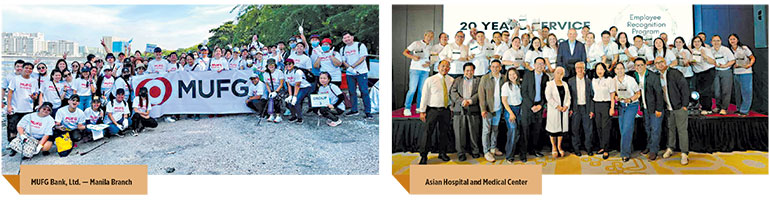
MUFG Bank Ltd. — Manila Branch received the Excellence Award for initiatives supporting ethnic minorities. The bank also earned Merit Awards in nearly all other categories, including overall performance, medium-sized organizations, support for women, LGBTQ+ employees, disabled employees, employees aged 16 to 34 and 55 and older, and employee well-being.

“What sets us apart is that our approach to well-being isn’t a one-off program. It’s built into how we work every day,” the bank explained. “We listen closely to our people through regular check-ins, from new hires to long-tenured employees, and we use their feedback to shape real improvements. Our five-pillar Well-being Framework also helps us support employees in a more holistic way, from mental and social well-being to career and financial growth.”
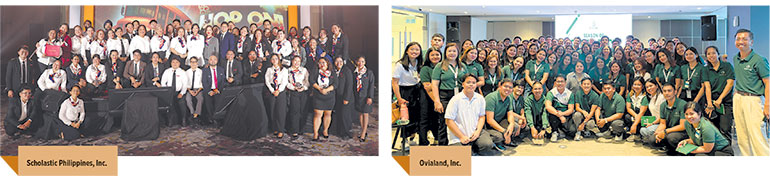
Meanwhile, Ovialand, Inc. earned Excellence Awards for initiatives supporting women, ethnic minorities, and employees aged 55 and older. The company received Merit Awards for overall performance, medium-sized organizations, LGBTQ+ employees, younger workers, and employee well-being.

“Here at Ovialand, our employees are an integral part of our ‘OLI Core,’ shaping everything we do. Our culture is grounded in growth mindset, trust, open communication, and respect — values that are not just ideals but genuinely practiced. This creates an environment where every voice is heard, every idea is welcomed, and every contribution is recognized,” said the company.

PNB Holdings Corp. received Excellence Awards for overall performance, medium organizations, women, LGBTQ+ employees, persons with disabilities, and employees aged 55 and older. Merit Awards included ethnic minorities, younger workers, and employee well-being.

The company said its core values of taking care of employees were rooted in the leadership of Lucio C. Tan and Karlu T. Say.

Scholastic Philippines, Inc. also received recognition, securing Excellence Awards in the LGBTQ+ and disabled categories. Merit Awards reflected the company’s efforts in overall performance, medium organization management, support for women, younger employees, and initiatives for employee well-being.

“Leadership has been one of the important factors to creating the kind of workplace that earned this recognition. Our leaders lead by example, promote open communication, and make sure every employee feels respected and heard. They focus on building trust, encouraging collaboration, and supporting both personal and professional growth. This consistent approach has helped shape a culture where people feel valued and motivated to do their best,” said Scholastic Philippines.
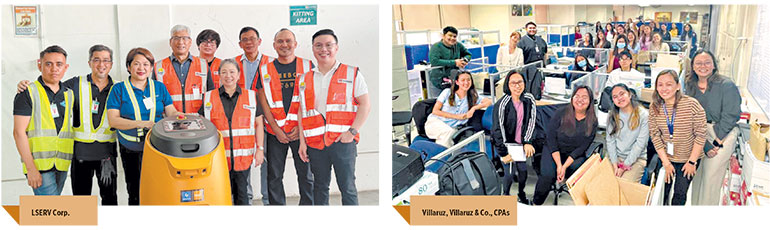
Villaruz, Villaruz & Co. CPAs achieved Excellence Awards for employees with disabilities and those aged 55 and older. Merit Awards covered overall performance, medium organizations, women, ethnic minorities, LGBTQ+ employees, younger workers, and employee well-being.

The firm said it is consistent in balancing professional excellence and genuine care for employees, by offering competitive compensation packages, flexible hybrid work arrangements, and meaningful activities.

“Our core values — commitment, integrity, respect, client care and communications, leadership and loyalty, excellence, innovation, teamwork, and timeliness — are not just statements on paper; they guide our daily interactions and decisions,” it added. “We strive to create an environment where employees can excel professionally while maintaining a healthy and fulfilling personal life.”

Asian Hospital and Medical Center and Asticom Holding Co., Inc. received the Merit Awards for overall performance, employee well-being, support for women, ethnic minorities, LGBTQ+ employees, persons with disabilities, and programs for both young employees aged 16 to 34 and those aged 55 and above.

“Asian Hospital makes a conscious effort to drive the highest possible level of employee engagement. Key to this is listening to our employees to ensure that their needs are addressed not only in terms of compensation and benefits but also with regards to a workplace culture that ensures that our employees are happy at work,” Asian Hospital said.

On the other hand, Asticom expressed that it was honored to be part of BusinessWorld’s and WorkL’s inaugural Best Places to Work list, as it showed its commitment to cultivating a workplace where people felt valued and empowered to thrive.

“Earning this recognition as we celebrate Asticom’s 10th year is truly special. It reflects a decade of dedication to building a workplace where people feel valued, empowered, and inspired. While we are honored by what we have accomplished, we know that creating an exceptional work experience is an ongoing journey,” the firm explained.

Cebu Air, Inc. (CEB) and Makati Medical Center received Merit Awards for very large organizations, overall performance, support for women, LGBTQ+ employees, persons with disabilities, and employee well-being programs.

“At CEB, we’ve always been inspired by global best practices, and now, we hope this recognition motivates other companies in the Philippines to focus more on their employee experience,” Cebu Air noted.

Similarly, Makati Medical Center said the recognition reminded it that people drive success in every industry.
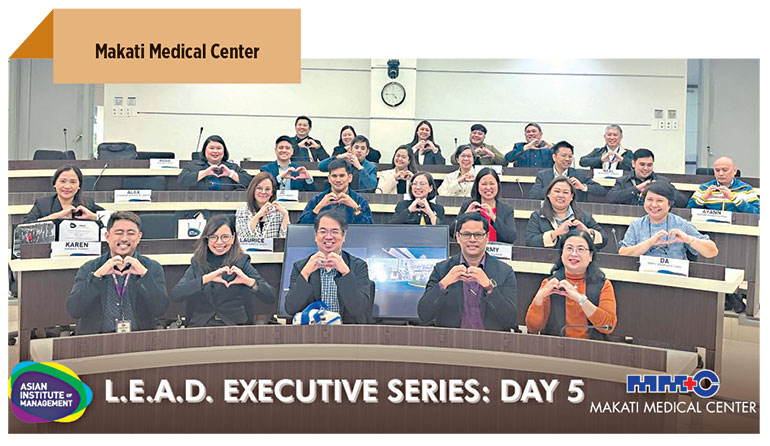
“In the Philippines, where workplaces are built on shared values and a strong sense of community, such awards inspire organizations to go beyond compliance and business goals to genuinely invest in their employees’ growth, well-being, and sense of belonging,” it added.

Reyes Tacandong & Co. received recognition in all large-organization categories, including overall, women, ethnic minorities, LGBTQ+, disabled employees, age-specific groups, and employee well-being.

“In a profession that will always be demanding, this recognition carries extra weight because it reflects how our people actually experience the firm day to day,” the company noted. “It tells us we are on the right track in our mission to be one of the best firms where top talents stay, grow, and thrive.”

Merit Awards were also given to Basic Environmental Systems and Technologies, Inc. (BEST) and LSERV Corp. for medium-sized organizations, overall performance, support for women, ethnic minorities, LGBTQ+ employees, and well-being programs for different age groups.
“Acknowledging an employee’s achievements directly impacts their motivation and self-esteem, encouraging them to continue performing well and even go above and beyond their regular duties,” BEST said.

LSERV Corp. mentioned that it was honored to be part of the inaugural Best Places to Work list, especially because the recognition comes directly from its employees.

“For us, more than an award, this is a confirmation of what we have built and what we stand for as an organization. As the country’s largest service provider operating under DoLE Department Order 174, we carry a responsibility not only to our clients but to the thousands of Filipinos who trust us with their livelihoods,” LSERV explained.
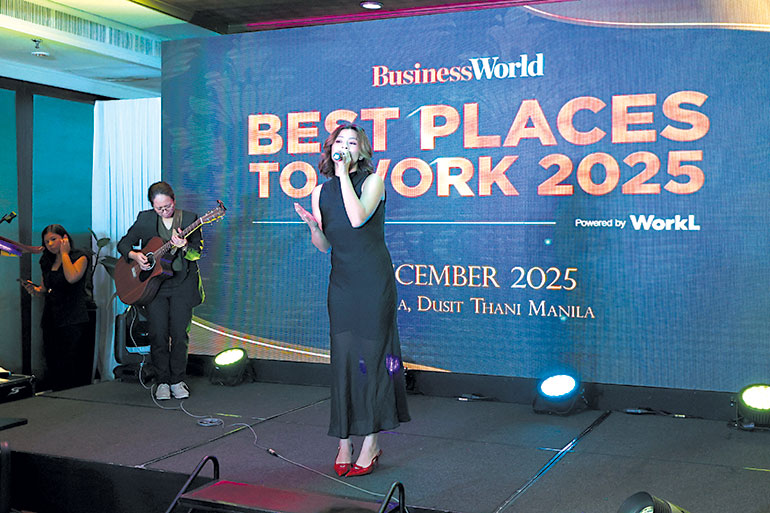
Viva Artist Janine Teñoso serenaded guests midway through the awards night.

Built on data-driven standards

The program, produced in partnership with WorkL, highlighted companies that met strict benchmarks based on staff sentiment and verified engagement data.

WorkL’s assessment used 31 questions developed by behavioral scientists, analysts, and workplace experts. The survey measured six areas that shaped employee experience: reward and recognition, instilling pride, information sharing, empowerment, well-being, and job satisfaction.

A firm needed at least a 70% overall engagement score to qualify for accreditation. Scores were based on how employees rated their workplace and were compared with data from more than 85,000 organizations in WorkL’s global benchmark. To secure valid results, employers had to reach minimum response rates, ranging from 50% for small groups to 25% for very large ones.

Organizations also submitted supplementary information to provide context for their survey results. WorkL reviewed both data sets before finalizing the honors.

Learn more about the BusinessWorld Best Places to Work 2025 results and explore the 2026 cycle at https://www.bworldonline.com/bwbestplacestowork/.

What makes a workplace truly happy?

By Mhicole A. Moral, Special Features and Content Writer

A happy workplace has more than perks, benefits, or modern offices. It is a place where employees arrived with purpose and left feeling fulfilled. Across industries and office layout, the principle was the same: people thrived when they felt a genuine connection to their work and their colleagues.

BusinessWorld, in partnership with WorkL, recognized organizations that upheld a happy workplace through the Best Places to Work 2025 awards last Dec. 2. Winners came from various industries, each showing different ways of supporting employee satisfaction.

Asian Hospital and Medical Center

Asian Hospital and Medical Center described happiness as something rooted in steady dedication. The hospital said employees showed malasakit (roughly translated as a combination of concern, care, compassion, and empathy) for patients, doctors and colleagues, and staff members took pride in being identified as part of the Asian Hospital family.

“A happy workplace is a workplace that drives performance. Our employees take pride in being known and identified as part of the Asian Hospital family,” the hospital told BusinessWorld.

Workers supported one another, and that support showed in patient care and in how they met organizational goals. Pride in work and respect across departments also helped build an atmosphere in Asian Hospital and Medical Center.

Asticom Holding Co., Inc.

Asticom Holding Co. Inc. defined happiness at work as something built through practice, not perks. The company said the workplace felt productive when people could share ideas, speak up and have their efforts recognized.

“A happy workplace is more than perks — it’s a culture where people feel energized, empowered, and inspired to bring their whole selves to work every day. It’s a place where collaboration, trust, and genuine care are part of every interaction, where ideas flow freely, and innovation is not only encouraged but celebrated,” the company explained.

Asticom also said employees felt more engaged when they saw how their tasks connected to larger outcomes. The company cited work linked to service improvements, community projects and internal innovations. That connection, they said, gave staff a reason to invest in their projects.

“What makes Asticom truly unique is that happiness and purpose go hand in hand. Our people are driven not just by the work they do, but by the knowledge that their efforts create meaningful outcomes, whether through innovative projects, exceptional service, or community initiatives,” they added.

Basic Environmental Systems and Technologies, Inc.

At Basic Environmental Systems and Technologies, Inc., employees said happiness grew when workers felt free to express ideas without fear. Staff members described an atmosphere where people at any level could speak during meetings and raise concerns openly.

They said a workplace became happier when people were not expected to push themselves without pause. Setting boundaries, taking breaks and planning workloads helped them stay healthy.

“Measuring happiness at work is challenging, but it includes psychological safety, recognition for achievements, fair treatment that will contribute to a positive and productive work environment,” the company said. “While not the only factor, fair pay, flexible hours, and good benefits are fundamental to job satisfaction and employee well-being.”

Cebu Air, Inc.

For Cebu Air, Inc. (CEB), employees worked with more energy when they knew their efforts mattered. The company said the atmosphere inside its offices showed that.

“A happy workplace is one where employees feel valued, supported, and motivated to do their best work. It’s about creating an environment where people are excited to contribute and proud of what they do. At CEB, we see this in the way our employees connect with each other and go the extra mile to make customers’ journeys better,” they added.

Damosa Land, Inc.

Damosa Land, Inc. said its teams responded well when the office operated on shared respect and open communication. A positive environment began when people could speak without hesitation and knew their ideas would be treated fairly.

“A happy workplace is one where collective growth, trust, and respect come together. It’s a space where people can express their talents without hesitation, where ideas and voices are genuinely heard, and where mutual respect is shared,” the company said.

The company added that a workplace supporting personal development eventually led to better company output. They described the effect as a cycle benefiting everyone.

“[A happy workplace] is a place that encourages everyone to pursue his or her passion, nurture hobbies, and grow not just as a professional, but as a person. When this culture exists, employees thrive. They bring their best, most creative, and most inspired selves to work every day. And when people thrive, the company thrives—creating a cycle of growth, fulfillment, and shared success,” Damosa Land explained.

DDB Group Philippines

A happy workplace is one where they can bring their full selves, do meaningful work, grow at their own pace, and feel part of a community that values them, DDB Group Philippines shared.

“Within DDB, we see this in our open, collaborative spaces; our quiet zones for deep work; our flexible work arrangements; our inclusive facilities; and our culture of laughter, creativity, and shared purpose,” the company explained. “We see it in teams supporting one another, in leaders listening with empathy, and in the everyday interactions that show genuine care.”

eBiZolution, Inc.

A happy workplace, for eBiZolution, Inc. noted, is where ideas are welcomed, well-being is prioritized, and individuals are encouraged to grow.

“Within our offices, we see this in the natural interactions among colleagues — the camaraderie, the willingness to help one another, the open conversations, and the genuine celebration of each other’s milestones. It’s a workplace built on trust, warmth, and shared purpose, and that is what makes it a truly happy place to work.”

Federal Land, Inc.

Federal Land, Inc. said the foundation of a happy workplace started with trust. The company described it as a daily practice shaped by openness and respect.

“There is no such thing as a perfect organization. A truly happy workplace is one where employees experience both highs and lows, because challenges and triumphs shape growth, resilience, and fulfillment, making work more meaningful,” they added.

The group explained that workers saw fairness not as a slogan but as an expectation for decision-making, growth, and discipline.

“A happy workplace is defined by trust, fairness, and genuine connection. It’s a place where people feel safe, heard, and given opportunities to grow, factors that truly sustain engagement and create an environment where employees can thrive,” Federal Land said.

Filinvest Alabang, Inc.

For Filinvest Alabang, Inc., a happy workplace nurtures employees who feel celebrated, included, and inspired; espouses a culture that encourages curiosity and creative problem-solving; and allows for experiences that foster connection and community, bringing people together through interactive events and team gatherings.

“Happiness at Filinvest Alabang, Inc. is visible in the energy and camaraderie among our employees,” the company explained. “Our workplace is a safe space where contributions are valued and daily exchanges feel meaningful. This approach allows employees to focus on their work with enthusiasm while playing an integral role in a cohesive and dynamic organization.”

Filipino Homes

Filipino Homes described an environment similar to a close-knit community. A happy workplace encouraged people to speak up, ask questions, and help one another.

“A happy workplace means treating our employees as true partners in building the future. It’s about showing genuine care, providing them with security for their future, and ensuring they feel supported every step of the way. Within our offices, this translates into a family-like atmosphere where people know they are valued, respected, and encouraged,” the company shared.

Filipino Homes added that workplace happiness grew when people trusted that their concerns were heard and said it paid attention to what employees needed to succeed.

LSERV Corp.

At LSERV Corp., employees felt most satisfied when they knew why their work mattered. According to them, workers responded well when they understood their duties and saw how their tasks linked to larger goals.

The company cited structured processes, approachable managers and professional interactions as factors that helped employees work without unnecessary setbacks.

“A happy workplace, for us, is one where people feel that their work makes sense, that they are supported in doing it well, and that they can grow from it,” the company explained. “At the heart of this is our belief that talent is human infrastructure — and that people thrive when their work is aligned with a clear purpose, when they have access to the tools and support they need, and when they can see a path for their own ascent.”

“Our people see the real world impact of what they do — supporting airports, banks, utilities, government services, and some of the most essential operations in the country,” LSERV continued. “When employees feel aligned with a shared mission, supported in the work they do, and empowered to keep moving forward, that is what a happy workplace looks like for us.”

Makati Medical Center

Makati Medical Center described a work setting built on trust and open communication. The company said workers stayed engaged when they felt valued and connected to their daily tasks.

“A happy workplace is one where people feel valued, respected, and genuinely connected to what they do. It is one built on trust, open communication, and a shared sense of purpose — all of which create positive experiences that manifest in the way we serve patients and communities where we are a part of,” the company noted.

MUFG Bank Ltd. — Manila Branch

For MUFG Bank Ltd. — Manila Branch, happiness at work came from respect, belonging and being heard. The company said a happy workplace allowed employees to give their best without feeling ignored.

“In a happy workplace, employees can do their best work without feeling overlooked. In our office, this is evident in open communication, recognition of contributions, and activities organized by our Manila Recreation Committee, which help build meaningful connections,” they explained.

Ovialand, Inc.

Ovialand, Inc. said a happy workplace grew from a culture that listened. The company cited open communication as a starting point and said employees responded when their ideas were heard and their concerns were taken seriously.

“At Ovialand, this means fostering open communication, collaboration, and recognition, while providing opportunities for growth and meaningful contributions. We see happiness when our team celebrates wins together, shares insights, and supports one another in overcoming challenges,” the company added.

PNB Holdings Corp.

Similarly, PNB Holdings Corp. linked workplace satisfaction to respect and steady support. The company said its goal was to help employees focus on meaningful work without added stress.

“[A happy workplace] means creating an environment where employees can focus on doing great work without unnecessary stress. They have the security and resources they need, so they can come to work energized, motivated, and free to give their best every day,” they stated.

Reyes Tacandong & Co.

Reyes Tacandong & Co. described a happy workplace as one where people felt they belonged and saw their growth as part of the organization’s direction. The company said its goal was to give employees clear expectations and steady support.

“It’s not a place without pressure, it’s a place where pressure is balanced by clarity, support, and shared purpose,” the company explained.

Rizal Commercial Banking Corp.

Rizal Commercial Banking Corp. said a workplace becomes a positive space when the organization built a culture that valued inclusion, open dialogue and shared effort. The bank described a happy workplace as “a culture that intentionally fosters inclusivity, innovation and collaboration.”

“[A happy workplace] is a workplace which gives equal opportunity and fair beginning across all demographics. It is an environment where every employee is valued, supported, and fully empowered to succeed.

The bank highlighted development programs as another pillar. Under its “One RCBC” banner, the institution offered continuous learning tracks designed to help workers refine skills or explore new ones.

Scholastic Philippines, Inc.

For Scholastic Philippines, Inc., workplace happiness began with the atmosphere employees experienced daily.

“A happy workplace is one where employees can laugh wholeheartedly — even in the face of deadlines. It’s a place where they feel seen, supported, and unafraid to engage with leaders. They work not out of fear, but because they genuinely enjoy what they do and feel proud to be part of the team.

SM Hotels and Conventions Corp.

SM Hotels and Conventions Corp. describes a happy workplace as one that treats its employees as partners in daily operations. Morale rises when workers know that their effort and skills matter.

“A happy workplace nurtures employees who are happy, and secure in themselves, who know their value and that they matter to the organization. In our industry, we believe that happy employees create happy guests. When our employees are thriving, it is reflected in the way they work, which translates into a positive experience for stakeholders,” they shared.

The company also said a strong work culture encourages employees to give their full effort because they want to, not because they feel obligated. Leaders describe this as a sign of genuine engagement.

SMX Convention Center

SMX Convention Center, the overall winner of BusinessWorld’s Best Places to Work this year, said a positive workplace starts with people who guide teams with sincerity and fairness. They noted that employees often describe leaders as approachable and steady in fast-moving situations.

“A happy workplace is one where people feel supported, respected, and part of a community that cares. When I read how employees describe their experience at SMX, I see those qualities reflected,” they said.

SMX said the events industry demands quick decision-making. Even with that pace, teams show patience with one another and share tasks to meet deadlines without leaving colleagues behind.

“Even in a fast-paced environment like events, the way our teams support one another shows that sense of “we are in this together.” For me, that is what a genuinely happy workplace looks like, and it is something we are proud to see in SMX,” the company added.

Villaruz, Villaruz & Co.

Villaruz, Villaruz & Co. described a workplace where employees felt valued from the moment they walked in. The company said the atmosphere inside its offices reflected how staff members spoke with one another, handled daily tasks, and responded when someone on the team needed help.

“Happiness is reflected in the collaboration we witness daily, the open communication between teams, the willingness to help one another, and the pride our people take in their work. It is seen in the small moments — shared successes, professional growth, and genuine connections — that form the foundation of our culture,” the company stressed.

WeFund Lending Corp.

Lastly, WeFund Lending Corp., the operator of lending platform JuanHand, describes a happy workplace as one where integrity guides decisions, competence builds confidence, enthusiasm sparks creativity, dependability strengthens trust, and teamwork allows everyone to feel included.

“At JuanHand, we see this every day. We see it in the collaboration between departments, in open conversations, in the energy of our teams, and in the genuine care people show for each other,” the company shared.”

“A happy workplace is built on people, and our people are what make JuanHand truly special.”

Common threads

In practice, happiness is visible in small daily moments, such as colleagues helping one another and sharing a commitment to doing meaningful work. For the companies recognized this year as the “Best Places To Work” in the Philippines, such moments defined the workplace experience more than any benefit or policy.

Despite differences in industry and function, respect and shared purpose appeared consistently as drivers of employee satisfaction. These examples highlighted that a happy workplace was not a static goal but a continuous process of listening to and empowering employees.

Learn more about the BusinessWorld Best Places to Work 2025 results and explore the 2026 cycle at https://www.bworldonline.com/bwbestplacestowork/.

Reviewing the scales of work-life balance in the Philippines

pch.vector | freepik

By Jomarc Angelo M. Corpuz, Special Features and Content Writer

As millennials make up the bulk of workforces and Generation Zs come of age and slowly enter the workforce, the concept of work-life balance has proliferated and become the desire of most young Filipino professionals. After all, having enough hours to rest and time for oneself is a great factor in determining job satisfaction, mental well-being, and long-term career sustainability.

However, achieving this balance seems to still be a challenge in many industries in the Philippines, where long hours, high workloads, and the pressure to constantly be “always on” often clash with the very idea of personal time and rest.

Based on results from a study by the human resource platform Remote, the Philippines placed 59th out of 60 countries in the 2024 Global Life-Work Balance Index. The Philippines scored 27.46 out of 100 on the index, with Filipino employees averaging 40.63 work hours per week. The ranking took into account factors such as statutory annual leave, minimum statutory sick pay, paid maternity leave and its rate, minimum wage, healthcare quality, happiness levels, lesbian, gay, bisexual, transgender, and queer or questioning (LGBTQ+) workplace inclusivity, and overall safety.

Telling a similar story, a study by medical insurance firm AXA shows that 87% of Filipino workers experience tiredness, trouble sleeping, stress and anxiety, loss of interest, difficulty concentrating, loss of self-confidence, feeling of worthlessness, and appetite or eating disorders as consequences of the work environment that they are a part of. According to the AXA Mind Health Study, that figure is 11% higher than the global average (76%), with half of the Filipino workforce even noting that they have gone through more than four of these consequences.

Additionally, the study noted significant disengagement from work as a repercussion of poor mental health in the Philippines’ workplaces. Data show that 85% of Filipino employees are considering stepping back from work, with 68% thinking about quitting or changing jobs. Many are even taking proactive measures to get by, such as enrolling in training courses to shift careers (57%); working remotely to avoid physically being in the office (54%); or taking sick leave (50%), with 31% specifically citing mental or psychological health issues.

Unfortunately, burnout is also increasingly becoming a concern in the country’s work environment, affecting 33% of respondents, slightly above the global average of 20%. More alarmingly, only 22% of those experiencing burnout sought help from healthcare professionals, highlighting a substantial gap in mental health support within Filipino workplaces.

One silver lining that the study highlighted is the willingness of Filipinos to turn to their managers for support more often than their global peers (64% versus 46%). Another positive for Filipino employers, around 71% of employees believe their companies are taking steps to support their mental health, higher than the global average of 57%. Satisfaction with company support during personal challenges is also relatively strong at 68%, though it falls to 58% among those experiencing burnout.

The report also aimed to identify actionable steps employers can take, highlighting several priorities directly from the respondents. Filipino workers expect initiatives such as mental health workshops and seminars (49%), access to external consultation services (43%), and designated mental health days (38%). Interestingly, their preference for mental health education is notably higher than the global average (49% versus 36%).

Latest measures on workplace happiness

Looking at a different perspective on mental health, work-life balance, and workplace stress, recent WorkL data from first quarter (Q1) of 2025 provides a closer look at how employee happiness differs across demographics, roles, and other key factors in the Philippines.

During Q1 2025, disabled employees experienced significant volatility in happiness, with scores of 73.7% in January, 83.1% in February, 71.9% in March, and 81.9% in April. On another note, gender-based data showed relatively steady engagement, with males reaching a high of 81.2% in April, slightly above females at 79.6%.

Within organizational hierarchy, management staff consistently reported higher happiness, culminating at 83.7% in April. In contrast, engagement among non-management employees declined from 78.9% in February to 76.7% in April.

Age also played a significant role in engagement. Employees aged 45-54 recorded the highest happiness at 85.7% in April, while those aged 55-64 declined sharply to 64.7%, down from 79.3% in March. The oldest group, 65 and above, experienced a modest recovery, rising from 67.3% in March to 71.4% in April.

Length was influential as well. Employees with over ten years at their organizations reported consistently high happiness, peaking at 82.5% in March. Those with under a year of service improved from 74.9% in January to 78.3% in March, while employees with one to five years peaked at 81.3% in February, suggesting that early-career support is valued but may benefit from ongoing development opportunities.

Finally, sexual orientation showed notable differences. LGBTQ+ employees saw a marked increase in happiness from 71.5% in January to 78.8% in April, while heterosexual employees remained stable at 80.6%.

Despite the challenges highlighted by recent studies, the Philippines performs notably well in global engagement metrics. Data from WorkL’s Global Workplace Report 2025 show that the country recorded an impressive 80% engagement score, making Filipino employees among the most connected and motivated globally.

This duality mirrors a larger, more concerning, global pattern that shows high engagement can coexist with high stress when employees feel motivated but overextended. In the Philippines, this tension becomes obvious when examining specific workplace dimensions. While job satisfaction remains strong at 81.8%, perceptions of reward and recognition dipped slightly from 80% to 79%, indicating that Filipino workers are slowly feeling inadequately acknowledged.

What makes the Philippines particularly interesting in the global landscape is its demographic complexity, with its young population. Young professionals, especially Gen Z, are entering the workforce with clear expectations of meaningful work, mental health protection, and flexibility. Meanwhile, WorkL data show that older age groups report the highest happiness levels, suggesting maturity and tenure provide stability that younger workers have yet to achieve.

These data from AXA, WorkL, and Remote reveal that workplace well-being in the Philippines is, in a word, complex, with burnout, stress, and engagement varying across demographics and roles. Pro-employee initiatives such as mental health support, inclusive policies, career development, and flexible work are becoming more in-demand and may soon be necessary to achieve work-life balance in the country. By addressing these employee needs, companies can foster happier, healthier, and more productive workforces.

Learn more about the BusinessWorld Best Places to Work 2025 results and explore the 2026 cycle at https://www.bworldonline.com/bwbestplacestowork/.

Further Vietnam expansion on MPTC radar

HANOI HIGHWAY BOT STATION — BW FILE PHOTO

METRO PACIFIC TOLLWAYS Corp. (MPTC) said it is weighing opportunities to expand its toll road assets in Vietnam.

“Vietnam is a different story. In Vietnam, we were getting dividends. If somebody makes us an offer for an asset that is attractive for us, we will acquire it,” MPTC President and Chief Executive Officer Gilbert F. Santa Maria told reporters on the sidelines of an event last week.

He said the company is not investing in Vietnam at present as it continues to receive dividend streams from its existing toll operations there.

“We will continue to look at what Vietnam plans are,” he added.

MPTC, the tollways unit of Metro Pacific Investments Corp. (MPIC), has operations in Indonesia and Vietnam.

Its Vietnam presence is through affiliate CII Bridges and Roads Investment Joint Stock Co. (CII B&R), in which it holds a 45% stake.

Earlier this year, CII B&R said it was working on the expansion of the nearly $1.6-billion Ho Chi Minh City-Trung Luong-My Thuan Expressway, a project covering about 96 kilometers and seen as key to improving transport connectivity in southern Vietnam.

The company has also expressed interest in bidding for four infrastructure projects in Vietnam valued at a combined $1.65 billion.

In Indonesia, MPTC and its partners have likewise pursued expansion. In November, the company said it was advancing plans to build an elevated toll road along the Jakarta Outer Ring Road, with the project currently in the financial proposal stage.

In 2024, MPTC, together with its subsidiaries and Singapore’s GIC Pte. Ltd., finalized a $1-billion investment cooperation for the acquisition of a 35% stake in PT Jasamarga Transjawa Tol (JTT), a major toll road operator in Indonesia. PT Nusantara Infrastructure, which owns infrastructure concessions in both western and eastern Indonesia, operates businesses across transportation, toll roads, communications, and distribution networks.

MPTC earlier raised P20 billion via fixed-rate bonds to fund infrastructure work and manage its growing debt. It intends to allocate net proceeds from the offering to partially finance investments in the construction and maintenance of the Manila-Cavite Expressway, Cavite-Laguna Expressway (CALAX), and Lapu-Lapu Expressway (LLEX), as well as to refinance bridge facilities and support other corporate purposes.

The company is working to reduce its P200-billion net debt.

MPIC is one of the three key Philippine subsidiaries of Hong Kong-based First Pacific Co. Ltd., along with Philex Mining Corp. and PLDT Inc.

Hastings Holdings, Inc., a unit of the PLDT Beneficial Trust Fund subsidiary MediaQuest Holdings, Inc., holds a majority interest in BusinessWorld through the Philippine Star Group, which it controls. — Ashley Erika O. Jose

MMFF crime drama set to capture 1960s Manila

THIS YEAR, Manila’s Finest, a crime action-drama and entry to the Metro Manila Film Festival (MMFF), is setting out to depict the grit and vibrancy of Manila in the 1960s.

The film is centered on police officer Capt. Homer Magtibay (played by Piolo Pascual), who must investigate a series of brutal killings in Manila’s growing slums, with the help of his trusted partner Lt. Billy Ojeda (played by Enrique Gil). In solving the crimes, they end up testing their loyalty and courage as well as confronting the sacrifices that must be made in a city with a rapidly changing identity.

Led by director Raymond Red, the entire production is “proud and excited” to present the film as their entry to this year’s MMFF, said Jane J. Basas, president of MQuest Ventures, which produced Manila’s Finest alongside Cignal TV and Spring Films.

Previous MMFF entries which MQuest Ventures produced are The Kingdom in 2024 and GomBurZa in 2023.

For the director, Mr. Red, the film is unique in that, beneath the action scenes and the period elements in the production design, it is still a human drama.

“I can’t call it an action film. At its core, it’s a human drama set against the backdrop of very significant events. It also tackles some parts of history, but the main story is fiction,” he said at the press conference on Dec. 5 in Quezon City.

The narrative was written by screenwriters Michiko Yamamoto, Moira Lang, and Sherad Anthony Sanchez, which reflects the spirit of collaboration that brought the film to life.

“What makes Manila’s Finest special is the collaboration,” Mr. Red said. “The challenge was to channel all that energy into one cohesive vision, and that’s what makes the film feel so alive.”

Including the two leads, the cast is packed with star power: in the cast are Ariel Rivera, Romnick Sarmenta, Joey Marquez, Soliman Cruz, Cedrick Juan, Jasmine Curtis-Smith, Kiko Estrada, Rico Blanco, and Rica Peralejo-Bonifacio.

The newer and younger faces in the ensemble are Ashtine Olviga, Ethan David, Dylan Menor, Paulo Angeles, Inday Fatima, and Pearl Gonzales.

Because of the sprawling cast and specific setting, the biggest challenge making the film was “creating the reality to the point that viewers would not be distracted by it,” said Mr. Red at the press conference.

“They have to believe that they’re in that period so that they pay attention to the story itself. As a visual storyteller and as the cinematographer as well, I could imagine the shots. I nitpick the small details. I have memories of the ’60s as a kid,” he added.

For Mr. Pascual, as the lead actor, a major realization he had was the importance of looking back at history. “The political unrest that’s happening now — we were shown clippings back in the ’60s of a lot of riots — fast forward to now, it’s still happening,” he said.

Seeing how there is still unrest among Filipinos led him to hope for change in the system. “Ang kinakatakutan ko ang kawalan ng accountability sa bansa natin (What I fear is the lack of accountability in our country),” he explained.

For Mr. Gil, meeting people who were officers back in the day allowed them to immerse themselves and help tell their story.

“We asked them questions, little things like how they behaved in the station, what their camaraderie and brotherhood was like, so that we can try to replicate it on set,” he said.

He recounted that the whole experience felt like stepping into another time, with “everyone on set so passionate about bringing that era to life.”

On what viewers can expect, Mr. Red described the film as one that “captures Manila at a pivotal moment — beautiful, wounded, and alive… about the people who kept moving, even as the city around them was changing.”

Manila’s Finest opens on Dec. 25 as an official entry to the 51st MMFF. — Brontë H. Lacsamana

An embodiment of the modern CFO

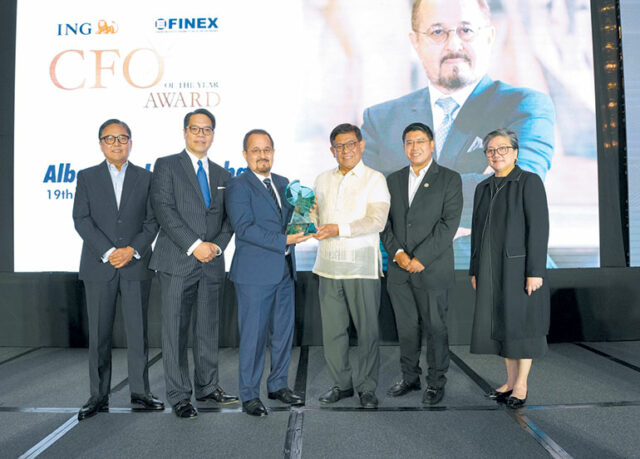
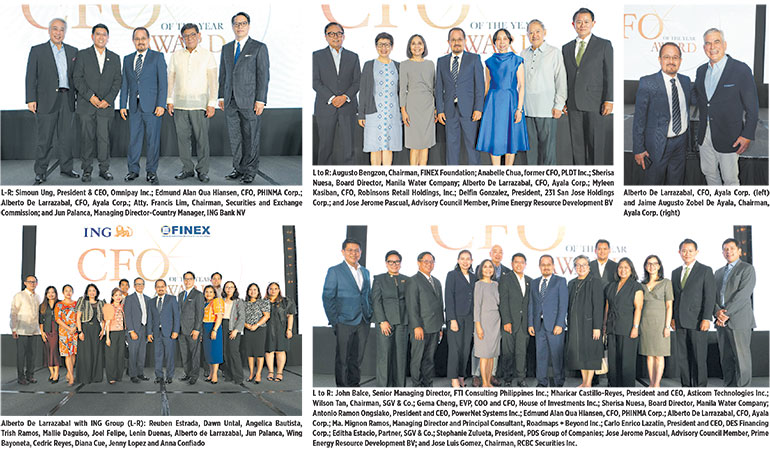
L-R: Augusto Bengzon, Chairman, FINEX Foundation; Jun Palanca, Managing Director-Country Manager, ING Bank NV; Alberto De Larrazabal, CFO, Ayala Corp.; Atty. Francis Lim, Chairman, Securities and Exchange Commission; Edmund Alan Qua Hiansen, CFO, PHINMA Corp.; and Ma. Mignon Ramos, Managing Director and Principal Consultant, Roadmaps + Beyond Inc.

Ayala’s Alberto De Larrazabal hailed as 19th ING-FINEX CFO of the Year

By Jomarc Angelo M. Corpuz, Special Features and Content Writer

Profitability and sustained growth are, perhaps, the two most important statistics for any company to thrive. To achieve this, businesses must have that one person to lead the financial strategy. Often unappreciated, chief finance officers (CFO) wear many hats to make sure their companies excel: head accountant, co-pilot to the chief executive officer (CEO), and a primary driver of overall corporate strategy.

Recognizing these unheralded executives, the Financial Executives Institute of the Philippines (FINEX), in a permanent partnership with multinational Dutch bank and financial services firm ING Group, established the ING-FINEX CFO of the Year Award in 2007, the longest-running and only dedicated search for outstanding CFOs in the Philippines.

The 19th edition of the ceremony, held last Nov. 19, at the Fairmont Hotel in Makati City, proudly honored Ayala Corp. Chief Financial Officer Alberto M. de Larrazabal as the 19th ING-FINEX CFO of the Year, an exemplary finance leader embodying the four faces of the modern CFO: the Steward, Operator, Strategist, and Catalyst.

Alberto De Larrazabal, CFO, Ayala Corp.

Having held senior finance roles at Globe Telecom, San Miguel Corp., and JP Morgan Hong Kong, Mr. de Larrazabal also serves as the president of AREIT, Inc., assuming the post in August this year. Fittingly, Ayala Corp.’s finance head since 2021 is set to step down from his CFO position on Jan. 1 next year, with the prestigious recognition crowning his tenure at the company.

“Today, as I am here in the twilight of my own career, I find myself standing in front of you all as a recipient of the same award,” he said. “I am deeply honored to be accorded this recognition, especially in the light of the distinguished roster of finance professionals who have received this award before me.”

In a clever twist of fate, Mr. de Larrazabal shared that he had been the one to nominate the award’s very first recipient, former Globe Telecom CEO Delfin “Chito” Gonzales, who was named ING-FINEX CFO of The Year in 2007.

Past awardees include Jose T. Sio of SM Investments Corp., Jeffrey C. Lim of SM Prime Holdings, Inc., Jaime E. Ysmael of Ayala Land, Inc., Jose Teodoro K. Limcaoco of Ayala Corp., Sherisa P. Nuesa of Manila Water Co., Inc., Mylene A. Kasiban of Robinsons Retail Holdings, Inc., Anabelle Lim-Chua of PLDT, Inc., and Maria Corazon G. Dizon of ACEN Corp.; with last year’s winner being Richard CW Shin of Jollibee Foods Corp.

L-R: Edmund Alan Qua Hiansen, CFO, PHINMA Corp.; Augusto Bengzon, Chairman, FINEX Foundation; Fernando Zobel de Ayala, Non-Executive Director, Ayala Corp; Atty. Francis Lim, Chairman, Securities and Exchange Commission; Alberto De Larrazabal, CFO, Ayala Corp.; Cezar Consing, President, Ayala Corp.; Jun Palanca, Managing Director-Country Manager, ING Bank NV; and Ma. Mignon Ramos, Managing Director and Principal Consultant, Roadmaps + Beyond Inc.

“And that is the privilege of working with really great institutions that have afforded us the opportunities to hone our craft over periods marked with significant change and challenges. On a side note, I also observed that I am the eighth CFO from the Ayala Group that has received this award,” Mr. de Larrazabal noted.

The criteria for selecting the CFO of the Year, drawn from Deloitte’s global framework, remain firmly anchored in the Ateneo Graduate School of Business-FINEX CFO Study, which has guided the program since 2014.

The formula gives equal weight to the CFO’s performance in four key roles. As a steward, the CFO preserves the assets of the company by minimizing risk and getting the books right. As an operator, the CFO runs a tight finance operation that is efficient and effective. As a strategist, the CFO helps to shape overall strategy and direction in the company. As a catalyst, the CFO drives change in financial approach and mindset, so the entire organization performs better.

Liaison Director for the CFO of the Year Award Committee and 2019 ING-FINEX CFO of the Year Augusto D. Bengzon

In his speech during the event, Liaison Director for the CFO of the Year Award Committee and 2019 ING-FINEX CFO of the Year Augusto D. Bengzon recalled that the inaugural ceremony was held at the Manila Peninsula Hotel on Nov. 29, 2007, the same day former senator Antonio F. Trillanes IV occupied parts of the building in a failed coup attempt.

“Today, here we are, gripped in another political crisis, but perhaps we can say, and with the events of Nov. 29, 2007, for perspective, we as a country today are in a better place, although we still have much work to do,” he said.

ING Bank NV Managing Director-Country Manager Jun Palanca, also gave a speech focused on recognizing the essential role of the CFO in forging resilience and future-proofing corporations amidst global economic headwinds and technological change.

ING Bank NV Managing Director-Country Manager Jun Palanca

“It has been 19 years of honoring financial leaders who have not only mastered the numbers, but have redefined what true leadership means in a rapidly changing world. From the very beginning in 2007, this award has stood for more than just recognition. It has been a platform to showcase vision, resilience, and the ability to lead with impact,” he explained.

Mr. Palanca added that this enduring purpose directly aligns with the fundamental shift in executive leadership, emphasizing that today’s CFOs are now measured not just by adherence to standards but by their active ability to drive change, strategic vision, and resilience in a volatile corporate landscape.

“Today’s CFOs are more than just financial stewards. They embody the four pillars of a modern CFO. That being a steward, an operator, a strategist, and a catalyst. They are both catalysts for growth, sustainability, and progress. And this year’s search has focused on those trailblazing leaders who embody these qualities,” he concluded.

Also part of the program is the welcoming of the newly inducted members of the institute during the FINEX 11th General Membership Meeting. The new members include Jose “Joey” P. de Venecia III, CEO of Atreides Ventures; Alvin Lacambacal, president and general manager of Anvic Construction; Bernadette “Berni” S. Recto, president and CEO of AFC SME Finance; Jose Ma. “Jojo” L. Quiaoit, treasurer and director of Ubitechnology; and Ma. Theresa “Tessa” Villanueva, VP-Deputy CFO and Comptroller of First Gen Corp. and First Balfour, Inc.

To date, FINEX has nearly 800 members across all industries in the Philippines.

Similarly, FINEX and the Urban Land Institute (ULI) Philippines officially signed a Memorandum of Understanding (MoU) on the same day, aiming to advance sustainable and inclusive economic growth through joint initiatives in capital markets, urban development dialogues, policy discussions, research, and capacity-building programs.

ULI is the oldest and largest network of cross-disciplinary real estate and land use experts in the world.
Together, FINEX and ULI Philippines hope to foster deeper knowledge exchange, stronger networks, and impactful partnerships for the country’s finance and real estate sectors.


Spotlight is BusinessWorld’s sponsored section that allows advertisers to amplify their brand and connect with BusinessWorld’s audience by publishing their stories on the BusinessWorld Web site. For more information, send an email to online@bworldonline.com.

Join us on Viber at https://bit.ly/3hv6bLA to get more updates and subscribe to BusinessWorld’s titles and get exclusive content through www.bworld-x.com.

PHL companies need bigger AI push — experts

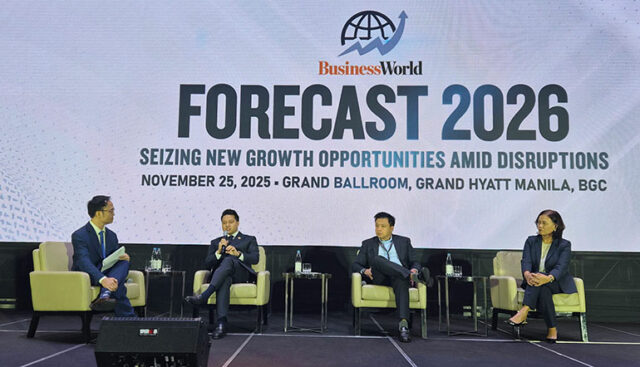
Panel Discussion 2 (L-R): BusinessWorld Corporate Editor Arjay L. Balinbin (moderator), Cong. Brian Poe Llamanzares of Global AI Council Philippines, Marco de la Rosa of Kearney, and Ambe C. Tierro of Accenture Philippines — Photos by J. Legaspi Computer Graphics

PHILIPPINE FIRMS must accelerate the integration of artificial intelligence (AI) and invest in infrastructure, talent, and governance to unlock potential gains of up to 12% in national economic output, according to industry experts.

“AI could drive anywhere from an 8% to 12% increase in the GDP (gross domestic product) of the country by 2030,” Kearney Senior Partner and Philippines Country Head Marco de la Rosa said during a panel discussion at the BusinessWorld Forecast 2026 on Nov. 25.

He said realizing that potential would require increased investments and more “democratized” access to AI technologies.

Enterprises, regulators and the government should also engage in what he described as a “healthy dialogue” on how to further improve AI adoption and governance.

“It would be great to see more venture capital or private equity monies coming into the country, investing in the AI capabilities locally,” Mr. De la Rosa said.

Ambe C. Tierro, country managing director at Accenture Philippines, said companies’ AI strategies must be grounded on technology, talent, and trust.

Organizations must have accurate data and secure cloud systems to produce relevant outputs from their AI infrastructure, she said.

“If you have a very sophisticated AI model, your data is the oxygen, so if the oxygen is bad, then the AI will not produce the right output,” Ms. Tierro said.

She also cited the need for companies to take advantage of the country’s young population by pushing AI-related upskilling.

“This generation learns fast, and so we need to capitalize on that demographic and train people as fast as we can,” she said.

Ms. Tierro added that companies must have a framework for ethics, fairness and transparency to maintain trust while using AI.

“You can make a lot of progress with AI, but as soon as you break trust, you fall backwards,” she said.

Brian Daniel Poe Llamanzares, a congressman and chairperson of the Global AI Council’s Advisory Board for the Philippines, cited the need for more local servers to host Philippine companies’ data.

“The Philippines should be looking at ways in which we can host servers here rather than us contacting them outside, not just for private sector use, but also because it’s a national security concern,” he told the panel.

He said most local companies’ data used in AI applications is currently outsourced for cloud services.

Mr. De la Rosa said the country should also expand its pool of science, technology, engineering and mathematics (STEM) graduates to become more AI-ready.

Companies should increase the availability of AI tools for their employees to ensure their data is not fed into unregulated platforms, he added.

“If it’s not available to them, they’re going to find a way to use it elsewhere,” he said. “So, make the capabilities available, and then put the guardrails around it.”

Ms. Tierro said AI integration also requires cultural transformation within companies.

“As more and more companies implement AI, they’re realizing this is not a plug-and-play technology,” she said. “It has to be embedded in the strategy. It is the strategy.”

For Mr. De la Rosa, companies should avoid both overreacting and underreacting to AI.

“There’s a general acceptance that AI is here to stay, but at the same time, it would be remiss of us to try and overreact and try to do too much without thought,” he said. — Beatriz Marie D. Cruz

Pilates and wellness center to open in QC

FACEBOOK.COM/NEXTWELLNESSPH

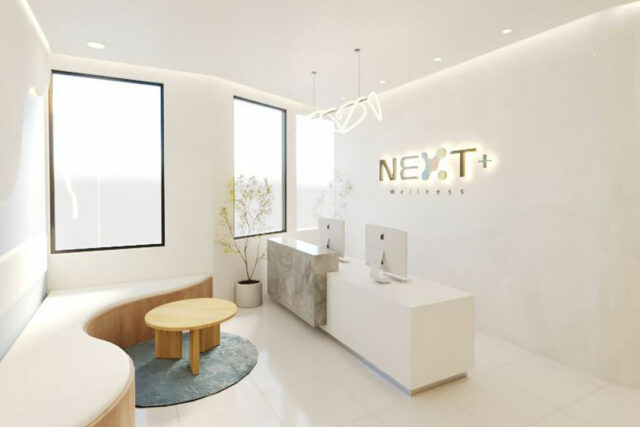
NEXT+ WELLNESS CENTER is set to open this weekend in Tomas Morato, Quezon City (QC), offering solutions to manage body pain, encourage movement, and deal with stress.

Founded by Angela Solquillo, founder of creative advertising agency Zigzag Creatives, the center offers reformer Pilates classes and recovery treatments. Blending the two of these into one is Photobiomodulation (PBM) reformer Pilates, which is basically doing Pilates on the bed-like frame reformer machine under a red light, which stimulates the cells to help them heal.

The center will be the first in the Philippines to offer PBM reformer Pilates, which will have “medical-grade red light that heals not only the skin, but also muscles and tissues,” Ms. Solquillo told BusinessWorld in an exclusive interview in Makati.

“The goal of Pilates is to bring the body back to its center. It’s good for those with injuries, for scoliosis. Joseph Pilates invented it for soldiers, to help rehab their bodies,” she explained. “I really question why it hasn’t been done yet. Red light plus rehab or clinical Pilates is a no-brainer. You get a good workout for your body and heal on a cellular level.”

She clarified that NEXT+ Wellness Center is not a fitness studio.

“We have Pilates, we have physiotherapy treatments, and we have regenerative treatments. I don’t think I’ve seen a center here that has all three. We’re more of a health innovation hub, with programs that treat chronic illnesses and injuries,” she said.

Because they are a wellness center, NEXT+ has medical specialists on their staff, like a regenerative doctor and an orthopedic doctor.

All of the Pilates instructors are also Stott-trained, referring to the practice of Pilates that puts emphasis on establishing and strengthening a neutral spine posture. Compared to regular Pilates, the Stott variation developed by dancer Moira Merrithew in the 1980s is more ideal for those with scoliosis. On top of that, Pilates itself naturally targets muscles that are often overlooked in regular workouts.

“Stott is the gold standard of Pilates practice. We make sure that everyone is more than qualified to be doing what they’re doing,” Ms. Solquillo said.

All Pilates classes have a uniform price: around P1,300 to P1,500 for a single group session, and P2,500 for a private session (though the prices go down if you pay for multiple sessions as part of a package).

FORMS OF THERAPY
For those who want to be proactive about their health, the center offers a suite of express treatments, like shockwave therapy and electrotherapy, which range from P5,000 to P9,000.

As for more standard physiotherapy for specific health conditions, NEXT+ has programs costing P10,000.

“If you have chronic pain in the lower back, for example, our PTs (physical therapists) are fully equipped to diagnose what you need. We can suggest Pilates; we can suggest the stem cell activation suite for overall regeneration,” said Ms. Solquillo. “It really depends on the assessment which determines what the patient needs.”

The more extreme regenerative treatment they have is autologous cell therapy, which involves harvesting cells from a patient to be cured or modified before injecting them back into their joints.

She explained that it’s for “severe cases of arthritis, to prevent having to get joint replacement surgery.”

“Everything we have is about proactive wellness, rather than reactive where you only get treated once you feel a lot of pain,” she said.

With the price of P38,000, it is the costliest on their menu, but still just one-fourth the cost of a joint replacement surgery, according to Ms. Solquillo. All the staff who will do the treatments are also licensed physical therapists.

Ultimately, NEXT+ Wellness Center aims to fill the gaps in healthcare, with two groups of people being the main demographic: those with chronic pain, and people 40 years old and up.

“We have gyms and fitness studios for the younger group. We have PT clinics for athletes and those who are injured. But we don’t really have a collective space that has everything in it,” she said.

FILIPINO MINDSET
Ms. Solquillo told BusinessWorld that the goal of NEXT+ is to “lead in transforming the mindset of Filipinos.”

“What we found is that people just get treated once they’re sick. There’s no proactive way of thinking about health,” she explained. “We want to show that we have to take care of ourselves now so we don’t suffer later.”

On a personal note, she shared about how she used to do yoga and Pilates to ground herself and stay relaxed as a business owner dealing with constant stress. A dance injury from college also took a toll on her knees.

“I used to go to different places to get a workout and also to get treatments, so I thought I should solve this problem. I wanted to create this one space which would have everything I need,” she said.

Thanks to physiotherapy, Ms. Solquillo managed to rehabilitate her knees to almost 90% back-to-normal. Though she thought of the concept for NEXT+ two years ago, it was only this year that she fully acted on it.

“So many of my friends told me about going to different places as well. That’s when I realized that we need to set it up.”

Down the line, they plan to expand to other cities, starting with Alabang, and then later in Cebu and Davao. “It’s really in the pipeline. We want to help people learn how to properly heal, how to properly recover,” she said.

NEXT+ Wellness Center is located at 4F CKB Centre, Tomas Morato, Quezon City. It officially opens on Dec. 15, with appointments available to book via their Facebook and Instagram pages. — Brontë H. Lacsamana

Selfie for health

STOCK PHOTO | Image from Freepik

The Management Association of the Philippines (MAP) actively supports technology, promotes digital transformation and views technology as a critical driver of economic growth and national competitiveness, which is evident in its programs and themes.

So it was not surprising that a new technology, like video selfies to generate health assessments, was welcomed by MAP members when it was demonstrated at the July MAP general membership meeting.

Facial scans and video selfies are used for health assessments by leveraging computer vision and artificial intelligence (AI) to analyze subtle physiological changes and visual cues from a person’s face. This technology, often referred to as remote photoplethysmography (rPPG), works by detecting miniscule color fluctuations in the skin that are caused by changes in blood volume as the heart pumps. A smartphone or laptop camera captures a video, and the AI algorithms process the data to provide health metrics.

There have been remote monitoring devices, like smartwatch or apps from Apple and Samsung for the last couple of years, that rely on proactive reporting and uploading of data or direct contact with the skin, but this video selfie technology can measure a variety of health markers just by scanning the face.

These health markers are heart rate and heart rate variability to analyze the subtle change in skin color and blood volume to determine the user’s pulse and the time between heartbeats; blood pressure to analyze blood flow patterns; respiratory rate to detect the minute movements of the face and chest that correspond to breathing; stress and emotional state to analyze changes in facial expressions and muscle tension and assess stress levels and emotional well-being; and skin and physical condition scans to identify malnutrition, dehydration, certain genetic disorders and skin conditions such as acne, redness and signs of aging. Soon, these video selfies will add features, like coughing, to the phone’s microphone to detect lung conditions.

This noninvasive approach has potential applications in remote patient monitoring, corporate wellness programs and even for insurance underwriting in some countries like the US, China, India, the UK, Japan and Australia. Information gathered from facial scans is often used to generate a personalized policy quote or to streamline the underwriting process, making it faster and less intrusive for customers, and potentially replacing or reducing the need for traditional medical exams and long questionnaires.

This technology may provide quick, accessible and noncontact health assessments, a convenient alternative to traditional methods that require specialized equipment or in-person visits, and a practical use for initial screening to enroll Filipinos to the government’s universal healthcare program. These initial assessments are to still be checked against the gold standard of screening approved by the Department of Health (DoH) and Food and Drug Administration (FDA).

But how reliable are these facial scans today? And more importantly, are there any regulatory and ethical considerations for their potential use? The accuracy of this technology or system in determining health risks is still a key concern since errors could lead to inaccurate risk assessments and unfair outcomes for customers. Data privacy is also a concern, especially in the Philippines where there are strict regulations on the collection and use of personal data.

Facial recognition technology has historically demonstrated biases, particularly in identifying nonwhite populations. And finally, the regulation of AI and facial recognition is still a work in progress in the Philippines and therefore may create a legal and ethical gray area for companies seeking to implement these technologies.

Video selfies and facial scans for primary care screening in the Philippines present an interesting opportunity to address healthcare access challenges. However, the technology’s accuracy and critical issues of data privacy, security and ethical accountability must be thoroughly addressed.

For this to be a good thing, strict regulation, proper implementation and public education must be in place as safeguards to outweigh the potential for harm, including misdiagnosis, data breaches and biased healthcare. Improved access to care, early detection and convenience and telemedicine integration are potential benefits, and enhanced efficiency by being able to streamline the administrative tasks and automating parts of the screening process could free healthcare professionals to focus on more complex cases, especially in a country with huge gaps in medical personnel.


Racquel R. Cagurangan is chairperson of the MAP Health Committee and managing director of CareTech Health.

map@map.org.ph

racquel.cagurangan@caretech.asia

From productivity to purpose

Andreas Klassen | Unsplash

Navigating workplace expectations across Asia and in the Philippines

By Krystal Anjela H. Gamboa

Across Asia and the Pacific, workplaces are going through a profound transformation. The combined forces of technological disruption (i.e., automation, artificial intelligence (AI), remote tools) and structural economic changes (i.e., shifting from manufacturing and agriculture toward services, digital, export-oriented work) are reshaping what the career landscape looks like. Many countries, including the Philippines, are also grappling with broader development challenges: raising productivity, creating quality jobs, investing in human capital, and making growth inclusive.

Against this backdrop, workplace-level dynamics are increasingly becoming relevant not just for human resources, but for national competitiveness, economic resilience, and social stability.

WorkL’s Global Workplace Report 2025 provides a timely insight into how employees perceive work as it highlights several themes that define the modern workplace that are deeply relevant to Asia Pacific.

Transformative trends

One of the most transformative is the normalization of remote and flexible work. Across Asia, flexible arrangements such as hybrid setups, staggered schedules, and flexi-time are becoming more accepted.

WorkL finds that remote workers tend to report higher trust in management than full onsite employees, suggesting that flexible arrangements may improve not only work-life balance but also relational dynamics between employees and leaders. Flexibility has thus moved from being a pandemic-era workaround to becoming a permanent and highly valued component of the employee experience.

Also, compensation and financial benefits remain important, but they are increasingly viewed alongside non-monetary factors. According to the report, among the most frequently cited factors that would improve “workplace happiness” were pay and financial benefits. Flexibility, then, is not only about remote work; it also means control over working hours, autonomy and the ability to balance personal and professional life. Workplace flexibility yields the same well-being benefits as a modest pay increase.

Third, engagement and well-being are fragile and uneven. WorkL reports that remote- or home-based employees who have frequent work-from-home days tend to show higher engagement levels than those in more rigid on-site roles. Even with flexibility and benefits, maintaining engagement remains a challenge globally.

WorkL’s data shows divergent outcomes across sectors and regions, suggesting that structural contexts, management practices, and organizational culture strongly influence whether flexibility translates into meaningful satisfaction.

Fourth, sectoral and regional disparities continue to shape the workplace experience. According to the report, technology emerges as a top performer globally in terms of both engagement and confidence in leadership. In contrast, other sectors, particularly those more exposed to economic pressures or with less stability, underperform relative to global benchmarks. This underscores the growing divide between high-value, often knowledge- or tech-based roles and more traditional or lower-value work.

Lastly, workplace happiness remains multi-dimensional. When employees were asked what changes would most improve their happiness at work, pay and benefits came out on top, but closely followed by themes of flexibility, supportive management, and a sense of purpose.

This evolving value set marks a departure from older norms where salary and job security stood dominant. While compensation remains important, many workers now weigh it alongside flexibility, well-being, the meaningfulness of work, and opportunities for growth.

For employers, this means that pay, while still necessary, may no longer be sufficient on its own for attracting and retaining talent.

Vitaly Gariev | Unsplash

National realities

Although WorkL’s report aggregates data from many countries worldwide, its findings carry important implications for Southeast Asia, especially the Philippines.

For employers, the rise of remote and flexible work highlights the importance of culture, communication, and trust. Filipino companies that embrace hybrid setups will need to invest in new forms of leadership and performance management to keep employees engaged.

Yet, success in adopting flexible work will depend heavily on management, culture, and infrastructure. As WorkL’s global data shows, flexibility does not automatically yield engagement; the quality of leadership and organizational support matters.

Well-being emerges as a critical area. Filipino employees, especially younger ones, expect their employers to address mental health. Mental health has become an urgent issue in many Asian countries, where long working hours and high societal expectations have historically overshadowed conversations about burnout or emotional resilience.  Companies cannot treat well-being as an optional add-on. Instead, it becomes a competitive advantage.

Employers in Southeast Asia must therefore be intentional: build trust, ensure clear communication, support remote/hybrid workers, and design workflows that maintain cohesion even when teams are distributed.

Compensation remains important, but in an environment where pay solely will not guarantee loyalty, employers should view salary benefits as baseline. For Filipino companies must articulate clear values, create inclusive cultures, and foster environments where employees feel they belong and can grow.

To truly retain and engage employees, especially younger professionals, they need to complement financial compensation with growth opportunities, flexibility, well-being support, and a workplace culture that values people beyond output.

Sectors such as technology, which WorkL identifies as high-performing globally, may serve as benchmarks for regional firms seeking to elevate workplace quality. For tech companies, outsourcing or digital services in the Philippines and Southeast Asia, replicating the engagement and leadership strategies seen in leading global firms could improve employee satisfaction and productivity.

Need for improving labor quality

While WorkL provides insight into workplace level attitudes and experiences, the World Bank’s 2025 Growth and Jobs Report offers a broader, structural view of the Philippine economy, labor market, and the factors shaping job quality at scale.

From 2010 to 2023, the country enjoyed strong economic performance, averaging around 5.2% growth per year. Over this period, the economy created more than 11 million jobs and real wages rose by nearly 24%. These gains helped lower poverty and expand the middle class, improving the economic well-being of millions.

However, the quality and productivity of jobs remain uneven. Much of the job creation occurred in non-tradable services which tend to exhibit lower productivity compared with tradable or export-oriented sectors.

Total factor productivity contributed less than 10% to overall gross domestic product growth, while human capital improvements were described as “negligible” in their contribution. This reveals a structural issue: growth has been driven more by labor quantity than labor quality.

The World Bank argues that the Philippines is now at a critical juncture. To progress toward upper-middle-income or even high-income status, the country must shift from input-led growth to productivity-led growth. This will entail investments in education and skills, digital and physical infrastructure, and reforms to improve the business climate.

Challenges remain substantial. The Philippines continues to suffer from skills mismatches, where employers report difficulty filling roles due to insufficient digital or technical skills among applicants.

Firm dynamism is constrained by regulatory barriers, limiting the ability of companies, especially small and medium enterprises (SMEs), to expand or adopt new technologies.

Climate vulnerability further complicates the situation as frequent natural disasters disrupt operations and constrain productivity. Technology adoption is also relatively slow, hindering competitiveness in a world where automation, digitalization, and AI are rapidly rewriting the rules of the labor market.

Opportunities

If Filipinos are to thrive in the evolving landscape, they will need to pursue continuous learning and skills development. Digital skills, cross-cultural communication, and adaptability will be essential in increasingly globalized and technology-driven workplaces.

At the policy level, the government has a crucial role to play in shaping and enabling environment for quality jobs. Investments in education, health, digital connectivity, and climate resilience must accelerate. Regulatory reforms to encourage competition, lower barriers to firm entry, and promote innovation are essential for enabling the private sector to generate more globally competitive jobs.

Supporting SMEs, which employ a large share of workers, is equally important, especially in helping them adopt new technologies and practices.

If current trends and reforms align, the next decade could see Philippine workplaces transformed. Companies could develop more holistic employee value propositions that combine fair pay with strong cultures, career pathways, and an authentic sense of purpose. As more firms modernize, adopt technology, and compete in global markets, the country could see substantial growth in high-quality jobs.

Achieving this vision entails commitment. Employers must rethink leadership and organizational culture. Workers must embrace lifelong learning. Policymakers must push forward reforms that enable resilience.

With the right combination of policy reform, business innovation, and worker empowerment, the country has the chance not only to adapt the future of work, but to shape it.

Learn more about the BusinessWorld Best Places to Work 2025 results and explore the 2026 cycle at https://www.bworldonline.com/bwbestplacestowork/.

T-bill yields may decline further with BSP, Fed likely to cut rates

BW FILE PHOTO

YIELDS on the Treasury bills (T-bills) to be offered this week could end lower ahead of expected rate cuts from both the US Federal Reserve and the Bangko Sentral ng Pilipinas (BSP).

The Bureau of the Treasury (BTr) will auction off P22 billion in T-bills on Tuesday or P7 billion in 91-day securities and P7.5 billion each in 182- and 364-day papers.

The T-bills could fetch lower yields in line with the week-on-week decline seen at the secondary market as slower-than-expected November inflation bolstered expectations of a fifth straight easing move by the BSP this week, Rizal Commercial Banking Corp. Chief Economist Michael L. Ricafort said in a Viber message.

“Banking books’ year-end profit taking is still heavily weighing on the market and we expect same sentiment heading to the Monetary Board meet, where a 25-basis-point (bp) cut is already priced in,” a trader said in an e-mail on Friday.

At the secondary market on Friday, yields on the 91-, 182-, and 364-day T-bills went down by 0.88 bp, 0.09 bp, and 1.91 bps to end at 4.8732%, 4.999%, and 5.052%, respectively, based on PHP Bloomberg Valuation Service Reference Rates data as of Dec. 5 published on the Philippine Dealing System’s website.

Philippine headline inflation eased to 1.5% last month from 1.7% in October and 2.5% in November 2024, the Philippine Statistics Authority reported on Friday.

This was within the BSP’s 1.101.9% forecast for the month, but was a shade below the 1.6% median estimate in a BusinessWorld poll of 15 analysts.

The November clip brought the 11-month average to 1.6%, below the central bank’s 1.7% full-year forecast and 2-4% annual goal.

Analysts said the below-target inflation gives the BSP ample room to ease its policy settings further, with another cut likely at the Monetary Board’s meeting on Thursday (Dec. 11).

A separate BusinessWorld poll showed that 17 of 18 analysts expect the Philippine central bank to deliver a fifth straight 25-bp reduction at this week’s meeting to bring the policy rate to 4.5%, its lowest since September 2022.

Meanwhile, one analyst said the Monetary Board could announce a jumbo 50-bp cut.

The BSP has cut benchmark borrowing costs by a total of 175 bps since it kicked off its easing cycle in August 2024. For this year alone, it has trimmed rates by 100 bps through four consecutive 25-bp cuts since April.

BSP Governor Eli M. Remolona, Jr. said last week that weakening growth prospects raises the chances of an easing move on Thursday, adding that they expect Philippine gross domestic product (GDP) to expand by just 4-5% this year, below the 5.5-6.5% target.

He earlier said that they could continue cutting rates until next year to help provide economic stimulus as a graft scandal involving anomalous flood control and infrastructure projects has caused a slowdown in public spending and dampened consumer and investor confidence.

In the third quarter, Philippine GDP grew by an over four-year low of 4%, bringing the nine-month average to 5%.

Mr. Ricafort added that the Fed could also deliver a second straight rate cut at their Dec. 9-10 meeting, which would be an added reason for the BSP to ease further.

An interest rate cut is all but priced in at the Fed’s meeting this week, but a divided committee makes for a wild card, Reuters reported.

Analysts expect a “hawkish cut,” where the language of the statement, median forecasts and Chair Jerome H. Powell’s press conference point to a higher bar on further rate reduction. 

That could support the dollar if it pushes investors to dial back expectations for two or three rate cuts next year.

Markets imply around an 85% chance of a quarter-point reduction in the 3.75% to 4% funds rate, so a steady decision would be a seismic shock. A Reuters poll of 108 analysts found only 19 tipping no change, and the rest a cut.

The Federal Open Market Committee has not had three or more dissents at a meeting since 2019, and that has happened just nine times since 1990.

Last week, the BTr raised P25 billion via the T-bills, higher than the P22-billion plan, as the offer was almost four times oversubscribed, with total tenders reaching P85.26 billion.

The government raised P7 billion as planned from the 91-day T-bills as demand reached P29.815 billion. The three-month paper fetched an average rate of 4.812%, down by 3.7 bps from the previous auction. Yields accepted were from 4.770% to 4.844%.

Meanwhile, the Treasury increased its award of 182-day debt to P10.5 billion from the P7.5-billion plan as bids reached P29.75 billion. The average rate of the six-month T-bill went down by 4 bps to 4.93% from the previous week. Tenders awarded carried yields from 4.89% to 4.965%.

Lastly, the BTr sold the programmed P7.5 billion in 364-day securities as bids for the tenor hit P25.695 billion. The one-year T-bill’s average yield was at 5.011%, inching up by 0.8 bp. Accepted rates were from 4.998% to 5.027%.

The Treasury wants to raise P101 billion from the domestic market this month or P66 billion through T-bills and P35 billion via T-bonds.

The government borrows from local and foreign sources to help fund its budget deficit, which is capped at P1.56 trillion or 5.5% of gross domestic product this year. — A.M.C. Sy with Reuters

Political priorities still drive ESG adoption — experts

STOCK PHOTO | Image from Freepik

POLITICAL FACTORS remain a key determinant of how fast the Philippines can implement international environmental, social and governance (ESG) standards, experts said.

“Political factors play an important role in shaping the pace of ESG regulatory adoption in the Philippines. The government’s growing recognition of the importance of sustainability is evident in the efforts to introduce and refine regulations that align with global best practices,” ESGpedia Vice-President Jozsef Acabo said in an e-mail interview.

“These initiatives reflect a positive commitment to fostering an environment where businesses can thrive while meeting international sustainability standards. At the same time, political transitions and shifting priorities may influence the speed at which full regulatory implementation takes place,” he added.

Securities and Exchange Commission (SEC) Chairperson Francisco Ed. Lim echoed the importance of stronger sustainability standards, saying they are critical to restoring investor confidence and narrowing the Philippines’ investment deficit compared with its ASEAN peers.

Speaking at the European Chamber of Commerce of the Philippines’ Philippine Economic Outlook conference last Thursday, Mr. Lim said upholding ESG standards, along with stable regulation and operational continuity, helps position the country as a more competitive and investment-ready market.

He warned that failure to address these concerns could lead to serious problems in 2026, when global investors are expected to place even greater weight on sustainability and governance metrics.

On the economic implications, Mr. Acabo said that although some companies remain wary of the cost of compliance, the growing availability of green bonds and other sustainable finance instruments is expanding funding options for companies looking to invest in sustainability projects. 

“These economic drivers help to ease the transition, making it more feasible for companies to adopt comprehensive ESG practices while contributing to a more sustainable future,” he said.

In a BusinessWorld report in September, market analysts noted that Philippine companies are increasingly turning to sustainable finance tools such as sustainability-linked bonds to raise capital and hedge against economic and political risks.

Banks, real estate, and utility firms are among the leading adopters of these products, which typically channel funds into renewable energy and other climate-related projects and impose financial penalties when ESG targets are not met. — Alexandria Grace C. Magno

ADVERTISEMENT
ADVERTISEMENT