Home Blog Page 5889

US considers sanctions vs China to deter it from invading Taiwan

THE FLAGS of the United States and China fly from a lamppost in Boston, Massachusetts, US, Nov. 1, 2021. — REUTERS

TAIPEI/FRANKFURT/WASHINGTON — The United States is considering options for a sanctions package against China to deter it from invading Taiwan, with the European Union (EU) coming under diplomatic pressure from Taipei to do the same, according to sources familiar with the discussions.

The sources said the deliberations in Washington and Taipei’s separate lobbying of EU envoys were both at an early stage — a response to fears of a Chinese invasion which have grown as military tensions escalate in the Taiwan Strait.

In both cases, the idea is to take sanctions beyond measures already taken in the West to restrict some trade and investment with China in sensitive technologies like computer chips and telecoms equipment.

The sources did not provide any details of what is being considered but the notion of sanctions on the world’s second-largest economy and one of the global supply chain’s biggest links raises questions of feasibility.

“The potential imposition of sanctions on China is a far more complex exercise than sanctions on Russia, given US and allies’ extensive entanglement with the Chinese economy,” said Nazak Nikakhtar, a former senior US Commerce Department official.

China claims Taiwan as its own territory and last month fired missiles over the island and sailed warships across their unofficial sea frontier after US House of Representatives Speaker Nancy Pelosi visited Taipei in what Beijing saw as a provocation.

Chinese President Xi Jinping has vowed to bring democratically-governed Taiwan under Beijing’s control and has not ruled out the use of force. He is set to secure a third, five-year leadership term at a Communist Party congress next month. Taiwan’s government strongly rejects China’s sovereignty claims.

In Washington, officials are considering options for a possible package of sanctions against China to deter Mr. Xi from attempting to invade Taiwan, said a US official and an official from a country in close coordination with Washington.

US talks over sanctions began after Russia invaded Ukraine in February, but took on fresh urgency after the Chinese reaction to Ms. Pelosi’s visit, the two sources said.

The United States, backed by NATO allies, took a similar approach to Russia in January with a threat of unspecified sanctions but this failed to dissuade Russian President Vladimir Putin from launching his invasion of Ukraine.

The White House is focused on getting countries on the same page, including coordinating between Europe and Asia, and avoiding provoking Beijing, the non-US official said.

Reuters was unable to learn details on what specific sanctions were under consideration, but some analysts suggested China’s military could be the focus.

“Big picture, initial sanctions conversations will likely revolve around curtailing China’s access to certain technologies required to sustain a military operation against Taiwan,” said Craig Singleton at the Foundation for Defense of Democracies.

The White House declined to comment.

Taiwan’s Foreign Ministry said it had discussed China’s recent war games and the “great challenges” China poses to Taiwan and the region with the United States, Europe and other like-minded partners, but could not disclose details.

China’s Foreign Ministry and the Chinese Embassy in Washington did not immediately respond to requests for comment.

TAIWAN’S PITCH TO EUROPE
Taiwan had already broached sanctions with European officials after Russia’s invasion of Ukraine, but China’s recent military exercises have seen Taiwan’s position harden, six sources briefed on the Taiwan-Europe discussions told Reuters.

Top Taiwanese officials’ calls for preparation of sanctions have intensified in recent weeks. A recent Chinese white paper, which withdrew a promise not to send troops or administrators to Taiwan if Beijing takes control of the island, has prompted a redoubling of their efforts with Europe.

Taiwan has not asked for anything specific, only for Europe to plan what actions it may take if China attacked, one source briefed on discussions said, and has asked Europe to warn China privately that it would face consequences.

EU officials have so far shied away from imposing tough sanctions on China over human rights issues, as the country plays a far bigger role for the bloc’s economy than Russia, said another person familiar with the matter.

European sanctions would require all 27 member countries to agree, which is often elusive; consensus was tough even in isolating Russia after its invasion of Ukraine, in part because its gas was critical for Germany.

All of Europe, excluding the Vatican, has formal diplomatic relations with Beijing but not Taipei, though Taiwanese and European officials have had extensive, private contacts since China’s military exercises began, the sources say.

Germany, the bloc’s economic engine, is “wary,” according to another official familiar with the discussion. “I don’t think the Russia-Ukraine has fundamentally changed the way they view their relationship with China.”

But there is growing concern in the German government over its economic dependence on China, with the economy minister pledging a new trade policy and “no more naivety” on Tuesday.

A spokesperson for German Chancellor Olaf Scholz declined to comment. — Reuters

Hotter temperatures making people angrier online

PEOPLE are silhouetted against the setting sun at “El Mirador de la Alemana (The viewpoint of the German)” in Malaga, southern Spain, July 24, 2019. — REUTERS

CLIMATE CHANGE is making us angrier online. A lot angrier.

Hateful comments spike on social media when temperatures rise above 30 degrees Celsius (86 Fahrenheit), researchers at the Potsdam Institute for Climate Impact Research have found.

“It’s an indicator of how well people can adapt to high temperatures,” said Annika Stechemesser, lead author of the study published in The Lancet Planetary Health earlier this month. “If temperatures go too hot or too cold, we found that there’s an increase in online hate speech, no matter the socioeconomic differences, religion or political beliefs.”

Global warming of about 1.1°C on average since pre-industrial times has unleashed all sorts of extreme weather events across the world. This summer, drought and a string of heat waves hit Europe, China and the US. For humans, heat is associated with psychiatric hospitalizations, increased rates of suicide and more domestic violence, according to research.

And aggressive behavior online has been linked to violence offline too. Incensed posts have led to more violence toward minorities, including mass shootings, lynchings and ethnic cleansing, according to the Council on Foreign Relations, a New York-based think tank.

Ms. Stechemesser and other researchers analyzed a sample of 4 billion tweets between 2014 and 2020 from users based in the US. They used artificial intelligence to identify about 75 million hate messages in English, using the United Nations’ definition of online hate, which includes racial discrimination, misogyny and homophobia. They then analyzed how the number of tweets changed when local temperatures increased or decreased.

The researchers found that online hate speech increased as daily maximum temperatures rose above 21°C (70F) — a “feel good” point. Hate messages went up as much as 22% on hot days, compared with the average online hate during times of mild weather.

Across all climate zones and socioeconomic groups in the US, online tensions intensified even more significantly when temperatures exceeded 30ºC. Researchers observed that online hate speech increased by as much as 24% — from the feel good point — when temperatures reached 42ºC to 45ºC in US regions with hot and dry climates such as parts of Texas, Arizona, New Mexico and California. Last year, a study by the same researchers focusing on Europe reached similar conclusions.

“When discussing climate change, it’s a point to remember that we feel the effects everywhere, not just in places with big disasters,” Ms. Stechemesser said. “There are places where the social consequences of heat have not been discussed very thoroughly, especially around how we can live together as a society and deal with our wellbeing in the future.”

Researchers analyzed the tweets as a whole and did not look into specific incidents. That means there’s no way to know if the weather made online tensions worse following the murder of George Floyd in May 2020, for instance, or in the lead up to the attack on the US Capitol in January 2021. Still, some conclusions can be reached ahead of the US mid-terms on Nov. 8.

“Our results show that if September is particularly hot, we can expect to see more hate on Twitter,” said Ms. Stechemesser. “But the research doesn’t really show what kind of hate it is or on what topics — we don’t know yet whether the hate we observe is tied to political issues.”

The direct relation between heat and online hate has also been documented in China, where researchers analyzed over 400 million tweets from a sample of 43 million users posting on the country’s largest microblog platform — Sina Weibo. They concluded that days with temperatures above 35°C, rain, higher wind speed, overcast skies and air pollution all make people grumpier online.

“Of course, people can, to an extent decide consciously whether they want to be nice or not, but we still find you’ll have more hateful behavior if you find yourself a certain temperature range,” Ms. Stechemesser said. “The first thing to do is limit global warming, that’s the most obvious approach to solving this.”  Bloomberg

London mourners face miles-long queue to see queen’s coffin

JOE GIDDENS/ POOL VIA REUTERS

LONDON — Mourners wanting to pay their respects to Queen Elizabeth II in London may have to queue for up to 7.5 kilometers (4.5 miles), the government said on Tuesday as it set out arrangements for her lying-in-state.

Around 750,000 people are expected to file past Queen Elizabeth’s coffin inside parliament’s Westminster Hall from 5 p.m. (1600 GMT) on Wednesday. The queen died last week, aged 96, at Balmoral Castle in Scotland.

The outpouring of sadness triggered by her death has already drawn large crowds in Scotland, where she lay for 24 hours in St Giles’ Cathedral in Edinburgh. Around 33,000 people paid their respects during that period.

The London memorial, lasting almost five days and ending on the morning of her funeral, is a much larger occasion.

“This is a once-in-a-lifetime event to honor a once-in-a-lifetime woman,” said Andrew Israels-Swenson, from Minnesota, who said his 82-year-old British mother asked him to attend to “represent the family.”

He and around a dozen others formed a queue earlier on Tuesday to be among the first to see the coffin, which will be placed on a decorated platform inside a centuries-old hall in the British Parliament that bears plaques on the floor marking where her forebears have also lay in state.

“Please respect the dignity of this event and behave appropriately. You should remain silent while inside the Palace of Westminster,” government-issued guidance said, also asking well-wishers not to film or photograph inside parliament.

The hundreds of thousands predicted to join the line will be asked to queue along the southern bank of the River Thames, winding past landmarks including the giant London Eye ferris wheel and a reconstruction of Shakespeare’s Globe theater.

Upon joining the queue, mourners will be given a wristband allowing them to briefly leave the queue to use a toilet or get food and drink.

Volunteers, stewards and police will line the route, with cafes, theaters and other venues opening their doors to provide refreshments. The British Film institute will have an outdoor screen broadcasting footage of the queen and her reign.

“Antisocial or inappropriate behavior (including queue-jumping, excessive consumption of alcohol or drunken behavior) will not be tolerated and you will be removed from the queue,” the government guidance said. — Reuters

China reaps energy windfall as West shuns Russian supplies

China is buying more and less expensive energy supplies from Russia this year, reaping the benefits of a plunge in European purchases just when Beijing needs it most as the Ukraine crisis pushes Moscow in search of alternative markets.

The growing cooperation, to be further deepened with Chinese President Xi Jinping’s meeting with Russia’s Vladimir Putin in Uzbekistan on Thursday, is a boon for both countries. Read full story

China has gained access to cheaper energy while Russia is able to offset losses from the European Union and other allies scaling back on purchases of Russian exports due to sanctions over its invasion of Ukraine. Moscow calls it a special military operation.

Closer Chinese-Russian ties have also promoted the use of their yuan and rouble currencies in commodities trade, lessening reliance on the US dollar. Read full story

China, the world’s largest energy consumer and top buyer of crude oil, liquefied natural gas and coal, has imported 17% more Russian crude between April and July from the same period a year ago.

It has also bought over 50% more LNG and 6% more coal from Russia during the same period while electricity imports from Russia, mainly via a cross-broader transmission line connecting northeast China and Russia’s Far East, soared by 39%.

China‘s oil, gas, coal and electricity purchases from Russia amount to $43.68 billion so far this year.

Cheaper Russian energy supplies are helping to dampen inflation in China, where the economy narrowly avoided contracting in the second quarter amid COVID-19 lockdowns.

“The upcoming meeting between Xi and Putin will likely fortify China‘s ties with Russia in energy trade for mutual benefit, particularly at a time when Russia (is) grappling with intensified western sanctions while China is in need of low-cost energy to shore up its sagging economy tarnished by COVID lockdowns,” said Zhuwei Wang, manager, Asia Oil Analytics, S&P Global Commodity Insights.


PROFITABLE TRADE

Russia became China‘s top crude supplier from May to July, accounting for 19% of China‘s imports, versus 15% in the same period of 2021, Chinese customs data showed.

Moscow’s share could grow to more than 20% this year, Dutch bank ING said in August.

China saved about $3 billion in buying Russian oil versus other imports between April and July, according to Reuters calculation based on customs data. On average, China paid about $708 per tonne for Russian crude while the value of imports from the rest of countries was $816 per tonne.

For LNG, China‘s imports from Russia rose 26% in the first seven months from the same period a year earlier while exports jumped to 66,798 tonnes in July, the highest since 2019, on re-exports to Europe and Japan, the data showed.

China is taking advantage of the disrupted trade flows, including by buying discounted Russian oil and LNG cargoes, while swapping out alternative volumes back into Europe at higher prices, delivering a profitable trade,” said Saul Kavonic, head of Integrated Energy and Resources Research at Credit Suisse.

China also has long-term incentives for Russian supply as it strives to meet new carbon emissions targets and boosts gas consumption. That prompted a February deal for a new pipeline from Russia to start in the next two to three years. Read full story


BUILDING COAL STOCKS

China‘s coal imports from Russia jumped to their highest in at least five years in July, as it bought discounted coal while Europe shunned Russian cargoes ahead of a ban that came into force on Aug. 11. Read full story

Russian thermal coal with a heating value of 5,500 kilocalories (kcal) traded around $150 a tonne on a cost-and-freight basis in late July, while coal of the same quality at Australia’s Newcastle port was assessed at more than $210 a tonne on a free-on-board (FOB) basis.

Though Russian supplies meet only about 1% of Chinese needs, some traders expect more Russian coal to arrive in the fourth quarter when utilities build stocks for the winter heating season.

Analysts said that while the gains for China are clear, Russia remains more reliant on the trade than China.

“However the war is resolved, it is apparent that Russia can no longer rely on its major energy export markets in Europe for the foreseeable future, and the redirection of its energy and commodity exports towards the East will gather pace,” Tilak Doshi, managing director of Doshi Consulting, said. – Reuters

US government makes contingency plans for rail shutdown

STOCK PHOTO | Image by Hands off my tags! Michael Gaida from Pixabay

President Joe Biden’s administration on Tuesday made contingency plans aiming to ensure deliveries of critical goods in the event of a shutdown of the US rail system while pressing railroads and unions to reach a deal to avoid a work stoppage affecting freight and passenger service.

The potential shutdown, which could come as early as Friday, could freeze almost 30% of US cargo shipments, stoke inflation, impede supplies of food and fuel, cost the US economy about $2 billion per day and cause transportation woes.

Railroads including Union Pacific, Berkshire Hathaway’s BNSF, CSX and Norfolk Southern have until a minute after midnight on Friday to reach tentative deals with three hold-out unions representing about 60,000 workers.

Late Tuesay, a Labor Department spokesperson said Secretary Marty Walsh “will host the rail companies and the unions in Washington” at the department Wednesday morning as the Biden administration continues “sustained engagement and hands-on efforts to encourage the parties to come to a mutually beneficial agreement.”

If agreements are not reached, there could be union strikes or employer lockouts. But the railroads and unions also could agree to stay at the bargaining table or the Democratic-led US Congress could intervene by extending talks or establishing settlement terms. Read full story

The Biden administration’s push comes as food, energy, automotive and retail groups implore Congress to intervene, saying a rail shutdown could threaten everything from global grain supplies to shipments of goods related to Christmas holiday shopping.

White House Press Secretary Karine Jean-Pierre said the administration is asking truckers and air shippers to assist should rail service cease and also is considering invoking emergency authorities. Jean-Pierre added that the administration is hosting daily interagency meetings to assess which supply chains and commodities are at highest risk.

The White House has told railroads and unions that “a shutdown is unacceptable and will hurt American workers, families and businesses, and they must take action to avert it,” a White House official told Reuters, speaking on condition of anonymity.

One key issue is ensuring “continued distribution of vital hazardous materials that depend on rail transport, such as chlorine for water treatment plants,” this official added. Railroads on Monday stopped accepting shipments for hazardous materials such as chlorine and chemicals used in fertilizer so they are not stranded in unsafe locations if rail traffic stops.

The US energy sector relies on railroads to move coal, crude oil, ethanol and other products.

Some railroads plan to impose additional restrictions that could impact food suppliers and online retailers that use intermodal services that connect ships, trains and trucks. BNSF, which serves the western United States, said it will stop accepting refrigerated intermodal cargo. Norfolk Southern, which serves the eastern United States, said it will stop accepting all intermodal shipments.

US passenger railroad Amtrak, which uses tracks maintained by freight railways, is facing growing disruptions. Amtrak said it will cancel trains on seven more long-distance routes on Wednesday after it began canceling trains on four long-distance routes on Tuesday.


HIGH STAKES

The stakes are high for Biden, who has vowed to rein in soaring consumer costs ahead of November elections that will determine whether his fellow Democrats maintain control of Congress.

Biden appointed an emergency board in July to create a framework for settlement terms.

That has not happened since the early 1990s, when Congress sent the parties into final and binding arbitration.

Unions in the current talks have been offered significant pay increases. Three of 12 unions, representing about half of the 115,000 workers affected by the negotiations, have yet to sign deals. They are grappling with railroads over working conditions that they have said worsened after the industry slashed its workforce by almost 30% during the past six years.

Rail customers have said a shutdown will send them scrambling for alternative transportation and storage for everything from ammonia and fuel to cars and chicken feed.

It takes about four trucks to handle cargo in a single rail car. The United States does not have the estimated 467,000 trucks or the necessary labor to support such a shift. Beyond that, some cargo is too heavy or large to travel over the road.

A rail work stoppage could strike as US farmers harvest corn, wheat and soybeans for export around the world, according to the National Grain and Feed Association.

“The economic damages across the food and agricultural supply chain would be swift and severe,” the group said.

Justin Louchheim, senior director of government affairs at the Fertilizer Institute, which represents companies that rely on ammonia supplies, added: “When you contemplate global food security, I’d say it’s a crisis right now.”

Automakers worry that a disruption could empty dealer showrooms by stranding cars in the wrong places. Toyota said it would have to store vehicles and “many locations would run out of storage within two to four days of production.”

Taiwan hosts dozens of foreign lawmakers in Washington to push China sanctions

XANDREASWORK-UNSPLASH

Taiwan‘s de facto ambassador in Washington, Hsiao Bi-khim, on Tuesday hosted dozens of international lawmakers who back sanctions on China for aggression toward the island, a show of support for Taipei amid military pressure from Beijing.

The unannounced gathering of about 60 parliamentarians from Europe, Asia and Africa at Taiwan‘s sweeping hilltop diplomatic mansion in Washington – called Twin Oaks – is the latest move in Taipei’s efforts to persuade fellow democracies to stand against China since Russia’s invasion of Ukraine heightened concerns that Beijing could attempt to take the island by force.

The group, consisting of members of the Inter-Parliamentary Alliance on China (IPAC) gathering in Washington this week, is expected to sign a pledge to push their governments to adopt “greater deterrence against military or other coercive” actions by the People’s Republic of China (PRC) against Taiwan, according to a draft seen by Reuters.

“We will campaign to ensure our governments signal to the PRC that military aggression towards Taiwan will cost Beijing dearly. Economic and political measures, including meaningful sanctions, should be considered to deter military escalation, and to ensure trade and other exchanges with Taiwan can continue unimpeded,” the draft said.

It added that their countries’ ties to Taiwan were not Beijing’s to determine, and that they would push to increase mutual visits by lawmakers.

Chinese President Xi Jinping has vowed to bring democratically governed Taiwan under Beijing’s control and has not ruled out the use of force. He is set to secure a third, five-year leadership term at a Communist Party congress next month. Taiwan‘s government strongly rejects China‘s sovereignty claims.

Sources familiar with the issue have told Reuters that Washington is considering sanctions against China to deter it from invading Taiwan, with the European Union coming under diplomatic pressure from Taipei to do the same. Read full story

Hsiao, speaking to the lawmakers – who according to a guest list seen by Reuters hailed from countries including the UK, Australia, Canada, India, Japan, Lithuania, Ukraine, New Zealand and the Netherlands – told the gathering: “It is important to demonstrate to the bully that we have friends too.

“We are not seeking to provoke the bully, but neither will we bow to their pressure.”

She welcomed two Ukrainian representatives at the event.

“We certainly hope that as the international community stands with Ukraine, that the international community will also stand with Taiwan… that together we can deter the further aggression coming from China.”

The IPAC pledge, expected to be signed on Wednesday, also calls for countries to secure supply chains from forced labor in China‘s Xinjiang region, and to pursue sanctions on Chinese officials for abuses in Hong Kong, and on Chinese companies that support Russia’s military industry.

China‘s embassy in Washington did not immediately respond to a request for comment.


‘YEARS PAST DUE’

U.S. Senate Foreign Relations Committee chairman Bob Menendez, who acts as the United States’ IPAC co-chair with Republican Marco Rubio, told an IPAC briefing at the Capitol on Tuesday that a US bill to support Taiwan would face some changes during a scheduled review this week, but that the “thrust” would remain the same.

An initial version of that bill threatens severe sanctions against China for any aggression against Taiwan, and would provide Taiwan with billions of dollars in foreign military financing in coming years. Read full story

Rubio said he believed the Biden administration was divided over how to approach prospective sanctions on China, and that although Beijing appeared to be taking steps to insulate itself from such actions, Washington needed be clear about the costs of hostility across the Taiwan Strait.

“It’s important for us to be prepared to proactively outline – whether it’s through legislation or through an executive announcement, exactly what the economic consequences will be if such an act of aggression goes forward,” Rubio told the briefing.

China conducted blockade-style military drills around Taiwan after U.S. House Speaker Nancy Pelosi visited the island last month, a reaction Taiwanese officials have credited for spurring an uptick in foreign engagement that Beijing views as a violation of its sovereignty claims over the island. Read full story

Taiwan also has been urging Washington, its largest arms supplier, to expedite already approved weapons deliveries that have faced delays because of supply chain issues and heightened demand from the war in Ukraine.

Republican US Representative Young Kim, who has written a bill to track U.S. arms sales to Taiwan, told Reuters in an interview that Hsiao had delivered a forceful message to Congress about ensuring those weapons systems reach Taiwan quickly.

“She’s said it in a hundred different ways that we appreciate the United States trying to get us the arms but don’t forget, it’s many years past due,” Kim said of Hsiao. “She’s very firm.” – Reuters

Scientists who detected massive Pemex methane leak say ‘no way’ they made a mistake

Source: https://bit.ly/3QFCS79

Scientists who detected a massive methane leak at an offshore platform run by Mexico’s Pemex said Tuesday there was “no way” they had made a mistake, roundly rebutting claims by the state oil company that the emissions were smaller and less polluting.

Pemex, which is under increasing international pressure over its environmental record, last week issued a statement calling the study published in the Environmental Science & Technology Letters journal incorrect, arguing it had mistaken nitrogen – also a colorless, odorless gas – for methane in its calculations. Read full story

But in a response sent to Reuters, the scientists behind the study dismissed Pemex’s position saying the sensors they used to detect the methane leak at the Ku-Maloob-Zaap oil field cluster in the Gulf of Mexico cannot see nitrogen.

“There is no way of mistaking one for the other,” said two of the authors, Itziar Irakulis-Loitxate and Luis Guanter, both at the Polytechnic University of Valencia in Spain. “The startling emissions we reported were 100% methane, plain and simple.”

The research, which was republished by the European Space Agency, found 40,000 tons of methane were emitted in December.

It is part of a wider study funded by the agency that aims to detect and quantify human-made emissions from space using satellite data.

Methane, the main component of natural gas, is considered a much more potent driver of global warming in the short term than carbon dioxide because it traps more heat in the atmosphere.

Pemex did not respond to a Reuters request for comment.

Ms. Irakulis-Loitxate and Mr. Guanter said the satellite methods behind their study were bringing emissions to light that previously would have gone unreported.

“Methane is a huge challenge across the industry. Ideally, operators would embrace this new information,” they said.

Curbing methane emissions is considered a vital part of global attempts to limit global warming.

Mexican President Andres Manuel Lopez Obrador has promised to dramatically reduce methane emissions and is facing increasing international pressure to do so. In June, U.S. Special Presidential Envoy for Climate John Kerry raised the matter during a visit to Mexico.

Ms. Irakulis-Loitxate and Mr. Guanter said their satellite observations also showed the flare at the Zaap-C platform, used to burn off the excess natural gas and minimize methane’s harmful impact, was unlit for 17 days in December.

“This is a matter of simple visual confirmation,” the statement said. “Data from two other satellites confirm that the unlit flare was emitting large volumes of methane during that same period.”

Pemex had said the flare was unlit for just a few hours.

Pemex also posted a video on its official Twitter account in which Chief Executive Officer Octavio Romero repeated that most of the gas that was being burnt on the platform was nitrogen.

“Here, we’re not doing any irrational flaring – and even less so polluting in the way this publication claims,” he said in the video, which included footage of the platform and the gas flare.

Earlier this month, the scientists shared new data with Reuters that showed there was another leak of a similar magnitude from the same location during six days in August. Read full story Reuters

Biden celebrates ‘Inflation Reduction Act’ as food, rent prices climb

US President Joseph R. Biden, Jr. — Image via Gage Skidmore/CC BY-SA 2.0/Flickr

President Joe Biden celebrated his climate change and drug pricing law, The Inflation Reduction Act, on Tuesday on the White House lawn, highlighting Democrats’ commitment to progressive priorities even as high consumer prices continue to bite.

Mr. Biden signed the $430 billion bill, seen as the biggest climate change package in U.S. history, into law last month in a low-key ceremony. The Tuesday event on the White House South Lawn brought together lawmakers, cabinet members, activists and interest groups who supported it, and gave Biden an opportunity to tout drug price caps, electric vehicle grants and a minimum corporate tax, key issues for his political base.

Mr. Biden said the law was one of the most significant in U.S. history. “Today offers proof that the soul of America is vibrant. The future of America is bright and the promise of America is real,” he told the crowd.

The event brought some musical star power too, with singer-songwriter James Taylor opening it with a performance.

“It strikes me that this is a time when the world needs to cooperate … more than ever before,” Mr. Taylor said, referring to the climate change crisis.

The event coincided with the release of Labor Department figures that showed an unexpected August rise in US consumer prices, as rent and food continued to climb. The economy continues to be the biggest issue for voters ahead of the November midterm elections, posing risks for Democrats trying to maintain control of Congress. Read full story

“It will take more time and resolve to bring inflation down, which is why we passed the Inflation Reduction Act to lower the cost of healthcare, prescription drugs and energy,” Mr. Biden said in a statement earlier in the day.

Rating agencies Moody’s Investors service and Fitch Ratings told Reuters last month they expect the bill to cut inflation, but over the medium to long term, not this year. Read full story


POLITICAL ISSUE

Democratic leaders used the event to take aim at Republicans, who did not support the bill. They sought to paint Republicans as obstructionists who have no interest in solving problems.

Republicans suggest the legislation will lead to higher energy prices and aggressive audits from the Internal Revenue Service.

In addition to providing incentives for the clean energy industry, the law allows Medicare to negotiate lower drug prices for the elderly, seeks to ensure corporations and wealthy people pay their taxes through beefed-up IRS resources, and aims to combat inflation by reducing the federal deficit.

Mr. Biden had hoped to secure a trillion-dollar-plus “Build Back Better” bill with measures to fight global warming and tackle other social issues but could not get it through the 100-member US Senate, which is evenly divided between Democrats and Republicans and whose rules require 60 votes to advance most legislation.

The Inflation Reduction Act passed with support from and concessions to Senator Joe Manchin of West Virginia, a conservative Democrat who has backed fossil fuel projects and opposed the more expensive bill. At the Aug. 17 signing ceremony, Mr. Biden gave Mr. Manchin the pen he used to sign the legislation into law.

“Thanks for sticking with what you said you’d do,” Mr. Biden told Mr. Manchin on Tuesday.

As a presidential candidate Biden promised to make fighting global warming a top priority, returning the United States to the international Paris climate accord, from which Republican President Donald Trump had withdrawn. He also pledged to prioritize clean energy, electric vehicles, and lower greenhouse gas emissions.

“We’re here to affirm that the promises Democrats made are now promises Democrats have kept,” Senate Majority Leader Chuck Schumer said.

Younger, left-leaning voters are especially eager to fight climate change, and the president and his allies have sought to appeal to them ahead of the congressional elections in November in which Democrats risk losing control of the House of Representatives and Senate. – Reuters

Philippine casino’s Nasdaq listing still possible this year — CEO

MANILA – The Philippines’ largest casino could still complete a $2.5 billion merger and listing in the United States late this year, with audits and talks progressing after a management dispute, the CEO of a blank-check company pursuing the listing said.

The Nasdaq debut of the Okada Manila integrated casino-resort through 26 Capital Acquisition Corp was agreed in October last year, but has faced several delays because of a feud between shareholders.

“Our company is planning to move full-steam ahead with Universal Entertainment Corp to list Okada Manila,” Jason Ader, chairman and CEO of 26 Capital, told Reuters late on Tuesday. “It is possible we can do it this year.”

The $3.3 billion Okada Manila is owned by subsidiaries of Japan’s Universal.

In May, Japanese pachinko tycoon Kazuo Okada and his Filipino associates had taken physical control of the casino-resort, backed by a Supreme Court order.

Representatives of Universal early this month secured a favorable ruling from the gaming regulator and took back control over the operations of the gambling resort.

The camp of Okada and his Filipino partners had after the takeover accused the regulator of defying the Supreme Court and pledged legal action. His camp did not immediately respond to a request for comment.

The casino’s current management is conducting audits on the 44-hectare casino-resort’s finances ahead of filing updated documents with regulators, Ader said. He added the country’s gaming market was continuing to recover from the pandemic.

Okada Manila started operations late in 2016. With 993 suites and villas, 500 table games and 3,000 electronic gaming machines, it is the biggest of four multibillion-dollar casino-resorts operating in the Philippine capital, which has one of Asia’s most freewheeling gaming industries. – Reuters

Sugar industry woes due to the failure of SRA to implement SIDA law

The corporate powers and functions of the Sugar Regulatory Authority (SRA) are vested in and exercised by the Sugar Board chaired by the DA Secretary with three members including the Administrator and two from the private sector. The day-to-day affairs and operations of the SRA are managed by the Administrator following the policies established by the Board. The SRA should focus on the development of the sugar industry to make it competitive by producing more sugar at a lower cost rather than focus on importation. The law was passed to boost the sugarcane industry, which contributes P70 billion to the country’s economy annually. In April 15, 2015, Sen. Cynthia Villar helped pass Republic Act (RA) 10659 or the Sugarcane Industry Development Act (SIDA) of 2015, “An Act Promoting and Supporting the Competitiveness of the Sugarcane Industry and for other purposes.” This law gave the Sugar Regulatory Administration (SRA) P2Billion a year starting 2016, to be spent for the following:

Republic Act 10659 or the Sugar Industry Development Act of 2015, promoting and supporting the competitiveness of the sugar industry, should have prevented the existing sugar crisis. The SRA in the identification and prioritization of specific programs and projects, should have conducted prior consultation with representatives of block farms, sugarcane farmers and workers, sugar millers, refiners, bioenergy producers, and producers of other products derived from sugarcane and its by-products. The SRA should have also issued the necessary guidelines for this purpose, as required by the law. The law as crafted, not only focuses on increasing and improving the yield, and also included programs that will develop the skills of the workers and their dependents through training and capacity-building activities.

IMPLEMENTATION

For failure to implement the law, the Committee on Agriculture and Food, as the Oversight Committee conducted two hearings were conducted to inquire into the implementation of Sugar Cane Industry Development Act over the reduction of the SIDA budget from P2 billion in 2016, to P1.5 billion in 2017, to P1 billion in 2018, and to only P500 million in 2019 due to the failure of the SRA to implement the law.

The Senate Resolutions are:

Sen. Reso. No. 804 in July 2018, To Conduct an Inquiry in Aid of Legislation, to look into the Apparent Underspending of the Sugar Regulatory Authority (SRA) of the Sugar Industry Development Act of 2015 fund, thereby depriving the Sugar Farmers and the Industry the Chance to Compete in the World Market, and

Sen. Reso. No. 40 dated July 29, 2019, To Conduct an Inquiry in Aid of Legislation, into the Reported Failure of the Sugar Regulatory Administration (SRA) in its Implementation of RA 10659 or the Sugarcane Industry Development Act of 2015 to the Detriment of the Sugar Industry in General and Small Farmers and Workers in Particular.

This is because the Department of Budget Management (DBM) proposed the lowering of the SIDA budget because SRA was not able to use it.

MECHANIZATION 

Also, In the 2020 SRA Annual Audit Report by Commission on Audit (COA), it stated that, SRA had a fund transfer transaction amounting to P547.103 million made to the Philippine International Trading Corporation (PITC) for procurement of various equipment, where only 245.9 million or 40% was utilized as of December 31, 2020, leaving a balance of P299.150 million unspent. Sen. Villar believed that SRA parked the amount with the trading firm, probably to make it appear that their funds had already been “obligated.” The procurement transactions by PITC for SRA was delayed for two years from the time the MOA between them was signed.

SOCIALIZED CREDIT

For socialized credit, SIDA has 15% or about P300 million annually for loans through Land Bank of the Philippines (LBP), for the acquisition of inputs, farm machineries, and implements necessary for the continuous production of sugarcane. The LBP manages this socialized credit facility under the Farm Support Program and the Farm Mechanization Program. Sadly, as what was observed by Sen. Villar in the two Senate Hearings, and also cited in a NEDA Report dated March 13, 2021, the Socialized Credit Program (SCP) under the SIDA was supposed to have a total allocation of P1.2 billion from 2016-2019, but only P624 million was approved for release, of which only P111.5 million was actually released to borrowers. The Utilization rate was only a dismal 17.8% of approved funds and only 9.3% of the SIDA-prescribed allocation. An earlier COA Report dated 2019, already called on the SRA’s attention of the Socialized Credit Program (SCP) for it to revisit the Implementing Rules of the SCP particularly the eligibility and documentary requirements under the basic lending policies to consider amendments thereof to facilitate the process of loan application by the sugar farmer/beneficiaries to maximize the impact of the program. Sadly, this did not happen. Studies show that agricultural credit is important in solving rural poverty and promoting countryside development. Smallholder farmers and fisherfolks when provided access to loans could have the capital needed to purchase production inputs, such as seeds, equipment, fertilizer or to diversify their crops or livestock to increase productivity, minimize losses and earn more.

BLOCK FARMING 

Another very important component of the SIDA is the Block farming system for sugarcane lands which is being implemented by the DA and DAR to increase the productivity of cultivated areas. Small farms of less than five hectares are consolidated into blocks of at least 30 hectares while preserving farmer’s ownership. Farm productivity is improved through the establishment of integrated sugar production systems and systematic provision of farm inputs and technical assistance. Around 85% of sugarcane farmers in the country have land holdings of five hectares and below. Sugarcane requires farm sizes of at least 30 hectares for cost-efficiency production.

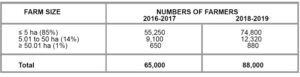
The fragmentation of sugar farms led to some 140,000 hectares being held by about 74,800 small farmers during the crop year 2018-2019.

According to the same NEDA report, the Block Farm Program had only organized and assisted 216 block farms from 2016 to 2019, covering just about 8,523 hectares. This is far too small compared to the estimated 140,000 hectares held by small sugar farmers. The SRA again has been remised in assisting small farmers to better their welfare and become competitive. It just focused on importation.The SRA reports on stocks inventory is not simple and straight forward but difficult to understand. The supply (raw and refined) vs. demand (industrial grade 65%, institutional 13% and household 22%) should always be emphasized.

Moving Forward For SRA

The SRA Board membership should include representative of small farmers, service providers and user industries. Include small farmers in discussions and consultations in crafting plans under the SIDA. The agency’s structure is regulatory-oriented and their developmental function is largely only in R&D, which just focuses on development, propagation and distribution of high-yielding varieties of sugar points. This has to change. Its structure, competence and staff complement requires a different set of competencies, and larger staff and budget support. While the agency has formulated a restructuring plan, this has yet to be fully implemented. Institutional support should be rationalized. As to access to credit, Landbank should update its loan windows and shorten time for loan processing, and should have minimal documentary requirements.


Spotlight is BusinessWorld’s sponsored section that allows advertisers to amplify their brand and connect with BusinessWorld’s audience by enabling them to publish their stories directly on the BusinessWorld Web site. For more information, send an email to online@bworldonline.com.

Join us on Viber to get more updates from BusinessWorld: https://bit.ly/3hv6bLA.

Metrobank at 60: A bank for all generations

Recent circumstances bring to mind how difficult it actually is to thrive as a business in a competitive environment. Disruptions abound in the world in every industry, whether for start-ups or longstanding corporations. Longevity is no small feat and is the mark of excellence for any company.

As Metropolitan Bank & Trust Co. (Metrobank) celebrates its 60th anniversary this September, it further builds on its reputation as a reliable, stable, and responsible bank for Filipinos of all generations. It should come as no surprise that even in spite of challenging economic circumstances, the bank has become stronger than ever, because it traces its origins to a globally troubling time.

Metrobank’s beginnings in 1962 were a brave response to a call for growth and progress. The world was on the verge of a nuclear war, with the United States facing down the Soviet Union over missiles in Cuba. China and India were at war. The Vietnam War was escalating. In contrast, the Philippines was doing well. Ahead of all its Asian neighbors, it had a good economy, good infrastructure, good government, and a working democracy.

The new era of optimism, brought about by government liberalization of fiscal and economic policies, heightened the growing need for fresh sources of credit to jump-start the economy. Spurred by this challenge, Metrobank was established. The bank was set up to help businesses needing funding.

Since then, Metrobank has grown the number of clients it serves across industries. It has gone from strength to strength, providing a strong and stable financial partner for Filipinos with a reputation that allows it to stand the test of time. From just over PHP52 million in assets after its first year of operations in 1963, it now has PHP2.7 trillion worth of resources as of June this year — retaining its position as the country’s second largest bank.

As it aided Filipino consumers and businesses, Metrobank introduced new products and services through the years.

It has also evolved and kept pace with Filipinos’ shift to the digital space. Today, it is able to cater to clients who prefer face-to-face transactions in its physical branches as well as those who prefer digital transactions. As of the first half of 2022, Metrobank has a consolidated branch network of 950 and 2,300 ATMs, with over 30 foreign branches, subsidiaries, and foreign offices. It also has Metrobank Online, its internet banking platform, and the Metrobank Mobile app, which allows account holders to transact anytime, wherever they are.

The bank knows that financial products can be oftentimes intimidating for consumers and to help them better understand and make well-informed financial decisions, it has rolled out different financial education initiatives. Most recently, Metrobank introduced Wealth Insights — a website where high net worth individuals can get timely market news, valuable insights, and expert advice to make meaningful investment decisions. For first-time investors, Metrobank offers Earnest, a learning and investing platform and Tara Invest, a series of bite-sized video explainers on the basics of investing. While on personal finance, Metrobank regularly posts useful money habit tips and articles on its website and social media platforms.

“Since the Bank was founded, our reason for being has always been to serve our customers extraordinarily well by helping them spot opportunities and working together to realize their dreams — whether to scale up their business or achieve their goals whatever life stage they are in,” said Metrobank President Fabian Dee.

The numerous awards that the bank has garnered was proof of its success in this regard. In the last two years, Metrobank has won the Euromoney Awards for Excellence as Best Bank in the Philippines. It was also named as the Strongest Bank and Most Helpful Bank in the Philippines during COVID-19 by the Asian Banker; Asiamoney named it as the Best Domestic Bank in the Philippines for 2021 and the Best Domestic Private Bank for 2022; and most recently, LinkedIn, conferred it as the Top Banking Employer in the country.

More than numbers and awards, however, Metrobank continues to stand true to its mission of being a responsible and trusted financial institution with a central message for its stakeholders: You are in good hands.

“As we usher in our diamond year, we look back with pride and take a step forward stronger than ever. ‘You’re In Good Hands,’ a catchphrase that we’ve always known by heart. But in reality, these four words hold much more value over time as our customers and employees experience our brand,” Mr. Dee said.

“It has evolved into our brand promise — a personal pledge of each Metrobanker and a lasting commitment of our institution, that in good or in trying times, Metrobank is the bank one can always trust.”

To know more about Metrobank, visit ingoodhands.metrobank.com.ph. Or follow its social media accounts on Facebook (https://www.facebook.com/metrobank), Twitter (https://twitter.com/Metrobank), and Instagram (https://www.instagram.com/metrobank/).


Spotlight is BusinessWorld’s sponsored section that allows advertisers to amplify their brand and connect with BusinessWorld’s audience by enabling them to publish their stories directly on the BusinessWorld Web site. For more information, send an email to online@bworldonline.com.

Join us on Viber to get more updates from BusinessWorld: https://bit.ly/3hv6bLA.

All sugar output now for local use

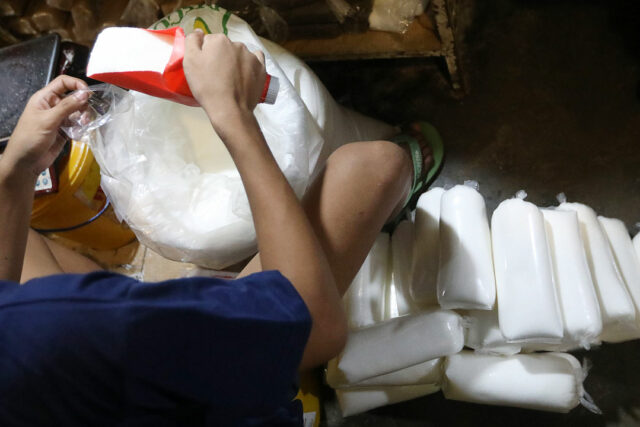
A vendor places sugar in plastic bags for sale. — PHILIPPINE STAR/EDD GUMBAN

By Luisa Maria Jacinta C. Jocson, Reporter

THE SUGAR Regulatory Administration (SRA) on Tuesday issued an order allocating all raw sugar output in the coming crop year for the domestic market.

Under Sugar Order (SO) No. 1, 100% of sugar production will be classified as “B,” which means it is designated as domestic sugar supply.

The SRA said total raw sugar production in the 2022-2023 crop year is estimated at 1.88 million metric tons (MT), while projected demand is seen hitting 2.03 million MT or a shortfall of 155,000 tons.

The crop year began on Sept. 1, 2022 and ends on Aug. 31, 2023.

The SRA said it will continuously assess the crop year’s production and demand and make any necessary adjustments to allocation.

“On the basis of such assessment, SRA may from time to time adjust the percentage allocation or distribution to other classes of sugar in accordance with its power and function to establish domestic, export and reserve allocation,” it added.

The order means the Philippines will not participate in the export of any raw sugar to the United States as part of an annual sugar quota allocation.

Local prices of sugar have spiked in recent months amid a supply shortage.

As of Sept. 2, the average retail price of refined sugar in wet markets rose to P97.43 per kilogram from P52.71 in the same period a year ago. A kilo of raw sugar is now priced at P72.43 from P45.29 a year ago.

The order is seen to alleviate the ongoing sugar shortage as it prioritizes the needs of the local market, according to industry stakeholders.

“We have been pushing for an all ‘B’ allocation to ensure that local demands are met and must be prioritized. This was done before and we can do it again. I am glad that the new (sugar) board, along with Mr. Marcos see the need to give importance to domestic needs before exporting,” United Sugar Producers Federation President Manuel R. Lamata said in a Viber message.

Samahang Industriya ng Agrikultura Executive Director Jayson H. Cainglet said that the government should always allocate production for domestic use when there is a shortage.

“Why allocate for exports, when there is a supposed claim of production shortage? Then import what is only needed by specific end-users or sectors. This goes for all agricultural commodities. We laud Mr. Marcos (for) safeguarding the interest of the local agriculture sector and the objective of boosting our food security,” he said in a Viber message. 

Philippine Chamber of Agriculture and Food, Inc. President Danilo V. Fausto said the sugar order would also ensure that the needs of industrial users would also be taken into consideration.

“As to the sugar needs of industrial users, the said order will address the demand through periodic assessment, review and adjustment as indicated,” he said in a Viber message.

“In general, I think SO No. 1 provided that the periodic assessment will be done in short intervals in order to make sure that the industrial users will not be left behind,” he added.

Last year, the SRA had allocated all sugar production for crop year 2021-2022 for domestic consumption.

The country’s raw sugar output in the previous crop year, which ended on Aug. 31, was estimated at around 1.8 million tons, down 16% from the previous season because of crop damage from a typhoon and unfavorable weather.

Food shortages in the Philippines, which are being addressed through importation, have become a major concern for Marcos, who has vowed to turn the long-neglected agricultural sector into an economic growth engine.

The Philippines is the world’s second-biggest buyer of rice and for years has also been importing most of its salt requirements and some volumes of fish.

African Swine Fever outbreaks have also reduced the local hog population, prompting the government to raise pork imports.

Largely driven by higher food prices, Philippine inflation averaged 4.9% in January-August, exceeding the central bank’s 2%-4% target band this year and prompting aggressive monetary policy tightening. — with Reuters

ADVERTISEMENT
ADVERTISEMENT