Home Blog Page 588

Shop & Share a Toy This Christmas: 5,000 toys to spark joy and learning for children nationwide

This Christmas season, the spirit of giving comes alive once more as SM Store, in partnership with SM Foundation, continues its heartwarming holiday tradition through Shop & Share a Toy This Christmas. Running until Dec. 31, 2025, the initiative invites customers to make a difference by donating a brand-new toy for just P100 with a minimum single-receipt purchase of P3,000.

Through this simple yet meaningful act of kindness, 5,000 educational toys will be distributed to children in SM Foundation-supported schools and health centers nationwide. Each toy goes beyond being a holiday gift; it becomes a symbol of hope, comfort, imagination, and opportunity for learning, especially for children who have limited access to play materials.

As part of the continued collaboration between SM Store and SM Foundation, the program reinforces its shared mission to nurture young learners, strengthen community connections, and inspire hope during the most meaningful season of the year.

This Christmas, even the smallest gesture can create the biggest smiles. Through Shop & Share a Toy, every donated toy becomes a reminder that when we give together, we make the season brighter for every child and for every community.


Spotlight is BusinessWorld’s sponsored section that allows advertisers to amplify their brand and connect with BusinessWorld’s audience by publishing their stories on the BusinessWorld Web site. For more information, send an email to online@bworldonline.com.

Join us on Viber at https://bit.ly/3hv6bLA to get more updates and subscribe to BusinessWorld’s titles and get exclusive content through www.bworld-x.com.

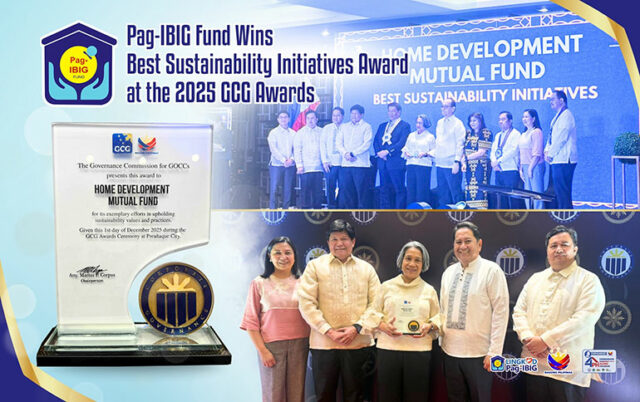
Pag-IBIG Fund wins GCG Best Sustainability Initiatives Award

Pag-IBIG Fund received the Best Sustainability Initiatives Award at the 2025 Governance Commission for GOCCs (GCG) Awards Ceremony held Monday, Dec. 1, in Parañaque City.

The award recognizes the agency’s efforts to integrate sustainability values and responsible practices across its programs, services, and internal operations.

Department of Human Settlements and Urban Development (DHSUD) Secretary and Pag-IBIG Fund Board Chairperson Jose Ramon P. Aliling said the recognition highlights Pag-IBIG Fund’s dedication to responsible governance and meaningful public service.

“We are truly grateful for this honor from the GCG. Receiving this award affirms our commitment to embedding sustainability in every aspect of our work,” Mr. Aliling said. “It reflects the progress we have made from the way we manage our resources, to how we serve our members, and to how we support the country’s development goals under the leadership of President Ferdinand R. Marcos, Jr. We are proud to contribute to a governance environment that upholds accountability, operational efficiency, and sustainable nation-building.”

Pag-IBIG Fund has strengthened its sustainability measures in recent years, particularly by expanding access to affordable and resilient housing through responsible lending and the Expanded Pambansang Pabahay para sa Pilipino (Expanded 4PH) Program. The agency has also accelerated digital transformation initiatives to reduce paper use, lessen branch foot traffic, and improve service efficiency.

Supporting greener housing options, Pag-IBIG Fund also allows members to avail of housing loans for the purchase or installation of solar panels, either as part of home improvement or as a built-in feature of newly acquired units. This enables members to invest in clean and cost-efficient energy solutions. The agency also provides additional appraisal consideration for housing projects of its accredited developers that incorporate green or energy-saving features.

Pag-IBIG Fund Chief Executive Officer Marilene C. Acosta said the award reinforces the agency’s mission to deliver programs that are sustainable, impactful, and responsive to the needs of Filipino workers.

“We will continue to champion sustainability as we help Filipino workers build a better future through meaningful savings and affordable home financing,” Ms. Acosta said. “We are deeply grateful to the GCG for this honor because it strengthens our resolve to serve with greater purpose. This recognition further inspires us to remain steadfast in fulfilling our mandates with service excellence, integrity, and sustainability. As Lingkod Pag-IBIG, helping our members achieve better and more dignified lives is not just our duty — it is our way of life,” Ms. Acosta said.

The award comes at a meaningful time as Pag-IBIG Fund marks its 45th anniversary on Dec. 14, celebrated under the theme “Isang Pag-IBIG: Susi sa Bagong Bukas.” Founded in 1980, the agency continues its enduring mission to help members secure their future through affordable home financing, accessible savings programs, and services that support their journey toward better lives.


Spotlight is BusinessWorld’s sponsored section that allows advertisers to amplify their brand and connect with BusinessWorld’s audience by publishing their stories on the BusinessWorld Web site. For more information, send an email to online@bworldonline.com.

Join us on Viber at https://bit.ly/3hv6bLA to get more updates and subscribe to BusinessWorld’s titles and get exclusive content through www.bworld-x.com.

World Bank cuts Philippine growth forecasts until 2027

The World Bank cut its 2025 Philippine gross domestic product (GDP) growth forecast to 5.1% from 5.3% in its June report. PHOTO BY MIGUEL DE GUZMAN, THE PHILIPPINE STAR

The World Bank on Tuesday trimmed its growth forecasts for the Philippines for this year through 2027, mainly due to slower construction activity, muted consumption and a sharper drag from US tariff policy.

In its latest Philippines Economic Update (PEU), the multilateral lender cut its Philippine gross domestic product (GDP) growth forecast to 5.1% for this year from 5.3% in its June report.

For 2026, it lowered its Philippine GDP growth forecast to 5.3% from 5.4% previously.

The World Bank also cut its Philippine GDP growth projection for 2027 to 5.4% from 5.5% previously.

These latest projections are below the government’s 5.5-6.5% growth goal for this year and the 6-7% target for 2026 to 2028.

“We project that average growth over 2025 to 2027 will be lower than 2024,” World Bank Senior Economist Jaffar Al-Rikabi said during a briefing.

The Philippine economy grew by 5.7% in 2024.

“For 2025… the growth is largely weighed down by domestic factors. In particular, lower construction activity and weaker consumption growth,” he said.

The Philippine economy expanded by a weaker-than-expected 4% in the third quarter, bringing nine-month growth to 5%. This, as household final consumption expenditure and government spending slowed amid the corruption mess.

“But for 2026 to 2027, we think that it’s likely that external factors will weigh in more heavily on growth, largely slower export demand,” Mr. Al-Rikabi said.

The US imposed a 19% tariff on most goods from the Philippines starting August.

“The Philippines can leverage its strong economic foundation to implement bolder reforms that can unlock faster, more inclusive growth,” Zafer Mustafaoğlu, country director for the Philippines, Malaysia, and Brunei said.

“Removing barriers that limit investment and productivity and strengthening competitiveness can create more and better-paying jobs, expand opportunities, and reinforce economic resilience.” — Aubrey Rose A. Inosante

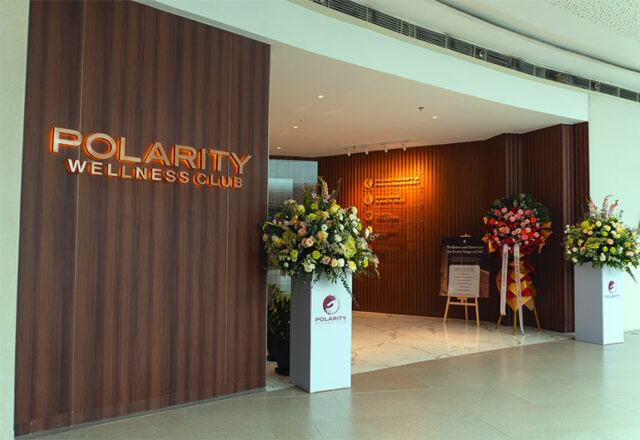
Polarity Wellness Club opens at The Podium: A new benchmark for integrated health and wellness in PHL

The newly opened Polarity Wellness Club (PWC) at The Podium, Ortigas Center

Visit the premium wellness destination dedicated to helping you recover, strengthen, maintain, and elevate your well-being.

The pursuit of fitness is no longer just about achieving a great physique. Today, true wellness demands a holistic approach — one that balances activity with recovery, strength with resilience, and physical health with mental clarity. This philosophy is now embodied in the newly opened Polarity Wellness Club (PWC) at The Podium, Ortigas Center, a premium destination redefining integrated health management in the Philippines.

PWC represents the next chapter for the Strength in Movement (SIM) Group, a pioneer in physiotherapy, strength, and wellness services. Evolving from the highly regarded Polarity Physiotherapy Center, PWC is the sister company of two premium gyms: Kinetix Lab and Kinetix+. With the gyms’ core focus on strength and conditioning, and their integrated offerings of dedicated Recovery Rooms and on-staff nutritionists, this powerful alliance firmly establishes the SIM Group’s commitment to holistic health. By uniting expert physiotherapy, world-class training, and dedicated nutrition, SIM provides a complete ecosystem for overall strength and lifestyle improvement. PWC is a membership-based wellness club designed for professionals, athletes, seniors, and performance-driven adults who seek structured, long-term health investment.

A Clinically Anchored Wellness Nexus

Located on the 4th floor of The Podium, PWC offers a refined membership experience that unites physiotherapy, recovery, strength pathways, and mental wellness under one space. This transformation reflects both a timely industry shift and the growing demand for proactive, sustained well-being among Filipinos.

“The evolution reflects a clear shift in what people now need from a wellness and rehabilitation institution,” said Luis Gatmaytan, administrative director and Physical Therapy Program director for the Strength in Movement Group. “Polarity Physiotherapy Center built a strong reputation for clinically-driven physiotherapy, but clients today require a system that supports them far beyond addressing isolated pain. PWC is the natural progression of that insight — a sophisticated, clinically-anchored, long-term wellness environment designed for clients who want structure, guidance, and sustainable results.”

PWC Recovery Room

Beyond Symptom Relief: Future-Proofing the Body

Unlike traditional physiotherapy clinics that focus on episodic care, PWC embraces a continuity model. Its philosophy is rooted in the belief that wellness is achieved by nurturing both body and mind, guiding individuals toward resilience, balance, and lasting vitality.

“Most people only seek treatment once pain already disrupts their life, or they train without fully understanding how to maintain their bodies sustainably. There is often no single place that connects rehabilitation, recovery, strength development, and overall wellness planning in a continuous and clinically grounded way,” explained Dr. Fahim James Pasha, DPT, associate manager of the Physiotherapy Department and Chief Physiotherapist at PWC.

This distinction is why PWC is a club, not a center. It is a membership-based community that emphasizes commitment, progressive health management, and integrated care. Clients are empowered to strengthen, maintain, and elevate their well-being through a consistent system supported by clinical expertise.

Red Light Therapy Room

A Full Suite of Services for Long-Term Health

PWC offers a comprehensive range of services designed to meet the needs of diverse clients — from corporate professionals managing stress to seniors committed to active aging.

  • Physiotherapy & Movement Recovery — One-on-one sessions focused on restoring mobility, reducing pain, and rebuilding confidence in movement.
  • Scoliosis & Spine Programs — Non-invasive, therapist-led interventions for posture, alignment, and long-term spine health.
  • Geriatric Care & Active Aging — Programs designed to improve balance, strength, mobility, and overall quality of life for seniors.
  • The Recovery Lab — Featuring the Kinetix+ recovery experience, including infrared sauna, cold immersion, contrast baths, and recovery boots to accelerate healing and performance.
  • Mental Wellness Support — Coaching and group classes that provide guided approaches to stress management and behavioral consistency, seamlessly integrated with physical care.

These offerings reflect PWC’s belief that physical and mental wellness cannot be separated. Stress, emotional load, and clarity directly influence muscle tension, posture, fatigue, and recovery. By addressing both aspects, clients are better equipped to heal, sustain progress, and achieve long-term transformation.

Professionalism and Precision: The PWC Standard

PWC’s difference extends beyond its integrated service model to its client experience. The club is designed to reflect the caliber of care provided — refined, intentional, and conducive to focused sessions.

“Our team is selected for technical maturity, critical thinking, and alignment with our professional standards. They undergo continuous training and mentorship grounded in clinically-driven practice,” shares Mr. Gatmaytan.

The service standard is defined as “professional warmth, not personal familiarity” — supportive, empathetic, and human, yet always within clear professional boundaries to ensure clinical integrity.

“Our clients arrive carrying pain, and they place extraordinary trust in our hands,” Dr. Pasha added. “From the moment someone walks through our door we want them to feel something powerful: instant calm, genuine care, and absolute confidence that they’re in the right place. That’s why every detail — the lighting, the music, the warmth of our team — is designed to ease clients’ stress before a single treatment begins.”

Infrared Sauna and Cold Plunge Area

Vision for the Future: Leading Integrated Wellness in the Philippines

Looking ahead, PWC aims to be recognized as the country’s trusted leader in integrated wellness and Active Aging. By combining physiotherapy, recovery, strength, and mental resilience under one space, PWC sets a new standard for holistic health care in the Philippines.

“Our priority is to help clients build, protect, and sustain strength across their lifetime,” said Mr. Gatmaytan. “When you are stronger, you move better, feel better, think better, and live better. That’s the philosophy we live by.”

Visit Polarity Wellness Club

Polarity Wellness Club is part of the Strength in Movement Group, a pioneering organization in physiotherapy and wellness services in the Philippines.

Follow Polarity Wellness Club on Instagram and Facebook.

4th Level, The Podium Mall, Ortigas Center, Mandaluyong City

Open daily from 9:00 a.m. to 10:00 p.m.

polaritywellnessclub.com

hello@polaritywellnessclub.com


Spotlight is BusinessWorld’s sponsored section that allows advertisers to amplify their brand and connect with BusinessWorld’s audience by publishing their stories on the BusinessWorld Web site. For more information, send an email to online@bworldonline.com.

Join us on Viber at https://bit.ly/3hv6bLA to get more updates and subscribe to BusinessWorld’s titles and get exclusive content through www.bworld-x.com.

Puregold CinePanalo Student Shorts winners to receive full scholarships, tuition discounts from APFI

Puregold CinePanalo Festival Director Christopher Cahilig, APFI General Manager Russel Frederick Oledan, and Puregold Senior Marketing Manager and Festival Chair Ivy Hayagan-Piedad formalize the partnership between Puregold CinePanalo and Asia Pacific Film Institute that will expand learning opportunities for student filmmakers.

In a recently forged partnership, the Puregold CinePanalo Film Festival and the Asia Pacific Film Institute (APFI) committed to providing full scholarship grants and tuition discounts for winners and participants in the Festival’s Student Shorts Category. These benefits are on top of the Festival’s creative grant of P200,000 per Student Short.

Entering its third year, the Puregold CinePanalo has firmly solidified itself as one of the most prestigious film festivals in the country. This is in no small part due to the festival’s unwavering support for aspiring filmmakers. Since its inception, the Puregold CinePanalo Film Festival has endowed them with hundreds of thousands worth of grants, a largesse that is likewise extended to student filmmakers.

This year, through the tandem of Puregold CinePanalo and the Asia Pacific Film Institute, not only will the student participants receive funding to create the movies of their dreams, but they will be given the resources to achieve their academic aspirations as well.

Under the partnership, the APFI will award three full scholarships to the winners of the major awards in the Student Shorts category, namely the Best Film, Jury Prize, and Best Director. In addition, the APFI shall provide a 100% scholarship for specific subjects chosen by the organization, including courses in Advanced Cinematography, Production Design, Scriptwriting, Acting, Editing, and Sound Design.

The APFI will also provide a 10% tuition discount on selected subjects for all students, crew, and members of each participating film, whether in the Student Shorts category or Full-Length category. On top of all this, the APFI will organize Career Talks during the Festival, which will help student filmmakers translate their artistic aspirations into sustainable career paths in the film and media industry.

Puregold CinePanalo Festival Director Christopher Cahilig, APFI General Manager Russel Frederick Oledan and Festival Chair Ivy Hayagan-Piedad affirm their new partnership with a handshake, a step that strengthens scholarship grants for young, aspiring filmmakers.

According to APFI, the Puregold CinePanalo’s advocacies in supporting the dreams of young filmmakers totally align with its own mission as an independent, self-sustaining, and industry-focused film school.

“The participants of Puregold CinePanalo have already proven themselves as talented storytellers with the potential to succeed,” says Russel Frederick Oledan, general manager of APFI. “Asia Pacific Film Institute is thus honored to support their journey by providing the mentorship, training, and platform to refine their craft.”

Mr. Oledan further affirms that the partnership reflects APFI’s vision of nurturing young storytellers who will shape the next generation of Philippine cinema. “It is a dream we share with the folks at Puregold,” he states.

Ivy Hayagan-Piedad, Puregold senior marketing manager, agrees and believes the shared passion of Puregold and APFI will bring the CinePanalo to heights it has never seen before.

“CinePanalo just keeps growing. We’re seeing even more institutions rally behind the cause. Partners like the Asia Pacific Film Institute remind us that uplifting Philippine cinema is a shared mission, one that starts by investing in the next generation of storytellers,” said Ms. Hayagan-Piedad.

The festival proper will be held at the Gateway Cineplex 18 and select Ayala Cinemas. Seven full-length films and 20 student Shorts will make up the festival lineup. To date, a number of Puregold CinePanalo alumni films have been showcased — and won awards — at both local and international film festivals.

For more information on the Puregold CinePanalo, you may stay updated through the official Festival Facebook page at facebook.com/puregoldcinepanalo.


Spotlight is BusinessWorld’s sponsored section that allows advertisers to amplify their brand and connect with BusinessWorld’s audience by publishing their stories on the BusinessWorld Web site. For more information, send an email to online@bworldonline.com.

Join us on Viber at https://bit.ly/3hv6bLA to get more updates and subscribe to BusinessWorld’s titles and get exclusive content through www.bworld-x.com.

Japan lifts tsunami warning after 7.5-magnitude earthquake

TOKYO — Japanese authorities lifted tsunami warnings on Tuesday hours after a powerful 7.5-magnitude earthquake shook northeastern regions, injuring at least 30 people and forcing about 90,000 residents to evacuate their homes.

The earthquake struck off the coast at 11:15 p.m. (1415 GMT) on Monday, and the Japan Meteorological Agency said a tsunami as high as 3 meters (10 feet) could hit the country’s northeastern coast. Warnings were issued for the prefectures of Hokkaido, Aomori and Iwate, and tsunamis from 20 to 70 centimeters (7 to 27 inches) high were observed at several ports, JMA said.

By the early hours of Tuesday, the JMA downgraded the warnings to advisories, and later lifted all advisories. There were no reports of major damage.

The epicenter of the quake was 80 kilometers (50 miles) off the coast of Aomori prefecture, at a depth of 54 km.

On Japan’s 1-7 scale of seismic intensity, the tremor registered as an “upper 6” in Hachinohe city, Aomori prefecture – a quake strong enough to make it impossible to keep standing or move without crawling.

“As of now, I have received reports of 30 people being injured and one fire,” Prime Minister Sanae Takaichi told reporters.

East Japan Railway suspended some services in the area, which was also hit by a massive 9.0-magnitude quake in March 2011. Other train services are facing delays in northern Japan, the operator said.

Following the tremor, the JMA issued an advisory for a wide region from the northernmost island of Hokkaido down to Chiba prefecture, east of Tokyo, calling on residents to be on alert for the possibility of a powerful earthquake hitting again within a week.

“There is a possibility that further powerful and stronger earthquakes could occur over the next several days,” a JMA official said at a briefing.

No irregularities were reported at nuclear power plants in the region run by Tohoku Electric Power and Hokkaido Electric Power, the utilities said. Thousands of households had lost power immediately following the quake, but service resumed by Tuesday morning.

YEN WEAKENS BRIEFLY
The yen weakened against major currencies after news of the tremor, with the dollar and euro both touching session highs.

Japan is one of the world’s most earthquake-prone countries, with a tremor occurring at least every five minutes. Located in the “Ring of Fire” of volcanoes and oceanic trenches partly encircling the Pacific Basin, Japan accounts for about 20% of the world’s earthquakes of magnitude 6.0 or greater.

The northeastern region suffered one of the country’s deadliest earthquakes on March 11, 2011, when a 9.0-magnitude tremor struck under the ocean off the coast of the northern city of Sendai. It was the most powerful ever recorded in Japan and set off a series of massive tsunami that devastated a wide swathe of the Pacific coastline and killed nearly 20,000 people.

Drawing on lessons from that disaster, when a magnitude 7-level earthquake had struck two days beforehand, the government now issues a one-week “megaquake” advisory whenever a significant earthquake occurs in the region.

The 2011 tsunami also damaged the Fukushima Daiichi nuclear plant, leading to a series of explosions and meltdowns in the world’s worst nuclear disaster for 25 years.— Reuters

Cuba sentences former economy minister to life in prison for corruption, espionage

Classic car passing in front of a monument in Cuba. — STOCK PHOTO | FREEPIK

HAVANA — Cuba’s Supreme Popular Tribunal on Monday sentenced former economy minister Alejandro Gil to life in prison following a closed-door trial that found him guilty of espionage in one of the country’s highest-profile corruption cases in decades.

The court additionally found Gil guilty of a range of corruption charges in a second trial, including bribery, falsification of public documents, influence peddling, and tax evasion.

Mr. Gil was sentenced to a concurrent 20-year sentence for those crimes.

The former economy minister, once a close confidant of President Miguel Diaz-Canel, spearheaded major monetary reforms in Cuba in 2021, which were largely seen as disastrous for the already troubled economy.

Sacked by Mr. Diaz-Canel in February 2024, Mr. Gil had not been seen or heard from until the trials, prompting widespread speculation about his whereabouts.

“Through corrupt and deceitful actions, (Gil) abused the powers granted by the responsibilities he assumed to obtain personal benefits, receiving money from foreign companies and bribing other public officials to legalize the acquisition of assets,” the court’s statement read.

“He failed to follow work procedures with the classified official information he handled, he stole it, damaged it, and finally made it available to the enemy.”

The defendant has the right to appeal the sentences within 10 days.

Reuters was unable to contact Mr. Gil or his lawyer for comment.

The corruption case is the most high-profile to hit Cuba since 1989, when General Arnaldo Ochoa, a hero of Fidel Castro’s 1959 Revolution, was tried and executed by firing squad for drug smuggling. — Reuters

Thailand-Cambodia fighting spreads along contested border

STOCK PHOTO | Images by Aranjuezmedina from Freepik

BANGKOK/PHNOM PENH — Thailand said it was taking action to expel Cambodian forces from its territory on Tuesday, as renewed fighting between the two Southeast Asian neighbors spread along the disputed border.

Each side has blamed the other for the clashes, which have derailed a fragile ceasefire brokered by US President Donald Trump that ended five days of fighting in July.

Cambodia’s Defense Ministry said two civilians had been killed overnight, taking its death toll to six. One Thai soldier has died in the fighting.

In a statement on Tuesday morning, the Thai Navy said Cambodian forces had been detected inside Thai territory in the coastal province of Trat and military operations were launched to expel them, without providing further details.

Cambodian Prime Minister Hun Manet said late on Monday that Thailand “must not use military force to attack civilian villages under the pretext of reclaiming its sovereignty”.

Earlier, Cambodia said it had not retaliated even after its forces came under sustained attack.

The Thai Navy said Cambodian forces were increasing their presence, deploying snipers and heavy weapons, improving fortified positions and digging trenches, adding it saw the actions “as a direct and serious threat to Thailand’s sovereignty”.

Monday’s clashes were the fiercest since a five-day exchange of rockets and heavy artillery in July, when at least 48 people were killed and 300,000 displaced, before Mr. Trump intervened to broker a ceasefire.

Thailand evacuated 438,000 civilians across five border provinces and authorities in Cambodia said hundreds of thousands of people had been moved to safety. Thailand’s army said 18 soldiers were wounded and Cambodia’s government reported nine civilians injured.

Thailand and Cambodia have for more than a century contested sovereignty at undemarcated points along their 817 kilometer (508 mile) land border, with disputes over ancient temples stirring nationalist fervor and occasional armed flare-ups, including a deadly week-long artillery exchange in 2011.

Tensions rose in May following the killing of a Cambodian soldier during a skirmish, which led to a major troop buildup at the border and escalated into diplomatic breakdowns and armed clashes. — Reuters

Operator, catalyst, strategist, steward

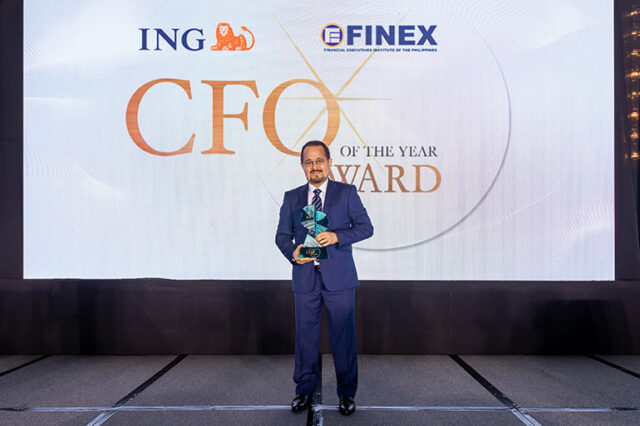
De Larrazabal was recognized for his pivotal role in guiding Ayala through major transitions.

Ayala Corp. Chief Financial Officer embodies the ‘Four Faces of the CFO’ as he is recognized as ING-FINEX CFO of the Year for 2025.

At its core, the chief financial officer (CFO) of a company is the leader entrusted with protecting the financial health and integrity of an organization. This means ensuring that books and balance sheets tell the truth, risks are understood, and resources are used wisely towards the company’s goals.

But modern business doesn’t reward caretakers alone, at least not anymore. As operations scale and become ever more complex, today’s CFOs must also point the enterprise toward growth, transformation, and long-term value creation. Functioning as an anchor for the company, the role demands discipline and foresight in equal measure, because the company depends on the CFO to weigh its every decision between opportunity and risk.

This is the logic behind the framework used in the country’s most respected CFO evaluation: the “Four Faces of the CFO,” developed by Deloitte and adopted as the basis of the ING-FINEX CFO of the Year Award.

The model captures the full breadth of what makes a CFO today. As Operator, the CFO ensures financial processes run with precision and consistency. As Steward, they safeguard governance, controls, and accountability. As Strategist, they help shape long-term direction. And as Catalyst, they drive transformation and alignment across the organization.

Competent CFOs might master two or three. Few leaders excel in all four.

This year, Ayala Corp. Chief Financial Officer Alberto De Larrazabal was recognized as someone who does exactly that, as he was named the 19th ING-FINEX CFO of the Year, the Philippines’ premier honor for outstanding chief financial officers.

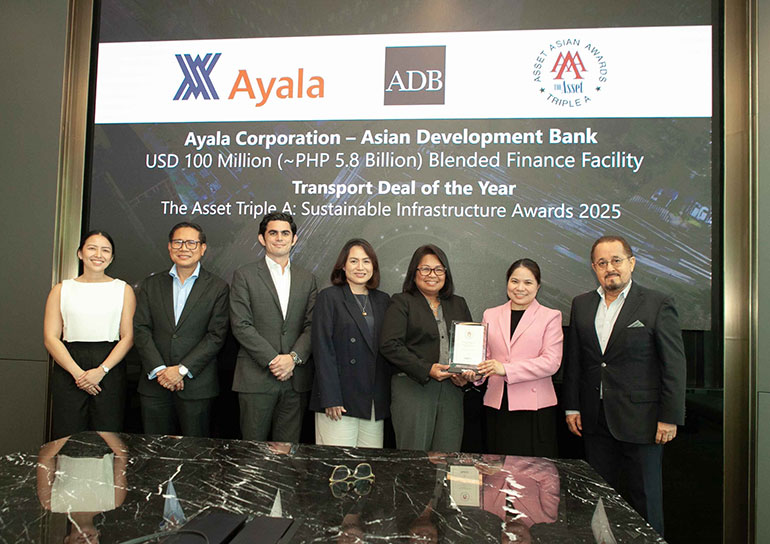
De Larrazabal led Ayala in executing landmark financing deals that combined competitive cost with positive impact.

This year’s award was given to Mr. de Larrazabal in recognition of his exemplary leadership in helping guide Ayala Corp. through major transformations with continued operational and governance excellence while nurturing a stronger culture of collaboration across the organization. These combined contributions, reinforced by Ayala’s record performance in 2024, made him stand out in the rigorous evaluation process.

He is the 19th recipient of the award and the eighth from the Ayala Group to earn the distinction.

Mr. de Larrazabal’s leadership has been central to guiding Ayala Corp. through one of its most dynamic periods. In addition to being evaluated across all ‘Four Faces’, he was credited with his performance during Ayala’s record year in 2024, which he achieved while the Group undertook major portfolio changes and broader organizational transformation.

Nominees were first assessed by the Search and Selection Committee (SSC) through detailed interviews and documentation reviews. From this pool, finalists were endorsed to the Board of Judges (BOJ), composed of respected leaders from regulatory bodies, the academe, past awardees, and business luminaries. The BOJ then conducted final interviews and deliberations before selecting the winner. This multi-tiered process ensures that the awardee exemplifies the highest standards of leadership, integrity, and strategic vision.

The ING-FINEX CFO of the Year Award is the Philippines’ longest-running and only dedicated search that honors outstanding Chief Financial Officers. Established through a permanent partnership between Dutch financial giant ING Bank N.V. and the Financial Executives Institute of the Philippines (FINEX), the country’s premier organization of finance and business professionals, the award celebrates its 19th year of recognizing excellence and inspiring future generations of Philippine financial leaders.

Within Ayala, De Larrazabal is regarded as a mentor and culture carrier, blending warmth with rigor to empower leaders at every level.

Championing integrity in a world of gray

Amid the recognition, Mr. De Larrazabal offered a view of leadership that reflects the complexity of the role he inhabits.

“The role of the CFO comes with a lot of trust placed on you. It’s heartwarming to feel that I have been deserving of that trust,” he said at the awarding ceremony held on Nov. 19 at the Fairmont Hotel in Makati City.

“We are in a unique position to see everything and be completely integrated. The key would be in providing that input to the rest of the business, so that better business decisions are made.”

In his words, the modern world is “a whole mass of grey,” something that has largely become ambiguous, fast-changing, and difficult to navigate. For him, the only dependable compass in that environment is character.

“It’s really about using integrity as a way to navigate that. Integrity is our North Star. You walk the talk,” Mr. de Larrazabal said.

That principle, he noted, has guided his approach as finance has evolved from a back-office guardian to a forward-looking partner in strategy and execution. The role has shifted, he said, from “gatekeeper” to “enabler,” requiring finance leaders not just to protect the enterprise but to move it forward.

“It’s providing perspective, always insights and perspective. That is the major role that finance plays, so that the outcomes, the decisions, are much better thought through,” Mr. de Larrazabal said.

His peers at Ayala Corp. commended his success at balancing this vital role in the firm.

Ayala Corp. President and CEO Cezar P. Consing credits De Larrazabal for successfully helping the company rationalize its business while driving growth.

“Albert has been CFO at a time when we have done so many changes to our portfolio. We’re doing things now that we haven’t done before. It’s not so easy to rationalize your business and grow at the same time, and Albert’s managed that,” said Ayala Corp. President and CEO Cezar P. Consing.

“You can be a good CFO, a good leader, or a good director or chairman, but finding somebody that can do all these things with the highest standards, that’s difficult to find. That’s why we’re lucky to have Albert,” said Ayala Corp. Chief Human Resources Officer Francisco Romero Milán.

“Albert’s impact on Ayala is not only enduring but also transformative. As a CFO, he’s known not just as a gatekeeper but a builder of businesses and solutions. He’s also known as an enabler across the Group,” said Ayala Corp. Chief Legal Officer Franchette Acosta.

Looking ahead, Mr. de Larrazabal hopes his legacy will be defined less by transactions and numbers than by the people he has shaped. For him, true leadership means ensuring that the benefits of progress are felt collectively, reinforcing a culture of collaboration and integrity.

“I’ve always believed that the people closest to the problem are in the best position to give you insights to the solution. It is incumbent on us as senior management to enable that conversation, to provide perspective and guidance, and at the same time, provide a safe space so that people feel free.”


Spotlight is BusinessWorld’s sponsored section that allows advertisers to amplify their brand and connect with BusinessWorld’s audience by publishing their stories on the BusinessWorld Web site. For more information, send an email to online@bworldonline.com.

Join us on Viber at https://bit.ly/3hv6bLA to get more updates and subscribe to BusinessWorld’s titles and get exclusive content through www.bworld-x.com.

BSP to cut policy rate anew — poll

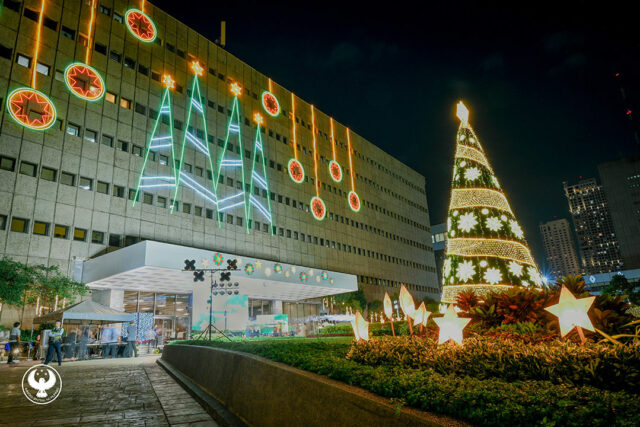
A Christmas tree is seen at the Bangko Sentral ng Pilipinas (BSP) main office, Manila. — BANGKO SENTRAL NG PILIPINAS

By Katherine K. Chan

THE BANGKO SENTRAL ng Pilipinas (BSP) is widely expected to ease for a fifth straight meeting on Thursday as economic growth slows and inflation remains below target, analysts said.

A BusinessWorld poll conducted last week showed that 17 out of 18 analysts surveyed expect the Monetary Board to cut the target reverse repurchase rate by 25 basis points (bps) on Dec. 11. This is the board’s last policy review meeting of the year.

If realized, the benchmark rate will fall to 4.5% from the current 4.75%. At 4.5%, this would be the lowest policy rate in over three years or since the 4.25% in September 2022.

In the BusinessWorld poll, only one analyst, Pantheon Macroeconomics Chief Emerging Asia Economist Miguel Chanco, sees the BSP delivering a 50-bp cut.

The central bank has so far reduced borrowing costs by a cumulative 175 bps since it began its easing cycle in August last year. It delivered a 25-bp cut at each of its meetings in April, June, August and October.

Moody’s Analytics Assistant Director and Economist Sarah Tan said the dismal third-quarter growth and easing inflation print may prompt a 25-bp rate cut on Thursday.

“Weaker-than-expected third-quarter GDP (gross domestic product) growth and a low-inflation environment together strengthen the case for further easing, even as risks of stronger price pressures linger,” she said in an e-mail. “These forces should outweigh concerns about the peso’s recent depreciation.”

In the July-to-September period, the Philippine GDP expanded by 4%, its slowest pace since the first quarter of 2021, as consumer and investor sentiment waned amid the ongoing public infrastructure corruption mess.

The country’s economic growth averaged 5% in the nine-month period, below the government’s 5.5-6.5% target for 2025.

Cid L. Terosa, a senior economist at the University of Asia and the Pacific, said the BSP will likely deliver a 25-bp cut in light of slowing economic growth both here and abroad, as well as a weaker pace of household spending.

“(The Philippine economy) does not seem to show signs of recovering from the effect of corruption scandals all throughout the country,” Mr. Terosa said.

For Mr. Chanco, the weaker-than-expected GDP growth in the third quarter, coupled with benign inflation, could support a jumbo cut by the central bank.

“A rate cut (on Dec. 11) is almost a given, the question is by how much, and we suspect that the very weak Q3 GDP print is reason enough for the Monetary Board to go with a larger 50-bp cut, especially with inflation still well under control,” Mr. Chanco said in an e-mail.

In November, headline inflation eased to 1.5% from 1.7% in October and 2.5% a year earlier amid slower price increases in food and non-alcoholic beverages, with food inflation posting a 0.3% decline during the month.

This brought the 11-month inflation average to 1.6%, below the BSP’s 1.7% full-year projection. November marked the ninth month in a row that inflation undershot the BSP’s 2-4% target.

Chinabank Research, which also anticipates a rate cut, said below-target inflation and well-anchored inflation expectations give the BSP room to continue easing.

“A more accommodative policy could also offer support for the Philippine economy, which grew weaker than expected in the third quarter and continues to face challenges from both the domestic and external fronts,” Chinabank Research said.

Deutsche Bank economist for the Philippines Junjie Huang said the central bank may ease further as they see slow growth through yearend.

“Q4 GDP growth may still be fairly weak amid lingering effects of constrained public spending… To reflect such a challenge, we revised down our GDP growth forecast to 4.1% year on year in Q4 from 5.4%, which in turn points to a wider negative output gap and thereby eliciting a policy action by BSP,” he said in a note.

Reinielle Matt M. Erece, an economist at Oikonomia Advisory and Research, Inc., said lower borrowing costs may spur spending, capital expenditures and overall economic activity.

BSP Governor Eli M. Remolona, Jr. earlier said that the Philippine GDP might grow by only 4-5% by yearend, well-below the government’s 5.5-6.5% target.

Meanwhile, Union Bank of the Philippines Chief Economist Ruben Carlo O. Asuncion said that the anticipated rate cut by the US Federal Reserve at its last policy meeting this year also allows the BSP to have a more accommodative monetary policy stance.

“Global easing trends, particularly the Fed’s expected cut, also provide room for BSP to act without putting undue pressure on the peso,” he said in an e-mail.

The Fed has so far lowered its key policy rate by 150 bps since September 2024, bringing it to the 3.75-4% range. It is scheduled to have its last meeting this year on Dec. 9 and 10.

“A rate cut from both the Fed and the BSP (this) week would keep the interest rate differential at 75 bps, which could then help stave off any additional depreciation pressure on the peso,” Chinabank Research said.

The peso hit the P59-per-dollar level several times in November, even reaching a fresh low of P59.17 versus the greenback on Nov. 12.

FURTHER EASING IN 2026
Meanwhile, analysts see further monetary policy easing next year amid a dim growth outlook.

“(I’m) expecting one more 25-basis-point rate cut next year that can take place in the first quarter as GDP is likely to show sluggishness in the fourth quarter of this year with inflation to end this year at sub-two percent,” Security Bank Chief Economist Angelo B. Taningco said in an e-mail.

The BSP chief has said that the economy would only fully recover by 2027 but noted that a slight rebound might come by the middle of next year.

Maybank Investment Bank economist Azril Rosli projects two more 25-bp cuts next year, with the first one likely to come in the first half, as he expects inflation to settle at 2.2% in 2026.

“Price pressures continue to ease, with rice prices softening due to stronger domestic harvests and lower global prices, though the BSP will continue monitoring the impact of rice import restrictions on supply and retail markets,” he said in an e-mail. “Upside risk is the combined effects of rice policy adjustments, base effects, and higher electricity rates.”

The suspension of regular and well-milled rice imports will be temporarily lifted in January but will be reimposed from February to April.

The flexible tariff scheme on rice will likewise take effect on Jan. 1, wherein the levy on the staple grain will be adjusted by 5 percentage points every 5% change in global prices up to a maximum of 35%. The National Government currently imposes a 15% tariff on rice.

Meanwhile, Bank of the Philippine Islands Lead Economist Emilio S. Neri, Jr. also expects the central bank’s easing cycle to end once the benchmark interest rate settles at 4% but flagged risks of excessive easing.

“A gradual easing path could bring the policy rate down to 4% in 2026, providing support to an economy that will likely depend more on monetary policy in the near term given the constraints on fiscal spending,” he said in a note.

“Nevertheless, excessive rate cuts may carry risks as inflation could rise again in 2026. An overly aggressive easing cycle could force the BSP into an abrupt reversal should inflation pick up unexpectedly, potentially leading to sharper-than-ideal rate hikes later on,” he added.

The BSP projects inflation to return to the target range by 2026 at 3.1%, before slowing anew to 2.8% in 2027.


Banks’ bad loans inch up to 3.33% in October

STOCK PHOTO | Image by iiijaoyingiii from Pixabay

THE PHILIPPINE BANKING sector had slightly more bad debts in October than in the previous month, bringing its gross nonperforming loan (NPL) ratio to 3.33%, preliminary data from the Bangko Sentral ng Pilipinas (BSP) showed.

The industry’s gross NPL ratio inched up in October to 3.33% from 3.31% in September but improved from the over two-year high NPL ratio of 3.6% logged in October 2024.

October also saw the highest bad loan ratio in two months or since the 3.5% in August.

Loans are considered nonperforming once they remain unpaid for at least 90 days after the due date. These are deemed risk assets since borrowers are unlikely to pay.

Based on data from the central bank, soured loans slipped by 0.35% to P537.028 billion in October from P538.924 billion in September. However, it rose by 2.43% from P524.311 billion a year ago.

“The slight pickup in the NPL ratio could be partly due to the slower growth in bank loans in recent months that could have slowed the growth in the denominator, adverse effects of the series of storms (and) earthquakes in recent months that slowed down economic activities amid reduced number of working days,” Rizal Commercial Banking Corp. Chief Economist Michael L. Ricafort said in a Viber message.

Earlier BSP data showed that outstanding loans extended by big banks climbed by an annual 10.3% to P13.793 trillion in October. However, this was the slowest lending growth in 16 months or since the 10.1% posted in June 2024.

Mr. Ricafort likewise attributed the uptick in banks’ bad debts to the recent flood control corruption mess, which dampened infrastructure spending and limited business opportunities in the construction industry.

As of October, the banking system’s total loan portfolio stood at P16.104 trillion, down 1.05% from the P16.276 trillion recorded in the previous month. Year on year, it went up by 10.68% from P14.55 trillion.    

Past due loans inched up by 1.48% to P687.836 billion in October from P677.822 billion in September and by 7.33% from P640.881 billion a year earlier.

These borrowings are equivalent to 4.27% of the industry’s total loan portfolio, higher than the 4.16% in September but below the 4.4% seen a year ago.

Restructured loans inched up by 0.02% month on month to P332.823 billion in October from P332.761 billion. It jumped by 13.69% from P292.749 billion in October last year.

This brought the restructured loans ratio to 2.07% in October, up from 2.04% in September and 2.01% a year prior.

Meanwhile, banks’ loan loss reserves amounted to P508.273 billion, up by 0.5% from P505.768 billion in September and by 4.26% from P487.523 billion a year ago.

With this, the ratio rose to 3.16% in October from 3.11% in September but slipped from 3.35% the previous year.

On the other hand, lenders’ NPL coverage ratio, which gauges the allowance for potential losses due to bad loans, stood at 94.65%, higher than the 93.85% in September and 92.98% in October 2024.

“For the coming months, further (Federal Reserve) and BSP rate cuts would further reduce borrowing costs that would support debt servicing by some borrowers,” Mr. Ricafort said.

The BSP has reduced benchmark interest rates by 175 basis points (bps) since August last year, bringing it to an over three-year low of 4.75%.

A BusinessWorld poll showed that 17 out of 18 analysts expect the Monetary Board to cut the target reverse repurchase rate by 25 bps at its last meeting of the year on Dec. 11.

If realized, the benchmark rate will stand at 4.5%, the lowest in over three years or since the 4.25% in September 2022.

Meanwhile, the Fed has reduced the Federal Funds Rate by 150 bps since September 2024, which is now at the 3.75-4% range.

The Fed is scheduled to have its last policy review meeting this year on Dec. 9 and 10, where it is expected to deliver a 25-bp cut. Katherine K. Chan

BoI investment pledges decline by 48%

PHILIPPINE STAR/MICHAEL VARCAS

By Justine Irish D. Tabile, Reporter

THE BOARD of Investments (BoI) has approved P816.81 billion worth of investment pledges as of November, dropping by 48.3% from the P1.58 trillion in pledges approved in the same period a year ago.

At the same time, the value of green lane-certified projects breached the P6-trillion mark, it added.

In a statement, the BoI said it greenlit 261 projects, which are expected to create 32,864 jobs, in the first 11 months.

These investment pledges are mainly in the sectors of energy and electricity (P479.78 billion), airports and seaports (P195.69 billion), manufacturing (P58.99 billion), mass housing (P37.55 billion), and information and communication (P21.27 billion).

“These figures reflect the strong inflow of high-value investments that strengthen our economy. But we will not slow down,” said Trade Secretary and BoI Chair Ma. Cristina A. Roque in a statement on Monday.

“The P816.81 billion in approved investments to date sends a clear signal to local and foreign investors: the Philippines is an ideal, competitive, and future-ready business destination,” she added.

The top country sources of investments were Singapore (P74.78 billion), Thailand (P7.75 billion), and the US (P5.38 billion).

However, the approvals for the first 11 months are far below the P1.75-trillion target set by the BoI this year.

At P816.81 billion, the agency is only hitting 46.67%, or less than half of what it projected for 2025.

Rizal Commercial Banking Corp. Chief Economist Michael L. Ricafort said the decline in investment approvals could be partly attributed to weather-related disruptions, which have reduced the number of working days for government offices.

“Another factor would be the recent political noise on the anomalous flood control projects that led to some wait-and-see attitude by some investors,” he said in a Viber message.

Allegations that lawmakers, officials and contractors have siphoned off billions of pesos from anomalous flood control projects have triggered protests and dampened investor and consumer sentiment.

“Furthermore, another external risk factor since early 2025 has been Trump’s higher tariffs, trade wars, and other protectionist measures that reduced the global economic growth… thereby leading to some wait-and-see attitude by some international investors,” Mr. Ricafort said.

However, Ms. Roque said that although the political environment is an important consideration for any investor, the BoI’s strategic projects typically have medium- to long-term gestation period.

“And as such, investors attach greater importance to long-term factors such as economic fundamentals and structure, market demographics, and direction of policy reform,” she said.

Despite the decline in approvals, Ms. Roque said that they are currently reviewing a strong pipeline of investment pledges.

“BoI is still assessing 10 more big-ticket, strategic projects worth over P1 trillion,” she said. “It’s premature to make any definitive conclusions until those are finalized… These projects are registered with our green lane facility. Let’s wait and see what happens.”

These include three hydroelectric projects with 2.4-gigawatt (GW) combined capacity, four offshore wind projects with 3.7-GW capacity, two air transport service projects, and one transport infrastructure project.

“As we are a prudent administrator of incentives, we carefully evaluate these projects according to the requirements of the Strategic Investment Priorities Plan and its guidelines,” Ms. Roque said.

“While we are working double-time, we are unsure if all of these can be approved for registration this year. But what this signifies is that the pipeline of strategic investments remains to be strong,” she added.

The BoI will hold two more regular board meetings before yearend, which means there could still be an increase in investment approvals.

“But we cannot predict yet whether the increase will be enough to reach the P1.75 trillion we targeted for 2025,” the Trade chief said.

GREEN LANE APPROVALS
Meanwhile, the BoI said that it has endorsed 78 projects worth P1.92 trillion in the January-to-November period for green lane treatment to the Once-Stop Action Center for Strategic Investments.

These projects are in sectors such as renewable energy, infrastructure, manufacturing, food security, pharmaceuticals, and digital infrastructure. These are expected to generate 161,325 direct jobs.

The renewable energy sector accounted for 60 projects worth P1.42 trillion, followed by public-private partnership, infrastructure and water projects valued at P416.08 billion.

Other projects are in digital infrastructure (P49.56 billion), manufacturing (P30.13 billion), food security (P4.33 billion), and pharmaceuticals (P45 million).

“Since its launch in Feb. 2023, the green lane has certified 229 projects worth P6.06 trillion, projected to create 398,822 jobs, underscoring its key role in attracting strategic, future-ready investments,” the BoI said.

ADVERTISEMENT
ADVERTISEMENT