Home Blog Page 5836

OCD explores partnership with Israel for disaster preparedness


PHILIPPINE STAR/ MICHAEL VARCAS
Residents struggle to navigate the floods caused by typhoon Ulyssess in Rodriguez, Rizal. — PHILIPPINE STAR/ MICHAEL VARCAS

THE PHILIPPINES is looking to partner with Israeli companies to help address the country’s emergency preparedness needs. 

“Israel is also facing challenges in climate change and manmade disasters, and for that we have a lot of knowledge and know-how in dealing with emergency situations,” said Israel Ambassador to the Philippines Ilan Fluss in a May 30 event organized by the Israel Embassy in Manila and the Philippine Office of Civil Defense (OCD). “Today is an opportunity to share… how the national and regional agencies can confront [these] challenges.”  

Emergency solutions offered by four Israeli companies were presented: ImageSat International, which provides space-based, geospatial intelligence solutions for defense and security; ELPAM Electronics Ltd., which designs and implements siren systems and trapped people locators; Cinten, which improves emergency response capabilities through the data-driven, real-time simulations in its SaaS (software-as-a-service) platform; and GALMOBILE, which offers a mobile, plug-and-play solution for purifying any water source into potable water within thirty minutes.   

“These four items are the technologies we really need at the OCD,” said Bernardo Rafaelito R. Alejandro IV, OCD assistant secretary and deputy administrator for operations. “We can engage them further through the DoST [Department of Science and Technology] to check on these tools.”  

“In the shopping list of [natural] hazards, we have it all: typhoons, floods, storm surges, earthquakes, tsunamis …,” added Joe-Mar S. Perez, chief of the 24/7 operations center of the National Disaster Risk Reduction and Management Council. “Because of these risk factors, the Philippine government has a proactive approach to risk management.”  

Included in this approach is a response protocol adopted from the US for on-scene, all-hazard incident management, as well as PhilAWARE, a system created by the Pacific Disaster Center that visualizes disaster situations through layers of maps.  

The government plans to establish alternate government command and control centers, in addition to the one in Central Luzon, according to Mr. Perez. 

THREATS VERSUS GOALS 
In Israel, identifying the gaps between its national goals and its benchmarked threats has helped the country manage disasters at the national and municipal level, per an emergency management expert.  

“If the goal is fresh water and food … it’s not enough to say, ‘I’m going to supply food,’” said Joseph David Shapiro, deputy director of Israel’s national emergency management authority. “You have to explain at what service level [you’re going to] supply that.”  

Governance during an emergency starts with identifying the different agencies that are a part of a particular goal, and then dividing responsibilities into missions to be carried out by the different offices, he said at the same event. 

“If I am in the ministry of energy, how do I supply fuel and energy to the industries that package and supply food? Or, how do I supply fuel to the different trucks that move food from one place to another?” he said.  

Israel’s national goals are grouped into three categories: continuous functionality goals (like transport and security); life texture goals (like shelter and hygiene); and vital goals (like water and medicine).  

Each country will have to consider their actual response to certain scenarios — such as when the personnel tasked to distribute water end up being drafted into the army, or when a power plant is hit by a missile, Mr. Shapiro said.  

“Once I define what my gap and what my ability to respond is, that’s my work plan: how to fill those gaps up and better my preparedness,” he said. — Patricia B. Mirasol

SEC revokes registration of pseudo-law enforcement firm

THE Securities and Exchange Commission (SEC) announced that it is issuing an order of revocation against New International Police Commission Philippine Command Association, Inc. (NIPCA).

NIPCA is a nonstock corporation registered with the commission since June 2011.

According to the advisory, NIPCA’s purpose is to coordinate with local law enforcement agencies in their campaign against terrorism, drug abuse prevention and control, and to help prevent and control all types of graft and corruption as well as other organized crimes.

The organization’s funding came from general membership fees, donations and solicitations along with grants either local, national and international as the case co-warrants.

In November 2020, the commission received a letter from the Philippine Center on Transnational Crime (PCTC) and Interpol National Central Bureau Manila (NCB-Interpol Manila) that a group of private organizations using “Interpol” as part of their organizations or corporate names are not in any way connected with or deputized by NCB-Interpol Manila.

According to PCTC, it received information that the said groups have been recruiting members from various sectors of society, enticing them with salaries, benefits, and privileges such as the issuance of identification cards and badges, and the grant of police and military ranks upon payment of a certain amount as membership fee.

In August 2021, the commission issued an advisory against paramilitary or pseudo-law enforcement civic-oriented organizations-associations. It stated that a certificate of registration as a corporation does not grant a license or authority to conduct these paramilitary activities without approval from relevant government agencies.

“Considering that these acts and practices blatantly constitutes misrepresentation and could advance fraudulent purposes or can be reasonably expected to cause significant, imminent, and irreparable danger or injury to public safety and welfare, the public is hereby warned that the commission shall not tolerate the use of the corporate vehicle in proliferating these kinds of paramilitary activities/scheme,” it said.

In its investigation, the SEC found that NIPCA was conducting activities such as the appropriation of military ranks to engage in activities or undertakings pertaining to the functions or mandates of the Philippine National Police, Armed Forces of the Philippines, Interpol, and the United Nations without any authority or deputation from these law enforcement agencies and international organizations.

It was also found to be using the unregistered trade name “International Police” and “Philippine Command,” and used a non-existent principal address, among others violations.

“Taking into consideration the above facts and circumstances and the general denials in the answer of NIPCA, its continuous operation could advance a fraudulent purpose and can be reasonably expected to cause significant, imminent and irreparable danger or injury to the public safety and welfare and can take advantage of the credulity of the public,” the SEC said.

In April this year, the commission issued a show-cause order to NIPCA. The firm answered that it “must not be revoked for the good reason that the activities of it are good for the beneficial of the general public and there is no serious offense and cogent reason for the revocation.”

However, the SEC said that it considered the acts and practices of the firm “ultra vires acts and therefore constitute serious misrepresentation that could advance a fraudulent purpose or can be reasonably expected to cause significant, imminent and irreparable danger or injury to the public safety and welfare, the issuance of this order [of revocation] is warranted.” — Luisa Maria Jacinta C. Jocson

Mona Lisa left unharmed but smeared in cream in climate protest stunt

MUSEUM staff clean the protective glass with da Vinci’s Mona Lisa behind it, after a visitor smeared it with cream, in Paris, France May 29 in this screen grab obtained from a social media video. — TWITTER/@SARA_ALGABA VIA REUTERS

PARIS, — The Mona Lisa was left shaken but unharmed on Sunday when a visitor to the Louvre tried to smash the glass protecting the world’s most famous painting before smearing cream across its surface in an apparent climate-related publicity stunt.

The perpetrator was a man disguised as an old lady who jumped out of a wheelchair before attacking the glass.

“Maybe this is just nuts to me…,” posted the author of a video of the incident’s aftermath that shows a Louvre staffer cleaning the glass. “(He) then proceeds to smear cake on the glass, and throws roses everywhere before being tackled by security.”

The Louvre was not immediately available for comment.

Another video posted on social media showed the same staffer finishing cleaning the pane while another attendant removes a wheelchair from in front of the Da Vinci masterpiece.

“Think of the earth, people are destroying the earth,” the man, dressed in a wig, said in French in another video posting that showed him being led away from the Paris gallery with the wheelchair, indicating that the incident likely had an environmentalist motive. —  Reuters

It’s anybody’s game in Phnom Penh SEAG — Tolentino

POC President Abraham Tolentino — PHILSTAR FILE PHOTO

IT’S anybody’s ballgame.

That is how Philippine Olympic Committee (POC) President Abraham Tolentino described the race for the overall title as Cambodia takes its turn to host the Southeast Asian Games (SEAG) in capital Phnom Penh next year.

“In spite of our short preparation, we were successful in the SEA Games,” said Mr. Tolentino during Tuesday’s online Philippine Sportswriters Association Forum.

“If we could train longer, I’m optimistic the overall race would be anybody’s ballgame,” he added.

To maximize the country’s chances, the congressman from Tagaytay said they would participate in all 40 events the Cambodians would calendar in the biennial meet.

“We will participate in all, even if its ASEAN chess, xiangi or Korean martial arts. We’ll never know what will happen since we still have one year to prepare,” he said.

The Filipinos finished fourth with a 52-gold, 70-silver and 105-bronze medal haul in Hanoi.

The PhilCycling chief said the country would go all out to surpass, if not match, its effort in Hanoi.

And if the stars aligned, a first-place finish will not be far-fetched.

“If fair game, we could have been second. We have great athletes. Of our 70 silver medals, 42 were from subjective sports including 27 were the opponents were from host Vietnam,” he said. — Joey Villar

New WHO panel to speed up pandemic response, address shortcomings 

IMAGE VIA WHO/P. VIROT

GENEVA — The World Health Organization’s (WHO) governing board agreed on Monday to form a new committee to help speed up its response to health emergencies like coronavirus disease 2019 (COVID-19).  

The United Nations health agency faced criticism for its handling of the COVID-19 pandemic, including the pace of its response to early cases that may have delayed detection and helped the virus to spread. Some disease experts say that governments and the WHO must avoid repeating such early missteps with other outbreaks like monkeypox.  

The resolution, passed unanimously at the 34-member Executive Board’s annual meeting, will form a new “Standing Committee on Health Emergency Prevention, Preparedness and Response” to help address some of the perceived shortcomings.  

Formal WHO meetings are sometimes spaced months apart and, under the new initiative, the new body would meet immediately after the Director-General declares a Public Health Emergency of International Concern (PHEIC) — a decision that triggers calls for extra funding, public health measures and a series of recommendations aimed at controlling disease spread.  

“This was probably one of the weakest points during the last pandemic that member states or governing bodies didn’t have the opportunity to have immediate consultations after this PHEIC of the last pandemic was declared,” Austria’s Clemens Martin Auer, who proposed the resolution, told the Executive Board.  

He added that the new committee would also conduct oversight of the WHO’s health emergencies program in ordinary times to ensure it is fit to respond.  

“I think the standing committee will be an indispensable part of the new global architecture on health emergency,” he added. The United States, the European Union, the United Kingdom and Japan were among the co-sponsors of the initiative. — Reuters

8990 Holdings’ net earnings jump 23% to nearly P2B

8990 Holdings, Inc. reported on Tuesday that its first-quarter unaudited net profit jumped 22.7% to P1.9 billion as lockdown restrictions eased.

The home developer posted its “high double-digit” profit growth after it saw a 16.7% rise in gross revenues to P5.22 billion, which includes gains from hotel operations and rental income.

Revenues from real estate sales climbed by 16.1% to P5.2 billion.

8990 Holdings President and Chief Executive Anthony Vincent S. Sotto attributed the firm’s financial performance to the renewed confidence of Filipinos in their future revenue streams and the continued high demand for mass housing.

He added that the easing of lockdowns contributed to the overall improvement of the business climate as coronavirus disease 2019 (COVID-19) vaccination rates go higher nationwide.

“We are hopeful that the confidence of homebuyers in our key mass housing market will grow even stronger for the rest of the year,” he said.

In 2021, the company’s audited net profit surged by 49.3% to P7.21 billion from P4.83 billion.

“These figures reflect the strong demand for affordable housing, optimism of our buyers in the economy and their confidence in the stability of their future revenue streams,” he added.

The company also reported that it delivered 11,564 units to Filipino homebuyers last year.

Metro Manila contributed 45% of revenues, followed by the rest of Luzon with 22%, Visayas with 20% and Mindanao with 13%.

Horizontal or subdivision developments made up the bulk of revenues at 59%, with vertical or condominium developments accounting for 41%.

Mr. Sotto said that the company’s target of P164 billion in potential sales over the next seven to eight years is possible through its projects in the pipeline across 729.05 hectares of land bank in key locations nationwide.

He added that the company’s upcoming projects will meet the needs of its key mass housing client base.

Mr. Sotto sees 2022 to be “another full year of milestones” as the company expects to duplicate its pre-pandemic exponential growth rates “in the high double digits” amid continued and strong demand for mass housing.

The company has six wholly owned subsidiaries, namely: 8990 Housing Development Corp.; 8990 Luzon Housing Development Corp.; 8990 Mindanao Housing Development Corp.; 8990 Davao Housing Development Corp.; 8990 Leisure and Resorts Corp.; and Fog Horn, Inc.

At the stock exchange, 8990 Holdings shares climbed by 1.74% or 18 centavos to close at P10.50 apiece on Tuesday. — Luisa Maria Jacinta C. Jocson

Gov’t makes partial award of reissued three-year T-bonds

BW FILE PHOTO

THE GOVERNMENT partially awarded the reissued three-year Treasury bonds (T-bonds) it offered on Tuesday as investors asked for higher yields on expectations of high inflation and rate hikes from the Bangko Sentral ng Pilipinas (BSP) and the US Federal Reserve.

The Bureau of the Treasury (BTr) raised just P9.305 billion from its offer of three-year papers on Tuesday, less than the programmed P35 billion even as the auction saw total bids reach P56.926 billion.

The bonds, which have a remaining life of two years and 10 months, were awarded at an average rate of 4.994%. This was higher by 74 basis points (bps) versus the 4.25% coupon quoted for the bond series when they were first offered on April 5.

The average yield seen yesterday was also higher by 15.48 bps compared to the 4.8352% quoted for the three-year tenor at the secondary market at the end of trading on Monday, based on the PHP Bloomberg Valuation Reference Rates published on the Philippine Dealing System’s website.

National Treasurer Rosalia V. de Leon said in a Viber message to reporters after the auction that the BTr made a partial award even as the offer was met with high demand as investors asked for higher yields due to expectations that inflation breached 5% in May and that the BSP and Fed will hike rates again in their next policy meetings.

“We saw a partial award as the market continued to submit defensive and high bids. We have the May inflation [data] coming in the next few days, which may show another breach in inflation target,” the first trader said.

The trader said high inflation could put upward pressure on local yields and cause the BSP to further tighten its policy settings.

A second trader said investors remain defensive and wanted the yield on the reissued three-year bond to be above 5% as they expect the BSP to hike rates by a total of 100 bps this year.

The BSP is likely to raise key interest rates by another 25 bps at its next policy review this month, its chief said last week.

“We are probably inclined to have another 25-basis-point adjustment on our next Monetary Board meeting which is on June 23,” BSP Governor Benjamin E. Diokno said.

The BSP raised benchmark interest rates by 25 bps on May 19, marking its first hike since November 2018, as it tries to temper rising inflationary pressures.

The Monetary Board increased the key policy rate by 25 bps to 2.25%. Interest rates on the overnight deposit and lending facilities were also hiked by 25 bps to 1.75% and 2.75%, respectively.

At that meeting, the central bank upwardly revised its average inflation forecast for 2022 to 4.6% from the previous forecast of 4.3%, exceeding the 2-4% target band. For 2023, the BSP’s inflation forecast was hiked to 3.9% from 3.6% previously.

Headline inflation climbed to 4.9% in April, the highest in more than three years. May inflation data will be released next week.

Meanwhile, all participants of the Fed’s May 3-4 policy meeting backed a half-percentage-point rate increase to combat inflation that they agreed had become a key threat to the economy’s performance and was at risk of racing higher without action by the central bank, Reuters reported.

This month’s 50-basis-point hike in the Fed’s benchmark overnight interest rate was the first of that size in more than 20 years and “most participants” judged that further hikes of that magnitude would “likely be appropriate” at the Fed’s policy meetings in June and July, according to the minutes released last week.

The BTr wants to raise P250 billion from the domestic market in June, or P75 billion through Treasury bills and P175 billion from T-bonds.

The government borrows from local and external sources to help plug a budget deficit capped at 7.7% of gross domestic product this year. — Keisha B. Ta-asan

Archaeologists discover passageways in 3,000-year-old Peruvian temple

PHOTO FROM OFICINA DE COMUNICACIÓN E IMAGEN INSTITUCIONAL/GOB.PE

LIMA — A team of archaeologists has discovered a network of passageways under a more than 3,000-year-old temple in the Peruvian Andes.

Chavin de Huantar temple, located in the north-central Andes, was once a religious and administrative center for people across the region.

The passageways were found earlier in May and have features believed to have been built earlier than the temple’s labyrinthine galleries, according to John Rick, an archaeologist at Stanford University who was involved in the excavation.

Located 3,200 meters above sea level, at least 35 underground passageways have been found over the years of excavations, which all connect with each other and were built between 1,200 and 200 years B.C. in the foothills of the Andes.

“It’s a passageway, but it’s very different. It’s a different form of construction. It has features from earlier periods that we’ve never seen in passageways,” Mr. Rick said.

Chavin de Huantar, declared a World Heritage Site in 1985, was the inspiration and name of the operation carried out when the Peruvian armed forces built a network of tunnels to rescue 72 people taken hostage by the Tupac Amaru Revolutionary Movement (MRTA) rebel group at the Japanese ambassador’s residence in Lima in 1997. — Reuters

Ateneo pulls off straight sets win over Santo Tomas

FAITH Nisperos (17) leads Ateneo Blue Eagles with 18 points. — THE UAAP

By John Bryan Ulanday

REIGNING champion Ateneo exacted sweet vengeance on rival Santo Tomas, pulling off a 25-20, 25-20, 25-20 statement victory to stay in playoff contention of the heating up University Athletic Association of the Philippines (UAAP) Season 84 women’s volleyball tournament at the Mall of Asia Arena.

Faith Nisperos soared high with 18 points on 15 attacks plus seven excellent receptions as the Blue Eagles moved to 5-5 at No. 5 behind fourth-running and second-game winner Adamson (6-4) with still four games to spare in the elims.

Vanie Gandler (12) and Joan Narit (11) backstopped Nisperos in offense with Jaja Maraguinot setting the table with 16 excellents for Ateneo, which also snapped the Golden Tigresses’ four-game streak in the process.

“We prepared for this and then nag-manifest sa kilos ng mga bata,” said coach Oliver Almadro as Ateneo avenged its 19-25, 21-25, 31-29, 31-33 loss against Santo Tomas in the first round.

Aside from getting back on Santo Tomas that finished runner-up in Season 81 before the pandemic, Ateneo also bounced back from a 25-18, 20-25, 19-25, 18-25 defeat against No. 1 and unbeaten National University (NU) over the weekend to bolster its Final Four drive.

Later, Adamson strengthened its place inside the Final Four picture after smothering Far Eastern University (FEU) with an easy 25-17, 25-17, 25-16 victory to improve to 6-4.

Trisha Genesis (14), May Ann Nique (12), Rizza Cruz (11) and Kate Santiago (11) led a scattered attack for the Lady Falcons, who created a separation ahead of chasing Ateneo approaching the tailend of the elims.

Eya Laure (14) was the lone bright spot for Santo Tomas, which still stayed at No. 2 with a 7-3 card while Chen Tagaod scored similar points in FEU’s ninth loss in 10 outings.

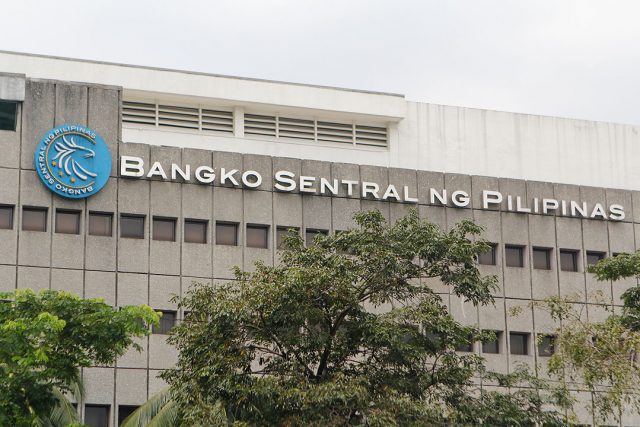
Central bank keeps cap on credit card charges

BW FILE PHOTO

THE central bank retained the ceilings for charges on credit card transactions to help consumers as the coronavirus disease 2019 (COVID-19) pandemic continues.

The Monetary Board kept the maximum interest rate on unpaid outstanding credit card balance at 2% per month or 24% per year, the Bangko Sentral ng Pilipinas (BSP) said in a statement on Tuesday.

The cap for the monthly add-on rate that credit card issuers can charge on installment loans was kept at 1%, while the maximum processing fee for credit card cash advances will remain at P200 per transaction.

“The decision of the Monetary Board will continue to help ease the financial burden of consumers through affordable credit card pricing amid the ongoing COVID-19 pandemic,” BSP Governor Benjamin E. Diokno said.

“It will also allow the BSP to assess the impact of the improvement in macroeconomic fundamentals and easing of mobility restrictions on the performance of the credit card industry,” Mr. Diokno added.

The ceilings on credit card transactions will remain in effect unless modified by the BSP.

“The BSP, however, will closely monitor evolving domestic and external developments that will impact the state of credit card financing, sustainability of credit card operations and viability of banks/credit card issuers,” the central bank said.

The BSP said recent data showed demand for credit cards weakened in the second half of 2021 as clients shifted to alternative digital products.

Still, issued and outstanding credit cards went up by 0.3% to 10.3 million, while monthly card billings rose by 33.9% year on year to P100.6 billion as of end-December 2021.

Credit card receivables grew by 4.9% year on year as of December 2021 amid easing of mobility restrictions and continued business activities.

Lenders were also able to keep the asset quality of their credit card portfolios healthy. The credit card industry’s non-performing loan (NPL) ratio was at 6.8% as of December 2021, lower than the 8.9% registered a year prior, with the NPL coverage ratio at 109.5%.

“Moving forward, the credit card industry intends to further reduce operating costs through digital transformation and process improvements as well as maintain prudent lending standards,” the central bank said. — K.B. Ta-asan

Monkeypox: Prevention, symptoms, and treatment

UNSPLASH

NEARLY 20 countries where monkeypox is not endemic have reported recent outbreaks of the viral disease, with more than 230 confirmed or suspected infections mostly in Europe. 

While no associated deaths have been reported to date, the World Health Organization (WHO) said that the situation is evolving and more cases are expected to be identified as surveillance expands in non-endemic countries. No cases have been reported in the country to date, according to the Department of Health (DoH). 

Monkeypox is a rare disease that is caused by infection with the monkeypox virus. The name “monkeypox” originated from the initial discovery of the virus in a Danish laboratory in 1958 and the first human case was reported in 1970.  

It is transmitted from one person to another by close contact with lesions, body fluids, respiratory droplets, and contaminated materials such as bedding.  

Symptoms are milder but very similar to those seen in the past in smallpox patients, according to the US Centers for Disease Control and Prevention (CDC). 

Monkeypox begins with fever, headache, muscle aches, backache, swollen lymph nodes, chills, and exhaustion. Within one to three days (sometimes longer) after the patient develops a fever, a rash appears, often beginning on the face then spreading to other parts of the body.  

Before ultimately falling off, lesions progress through the following stages: macules, papules, vesicles, pustules, and scabs. The illness typically lasts for two to four weeks.  

In Africa, monkeypox has been shown to cause death in 1 in 10 persons who contract the disease. 

While the virus is self-limiting, it may still be severe in some children, pregnant women, or persons with immune suppression. 

According to the WHO, reported monkeypox cases thus far have no established travel links to an endemic area. Current available evidence suggests that those who are most at risk are those who have had close physical contact with someone with monkeypox, while they are symptomatic. 

Avoiding contact with symptomatic individuals, practicing good hand hygiene by washing hands with soap and water or using an alcohol-based hand sanitizer, and using personal protective equipment (PPE) when caring for patients can help prevent monkeypox infection. It is also important to avoid contact with sick or dead animals that could harbor the virus. 

An attenuated live virus vaccine has been approved by the US Food and Drug Administration (FDA) for the prevention of monkeypox. The CDC is currently evaluating the vaccine for the protection of people at risk of occupational exposure to smallpox and monkeypox in a pre-event setting. 

To control a monkeypox outbreak in the United States, the CDC recommends the use of smallpox vaccine, antivirals, and vaccinia immune globulin (VIG).  

Because monkeypox virus is closely related to the virus that causes smallpox, smallpox vaccine can also protect people from getting monkeypox. The CDC said that past data from Africa suggests that smallpox vaccine is at least 85% effective in preventing monkeypox. Experts also believe that vaccination after a monkeypox exposure may help prevent the disease or make it less severe. 

However, the WHO does not believe the monkeypox outbreak outside of Africa requires mass vaccinations as measures like good hygiene and safe sexual behavior will help control its spread. At the moment, some countries are offering vaccination only to certain people who are at high risk of potential exposure to smallpox and/or monkeypox. 

In the Philippines, independent experts will evaluate the safety and efficacy of existing vaccines, or those undergoing research and development, to make sure that when the need for them arises, the vaccines will be safe for use. 

The Pharmaceutical and Healthcare Association of the Philippines (PHAP) and its members are monitoring global and local developments, and are closely coordinating with partners on measures to be taken. PHAP Members are also coordinating with the DoH to prepare for this health threat to ensure that vaccines and diagnostics will be available in the country if and when they become necessary. 


Teodoro B. Padilla is the executive director of Pharmaceutical and Healthcare Association of the Philippines (PHAP), which represents the biopharmaceutical medicines and vaccines industry in the country. Its members are at the forefront of research and development efforts for COVID-19 and other diseases that affect Filipinos.

Vistamalls profit up 36% to P1.25 billion

VISTAMALLS, Inc. and its subsidiaries announced a 35.7% growth in its first-quarter attributable net income to P1.25 billion from P921 million in a period free from any seasonal effect on its finances.

The profit growth comes after the listed property leasing company recorded a 30.2% increase in revenues to P2.63 billion from P2.02 billion. Operating profit reached P1.86 billion, up 37.8% from P1.35 billion.

“For the three months ended, there were no seasonal aspects that had a material effect on the financial condition or results of operations of the company. Neither were there any trends, events or uncertainties that have had or that are reasonably expected to have a material impact on the net sales or revenues or income from continuing operations,” Vistamalls said in a disclosure on Tuesday.

“The company is not aware of events that will cause a material change in the relationship between the costs and revenues,” it added.

Vistamalls is the holding company of the Villars’ Vistamalls group, which is engaged in leasing retail malls and business process outsourcing commercial centers.

The group has a wholly owned subsidiary, Masterpiece Asia Properties, Inc. and a 99.85%-owned subsidiary, Manuela Corp.

It is 88.34% owned by Vista Land & Lifescapes, Inc. and the rest by the public. Vista Land is a publicly listed investment holding company, which is 65.17% owned by Fine Properties, Inc. and 34.83% owned by the public.

At the stock exchange on Tuesday, Vistamalls shares dropped by 0.29% or one centavo to close at P3.39 apiece. — Luisa Maria Jacinta C. Jocson