Home Blog Page 5834

Intel unveils new chips and software as it chases an industry comeback

TRUSTPAIR.COM

INTEL CORP., looking to regain its footing in the chip industry, introduced new personal computer processors and graphics semiconductors, as well as software that makes it easier to use the company’s technology.

Intel’s latest Core desktop processors will provide gamers and other high-performance users with a significant boost, the company said at its Innovate event Tuesday in San Jose, California. A new graphics chip for data centers, meanwhile, is aimed at challenging Nvidia Corp.’s hold on that market. That product, called Ponte Vecchio, has been shipped for use in a new government super computer.

Chief Executive Officer (CEO)Pat Gelsinger is trying to restore Intel to its former dominance, and the Innovate presentation is part of that. The chipmaker had hosted a well-attended product showcase called the Intel Developer Forum until 2017, when then-CEO Brian Krzanich scrapped the event. Now Mr. Gelsinger, in his second year, is bringing the stage show back.

The stakes are high. Intel lost its status as the world’s largest chipmaker in recent years and fell behind rivals in manufacturing prowess. Mr. Gelsinger, a longtime Intel executive who left to run VMware, Inc. for more than a decade, returned to the company in 2021 to orchestrate a turnaround.

During Mr. Gelsinger’s time away, delays in product introductions led customers to look elsewhere for supplies and technological leadership. A company that once had market share of more than 80% has been losing ground, and customers such as Amazon.com, Inc. have increasingly started to design their own chips.

Mr. Gelsinger’s challenge: getting the industry to follow Intel’s lead without first proving that its products are the best again. He also faces a slump in demand for PCs, the biggest end market for Intel’s products. And the stock has fallen 48% in 2022, underperforming its peers during a bleak year for the overall chip industry.

Mr. Gelsinger’s pitch to investors has been that Intel still leads in many areas and the industry needs its innovations. Under his stewardship, the sleeping giant will take back its technical superiority and resume its central role, he has said.

But computing has changed, and Intel is trying to use the San Jose event to show it’s more open to working with partners. The company is letting its offerings work in tandem with those of others, a break from the past.

“Fostering this open ecosystem is at the center of our transformation and the developer community is essential to our success,” Gelsinger said.

One of the company’s new products is the Intel Developer Cloud, a program that gives software makers and other customers early access to new chips — in particular, its forthcoming Xeon server products.

Intel is making the announcements just days after rival Advanced Micro Devices, Inc. debuted its new range of processors, a lineup that experts say is among the industry’s best.

At the event, Mr. Gelsinger acknowledged that Intel— like its peers— is facing slowing demand for its main product. But he reiterated his belief that the company shouldn’t pull back on investments needed for its long-term strategy.

“You cannot be driven by near-term financials,” he said. “You have to be investing for the future.” — Bloomberg


Spanish court formally sends Shakira to trial for tax fraud

A SCREENSHOT from Shakira’s ‘Underneath Your Clothes’ MV — YOUTUBE.COM/SHAKIRA

MADRID — A Spanish court on Tuesday formally ordered Colombian superstar Shakira to stand trial on accusations that she failed to pay €14.5 million ($14.31 million) in income taxes, a court document released on Tuesday showed. The “Hips Don’t Lie” singer, 45, whose full name is Shakira Isabel Mebarak Ripoll, rejected in July a deal to settle the case, which meant she would have to stand trial in a case that could see her sent to prison for eight years.

The Esplugues de Llobregat court on Tuesday confirmed the trial will go ahead on a date still to be announced.

The prosecutor is seeking an eight-year prison term for the singer, who is accused of failing to pay taxes between 2012 and 2014, a period in which she said she was leading a “nomadic life” because of her work.

“The order to send Ms. Shakira to trial is just another step in any proceedings of this kind. The situation has not changed and everything continues as normal. Ms. Shakira’s legal defense will do its job by presenting its written arguments at the appropriate time,” a statement from her lawyers said.

Ms. Shakira vowed last week to fight what she claimed were “false” accusations by Spanish authorities and added that she had already paid what the Spanish tax office said she owed before they filed a lawsuit. — Reuters

BillEase, PayMongo to help retailers through buy-now-pay-later service

CONSUMER finance platform BillEase has partnered with online payments company PayMongo to offer a transparent card-free buy-now-pay-later (BNPL) service that would help businesses expand.

“We’re thrilled to partner with BillEase so thousands of businesses using PayMongo can offer consumer credit at checkout and flexible installment plans,” PayMongo’s Acting Chief Executive Officer Isabel Ridad said in a statement on Wednesday.

“Our payment infrastructure, combined with BillEase’s customizable payment plans and transparent consumer credit offering, is a powerful tool for retailers to reach new customers, and increase average order values,” Ms. Ridad said.

PayMongo now offers BillEase as an installment option for consumers. Through BillEase, retailers can offer three installment options at checkout.

These options are to pay later in 10 or 20 days, pay in four installments for small to medium purchases, and to pay monthly over three to 12 months for large purchases with interest rates between 0% and 3.49%.

Businesses can also offer a 0% annual percentage rate (APR) through PayMongo.

“Over the past three years, BillEase and PayMongo redefined the ecommerce landscape for millions of Filipinos. This strategic partnership underscores our shared values of providing flexible and transparent point-of-sale (POS) financing for retailers and their customers,” BillEase Chief Executive Officer and Co-Founder Georg Steiger said. 

“With PayMongo, BillEase can provide inclusive options for retailers across all sizes and categories, helping them attract new customers and build strong loyalty,” Mr. Steiger said.

BillEase is a credit and finance platform that allows clients to pay for their online and offline purchases through installment plans. It launched its in-store QR payment service this year.

According to the company, businesses offering BNPL services saw an increase in sales conversion between 15-25% with average order values rising more than sales that are not paid through POS financing.

The platform’s revolving credit line also increases the likelihood of re-transaction using the same payment method.

The company earlier said that the volume of transactions on BillEase climbed nearly five times in the first half of the year from the same period in 2021. It has disbursed over 3 million in loans so far.

BillEase is currently accepted as a payment method by over 1,000 brands and small businesses and is offered by seven major payment gateways in the Philippines.

Meanwhile, PayMongo offers a fully online onboarding process with retail websites, allowing businesses to accept digital payments through online banking, e-wallets, and BNPL with BillEase as the newest addition to the channel.

PayMongo is used by over 10,000 retailers in the country. — Keisha B. Ta-asan

MWSS fines Maynilad for recurring water service interruptions

THE METROPOLITAN Waterworks and Sewerage System (MWSS) is penalizing Maynilad Water Services, Inc. for P9.26 million due to prolonged water service interruptions and other issues.

“The MWSS regulatory office penalizes Maynilad for service obligation failure from May to June 2022. The MWSS monitored a prolonged and recurring water service interruptions and water quality issues,” MWSS Chief Regulator Patrick N. Ty said at a virtual briefing on Wednesday.

Mr. Ty said the penalty will be implemented in the form of bill rebates to affected Maynilad customers by November. He clarified that MWSS will still have to study the total number of affected customers.

“This is the second biggest penalty imposed by MWSS to Maynilad. The nature, scope and other details of the rebate will be discussed in October,” he added.

In March, MWSS also imposed a financial penalty on Maynilad in the form of bill rebates due to its failure to meet its service obligations after a prolonged water service interruption in Metro Manila.

Meanwhile, Mr. Ty has also directed Maynilad to ramp up the implementation of its proposed mitigating measures to address the deteriorating raw water quality in Laguna Lake and ensure the continuity of water supply within its service area.

In a statement, Maynilad said that it will abide by the decision of the MWSS to pay a financial penalty for the water interruptions that affected the area of Las Piñas, Muntinlupa, Parañaque, and the cities of Cavite, Bacoor, and Imus and the towns of Noveleta, and Rosario in the province of Cavite.

Maynilad said that the water interruptions were caused by the algal bloom in Laguna Lake which severely affected the water production of its Putatan water treatment plants.

“Our ability to provide uninterrupted water service during the period was severely hampered by the unprecedented extent of the algal bloom that altered the raw water quality in Laguna Lake. Algal bloom is beyond our control, being a product of both natural and industrial causes,” Maynilad said in a statement via Viber.

Maynilad said that the company is investing in treatment technology upgrades for Putatan plants to help improve and maintain water production.

“The ultimate solution would be to protect Laguna Lake from further degradation. We continue to work closely with all Laguna Lake stakeholders to ensure that it is protected, so that the lake’s potential as a long-term supply source for drinking water can be fully realized,” it added.

Metro Pacific Investments Corp., which has a majority stake in Maynilad, is one of three Philippine units of Hong Kong-based First Pacific Co. Ltd., the others being Philex Mining Corp. and PLDT Inc.

Hastings Holdings, Inc., a unit of PLDT Beneficial Trust Fund subsidiary MediaQuest Holdings, Inc., has an interest in BusinessWorld through the Philippine Star Group, which it controls. — Ashley Erika O. Jose

How PSEi member stocks performed — September 28, 2022

Here’s a quick glance at how PSEi stocks fared on Wednesday, September 28, 2022.


Philippines rises in digital competitiveness rankings

THE PHILIPPINES improved two spots in a global digital competitiveness index, but still had the lowest ranking among Southeast Asian countries. Read the full story.

Philippines rises in digital competitiveness rankings

PSEi down to near 2-year low on Wall Street fall

STOCKS closed lower on Wednesday following Wall Street’s decline and the weak peso amid fears of a potential global recession.

The benchmark Philippine Stock Exchange index (PSEi) lost 140.39 points or 2.33% to close at 5,879.68 on Wednesday, while the broader all shares index dropped by 68.59 points or 2.12% to 3,165.64.

This is the PSEi’s lowest close since 5,867.88 on Oct. 7, 2020, or nearly two years ago.

“Philippine shares continued falling on climbing rates and global recession fears, with other regional indices falling deeper into the bear market,” Regina Capital Development Corp. Head of Sales Luis A. Limlingan said in a Viber message.

AP Securities, Inc. Equity Research Analyst Carlos Angelo O. Temporal said in a Viber message that the “PSEi nosedived for the second consecutive day” to track the sustained rout in the US market.

He said the continued depreciation of the peso against the dollar stirred fears of “a potential off-cycle rate hike while growing odds of recession abroad” further eroded investors’ risk appetite.

Mr. Temporal said these factors “have driven significant foreign outflows from the PSE with net foreign selling surging to more than half a billion pesos.”

On Tuesday, Wall Street fell deeper into a bear market as investors remained nervous about a potential global recession, Reuters reported.

The Dow Jones Industrial Average fell by 0.43% to close at 29,134.99 points; the S&P 500 lost 0.21% to 3,647.29; and the Nasdaq Composite added 0.25% to 10,829.50.

Back home, the peso closed at P58.98 against the greenback on Wednesday from its P58.99 finish on Tuesday.

It has weakened by 15.64% or P7.98 from its P51-per-dollar close on Dec. 31, 2021.

Net foreign selling went down to P588.99 million on Wednesday from P11.45 billion on Tuesday.

Still, all of the sectoral indices closed lower on Tuesday. Mining and oil lost 424.77 points or 3.93% to close at 10,383.67; holding firms went down by 185.02 points or 3.19% to 5,602.94; property dropped by 64.29 or 2.47% to 2,537.98; industrials declined by 206.14 points or 2.32% to 8,662.23; services shaved off 31.89 points or 1.99% to 1,569.69; and financials retreated by 10.90 points or 0.73% to end Tuesday’s session at 1,472.53.

Value turnover was lower at P6.79 billion with 815.83 million shares on Wednesday changing hands from the P20.88 billion with 2.2 million issues traded on Tuesday.

Decliners overwhelmed advancers, 156 to 49, while 39 names closed unchanged.

AP Securities’ Mr. Temporal placed the PSEi’s support at 5,700 and resistance at 6,300. — Justine Irish D. Tabile

Marcos calls Clark airport model for PPPs, key to logistics hopes

PRESIDENT Ferdinand R. Marcos, Jr. said the Clark airport terminal deal is an exemplar of his government’s public-private partnership (PPP) ambitions, adding that the airport will be crucial in positioning the Philippines as a logistics hub.

He made the remarks at the formal opening of the new terminal building at Clark International Airport, north of Manila.

“This is the public-private partnership that we always talk about,” he said, noting that both parties can leverage their resources to achieve “synergy” via collaboration.

Mr. Marcos said his government is “willing to change in terms of documentation, procedure, even structure, even legislation” to attract investment into the country.

“We understand… the needs of our potential investors and we will… do everything so that that partnership (is) to the advantage of both the private sector (and) the public sector,” he said.

Mr. Marcos said the 110,000 square-meter new terminal building, which was built to accommodate around eight million passengers per year, sends a “very strong signal” to the world that the Philippines is open to investment.

“We just opened a new terminal. It is state-of-the-art and this is one of the things that we will continue to do in the future to bring you all to come and be partners with the Philippines,” he said. “This facility is another building block in what we hope (will) become a logistics center for Asia.”

Mr. Marcos called for full utilization of the Philippines portfolio of airports, noting the need to ease the load on the Ninoy Aquino International Airport (NAIA), the Philippines’ primary gateway, as well as other airports near the capital region.

“While construction works in… Bulacan and Cavite are ongoing, regional airports must be opened,” he said.

Mr. Marcos said he intended to make the Philippines a “logistics hub” during the election campaign. 

The opening of the new terminal building is part of a broader effort to decongest NAIA. The Clark airport’s old terminal building had a capacity of 4.2 million passengers a year.

The new terminal is expected to create jobs, boost tourism, and advance socioeconomic activities in Central Luzon, the Palace said in a statement. — Kyle Aristophere T. Atienza

China trading partners urged to be ready for possible inflationary impact when Mainland economy reopens

CHINA’s trading partners need to prepare for the pent-up demand that has built up when Beijing decides to reopen the economy, the results of which could include additional inflationary pressures, making further monetary tightening necessary, a Citigroup economist said.

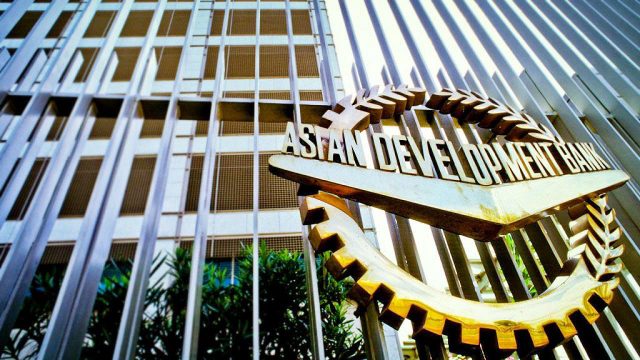
“In essence, China’s dynamic Zero-COVID and periodic lockdowns, in a way, are a benign contributor to the global inflation problem, and the reason why I say that is by suppressing demand in China in a year of so many supply shocks, imagine if China reopened dramatically, we could have an even worse inflationary problem,” according to Johanna D. Chua, chief Asia-Pacific economist of Citigroup, speaking at the Asian Development Bank’s (ADB) Post-COVID Outlook for Developing Asia webinar.

“We are hoping that China’s reopening is not going to be reflationary enough to make the monetary policy tradeoff for global central banks to even be worse,” she added. “But, of course, going into next year (when) we’re going into a recession, we hope China can go in the opposite direction and start reopening.”

As of July, China had taken in $798.66 million worth of goods from the Philippines, making it the country’s third-largest export market. It was the biggest source of imports, valued at $2.43 billion.

Krishna Srinivasan, Asia-Pacific head of the International Monetary Fund, said the stringent lockdowns in China seriously hurt economic activity in the second quarter, resulting in a decline in its manufacturing sector “unseen since early 2020” as mobility collapsed.

While inflation in Asia is expected to peak this year, it may be sticky as most readings are coming from high levels.

According to Ms. Chua, the pace of deceleration will depend on global demand, and the rate China reopens.

“Despite a lot of concerted effort of global central banks to accelerate or front-load some of the rate tightening, the reality is that growth is probably going to slow down faster or earlier, while inflation coming securely back to its target path may take a little bit longer,” Ms. Chua said.

“The reason why we think stagflation is transitory is we’re expecting that since a number of central banks are going to have to go above neutral or keep rates on hold for a lot longer, the hope is that by next year we’re going to be on a path towards hitting the inflation target by 2024,” she added.

The Philippine consumer price index rose to 6.3% year on year in August, easing from the four-year high of 6.4% a month earlier. It was the fifth straight month that inflation exceeded the Bangko Sentral ng Pilipinas’ (BSP) 2-4% target band this year.

The BSP has increased its benchmark interest rates by 225 basis points since May in response to the rise in prices.

The economy also grew less than expected in the second quarter of this year at 7.4%, lower than 8.2% in the previous quarter. It was the slowest growth in three quarters.

Meanwhile, the webinar participants rejected suggestions that deglobalization has started to reverse globalization. They did, however, acknowledge it as a looming threat.

“Even before the pandemic and the (Russia-Ukraine) war, there was a lot of angst against globalization. It’s clear that globalization has led to increased income across the world… notably in Asia,” Mr. Srinivasan said.

“But I think where more emphasis would have been placed is on redistribution in terms of winners and losers. So, public policy should be enough to compensate the losers.”

Mr. Srinivasan also added that significant economic losses for the world, particularly in Asia, are inevitable if deglobalization is allowed to continue, noting the restrictions targeting energy and high technology as a result of the Russia-Ukraine conflict.

Ms. Chua added that data on the intensity of goods traded globally would disagree with the deglobalization narrative, going by the evidence of recent developments such as the Regional Comprehensive Economic Partnership (RCEP) agreement.

“We know that many poor countries can gain opportunities to specialize in production in different parts of the value chain when trade is facilitated,” said Albert Park, chief economist of the ADB. “We hope that the RCEP agreement can help facilitate that going forward.”

Earlier this year, the Philippine Senate failed to ratify RCEP, a free trade agreement involving Australia, China, Japan, South Korea, New Zealand, and Southeast Asia. — Diego Gabriel C. Robles

DoE sets minimum RE share at 2.52% in 2023 for on-grid power suppliers

MICHAEL WILSON-UNSPLASH

THE Department of Energy (DoE) said on Wednesday that on-grid power suppliers must expand the share of renewable energy (RE) in their output to 2.52% by next year, from the current 1%, for them to remain compliant with the requirements of the renewable portfolio standards (RPS) program.

In a statement, the DoE said the order applies to power distribution utilities and electric cooperatives, which under the law must raise their RE sourcing by 1 percentage point a year between 2020 and 2030.

“The increase in the utilization of renewable energy in our power generation mix would encourage more investors and end-users to develop and utilize domestic energy sources,” Energy Secretary Raphael P.M. Lotilla said.

The RPS is a component of the Renewable Energy Act of 2008 designed to encourage greater use of RE.

To date, the DoE said it has issued 998 renewable energy contracts with a combined installed capacity of 5,460.59 megawatts (MW) and potential capacity of 61,613.81 MW. The contracts have the potential to generate P270.78 billion worth of investment for awarded and prospective deals. 

Solar accounted for P130.44 billion of prospective investment, with installed capacity of around 1,386.506 MW; wind P52.91 billion and 409.900 MW; hydropower P38.73 billion and 269.29 MW; biomass P38.16 billion and 634.91 MW and geothermal P10.54 billion and 82.50 MW.

“Private sector investment is central in achieving our renewable energy targets and vision. To date, the share of renewable energy in the power generation mix is 22%,” Mr. Lotilla said.  

According to the DoE’s National Renewable Energy program, the department hopes to increase the share of renewables in the power mix to 35% by 2030 and to 50% by 2040.

“By increasing the annual percentage over time, renewable energy will drive us down a path towards energy sustainability,” Mr. Lotilla said. — Ashley Erika O. Jose  

Rice prices set to rise as high input costs dampen farm output

PHILIPPINE STAR/ MICHAEL VARCAS

A RICE shortage is looming if the government does not address rising input costs and low farmer incomes, rice industry analysts and representatives said.

“There is a threat that we might be lacking in rice. For us farmers, the first reason is because of low prices of palay (unmilled rice) and high input costs. Because of this, the harvest is not good. There is no motivation to harvest because farmers earn so little,” Teodoro C. Mendoza, agronomist and a retired professor affiliated with the Institute of Crop Science at the University of the Philippines Los Baños, said in an online forum on Wednesday.

“Expect rice prices to increase. We are conditioning people to expect that rice prices will increase,” he added.

The Alliance for Resilience, Sustainability and Empowerment (ARISE) in a statement called for an increase in the farmgate price of cleaned palay to P22 per kilogram and P25 for dried palay.

“Farmers would lose if their palay is bought at P19 per kilogram, which is the National Food Authority’s (NFA) current buying price,” it said, adding that the NFA price does not adequately compensate them for their labor.

Mr. Mendoza said that rice production has also been hampered by weather conditions and the conversion of farmland to roads or infrastructure.

“Farmers are not applying sufficient fertilizer due to its very high price. Even if there wasn’t a typhoon, prices would still rise because farmers could not put in sufficient fertilizer,” he said.

The price of a bag of urea fertilizer has risen to P2,850 from P1,000 pre-crisis, Mr. Mendoza said.

International rice prices have risen for the fifth straight month to a 12-month high, according to the United Nations Food and Agriculture Organization Food Price Index.

“The supply of rice is very tight. India usually supplies 21 million metric tons to over a hundred countries in the world. But now India won’t export rice because they were caught by the drought. Their policy is that the buffer stock is for one year. Here, it is for six days,” Mr. Mendoza said.

He also said land planted to rice is declining.

“How to stop land hemorrhage? Pass the National Land Use Act, implement the Agriculture and Fisheries Modernization Act of 1997, amend the local government code, and increase rice farmers’ income,” he said.

He said the availability of irrigation water is out of sync with the planting season.

“Farmers plant from early May to the first week of June. But they cannot plant early because rain is not sufficient to prepare the land, which is why fields need to be irrigated. We (should) criminalize the conversion of irrigated rice land,” he said.

“We are in the climate change era. We have to adjust planting times due to climate change. Strong typhoons are happening in September. By mid-September, rice should have been harvested,” he added.

According to ARISE, rice imports are projected to hit 3.9 million metric tons (MT) this year if the government does not intervene.

“The NFA’s recent pronouncement that it will raise its palay buying price to P21 per kilogram is a welcome move for many farmers. However, this needs to be followed up with concrete action from top to bottom,” the group said.

“The NFA has called for the support of legislators and (has asked) local government units (LGUs)… to engage in palay procurement. But NFA has also to increase its (procurement funds) capital and prepare the logistical support to enable LGUs to readily procure from farmers,” it added.

“We must save the rice industry. Saving the industry saves the rice farmers,” Mr. Mendoza added.

In a statement, the Department of Agriculture (DA) National Rice Program projected this year’s palay production at 19.5 million MT.

As of Sept. 15, the DA’s 2022 rice supply outlook estimated supply in the year to date at 17.36 million MT and consumption at 15.14 million MT.

“There will be an ending stock of 2.228 million MT equivalent to 60 days. The expected imports are 2.75 million MT for the first three quarters of the year,” the DA said.

“While all of the remaining issued import clearances by the Bureau of Plant Industry will only be valid until the third quarter and imports are yet to be estimated for the last quarter of this year, based on historical trends, import arrivals start to decline by the fourth quarter (to coincide with) the peak harvest from October to November,” it added.

The department said it is “confident” rice supply will be sufficient for the holidays.

According to the DA, the prevailing retail price for imported well-milled and regular-milled rice remain at P39 and P38 per kilogram, respectively. Domestically produced well-milled and regular-milled rice fetch P40 and P38 per kilogram, respectively.

For 2023, the DA said it is targeting production of 20.24 million MT of palay.

Separately, the Philippine Rice Research Institute (PhilRice) said it is promoting drone technology in rice farming to improve pest and nutrient management.

“Agricultural drones are used in aerial spraying of pesticides, fungicides, foliar fertilizers, and nutrients. Based on studies, using drone sprayer can reduce pesticide volume by up to 30-40%, minimize pilferage of chemicals, and save water up to 90%,” PhilRice said in a statement.

The agency also recommended drum seeders to improve farmers’ field practices and applications that aid in weed identification which also make crop management recommendations. — Luisa Maria Jacinta C. Jocson

100% WFH for the IT-BPO industry: The best is yet to come

Since the Fiscal Incentives Review Board (FIRB) issued its resolution requiring one hundred percent (100%) onsite work for the Information Technology-Business Process Outsourcing (IT-BPO) industry effective April 1, significant developments and discussions have taken place left and right. This is understandable considering the industry’s contributions to our economy — policymakers take care not to make bad decisions on matters concerning the sector.

First, the Philippine Economic Zone Authority (PEZA) turned “no” into “on” by issuing PEZA Board Resolution 22-052, allowing up to 30% of the workforce of IT-BPO Registered Business Enterprises (IT-BPO RBEs) to continue working from home (WFH) beginning April 1, provided a prior Letter of Authority (LoA) is secured and the latter’s conditions are satisfied.

The LoAs issued were effective only until Sept. 12, which was then the last day of the state of calamity before it was extended to Dec. 31 via Proclamation 57.

As mentioned above, the LoA sets forth conditions. Specifically, IT-BPO RBEs adopting the 30% WFH scheme are required to submit the following:

1. PEZA Farm-out Form (Form 8106) for all IT equipment taken out of the premises;

2. Surety bond for all IT equipment taken out for WFH purposes to cover taxes and duties that may be payable if they are not returned to the IT zone after the termination of the WFH arrangement;

3. Certified list with complete details of all IT equipment brought out of the site for WFH use;

4. Total number of employees and the number of employees working from home;

5. Notarized Undertaking to adhere to the IATF, labor, data protection and PEZA rules while adopting the WFH arrangement.

As proof of compliance, every fifth day of the following month, IT-BPO RBEs must submit online the WFH monitoring form to PEZA’s Information Technology Sector – Report Compliance System.

Pending the FIRB’s confirmation of the PEZA-issued LoAs, the BIR had tried to run after potential violators by issuing mission orders authorizing revenue officers to check compliance with 100% onsite requirement, taking the view that allowing IT-BPO RBEs to engage in their registered activity outside the economic zone with continued incentives lacks legal basis. For the same reason, the Bureau of Customs required payment of taxes and duties upon withdrawal of IT equipment for use in WFH.

To resolve this standoff, the FIRB issued memorandum 17-2022 which confirmed the PEZA resolution allowing WFH up to 30% until Sept. 12. The FIRB recognized the authority of Investment Promotion Agencies like PEZA to adopt temporary measures in the event of exceptional circumstances like the pandemic and the contribution of the IT-BPO sector to employment generation and job preservation.

Following the FIRB’s confirmation, the BIR issued Revenue Memorandum Circular No. 102-2022 to implement the FIRB memorandum.

In anticipation of their expiration, PEZA requested the FIRB to extend the validity of the WFH LoAs. On Sept. 9, the FIRB extended the WFH policy, not for just one day, but indefinitely until such time that a conclusive resolution is reached on PEZA’s request for extension. The extension was recently announced to be effective until the end of this year to coincide with the extended end of the state of calamity, but the formal memorandum on this has yet to be issued.

In any case, this extension has certainly given IT-BPO RBEs a brief reprieve from worrying about how to structure their operations going forward. Considering the uncertain nature of the WFH setup, the industry is wary of the danger of losing their incentives. Revenues in excess of the 30% threshold are subject to regular corporate income tax and local business tax. Because of this, most IT BPO RBEs have considered the possibility of canceling their registration with PEZA, as the demand for WFH from their clients and employees continues to grow.

The good news is, the FIRB recently announced that IT-BPO RBEs will be allowed 100% WFH while retaining their incentives, by allowing their registrations to be transferred from PEZA to the Board of Investments (BoI). Unlike PEZA RBEs which are required to operate within a PEZA-registered IT building/facility, BoI registrants are not subject to such requirements. This is a welcome development as previously, the policy was to disallow the direct transfer of registration from PEZA to BoI without the loss of incentives.

The IT-BPO industry is now eagerly anticipating the release of the FIRB memorandum to officially document the recent announcement, as well as to lay down the guidelines for the transfer from PEZA to BoI. Once issued, the guidelines are expected to provide more detailed information on the administrative procedures and requirements for the transfer, the transition from PEZA to BoI once the transfer application is approved, availment of incentives, among others.

What was once a temporary measure brought on by a contagious disease has since reinvented our way of working and doing business not just for the IT BPO industry.

As life goes on with us living through the pandemic, it seems WFH is most likely here to stay.

The views or opinions expressed in this article are solely those of the author and do not necessarily represent those of Isla Lipana & Co. The content is for general information purposes only, and should not be used as a substitute for specific advice.


Aimee Rose Dela Cruz is a director at the Tax Services department of Isla Lipana & Co., a Philippine member firm of the PwC network.

+63 (2) 845-2728

aimee.rose.d.dela.cruz@pwc.com

ADVERTISEMENT
ADVERTISEMENT