Home Blog Page 5828

SMC files registration for P60-B bonds

BW FILE PHOTO

ANG-LED San Miguel Corp. (SMC) filed the registration statement and preliminary prospectus for its P60-billion fixed-rate bonds to be used for redemption of preferred shares and bonds, and debt repayments.

According to the company’s prospectus, the base offer amounts to P40 billion with an oversubscription of up to P20 billion and will be issued at 100% of face value.

It will be divided into: 5.25-year series L due 2028, 7-year series M due 2029, and 10-year series N due 2032.

The prospectus stated that the entire net proceeds for the offer will be used for the optional redemption of the company’s series 2H preferred shares and up to P13.15 billion for final redemption and payment of the company’s series E bonds.

On Sept. 22, its board of directors approved the redemption of its 164 million issued and outstanding series 2H preferred shares at a redemption price of P75 apiece.

Proceeds will also be used for refinancing certain dollar-denominated obligations of the company, and for the repayment of the peso-denominated short-term facilities.

Up to P17.1 billion will be used to repay the company’s $300-million facility agreement with MUFG Bank, Ltd. with the repayment of the obligation set in the second quarter of 2023.

“The loan was incurred on June 26, 2018 with a maturity date of June 22, 2023,” the firm said.

The firm’s indicative timetable showed that the company set price setting and allocation in the last week of October.

Meanwhile, the public offer period will run from Nov. 8 to 14 with the settlement, and issue and listing date set on Nov. 21.

SMC tapped BDO Capital & Investment Corp., China Bank Capital Corp., and PNB Capital and Investment Corp. as joint issue managers.

Meanwhile, joint lead underwriters and bookrunners are Asia United Bank Corp., Bank of Commerce, BDO Capital & Investment Corp., BPI Capital Corp., China Bank Capital Corp., Philippine Commercial Capital, Inc., PNB Capital and Investment Corp., RCBC Capital Corp., and SB Capital Investment Corp.

On Wednesday, shares in SMC remained unchanged at P97.50 apiece. — Justine Irish D. Tabile

Chicken vs ‘Chicken’

ARMYNAVY’s Plant-based Chipotle Crispy Chicken Sandwich

TWO fast food restaurants came out with “new” sandwiches this month, and we tasted them both. The battle doesn’t end there, however, as the contest (in my head) takes on many layers: it’s international versus local, the old and the new, and most intriguingly: it’s chicken meat versus a chicken meat analogue.

MCDONALD’S
The McSpicy is back in the Philippines. The fried chicken fillet dusted with spices that the global chain released in Singapore in 1999 has had previous stints in the Philippines, on limited release, since 2013.

In a release sent to BusinessWorld last week, the re-release of the McSpicy is flanked by the release of Spicy McNuggets. The McSpicy chicken cutlet is served with a few bits of lettuce and mayonnaise between two sesame seed buns. The sandwich costs P171 on the Grab app.

VERDICT
We’ve had the McSpicy before, but the taste has never really been that memorable. It was only then, a slightly hotter chicken sandwich. This time, however, the McSpicy is actually spicy, almost complex in its blend, and left a tantalizing tingle on the tongue after every bite.

ARMYNAVY
ArmyNavy is adding to its plant-based roster with the introduction last week of the Plant-based Classic Chicken Sandwich (P230) and the Plant-based Chipotle Crispy Chicken Sandwich (P295). The chain had previously released a plant-based burger.

The “chicken” cutlets were made with a collaboration with Dutch-born brand The Vegetarian Butcher, which makes these with a soy base. According to a release, its soy base gives it high level of protein and fiber, as well as Vitamin B12 and iron. “Through this partnership, the formula has been perfected to still emulate the authentic meaty taste of the chicken sandwiches while using greener ingredients,” said the press release. “Even though there is zero meat to be found in these sandwiches, the same crispiness and savory taste are still evident — and will be enjoyed by both meaty meal enthusiasts and consumers looking for healthier and greener food options.”

At least one of the sandwiches isn’t vegan: the Plant-Based Classic Chicken Sandwich comes with mayonnaise. The Chipotle variant is drizzled with Chipotle pepper sauce, topped with onion rings, lettuce, and mayo on toasted sesame potato Kaiser buns.

VERDICT
We’ve got to hand it to ArmyNavy: these sat in the cold for a while as we only got to the sandwich early the next day. It survived a few minutes in the microwave, and fed someone who partied the night before. We could live without the Classic Chicken Sandwich (who wants mayonnaise after toasting their tastebuds the night before?), but the Chipotle Crispy Chicken Sandwich was a definite winner. We liked the onion rings in the sandwich — it felt like a sneaky treat knowing how chaste our plant-based patty was. The potato Kaiser buns, meanwhile, were very filling and felt indulgent.

But what about the “chicken”? Well, if I had not known that I was going to eat a plant-based patty, I would never have guessed it to not be chicken. It does, however, avoid the silly game of catching whether plant-based meat tastes like meat or not — it’s good enough as it is (though certainly not as juicy). Did it taste “healthy”? Not really, but that’s the way we like it.

OVERALL
It isn’t really fair to compare meat against “meat”. For the more expensive price, ArmyNavy certainly goes all out with the accoutrements, not to mention how the sandwich held up in less-than-ideal conditions. “These two new additions to the Plant-Based category are ArmyNavy’s love letter to fans and general patrons who prefer healthier and greener alternatives when it comes to food and lifestyle choices,” the statement said. I guess you should pick the Chipotle Crispy Chicken sandwich when you have dietary concerns, are looking for a novelty, or just want a sandwich that felt like it was prepared with care.

For the sound of crunching, an enjoyable level of spice, and juicy chicken — if you have no qualms at all about meat, then get the McSpicy. — Joseph L. Garcia

Tier One Entertainment tops LinkedIn list of PHL startups

SOUVIK BANERJEE-UNSPLASH

PROFESSIONAL networking platform LinkedIn has announced its inaugural top 10 startups list in the Philippines, which looked at employee growth, jobseeker interest, attraction of top talent, and engagement.

Released on Wednesday, LinkedIn said that its first startup ranking in the Philippines is led by e-sports, gaming and entertainment firm Tier One Entertainment.

Tier One is followed by community selling platform SariSuki, livestream shopping network Shoppertainment Live, livestreaming application Kumu, parenting e-commerce platform Edamama, sari-sari store platform GrowSari, digital asset exchange Philippine Digital Asset Exchange,  education technology platform Edukasyon.ph, smart point of sale (POS) app for micro and small businesses Peddlr, and e-commerce software Prosperna.

“In the Philippines, we see a diverse mix in sectors such as e-commerce, education, and entertainment, which continue to lead the way in the future of skills by embracing innovation and attracting top talent with their robust cultures,” LinkedIn News Senior Managing Editor Satoshi Ebitani said.

“In an uncertain financial climate, what has proven resilient time and time again is the enterprising spirit that startups embody, especially those on this year’s LinkedIn Top Startups list,” he added.

According to the networking platform, the coronavirus disease 2019 (COVID-19) pandemic accelerated the growth of the Filipino micro, small, and medium enterprises (MSME) sector.

“Investing in automation, the right people, and experienced leadership who are open to feedback and the ever-changing status quo of our industry was key for surviving and growing during the pandemic. Pivoting quickly through setbacks is vital to survival in these times,” Tier One Entertainment Co-Founder and Chief Executive Officer Tryke Gutierrez said.

LinkedIn said that the methodology time frame for the data used in the list was from July 1 last year to June 30 this year.

The platform said employee growth is determined via a minimum of 10% increase in headcount during the time frame; engagement refers to non-employee views; job interest looks at the rate at which people view and apply for jobs at the firm; and attraction of top talent refers to how many employees has the startup recruited away from top companies.

“To be eligible, companies must be independent and privately held, have 30 or more country-based employees, be seven years old or younger, and be headquartered in the country on whose list they appear,” LinkedIn said.

“We exclude all staffing firms, think tanks, venture capital firms, management and IT consulting firms, nonprofits and philanthropy, accelerators, and government-owned entities. Startups that have laid off 20% or more of their workforce within the methodology time frame are also ineligible,” it added. — Revin Mikhael D. Ochave

The Conrad’s China Blue by Jereme Leung makes it to Tripadvisor’s top Asian fine dining restaurants list

China Blue by Jereme Leung — HILTON.COM

CHINA Blue by Jereme Leung in the Conrad Hotel in Pasay City made it to Tripadvisor’s list of Top 10 Fine Dining Restaurants in Asia. Tripadvisor, the world’s largest travel guidance platform, made the announcement as part of its Travellers’ Choice Awards series: the 2022 Best of the Best Restaurants. These are its user’s top-rated spots across the globe, inclusive of six different subcategories of restaurant types. They span 51 countries in six continents. The complete list can be viewed at tripadvisor.com/TravelersChoice-Restaurants<https://www.tripadvisor.com/TravelersChoice-Restaurants>.

“Global labor challenges and ongoing COVID-19 restrictions continued to limit dine-in capacity in some markets — for instance, some Asian nations were closed to international tourists for nearly the entire data evaluation period. Still, gourmands the world over savored dining out, leaving millions of reviews on Tripadvisor chronicling their experiences,” the company’s announcement said.

Jereme Leung credits their success to location and having the right team. 

“It has to do with, first, being at the right location at the right time is extremely important,” he told BusinessWorld when asked about making the list. 

“We are extremely proud as a team. We are mostly grateful for having a very good team here,” he said.  

Especially for an industry like ours, everywhere else you go worldwide, it’s extremely difficult to keep a very low turnover rate. I’m extremely proud of the team. Our turnover is literally less than 10%, which is amazing and also one of the reasons why this service has been so consistent; the food has been so consistent. You cannot be cooking with a new person every week and think it will be good. It takes practice.” 

According to Tripadvisor’s rankings, the No. 1 Fine Dining Restaurant in the world for 2022 is The Old Stamp House Restaurant <https://www.tripadvisor.com/Restaurant_Review-g186319-d1209702-Reviews-The_Old_Stamp_House_Restaurant-Ambleside_Lake_District_Cumbria_England.html> in Ambleside, United Kingdom.

“Taking the No. 1 spot for the second consecutive year, Old Stamp House, run by two brothers, is revered for its intimate, unique setting and tasting menu,” it said.

Meanwhile, in Asia, Hong Kong, Bangkok, and Bengaluru in India saw two restaurants each land in the top 10 list of Asian fine dining restaurants.

Top 10 Fine Dining Restaurants in Asia:

  1.  Akira Back — Bangkok, Thailand (Also ranked #17 in the World) https://www.tripadvisor.com.sg/Restaurant_Review-g293916-d13275747-Reviews-Akira_Back-Bangkok.html

  2.  Summer Pavilion — Singapore (Also ranked #22 in the World) https://www.tripadvisor.com.sg/Restaurant_Review-g294265-d796940-Reviews-Summer_Pavilion-Singapore.html

  3.  Tin Lung Heen — Hong Kong (Also ranked #23 in the World) https://www.tripadvisor.com.sg/Restaurant_Review-g294217-d2399904-Reviews-Tin_Lung_Heen-Hong_Kong.html

  4.  Mandarin Grill + Bar at Mandarin Oriental — Hong Kong (Also ranked #24 in the World) https://www.tripadvisor.com.sg/Restaurant_Review-g294217-d941989-Reviews-Mandarin_Grill_Bar_at_Mandarin_Oriental_Hong_Kong-Hong_Kong.html

5. The District Grill Room and Bar — Bangkok, Thailand https://www.tripadvisor.com.sg/Restaurant_Review-g293916-d4092525-Reviews-The_District_Grill_Room_and_Bar-Bangkok.html

6.  The Raj Pavilion — Bengaluru, India https://www.tripadvisor.com.sg/Restaurant_Review-g297628-d5913154-Reviews-The_Raj_Pavilion-Bengaluru_Bangalore_District_Karnataka.html

7.  Boy’N’Cow — Seminyak, Indonesia https://www.tripadvisor.com.sg/Restaurant_Review-g469404-d12730186-Reviews-Boy_N_Cow-Seminyak_Kuta_District_Bali.html

  8.  Kaage at VARU by Atmosphere — Madivaru, Maldives (Also ranked #2 Best Date Night Restaurant in the World) https://www.tripadvisor.com.sg/Restaurant_Review-g18969604-d20897627-Reviews-Kaage_at_VARU_by_Atmosphere-Madivaru.html

  9.  China Blue by Jereme Leung — Pasay, Philippines https://www.tripadvisor.com.sg/Restaurant_Review-g298452-d10164846-Reviews-China_Blue_by_Jereme_Leung-Pasay_Metro_Manila_Luzon.html

10. Karavalli — Bengaluru, India https://www.tripadvisor.com.sg/Restaurant_Review-g297628-d1568903-Reviews-Karavalli-Bengaluru_Bangalore_District_Karnataka.html

To see all the winners, including the best in the world, visit tripadvisor.com/TravelersChoice-Restaurants.

Cyber risks may affect banks’ credit ratings — S&P

REUTERS

LENDERS across the region should be vigilant against rising digital risks as potential profit losses, poor risk management, and reputational damage could affect banks’ credit ratings, S&P Global Ratings said.

In a report dated Sept. 27, S&P Global Ratings said that as banking moves further into the digital space, threats of cyberattacks are rising in the Asia-Pacific (APAC) region.

“On top of creating direct monetary losses, data breaches can damage the reputation of a bank and can hit a bank’s credit profile. In jurisdictions where the entire industry incurs repeated, serious data breaches, or where regulators are particularly lax, we may downgrade our rating scores on all banks,” S&P said.

The debt watcher added that although they have yet to downgrade any APAC bank’s credit rating due to a cyberattack, a hit could cripple a financial institution, especially those that have not invested enough in their cybersecurity.

“Regulators are key to setting standards for banks, and guiding them toward collaboration. Such bodies are focusing on industry partnerships, pilot projects, sharing of best practices, and the like,” S&P said.

“This underscores how critical cybersecurity is to the smooth functioning of an economy and key services. Accordingly, it is helpful to see what regulators are doing in each market.”

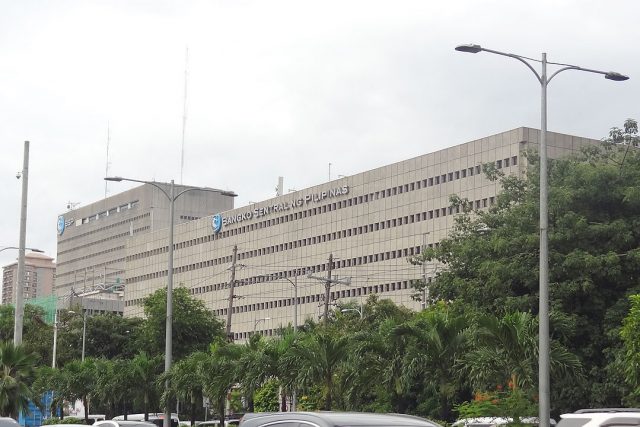
In its report, the debt watcher cited how the Bangko Sentral ng Pilipinas (BSP) regulated Philippine banks in addressing threats to cybersecurity and managing risks, adding that it is helpful to see what regulators do to ensure the smooth functioning of the economy and key services.

“[The BSP] in 2017 issued a circular addressing internet threats. This circular highlight the role of the board and senior management to create sound information-security governance, including a strong security culture,” S&P said.

It also cited how the BSP tightened the reporting regime of its supervised institutions, in which banks need to disclose cyber incidents within two hours from a prior standard of 10 days.

“Faster reporting aims to enhance the industry responsiveness. The central bank has also fine-tuned its policies to promote automated, real-time systems to detect fraud,” S&P said.

Issued in November 2017, BSP Circular 982 requires all financial players to set up internal systems to identify and counter a wide array of digital attacks through an information security program “commensurate” to the complexity of a firm’s reliance on digital tools.

In 2018, the central bank also implemented new rules requiring supervised firms to report digital breaches and cyberattacks within two hours from discovery.

“Cyberattacks have the potential to harm credit ratings through reputational damage as well as monetary loss,” S&P Global Ratings Criteria and Methodologies Managing Director Nik Khakee said in a conference on Wednesday.

“If we look at the entity-specific factors, we could reflect cyber risk in business position if business stability could be impaired by loss of customer confidence. We also consider the ability of the bank to manage and prevent cyber risk,” Mr. Khakee said.

He added that cyber incidents could hurt banks’ capitalization and if the cyber risk is poorly managed, a bank is likely to be exposed to structural weakness.

“Finally, if you look at funding and liquidity, a cyber event could actually result in severe reputational damage, and a severe cyber event could actually lead to sudden outflows of client funds and create liquidity pressure for the bank,” Mr. Khakee said.

Meanwhile, aside from digital risks, S&P Global Ratings Financial Institutions Ratings Director Gavin Gunning said higher-for-longer inflation and weaker growth could also affect banks’ credit ratings.

“Persistent or material weaker economic prospects outside of base case including much weaker growth still, or a sharp or higher-than-anticipated inflation and borrowing costs, will eventually hurt corporates and in turn household,” Mr. Gunning said.

“This of course will hit banks’ asset quality and potentially bank ratings or outlooks,” he added.

S&P Global Ratings earlier lowered its growth forecast for the Philippines to 6.3% from its 6.5% estimate in June, citing rising interest rates meant to curb inflation that could temper expansion.

Headline inflation climbed to 6.3% year on year in August, exceeding the BSP’s 2-4% target this year for a fifth straight month. — Keisha B. Ta-asan


PSALM appoints former AboitizPower official as new president

STATE-LED Power Sector Assets and Liabilities Management Corp. (PSALM) announced on Wednesday that its board elected Dennis Edward A. Dela Serna as its president and chief executive officer.

“The governing board of PSALM has elected Dela Serna as its president and chief executive officer following the release by Malacañang of his appointment as acting president and CEO of the corporation and member,” PSALM said in a statement posted on its website.

Following his appointment, Mr. Dela Serna resigned as first vice-president at Aboitiz Power Corp.’s regulatory affairs office.

In a separate media release, AboitizPower said that Mr. Dela Serna’s resignation is effective on Sept. 28.

“We believe President [Ferdinand R.] Marcos Jr., and his administration have chosen wisely as Dennis is very well suited for the role,” AboitizPower said.

From 2002 to 2008, Mr. Dela Serna supervised PSALM’s universal levy, tariff, and financial evaluation department, under then PSALM president and CEO Raphael P.M. Lotilla.

Mr. Lotilla, now the Secretary of the Department of Energy, previously served as an independent director at AboitizPower.

On Sept. 5, consumer group National Association of Electricity Consumers for Reforms (Nasecore) asked Mr. Marcos to reconsider the appointment of Mr. Lotilla and Monalisa C. Dimalanta, who is the chairperson and chief executive officer of the Energy Regulatory Commission (ERC).

“The Secretary of Energy’s record in public service speaks for itself. He is also aware that [ERC Chair Ms.] Dimalanta’s stint as head of the National Renewable Energy Board in the previous administration was characterized by fairness and integrity,” Andria Frago, the DoE’s media office chief, said in an earlier Viber statement.

Ms. Dimalanta has also served as a compliance officer at AboitizPower, a post she relinquished after joining the ERC.

Meanwhile, Sabin M. Aboitiz, AboitizPower’s chairman was appointed as lead for Private Sector Advisory Council. — Ashley Erika O. Jose

Dining In/Out (09/29/22)

‘L’or Noir’ Ciders and Calvados

‘L’or Noir’ at Sheraton Manila Bay

SHERATON Manila Bay paints the town black and gold as its newest concept outlet &More by Sheraton showcases the flavors of kurobuta, ciders, and calvados with a one-night-only event entitled “L’or Noir” on Sept. 29, 7 p.m., onwards. The event pays homage to the complimentary colors black (noir) and gold (or) inspired by the color of kurobuta pork known as “black hog” and the golden sparkles of ciders and calvados which are extracted from apples. For P1,100++ per person, diners will enjoy five beverages selection including the cocktail concoctions Cider Fizz and Normandy Spritz and a gourmet platter of six kurobuta dishes. The event will feature premium pork from Esguerra Kurobuta Farm. The desserts, meanwhile, are infused with ciders and calvados. L’or Noir is part of &More #DiscoveryMoments, a series of curated dining events that allow diners to explore various flavors and tastes from premium partner brands. Diners will also enjoy performances from talented local artists and shall enjoy access to “Deux: In Contrast,” a painting exhibit of works by artists Sam Penaso and Nicole Asares. &More by Sheraton is at the Main Lobby of Sheraton Manila Bay, M. Adriatico cor. Gen Malvar Sts. Malate. For reservations call 5318-0788 or e-mail reservations.manilabay@sheraton.com.


Last call for Christmas ham order promo

THE PLAZA’s pre-order promo for its Premium Baked Ham ends on Sept. 30. All orders must be settled by then to avail of the promo which bundles one whole leg of The Plaza Premium Baked Ham (approximately 2.4 kilos), a dozen regular Plaza pan de sal, and four signature sauces (Premium Glaza, Gutsy Garlic, Sweet Mustard, and Wasabe Mayo), for P5,000. To order, e-mail info@theplazacatering.com.


New World’s Café 1228 reopens weekdays

NEW World Makati Hotel’s buffet restaurant, Café 1228, reopens on Mondays to Thursdays for dinner starting October, officially offering all-you-can-eat breakfast, lunch, and dinner on all days of the week. Diners get 50% off at P1,500 (from P3,000) on weekdays and P1,700 (from P3,400) on weekends for lunch and dinner when they sign up for free to the hotel’s Club Epicure loyalty program or present their BDO or RCBC Bankard credit card. A 5+1 offer is also offered for group reservations. Daily breakfast is P1,200. Prices are net. For online reservations, guests can book via: https://bit.ly/NWCafe1228Reservation. To inquire, they can call 8811-6888 ext. 3679, e-mail fbreservations.manila@newworldhotels.com, or send a mobile message on Viber or Whatsapp via 0917-888-4194.  


Jacob’s Creek Cherry Red launched

JACOB’s Creek, Australia’s No. 1 bottled wine brand which is carried by multinational wine and spirits company Pernod Ricard, recently launched a fruity red wine called Jacob’s Creek Cherry Red. Breaking away from traditional red wine expectations, this new variant is semi-sweet, approachable, and playful. Its light body and fruity flavor make it less intimidating to those who generally find red wine bitter. Its aroma is ripe black and red berries with a touch of toastiness from oak. Its taste has a touch of juicy plum fruit with a round and sweet finish. It is best enjoyed chilled and either on its own or paired with flavorful Asian dishes — even spicy ones. Jacob’s Creek Cherry Red was launched in Manila House Private Club, Inc. in June. Jacob’s Creek Cherry Red is available at leading supermarkets and e-commerce sites and platforms starting at P500.

TDF yields rise as BSP, Fed further hike rates

BW FILE PHOTO

YIELDS on the Bangko Sentral ng Pilipinas’ (BSP) term deposits climbed further on Wednesday following continuous rate hikes locally and in the United States.

Demand for the term deposit facility (TDF) of the central bank totaled P296.495 billion on Wednesday, above the P280-billion offering as well as the P293.004 billion in tenders for a P220-billion offer recorded last week.

Broken down, bids for the seven-day term deposits amounted to P171.205 billion, slightly higher than the P170 billion auctioned off by the BSP. This is below the P224.229 billion in tenders a week earlier, where the BSP offered P140 billion.

Accepted rates ranged from 3.82% to 4.6%, wider than the 3.8088% to 4.22% margin seen in the prior auction. With this, the average rate of the one-week paper rose by 30.17 basis points (bps) to 4.2959% from 3.9942% previously.

Meanwhile, the 14-day papers attracted P125.290 billion in bids against the P110-billion offering. Demand was also up from the P68.775 billion in tenders for the P80-billion offer seen on Sept. 21.

Banks asked for yields from 4.1% to 4.43%, also wider than the 3.84% to 4.25% band recorded a week earlier. This caused the average rate of the two-week term deposit to increase by 17.47 bps to 4.3428% from 4.1681%.

The BSP has not auctioned off 28-day term deposits for more than a year to give way to its weekly offerings of securities with the same tenor.

The TDF and the 28-day bills are used by the BSP to gather excess liquidity in the financial system and to better guide market rates.

Yields on the term deposits were higher following the widely expected policy rate hikes last week, Rizal Commercial Banking Corp. Chief Economist Michael L. Ricafort said in a Viber message

The BSP on Sept. 22 raised benchmark interest rates by 50 bps to rein in persistently high inflation amid a hawkish US Federal Reserve.

The consumer price index climbed to 6.3% year on year in August, exceeding the BSP’s 2-4% target this year for a fifth straight month.

“Average inflation is still projected to breach the upper end of the 2-4% target range at 5.6% in 2022,” the central bank said on Thursday, adding that the forecast for next year had also increased to 4.1%. The forecast for 2024 eased to 3%.

The Monetary Board has raised borrowing costs by a total of 225 bps since May while the Federal Open Market Committee has increased rates by 300 bps since March, including its third 75-bp increase last week.

Yields were also higher as industry players expect further hikes in local policy rates to help support the exchange rate, Mr. Ricafort added.

BSP Governor Felipe M. Medalla earlier signaled the Philippine central bank will resort to more interest rate hikes depending on the Federal Reserve’s action.

“Strong dollar is requiring us to have bigger policy rate increases,” Mr. Medalla said in an interview with Bloomberg TV last week.

“Clearly the Fed’s policies have affected our choices. We don’t want to match the Fed, at the same time we have to respond,” he added.

The peso closed at P58.98 against the greenback on Wednesday, strengthening by one centavo from its P58.99 finish on Tuesday, Bankers Association of the Philippines data showed.

However, the local unit breached the P59-a-dollar level for the first time in intraday trading. It has weakened by 15.64% or P7.98 from its P51-per-dollar close on Dec. 31, 2021. — Keisha B. Ta-asan
TDCX Philippines opens a new site in Iloilo

INFORMATION technology and business process outsourcing (IT-BPO) firm TDCX has recently opened a new site in Pavia, Iloilo as part of its expansion plans in the country.

“We have just expanded our footprint to Iloilo. We officially opened our site last month. We have a team of close to 100 people working in our (site) as of today. The sentiment is well received when we started going into the location,” TDCX Philippines Vice President for Business Strategy Eliza Acuña said during a media briefing in Mandaluyong City on Wednesday.

TDCX’s new Iloilo site is the company’s sixth in the Philippines. It is located at Robinsons Cybergate Iloilo Tower 1, and adds to the firm’s other locations in Metro Manila and Cebu. TDCX Philippines started its Manila office in 2014 and its Cebu office in 2019.

According to Ms. Acuña, the Philippines is a vital member of the IT-BPO firm’s network across the world.

“Our new office in Iloilo will supplement our Manila and Cebu operations and create more job opportunities locally,” she said.

“The Philippines is known for its outsourcing capabilities and is an important node in TDCX’s network. Their highly skilled workforce coupled with a hospitable culture make the country a hotspot for us to hire the talent we need to resolve increasingly complex customer issues,” she added.

On the company’s expansion prospects, Ms. Acuña said that TDCX looks at the demand and the requirements of its customers.

“We typically would go by the demand. We’re seeing the trends in the requirements of our existing clients and even with the new clients that are looking for the type of service that we are able to provide,” Ms. Acuña said.

“As economies around the world recover from the effects of the pandemic and grapple with the current economic uncertainties, we are seeing increased demand for outsourced customer experience services. This is due, in part, to our ability to deliver superior customer experiences and to drive sales quickly, efficiently and cost-effectively for our clients,” she added.

TDCX currently employs over 17,000 employees and has presence in countries such as Singapore, Malaysia, Thailand, Philippines, Mainland China, Hong Kong, South Korea, Japan, India, Romania, Spain and Colombia. The company’s headquarters is in Singapore. — Revin Mikhael D. Ochave

API-first approach expected to boost PHL financial institutions

TRUSTPAIR.COM

ADOPTING modern technologies with an application programming interface (API) would benefit both Philippine banks and financial technology (fintech) firms as these will help improve their products and services, API management platform APIwiz said.

APIwiz Co-founder and Chief Executive Officer of Rakshith Rao said in an interview with BusinessWorld that financial institutions in the country and across the region should use API for more innovative digital financial services.

“Ten years ago, every enterprise was looked upon if they had a mobile app or not. So, it was the most important thing in their business portfolio to make and reach to customers having a mobile app,” Mr. Rao said.

“Five years ago, it was every enterprise making sure that they power all of their omnichannel experience through an API. Now, it is getting to a point where everything that an enterprise does is driven through something called an API. They become the underlying backbone for an enterprise survival,” he added 

API relays information from one organization’s technology to another. APIs connect to different areas of a software platform, allowing for more information to be accessed when businesses undergo digital transformation. 

An “API-first” approach can help companies improve their development and strategies to adapt to an evolving digital market, Mr. Rao said.

“So, what we are offering is now a new paradigm shift in improving the productivity of an organization, increasing the reliability, but with all security, compliance and governance in place to make sure that what they are doing does not expose them to risk of threats from external actors and from other partners,” he said. 

Mr. Rao cited how digital bank Tonik reached $100 million in customer deposits in eight months. APIwiz enhanced Tonik’s Open API Platform and helped the lender increase productivity and reduce operational costs. 

“The ability for an organization to take and embed their service in every possible form factor and every other enterprise out there is the force multiplication factor that they will get by leveraging to integrate with APIs,” he said.

However, Mr. Rao said there are challenges to transforming financial institutions and in creating an end-to-end open finance experience where clients can freely access several financial service providers.

“Some of the challenges that we foresee is the ability for enterprises to change their way of doing,” he said. “So we simplified that over the last year to create a more simplified local platform, a local API lifecycle management, because we feel that stuff that needs to be done behind the scenes that does not require human intervention should be done in such a way that you can make releases multiple times a day.”

Mr. Rao said banks and fintech companies should work together to offer more innovative financial services.

“If you look at Southeast Asia and the Philippines, to be more specific, Southeast Asia carries or 8% of the global population… And even within Philippines, if you look at it, the large part of the ecosystem are still unbanked,” he said.

“And the challenge for that is essentially having the ability for them to do transactions at their fingertips,” Mr. Rao added. “If you can actually bring the bank to where people are in their daily lives, essentially, you’re bridging the gap and helping to bring financial transactions to them where they are.” — Keisha B. Ta-asan

Affordability, reliability play key role in smartphone success in the Philippines

TRUSTPAIR.COM

AFFORDABILITY and reliability play a major role in achieving success in the Philippines’ mobile smartphone market, a study by e-commerce company iPrice Group said.

“Filipinos’ interests in Apple and Samsung continue to battle neck and neck for the top spot,” iPrice said in its report, citing data from 2019 to 2021.

The study analyzed the popularity of the flagship phones for the top smartphone brands in the country.

iPrice identified Apple, Samsung, Vivo, and Oppo as the top four most popular smartphone brands in the country.

“Apple’s release of the iPhone 11 in 2019, the iPhone 12 in 2020, and the iPhone 13 series gained a lot of attention, [similar to] Samsung’s release of Galaxy S10 in 2019, Galaxy S20 in 2020, and Galaxy S21 in 2021,” the group said.

Meanwhile, Vivo has been receiving “more attention” since 2020 when it released the Vivo X50 series with its “big brother”, the X50 pro.

“The hype is quite high since it’s the first smartphone to have a gimbal stabilizer camera, and it was the only flagship phone brand in our data to have an increase 90 days after its release by 929%,” iPrice said.

“They have found their niche, which is more focused on photography,” the group noted. “This can be one of the main reasons why it’s attracting user interest, especially from the younger generation.”

On Oppo, the group said that interest level among consumers is “somehow close to Vivo.”

“They both use the same strategy in terms of pricing,” the group noted.

According to the International Data Corp. (IDC), smartphone shipments to the Philippines continued to fall in the second quarter of the year due to low demand and supply.

Smartphone shipments fell 3.1% in the second quarter compared with the same period last year, IDC said in a recent analysis report.

“[But] it grew 9.1% quarter-on-quarter, shipping 4.3 million units in the second quarter,” it said.

Consumer spending on smartphones is expected to continue to be under pressure from the rising cost of living and higher prices of essential goods. — Arjay L. Balinbin

McDonald’s hikes prices in Japan on higher input costs, weaker yen

TOKYO — Japan’s McDonald’s fast-food restaurants will raise prices on about 60% of its offerings to customers, fueled by rising input costs and exchange-rate fluctuations, the company said on Monday.

It marks the company’s second set of price increases this year as Japan grapples with inflationary pressures and a slide in the yen to a 24-year-low, making imported ingredients more expensive. The two rounds of hikes this year are the first since 2019.

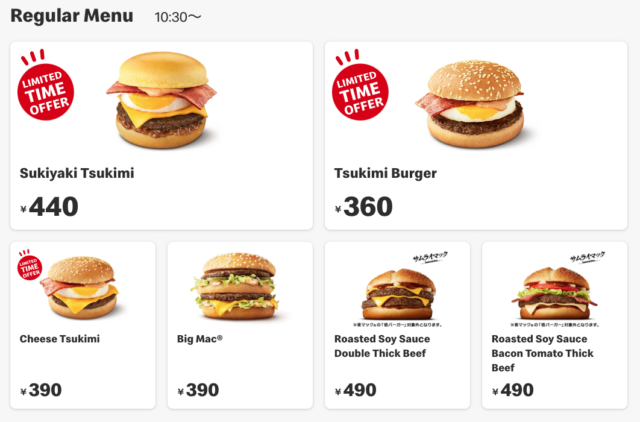
From this Friday, the cost of the signature Big Mac hamburger will increase to ¥410 ($2.85) from ¥390, McDonald’s Holding Company Japan Ltd. said in a statement, reflecting increases of ¥10 to ¥30 on many items.

A Big Mac costs $5.15 in the United States, according to The Economist magazine’s index of prices worldwide. The price difference implied that Japan’s currency was undervalued by 45%, according to the gauge when it was last updated in July.

McDonald’s Japan is raising prices for the second time in 2022 on its cheeseburgers, which will cost ¥180 each from Friday from ¥140 at the beginning of the year.

Rising production costs and the yen’s slide have spurred price increases by 60% of major Japanese restaurants, according to a survey issued this month by Tokyo Shoko Research.

Separately, Mister Donut shops in Japan are to raise prices on most items by about 7.4% from Nov. 25, its parent company, Duskin Co., said. — Reuters