Home Blog Page 5821

The state of mass housing
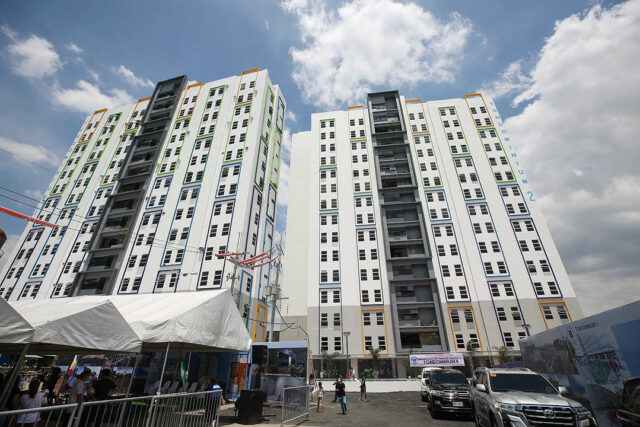
THE LOCAL government of Manila turned over 83 out of 168 units of Tondominium 2 in Vitas, Tondo Manila, early this year. — PHILIPPINE STAR/ RUSSELL A. PALMA

(Part 1)

As the Philippines transitions from a low-middle income country to an upper-middle income country in the next decade or so, it will be increasingly urbanized, with more of the population migrating from the rural areas to the cities. The next and subsequent administrations must ensure that with higher per capita incomes, the country will at the same time provide the lower-income groups with decent and affordable housing. The Philippines cannot become a First World country without addressing the problem of mass housing. We should avoid like the plague the model of some Latin American countries with already high per capita incomes of over $10,000 but with millions of people still living in dehumanizing conditions in squatter areas.

What is the state mass housing today in the Philippines? This article will summarize the study carried out by the Center for Research and Communication (CRC) on mass housing in the Philippines, done in partnership with the Subdivision and Housing Developers Association, Inc. (SHDA), the Organization of Socialized and Economic Housing Developers of the Philippines, Inc. (OSHDP), and the National Real Estate Association, Inc. (NREA). Conducted during the height of the pandemic in 2021 and dated January 2022, the study is entitled “Inclusion of Mass Housing in the Strategic Investment Priorities Plan (SIPP) and for Fiscal Support,” outlining the needed cooperation between the public and private sectors to address the huge backlogs in housing in the Philippines today.

Through the years, it was clear in the minds of those who crafted a Philippine mass housing policy that unlike in Singapore in which the Government was the main provider of mass housing, it has to be the private sector — with some help from the State — that will address the serious shortage of housing for the lower-income households. The study reviewed the housing policy followed in the Philippines over the last three decades.

From the late 1980s until the East Asian Financial crisis of 1997, the government’s direct cross-subsidy scheme extended to private developers under the National Shelter Program (NSP), offering buyers long-term fixed interest rates. With the start of the new millennium, the government assisted programs for certain sectors through fiscal incentives extended to socialized, economic, and low-cost private housing developers, including mandatory contributions to the balanced housing requirement.

Since the 1970s, the government-assisted public housing projects have been coursed through the National Housing Authority (NHA). Unfortunately, low budget allocation from the National Government and the multiplication of tasks assigned to it (e.g., relocation of informal settlers affected by government infrastructure projects, provision of housing for households affected by national calamities or along disaster prone areas) has weakened seriously the impact of the NHA on the housing crisis. In contrast, one successful program introduced in the late 1980s was the Community Mortgage Program (CMP). It allowed legally organized associations and their qualified members to acquire land and/or build community housing with concessional long-term loans. The success was short-lived, however, because of perceived association management issues and conflicts among the various stakeholders.

With the passage of the Tax Reform for Acceleration and Inclusion (TRAIN) Law of 2017, housing policy support has included extending fiscal incentives in the form of income tax holidays and VAT exemptions to socialized subdivision and condominium housing with price ranges from P480,000 to P750,000 and VAT exemption for economic and low-cost housing with price ranges between P750,001 to P1.75 million and to transactions exceeding P3.2 million, respectively.

Given other priority public expenditures of the Government, such as those on education, health, and rural development, addressing the housing backlog in mass housing has been largely left to private developers. Unfortunately, the private sector was not up to the task.

In 2019, OSHDP presented the obstacles facing a marketing-oriented approach to solving the housing shortage. First, there is the limited ability to pay of the low-income and urban poor groups involved. There were the physical and administrative difficulties encountered by the urban poor in accessing credit for housing, coupled with the absence of long-term, low-interest rate financing. On the supply side, the problems were even more numerous: limited access to land and dysfunctional land markets; unclear and highly bureaucratic land administration, management, and conversion processes; inadequate housing subsidies; and limited financing available for low-income and pro-poor housing production.

To make matters worse, the additional strict criteria that the CREATE (Corporate Recovery and Tax Incentives for Enterprises) Act, passed during the Duterte administration, for certain segment of mass housing to be eligible for incentives, have made it more difficult for private developers to make socialized housing available to the poor.

Meanwhile, the balanced housing requirement imposed on developers of open- and upper-market subdivision projects under the Urban Development and Housing Act of 1992 (RA 7279) to put up socialized housing precisely to allocate private sector resources to fill in the housing backlog was expanded under RA 10884 which now covers vertical housing. There were other measures of putting up socialized housing requirement through modes such as joint venture projects with local government units (LGUs), nongovernment organizations (NGOs), private developers’ subsidiaries, and other priority development projects under the Building Adequate, Livable, Affordable, and Inclusive (BALAI) Filipino Communities program.

The bureaucratic maze that made it very difficult to implement mass housing programs in the past has been partly eased by RA 11202 passed in early 2019 which established the Department of Human Settlements and Urban Development (DHSUD) which is mandated to oversee the national housing program. There used to be a myriad of housing programs and agencies. Now DHSUD merges the Housing and Urban Development Coordinating Council (HUDCC) and the Housing and Land Use Regulatory Board (HLURB). The Office of the DHSUD Secretary now supervises the NHA, the Social Housing Finance Corp. (SHFC), the Home Development Mutual Fund (HDMF), and the National Home Mortgage Finance Corp. (NHMFC).

(To be continued.)


Bernardo M. Villegas has a Ph.D. in Economics from Harvard, is professor emeritus at the University of Asia and the Pacific, and a visiting professor at the IESE Business School in Barcelona, Spain. He was a member of the 1986 Constitutional Commission.

bernardo.villegas@uap.asia

The West must bridge the global divide over Ukraine

UKRANIAN SOLDIERS check out a destroyed bridge in Hostroluchchya, Ukraine. — DEPOSITPHOTOS/OLES_NAVROTSKYI

ONE ASPECT of the war in Ukraine demands much closer attention — the failure of the US and its rich-country friends to build strong partnerships with the developing world. Many governments in Africa, Latin America, and Asia have distanced themselves from the allies’ response to Russia’s aggression. This is helping Moscow and does nothing to discourage other regimes with expansionist ambitions. The neglect that allowed it to happen was a serious error, and putting it right should be a high priority.

When the General Assembly of the United Nations voted to condemn the invasion shortly after it started, 35 countries abstained. It wasn’t just China and fellow dictatorships such as Cuba and Nicaragua, but also India, South Africa, and Senegal. Others, including Ethiopia and Morocco, didn’t vote at all. A combination of Russian arms supplies, Chinese investment, and American inattention persuaded too many governments that their interests weren’t served by aligning with the US.

It’s part of a wider pattern. The Summit of the Americas, taking place this week in Los Angeles, was seen partly as a way to atone for Donald Trump’s refusal to attend the event in 2018. It’s instead become another source of friction, with the region’s leaders balking at US efforts to manage the guest list. President Joe Biden’s administration has little goodwill to fall back on and continues to struggle with basics like appointing ambassadors. Obstructionist senators are partly to blame for that — but the White House doesn’t disguise the fact that it has other priorities.

In May, a US-ASEAN summit in Washington fizzled, ending with just $150 million of new initiatives for Southeast Asia. The Biden administration is now talking up its Indo-Pacific Economic Framework for Prosperity — an initiative notable for its lack of ambition, which left many of America’s would-be partners distinctly unimpressed. Last year’s promise of a summit with Africa’s leaders to counter China’s triennial Forum on China-Africa Cooperation gathering has gone nowhere.

Meanwhile, China’s policy banks have provided more than $130 billion in loan commitments for Latin America and the Caribbean alone between 2009 and 2019. Beijing supplied COVID-19 vaccines to many desperate nations. Russia is a crucial seller of weapons to India and much of Africa, and a main supplier of grain and fertilizer. Neither Moscow nor Beijing asks too many questions about free elections and human rights.

To win better support from developing countries, on Russia and other matters as well, Western governments should, for a start, be less quick to admonish. Appeals to liberal values tend to fall flat with people who remember less principled Western interventions. Also, many see the war in Ukraine as a proxy fight between Moscow and Washington — one where they have little at stake. The remedy is to frame the conflict not as punishing Russia and its autocratic leader, but as aiding Ukraine’s fight for self-determination. A powerful nation started this war by scorning sovereign borders: That’s a threat all can recognize.

Here’s another. A prolonged war will keep food, energy, and fertilizer prices elevated, and this puts poor countries, with fewer resources to buffer the impact, in particular danger. It makes sense for the allies to say so, but their warning will get a better response if combined with prompt and generous support for the countries worst affected and most in need. Looking farther ahead, new efforts to address deeper economic vulnerabilities — for instance, by supporting African agriculture and logistics — would serve the diplomatic purpose and help deliver longer-term prosperity.

Resources aren’t infinite, but supporting closer cooperation with the developing world would be money well spent. Whether it’s weaning countries off Russian weapons, improving food security for the planet’s poorest people, or promoting efforts to address climate change, the benefits would be huge. The Global South’s unnerving tolerance of Putin’s crimes marks a failure on the part of the US and its friends. It needs urgent attention.

BLOOMBERG OPINION

Johnson survives as UK PM for now

British Prime Minister Boris Johnson via Chatham House/Flickr

LONDON — British Prime Minister (PM) Boris Johnson will seek to shore up his position on Tuesday by setting out a raft of new policies to senior ministers after he survived a confidence vote that revealed the scale of the threat to his position.

Mr. Johnson won the vote late on Monday by 211 votes to 148 — enough to avoid having to immediately resign but a larger than anticipated rebellion within his party that leaves him politically wounded and battling to win back the confidence of his colleagues and the general public.

His first challenge will be to convince his most senior allies, some of whom would have likely run to replace him if he had been forced out, that he will be able to move on from questions about his leadership.

Johnson’s office issued a statement saying he would use the meeting to set out his vision for the coming weeks, including new policies to reduce the cost of childcare and to help more people buy their own homes.

“This is a government that delivers on what the people of this country care about most,” Mr. Johnson said in the statement.

“We are on the side of hard-working British people, and we are going to get on with the job.”

Lawmakers in Johnson’s party called the confidence vote after months of scandal over lockdown-breaking parties at the heart of government and criticism of his response to an inflation-fueled surge in the cost of living.

The front pages of British newspapers offered little comfort that the vote was, as Mr. Johnson described it in the aftermath on Monday, a decisive result that allows him to refocus on his political priorities.

The Daily Telegraph called the result a “hollow victory. The Sun tabloid declared “PM survives … Just”

Calling the result a “pyrrhic victory,” the Times leader column said the narrow win left Mr. Johnson’s political authority badly dented and his party even more divided.

“If Mr. Johnson is to avoid leading the Tories (Conservatives) to a calamitous defeat in the next election, he will need to show a degree of grip and focus that has been largely absent so far in his premiership … ,” it said.

The rules of Mr. Johnson’s Conservative Party mean he is safe from another confidence vote for the next 12 months, but those rules could technically be changed if there is enough political will to do so.

In 2018, Mr. Johnson’s predecessor Theresa May won a larger percentage of a similar confidence vote only to resign six months later. — Reuters

US official says will respond forcefully if North Korea holds nuclear test

MICHA BRANDLI-UNSPLASH

SEOUL — US Deputy Secretary of State Wendy Sherman said on Tuesday there would be a strong and clear response from the United States, South Korea and the world if North Korea were to conduct a nuclear test.

“Any nuclear test would be in complete violation of UN Security Council resolutions (and) there would be a swift and forceful response to such a test … I believe that not only ROK and United States and Japan but the entire world will respond in a strong and clear manner,” she told a news conference after talks with her South Korean counterpart, Cho Hyun-dong, in Seoul. ROK is the Republic of Korea, South Korea’s official name.

“We are prepared and … we will continue our trilateral discussion (with South Korea and Japan) tomorrow,” Ms. Sherman added.

Her remarks come after South Korea and US forces fired eight surface-to-surface missiles early on Monday off South Korea’s east coast in response to a barrage of short-range ballistic missiles launched by North Korea on Sunday.

US and South Korean government authorities and North Korean experts have been saying for weeks that there are signs of new construction at Punggye-ri, North Korea’s only known nuclear test site, and that Pyongyang could soon test a bomb. The North has not tested a nuclear bomb since 2017.

The International Atomic Energy Agency chief Rafael Grossi on Monday said North Korean building work expanding key facilities at its main nuclear facility at Yongbyon is advancing.

Reclusive North Korea has been suffering from its first-ever outbreak of COVID-19 in the past month, with the country reporting a total 4,198,890 people with fever symptoms as of Monday. North Korea has not confirmed the total number of people testing positive for the coronavirus, with experts saying the announced figures could be under-reported.

So far Pyongyang has refused any help offered by Washington and Seoul, even as the World Health Organization says the COVID-19 situation there is getting worse.

“The ROK and the United States and others have offered humanitarian response that has yet to be accepted but we hope that (North Korean leader) Kim Jong Un will be focused on helping his people to meet this challenge of COVID-19 which we have all faced and will return to the negotiating table are rather than taking provocative and dangerous and destabilizing actions,” Ms. Sherman said. — Reuters

Tourism rebounds in Portugal from pandemic slump

ANDRE LERGIER-UNSPLASH

LISBON — Tourism is rebounding more quickly in Portugal than in some parts of Europe, but the number of foreign visitors this year is still expected to lag the pre-pandemic record of 2019, the country’s hotel association AHP said on Monday.

The number of tourists visiting Portugal recovered to 5.9 million in 2021, a year after plunging to 3.9 million, its worst results since the mid-1980s and far off the record 16.4 million in 2019.

The chief executive of Portugal’s hotel association AHP, Cristina Siza Vieira, said demand was set to increase “immensely” during the summer season, with hotels expecting to reach pre-pandemic levels over that period.

Bernardo Trindade, AHP’s president, said recovery of tourism in Portugal was happening faster than in other European countries, mostly thanks to its location, far from the war ravaging Ukraine, and people’s perceptions of it as a safe place to visit.

But when looking at 2022 as a whole, hoteliers are not as optimistic, Ms. Siza Vieira told Reuters.

“Possibly, when we close the year in December, we could get close to 2019 levels but not at the same level yet,” she said.

There are two big challenges the sector is facing: staffing shortages and rampant inflation, Ms. Siza Vieira explained.

According to Portugal’s statistics office INE, hotels and restaurants employed 266,600 people in the first quarter of 2022, 45,200 more than in the same period last year, but 33,200 less than in the first three months of 2019.

Portugal’s tourism sector accounted for almost 15% of gross domestic product before the pandemic and was one of the main drivers of its recovery from the 2010-14 economic and debt crisis. — Reuters

Tourists to Japan must pledge to wear masks or risk expulsion

MARCEL ARDIVAN-UNSPLASH

TOURISTS visiting Japan may be sent home if they fail to abide by rules requiring them to wear masks, sanitize their hands thoroughly and buy private health insurance, according to guidelines set by the government ahead of the cautious, gradual reopening of Japan’s border.

Travel companies will be required to explain the rules and book tours only for customers who have agreed to comply. That will include a warning that the tourists could be asked to leave Japan if they disobey the rules. The guidelines, announced by the government’s tourism agency on Tuesday, are part of an effort to restart inbound tourism after the borders closed in early 2020.

The island nation is set to allow package-tour visitors from June 10. Although the limit on arrivals from overseas will be doubled to 20,000 people per day, that’s just a trickle compared with pre-pandemic visitor levels. While some businesses and lawmakers are calling for the country to end the daily cap, Prime Minister Fumio Kishida’s administration has also been keen to project a strict-on-COVID-19 stance ahead of upper house elections in July.

Under the proposed guidelines, tested last month with a limited number of tour groups, visitors will be asked to sit at designated seats in restaurants. Travel agents should plan tours that avoid crowds, keep records of movements and accompany those testing positive for Covid and close contacts to facilities for isolation.

Japan will allow entry from countries and regions where infection levels are low. They will be divided into three categories — red, yellow and blue — depending on their assessed virus risk, according to the Foreign Ministry.

Travelers arriving from the 98 countries or regions on the blue list will be able to bypass quarantine as long as they pass a pre-departure Covid test, according to the Foreign Ministry. Those on the yellow list will also require proof of vaccination to skip quarantine.

Japan has fared relatively well during the pandemic, with the lowest mortality rate per 100,000 among the G-7 countries, according to data compiled by Johns Hopkins University. — Bloomberg

Strong finish in Q1: McDonald’s Philippines poised for full recovery in 2022

McDonald’s new store in Hermosa, Bataan

With the Philippine economy in an upward trend, quick service restaurant giant Golden Arches Development Corporation (McDonald’s Philippines), majority owned, and operated by McDonald’s Master Franchise Holder, Dr. George T. Yang (Chairman & Founder) and Kenneth Yang (President & CEO), is poised for sustained growth and recovery in 2022.

Coming into 2022, McDonald’s remained resilient and sustained its recovery momentum in the first quarter of the year despite the Omicron surge in January. It continued its commitment of being a trusted partner of the Filipino community with its safe, quality food, innovative services, focus on supporting its employees and communities in need, and being a partner of the government in navigating through the pandemic.

(From L-R): McDonald’s PH President and CEO Kenneth S. Yang, McDonald’s Corporation Chief Executive Officer Chris Kempczinski and McDonald’s PH Master Franchise Holder and Chairman, Dr. George T. Yang at the 2022 McDonald’s Worldwide Convention in Orlando, Florida.

“We’ve overcome the challenges of the past 2 years because of strategic investments on innovations we made before the pandemic, which enabled us to serve a safe and frictionless omni-channel experience for our customers. We are confident that this will continue to drive our growth in 2022.” says President & CEO Kenneth Yang.

In the first quarter of the year, McDonald’s Philippines achieved double-digit sales growth of 29% versus the same period last year driven by strong same store sales growth of 22%.

The company has also achieved 100% of its sales recovery plan versus 2019.

“With the ease of restrictions that enabled consumer mobility and confidence, we’re very happy to welcome back more of our customers in our stores.” Yang added. Dine-in sales experienced a double-digit increase from February to March of this year and continued to pick up in April as more areas shifted to lower Alert Levels and election campaigns were in full swing.

YTD March, drive-thru and delivery continued its strong performance both experiencing double-digit growth in sales and guest counts.

Growth across all channels is enabled by the company’s initiative to roll-out cashless solutions. To date, 86% of its store base are equipped with cashless.

Robust momentum towards growth

McDonald’s kept its focus on improving the quality and safety of its food and service across all customer channels. It was underscored with initiatives that the company implemented in support of its employees, owner operators and partners.

To ensure safe restaurant operations throughout the pandemic, McDonald’s launched the M Safe program in 2020. According to the company, the principle of M Safe is that if their employees are safe, they will keep customers safe.

Aside from compliance with all government mandated health and safety protocols, McDonald’s rolled out its employee vaccination program with education initiatives and providing access to the vaccines. 100% of its crew and managers have been fully vaccinated, while 70% of NCR employees and 50% of employees outside NCR have already been boosted.

“Nothing is more important to us than people—our customers, our crew, and managers. It is an imperative to have safety programs in place consistently. Keeping our people safe allows us to serve a better customer experience,” said Yang.

McDonald’s has also remained a committed partner in creating a positive difference in communities where they operate.

McDonald’s Philippines through its charity of choice, supports Ronald McDonald House Charities Philippines’ (RMHC) Kindness Kitchen initiative. The Kindness Kitchen began in 2020 where the charity served McDonald’s meals to frontliners and indigent communities. It has served over 700,000 hot meals and continues to do so today.

The company has also been an active partner of the government in navigating the pandemic through a private and public consortium, Task Force T3. It provided support to its Ingat Angat campaigns that aimed to drive awareness on health and safety protocols, importance of vaccination, and building consumer confidence as the country transitions into COVID-19 as an endemic.

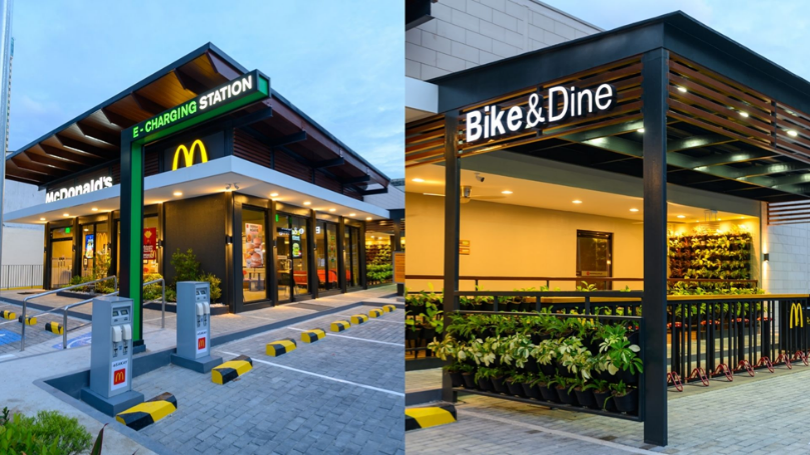
Furthermore, McDonald’s takes a step in doing better for the environment with sustainable restaurant innovations through its Green & Good platform. The company opened its first full Green & Good store in the country in 2021, a store designed using green construction and utility efficient solutions with bike-friendly features to meet the needs of cyclists like a Bike & Dine space and a Bike Repair Station.

The company is set to open more new stores this year that are equipped with Green & Good solutions like solar rooftops, and grid-tied solar photovoltaic (PV) systems, which are both cost-effective and efficient in the reduction of emissions.

Another environmentally sustainable initiative McDonald’s Philippines has introduced this year is its use of strawless lids. The strawless lids allow for less waste to be consumed for its iced drinks.

The McDonald’s Flagship Green and Good Store in Mandaluyong is the first McDonald’s store in the country designed using green construction and utility efficient solutions with bike-friendly features to meet the needs of cyclists.

All set for a strong sustainable recovery

McDonald’s ended 2021 with a 671-store base, opening 36 new stores. With every new McDonald’s store that opens, the company provides employment opportunities with its direct hiring practice, which has been in place since 1981. With direct hiring, even part-time students are given equal opportunities because of a flexible work schedule, allowing them to fulfill their academic requirements while earning.

“With over 40,000 employees systemwide, we will remain committed to working with different stakeholders for our shared goal of the country’s full economic recovery. As McDonald’s continues its growth path in 2022, we will be steadfast in our pursuit of sustainable development, employment and community building with even more vigor,” concludes Mr. Yang.


Spotlight is BusinessWorld’s sponsored section that allows advertisers to amplify their brand and connect with BusinessWorld’s audience by enabling them to publish their stories directly on the BusinessWorld Web site. For more information, send an email to online@bworldonline.com.

Join us on Viber to get more updates from BusinessWorld: https://bit.ly/3hv6bLA.

Don’t call us pro-China, Taiwan opposition chief says in US

 – It is wrong to label Taiwan‘s main opposition party the Kuomintang (KMT) as being proChina as it has always been proU.S. and is dedicated to defending the island though also to talking to Beijing, its chairman said in Washington.

The KMT ruled China until fleeing to Taiwan in 1949 after losing a civil war to the Communists. It has traditionally favored close ties with Beijing, which has increasingly set it at odds with most Taiwanese, who feel little in common with autocratic China.

The KMT badly lost presidential and parliamentary elections in 2020, having failed to shake accusations from the governing Democratic Progressive Party it would sell out Taiwan to Beijing.

Speaking late Monday Taipei time at the Brookings Institution during a visit to Washington, KMT Chairman Eric Chu decried those who call them proChina.

“We are mislabeled by some people, some media says we are a proChina party – it’s totally wrong. We are a proU.S. party, forever,” he said, speaking in English.

Taiwan needs to have strong defenses, added Chu, who assumed his current role in September on a promise to revitalize party fortunes. Read full story

“If you want peace, you have to prepare for war. Self-defense is the number one for peace and stability.”

Chu, soundly defeated by current President Tsai Ing-wen when he ran for the presidency in 2016, is a possible candidate for the next presidential vote in 2024, though he has not announced an intention to run.

He reiterated the party’s support for engagement with China, which claims Taiwan as its own territory, to ensure stability.

Beijing has ramped up its military activities near Taiwan over the past two years or so, and refused to speak to Tsai who it views as a separatist.

Tsai says they want talks with Beijing, but as equals, and that only Taiwan‘s people can decide their own future.

Chu said Taiwan can help the West better understand China, and be a model for its giant neighbor.

Taiwan can have democracy, why not China some day? We have to wait for this to happen, but we need Taiwan as a model.” – Reuters

US bars Cuba, Venezuela from Americas summit; Mexican leader sits out

 – The White House on Monday excluded Cuba, Venezuela and Nicaragua from the US-hosted Summit of the Americas this week, prompting Mexico’s president to make good on a threat to skip the event because all countries in the Western Hemisphere were not invited.

The boycott by Mexican President Andres Manuel Lopez Obrador and some other leaders could diminish the relevance of the summit in Los Angeles, where the United States aims to address regional migration and economic challenges. President Joe Biden, a Democrat, hopes to repair Latin America relations damaged under his Republican predecessor, Donald Trump, reassert US influence and counter China’s inroads.

The decision to cut out Cuba, Venezuela and Nicaragua followed weeks of intense deliberations and was due to concerns about human rights and a lack of democracy in the three nations, a senior US official said.

US State Department spokesperson Ned Price said the Biden administration “understands” Mexico’s position, but “one of the key elements of this summit is democratic governance, and these countries are not exemplars, to put it mildly.”

Biden aides have been mindful of pressure from Republicans and some fellow Democrats against appearing soft on America’s three main leftist antagonists in Latin America. Miami’s large Cuban-American community, which favored Trump’s harsh policies toward Cuba and Venezuela, is seen as an important voting bloc in Florida in the November elections that will decide control of the US Congress, which is now in the hands of the Democrats.

Lopez Obrador told reporters that his foreign minister, Marcelo Ebrard, would attend the summit in his place. The Mexican president said he would meet with Biden in Washington next month, which the White House confirmed. Read full story

“There can’t be a Summit of the Americas if not all countries of the American continent are taking part,” Lopez Obrador said.

Lopez Obrador’s absence from the gathering, which Biden is due to open on Wednesday, raises questions about summit discussions focused on curbing migration at the U.S. southern border, a priority for Biden, and could be a diplomatic embarrassment for the United States.

A caravan of several thousand migrants, many from Venezuela, set off from southern Mexico early Monday aiming to reach the United States. Read full story

But a senior administration official insisted Lopez Obrador’s no-show would not hinder Biden’s rollout of a regional migration initiative. The White House expects at least 23 heads of state and government, which the official said would be in line with past summits.

US Senator Robert Menendez, a Democrat and chairman of the powerful Senate Foreign Relations Committee, criticized the Mexican president, saying his “decision to stand with dictators and despots” would hurt US-Mexico relations.


CUBA CRITICAL

Brazilian President Jair Bolsonaro, a right-wing populist and Trump admirer who leads Latin America’s most populous country, will attend after initially flirting with staying away. Read full story

The exclusion of Venezuela and Nicaragua had been flagged in recent weeks. President Miguel Diaz-Canel of Communist-ruled Cuba said last month he would not go even if invited, accusing the United States of “brutal pressure” to make the summit non-inclusive.

On Monday, Cuba called the decision “discriminatory and unacceptable” and said the United States underestimated support in the region for the island nation.

The United States invited some Cuban civil society activists to attend, but several said on social media that Cuban state security had blocked them from travel to Los Angeles. Read full story

Having ruled out Venezuelan President Nicolas Maduro, the Biden administration expects representatives for opposition leader Juan Guaido will attend, Price said. He declined to say whether their participation would be in person or virtually.

The senior administration official, asked whether Biden might have a call with Guaido during the summit, said there was a good chance of an “engagement,” but declined to elaborate.

Washington recognizes Guaido as Venezuela’s legitimate president, having condemned Maduro’s 2018 re-election as a sham. But some countries in the region have stuck with Maduro.

Also barred from the summit is Nicaraguan President Daniel Ortega, a former Marxist guerrilla who won a fourth consecutive term in November after jailing rivals.

Most leaders have signaled they will attend, but the pushback by leftist-led governments suggests many in Latin America are no longer willing to follow Washington’s lead as in past times.

Faced with low expectations for summit achievements, US officials began previewing Biden’s coming initiatives. Those include an “Americas partnership” for pandemic recovery, which would entail investments and supply-chain strengthening, reform of the Inter-American Development Bank, and a $300 million commitment for regional food security. – Reuters

Apple dives deeper into autos with software for car dashboard

REUTERS

 – Apple Inc AAPL.O on Monday announced it would more deeply integrate its software into the core driving systems of cars, while the iPhone maker rolled out a slew of features for payments and business collaboration and a pair of new laptops.

The announcements at Apple‘s annual developer conference showed a company that was once an outsider working its way firmly into the mainstream of nearly every screen in day-to-day life. Read full story

The company whose late 1990s turnaround meant branding itself for rebels and troublemakers spent Monday talking up how to use iPads to collaborate on business presentations and how its software will eventually help display fuel economy on car dashboards. Notably absent were any hints of Apple‘s expected next big product, a mixed-reality headset that can overlay digital objects on a view of the real world. Hopeful fans got only a few tidbits of new augmented reality technology at a technical talk.

And Apple announced Apply Pay Later, a service that lets users make interest-free installments. The business, which will work over the MasterCard Inc MA.N network wherever Apple Pay is accepted, puts Apple in direction competition with payment providers like Affirm Holdings Inc AFRM.O and PayPal Holdings Inc PYPL.O.

But mostly Apple doubled down on existing products. A MacBook Air laptop was redesigned around a new M2 silicon processor, which it says is 35% faster than the previous M1 chip. The new laptop will be 2.7 pounds (1.2 kg) and have a 1080p high-definition camera to provide better images on video calls. The MacBook Air will start at $1,199, Apple announced at its WWDC 2022 conference.

The M2 chip will also power the 13-inch MacBook Pro, which will start at $1,299 and be available next month. Both chips will use a second generation of 5-nanometer chip manufacturing technology. Apple did not say who would make the chip, but likely manufacturers include longtime Apple partner Taiwan Semiconductor Manufacturing Co 2330.TW, which is struggling with delays of newer technology.

“They have to do volume” with the new laptops, said Bob O’Donnell of TECHnalysis Research. “That’s the safe choice,” he said of the 5-nanometer chips.

But Apple did break with its tradition of not tipping its hand about future technology when it showed off a new car dashboard that it said would be able to display data from major instruments such as speed, fuel levels and gas mileage. Apple said it was in talks with automakers such as Ford Motor Co F.N, Nissan Motor Co 7201.T, Mercedes-Benz MBGn.DE and Honda Motor Corp 7267.T. Vehicles with the software will not be announced until late next year.

The software connects more deeply into core driving systems than prior versions that were limited to the vehicle’s infotainment displays for playing music and showing maps. While Apple‘s car software has been in vehicles since 2014 is currently available in more than 600 models – even including a few motorcycles – it is largely separate from the vehicle’s own operating systems. Vehicles owners must leave the system for even basic functions like adjusting a car‘s climate controls, a shortcoming the updated system is designed to address.

Polestar, the premium electric vehicle maker owned by China’s Geely GEELY.UL and Volvo Cars, is installing the current version of Apple CarPlay into its Polestar 2 cars through an over-the-air update later this month, Polestar spokesman JP Canton said. Which Polestar cars will get the newer version Apple announced on Monday are under discussion and no further information was available, he said.

A spokeswoman for Ford, which announced a software deal with Alphabet’s GOOGL.O Google last year, declined to comment on Apple‘s announcement. Automakers remain wary of allowing the tech giants unfettered access to the data generated by connected cars, or to allow them to displace the automakers’ brands with their own in dashboard displays.

Apple‘s iPad also received a revamp to make it easier for users to juggle multiple applications and displays and to collaborate on business-centric documents such as presentations. The company also previewed an app called Freeform, which will act as a virtual whiteboard that multiple users can tap to share ideas during video meetings over Apple‘s FaceTime service. The productivity features put Apple in more direct competition with Microsoft MSFT.O, whose Surface tablet computers are popular among business users.

Apple also added an edit button to iMessage for sent messages, beating Twitter TWTR.N to a long-requested feature.

The tech giant is also adding a tool called “Safety Check” to turn off access to sensitive information for people in abusive situations.

Apple introduced a new technology called Passkeys to replace passwords on websites. Apple said Passkeys are safer than traditional passwords because Passkeys are never stored on a web server. The company said it is working to enable the use of Passkeys with non-Apple devices.

Apple shares closed up less than 1%, similar to their level at the start of the presentation. – Reuters

Elon Musk opens door to a Tesla talent exodus

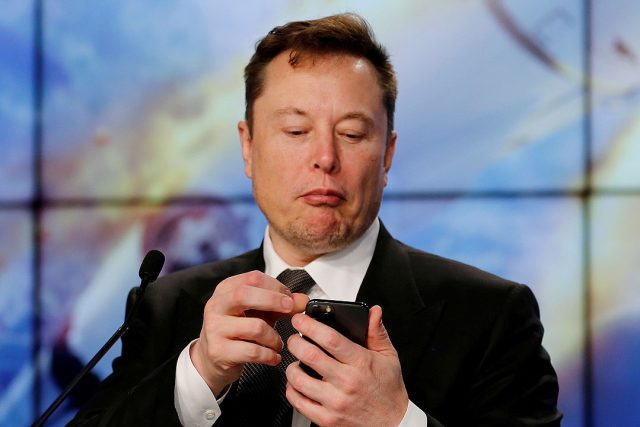
ELON MUSK — REUTERS

 – Elon Musk needs to cut one in ten jobs at Tesla. Some may already have their eye on the exit.

The Tesla TSLA.O chief executive’s intentions, conveyed in an internal email seen by Reuters, are rooted in what he described as his “super bad feeling” about the U.S. economy. Read full story

Some of the nearly 100,000 people employed at the electric carmaker may already be considering their options after Musk issued them with a return-to-office ultimatum this week.

In an email sent to staff Tuesday night, Musk threatened to fire anyone who did not work in the office 40 hours a week, a sharp contrast to flexibility offered by Big Tech companies that compete for the same talent pool. Read full story

The office edict, on top of a steep drop in Tesla’s share price this year – partly due to Musk‘s costly pursuit of Twitter – and his public alignment with the Republican party are a toxic mix for some staff.

Tesla is kick-starting its own local Great Resignation,” said Stanford University economics professor Nicholas Bloom, who predicted that 60% of employees would return to the office full time, about 10% would quit, and about 30% would look for another job.

Tesla did not immediately reply to a request for comment.

Some tech companies, sensing an opening, were quick to swoop.

Scott Farquhar, Australia’s third-richest man and the co-founder of software maker Atlassian TEAM.O, tweeted about plans to expand and offer flexibility. “Any Tesla employees interested?” he added. Read full story

In the wake of the COVID-19 pandemic, more and more tech workers, used to working from home or hybrid policies, are refusing to come back to the office full-time.

One former Tesla engineer told Reuters he recently took a job at Alphabet because of the lack of work-life balance, including pressure to come into the office during the pandemicAt Google, he has to come to office only three times a week, with some of his team members working remotely, he said.

He said his friends working from home “are not less productive, but significantly happier.”

Another former Tesla engineer said he had been under pressure to work in the office during pandemic in 2020 and got Covid twice – before moving to Apple.


BIGGER STOCK COMPENSATION

The threat of layoffs and the return-to-office order come as Tesla engineers are watching their stock-based compensation drop. Tesla faces some of the same problems assailing other companies, such as China lockdowns.

But investors also are concerned that Musk‘s $44-billion pursuit of Twitter is distracting him, despite Musk‘s contention that he spends relatively little time on it.

Tesla stock fell 9% on Friday after Reuters published his staff cut plan and Twitter said the Musk acquisition had passed U.S. antitrust review. The stock had already been down about 30since Musk announced his purchase of shares in early April, roughly double the drop of the Nasdaq index.

“If this is sustained, they will absolutely have a retention problem. You’ve got two things happening. You’ve got Elon Musk saying things that are controversial and don’t appeal to everybody. And you’ve got the stock price taking a big hit,” said Michael Solomon, founder of compensation negotiation advisory service 10x Ascend.

Stock options are a bigger portion of executive compensation at Tesla than at its peers, the company said in its securities filing this year. When shares don’t go up, that part of compensation can be worthless.

Tesla employees get annual bonuses in the form of stocks, and generally receive lower cash salaries than peers at big tech companies, according to former and current employees and data provided to Reuters from job sites Blind and Glassdoor.

Tatiana Becker, who runs NIAH Recruiting, a recruiting firm for startups, recently did an email marketing campaign to Tesla employees and received responses from 14%, compared with a normal top rate of 10%.


MUSK BRAND

To be sure, Musk‘s brash personality has helped build the Tesla brand, allowed it to expand without marketing, and given many employees a sense of mission tied to the man and his climate goals.

Long hours and unreasonable working conditions are the norm for some, a former Tesla engineer said: “It’s how we’re wired.”

And other tech companies are cutting jobs or slowing or pausing hiring amid weakening demand, potentially reining in some Tesla staff’s willingness to jump ship.

But Musk‘s recent embrace of a new partisan political identity is off-putting to some employees, particularly liberal tech workers in Silicon Valley.

“He’s a very polarizing guy. You either love the guy or you hate the guy,” said Jason Stomel, founder of tech talent agency Cadre.

“Some people are huge fans, and they’ll do anything to work for one of his companies. And others will say, like, I don’t really agree with his way of running the company.”

The billionaire has tapped his large Twitter following to attack Democratic lawmakers, used his bid for the microblogging platform to champion free speech, including a pledge to restore former president Donald Trump’s account, and he has said he will vote Republican.

“There are people for whom this is very distasteful,” recruiter Solomon said. “These are people who have a lot of choices about their employment options.”

Many Tesla employees will wait for the stock to recover, said a former Tesla manager, who described stock awards as “golden handcuffs” that keep staff from leaving. “But if they think the Tesla share price will remain low, then they are more likely to leave: their big bonus isn’t so big anymore.” – Reuters

[B-SIDE Podcast] High stakes: a recovering addict’s journey

Follow us on Spotify BusinessWorld B-Side

Reagan, a recovering gambling addict who has been sober for 11 years, has been jailed, institutionalized, kidnapped, and held at gunpoint. 

In this B-Side episode, he tells BusinessWorld reporter Patricia B. Mirasol about addiction, support systems, and the lifelong journey to recovery. “I can’t say I’m cured because every day is a struggle. Every day I can relapse,” he said. “By saying I’m a recovering addict, there’s a humility. That’s step one: to admit that we are powerless over gambling and that our lives have become unmanageable.”

TAKEAWAYS

‘One bet is too many. A thousand bets are too few.’ 

“Nothing can beat that first high—you’re going to constantly chase that first high,” said Reagan. “I got caught in the thrill of the chase. The more I lost, the stronger my motivation to play again.” 

Reagan started gambling on an incentive trip to Las Vegas when he was 23. His initial bet of $1 won him $18,000. 

Gambling addiction refers to the compulsive urge to gamble. It is categorized as a substance-related and addictive disorder in The Diagnostic and Statistical Manual of Mental Disorders, 5th edition (DSM-5)—the first recognized non-substance behavioral addiction

Gambling is not a ‘lesser’ addiction. It is driven by emotion rather than finances.

Gambling addicts believe that they are better than other addicts, such as those who are hooked on narcotics, because no manifestation of the addiction exists on their bodies. 

Time in rehabilitation, however, dispelled that notion for Reagan. 

“In reality, I was much worse,” he told BusinessWorld. “I was creating my own addiction juice. I didn’t even need a substance to create this addiction,” he said in the vernacular. “I was worse than those other types of addicts, because the addiction was in me.” 

Reagan said faith, family, and the 12-step program helped him learn more about himself. 

Created by Alcoholics Anonymous, 12-step programs are peer support groups that help people recover from substance use disorders, behavioral addictions, and mental health conditions. 

The correct term is ‘recovering addict,’ and not “recovered addict.” 

Recovering is the correct word when referring to an addict on his/her way to recovery, and not recovered. The distinction evokes humility, Reagan said. It also implies that the journey is ongoing, and that tomorrow ushers in a new day. 

“I can’t say I’m cured because every day is a struggle. Every day I can relapse,” he explained. “It’s [actually] a joke for us to say, ‘I’m recovered. I’m cured.’” 

Anti-gambling campaigns shouldn’t proselytize or agitate.  

Reagan pointed to a Facebook meme that showed a gambler who exchanged his four-wheel drive for a tricycle as a result of his addiction. “That’s a reality,” he said, adding that that non-combative humor is better received than preachy warnings.

Awareness campaigns are more effective when they reach their audience before the act of betting, he continued. “Because the moment they start betting, tapos na ’yun [that’s it]. They can recover afterwards, when they already feel lost.” 

Reagan advised those who feel they are struggling against these urges to search online for specific hashtags such as #gamblingsolution or #gamblingfellowship as there are anonymous groups that can help with gambling recovery in the Philippines.

Recorded remotely in May 2022. Produced by Earl R. Lagundino, and Sam L. Marcelo.

Follow us on Spotify BusinessWorld B-Side